Goodreads helps you follow your favorite authors. Be the first to learn about new releases!
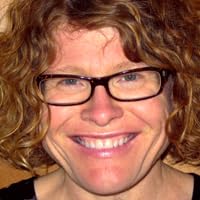
Start by following Alison Kafer.
Showing 1-30 of 47
“People with chronic illness, pain, and fatigue have been among the most critical of this aspect of the social model, rightly noting that social and structural changes will do little to make one's joints stop aching or to alleviate back pain. Nor will changes in architecture and attitude heal diabetes or cancer or fatigue. Focusing exclusively on disabling barriers, as a strict social model seems to do, renders pain and fatigue irrelevant to the project of disability politics.”
― Feminist, Queer, Crip
― Feminist, Queer, Crip
“Of fortune cookies and tarot cards they have no need: my wheelchair, burn scars, and gnarled hands apparently tell them all they need to know. My future is written on my body.”
― Feminist, Queer, Crip
― Feminist, Queer, Crip
“it becomes obvious that people with disabilities have experiences, by virtue of their disabilities, which non-disabled people do not have, and which are [or can be] sources of knowledge that is not directly accessible to non-disabled people. Some of this knowledge, for example, how to live with a suffering body, would be of enormous practical help to most people…. Much of it would enrich and expand our culture, and some of it has the potential to change our thinking and our ways of life profoundly.”
― Feminist, Queer, Crip
― Feminist, Queer, Crip
“Thinking through crip temporalities and futurities requires, then, a grappling with nostalgia, a recognition of the powerful role nostalgia plays in approaches to the body. Indeed, fears about longevity “under any circumstances”—fears of disability, in other words—are often bound up in a kind of compulsory nostalgia for the lost able mind/body, the nostalgic past mind/body that perhaps never was.”
― Feminist, Queer, Crip
― Feminist, Queer, Crip
“People with impairments are disabled by their environments; or, to put it differently, impairments aren't disabling, social and architectural barriers are.”
― Feminist, Queer, Crip
― Feminist, Queer, Crip
“The disabled people populating these billboards epitomize the paradoxical figure of the supercrip: supercrips are those disabled figures favored in the media, products of either extremely low expectations (disability by definition means incompetence, so anything a disabled person does, no matter how mundane or banal, merits exaggerated praise) or extremely high expectations (disabled people must accomplish incredibly difficult, and therefore inspiring, tasks to be worthy of nondisabled attention).”
― Feminist, Queer, Crip
― Feminist, Queer, Crip
“How can a trail running shoe with an outer sole designed like a goat's hoof help me avoid compressing my spinal cord into a Slinky® on the side of some unsuspecting conifer, thereby rendering me a drooling, misshapen non-extreme-trail-running husk of my former self, forced to roam the earth in a motorized wheelchair with my name, embossed on one of those cute little license plates you get at carnivals or state fairs, fastened to the back?”
― Feminist, Queer, Crip
― Feminist, Queer, Crip
“By presenting these concepts as apolitical, the Foundation for a Better Life (FBL) renders them natural, accepted, commonsense, and therefore beyond the scope of debate or discussion. The FBL operates on the assumption that we all know and agree what a better life entails, and what values are necessary to achieve it; there is no need for argument or critique. Representations of disability and illness play a large role in this campaign, with a significant number of billboards praising individuals with disabilities for having the strength of character to “overcome” their disabilities. The depoliticization mandated by these billboards and the FBL itself is made possible through reference to the disabled body; in other words, it is not just that the FBL depoliticizes disability, but that it does so in order to depoliticize all the values featured in its campaign. Indeed, the presence of the disabled body is used to render this campaign not as ideology but as common sense.”
― Feminist, Queer, Crip
― Feminist, Queer, Crip
“In the logic of ableism, anyone who can handle such an (allegedly) horrible life must be strong; a lesser man would have given up in despair years ago. Indeed, Reeve's refusal to “give up” is precisely why the FBL selected Reeve for their model of strength; in the “billboard backstories” section of their website, they praise Reeve for trying to “beat paralysis and the spinal cord injuries” rather than “giv[ing] up.” Asserting that Goldberg is successful because of her hard work suggests that other people with dyslexia and learning disabilities who have not met with similar success have simply failed to engage in hard work; unlike Whoopi Goldberg, they are apparently unwilling to devote themselves to success. Similarly, by positioning Weihenmayer's ascent of Everest as a matter of vision, the FBL implies that most blind people, who have not ascended Everest or accomplished equivalently astounding feats, are lacking not only eyesight but vision. The disabled people populating these billboards epitomize the paradoxical figure of the supercrip: supercrips are those disabled figures favored in the media, products of either extremely low expectations (disability by definition means incompetence, so anything a disabled person does, no matter how mundane or banal, merits exaggerated praise) or extremely high expectations (disabled people must accomplish incredibly difficult, and therefore inspiring, tasks to be worthy of nondisabled attention).”
― Feminist, Queer, Crip
― Feminist, Queer, Crip
“Futurity has often been framed in curative terms, a time frame that casts disabled people (as) out of time, or as obstacles to the arc of progress. In our disabled state, we are not part of the dominant narratives of progress, but once rehabilitated, normalized, and hopefully cured, we play a starring role: the sign of progress, the proof of development, the triumph over the mind or body.”
― Feminist, Queer, Crip
― Feminist, Queer, Crip
“Presenting the cyborg/disability connection in a purely positive light also ignores the fact that, for many people, adaptive technologies can be painful;”
― Feminist, Queer, Crip
― Feminist, Queer, Crip
“Although I agree that we need to attend to the social, asserting a sharp divide between impairment and disability fails to recognize that both impairment and disability are social; simply trying to determine what constitutes impairment makes clear that impairment doesn't exist apart from social meanings and understandings. Susan Wendell illustrates this problem when she queries how far one must be able to walk to be considered able-bodied; the answer to that question, she explains, has much to do with the economic and geographic context in which it is addressed.”
― Feminist, Queer, Crip
― Feminist, Queer, Crip
“For Hershey, the time of prognosis is a single moment of telling but also an extended, if not indefinite, period of negotiation and identification. During that period, past/present/future become jumbled, inchoate. The present takes on more urgency as the future shrinks; the past becomes a mix of potential causes of one's present illness or a succession of wasted time; the future is marked in increments of treatment and survival even as “the future” becomes more tenuous.”
― Feminist, Queer, Crip
― Feminist, Queer, Crip
“To eliminate disability is to eliminate the possibility of discovering alternative ways of being in the world, to foreclose the possibility of recognizing and valuing our interdependence.”
― Feminist, Queer, Crip
― Feminist, Queer, Crip
“A political/relational model of disability, on the other hand, makes room for more activist responses, seeing “disability” as a potential site for collective reimagining. Under this kind of framework, “disability awareness” simulations can be reframed to focus less on the individual experience of disability—or imagined experience of disability—and more on the political experience of disablement. For example, rather than placing nondisabled students in wheelchairs, the Santa Barbara-based organization People in Search of Safe and Accessible Restrooms (PISSAR) places them in bathrooms, armed with measuring tapes and clipboards, to track the failures and omissions of the built environment. As my fellow restroom revolutionaries explain in our manifesto, “This switch in focus from the inability of the body to the inaccessibility of the space makes room for activism and change in ways that ‘awareness exercises’ may not.” In creating and disseminating a “restroom checklist,” PISSAR imagines a future of disability activism, one with disability rights activists demanding accessible spaces; contrast that approach with the simulation exercises, in which “awareness” is the future goal, rather than structural or systemic change.”
― Feminist, Queer, Crip
― Feminist, Queer, Crip
“We need to be much more vigilant and aware of the risks inherent in touting the importance of family involvement and family care. Too easily, those calls can be reinterpreted to mean that the only care worth supporting is that provided by relatives, inadvertently demonizing and pathologizing the use of paid attendants. This is not to say that family members who provide attendant care for their disabled relatives should not themselves be compensated for their work; indeed, I support consumer-directed attendant services that allow disabled people to hire their own attendants, including family members. But, as Laura Hershey explains, seeing attendant care as something best provided by a family member too easily perpetuates the idea that disability is a private problem concerning the family that has no place in the public sphere. This attitude, in turn, leads to the continued devaluation of caregiving; abysmal wages and working conditions are justified on the basis that family members—almost always women—would be doing this work anyway and therefore any compensation, no matter how meager, is sufficient.”
― Feminist, Queer, Crip
― Feminist, Queer, Crip
“[T]he definitional shift away from the medical/individual model makes room for new understandings of how best to solve the “problem” of disability. In the alternative perspective, which I call the political/relational model, the problem of disability no longer resides in the minds or bodies of individuals but in built environments and social patterns that exclude or stigmatize particular kinds of bodies, minds, and ways of being. For example, under the medical/individual model, wheelchair users suffer from impairments that restrict their mobility. These impairments are best addressed through medical interventions and cures; failing that, individuals must make the best of a bad situation, relying on friends and family members to negotiate inaccessible spaces for them. Under a political/relational model of disability, however, the problem of disability is located in inaccessible buildings, discriminatory attitudes, and ideological systems that attribute normalcy and deviance to particular minds and bodies. The problem of disability is solved not through medical intervention or surgical normalization but through social change and political transformation.”
― Feminist, Queer, Crip
― Feminist, Queer, Crip
“Quality of life” is a familiar refrain in discussions of disability, as the term has often been used as a measure of the worth of disabled people's lives. “Measure” is perhaps too precise a term, as the meaning or criteria of “quality” of life are often taken to be common sense. Many people, regardless of dis/ability, may use the term to examine their own experiences, but disabled people often find their own quality of life described by others as if it were self-evident in their appearance or diagnosis; such discussions almost always include descriptions of the disabled person's (assumed) level of function and pain. Yet accurately evaluating function is not as easy as it might seem. If a disabled person has never been given any kind of adaptive therapy or training, or if someone has no access to adaptive equipment (or only to substandard equipment), then one's function might be much lower than one's ability. Quality of life, then, is affected by one's access to resources and bodies of knowledge rather than a necessary fact of the body/mind. Indeed, descriptions of another's pain and suffering often rely more on assumption than fact, as do presumptions about what level of function is required for a good quality of life.”
― Feminist, Queer, Crip
― Feminist, Queer, Crip
“As illustrated by Woman on the Edge of Time, and as manifested in the furor surrounding McCullough and Duchesneau's reproductive choices, disability is often seen as a difference that has no place in the future. Disability is a problem that must be eliminated, a hindrance to one's future opportunities, a drag on one's quality of life. Speaking directly about the Duchesneau and McCullough case, bioethicist Alta Charo argues, “The question is whether the parents have violated the sacred duty of parenthood, which is to maximize to some reasonable degree the advantages available to their children. I'm loath to say it, but I think it's a shame to set limits on a child's potential.” Similar claims are made in opposition to same-sex parenting; critics argue that children raised in queer households will have a lower quality of life than children raised in heterosexual ones. However, in both of these situations, it is assumed not only that disability and queerness inherently and irreversibly lower one's quality of life but also that there is only one possible understanding of “quality of life” and that everyone knows what “it” is without discussion or elaboration.”
― Feminist, Queer, Crip
― Feminist, Queer, Crip
“Disability activists have long railed against a politics of endless deferral that pours economic and cultural resources into “curing” future disabled people (by preventing them from ever coming into existence) while ignoring the needs and experiences of disabled people in the present.”
― Feminist, Queer, Crip
― Feminist, Queer, Crip
“As a wheelchair user, I can easily tell when I have rolled into a poor, undervalued neighborhood: The sidewalk becomes cracked and curb cuts get increasingly precarious or disappear altogether.”
― Feminist, Queer, Crip
― Feminist, Queer, Crip
“I have often observed rangers asking hikers what kind of terrain they want, how long they want to hike, and what level of difficulty best suits their needs. As a wheelchair user, however, I am seldom asked these kinds of questions, as if my desired level of difficulty were self-evident.”
― Feminist, Queer, Crip
― Feminist, Queer, Crip
“Despite the rise of disability studies in the United States, and decades of disability rights activism, disability continues to be seen primarily as a personal problem afflicting individual people, a problem best solved through strength of character and resolve”
― Feminist, Queer, Crip
― Feminist, Queer, Crip
“The statistical likelihood that young, black men living in particular Chicago neighborhoods will be paralyzed (if not killed) by gunshot wounds serves to push them out of time, facing a future of no future, and a no future best embodied by a wheelchair. Disability, in other words, becomes the future of no future, with “dead in jail or in a chair” recognized as all the same, all signs of no future. In more mainstream, sentimental accounts of disability (i.e., those not featuring poor people of color living in “bad” neighborhoods), disability is what ends one's future; it is the familiar narrative of disability as tragedy and loss. But for the men Ostrander profiles, disability is the sign that one never had a future in the first place; loss is not the defining frame because there was nothing to “lose.”
― Feminist, Queer, Crip
― Feminist, Queer, Crip
“In our disabled state, we are not part of the dominant narratives of progress, but once rehabilitated, normalized, and hopefully cured, we play a starring role: the sign of progress, the proof of development, the triumph over the mind or body.”
― Feminist, Queer, Crip
― Feminist, Queer, Crip
“A non-ableist cyborg politics refuses to isolate those of us cyborged through illness or disability from other cyborgs. Disabled people, in other words, can no longer be cast as modeling a cyborged existence that nondisabled people have yet to achieve. Such a move only strengthens the abled/disabled binary, suggesting that disabled people are fundamentally and essentially different from nondisabled people. If, as Haraway and others argue, technoculture is pervasive, then disabled people are not alone in the cyborgian realm. Cyborg theory could then turn itself to interrogations, for example, of why the very same technology is alternately described as “assistive” or “time-saving” depending on whether a disabled or nondisabled person is using it. In this framework, “cyborg” becomes an opportunity for exploring or interrogating the abled/disabled binary.”
― Feminist, Queer, Crip
― Feminist, Queer, Crip
“The FBL's attention to individual virtue obscures the ableist attitudes inherent in these billboards. Reeve appears strong and “super” to many Americans, and Ali “courageous,” simply by virtue of their living with a disability. In the logic of ableism, anyone who can handle such an (allegedly) horrible life must be strong; a lesser man would have given up in despair years ago. Indeed, Reeve's refusal to “give up” is precisely why the FBL selected Reeve for their model of strength; in the “billboard backstories” section of their website, they praise Reeve for trying to “beat paralysis and the spinal cord injuries” rather than “giv[ing] up.”
― Feminist, Queer, Crip
― Feminist, Queer, Crip
“Those who have been most vocal in imagining my future as ripe with opportunities have been other disabled people, who are themselves resisting negative interpretations of their futures. They tell stories of lives lived fully, and my future, according to them, involves not isolation and pathos but community and possibility: I could write books, teach, travel, love and be loved; I might raise children or become a community organizer or make art; I could engage in activist struggles for the rights of disabled people or get involved in other movements for social justice.”
― Feminist, Queer, Crip
― Feminist, Queer, Crip
“As many historians of feminism and women's studies have noted, feminism has long been interested in bridging theory with practice. Activists and scholars alike continue to explore the ways in which theory can inform political practice; conversely, feminists often theorize from practice, developing concepts and frameworks based on the strategies, conversations, conflicts, and achievements of feminist activists.”
― Feminist, Queer, Crip
― Feminist, Queer, Crip
“the problem of disability no longer resides in the minds or bodies of individuals but in built environments and social patterns that exclude or stigmatize particular bodies, minds, and ways of being.”
― Feminist, Queer, Crip
― Feminist, Queer, Crip