Goodreads helps you follow your favorite authors. Be the first to learn about new releases!
Start by following Lisa Kemmerer.

Showing 1-30 of 177
“When pressed, hunters who claim that they just want “to be out in the wilderness,” will admit that the kill is essential—or at least the hope of a kill. As it turns out, there is no correlation between hunting and hiking, climbing, backpacking, kayaking, or any other outdoor activity. Hunters do not purposefully linger in the woods after a kill, but quickly begin the process of preparing to head home with the corpse. For hunters, the kill is the climax—the most important moment. They are not driving into the woods (or sometimes actually walking) for the sake of beauty, but in the hope of a kill.”
― Speaking Up for Animals: An Anthology of Women's Voices
― Speaking Up for Animals: An Anthology of Women's Voices
“You ultimately decide, every day, whether or not your life will speak on behalf of the oppressed, or remain an inaudible but decisive tool for the status quo.”
― Speaking Up for Animals: An Anthology of Women's Voices
― Speaking Up for Animals: An Anthology of Women's Voices
“Most ecofeminists reject dichotomies and hierarchies as alien to the natural world – nature is interconnections.”
― Sister Species: Women, Animals and Social Justice
― Sister Species: Women, Animals and Social Justice
“In Western patriarchal culture, both women and nonhuman nature have been devalued alongside their assumed opposites--men and civilization/culture.”
― Sister Species: Women, Animals and Social Justice
― Sister Species: Women, Animals and Social Justice
“Ecofeminists focus on interconnections between the domination/oppression of women and the domination/oppression of nature.”
― Sister Species: Women, Animals and Social Justice
― Sister Species: Women, Animals and Social Justice
“Animals (human and nonhuman) feel pain, can suffer, and ought to be treated accordingly – pain and suffering are always of moral concern.”
― Sister Species: Women, Animals and Social Justice
― Sister Species: Women, Animals and Social Justice
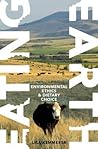
“Thanks to government subsidies, a diet rich in animal products is affordable even though it destroys the earth”
― Eating Earth: Environmental Ethics and Dietary Choice
― Eating Earth: Environmental Ethics and Dietary Choice
“The same patriarchy that oppresses women oppresses nonhuman animals. Farmed animals and “housewives,” “lab” animals and prostitutes, dancing bears and girls in the sex trade—all have too long been exploited by the same patriarchal hierarchy wherein the comparatively weak are exploited for the benefit of the powerful.”
― Speaking Up for Animals: An Anthology of Women's Voices
― Speaking Up for Animals: An Anthology of Women's Voices
“Grass fed meat is an environmental nightmare perpetuated by elitists who refuse to change their eating habits.”
― Eating Earth: Environmental Ethics and Dietary Choice
― Eating Earth: Environmental Ethics and Dietary Choice
“No individual or species is privileged in the world of nature: All eat and are eaten; all become sick and die in their turn. Humans are part of an interconnected continuum of life.”
― Sister Species: Women, Animals and Social Justice
― Sister Species: Women, Animals and Social Justice
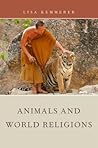
“The number of individuals enslaved and slaughtered on factory farms every year exponentially surpasses—by trillions—any form of exploitation of human beings anywhere, at any time.”
― Animals and World Religions
― Animals and World Religions
“Nature is interconnections.”
― Sister Species: Women, Animals and Social Justice
― Sister Species: Women, Animals and Social Justice
“Cheap meat, dairy, and eggs are an illusion–we pay for each with depleted forests, polluted freshwater, soil degradation, and climate change.”
― Eating Earth: Environmental Ethics and Dietary Choice
― Eating Earth: Environmental Ethics and Dietary Choice
“Women and other animals are exploited for their reproductive abilities, and both are devalued as they age and wear out – when they are no longer able to reproduce.”
― Sister Species: Women, Animals and Social Justice
― Sister Species: Women, Animals and Social Justice
“Females – sows and cows and hens and women – suffer because of their sex in Western patriarchal cultures, where female bodies are exploited as sex symbols, for reproduction, for breast milk, and/or for reproductive eggs. As such, farmed animals are at the very bottom of the contemporary, Western hierarchy of beings – and this is speceisism.”
― Sister Species: Women, Animals and Social Justice
― Sister Species: Women, Animals and Social Justice
“Immersion in the ugliness of injustice, in the hope of change, seems preferable to turning away. . . . there is a reward for courage and determination in the face of helplessness and suffering: Walking into pain in the hope of bringing change moves a person from helplessness and despair to empowered activism”
― Sister Species: Women, Animals and Social Justice
― Sister Species: Women, Animals and Social Justice
“Ecofeminist analysis is generally much more expansive than environmentalism and feminism. . . . Ecofeminism draws on ecological, socialist, and feminist thought, incorporating a handful of social justice movements, such as feminism, peace activism, labor movements, women’s health care, anti-nuclear, environmental, and animal liberation.”
― Sister Species: Women, Animals and Social Justice
― Sister Species: Women, Animals and Social Justice
“Violence is central to patriarchy, and the forms of systemic violence are interconnected in Western societies. Recognizing similarities across forms of oppression (such as racism, child abuse, speciesism, and sexism, for example) is essential.”
― Sister Species: Women, Animals and Social Justice
― Sister Species: Women, Animals and Social Justice
“Animals who are exploited for “organic” foods are raised, maintained, transported, and slaughtered just like their nonorganic” counterparts: They are debeaked, dehorned, detoed, castrated, and/or branded, and they are kept, transported, and slaughtered in the same deplorable conditions.”
― Speaking Up for Animals: An Anthology of Women's Voices
― Speaking Up for Animals: An Anthology of Women's Voices
“Feminists have often highlighted the “otherness” of nonhuman animals while highlighting similarities between women and the men who hold power. Biologically speaking, any two humans will be
more similar than a human and any other species. But the position of most women in patriarchal societies is closer to that of chickens and cows than it is to that of the men who hold power.”
― Speaking Up for Animals: An Anthology of Women's Voices
more similar than a human and any other species. But the position of most women in patriarchal societies is closer to that of chickens and cows than it is to that of the men who hold power.”
― Speaking Up for Animals: An Anthology of Women's Voices
“Most consumers are unaware of the ongoing, intense suffering and billions of premature deaths that lurk behind mayonnaise and cream, cold cuts and egg sandwiches.”
― Speaking Up for Animals: An Anthology of Women's Voices
― Speaking Up for Animals: An Anthology of Women's Voices
“When pressed, hunters who claim that they just want “to be out in the wilderness,” will admit that the kill is essential—or at least the hope of a kill. As it turns out, there is no correlation between hunting and hiking,
climbing, backpacking, kayaking, or any other outdoor activity. Hunters do not purposefully linger in the woods after a kill, but quickly begin the process of preparing to head home with the corpse. For hunters, the kill is the climax—the most important moment. They are not driving into the woods (or sometimes actually walking) for the sake of beauty, but in the hope of a kill. The kill can be likened to male orgasm. Sex is traditionally thought to be over when the man has an orgasm, and the hunt is never so decisively over as it is after a successful kill. As a teacher, I impatiently listened to a young man matter-of-factly defend the importance of hunting because he found the experience “orgasmic.” From his point of view, all that mattered was how exciting and wonderful the experience was for him. The “side affects” of the man’s preferred action—the experience of the deer (and the woman)—are deemed to be so irrelevant that
they are not even mentioned.”
― Speaking Up for Animals: An Anthology of Women's Voices
climbing, backpacking, kayaking, or any other outdoor activity. Hunters do not purposefully linger in the woods after a kill, but quickly begin the process of preparing to head home with the corpse. For hunters, the kill is the climax—the most important moment. They are not driving into the woods (or sometimes actually walking) for the sake of beauty, but in the hope of a kill. The kill can be likened to male orgasm. Sex is traditionally thought to be over when the man has an orgasm, and the hunt is never so decisively over as it is after a successful kill. As a teacher, I impatiently listened to a young man matter-of-factly defend the importance of hunting because he found the experience “orgasmic.” From his point of view, all that mattered was how exciting and wonderful the experience was for him. The “side affects” of the man’s preferred action—the experience of the deer (and the woman)—are deemed to be so irrelevant that
they are not even mentioned.”
― Speaking Up for Animals: An Anthology of Women's Voices
“For most women (as for most men) links between sexism and speciesism are not readily apparent. We have been conditioned not to see exploitation. For example, men generally have no idea how patriarchy affects women—unless they go out of their way to learn. The same is true for women with regard to cows and pigs and chickens and turkeys.”
― Speaking Up for Animals: An Anthology of Women's Voices
― Speaking Up for Animals: An Anthology of Women's Voices
“The reproductive abilities of women and other female animals are controlled and exploited by those in power (usually men) and both are devalued as they age and wear out—when they no longer reproduce. Cows, hens, and women are routinely treated as if they were objects to be manipulated in order to satisfy the desires of powerful men, without regard to female's wishes or feelings.”
― Speaking Up for Animals: An Anthology of Women's Voices
― Speaking Up for Animals: An Anthology of Women's Voices
“Ecofeminists call attention to the fact that environmentalists, feminists, and those fighting racism and poverty, are pulling on different straws in the same broom.”
― Sister Species: Women, Animals and Social Justice
― Sister Species: Women, Animals and Social Justice
“Organic” labels do nothing for a cow who is perpetually impregnated and milked, who loses her calf to the veal industry—or to protect her calf, who is sold at birth to the veal industry to be slaughtered. “Organic” products are designed to optimize human health and reduce environmental degradation. Those who invest in organic products are not making a choice that promotes the well-being of farmed animals.”
― Speaking Up for Animals: An Anthology of Women's Voices
― Speaking Up for Animals: An Anthology of Women's Voices
“Advocacy is better served when fellow activists are able to respond in ways that do not build walls or burn bridges. Change takes time and tends to come hard to human beings. Those who understand this human tendency are more effective activists.”
― Sister Species: Women, Animals and Social Justice
― Sister Species: Women, Animals and Social Justice
“Authors in this anthology who are working on behalf of social justice immerse themselves in the horrors of oppression—they know what is going on, help those who are suffering, and inform the larger community. For the women whose essays are included in this anthology, immersion in the ugliness
of injustice, in the hope of change, seems preferable to turning away. . . . there is a reward for courage and determination in the face of helplessness and suffering: Walking into pain in the hope of bringing change moves a person from helplessness and despair to empowered activism.”
― Sister Species: Women, Animals and Social Justice
of injustice, in the hope of change, seems preferable to turning away. . . . there is a reward for courage and determination in the face of helplessness and suffering: Walking into pain in the hope of bringing change moves a person from helplessness and despair to empowered activism.”
― Sister Species: Women, Animals and Social Justice
“The sex trade is also flourishing under the patriarchal objectification of women, paid for by men who are willing and able to own or rent a girl (or sometimes a woman) for sex. Those who are exploited are comparatively powerless, and cannot refuse sexual advances or deny the wishes of those who pay (someone else) for their services.
In these situations and many others, men own and control the bodies of women as they own and control the bodies of sows and cows and hens. Sexual exploitation of human females for the benefit of males is mirrored in contemporary animal industries. Men who control animal industries exploit females for their reproductive abilities as if nonhuman animals
were objects devoid of will and sensation. Sows are treated as if they were bacon factories and cows are treated as if they were milk machines. Sows,
cows, hens, turkeys, and horses are artificially inseminated to bring profits to the men who control their bodies and their lives. Women in the sex trade are similar to factory farmed females . . . .
Even comparatively privileged women in relatively fortunate marriages can readily be likened to sows and cows. . . . The reproductive abilities of women and other female animals are controlled and exploited by those in power (usually men) and both
are devalued as they age and wear out—when they no longer reproduce. Cows, hens, and women are routinely treated as if they were objects to be
manipulated in order to satisfy the desires of powerful men, without regard to female's wishes or feelings.”
― Speaking Up for Animals: An Anthology of Women's Voices
In these situations and many others, men own and control the bodies of women as they own and control the bodies of sows and cows and hens. Sexual exploitation of human females for the benefit of males is mirrored in contemporary animal industries. Men who control animal industries exploit females for their reproductive abilities as if nonhuman animals
were objects devoid of will and sensation. Sows are treated as if they were bacon factories and cows are treated as if they were milk machines. Sows,
cows, hens, turkeys, and horses are artificially inseminated to bring profits to the men who control their bodies and their lives. Women in the sex trade are similar to factory farmed females . . . .
Even comparatively privileged women in relatively fortunate marriages can readily be likened to sows and cows. . . . The reproductive abilities of women and other female animals are controlled and exploited by those in power (usually men) and both
are devalued as they age and wear out—when they no longer reproduce. Cows, hens, and women are routinely treated as if they were objects to be
manipulated in order to satisfy the desires of powerful men, without regard to female's wishes or feelings.”
― Speaking Up for Animals: An Anthology of Women's Voices
“Worldwide, animal agriculture emits more carbon dioxide than any other single source.”
― Eating Earth: Environmental Ethics and Dietary Choice
― Eating Earth: Environmental Ethics and Dietary Choice