Goodreads helps you follow your favorite authors. Be the first to learn about new releases!
Start by following Tali Sharot.

Showing 1-19 of 19
“It‘s a curious fact, because Friday is a day of work and Sunday is a day for pleasure, so you would expect people to enjoy Sunday more, right? But we don’t. It’s not because we really like being in the office and can’t stand strolling in the park and having a lazy brunch. We prefer Friday to Sunday because Friday brings with it the thrill of anticipating the weekend ahead. In contrast, on Sunday the only thing to look forward to is work on Monday.”
― The Science of Optimism: Why We're Hard-Wired for Hope
― The Science of Optimism: Why We're Hard-Wired for Hope
“The Twelve Most Common Phobias 1. Arachnophobia: the fear of spiders 2. Ophidiophobia: the fear of snakes 3. Acrophobia: the fear of heights 4. Agoraphobia: the fear of open or crowded spaces 5. Cynophobia: the fear of dogs 6. Astraphobia: the fear of thunder or lightning 7. Claustrophobia: the fear of small spaces like elevators, cramped rooms, and other enclosed places 8. Mysophobia: the fear of germs 9. Aerophobia: the fear of flying 10. Trypophobia: the fear of holes 11. Carcinophobia: the fear of cancer 12. Thanatophobia: the fear of death”
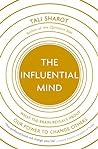
― The Influential Mind: What the Brain Reveals About Our Power to Change Others
― The Influential Mind: What the Brain Reveals About Our Power to Change Others
“Many of us try to maximize happiness; many try to maximize meaning or purpose. But you may also try to achieve another aspect of life beyond happiness and meaning--variation. You may try to live a life with new experiences, new places, new people, and new perspectives, and thus with diversity in what you see and do”
― Look Again: The Power of Noticing What Was Always There
― Look Again: The Power of Noticing What Was Always There
“We should finally note a more radical challenge to the concept of Platonic utility that arises from nascent work in the reinforcement learning field under the rubric of intrinsic motivation. One idea is that the "true" evolutionarily appropriate metric for behavior is the extremely sparse one of propagating ones genes. What we think of as a Platonic utility over immediate rewards such as food or water, would merely be a surrogate that helps overcome the otherwise insurmountable credit assignment path associated with procreation. In these terms, even the Platonic utility is the same sort of heuristic expedient as the Pavlovian controller itself, with evolutionary optimality molding approximate economic rationality to its own ends. It as a sober thought that understanding values may be less important as a way of unearthing the foundations of choice that we might have expected.”
―
―
“The number of people who suffer from hole phobia apparently trumps the number who suffer from cancer phobia, which is number 11 on the list, while the fear of death itself sits at number 12.”
― The Influential Mind: What the Brain Reveals About Our Power to Change Others
― The Influential Mind: What the Brain Reveals About Our Power to Change Others
“the litter of Schrödinger's cat is all over our decision tasks”
― Neuroscience of Preference and Choice: Cognitive and Neural Mechanisms
― Neuroscience of Preference and Choice: Cognitive and Neural Mechanisms
“A further, albeit more complex, possibility is that our conscious selves might suffer from characteristic uncertainty about our true values, and gather information about them from choices we make (the Jamesian: "How do I know what I like until I see what I pick").”
― Neuroscience of Preference and Choice: Cognitive and Neural Mechanisms
― Neuroscience of Preference and Choice: Cognitive and Neural Mechanisms
“Seeking out and interpreting data in a way that strengthens our preestablished opinions is known as the “confirmation bias.”
― The Influential Mind: What the Brain Reveals About Our Power to Change Others
― The Influential Mind: What the Brain Reveals About Our Power to Change Others
“What is interesting is that the sense of control need only be that—a perception. It is better to guide people toward ultimate solutions while at the same time maintaining their sense of agency, rather than to give orders.”
― The Influential Mind: What the Brain Reveals About Our Power to Change Others
― The Influential Mind: What the Brain Reveals About Our Power to Change Others
“Consider the numbers: there are 3 billion Internet users worldwide; every day we produce approximately 2.5 billion gigabytes of data, perform 4 billion Google searches, and watch 10 billion YouTube videos. In the short time it took you to read the last sentence, approximately 530,243 new Google searches were executed and 1,184,390 YouTube videos played around the globe.”
― The Influential Mind: What the Brain Reveals About Our Power to Change Others
― The Influential Mind: What the Brain Reveals About Our Power to Change Others
“if you suspect that there is uncomfortable news behind door number 1, you may be better off opening it to reveal the truth. This is because we humans are much more resilient than we think. By opening the door we can start the process of acceptance, healing, and rebuilding. If the door remains shut we are stuck, lingering in a constant state of unease.”
― The Influential Mind: What the Brain Reveals About Our Power to Change Others
― The Influential Mind: What the Brain Reveals About Our Power to Change Others
“The same neural principle that causes you to become desensitized to the smell of your own aftershave is also at work when you subconsciously believe repeated information. Neural processing is reduced in response to repeated stimuli. When it is effortless for you to process information because of repetition (i.e., less neural response), you are more likely to accept it as true. Effortless means there is no "surprise signal." You don't stop to ponder; you just accept.”
― Look Again: The Power of Noticing What Was Always There
― Look Again: The Power of Noticing What Was Always There
“Pleasure results from incomplete and intermittent satisfaction of desires.”
― Look Again: The Power of Noticing What Was Always There
― Look Again: The Power of Noticing What Was Always There
“when a volunteer learned of other people’s answers to the test questions, their amygdala was activated. The amygdala then communicated with a nearby region that is essential for creating memories—the hippocampus—and that interaction resulted in changes to how the person remembered the film.13 We found that these socially induced changes to memory could subsequently be corrected by frontal lobe activity.14 When participants in our experiment later discovered that we had provided them with the fake recollections of others, those with highly active frontal lobes were able to recover their original memory of the movie. But this correction did not always work. When your amygdala reacts very strongly to other people’s opinions, it triggers a biological reaction that prevents your frontal lobes from subsequently correcting false beliefs. When the volunteers in our experiment went along with the false recollections of others, about half the time they truly came to believe that those recollections were correct. They were not simply agreeing to save face or avoid conflict; their memory trace was physically altered.”
― The Influential Mind: What the Brain Reveals About Our Power to Change Others
― The Influential Mind: What the Brain Reveals About Our Power to Change Others
“When you provide someone with new data, they quickly accept evidence that confirms their preconceived notions (what are known as prior beliefs) and assess counterevidence with a critical eye. Because we are often exposed to contradicting information and opinions, this tendency will generate polarization, which will expand with time as people receive more and more information.7”
― The Influential Mind: What the Brain Reveals About Our Power to Change Others
― The Influential Mind: What the Brain Reveals About Our Power to Change Others
“IKEA effect.”24 The IKEA effect concerns the observation that people value things they create themselves more than the exact same items created by someone else. For example, if you put together an IKEA shelf yourself, you tend to think it is better than the exact same shelf put together by someone else.”
― The Influential Mind: What the Brain Reveals About Our Power to Change Others
― The Influential Mind: What the Brain Reveals About Our Power to Change Others
“The volunteers in our study would discard their own correct beliefs and adopt the false ones of others as long as everyone in the group, unanimously, supported the wrong answer. Yet if one other person gave the correct answer, the volunteers would stick to their original beliefs. In other words, even in a swarm, one divergent voice can cause others to act independently. You are influenced by others, but do not be fooled—others are also influenced by you. This is why your actions and choices matter not only for your own life but for the behavior of those around you.”
― The Influential Mind: What the Brain Reveals About Our Power to Change Others
― The Influential Mind: What the Brain Reveals About Our Power to Change Others
“in fact, in most cases, inducing hope is more powerful. However, under two conditions, fear works well: (a) when what you are trying to induce is inaction and (b) when the person in front of you is already anxious.”
― The Influential Mind: What the Brain Reveals About Our Power to Change Others
― The Influential Mind: What the Brain Reveals About Our Power to Change Others
“Perfect" is not a state people enjoy. . . . When we cannot learn, we get bored and unhappy. When change halts--when you stop learning and progressing--depression kicks in.”
― Look Again: The Power of Noticing What Was Always There
― Look Again: The Power of Noticing What Was Always There