Goodreads helps you follow your favorite authors. Be the first to learn about new releases!
Start by following Randall Rothenberg.

Showing 1-7 of 7
“subtext and context could substitute for text in advertising.”
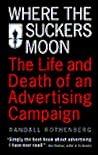
― Where the Suckers Moon: The Life and Death of an Advertising Campaign
― Where the Suckers Moon: The Life and Death of an Advertising Campaign
“New management always compelled changes in advertising strategy, if for no other reason than to show who was boss.”
― Where the Suckers Moon: The Life and Death of an Advertising Campaign
― Where the Suckers Moon: The Life and Death of an Advertising Campaign
“You should position yourself in terms of trying to represent the customers’ interest, rather than the client. The customer wants to get something out of this message, entertainment or emotion, something he or she can embrace.”
― Where the Suckers Moon: The Life and Death of an Advertising Campaign
― Where the Suckers Moon: The Life and Death of an Advertising Campaign
“TBWA had everything going for it. Absolut Vodka’s importer had increased its ad spending twentyfold in a decade, to $25 million a year. The agency was making its way into pitches for airline accounts, camera accounts, cigarette accounts. It had awards, prestige, profits. It lacked only one thing. Fame. The fame a car account could bestow. Dick Costello, the session’s narrator, turned from the screen to face Chris, Mark and Gene. He vowed to take a six-month leave of absence from his administrative responsibilities as president of TBWA to devote himself fully to Subaru. His face red with passion and the veins in his bald head popping, Costello concluded his presentation by thumping his fist on the table. “It drives me absolutely nuts that an agency of our quality does not have a car!” he thundered. “It is a personal crusade.” Later, squeezed into the backseat of a taxi carrying him to another meeting downtown, Chris Wackman recalled that final thump as the moment TBWA lost its chance for the Subaru account. “When Costello said, ‘I won’t rest until I get a car account!’ ” Chris said, halting slightly between words, “I don’t know what that does for me.”
― Where the Suckers Moon: The Life and Death of an Advertising Campaign
― Where the Suckers Moon: The Life and Death of an Advertising Campaign
“Schmidt also possessed a hunger for recognition that suited Harold’s needs and the changes taking place in the industry. He was enamored by Harold’s promise of creative prestige. I want to do great work, was Schmidt’s goal. I want to do something people will react to. Unlike most account executives, who saw creatives as necessary aggravations, Schmidt lived vicariously through his copywriters and art directors. When his ad agency moved from the West Side to East 53rd Street, then to Park Avenue and finally to Park Avenue South, Schmidt placed his own office not among the account people but with the creative department. His agency’s philosophy was a call-to-arms borrowed from the creative revolutionaries who had readied the industry for him: It’s not a great campaign unless it makes the blood drain from the client’s face.”
― Where the Suckers Moon: The Life and Death of an Advertising Campaign
― Where the Suckers Moon: The Life and Death of an Advertising Campaign
“the ad industry’s greatest secret: In the modern world, perception is reality.”
― Where the Suckers Moon: The Life and Death of an Advertising Campaign
― Where the Suckers Moon: The Life and Death of an Advertising Campaign
“Advertising agencies used to serve as their clients’ eyes and ears in the marketplace. Was there a need for a new product? Was a service now more popular in the suburbs than the cities? Were more men using a household cleanser than women? The ad agency’s research department was usually the first, and often the only, source for such information.”
― Where the Suckers Moon: The Life and Death of an Advertising Campaign
― Where the Suckers Moon: The Life and Death of an Advertising Campaign