Goodreads helps you follow your favorite authors. Be the first to learn about new releases!
Start by following Arthur I. Miller.

Showing 1-30 of 84
“Realizing its fundamental importance in understanding spectral lines, in atomic physics and in the theory of how light and electrons interact, quantum electrodynamics, Pauli and Heisenberg were determined to derive it from quantum theory rather than introducing it from the start. They believed that if they could find a version of quantum electrodynamics capable of producing the fine structure constant, it would not contain the infinities that marred their theories.”
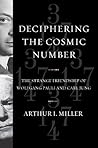
― Deciphering the Cosmic Number: The Strange Friendship of Wolfgang Pauli and Carl Jung
― Deciphering the Cosmic Number: The Strange Friendship of Wolfgang Pauli and Carl Jung
“So, now I’ve become such a big schoolmaster that my name is even mentioned in the newspapers. But I have remained a simple fellow who asks nothing of the world—only my youth is gone, the enchanting youth that walks forever on air.”
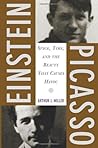
― Einstein, Picasso: Space, Time, and the Beauty That Causes Havoc
― Einstein, Picasso: Space, Time, and the Beauty That Causes Havoc
“Pataphysics is the science of imaginary solutions, which symbolically attributes to the lineaments of objects the properties described by their virtuality.”
― Einstein, Picasso: Space, Time, and the Beauty That Causes Havoc
― Einstein, Picasso: Space, Time, and the Beauty That Causes Havoc
“These reasons were of great importance to Galileo who, like Copernicus, founded his scientific theories on aesthetics. There would be no data to support a Sun-centered universe for over two hundred years.”
― Einstein, Picasso: Space, Time, and the Beauty That Causes Havoc
― Einstein, Picasso: Space, Time, and the Beauty That Causes Havoc
“A scientist writing a review paper often finds that the integrated material takes on a new meaning; once gathered into one place, a large body of research can be better understood, perhaps even at a deeper level. Previously unconnected aspects can connect in unexpected ways that lead to new insights.”
― Einstein, Picasso: Space, Time, and the Beauty That Causes Havoc
― Einstein, Picasso: Space, Time, and the Beauty That Causes Havoc
“By 1905 he had his close friend and sounding board Besso at his elbow. Along with his top desk drawer, this constituted his department of theoretical physics. It turned out to be the best one in Europe.”
― Einstein, Picasso: Space, Time, and the Beauty That Causes Havoc
― Einstein, Picasso: Space, Time, and the Beauty That Causes Havoc
“No complicated mathematical considerations are necessary because Einstein went right to the conceptual core of the problem. A hallmark of high creativity is having such complete command of all technicalities that one can soar over inessential details and go right to the heart of the problem. Mozart did it in music, Picasso in art, and Einstein in physics.”
― Einstein, Picasso: Space, Time, and the Beauty That Causes Havoc
― Einstein, Picasso: Space, Time, and the Beauty That Causes Havoc
“Einstein became the first media icon of the twentieth century.”
― Einstein, Picasso: Space, Time, and the Beauty That Causes Havoc
― Einstein, Picasso: Space, Time, and the Beauty That Causes Havoc
“Père Ubu’s statement to his conscience about discarding old forms of painting by turning to geometry could only have been inspirational to Picasso during his work on Les Demoiselles d’Avignon. Geometry turned out to be the language of the dramatically new art that Picasso sought so passionately beginning in 1907. Before that, however, he required two key periods of transformation.”
― Einstein, Picasso: Space, Time, and the Beauty That Causes Havoc
― Einstein, Picasso: Space, Time, and the Beauty That Causes Havoc
“an accommodation between a form of lyricism anchored in reality, whether urban or rural, and the symbolist notion inherited from Mallarmé of the poem as an enigma.”
― Einstein, Picasso: Space, Time, and the Beauty That Causes Havoc
― Einstein, Picasso: Space, Time, and the Beauty That Causes Havoc
“Wertheimer’s Gestalt theory of creativity asserts that the mind has an irresistible urge to create structures, or arrangements of facts into patterns that possess maximal symmetry. These are good Gestalts.38 Many cognitive scientists believe that Gestalt principles of perception are hard-wired into the brain and that their function is to make sense of the perceptions with which we are continually bombarded.39 People for whom this drive toward good form is especially strong are most likely to be personally offended by inconsistencies and unaesthetic representations.”
― Einstein, Picasso: Space, Time, and the Beauty That Causes Havoc
― Einstein, Picasso: Space, Time, and the Beauty That Causes Havoc
“When one examines the fine structure of a spectral line, the spectroscope shows that what appears to be a single line is actually two and that the spacing between the two lines is defined by the number 137.”
― 137: Jung, Pauli, and the Pursuit of a Scientific Obsession
― 137: Jung, Pauli, and the Pursuit of a Scientific Obsession
“to work conceptually one must actually have a concept, as well as a theme and a way to merge them into a whole. The concept was a new depiction of space and time; “choosing a problem” meant choosing a scene in which this concept could be fully realized in complex and aesthetically satisfying ways.”
― Einstein, Picasso: Space, Time, and the Beauty That Causes Havoc
― Einstein, Picasso: Space, Time, and the Beauty That Causes Havoc
“To Poincaré’s suggestion that the fourth dimension be represented as a succession of scenes, Picasso added a visually ingenious twist: Set down different views of a scene all at once, simultaneously. These were the essential elements in Picasso’s discovery of a representation of nature that caught the enormous conceptual transformations occurring in art, science and technology at the beginning of the twentieth century.”
― Einstein, Picasso: Space, Time, and the Beauty That Causes Havoc
― Einstein, Picasso: Space, Time, and the Beauty That Causes Havoc
“因為包立也是在天主教的環境下長成。整個中世紀圍繞在三位一體上的問題就是它排除了女性。”
― 數字與夢: 榮格心理學對一個物理學家的夢之分析
― 數字與夢: 榮格心理學對一個物理學家的夢之分析
“By eliminating from physics the notion of a preferred reference point, Einstein also eliminated unknown quantities that served no purpose.”
― Einstein, Picasso: Space, Time, and the Beauty That Causes Havoc
― Einstein, Picasso: Space, Time, and the Beauty That Causes Havoc
“Certain memory pictures form series. A memory picture that occurs a great many times in several different series can serve as an “ordering element” for those series. Einstein referred to this ordering element as a “concept.” Thinking is “operations with concepts . . . the creation and use of definite functional relations between concepts and co-ordination of sense experiences to these concepts.”49 Concepts are organizing principles that enable us to turn sense perceptions into exact knowledge.50 Subconscious thinking is a “free play with concepts.”51”
― Einstein, Picasso: Space, Time, and the Beauty That Causes Havoc
― Einstein, Picasso: Space, Time, and the Beauty That Causes Havoc
“The squatting demoiselle, represented simultaneously in full frontal and profile views, was interpreted as a projection from the fourth dimension. In the fashionable occult terms of the time, it is as if Picasso found a way to sit on the “astral plane.”
― Einstein, Picasso: Space, Time, and the Beauty That Causes Havoc
― Einstein, Picasso: Space, Time, and the Beauty That Causes Havoc
“For Einstein, creative thinking occurred in visual imagery, and words “were sought after laboriously only in a secondary stage.”
― Einstein, Picasso: Space, Time, and the Beauty That Causes Havoc
― Einstein, Picasso: Space, Time, and the Beauty That Causes Havoc
“Activation is maintained in the unconscious by the intense desire to solve the problem at hand.”
― Einstein, Picasso: Space, Time, and the Beauty That Causes Havoc
― Einstein, Picasso: Space, Time, and the Beauty That Causes Havoc
“Artists and writers began to feel that like the scientists perhaps they, too, could reveal invisible realities.”
― Einstein, Picasso: Space, Time, and the Beauty That Causes Havoc
― Einstein, Picasso: Space, Time, and the Beauty That Causes Havoc
“His great breakthrough was to use organizing principles and the visual imagery of thought experiments to go beyond sense perceptions and its associated form of intuition.”
― Einstein, Picasso: Space, Time, and the Beauty That Causes Havoc
― Einstein, Picasso: Space, Time, and the Beauty That Causes Havoc
“he gave up trying to derive Planck’s radiation law, considering this approach unfruitful and incorrect, and instead accepted it as a law of nature and turned to deducing its consequences.”
― Einstein, Picasso: Space, Time, and the Beauty That Causes Havoc
― Einstein, Picasso: Space, Time, and the Beauty That Causes Havoc
“Einstein recalled that he found this redundancy so “unbearable” that it “forced me to postulate the (special) relativity theory [because] the difference could not be a real difference between these two cases [but] only a difference in the choice of reference point.”
― Einstein, Picasso: Space, Time, and the Beauty That Causes Havoc
― Einstein, Picasso: Space, Time, and the Beauty That Causes Havoc
“Little girl small and fine/What should I write for you here/I could think of many things/Including also a kiss/Upon your little mouth.”
― Einstein, Picasso: Space, Time, and the Beauty That Causes Havoc
― Einstein, Picasso: Space, Time, and the Beauty That Causes Havoc
“A single phenomenon (electromagnetic induction) can be “viewed” from different vantage points, but it can have only one explanation. For Einstein an asymmetry can be redundancy in explanation.”
― Einstein, Picasso: Space, Time, and the Beauty That Causes Havoc
― Einstein, Picasso: Space, Time, and the Beauty That Causes Havoc
“Basically, we formulate geometry by inspecting the relations between displacements of material objects. Then we abstract to the realization that the goal of science “is not the things themselves . . . it is the relations between things; outside of these relations there is no reality knowable.”
― Einstein, Picasso: Space, Time, and the Beauty That Causes Havoc
― Einstein, Picasso: Space, Time, and the Beauty That Causes Havoc
“Both new definitions of simultaneity are counterintuitive to everyday common sense because they do away with preferred viewpoints and so go beyond sense perceptions.”
― Einstein, Picasso: Space, Time, and the Beauty That Causes Havoc
― Einstein, Picasso: Space, Time, and the Beauty That Causes Havoc
“Within the past generation, everyone’s experience of time and space had been altered by such technological innovations as the telephone, wireless telegraphy, X rays, bicycles, movies, the automobile, the dirigible and then the airplane”
― Einstein, Picasso: Space, Time, and the Beauty That Causes Havoc
― Einstein, Picasso: Space, Time, and the Beauty That Causes Havoc
“One must free one’s mind to imagine all imaginary worlds, to look beyond appearances.”
― Einstein, Picasso: Space, Time, and the Beauty That Causes Havoc
― Einstein, Picasso: Space, Time, and the Beauty That Causes Havoc