Goodreads helps you follow your favorite authors. Be the first to learn about new releases!
Start by following Robert J. Spitzer.

Showing 1-16 of 16
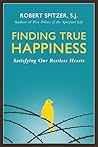
“The loving God will always respect our freedom; He will not force or push us on the journey to faith. The taste of perfect being (home), love, truth, goodness, and beauty is an invitation, not an ultimatum, and so we must follow through with an act of belief and trust in the One who has created us for perfect fulfillment with one another in Him.”
― Finding True Happiness: Satisfying Our Restless Hearts (Happiness, Suffering, and Transcendence Book 1)
― Finding True Happiness: Satisfying Our Restless Hearts (Happiness, Suffering, and Transcendence Book 1)
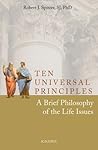
“Justices in the United States believe that their duty is to uphold the Constitution, but if they do not understand that the authority of the Constitution itself rests upon the inalienable natural rights of all human beings, then they not only undermine the Constitution, which they are sworn to uphold but also turn themselves into wielders of arbitrary power. Regrettably, this misuse of power occurred in both the Dred Scott decision and in the Roe v. Wade decision (and its subsequent interpretation in cases such as Planned Parenthood of Southeastern Pennsylvania v. Robert P. Casey).”
― Ten Universal Principles: A Brief Philosophy of the Life Issues
― Ten Universal Principles: A Brief Philosophy of the Life Issues
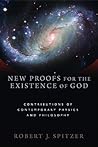
“You find it strange that I consider the comprehensibility of the world to the degree that we may speak of such comprehensibility as a miracle or an eternal mystery. Well, a priori one should expect a chaotic world which cannot be in any way grasped through thought. . . . The kind of order created, for example, by Newton’s theory of gravity is of quite a different kind. Even if the axioms of the theory are posited by a human being, the success of such an enterprise presupposes an order in the objective world of a high degree which one has no a-priori right to expect. That is the “miracle” which grows increasingly persuasive with the increasing development of knowledge.44 Since”
― New Proofs for the Existence of God: Contributions of Contemporary Physics and Philosophy
― New Proofs for the Existence of God: Contributions of Contemporary Physics and Philosophy
“The idea of a natural right is to preserve life, not to kill it; and a constitutional right cannot supersede the natural right to life. The whole point of natural rights is that they cannot be superseded by the power of the state.”
― Ten Universal Principles: A Brief Philosophy of the Life Issues
― Ten Universal Principles: A Brief Philosophy of the Life Issues
“This gives remarkable credibility to the words of the Nobel-prize-winning physicist Arno Penzias: Astronomy leads us to a unique event, a universe which was created out of nothing, and delicately balanced to provide exactly the conditions required to support life. In the absence of an absurdly improbable accident, the observations of modern science seem to suggest an underlying, one might say, supernatural plan.”
― New Proofs for the Existence of God: Contributions of Contemporary Physics and Philosophy
― New Proofs for the Existence of God: Contributions of Contemporary Physics and Philosophy
“In sum, the loss of transcendence in our culture has four negative consequences: 1. It causes us to underestimate and depreciate our nature, dignity, destiny, and meaning in life. 2. It takes away an important source of healing and consolation for those who are suffering and sick. 3. It causes alienation from reality, others, and ourselves, negatively impacting suicide rates, familial relations, substance use, and sense of fulfillment and hope. 4. It leads to a decline in ethical motivation within individuals and ethical conduct within culture. If”
― The Soul's Upward Yearning: Clues to Our Transcendent Nature from Experience and Reason
― The Soul's Upward Yearning: Clues to Our Transcendent Nature from Experience and Reason
“In order to prevent a violation of the principle of nonmaleficence, every human being must be valued at the highest level of development, because attaching value to any lower level of development risks the possibility of undervaluing that human being (i.e., subjecting him to the classification of being "inferior" or "less than human"). This undervaluation, in turn, allows for a serious violation of the principle of nonmaleficence, that is, justifying killing, slavery, marginalization, isolation, etc., of this human being because the human being is thought to be "inferior" or "less than human.”
― Ten Universal Principles: A Brief Philosophy of the Life Issues
― Ten Universal Principles: A Brief Philosophy of the Life Issues
“There is, however, a trade-off in pursuing the higher levels. We will have to give up the immediate gratification, intensity, and surface apparentness of the lower levels of happiness. As will be explained in the next chapter, this requires commitment, discipline, and good habits, because immediate gratification, intensity, and surface apparentness make Levels One and Two hard to resist. They are like a “default drive”, because they are enticing, intense in their fulfillment, and immediately gratifying. Moreover, our culture promotes them as if they are the only things worth striving for and can be completely satisfying and meaningful.”
― Finding True Happiness: Satisfying Our Restless Hearts (Happiness, Suffering, and Transcendence Book 1)
― Finding True Happiness: Satisfying Our Restless Hearts (Happiness, Suffering, and Transcendence Book 1)
“The heart’s reasons are essential, but without the mind’s reasons, they might seem to be ungrounded idealism that can undermine conviction and openness to God and grace. My”
― The Soul's Upward Yearning: Clues to Our Transcendent Nature from Experience and Reason
― The Soul's Upward Yearning: Clues to Our Transcendent Nature from Experience and Reason
“This second metaphysical premise dates back to the time of Parmenides. It may be summed up as follows: “From nothing, only nothing comes.” If we don’t put any content into “nothing” (such as continuity, dimensionality, or orientability, as might be found in a spatial continuum), then “nothing” will not mistakenly refer to “something”; it will not mistakenly be thought to have characteristics, do something, or be somewhere, etc. Nothing is nothing. There is no such thing as “nothing.” To say anything else argues the most fundamental of contradictions. We may now proceed to our conclusion—combining a first premise from physics and a second premise from metaphysics. (1) If there is a reasonable likelihood of a beginning of the universe (prior to which there was no physical reality whatsoever), and (2) if it is apriori true that “from nothing, only nothing comes,” then it is reasonably likely that the universe came from something which is not physical reality. This is commonly referred to as a “transcendent cause of the universe (physical reality)” or “a creator of the universe.”
― New Proofs for the Existence of God: Contributions of Contemporary Physics and Philosophy
― New Proofs for the Existence of God: Contributions of Contemporary Physics and Philosophy
“This version of the metaphysical argument consists of five steps: I. Proof of at least one unconditioned reality. II. Proof that unconditioned reality itself is the simplest possible reality. III. Proof that unconditioned reality itself is absolutely unique. IV. Proof that unconditioned reality itself is unrestricted. V. Proof that the one Unconditioned Reality is the continuous Creator of all else that is.”
― New Proofs for the Existence of God: Contributions of Contemporary Physics and Philosophy
― New Proofs for the Existence of God: Contributions of Contemporary Physics and Philosophy
“Otto contends that the presence of the powerful and overwhelming numen is primary, and this causes us to react to it with a sense of reverence, humility, and creatureliness.17”
― The Soul's Upward Yearning: Clues to Our Transcendent Nature from Experience and Reason
― The Soul's Upward Yearning: Clues to Our Transcendent Nature from Experience and Reason
“When one reads the biographies of great artists, musicians, and poets, one senses the tragedy with which art is frequently imbued. What causes these extraordinarily gifted men and women to abuse themselves, to judge themselves so harshly, to so totally pour themselves into their art? Perhaps it’s when art becomes a “god,” when one tries to extract perfect and unconditional beauty from imperfect and conditioned minds and forms.”
― New Proofs for the Existence of God: Contributions of Contemporary Physics and Philosophy
― New Proofs for the Existence of God: Contributions of Contemporary Physics and Philosophy
“Otto concurs with James that the numen appears as an objective presence, and that it is distinguishable from every other object we experience, because it is more deep and more general (all-encompassing) than all other objects.”
― The Soul's Upward Yearning: Clues to Our Transcendent Nature from Experience and Reason
― The Soul's Upward Yearning: Clues to Our Transcendent Nature from Experience and Reason
“It appears as a wholly-Other, superior, incomprehensible, and mysterious power with passion, emotion, and will that elicits from us a sense of creatureliness, humility, submission, respect, reverence, and worship. From”
― The Soul's Upward Yearning: Clues to Our Transcendent Nature from Experience and Reason
― The Soul's Upward Yearning: Clues to Our Transcendent Nature from Experience and Reason
“The United Nation's Universal Declaration of Human Rights follows the same intrinsic logic, namely, the power behind any constitution or charter is derived from the legitimate authority of a state; the legitimate authority of a state, in turn, rests upon a mandate to promote and protect freedom, justice, and peace; this mandate requires that every state recognize the natural rights and the intrinsic dignity of every human being (because freedom, justice, and peace cannot be achieved without the protection of natural rights). If any state fails to protect the natural rights of human beings, that state loses its legitimacy and its right to govern and can be legitimately rebelled against in the interest of justice, peace, and freedom.”
― Ten Universal Principles: A Brief Philosophy of the Life Issues
― Ten Universal Principles: A Brief Philosophy of the Life Issues