Goodreads helps you follow your favorite authors. Be the first to learn about new releases!
Start by following Daphne de Marneffe.

Showing 1-30 of 112
“To tell a story is inescapably to take a moral stance," wrote the psychologist Jerome Bruner. Every story we tell, of marriage or life involves judgement about the salient facts, the details to amplify, the impression we wish to leave. The techniques that great storytellers use to draw us in are not unlike the ones that intimate partners use with each other to promote fruitful conversation. Both ease the listener into their story by speaking in terms of possibilities rather than certainties. When one partner wants to invite the other to consider his perspective, he signals his belief that he doesn't have sole access to the truth...In doing so he invites curiosity...Trouble couples insist their partner's meanings are unambiguous.”
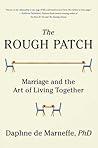
― The Rough Patch: Midlife and the Art of Living Together
― The Rough Patch: Midlife and the Art of Living Together
“I’d go so far as to say that, even when the offending behaviors don’t seem to be budging, what makes the biggest difference between hope and hopelessness is whether partners demonstrate self-awareness and self-responsibility—acknowledging their impact on each other, and taking responsibility for trying to do something different.”
― The Rough Patch: Marriage and the Art of Living Together
― The Rough Patch: Marriage and the Art of Living Together
“When you can’t feel or act in a way that connects you to your bigger-picture goal of warmth and harmony, it’s worth attempting a “bottom-up” rather than a “top-down” strategy, focusing on the in-the-moment possibilities for awareness, kindness, and responsiveness. A finer-grained attention to what you are each doing to cause bad interactions can enable you to notice what each of you could do differently and gently lead you away from dwelling in a miasma of emotional negativity that toxifies the whole relational atmosphere. Attention to process, not outcome; awareness in the moment; tuning in to your own emotional weather—these are valuable mindfulness techniques under any circumstances, but they are particularly important to creating the moments of repair or attunement that can then promote a more positive big picture. As”
― The Rough Patch: Marriage and the Art of Living Together
― The Rough Patch: Marriage and the Art of Living Together
“When we’re self-aware, we reflect on the source and effect of our emotions. When we’re self-responsible, we face our impact on the other person and commit to adjusting our behavior. People who want to stay married can live with a lot—a lot of limits, a lot of annoyances, even a lot of deprivations. But feeling they are being heard is one of the basic requirements for feeling loved. And the flip side is also true: not feeling heard is what people find most corrosive to their sense of trust and potential in marriage. Self-awareness means we’re listening to ourselves. Self-responsibility means we’re listening and responding to the other.”
― The Rough Patch: Marriage and the Art of Living Together
― The Rough Patch: Marriage and the Art of Living Together
“Apart from the hideous crisises and losses, the usual problems of life-about children, money, jobs, and houses-are difficult and frustrating to talk about and often hard to solve. It takes effort to remain self-aware and self-controlled enough to continue to think together about the problems. It takes effort to resist the temptation to cast our partner as our obstacle and instead to face that life itself presents obstacles and that remaining in conversation with our partner is sometimes our best hope of meeting them.”
―
―
“Development in adulthood, and in marriage, requires using the past to animate the present. We lose many things in life. We lose people we love, our younger selves, our children's babyhoods, and the crazy-in-love phase with our partner. We mourn the losses and keep the memories and past selves alive in us-through rituals, reminiscence, and loving action toward othres, investing in the future- is one of the greatest gifts of mature adulthood. From midlife onward, perceiving oneself as generative gives people not only a sense of meaning, but appears to relate to greater health and longer health.”
― The Rough Patch: Marriage and the Art of Living Together
― The Rough Patch: Marriage and the Art of Living Together
“Even when a marriage is basically good people are not always happy. Marriage is a crucible for becoming a more mature, compassionate person. It offers an unflinchingly up-close-and-personal example of how we treat another human being. We see our minds in action, both our worst tendencies and our best. In this light how can we even judge the viability of our marriages without making sure we've gotten enough sleep, exercised, eaten right, and developed some means of reflection, prayer, or meditation? Our emotions and bodies whip us around, and we're so often mystified as to what's causing a given mood. It's so easy to blame the person at hand, which in marriage, unfortunately is often one's spouse.”
― The Rough Patch: Marriage and the Art of Living Together
― The Rough Patch: Marriage and the Art of Living Together
“Exaggerating my partner's position allows me to fight with him, rather than ask myself the hard questions about what I believe we can afford. I delegate certain attribute to my partner -for example, recasting his reasonable concern as his "negative" approach to money- while claiming other attributes for myself- I spend as a way to "stand up for myself" in the face of my partner's "control" or to express my "sense of adventure in the face of my partner's" "inertia”
― The Rough Patch: Marriage and the Art of Living Together
― The Rough Patch: Marriage and the Art of Living Together
“In a couple allowing each other aloneness is part of allowing each other to explore, have interests, and play. One puts oneself in the other's place through sympathetic imagination. Each person recognizes that "my partner has to do this to be who (s)he is". Each can tolerate the idea "you will forget about me, will forget I'm alive" for some stretch of time, and each accepts, supports, and respects that. At the same time, they share an understanding: "I need you to come back and remember I'm alive and that I need things from you". In a good relationship we are constantly calibrating and adjusting the elastic band of distance and closeness. Sometimes it's pulled tighter and sometimes it's more slack. But the security built over time allows for solitude and immersive experience.”
― The Rough Patch: Marriage and the Art of Living Together
― The Rough Patch: Marriage and the Art of Living Together
“Who do I want to be as an individual? Who do I want to be as a partner? And how do the two fit together?”
― The Rough Patch: Marriage and the Art of Living Together
― The Rough Patch: Marriage and the Art of Living Together
“I tell couples that the single most important thing they can do to stay connected is to hold on to the feeling of wanting to stay connected. Viewing the sweep from first pregnancy to middle age, I’ve concluded that the most significant risk of new parenthood is that couples will stop taking their own emotional needs seriously enough. They’ll let their needs slide, out of the best of intentions, only to realize in midlife that their fuel tanks are empty.”
― The Rough Patch: Marriage and the Art of Living Together
― The Rough Patch: Marriage and the Art of Living Together
“Seeing your partner’s perspectives and experience as equal in importance to your own. This means recognizing narcissism for what it is (it’s not just you, we all have it). Relating to others as genuine people, rather than need satisfiers or projections of your own psyche, is a lifelong effort, never complete.”
― The Rough Patch: Marriage and the Art of Living Together
― The Rough Patch: Marriage and the Art of Living Together
“The hope in marriage is that both people manage to take care of their own and their partner’s emotions. We”
― The Rough Patch: Marriage and the Art of Living Together
― The Rough Patch: Marriage and the Art of Living Together
“First, we know more now about time and loss. Our own eventual mortality is becoming less of an abstraction and more of a fact. We’ve almost inevitably suffered some disappointments and setbacks along the way. The spiritual wisdom of the ages is starting to make visceral sense. No person, job, or acquisition, no matter how wonderful, can ever entirely fill our sense of incompleteness. We even begin to sense that those who “have everything” are in exactly the same boat.”
― The Rough Patch: Marriage and the Art of Living Together
― The Rough Patch: Marriage and the Art of Living Together
“Through metacognition, we understand that subjective reality is not objective reality; that our perception of reality, and other people’s perception of reality, are colored by our respective desires, beliefs, and goals.”
― The Rough Patch: Marriage and the Art of Living Together
― The Rough Patch: Marriage and the Art of Living Together
“He also identified what makes contemporary marriage both an ingenious psychological creation and a demanding emotional balancing act. Marriage is a mature relationship in which we affirm each other as lovable people through accepting each other's childlike--read human--dependence. In fact marriage is a "mature union" insofar as it creates an atmosphere where partners can gratify each other's "unashamed dependence." When Dick alludes to "childlike needs", "caressing words and actions," and "cherishing" he's talking about the desires for tenderness, shared pleasure, and excitement that are at the core of emotional closeness.”
― The Rough Patch: Midlife and the Art of Living Together
― The Rough Patch: Midlife and the Art of Living Together
“that kind of striving, people too often end up in misdirected solutions, relational or otherwise, that can only temporarily relieve their desolation. The reality that life is lived in one direction means that things we might have had in concrete form at earlier points in life—youthful beauty, our high school sweetheart, Herculean sexual stamina—become increasingly costly and delusional to pursue. As time passes, the stakes of not squarely facing the reality of loss, of relinquishing what you can’t actually have, get higher. We have to develop and refine other capacities, inner capacities, if we want the second half of life to go well.”
― The Rough Patch: Marriage and the Art of Living Together
― The Rough Patch: Marriage and the Art of Living Together
“now the time to reckon with that question? We may begin to feel tendrils of doubt, the upwelling of inconvenient longings and needs, an uneasy sense that suppression or chronic discord will not be sustainable. We may encounter dread, fear, and a desire to escape through work, or screens, or drink. We’re dimly aware we may have to lose in order to gain, that painful upheavals may be the cost of emotional growth or inner peace. Oscillating between what is and what could be, between reality and possibility, between embracing and relinquishing, we feel disoriented and confused. When things feel bad, two options may loom up in our minds: endure (for the children, the shared history, the finances, the stability, the vow) or strive (for something more, another chance, a better relationship). Surrender or escape. Give in or start over. Depressive resignation or manic flight. These occur to us largely because it’s not at all clear where else to go. But the thought that soon follows is that we want to be honest, and we ask ourselves, what is the line between seizing vitality and manically defending against decline? What’s the difference between “settling” and acceptance? How might the effort to have more in our lives unwittingly result in less? When does accepting limits help us to make the most of what we have, and when does it signal premature resignation? Our dawning awareness of life’s limits means we know that we’ve reached the point where dismantling what we have and starting something new does not come cheaply. We know there’s really no such thing as “starting over,” only starting something different and trailing the inevitable complications in our wake. The acting out we see around us, which till now we’ve casually dismissed, begins to looks like one way that people try to combat the stasis of depression with the action of escape, attempting to transcend (at least temporarily) the “hitting a wall” feeling that this life stage can induce.”
― The Rough Patch: Marriage and the Art of Living Together
― The Rough Patch: Marriage and the Art of Living Together
“and create our central love relationships.”
― The Rough Patch: Marriage and the Art of Living Together
― The Rough Patch: Marriage and the Art of Living Together
“The work is in facing authentic emotion and vulnerability. The work is in the challenge of opening up—to being present, to listening, to learning about feelings, to having hard conversations, to facing reality. The work is in having the courage to take risks, and to speak one’s truth and listen to the other, in the effort to create an intimate relationship. When people don’t take those risks, they shut down and disengage, and then marriage can’t possibly feel like anything but boring and static.”
― The Rough Patch: Marriage and the Art of Living Together
― The Rough Patch: Marriage and the Art of Living Together
“Trying to ground our marital values in universal principles seems next to impossible.”
― The Rough Patch: Marriage and the Art of Living Together
― The Rough Patch: Marriage and the Art of Living Together
“The hope in marriage is that both people manage to take care of their own and their partner's emotions. We move in a flexible and balanced way between care taking ourselves and care taking each other. Each of us imagines what it feels like to be the other person and tries to communicate in way that our partner can understand and constructively respond to. If all goes well when we can't recruit our mature capacities when we react poorly or blame for no reason then our partner steps in and helps co-regulate us.”
― The Rough Patch: Midlife and the Art of Living Together
― The Rough Patch: Midlife and the Art of Living Together
“Certainly it’s a relief to breathe in the practical, empowering spirit of positive psychology, which pinpoints the aspects of happiness we can attain through effort and healthy routines. Ironically, though, the well-intentioned messages about the health benefits of long-term relationships, as well as the New Age–inflected spiritual formulas, carry with them an astonishingly simplistic view of the one thing that lies at the beating heart of marriage: our emotions. Our emotions form the core of our sense of meaning. They define”
― The Rough Patch: Marriage and the Art of Living Together
― The Rough Patch: Marriage and the Art of Living Together
“Especially for women, it’s appealing and inspirational to hear a clarion voice calling for our right to self-actualization, given the millennia of female oppression. Until shockingly recently, and even still today, the relation of the sexes has reliably meant the silencing of female identity, desire, and goals. Even in the precincts of enlightenment and privilege, women often feel that we’ve handed over our entire minds to caring for others. We understandably feel put-upon, deprived, and resentful. Scholars provide ample evidence of the costs of workplace bias, and the corrosive effects on relationships of gendered divisions of labor. Getting in touch with our anger is a first step to positive change. But our challenge is to work toward solving the problems in the actual relationships in front of us. We reclaim genuine space for our identities not by rushing headlong into simplistic remedies, but by engaging in the less glamorous spadework of paying attention to our feelings, clarifying what matters to us, asserting our point of view, and negotiating for change. There”
― The Rough Patch: Marriage and the Art of Living Together
― The Rough Patch: Marriage and the Art of Living Together
“start to treat distance as the “new normal” and organize their emotional lives accordingly.”
― The Rough Patch: Marriage and the Art of Living Together
― The Rough Patch: Marriage and the Art of Living Together
“Ideally, we don’t simply react, but use our interactions with others to increase our self-awareness. The result is greater self-definition, which leads to the possibility of more authentic connection. This recurrent back-and-forth of relating to self and other is the engine of adult development, as well as the engine of growth in marriage. If the emotional interactions are basically healthy, we gradually become more self-realized as individuals and more deeply relational as partners.”
― The Rough Patch: Marriage and the Art of Living Together
― The Rough Patch: Marriage and the Art of Living Together
“also depends on something else: our ability to value both the needs of the individual partners and the needs of the marriage. Rough-patch breakdown often occurs when people lose track of one side or the other. Sometimes, they’ve conceptualized marriage as demanding a suppression of individuality, and they reach a point when that solution is no longer sustainable. Or, they find themselves only able to advocate for their own needs, in a sort of zero-sum survival strategy, without being able to hold on to a vision of the marriage as a resource for comfort and excitement, stability and growth. Throughout life, we continually learn about ourselves through pressing up against the personalities of others.”
― The Rough Patch: Marriage and the Art of Living Together
― The Rough Patch: Marriage and the Art of Living Together
“Glowing youth. Passionate sex. Romantic love. All great things. I’d say they are among some of the very best things. But that’s different from saying that the only way through the rough patch, to a sense of renewed vitality or purpose, is to somehow double down on our preoccupation with them. With”
― The Rough Patch: Marriage and the Art of Living Together
― The Rough Patch: Marriage and the Art of Living Together
“You need to embrace your partner, including his flaws, and not be so arrogant to think you don’t have flaws yourself. In hindsight, I think maybe we had to grow apart to grow together. My experience was groundbreaking for me personally, but our experience together illuminated where we lacked compassion for each other. I was all wrapped up in compassion, but I wasn’t being entirely compassionate with him. Loving the essence of the other person allowed us to pull through this.”
― The Rough Patch: Marriage and the Art of Living Together
― The Rough Patch: Marriage and the Art of Living Together
“The work is in facing authentic emotion and vulnerability. The work is in the challenge of opening up—to being present, to listening, to learning about feelings, to having hard conversations, to facing reality. The work is in having the courage to take risks, and to speak one’s truth and listen to the other, in the effort to create an intimate relationship. When”
― The Rough Patch: Marriage and the Art of Living Together
― The Rough Patch: Marriage and the Art of Living Together