Goodreads helps you follow your favorite authors. Be the first to learn about new releases!
Start by following Frank G. Anderson.

Showing 1-4 of 4
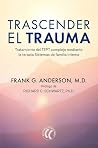
“It’s important to remember that the overarching goal of protective parts is to keep the hurt away. Protective parts will go to any length to distract, derail, confuse, and avoid moving toward the pain that an exiled part carries.”
― Transcending Trauma: Healing Complex PTSD with Internal Family Systems
― Transcending Trauma: Healing Complex PTSD with Internal Family Systems
“DIFFERENT TYPES OF WOUNDS In the section on attachment trauma, we talked about two different types of wounds that can develop in children when growing up. One is the collective wound, in which a main exile holds many different traumas over several years (e.g., “young Timmy” holding trauma due to the loss of his mother, the bullying he experienced at school because of his attention-deficit/hyperactivity disorder, and the fatal car accident he witnessed as a teen).”
― Transcending Trauma: Healing Complex PTSD with Internal Family Systems
― Transcending Trauma: Healing Complex PTSD with Internal Family Systems
“In contrast to “seeing things through rose-colored glasses,” it’s more like “seeing the world through trauma-colored glasses.” As mentioned earlier, it is beneficial for therapists to acknowledge and validate this trauma distortion, which increases the likelihood of it softening. I often use the following phrase from Brené Brown when talking to clients who are working through past experiences: “What’s the story you’re telling yourself right now?”
― Transcending Trauma: Healing Complex PTSD with Internal Family Systems
― Transcending Trauma: Healing Complex PTSD with Internal Family Systems
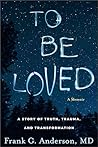
“I have come to believe that forgiveness is more about the person doing the forgiving than it is about the person who is being forgiven.”
― To Be Loved
― To Be Loved