Goodreads helps you follow your favorite authors. Be the first to learn about new releases!
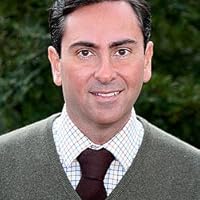
Start by following Steven G. Mandis.
Showing 1-30 of 93
“As we begin the new century, we know that our success will depend on how well we change and manage the firm’s rapid growth. That requires a willingness to abandon old practices and discover new and innovative ways of conducting business. Everything is subject to change—everything but the values we live by and stand for: teamwork, putting clients’ interests first, integrity, entrepreneurship and excellence.”
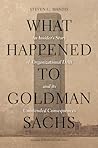
― What Happened to Goldman Sachs: An Insider's Story of Organizational Drift and Its Unintended Consequences
― What Happened to Goldman Sachs: An Insider's Story of Organizational Drift and Its Unintended Consequences
“Social networks can create competitive advantages and improve performance. An organization should consider creating some sort of partnership or sharing that is bound by financial or other interdependence and focus on improving the trust among the group members through socialization. The election or promotion into a leadership group should put a greater emphasis on culture-carrying qualities in the process.10 Leaders and board members should also monitor changes in the nature of the members of the group, cognizant that they can have an impact on the social network.”
― What Happened to Goldman Sachs: An Insider's Story of Organizational Drift and Its Unintended Consequences
― What Happened to Goldman Sachs: An Insider's Story of Organizational Drift and Its Unintended Consequences
“As a Goldman partner explained to me in an interview, Goldman was slowly losing its allure: the prestige of partnership, the mystique that had always marked the difference between Goldman and its competitors. 13 At the time of the IPO, no one knew that Goldman would (or would have to, as explained in some interviews with partners) become the highest-paying firm on Wall Street. It had traditionally paid less than its peers, except for partners, a business practice Whitehead felt reflected long-term greedy and attracted the right people who had this perspective.”
― What Happened to Goldman Sachs: An Insider's Story of Organizational Drift and Its Unintended Consequences
― What Happened to Goldman Sachs: An Insider's Story of Organizational Drift and Its Unintended Consequences
“Having various outside shareholders all with their own time horizons and objectives, combined with Goldman’s legal duty to put outside shareholders’ (not clients’) priorities first, makes the interpretation and execution of long term much more complicated and difficult.”
― What Happened to Goldman Sachs: An Insider's Story of Organizational Drift and Its Unintended Consequences
― What Happened to Goldman Sachs: An Insider's Story of Organizational Drift and Its Unintended Consequences
“The senators pulled no punches, calling the firm’s practices unethical, if not illegal. Later, after a Senate panel investigation, Levin called Goldman “a financial snake pit rife with greed, conflicts of interest, and wrongdoing.”
― What Happened to Goldman Sachs: An Insider's Story of Organizational Drift and Its Unintended Consequences
― What Happened to Goldman Sachs: An Insider's Story of Organizational Drift and Its Unintended Consequences
“By 1928, with only $20 million in partnership capital and either sole or joint control over funds worth $500 million, this created a devastating level of exposure on the eve of the October 1929 stock market crash. John Kenneth Galbraith used phrases such as “gargantuan insanity” and “madness … on a heroic scale” to describe GTSC’s strategy.21 When the crash came, GTSC shares fell from their high of $326 to less than $2 per share. The ensuing debacle and damage to Goldman’s reputation, leadership, and clients caused Goldman to stay away from the asset management business.”
― What Happened to Goldman Sachs: An Insider's Story of Organizational Drift and Its Unintended Consequences
― What Happened to Goldman Sachs: An Insider's Story of Organizational Drift and Its Unintended Consequences
“He thought codifying those values, in terms of behaviors, would help transmit the Goldman culture to future generations of employees. The business principles were intended to keep everyone focused on a proven formula for success while staying grounded in the clear understanding that clients were the reason for Goldman’s very existence and the source of the firm’s revenues.”
― What Happened to Goldman Sachs: An Insider's Story of Organizational Drift and Its Unintended Consequences
― What Happened to Goldman Sachs: An Insider's Story of Organizational Drift and Its Unintended Consequences
“A current partner told me that the organization looks for an explanation beyond the desire to leave because he or she may simply feel he or she has made enough money. That’s not acceptable, because it might send a message that money is the primary driver.”
― What Happened to Goldman Sachs: An Insider's Story of Organizational Drift and Its Unintended Consequences
― What Happened to Goldman Sachs: An Insider's Story of Organizational Drift and Its Unintended Consequences
“Diversity was also important in its making the right decisions and giving clients the best service and judgment. Such diversity of experiences and expertise gave Goldman the flexibility to deal with constant change.”
― What Happened to Goldman Sachs: An Insider's Story of Organizational Drift and Its Unintended Consequences
― What Happened to Goldman Sachs: An Insider's Story of Organizational Drift and Its Unintended Consequences
“This was highly valued by clients and a key distinguishing factor in hiring Goldman. In addition, Goldman focused more on coinvesting with clients. A coinvestment relationship was seen to have many advantages, including establishment of a closer relationship than did a merely advisory one.”
― What Happened to Goldman Sachs: An Insider's Story of Organizational Drift and Its Unintended Consequences
― What Happened to Goldman Sachs: An Insider's Story of Organizational Drift and Its Unintended Consequences
“One sign of organizational drift is a change in policies and business practices associated with a firm’s principles. Even before the IPO, Goldman began embracing opportunities it had once shunned out of concern for preserving its reputation for ethical conduct and to reduce conflicting interests.”
― What Happened to Goldman Sachs: An Insider's Story of Organizational Drift and Its Unintended Consequences
― What Happened to Goldman Sachs: An Insider's Story of Organizational Drift and Its Unintended Consequences
“Goldman’s response to the various pressures in a dynamic environment—in particular, rapid growth—made it even more difficult to notice that the firm was drifting away from its traditional interpretation of its principles.”
― What Happened to Goldman Sachs: An Insider's Story of Organizational Drift and Its Unintended Consequences
― What Happened to Goldman Sachs: An Insider's Story of Organizational Drift and Its Unintended Consequences
“Goldman’s corporate ethos, its common value system, John L. called “the glue that holds the firm together.”
― What Happened to Goldman Sachs: An Insider's Story of Organizational Drift and Its Unintended Consequences
― What Happened to Goldman Sachs: An Insider's Story of Organizational Drift and Its Unintended Consequences
“Goldman followed much later for two key reasons: first, unlike most of the others, it had no retail banking business, wherein banks deal directly with consumers on smaller transactions like mortgages and personal loans rather than big institutional clients or corporations executing large transactions.”
― What Happened to Goldman Sachs: An Insider's Story of Organizational Drift and Its Unintended Consequences
― What Happened to Goldman Sachs: An Insider's Story of Organizational Drift and Its Unintended Consequences
“Following consolidation, the financial services industry became intensely competitive, and Goldman now faced competition for scarce resources not only from other banks but also from insurance companies, investment advisers, mutual funds, hedge funds, and private equity firms.”
― What Happened to Goldman Sachs: An Insider's Story of Organizational Drift and Its Unintended Consequences
― What Happened to Goldman Sachs: An Insider's Story of Organizational Drift and Its Unintended Consequences
“How big and important are proprietary trading and principal investing activities at Goldman? Glenn Schorr, a Nomura Securities equity research analyst covering Goldman stock, estimated that the Volcker Rule, which is intended to restrict proprietary trading and principal investing at investment banks, would impact 48 percent of Goldman’s total consolidated revenue. To put this into context, he estimated the impact at 27 percent, 9 percent, and 8 percent of total consolidated revenues of Morgan Stanley, Bank of America, and J.P. Morgan, respectively.”
― What Happened to Goldman Sachs: An Insider's Story of Organizational Drift and Its Unintended Consequences
― What Happened to Goldman Sachs: An Insider's Story of Organizational Drift and Its Unintended Consequences
“For simplicity I will use the word residual in front of a word describing an element of the culture that has changed but not enough that it is gone or unrecognizable.”
― What Happened to Goldman Sachs: An Insider's Story of Organizational Drift and Its Unintended Consequences
― What Happened to Goldman Sachs: An Insider's Story of Organizational Drift and Its Unintended Consequences
“Goldman’s flat organizational structure also encouraged people to interact, bringing their diverse opinions to the table.29 The biennial change in partnership, with a balance of new partners joining and old partners leaving, kept the ideas fresh, but generally it did not introduce so many differences that cohesion was lost.30”
― What Happened to Goldman Sachs: An Insider's Story of Organizational Drift and Its Unintended Consequences
― What Happened to Goldman Sachs: An Insider's Story of Organizational Drift and Its Unintended Consequences
“It all served to reinforce the message: keep a low profile, respect the history, and remember whose money is at risk here. Such organizational humility, combined with the business principles and a drive for excellence, helped Goldman develop strong client relationships and allowed the firm’s culture to hold materialism at bay for a long time.”
― What Happened to Goldman Sachs: An Insider's Story of Organizational Drift and Its Unintended Consequences
― What Happened to Goldman Sachs: An Insider's Story of Organizational Drift and Its Unintended Consequences
“Because private equity firms and hedge funds valued and treated Goldman differently than did traditional corporate clients, Goldman’s approach to clients began to change. The private equity firms valued any investment bank that could get them the inside track on deals and could provide the best financing terms (including guaranteed or bridge financing, which puts the investment bank at risk if it can’t sell or distribute the loan to other lenders or investors). Many of the private equity firms felt they already had people (many of them former bankers) who were smarter and more skilled than those in the banks in the kinds of deals the firms were doing. In an interview, one private equity client described most investment bankers who maintained a relationship with his firm as “order takers.”
― What Happened to Goldman Sachs: An Insider's Story of Organizational Drift and Its Unintended Consequences
― What Happened to Goldman Sachs: An Insider's Story of Organizational Drift and Its Unintended Consequences
“Value at risk (VaR) is a widely used measure of the risk of loss on a specific portfolio of financial assets, expressed in terms of a probability of losing a given percentage of the value of a portfolio—in mark-to-market value—over a certain time. For example, if a portfolio of stocks has a one-day 5 percent VaR of $1 million, there is a 0.05 probability that the portfolio will fall in value by more than $1 million over a one-day period. Informally, a loss of $1 million or more on this portfolio is expected on one day in twenty. Typically, banks report the VaR by risk type (e.g., interest rates, equity prices, currency rates, and commodity prices).”
― What Happened to Goldman Sachs: An Insider's Story of Organizational Drift and Its Unintended Consequences
― What Happened to Goldman Sachs: An Insider's Story of Organizational Drift and Its Unintended Consequences
“An ugly truth is that less than 1 percent of the boys who enter Top Five League club youth academies at the age of nine make it as a professional soccer player at any level. For those who are at youth academies at age 16, five out of six (83 percent) are not playing professional soccer at any level at age 21.150”
― What Happened to the USMNT: The Ugly Truth About the Beautiful Game
― What Happened to the USMNT: The Ugly Truth About the Beautiful Game
“The structure of Goldman’s pre-IPO partnership resulted in financial interdependence and a social network of trust, virtually ensuring teamwork and dissonance; in turn, the business practices, policies, and values supported it.”
― What Happened to Goldman Sachs: An Insider's Story of Organizational Drift and Its Unintended Consequences
― What Happened to Goldman Sachs: An Insider's Story of Organizational Drift and Its Unintended Consequences
“There was a statistically significant difference between the firms. Bear Stearns and Lehman more consistently met or exceeded analyst expectations and showed the highest correlations, implying that they were “managing to analyst models.” Obviously those two firms failed. Goldman showed a correlation to meeting or exceeding expectations (demonstrating the effect of analyst models) but actually had the least correlation among the firms; it was the worst, implying that it was willing to accept losses or deviate from the analysts more than the other firms. This may reflect cultural characteristics and possibly elements that helped Goldman do relatively better in the credit crisis (discussed later).”
― What Happened to Goldman Sachs: An Insider's Story of Organizational Drift and Its Unintended Consequences
― What Happened to Goldman Sachs: An Insider's Story of Organizational Drift and Its Unintended Consequences
“it instituted some new practices that made it more similar to its competitors. In a process that is described by academics as performativity, the models used by Wall Street to assess the firm had a reflexive effect on how the firm chose to perform. 16”
― What Happened to Goldman Sachs: An Insider's Story of Organizational Drift and Its Unintended Consequences
― What Happened to Goldman Sachs: An Insider's Story of Organizational Drift and Its Unintended Consequences
“For a variety of reasons—including alleged promotion promises, guilt, and John L. Weinberg’s pleading—more partners stayed than initially had been predicted. But they told me the trading losses, combined with the defections, dramatically affected the culture.”
― What Happened to Goldman Sachs: An Insider's Story of Organizational Drift and Its Unintended Consequences
― What Happened to Goldman Sachs: An Insider's Story of Organizational Drift and Its Unintended Consequences
“Compensation can certainly send a message, but typically it is a private message to the employee from the company. Partnership, however, is a public recognition of the value of one’s contribution and ability to uphold the principles. It worked together with the culture to motivate people to accept lower compensation and work grueling hours. In addition, it served as a mechanism related to financial interdependence.”
― What Happened to Goldman Sachs: An Insider's Story of Organizational Drift and Its Unintended Consequences
― What Happened to Goldman Sachs: An Insider's Story of Organizational Drift and Its Unintended Consequences
“But John L. Weinberg said, “I always felt there was a terrific risk and still do, that when you start going that way [an IPO] you are going to have one group of partners who are going to take what has been worked on for 127 years and get that two-for-one or three-for-one. Any of us who are partners at the time when you do that don’t deserve it. We let people in at book value, they should go out at book value.”
― What Happened to Goldman Sachs: An Insider's Story of Organizational Drift and Its Unintended Consequences
― What Happened to Goldman Sachs: An Insider's Story of Organizational Drift and Its Unintended Consequences
“The very year (2010) Goldman paid the largest fine in SEC history at the time ($550 million), the firm made almost $8 billion. Fines are almost like an expense that Goldman attempts to minimize but cannot avoid.3”
― What Happened to Goldman Sachs: An Insider's Story of Organizational Drift and Its Unintended Consequences
― What Happened to Goldman Sachs: An Insider's Story of Organizational Drift and Its Unintended Consequences
“That requires a willingness to abandon old practices and discover new and innovative ways of conducting business. Everything is subject to change—everything but the values we live by and stand for: teamwork, putting clients’ interests first, integrity, entrepreneurship, and excellence.”
― What Happened to Goldman Sachs: An Insider's Story of Organizational Drift and Its Unintended Consequences
― What Happened to Goldman Sachs: An Insider's Story of Organizational Drift and Its Unintended Consequences