Goodreads helps you follow your favorite authors. Be the first to learn about new releases!
Start by following Jonathan Barnes.

Showing 1-5 of 5
“I have long believed the city, the country, indeed the world at large to be run by precisely the wrong kind of people. From the government to the great financial institutions, the peerage to the police force, our lives are controlled without exception by the stupid and greedy, the venal, the rapacious and the undeservedly rich. How much more comfortable would it be if the rulers of the world were not the cognoscenti of the bank balance, the ballot box, the offshore account, but were drawn instead from the ranks of the everyday - honest, kind, stout-hearted, commonplace folk.”
― The Somnambulist
― The Somnambulist
“Be warned. This book has no literary merit whatsoever. It it a lurid piece of nonsense, convoluted, implausible, peopled by unconvincing characters, written in drearily pedestrian prose, frequently ridiculous and wilfully bizarre. Needless to say, I doubt you'll believe a word of it.”
―
―
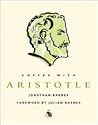
“The doctrine of the mean (the epithet 'golden' is un-Aristotelian) regularly occurs in later writers as a piece of moral advice -- a recipe or rule reminding us to 'observe the mean', to be moderate in all things and to avoid excess and deciciency. (If the doctrine urges us not to drink too much wine, it equally urges us not to drink too little -- but that is something which the moralizers usually find it prudent to ignore.)”
― Aristotle: A Very Short Introduction
― Aristotle: A Very Short Introduction
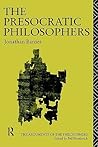
“analogies may be scientifically important; they may serve, psychologically, to illuminate a dry exposition or to dispel a puzzlement; and they may be useful, methodologically, in suggesting a synthesis or provoking a generalization. But they have no inferential status: argument 'from analogy' is one of the numerous species of bad argument. (pp 56)”
― The Presocratic Philosophers
― The Presocratic Philosophers
“That passage makes, clearly and for the first time, the crucial distinction between rejecting an argument for a conclusion and rejecting the conclusion itself. The art of criticism cannot thrive unless that distinction is grasped. (pp51)”
― The Presocratic Philosophers
― The Presocratic Philosophers