Goodreads helps you follow your favorite authors. Be the first to learn about new releases!
Start by following Katrine Marçal.

Showing 1-20 of 20
“La niña de once años que todas las mañanas recorre quince kilómetros en busca de leña para su familia desempeña un papel enorme en el desarrollo económico de su país. A pesar de ellos, su trabajo no es reconocido. La chica es invisible en las estadísticas económicas. En la magnitud del PIB, por la cual medimos la actividad económica de un país, ella no cuenta. Su actividad no se considera importante para la economía o para el crecimiento económico. Parir niños, criarlos, cultivar el huerto, hacerles la comida a los hermanos, ordeñar la vaca de la familia, coserles la ropa o cuidar de Adam Smith para que él pudiera escribir “La riqueza de las naciones”; nada de esto se considera “trabajo productivo” en los modelos económicos estándar. Fuera del alcance de la mano invisible se encuentra el sexo invisible.”
― Who Cooked Adam Smith's Dinner? A Story About Women and Economics
― Who Cooked Adam Smith's Dinner? A Story About Women and Economics
“Extreme inequality and financial crisis usually coincide. But the elite who cause it usually come out OK. And they are usually man.”
― Who Cooked Adam Smith's Dinner? A Story About Women and Economics
― Who Cooked Adam Smith's Dinner? A Story About Women and Economics
“Whether women work in the care sector because the wages are low or whether wages are low because women work there is a question that cannot be answered. But we know that a big reason for economic inequality is that women to a much greater extent work with care.”
― Who Cooked Adam Smith's Dinner? A Story About Women and Economics
― Who Cooked Adam Smith's Dinner? A Story About Women and Economics
“Actually, the idea of economic man is an efficient way of excluding women. We have historically allocated women certain activities and said that she must do them because she is a woman. Then we create an economic theory that states that these activities have no economic meaning.”
― Who Cooked Adam Smith's Dinner? A Story About Women and Economics
― Who Cooked Adam Smith's Dinner? A Story About Women and Economics
“In many ways, fear of the witch has always been a fear of women’s power. But it was also a fear of women congregating and doing things together. Women who went to see other women were obviously going to a witches’ sabbath to dance with the devil. What else would they be doing?”
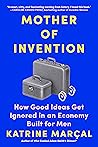
― Mother of Invention: How Good Ideas Get Ignored in an Economy Built for Men
― Mother of Invention: How Good Ideas Get Ignored in an Economy Built for Men
“When we turn the body into human capital, the political consequences of the body disappear. Hands that are raised, legs that move, fingers that point, floors that are mopped, mouths that are fed. Our economy is built on bodies.
If the body was taken seriously as a starting point for the economy, it would have far-reaching consequences. A society organized around the shared needs of human bodies would be a very different society from the one we know now.
Hunger, cold, sickness, lack of healthcare, and lack of food would be central economic concerns. Not like today: unfortunate by-products of the one and only system.
Our economic theories refuse to accept the reality of the body and flee as far from it as they can. That people are born small and die fragile, and that skin cut with a sharp object will bleed no matter who you are, no matter where you come from, no matter what you earn, and no matter where you live. What we have in common starts with the body. We shiver when we are cold, sweat when we run, cry out when we come, and cry out when we give birth. It's through the body that we can reach other people. So, economic man eradicates it. Pretends it doesn't exist. We observe it from the outside as if we were foreign capital.
And we are alone.”
― Who Cooked Adam Smith's Dinner? A Story About Women and Economics
If the body was taken seriously as a starting point for the economy, it would have far-reaching consequences. A society organized around the shared needs of human bodies would be a very different society from the one we know now.
Hunger, cold, sickness, lack of healthcare, and lack of food would be central economic concerns. Not like today: unfortunate by-products of the one and only system.
Our economic theories refuse to accept the reality of the body and flee as far from it as they can. That people are born small and die fragile, and that skin cut with a sharp object will bleed no matter who you are, no matter where you come from, no matter what you earn, and no matter where you live. What we have in common starts with the body. We shiver when we are cold, sweat when we run, cry out when we come, and cry out when we give birth. It's through the body that we can reach other people. So, economic man eradicates it. Pretends it doesn't exist. We observe it from the outside as if we were foreign capital.
And we are alone.”
― Who Cooked Adam Smith's Dinner? A Story About Women and Economics
“Cuando Adam Smith se sentaba a cenar, pensaba que si tenía la comida en la mesa no era porque les cayera bien al carnicero y al panadero, sino porque estos perseguían sus propios intereses por medio del comercio. Era, por tanto, el interés propio el que le servía la cena. Sin embargo, ¿era así realmente? ¿Quién le preparaba, a la hora de la verdad, ese filete a Adam Smith? Adam Smith nunca se casó. El padre de la ciencia económica vivió la mayor parte de su vida con su madre,[13] que se encargaba de la casa mientras un primo gestionaba sus finanzas. Cuando Smith ocupó el puesto de director de aduanas en Edimburgo, su madre se mudó a vivir con él. Toda su vida se dedicó a cuidar de su hijo; a la hora de responder a la pregunta de cómo llegamos a tener nuestra comida en la mesa, ella es la parte que Adam Smith pasó por alto. En la época en la que Adam Smith escribió sus teorías, para que el carnicero, el panadero y el cervecero pudieran ir a trabajar, era condición sine qua non que sus esposas, madres o hermanas dedicaran hora tras hora y día tras día al cuidado de los niños, la limpieza del hogar, preparar la comida, lavar la ropa, servir de paño de lágrimas y discutir con los vecinos. Se mire por donde se mire, el mercado se basa siempre en otro tipo de economía. Una economía que rara vez tenemos en cuenta. La”
― ¿Quién le hacía la cena a Adam Smith?: Una historia de las mujeres y la economía
― ¿Quién le hacía la cena a Adam Smith?: Una historia de las mujeres y la economía
“The Viking gods didn't whittle you with an axe. You are no hydraulic statue, telephone exchange or computer. You came, kicking and screaming, out of a pulsating, blood-red womb.”
― Mother of Invention: How Good Ideas Get Ignored in an Economy Built for Men
― Mother of Invention: How Good Ideas Get Ignored in an Economy Built for Men
“Jobless Jack sits in his damp basement watching YouTube videos of Jordan Peterson, while Mary goes on a Brené Brown course on ‘vulnerability as a leadership skill’. Welcome to the second machine age!”
― Mother of Invention: How Good Ideas Get Ignored in an Economy Built for Men
― Mother of Invention: How Good Ideas Get Ignored in an Economy Built for Men
“Человек экономический распоряжается своей жизнью и позволяет другим распоряжаться своими. Он невероятно компетентен просто потому, что он человек. Хозяином своего мира он стал именно благодаря собственному выдающемуся разуму, а не разуму нанятого работника или подчинённого. Он свободен и в каждой ситуации может молниеносно оценить все альтернативы и принять лучшее решение. Как шахматный гроссмейстер, он идёт по жизни, делая выбор. Такова природа человека, утверждали экономисты XIX века. А ещё он толерантен: человек экономический судит о людях не по тому откуда они ушли, а по тому, куда направляются. Кроме того, он любопытен, любит перемены и постоянно хочет лучшего, хочет больше: больше увидеть, получить больше впечатлений.”
― Who Cooked Adam Smith's Dinner? A Story About Women and Economics
― Who Cooked Adam Smith's Dinner? A Story About Women and Economics
“it’s claimed that they can tell us most things about life. This trend isn’t just found in popular science books. At universities, economists analyse ever greater parts of existence as if it were a market. From suicide (the value of a life can be calculated like the value of a company, and now it’s time to shut the doors) to faked orgasms (he doesn’t have to study how her eyes roll back, her mouth opens, her neck reddens and her back arches – he can calculate whether she really means it). The question is what Keynes would think about an American economist like David Galenson. Galenson has developed a statistical method to calculate which works of art are meaningful. If you ask him what the most renowned work of the last century is, he’ll say ‘Les Demoiselles d’Avignon’. He has calculated it. Things put into numbers immediately become certainties. Five naked female prostitutes on Carrer d’Avinyó in Barcelona. Threatening, square, disconnected bodies, two with faces like African masks. The large oil painting that Picasso completed in 1907 is, according to Galenson, the most important artwork of the twentieth century, because it appears most often as an illustration in books. That’s the measure he uses. The same type of economic analysis that explains the price of leeks or green fuel is supposed to be able to explain our experience of art.”
― Who Cooked Adam Smith's Dinner? A Story About Women and Economics
― Who Cooked Adam Smith's Dinner? A Story About Women and Economics
“Economists sometimes joke that if a man marries his housekeeper, the GDP of the country declines. If, on the other hand, he sends his mother to an old-age home, it increases again. In addition to the joke saying a lot about the perception of gender roles among economists, it also shows how the same kind of work can be counted or not counted as part of the GDP.”
― Who Cooked Adam Smith's Dinner? A Story About Women and Economics
― Who Cooked Adam Smith's Dinner? A Story About Women and Economics
“Witchcraft stemmed from woman’s insatiable lust, he imagined. Her vagina just couldn’t get enough. Just look at its form! It was these deeply insalubrious desires that supposedly put woman in contact with the devil and led her to ruin.”
― Mother of Invention: How Good Ideas Get Ignored in an Economy Built for Men
― Mother of Invention: How Good Ideas Get Ignored in an Economy Built for Men
“The job market is still largely defined by the idea that humans are bodiless, sexless, profit-seeking individuals without family or context. The woman can choose between being one of these, or being their opposite: the invisible and self-sacrifidng one who is needed to balance the equation.”
― Who Cooked Adam Smith's Dinner? A Story About Women and Economics
― Who Cooked Adam Smith's Dinner? A Story About Women and Economics
“The laws of the solar system that previously only God had known could suddenly be read using scientific method. The view of the world changed. From one where God intervened, had opinions, smote, parted oceans, moved mountains and personally opened millions of flowers every day. To one where God was absent and the universe was a clock that he had created and wound up, but that now ticked of its own accord.”
― Who Cooked Adam Smith's Dinner? A Story About Women and Economics
― Who Cooked Adam Smith's Dinner? A Story About Women and Economics
“Женский половой орган представляет собой элегантную саморегулирующуюся систему, в которой намного чище, чем, к примеру, во рту. Полчища лактобактерий (из тех, что есть в йогурте) круглосуточно поддерживают здесь порядок. Здоровая вагина чуть кислее, чем чёрный кофе (рН-показатель 5), но не такая кислая, как лимон (рН-показатель 2).”
― Who Cooked Adam Smith's Dinner? A Story About Women and Economics
― Who Cooked Adam Smith's Dinner? A Story About Women and Economics
“He didn’t get his dinner only because the tradesmen served their own self-interests through trade. Adam Smith got his dinner because his mother made sure it was on the table every evening.”
― Who Cooked Adam Smith's Dinner? A Story About Women and Economics
― Who Cooked Adam Smith's Dinner? A Story About Women and Economics
“Nie wyciosał cię swoim toporem Odyn, nie jesteś hydrauliczną rzeźbą, centralą telefoniczną ani komputerem. Wypluł cię skurcz krwawej macicy twojej matki.”
― Mother of Invention: How Good Ideas Get Ignored in an Economy Built for Men
― Mother of Invention: How Good Ideas Get Ignored in an Economy Built for Men
“Рыночные механизмы, как считалось, смогут соткать мир во всём мире и счастье для всех народов из такого элементарного сырья, как наши грязные чувства. Неудивительно, что нас это привлекло. Эксплуатация перестала быть личной. Женщина, надрывающая спину за шесть долларов в час, делает это не потому, что кто-то злой, и не потому, что её к этому приговорили. Никто не виноват, никто не несёт ответственность. Это экономика, дурачок. Экономика неизбежна. Она живёт в тебе. На самом деле это твоя сокровенная сущность.”
― Who Cooked Adam Smith's Dinner? A Story About Women and Economics
― Who Cooked Adam Smith's Dinner? A Story About Women and Economics
“Если каждый будет действовать эгоистично, это магическим образом приведёт к тому, что лучше станет всем. Та же история, что и у Смита. Наш эгоизм и жадность «невидимая рука» превратит в гармонию и равновесие— это сказание может, пожалуй, конкурировать с сокровенными таинствами католической церкви в плане обеспечения нас смыслом жизни и умением прощать. Твой эгоизм и твоя жадность примиряют тебя с другими людьми.”
― Who Cooked Adam Smith's Dinner? A Story About Women and Economics
― Who Cooked Adam Smith's Dinner? A Story About Women and Economics