Geoff Habiger's Blog - Posts Tagged "book-review"
Review of Krakatoa, by Simon Winchester
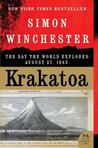 Krakatoa: The Day the World Exploded by Simon Winchester
My rating: 5 of 5 stars
August 1883. Events happening on a tiny island in the Sunda Strait between the Indonesian islands of Sumatra and Java were about to dramatically change the world. On the morning of August 27 the volcanic island of Krakatoa erupted in an earth-shattering explosion. Krakatoa’s eruption was dramatic on many scales. Tsunami and volcanic ash devastated many of the villages that sat on the coastline of the Sunda Strait on both Java and Sumatra. In the capital of the Dutch colony Batavia (present day Jakarta) day turned into night from ash. The sound of Krakatoa’s explosion was heard in Bangkok, Manila, Perth, and Rodriguez Island - nearly 3000 miles from its source! The pressure wave caused by the eruption displaced barometers in dozens of fashionable gentlemen’s clubs across Europe and was later found to have traveled around the globe at least seven times! Once it was over nothing but two small islands remained of the once mighty volcanic island. Krakatoa was the largest volcanic eruption in recorded human history and the recent connection of many countries by telegraph cable made it one of the first truly global events.
Winchester takes the reader on a wonderful journey, looking not only at the eruption of the volcano but also at the events that shaped the world at the time of the eruption. Winchester’s story focuses on the geology of Krakatoa and on the history of Indonesia and the lasting effects of Dutch colonization. The book begins with a look at the history of Indonesia. The islands of Indonesia, that today make up the most populous Islamic country in the world, were key to the ambitions of European countries during the height of the Colonial Era due to the riches brought by its spices – pepper, clove, and nutmeg, what Winchester calls the “holy trinity of the Asian spice trade.”
Winchester’s back-story and history of colonization set the stage for the dramatic events of 1883. Through this set-up the reader learns a great deal of geology. Indonesia sits at one of the crucial sites found on our Earth, located at a junction between two tectonic plates. To the south sits the Australian plate that is traveling north and subducting under the Eurasian plate. The results create one of the most tectonic and volcanically active regions on Earth. Winchester takes the reader through the thought processes that led to the unifying theory of geology, plate tectonics, and is the key to understanding how and why Krakatoa erupted.
As in Winchester’s other books his style is straightforward and easy to read. For many readers the thought of reading a book that covers both geology and history may seem daunting and dry, but Winchester envelopes the reader with a rich and vibrant writing style combined with over 50 illustrations, maps, and photos that keeps you turning page after page. We experience the eruption of Krakatoa from many perspectives, those of sailors traveling through the Sunda Strait at the time of the eruption, to colonial administrators living along the Straits. We are immersed in the lives of those people that experienced the eruption first hand and those that struggled to interpret and study the volcano’s activities. In the end Winchester takes us up to the summit of Anak Krakatoa – the child of Krakatoa, the volcano reborn from the sea to experience the rebirth of this amazing island first hand.
I highly recommend Krakatoa, The Day the World Exploded to anybody interested in geology, or history, or with a passion for both (like me). You will come away with a deeper understanding of the geology of plate tectonics and the area of the Java Trench as well as the history of Indonesia and how events on a small island on the morning of August 27, 1883 started us down a path to a connected, global community.
View all my reviews


Wonderful Retelling of Old Myths
 Norse Mythology by Neil Gaiman
My rating: 5 of 5 stars
I just finished this wonderful collection of Norse myths as retold by Neil Gaiman. This is a truly amazing collection of stories about the Norse gods. From Odin and Thor, to Loki, Freya, and all the other gods, this collection covers the broad swath of the Norse mythology from the creation of the universe to the end of days, Ragnarok.
If your only experience with the Norse gods has been the reinterpretations of Thor, Loki, and Odin from the Marvel Cinematic Universe then do yourself a favor and pick up this book. These are not Stan Lee's gods of Asgard. Did you know that Sif is married to Thor? Did you know that Hel is the daughter of Loki, or how Loki plays an important role in Ragnarok? All of these legends are brought to life in the amazing way that only Neil Gaiman can do it.
Through Gaiman's retelling of the old legends (he did a lot of research on the stories and blended some of the legends together to make his own interpretations) I learned a lot about the Norse gods. I learned how Loki, trying to save his own skin, caused the greatest treasures of the gods - including Mjolnir - to be created. I learned about the adventures of Thor and Loki, and how Thor created the tides as part of a drinking contest. One of the biggest things I learned - and it really shouldn't have surprised me - was how much the gods of Asgard were really a bunch of a-holes. They really were. They were bullies and thugs on a good day, and generally did whatever they wanted, slew anybody who ticked them off, and generally acted like they owned the place. Which they did, in a sense. But it is a hard juxtaposition when your only frame of reference for the gods of Asgard has been what the MCU has churned out.
I highly recommend this book to anybody with an interest in mythology, old tales, or just a really good story. And I very much recommend that you get it as an audiobook. (I checked the book out from my local library.) Neil Gaiman, as usual, does a wonderful job of narrating the stories he has crafted. I really can't think of actually "reading" a Gaiman story anymore as having him read to me is so much better.
View all my reviews
Powerful debut novel
 Children of Blood and Bone by Tomi Adeyemi
My rating: 4 of 5 stars
This debut novel from Tomi Adeyemi struck a powerful chord with me.
The story follows Zélie Adebola as she and her brother and father struggle to survive in the Kingdom of Orïsha. Zélie is a Diviner, a person with links to a magical heritage and connection to the Gods. However, 11 years ago that connection to the Gods and magic was taken away by Orïsha's king, and at the same time all maji - people who could wield magic - were killed, including Zélie's mother. Now the Diviners are attacked, abused, and taxed heavily by the king and his guards. Facing a higher tax that they cannot pay, Zélie and her brother, Tzain, travel from their small fishing village to the capital to sell a prized fish, and hopefully earn some much needed silver to keep the taxman at bay. But things do not go according to plan, as Zélie encounters Amari, a fugitive princess who has stolen a sacred artifact from her ruthless father. Now on the run, Zélie, Tzain, and Amari are pursued by Amari's brother, Inan who will stop at nothing to get the sacred artifact back for his father. Zélie is thrust into a fight for survival, not only for herself and family, but also for the very survival of magic in Orïsha.
Adeyemi has created a wonderful world filled with myths, legends, ancient Gods, and magic. The world is rich, filled with descriptions of the smells of the villages, cities, and wilderness, as well as weaving deep connections of family. It was easy to picture the locations and people in the story and feel their joy and pain as they struggle on their quest.
The story is told in the first person from three points of view: Zélie, Amari, and Inan. While a bit disconcerting at first, this triangle of perspectives allows the reader to identify with each character and to understand what drives each of them, and through them, what drives the motives of the larger forces - from the struggle to complete the quest to bring magic back, as well as King Saran's motives - funneled through his son's actions - to keep Orïsha safe by eliminating magic entirely. It is a complex web of emotions and motives, and it is well done. By the end I was hanging on every word, every action as the climax of the story was reached.
I do have some quibbles, mostly around character growth. Not necessarily 'development', as I think all of the main characters were well developed and 'made real'. I understood the characters and felt they had depth. However, with Inan and Zélie I did not feel there was a lot of character growth. Zélie starts as a young girl who is hot headed, quick to anger. She yearns for her mother, whose death has left a massive hole in her life. As the story progresses Zélie's anger and fury serve her well, but at the end she continues to yearn for her mother in a way that seems selfish and childish. To me this continuity may present the emotional burden placed on Zélie, but does not allow for any growth of her character. I felt that was a missed opportunity. At the same time, Inan seems to make the most growth and change of the three main characters, yet he makes a complete reversal back to his old self at the end, and that too was disappointing. Of the three main characters, Amari struck me as the only one who made the most growth and development as a character, changing from a meek, shy, and very timid girl, to a powerful woman capable of ruling as Queen. She makes sacrifices, and does the most to change herself for what she knows to be the right thing to do.
Regardless of my quibbles, the characters are still well developed and portrayed. Adeyemi has created an epic world that is a joy to explore and I want to learn more about it. I highly recommend this book to anybody who has a love of epic fantasy, enjoys the struggles of faith and family, and relishes an epic quest. This book has it all.
I listened to the audio production of this novel, read by Bahni Turpin. She does an amazing job of bringing the world or Orïsha to life, and making each of the characters stand out and shine. There was no problems with the audio production or the narration, and Bahni's accent is a perfect fit for the story.
View all my reviews
The Review Paradox
Recently a good author friend and I were chatting over pizza and beers. Like my blog posts our conversations tend to meander and head on tangents. We just talk and let the conversation flow. On this occasion our talk turned to book reviews – and our collective lack of them.
First, some background. I have co-written (along with Coy) two novels with two more coming out this year. We have received positive reviews from such illustrious places like Publisher’s Weekly, Kirkus, and notable bloggers. We have received mostly positive reviews on Goodreads and Amazon. Our sales have been good. Not great, but not piss poor either, and on sales (especially free promotions) I know that our titles have been downloaded thousands of times. Yet despite all of this we have very few reviews on Amazon. (As of this writing 12 for Unremarkable and 11 for Wrath of the Fury Blade.)
My friend Eric is a lot more prolific than I am. He has the luxury of being able to write full time. He has nine books released with several more coming out this year. One book (the first one in his first duology) has 46 reviews. But book two in that series only has 11 reviews. The books in his next series (a cool sci-fi trilogy) have 19, 5, and 4 reviews respectively for each book in the trilogy. His next series (currently five books with number six coming soon) have 3, 1, 1, and zero reviews (#5 was JUST released).
I have another friend (yes, I do have more than one friend, thank you very much) Zachry, who is also an author. He has two main series of books plus some short stories all available on Amazon. Series one has three books in it, plus three short stories and has 67 reviews for book one, but then the reviews drop off rapidly to 9 and 9 respectively for books 2 and 3, then 4, 4, and 2 reviews for the shorts. His other series (two books currently, book 3 coming out this year) has 42 reviews for book 1 and just 12 for book 2.
Now, I know that both of my friends have spent a lot of time promoting their titles. Eric runs Amazon ads and has his own newsletter and does newsletter builders. Zachry does book sales and combines those with ads and newsletter promotions. So, I know that they both have sold hundreds, if not thousands, of their books. Yet despite really good sales (heck, even great sales in terms of downloads of ebooks) our review numbers seem to be pathetic, anemic even.
Why is that?
How can a title with large sales figures have so few reviews, while another title by other authors (not counting books by “big time” authors published by large publishers – those numbers are skewed) can have hundreds of reviews?
Is it a time issue? Maybe people have bought the book but haven’t read it yet? Their TBR pile is so huge that they’ll be lucky to finish reading it by the time hell freezes over. I know that my own TBR pile is starting to rival Mt. Everest in scale.
Is it a time management issue? Are our lives so busy that we can’t take a couple of minutes to leave a review? I always leave a review for books I do read, but sometimes it can take me a few days to find the time to log onto Goodreads and Amazon to leave a review. (I also post my reviews on Bookbub when I can and on LibraryThing.)
Is there another reason? Do readers not know what they should say? Do they think a review isn’t needed? Do they personally not look at reviews, so they don’t think a review is needed? (And for the record you can keep your review as simple as you want – “I loved/liked it” is acceptable. Reviews are always needed, especially for small/indie/self-pubbed authors. And for the last one…I got nothing there.)
Reviews are very important for an author. Especially for indie, self-published authors and especially on Amazon. Amazon is the 8,000 lb monster gorilla in the publishing world. Reviews on their site go into their black box algorithms that Amazon uses to determine a book’s ranking, where it appears in searches, cross-promotions (if you like this, then try that), the winner of the next Eurovision contest, the presidential election, and whether it will rain on your birthday. (Okay – those last few probably aren’t determined by a book’s ranking on Amazon, but you never know. Heck, I don’t think even their programmers know. “Hey, Alexa! What cryptic algorithms do you use for ranking books by unknown authors?” Well, maybe I don’t want to know the answer to that.)
I don’t have an answer to the Review Paradox. I wish I did – I could write a book and make hundreds. Short of holding a gun to people’s heads there is not a way to force people to leave a review. (NOTE – do not EVER hold a gun to someone’s head. That’s dangerous and just makes you an asshole.) But…if YOU want to help fix the Review Paradox there are some things you can do.
1. If you read a book – leave a review. It’s very easy, takes less than five minutes (depending on your internet connection and how well you remember your passwords) and can be very simple. Here are some examples, so feel free to cut and paste for reviews you leave: “I loved this book!” “Worth reading.” “I couldn’t put it down.” “So good that I am now going to stalk the author until they write another book in this series!”
2. Share your reviews and tell others you reviewed a book. Even if you are not writing the next New York Times book critics review, or a Kirkus masterpiece, sharing your opinion helps spread the word about a book. Plus, guilt can help get others to leave reviews.
3. If you are a reader, you probably know other readers. Encourage them to leave reviews. If peer pressure can get your friends to agree to try that new Greek/Indian/Sushi Fusion restaurant you want to eat at, then it can work on leaving a book review. Besides, you are a cool person, and people like to do things that cool people do, so if you leave a review they’ll want to mimic you and leave reviews too.
4. What are your suggestions. Leave a comment to share your thoughts.
The Review Paradox may never go away. But with some simple steps maybe we can at least all get to double digits for the number of reviews on our titles.
First, some background. I have co-written (along with Coy) two novels with two more coming out this year. We have received positive reviews from such illustrious places like Publisher’s Weekly, Kirkus, and notable bloggers. We have received mostly positive reviews on Goodreads and Amazon. Our sales have been good. Not great, but not piss poor either, and on sales (especially free promotions) I know that our titles have been downloaded thousands of times. Yet despite all of this we have very few reviews on Amazon. (As of this writing 12 for Unremarkable and 11 for Wrath of the Fury Blade.)
My friend Eric is a lot more prolific than I am. He has the luxury of being able to write full time. He has nine books released with several more coming out this year. One book (the first one in his first duology) has 46 reviews. But book two in that series only has 11 reviews. The books in his next series (a cool sci-fi trilogy) have 19, 5, and 4 reviews respectively for each book in the trilogy. His next series (currently five books with number six coming soon) have 3, 1, 1, and zero reviews (#5 was JUST released).
I have another friend (yes, I do have more than one friend, thank you very much) Zachry, who is also an author. He has two main series of books plus some short stories all available on Amazon. Series one has three books in it, plus three short stories and has 67 reviews for book one, but then the reviews drop off rapidly to 9 and 9 respectively for books 2 and 3, then 4, 4, and 2 reviews for the shorts. His other series (two books currently, book 3 coming out this year) has 42 reviews for book 1 and just 12 for book 2.
Now, I know that both of my friends have spent a lot of time promoting their titles. Eric runs Amazon ads and has his own newsletter and does newsletter builders. Zachry does book sales and combines those with ads and newsletter promotions. So, I know that they both have sold hundreds, if not thousands, of their books. Yet despite really good sales (heck, even great sales in terms of downloads of ebooks) our review numbers seem to be pathetic, anemic even.
Why is that?
How can a title with large sales figures have so few reviews, while another title by other authors (not counting books by “big time” authors published by large publishers – those numbers are skewed) can have hundreds of reviews?
Is it a time issue? Maybe people have bought the book but haven’t read it yet? Their TBR pile is so huge that they’ll be lucky to finish reading it by the time hell freezes over. I know that my own TBR pile is starting to rival Mt. Everest in scale.
Is it a time management issue? Are our lives so busy that we can’t take a couple of minutes to leave a review? I always leave a review for books I do read, but sometimes it can take me a few days to find the time to log onto Goodreads and Amazon to leave a review. (I also post my reviews on Bookbub when I can and on LibraryThing.)
Is there another reason? Do readers not know what they should say? Do they think a review isn’t needed? Do they personally not look at reviews, so they don’t think a review is needed? (And for the record you can keep your review as simple as you want – “I loved/liked it” is acceptable. Reviews are always needed, especially for small/indie/self-pubbed authors. And for the last one…I got nothing there.)
Reviews are very important for an author. Especially for indie, self-published authors and especially on Amazon. Amazon is the 8,000 lb monster gorilla in the publishing world. Reviews on their site go into their black box algorithms that Amazon uses to determine a book’s ranking, where it appears in searches, cross-promotions (if you like this, then try that), the winner of the next Eurovision contest, the presidential election, and whether it will rain on your birthday. (Okay – those last few probably aren’t determined by a book’s ranking on Amazon, but you never know. Heck, I don’t think even their programmers know. “Hey, Alexa! What cryptic algorithms do you use for ranking books by unknown authors?” Well, maybe I don’t want to know the answer to that.)
I don’t have an answer to the Review Paradox. I wish I did – I could write a book and make hundreds. Short of holding a gun to people’s heads there is not a way to force people to leave a review. (NOTE – do not EVER hold a gun to someone’s head. That’s dangerous and just makes you an asshole.) But…if YOU want to help fix the Review Paradox there are some things you can do.
1. If you read a book – leave a review. It’s very easy, takes less than five minutes (depending on your internet connection and how well you remember your passwords) and can be very simple. Here are some examples, so feel free to cut and paste for reviews you leave: “I loved this book!” “Worth reading.” “I couldn’t put it down.” “So good that I am now going to stalk the author until they write another book in this series!”
2. Share your reviews and tell others you reviewed a book. Even if you are not writing the next New York Times book critics review, or a Kirkus masterpiece, sharing your opinion helps spread the word about a book. Plus, guilt can help get others to leave reviews.
3. If you are a reader, you probably know other readers. Encourage them to leave reviews. If peer pressure can get your friends to agree to try that new Greek/Indian/Sushi Fusion restaurant you want to eat at, then it can work on leaving a book review. Besides, you are a cool person, and people like to do things that cool people do, so if you leave a review they’ll want to mimic you and leave reviews too.
4. What are your suggestions. Leave a comment to share your thoughts.
The Review Paradox may never go away. But with some simple steps maybe we can at least all get to double digits for the number of reviews on our titles.