Pippa K.'s Blog
March 30, 2026
When Disability Support Gets Called a "Rolls Royce Scheme”
 .p-8xn3817 .pagelayer-col-holder{padding: 10px}.p-8xn3817 > .pagelayer-background-overlay{-webkit-transition: all 400ms !important; transition: all 400ms !important}.p-8xn3817 .pagelayer-svg-top .pagelayer-shape-fill{fill:#227bc3}.p-8xn3817 .pagelayer-row-svg .pagelayer-svg-top{width:100%;height:100px}.p-8xn3817 .pagelayer-svg-bottom .pagelayer-shape-fill{fill:#e44993}.p-8xn3817 .pagelayer-row-svg .pagelayer-svg-bottom{width:100%;height:100px} .p-wzb1015 .pagelayer-col-holder > div:not(:last-child){margin-bottom: 15px}.p-wzb1015 > .pagelayer-background-overlay{-webkit-transition: all 400ms !important; transition: all 400ms !important}
The NDIS described as a “Rolls Royce scheme”.
Not complex. Not under pressure. Not in need of reform.
Luxury.
That word choice is not accidental. It is not neutral. It tells a story before you even read the first sentence. And the story it tells is that disabled people are receiving something excessive. Something indulgent. Something more than we should.
Let’s be very clear about something.
There is nothing luxurious about needing support to get out of bed.
There is nothing extravagant about needing help to eat, to communicate, to regulate, to survive daily life. There is nothing premium about finally getting support after years of being dismissed, misdiagnosed, or pushed to breaking point.
For many of us, the NDIS did not arrive early. It arrived late.
It arrived after childhoods where support needs were explained away as behaviour, trauma, laziness, attitude. It arrived after burnout. After mental health collapse. After years of trying to function in a world that was never built for us.
So when I see the system that finally provides support being described as a luxury, I do not just see bad journalism. I see a narrative that is dangerous.
Because language like this shifts the conversation.
It moves us away from rights and into cost. It moves us away from support and into suspicion. It quietly plants the idea that maybe this is all just a bit too much.
And once that idea takes hold, the next step is always the same.
Cuts. Restrictions. Gatekeeping. Justification.
We already see it every day. People questioning whether someone is “disabled enough”. Support workers deciding what a participant should or should not need. Strangers online picking apart how someone uses their funding as if they have full insight into that person’s life.
This headline feeds that.
It tells the public that what we receive is excessive. That we are the problem. That the system is too generous.
But here is the part that gets ignored.
What is actually expensive is not support.
What is expensive is the absence of it.
It is the cost of late diagnosis.
The cost of untreated needs.
The cost of burnout that could have been prevented.
The cost of families carrying everything alone until they collapse under the weight of it.
If support had been there earlier, properly and consistently, many of us would not need the level of support we do now.
That is the real conversation that should be happening.
Not whether disabled people are getting too much.
But why we were left without enough for so long.
The NDIS is not perfect. No one is pretending it is. It needs accountability, it needs consistency, it needs to work better.
But calling it a “Rolls Royce scheme” is not accountability.
It is framing.
And it is framing that comes at the expense of the very people the system is meant to support.
Disabled people are not a budget problem to be solved.
We are people who have already paid the price of being unsupported.
And we should not have to justify, again and again, why basic support is not a luxury.p-vgg7103 .pagelayer-col-holder{padding: 10px}.p-vgg7103 > .pagelayer-background-overlay{-webkit-transition: all 400ms !important; transition: all 400ms !important}.p-vgg7103 .pagelayer-svg-top .pagelayer-shape-fill{fill:#227bc3}.p-vgg7103 .pagelayer-row-svg .pagelayer-svg-top{width:100%;height:100px}.p-vgg7103 .pagelayer-svg-bottom .pagelayer-shape-fill{fill:#e44993}.p-vgg7103 .pagelayer-row-svg .pagelayer-svg-bottom{width:100%;height:100px} .p-ldo1854 .pagelayer-col-holder > div:not(:last-child){margin-bottom: 15px}.p-ldo1854 > .pagelayer-background-overlay{-webkit-transition: all 400ms !important; transition: all 400ms !important}


March 14, 2026

Being an Autistic Woman in a World That Likes Neat Categories

For many of us who grew up autistic but undiagnosed, the discovery does not arrive with fireworks or a dramatic moment of clarity. It arrives slowly, sometimes quietly, like finding the missing piece of a puzzle you did not realise you had been trying to solve your entire life.
For me, understanding my autism was less about suddenly becoming someone different and more about finally having language for the person I had always been.
The sensory overwhelm that others brushed off.
The exhaustion that came from social situations that seemed effortless to everyone else.
The deep interests that became entire worlds of their own.
The constant feeling of translating myself so I could fit into spaces that were never really designed with people like me in mind.
Many autistic women share a similar path.
We learn early how to observe. We study people. We learn scripts. We mask. We adapt. We become very good at appearing “fine,” even when the reality underneath is far more complicated.
And because we become good at appearing fine, people often assume we are.
That assumption tends to follow us well into adulthood.
There is still a strong expectation that autism should look one very particular way. Something obvious. Something that can be recognised immediately. Something that fits neatly into a picture people already have in their heads.
But autism does not work like that.
Autism is a spectrum, not a ladder.
There is no straight line from “mild” to “severe,” no simple dividing wall between one autistic person and another. What exists instead is enormous variation in support needs, communication styles, sensory experiences, and life circumstances.
That diversity is part of what the spectrum was always meant to capture.
Yet recently I have been seeing more conversations that try to divide autistic people into clearer categories based on perceived levels of ability or support needs. These conversations often come from a genuine place. Families want their children’s realities to be recognised. People want to ensure that those with very high support needs are not overlooked.
That desire is understandable.
But creating sharper divisions within autism does not necessarily solve the underlying problem. In some cases, it risks creating new lines between autistic people who are already struggling to be understood.
Some of these conversations have been amplified by comments from autism researcher Uta Frith, who has spoken about the importance of recognising autistic people with very high support needs and has suggested that clearer distinctions within autism may be helpful.
I want to acknowledge that researchers like Frith have played an important role in advancing our understanding of autism over many decades. The field would not be where it is today without early researchers who helped bring autism into wider public awareness and study.
But recognition of support needs does not require dividing autistic people into fundamentally different categories.
When autism begins to be separated into labels that suggest entirely different types of autism, the conversation can quickly shift away from support and towards separation. It can create the impression that some autistic people represent “real autism” while others somehow fall outside that definition.
That framing does not reflect the reality many of us live with.
Support needs can shift across a lifetime. Someone who communicates fluently online may struggle to speak during periods of overload. Someone who appears independent may rely heavily on invisible supports to function day to day. Someone who needs constant care is still autistic in the same way that someone living independently is autistic.
Different needs do not create different kinds of autism.
They create different experiences of it.
When we begin comparing autistic people to each other in this way, we risk creating a quiet hierarchy of hardship. A comparison about whose challenges are legitimate and whose are not.
That helps no one.
Autistic people with very high support needs deserve recognition, dignity, and meaningful support. So do autistic people whose challenges are less visible but still deeply impactful. One group does not diminish the other. Both can exist. Both deserve to be heard.
The real issue has never been that autism includes too many different experiences.
The real issue is that our systems are rarely built to accommodate that diversity.
Instead of creating new labels, we might ask different questions.
What support does this person need to live well?
What barriers are making their life harder?
What would genuine inclusion look like here?
Those questions lead to solutions.
Labels rarely do.
Much of my life now sits at the intersection of lived experience and community advocacy. I spend a lot of time in spaces where autistic people and families are trying to navigate complicated systems, particularly around disability support. Again and again, I see how quickly conversations shift from listening to sorting people into categories. Who is “severe enough.” Who is “not severe enough.” Who deserves support and who does not.
Those conversations rarely help the people they claim to represent.
What helps is listening to autistic people themselves, in all our diversity, and recognising that our needs may look different but our voices all matter.
Autism was never meant to be a dividing line between us.
The spectrum was meant to describe the vast and varied ways autistic people exist in the world.
And there is room for all of us here.
February 24, 2026
Ashes of Creation: Grief, Growth, and Letting Go

I have been meaning to write this for weeks. Not because I did not know what to say, but because I did. And sometimes that is harder.
Ashes of Creation was never just another MMO on my radar. It became something I planned around. Built around. Dreamed around. It was the foundation I was preparing to lay community on for years to come. And that is why this has hurt the way it has.
When I first fell into the vision of Ashes, it was the artisan systems that caught me. The idea that gathering, processing, crafting, trading, building, and economic interdependence were not side content. They were core. The world would respond to players. Cities would rise and fall. Caravans would matter. The economy would matter. The quiet players who loved creating instead of conquering would finally have a place where their path was valued.
That spoke to me.
It aligned with how I see community. It aligned with how I built my guild. It aligned with the philosophy that every role matters, even if it is not flashy.
So I did what I always do when I believe in something. I built structure. I made plans. I mapped out professions I wanted to specialise in. I poured time and energy into shaping a guild that would thrive in that world.
It was not casual. It was intentional.
For a long time, I was comfortable with delays. MMO development is messy. Big ideas take time. I can handle waiting if I believe the foundation is solid. But over time something shifted. The updates felt heavier. The timelines stretched further. The tone around the project became less confident and more strained. I kept holding onto the vision, but I started feeling that familiar knot in my stomach. The one that whispers that something is not quite steady.
Then the news started rolling in. Leadership changes. Layoffs. Reports of internal instability. Allegations. Uncertainty
.
I am not here to rehash headlines or point fingers. What I felt in that moment was not curiosity. It was grief.
It is strange to grieve a game. People who have never built community around one will not understand it. They will say it is just entertainment. Just pixels. But when you build a guild, you are not just preparing for gameplay. You are holding people. You are shaping culture. You are creating a home.
And when the world you were building that home in collapses, it is not just a cancelled product. It is lost momentum. Lost anticipation. Lost shared hope. It is also the uncomfortable realization that you invested emotional energy into something you could not control. I cycled through sadness first. Then anger. Then that awkward embarrassment of having believed so deeply in a promise.
But after sitting with it, I realized something important.
The part that was real was never the launch date. The part that was real was the people.
The spreadsheets. The planning sessions. The late night conversations about systems. The shared excitement about caravans and crafting chains. The philosophy that every path had value. None of that disappears just because a studio imploded. If anything, this situation clarified something for me. I will never build a community around a promise again. I will build it around people. Games can shift. Studios can fall. Projects can collapse. But the culture we create together is portable.
Ashes of Creation was the blueprint I thought we were building toward. It turns out it was just the spark that brought the right people together.
There is also a part of me that feels genuine sadness for the developers who poured their time into it. Most of the people working on projects like this are not villains. They are creatives and engineers trying to bring something ambitious to life. When things fracture at the top, the people at the bottom feel it hardest. I can hold space for that while still acknowledging that the community deserved better transparency and stability.
Where I have landed now is not bitterness. It is acceptance.
I loved the vision of Ashes. I still think the idea was powerful. But I am done carrying the emotional weight of hoping the next update will fix what feels fundamentally broken.
For now, I am letting it go. Not because it did not matter. But because it mattered enough to hurt, and I do not want to keep reopening that wound. The guild continues. The community continues. The artisan philosophy continues.
The world may have changed, but we did not lose what was real. And maybe that is the quiet gift hidden inside all of this.
 .p-7i46852 .pagelayer-divider-seperator{border-top-style: solid;border-top-color: #999;border-top-width: 1px;width: 100%}.p-7i46852 .pagelayer-divider-holder{padding-top: 10px; padding-bottom: 10px;text-align: center}
December 16, 2025
Ashes of Creation, Worldbuilding, and the Choice to Build Together

Ashes of Creation is often described as an MMO, but that framing misses what it is really attempting. It is not just a game to be played, but a world designed to respond. A space where systems wait for people to engage with them, where absence exists until someone decides to fill it, and where meaning is created through participation rather than consumption.
That premise is immediately interesting from a writing perspective.
Most fictional worlds arrive complete. Cities stand before anyone lives in them. Economies function without labour. Power structures exist without consequence. Ashes of Creation does the opposite. It begins with potential. Nodes only rise if people invest in them. Trade only matters if someone risks carrying goods across dangerous ground. Conflict emerges not because the narrative demands it, but because people want control, safety, or growth.
This mirrors how stories are actually built. Not from climactic moments alone, but from accumulation. Small choices layered over time. Relationships formed, strained, and sometimes broken. The quiet work of building something that did not exist before.
That philosophy is the reason I chose to engage with this world more deliberately.
Alongside others who value patience and shared effort, I lead a guild called The Artisan Covenant. It exists not as a statement of dominance, but as a framework for cooperation. A way to experience Ashes of Creation as a collective act of building rather than a race through content. The guild itself is not the story. It is the environment in which stories are allowed to emerge.
My main character is a summoner, which feels fitting. The summoner is a class defined by relationships and awareness. Power comes from understanding positioning, timing, and how different elements interact. It is not about standing alone at the centre of the action, but about shaping the field so others can act effectively.
That approach carries into leadership as well. In a game like Ashes of Creation, leadership is less about control and more about orchestration. Making space for specialists. Trusting artisans and planners. Supporting adventurers and defenders when their role is needed. A summoner does not dominate the battlefield so much as enable it, and a healthy guild functions the same way.
Combat, exploration, and conflict still matter. They are part of a living world. But within this framework, they exist in service of something larger. Protecting trade routes. Defending long term investment. Supporting node growth. Ensuring that effort, once given, is not wasted.
From a narrative lens, this is where the real story lives. In how people choose to organise themselves. In who commits for the long term. In the constant tension between individual ambition and collective progress. These are not just mechanics. They are narrative engines that unfold slowly over time.
Ashes of Creation does not promise a perfect world. It promises a responsive one. A place where actions ripple outward and where systems reflect the values of the people participating in them. Choosing to build within that framework, and doing so alongside others, feels less like a gameplay decision and more like authorship.
As a writer, that distinction matters.
Much of my writing is concerned with systems, agency, and the quiet work that sustains communities. I am interested in process more than spectacle. In how meaning emerges gradually rather than arriving fully formed. Ashes of Creation resonates because it embodies those ideas in a living, participatory way.
It reminds me that good worlds are not defined by how much content they contain, but by how much room they leave for people to matter. For artisans to be valued. For leadership to listen rather than dictate. For stories to emerge through cooperation, failure, rebuilding, and trust.
Engaging with this world, and choosing to build within it as both a summoner and a guild leader, feels less like escapism and more like practice. A way of exploring shared creation while it is still in motion.
And that is a philosophy I carry far beyond the game.
December 2, 2025
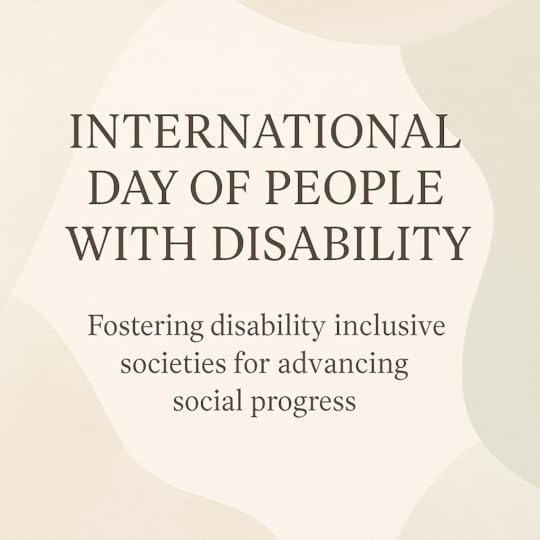
When Inclusion Becomes Real A Reflection for the International Day of People with Disability

Today is the International Day of People with Disability and this years theme is fostering disability inclusive societies for advancing social progress. The words sound polished but for many of us they reflect something deeply personal. Inclusion is not abstract. It is the daily reality of living, parenting, advocating and trying to carve out safety in systems that were not built with us in mind.
As an autistic adult who also parents autistic children I often see the world from both angles. I understand the sensory strain the communication gaps and the constant need to translate my own experience in ways that others will accept. I also carry the responsibility of helping my kids navigate a society that still treats disability as a burden or a misunderstanding rather than part of human diversity. That dual perspective shows me every day where the gaps are and where the opportunities for real progress sit.
Inclusion is not a feel good message that gets shared once a year. It is listening to disabled voices without interruption. It is believing people when they speak about their lives. It is challenging the myths that blame participants for the flaws in the NDIS. It is pushing back against ableism instead of letting it slide because it is easier to stay quiet. It is holding space for people with intellectual disabilities who are too often left out of conversations that directly affect them. It is understanding that boundaries in support work matter because quality support is not the same as doing whatever someone else thinks counts as kindness.
In my role as an admin of disability spaces I see how comments can lift people up or tear them down. I see how quickly some individuals dismiss or gaslight the lived experiences of disabled people. I also see the strength of community when people show up for each other. Social progress happens in those everyday interactions long before it appears in policy documents.
Being autistic shapes how I engage with the world and it also shapes how I advocate. I value clarity. I value honesty. I value gentleness and patience because I know what it feels like to need those things. I know what it feels like to fight misinformation and to explain the same truths again and again when people would rather believe sensational headlines than lived experience. This is why I speak up. Disabled people deserve to be safe heard and respected. Our children deserve systems that support them without blame or shame.
A disability inclusive society recognises the economic and social contributions disabled people make. It recognises that the NDIS is not a handout. It is an investment in access and dignity. It understands that funding people properly leads to better health better engagement and stronger communities. A society that includes disabled people does not treat them as a budget problem. It treats them as citizens whose lives matter.
Progress also begins in our homes and our online spaces. In the conversations we allow and the boundaries we set. In the effort we put into creating safe spaces where disabled people do not have to defend their existence. Every respectful interaction is a brick in the foundation of real inclusion. Every time we stand against misinformation or ableism we move things forward.
Today I honour the disabled community. The adults who fought for years without the language to explain themselves. The parents doing their best while navigating systems that contradict themselves at every turn. The kids growing up in a world that is finally starting to understand neurodiversity even if it still stumbles. The advocates who speak softly and the ones who speak loudly. The people who support others while trying to survive their own challenges.
November 8, 2025
From Chaos to Creativity: My Craft Haven Comes to Life

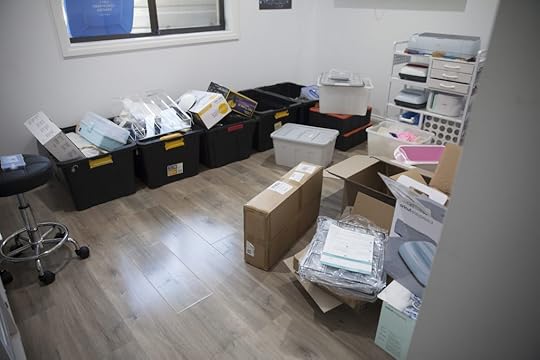
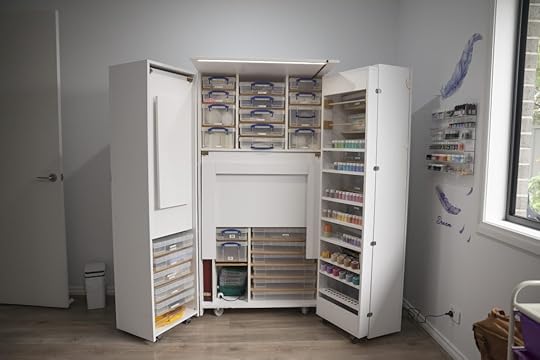
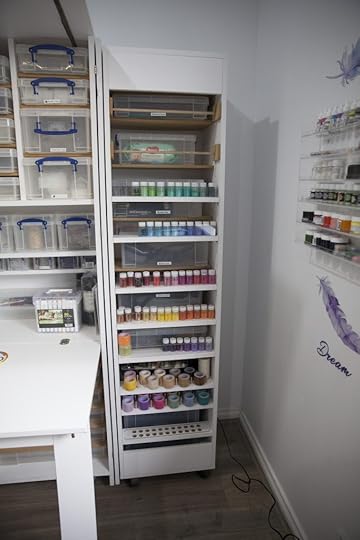
When I first claimed this little room as my own, it was full of boxes, tubs, and the echoes of a child’s laughter who’d just moved out to start their next adventure. I wrote then how excited I was to finally have a space for all my crafty pleasures and it’s safe to say, the transformation has been everything I dreamed of and more. 
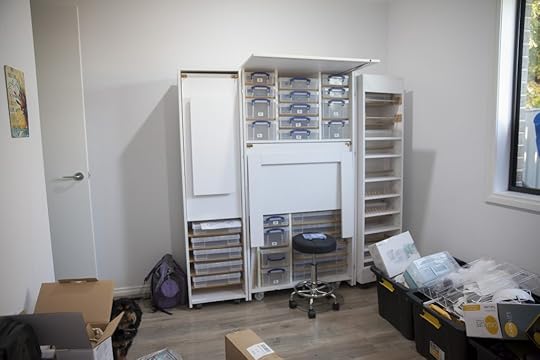
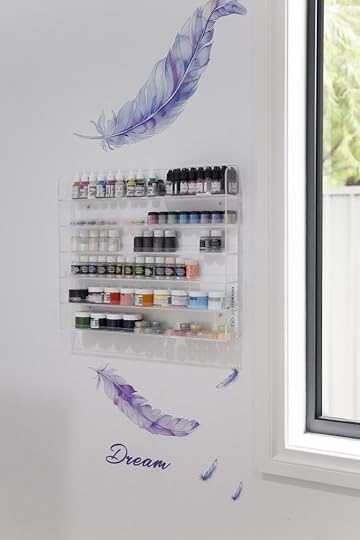
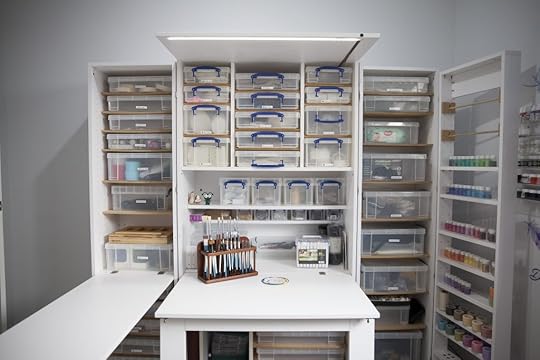
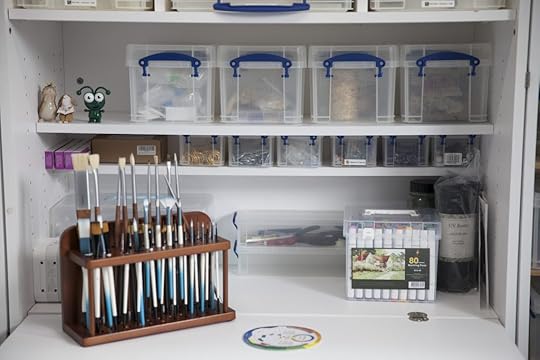
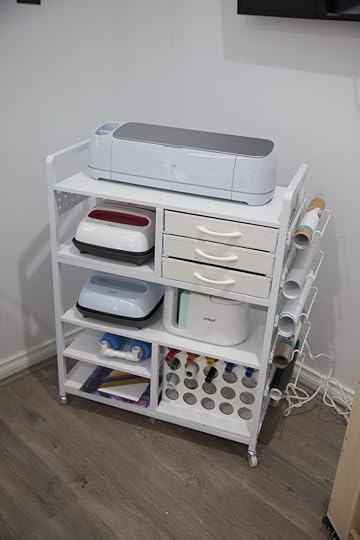
After years of admiring those gorgeous craft cupboards that never shipped to Australia, I finally found one secondhand right here at home! It felt like winning the creative lottery, a perfect blend of storage, workspace, and inspiration all in one. Bit by bit, I’ve unpacked, sorted, and organized every mold, brush, resin pigment, and Cricut tool into its own cozy nook.
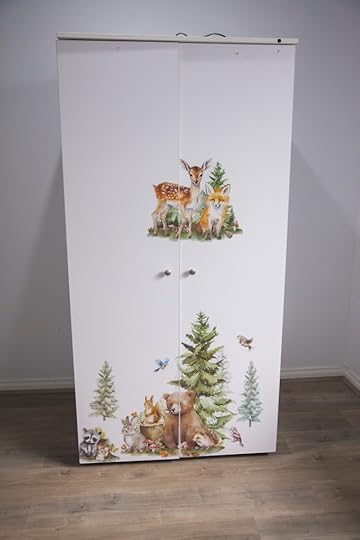
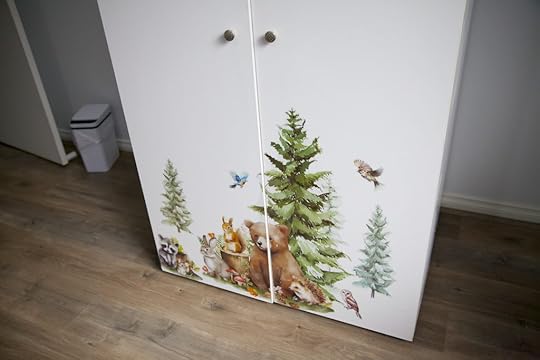
Now, when I walk in, I’m surrounded by colour and calm, shimmering resin pieces catching the light, paints lined up like a rainbow, drawers neatly labelled, and little woodland creatures watching over it all on my cupboard doors. 


Each wall tells a story: my resin pigments perched beneath soft feather decals whispering “Dream”, my art drying rack waiting for new canvases, and a sign that perfectly sums it up
“And into the Art Room I go, to lose my mind and find my soul.”
This space now holds the heart of my creative world from resin art, painting, and drawing to dreamcatcher weaving, every corner invites me to explore something new.
Setting it up has reminded me that creativity doesn’t just live in what we make; it’s also in the spaces we nurture for it to flourish. 
July 9, 2025
Farewell, Cole Turner – A Tribute to Julian McMahon

It’s a strange thing, the ache that comes with the passing of someone you’ve never met, but whose work lived in your life in such a meaningful way. Today, I’m feeling that ache as I say goodbye to Julian McMahon — the man who brought Cole Turner, aka Belthazor, to life on Charmed.
As a late teen, Charmed was more than just a show to me. It was comfort. Escape. Magic. Power. And Cole… well, Cole was complicated, passionate, dangerous, and tragic. Julian played him with such intensity and vulnerability that it was impossible not to be drawn in. He was the demon with a heart, the lover torn between two worlds, and one of the most unforgettable parts of the Halliwell legacy.
Cole wasn’t just a character. He was a chapter in my own story — one I turned to in moments I needed something familiar and fierce. I have a replica of the Book of Shadows, and among its pages is one of my favorites: the entry on Belthazor. I’ve included a photo of it here as a small tribute. The warnings, the darkness, the spell to summon him — it’s all still so vivid to me, like the show never left.
Julian’s portrayal of Cole was magnetic. He was dangerous and tender, relentless and broken. It was the kind of performance that stays with you — the kind that doesn’t fade with time. And that’s how I’ll remember him. Not just as Belthazor or Cole Turner, but as someone who helped shape a little piece of my world, simply by showing up on screen and telling a story.
Rest well, Julian. Thank you for the magic.
July 2, 2025
New Beginnings & A Bit of Magic

Well, it’s been a hot minute, hasn’t it?
I could chalk my absence up to the chaos of life (because let’s be honest, life has been a lot lately), but instead, let’s call this what it is — a soft reboot. A gentle return to this little corner of the internet, with fresh stories to tell and a renewed sense of purpose.
So hello again — and if you’re new here, welcome. I’m Pippa K, or Philly if you prefer. Writer, neurodivergent creative, lifelong bookworm, and occasional chaos wrangler (both feline and otherwise). I write because it helps me untangle the world — especially the messy, beautiful parts.
Some exciting news to kick things off…
After a long journey filled with rewrites, edits, and imposter syndrome, my work was published in The Eighteen Point Five anthology — a powerful collection of stories written by (or with) people living with disability or disorder. I’m beyond proud to be one of the 25 contributors sharing raw, real, and uplifting experiences in this book.
It’s been out in the world for a little while now, but I haven’t properly celebrated it here — and that changes today.
This anthology isn’t just a book. It’s a reminder that our stories matter. That we matter.
If you’d like a printed copy (or just want to have a chat about it), feel free to reach out through the blog or my Facebook page. I’d love to get a copy into your hands.
 What else is happening?
I'm currently knee-deep in edits for The Cat and Her Mistress, a standalone novel that’s been whispering to me for years. It’s strange and tender and fierce — a bit like me, I suppose — and I’m finally giving it the time and care it deserves.
There’s also short fiction in the works, messy journal entries, personal reflections, and maybe a few dragons — because of course.
So, here’s to new chapters. To making space for ourselves. To stories that linger.
Thanks for being here.
Warmly,
Philly 
May 20, 2022
Demolition Delight
NOTE: the images in this feed have been downsized or removed for copyright reasons. To see them in their unmodified state, please view the original post by clicking here.
So it has been awhile since I have updated this blog, I know I have said this time and time again that I will update more regularly but that does not seem to happen!
I do have a good excuse though since we are now currently living as a family of seven with my in-laws because our house has been demolished! That’s right our house is no more!
It has been 20 years in the making but we are finally moving forward with building a new house! The slab should be going down in the next few weeks but I thought I would share our excitement and some updated photos.
Of course our fur babies were very confused about what was going on at the time but they have settled in now and I am sure they will get another shock when we move back into the new house!
 What’s going on???
So once we had moved out into my husbands parents house (aren’t they amazing to put us up like this!)
Magill Demolition came and we saw the satisfying demolition of our house. we may no longer have this house but we will always have the memories that it held. From the birth of my first born, then a miscarriage, our second and third born as well as the passing of my beautiful fur baby Jasper (I did remember to grab Jasper’s ashes before we had the house knocked down).
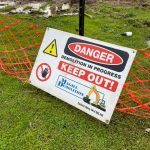 Danger! Demolition in progress!
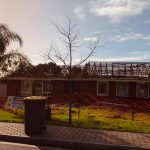 Going!
 Going!
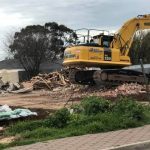 Going and now a pile of rubble!
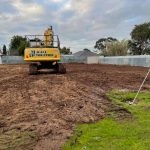 Gone!
Gone!So as you can see we now have a vacant block ready for the new house to go up, we did subdivide the block so our block isn’t as large but we still have a decent size. New fencing is due to go up in the next four weeks and then hopefully we will see some more action on the block and I can update some more.
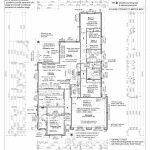
We have our plan and all sections have been completed so now it’s just a waiting game to see some action.
Here is an image of our house plan, we can’t wait to see all our choices come together!
The post Demolition Delight appeared first on Official Author blog of Pippa.K.