Samuél Lopez-Barrantes's Blog
November 12, 2025
SOUVENIR Magazine
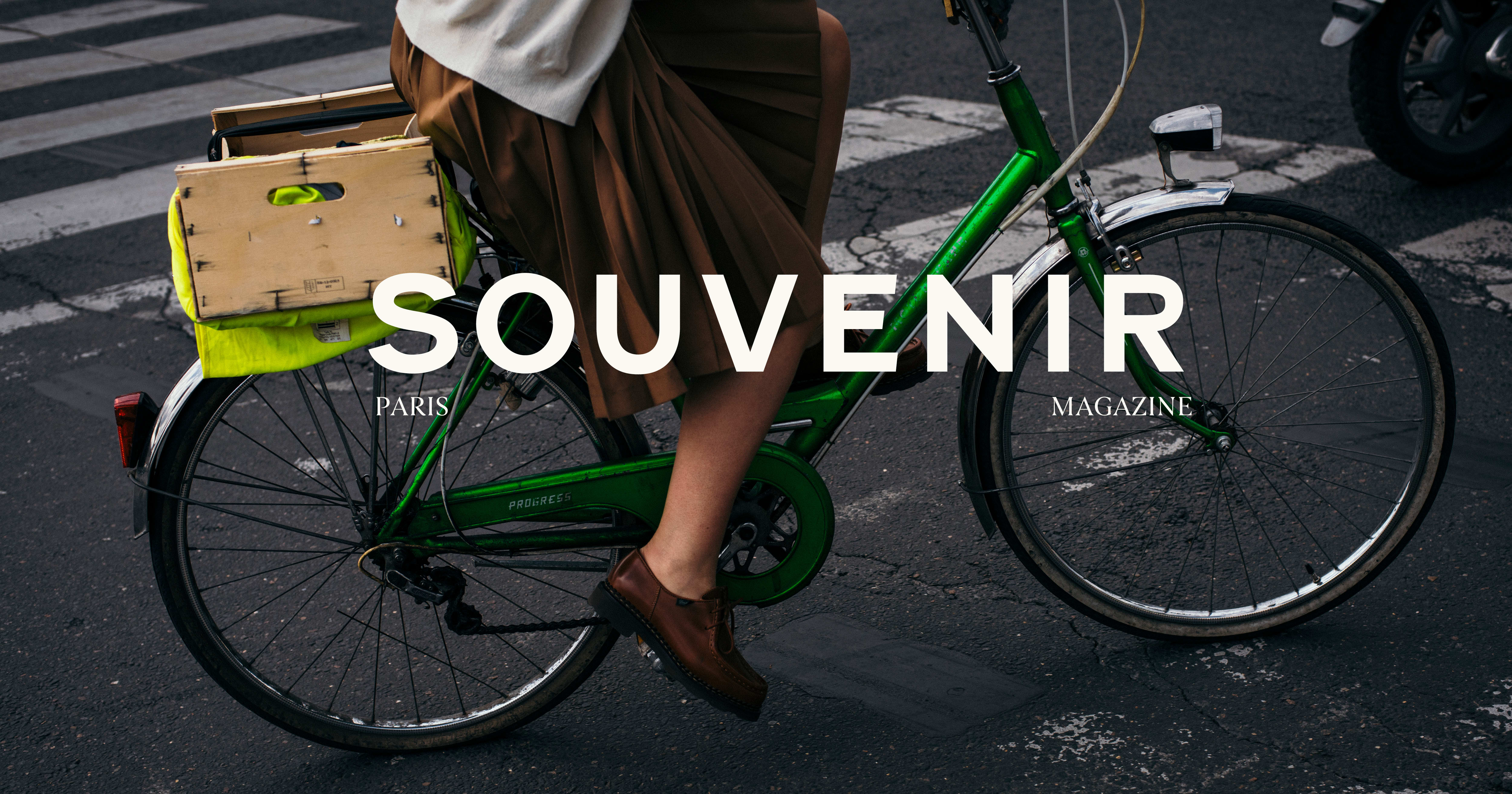 photo by Augusta Sagnelli
“What remains to be done? Well, everything. But to begin with, we’re going to head out into the world ourselves, magazine in hand, to meet people where they are. After all, if little journals start big movements, what starts little journals? The answer is, and has always been, readers like you.”
& , A Letter from the Founders
I’ve lived in Paris since 2010, and I’ve never been as creatively inspired and excited about something as the launch of , coming November 15.
A little over a year ago, in the mezzanine café of the Centre Pompidou, I sat down with and for what we thought would be just another writing session. Kyle had moved from New Orleans to Paris a few years ago, and after we realized we had a mutual connection—my twin brother, —our writerly friendship soon blossomed at the oldest library in Paris, where Kyle and I still spend inordinate amounts of time writing novels (you can often tell the actual writers by how little they’re willing to talk about their own work; how excited they are to tell you about what they’re reading; and how long they remain seated in the same position before taking a break).
Over coffee at the Pompidou, Augusta, Kyle, and I discussed how much of a gap there seemed to be in the sense of a communal international arts scene in Paris, particularly amongst anglophones. Yes, each of us knew plenty of writers, painters, poets, journalists, musicians, translators, and graphic designers, but aside from hosting a classic apartment party in our (now former) home at Bastille, how could we possibly bring all of these artists into the same orbit?
The solipsistic nature of the social media era means that, as working-class artists, trying to make a living create a life can be alienating, particularly because consumer society teaches us we’re all competing for attention. The more “successful” an artist becomes, the more the world instructs them to make their digital avatar known, which not only distances the artist from their more authentic self but also alienates them from the very real people who inspire them to create in the first place.
We also believe that little journals start big movements. In the 1920s, a small but influential group of Anglophone publications first published what became known as the Lost Generation.”
Nobody dares suggest the artist’s life in 2020s Paris is easier than it was in the 1920s, but unlike that era of dingy Latin Quarter hotels, affordable Left Bank artist studios, extremely favorable exchange rates, and cheap boulevard cafés, where connecting with an artistic community wasn’t so much a choice as an obligation, Netflix, Deliveroo, YouTube, and Instagram have incessantly encouraged human beings to become islands unto themselves, a zero-sum “like and subscribe” model of contemporary cultural production that often limits the artist’s ability to see the larger community for the digitized self.
This isn’t news to anyone working in the arts, but it is a major problem that Kyle believed could be solved with a simple promise: in the most artistic city in the world, what if there were a printed arts & literature journal that featured established and emerging international artists whose pieces were firmly rooted in the here and now, apolitical insofar as all work, SOUVENIR believes, should remain relevant in 100 years?
Kyle asked if I wanted to participate in founding the magazine, and like all good ideas, the idea seemed like a no-brainer—how wasn’t there already a beautifully printed international arts & literature magazine based in Paris?—but there was just one problem: I had no idea how to start a magazine (let alone design it), I really do identify as a novelist more than a publisher, and frankly, I didn’t have the bandwidth to start a a new project in addition to independently re-publishing my debut, Slim and The Beast: 10th Anniversary Edition1 … and that’s where the ambition and creative genius of came in.
“For SOUVENIR, Paris is our home, our guiding light, an endlessly regenerative work of art, forbidding, complex, and beautiful. We are interested in showing you the world — that véritable océan — not shielding you from it. As a magazine we believe that there is no story that is too messy, too complicated, or too ‘problematic’ for us to confront in these pages, if it’s handled with style, care, and skill.”
The idea of Augusta and Kyle not working together made no sense as soon as they started talking. They’d both moved to Paris from New Orleans, where they’d lived at the same time and had multiple mutual connections, but it had taken meeting in Paris for the synchronicity to make sense. Augusta’s deep love for the visual arts, community building, and book printing (see: Kingdom Anywhere) paired perfectly with Kyle’s storied journalistic skills, editorial backgrounds, and ability to connect with those who love literature as much as he does (I’ve never met someone who reads as many books as Kyle (per week!), and he’s hands-down the best editor I’ve ever worked with).
In less than a year, went from being a romanticized vision to a 200+ page arts journal that will leave a mark on this city; come November 16, I have no doubt SOUVENIR will already be on its way to a collector’s item (there are only 1,500 copies of the 1st edition), and if you don’t believe me, just wait until you see photos of the party.
It’s an honor to be a contributing essayist,2 fiction editor, and board member, but SOUVENIR really is Kyle and Augusta’s vision, and what a glorious vision it is, complete with illustrations by my twin brother , a translation of Lou’s Syrah’s uncanny fiction by the surrealist poet , an incredible memorial piece about the November 13, 2015 terrorist attacks by , a thoughtful and hilarious investigation into Paris-based WWII romance novels by , a quintessentially Parisian piece about un américain dating a Frenchman by , paintings by the incredible Syrian American painter, Farah Alimi, and so many more.
I couldn’t be more proud of my dear friend and my stunning, awe-inspiring, lovely life-teammate (when it comes to Augusta, calling her “my wife” feels way too limiting), and I encourage all of you to read the letter down below, and to subscribe to SOUVENIR to receive a print-copy of Issue #1 before it’s too late.
 SOUVENIR MagazineA Letter from The Founders“Paris est un véritable océan. Jetez-y la sonde…Read more3 days ago · 8 likes · SOUVENIR Magazine, Kyle Berlin, and Augusta Sagnelli@souvenirmagazineparis
 SOUVENIR on Instagram: "Allow us to present the first cover of …1
Slim and The Beast is now available wherever books are sold. You can order from your local bookstore via bookshop.org, or via Amazon—print and ebook available.
2My essay is written in the 2nd person—yes, it can be done—and it’s about my second job in Paris, which I found on Craigslist after I was robbed by a colleague at the Hard Rock Café. The piece is entitled, “Raëlian Bodies: A UFO Religious Cult Shows you the City of Light,” and it is as absurd as you imagine—and then some.


November 5, 2025
What am I doing here?
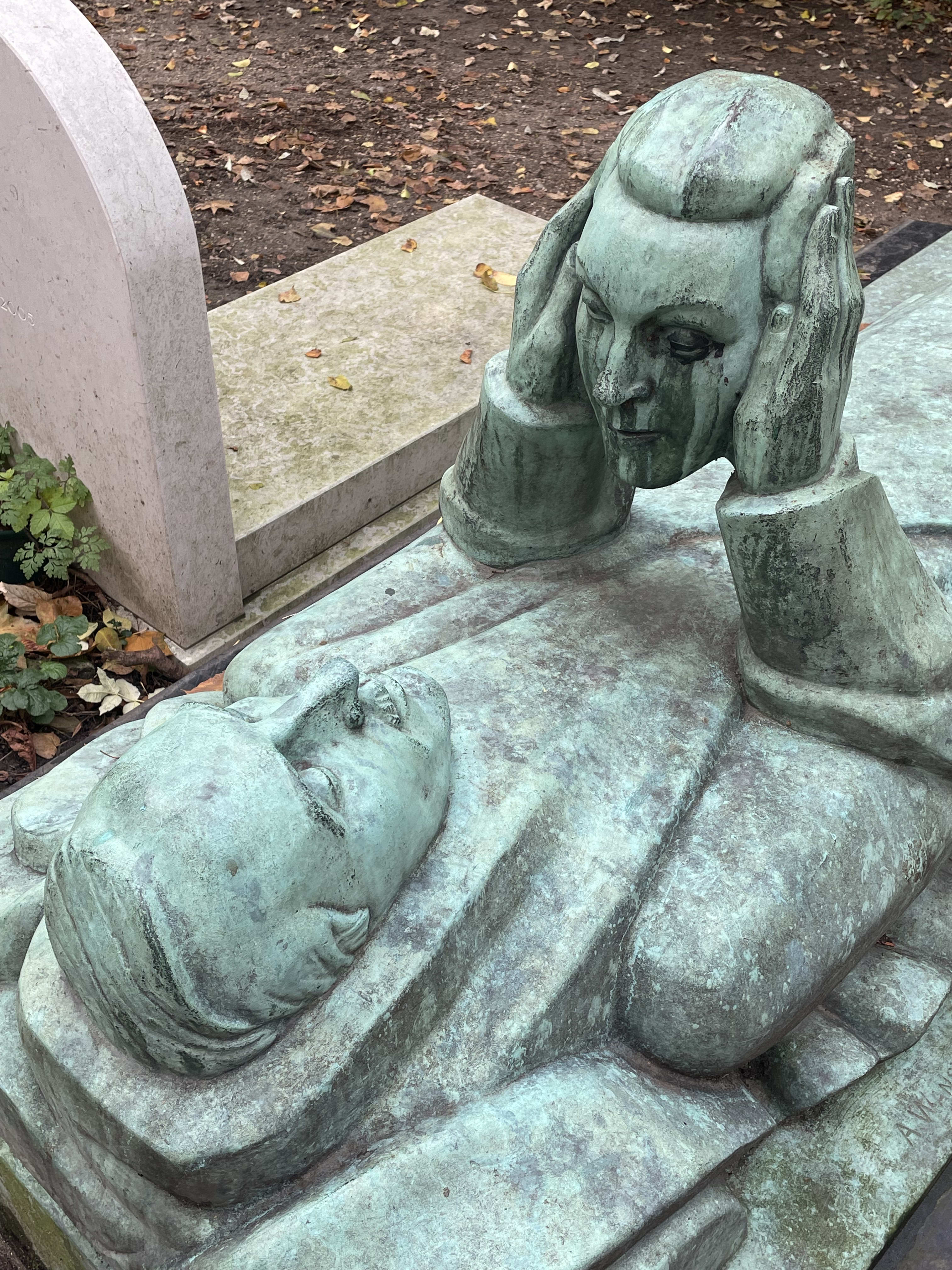 Inspiration at the Père-Lachaise Cemetery
This is an excerpt from a diary entry I wrote on January 22, 2014:
What am I doing here? I know I’m in the right place — I can feel it, somehow — but being in the right place doesn’t necessarily mean feeling comfortable there. I know I don’t want a regular nine-to-five — I honestly don’t think I’d make it — but I need something more. Even with an idea for a third novel [The Requisitions] and query letters for a second novel to stay motivated about…that’s what I’ll work on, the second novel, Slim and The Beast … the imperfect work for an imperfect time. But what time is perfect? Who wants perfection?
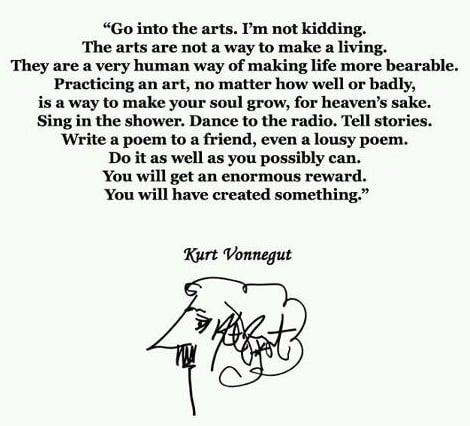
Fast forward 11 years and 286 days, and I’m sitting on my sofa in my bathrobe in the most homely Parisian apartment I’ve ever known (my eighth home in 15+ years in this fine city), at the precipice of re-publishing that “imperfect novel for an imperfect time,” asking myself the question once again, what am I doing here, by harnessing the wisdom of Kurt Vonnegut’s famous dictum about the entire point of making art in the first place:
 November 8
So what am I doing here? Putting my faith where my purpose is by sharing my work in a way that is meaningful to me. From November 8 onwards and forever more, whenever a reader buys Slim and The Beast, it will forever be the 10th Anniversary Edition published by Kingdom Anywhere, which means I’ll actually make a few bucks off of my own writing—and it also means I can play harmonica in a bathrobe and read the text out-loud, which is exactly what I do on Sunday nights on Substack live at 10 pm Paris time, and also how I recorded Chapter 1 of the Substack-exclusive audiobook, complete with harmonica:
November 9Twenty-four hours after publication, I’ll be retreating to the French countryside to record a solo EP (piano/vocals/harmonica) with a dear friend who came all the way from New York City to help conjure this dream.
So what am I doing here? Owning up to myself as a solo pianist and vocalist. Many of you know I’m a member of the indie rock band Slim & The Beast (yes, it was named after the novel; this is my favorite song we’ve yet written), but it’s time for me to honor and explore a much more individual style of music that I’ve been playing since I was a child. The inspirations range from Debussy to Billy Joel to Tom Waits to Chopin, all of it borne from a feeling that the most fundamental truths about love can only ever, really, be communicated through music.
If you’re curious what that might sound like, here’s an early recording of some of those songs in a Parisian basement:
November 15On November 15, , the anglophone arts & literature magazine co-founded by & , is going to change the literary game in Paris, and there’s going to be a badass launch party. SOUVENIR is a non-profit artist collective, not just a magazine, which means it will foster a thriving space for international artists who work, live, and hold the city of Paris dear to their creative hearts. I’ll be sharing a dedicated piece about the magazine/collective next week, but suffice to say as a board member, fiction editor, and contributor for Issue #1—not to mention an extremely proud husband and friend—SOUVENIR is going to make a big splash, and if you don’t get your hands on one of the 1,500 first copies, you’ll regret it long before you’re old and grey.
So what am I doing here? Helping in any way I can, and enjoying the ride. My essay in the magazine, “Raëlian Bodies: A UFO cult shows you the City of Light,” is the best thing I’ve ever written about my early years in Paris, and the magazine only gets better with pieces by , , , a killer translation by , artwork by , and contributions by dozens of other supremely talented artists, editors, and contributors who make Paris the most inspiring city in the world—inspiring in the literal sense of the word, by the way: SOUVENIR Magazine will breathe life into the city.
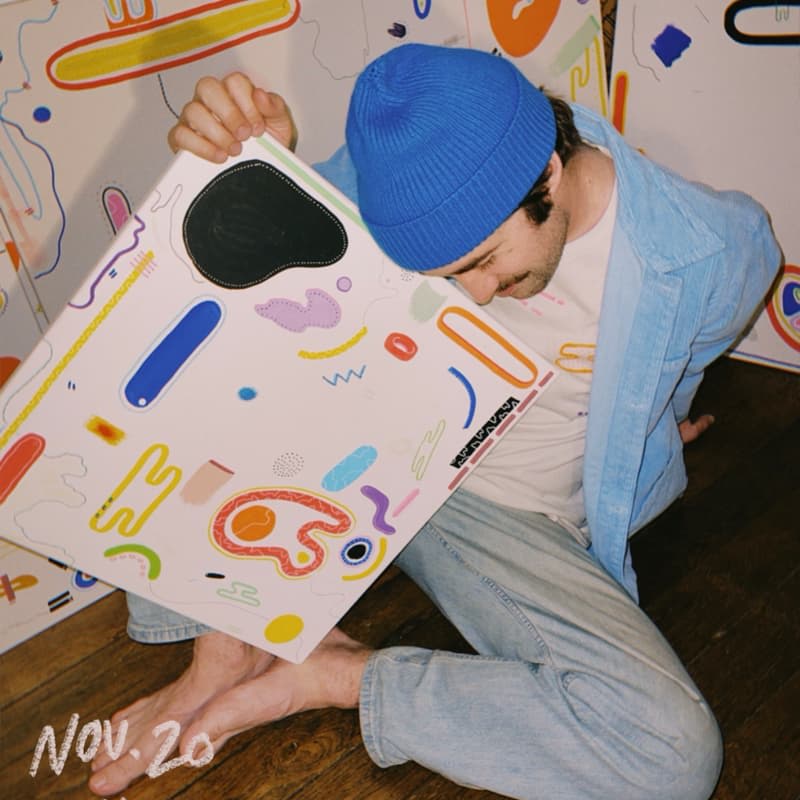
November 20 - A Parisian Art ShowThe illustrator, painter, and graphic designer , who also happens to be my twin brother, has his first solo show in Paris, and if you’re in town, you’ll want to be there:
“ALL OF ME explores abstract, cellular, and organic forms through a stream-of-consciousness process — organized chaos rendered in line, color, and shape. My goal is to create an immersive dialogue between structure and spontaneity, inviting viewers to experience the tension between order and disorder in visual form.”
 RSVP to ALL OF MEAnd that’s about the long and short of it. November is a bountiful month, and I wholeheartedly agree with Kurt Vonnegut: “Go into the arts. They make life more bearable.”
So if you appreciate my work, or ’ work, or ’s work, or ’s work—in short, if you believe the world could use fewer tech bros and crypto fascists and more living, working artists who are doing the work—consider supporting those who inspire breathe life into you.1
You are the reason all of the aforementioned projects exist, and whichever artists you decide to support on Substack, just know that your support really does make a world of difference.
And now a friendly reminder to free subscribers who have a few extra dollars in their pocket:
If you sign up for the year, before November 8—that’s in 3 days—you’ll not only receive a free print/digital copy of Slim and The Beast: 10th Anniversary Edition, but also a postcard from Paris with a signature to put in the book, because the tariffs haven’t yet affected letter writing. After that date, you can buy the book wherever books are sold, and the offer shan’t remain on the table. 2
1It’s only thanks to paying subscribers that I’m able to afford equipment to record audiobooks or publish independently, or dedicate time to go into the countryside to record a solo EP. SOUVENIR Magazine is an entirely reader-supported publication. There is great power in the boldness of community. Begin it now.
2To those who are already paying subscribers: comment on this post or send me an email & I will gladly send you a postcard from Paris, too, to use as a bookmark, perhaps, in whichever book you so choose. Boldness has genius and power in it. Give me a shout.
October 30, 2025
Chapter 1 - Slim and The Beast
“To be sure, a human being is a finite thing, and his freedom is restricted. It is not freedom from conditions, but it is freedom to take a stand toward the conditions.”
— Viktor Frankl
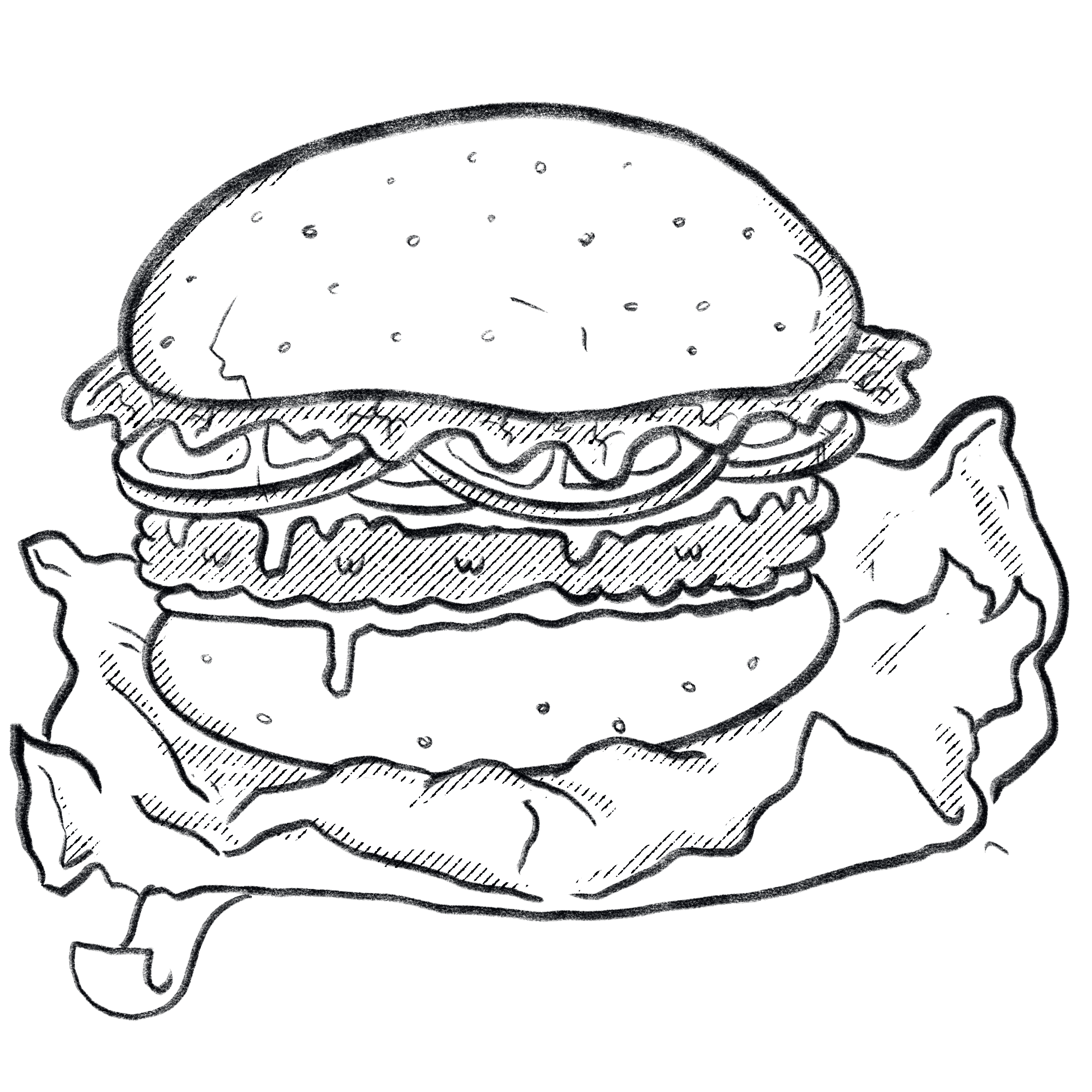
Slim’s Famous Burger: Lettuce, coleslaw, sliced tomatoes, a burger patty, American cheese, avocado, a second patty, a fried egg, ketchup, and hot sauce—Texas Pete to be precise.
1. A Soldier & His Stalker all drawings by Aaron Lopez-Barrantes
As I watched him lying in his own pool of blood, all I could think of was that half-eaten burger: lettuce, coleslaw, sliced tomatoes, a burger patty, American cheese, avocado, a second patty, a fried egg, ketchup and hot sauce—Texas Pete to be precise.
I’m going to tell you about a man named Slim. Who he is isn’t important. It’s who he was that matters now. He came from a time before your eye-pads and blue-tooths and tweeting pages—not too long ago but long enough to make a difference—from a time where if you wanted to get to know someone it wasn’t through yellow smiles and little red hearts, but through honest conversation. The only kindle was to light a fire, the nicest cell phone was called a razor, and even though Facebook did exist, most people still made their friends at the bar. During that first decade of this here century, relationships took time and strayed from brevity. You went to bars for civilization, maybe some music and a bit of whiskey; sure, you could go for other reasons, too, but only the loneliest of folk went to be seen.
Slim wasn’t one to shy away from attention, but he was self-conscious on account of his scar. He’d taken a bullet through the jugular during Operation Iraqi Freedom and lost faith in “the cause” during his second tour. He’d grown up as an afterthought of what some might call a deadbeat mother, and spent his formative years at Stoke Ridge Military Academy, where the pedophiliacally-inclined Sgt. Chandler Dykes obsessed over Slim’s naked torso and the other cadets’ sturdy frames. But all in good time, little pretty, as a wicked witch once said, all in good time.
Suffice to say Slim didn’t enjoy his time at Stoke Ridge, not the least ’cause Sgt. Dykes was particularly fond of the kid, what with his sharp tongue and a proclivity for aggression. See, Dykes had a tendency toward self-pity, abusing Slim, and drinking Johnny Walker, and though he never showered with his cadets, I’d venture to say he thought about it a few times. Dykes was fond of convincing the young boys to do shirtless push-ups in his office, too. He didn’t abuse ’em in a sexual way, at least I don’t think, but it was certainly a sign of the times that most scars had to be seen to be believed.
But if I’m going to tell you about Slim’s scars, I’ve got to take Dykes’ scars into account, too, which were deep and invisible, more engrained somehow. He used Slim and the other cadets—“Dykes’ Tykes” he called ’em, that well- toned troupe of at-risk youth—to help quell his demons, watching them pump out more shirtless push-ups than any cared to count. Under the insectan buzz of fluorescent light, Slim often fell asleep on the stale carpet of Dykes’ office, too exhausted after the workout to move. And while the sergeant coveted all of his tykes, he was particularly fond of the skinny kid with a single name. Maybe it’s ’cause Slim enjoyed doing push-ups, or perhaps ’cause Slim had a kind of fight about him. Whatever the reason, Dykes became obsessed, and it wasn’t until the Welcome Back Heroes! event when Slim was nineteen, in that barren town of Stoke Ridge, North Carolina—the town’s main attraction being a brick building with a white steeple—that this story either commenced or drew to a close, depending on your preference for happy endings.
The Welcome Back Heroes! event was a sign of things to come, for it was the day Slim reached the top of Sgt. Dykes’ B.A.M. LIST. The Belligerents According to Me list, filled with the names of Dykes’ mother, father, and other supposed enemies from his fallow past, was first displayed in his Stoke Ridge office—which, according to Slim, smelled like an unkempt microwave—and was later hung in the sergeant’s home off Exit 263, in a one-story cabin with a rickety screen door, built on a once-fertile piece of land that’s now hardened earth and brown grass.
“Welcome back, son,” Dykes greeted the prodigal kid. Just a few days prior to the Welcome Back Heroes! event Slim had been in Iraq on his first tour. The white bandage fresh around his neck had to be changed every evening. Slim stood with his hands behind his back to accept an award for Outstanding Service to the Stoke Ridge Community and Nation as a Whole. They stood on an elevated stage in the middle of the basketball court, the room packed with folks who hadn’t yet heard of Slim, a true American hero’s welcome.
“Congratulations on your medal.” Dykes faked a smile and spoke into the mic. “Good to have you back, now state your name and rank, son.”
Dykes stuck out his hand. Slim didn’t reciprocate. “I ain’t your son, Chandler. Give me the mic.”
Chairs scuffed the gym floor and Dykes’ voice bounced off the bannerless rafters; the aluminum roofing rejected the echoes, sending them back down to the podium where Slim took control of the stage.
“What a pleasure it is, what a pleasure it is.” Slim shook the sergeant’s hand and gripped it tightly. “I hoped I’d never see you again, Chandler Dykes . . .”
Dykes was upset you see because Slim had called him by his first name twice. “Name and rank son—and you address me as sergeant.”
“I’m a war hero now,” Slim laughed. “More than you can say for yourself. Careful now Dykes. You don’t want that forehead vein popping out . . .”
Dykes laughed nervously, trying to distract the audience. He put his arm around Slim as if it were a friendly conversation, turning away from the mic to say something in private.
Whatever Dykes whispered, Slim fell silent as Dykes turned back to the audience with a yellow-toothed smile.
“Sorry about that folks. Technical issues. Now give it up for Slim—our hero of Iraq!”
The audience applauded but they did not roar. Dykes tried to corral Slim. Slim didn’t abide.
“Get your goddamn hands off of me,” Slim said into the mic.
Dykes’ face twitched. The audience squirmed. And perhaps knowing their history, or perhaps ‘cause he liked the spotlight, the academy’s director—a bear of a man by the name of General Haith, who’d die in a house fire a few years down the line—scrambled onto the stage, took Slim’s place on the podium, positioned his broad shoulders between Slim and Sgt. Dykes, and laughed loudly. The mic gave feedback. The video footage corroborates it. A child in the front row stuck his fingers in his ears; other spectators squinted at the stage as if staring at the sun, wincing from the feedback as they waited for what came next.
“Let’s give it up for Slim!” General Haith boomed. “Our hometown hero. Maybe the finest soldier we’ve ever had!”
The tension escaped the gymnasium amidst the clapping and the noise, after which General Haith proceeded to give a long-winded speech about what-it-means-to-be-a-member- of-the-Stoke-Ridge-community-and-how-it’s-men-like- these-that-define-our-nation-et-cetera-et-cetera. Now you might be wondering how Slim got himself onto that stage, and though the details are unimportant—at least for now— the whole hoo-ha surrounding his return was mostly ‘cause of his reputation as a formidable killing machine. See, when Slim started at Stoke Ridge he was a string bean cadet, a timid child without much physical promise: chicken legs and noodly arms and a vacuum-packed chest. Slim’s mother, Wilhelmina Jenkins—we’ll get to her—was a pothead who subsisted on reheated Hot Pockets, hardened Kraft mac n’ cheese, and frozen mozzarella sticks. As a child, Slim always looked a bit sickly, always scrounging for food in the cupboards lest he be forced to reheat something moldy in the microwave, but by the time the second Bush decided to play his daddy’s game, Slim had become the finest warrior Stoke Ridge had ever seen. Of course, Slim never knew his dad, but he must’ve benefited from some hunk’s formidable genes. Though his hairline was receding by the time he was eighteen, his six-foot-five frame, accompanied by four years of bursting biceps and peck muscles filled out by four hundred push-ups a day, made the man quite a sight to behold. His newfound body lead to his award for bravery in Iraq during the First Battle of Fallujah—a hell of a fight for those boys in the red, white, and blue—for killing an entire platoon of alleged al-Qaeda operatives and taking a bullet straight through the jugular. And while the doctors said it was a miracle he’d survived, Slim said the real miracle was that they’d gotten him out before he could reload. He was a hero of sorts, but these days heroes are often shamed and quickly forgotten.
“And this man right here,” General Haith said as he put his arm around Slim, “we’ll never forget what he’s done for us!”
“That’s right,” Slim continued. “Unlike some of us, I’m willing to fight! I don’t just sit in my office all day watching kids do pushu—”
Dykes grabbed the mic. “Thank you for that Slim. How about another round of applause?”
While there were some grumblings in the audience about what Slim was talking about, the crowd cheered nonetheless ‘cause that’s what crowds do. Slim took back the podium. “I learned to fight once people started shooting at me. But as far as Stoke Ridge goes? Well, let’s just say I didn’t learn much at all . . . The thing is, it’s not hard to develop fatherless kids into killers, and now we’re the ones killing fathers across the world. Of course, a lot of these officers,” Slim looked directly at Dykes, “don’t have to do any killing at all, right? They only know about sending us boys out there while they sit behind simulators with whiskey and more viscous forms of lubrication. Some of ‘em, like Dykes here, have never been to Iraq.”
The audience fell silent, you could hear flies buzzing around the gym. Some kind of critter scampered across the aluminum roof. Slim sneered at Dykes, handed General Haith the mic, and stepped down from the stage. The general quelled the situation by bringing up freedom and the good fight and after a final round of hesitant applause, brown-fatigued cadets escorted the spectators onto the dessicated lawn, where sweet tea and lemonade were served in red plastic cups.
As for what happened next, there are only two people who know the story, and neither Slim nor Sgt. Dykes ever told me exactly. Whatever it was, it was violent and quick. Slim almost died. Here are the facts:
After hearing a commotion in Dykes’ office, a group of cadets found Slim writhing on the floor, clutching his jugular, gurgling in agony. A crimson fountain spurted from the wound. The sergeant had tried to pop Slim’s Adam’s apple like bubble wrap, whispering the same phrase to himself over and over again: “Never listening. Never playing. Never so much as a goddamned hug. Never listening. Never playing. Never so much as a goddamned hug.”
As soon as the cadets piled on top of Dykes, he began to thrash and kick around, breaking noses and shattering adolescent bones. Slim would’ve died if it hadn’t been for General Haith, who came in just in time to apply pressure to the wound. By the time Slim arrived at the hospital he’d lost over three pints of blood. He remained in a coma for three weeks and spent another month on morphine. General Haith, it must be said, was there every day to check on the young war hero and even though Slim was unconscious, the general stayed by his side just the same.
As for Dykes, after being treated for three cracked ribs and a pierced eardrum, he was released. Slim wouldn’t file any charges ‘cause this is the military we’re talking about, but he did acquire a five-year restraining order, more than enough time, he thought, to get Dykes out of his life.
In later years, Slim told me putting Dykes in prison wasn’t an option. There were no witnesses, technically, and Slim’s neck was already wounded, and the military is one of the best in the business when it comes to protecting its own during a scandal. Still, Dykes didn’t get off easy. When he returned home, Stoke Ridge’s former prom kings and defensive linemen were all waiting for him on his front lawn. After years of enduring Dykes’ nasal voice, puppy dog eyes, and proclivity for whiskey and young cadets, the attack was the final straw for the Stoke Ridge community. Upon seeing the angry mob, Dykes snuck in the back door and spent the evening in a locked bathroom, drinking whiskey in the bathtub, and crying himself to sleep. The next morning, Dykes woke up to General Haith’s voice on a loudspeaker: he had exactly one hour to get out of town. With his bags packed and nowhere to go, Dykes drove away in his rusty brown pickup, leaving only the second home he’d ever known.
On his way out of Stoke Ridge he passed three burning effigies and a mob of angry townspeople. They threw cups of sweet iced tea on his windshield and tossed old basketballs under his car. One man used a baseball bat to smash a side- mirror and another shot out his break lights with an assault rifle. As Dykes watched the Stoke Ridge church steeple fade in the rearview mirror, his car thumping forward, the back tire slowly losing air, he felt like vomiting and crying at the same time, which is exactly what he did at Exit 263.
For a time, Dykes lived as a vagrant, finding refuge in homeless shelters and the occasional motel, seeking company in old TV re-runs and cheap liquor.
Until November 8 (pub date), new annual subscribers will receive a print copy of Slim and The Beast: 10th Anniversary Edition
Each Sunday @ 10 pm CET until the holidays, I’ll be doing a live reading of Slim and The Beast. Catch up on last week’s live reading below. Yes, I’m in a bathrobe.
Sunday Story Time: Slim and The Beast
See y’all on Sunday.
Thank you to the 90 paying subscribers who make this work possible.
October 21, 2025
New York City Defies Narrative
Reminder: This Sunday, October 26 at 10pm Paris time, I will begin weekly Sunday Night Story Time on Substack Live, beginning with Chapters 1 & 2 of my revised picaresque debut novel set in 2010 North Carolina, Slim and The Beast: 10th Anniversary Edition.1 Free subscribers can watch live, but only paying subscribers can watch recordings. This will be the streaming link, but you’ll also be notified via Substack on Sunday.
A graffiti tag on a wall on Irving Avenue:
“Any behaviour you reward will be repeated.”At Whole Foods, a grocery store which once prided itself on local organic fare, now owned by a billionaire intent on colonizing outer space, a sign suggests you can pay for your groceries with the flesh on your palm. An attendant, hired to explain the automated payment system, invites you to participate. Credit cards have become cumbersome, it would appear; human flesh is becoming the preferred method of payment.
The fire hydrants in Brooklyn spray potable water into the streets. “The clean drinking water gushes well into the night,” my friend tells me. “Sometimes it sprays for days. It does help the kids cool off.”
On the F-train out to Queens, you listen to a favorite jazz album when you’re in this city, Joe Alterman’s The Upside of Down: Live at Birdland. The young pianist’s style reminds you of a youthful Oscar Peterson, full of life and joy and delicacy and more than a few classical influences. Your favorite song on the album is “The Smudge,” and you bob your head like the other music listeners on the train until you exit into Forest Hills and arrive at the agreed-upon meeting point to E—, who you met in Paris; the restaurant—this is not a joke—is called Paris Baguette.
Outside on the sidewalk, you connect to Paris Baguette’s Wifi while you wait for E— and call your twin brother. You live a twenty-minute walk away from your brother in Paris—funny how sometimes it takes traversing an ocean to have a genuine conversation with the people who matter most. During your chat, you discuss recent stresses and anxieties and how it’s been an enlightening, challenging year in a lot of ways. The details are both important and unimportant, symptomatic of existence itself, it seems, but the point is to discuss all of the small things, not to bury them.
At the King Gizzard and the Lizard Wizard show at Forest Hills Stadium,where The Beatles performed in 1964, an AI visualizer on the massive screen behind the band tells a tale about the only two things that separate AI from humans: death and vomiting; the name of the psychedelic song is “Vomit Death.”
You are having a debaucherous blast in New York City—the combination of alcohol, weed gummies, and overpowered nicotine sticks hits right—but what you dare not admit to anyone else when it’s your turn to buy a round is that you have thought more about money and what you can cannot afford in the last three days than you have in the past year in Paris. Such a mental state is at best annoying and at worst oppressive. How small money can make you feel, how miniscule it can be to order an appetizer instead of a full meal to stay within your budget. In this country, which believes the public, not companies, should pay the bulk of service industry wages, all food items come with an extra tax rate of 20%.
At the weed dispensary in Bushwick, the dude behind the counter with a scraggly beard and shaggy hair suggests you buy a bag containing five gummies that each have 100 milligrams of THC. The price is exorbitant, but more to the point, ingesting a 100mg gummy would be akin to actively choosing to descend into a dissociated paranoiac abyss. You ask the legal drug dealer if he’s got anything less intense; you tell him you enjoy a psychedelic experience as much as the next novelist (you can neither confirm nor deny you have a proclivity for LSD), but you also admit THC gives you cloudy brain hangovers, which is why you’d prefer to go the 5 milligram route. “I’m going to a free daytime dance party in an adult roller rink called Xanadu.” “Dope spot,” the legal drug dealer says. “I’ve got just the thing for you. Have you hever had a Camino.” “A Camino?” “Yeah, man! You’ve never been on the Camino? It’s the best.” He hands you a circular tin of 5mg gummies called Camino: Uplift.
“Enjoy that ride on the Camino, man.”As you walk to Xanadu you pass trendy restaurants and derelict buildings and empty lots, trash strewn everywhere at the entrance of a hipster thrift market that sells overpriced trinkets. Human beings sleep on cardboard boxes next to the thrift market’s entrance, where a sign asks visitors to consider donating funds to a family in Gaza. “That is well said,” so ends Voltaire’s picaresque novel Candide. “But we must cultivate our garden.”
The Camino takes effect upon your arrival at Xanadu, where the legendary Canadian composer Dan Snaith, AKA Caribou, is headlining. Caribou is a generational talent who you used to first discovered at the University of Vermont, where you first danced to EDM at a club called Rasputin’s. Xanadu’s indoor roller rink is a funky place, too, decorated with psychedelic patterns and plenty of alcohol on sale. As you begin your stroll along the Camino, you take a seat in an elevated booth to survey the surroundings and the growing crowd. Once you’re ready to dance, you put on your sunglasses and wade into the middle of the dance floor, letting loose with your eyes closed amongst total strangers on a Sunday afternoon across the river from Manhattan.
I am a reader-supported novelist.
Afterwards, you take the hour walk from Bushwick to E—’s house in South Williamsburg. The summer heat is simmering, rusty air-conditioning units stuck like plug holes into the rickety windows of neglected apartment complexes. The AC units blast hot air into the streets. Though there are no insects, an ever-present humming fills the air, and you wonder if there’s any more appropriate metaphor for the absurdity of the human condition than blasting frigid air into cramped apartments whilst expelling hot air into our overheating world.
A distinct stench of waste products in the air wafts down the street, where a well-dressed woman with pursed lips sits in her Lexus and rolls up the window as she inspects her made-up face in the rearview mirror.

There’s a Monday night open mic at a bar called The West, which reminds you of the spoken word scene in Paris. There’s an earnestness to the performers, even if it remains a performative kind of vulnerability, but is it possible not to be performative when you’re on a stage? Still, you admire anyone willing to get on stage in front of a crowd of people and attempt to put words or music to that which otherwise remains unspoken, unexamined, and unseen. The final act of the night is clearly a regular, a seasoned veteran of the open mic scene who has bided his time, ensuring the bar is full by the time he walks onstage. He asks the audience what he should play . “I knows Pink Floyd and The Beatles,” he says. Someone yells out, “Wish you were here!” and he strums a straight cover of the tune, complete with the delicate fingerpicking. Afterwards, I yell out four songs by The Beatles, but he doesn’t know any of them and asks if he can play, “Sgt. Pepper’s Lonely Hearts Club Band” instead.
The next morning, you take the F-train to Gowanus and order a $10 Sausage Egg & Cheese Toasted Everything Bagel at Shelsky’s. You ask the cashier if they have any hot sauce. “We have Valentina’s.” “That’s my favorite,” you respond. “Whatchu know about Valentina’s?” The cashier smiles, and you reminisce how Valentina’s was your favorite hot sauce back in North Carolina at the divey Mexican restaurant called Cosmic Cantina. “You gotta go with the black Valentina’s, not the orange,” the cashier recommends. “The orange is more vinegary—the black one’s spicier.” The bagel rolls out of the toaster and the cashier douses it accordingly before she wraps it up in aluminium foil and hands you your coffee. The black Valentina packs the right kind of punch.
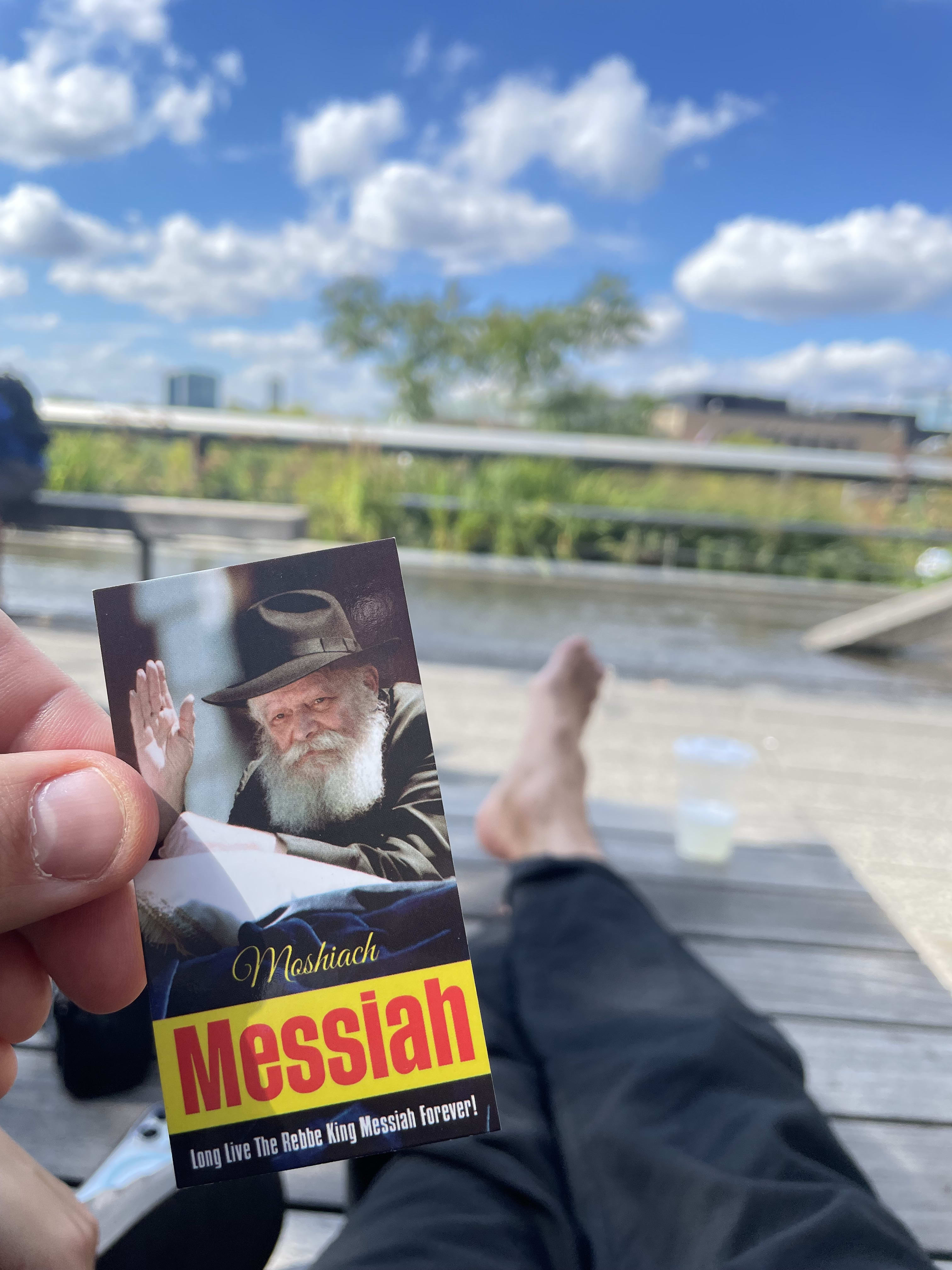
Later, on the High Line in Manhattan, you take off your shoes and bask in the late summer sun. An orthodox man approaches you and asks, “Are you Jewish?” “Not that I know of,” you respond. “This is for you.” He hands you a business card featuring the face of a white-bearded orthodox elder and the phrase: “Long live The Rebbe King Messiah Forever!”
read this series backwards
1Slim and The Beast is an adult American fable set in 2010 North Carolina about male intimacy, the pursuit of passion, and the myriad ways in which young men in the USA can either transcend or succumb to that nation’s unresolved and violent past (release date November 8, published by Kingdom Anywhere). For a limited time (until November 1), new annual subscribers will receive a physical + digital copy.
October 14, 2025
Slim and The Beast: 10th Anniversary Edition
“For my next book, I want full control,” I declared on Christmas eve 2022, announcing a “Festivus for the Rest of Us: An Author Buys Back the Rights to His Own Book.”1
The post concluded with these words:
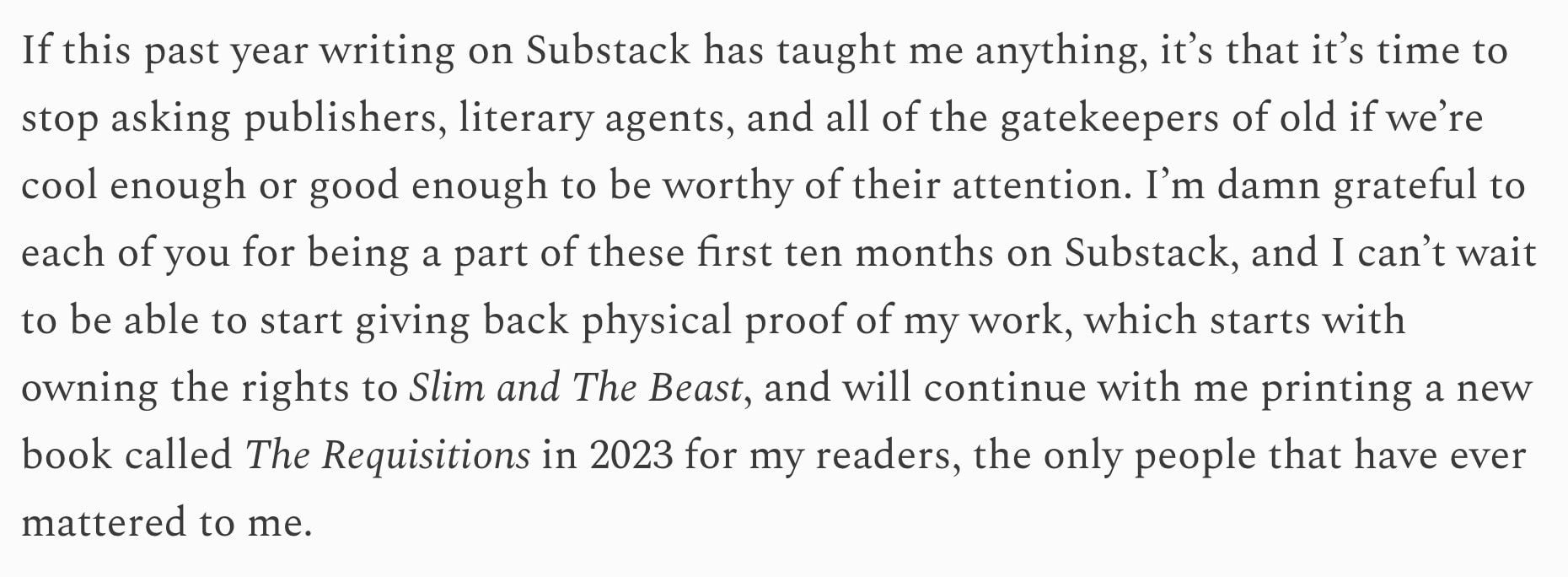
Despite referring to a silly Seinfeld holiday as a convenient comedic device, I actually meant what I said back then and I still mean it now, and I think and the entire team does, too: authors should have the option to hold majority rights to their own work.
So who are Slim and The Beast, anyway? Two best friends, a country bar, a famous burger, and a bloodstained floor.
This coming-of-age tale isn’t for the faint of heart. Sergeant Chandler Dykes is obsessed with two misfits: Slim, a disillusioned war veteran with a brutal neck scar, and Hugh Dawton-Fields, AKA The Beast, a seven-foot UNC basketball player with a proclivity for Southern cooking.
With unflinching humor and dexterous prose recalling the Coen Brothers’ wit and Tom Robbins’ iconoclasm, the narrator observes the approaching hurricane and the ghosts it seems to be dredging up, laying out what’s at stake in a friendship forged during the calm before the storm of the contemporary USA.
Slim and The Beast is an adult American fable set in 2010 North Carolina about male intimacy, the pursuit of passion, and the myriad ways in which young men in the USA can either transcend or succumb to that nation’s unresolved and violent past.
How is this version different from the 2015 edition?Over the past six months, the Kingdom Anywhere team has been editing revising Slim and The Beast for a definitive 10th Anniversary Edition, making it the version it was meant to be all along.
Kingdom Anywhere’s editorial team has a knack for narrative structure and syntax that my previous editors, who were also working on dozens of other books, simply didn’t have the bandwidth to provide. Working closely with trusted editors who also now “get me” means we’ve tightened up the novel from front to back, cutting dozen of pages while adding to the narrative (we cleared up one major plot hole that the original editors missed), culminating in a much more fluid and concise edition at a sultry 158 pages.
Secondly, the book’s designers are, quite frankly, singular talents whose vision is far more in-line with what I envisioned for Slim and The Beast from the beginning. The 10th Anniversary Edition includes updated, hi-res chapter illustrations, an author portrait, and a one-of-a-kind mural at the beginning of the book, all of it illustrated by none other than my twin brother, .
Thanks to ’s design and layout skills and my father-in-law’s unrivalled ability to finesse inDesign—shout out to Ken and Lil Bit!—Slim and The Beast now reads like a classic American paperback that you can fit in your back pocket.
The updated cover design by the London-based illustrator Saskia Meiling, who we worked with for The Requisitions, is simply iconic, particularly because it conveys exactly what I hoped for a picaresque novel about a basketball player with a secret passion for cooking, his friendship with a disillusioned war veteran, and a deranged military man who won’t leave them alone.
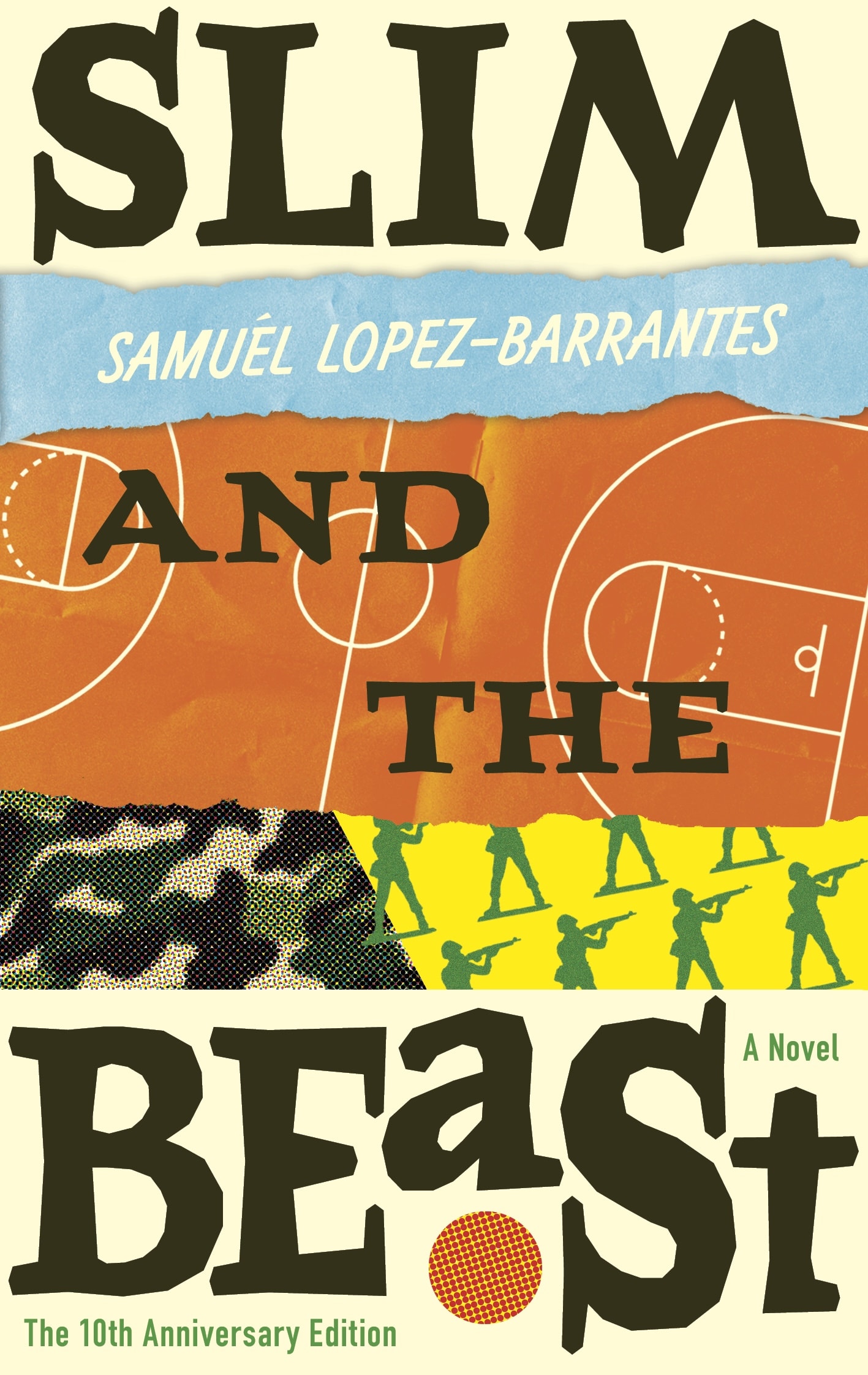 Substack readers can get the jump on Slim and The Beast: 10th Anniversary Edition before it hits global bookshelves on November 8, 2025:
For a limited time (until November 8) new annual subscribers will receive a physical copy + eBook
Current paying subscribers: leave a comment on this post / send me an email and I will send you an eBook + a discount link for the novel (shipping from France has become prohibitive because of the current US administration)
Beginning Sunday, October 26 (circa 10pm Paris time), I will use Substack Live to record Sunday Night Readings of Slim and The Beast (think of them as fireside chats, a story time before bed—not safe for children)
Free subscribers can watch live, but only paying subscribers can watch recordings
Beginning next week, October 21, I will begin serializing the novel on Substack (including audio) on Tuesdays, culminating in a professional-grade audio book complete with musical elements (I sing and play harmonica in a band we named Slim & The Beast; here’s a Sofar Sounds cover of “Harvest Moon” to whet your whistle)
Finally, if you’re not interested in subscribing right now, you can still order and Advance Reader Copy via this link (shipping included; please provide an address so I know where to send it).
Bookstores can follow this link for the press release, and I really do hope those of you in the far flung corners of the USA (I grew up in North Carolina, and Slim and The Beast is a southern “rural” novel) might consider telling your local bookstore about ordering a few copies.
Finally, anyone right here on Substack interested in reviewing the book can comment / email me and I will get you a copy free of charge (digital and/or print).
1A year after I paid $1000 to buy back the rights to my own book, I queried my Substack readers about independently publishing my second novel, “The Requisitions: A Query to the Substack Community,” and the response was immediately positive, resulting in a sold-out 1st edition via Kingdom Anywhere, an imprint I founded with . That book also won ’s Book of the Year Award, and was called “a strangely and luminously hopeful novel” by Substack’s own .
October 3, 2025
New York City Defies Narrative
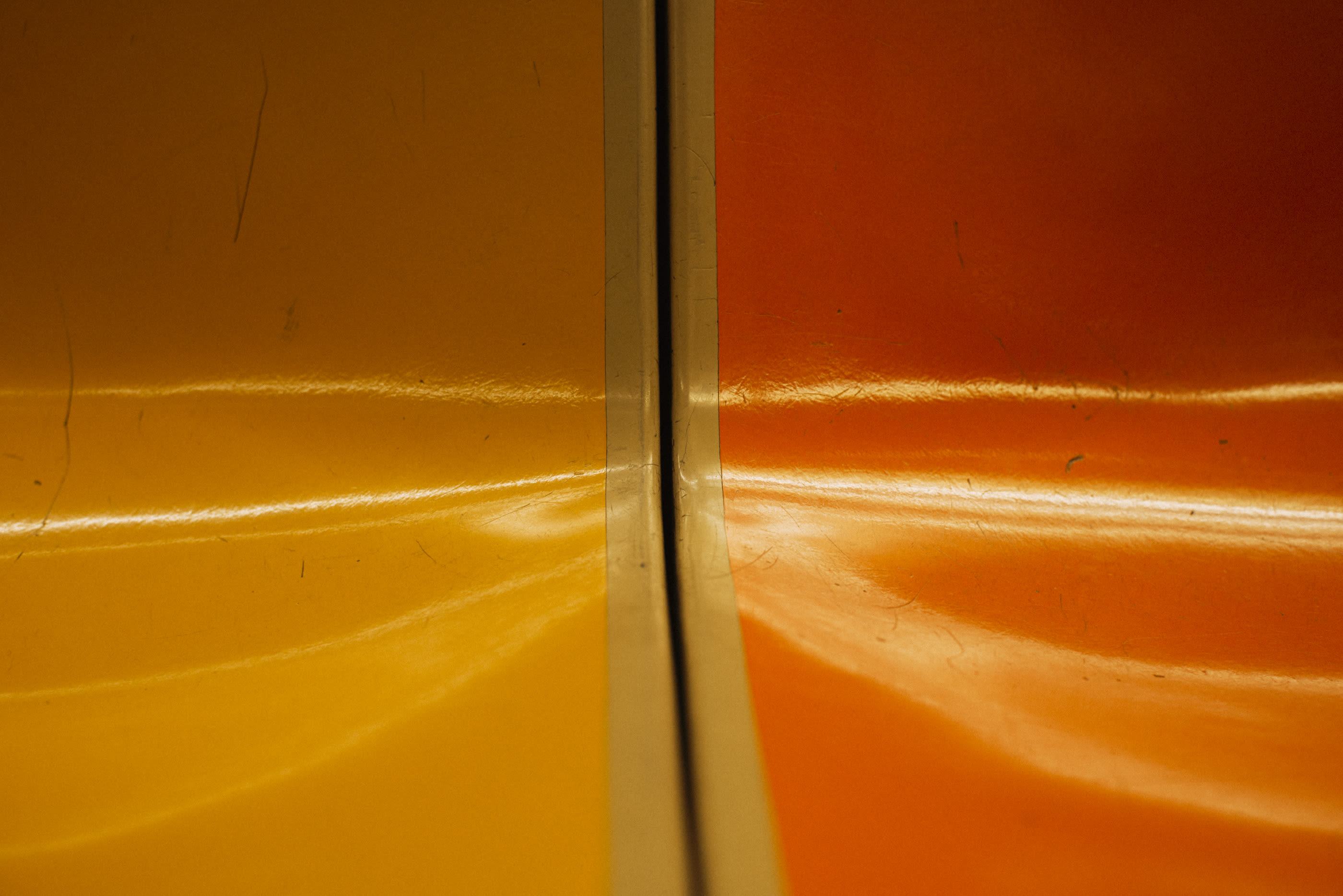 photo by Augusta Sagnelli
Part I: An Uncanny Land of Disparate Images
“We live entirely, especially if we are writers, by the imposition of a narrative line upon disparate images, by the “ideas” with which we have learned to freeze the shifting phantasmagoria which is our actual experience.”
Joan Didion, The White Album
The last time you entered the city by cab you got stuck in traffic at the Queens-Midtown Tunnel. A billowing white banner hung over the stone wall, at its center an illustrated planet earth with a smiling face, pointing its finger at a tagline: “All empires fall. Let’s end this one together!”
This time, at the airport,another sign catches your eye as you descend the escalator into the labyrinth that is the NYC transit system:
DON’T BE SOMEONE’S SUBWAY STORYYou ask a security guard how to get to your friend’s apartment in South Williamsburg; the armed man tells you, in a monotone voice, to take the Jamaica AirTrain to Hewes Street, which means you have twenty-one stops to become someone’s subway story.
While you wait to board the J at Jamaica, you look at the hundreds of people’s faces whose stories you’ll never know, their heads bobbing to songs you’ll never sing. On the subway platform there’s a supremely talented female singer-songwriter performing. Her cooing voice recalls a bygone era; her smiling eyes remind me of a lover from a different life—what was her name?
The suitcase-wielding masses amble towards the tracks as the train rolls into the station. Stand clear of the opening doors, please. The only missing part of this subway scene is a quick gyro on the platform à la iconic episode in Seinfeld. Surely there’s food up there, up the stairs in Queens—a carne asada taco from a food truck, perhaps, or one of those dirty water dogs bathing in a steaming vat like the big bellied Russian men at the Wall Street Bath and Spa. But we’ll get to that later.
The subway air-conditioning is a strange luxury for the dilapidated train and the advertisements confuse more than they inform:
“Remember when college was for losing your virginity not your mind?” Jewbelong.org
“Say Salam on Muzz: WHERE MUSLIMS ACTUALLY MEET”
A teenage boy’s head is blocking a word an advertisement featuring a bedazzling, buxom Latina wearing a sombrero: “MUSEUM. SUPERFUNLAND. _____SEX.”
Above the subway car’s rectangular window is beautiful artwork by a Ukrainian artist named Yevgenia Nayberg. One image in particular sticks out: a cartoonish cape-wearing superhero peering out towards The City with its tangled yellow power lines and green treetops and satellite dishes and graffiti building rooftops and worn brick facades and the derelict subway stop just before Crescent Street.
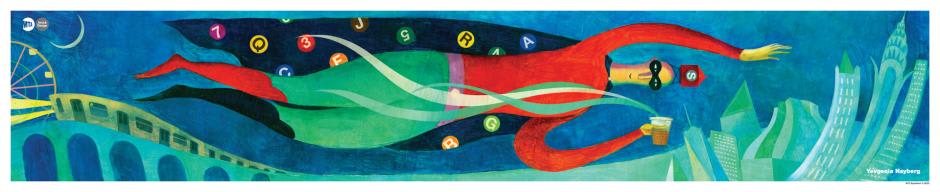 Yevgenia’ Instagram
A man with a speaker walks into the train and yells, “I’m not here to show off—this is showtime!” and proceeds to use his baseball cap as a dancing prop, flipping it up onto his head to the beats of abrasive trap music. He does a backflip in the aisle and says he goes by the name “Forthefam2023” on Instagram. Two young men speaking Spanish give him a few dollar bills. “Thank you and god bless!” FortheFam2023 says. “This is my first car of the day. Don’t forget me.” He gives the youth daps and dances down the J-train.
An image of a nasal spray with the tag-line: “Shpritz your depression away!” ketamc.com
A towering, wide man lumbers down the subway aisle. His shoes are untied and he’s wearing a blue surgical mask. In each hand, he clutches a bottle wrapped in a black plastic bag. Behind him, a man blasting reggaeton from his portable speaker is carrying an oversized Tupperware filled with snacks—chocolate bars, Capri Suns, and many other colorful, sugary delights. The woman sitting next to me is holding a stack of lottery tickets. To nobody in particular she says, “I don’t want any snacks.” She continues scratching at her lottery tickets with a rusty quarter. She doesn’t win.
A PSA: “The lack of organ donors is killing us.” You can’t read the fine print.
A teenage boy and girl take a seat in the corner of the subway car and share sips of a green tallboy can of Arizona Iced Tea. The boy is wearing a yellow Rick & Morty sweatshirt—an animated TV show for adults about an alcoholic grandfather and timid grandson who embark upon intergalactic adventures. She’s wearing all black. The teenage boy laughs at something the girl says and puts his arm around her, bringing her close. In her right hand she clutches a large vaping device with flashing lights.
if not, Paris exists because of Subway Stories Like You.
The kindness of strangers. A smile for a performer. Stand clear of the closing doors, please. Block the closing subway door—push back against the black rubber—for a tired commuter who’s running late.
“Every bite, a cheesy delight.” Borden Cheese
At Flushing Avenue—two more stops to your destination—a young woman gives up her seat so that a mother can sit next to her daughter. “Gracias,” the mother says and unloads four overloaded plastic bags onto the ground, all the while holding a scruffy white dog in the crook of her arm.
Throughout the subway system, you’ve noticed a slew of cryptic messages that only make sense later, once you’ve done the research on your phone:
“I’ll ride the subway with you.”
“I’ll never leave dirty dishes in the sink.”
“I’ll binge the entire series with you.”
“Friend [frend] noun. Someone who listens, responds, and supports you.”
All of these messages are courtesy of friend.com, an AI-necklace that acts as your confidant, which is a concept straight out of Spike Jonze’s 2013 masterpiece on technological loneliness, Her (coincidentally, the original soundtrack, written by Owen Pallet and Arcade Fire, is among the most beautiful pieces of music you’ve ever witnessed).
A handsome young man wearing sunglasses and who smells like Axe bodyspray—a highschool flashback to your first dance—sits down next to you and bobs his head to a song you’ll never hear.
As you exit the train at Hewes St., you read the same sign from the beginning:
DON’T BE SOMEONE’S SUBWAY STORYand make your way to your South 4th Street destination.
Part III Preview (Brooklyn): At Whole Foods, a grocery store that once prided itself on local organic fare and is now owned by a billionaire who’s building rockets to leave planet earth, you can pay for your groceries with your palm. “Once you put in data, you can swipe with your hand,” the robot attendant says. It would appear many people now consider credit cards cumbersome, and would prefer to pay with human flesh.
September 29, 2025
New York City Defies Narrative
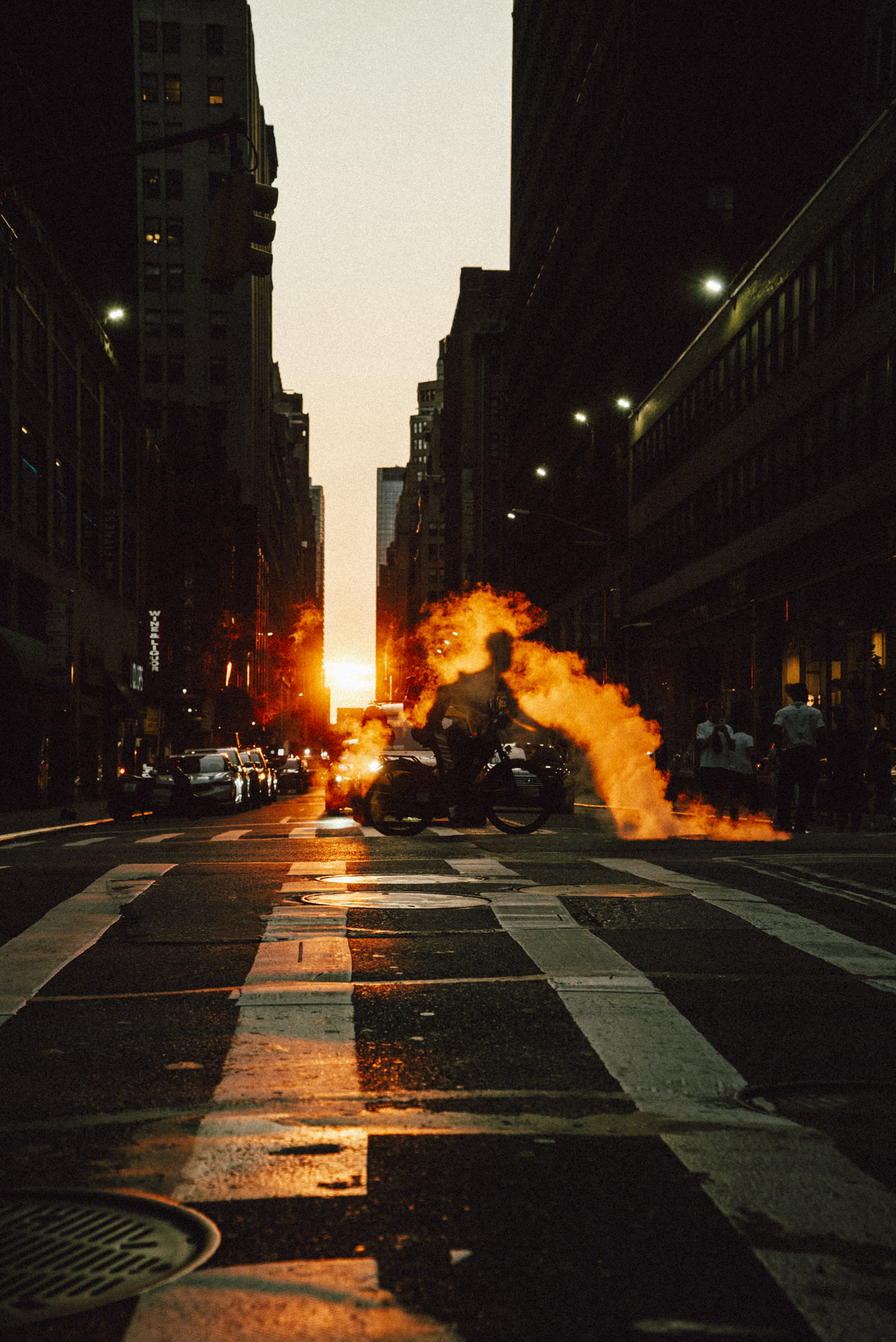 photo by a seasoned New York Spirit, Augusta Sagnelli
“We live entirely, especially if we are writers, by the imposition of a narrative line upon disparate images, by the “ideas” with which we have learned to freeze the shifting phantasmagoria which is our actual experience.”
Joan Didion, The White Album
I’ve been visiting New York City for over a decade,which means for over a decade, too, I’ve been taking notes and jotting down interpretations about my lived experience in that uncanny place.
The city has grown on me since I first wrote a diatribe that concluded with these words:
But there is beauty here too, hidden beneath the stern faces and tense skin. The beauty in New York City is not aesthetic but human, hidden in plain sight in pizzeria conversations; in the voice of an elder poet outside of a diner; hidden in the basement of Wo Hop, which a doorman told you to visit, where a smiling tourist pins a dollar bill to the wall; audible in the quintessential accent of the construction worker who helps you navigate from Gowanus to Queens.
“Only in New York” is a common refrain in this city, but are these moments “only in New York,” or are they simply the enduring beauty of humanity in spite of the city’s hardness? And what does it say about a city that so often makes you forget it?
Each time I visit New York City I catch another glimpse of its redemptive human qualities, because the truth is New York City’s beauty resides not in its aesthetics but in the fact that
it represents humanity and all of our uncanny walks of life—two facts that defy conventional narrative.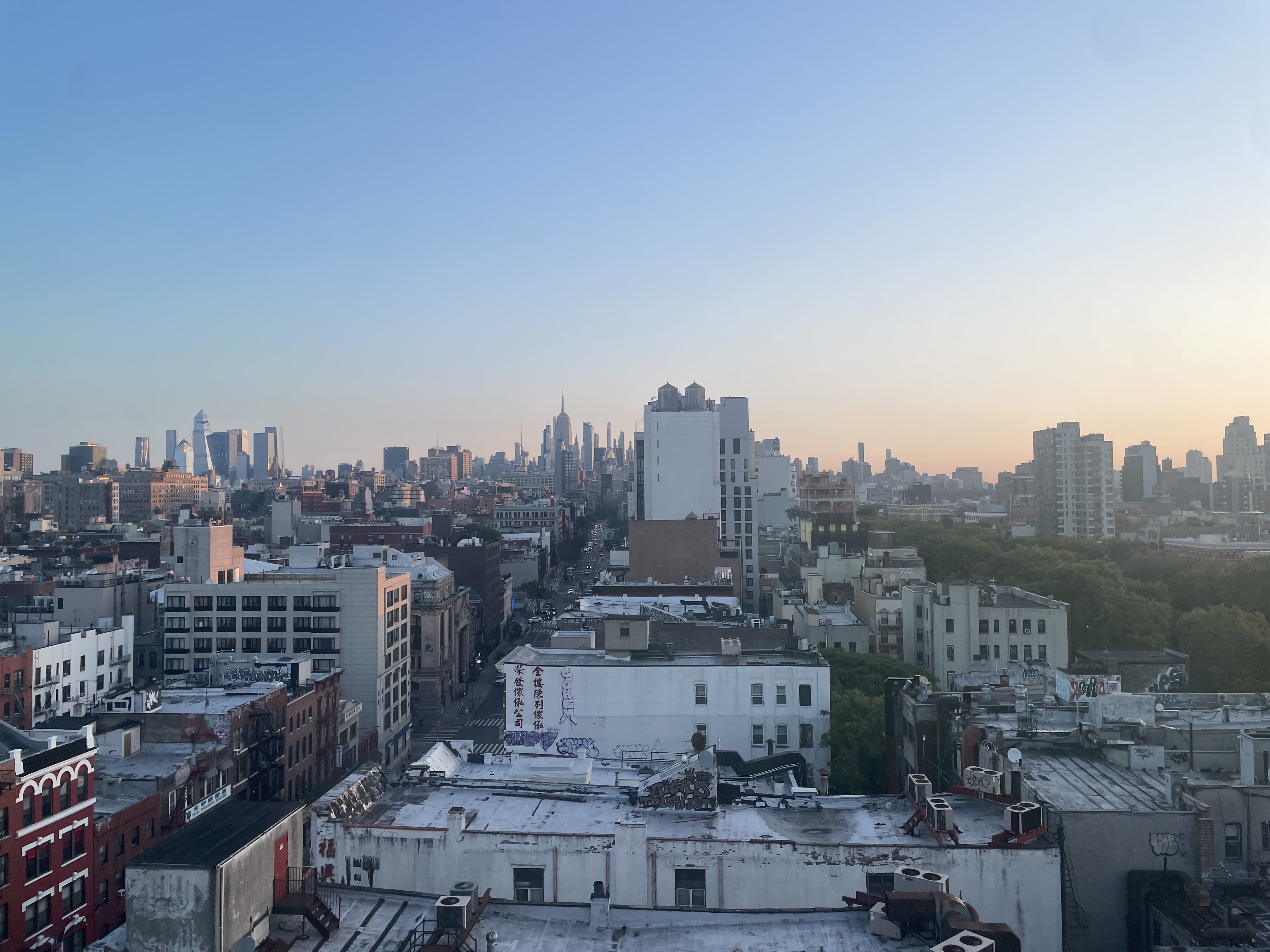 a view from Bowery
New York is everywhere. It is English and Italian and Haitian and Chinese. It is New England and India and Russia and Ireland and Jewish and Catholic and Polish and Sudanese and French and Senegalese and Dutch and Puerto Rican and Seinfeld and Japanese baseball and Patrick Ewing and Larry David and Billy Joel and Christopher Wallace AKA Notorious BIG and so many more people and places—so many more, more, more. It is $3 hot dogs and $10 SEC bagels (w/ hot sauce); it is $1.50 pizza slices and $25 cocktails and laughably expensive smoothies and $5 for a shot and a beer. It is street performing genius and unaffordable Broadway productions, tap-to-pay subway rides and private helicopter rides that both whisk you away to Long Island or late-night raves in Queens.
If I’ve learned to embrace New York City in all of its gaudy glory and grotesque trash heaps,it’s probably because I no longer succumb to imposing my particular poor-writer narrative line on the city, i.e. that I’ve been too poor naïve to properly experience it. Aside from now having enough friends in the city with whom I can crash on a sofa, I’ve learned to enjoy the city without turning it into a competition.
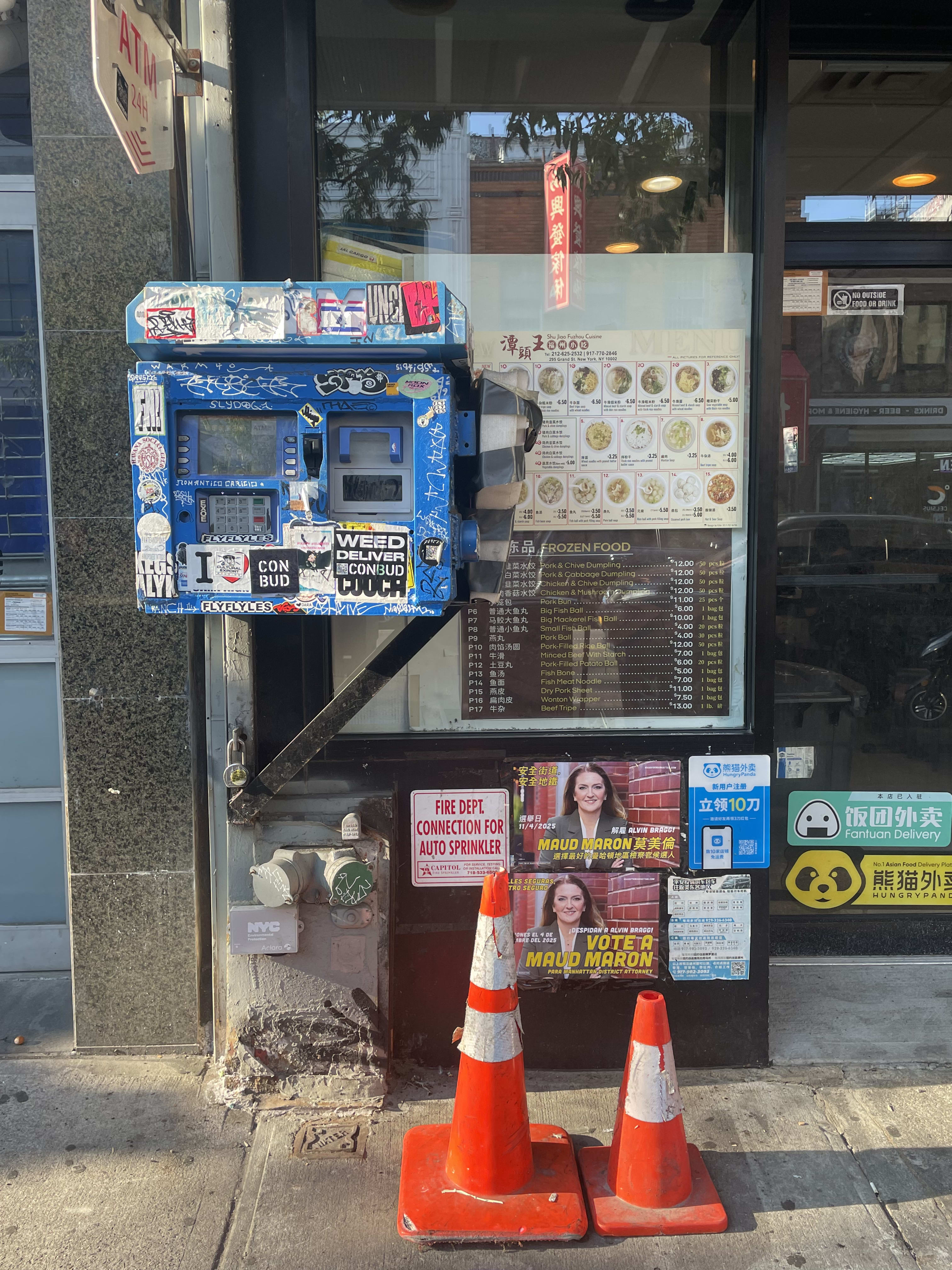 how many narratives can you count in this image?
New York City’s streets and parks remain free (I just discovered Domino Park, and the High Line is also a real treat) so long as you resist answering that inane question, how many steps did you take today? (I refuse to entertain the notion that walking, too, can be rendered a competition), and so long as your feet are able to carry you throughout the day, there are plenty of places to witness glory both old and new and fuel up on high-quality city water, bagels, pizza, and dimsum.
if not, Paris exists thanks to my 87 paying subscribers. Join them to get your hands on the upcoming 10th Anniversary Edition of my debut novel, Slim and The Beast, which is about the pursuit of passion, male intimacy & the contemporary USA
As for the art, there’s enough live music in the subways and painting in the streets to inspire creation and forego buying a ticket to the Met, and it would appear American scientists have been working on THC as if it were a national priority to find a cheaper alternative to alcohol, which means the “city that never sleeps” is quickly becoming the city that’s always high—or at least a city wherein you can walk all day wearing sunglasses and have a perfectly pleasant “legal” experience. And as for the comically priced bars in the hip whitewashed neighborhoods of Chelsea, the West Village, the Lower East Side, and large swathes of Brooklyn, to name a few (warning signs: finance bros; white women who are all dressed the exact same; and any bar that charges $10 for a can of beer can fuck right off), well, the Big Apple shall forever attract plenty of worms who believe social status can be attained with money, but those types can always be spotted from at least a block away.
But alas, I am succumbing to Didion’s warning of imposing a narrative line upon disparate images, so what shall follow on Friday, September 3, is the continued recollection of my New York City experiences as a collection of non-sequiturs, beginning with my subterranean arrival.
Preview: Part II, The SubwayLeaving the airport, a sign at the escalator entrance to the labyrinth that is the NYC transit system warns:
DON’T BE SOMEONE’S SUBWAY STORYI ask a security guard how to get to my Virginian friend’s apartment in South Williamsburg and am told, in a monotone voice, to take the Jamaica AirTrain to Hewes Street—which means I have twenty-one stops to become someone’s subway story.
September 11, 2025
Hark! The Muses of Synchronicity Descend Upon the Diligent
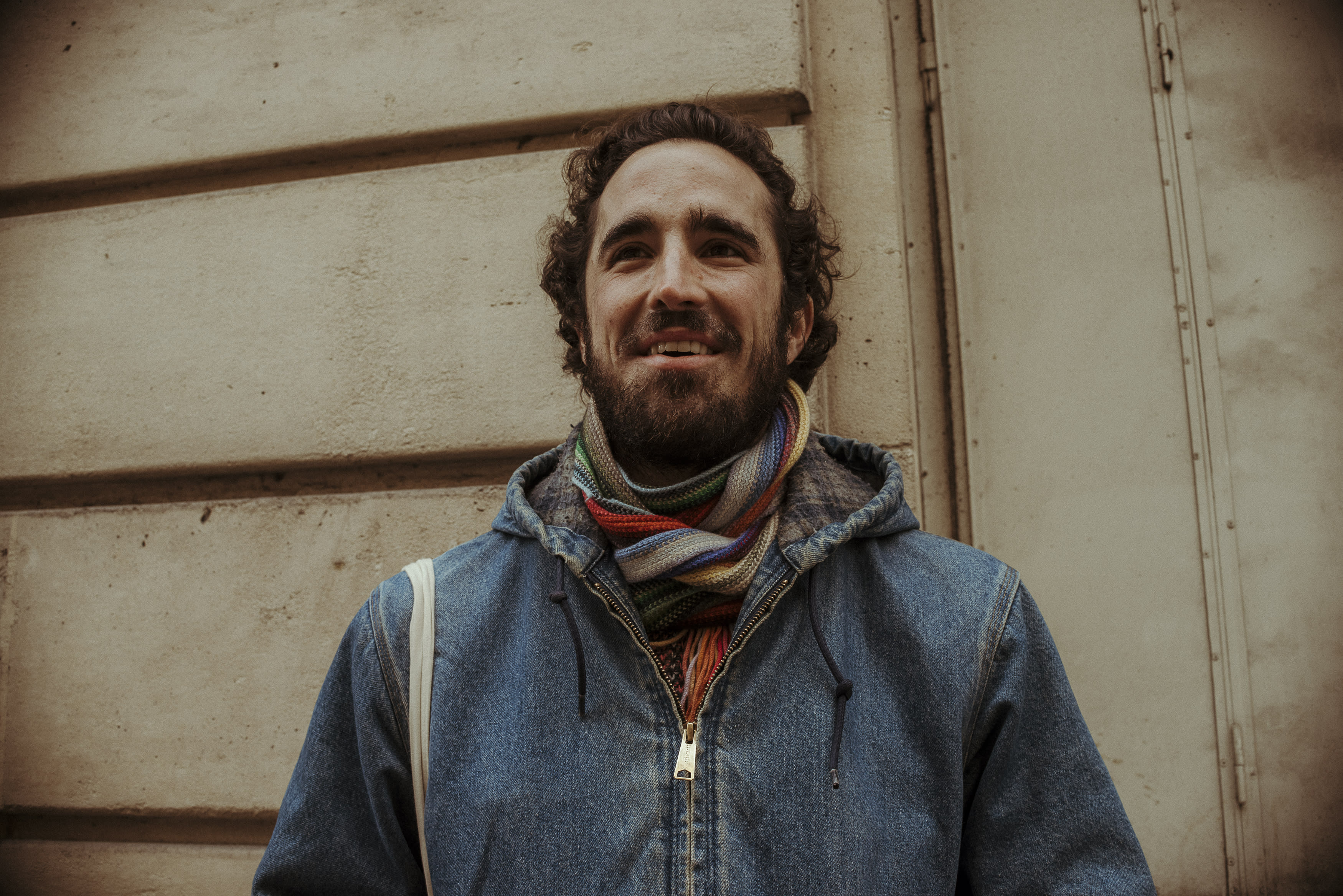 For new subscribers who have no idea who I am, I’ve updated my About Page. Nice to meet ya.Success cannot be pursued—it can only ensue.
I stole those words from Viktor Frankl—maybe not exactly—but here’s what he wrote in Man’s Search for Meaning (1946):
“For success, like happiness, cannot be pursued; it must ensue, and it only does so as the unintended side effect of one’s dedication to a cause greater than oneself”
For this novelist in particular, such a “dedication to a cause greater than oneself,” i.e., writing multiple novels (not thinking about writing them) without any hope or despair for what may come, is the only consistent way I’ve been able to make sense of my existence aside from reading Viktor Frankl, whose work changed my life.
The story might go like this: you write a first novel, and it almost surely sucks, and then you write a second one, which is slightly better more authentic, and by the third book, you start to understand where and how exactly you are fucking up vast swathes of text, and by the fourth book you may even begin to have a clearer idea of your specific strengths and weaknesses and avoid writing the extra 30,000 words you know you’re going to cut … but then you wake up one day and you’re thirty-seven years old and you’re only just reading Moby Dick for the first time and you wonder if you need to start this whole book-writing thing all over again.
But that’s as far as I’ve gotten for now—three novels written, two of them published, a fourth in its nascent stages—so don’t count on any more novel-writing wisdom from me.
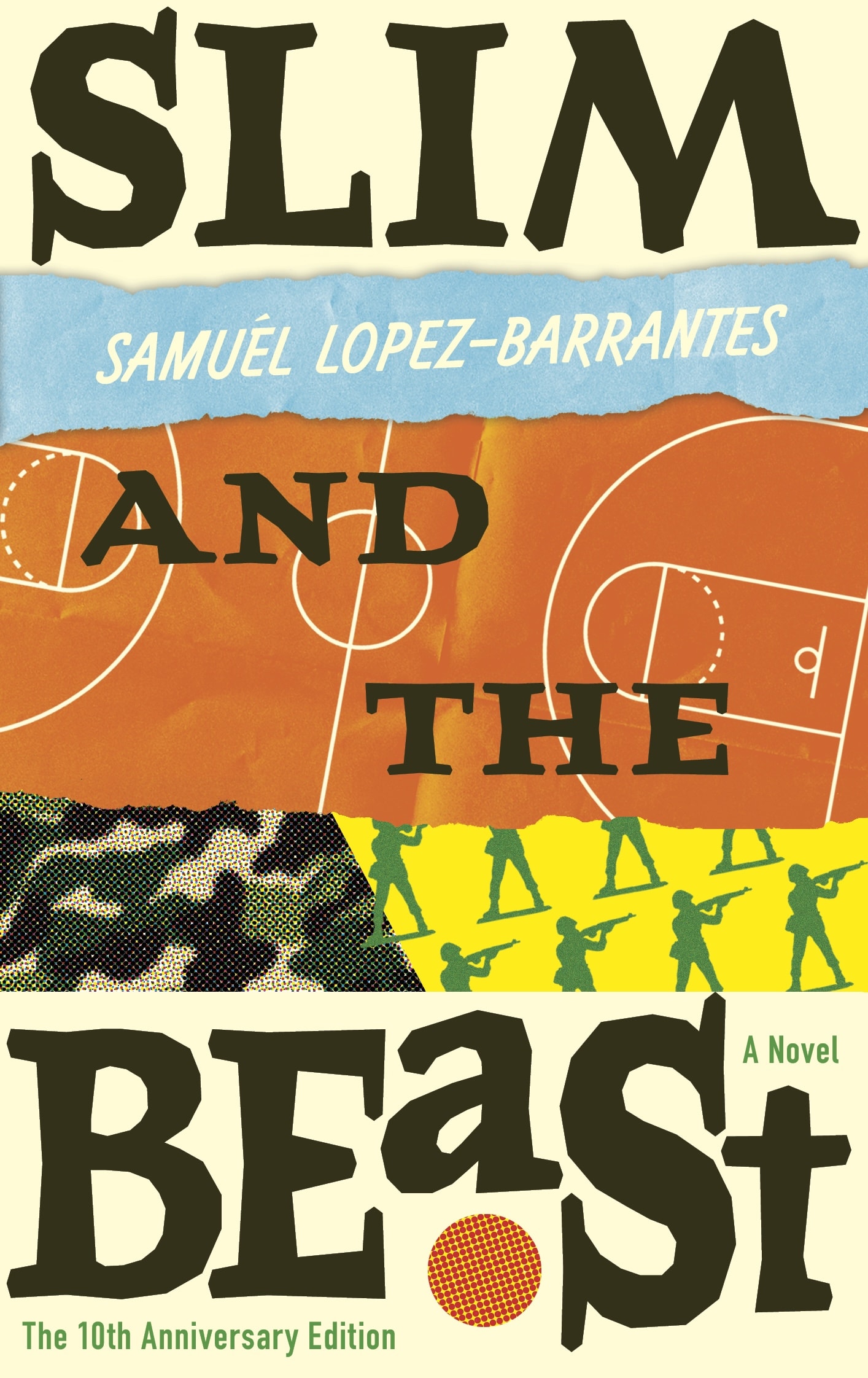 A first look at the revised Kingdom Anywhere edition of my debut novel, which is really the second novel I wrote, Slim and The Beast (2015). The cover design slaps thanks to Saskia Meiling. Viktor Frankl’s point is well-taken, however:
Devoting oneself to the practice itself is the only way to guarantee the possibility of success, and herein lies the rub about writing novels: it’s very hard to become halfway decent at it if you don’t actively choose to live a lifestyle that affords you the poverty time and mental clarity required to spend hundreds of hours putting words onto a page, a devotional act of solitudinal faith—nay, conviction!—that whatever’s inside your ever-elusive mind is far more important than anything else in the world—which oftentimes means being financially solvent.
In my entirely subjective opinion, to be a novelist is to reject the monolithic idea that the creative life is about financial success or a publicly-approved career. As my dear and prolific author friend says, writing books isn’t a vocation so much as an affliction; and I can attest that the books I’ve published written have only resulted from a mosaic lifestyle that involves choosing time over money—but actually, not in theory—and thus working various part-time gigs to make rent.
Intermezzo: the only time I’ve worked 40+ hours a week in an office was for a UFO religious cult in Paris. I didn’t realize they believed in extraterrestrial salvation until they were paying me, which shall be the subject of an upcoming essay in SOUVENIR magazine, a revolutionary arts & literature publication that harks back to the arts journals of the 1920s and gives voice to the thriving anglophone scene in Paris in the 2020s. You can read more about SOUVENIR magazine here.
“The professional has learned that success, like happiness, comes as a by-product of work. The professional concentrates on the work and allows rewards to come or not come, whatever they like.”
Steven Pressfield, The War of Art (2002)
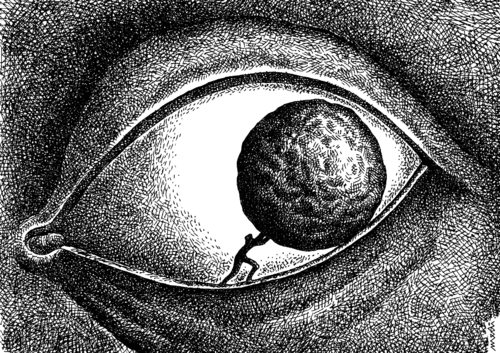
When I first moved to Paris in 2010as an aspiring 22 y/o novelist, madly in love with a Parisian woman and with just enough money to pay two months of rent, I was already a fan of Albert Camus famous assertion that, “one must imagine Sisyphus happy,” and I can’t honestly say I’ve ever had the illusion that novelistic “success” is about anything more than a Sisyphean adventure.
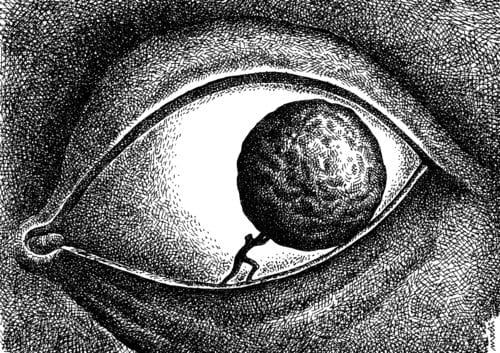 Whoever drew this, thank you.
To use Substack as an example, the most “successful” piece I’ve ever written here is entitled “I, Too, Have a Nazi Problem,” which is patently absurd—but so, too, is the world, and if only I could write more, more, MORE! scathing critiques of sociopolitical flamewars, maybe just maybe, one day, I could make it big …
But alas, I’ve settled on defining literary “success” as finding a way to pay my rent and bills whilst working as few hours as possible for other people so that I can maintain enough mental clarity to not just write novels but actually enjoy it.
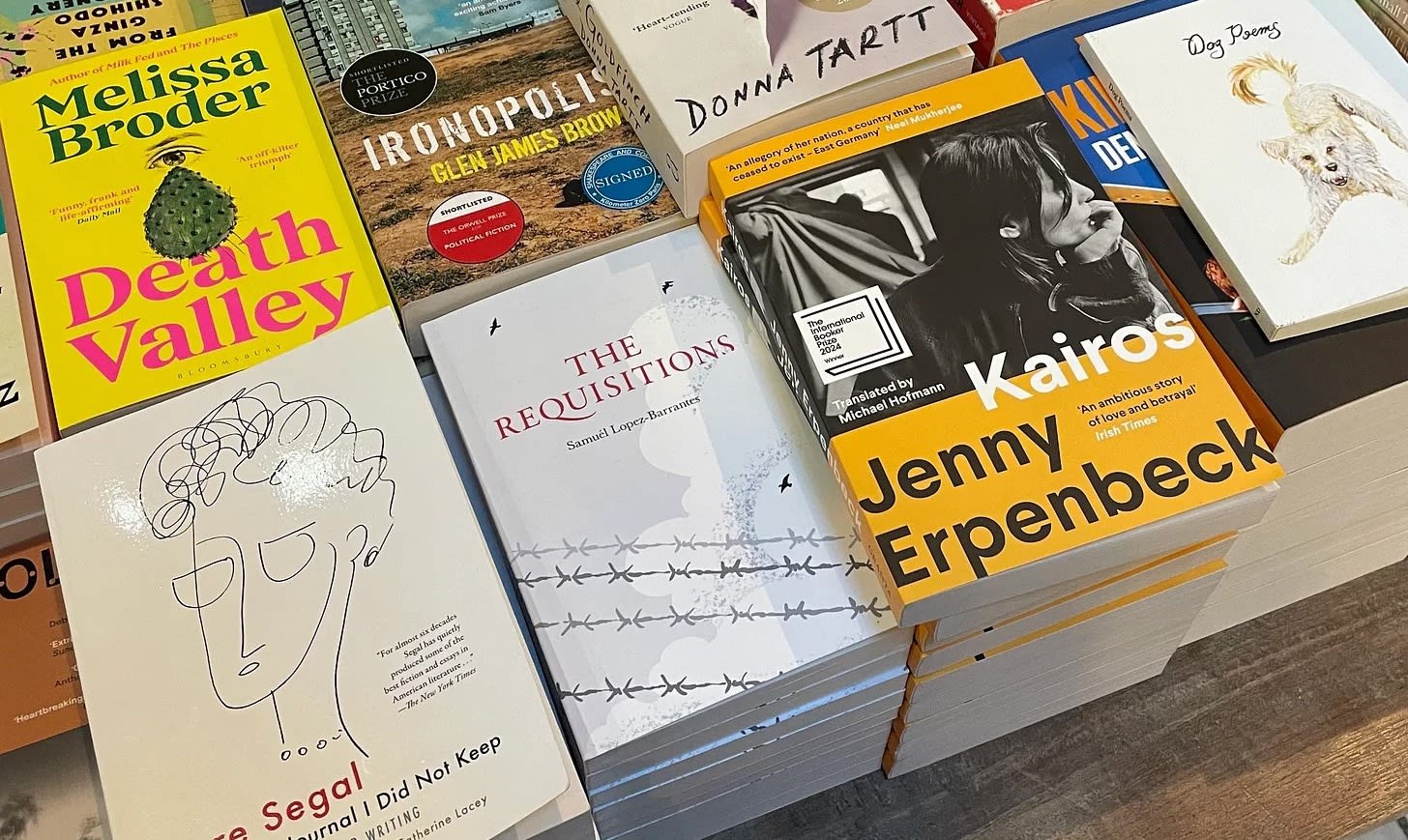 One of my former definitions of “success” was to have a novel make the front table at Paris’ Shakespeare & Company.
As I recently discussed in my essay about gatekeepers in trad publishing and MFA programs, “success” in the publishing world is at best an elitist chimera, a fickle fantasy, an orgiastic spaghetti wundermonster of the most capitalist kind: sell 1,500 books with a small-time publisher and you’ll be asked why you didn’t sell more; do a reading at NYC’s McNally Jackson’s and the first question you’ll get asked is “who’s your agent?” (I didn’t have one then and I don’t have one now).
Yes, the definition of literary “success” is forever tumbling down other people’s hills, whether you’re a Pulitzer-prize-winning novelist in search of the elusive Nobel, or an unknown novelist who started writing on Substack three years ago and feels extremely fulfilled selling one or two dozen books a month.
This autumn, Kingdom Anywhere is republishing my debut, Slim and The Beast, in a definitive 10th Anniversary Edition. Paying subscribers will receive a copy this autumn.
Sometimes, however, the Muses of Synchronicity descend upon us, revealing previously unforeseen perspectives at the top and/or bottom of new hills.A few years ago, a kind soul working across the ocean in PR contacted me via Substack and thanked me for my writing. A year or so later, after publishing The Requisitions, exclusively for my readers at first,1 this guardian angel in question was one of the first people to champion the book and praise it not just for the story, but for how I went about publishing it with my partner-in-life, .
Perhaps a year after that, she told me—let’s call her Petya—that she was passing through Paris and wanted to book a walking tour with me—a Hemingway & The Modernists. During our literary stroll, we discussed the challenges of the consumerist corporate world, how to find fulfilling work in a for-profit for-power economy, and the impossibility of being able to succeed as a writing novelist when so much of writing these days seems to only be about selling.2
Fast forward to a few months ago, and call it synchronicity, call it fate, call it “success,” as I was busy going about my creative life (a new solo EP in the works, editing my debut novel to re-publish with Kingdom Anywhere, and working on SOUVENIR magazine—this is the second time you’ve heard about it now), from out of the creative blue sky contacted me, said she’d been following me for a while now, and that she had some ideas as an experienced publicist and would like to discuss working together.
After a decade of going at this independent publishing thing alone, I have a publicist,a professional fighting for me in my corner—and so a new definition of “success” has appeared in my writing life. Such is my message of encouragement to all of the true novelists out there—the budding novelists, the struggling novelists, the unpublished novelists, the award winners, the runner-ups, everyone writing in the in-between who is perhaps right now, reading this very page, wondering why even though it’s Thursday, it still feels like a Tuesday, and I really should get back to the manuscript before it’s too late:
Success cannot be pursued—it must ensue. The boulder is joy. Just keep on rolling.12September 2, 2025
A Reason to Sing
 self-portrait by my love, the inimitable Augusta Sagnelli
A few close friends have recently been through romantic break-ups, which reminded me of an unfinished piece I wrote long ago, when I was heartbroken for the second time.
To those out there going through it, I wish you honest friends, at least three good break-up albums (see the end of this piece for one of my favorites), and the kind of solitude that allows you to lean into the hard feelings, because on the other side of that confrontation is a dear friend, and that dear friend is you.
Pro-tip because nobody enjoys reading love letters in email boxes: I designed my Substack to be far more pleasant to read than this email inbox. To read via Substack, click on the above title of this piece, or the comment button, or the like button, or anywhere where the cursor becomes a little hand. If you’re tired of seeing my emails in your inbox, I totally get it—I’m tired of emails, too—so if you’re using Gmail, you can drag this into the “SOCIAL” folder so it doesn’t show up in your primaries. However you cut it, Substack writers should really be read on their individual Subtack pages for maximum pleasure)
1
You are older now, a bit wiser, and there still isn’t much time: to start new projects, to further a career you have yet to define, to write another novel.
The first night you met her, you sang a song together. You were quick to fall in love and you both sensed there wasn’t much time.
It was fresh and mesmerizing to be with someone new—was, and still is, and always will be—but that time was different. You could and still sense it.
Airplanes traversed oceans and tears traversed phone-lines. Each time you held her in your arms felt deeper than the last.
Those farewell mornings were the worst: the early-morning wake ups, the sleepy kisses on the forehead, the bleary-eyed goodbyes, the “I’ll see you soons” as she closed the door. Nothing says farewell as harshly as a 5 a.m. phone alarm, and no return is as bitter sweet as one with the next departure date.
2
But oh, to be in love! Yes, to be vulnerable. What a luxury to choose to surrender to a foreign feeling with such childlike conviction.
You’ll choose to remember how she looked in the morning making you coffee in her sweatpants in that small apartment above the quiet square. You’ll want to forget that last time she said goodbye, how you almost got into an argument trying to help her carry her bag down the stairs.
Like so many young people who lived it before you, your punch-drunk love was sobered by distance. While falling in love, you reached out for time, time to utter the words you could only utter when she was gone. Now, falling out of love, you reach out for space—space to let the empty text messages linger, two blue check marks left unchecked, an unacknowledged tightness in the chest that is oh-so-easy to revisit if you pull out that handkerchief from your sock drawer, the one she once sprayed with her perfume.
3
Swallow hard. This won’t be easy. I promise it never will be. Heed the currents of sorrow while traversing the twilight of your former self. Peer into the gloom and see what still illuminates the darkest corners. No feeling is forever. What you are feeling is the reason why books and songs are written.
Take care of the glossy photos and hold onto the trinket memories. Honor the remember-when eulogies spoken from wine-stained lips of your closest friends.
4
Oh, reckless youth! Be gone, wanton abandon! For whom will you want to make your favorite lentil stew again?
You are coming to the end now. Another page turned, another chapter begun.
You are older now, a bit wiser, but neither time nor words nor wisdom have the honor of ending love. True love waits, Thom Yorke sang, but it also lives on.
And this is what remains: a new kind of love song, which she sings alone in a new apartment. She sings it beautifully, no doubt, but her melody is no longer yours to listen.
So what of it? You will continue down the boulevard, knocking on new doors, sipping new flavors and exchanging old glances across the bar, remembering the possibility of times of yore.
Occasionally, it is certain, you will smell her familiar scent in the street; but to look over your shoulder would be foolish, for neither of you are there.
So go forth and steady your gaze, young lover, and look out towards the ever-expanding horizon. At times you will breathe deeply, and at other times you will swallow hard, but one thing is certain: love is what you miss, and so long as you believe in it, love is what you’ll find. She’ll give you reason to sing, whoever she might be. Her melody will find you again soon.