
Lee Reich's Blog
April 16, 2026
PLANT SMALL, THINK BIG
If delayed gratification sometimes seems to be too much a part of gardening, it does teach us to appreciate the means to an end as much as the end itself. Especially with planting trees. Your vision might call for a towering maple or spreading beech in a corner of your front yard, but you can do no more than plant one, care for it, and wait.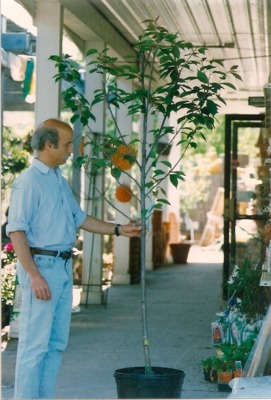
Not that full-sized trees cannot be — and sometimes are — moved for instant effect. Take enough earth along, keep it intact around the roots, and even a large tree hardly knows it’s been relocated. Such moves demand heavy, specialized equipment and plenty of money. Even then, though, a number of these trees die within a year of their move, or just sulk for many years.
Size Does MatterWe mortals are better off planting smaller trees — much, much smaller ones. In fact, if you’re talking about trees that you ordinarily buy from a nursery, smaller is usually better than larger. Financial considerations aside, research has shown that if the same species of large and small tree are planted under similar conditions, growth of the smaller tree often outstrips that of the larger one after a few years.
One reason for the better growth of smaller trees is because they suffer proportionately less loss of roots in transplanting. A larger tree needs a lot more water to recover from its move, and because it takes longer to reestablish itself, watering must be continued longer, often for a few years.
Nursery trees are commonly sold balled-and-burlapped (B & B), in pots, or bare root. B & B trees are dug from fields in spring, their roots and attached ball of soil then swathed in burlap. Although such trees typically lose well over 50 percent of their roots during digging, these trees survive transplanting well as long as their root balls remain intact, they are planted soon, preferably before growth begins, and their tops are not too large in proportion to the size of the roots.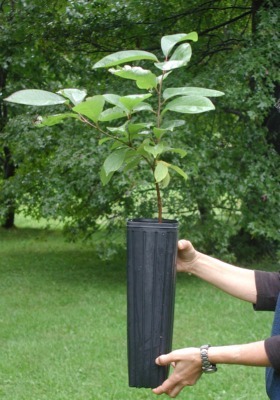
Potted trees spend their whole youth in pots — at least they should. Advantages of potted trees are that they can be transplanted almost any time of year and with no loss of roots. Potting soils are porous and watered frequently at the nursery, so after being transplanted a potted tree needs diligent and regular watering until roots start to spread out into surrounding soil.
Nix any benefits a potted tree gets from having its whole root system moved intact if the tree is to big for its pot. Then the roots grow around and around inside the pot, and sometime after being planted out, the tree begins a slow decline as it strangles itself.
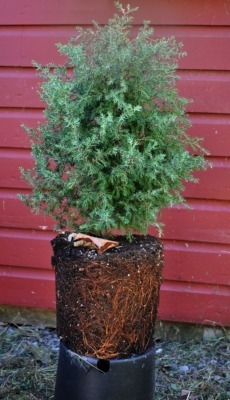
Height and healthy roots indicate that this tree is just the right size for its pot
Bare root trees are those that are dug up from the field while they are dormant, then have some water absorbent material such as wet sawdust packed around their roots. These plants can remain in storage as long as they remain dormant (leafless and not transpiring water), and can be shipped in good condition when needed. Because they can be easily and successfully shipped, they are often available in greater variety than potted or B & B trees.
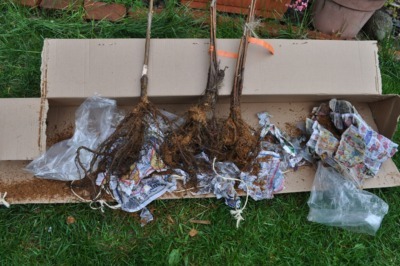
Unpacking a shipment of bare root trees
Some nurseries buy in bare root trees and pot them up to be sold as such. You’ll know this is the case when almost all the soil falls away from the roots as you tip it out of the pot. No problem with this as long as you’re being charged a price for a bare root tree and as long as the tree is still leafless.
But How Small, or How Big?You’re now ready to shop for a small tree, or at least one whose top is not too big for its roots. But how big is too big? You could just eyeball the plant and use your judgement.
Specific standards for B & B trees have been spelled out by the American National Standards Institute (ANSI). Those ANSI standards are quite detailed, but a few examples can give you a feel for what to look for. Three measures help judge the quality of a nursery tree: trunk diameter 6 to 12 inches above the soil line, tree height, and root ball diameter. According to the standards, a tree whose root ball is 12” across should be no taller than 4’ or have a trunk caliper of no more than 3/4 of an inch. Corresponding measures for root balls 18 inches across are 7 feet and 1.5 inches.
With potted trees, look for a tree whose height is no more than 2 or 3 times the depth of its pot. Even better is to tip the plant out of its pot. What you should see is plenty of soil, with young white, pink, or tan root tips growing at the outer edge. Thick roots circling the bottom of the root ball are a no-no.
My choice in buying a tree is a bare root plant that is 4 to 5 feet tall. Planted carefully, mulched, and watered religiously for their first season (one gallon per square approximated spread of the roots), the tree will take off and grow with minimal care from then on.
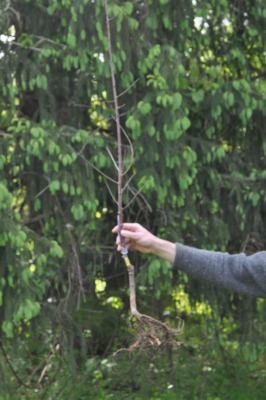
A good bare root tree, nice roots and height
So rather than shopping for a tree with the tallest trunk, plant small and enjoy caring for your plant, watering it, pruning it, and watching it grow. As your little tree grows, frost, rain, and sun will lend a patina to the trunk and limbs; near the ground, creeping plants will lend a gentle embrace. There’s no way around it — time is needed to bring character to any tree.


April 8, 2026
THE POWER OF TOUCH
I hope that I’ve caught you in time, before your seedlings have stretched out too long and too thin. That’s a problem this time of year. Tomato, zinnia, and broccoli plants — they’re all growing up on sunny windowsills. It’s the combination of a bit too much warmth and a bit too little light that causes that stretching.
The easiest way around this problem would be to just wait until the weather warmed up enough to sow seeds directly outside. There, abundant sunlight, cooler temperatures, and buffeting by wind would make sturdy, stocky seedlings. Of course, do this and you won’t eat your first broccoli bud until the end of June, and you’ll have to wait until early September to admire your first zinnia flower or bite into your first tomato.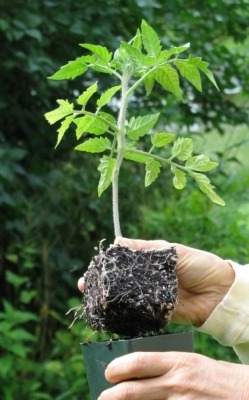
So we’re back indoors. Turning down the heat, pulling window curtains way back, cutting down any trees that block light in a south-facing window — all this helps. But still, you can draw just so much light into a window of your house, and it doesn’t compare with outdoor light. And the more sun you let stream in, the hotter it gets.
A Brush With . . .There is another way to make your indoor seedlings sturdier and that is to merely touch or shake them. No need to make this a full time job, because brushing them back and forth ten times each day is sufficient, doing all ten at once or spreading the brushing throughout the day. That’s for this time of year; there’s some evidence that twenty brushings a day may be needed in June.
That brush that you and I use in winter to whisk snow off our windshields can find meaningful existence during the growing season brushing seedlings. 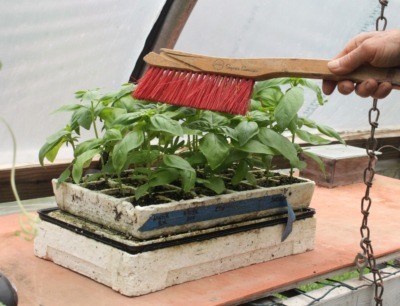 Run it lightly over the tops of your seedlings. Or use a horizontally held broom handle. Or the palm of your hand.
For something different, shake the seedling flat instead of brushing the seedlings. Or blow air on them with a fan for, perhaps, thirty seconds each day.
Although stocky and sturdy growth helps seedlings better survive transplanting and adapt to outdoor conditions, we don’t necessarily want our plants to remain dwarfed once planted outside. Fortunately, the dwarfing effect of shaking, touching, or wind wears off within days after transplanting.
While brushing plants to make them stockier might seem woo-woo, there Is science to back it up. The movement causes a slight stress which, in turn, causes release of ethylene gas, Ethylene is a plant growth regulator which can slow stem growth. After all, other plants are more familiar in such responses. Buffeting by wind is partly responsible for the stockiness of trees growing on windswept cliffs.
The emphasis is, as I wrote in the previous paragraph, on “slight stress.” You don’t want to break stems. Brushing and time will make those once-fragile stems more resistant to damage. Give seedlings a few days of growth before they are able to tolerate any stress.
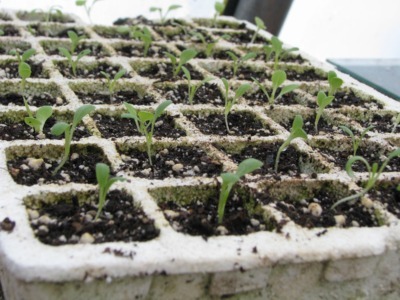
Too young to brush
Everybody’s Doing ItTouch response isn’t rare among plants. What do you think makes a pole bean or morning glory stem twine around a pole? They are responding to touching the poles. The same thing makes tendrils of peas and cucumbers cling to a chicken wire fence. 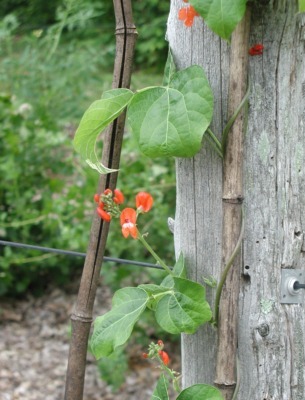 A scientist who stroked a pea tendril for 5 minutes found that it remained curled for days, as if pining for a twig or piece of wire to hug.
Venus fly trap is another plant that responds to touch, in this case with the sensitive hairs within its trap. The trap clamps shut, but remains so only if those hairs continue to be touched for a few minutes after the trap closes, indicating a live catch.
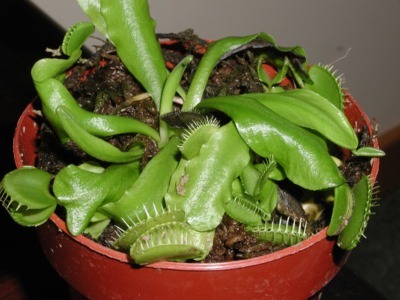
Venus flytrap
The so-called sensitive plant (Mimosa pudica) has an equally dramatic, but less intimidating, response to touch. Touch makes its leaves collapse all of a sudden. The response can be as quick as a tenth of a second, with the signal, an electrical one, coursing through the stems as fast as 2 feet per second.
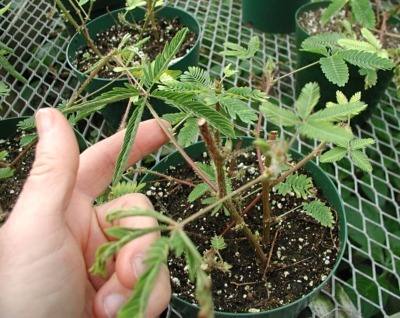
Mimosa collapsing
Shaking and touching plants doesn’t only or always dwarf them. Caressed cucumbers or melons bear a greater proportion of female flowers than do plants that have not been caressed.
And shaking a plant for long periods each day can lead to increased growth, a technique that has been applied in Japanese greenhouses using vibration — even music! I wonder if this means that talking to plants would also affect their growth. If so, don’t talk too much to your seedlings until you know how they’ll react.
(For more about thigmotropism, as touch sensitivity is called, and other sensitivities of plants, see my book The Ever Curious Gardener: Using a Little Natural Science for a Much Better Garden.)
April 2, 2026
ESPALIER, A TASTY FUSION OF ART AND SCIENCE
Let’s go back in time, say, four hundred years. You’re puttering around your garden, your walled garden — walled to keep out animals and unfriendly neighbors. Hmmmm, you think, why not plant a fruit tree in that strip of earth against that wall, perhaps a fruit that will also benefit from the extra warmth over there? May as well make the plant look nice and orderly, too.
And so originated espalier (ES-pal-yay): a plant, usually a fruit plant, usually trained to an orderly and two-dimensional form. The word is derived from the Old French aspau, meaning a prop, and most espaliers must, in fact, be propped up with stakes or wires.
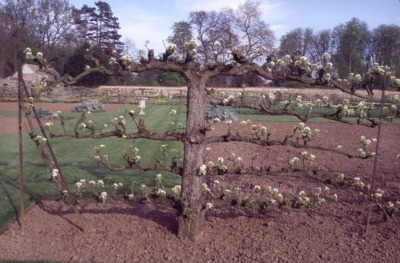
Although today we rarely build walls to fend off unfriendly animals or neighbors, an espalier still might warrant a place in the garden. Grow an espalier where you want a formal effect, especially where space is limited, or grow a row of espaliers side by side so they meld together as a living fence. Nowadays, no need to back an espalier up against a wall and no need to restrict espalier only to fruiting plants.
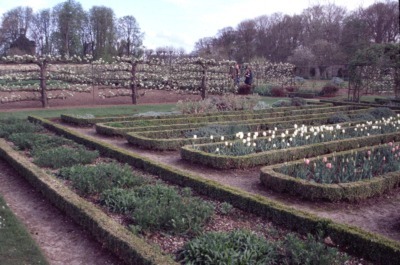
Pear espaliers at St. Jean de Beauregard
Most espaliers need a wood, wire, or rigid metal framework for support and to make sure their stems are straight and at the desired angles. For an espalier growing against a wall, erect the framework about a foot away from the wall so that air can circulate behind stems. Rather than tie a stem directly to the framework, it may be more convenient to lash it to a bamboo cane that follows the desired direction of growth, then tie the cane to the framework. This lets you keep the stem straight, but growing a whatever angle you wish no matter what the layout of the frame.
A Perk: Delicious Fruit Also
Espalier is not a low-maintenance way to grow plants. It usually demands repeated pruning through the growing season, perhaps in winter also, to keep the plant within bounds and to maintain that orderly appearance.
Is it worth all this trouble, having to erect a trellis and then so frequently pinch and snip to keep the plant in shape? Well, besides the ornamental effect, the actual growing of the espalier is fun. A well-grown, fruiting espalier represents a happy commingling of art and science.
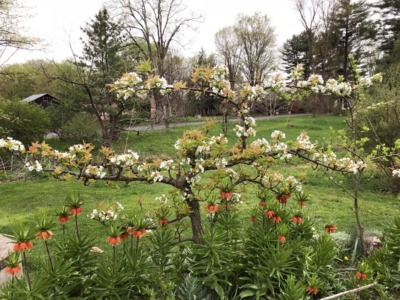
Asian pear espalier trained self-supporting en arcure
You apply this science artfully (or your art scientifically) by, for instance, maintaining a congenial balance between stem growth and fruiting, pulling stems upward for more stem growth, or downward for more fruiting. Cut notches where stems threaten to remain bare. Shortening branches in summer to keep growth neat and fruitful.
Where you want branching, shorten a young stem. How much you shorten influences the number and vigor of shoots that regrow, with more severe cuts leading to fewer, but more vigorous, shoots. Where a stem is growing in the wrong place, just cut it away completely.
Done well every branch on a well-grown espalier is clothed throughout its length with leaves and, for the edible espalier, fruits. Those fruits, bathed in sunlight and air, grow especially luscious, large, and full-colored.
Many VariationsAn espalier consists of one or more main stems, “leaders,” off which grow “branches” and, in some cases, “ribs.” Branches are temporary, and on the solely ornamental espalier, you just cut them back as frequently as is necessary to keep the plant orderly and handsome. Growing a fruiting espalier is trickier, though, because then you have to be careful that your repeated pruning doesn’t cause flowering and fruiting to suffer.
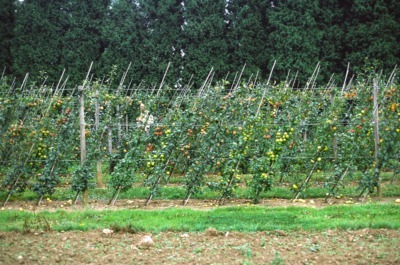
Oblique cordon espaliers in Great Britain
The simplest form of espalier is just a single stem, a “cordon.” Set eighteen inches apart in a row, vertical cordons are a way to cram many varieties of apple into a small area. A horizontal cordon can be a decorative and luscious border for a path or garden. The fruiting cordon is best suited to plants that bear fruits on short growths, called spurs, so that the cordon can be kept looking like a cordon, rather than like a porcupine.
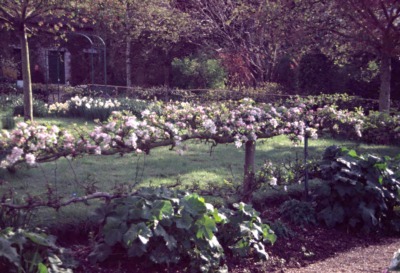
Apple espalier at Giverny
To see how other forms might develop from a vertical cordon, imagine terminating that single stem to split it into two stems, which turn away from each other before growing vertically again. You now have a “U palmette.” Split those two vertical leaders of the U again and you have a “double-U palmette.”
All these forms have an inherent shortcoming: They are threatened by apical dominance, which is the tendency, on any plant, for strongest growth from buds and shoots that are spatially highest.
Various forms of espalier have been devised to be artistic even as they sidestep apical dominance. One popular form is the “fan,” in which the central stem terminates to split into two stems that angle upwards and outwards. Other designs purposely weaken the central leader by bending it around in a decorative curve, rather than allowing it to grow straight upward.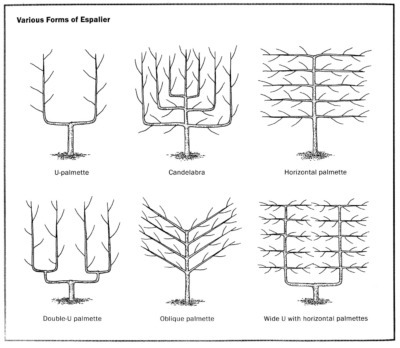
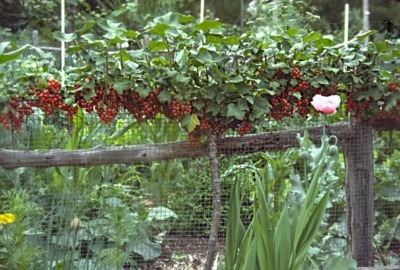
Red currant is easy to espalier as a simple T; I grew one to adorn the fence around my vegetable garden.
I began by cutting away all stems except a single upright one, which would become the trunk. I tied it to a stake as it grew to keep it straight. Once the stem grew a bit higher than the fence, I cut it back to that point and selected two side shoots to become horizontal leaders — the “arms” — growing in opposite directions.
I had two goals with the developing leader: To keep it growing from its tip, and to keep lower buds active. Toying with a leader’s orientation is the way I achieved these goals.
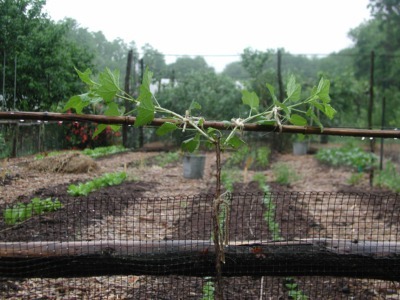
Currant trunk with 2 developing arms
I initially trained the two horizontal arms at an upward angle to keep growth stimulated — the more upward pointing, the more tip growth and the less branching. As the arms approach full length, I gradually lowered them to slow tip growth.
The basic procedure for training the red currant espalier can be adapted to other forms and plants with a few additional wrinkles.
Once the leader was full length, I shortened it each year, when dormant, to just about where growth began the previous season. But even before it was full-grown, its older parts needed strict pruning to control branch growth and so maintain the neat shape of the plant — all without any sacrifice of fruit yield or quality.
In the case of red currant, this pruning is straightforward. I just shortened all branches to about five inches just as the fruit is starting to color. In winter, I cut those shortened branches back further, to about two inches. Thisbuilds up short, fruiting growths right near the leaders.
How pruning accomplishes this goal with other fruit plants depends on a plant’s fruiting habit. More on that after your espalier has finished its training period . . .
If you want to dive deeper into espalier, see my book, THE PRUNING BOOK http://www.leereich.com/books, in which I devote a whole chapter to the techniques.
March 26, 2026
THE TOP OF THE SOIL
“Topsoil” is one of the haziest terms used by gardeners — and by those who sell the stuff. After all, topsoil is nothing more than the top layer of soil.
And what’s so special about this layer of soil? Under natural conditions, topsoil is the most fertile portion of soil. In the forest each autumn, leaves fall on the surface of the ground, where they are digested by soil life to release nutrients and create soil organic matter. In meadows, including prairies, the topsoil each year is similarly enriched by the remains of old roots, leaves, and stems of flowers and grasses.

Lush meadow above ground, rich soil below ground
It’s no wonder that the feeder roots of plants — from magnificent maples to midget marigolds — choose to live and work in the topsoil! Here is where roots find a soft bed and a congenial mix of food, water, and air. Much of that congenial mix is the result of the diversity of friendly bacteria, fungi, and other micro- and macroorganisms that make their home there. The diversity of life in that layer of ground helps plants fight pests. It’s rich in nutrients, especially nitrogen.
But What is Topsoil?Topsoil develops naturally, but it takes centuries, even millennia, to develop.

Native prairie in N. Dakota. (Rick-Bohn-USFWS-wiki-CC.)
Because natural topsoil is a limited resource, it is not what you necessarily get when you purchase “topsoil.”
When you purchase topsoil, you might get whatever soil happens to be in the upper layer of any piece of ground. That top layer may turn out to be what was left after the real topsoil was eroded or stripped away some time ago.
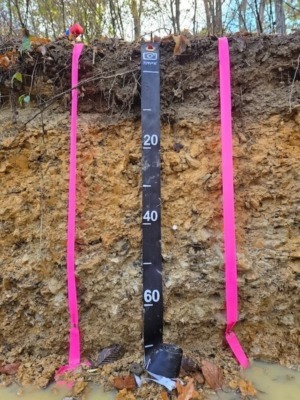
Soil profile showing real topsoil
Or, purchased topsoil might be a manufactured product. Not that there’s anything wrong with manufactured topsoil, which is made by mixing almost any soil with some organic material such as compost or leaf mold. It can be a good substitute for the real thing.
Because “topsoil” is so ill-defined, it pays to ask some questions before you have a mountain of it slid off a truck bed into your yard. Ask the seller whether the topsoil was mined or made. Ask how much organic matter the topsoil contains. For comparison, a rich natural topsoil has about 6 percent organic matter.
Ask whether the mineral fraction, i.e. ground up rock particles, of the topsoil is a clay, sand, or loam. For most purposes, loams, which are equitable mixes of sand, silt, and clay, are ideal. (Sand, silt, and clay are designations of the size ranges of minerals in the soil, the ranges being 2 to 0.05 mm, .05 to .002 mm, and less than .002 mm according to the USDA system.)
The very small particles of clay soils have very small spaces between the particles which cling to lots of capillary water. The result: clay soils hold plenty of water but not enough air, which roots need to breathe. Sandy soils have the opposite problem, the large particles have commensurately large spaces between them; these soils cling to little water but have plenty of air spaces. However, a clay soil that is aggregated, with its small, clay particles clumped to form larger units, provides the best of both worlds: Air between the aggregates and water clinging to the clay size particles within aggregates. Air and water, just what plants need to thrive. Organic matter, besides its other virtues, helps aggregate clay soils.
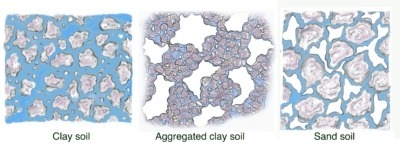
Water, air, and mineral particles in clay, aggregated clay, and sandy soil
Another question worth asking before you get a load of topsoil delivered is whether or not it has rocks in it. You might already have a rocky soil. What you want is soil, not rocks.
How about chemical residues. Especially topsoil that has been scraped from the surface of farmland might contain pesticide residues. The effects of some pesticides can linger for years.
Do You Really Need It?Also ask yourself a question: Why are you buying topsoil? If you’re buying it to enrich very poor soil in your vegetable or flower garden, don’t. Use pure compost instead, either home made or purchased, spread right on top of existing ground.
Perhaps you have a low area in your yard that you want to fill, then plant to lawn, vegetables, trees — anything, in fact. No need to fill that whole depression with topsoil. Instead, first fill the bulk of the space with some cheap dirt, preferably a loam or sand. Then top the whole area with a layer of topsoil a few inches deep.
Perhaps you need soil to build raised beds for your vegetables. Buy compost in this case? No! Compost is mostly organic matter which is mostly compounds of carbon, hydrogen, and oxygen, which decomposes to carbon dioxide and water. The compost will sink dramatically in its bed, requiring more of the same.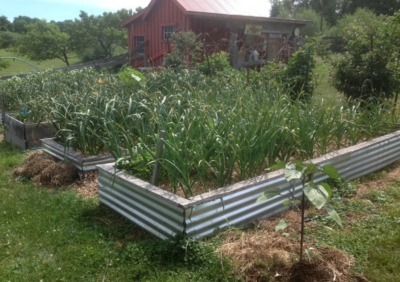
For a raised bed, I’d recommend any well-drained — that is, sandy or loamy soil — to fill the bed leaving enough head room for a topping of 2 or 3 inches of pure compost . Each year the bed will require just another inch or two of compost for fertility and all compost’s attendant physical and biological benefits.
Perhaps you’re thinking of buying topsoil for a new lawn. Here’s a perfect use for topsoil. Lawn grasses thrive in rich soils, making topsoil an ideal covering for the poor dirt left at most construction sites or where topsoil has been stripped away or is otherwise lacking. Any excavator worth his or her salt will strip off and pile up topsoil to spread back out after excavation is finished.
No matter where you use topsoil, always spread it on top of the ground, where it can do most good. Good topsoil is alive and breathing, but not if it’s buried within the bowels of the earth. And besides, some of the benefits of topsoil, such as helping rainfall and air percolate into the ground, come specifically from its being on the surface.
March 18, 2026
TRAVELING PLANTS
People often stare at me in disbelief if I suggest buying a certain plant from a nursery 2000 or 3000 miles away. Surely no plant could survive such a journey!
Not so. This time of year, UPS trucks and airplane holds are filled with plants on the move.
I prefer to buy my plants at local nurseries. But when I want a specific plant, such as a Hudson’s Golden Gem apple tree on G.11 dwarfing rootstock, I have to turn to mail order. (In this case, it would be from www.cumminsnursery.com.)
If shipped from reputable nurseries, mail-order plants thrive as well as plants purchased locally. That “if” is a big one. As with anything else offered for sale, quality costs. Beware of any nursery offering super-bargains or whose ads gush with horticultural hype.
I remember many years ago seeing a magazine ad for “A Miracle of Nature! Climbing Vine Peaches.” Rather than quote extensively ad bait such as “dazzling golden blooms” and “fruit by the bushel,” suffice it to say that I happen to know that this plant’s fruits might look like peaches, but are, in fact, practically tasteless. They are a kind of melon, nowadays sometimes billed as a vining mango.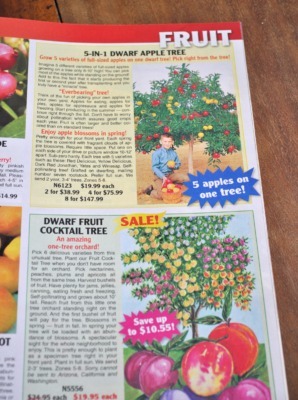
And forget about any “IRON-CLAD GUARANTEE” from such nurseries. The nursery is able to offer and support this guarantee because, like others in its class, it banks on customers’ forgetting about such claims as soon as spring melts into summer.
A few rotten fruits don’t ruin this barrel of apples, though: many mail-order nurseries sell quality plants and also have strong guarantees. Just read between the lines of any nursery ad or catalog to determine if the nursery seems reputable, and do your own research about the plants.
But back to that “vine peach:” I did research some contemporary information on it and to me the descriptions were not sufficiently disparaging. It was said to be very fragrant — in a bowl, not your mouth — and good for pickles or preserves, but not for fresh eating.
Bare Root or PottedMail-order plants are shipped either potted or bare root. “Bare root” sounds brutal, but plants do fine shipped this way if handled properly by the nursery and you. The nursery’s job is to dig the plants while they are leafless, except in the case of small evergreens, then keep them cool, with their roots swathed in moist peat, sawdust, shredded newspaper, or some other water-absorbent, spongy material.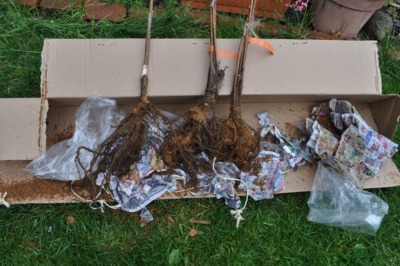
Years ago I ordered and received a small, bare root Nanking cherry plant that arrived looking like a forlorn twig with a few dried roots that had been just tossed into a small, plastic bag. No wonder the plant was so cheap. No wonder it never grew.
When I receive a bare root plant, I unpack it soon after its arrival, checking that the roots are still moist, then plant post haste. If the roots seem at all dry, I’ll soak them in a bucket of water for a few hours before planting.
If I can’t plant immediately because the ground is frozen or too wet, I keep the plant cool and moist by putting it in my refrigerator, if it’s small enough, with its roots wrapped in plastic, or by temporarily planting it in a shallow hole on shady north side of my workshop. Or I could just re-wrap with its roots in the moist (moistened if not sufficiently moist) packing material in which it arrived and keep it somewhere cool, such as in my workshop, which is unheated.
Potted plants can go longer before being planted out in their permanent location — as long as the potting soil is kept moist. The nursery’s job, in this case, is to pack the plants to arrive at your doorstep with their stems undamaged and their soil intact. 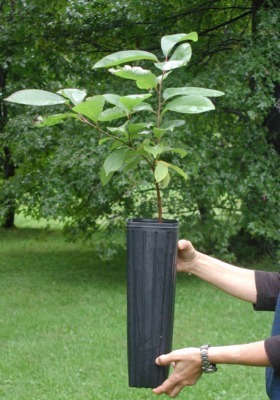 Some nurseries have really mastered the art of packing and shipping live plants. Opening a shipping box of their neatly nestled, happy plants gladdens any plant lover’s eyes.
Whether ordering a bare root or potted plant — even if you are buying locally — don’t always opt for the largest plant. Large, bare root plants often suffer more in digging and transit than smaller ones. Large potted plants often have their roots cramped and twisted into undersize pots. I lift the plant out of its pot to check on the roots; I should see some at the outside edge of the root ball, but not ropes of them going around and around.
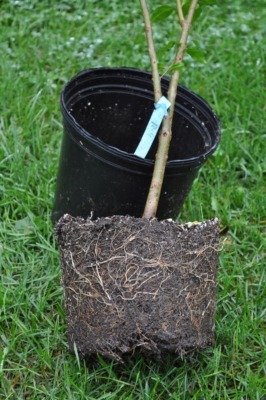
Root ball of good nursery plant
Growth of smaller plants often outstrip growth of larger ones after a few years because they establish more quickly. They also require less aftercare, mostly watering, often just the season of planting for the smaller plant versus years for a larger one. I consider the ideal size for a bare root tree is a trunk-to-be four or five feet high.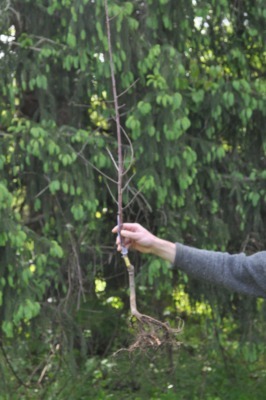
There’s something satisfying about walking into a local nursery on a balmy spring day, drinking in the bright colors, the smells, the riot of greenery and textures, then buying a plant. If a local nursery doesn’t have the particular plant or quality I want, I buy mail-order.
March 11, 2026
TEN ESSENTIAL PRUNING TIPS
An ideal time to prune most trees and shrubs is just as their buds are swelling, which is just about now here on my farmden. Leafless stems make it easy to see where to cut, dead stems make their presence known, and with coldest weather past chances for cold damage near cuts are minimized. Warmer spring weather also promotes rapid healing of cuts.
Whole books have been written about pruning (I even wrote one!: THE PRUNING BOOK), yet the essence of pruning can be distilled into a few general pointers. The ten listed below will not result in an expert pruning job, but offer sufficient guidance to keep you and your plants reasonably happy.
1. Don’t cut unless you have a clear reason to do so. Trees and shrubs vary in their needs for pruning, from, for example, Japanese maple and witch hazel, which need no regular pruning, to butterfly bush and lilac, which need to be pruned every year to look their best.
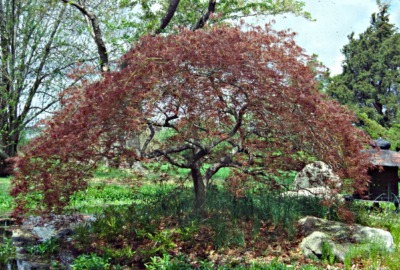
Japanese maple’s rarely need pruning

Butterfly bush is at its best pruned annually
2. No matter what the plant, cut all dead and diseased stems back to healthy wood. Look closely at the stems; you’ll know if they’re dead or diseased by their shriveling or if they’re dotted with fungal spores (but don’t confuse them with bark lenticels which are natural pores that allow for gas exchange between the atmosphere and internal tissues.) Also prune back broken stems, as well as those that are obviously out of place or rubbing against others.
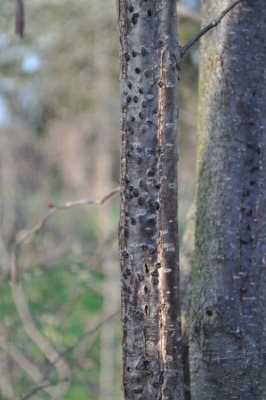
Fungal blight on filbert stem
3. Tailor each cut to the response you want from the plant. I shorten a stem when I want to prompt buds remaining on it to grow. The result is increased branching. I lop a stem completely to its origin and, in contrast, there’s usually little or no regrowth near the cut. So I use these latter cuts thinning out crowded wood, and when I want to reduce the size of a plant.
Trees, Fruits, Bushes4. Prune young TREES as little as possible. Any pruning weakens a plant and we want maximum stem and root growth from these plants; any stem pruning decreases total plant growth. I want trees that I plant to fill their allotted space a fast as possible.
5. On any TREE, cut away watersprouts and root sprouts. These vigorous, vertical shoots, the first originating along the branches and the second at the base of the tree, soak up the plant’s energy, look unattractive, and bear few or no flowers or fruits.
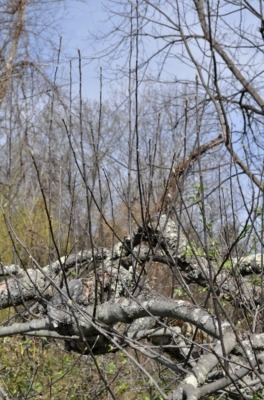
Watersprouts
6. Almost all FRUIT PLANTS need regular pruning. The amount depends on where a plant bears its fruits. For example: apple trees bear fruits on long-lived stubby growths growing off older stems, so need only moderate pruning.
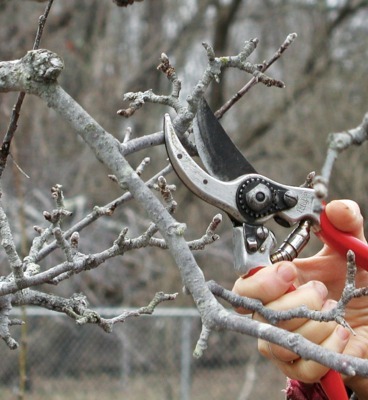
Pruning apple spurs growing on old wood
Peaches, in contrast, need relatively severe stem shortening to stimulate an annual supply of new shoots, which are the only ones that bear fruit the following year. Of course, it’s a balance; you want to leave some year-old stems intact on which to hang this year’s peaches.
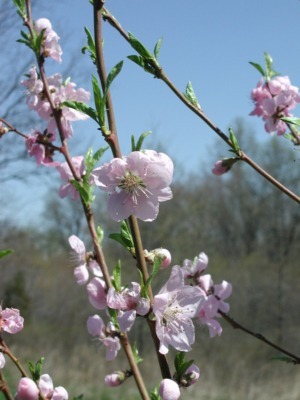
Pruning apple spurs
Each raspberry cane dies at the end of its second year, so the move here is to completely cut away all old canes. Also remove some young canes — which will bear this year — so that those that remain are no closer than 6 inches apart.
7. Avoid hedge shears on BUSHES, except for those trained to formal shapes.
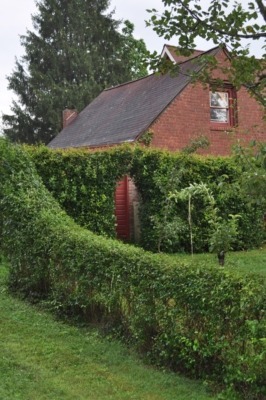
Hedges need repeated shearing with hedge shears each season
Prune most bushes by a renewal method, every year cutting some of the oldest stems to the ground to make way for young sprouts. In this way, the bush maintains a graceful fountain-like shape without ever accumulating any decrepit stems.
8. Tailor how much you prune any BUSH to its growth habit. Forsythia and lilac sucker abundantly, so don’t allow stems to grow very old before removing them to make way for new ones. Bushes that make few suckers — such as witchhazel and rhododendron — need their oldest stems cut back only infrequently, if at all.
9. Wait to prune SPRING FLOWERING BUSHES, such as spiraea and mock orange, until right after their blossoms fade or else you will be removing some of the flower buds soon to unfold. Last year is when spring flowering shrubs set up flower buds that will unfold this spring.

Forsythia, spring flowering, prune after flowering
Prune SUMMER FLOWERING BUSHES, such as rose-of-Sharon and potentilla, now or anytime before growth begins in spring. These summer flowering bushes set up and open flower buds on new shoots that grow this season.
The Right Tool For the Job10. No matter what you are cutting, use a tool appropriate to the job. For stems a half-inch or less in diameter, use hand held pruning shears. Cut stems up to an inch-and-a-half across with a long handled lopper. For even thicker wood, use a pruning saw, which differs from a shop saw in having special teeth that do not become clogged by green wood. Use hedge shears for formal hedges, hand shears and loppers for informal hedges.
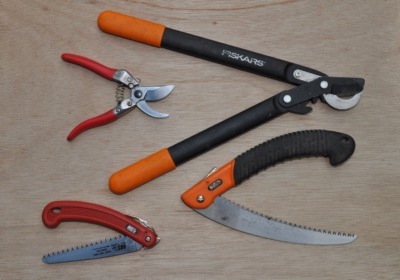
Various pruning tools
To avoid any frayed stems, I make sure that my pruning tools are sharp for clean cuts that heal quickest.
March 3, 2026
WITH GOOD REASON, FAMILIES MIGRATE AROUND MY GARDEN
(Excerpt from The Ever Curious Gardener: Using a Little Natural Science for a Much Better Garden, available directly from this website, signed, or from the usual sources.)
Who is Coming?How many families am I having over to the vegetable garden this summer? I have to plan their seating arrangements.
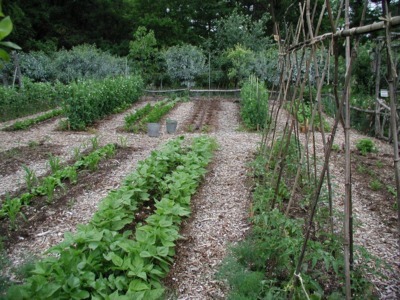
I’m talking about plant families. An example of a plant family is the Mustard Family, known botanically as the Cruciferae, and including among its members cabbage, broccoli, collards, and Brussels sprouts. Their similarly pungent flavors and waxy, bluish leaves might also have earmarked them as being in the same family. Then again, the different parts eaten—the swollen stalks of kohlrabi, the leaves of cabbage, and the flower buds of broccoli— might indicate otherwise.
Most important in uniting this family, and the primary characteristic that botanically unites members of any plant family, is the similarity of their flowers. All members of the Mustard Family have flowers with four equal petals in the shape of a cross. Hence, the name: crux is Latin for “cross,” as in “Cruciferae” and “crucifixion.”
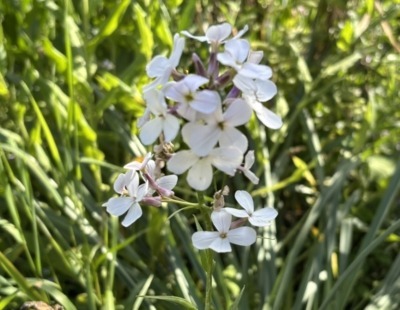
Not usually eaten but a pretty flower, Dame’s rocket is a Crucifer
Another prominent family that I’ll undoubtedly have over this summer is the Leguminosae, better known as the Pea Family. This family also includes beans, and if I step out of my vegetable garden into my flower garden, lupines. On the way, walking across the lawn, I’ll no doubt be stepping on another member, clover. Leaves of the Pea Family are usually made up of more than one leaf et, hence the 3- or, rarely, 4-leafed clover.
But here, again, the characteristic that most distinguishes all these plants as a family is their flowers. In this case, the flowers are irregular, having three different kinds of petals—two wing petals flanking an upper standard, and two lower keel petals.
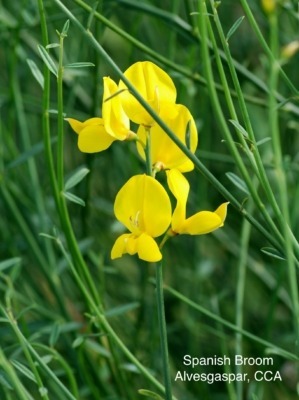
Spanish broom, an ornamental Pea Family relative.
The flowers of another family, the Carrot Family, are described by their botanical name, Umbelliferae. An umbel is a group of flowers, all of whose stalks radiate out from a common point atop a thicker stalk, resulting in a flat-topped or rounded cluster. Like an umbrella. Except for dill, which I grow for seeds and leaves, I rarely see the flowers of carrot, parsley, celery, parsnip, and other members of this family because I grow them only for their roots or leaves.
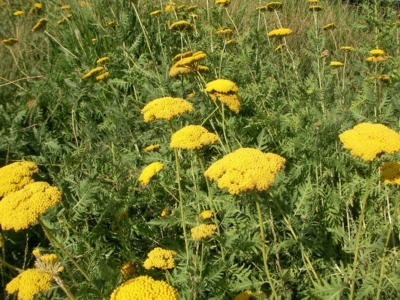
Tansy flower heads
Five equal flower petals characterize one of the most-loved families in my garden, the Nightshade Family, botanically the Solanaceae. World famous members of this family include potato, tomato, eggplant, and pepper.
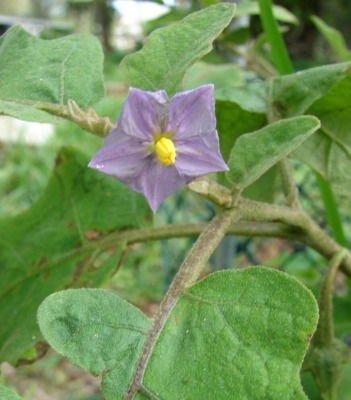
Eggplant flower
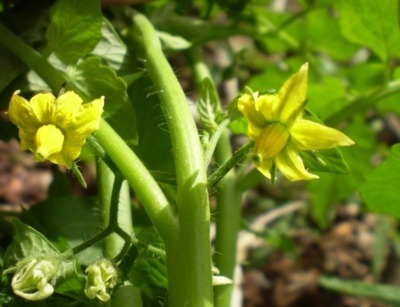
Tomato flower
A plant family is characterized by more than just the number and shape of its flower petals. Taking a look at the flowers of cucumber, squash, melons, and pumpkins, I see that their flowers also have five equal petals. But the flowers of this family—the Gourd Family or, botanically, the Cucurbitaceae—are either male or female, and the central stalk of the female flower is capped by three stigmas to receive pollen. (Nightshade flowers all have both male and female parts, and female flowers have a single stigma.)
Why the Fuss?You may wonder: why all this fuss about plant families? Surely, the different families must be able mingle freely in the garden and get along. (After all, they’re not human!) Yes, plant families can pretty much mingle freely.
The need for fussiness arises because members of a plant family usually share common pest problems. As examples, clubroot disease attacks the Mustard Family, blight attacks the Nightshades, and parsleyworms chew on leaves of the Carrot Family.
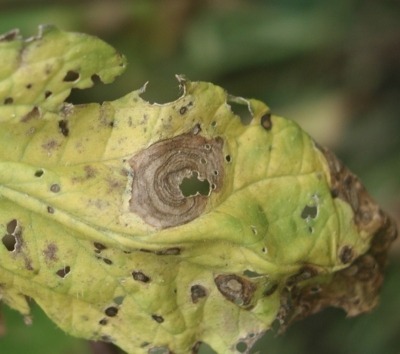
Characteristic leaf damage from tomato early blight
Except where it is sufficiently mobile or has an appetite for a wide range of families, a pest can usually be starved out by not planting members of a susceptible plant family in the same location more often than every three years. This is one of the rationales for “crop rotation.”
My vegetable garden is laid out in beds, with eight beds on each side of the main path running through the garden. One year a bed might be devoted only to tomatoes. Tomatoes are a no-no in that bed the next year, and the same goes for peppers or eggplants. That bed could be home to corn (Grass Family, Poaceae) or broccoli, cabbage, and kale. That year, the tomatoes get planted two beds away, as does the corn or Mustard Family the next year. And so on, year after year, different vegetables march like slow soldiers around the garden, two steps each year counterclockwise around the garden from bed to bed, with no family returning to where it previously grew for three years. 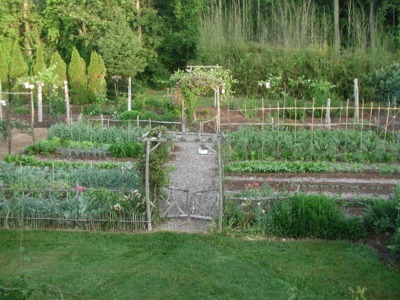
Some Fun with Families
Crop rotation need not always be about pragmatism. Just for the fun of it, I’ve imagined creating a small, ornamental plot (but haven’t yet) to a single family, perhaps the Pea Family. Perhaps plantings of lupines and vining sweet peas three dimensional color to the dappled shade beneath a honeylocust.
I planted the honeylocust back in 2006. Thus far lupines still inhabit the heath bed in front of my house. This heath bed, incidentally, includes many members of the Heath Family, Ericaceae, grouped for their affinity to very acidic, organically rich soil I’ve created in front of my home. Lupine also demands such soil conditions.
And the sweet peas, which are NOT edible but are valued for their pastel flowers and delicious scents, still climb the garden fence on the outside of my vegetable garden.
February 25, 2026
THE DARKER SIDE OF TINKERBELL
The bugs is comin’! The bugs is comin’! Just as sure as the sun is rising higher in the sky each day, the hope of spring is awakening all sorts of pesky little buggers on houseplants. One by one, they are showing their faces: mites, aphids, mealybugs, scale insects, and white flies.
I’d actually consider whiteflies — the target of today’s hunt — to be cute if they weren’t plant pests. The same surely could not be said for drab mealybugs and scale insects, or for mites, the latter because you can hardly see them at all.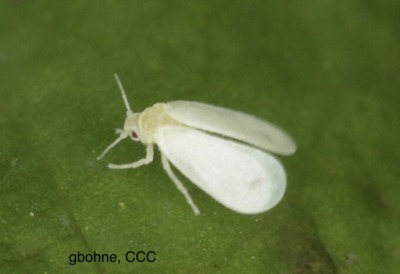
Whiteflies come as close to looking like Tinkerbell as does any creature. I hope you never see a whitefly, but if you do, look closely at how their oversize wings seem precariously perched on their tiny backs. And I do mean tiny; the fully grown insect is a mere one-tenth of an inch long. And what a color for an insect: chalky white from head to tail. When disturbed, the insects flit around like fairies so tiny you could at first mistake them for pieces of lint bobbing around in gentle air currents.
The charm soon wears thin. You tire of the whole family taking to the air like a snow squall every time you approach an infested plant. Don’t take too deep a breath, either, or you might suck some whiteflies into your mouth or nostrils.
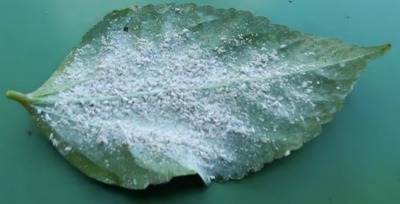
Whiteflies are as bad for plants as are their near relatives, aphids. An adult female lays a few hundred minuscule, cigar-shaped eggs on the undersides of leaves, and once these eggs hatch, the equally minuscule larvae stick their beaks into the leaf and start sucking sap. Starved plants can turn yellow, wilt, sometimes (admittedly not often) even die.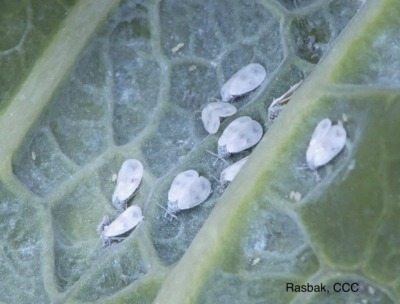
As if robbing plants of nutrients were not enough, the larvae also excrete honeydew. This honeydew is not bad in of itself, except that it drips all over the plant, then is eaten by a sooty colored fungus which coats, but does not penetrate, the plant. Too much of this sooty mold can actually shade a plant, and, anyway, the sooty covering is not very attractive. It’s also sticky, and makes a carpet or the back of the couch or wherever else it’s dripped sticky and unpleasant to the touch.
Those larvae continue to eat and to molt, at one point even losing both their legs and antennae to become even more inconspicuous as they lodge on the undersides of leaves. No matter, though, it’s the adults flitting about in the air that alerts most people to the presence of whiteflies.
What to Do?A whitefly may look like Tinkerbell, but she may have to go. I say “may have to go” because plants can tolerate a certain number of whiteflies without suffering significant discomfort. It then becomes more a matter of how many whiteflies we gardeners, rather than plants, can tolerate.
Outdoors, whiteflies rarely cause problems, although they did appear for the first time in my vegetable garden just a few years ago. And they’ve returned every year since to their favorite vegetables which, here at least, are kale and Brussels sprouts. Blasts of water dislodge them if repeated and thorough enough to reach the undersides of leaves included. 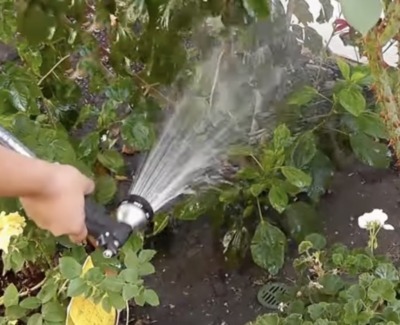
A rather droll way to deal with whitefly hot spots indoors or out is with a small vacuum cleaner. Get the bugs flying and then wave the nozzle in the air near them. Empty the vacuum cleaner outdoors (if the weather is cold) or into a bag in your freezer to kill the insects before they get their wits back.
The usual arsenal is effective against this plant pest. Light oil sprays will smother her, insecticidal soap will collapse her cells, and an insect growth regulator — Enstar, for example — will keep her from growing up. When using any of these treatments, repeat them at intervals in order to target those insects that were not in a susceptible growth stage when you last sprayed.
Whiteflies are especially attracted to the color yellow, so the population can also be brought down with sticky yellow cards placed near infested plants. 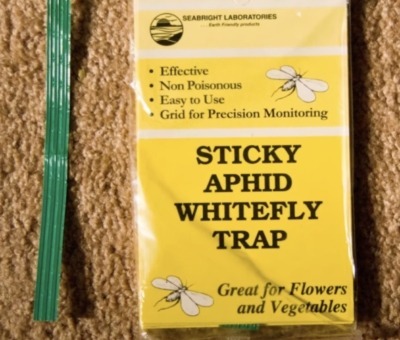 Buy these cards, or make your own by painting rectangles of Masonite or wood with Rustoleum Yellow No. 659, their most favorite shade of yellow. Coat the cards with Tangletrap or make your own sticky coating by mixing 2 parts of petroleum jelly or mineral oil with one part household detergent. The homemade coating is much easier to remove and replace than the Tangletrap. Whiteflies aren’t strong fliers, so traps need to be placed right near infested leaves.
Tinkerbell even has some of her own special enemies. One is a tiny wasp, called Encarsia formosa, available commercially but more useful in greenhouses than in homes because it needs high heat, humidity, and light to thrive. Ladybugs also enjoy eating them.
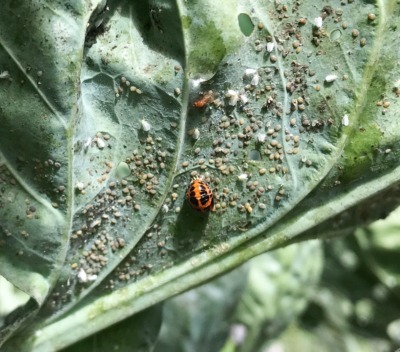
Cabbage whitefly & ladybug larvae
Another enemy is a fungus disease named Verticillium lecanii and sold as Mycotal. And finally, if we could only enlist the help of Hook, Captain Hook.
February 18, 2026
AND THE REAL SPLIT-LEAF PHILODENDRON IS. . .
Ask for the real philodendron to stand up and you might be surprised at what plant does not rise. The still-seated plant I’m talking about is Swiss cheese plant (Monstera deliciosa), often called split-leaf philodendron.
Swiss cheese plant is sometimes called split-leaf philodendron, a common name it shares with a true philodendron (Philodendron bipinnatifidum) because both have similar looking, large glossy, incised leaves and aerial roots. Like the real philodendron, Swiss cheese plant also has a hardy disposition within the limitation of being tropical, and tolerates low light, dry air, and neglectful watering as well as do other good houseplants.
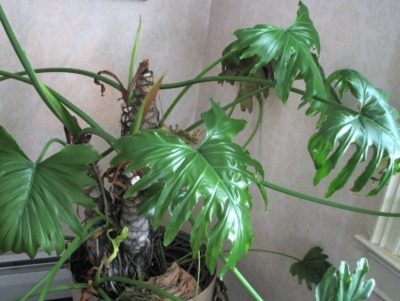
Philodendron bipinnatifidum
Where the cousins part ways visually is in the “Swiss cheese” aspect of the plants. While both plants have split or deeply cut leaves, only the Swiss cheese philodendron also has, as might be expected from its common name, holes in its leaves.
There are also other differences: Swiss cheese plants is a climber while split-leaf philodendron is more shrubby, although it can climb some if placed right up against a tree.
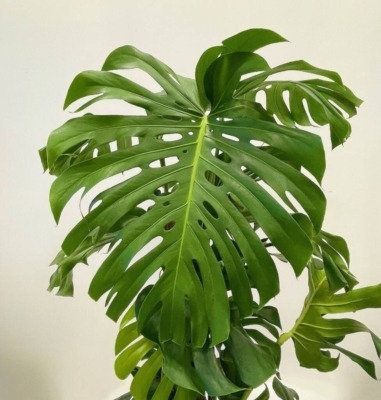
Swiss cheese plant
Pretty much the only response of Swiss cheese philodendron to poor growing conditions will be for new leaves to be undersized and lack the deep cuts and holes found on leaves developing under ideal conditions. The philodendron called split-leaf philodendron, on the other hand, is more consistently split-leaved under poor growing conditions and even when young.
Spectacular flowersThe genus name of Swiss cheese plant, Monstera, does not signify Monstera in a frightening sense. Instead of monster, think instead “monstrous,” because the plant’s leaves grow so large — even two or three feet across. Monstera is a close relative of philodendron, sharing the same family along with plants such as Jack-in-the-pulpit and calla lily.
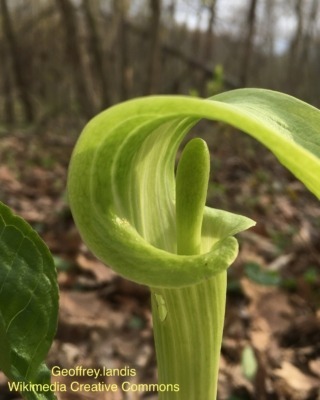
Jack in the Pulpit
What unites all these plants into a common family are their unique flowers. Individual flowers are themselves inconsequential. What makes them striking is the way they are packed tightly along an upright, fleshy spike, the whole spike rising just above one or two broad, brightly colored bracts. (A bract is a modified leaf at the base of a flower, and is often more showy than the flower itself — the red bracts of poinsettias are another example.)
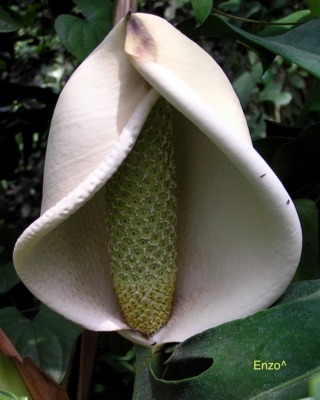
Monstera flower
You’ve probably come upon Jack-in-the-pulpit or calla lily flowers in the woods, a garden, or florist’s shop, but you may not ever have come upon flowers on a Swiss cheese plant. The reason is because Swiss cheese plant’s flowers develop only under nearly ideal growing conditions, which for this plant means high heat, high humidity, and high light. These are conditions found in either the tropics or a warm greenhouse. There, a young plant might flower as soon as two years after it has been propagated as a — incidentally very easy-to-root — stem cutting. The ten inch spike surround by a boat shaped, white bract is quite spectacular.
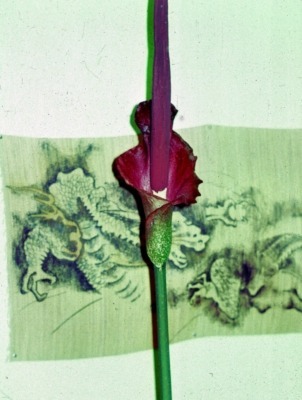
Another relative, this one called Amorphophallus
And fruits…Fruits that follow such flowers make Swiss cheese plant even more interesting, and give rise to the species part of its botanical name: deliciosa. You’ll occasionally find this fruit offered in tropical markets, sometimes under the name ceriman. As the fruit develops, the spike looks like a long pine cone or an ear of corn covered with small, hexagonal plates of green rind covering individual edible kernels.
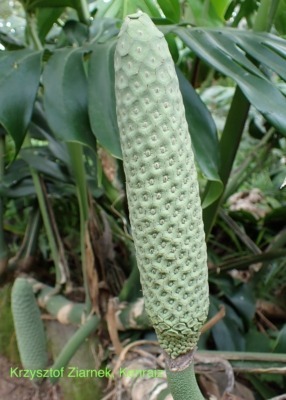
Monstera deliciosa, unripe fruits
Those kernels turn yellow as they sequentially ripen. You wouldn’t want to taste any kernels while they are still green. At that stage they are still high in oxalic which can cause a burning sensation in your throat. People vary in their sensitivity, at the extreme experiencing skin rash or anaphylaxis.
The fruit signals that it’s ripening by turning a lighter color, almost yellow, and by shedding bits of its rind. All the kernels do not ripen at once, but the fruit can be clipped from the plant when ripening begins, then wrapped in plastic and held at room temperature to finish ripening completely without falling apart. Bite into the individual, pale, juicy kernels, and what you would taste would be a combination of pineapple and banana, with a slight hint of apple.
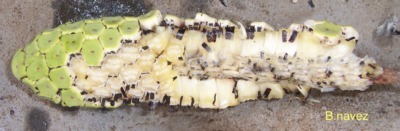
Monstera deliciousa fruit, ceriman
February 11, 2026
BARKS OF ANOTHER STRIPE
Hear “bark” and I’ll bet “dog” or “birch” comes to mind. Well, foxes also bark, and the cinnamon brown, flaky bark of paperbark maple is every bit as eye-catching as is the more talked about chalky white bark of birch. Winter is a wonderful time to appreciate plants’ bark.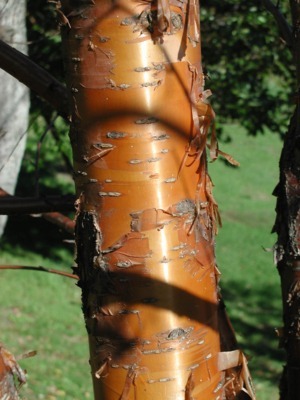
Shrubs never develop trunks thick enough to be swathed in broad expanses of bark, yet a few of them do have notable bark. The red or yellow twigs of shrubby dogwoods look stunning against snowy backdrops, and are bright enough to call attention to themselves even without that snow.
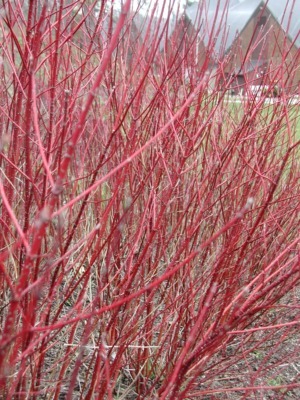
Red twig dogwood
Twigs of the variety of white willow called Cherisina have similarly colorful bark, orangish red in this case.
Only the young twigs of the dogwoods and the willow are brightly colored, so you can lop these plants right to the ground each spring as the flowers and leaves of other plants begin stealing the stage. The willow’s and dogwoods’ colorful stems fade as the weather warms, anyway.
Green is a welcome color in winter, and is served up by scotch broom as a fountain of slender, lime-green twigs. Come spring, will their color fade? Not a whit. Matter of fact, as spring draws to a close, the twigs get drenched in a mass of buttery yellow flowers. (Note: Scotch broom is invasive in certain parts of wester U.S.)
The young stems of kerria also stay bright green through winter. Only the young stems are green, so cut kerria back right after its yellow pompom blossoms — responsible for the plant’s also being called Japanese rose — wither away.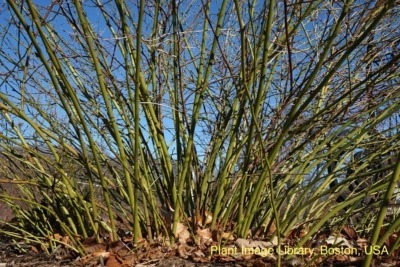
For a real rose with interesting bark, consider the omei rose. The plant grows quite large and has fairly nondescript white blossoms. But look at the younger stems: they are covered with translucent, ruby red thorns whose bases are so wide as to make the stems appear almost winged.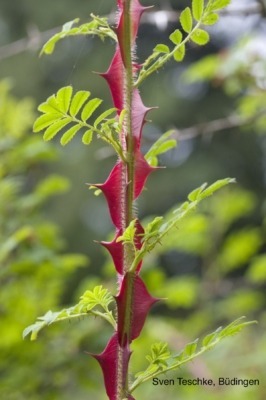 One more shrub with particularly appealing bark is Nanking cherry. The bark naturally peels from the plant in delicate curls to reveal a shiny, reddish brown inner bark that is punctuated with tan lenticels. Nanking cherry’s bark develops character only on older stems.
Let’s move on to larger plants with notable bark. Yew is “yewsually” grown as a bush, but time and training can transform it into a tree. Time also is needed for the bark to take on a rich color and texture, deep reddish brown and peeling in long, thin strips. Training an older plant to tree form lets that beautiful bark stare back at you at eye level.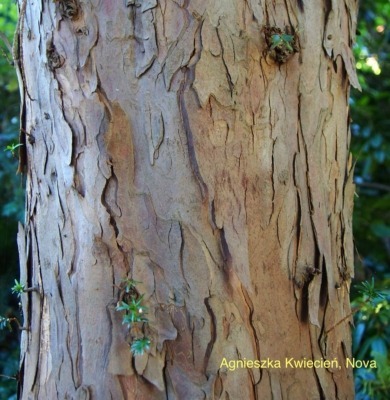
If the bark of yew evokes a dark, cool, damp forest, the bark of sycamore — a patchwork of white, pale olive green, and light brown — evokes the opposite: a sun-parched landscape. Despite its sunny appearance, sycamore inhabits moist bottomlands along rivers and streams. London planetree is a sycamore hybrid with similar pale, pretty bark, and somewhat more symmetric form. Before planting either of these trees, be aware that they can grow to monstrous proportions, fast.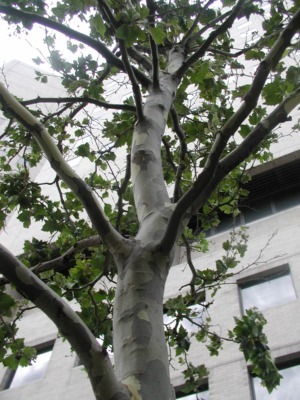
The barks of a number of other trees won’t jump out at you, but reveal their beauty and interest under closer inspection. Take a walk in the woods and pick out the aptly named shagbark hickory, its bark pulling free from the trunk at each end in long, fat strips. Take a look at flowering dogwood, its bark made up of little blocks fitted together like a puzzle. 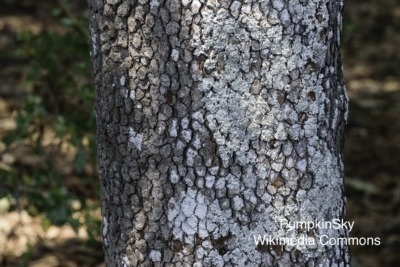 You will know and might come to love the gray bark of hackberry, whose smoothness is interrupted by corky ridges that cast crisp shadows reminiscent of photographs of the lunar landscape.
The more you look at bark, the more you appreciate this subtle beauty of trees. (For more about bark — its science, its beauty, and its uses around the world — see Bark by G. T. and A. E. Prance, and Bark, A Field Guide to Trees of the Northeast by M. Wojtech.)
Lee Reich's Blog

- Lee Reich's profile
- 23 followers

