George T. Chronis's Blog
August 5, 2015
Master of Spies
 It is not widely known how substantial a network of agents that Czechoslovak Military Intelligence had established within Germany before 1938. The man who set up the that operation over many years was Lt. Colonel František Moravec. His memoir, Master of Spies, is an incredible read that tells the behind-the-scenes account of the Sudeten Crisis. Not only does Moravec describe the espionage chess match being played out, he also details a great deal of the political drama taking place in Prague from the president’s office on down. The book has been out of print for a while but there are copies out there used ready to be found. Whether it be an interest in the 1938 crisis specifically, or spy craft in general, this is volume is a must.


July 6, 2015
Oskar Platen
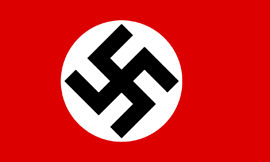 All Oskar Platen ever wanted was a good job out of the limelight with a steady paycheck. After the twins came the bills were high and there was never enough money. In the middle of the depression many said Platen was the lucky one with a safe Interior Ministry job in Berlin. Yet the pay was a pittance and his wife deserved more. The 1,000 Reichsmark loan he secured would give them breathing space, yet it came with an unexpected codicil from his new lenders, which would put the unassuming clerk in more danger than he ever dared to imagine.
June 11, 2015
Renault R35
 The Char léger Modèle 1935 R was the most numerous tank in French service during 1938 at more than 1,200. The R35 was a light infantry support tank intended to battle opposing troops and machine gun nests. It was therefore equipped with a short semi-automatic 37mm SA18 L/21 cannon dating to the first World War that was ill-suited to piercing armor plate. As an infantry tank the top speed was intentionally slow at 12 mph to 14 mph. As with most French tanks, the R35 used the inefficient one man APX turret, as well as employing thick cast armor. The plate was between 40mm and 43mm except for the rear of the vehicle, which was 32mm. The R35 also was equipped with one 7.5mm Mitrailleuse mld 1931 machine gun. The engine was an 85hp Renault V-4. The R35 had a two-man crew.
May 27, 2015
Berlin Diary
 Anyone looking to read more about the 1938 Sudeten Crisis will enjoy picking up Berlin Diary (1941) by William Shirer. He was a journalist who worked for Hearst and went on to be one of Edward R. Murrow’s radio broadcasters in Europe with CBS. During 1938, Shirer was on the scene in Vienna, Prague and Berlin when he broadcasted back home to the United States. The book is full of tremendous first-person observations and anecdotes that are as colorful as they are informative. One plus is Berlin Diary has been reprinted so many times over the years that it is easy to find a copy for not a lot of money.
May 14, 2015
Wien Nordbahnhof
 Completed during 1865 the north rail station in 2nd district of Vienna was one of the major train stations in Europe. Like many other civic structures constructed during the 19th Century in Austria-Hungary, the emphasis was on luxury. The exterior of the station was built in the Moorish style with a spacious entrance hall and an interior decorated with ornate frescoes and sculptures.
May 13, 2015
PzKpfw I
 At the time of the Sudeten Crisis the vast majority of tanks in German service, more than 1,000, were the lightly armed PzKpfw I. The vehicle was originally designed as a training tank with extremely light armor of between 7mm and 13 mm thickness, and only two 7.92mm Maschinengewehr 13 machine guns as armament. The PzKpfw I entered Wehrmacht service in 1934 and took part in all major campaigns through the invasion of the Soviet Union in 1941. The four-cylinder Krupp M 305 air-cooled engine moved the 5.4 ton tank to a maximum speed of 23 miles an hour. The PzKpfw I had a two-man crew.
April 26, 2015
Mobilization
 When Adolph Hitler’s demands at the Godesberg summit went further than Great Britain and France could stomach, the governments of both countries formally advised Czechoslovak president Edvard Beneš that they could no longer argue against fully mobilizing the army in defense against Germany. On September 24, 1938 the order calling up reservists was met with great enthusiasm by the public. In all, 1,250,000 men joined their regiments within 48 hours.
April 5, 2015
Fatherland Front
 Through most of the 1930s Austria was governed by an autocratic dictatorship that attempted to navigate a middle course that would prevent the national socialists and social democrats from pulling the country into civil war. Adolph Hitler upset that balance when he ordered Austrian Nazis to orchestrate a putsch to take power and join Austria with Germany. Kurt von Schuschnigg was Austrian chancellor and leader of the Fatherland Front party. As street riots escalated, Schuschnigg called out his own supporters to push back against the Nazis.
February 19, 2015
Des Turner
 Working for Harry Lasky had not been in the cards. Des Turner’s friends still could not fathom why he had left a stable career at the Cleveland Press. Part of the reason was the paper was losing some of its old muckraking edge, but there were other issues nagging at him. Des had been a damn good reporter in his day, and he was a top notch re-write man. The problem was there were a couple of other quality pros ahead of him on the way to the city editor’s chair and Des did not feel like waiting in line. So he quit the Press and headed east to visit old chums in New York City while figuring out what to do next. One night out with a group having a bang up time at the Hickory House some impertinent twerp barged right in and interrupted the party. Turns out the twerp was Lasky and he point blank offered Des the job of managing his worldwide news operation… and for respectable cash. Des found out later that the owner of the Consolidated News Service was no stranger to the city’s popular clubs, and made a point of knowing who in the business was out on the town. His pals warned Des that Lasky was a cheap, crazy bastard who was desperate to fill the job because no one in their right mind would touch it. In a strange way that sounded like job security to Des, who appreciated a dose of anarchy. Besides, on first impressions, Lasky was nothing he couldn’t handle.
February 9, 2015
Avia B-71
 The fast and sleek Tupolev SB-2 light bomber had already drawn blood in Spanish skies when Czechoslovakia came to terms with the Soviet Union in 1937 to purchase 60 examples of the aircraft direct from the manufacturer, and secured a license to produce more. Under the terms of the deal, the planes were delivered with Avia-built Hispano-Suiza 12-Ydrs liquid-cooled 12-cylinder engines turning Letov Hd-43 two-bladed metal propellers. For defense, Czech 7.92mm vz.30 machine guns replaced the Soviet 7.62mm ShKAS originals. Six 220-pound bombs could be carried. In Czechoslovak service the bomber was designated B-71 and had a maximum speed of 267 mph. With a 423-gallon fuel tank capacity, the 850hp engine managed a maximum range of 621 miles.