Simon Constable's Blog
June 9, 2026
FOX News Digital: 'You're destroying your countries': Is Europe finally heeding Trump's warning on illegal immigration?
BY SIMON CONSTABLE
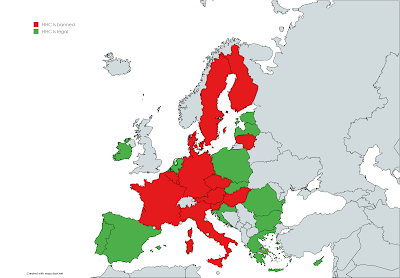
Earlier in June, the European Union appeared to finally react to concerns raised by President Donald Trump and many European voters over illegal immigration by introducing tougher border entry rules for the 27-nation bloc.
The EU agreed on new, stricter rules regarding migration and asylum. The laws are specifically designed to ensure that illegal/undocumented migrants who enter the bloc are processed and, where necessary, quickly sent to deportation centers in countries outside the EU.
People seeking asylum will be screened for identity, security, and their health before even entering any asylum system. The border officials will now track and record non-EU citizens entering and exiting the bloc. Plus, it will use biometric data such as fingerprints and facial recognition. And all member states must now help one another and share information.
The Associated Press reported that the provisional deal struck by the EU's three main institutions is expected to go to EU lawmakers and governments, where approval is expected. READ MORE HERE.
 Attribution:
Szagory, image file created with MapChart
(https://www.mapchart.net/europe.html), CC0, via Wikimedia Commons
Attribution:
Szagory, image file created with MapChart
(https://www.mapchart.net/europe.html), CC0, via Wikimedia Commons


May 7, 2026
Latest from Simon CONSTABLE
Latest from Simon CONSTABLE1. Constable reviews surging commodity prices and the threat of famine in North Africa. He also discusses UK local elections, framing them as a protest vote against Keir Starmer’s leadership.
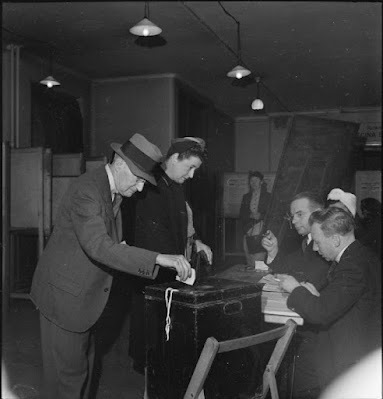 Ministry of Information Photo Division Photographer, Public domain, via Wikimedia Commons2. Constable analyzes potential Labour Party leaders Andy Burnham and Angela Rayner. He notes that voters still find the Conservative Party untrustworthy despite Labour's internal turmoil and perceived failures.
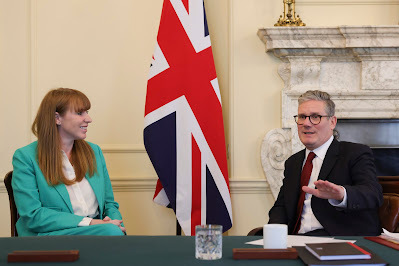 Simon Dawson / No 10 Downing Street, OGL 3, via Wikimedia Commons
April 29, 2026
FOX Business: OIL Published April 29, 2026 8:42am EDT What a UAE exit from OPEC means and why it matters
By SIMON CONSTABLE
The United Arab Emirates (UAE) announced Tuesday it would quit membership in the Organization of Petroleum Exporting Countries (OPEC) and OPEC+. It comes after 59 years at the club. But it could be good news for the world in the long run, experts say.
To understand what happened, it’s important to know that OPEC, which is dominated by Saudi Arabia, is all about restricting crude oil output via quotas to raise energy prices, Marc Chandler, chief market strategist at Bannockburn Capital Markets and an expert on geopolitics, told FOX Business, "The cartel producers discipline the member countries to produce only what the quotas allow and try to get a higher oil price for all." READ MORE HERE.
 DaneKH, CC BY-SA 4.0, via Wikimedia Commons
April 28, 2026
Kiplinger's Retirement Report: 10 Things You Should Know About Oil and Prices
By SIMON CONSTABLE
Energy is something we can't do without. It's been that way since homo sapiens were living in caves. Wood-burning fires helped protect people from dangerous carnivores, kept caves warm and provided light at night. In short, it was basic.
But in much of this century, many of us have taken the availability of affordable energy for granted. We expect that when we turn on the heat at home, it will work. Since the energy shocks of the 1970s, we've expected the cost won't break the bank. Likewise, getting gasoline from the filling station is easy and has been readily available at a reasonable price.
That's changed since the U.S. and Israel attacked Iran. It's brought energy-related matters to the forefront. Across the world, electricity, gasoline, diesel fuel, crude oil, fertilizer and natural gas have all seen sharp price rises. It's not always obvious to most people why that's happened. READ MORE HERE.
 Michael Rivera, CC BY-SA 3.0, via Wikimedia Commons
April 16, 2026
CBS Preview: Simon Constable examines the surging price of urea fertilizer.
By SIMON CONSTABLE
LISTEN HERE.

Simon Constable examines the surging price of urea fertilizer, which has climbed by twenty percent in a month. This spike, caused by shipping blockades, forces farmers to shift toward planting more soybeans.
April 14, 2026
In 2011, a psychology professor gave a legendary 1-hour masterclass on how to study effectively.
In 2011, a psychology professor gave a legendary 1-hour masterclass on how to study effectively.
— Jaynit (@jaynitx) April 14, 2026
It has 20M+ views for a reason.
His frameworks:
• The 25-minute rule
• Why studying more can make you worse
• Recognition vs. recollection
12 lessons to learn faster: pic.twitter.com/fpAeCIztMB
April 12, 2026
CBS: Fragmentation of British Politics Guest: Simon Constable who analyzes the fragmentation within the UK's Labor majority and the emergence of the Green Party.
By SIMON CONSTABLE
 Personal archive of Abdulhamid II, Public domain, via Wikimedia CommonsFragmentation of British PoliticsGuest: Simon Constable who analyzes the fragmentation within the UK's Labor majority and the emergence of the Green Party. Polling suggests voters are divided among tactical coalitions, making leadership challenges difficult for Prime Minister Starmer.
CBS: Global Commodities and Energy Shifts Guest: Simon Constable. Simon Constable reports on volatile energy markets and falling gold prices as the Strait of Hormuz enters a ceasefire.
Meanwhile, high copper prices have triggered a surge in organized theft
By SIMON CONSTABLE
Listen here.
 Naval History & Heritage Command, Public domain, via Wikimedia Commons
Global Commodities and Energy Shifts Guest: Simon Constable. Simon Constable reports on volatile energy markets and falling gold prices as the Strait of Hormuz enters a ceasefire. Meanwhile, high copper prices have triggered a surge in organized theft in cities.
FOX News Digital: Hungarians vote in record numbers as Trump-ally Viktor Orbán faces biggest electoral threat since 2010
By SIMON CONSTABLE
The U.S. and Europe are watching closely as Hungarians turned out in record numbers to vote Sunday in a high-stakes election that sets up Prime Minister Viktor Orbán, supported by President Donald Trump, against his former political ally, Péter Magyar.
Trailing in the opinion polls, Orbán received a major boost earlier this week when Vice President JD Vance visited the country, making clear what the administration’s position was on the importance of having a pro-U.S. candidate in the heart of Europe, as so many of its continental allies have proven lackluster, most notably for a lack of help in the war against Iran.
In his remarks, Vance made clear why he was there. "The reason why we're doing it is because we thought there was so much garbage happening against Viktor in this election that we had to show that there are actually a lot of people and a lot of friends across the world who recognize that Viktor and his government are doing a good job, and they're important partners for peace," he said at the Mathias Corvinus Collegium, a private university in Budapest, the capital of Hungary. "That's why we're here, but ultimately the Hungarian people are going to be sovereigns because that's how it should be." READ MORE HERE.

WSJ: FINANCIAL FLASHBACK A look back at Wall Street Journal headlines from this month in history
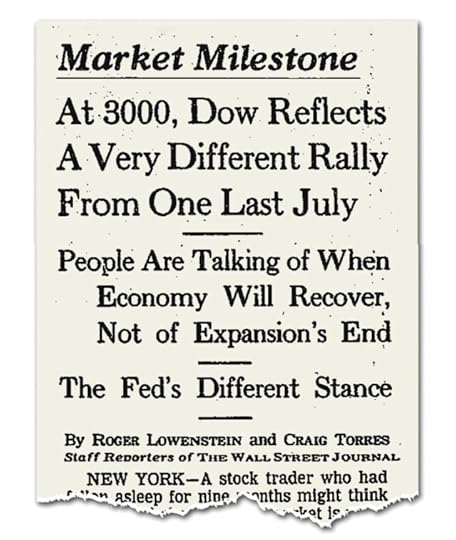
• 35 YEARS AGO: The Dow’s 3000 Milestone
By SIMON CONSTABLE
When President Ronald Reagan took office in 1981, America’s economy and stock market began to bounce back. By the summer of 1990, some investors were concerned that the long rally and economic growth were coming to an end. During that time, the Dow Jones Industrial Average bashed through the 3000 level on July 13 and July 16, but only intraday. Shortly after that, in October, the market retreated to a low of 2365.10 on the Dow.
By April 17, 1991, with the first Gulf War in the rearview mirror, Wall Street was betting on an economic recovery. And that day, the Dow reached the 3000 milestone—closing at 3004.46. The six-month 27% rally was dominated by growth stocks and, to a smaller level, cyclical stocks.
“What you are seeing here is a market moving on the expectation of economic recovery and being buoyed by lower interest rates,” Edward Kershner, a market strategist at PaineWebber Group, told The Wall Street Journal. READ MORE HERE.