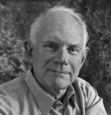
Michael P. Staples's Blog
November 29, 2016
Standing on the Edge
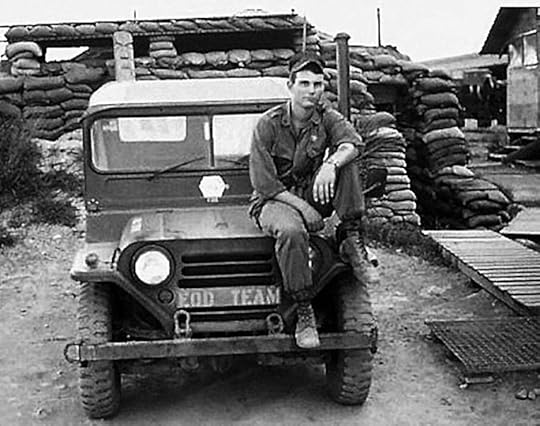
Ever been eighteen and in charge of making sure bombs don't go off?
I was standing at an edge. I don’t think anyone in EOD had
ever been court marshaled. It just wasn’t done. But then EOD never
had stupid eighteen-year-old lance corporals to deal with. I would
probably be the first ever to get the axe, if for no other reason than
to send the message to the higher-ups that letting lower-ranking
kids like me into the field was a mistake. A court martial would
ripple through the EOD world like nothing else. I would lose my
top-secret clearance, which would mean that I’d be thrown out of
the field. Then, if I weren’t escorted directly into jail, I would be sent
to the jungles as a grunt, to die in some miserable swamp. But on
a deeper level, and perhaps even more personally menacing, I was
returned to the pit of childhood oppression…


November 14, 2016
A Review is Worth A Thousand "Likes"
Just wanted to post on here for my readership community, I my GoodReads Giveaway promotion lasts for another 7 days: https://www.goodreads.com/giveaway/show/211478-focusing-emptiness-a-mytho-poetic-journey-to-the-lost-child.
However, for my blog readers, my close friends and family, if you are able to write a review I am giving away 5 books this month to review-writers. This book came from my heart, and it would truly mean so much to me if you were able to contribute to the promotion of my work. My dream is to be able to help others through sharing the journey by which I helped myself. And you can help make this dream possible. I cannot express enough gratitude to all of you who have already supported me in so many ways. Please let me know at e-mail me atmpstaples@gmail.com if you have the desire to support this dream through the world of internet book reviewing, and if so, I shall send you a personalized copy...
Love,
Michael
November 7, 2016
Glimpse into the Past: Excerpt from Focusing Emptiness
I was six months old when my birth father stepped
out and my stepfather stepped in. He was a mean drunk. He hit
people. Mostly he hit my mother, and maybe that’s where my
battle with him began. I don’t know for sure if that’s where it started.
I have no memory of its beginning. It seemed as if we were always at war.
Around age seven or eight I was formally introduced to the
larger family drama by way of my mother’s sister, my Aunt Patty, who
took me aside one evening to show me how to call the police.
“You’re too young to be saddled with this,” she said, “but
you’re the oldest and you need to do it. If you don’t, I’m afraid your
stepfather might kill your mother one day.”
She wasn’t far off. He did almost kill my mother on more than
one occasion. The earliest I remember was of him breaking a whiskey
bottle over her head during one of their fights. I was curled up in a
ball in my room upstairs, listening to the battle below. It was a war
zone down there—glass breaking, furniture crashing. Despite my
brothers and sisters nearby in their own rooms, I felt alone upstairs,
my mother’s appointed caretaker, tasked with saving her.
On several occasions, I managed to make my way down the
flight of stairs leading to the phone and call the police without being
seen by my stepfather, then to stay out of sight until they arrived. But
the thought that my mother’s life rested with me alone brought a
feeling of sick emptiness that would often cause me to shake violently.
Images of my mother being killed and fears of my getting something
wrong, of not being around when she needed me, were unbearable.
Upstairs in my room at night, I would often feel a tangled knot in my
stomach. Then came the images before I’d even fallen asleep, of hooded
phantoms. Pulling the covers over my head, I would wedge myself down low underneath my covers
and scream for help.
October 25, 2016
Voice of the Lost Child
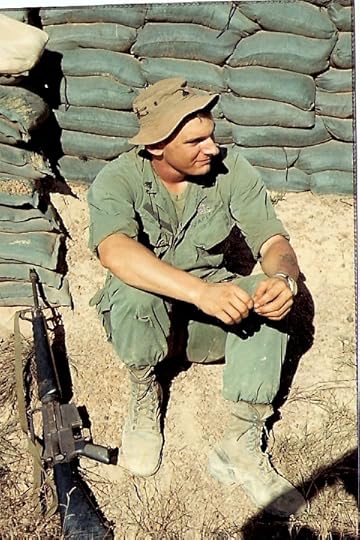
One of the earliest life-changing decisions I made was at sixteen, during the height of the Vietnam War, when I decided to enlist in the Marine Corps. That isn’t to say that everyone who joins the Marine Corps is doing so because they are influenced by some trauma- induced defensive structure. But for me, joining the Marine Corps was completely out of character. I had never aspired to be a Marine. It was never something I had wanted to do.
And when I look back and ask myself now about what could have possibly motivated me to make that decision, I can see precisely the kinds of archetypal fantasy structures at work that I talk about in Focusing Emptiness. I can still hear the small voice inside me at that time, calling to me, telling me that something wasn’t quite right about what I was doing. This was the voice from the lost child.
You may have heard your own lost child somewhere along the way. It’s comes as a faint intuition, perhaps more a feeling than a sound. It’s one of those things we tend to brush aside, tend to rationalize away. It calls out, asking that you turn toward it… especially during those times when the your defenses are most activated. It reaches up through the veil of the unconscious, trying to be found...trying to be heard.
As long as this voice goes un-heard, the un-seen hand of one’s defenses will continue to shape one’s decisions, appearing for all the world as “fate.”
History.com
October 18, 2016
Unconscious Breezes that Whisper in your Ear

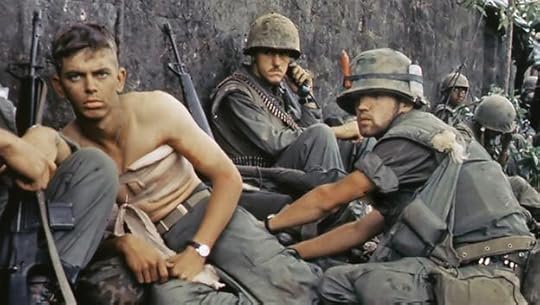
Photo Credit: http://bit.ly/2deNH1F
Who hasn’t looked back on their lives and wondered how they got where they are?
Maybe things are fine, but maybe things aren’t, maybe you are in an abusive relationship, or working in a job that is eating your brain. Who hasn’t looked back and wondered… “what if I had turned right instead of turning left at that fork in the road, way back when...when I made that decision to go this way, instead of that?”
When I looked back, I saw those points. When I viewed them in the light of the Fantasy Net I had discovered, I could see how strongly the fantasies born in my childhood trauma had influenced those decisions.
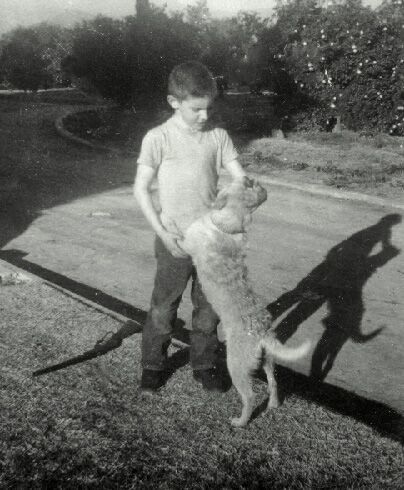
Early on in Focusing, I wrote about running away from home, running away from my step-father, and how at a low point, out on my bike with my dog poncho running alongside me, I was somehow “rescued” by my Peter Pan fantasies. How I was suddenly no longer an eight year old boy with no shirt, no shoes, no money, and no direction. I was escaping from pirates, off on an adventure, headed … “that-a-way.”
That wasn’t the only time my fantasies dictated my direction. Later, they pushed me into the military, and later still, into the practice of kung-fu.
It’s was a subtle thing, something I didn't notice much. But that's the way it can be with things unconscious sometimes. Subtle influences. Simple changes in the color of the mind's landscape. Unconscious breezes that whisper in your ear. And suddenly...here you are.
September 28, 2016
Firebase Erksine
One of the most powerful sections in Focusing Emptiness is the chapter about firebase Erskine. This is the story about a remote artillery support base during the Vietnam war. But it didn't take up much room in my book until late one evening, quite by accident, I stumbled across a website devoted to the survivors of those who died there.
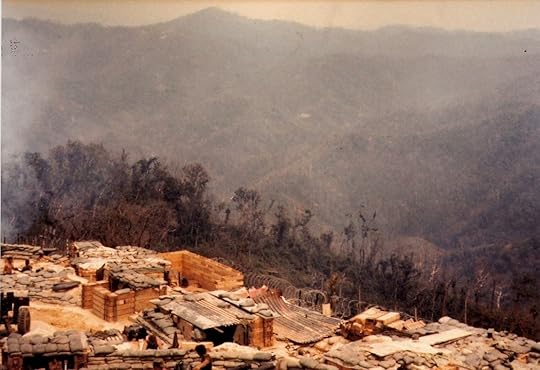
It was especially the postings of the children of those who died that hit me the hardest. Those postings called to me to try harder, to write something better, to write something more. But Focusing Emptiness wasn’t a book about Vietnam. It was about trauma, and awareness, and how our defenses can fool us into making poor decisions. And then something occurred to me, something about a theory I knew of concerning the children of trauma; that they these children might be more vulnerable to traumatic situations later in life, that they might be more prone to bouts of PTSD. But if anything, it seemed to me that my childhood had erected unseen walls that helped to block out the harsh realities of life. Indeed, I may have been less vulnerable. And I was never haunted by the ghosts of Erskine the way others were. But I did not escape entirely.
It wasn’t until I began writing about Erskine that I became aware of just how far my defenses had gone to protect me. I faintly remember Top Johnston, for instance, the Sergeant with me there at first, calling me over to the artillery pit where the whole fiasco on that hill began. Making my way through the blackened rubble the fires had left, I was soon standing at the pit’s edge, looking down through the smoldering streams of smoke rising up into the humid jungle air. But then…that’s all….that’s where my memory ends. I have no recollection of what I saw. I know what was down there because I remember the Top describing it. It was the burned and fragmented bodies of those who were engulfed by the fire and explosions that had taken the entire hill before we arrived. But I don’t remember seeing any of it. It was simply gone.
Our defensive structures are often hidden from us. We only see the results of their action. We find ourselves in conflict withloved ones for reasons we don’t understand, we make decisions we look back on later and wonder what possessed us, we alter our experiences, sometimes allowing them to quietly slip into our unconscious. But once constructed, our defense mechanisms area never really gone. They are still there, underground, influencing our perceptions, molding our decisions, interacting with the world from beneath the surface of what we think we know.
September 23, 2016
Fantasy Net
“Fantasy Net” is one of Donald Kalsched’s terms that I became very fond of. Pondering how I ended up where I did in life, the term took on a significance that eventually became one of the core ideas in Focusing Emptiness.
The reference In Focusing is to childhood trauma – my own childhood trauma -- and the psyche’s way the psyche has of protecting itself by splitting off its most vulnerable parts, and pushing them into the unconscious. Sometimes, these parts can be caught in a kind of archetypal safety “net.”
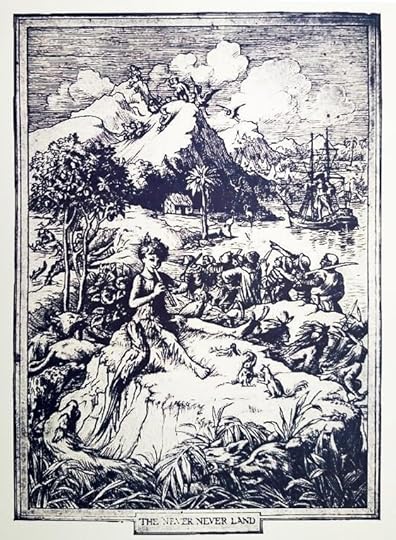
As is the case throughout the narrative in Focusing, I build examples of this archetypal safety net into the story, but I don’t stop along the way to explicitly point it out. But almost immediately, the story begins hinting at archetypal possibilities. The first chapter is entitled “The Witch in the Closet,” about an old woman (or a witch, depending whether you are an eight year old boy, or an adult) who provides the reference story of Peter Pan. And there are the dogs in the story, most of which are named for the pirates in that story.
Split off or repressed content, what I call the lost child, or the lost children, that slips into the unconscious,is always looking for a way out…looking for a resolution. Projecting unconscious material out into the “external” world is one way such material can present itself to consciousness. But unconscious material doesn’t just project itself out onto anything; it requires a “hook” (so to speak).
You see this especially with scapegoating (see my article: The Scapegoat Archetypal and the Need to be Right: depth approaches in organizational cultures, Fall 2010 Annals 51 in the Annals of the American Psychotherapy Association) where a group’s collective unconscious begins to search around for someone to appropriate its material. In other words, the “hook” needs to be appropriate…participating in some way.
In some cases, the hook might be an individual. In other cases, it might be a group of individuals (e.g., the Jews). But it could also be a story, in which case the projection would not be so much projected “onto” the hook, but “into” the story.
In Focusing, the witch provides the story. On the one hand, it is a story of Peter Pan, but on the other hand – the archetypal hand – it is the story of a warrior. And that is just what Peter Pan is – a warrior… a child warrior. In the original story, as opposed to the watered down version by Disney, Pan was in fact a killer. He killed pirates with his knife.
So…it is this fantasy story that becomes the safety net into which my own vulnerable, split-off parts fall. Later, as I get older, the surface structure of Peter Pan will be exchanged for something more “appropriate.” But the warrior archetype, with all its implications, will remain as the core of whatever surface structure is adopted – e.g., a marine in Vietnam, a kung-fu practitioner, and so on.
September 17, 2016
How to read the book
There were times, in the writing of Focusing, that my soul was shaken to its core, and I would become so tightly embraced by the tone and timbre of it all that I would find myself unable to fight back the tears during its writing. And when my work was done, and I would look down at what was there on the page, it often seemed as if some else had written it. I knew during these times that the story should not be interrupted, but should be told precisely as dictated. Therefore, the narrative its self contains no jargon or analysis. It requires no background, or even interest, in the meditations of psychology. The book's analytical framework is entirely contained within the Epilogue, and a reader interested in this, should wait until the story is read, then look back in the light of this framework and reconsider what was read. My hope and wish for the reader interested in psychology is not so much that my book provides new academic insights, but that its overall effect will help to illuminate the shadowed corners of the reader's own life story.

Photo Credit: http://www.irishcentral.com/culture/t...
May 16, 2016
Focusing Emptiness Blog
Welcome to the Focusing Emptiness blog page.