D.M. Cornish's Blog
February 16, 2017
Grasping the nettle.
Well, it has been a while (understatement of the day so far...) Below is my first faltering steps into what I hope/intend will be Europe's "back story" (ugly phrase, but the best way to describe things here). It is not in any way edited or vetted, just straight from draft to you.
.D. EUROPE: THE BEGINNERING of the first kind © D.M. Cornish
When the Duke and Duchess Magentine of the great city-state of Naimes declared themselves pregnant the good people of that long city-state heaved a deep, collected sigh. For well beyond the last century Naimes’ ducal line had been dangerously thin, producing only a single heir for five of the past six generations. Beset on every border by rival cities all denouncing their common neighbour an illegitimate state founded by squatters and usurpers, the citizens Naimes had suffered long with doubt and fear; boundary parishes raided, stores and factories burnt or worse, bombed by clandestine dissenters, innumerable walls pasted with anti-ducal bills claiming all manner of wild and dishonest things. Worst was the ever-lurking, never-mentioned dread of assassination, of the collapse of their ruling line and the city with them.
Happy for all the Nomine peoples then, that that the young duke’s even younger wife, Euodia, came from a famously fertile line. When the Duchess of Naimes grew duly great with child late in the very first year of her union to the Duke, she proudly stood upon the balconies of the Window Obvious to display her swollen belly to the pressing rapturous delight of her crowding subjects in the square below.
By signal of the weather, the shape and height of the duchess’ swelling, the manner of her increasingly waddling walk and the flow of her humours, the court prognosticators declared the outcome most certainly a boy. All the seers and wiseacres of the city concurred and the citizens Nomine held joyous galas and ebullient toasts and breathed a little easier, their stability of life for a generation more apparently at last secured.
Yet – alas! – on a heavy, storm-wracked night – an excellent sign for the birth of so significant a child – of snow-locked Middlemonth of HIR 1566 the happy auspices of the court prognosticators were quickly reversed as this first issue came screaming into the world a girl.
Never-the-less, so inflated were the peoples collected hopes that any initial disappointment amongst the lofty or lowly was soon swallowed in the renewed expectation of many more chances to come.
Mother and child thrived, and soon enough the Duke’s firstborn was presented amongst much ceremony in the columned vastness of the Hall of Pageants with is wide view out onto the newly finished Grand Palide Boulevardte. Amidst clattering timpanies and marching soldiery, the great and mighty of Naimes gathered in a wonder of colour and glittering weapons worn for genuine purpose as much for display. For the duke had perhaps foolishly granted notable personages and sceptical observers from Naimes’ hostile neighbours – Vauquelin, Haquetaine, Westover, Castor and Maine – to attend and seethe child herself and despair of their own empty claims. These were collected in a sullen group upon the north wing of the Hall of Pageants, watched by quartos of their own lifeguards and larger platoons of the Duke’s. In easy eye-shot but in a seat of much greater honour were collected an honoured contingent of Imperial Secretaries, for it was as much the will of the Haacobin Emperors far to the north that keep Naimes unmolested as an unbroken line of ducal rule.
Wrapped in velvet swaddling of bright scarlet and gleaming magenta that required four attendants to carry its thickly trailing hems, the weeks-old girl was lifted before the solemn assembly. Waving the Historied Thistle over the still and staring babe and placing the Cold Stone beneath her head – according to the ancient formulas, the Arch-Lineate intoned her full and mighty name:
Cadence Europa Aria Orinia Nomine Magentine
… a mouthful her mother promptly shortened – following the way of her family – to Europe. Dabbed with the Sanguine Water upon her brow for wisdom, her lips for clarity and her throat for compassion, infant Europa Magentine was finally signified before all as a true heir of Naimes.
Strangely silent for one so new into this darksome bustling world, baby Europa squirmed only once when the Arch-Lineate accidently prickled her tiny and impertinently grasping hand with the Historied Thistle. All agreed this was a very good thing: “a pleasing show of pluck,” was the murmur amongst the mighty gathering, while some ruder fellows at gloomy far end of the hall called out, “Our duchess grasps the Nettle!” – a call that was quickly transmitted to the common crowding citizens pressing and eager in the grand square before the Hall of Pageants.
OUR DUCHESS GRASPS THE NETTLE! they cried, the muffled din of it echoing back into the hall. OUR DUCHESS GRASPS THE NETTLE!
The secretly mortified clerks administering this particular part of service could have sworn the tiny babe beheld him with an almost condemning glower of disconcerting clarity.
Passed over Treshinghold and given the Ducal Mace – the very weapon the first Duke of old wielded to conquer this land: far too large of course, the ancient weapon was held in her stead by an officer of the lifeguard pledged already to her service. Fully invested, Europe was united again with her frankly proud parents: her father in bright lorica of his troubardier guards; her mother wide dress of flashing white silk, neck and cuffs and shawl thick with the crimson fur of some impossibly exotic beastie. Standing before all, father, mother and child were hailed together while the Arch-Lineate proclaimed:
“I declare the Family Magentine a Line Entire, fitted by Imperial Sanction and the Rights of Ancient Custom to rule the Vasty Greatness of Naimes until Death only prevent you!”
With that the cheers went from proper formulas to spontaneous elation; all the people within and without united for that wondrous moment in their joy: Naimes would stand for another generation. The foreign observers did not join the raptures: the best among them simply clapped where they stood while most remained obstinately seated and muttered to each other darkly and showing.
Future secured, the mightiest family of Naimes lead a great procession back to their ancestral courts where they presented themselves along with the Duke’s Mother – sad and infirm – at the Window Obvious for the milling mass of lesser folk to behold.
OUR LITTLE DUCHESS GRASPS THE NETTLE! NAIMES FOR ALL AND EVERMORE!
“A bundling boy could have done no better,” the Duke whispered close to his Duchess’ ear, grinning in self-forgetful delight at his daughter and then out at the jubilant throng.
So thunderous was their exultation – the Duchess was fond to repeat for years to come – that Europa stirred in the cuddling thick furs that proofed her against both the cold and harm, and stared at her subjects with a strange and dark-eyed wisdom.
.D. EUROPE: THE BEGINNERING of the first kind © D.M. Cornish
When the Duke and Duchess Magentine of the great city-state of Naimes declared themselves pregnant the good people of that long city-state heaved a deep, collected sigh. For well beyond the last century Naimes’ ducal line had been dangerously thin, producing only a single heir for five of the past six generations. Beset on every border by rival cities all denouncing their common neighbour an illegitimate state founded by squatters and usurpers, the citizens Naimes had suffered long with doubt and fear; boundary parishes raided, stores and factories burnt or worse, bombed by clandestine dissenters, innumerable walls pasted with anti-ducal bills claiming all manner of wild and dishonest things. Worst was the ever-lurking, never-mentioned dread of assassination, of the collapse of their ruling line and the city with them.
Happy for all the Nomine peoples then, that that the young duke’s even younger wife, Euodia, came from a famously fertile line. When the Duchess of Naimes grew duly great with child late in the very first year of her union to the Duke, she proudly stood upon the balconies of the Window Obvious to display her swollen belly to the pressing rapturous delight of her crowding subjects in the square below.
By signal of the weather, the shape and height of the duchess’ swelling, the manner of her increasingly waddling walk and the flow of her humours, the court prognosticators declared the outcome most certainly a boy. All the seers and wiseacres of the city concurred and the citizens Nomine held joyous galas and ebullient toasts and breathed a little easier, their stability of life for a generation more apparently at last secured.
Yet – alas! – on a heavy, storm-wracked night – an excellent sign for the birth of so significant a child – of snow-locked Middlemonth of HIR 1566 the happy auspices of the court prognosticators were quickly reversed as this first issue came screaming into the world a girl.
Never-the-less, so inflated were the peoples collected hopes that any initial disappointment amongst the lofty or lowly was soon swallowed in the renewed expectation of many more chances to come.
Mother and child thrived, and soon enough the Duke’s firstborn was presented amongst much ceremony in the columned vastness of the Hall of Pageants with is wide view out onto the newly finished Grand Palide Boulevardte. Amidst clattering timpanies and marching soldiery, the great and mighty of Naimes gathered in a wonder of colour and glittering weapons worn for genuine purpose as much for display. For the duke had perhaps foolishly granted notable personages and sceptical observers from Naimes’ hostile neighbours – Vauquelin, Haquetaine, Westover, Castor and Maine – to attend and seethe child herself and despair of their own empty claims. These were collected in a sullen group upon the north wing of the Hall of Pageants, watched by quartos of their own lifeguards and larger platoons of the Duke’s. In easy eye-shot but in a seat of much greater honour were collected an honoured contingent of Imperial Secretaries, for it was as much the will of the Haacobin Emperors far to the north that keep Naimes unmolested as an unbroken line of ducal rule.
Wrapped in velvet swaddling of bright scarlet and gleaming magenta that required four attendants to carry its thickly trailing hems, the weeks-old girl was lifted before the solemn assembly. Waving the Historied Thistle over the still and staring babe and placing the Cold Stone beneath her head – according to the ancient formulas, the Arch-Lineate intoned her full and mighty name:
Cadence Europa Aria Orinia Nomine Magentine
… a mouthful her mother promptly shortened – following the way of her family – to Europe. Dabbed with the Sanguine Water upon her brow for wisdom, her lips for clarity and her throat for compassion, infant Europa Magentine was finally signified before all as a true heir of Naimes.
Strangely silent for one so new into this darksome bustling world, baby Europa squirmed only once when the Arch-Lineate accidently prickled her tiny and impertinently grasping hand with the Historied Thistle. All agreed this was a very good thing: “a pleasing show of pluck,” was the murmur amongst the mighty gathering, while some ruder fellows at gloomy far end of the hall called out, “Our duchess grasps the Nettle!” – a call that was quickly transmitted to the common crowding citizens pressing and eager in the grand square before the Hall of Pageants.
OUR DUCHESS GRASPS THE NETTLE! they cried, the muffled din of it echoing back into the hall. OUR DUCHESS GRASPS THE NETTLE!
The secretly mortified clerks administering this particular part of service could have sworn the tiny babe beheld him with an almost condemning glower of disconcerting clarity.
Passed over Treshinghold and given the Ducal Mace – the very weapon the first Duke of old wielded to conquer this land: far too large of course, the ancient weapon was held in her stead by an officer of the lifeguard pledged already to her service. Fully invested, Europe was united again with her frankly proud parents: her father in bright lorica of his troubardier guards; her mother wide dress of flashing white silk, neck and cuffs and shawl thick with the crimson fur of some impossibly exotic beastie. Standing before all, father, mother and child were hailed together while the Arch-Lineate proclaimed:
“I declare the Family Magentine a Line Entire, fitted by Imperial Sanction and the Rights of Ancient Custom to rule the Vasty Greatness of Naimes until Death only prevent you!”
With that the cheers went from proper formulas to spontaneous elation; all the people within and without united for that wondrous moment in their joy: Naimes would stand for another generation. The foreign observers did not join the raptures: the best among them simply clapped where they stood while most remained obstinately seated and muttered to each other darkly and showing.
Future secured, the mightiest family of Naimes lead a great procession back to their ancestral courts where they presented themselves along with the Duke’s Mother – sad and infirm – at the Window Obvious for the milling mass of lesser folk to behold.
OUR LITTLE DUCHESS GRASPS THE NETTLE! NAIMES FOR ALL AND EVERMORE!
“A bundling boy could have done no better,” the Duke whispered close to his Duchess’ ear, grinning in self-forgetful delight at his daughter and then out at the jubilant throng.
So thunderous was their exultation – the Duchess was fond to repeat for years to come – that Europa stirred in the cuddling thick furs that proofed her against both the cold and harm, and stared at her subjects with a strange and dark-eyed wisdom.


June 1, 2014
The Reason for the Silence... such as it is.
As per usual I begin with an apology - and this the most earnest of those so far: so very sorry for the abruptness and the length (!) of my silence.
I am in fact, still alive, still working, and most significantly, preparing for fatherhood.
I do suffer from chronic, low level depression which most often presents itself as a strong desire to be left alone and excessive computer gaming :\ ... yet the main reason for the sudden stop was more particularly two things:
1/ fear, as I approach the moment/scene in ECONOMOUS that motivated me to start his story in the first place; &
2/ realising that I had no idea who Miss Swift actually is (since *-SPOILERS AHEAD!-* I want to make her a main character) and not being able to proceed without her being better realised.
Well, happy day \o/, thanks to my writers' group of Michael Hawke, Ben Morton & Rikki Lambert, I have a much clearer sense of her now (and quite different she is from how I have penned her so far) so proceeding can begin again.
That said, I am currently in the thick of illustrating a growing list of picture books which have most of my creative professional attention, and what of that is left for writing I am thinking of applying to the other fruit of the WRITERS' GROUP: the continuing story of Europe, the Branden Rose, taking up where FACTOTUM left off. Excitingly (for me, at least) I have a beginning, middle and sense of the end (or a final catalysing moment to work towards), so it now simply awaits for me to take the start I have already and turn it into a finished tale.
I would like to thank you all for your persistence and Tom Wamstad for his expressed concern (which prompted me to speak up at last). I am still here, a little overwhelmed, but getting there.
For my next post I shall seek to respond to the comments from the last long ago post, so stay tuned...)
I am in fact, still alive, still working, and most significantly, preparing for fatherhood.
I do suffer from chronic, low level depression which most often presents itself as a strong desire to be left alone and excessive computer gaming :\ ... yet the main reason for the sudden stop was more particularly two things:
1/ fear, as I approach the moment/scene in ECONOMOUS that motivated me to start his story in the first place; &
2/ realising that I had no idea who Miss Swift actually is (since *-SPOILERS AHEAD!-* I want to make her a main character) and not being able to proceed without her being better realised.
Well, happy day \o/, thanks to my writers' group of Michael Hawke, Ben Morton & Rikki Lambert, I have a much clearer sense of her now (and quite different she is from how I have penned her so far) so proceeding can begin again.
That said, I am currently in the thick of illustrating a growing list of picture books which have most of my creative professional attention, and what of that is left for writing I am thinking of applying to the other fruit of the WRITERS' GROUP: the continuing story of Europe, the Branden Rose, taking up where FACTOTUM left off. Excitingly (for me, at least) I have a beginning, middle and sense of the end (or a final catalysing moment to work towards), so it now simply awaits for me to take the start I have already and turn it into a finished tale.
I would like to thank you all for your persistence and Tom Wamstad for his expressed concern (which prompted me to speak up at last). I am still here, a little overwhelmed, but getting there.
For my next post I shall seek to respond to the comments from the last long ago post, so stay tuned...)
January 23, 2014
Economous Musgrove Chapter 9 Part 3
Wow, almost did not make it :O
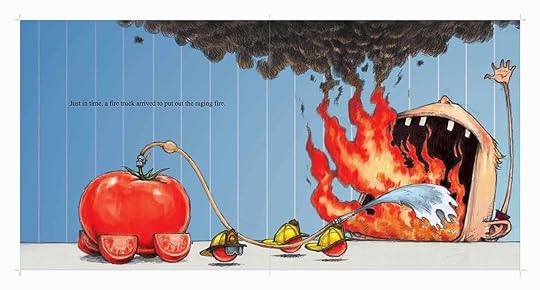
I blame my preoccupation with a picture book I am working on that is due in little over one weeks time - I Don't Want to Eat My Dinner it is called, a sample for you below.
On posting this, I am painfully aware of missing details, of things not quite fleshed out, but such is the state of first drafts, so read on knowing that if this gets to a more polished stage it will be fuller, fitter, finer.
Economous
musgrove
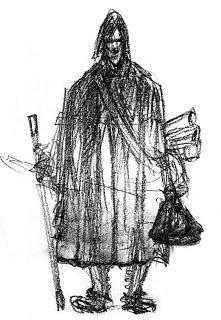 © D.M.CornishPLEASE DO NOT PUBLISH OR REPRODUCE WITHOUT MY PERMISSION
Chapter 9 PART 3The Sulk & Through
* * * * *
The tenth day of his travels and Economous was on the road again. Elated, he whistled softly to himself as he sat in the now moving lentum cabin, Miss Swift once again opposite and once again ignoring him. Two new somebodies sat beside each of them – some large lady in a thick shawl and coddling a covered basket, and a gentleman in sleek blue soutaine – either whom Economous took little time to observe: just to be moving on again was all his interest. The smudgy threat of the Ichormeer glimpsed once more from the hilltop road out of Poonemünd was enough to arrest his attention and he stared at it until the road dropped once more to the unending flatness of the Sulk plain and the dread mire was lost to sight.
“And what calls you out to Undermeers, my good friend,” the well-dressed gentleman said suddenly, addressing Economous directly in an accent somewhere between Gott and Bosch, with a strange Tutin ring to it too.
Though surrounded by people after so long in the strange near-solitude of this journey – this great crossing – Economous almost did not answer the forward fellow. “I have services to render to a great lady of the region,” he said, telling more than he cared to in his haste to make amends for his slowness to answer.
The well-dressed gentleman looked at him and nodded slowly. “Well for you, sir, well for you.”
“What of thee, dear girl?” the shawl-draped lady enquired with beady fascination of Miss Swift. “What brings thee hither to such out-away places?”
Tip of her fan touching her chin then fluttering with abrupt modulation, her falseman’s eyes hid again in the shade of a tricorn brim, the young woman also took a moment to respond.
“My answer is much the same, madam,” she said bluntly and turned her gaze to the view without to bring any further enquiry to an end, casting Economous a brief and subtly perplexed glance as she did.
“A great lady too, is it?” the be-shawled traveller pressed.
Miss Swift’s fan shut and tipped to the left, before snapping open and fluttering angrily – was the only word Economous could give the motion – again. “Indeed, madam” she said with careful politeness. “And I do not wish to say more on it.”
To this the portly woman smiled a peculiar, almost indulgent smile and inquired no more.
Economous did not know what to make of it all, but he was certain the two newcomers passed knowing looks.
* * * * *
The lack of proper way-posts, coach-hosts or any such thing to change teams forced the lenterman to halt often to rest his horses along this stretch named the Lang Plat. Though these were only the briefest pauses possible to serve the contrary demands of both speed and equine wind, it was not until very late in the day that they achieved the intersection of the Lang Plat and the Conduit Limus – the Ichor Road it was commonly called, its southern arm running audaciously – and largely unused – through the threats and horrors of the Ichormeer. A long earthen dyke ran upon the western flank of the Ichor Road, reaching north and south as far as could be seen. Economous had some recollection of receiving instruction at the athy of a battle being fought here during the early days of the Sulk’s full founding, though between whom and over what he could not now bring to mind.
For the meeting of two reputedly major highroads, the crossing was strangely empty of settlement and traffic – no imperial bastion to watch and tax, nor even an eeker’s cottage to make advantage of the congruence. Leaning out and looking ahead – quite painful to achieve – the young fabulist beheld in the westering light the battlements of some fashion of fortress showing clear above the rises some miles further ahead.
With scarce a pause in caution of contrary traffic, the lentum crossed the Ichor Road and pressed on.
Yawning and stretching in his seat to clear the travel-drowse, Economous heard the lenterman shout the six horse team to greater exertions despite their weariness and to the young fabulist there seemed a note of fear in the harshness of the bluff man’s cries. Though the sensation was surely just the weariness of the road, but he almost dared to admit to himself that there was something unfriendly in the air without, something – dare he admit – threwdishabout the entire darkling vista. Now that he was ken of it, the threwdishness pressed upon his wind and he found himself nodding in hearty accord with the driver’s hoarse infrequent barks. Surly they were about to be beset by some slobbering horror!
Why does the lenterman not drive us faster? he fretted, peering through the lattice at the darkening hurrying world without. Is he dumb to our danger?
Over a final rise and the bastion loomed, jutting from the acute slope cut into a hillside and running long and narrow along the flank of the road. Spangled by myriad windows, its west-facing battlements lit deep orange in the sun’s last light. With a loud “Heyah!” from the driver and a disconcerted bellow of horses and the lentum lurched, shaking its passengers sharply. Miss Swift was almost knock from her seat but for the quick steadying hand of Economous’ on her shoulder. Tossed about smartly, the four travellers clung to whatever hold they could. Rocking and leaping the carriage closed the final fathoms to the bastion gates at a sprint, making the foreyard with a clash and boom of a gate closed abruptly behind them.
“Thank you, Mister Musgrove,” Miss Swift said as she coolly but firmly pushed Economous’ hand from her shoulder with the guardstick of her closed fan.
The cabin door burst open and the back-stepper was there, ready to hand the ladies alight, his face flushed, his eyes gleaming with glee the lantern glow of the yard. “Did ye see the basket?” he exclaimed up to the driver and the sidearmsman even as he opened the cabin door and handed the ladies first from the lentum.
“Nay, di’n’t catch a hook of it,” cried the sidearmsman. “But [NAME] thought he did and got us to th’ gate with all breath behind him,” he declared with tip of his head and a smirk to the driver beside him, clapping the pale and shaking fellow upon the back. “You getting the ghasts, me hearty?”
The lentum driver shrugged. “Better sure than sorry,” he muttered.
“A nicker was after us?” Economous asked as he clambered out, looking back to the closed gate that had made good their escape, then up to the wall tops where musketeers in Imperial mottle stood peering into the deepening gloom.
“I say it was, aye,” the lenterman replied sourly. “Just rose up outta the stubble and sprang at us. I thought I was done, but got us away. Where’s yer eyes at, [NAME]?”
“In me dial, as per usual,” the sidearms man grinned. “But I reckon yours are poppin’ out at any lurching fancy.”
The driver said nothing to thus but spitting a curse, stowed his whip and dropped stiffly from his high seat to the still hard earth.
A single musket shot hissed and popped into the silence from the battlements above, drawing gasps from the new arrivals. Passengers, lenters and yardfolk alike looked to the heights of the fortalice.
“Can ye see it?” came a gruff call from the yard.
“Nothing, bell-sergeant,” was the reply from pediteers watching from the wall-tops. “It has surly scunnered … if it was there.”
Looking to Economous then the rather paler sidearmsman, the lenterman adjusted his copstan to a jaunty angle. “Got the ghasts have I?” he uttered, then turned and went to help unharness the horse team.
“Aye.” The sidearmsman looked uncomfortably at Economous. “What ye gawpin’ at, townie!” he snarled and turned his back to clamber off his high seat on the lentum too.
But all Economous cared for was how close he had just come to dire monstrous encounter.
“Withdraw inside the coaching house, if you please, goodly peoples,” demanded a tired looking man of middling years resplendent despite obvious weariness in military harness of rouge, luec and or – red, white and gold.
Economous training at the athenaeum had been martial enough that he recognised the pediteer as a sergeant-at-arms of His Most Serene Emperor’s service. Compliantly, the fabulist turned his attention to his luggage being heft from the lentum roof, as he fellow three passengers retired with the elevated wind of those who have just scraped with danger.
* * * * *
I blame my preoccupation with a picture book I am working on that is due in little over one weeks time - I Don't Want to Eat My Dinner it is called, a sample for you below.

On posting this, I am painfully aware of missing details, of things not quite fleshed out, but such is the state of first drafts, so read on knowing that if this gets to a more polished stage it will be fuller, fitter, finer.
Economous
musgrove
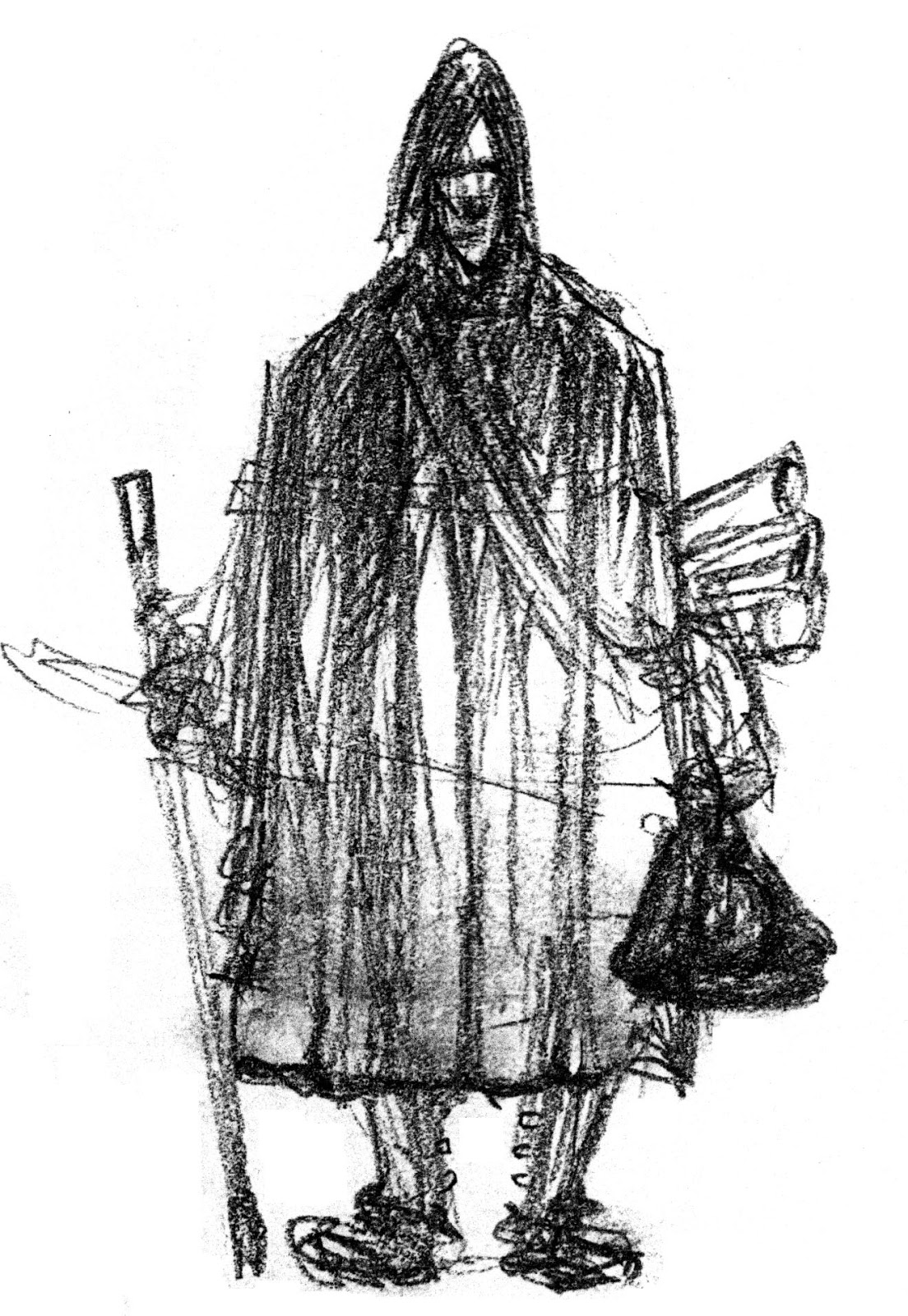 © D.M.CornishPLEASE DO NOT PUBLISH OR REPRODUCE WITHOUT MY PERMISSION
Chapter 9 PART 3The Sulk & Through
* * * * *
The tenth day of his travels and Economous was on the road again. Elated, he whistled softly to himself as he sat in the now moving lentum cabin, Miss Swift once again opposite and once again ignoring him. Two new somebodies sat beside each of them – some large lady in a thick shawl and coddling a covered basket, and a gentleman in sleek blue soutaine – either whom Economous took little time to observe: just to be moving on again was all his interest. The smudgy threat of the Ichormeer glimpsed once more from the hilltop road out of Poonemünd was enough to arrest his attention and he stared at it until the road dropped once more to the unending flatness of the Sulk plain and the dread mire was lost to sight.
“And what calls you out to Undermeers, my good friend,” the well-dressed gentleman said suddenly, addressing Economous directly in an accent somewhere between Gott and Bosch, with a strange Tutin ring to it too.
Though surrounded by people after so long in the strange near-solitude of this journey – this great crossing – Economous almost did not answer the forward fellow. “I have services to render to a great lady of the region,” he said, telling more than he cared to in his haste to make amends for his slowness to answer.
The well-dressed gentleman looked at him and nodded slowly. “Well for you, sir, well for you.”
“What of thee, dear girl?” the shawl-draped lady enquired with beady fascination of Miss Swift. “What brings thee hither to such out-away places?”
Tip of her fan touching her chin then fluttering with abrupt modulation, her falseman’s eyes hid again in the shade of a tricorn brim, the young woman also took a moment to respond.
“My answer is much the same, madam,” she said bluntly and turned her gaze to the view without to bring any further enquiry to an end, casting Economous a brief and subtly perplexed glance as she did.
“A great lady too, is it?” the be-shawled traveller pressed.
Miss Swift’s fan shut and tipped to the left, before snapping open and fluttering angrily – was the only word Economous could give the motion – again. “Indeed, madam” she said with careful politeness. “And I do not wish to say more on it.”
To this the portly woman smiled a peculiar, almost indulgent smile and inquired no more.
Economous did not know what to make of it all, but he was certain the two newcomers passed knowing looks.
* * * * *
The lack of proper way-posts, coach-hosts or any such thing to change teams forced the lenterman to halt often to rest his horses along this stretch named the Lang Plat. Though these were only the briefest pauses possible to serve the contrary demands of both speed and equine wind, it was not until very late in the day that they achieved the intersection of the Lang Plat and the Conduit Limus – the Ichor Road it was commonly called, its southern arm running audaciously – and largely unused – through the threats and horrors of the Ichormeer. A long earthen dyke ran upon the western flank of the Ichor Road, reaching north and south as far as could be seen. Economous had some recollection of receiving instruction at the athy of a battle being fought here during the early days of the Sulk’s full founding, though between whom and over what he could not now bring to mind.
For the meeting of two reputedly major highroads, the crossing was strangely empty of settlement and traffic – no imperial bastion to watch and tax, nor even an eeker’s cottage to make advantage of the congruence. Leaning out and looking ahead – quite painful to achieve – the young fabulist beheld in the westering light the battlements of some fashion of fortress showing clear above the rises some miles further ahead.
With scarce a pause in caution of contrary traffic, the lentum crossed the Ichor Road and pressed on.
Yawning and stretching in his seat to clear the travel-drowse, Economous heard the lenterman shout the six horse team to greater exertions despite their weariness and to the young fabulist there seemed a note of fear in the harshness of the bluff man’s cries. Though the sensation was surely just the weariness of the road, but he almost dared to admit to himself that there was something unfriendly in the air without, something – dare he admit – threwdishabout the entire darkling vista. Now that he was ken of it, the threwdishness pressed upon his wind and he found himself nodding in hearty accord with the driver’s hoarse infrequent barks. Surly they were about to be beset by some slobbering horror!
Why does the lenterman not drive us faster? he fretted, peering through the lattice at the darkening hurrying world without. Is he dumb to our danger?
Over a final rise and the bastion loomed, jutting from the acute slope cut into a hillside and running long and narrow along the flank of the road. Spangled by myriad windows, its west-facing battlements lit deep orange in the sun’s last light. With a loud “Heyah!” from the driver and a disconcerted bellow of horses and the lentum lurched, shaking its passengers sharply. Miss Swift was almost knock from her seat but for the quick steadying hand of Economous’ on her shoulder. Tossed about smartly, the four travellers clung to whatever hold they could. Rocking and leaping the carriage closed the final fathoms to the bastion gates at a sprint, making the foreyard with a clash and boom of a gate closed abruptly behind them.
“Thank you, Mister Musgrove,” Miss Swift said as she coolly but firmly pushed Economous’ hand from her shoulder with the guardstick of her closed fan.
The cabin door burst open and the back-stepper was there, ready to hand the ladies alight, his face flushed, his eyes gleaming with glee the lantern glow of the yard. “Did ye see the basket?” he exclaimed up to the driver and the sidearmsman even as he opened the cabin door and handed the ladies first from the lentum.
“Nay, di’n’t catch a hook of it,” cried the sidearmsman. “But [NAME] thought he did and got us to th’ gate with all breath behind him,” he declared with tip of his head and a smirk to the driver beside him, clapping the pale and shaking fellow upon the back. “You getting the ghasts, me hearty?”
The lentum driver shrugged. “Better sure than sorry,” he muttered.
“A nicker was after us?” Economous asked as he clambered out, looking back to the closed gate that had made good their escape, then up to the wall tops where musketeers in Imperial mottle stood peering into the deepening gloom.
“I say it was, aye,” the lenterman replied sourly. “Just rose up outta the stubble and sprang at us. I thought I was done, but got us away. Where’s yer eyes at, [NAME]?”
“In me dial, as per usual,” the sidearms man grinned. “But I reckon yours are poppin’ out at any lurching fancy.”
The driver said nothing to thus but spitting a curse, stowed his whip and dropped stiffly from his high seat to the still hard earth.
A single musket shot hissed and popped into the silence from the battlements above, drawing gasps from the new arrivals. Passengers, lenters and yardfolk alike looked to the heights of the fortalice.
“Can ye see it?” came a gruff call from the yard.
“Nothing, bell-sergeant,” was the reply from pediteers watching from the wall-tops. “It has surly scunnered … if it was there.”
Looking to Economous then the rather paler sidearmsman, the lenterman adjusted his copstan to a jaunty angle. “Got the ghasts have I?” he uttered, then turned and went to help unharness the horse team.
“Aye.” The sidearmsman looked uncomfortably at Economous. “What ye gawpin’ at, townie!” he snarled and turned his back to clamber off his high seat on the lentum too.
But all Economous cared for was how close he had just come to dire monstrous encounter.
“Withdraw inside the coaching house, if you please, goodly peoples,” demanded a tired looking man of middling years resplendent despite obvious weariness in military harness of rouge, luec and or – red, white and gold.
Economous training at the athenaeum had been martial enough that he recognised the pediteer as a sergeant-at-arms of His Most Serene Emperor’s service. Compliantly, the fabulist turned his attention to his luggage being heft from the lentum roof, as he fellow three passengers retired with the elevated wind of those who have just scraped with danger.
* * * * *
January 14, 2014
Economous Musgrove Chapter 9 Part 2
Late again, but still arrived, more Economous is here.
May I just say too, how much I appreciate you all, whether you comment or not, and how much your comments encourage me to continue and aid in the creative process - it is like you are all some kind of beta (alpha?) testers helping guide the outcome of the final result. Anyway, lame similes aside, thank you all.
Economous
musgrove
© D.M.CornishPLEASE DO NOT PUBLISH OR REPRODUCE WITHOUT MY PERMISSION
Chapter 9 PART 2The Sulk & Through
The next morning, with the sun already beating with summer heat upon all uncovered pates, Economous found the lenterman sitting easy with the side-armsman and the backstepper, all sipping the best local under the shade of coachyard’s broad eaves.
“No passage today, m’hearty,” the lenterman said with a lazy tip of his already lazily tilted stovepipe hat.
The second day proved even hotter and the lentermen all the more comfortably disposed under the coachyard eaves, and the driver’s answer was the same as before.
“You’ll not make the clock wind faster,” the fan-flicking woman observed as Economous sought frustrated retreat to his small solitary bunk space.
Sat at a small round budge-table just outside the common room door, she was sipping what the young fabulist could only guess was salloop. Head now barely covered by an impractically small version of a stovepipe known as a columna, she still wore the same dark green travel cloak, satin mules of striking red poking out from beneath the viridian hem of her light cloak. But more striking yet – and catching Economous utterly off guard – were her eyes, now clear of any obscuring hat-shade, were clearest blue with orbs of solid bloody red. She was a falseman. A lie-seeing leer. A lady lie-seeing leer.
“Neither will chiding me, madam!” Economous retorted hotly, surprising himself so profoundly with his own heat that his pace quickening in shame as he sought to retreat past her and seek the solace of his hired room. Yet better nature over-ruled him the very next beat and halting abruptly, the fabulist pivoted on his heal to face his fellow traveller.
She sat up the straighter, fan clicking shut and readied as a weapon. She blinked at him with those disquieting eyes, expression pinned between dismay and self-defence.
“Uh…” he fumbled, “I – I – Sorry for my impulsiveness, madam,” he bowed as low as seven days aboard a po’lent would allow. “Please … please, allow accept my apologies.”
This woman beheld him in still silent deliberation.
“I am not of the habit,” she returned at last, “for speaking freely to one of whom I am not properly introduced.”
Economous blinked at her. “Mister Economous Musgrove, Metrician Third Table and Illuminator to Gentry.” The young fabulisto obliged his audience with a second bow: a bumbling simulacrum of the sweeping bobs Mister Bidbrindle liked to beck, if only to avoid looking into those red-and-blue eyes.
“Miss Swift, if you must,” she returned, her voice cool but her fan a-flutter tightly. “Panapolë Swift of Doggenbrass.”
“Well, Miss Panapolë Swift of Doggenbrass,” Economous halted before her – A name at last! – “Surly youfind the delay tiresome?”
“I do, of course,” she said, taking a sip of salloop, “but I know better than to fret at a cause I cannot alter. Lights know I have had much practice,” she added, more to herself.
With no counter for this, Economous stood dumb, hands behind his back and cupping the bottom of his bautis-box to give them something to do, sucking in the warm air as he rocked upon booted heels and gazed up at the thin clouds drifting west.
“And how is it, Miss Swift,” he said at length, “that you are still my travelling companion?”Regarding him for a moment with a must-thee-know stare, she finally said: “I am seeking a particular personage in Knapphausen,” she offered at last.
“As am I,” Economous returned, his last syllable going mawkishly shrill in his surprised delight.
He blinked at her and she at him, quickly turned upon both sides to gaze-averting embarrassment.
“It is hiring season then, in the Subtle Pall…” said Miss Swift as she stared fixedly at her salloop with those discomposing eyes and fanned herself with especial vigour.
“Aye,” was all of Economous’ reply.
* * * * *
Carrying Miserichord about in its box on his back, Economous took to assiduously avoiding Miss Swift, instead wandering about the village, crouching to draw the sagging wooden highhouses with their distinctive conical roofs of flax and their grim-faced denizens. At first he was a spectacle as souls stood over him to watch him make his marks, but tiring quickly of muttering wonders and beady observation, the fabulist fled east out through the gated gap in Poonemünd’s warding dyke and moat. In the windy hissing solitude of the surrounding pastures, the road actually went directly up a hill of all things, a mound really, but a genuine lifting of the earth. It was a herald – as he soon found – of much greater undulations east, the shadows of dark hills on the horizon.
Clambering over a stone fence that bordered the rutted, scarce-used way, Economous climb through dry grasses and withered thistles to the highest point of hilly mound and found it afforded a remarkably wide view of world. To the south the land fell away in a series of wooded folds running over long miles to a dark stretch along the horizon that occasionally glimmered with water reflecting the morning sun. A fume seemed to hang over that far off strip, and from even such a distance there was an obvious deep rouged taint upon it. With a queer inward leap of fascinated fright then a sinking of dismay Economous realised that he was seeing the dread Ichormeer, a vast swampland even the most closeted niavine knew as a seat of unconquered and largely undocumented monstrous power.
“So close,” he murmured in vocal amazement.
The trained metrician in him thrilled to the thought of measuring even a small portion of its unexplored precincts, report back the weird species creature he might uncover and be an ornament to his profession at last. But the rest of him just beheld it in the dread common to all everymen at such a prospect.
In the evening – warm and clear, a glory had he been in the mind to care – he climbed upon a hayloft roof as he had as a child, to lay and gaze at the meteor splendours of the unclouded night sky until Maudlin was westering and weariness forced sleep upon him.
The only wonder of the next day was the late arrival of a post-lentum from the populated west, disgorging its brood of rumpled passengers.
“Aye,” Economous’ lenterman reported with a smirk and commendable patience as he sipped a bowl of Mullhammer’s Best in the common room of the Cradle & Manger, “we have fares enough to be going on tomorrow.
“Thank you, sir,” Economous returned with a bow, taking and shaking the startled fellow’s hand happily, “Thank you, thank you.”
“A’right, mate,” the sidearmsman retorted, nodding over his own beer-bowl at this sudden enthusiastic limb-pumping. “He’ll need that arm for the harness termorrow.”
“Yes, yes, of course,” offered Economous, releasing the bemused lenterman and giving an apologetic bob. “I will see you tomorrow.” With that he ordered [FOOD GOES HERE] and retired to his room to wait the last hours of stranding.
At last!
May I just say too, how much I appreciate you all, whether you comment or not, and how much your comments encourage me to continue and aid in the creative process - it is like you are all some kind of beta (alpha?) testers helping guide the outcome of the final result. Anyway, lame similes aside, thank you all.
Economous
musgrove
© D.M.CornishPLEASE DO NOT PUBLISH OR REPRODUCE WITHOUT MY PERMISSIONChapter 9 PART 2The Sulk & Through
The next morning, with the sun already beating with summer heat upon all uncovered pates, Economous found the lenterman sitting easy with the side-armsman and the backstepper, all sipping the best local under the shade of coachyard’s broad eaves.
“No passage today, m’hearty,” the lenterman said with a lazy tip of his already lazily tilted stovepipe hat.
The second day proved even hotter and the lentermen all the more comfortably disposed under the coachyard eaves, and the driver’s answer was the same as before.
“You’ll not make the clock wind faster,” the fan-flicking woman observed as Economous sought frustrated retreat to his small solitary bunk space.
Sat at a small round budge-table just outside the common room door, she was sipping what the young fabulist could only guess was salloop. Head now barely covered by an impractically small version of a stovepipe known as a columna, she still wore the same dark green travel cloak, satin mules of striking red poking out from beneath the viridian hem of her light cloak. But more striking yet – and catching Economous utterly off guard – were her eyes, now clear of any obscuring hat-shade, were clearest blue with orbs of solid bloody red. She was a falseman. A lie-seeing leer. A lady lie-seeing leer.
“Neither will chiding me, madam!” Economous retorted hotly, surprising himself so profoundly with his own heat that his pace quickening in shame as he sought to retreat past her and seek the solace of his hired room. Yet better nature over-ruled him the very next beat and halting abruptly, the fabulist pivoted on his heal to face his fellow traveller.
She sat up the straighter, fan clicking shut and readied as a weapon. She blinked at him with those disquieting eyes, expression pinned between dismay and self-defence.
“Uh…” he fumbled, “I – I – Sorry for my impulsiveness, madam,” he bowed as low as seven days aboard a po’lent would allow. “Please … please, allow accept my apologies.”
This woman beheld him in still silent deliberation.
“I am not of the habit,” she returned at last, “for speaking freely to one of whom I am not properly introduced.”
Economous blinked at her. “Mister Economous Musgrove, Metrician Third Table and Illuminator to Gentry.” The young fabulisto obliged his audience with a second bow: a bumbling simulacrum of the sweeping bobs Mister Bidbrindle liked to beck, if only to avoid looking into those red-and-blue eyes.
“Miss Swift, if you must,” she returned, her voice cool but her fan a-flutter tightly. “Panapolë Swift of Doggenbrass.”
“Well, Miss Panapolë Swift of Doggenbrass,” Economous halted before her – A name at last! – “Surly youfind the delay tiresome?”
“I do, of course,” she said, taking a sip of salloop, “but I know better than to fret at a cause I cannot alter. Lights know I have had much practice,” she added, more to herself.
With no counter for this, Economous stood dumb, hands behind his back and cupping the bottom of his bautis-box to give them something to do, sucking in the warm air as he rocked upon booted heels and gazed up at the thin clouds drifting west.
“And how is it, Miss Swift,” he said at length, “that you are still my travelling companion?”Regarding him for a moment with a must-thee-know stare, she finally said: “I am seeking a particular personage in Knapphausen,” she offered at last.
“As am I,” Economous returned, his last syllable going mawkishly shrill in his surprised delight.
He blinked at her and she at him, quickly turned upon both sides to gaze-averting embarrassment.
“It is hiring season then, in the Subtle Pall…” said Miss Swift as she stared fixedly at her salloop with those discomposing eyes and fanned herself with especial vigour.
“Aye,” was all of Economous’ reply.
* * * * *
Carrying Miserichord about in its box on his back, Economous took to assiduously avoiding Miss Swift, instead wandering about the village, crouching to draw the sagging wooden highhouses with their distinctive conical roofs of flax and their grim-faced denizens. At first he was a spectacle as souls stood over him to watch him make his marks, but tiring quickly of muttering wonders and beady observation, the fabulist fled east out through the gated gap in Poonemünd’s warding dyke and moat. In the windy hissing solitude of the surrounding pastures, the road actually went directly up a hill of all things, a mound really, but a genuine lifting of the earth. It was a herald – as he soon found – of much greater undulations east, the shadows of dark hills on the horizon.
Clambering over a stone fence that bordered the rutted, scarce-used way, Economous climb through dry grasses and withered thistles to the highest point of hilly mound and found it afforded a remarkably wide view of world. To the south the land fell away in a series of wooded folds running over long miles to a dark stretch along the horizon that occasionally glimmered with water reflecting the morning sun. A fume seemed to hang over that far off strip, and from even such a distance there was an obvious deep rouged taint upon it. With a queer inward leap of fascinated fright then a sinking of dismay Economous realised that he was seeing the dread Ichormeer, a vast swampland even the most closeted niavine knew as a seat of unconquered and largely undocumented monstrous power.
“So close,” he murmured in vocal amazement.
The trained metrician in him thrilled to the thought of measuring even a small portion of its unexplored precincts, report back the weird species creature he might uncover and be an ornament to his profession at last. But the rest of him just beheld it in the dread common to all everymen at such a prospect.
In the evening – warm and clear, a glory had he been in the mind to care – he climbed upon a hayloft roof as he had as a child, to lay and gaze at the meteor splendours of the unclouded night sky until Maudlin was westering and weariness forced sleep upon him.
The only wonder of the next day was the late arrival of a post-lentum from the populated west, disgorging its brood of rumpled passengers.
“Aye,” Economous’ lenterman reported with a smirk and commendable patience as he sipped a bowl of Mullhammer’s Best in the common room of the Cradle & Manger, “we have fares enough to be going on tomorrow.
“Thank you, sir,” Economous returned with a bow, taking and shaking the startled fellow’s hand happily, “Thank you, thank you.”
“A’right, mate,” the sidearmsman retorted, nodding over his own beer-bowl at this sudden enthusiastic limb-pumping. “He’ll need that arm for the harness termorrow.”
“Yes, yes, of course,” offered Economous, releasing the bemused lenterman and giving an apologetic bob. “I will see you tomorrow.” With that he ordered [FOOD GOES HERE] and retired to his room to wait the last hours of stranding.
At last!
January 6, 2014
Economous Musgrove Chapter 9 Part 1
So we begin again, Finnigan ("... he has whiskers on his chin again...")
It may well be noted that this chapter has the same title as the previous, and this is because I have actually renamed them in between postings; for this chapter bears the title much better than the previous (which is now called, "Humour" - tho this is not a title I am yet fully settled upon).
Things are likely to get lumpier still from now on for we are most definitely in "writing as I go" territory: let the terror begin!
As for Tales from the Half-Continent, it is 216 pages long, has 1 map (recycled from Factotum - please forgive me), 8 character illos but alas, no appendices - it seems I am become too obscure to be allowed such indulgences a second time.
Let us revel in the obscurity together \o/
I see too that I got the athy's names mixed up (THANK YOU, ANON, VERY HELPFUL INDEED): it is known by all three names in my various notebooks - I think because I cannot decide which noun I like the more (one for the suburb it is in, the other after its founder, a third for the street it is on) so perhaps I will keep them all?
Also: How's the story as a whole tracking so far, folks?
Economous
musgrove
© D.M.CornishPLEASE DO NOT PUBLISH OR REPRODUCE WITHOUT MY PERMISSION
Chapter 9 PART 1The Sulk & Through
word ~ definition …………
Economous had thought the three day journey from his childhood home to Brandenbrass three years previous had been a bold and extended venture: it took four entire days upon the Grand Trunk to make it even half way across the vasty fields of the Sulk. In the first the young fabulist thrilled to the alien vista that was presented to him through the sashed windows of the lentum; a land both familiar in its pastoral simplicity yet subtly foreign in its form of building, fashion of citizen and the utter flatness of the ground. He had once reckoned the Milchfold about western curtains of Brandenbrass topographically unremarkable but that region was a veritable downs of undulation compared to endless evenness of this current scape. The word “plain” was well meant here.
Perhaps most remarkable were the many white mill-towers with their red or blue roofs and great wind-sails of red or white ever turning even in the light summer airs. Communities of them were founded at every sight of the compass, the tips of rotating sails even glimpsed peeping above the arc of the horizon green with row upon row of low-sprouting vegetables – carrots, beetroots, radishes and chives. An uncommon sight in the Page – where much milling was done by ox-drawn stones – Economous watched these windmills with keen fascination, leaning out over the door sash to crane his neck and stare if the road took them close to one of the marvellous devices. In their shadows and out amongst almost every field toiled a greater multitude of moilers and other labouring folk, a far greater number than Economous had ever beheld during his child-years, each – man or woman – dressed peculiarly baggy breaches of white or faun, gathered about their shins and bulging at the thighs.
At the sprawling rural focus of Swaddle Tunp the rotund gentleman and his consort left the journey, to be replaced the next morning by a fellow of advancing years who smelt strongly of skolding parts. The vertical stripes he bore upon his face to show that he was indeed a monster-slaying skold. This new passenger must have been most talented at his profession: There is no such thing as an old teratologist went the axiom yet here he sat.
“Hello and good morning, sir,” Economous tried, wishing to express his admiration, a similar greeting falling flat once again upon the young fan-flicking lady.
“I can see that you are a measuring man and I will grant most readily that your kind are a boon upon the road,” the old skold said with a glare from eyes especially and penetratingly pale. “But I am not interested in chitter chatter, sir, and ask of you the peace to travel quiet and unmolested by empty words.”
Eyes still hid under the rim of her tricon yet clearly smirking, the fan-flicking lady hid her amusement behind her fan.
Economous returned his gaze to the sash.
By sheer frequency the marvels of the region wore out their charm as the steadily passing vista proved unchangingly horizontal, and despite the miles shared, his fellow passengers remained self-possedly unengaging so that the young fabulist found himself nodding. Resting his head upon his bundled coat – unneeded in the heat of the cabin – he lost great stretches of road to his recollection, the journey becoming a strange cycle of boarding, sleeping, eating, disembarking at some new town: Swaddle Tunp, Eg Harbidge, Sulking Mede, Boston – each remarkably similar to the last, each a place only to sleep until the small of the next day when the sequence began again.
By the seventh day travelling between the low sturdy bastion of Fauquemberg and Poonemünd – the last concentration of population of the eastern Sulk – landscape and architecture did change. The ground began to undulate and grow craggy with grey granite boulders thatched with dull green lichen rising up from fields now whitening with the heads of buck-wheat, barley and spelt, tossing and rippling in the gentle warmth. The dry stone walls about fields became higher and more often began to form the foundation for thick thorny hedges that now obscured the once wide and open view from the carriage window just when the scene was becoming more interesting. Once proceeding flat upon the flat land, the road began to dip and rise and cut long furrows into the hilly earth. Pines and cedars grew now in dark copses upon hillock tops or in tight windbreaks across in growing count of low ridgelines. The people the lentum passed – day-walking postmen amblers, itinerant soup-sellers, cart-driving farmers – did not grin or wave as the more westerly denizens of the Sulk had done but went about with frowning inward expressions despite the glorious bright of the waxing summer.
The post-lentum arrived at Poonemünd as the wondrous yellow glare of a pristine sunset draped every westerly surface in solar gold, making steady way along a broad unpaved street of sun-hardened dirt, rutted and rough yet lit rather incongruously down its middle by a line of fine lamps. The journey terminating at the wayhouse, [wayhouse name], a complex of low, sole-storied, wide-roofed quadrangles connected by covered walks.
“Commerce bain’t as steady regular as one might reckon betwixt them easternly folk and us,” the lentermen informed Economous as the fellow put his mark upon the two remaining passengers’ Ticket-of-Passage. “Dour and close, they keep well to themselves and well may it continue so. We won’t be trundlin’ yonder” – he nodded to the arc of pallid eastern sky already glimmering with the night’s first stars above the red-tiled roof of the wayhouse coachyard – “until I have a full count o’ passingers – not worth the wear or worry elsewise.”
Increasingly keen to be at his new work, Economous thought this a remarkable inconvenience. However, his fellow passenger – the young fan-flicking woman in the fashionable garb who had shared the whole journey with scarce a word – took this information with a patient nod and proceeded directly into the common room of the Cradle & Manger.
Frustrated but helpless to alter affairs, Economous followed after.
It may well be noted that this chapter has the same title as the previous, and this is because I have actually renamed them in between postings; for this chapter bears the title much better than the previous (which is now called, "Humour" - tho this is not a title I am yet fully settled upon).
Things are likely to get lumpier still from now on for we are most definitely in "writing as I go" territory: let the terror begin!
As for Tales from the Half-Continent, it is 216 pages long, has 1 map (recycled from Factotum - please forgive me), 8 character illos but alas, no appendices - it seems I am become too obscure to be allowed such indulgences a second time.
Let us revel in the obscurity together \o/
I see too that I got the athy's names mixed up (THANK YOU, ANON, VERY HELPFUL INDEED): it is known by all three names in my various notebooks - I think because I cannot decide which noun I like the more (one for the suburb it is in, the other after its founder, a third for the street it is on) so perhaps I will keep them all?
Also: How's the story as a whole tracking so far, folks?
Economous
musgrove
© D.M.CornishPLEASE DO NOT PUBLISH OR REPRODUCE WITHOUT MY PERMISSIONChapter 9 PART 1The Sulk & Through
word ~ definition …………
Economous had thought the three day journey from his childhood home to Brandenbrass three years previous had been a bold and extended venture: it took four entire days upon the Grand Trunk to make it even half way across the vasty fields of the Sulk. In the first the young fabulist thrilled to the alien vista that was presented to him through the sashed windows of the lentum; a land both familiar in its pastoral simplicity yet subtly foreign in its form of building, fashion of citizen and the utter flatness of the ground. He had once reckoned the Milchfold about western curtains of Brandenbrass topographically unremarkable but that region was a veritable downs of undulation compared to endless evenness of this current scape. The word “plain” was well meant here.
Perhaps most remarkable were the many white mill-towers with their red or blue roofs and great wind-sails of red or white ever turning even in the light summer airs. Communities of them were founded at every sight of the compass, the tips of rotating sails even glimpsed peeping above the arc of the horizon green with row upon row of low-sprouting vegetables – carrots, beetroots, radishes and chives. An uncommon sight in the Page – where much milling was done by ox-drawn stones – Economous watched these windmills with keen fascination, leaning out over the door sash to crane his neck and stare if the road took them close to one of the marvellous devices. In their shadows and out amongst almost every field toiled a greater multitude of moilers and other labouring folk, a far greater number than Economous had ever beheld during his child-years, each – man or woman – dressed peculiarly baggy breaches of white or faun, gathered about their shins and bulging at the thighs.
At the sprawling rural focus of Swaddle Tunp the rotund gentleman and his consort left the journey, to be replaced the next morning by a fellow of advancing years who smelt strongly of skolding parts. The vertical stripes he bore upon his face to show that he was indeed a monster-slaying skold. This new passenger must have been most talented at his profession: There is no such thing as an old teratologist went the axiom yet here he sat.
“Hello and good morning, sir,” Economous tried, wishing to express his admiration, a similar greeting falling flat once again upon the young fan-flicking lady.
“I can see that you are a measuring man and I will grant most readily that your kind are a boon upon the road,” the old skold said with a glare from eyes especially and penetratingly pale. “But I am not interested in chitter chatter, sir, and ask of you the peace to travel quiet and unmolested by empty words.”
Eyes still hid under the rim of her tricon yet clearly smirking, the fan-flicking lady hid her amusement behind her fan.
Economous returned his gaze to the sash.
By sheer frequency the marvels of the region wore out their charm as the steadily passing vista proved unchangingly horizontal, and despite the miles shared, his fellow passengers remained self-possedly unengaging so that the young fabulist found himself nodding. Resting his head upon his bundled coat – unneeded in the heat of the cabin – he lost great stretches of road to his recollection, the journey becoming a strange cycle of boarding, sleeping, eating, disembarking at some new town: Swaddle Tunp, Eg Harbidge, Sulking Mede, Boston – each remarkably similar to the last, each a place only to sleep until the small of the next day when the sequence began again.
By the seventh day travelling between the low sturdy bastion of Fauquemberg and Poonemünd – the last concentration of population of the eastern Sulk – landscape and architecture did change. The ground began to undulate and grow craggy with grey granite boulders thatched with dull green lichen rising up from fields now whitening with the heads of buck-wheat, barley and spelt, tossing and rippling in the gentle warmth. The dry stone walls about fields became higher and more often began to form the foundation for thick thorny hedges that now obscured the once wide and open view from the carriage window just when the scene was becoming more interesting. Once proceeding flat upon the flat land, the road began to dip and rise and cut long furrows into the hilly earth. Pines and cedars grew now in dark copses upon hillock tops or in tight windbreaks across in growing count of low ridgelines. The people the lentum passed – day-walking postmen amblers, itinerant soup-sellers, cart-driving farmers – did not grin or wave as the more westerly denizens of the Sulk had done but went about with frowning inward expressions despite the glorious bright of the waxing summer.
The post-lentum arrived at Poonemünd as the wondrous yellow glare of a pristine sunset draped every westerly surface in solar gold, making steady way along a broad unpaved street of sun-hardened dirt, rutted and rough yet lit rather incongruously down its middle by a line of fine lamps. The journey terminating at the wayhouse, [wayhouse name], a complex of low, sole-storied, wide-roofed quadrangles connected by covered walks.
“Commerce bain’t as steady regular as one might reckon betwixt them easternly folk and us,” the lentermen informed Economous as the fellow put his mark upon the two remaining passengers’ Ticket-of-Passage. “Dour and close, they keep well to themselves and well may it continue so. We won’t be trundlin’ yonder” – he nodded to the arc of pallid eastern sky already glimmering with the night’s first stars above the red-tiled roof of the wayhouse coachyard – “until I have a full count o’ passingers – not worth the wear or worry elsewise.”
Increasingly keen to be at his new work, Economous thought this a remarkable inconvenience. However, his fellow passenger – the young fan-flicking woman in the fashionable garb who had shared the whole journey with scarce a word – took this information with a patient nod and proceeded directly into the common room of the Cradle & Manger.
Frustrated but helpless to alter affairs, Economous followed after.
January 1, 2014
The Beginerringenine of Anno MMXIV
Welcome welcome to a new year!
Alas for 2013, t'was a lovely number now gone, the year itself full of twists and turns.
Normal transmission of Economous Musgrove will resume next week 6/1/2014 (that's how a date is logically writ in everywhere sensible ;p - a set of numbers expanding rationally in scale from least to greatest rather than some un-sensible jumble \o/ )
For those new, middle-arrived or just needing it, here is a link to the very beginning of Economous' tale - and I will be adding a button-widget-graphic thingo to the right that does the same: ECONOMOUS MUSGROVE: The Beginnering.
To tide us all over and as a murky kinda Yule-Christmas-New Year in-the-notion-of-some-sort-of-present-giving-malarkey thing I am well pleased to announce that March this new year (in Australia at least for now) the release of Tales of the Half-Continent (I wanted to call it Sensoria for reasons that I reckon will be clear once the stories are read, but was overruled).
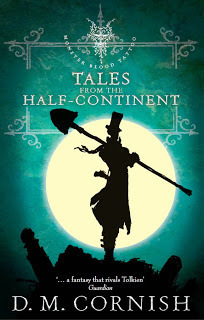
Two stories set in the H-c (one already released in anthology, but now polished and with more WORDS[TM] added) involving new Sundergirdians doing their own thing (by which I mean NOT a sequel of MBT)
So, on we go and blessings to you all.
Alas for 2013, t'was a lovely number now gone, the year itself full of twists and turns.
Normal transmission of Economous Musgrove will resume next week 6/1/2014 (that's how a date is logically writ in everywhere sensible ;p - a set of numbers expanding rationally in scale from least to greatest rather than some un-sensible jumble \o/ )
For those new, middle-arrived or just needing it, here is a link to the very beginning of Economous' tale - and I will be adding a button-widget-graphic thingo to the right that does the same: ECONOMOUS MUSGROVE: The Beginnering.
To tide us all over and as a murky kinda Yule-Christmas-New Year in-the-notion-of-some-sort-of-present-giving-malarkey thing I am well pleased to announce that March this new year (in Australia at least for now) the release of Tales of the Half-Continent (I wanted to call it Sensoria for reasons that I reckon will be clear once the stories are read, but was overruled).
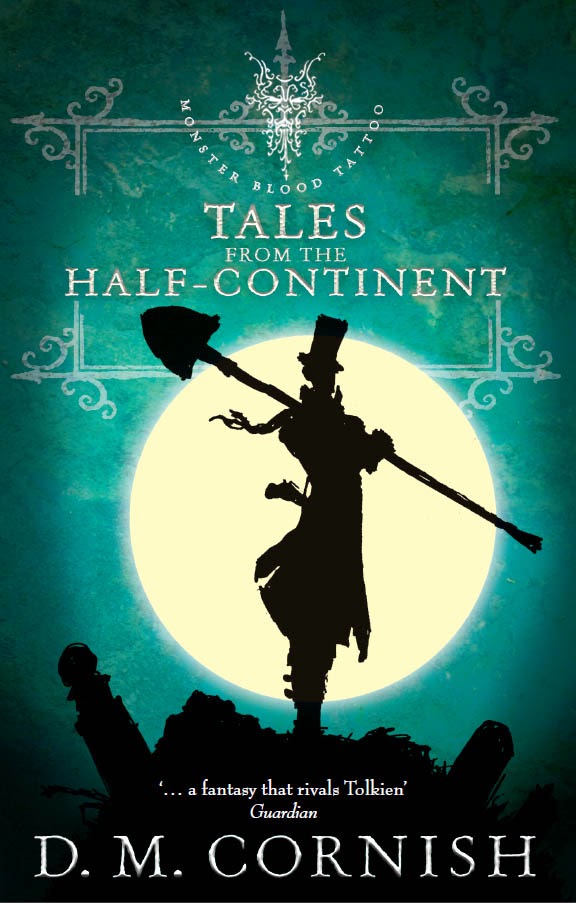
Two stories set in the H-c (one already released in anthology, but now polished and with more WORDS[TM] added) involving new Sundergirdians doing their own thing (by which I mean NOT a sequel of MBT)
So, on we go and blessings to you all.
December 15, 2013
Economous Musgrove Chapter 8 Part 4
On time?!! How is this possible?!?!??!?
This chapter is the longest so far - 4 (!) parts to it. I seem to need to bang on with the travel bits :\
I had this small thought this morning about plotting ahead of time versus just winging it, and I think why I prefer to wing it (with a sense of direction/purpose mind) is that plotting seems to me more of a stand affar and determine from without, but I need to be in the meat with my characters, need to see and feel the tale with them in order to know/find where to go next.
Winging it is more fraught but I feel like I share the journey rather than dictating from above, as it were.
Oh, and not that this is important, but this is still the pre-written "stuff" - though the fear-facing is going on as I now start to lay track before the very wheels of the moving train.
Economous
musgrove
© D.M.CornishPLEASE DO NOT PUBLISH OR REPRODUCE WITHOUT MY PERMISSION
Chapter 8 PART 4The Sulk & Through
A thump and shout and Economous started awake in his makeshift berth, humours pounding inexplicably in his ears, sleep driven from him. He cast about wildly, thinking himself beset by some strangling violence but quickly realised his place, and the choking sensation simply his stock twisted uncomfortably in his sleep. In the strange twilight he could see a bargeman grinning at him like the foolish city lubber he must have seemed and straightening his harness, Economous pulled and settled his baldric of concometrist mottle to remind the fellow that he was not just some daft naivine.
“Weal morning,” he said to cover his own chagrin.
The fellow appeared to get the implication for he left off his idiot smirking and with an acknowledging shrug and a “Weal morning,” in reply, went back to what ever labour it had been that had most likely woken Economous in the first.
Stretching a yawn and peering ahead, Economous was surprised to see a great town – indeed a veritable city – shadowed against the eastern arc of sky ruddied by the approaching sun.
Here was Proud Sulking, great riverine trading port of the Sulk, the Idlewild and the lands beyond.
By steady cycling of the cromster’s gastrines they travelled all through the night and now arrived with the dawning, drawing to the long addit wharfing of Proud Sulking in line like proud rams-of-war treading stoutly into battle. Stretched well beyond the walls of the riverine city itself, the addit wharfs were heavy frames of swarthy wood raised on great blackened plinths of hard and slimy stone. Built at the time of the port’s foundation – so Economous recalled from his readings – each slab had been mined from the granite quarries of Exodus and brought up river on barge to be sunk into the shore until they formed a solid platform nigh as longs as the coastal front of Brandenbrass herself. There was not one stretch of the quay that was not spiny with loading sheers of various function and size, many busy even now before the day was fully dawned.
Here the Douse Fish drew to halt at the tail of yet another a line of craft awaiting their call to berth and load or unload. Here the cromster’s boat was lowered and Economous’ chest and canvases and the box that held Miserichord were brought up from the hold to be stowed aboard it. Joined by River-master Patefract going ashore for his own business, Economous was rowed to one of several score low stone hards at the foot of the wharf where he was handed ashore while his goods roughly unloaded. Patefract having said nothing on the row, said nothing now and depart upon his own business with only the shortest glance and the merest tilt of a nod of goodbye.
Walking much of the mile of the southern arm of the addit, Economous found a great fortress-like entry house with three tall uncomfortably narrow doors through which folks were already passing in crowded shuffling line. Musketeers in Imperial harness of rouge and or – red and gold – stood fast on either side of each door, eyeing all comers sternly but not impeding the progress of the arrivals. A motto carved into the heavy lintel above the doors and their wardens read:
Adveho Totus vos Defessus Hucilluctorum
Come all ye weary wayfarers.
Economous smiled wryly. “Come and do what,” he muttered to himself.
The gate-wardens in Imperial mottle and grim admitting clerks waiting at the end of the long colonnade that kept three line of souls discrete from each other were familiar enough in their bullying officiousness. His nativity patent scrutinised and reluctantly verified and his meagre collection of chatels inspected, Economous was allowed to proceed through.
Released to the street beyond, Economous blinked at the glare of sun now rising above curtain wall and roof top, shooed away the many demanding offers of help and took a moment to right himself.
After his time in Brandenbrass – one of the the great cities of the not just the Soutlands but surely of the Sundergird itself – Proud Sulking seemed on the face smaller and quaint. For all its bustle and clutter; the close street and crowding evidence of great business, of lofty garner towers and eminent mercantile representations raised above domestic dwellings; all the mighty ceaseless labour of loading an endless line of barges, cromsters and prams with all the produce the old and fruitful leagues of the Sulk provided, this comparably noteworthy city lacked the ponderous feeling of ancient – dare he call it constipated – gravity that veritably throbbed from even the dunkest alley of his onetime home. Strange – perhaps even revolting – to his inculcated senses, Proud Sulking did not smell of the vinegar of the sea, rather the usual horse-soil, brick-dust and wood-smoke of urban life was permated by the loamy, moldering fug of river-ooze and ploughed field. It was powerfully redolent of childhood and of home, odours that he had almost forgotten that filled him now with nameless misgivings.
Spying a coach-host – signed The Timely Boot – located opportunely up the street adjoining that on which the admitting house was found, he left his pondering Proud Sulking’s scant wonders and made directlyfor the establishment. Through the long yard full of horse teams in harness and hurrying porters, of luggage by the stack, of pails and baled hay, he entered the parenthis and its fare booths. As fast as another queue of people allowed, he hired a seat upon a post-lentum to take him the first stretch of his great overland quest.
“Where are ye destined?” came the commutation clerk’s question.
“Knapphausen.” Economous proclaimed the name as if it were deliverence itself: the last stop before ultimate success.
The clerk regarded him narrowly for a moment, as if he had just cursed. “I can writ ye the passage to Sulking Mede and Char Soster, but ye’ll have to shift for yeself to go beyond.”
Though Economous knew well enough that the cities of the Subtle Pall were states unto themselves and independent of the loose collection that had become of the Haacobin Empire, he was surprised to find such unfriendliness to the mere mention of one of its destinations.
“Then make shift I shall,” he said in parting as he took the handful of sheafs that were his Right-to-board and Ticket-of-Passage from post to post along the Grand Trunk Road.
Alotted a number upon a slip of card – 143 – unable to find a seat in the congested commons of the parenthis, he availed himself of an untenanted nook between the left-most fare booth and a fine-looking long-clock tocking out the long wait.
Despite the sense great and ceaseless activity out in the coach yard and the steady cry of what seemed random slip card numbers, the cram of waiting passengers never seemed to get smaller. Refusing to crane his neck to watch the long-case clock beside him, the fabulist nodded from sheer boredom even as he stood, roused repeatedly yet incompletely by the tooting – loud even from within the commons of the parenthis – of lentermen’s parting horns.
Final amongst a collection of other numbers, his call came, “143!”
Out in the yard, Economous good’s were taken from him once more to be secured atop the roof of a fine looking post-lentum of deep glossy green.
“Mornin’, brother-measurer,” said the lone backstepper in winking greeting from his perch at the rear of the carriage.
“G-morning,” came Economous’ unready and fumbled reply. It was an odd quirk of society that lentermen held brotherhood with concometrists as fellow wayfarers – view that, whilst appreciated, was not reciprocated by the metricians. Regardless, it persisted.
Hauling himself into the cabin, the fabulist found with small sinking of disappointment that he was one of four passengers. He knew it was foolish to have thought it could be otherwise, but Economous felt that now he had finally arrived upon new shores his adventure was all his own, and that these three fellow wayfaring souls were only intruders on his quest. Squeezing next to a rotund fellow in surprisingly expensive coat, trying with only minor success to not knock people with Miserichord in its box, he smiled tightly at handsomely dressed lady across the barely manageable gap between knees. If he had to share his lentum then to accompany such a damsel went a goodly way to ameliorating his frustration.
Brown curls of hair caught up in a travelling shawl of deep and fashionable green beneath a gleaming black tricorn that kept much of her face in shadow within the gloom of the cabin, the lady regarded Economous silently as he fumbled aboard. At his greeting she flicked her fan smartly apparently against the already heavy warmth within the cabin but said nothing. And when the bautis-box inevitable knocked her skirted knee, she snapped her fan shut with a snap and quicker than blinking, tapped knocking the over-long bautis as if it were the source of all discomforts. She then looked away as if Economous no longer existed.
Swallowing down his embarrassment, Economous looked out the window at whatever he could fix his gaze upon, as with a toot of the cockrobin’s horn and shouts of, “As ye please, gentles, as ye please!”from the sidearms man, the cabin lurched and the lentum was away.
This chapter is the longest so far - 4 (!) parts to it. I seem to need to bang on with the travel bits :\
I had this small thought this morning about plotting ahead of time versus just winging it, and I think why I prefer to wing it (with a sense of direction/purpose mind) is that plotting seems to me more of a stand affar and determine from without, but I need to be in the meat with my characters, need to see and feel the tale with them in order to know/find where to go next.
Winging it is more fraught but I feel like I share the journey rather than dictating from above, as it were.
Oh, and not that this is important, but this is still the pre-written "stuff" - though the fear-facing is going on as I now start to lay track before the very wheels of the moving train.
Economous
musgrove
© D.M.CornishPLEASE DO NOT PUBLISH OR REPRODUCE WITHOUT MY PERMISSIONChapter 8 PART 4The Sulk & Through
A thump and shout and Economous started awake in his makeshift berth, humours pounding inexplicably in his ears, sleep driven from him. He cast about wildly, thinking himself beset by some strangling violence but quickly realised his place, and the choking sensation simply his stock twisted uncomfortably in his sleep. In the strange twilight he could see a bargeman grinning at him like the foolish city lubber he must have seemed and straightening his harness, Economous pulled and settled his baldric of concometrist mottle to remind the fellow that he was not just some daft naivine.
“Weal morning,” he said to cover his own chagrin.
The fellow appeared to get the implication for he left off his idiot smirking and with an acknowledging shrug and a “Weal morning,” in reply, went back to what ever labour it had been that had most likely woken Economous in the first.
Stretching a yawn and peering ahead, Economous was surprised to see a great town – indeed a veritable city – shadowed against the eastern arc of sky ruddied by the approaching sun.
Here was Proud Sulking, great riverine trading port of the Sulk, the Idlewild and the lands beyond.
By steady cycling of the cromster’s gastrines they travelled all through the night and now arrived with the dawning, drawing to the long addit wharfing of Proud Sulking in line like proud rams-of-war treading stoutly into battle. Stretched well beyond the walls of the riverine city itself, the addit wharfs were heavy frames of swarthy wood raised on great blackened plinths of hard and slimy stone. Built at the time of the port’s foundation – so Economous recalled from his readings – each slab had been mined from the granite quarries of Exodus and brought up river on barge to be sunk into the shore until they formed a solid platform nigh as longs as the coastal front of Brandenbrass herself. There was not one stretch of the quay that was not spiny with loading sheers of various function and size, many busy even now before the day was fully dawned.
Here the Douse Fish drew to halt at the tail of yet another a line of craft awaiting their call to berth and load or unload. Here the cromster’s boat was lowered and Economous’ chest and canvases and the box that held Miserichord were brought up from the hold to be stowed aboard it. Joined by River-master Patefract going ashore for his own business, Economous was rowed to one of several score low stone hards at the foot of the wharf where he was handed ashore while his goods roughly unloaded. Patefract having said nothing on the row, said nothing now and depart upon his own business with only the shortest glance and the merest tilt of a nod of goodbye.
Walking much of the mile of the southern arm of the addit, Economous found a great fortress-like entry house with three tall uncomfortably narrow doors through which folks were already passing in crowded shuffling line. Musketeers in Imperial harness of rouge and or – red and gold – stood fast on either side of each door, eyeing all comers sternly but not impeding the progress of the arrivals. A motto carved into the heavy lintel above the doors and their wardens read:
Adveho Totus vos Defessus Hucilluctorum
Come all ye weary wayfarers.
Economous smiled wryly. “Come and do what,” he muttered to himself.
The gate-wardens in Imperial mottle and grim admitting clerks waiting at the end of the long colonnade that kept three line of souls discrete from each other were familiar enough in their bullying officiousness. His nativity patent scrutinised and reluctantly verified and his meagre collection of chatels inspected, Economous was allowed to proceed through.
Released to the street beyond, Economous blinked at the glare of sun now rising above curtain wall and roof top, shooed away the many demanding offers of help and took a moment to right himself.
After his time in Brandenbrass – one of the the great cities of the not just the Soutlands but surely of the Sundergird itself – Proud Sulking seemed on the face smaller and quaint. For all its bustle and clutter; the close street and crowding evidence of great business, of lofty garner towers and eminent mercantile representations raised above domestic dwellings; all the mighty ceaseless labour of loading an endless line of barges, cromsters and prams with all the produce the old and fruitful leagues of the Sulk provided, this comparably noteworthy city lacked the ponderous feeling of ancient – dare he call it constipated – gravity that veritably throbbed from even the dunkest alley of his onetime home. Strange – perhaps even revolting – to his inculcated senses, Proud Sulking did not smell of the vinegar of the sea, rather the usual horse-soil, brick-dust and wood-smoke of urban life was permated by the loamy, moldering fug of river-ooze and ploughed field. It was powerfully redolent of childhood and of home, odours that he had almost forgotten that filled him now with nameless misgivings.
Spying a coach-host – signed The Timely Boot – located opportunely up the street adjoining that on which the admitting house was found, he left his pondering Proud Sulking’s scant wonders and made directlyfor the establishment. Through the long yard full of horse teams in harness and hurrying porters, of luggage by the stack, of pails and baled hay, he entered the parenthis and its fare booths. As fast as another queue of people allowed, he hired a seat upon a post-lentum to take him the first stretch of his great overland quest.
“Where are ye destined?” came the commutation clerk’s question.
“Knapphausen.” Economous proclaimed the name as if it were deliverence itself: the last stop before ultimate success.
The clerk regarded him narrowly for a moment, as if he had just cursed. “I can writ ye the passage to Sulking Mede and Char Soster, but ye’ll have to shift for yeself to go beyond.”
Though Economous knew well enough that the cities of the Subtle Pall were states unto themselves and independent of the loose collection that had become of the Haacobin Empire, he was surprised to find such unfriendliness to the mere mention of one of its destinations.
“Then make shift I shall,” he said in parting as he took the handful of sheafs that were his Right-to-board and Ticket-of-Passage from post to post along the Grand Trunk Road.
Alotted a number upon a slip of card – 143 – unable to find a seat in the congested commons of the parenthis, he availed himself of an untenanted nook between the left-most fare booth and a fine-looking long-clock tocking out the long wait.
Despite the sense great and ceaseless activity out in the coach yard and the steady cry of what seemed random slip card numbers, the cram of waiting passengers never seemed to get smaller. Refusing to crane his neck to watch the long-case clock beside him, the fabulist nodded from sheer boredom even as he stood, roused repeatedly yet incompletely by the tooting – loud even from within the commons of the parenthis – of lentermen’s parting horns.
Final amongst a collection of other numbers, his call came, “143!”
Out in the yard, Economous good’s were taken from him once more to be secured atop the roof of a fine looking post-lentum of deep glossy green.
“Mornin’, brother-measurer,” said the lone backstepper in winking greeting from his perch at the rear of the carriage.
“G-morning,” came Economous’ unready and fumbled reply. It was an odd quirk of society that lentermen held brotherhood with concometrists as fellow wayfarers – view that, whilst appreciated, was not reciprocated by the metricians. Regardless, it persisted.
Hauling himself into the cabin, the fabulist found with small sinking of disappointment that he was one of four passengers. He knew it was foolish to have thought it could be otherwise, but Economous felt that now he had finally arrived upon new shores his adventure was all his own, and that these three fellow wayfaring souls were only intruders on his quest. Squeezing next to a rotund fellow in surprisingly expensive coat, trying with only minor success to not knock people with Miserichord in its box, he smiled tightly at handsomely dressed lady across the barely manageable gap between knees. If he had to share his lentum then to accompany such a damsel went a goodly way to ameliorating his frustration.
Brown curls of hair caught up in a travelling shawl of deep and fashionable green beneath a gleaming black tricorn that kept much of her face in shadow within the gloom of the cabin, the lady regarded Economous silently as he fumbled aboard. At his greeting she flicked her fan smartly apparently against the already heavy warmth within the cabin but said nothing. And when the bautis-box inevitable knocked her skirted knee, she snapped her fan shut with a snap and quicker than blinking, tapped knocking the over-long bautis as if it were the source of all discomforts. She then looked away as if Economous no longer existed.
Swallowing down his embarrassment, Economous looked out the window at whatever he could fix his gaze upon, as with a toot of the cockrobin’s horn and shouts of, “As ye please, gentles, as ye please!”from the sidearms man, the cabin lurched and the lentum was away.
December 11, 2013
Economous Musgrove Chapter 8 Part 3
Wow, pushing the limits here; that is what fear will do for you.
Well, still some already material left though it has gaps in it: gaps where I do not know details of that moment but know what comes after. I will do that at times. This is a first draft so you are going to get all the lumps and bumps that come with that I am afraid. That said, I am actually pleased with how complete the text has been up to now (full of errors certainly, but no gaps of writing).
Any way, apologies for the extended delay, now on with the show.
Economous
musgrove
© D.M.CornishPLEASE DO NOT PUBLISH OR REPRODUCE WITHOUT MY PERMISSION
Chapter 8 PART 3The Sulk & Through
By a ceaseless rotation of limbre and gastrine, the Douse Fish was kept at a cracking pace for so small a vessel, passing upon the ladeboard other craft guided by less impatient souls.
With the westering sun low in the wan blue dome of almost cloudless heaven, the cromster made the great rivergate with beats to spare, her timely advent hailed by a great din of frog chorus ringing from either weedy bank. Dark in the dusk-light against mounting billows of delicately orange clouds rising to the north and twinkling with a myriad lantern and window-lights, the Spindle entirely blocked the river ahead. Against the pallid element Economous could make out the crenelations of the squat bastions that anchored it to either shore, and see its long low battlements crawling with people all moving with snail’s speed from right to left – east to west.
“Refuge-seekers,” the lady passenger said as if she and he had been in constant conversation all day, speaking with pointed volume to be heard of the squall of frog-song. “They seek to escape the growing threat of monstrous uprising to the east. And hark,” she continued pointing to the sheoak lined eastern shore where high-screened barges disgorged companies of pediteers in the rouge and juverd – red and yellowed green – mottle of Useless. “The city-states begin to mass their soldiers.”
Economous beheld the mass of moving martialing souls on bridge and bank in amazement. “The threat is truly that grave?”
The woman looked at him sidelong. “Yes,” was all her answer.
It was Economous turn to look at her. “And has it reached up to the Undermeer?” he asked, fearing the answer.
“I do not yet know,” was the reply. “I presume that is your journey’s end?”
“Aye,” Economous nodded slowly. “That it is.”
“SEIZE ALL LIMBRES! RIDE THE TREADLE!” Patefract bawled, cutting conversation short.
Immediately the poor cromster was again put to shudders as her pace was arrested and she was brought with handiness of long experience to join the end of the line of vessels all waiting for their turn to pass through the impenetrable fortification. Pacing at the steerboard beam of the tiller, Mister Patefract fretted the much desired summons by the rivergate masters while his small crew worked to unstep the single mast and lay it secure upon the deck. Muttering and glowering at the flag-bearing masts that rose from the central hornwork of the Spindles, the master let out a wordless bark when the Douse Fish’ number was finally signalled with the instruction to proceed.
With tell-tale shudder, the cromster drew into one of the four low tunnels through which vessels were let upstream. Passing under the daggered teeth of a ponderous black-iron portcullis, Economous felt a strangely anxious thrill – a silly little fear that they would not be allowed on for some reason. Here on a low stone pier to the ladeboard-side along with the usual waterside cablemoors stood a coterie of excise clerks and their guards, each proofed in black and all looking drawn and drooping in the stark light of their night flares after a day long of ceasless scrutiny. So very much like the inky, neck-stiff clerical souls of the city, Economous paid scant heed to their preamble as they declared their right Imperial to step onto the Douse Fish’ sacred deck, marvelling instead at the grimy arch of stone a scarce arm’s reach above where dark algaes glistened with the sweat of tunnel-confined water. The cromster was tied, the excise clerk’s came aboard review the bill of lading and the other passenger made her leave.
“The dove’s flight carry you safe to your harbour, Mister Some-time,” she said, offering this odd parting with the slightest of curtsies.
“Oh, travel well, good lady,” Economous bade in farwell, half-standing and fumbling his hat from his head in surprise, amazed to discover that this woman was even shorter than she had seemed whilst seated.
“Indeed,” she said. “If you do happen to discover that nickers threat your destination please send me word of it.” She passed him an unexpected item – a calling card inscribed with a name and more amazingly an occupation:
Dolours of Herbroulesse (Ly)Laude to the August of the Right of the Pacific Dove
This woman was a calendar!
Yet before Economous could press for more, this Dolours of Herbroulesse sprang warrior-nimble to the stone quay with a flash of parti-hued leggings showing through the flaring shirt of her coat and hurried through a heavy iron-bound door that lead by a low arch off the stone quay of the tunnel pier.
Cries from the pier and a officious bow from the chief of the excise clerks told of the Douse Fish’ worthiness to proceed. With shouts of his own and, Patefract had the cromster continue “under limbres,” as he ordered it.
“Half ahead by limbres,” Patefract ordered loudly, smiling finally in satisfaction – an expression that looked positively wicked on so uncongenial a face.
As the cromster came out of the tunnel a bright pink sibaline flare shot from a central bastion into the darkening sky, informing all approaching vessels from either south or north that they would have to moor for the night in the shadow of the impassable wall. With sullen clang and a ponderous splash a great black portcullis dropped behind them as if to add punctuation to the signal: no other was passing through today.
But the labour of the Douse Fish was not done. Despite the closing day, the faithful little craft was made to tread on, pressing upstream as above her, her crew and sole passenger a slow spectacle of tiny cosmic lights came out in ones and twos until the entire dome of sky blazed with spangled fire. Catching a line of other vessels visible only as low shadows on the faintly glistening water and single dancing mast lamps, Patefract joined his course to their their’s, becoming now the tail of this improvised squadron. At first the vessels kept to the left – that is, the ladeboard and in this moment western – side of the river’s flow, allowing way for south- and sea-ward bound vessels to pass unhindered upon the right. Yet as they wore on in silent north-bound convoy each vessel began to prefer a course as close to the middle of the river as was reckoned prudent, as if their masters were by mystic accord reluctant to remain near the ladeborad shore. Chimes – or late supper – was softly called and the meal-time conversation amongst the Douse Fish’ small crew gathered at the bow happened in a hush, every sentence accompanied by vigilant furtive glances to the western landfall.
Sitting now upon the deck, back propped against the bit, Economous ate his own meagre repast from Bidbrindle’s thoughtful parting parcel – pan-bread, best Wretcher wide-cheese and parched apple parings – and kept his own puzzled watch upon the ladeboard shore. “May I ask why you have taken port on the opposite bank to your course?” he inquired of a passing bargeman.
“’Tis an unhappy stretch o’ ribbon is all, sir,” the fellow muttered with a nictating wink. “Discomfittin’ sounds and causeless spookings. Yet fear not; harm seldom happens.”
Yet as it had been with the teratologists, rather than frightening him, the intelligence that monsters might be lurking in shadows and tangles scarcely the length of a long field away aroused only intense fascination. Wrapping himself in his coat like a blanket, he stared scarcely blinking to the dark western shoreline, wishing he had a laggards eyes to pierce the black blank and spy what manner of hobpossums might be skulking there. He listened pointdly yet no discomforting sounds came to him across the river but the gentle plash of earthen-reeking water pushed aside by the blunt blade of the cromster’s bow and the endless batrachian chorus ringing out from the reedy mud. Undisturbed by man or monster, it was as if every tribe of frog had turned out to bellow from the sodden grime – long low hoomings, metalic ringings, repetative baritone mutterings and high pingings that almost gratted in the ear – a raucous trilling concord that did not cease even when late coming Phoebë raised her lumpen lunar dial above the dark eastern line of trees.
With the moon’s arrivial Economous made a bunk for himself where he lay. Draping his cloak over himself and doubting any prospect of sleep, he set himself to witness the transit of the celestial glories as he had once done on secret night excursions as a child. Trying to summon the ephemerides –the tables showing seasonal planetary positions and subject of no small count of examinationaries at Athingdon Athy – to mind, he determined himself to witness the transit of tiny Jekyll across Maudlin’s midnight face. Yet as the great constellations – Vespasio, Medise Toxothene, Vauxall, the Tides and the Lots with luck-plagued Droid twinkling so innocently from within – span in radiant glory across the benighted dome, the silent rhythmic throb of the cromster’s gastrines and the gentle yawing of the deck lulled him…
* * * * *
Well, still some already material left though it has gaps in it: gaps where I do not know details of that moment but know what comes after. I will do that at times. This is a first draft so you are going to get all the lumps and bumps that come with that I am afraid. That said, I am actually pleased with how complete the text has been up to now (full of errors certainly, but no gaps of writing).
Any way, apologies for the extended delay, now on with the show.
Economous
musgrove
© D.M.CornishPLEASE DO NOT PUBLISH OR REPRODUCE WITHOUT MY PERMISSIONChapter 8 PART 3The Sulk & Through
By a ceaseless rotation of limbre and gastrine, the Douse Fish was kept at a cracking pace for so small a vessel, passing upon the ladeboard other craft guided by less impatient souls.
With the westering sun low in the wan blue dome of almost cloudless heaven, the cromster made the great rivergate with beats to spare, her timely advent hailed by a great din of frog chorus ringing from either weedy bank. Dark in the dusk-light against mounting billows of delicately orange clouds rising to the north and twinkling with a myriad lantern and window-lights, the Spindle entirely blocked the river ahead. Against the pallid element Economous could make out the crenelations of the squat bastions that anchored it to either shore, and see its long low battlements crawling with people all moving with snail’s speed from right to left – east to west.
“Refuge-seekers,” the lady passenger said as if she and he had been in constant conversation all day, speaking with pointed volume to be heard of the squall of frog-song. “They seek to escape the growing threat of monstrous uprising to the east. And hark,” she continued pointing to the sheoak lined eastern shore where high-screened barges disgorged companies of pediteers in the rouge and juverd – red and yellowed green – mottle of Useless. “The city-states begin to mass their soldiers.”
Economous beheld the mass of moving martialing souls on bridge and bank in amazement. “The threat is truly that grave?”
The woman looked at him sidelong. “Yes,” was all her answer.
It was Economous turn to look at her. “And has it reached up to the Undermeer?” he asked, fearing the answer.
“I do not yet know,” was the reply. “I presume that is your journey’s end?”
“Aye,” Economous nodded slowly. “That it is.”
“SEIZE ALL LIMBRES! RIDE THE TREADLE!” Patefract bawled, cutting conversation short.
Immediately the poor cromster was again put to shudders as her pace was arrested and she was brought with handiness of long experience to join the end of the line of vessels all waiting for their turn to pass through the impenetrable fortification. Pacing at the steerboard beam of the tiller, Mister Patefract fretted the much desired summons by the rivergate masters while his small crew worked to unstep the single mast and lay it secure upon the deck. Muttering and glowering at the flag-bearing masts that rose from the central hornwork of the Spindles, the master let out a wordless bark when the Douse Fish’ number was finally signalled with the instruction to proceed.
With tell-tale shudder, the cromster drew into one of the four low tunnels through which vessels were let upstream. Passing under the daggered teeth of a ponderous black-iron portcullis, Economous felt a strangely anxious thrill – a silly little fear that they would not be allowed on for some reason. Here on a low stone pier to the ladeboard-side along with the usual waterside cablemoors stood a coterie of excise clerks and their guards, each proofed in black and all looking drawn and drooping in the stark light of their night flares after a day long of ceasless scrutiny. So very much like the inky, neck-stiff clerical souls of the city, Economous paid scant heed to their preamble as they declared their right Imperial to step onto the Douse Fish’ sacred deck, marvelling instead at the grimy arch of stone a scarce arm’s reach above where dark algaes glistened with the sweat of tunnel-confined water. The cromster was tied, the excise clerk’s came aboard review the bill of lading and the other passenger made her leave.
“The dove’s flight carry you safe to your harbour, Mister Some-time,” she said, offering this odd parting with the slightest of curtsies.
“Oh, travel well, good lady,” Economous bade in farwell, half-standing and fumbling his hat from his head in surprise, amazed to discover that this woman was even shorter than she had seemed whilst seated.
“Indeed,” she said. “If you do happen to discover that nickers threat your destination please send me word of it.” She passed him an unexpected item – a calling card inscribed with a name and more amazingly an occupation:
Dolours of Herbroulesse (Ly)Laude to the August of the Right of the Pacific Dove
This woman was a calendar!
Yet before Economous could press for more, this Dolours of Herbroulesse sprang warrior-nimble to the stone quay with a flash of parti-hued leggings showing through the flaring shirt of her coat and hurried through a heavy iron-bound door that lead by a low arch off the stone quay of the tunnel pier.
Cries from the pier and a officious bow from the chief of the excise clerks told of the Douse Fish’ worthiness to proceed. With shouts of his own and, Patefract had the cromster continue “under limbres,” as he ordered it.
“Half ahead by limbres,” Patefract ordered loudly, smiling finally in satisfaction – an expression that looked positively wicked on so uncongenial a face.
As the cromster came out of the tunnel a bright pink sibaline flare shot from a central bastion into the darkening sky, informing all approaching vessels from either south or north that they would have to moor for the night in the shadow of the impassable wall. With sullen clang and a ponderous splash a great black portcullis dropped behind them as if to add punctuation to the signal: no other was passing through today.
But the labour of the Douse Fish was not done. Despite the closing day, the faithful little craft was made to tread on, pressing upstream as above her, her crew and sole passenger a slow spectacle of tiny cosmic lights came out in ones and twos until the entire dome of sky blazed with spangled fire. Catching a line of other vessels visible only as low shadows on the faintly glistening water and single dancing mast lamps, Patefract joined his course to their their’s, becoming now the tail of this improvised squadron. At first the vessels kept to the left – that is, the ladeboard and in this moment western – side of the river’s flow, allowing way for south- and sea-ward bound vessels to pass unhindered upon the right. Yet as they wore on in silent north-bound convoy each vessel began to prefer a course as close to the middle of the river as was reckoned prudent, as if their masters were by mystic accord reluctant to remain near the ladeborad shore. Chimes – or late supper – was softly called and the meal-time conversation amongst the Douse Fish’ small crew gathered at the bow happened in a hush, every sentence accompanied by vigilant furtive glances to the western landfall.
Sitting now upon the deck, back propped against the bit, Economous ate his own meagre repast from Bidbrindle’s thoughtful parting parcel – pan-bread, best Wretcher wide-cheese and parched apple parings – and kept his own puzzled watch upon the ladeboard shore. “May I ask why you have taken port on the opposite bank to your course?” he inquired of a passing bargeman.
“’Tis an unhappy stretch o’ ribbon is all, sir,” the fellow muttered with a nictating wink. “Discomfittin’ sounds and causeless spookings. Yet fear not; harm seldom happens.”
Yet as it had been with the teratologists, rather than frightening him, the intelligence that monsters might be lurking in shadows and tangles scarcely the length of a long field away aroused only intense fascination. Wrapping himself in his coat like a blanket, he stared scarcely blinking to the dark western shoreline, wishing he had a laggards eyes to pierce the black blank and spy what manner of hobpossums might be skulking there. He listened pointdly yet no discomforting sounds came to him across the river but the gentle plash of earthen-reeking water pushed aside by the blunt blade of the cromster’s bow and the endless batrachian chorus ringing out from the reedy mud. Undisturbed by man or monster, it was as if every tribe of frog had turned out to bellow from the sodden grime – long low hoomings, metalic ringings, repetative baritone mutterings and high pingings that almost gratted in the ear – a raucous trilling concord that did not cease even when late coming Phoebë raised her lumpen lunar dial above the dark eastern line of trees.
With the moon’s arrivial Economous made a bunk for himself where he lay. Draping his cloak over himself and doubting any prospect of sleep, he set himself to witness the transit of the celestial glories as he had once done on secret night excursions as a child. Trying to summon the ephemerides –the tables showing seasonal planetary positions and subject of no small count of examinationaries at Athingdon Athy – to mind, he determined himself to witness the transit of tiny Jekyll across Maudlin’s midnight face. Yet as the great constellations – Vespasio, Medise Toxothene, Vauxall, the Tides and the Lots with luck-plagued Droid twinkling so innocently from within – span in radiant glory across the benighted dome, the silent rhythmic throb of the cromster’s gastrines and the gentle yawing of the deck lulled him…
* * * * *
December 1, 2013
Economous Musgrove Chapter 8 Part 2
So, the inner wobbliness continues, by which I mean my uncertainty about many things, most especially: do I make the journey a "thing" (perhaps too repetitive of MBT)? Or, do I expedite the journey for a change, give a sense of the passing vista, making note of important highlights, but cutting to the chase plotwise?
The urge is strong (as ever) to show the Half-Continent for its own sake, but I fear that my urge here is less geographic completeness and more a fear of getting into the meat and potatoes of why I even began this story in the first.
You can see with this week's offering that the former has been my current approach...
Plotting ahead is one thing, but I have found there are just some points in a story where I will not know what happens in it or lies ahead until I have actually written that scene and been through it with my characters and seen how they all react together thus revealing the next step/s.
Economous
musgrove
© D.M.CornishPLEASE DO NOT PUBLISH OR REPRODUCE WITHOUT MY PERMISSION
Chapter 8 PART 2The Sulk & Through
Slowly the Douse Fish got under way, treading with gradually gaining pace down channels marked among the collection of other vessels great and small by long heavy posts driven into the harbour bed, their scarlet painted tops pointing high out of the milky element. Ahead of her a pilot’s longboat of twelve oar somewhat redundantly – or so Economous thought – lead the way, its oarsmen straining to keep at speed.
Clear of the general crowding traffic of Middle Ground, the pilot boat signaled with the solemn waving of a large red burge. With a second, deeper shudder, the Douse Fish shook herself and quickly gathering a couple more knots, pointed north-east, setting for a course up the coast.
As the slowly turning long-boat was left behind, sea-birds Economous could identify as [………] terns and a few larger mollyawks squabbled and squawked as they flocked above the departing cromster. Diving and darting, they shot with a staccato of splashes into the roiling wake of the gastrin-vessel, each coming up with a wriggling flash of scaly silver in their long bills.
“They feed on fish,” remarked his fellow passenger, speaking at last, her voice having a soft musical lilt as one from the southern states of the Patricine. “And these in their turn come up from safer depths to feed on the effluent ejected from the pull below our feet,” by which she meant the gastrines arranged in a line about the treadle of the screw.
“Do they, indeed. I have ne’er seen a gastrine functioning before,” Economous said evenly then added in low and subtle irony. “Do you think the goodly captain would grant me a grand tour of the workings?”
The woman looked at him sharply then apprehending he was playing a jest, smiled wryly – an experssion that cracked her solemn mein like unexpected sun through winter storms. “I have it on good authority that he does,” she returned with equal satire. “Preceded by a grand luncheon of Pondeslee cheese, hart’s tongue and green-garnished spreadeagle – made from genuine eagle and not the usual whimbrels or craw-buzzards – all washed with the finest Equamine grass-wine.”
“After which he regales us with cheerful tales of all his near-misses and calamities turned to fortune,” Economous continued with a laugh, drawing an audible growl from Mister Patefract at his wheel. “Economous Musgrove, illuminator and sometime concometrist,” he offered introduction at last, touching a knuckle to the brim of his black tricorn. “At your service.”
“Some-time concometrist,” came the flat reply. The woman arched a brow once more and saying nothing else, retreated into herself again and stared out at their heading.
The conversation went still as smartly as it had begun.
The Douse Fish pressed on towards a mighty bastion rising out of the white water. Cauda Caputum it was called; a slope-sided, flat-topped stronghold of brick and stone, appearing squat despite its great size, the northern-most bastion of the arx maria – five mighty sea-fortresses that rung the waters of the city about. Passing Cauda Caputum upon the left – the ladeboard as it was properly called in maritime service – Economous could make out Fidelis Fidës off to their right in the haze of middle distance, the next arc in the ring. Enormous spandarions of sable and leuc chequey – black and white checks – flew above them both, the proud flag of Brandenbrass at sea.
Past the grim watch of these arx the sea seemed released and set willingly to an increasingly powerful wallowing heave of wave that lifted and dropped the cromster’s deck in a ponderous rolling motion. Though the two passengers were far enough back to avoid much of the caustic spindrift that sprayed up and out from the blunt bow, a stinging mist pervaded the air, making Economous’ eyes red and winking sore. All this alarmed him at first, yet the handful of crew tending the weatherdeck did not show any concern and so the young illuminator grit his teeth and made a good showing. His first time ever at sea, Economous was gratified to find he did not suffer the sea-ills as most lubbers were wont of suffering especially upon a maiden voyage.
Taking out the salvaged confusion of pages that was his numrelogue – kindly rebound by Binbrindle as best as could with viol gut – Economous wrestled the spray and heave of wave to draw the small common wonders of the sea: the blunt headlands that served as their sea-marks, their vinegar-washed foundations craggy with scores of scabrous rocks serving as home to birds and fat waddling creatures – seelows he believed they were called – lazily baking themselves in the summer heat and bellowing cantankerously with every twitch or fart of the neighbours; dark olive-drab weed-wrack hissing past the cromster’s hull; a constant opportunistic escort of whimbrel gulls and terns hovering over the vessel’s mucky wake; discarded casks of every dimension bobbing by in a nigh-continuous flotilla – puncheons, barrels, hogsheads, even a great butt knocking with a damp hollow gonging upon the iron-clad hull of the Douse Fish; and always the pressing sweet-yet-sour reek of the ocean.
Once or twice the young illuminator stood to get a better view of some bird or flotsam only to arouse ire from Mister Patefract.
“Sit ye down, sir!” the master’s growl would come from the tiller-post behind. “Yer ticket fee dun’t cover me a-swimming to fetch ye out o’ th’ wine and none of me mateys know how to paddle to git ye.”
Remaining always in he place, his fellow passenger regarded the entire unfolding scene with serene uninterest.
Despite her slight size, her master plied the Douse Fish with skill as she hopped her way from headland to headland up the north-western coast of the Grume, so that by mid morning the little vessel made the Gullet where the great Humour river poured into the sea. Two low towers were there, one – the Underend – rising from the muck of the estuarine marshlands of the Sough on the Humour’s western shore, the other – the Over End – lifted upon great foundation-stones out of the very midst of the mighty river’s mouth. Under the watch of these fortalice, the Douse Fishjoined several score of other vessels collecting from all compasses of the southern seas and even from far off and more fabled ports, marshalled before the western side of the river-mouth in a loose line stretching out to sea. On their right – to the east and beyond the bastion of Over End – Economous could see as many vessels as were labouring to enter the Humour, coming out of the same, hurried on under the river’s heavy outward push out into wild and open water. He could only marvel at the bizarre and impossible places some of them might be bound for, and felt a sault of joy that he too was on adventure to an alien destination. Squatting upon his rough seat before the helm, Economous stared in wonder at the gathered craft: many many cromsters of a surprising variety of lengths; lines of barges both laden and empty in the draw of iron-clad sheers-drudges; great shallow-draughted prams wide and flat to hold vast cargoes.
Upon the west of these, closer to shore in the quieter waters kept by the governing shadow of the Under End tower, a makeshift fleet of packets waited – light, two-masted sailers, each with signalling burge flags flying, requesting a tow behind any willing gastriner through the contrary surge of the out-flowing river. There was a time before gastrine vessels when such as these would have had to haul themselves through the churning eddys in their own boats by oar and arm alone. Indeed in these more enlightened times some still might, for though it was proper maritime practice for a gastriner to answer a Request for Towage, it was not – unless in time of open war – an absolute law. For the sailers moored by the Gullet it was a genuine lot-cast as whether a haul would be offered them or not by the masters of the muscle-driven vessels so commonly in their own hurry.
The Douse Fish trod within hailing distance of one such vessel – close enough for Economous to read Emperorfly upon her prow plate – and its master immediately called with great shouts for the cromster to heave to and throw the sailer a cable.
With a curse of, “Pullets and cockerils!” for the delay, Mister Patefract proved himself in some stripe a noble fellow after all and, slowing to a dead crawl had the loose end of the heavy, much-prized rope rowed in the cromster’s sole jollyboat to the needy packet.
Under proper tread again, the Douse Mouse took the weight of the Emperorfly in her stride at first, further into the Gullet she began to struggle against the full and mighty weight of southward pushing flow. With all limbres to the screw, the cromster shuddered as the muscles inside her gastrine boxes strained against the inexorable flow of the dark primordial river pouring into the milky waters of the vinegar sea. Economous clung to the sole mast as Douse Mouse – surely about to shake herself to flinders under her master’s obstinate command – juddered and heaved beneath the young illuminator’s unsteady feet. With a final lurch, the effluent surge let them go and cromster pushed her way into calm of the river proper, pulling a grateful Emperorfly with her. Yet Barge-master Patefract was far from content. Without pause the sour fellow ordered his own towage cable cast loose rather than lose precious moments in its proper retrieval, and so released of the sailer’s weight drove the hard-working craft on.
“We’ll nay make it, we’ll nay make it,” he kept grumbling to himself, determined to make the fortified rivergate of the Spindle before close of day when the fortress watchmen retired for the evening.
The urge is strong (as ever) to show the Half-Continent for its own sake, but I fear that my urge here is less geographic completeness and more a fear of getting into the meat and potatoes of why I even began this story in the first.
You can see with this week's offering that the former has been my current approach...
Plotting ahead is one thing, but I have found there are just some points in a story where I will not know what happens in it or lies ahead until I have actually written that scene and been through it with my characters and seen how they all react together thus revealing the next step/s.
Economous
musgrove
© D.M.CornishPLEASE DO NOT PUBLISH OR REPRODUCE WITHOUT MY PERMISSIONChapter 8 PART 2The Sulk & Through
Slowly the Douse Fish got under way, treading with gradually gaining pace down channels marked among the collection of other vessels great and small by long heavy posts driven into the harbour bed, their scarlet painted tops pointing high out of the milky element. Ahead of her a pilot’s longboat of twelve oar somewhat redundantly – or so Economous thought – lead the way, its oarsmen straining to keep at speed.
Clear of the general crowding traffic of Middle Ground, the pilot boat signaled with the solemn waving of a large red burge. With a second, deeper shudder, the Douse Fish shook herself and quickly gathering a couple more knots, pointed north-east, setting for a course up the coast.
As the slowly turning long-boat was left behind, sea-birds Economous could identify as [………] terns and a few larger mollyawks squabbled and squawked as they flocked above the departing cromster. Diving and darting, they shot with a staccato of splashes into the roiling wake of the gastrin-vessel, each coming up with a wriggling flash of scaly silver in their long bills.
“They feed on fish,” remarked his fellow passenger, speaking at last, her voice having a soft musical lilt as one from the southern states of the Patricine. “And these in their turn come up from safer depths to feed on the effluent ejected from the pull below our feet,” by which she meant the gastrines arranged in a line about the treadle of the screw.
“Do they, indeed. I have ne’er seen a gastrine functioning before,” Economous said evenly then added in low and subtle irony. “Do you think the goodly captain would grant me a grand tour of the workings?”
The woman looked at him sharply then apprehending he was playing a jest, smiled wryly – an experssion that cracked her solemn mein like unexpected sun through winter storms. “I have it on good authority that he does,” she returned with equal satire. “Preceded by a grand luncheon of Pondeslee cheese, hart’s tongue and green-garnished spreadeagle – made from genuine eagle and not the usual whimbrels or craw-buzzards – all washed with the finest Equamine grass-wine.”
“After which he regales us with cheerful tales of all his near-misses and calamities turned to fortune,” Economous continued with a laugh, drawing an audible growl from Mister Patefract at his wheel. “Economous Musgrove, illuminator and sometime concometrist,” he offered introduction at last, touching a knuckle to the brim of his black tricorn. “At your service.”
“Some-time concometrist,” came the flat reply. The woman arched a brow once more and saying nothing else, retreated into herself again and stared out at their heading.
The conversation went still as smartly as it had begun.
The Douse Fish pressed on towards a mighty bastion rising out of the white water. Cauda Caputum it was called; a slope-sided, flat-topped stronghold of brick and stone, appearing squat despite its great size, the northern-most bastion of the arx maria – five mighty sea-fortresses that rung the waters of the city about. Passing Cauda Caputum upon the left – the ladeboard as it was properly called in maritime service – Economous could make out Fidelis Fidës off to their right in the haze of middle distance, the next arc in the ring. Enormous spandarions of sable and leuc chequey – black and white checks – flew above them both, the proud flag of Brandenbrass at sea.
Past the grim watch of these arx the sea seemed released and set willingly to an increasingly powerful wallowing heave of wave that lifted and dropped the cromster’s deck in a ponderous rolling motion. Though the two passengers were far enough back to avoid much of the caustic spindrift that sprayed up and out from the blunt bow, a stinging mist pervaded the air, making Economous’ eyes red and winking sore. All this alarmed him at first, yet the handful of crew tending the weatherdeck did not show any concern and so the young illuminator grit his teeth and made a good showing. His first time ever at sea, Economous was gratified to find he did not suffer the sea-ills as most lubbers were wont of suffering especially upon a maiden voyage.
Taking out the salvaged confusion of pages that was his numrelogue – kindly rebound by Binbrindle as best as could with viol gut – Economous wrestled the spray and heave of wave to draw the small common wonders of the sea: the blunt headlands that served as their sea-marks, their vinegar-washed foundations craggy with scores of scabrous rocks serving as home to birds and fat waddling creatures – seelows he believed they were called – lazily baking themselves in the summer heat and bellowing cantankerously with every twitch or fart of the neighbours; dark olive-drab weed-wrack hissing past the cromster’s hull; a constant opportunistic escort of whimbrel gulls and terns hovering over the vessel’s mucky wake; discarded casks of every dimension bobbing by in a nigh-continuous flotilla – puncheons, barrels, hogsheads, even a great butt knocking with a damp hollow gonging upon the iron-clad hull of the Douse Fish; and always the pressing sweet-yet-sour reek of the ocean.
Once or twice the young illuminator stood to get a better view of some bird or flotsam only to arouse ire from Mister Patefract.
“Sit ye down, sir!” the master’s growl would come from the tiller-post behind. “Yer ticket fee dun’t cover me a-swimming to fetch ye out o’ th’ wine and none of me mateys know how to paddle to git ye.”
Remaining always in he place, his fellow passenger regarded the entire unfolding scene with serene uninterest.
Despite her slight size, her master plied the Douse Fish with skill as she hopped her way from headland to headland up the north-western coast of the Grume, so that by mid morning the little vessel made the Gullet where the great Humour river poured into the sea. Two low towers were there, one – the Underend – rising from the muck of the estuarine marshlands of the Sough on the Humour’s western shore, the other – the Over End – lifted upon great foundation-stones out of the very midst of the mighty river’s mouth. Under the watch of these fortalice, the Douse Fishjoined several score of other vessels collecting from all compasses of the southern seas and even from far off and more fabled ports, marshalled before the western side of the river-mouth in a loose line stretching out to sea. On their right – to the east and beyond the bastion of Over End – Economous could see as many vessels as were labouring to enter the Humour, coming out of the same, hurried on under the river’s heavy outward push out into wild and open water. He could only marvel at the bizarre and impossible places some of them might be bound for, and felt a sault of joy that he too was on adventure to an alien destination. Squatting upon his rough seat before the helm, Economous stared in wonder at the gathered craft: many many cromsters of a surprising variety of lengths; lines of barges both laden and empty in the draw of iron-clad sheers-drudges; great shallow-draughted prams wide and flat to hold vast cargoes.
Upon the west of these, closer to shore in the quieter waters kept by the governing shadow of the Under End tower, a makeshift fleet of packets waited – light, two-masted sailers, each with signalling burge flags flying, requesting a tow behind any willing gastriner through the contrary surge of the out-flowing river. There was a time before gastrine vessels when such as these would have had to haul themselves through the churning eddys in their own boats by oar and arm alone. Indeed in these more enlightened times some still might, for though it was proper maritime practice for a gastriner to answer a Request for Towage, it was not – unless in time of open war – an absolute law. For the sailers moored by the Gullet it was a genuine lot-cast as whether a haul would be offered them or not by the masters of the muscle-driven vessels so commonly in their own hurry.
The Douse Fish trod within hailing distance of one such vessel – close enough for Economous to read Emperorfly upon her prow plate – and its master immediately called with great shouts for the cromster to heave to and throw the sailer a cable.
With a curse of, “Pullets and cockerils!” for the delay, Mister Patefract proved himself in some stripe a noble fellow after all and, slowing to a dead crawl had the loose end of the heavy, much-prized rope rowed in the cromster’s sole jollyboat to the needy packet.
Under proper tread again, the Douse Mouse took the weight of the Emperorfly in her stride at first, further into the Gullet she began to struggle against the full and mighty weight of southward pushing flow. With all limbres to the screw, the cromster shuddered as the muscles inside her gastrine boxes strained against the inexorable flow of the dark primordial river pouring into the milky waters of the vinegar sea. Economous clung to the sole mast as Douse Mouse – surely about to shake herself to flinders under her master’s obstinate command – juddered and heaved beneath the young illuminator’s unsteady feet. With a final lurch, the effluent surge let them go and cromster pushed her way into calm of the river proper, pulling a grateful Emperorfly with her. Yet Barge-master Patefract was far from content. Without pause the sour fellow ordered his own towage cable cast loose rather than lose precious moments in its proper retrieval, and so released of the sailer’s weight drove the hard-working craft on.
“We’ll nay make it, we’ll nay make it,” he kept grumbling to himself, determined to make the fortified rivergate of the Spindle before close of day when the fortress watchmen retired for the evening.
November 26, 2013
Economous Musgrove Chapter 8 Part 1
Two days missing!?!
I think I am getting the jitters, for we are actually now in the lumpy parts of the story; that peculiar wilderness between what is definitely written, what is still being formed, and what has yet to be writ.
This is where my First Draft will really be showing.
Those of a praying persuasion, please pray that I face the fear of writing before your very eyes, because I very much want to get this story told, hence showing it to you all in the first, but fear is my constant opponent.
Regarding last week's questioning, it is a salient point that the serialised nature of this tale promotes pondering on what is next because there is only short bursts of words with a significant pause in between.
Also, I am sorry if I gave the impression of not appreciating the deeper insights into the flow and direction and implications of these: I value such musings greatly (tho not just simple guessing/showing away about the plot, but genuine full-expressed wonderings) - indeed, they have at times given me insights into what I am doing I could not have had myself. So, thank you musing folks.
Economous
musgrove
© D.M.CornishPLEASE DO NOT PUBLISH OR REPRODUCE WITHOUT MY PERMISSION
Chapter 8 PART 1The Sulk & Through
gastrine(s) ~ great muscles grown especially in boxes – usually made of bronze- or iron bound wood - and used to drive treadles whose motion is used originally and chiefly to provide motivation for rams (naval gastrine vessels) and packets (articled gastrine vessels). In more recent decades they have also become more widely employed in the manufacture of mill-worked goods: beating metal,grinding grains, turning looms, and making many folks very wealthy in the process. ALSO stachel ~ said "STA-kl", a spine, especial one grown upon the back.
Too excited to sleep, Economous spent the night in preparation, which consisted mostly of packing, examining, re-packing and re-examining his meagre count of possession. The heaviest items to bring were his foldable easle that had seen little use in the last few months but would be useful indeed over the next; and a small carter’s trunk holding spare smallclothes, the few books he still owned – every blank leaf scrawled with drawings, his modest collection of paints and brushes, a pair of handsomely buckled mules that had somehow survived his regular system of pawning – and would be good to wear come his first presentation to his patroness, and his sole threadbare blanket – such a friend for so many cold winter nights he could not bare to leave it to be sold. Rolled inside a hempen sack, he placed three blank, unstretched canvases of various dimension. Rather than wrestle the bulk of made frames all the way from Brandentown to the domain of his mysterious patron, he planned to construct them from wood he was sure would he could find once he had arrived at his journey’s terminus. Wondering at first if he might leave the dread tool behind, he wrapped Miserichord in his sole spare shirt and placed inside a narrow wooden box – the purpose of which or how he came to have it he could not recall – with a leatherned strap like the sword-holding bautis boxes carried by sabrine adepts.
The morning of the eighth day of the second summer month dawned with a cackle of magpies upon the neighbouring roof waking him from his slump upon the tandem. Leaving the sale of his remaing paltry goods in the hands of Bidbrindle – who promised to forward what ever profit he could garner as soon as Economous could furnish him with an established address – Economous farewelled his tiny garret, descended the geriatric stair for the last time. Half way down he was met my by Bidbrindle himself coming out from his own second storey abode.
“A-hey! The adventurer off to seek his making,” the older man greeted him.
“Aye, or bread and bunk, at least.” The young illuminator smiled, putting the carter’s trunk down with a clumsy thud so as to get a better hold on it.
“Well, let it not be that the heldin is set on his way unsung,” Bidbrindle returned. “Or unfed.” He flourished a canvas flour bag, tied with a hair-ribbon lumpy with foodstuffs. “Allow me to assist you with your heavier articles, I shall come with you to bid your farewell from the hard.”
Economus did not know what to say. His innards griped with sudden regret at abandoning so true a man as the violin-maker.
“You have elected to wear your metrician’s cingulum, I see,” Bidbrindle observed quickly, seeking to spare them further discomfort.
“Aye,” Economous returned with a duck of his head and a shrug, tugging at the black sash about his shoulder and chest that showed his to be a full-measuring concometrist. It made him feel like an imposter, but it could ease the path ahead, especially with the more clerical set – unless they were an abacus-trained mathematician, of course.
“Very wise, sir,” the violin-maker pressed on even quicker, seeing his first attempt fail. “Everyone likes a member of the Amicable Fraternity of Athenaeus.”
Passing through the tiny vestibule some small part of him still wanted for the vaunted door – that old portal to both fear and bliss – to spring open this one last time and for Asthetica to fling her lithely arms about him in weeping apology.
It did not and she did not.
For only the third time since he had come to Brandenbrass and the second time in a week, Economous hired a takeny from the To-Market, directing the stripe-coated driver to [……NAME OF EC’s HOUSE PLEASE!], there to pick up the carter’s trunk, easle and faithful Mister Bidbrindle with them. The journey to the harbour was startlingly brief and all too soon Economous found himself – not really feeling like himself the whole time – stepping off from mildewed steps at the bottom of the Queen’s Wharf Hard and into a jollyboat already waiting to take him to his vessel.
“Fare thee well, good sir!” Bidbrindle cried from the top of the stonepace wall. “Write me that I might boast of you success to all who need tell of it!”
“I will!” Economous cried in return, his voice cracking clutching the flour-bag of vittles had passed to him in farewell like it was a treasured keepsake. “I will!”
“Sit ye down, ye bloat-brained looby!” the master of the boat skolded roughly. “Who wants yer fussin’s to make us over-tip and miss gate-shut at the Spindles!”
Amongst the great number of receiving vessels gathered in the outer moorings of Middle Ground, Economous’ vessel – the Douse Fish – looked disconcertingly small. She was a cromster – this much he could see by sight of her: a river-going craft that was surely scarce large enough for even the relative tranquillity of the inshore waters of the north western Grume. Climbing the short side ladder and handed aboard with the disdainful aid of a young bargeman, he was gratified to find that the craft was neatly turned out at least, neither rusted or cluttered with lumber and unravelled rope as was the common lubberly view of all sea-going vessels. While his carter’s trunk and his canvases were heft aboard and sent down to the hold, he presented himself and his commutation ticket to an ancient fellow standing by the long hefty tiller beam at the helm who he presumed to be the diminutive vessel’s master.
“ Mister Patefract,” he said with gracious nod, flourishing the ticket to be verified by this age-ed sea dog.
Close to the man now, Economous observed a face white-wiskered and ruddy red, the flesh scarred with white dotted cicatrices and the tiny, burrow-like pits of a life spent upon the vinegar seas.
“I cannot vouch for what them inky boobies at the certifying establishment told ye…” the vessel’s master drawled, squinting suspuciously at the paper held before him then up to Economous’ slightly disconcerted face,“Mister Musgrill. Yet I am reckoning they likely failed to collect ye, sir, that the ’Fish is not some fiddling-worked ducal caroucelle with more bunks than batteries.” He uttered these otherwise sardonic words with the flatness that could only come from constant repetition. “Ye’ll find no pillow for ye to lay yer head tonight – the deck will be yer berth as it will be mine and yonder barge-fellows.” He nodded backwards to a crew of two man-handling Economous’ stores below: the rest of yonder barge-fellows were presumably below deck to ready limbres and gastrines for the great push out to sea. “Only the gastrineer gets the privilege of keeping dry below decks and for that he must suffer the gutline’s reek. Sleep or wake as ye please, but stay ye clear of me crew and their labours. And that long lump o’ lumber ye have there,” he went on with a second nod, now to the narrow box holding Miserichord, “will have to go below: stachels on shoulders is one thing, but I’ll not have such above until ye reach yer harbour.”
“Very good, Mister Patefract,” Economous answered, not knowing what else to say. Despite the slight fee he had paid for his ticket, he had hoped for a little more. All disappointments be dashed! he schooled himself as he passed the offending article to a stowing bargeman. He was on his way to brighter days and that was all the purpose of life answered.
His oft-rehearsed speech now done, with scarce more than growls the river-master gestured to a rough bench formed from a line of puncheons sawn in half and fixed together between two wooden riding bits before the sole mast. Another soul cloaked from neck to ankle in a long oil-hide despite the balmy morn was already sat there, clutching cloak to throat and staring fixedly away to open waters on the right. As Economous – with a tip of his tricorn – bade this other whom he assumed to be his fellow passenger good morning he felt a shudder transmit from the pale slightly bowed deck through his feet and up his shanks. This surely was the gastrines – the boxes of living muscle that propelled all such vessels through the hostile waters – being released to action.
His fellow passenger glanced ever so briefly to him, thus revealing herself to be a woman. Neither obviously young nor noticably old, her faced was striped on each side with pale parallel bands that came from under the band of her own tricorn, going over either eye, down the cheeks and around the line of her jaw – the markings of a skold.
The lady skold nodded but said nothing and returned to her inspection of the outer reaches of the harbour.
“Sit, will ye, sir!” Mister Patefract barked from his station by the tiller behind. “Or wind and wine help me, I’ll lash ye to the polemast!”
Economous sat.
I think I am getting the jitters, for we are actually now in the lumpy parts of the story; that peculiar wilderness between what is definitely written, what is still being formed, and what has yet to be writ.
This is where my First Draft will really be showing.
Those of a praying persuasion, please pray that I face the fear of writing before your very eyes, because I very much want to get this story told, hence showing it to you all in the first, but fear is my constant opponent.
Regarding last week's questioning, it is a salient point that the serialised nature of this tale promotes pondering on what is next because there is only short bursts of words with a significant pause in between.
Also, I am sorry if I gave the impression of not appreciating the deeper insights into the flow and direction and implications of these: I value such musings greatly (tho not just simple guessing/showing away about the plot, but genuine full-expressed wonderings) - indeed, they have at times given me insights into what I am doing I could not have had myself. So, thank you musing folks.
Economous
musgrove
© D.M.CornishPLEASE DO NOT PUBLISH OR REPRODUCE WITHOUT MY PERMISSIONChapter 8 PART 1The Sulk & Through
gastrine(s) ~ great muscles grown especially in boxes – usually made of bronze- or iron bound wood - and used to drive treadles whose motion is used originally and chiefly to provide motivation for rams (naval gastrine vessels) and packets (articled gastrine vessels). In more recent decades they have also become more widely employed in the manufacture of mill-worked goods: beating metal,grinding grains, turning looms, and making many folks very wealthy in the process. ALSO stachel ~ said "STA-kl", a spine, especial one grown upon the back.
Too excited to sleep, Economous spent the night in preparation, which consisted mostly of packing, examining, re-packing and re-examining his meagre count of possession. The heaviest items to bring were his foldable easle that had seen little use in the last few months but would be useful indeed over the next; and a small carter’s trunk holding spare smallclothes, the few books he still owned – every blank leaf scrawled with drawings, his modest collection of paints and brushes, a pair of handsomely buckled mules that had somehow survived his regular system of pawning – and would be good to wear come his first presentation to his patroness, and his sole threadbare blanket – such a friend for so many cold winter nights he could not bare to leave it to be sold. Rolled inside a hempen sack, he placed three blank, unstretched canvases of various dimension. Rather than wrestle the bulk of made frames all the way from Brandentown to the domain of his mysterious patron, he planned to construct them from wood he was sure would he could find once he had arrived at his journey’s terminus. Wondering at first if he might leave the dread tool behind, he wrapped Miserichord in his sole spare shirt and placed inside a narrow wooden box – the purpose of which or how he came to have it he could not recall – with a leatherned strap like the sword-holding bautis boxes carried by sabrine adepts.
The morning of the eighth day of the second summer month dawned with a cackle of magpies upon the neighbouring roof waking him from his slump upon the tandem. Leaving the sale of his remaing paltry goods in the hands of Bidbrindle – who promised to forward what ever profit he could garner as soon as Economous could furnish him with an established address – Economous farewelled his tiny garret, descended the geriatric stair for the last time. Half way down he was met my by Bidbrindle himself coming out from his own second storey abode.
“A-hey! The adventurer off to seek his making,” the older man greeted him.
“Aye, or bread and bunk, at least.” The young illuminator smiled, putting the carter’s trunk down with a clumsy thud so as to get a better hold on it.
“Well, let it not be that the heldin is set on his way unsung,” Bidbrindle returned. “Or unfed.” He flourished a canvas flour bag, tied with a hair-ribbon lumpy with foodstuffs. “Allow me to assist you with your heavier articles, I shall come with you to bid your farewell from the hard.”
Economus did not know what to say. His innards griped with sudden regret at abandoning so true a man as the violin-maker.
“You have elected to wear your metrician’s cingulum, I see,” Bidbrindle observed quickly, seeking to spare them further discomfort.
“Aye,” Economous returned with a duck of his head and a shrug, tugging at the black sash about his shoulder and chest that showed his to be a full-measuring concometrist. It made him feel like an imposter, but it could ease the path ahead, especially with the more clerical set – unless they were an abacus-trained mathematician, of course.
“Very wise, sir,” the violin-maker pressed on even quicker, seeing his first attempt fail. “Everyone likes a member of the Amicable Fraternity of Athenaeus.”
Passing through the tiny vestibule some small part of him still wanted for the vaunted door – that old portal to both fear and bliss – to spring open this one last time and for Asthetica to fling her lithely arms about him in weeping apology.
It did not and she did not.
For only the third time since he had come to Brandenbrass and the second time in a week, Economous hired a takeny from the To-Market, directing the stripe-coated driver to [……NAME OF EC’s HOUSE PLEASE!], there to pick up the carter’s trunk, easle and faithful Mister Bidbrindle with them. The journey to the harbour was startlingly brief and all too soon Economous found himself – not really feeling like himself the whole time – stepping off from mildewed steps at the bottom of the Queen’s Wharf Hard and into a jollyboat already waiting to take him to his vessel.
“Fare thee well, good sir!” Bidbrindle cried from the top of the stonepace wall. “Write me that I might boast of you success to all who need tell of it!”
“I will!” Economous cried in return, his voice cracking clutching the flour-bag of vittles had passed to him in farewell like it was a treasured keepsake. “I will!”
“Sit ye down, ye bloat-brained looby!” the master of the boat skolded roughly. “Who wants yer fussin’s to make us over-tip and miss gate-shut at the Spindles!”
Amongst the great number of receiving vessels gathered in the outer moorings of Middle Ground, Economous’ vessel – the Douse Fish – looked disconcertingly small. She was a cromster – this much he could see by sight of her: a river-going craft that was surely scarce large enough for even the relative tranquillity of the inshore waters of the north western Grume. Climbing the short side ladder and handed aboard with the disdainful aid of a young bargeman, he was gratified to find that the craft was neatly turned out at least, neither rusted or cluttered with lumber and unravelled rope as was the common lubberly view of all sea-going vessels. While his carter’s trunk and his canvases were heft aboard and sent down to the hold, he presented himself and his commutation ticket to an ancient fellow standing by the long hefty tiller beam at the helm who he presumed to be the diminutive vessel’s master.
“ Mister Patefract,” he said with gracious nod, flourishing the ticket to be verified by this age-ed sea dog.
Close to the man now, Economous observed a face white-wiskered and ruddy red, the flesh scarred with white dotted cicatrices and the tiny, burrow-like pits of a life spent upon the vinegar seas.
“I cannot vouch for what them inky boobies at the certifying establishment told ye…” the vessel’s master drawled, squinting suspuciously at the paper held before him then up to Economous’ slightly disconcerted face,“Mister Musgrill. Yet I am reckoning they likely failed to collect ye, sir, that the ’Fish is not some fiddling-worked ducal caroucelle with more bunks than batteries.” He uttered these otherwise sardonic words with the flatness that could only come from constant repetition. “Ye’ll find no pillow for ye to lay yer head tonight – the deck will be yer berth as it will be mine and yonder barge-fellows.” He nodded backwards to a crew of two man-handling Economous’ stores below: the rest of yonder barge-fellows were presumably below deck to ready limbres and gastrines for the great push out to sea. “Only the gastrineer gets the privilege of keeping dry below decks and for that he must suffer the gutline’s reek. Sleep or wake as ye please, but stay ye clear of me crew and their labours. And that long lump o’ lumber ye have there,” he went on with a second nod, now to the narrow box holding Miserichord, “will have to go below: stachels on shoulders is one thing, but I’ll not have such above until ye reach yer harbour.”
“Very good, Mister Patefract,” Economous answered, not knowing what else to say. Despite the slight fee he had paid for his ticket, he had hoped for a little more. All disappointments be dashed! he schooled himself as he passed the offending article to a stowing bargeman. He was on his way to brighter days and that was all the purpose of life answered.
His oft-rehearsed speech now done, with scarce more than growls the river-master gestured to a rough bench formed from a line of puncheons sawn in half and fixed together between two wooden riding bits before the sole mast. Another soul cloaked from neck to ankle in a long oil-hide despite the balmy morn was already sat there, clutching cloak to throat and staring fixedly away to open waters on the right. As Economous – with a tip of his tricorn – bade this other whom he assumed to be his fellow passenger good morning he felt a shudder transmit from the pale slightly bowed deck through his feet and up his shanks. This surely was the gastrines – the boxes of living muscle that propelled all such vessels through the hostile waters – being released to action.
His fellow passenger glanced ever so briefly to him, thus revealing herself to be a woman. Neither obviously young nor noticably old, her faced was striped on each side with pale parallel bands that came from under the band of her own tricorn, going over either eye, down the cheeks and around the line of her jaw – the markings of a skold.
The lady skold nodded but said nothing and returned to her inspection of the outer reaches of the harbour.
“Sit, will ye, sir!” Mister Patefract barked from his station by the tiller behind. “Or wind and wine help me, I’ll lash ye to the polemast!”
Economous sat.