Audrey Chin's Blog
November 16, 2022
Be comforted; your book can find its own way . . .
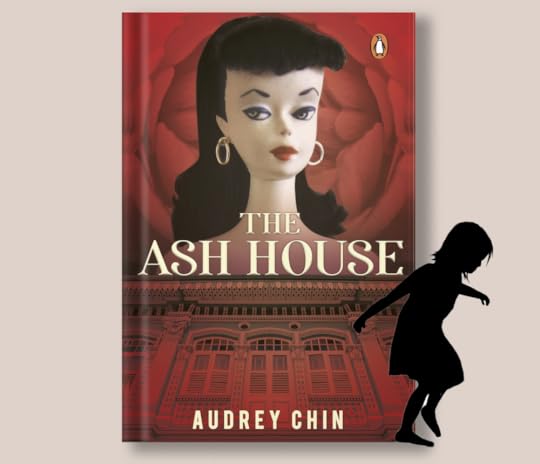
The Ash House made it's debut in August 2021. The Diva went on zoom and talk shows, had a blog tour and received 4+ stars on Goodreads. But, despite the warm response a big hit she was not!
It was a little disappointing, but what was I to do. I'd a new MS to work on. Then, a fall which put paid to any attempts to write paragraphs. I decided to let the story and her characters find their own way. And, they have.
It's always surprised me how stories find their audiences.

At Singapore Writers Festival 2022 the diva ended up on "If i had more than 24 hours a day", an event panel co-produced by independent comics publisher Difference Engine. Moderated by award winning podcaster/writer Wayne Rée and cartoonist/game creator Charsiew Space Benjamin Chee, it featured panelists playing an interactive choose-ur-own-adventure computer game ... One of the least likely SWF panels i'd imagine the Diva appearing at. yet there i was, channeling her amidst a bunch of creatives whose wonderful work had come my way by pure chance... or... if you like... serendipity.
There was Suffian Hakim whose sharply incisive and incredibly funny parody Harris Potter and the Stoned Philosopher i picked up randomly at Kino because my daughter's friend's husband said to give it a go. i've been a fan since!
And then Wayne Ree whose twice monthly Thursday Ghostmap podcasts I've become addicted to, and whose zany comic prose work with Benjamin Chee I am now enjoying. The connection with Wayne was first made by SingLit Station at The Ash House's first public reading in 2022 and then when Difference Engine sent me the new Ree/Chee Work Life Balance, a couple of months ago. I've no idea why comics publisher Difference Engine might think a writer of literary fiction would fall in love with that m.s. But they did. Hence, my discovery of a new genre.
To be fair, I didn't see playwright Nessa's Anuar's Dayak Days or Riders Know When It's Gonna Rain. But the titles intrigue. And i had badly wanted to go to Rindu Di-Bulan, the 2019 Fringe Festival offering about a Chinese boy adopted by a Muslim woman that was produced by Nessa's theatre art collective Rupa co.lab. Meeting Nessa on the panel has sparked my interest in that form of story making, if not as a creator certainly as a more active theatregoer.
So in sum, what am I trying to say?
First - It seems stories make their way as they will. We, story makers, simply have to let them go wherever, whenever. And, if unbidden, a story finds its way to us, well . . . that's a gift to be welcomed with open hearts.
Second - As evidenced by Suffian, Wayne, Benjamin and Nessa, there seem to be an infinite number of ways to make stories. If I'm word-blocked, well . . . There are comics to consider!


September 29, 2022
Time to empty
Healthwise, it's been a crazy year so far. Not a month has passed without a visit to Accidents and Emergencies or an onset of sniffles, all followed by a fortnight in bed.
Now, two weeks after a bout of COVID, I'm staring at another ten days of isolation since husband has just tested positive for a 2nd COVID infection. This is happening 10 days after the end of his first one, and following a course of Paxlovid.
All these visitations has resulted in devastating writers block. I have no words.
As a reader of the Libra Mundi I'm taking this as a sign from the universe to let go and just be. As I cross from 64 to 65, it seems as it it's time to practice eating when hungry and sleeping when tired. To learn how to rest in the bosom of the infinite.
To quote US poet Natasha Oladokun - 'A life devoted to writing shares a distinct commonality with a life devoted to faith; both require periods of waiting and silences, and both require building a relationship with doubt.'
It's time to empty. To wait and see what comes in to fill the holes, To watch for what will emerge thereafter.
I'm looking forward to this :)
August 1, 2022
A Cautionary Tale and Lessons Learnt
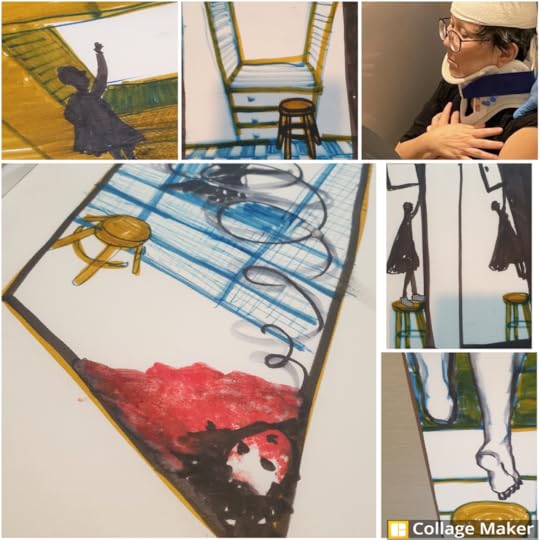
heI haven't been around because . . . Yes, the six pictures tell the whole story. It was a near miss. A head falling from 2.3 meters up in a 120 degree arc and landing 'paapp*' on a hard tiled floor is liable to get cracked. And then there are the neck bones and the oh so fragile spinal cord. Miraculously all these survived my fall intact. There was a lot of blood, but only from a surface cut on my scalp. The hematoma (baluku in Singlish) was huge, but has now shrunk considerably. I'm still getting dizzy when I work too long on the computer or sit in the car for more than 20 minutes. There's still some residual bruising. Otherwise though, I'm ok.
It's something to be hugely thankful for.
And the lessons I've learnt?
No more relying on wonky stools. If I must clamber up somewhere, I shouldn't be lazy. I ought to walk to the store room and get the ladder out. Better still, keep a ladder in the kitchen or ask someone younger to do the climbing for me.
And yes, I'm sending gratitude out to the universe. It could all have been much worse. Someone or some force was looking out for me, for sure.
It was a wakeup call to always be mindful. And to be grateful for my one still precious life and those in it.
How about you? Have you had a close call that caused you to see your life and the people in it with new more appreciative eyes?
July 21, 2022
Writers I read: The formidable Meihan Boey on writing and Asian Gothic
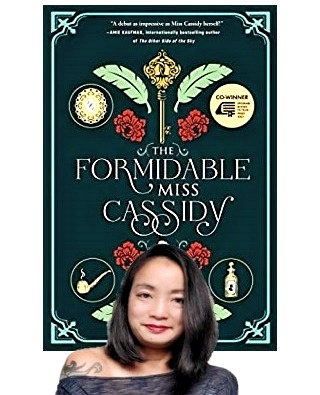
Meihan Boey's 'The Formidable Miss Cassidy' has been making waves. It's the winner of the 2021 Epigram Books Fiction Prize and has just snagged one of 3 spots on the Singapore Books Award shortlist for Best Literary Work.
The novel is a truly delicious Singaporean rojak featuring a Scottish governess who's more than she seems, a British colonial administrator whose daughter needs to be exorcised, a black and white mansion, a Chinese towkay's family home, wild Greek gods and Scottish spirits, and an unlikely romance.
A lot to take on and yet, everything fuses seamlessly into a spooky and engaging romp. No wonder the awards it's garnered. Definitely well worth reading! And what an author as well . . .
I first met Meihan on 'Ghosted: A Seventh Month Date' , a SingLit Station panel to celebrate the Ghost Month. She'd such interesting things to say and I so enjoyed her novel I knew I had to interview her for Writers I Read.
Now that Ghost Month is rolling around again, it seems a timely thing to do. So, here we go - The formidable Meihan Boey!
----------
Audrey: Hi Meihan. Thanks so much for agreeing to be featured in 'Writers I Read'. Could I start off with your beginnings please? What are the earliest inklings you had that you would become a writer?
Meihan: I’ve always known I wanted to tell stories. I was the typical introverted geek kid, always stuck in a book or comic or game, usually horror, fantasy, scifi, or what we now call ‘magical realism’.
I wrote my first ‘book’ when I was about 9 or 10. It was written on foolscap and stapled together, and I drew ‘illustrations’ too! It was about a doll who left her dollhouse at night, and got lost among the spiders and insects. Now I think of it, it was probably kinda gothy for a 9 year old to write, but I was always drawn to spooky things!
Audrey: But you weren't quite ready to be read then . . .
Meihan: No. I was very possessive and private about my scribbling. Although I kept so many diaries full of rambling stories I never let people read them. (I remember being very angry when my parents found and read my first 'book', a doll story!).
Audrey: Still, your writing journey has always flowed smoothly hasn't it?
Meihan: I never have problems with producing writing, in that I’ve never had ‘writer’s block’. I struggle with the complete opposite - reams and reams of enthusiastic writing (mostly overwrought descriptive passages which go on breathlessly for pages) which took me easily 20 years to learn how to calm down and edit effectively.
The biggest manuscript I ever finished was this crazy 600,000 word fantasy story, which I still have, printed single spaced, font 10, double sided, in a huge ring binder. I love it still, though it’s totally a wild mess, but elements of most things I now write have origins in this whopper of a failed manuscript.
Audrey: Tell us a bit about these pieces that are now published, and how they developed into your work with comics, your sci-fi novella The Messiah Virus and then the very wonderful Ms. Cassidy?
Meihan: It wasn’t really a shift - I have mounds of manuscripts and stories in both sci-fi and fantasy, and I submit a lot of short stories to indie presses and online zines. Most of these are within the horror, scifi and fantasy genres. I’m also a comic book scriptwriter, and all these genres tend to flow into one another in comics, where ‘genre’ isn’t such a fixed boundary.
There are elements that both Messiah Virus and Miss Cassidy share. Primarily, they both deal with ideas of what a ‘woman’s world’ is (Messiah Virus much more directly), and they both tackle the idea of what makes an entity masculine or feminine, god or monster, and what lies between the two.
Audrey: As a writer of Asian Gothic, I'd consider Ms.Cassidy an Asian Gothic ghost stor y myself. However, others have labelled it a 'comedy of manners'? What do you think? Or do you just write without giving a damn about genre?
Meihan: I actually love the idea of calling myself an ‘Asian Gothic’ writer!
I do actually pay attention to genre. Having been a bookseller for many years, I do know that it helps out both publishers and bookstores if you already have a reading audience in mind, and genre is the most efficient way to get your story to those you know will enjoy it most. It informs things like the book cover design (Epigram did a fantastic job) and appropriate placement in the bookstore.
Miss Cassidy deliberately draws from multiple genres, and both gothic traditions and the Victorian ‘comedy of manners’ are in there. She also has elements of historical fiction (albeit of a wildly alternate-universe sort) and, of course, a heavy dose of magical realism. I’ve by now met quite a lot of people who loved Miss Cassidy, and they are 100% of my tribe, so Epigram and I got something right!
Audrey: For sure! I think part of Ms. Cassidy's appeal is the layering of nusantara and foreign influences, for example the incorporation of Scottish seal spirit (selky) beings and Greek myths. I'm especially intrigued with the Scottish connection. Why?
Meihan: My husband is Scottish!
But, even before this nice convenient reason to return to Scotland every year I’ve always been fascinated by the history of the British isles, and of Europe in general.
Some of the most pervasive (and terrifying) fairytales we know are from this region. I studied the occult, and occult religions based in Europe (largely circa Roman Empire, since you can’t have ‘cults’ unless there is a recognised official state religion to be different from), and this is an onion that never stops peeling open. I think it started with my reading The Mists of Avalon when I was a teen - the most interesting family were from Lot and Orkney (Gawain, Gareth, Morgause etc), which are now northern Scottish islands, and which are still quite different from the rest of the UK.
Some of the oldest human settlements ever discovered, like Skara Brae, are from this region. There’s also a very strong Viking connection, and that’s always fun.
Audrey: Okay. So I get that Ms. Cassiday is from your particular personal link and stories you like. But what about your own experiences. I, for example, write ghosts stories because I've been visited by them. Do you believe in ghosts?
Meihan: I believe that ghosts are possible, that it is possible for something to persist after the mortal body is gone.
That said, I do think that 90% of ‘ghosts’ and ‘ghostly activity’ are not real. But the remaining 10%, well… who knows?
Audrey: Who knows indeed? Would that be a question you'll be exploring next? What else do we have to look forward to?
Meihan: I’ve just finished a sequel, which has made its way to Epigram; fingers crossed it will be in some decent shape for 2023’s publishing schedules! On a cue given by Jason, my editor (also an author himself, Jason Erik Lundberg), we’ll explore a little bit of Miss Cassidy’s past, and how/why she ended up in Southeast Asia as a governess. Three characters are ghost-seers (Mr Kay and his twin daughters) and they see some startling things this time.
Audrey: Sounds like something I'll be standing in line for Meihan. Mr. Kay is such a sweetie and I definitely want to see what's next for him and Miss Cassidy.
Meanwhile, thank you for this interview Meihan. And for those who've not read The Formidable Miss Cassidy, do have a go at it.
As for everyone who has read it and loved it don't forget to vote for it in the Readers Choice Award and get the chance of winning SGD 300 at - https://www.surveylegend.com/survey/-N4o1uOi6Pm-B42pAyub--------------------------------
Audrey Chin is an award-winning Singaporean writer whose work explores the intersections of culture, faith and gender. She believes in the imponderables including love, god and ghosts AND she's an omnivore when it comes to books. Her latest book, The Ash House is about the plight of poor women in rich houses and features two foreign domestic workers. Proceeds from sales will be shared with HOME.She is writing a sequel about mothers who die at childbirth and still-born children. You can read about her other books here, and buy The Ash House here .
July 4, 2022
Books I read: My take on some best-sellers from my to-read pile
Some best-sellers are on the lists for a reason. And then, there are the others. Here's the lowdown from my to-read pile.
These 2, I truly enjoyed: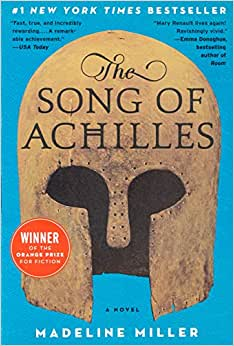
The Song of Achilles, Madeline Miller's riff on the Achille's legend is narrated from the viewpoint of Achilles' companion/lover Patroclus. The work focuses on their relationship from their meeting as pre-pubescent boys through to adulthood and their tragic ends. Seen from this perspective, Achilles is not the arrogant hero of the Greek myths, but relatably human, and oh so young!
Miller' brings the petty rivalries and political elbowing of Greek kings to life with clean spare prose. She gave me a whole world in a way neither Ovid's Metamorphoses nor the Iliad managed to.
Be engaged and then heartbroken by this story of two boys become men, two lovers who can't escape their fates.
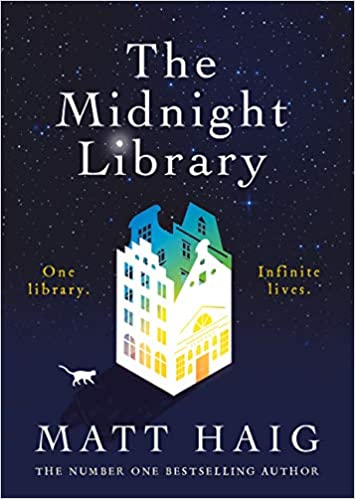
In Matt Haig's The Midnight Library, protagonist Nora is given a chance to undo her regrets with a taste of all the lives she did not choose.
This looked like a typical loser gets a chance at redemption story. However, Nora was portrayed so empathetically that she became a character to root for. And then, there's the plot twist at the end. It turns out, it's not really about picking another life out of a box. Instead ...
You'll have to read on to find out I guess.
A lovely story with a quiet ending that's entirely satisfactory. No wonder it's a best seller.
Then there were the 3 critically acclaimed authors whose books I just couldn't get into:Chang Rae Lee's My Year Abroad, Patricia Lockwood's No One is Talking About This, and Elif Shafik's The Forty Rules of Love.
[image error][image error][image error]What can I say? It must be me.Perhaps, I am just too much of a middle-brow. Easily fazed by irony. A little wary of that which is too smooth and too sweet. Please don't let my 'did not finish' stop you from having a go at these three books.
Chang and Lockwood are irony filled excursions into the excesses among Asia's private equity investors and the virtually real world of a social media personality. Elif Shafik offers a mellow look at a suburban wife's long distance romance with an itinerant photographer and an introduction to the teachings of Rumi, the much popularized Anatolian poet and philosopher. In their own ways, they allow entrees into something other than our here, and our now.
All three have been well received and sold well.So do have a go at them. Then tell me what you think.
------------
Audrey Chin is an award-winning Singaporean writer whose work explores the intersections of culture, faith and gender. She believes in the imponderables including love, god and ghosts AND she's an omnivore when it comes to books. Her latest book, The Ash House is about the plight of poor women in rich houses and features two foreign domestic workers. Proceeds from sales will be shared with HOME.She is writing a sequel about mothers who die at childbirth and still-born children.You can read about her other books here, and buy The Ash House here .
June 28, 2022
How a catholic feminist embraces both questions and creed?
 I'm conflicted.
I identify as a practicing Roman Catholic. That means, I share spiritual sisterhood with some of the judges who overturned Roe vs Wade in the USA and with some of the people worldwide who celebrated that judgement on 24 June 2022.
I'm also a feminist. Like my sisters-in-arms around the world that day, I was grieved and angered at how, with 5 signatures, a woman's right to take responsibility for her life and that of her unborn child was erased.
Blame or credit it to the church, I'm personally queasy about the idea of abortion. But I've never had to face circumstances where I would feel compelled to consider abortion as an option, let alone a necessity. Suffice it to say, I'm privileged. I've never been denied access to contraception. I've never had a partner who forced unprotected sex on me. I was not a physical risk while pregnant. I did not have to contemplate raising a child with limited funds or one with debilitating issues. Add to that a perhaps inexplicable trust in a god whom I believe cares about me and knows best and I can only say - Who am I to judge what another woman in far more difficult circumstances might do. Indeed, what might I myself contemplate if pushed out of my circle of privilege? Whatever my personal feelings, I must stand for a woman's right make her own choices, for herself. And yes, for her child.
How do I embrace both my creed and my questions?My faith and my feminism are both part of me. It can't be 'either/or'. Either pro-life or pro-choice. There must be a way through.If we were truly anti-abortion, we would be looking at how to prevent unwanted pregnancies in the first place.
We would be talking to both boys and girls about teenage sexuality. We would be highlighting the role men play in pregnancies and advocating for greater male responsibility for pregnancy prevention. We would be campaigning for less social stigma and more financial and social support to women who choose to carry their babies to term and become single mothers.
The answer must be 'both/and'; both pro-life and pro-choice . . . The life that is already in the world and with the capacity to choose, that of a woman who must live with her choice . . .Abortion is not simply about ending the life of the unborn child. More than anything, it is about the life that an expectant mother has to look forward to, with or without her child. Removing the constitutional right to abortion alone does nothing to address these forward concerns of the expectant mother. To the extent that the Supreme Court judgement drives desperate women to back-street abortionists or forces them to birth children into an unwelcoming world, it is actually profoundly anti-life.
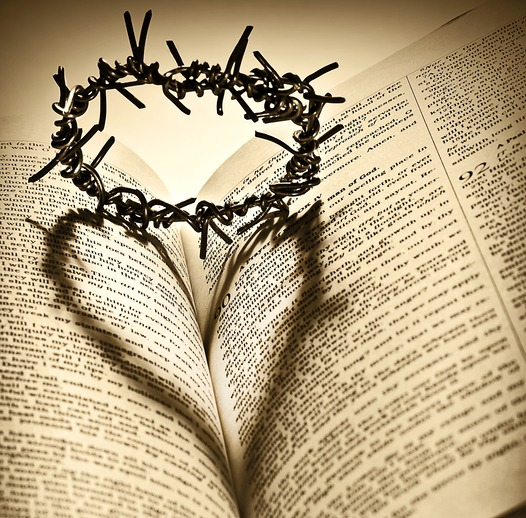
I'm not sure I'm right. I do know that my straddling both positions won't endear me to true-blue feminists nor Right to Life advocates. But I feel better for having written this down and sharing it.I'm reminded that in the church calendar, aside from that terrible ruling, it was the Feast of the Sacred Heart on 24 June 2022 too. According to those in the know, it's a feast to commemorate 'the mystery of the love of god for the people of all times'. Everyone. Those contemplating abortion. Those administering the procedure. Those ruling against the procedure and those celebrating the ruling, yes them too. Everyone. And me too. Even me in all my confusion.
Everyone? Really? Even 'them'? Hard to accept isn't it?
Sometimes though, when life is complicated, its best to simply sit with the contradictions, to acknowledge our questions even as we hold on to our creed.Do you feel conflicted about the Supreme Court's decision?
What do you do when you feel torn by two parts of yourself?
Do Share
-------------
Audrey Chin is an award-winning Singaporean writer whose work explores the intersections of culture, faith and gender. She believes in the imponderables including love, god and ghosts AND she's an omnivore when it comes to books. Her latest book, The Ash House is about the plight of poor women in rich houses and features two foreign domestic workers. Proceeds from sales will be shared with HOME.She is writing a sequel about mothers who die at childbirth and still-born children.You can read about her other books here, and buy The Ash House here .
June 15, 2022
Today is International Domestic Workers Day: Does Anyone Care?
 Just in case it slips our collective minds, here's a reminder - June 16th is International Domestic Workers Day. It's been over a decade since the day came into being. Here's why we should care.
Because -
Domestic work is work and domestic workers, like other workers, are entitled to decent work.
Because -
International Domestic Workers Day celebrates the International Labour Organization's adoption of the Domestic Workers Convention, 2011 (No. 189), a treaty agreed in Geneva by ILO government, worker and employer delegates to offer specific protection to domestic workers by laying down specific rights and principles and stating a series of measures needed for decent work to be a reality for domestic workers.
Because -
What's not to like about the treaty?
The treaty affirms the promotion and protection of the human rights of all domestic workers, including the fundamental principles and rights for (1) freedom of association and the right to collective bargaining, (2) elimination of all forms of forced compulsory labour, (3) abolition of child labour, and (4) elimination of discrimination in respect of employment and occupation. It calls for effective protection against all forms of abuse, harassment and violence, and for fair terms of employment and decent living conditions.
With regard to fair terms of employment, the Treaty addresses the communication of terms and conditions of employment to domestic workers in a transparent manner, the regulation of work hours (including weekly rest periods of at least 24 consecutive hours) and the manner in which salaries should be paid. In particular the Treaty notes that fees charged for employment agents are not to be deducted from a domestic worker's pay.
For the convention to work, it needs to be actionable. This means ILO member countries formally ratify the Treaty to signify commitment to implementing Treaty obligations and to report periodically to ILO on measures being taken. After ratification, ILO would expect committing countries to extend or adapt existing laws and develop new measures for domestic workers.
Domestic Workers Recommendation 201, which was also adopted at the ILO Conference in 2011 provide practical guidance regarding possible legal measures and policies to be implemented.
Because -
It's been nearly 11 years and we've done pretty much sod-all as a world, and as Singapore.
Despite such laudable goals, only 35 countries out of the 183 ILO member countries have ratified the treaty so far. Despite having more than a quarter million migrant domestic workers in Singapore, we are not one of the ratifiers.
The situation is shameful.
For an excellent summary of where Singapore was at in 2020 (and probably largely unchanged in the last two COVID affected years), please read the 2020 International Domestic Worker's Day Statement by Singapore's Humanitarian Organization for Migration Economics (HOME) here.
Please also refer to their June 2021 Report on Overcharging and Deceptive Practices in the Domestic Worker Recruitment Process here, and their August 2021 statement on new measures for the Well Being of Migrant Domestic Workers here.
Reports and statements aside there's the anecdotal evidence: trafficked youngsters, bonded labour, debts owed to employment agents, domestic workers who are beaten, starved and sexually abused, others who are made to sleep in bomb shelters or under the staircase, those who have their mobile phones taken away from them, those who've never had a day off... The list goes on.
We can't deny we haven't come far enough. Not in the world. Not in Singapore.
Because -
It's time to be pushed into action!
Let's begin at home and consider what working conditions are like for the domestic workers we hire. Are they fairly paid, adequately housed, and given proper days off? Could we be doing better.
Let's hold our employment agents to account. Let's be clear to agents the working conditions we will offer, no matter what they suggest. Let's say we will pay all recruitment fees and not make deductions for recruitment fees from our helper's salaries.
Let's support those who advocate decent work for domestic workers. For a start, why not contact HOME here to see how you can help.
Let's hold our government into account. Ask questions. For example - Why aren't domestic workers covered by our employment act? Why aren't domestic worker's rest days monitored? Why are agents being allowed to enforce loan repayment deductions on workers instead of employers, in effect turning domestic workers into bonded labourers for at least the frist six months of their contracts? Why is the Foreign Workers Levy going into an anonymous government fund instead of into a pension plan for domestic workers... And so on.
What else would you want to ask? Do share.
----------------
Audrey Chin is an award-winning Singaporean writer whose work explores the intersections of culture, faith and gender. She believes in the imponderables including love, god and ghosts AND she's an omnivore when it comes to books. Her latest book, The Ash House is about the plight of poor women in rich houses and features two foreign domestic workers. Proceeds from sales will be shared with HOME.You can read about Audrey's first introduction to HOME through her friend Karien Van Ditzhuijzen here , and buy The Ash House here .June 10, 2022
Books I Read: Some stuff I took off my to-read pile (1)
I've been offline recently, and wonderfully productive as a consequence!
Here's part (1) of the list I took off my to-read pile, with notes on whatever wisdom I've gleaned. Hopefully, you'll have a more profitable time with the gems and avoid some of the duds.
SingLit YA
I don't usually read YA, but I'm so glad I took a chance on these two debuts by fellow Penguin Random House authors Leslie W. and Joyce Chua.
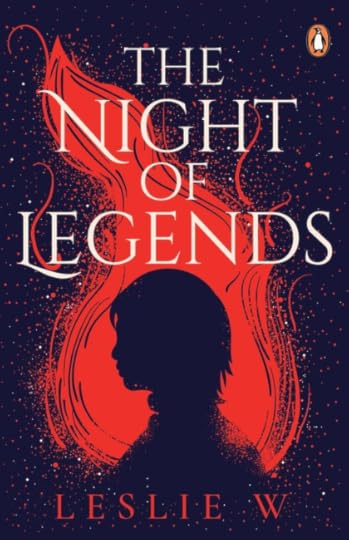
Leslie W's The Night of Legends is an action-packed adventure story set in a dystopic world controlled by secret government forces and contested by enigmatic Ifarl mystics, nasty smelly trolls and ravaging hungry ghosts. Featuring Keix, a bad-ass girl special trooper who's been betrayed by the organization she trusts totally, the story-arc has interesting parallels with real-life societies where undying loyalty is demanded of it's citizens. Well worth a few non-stop hours.
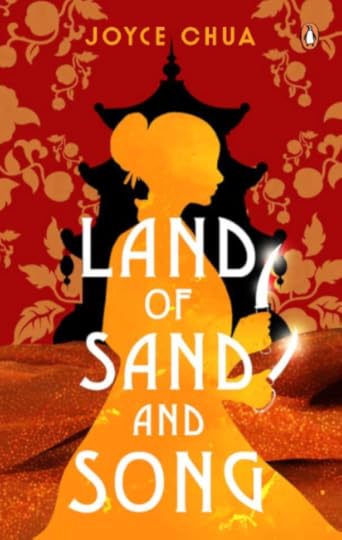
Land of Sand and Song by Joyce Chua also features a spunky girl protagonist. Drawing from East-Asian palace dramas and wu-xia, the plot also incorporates morphing spirit-creatures, and a developing love triangle between two handsome princes and the water-taming heroine. The multi-layered work is not just a tale of a desert girl in a fantasy world, but also a metaphor for current culture wars and fears about technology. Another book worth spending non-stop hours on.
Books about the brain and body in the world
This set of reads are a follow-on from the brain-body books I'd blogged about in December. And, as with the last set, I've mixed feelings about this bag.
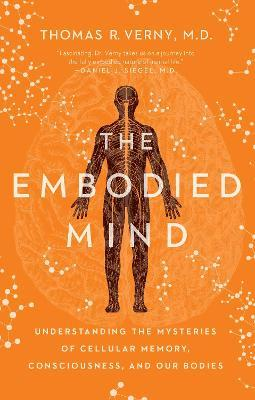
I'd started reading about the two part brain, the four part brain, and then a how-to on whole brain living. Thomas Verney's The Embodied Mind takes the argument one step further, with a compelling thesis that consciousness does not just reside in our brains, but in all our cell systems; i.e., our body thinks. This was quite comforting for someone like me, whose brain cells are supposedly in terribly condition. A bit technical and hard-going. Not sure if it was worth the effort.
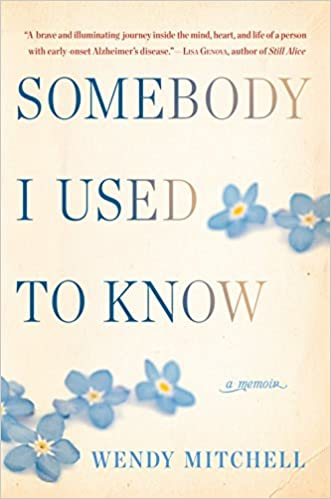
In contrast to Verney, Wendy Mitchell's Somebody I Used to Know is a layperson's book recording the author's challenges as she tries to maintain her functionality despite the onset of dementia. I appreciate the straightforward language and found the author's matter of fact descriptions of her problems moving house and preparing herself to give speeches extremely affecting. I wish I could have read this as my mother slipped into dementia. I'm glad I've now read it for myself.
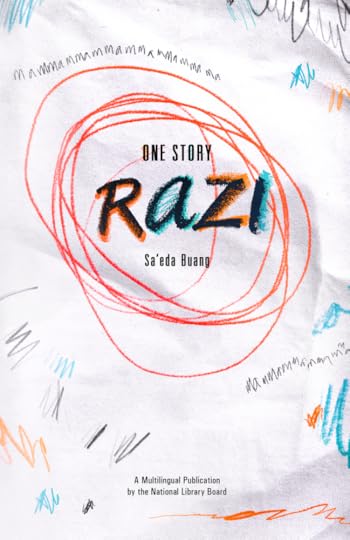
Originally in Malay Sa'eda Buang's Razi has been translated into Tamil, Chinese and English as part of the National Library Board's One Story initiative. A disturbing narrative about the difficulties faced by a mother of a special needs (autistic) boy who is not accepted by society and how she unintentionally ends up harming her child that offers a useful perspective on how knowledge and understanding is crucial if we want to integrate 'dif-abled' persons into society.
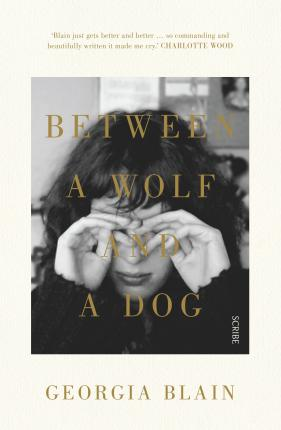
And the last one of this lot is Georgia Blain's novel Between a Wolf and A Dog. I'd bought it because it was purportedly about a movie-maker with brain cancer who decides to end her own life before the cancer does, and, because Georgia Blaine herself was diagnosed with a brain cancer in the middle of the book's final edit. Rather illogically, I'd therefore expected the book to provide me with an epiphany about how to let go of life when one's brain is going kaput. It didn't.
Blain's book is a beautiful work filled with luminous prose. It clearly deserves to win all the literary prizes it did. Read it for it's sensitive rendering of family relationships, flaws and all. Read it to be encouraged by the possibility of forgiveness even amidst the worst betrayals. But, no, don't expect it to offer any tips on how to confront the end stages of a brain disease that's allowed to go all the way to it's natural end.
What do you think? Did anything jump out at you from this lot?
No worries if nothing did. There'll be more book notes coming up in my next post. Till then, sleep tight and don't let the bed bugs bite.
__________
Audrey Chin is an award-winning Singaporean writer whose work explores the intersections of culture, faith and gender. She believes in the imponderables including love, god and ghosts AND she's an omnivore when it comes to books. Buy her books here .January 6, 2022
Books I Read: Exploring our fascinating four faceted brain
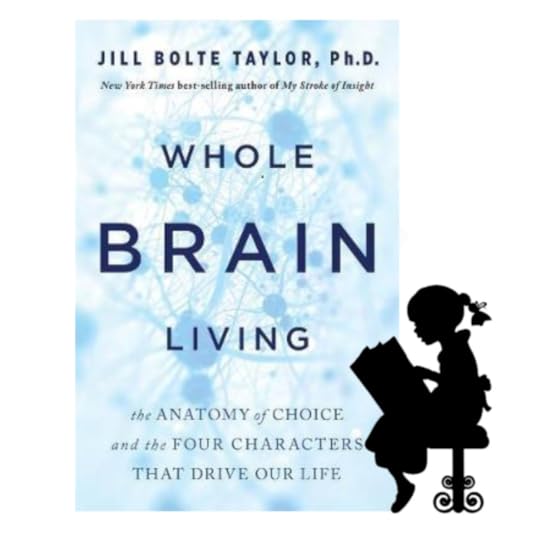 Of the recommended readings I've received on the mind/brain connection, this
Whole Brain Living
has been the most rewarding by far.
Of the recommended readings I've received on the mind/brain connection, this
Whole Brain Living
has been the most rewarding by far. I'd say it's a layman targeted must read on the workings of the brain, offering a practical approach to managing our conflicting brain signals. As a bonus, there's an interesting hypothesis on the brain/spirituality connection are linked and observations on how the developing 21st global-techno consciousness may prove to be both a boon and a danger.
The author of the book is Jill Bolte-Taylor, a Harvard neuro-anatomist who experienced a severe hemorrhage in her left brain hemisphere which caused her to lose the ability to walk, talk, read, write or recall any of her life. Her first book, My Stroke of Insight, documents her experience of the stroke and subsequent rehabilitation, focusing on her discoveries about how the different parts of the brain contribute to normal human function. In this book, she uses her insights from that experience to develop a framework she believes will be helpful for the rest of us. As such it has the feel of deep knowledge and authentic lived experience, something I'd definitely go by.
Here's a quick summary of what I learnt:According to Bolte-Taylor, when we think about the brain, we shouldn't just be thinking about a left and right hemisphere joined by a corpus callosum that allows communication between the two. We've to also take the intra-divisional between the cortex and the limbic systems (mainly amygdala, hippocampus and gyri) account. We can loosely think of the left frontal cortex as the thinking, organizing, executing part of the brain that keeps our lives organized and on tract. The two limbic systems take in and process our experiences of the outside world. The left limbic system is the watchful emotional center which can express grief, anger and other forms of woundedness as well as conditioned happiness. It stores memories of previous trauma and will compare new experiences to previous ones and will sound alerts if we are in danger of being wounded in the same manner again. The right limbic system is on the lookout for novel and exciting experiences. It will process these input as a 'now', without reference to the past, and as a whole instead of in specifics. This limbic system is where in the moment 'joy' is felt.
According to Bolte-Taylor the right frontal cortex is the silent center of unconditional love and our link to cosmic consciousness. It is usually inhibited by the doing/planning left frontal cortex, and will only come to the fore when when we are not planning and analyzing or replaying our reward and punishment circuits or our experiences of grief and angst.. IN support of this, she offers the factlet that MRI scans of monks and Franciscan nuns show that the heightened spiritual states attained while they are meditating or praying occur when the left hemispheric brain is at rest.
Bolte-Taylor also runs through a qualitative analysis of how the American brain may have changed over the last hundred years due to changes in socio-cultural and technological factors. For example, the generation born in the first quarter of the 20th century did not have much formal schooling, tended to live in smaller agriculture based communities with strong linkages to religious institutions and suffered the trauma of the first and second world wards.. They would probably have used all four parts of their brains in a balanced way. The baby-boomers were more educated and tended to work in factories and with machines. They also grew up in a time of plenty in mostly intact two-parent families. Their life styles hence favored the development of the left cortex and right limbic system.
The children of baby-boomer were the first generation brought up with electronic media. They would have used experiential machines (TV and speak and spell programs) to learn how to read and write, being the first humans to learn left cortex functions with the experiential right limbic system. Socially, many would have been brought up by absent parents or in single parent families, forcing them to rely on their own left-brain executive functions to manage themselves at a relatively early age. Emotional trauma may also have been experienced in dysfunctional families where children were left to fend for themselves, causing the left limbic system to be highly sensitive. This is also a time when the the right frontal cortex, which might have been ignored previously in the materialistic 1950s and early 1960's comes back to the fore, with the rising interest in 'new-age' and alternative spirituality practices.
Bolte-Taylor then moves on to the 21st century. She notes that we are now seeing the rise of a global techno consciousness. Our human brains are now working consciously with our tech devices, which monitor our biological status, provide social connections, therapeutic interventions for our wounded psyches and programs to feed our spiritual needs. According to Bolte-Taylor, this is both exciting and terrifying. Our brains operate on a negative feedback system, whereby too much of anything in one hemisphere is inhibited by the functions of the opposing hemisphere. For example, we cannot get too lost in meditation because the right limbic system will feel hunger, which the left will process as being dangerous, hence prompting the right frontal cortex to worry about making dinner. Homeostasis is restored. Technological systems, on the other hand, tend to have positive feedback. Computer games and training programs trigger a buzz which encourages us to continue in the same activity, leaving us vulnerable to exhaustion and addiction.
For a reader of little knowledge when it comes to the brain, that's a huge amount of food for thought.
Here's what irked me, albeit only a little:This is a self-help book. It sells a practice called the Brain Huddle, which encourages us to pause and breathe, recognize which part of our brain is currently being active, appreciate it's contribution, inquire what all four parts of the brains make of the situation, then navigate through it using the whole brain contributions. That's a pretty useful thing to do, but she does throw the label around too many times and it is irritating.
Bolte-Taylor is an American mid-Westerner. This book is targeted at the layman. She does therefore use very obvious US sports metaphors, for example the Huddle and the collective consciousness of euphoria when a baseball team wins.
I suppose her left frontal cortex has an agenda and a target audience in mind. Now if only she'd listen to her right brain and reach out wider.
All in all though, despite these quibbles I'd say, dive into this book. You'll come out refreshed.My own takeaways are as follows:In my day to day activities, I am stopping to breathe, recognize, appreciate, investigate and navigate when I remember to.
In my writing, I'm accessing the different parts of my brain to write different characters. What for example is a wounded angsty teenager's take on his father's new wife versus the feelings of his sympathetic aunt or his in-the-moment hippy older sister?
Have you ever ventured to write from the different parts of your brain? Would it be wroth your while to read this book to figure out how to do this? Audrey Chin is an award-winning Singaporean writer whose work explores the intersections of culture, faith and gender. She believes in the imponderables including love, god and ghosts AND she's an omnivore when it comes to books. Buy her books here .
December 30, 2021
Books I Read: Everything and more about the two sides of our brains
To be honest, I've never given much thought to my brain and its workings. I'd quit biology after Secondary 2 because the next part of the syllabus involved earthworms and their innards. If not for the terrible patches of deep white matter hyperintensities on my brain scans, I'd have been quite comfortable being ignorant about the workings of those globs of grey matter inside my skull.
To me, the brain was a sort of CPU that regulated my b
ody's automatic functions and made it possible for me to sort through my sense perceptions, store them in some meaningful fashion and then retrieve them when I needed to plan or analyze something. Like all machines, it would work less efficiently over time. And then, there would be the day that it would not, and I'd be dead. Nothing else needed to be said. Or asked.
The reality of vascular damage and the gradual dementia, however, raised urgent questions:
- What had happened and why?
- If I couldn't improve the situation, how could I at least stabilize it?
- And if things did fall apart, what would be left of the walk and talk and thoughts that the brain had been orchestrating inside this embodied 'me'? I wouldn't be dead, but then what?
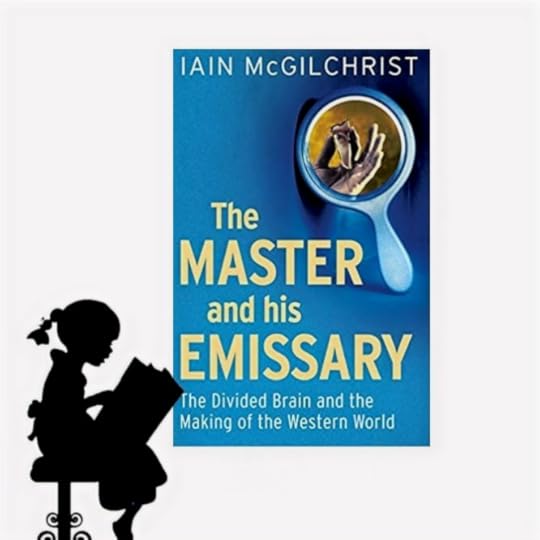
It was time to learn more. Hence, The Master and the Emissary: The Divided Brain and the Making of the Western World by Iain McGilchrist.
For a neophyte, Iain McGilchrist's The Master and the Emissary: The Divided Brain and the Making of the Western World is a dive into the deep end. The book's thesis is that the hemispherical differences in brain function matters. We are determined by how we see the world, and how we are affects the world we interact with. As such it's important to understand how each of the two brain hemispheres function, and then, to consider how the dominance of one over the other may have affected society.
As the author is a psychiatrist, writer and former literary scholar, he draws on neuroscience to explain how the two hemispheres of the brain work in functional opposition to each other. and then goes on to demonstrate his case through a review of Western cultural history.
I found the first quarter of the book instructive and well worth reading.
This is the part that references the results of imaging and case studies on the functional outcomes of patients with brain damage to illustrate the different ways in which the two hemispheres of the brain process, record, store and express our lived experiences. I learnt that the widely accepted generalization that logic and language are processed in the left brain and images and emotions in the right, is too crude. Each hemisphere is involved in everything. The point is that they do it differently. Left brain processes are focused and outcome driven. The left brain categorizes facts and creates representations. It wants to argue and present these representations The right brain looks at the overall terrain, paying attention to what is new and outside its usual frame of reference. It will record experiences and create metaphors. It is silent, but in it's silence is a knowing which the left brain would do well to acknowledge.
Many of McGilchrist's critics have found the linkages drawn from the data tenuous, and his description of brain functions/processes/modes/systems muddy. Perhaps. I lack the context or knowledge to make any kind of assessment. However, I thought it was a pretty useful working hypothesis to use when thinking of how I might be thinking and what I might be missing by ignoring the silences behind my usual brain chatter.
The rest of the book can be skimmed or totally skipped. This is where McGilchrist anthropomorphizes the two hemispheres to demonstrate that the left brain has a tendency to dominate and how this is not good through a review Western cultural history from 600 BCE. Turning left and right brains into warring characters is unnecessary as all the points about the functioning of the two hemispheres have already been made in the first quarter of the book. As for the historical review . . . the author's critics are right that the conclusions are rather sweeping. I left with the impression - So okay . . . The guy knows a lot, but rather like the left brain which he tends to criticize, he has a tendency to confabulate.
I'm definitely in two minds (hahah!) about posting this review.In left brain cost-benefit analysis terms, I really didn't get the value expected from the time I spent on the tome. But my big picture right brain does like exploring new territory. And I've been thrilled to be introduced to the treasures of my usually silenced right brain. So, here goes . . .
I'm pressing the publish button.What would you do if you had a reading experience like this?
And would you still read this book after my review?
Audrey Chin is an award-winning Singaporean writer whose work explores the intersections of culture, faith and gender. She believes in the imponderables including love, god and ghosts AND she's an omnivore when it comes to books. Buy her books here .