Holly Bargo's Blog
November 14, 2023
Marketing begins before the book is published
Marketing is a crucial part of author success, at least on a commercial basis. When aspiring authors inquire about the publishing process, marketing is often the last thing on their minds. They're too focused on actually producing a book.
I understand that, because without something to promote, there doesn't seem to be much sense in marketing.
That "book first, marketing later" approach may work for the first book and maybe even the second, but after that, an author better have a marketing strategy in place to build awareness, generate demand, and sell books.
Personally, I dislike marketing, even though I do understand that it's essential for commercial success. I don't understand its many facets. I know what I'm willing to do, some of what I should do, and little or nothing of what else I should do. The heavy hitters in marketing base their strategies and tactics on data. Data-driven marketing is here to stay, and the marketers who understand how to acquire and analyze that data generally get the best results.
The operative word in that last sentence is "generally." Nothing holds true 100 percent of the time.
When I respond to a question about publishing, my responses often list an abbreviated series of steps to produce a book. Marketing comes last. I don't list it as the last step because it is the last step, but because it's something to be started before the book is published and continues long after the book is published.
As soon as the book is published—and sometimes before if the writer has been posting about the manuscript—book promotion offers begin to flood the author's email account. Most come in two basic varieties: one-shot wonders and unrealistic promises.
The one-shot wonders cater to those authors who don't know what will work and want to try a variety of tactics on a low budget. These usually consist of social media blasts along the lines of "We'll promote your book to 50,000 avid readers across our 10 Twitter (X) accounts for only $39!"
Sure, for an inexpensive price like that, you'd think it's worth giving it try. What you don't know is who those readers are. Do those accounts even exist? If so, are the account holders readers of your genre? There are other questions to be asked and which never get answered, but you've got the gist.
Unfortunately, even though the one-shot wonders fulfill their promises to blast your promo to their tens of thousands of addresses, you're lucky see a small, short-lived uptick in sales. The royalties earned from that won't cover the cost of that one-time promotion.
The unrealistic promises made by other book marketers identify them as scams, even though their pitches are designed to appeal to an author's desperation for validation and book sales. Those marketers, too, often use short-term, one-off social promotions that yield much less than anticipated results.
Let's face it, no book marketer can guarantee sales. A book marketer optimizes and maximizes a book's chances of selling, but it cannot force people to buy the book.
Effective marketing arises from a robust marketing strategy that encompasses sustained activity including (but not limited to) advertisements, social media promotions, in-person engagements, reviews, newsletters, blogs, and quality.
Yes, quality.
Remember, these are generalities. I've had a one-stop wonder generate amazing results for one book. One book. I've made other such efforts that amounted to exercises in futility and wasted time, effort, and money. The high likelihood of failure is sobering, disappointing, and discouraging.
The effort and expense of marketing make earning a profit through writing difficult. That's one reason why I discourage people from pursuing book publishing if their main motivation is quick money. The reality is that most authors don't make money. In fact, I've read that fewer than 90 percent of authors realize more than $1,000 in royalties annually.
Yes, there are authors who earn six-figure incomes in royalties. It's possible. I remember coming across one who earned $175,000 in royalties and spent $150,000 on marketing. The pay-to-play nature of publishing might not be fair, but that's the business. Those authors who treat publishing like a business are the most likely to see profits.
Publishing is the very opposite of get-rich-quickly-and-easily sort of scheme. If you want to publish a book, do so for reasons other than filthy lucre ... and do it right so that profit might come.
I understand that, because without something to promote, there doesn't seem to be much sense in marketing.
That "book first, marketing later" approach may work for the first book and maybe even the second, but after that, an author better have a marketing strategy in place to build awareness, generate demand, and sell books.
Personally, I dislike marketing, even though I do understand that it's essential for commercial success. I don't understand its many facets. I know what I'm willing to do, some of what I should do, and little or nothing of what else I should do. The heavy hitters in marketing base their strategies and tactics on data. Data-driven marketing is here to stay, and the marketers who understand how to acquire and analyze that data generally get the best results.
The operative word in that last sentence is "generally." Nothing holds true 100 percent of the time.
When I respond to a question about publishing, my responses often list an abbreviated series of steps to produce a book. Marketing comes last. I don't list it as the last step because it is the last step, but because it's something to be started before the book is published and continues long after the book is published.
As soon as the book is published—and sometimes before if the writer has been posting about the manuscript—book promotion offers begin to flood the author's email account. Most come in two basic varieties: one-shot wonders and unrealistic promises.
The one-shot wonders cater to those authors who don't know what will work and want to try a variety of tactics on a low budget. These usually consist of social media blasts along the lines of "We'll promote your book to 50,000 avid readers across our 10 Twitter (X) accounts for only $39!"
Sure, for an inexpensive price like that, you'd think it's worth giving it try. What you don't know is who those readers are. Do those accounts even exist? If so, are the account holders readers of your genre? There are other questions to be asked and which never get answered, but you've got the gist.
Unfortunately, even though the one-shot wonders fulfill their promises to blast your promo to their tens of thousands of addresses, you're lucky see a small, short-lived uptick in sales. The royalties earned from that won't cover the cost of that one-time promotion.
The unrealistic promises made by other book marketers identify them as scams, even though their pitches are designed to appeal to an author's desperation for validation and book sales. Those marketers, too, often use short-term, one-off social promotions that yield much less than anticipated results.
Let's face it, no book marketer can guarantee sales. A book marketer optimizes and maximizes a book's chances of selling, but it cannot force people to buy the book.
Effective marketing arises from a robust marketing strategy that encompasses sustained activity including (but not limited to) advertisements, social media promotions, in-person engagements, reviews, newsletters, blogs, and quality.
Yes, quality.
Remember, these are generalities. I've had a one-stop wonder generate amazing results for one book. One book. I've made other such efforts that amounted to exercises in futility and wasted time, effort, and money. The high likelihood of failure is sobering, disappointing, and discouraging.
The effort and expense of marketing make earning a profit through writing difficult. That's one reason why I discourage people from pursuing book publishing if their main motivation is quick money. The reality is that most authors don't make money. In fact, I've read that fewer than 90 percent of authors realize more than $1,000 in royalties annually.
Yes, there are authors who earn six-figure incomes in royalties. It's possible. I remember coming across one who earned $175,000 in royalties and spent $150,000 on marketing. The pay-to-play nature of publishing might not be fair, but that's the business. Those authors who treat publishing like a business are the most likely to see profits.
Publishing is the very opposite of get-rich-quickly-and-easily sort of scheme. If you want to publish a book, do so for reasons other than filthy lucre ... and do it right so that profit might come.


November 7, 2023
The business of romance
Lust in the City 2023 was held Saturday, November 4, at the Comstock Inn & Conference Center in Owosso, Michigan. This second iteration of the event first held last year in East Lansing showed great improvement over the 2022 event, although it wasn't without its problems. Let's be brutally honest: every event has problems. That's the nature of the beast.
The event began on Friday evening with author "speed dating" for VIP members during which no books were sold or even evident in the room. The interesting idea proved fun. I believe everyone involved enjoyed it.
After breakfast on Saturday morning, most authors set up their tables. This is where the rubber meets the road. VIP attendees received early admission, then general ticket holders and anyone else wandering in off the street. As the event was held in a hotel conference room, the likelihood of anyone wandering in was infinitesimal. However, the organizer did a great job in publicizing Lust in the City and generating awareness. In short, we had a good crowd. Nothing to complain about there.
Lust in the City, as one might surmise from the event's name, focuses on the romance genre. Although not affiliated with the Romance Writers of America, I can see a future alliance with that organization. Several of the participating authors are prolific, as demonstrated by the myriad titles on their tables. Having been previously informed by a merchandising executive that my own table showcasing most of my books that such a display resembled a supermarket shelf, I now only stock a handful of my latest titles. The books I displayed at the event were Champion of the Twin Moons, Knight of the Twin Moons, Double Cut, Russian Revival, and Focus. Usually, I sell more copies of Focus than anything else, but not this time.
In speaking with another author who complained of low book sales the previous month, the topic of business came up. Publishing is a business. This means readers expect and deserve a certain high level of quality. For authors who self-publish, that level must align with the quality put out by the big publishing houses. That generally means spending money, a lot of money.
Self-publishing authors who treat publishing as a business recognize that self-publishing confers upon the author all the responsibilities usually undertaken by a traditional publisher. These responsibilities include professional services and marketing. The author with whom I spoke had attempted to hire a voice actor to narrate her book to produce an audiobook. She posited that having an audiobook would increase book sales.
This is where the negotiation failed. The author did not treat the voice actor as a professional, offering a share of royalties of books sold. If you've ever hired a professional service provide, then you know no one works on spec. The pro requires payment of some kind at the time of service, not the promise of potential payment. With the knowledge that the book was already doing poorly (no copies sold in the last month), I fully empathized with the voice actor's decision to decline the project, because a percentage of $0 is $0.
Pros don't work for free unless they're donating their time, skill, and service.
That author also admitted she did little with regard to marketing. This is where numbers mandate a different decision. Over 1 million books are published every year, adding to the tens of millions of books already available. An unknown or little known author who puts out a book or even a handful of books must find a way to distinguish those books from the sheer, overwhelming numbers of other books.
One way is to write to market, sticking to a niche or genre. In romance, that's not necessarily helpful, because romance is the largest genre in terms of sales volume and the numbers of books. It's an ocean, and an unknown or little known author is but a drop in that vast ocean.
Luckily for authors, we can "niche down" within our genres. We may select more specific categories and use keywords to help potential readers looking for literature like ours find our books. It's not a perfect system, but it's better than throwing the into the wilds of the internet and hoping someone will come across it. Savvy authors engage in marketing, too.
When it comes to marketing, I'm not savvy. I know that, so I hire a book marketing professional to take charge of that onerous task. Marketing is a full-time job, a job I cannot take on because I still have to earn an income and still have to write. Book marketing services come in basically two different flavors: social media marketing and advertisements. I find that advertisements work best for my book sales. Yes, this costs money.
Other marketing I do on my own. It, too, often costs money, because self-inflicted marketing includes registering as a vendor at various events throughout the year. That part of the effort has become an intricate dance, sussing out those events that offer a feasible balance between revenue and expenses. I don't always choose profitable events. Other marketing efforts include this blog, an author blog on my author website, and a monthly newsletter (got to get cracking on those!). I also try to post regularly on the social media platforms I frequent. That, unfortunately, is not a sound marketing practice, because I ought to be posting on the social media platforms my readers frequent.
I own my errors, which doesn't necessarily mean that I'll change my ways. However, I do try to treat publishing as a business, because the most successful authors do that. And the only true measure of commercial success is counted in money.
#publishingindustry #selfpublishing #business #henhousepublishing
The event began on Friday evening with author "speed dating" for VIP members during which no books were sold or even evident in the room. The interesting idea proved fun. I believe everyone involved enjoyed it.
After breakfast on Saturday morning, most authors set up their tables. This is where the rubber meets the road. VIP attendees received early admission, then general ticket holders and anyone else wandering in off the street. As the event was held in a hotel conference room, the likelihood of anyone wandering in was infinitesimal. However, the organizer did a great job in publicizing Lust in the City and generating awareness. In short, we had a good crowd. Nothing to complain about there.
Lust in the City, as one might surmise from the event's name, focuses on the romance genre. Although not affiliated with the Romance Writers of America, I can see a future alliance with that organization. Several of the participating authors are prolific, as demonstrated by the myriad titles on their tables. Having been previously informed by a merchandising executive that my own table showcasing most of my books that such a display resembled a supermarket shelf, I now only stock a handful of my latest titles. The books I displayed at the event were Champion of the Twin Moons, Knight of the Twin Moons, Double Cut, Russian Revival, and Focus. Usually, I sell more copies of Focus than anything else, but not this time.
In speaking with another author who complained of low book sales the previous month, the topic of business came up. Publishing is a business. This means readers expect and deserve a certain high level of quality. For authors who self-publish, that level must align with the quality put out by the big publishing houses. That generally means spending money, a lot of money.
Self-publishing authors who treat publishing as a business recognize that self-publishing confers upon the author all the responsibilities usually undertaken by a traditional publisher. These responsibilities include professional services and marketing. The author with whom I spoke had attempted to hire a voice actor to narrate her book to produce an audiobook. She posited that having an audiobook would increase book sales.
This is where the negotiation failed. The author did not treat the voice actor as a professional, offering a share of royalties of books sold. If you've ever hired a professional service provide, then you know no one works on spec. The pro requires payment of some kind at the time of service, not the promise of potential payment. With the knowledge that the book was already doing poorly (no copies sold in the last month), I fully empathized with the voice actor's decision to decline the project, because a percentage of $0 is $0.
Pros don't work for free unless they're donating their time, skill, and service.
That author also admitted she did little with regard to marketing. This is where numbers mandate a different decision. Over 1 million books are published every year, adding to the tens of millions of books already available. An unknown or little known author who puts out a book or even a handful of books must find a way to distinguish those books from the sheer, overwhelming numbers of other books.
One way is to write to market, sticking to a niche or genre. In romance, that's not necessarily helpful, because romance is the largest genre in terms of sales volume and the numbers of books. It's an ocean, and an unknown or little known author is but a drop in that vast ocean.
Luckily for authors, we can "niche down" within our genres. We may select more specific categories and use keywords to help potential readers looking for literature like ours find our books. It's not a perfect system, but it's better than throwing the into the wilds of the internet and hoping someone will come across it. Savvy authors engage in marketing, too.
When it comes to marketing, I'm not savvy. I know that, so I hire a book marketing professional to take charge of that onerous task. Marketing is a full-time job, a job I cannot take on because I still have to earn an income and still have to write. Book marketing services come in basically two different flavors: social media marketing and advertisements. I find that advertisements work best for my book sales. Yes, this costs money.
Other marketing I do on my own. It, too, often costs money, because self-inflicted marketing includes registering as a vendor at various events throughout the year. That part of the effort has become an intricate dance, sussing out those events that offer a feasible balance between revenue and expenses. I don't always choose profitable events. Other marketing efforts include this blog, an author blog on my author website, and a monthly newsletter (got to get cracking on those!). I also try to post regularly on the social media platforms I frequent. That, unfortunately, is not a sound marketing practice, because I ought to be posting on the social media platforms my readers frequent.
I own my errors, which doesn't necessarily mean that I'll change my ways. However, I do try to treat publishing as a business, because the most successful authors do that. And the only true measure of commercial success is counted in money.
#publishingindustry #selfpublishing #business #henhousepublishing
October 31, 2023
Unplugged
I have established a tradition of taking vacation in late October. During my week of downtime, I unplug from email and social media. I get away from home and don't bring my laptop computer. I do have my cell phone, but I refrain from glancing at Facebook, X (formerly Twitter), LinkedIn, etc. My eyes and mind need the opportunity to unwind and relax from the constant barrage of information, misinformation, and drama posted 24/7/365.
While refraining from email and social media, I allow myself to experience what's happening around me and to me. I'm better able to immerse myself in the experience, relying on my mind to record (i.e., memorize) the experience, rather than upon digital means. I still take pictures and the occasional small video recording, but I don't post them right away.
The lack of urgency is relaxing. I can turn my face toward the sun and bask in its rays. I can slow down and smell the camellias. I can listen to and learn from history and imagine what it would have been like to have been there at that time. This involves all five senses: seeing the environment, hearing the sounds, smelling the air, feeling the textures, tasting the foods. The return to simplicity is anything but simple and not necessarily easy.
However, it's necessary for heart, mind, and soul. I need that break. I need the time to reflect. I need ...
And it's always good to return home, to return to the routine of daily life and surround myself with the normality of everyday sights, sounds, activities, and expectations. The normality reminds me that there's something dear and worth returning to.
It was good to get away; now it's good to be back.

While refraining from email and social media, I allow myself to experience what's happening around me and to me. I'm better able to immerse myself in the experience, relying on my mind to record (i.e., memorize) the experience, rather than upon digital means. I still take pictures and the occasional small video recording, but I don't post them right away.
The lack of urgency is relaxing. I can turn my face toward the sun and bask in its rays. I can slow down and smell the camellias. I can listen to and learn from history and imagine what it would have been like to have been there at that time. This involves all five senses: seeing the environment, hearing the sounds, smelling the air, feeling the textures, tasting the foods. The return to simplicity is anything but simple and not necessarily easy.
However, it's necessary for heart, mind, and soul. I need that break. I need the time to reflect. I need ...
And it's always good to return home, to return to the routine of daily life and surround myself with the normality of everyday sights, sounds, activities, and expectations. The normality reminds me that there's something dear and worth returning to.
It was good to get away; now it's good to be back.
October 17, 2023
Great expectations
I received a message over the weekend—you know, those two days during which most folks do not focus on career-related work—from someone who asked to hire me to edit his manuscript then market the book. How flattering!
I declined the opportunity.
First, the potential client did not do his research and, at a minimum, check out my website or LinkedIn profile. I do not provide book marketing services. I never have.
Second, the potential client requested those services at a "highly professional level" in exchange for 20% of the royalties earned from future book sales. I don't know a single professional, including myself, who will work for the promise of potential money. That's called "working on spec."
Any book published today must compete against millions—yes, millions—of books in the marketplace. Amazon alone lists more than 1 million books in its digital library. That means any book must have two of the three—a name brand author (e.g., Stephen King, Nora Roberts), a strategic marketing effort, a robust marketing budget—to stand out from the overwhelming competition. That marketing effort takes strategy, rigorous execution, and money. Marketing can only build awareness and, at the very best, generate demand. It cannot force people to buy. The speculative nature of marketing means that those who are expert at it deserve and should receive compensation regardless of whether the book actually achieves commercial success.
Traditional publishing companies publish on spec. Because no business stays in business for long if it can't make a profit, traditional publishing companies only accept and publish those manuscripts they believe will generate profits for them. To produce books, publishers pay a cadre of professionals: editors, book designers, cover artists, etc. Those professionals don't work on spec; they receive salaries and benefits whether the books the company produces sell or not. This continuous outlay of funds and the assumption of financial risk is why traditional publishing companies pay only a small percentage of royalties to authors.
When an author decides to self-publish, the author is the publisher and assumes all financial risk and hires the professionals needed to produce the quality product the reading public expects and deserves. This means the professionals that author hires expect and deserve to be paid for services rendered. They do not work on spec.
My basic thought is that if an author is not willing to invest his or her funds into the book, then the author should not expect readers to invest their hard-earned money into buying those books.
I realize that many authors do not have the budget to afford the expenses of editing, book design, and cover design on a whim. Many folks save to afford large purchases such as houses, cars, large appliances, and vacation journeys. Hiring professional services is no different. A savvy author knows those expenses are coming and saves up for them.
Publishing is a business. The professionals who work in the business, whether as employees of publishing companies or as freelance gig workers, expect and deserve payment for services rendered, not the promise of potential payment.
#henhousepublishing #freelanceservices #gigeconomy #editingservices #bookdesign #ghostwriting
I declined the opportunity.
First, the potential client did not do his research and, at a minimum, check out my website or LinkedIn profile. I do not provide book marketing services. I never have.
Second, the potential client requested those services at a "highly professional level" in exchange for 20% of the royalties earned from future book sales. I don't know a single professional, including myself, who will work for the promise of potential money. That's called "working on spec."
Any book published today must compete against millions—yes, millions—of books in the marketplace. Amazon alone lists more than 1 million books in its digital library. That means any book must have two of the three—a name brand author (e.g., Stephen King, Nora Roberts), a strategic marketing effort, a robust marketing budget—to stand out from the overwhelming competition. That marketing effort takes strategy, rigorous execution, and money. Marketing can only build awareness and, at the very best, generate demand. It cannot force people to buy. The speculative nature of marketing means that those who are expert at it deserve and should receive compensation regardless of whether the book actually achieves commercial success.
Traditional publishing companies publish on spec. Because no business stays in business for long if it can't make a profit, traditional publishing companies only accept and publish those manuscripts they believe will generate profits for them. To produce books, publishers pay a cadre of professionals: editors, book designers, cover artists, etc. Those professionals don't work on spec; they receive salaries and benefits whether the books the company produces sell or not. This continuous outlay of funds and the assumption of financial risk is why traditional publishing companies pay only a small percentage of royalties to authors.
When an author decides to self-publish, the author is the publisher and assumes all financial risk and hires the professionals needed to produce the quality product the reading public expects and deserves. This means the professionals that author hires expect and deserve to be paid for services rendered. They do not work on spec.
My basic thought is that if an author is not willing to invest his or her funds into the book, then the author should not expect readers to invest their hard-earned money into buying those books.
I realize that many authors do not have the budget to afford the expenses of editing, book design, and cover design on a whim. Many folks save to afford large purchases such as houses, cars, large appliances, and vacation journeys. Hiring professional services is no different. A savvy author knows those expenses are coming and saves up for them.
Publishing is a business. The professionals who work in the business, whether as employees of publishing companies or as freelance gig workers, expect and deserve payment for services rendered, not the promise of potential payment.
#henhousepublishing #freelanceservices #gigeconomy #editingservices #bookdesign #ghostwriting
October 10, 2023
Racing to the wire
Every really successful author, those who publish via traditional means and those who self-publish, rely on a team to produce quality books. In pursuit of those same goals for success, I can do no less. That means, even though I am not obligated to any traditional publisher's contract or deadlines, I do have deadlines.
Calculating deadlines is an exercise in counting backward.
If I want to publish by a certain date, then my marketing team needs at least six weeks prior to the date of release to do their job of building interest in the upcoming book.
If I want to publish by a certain date, then my editor needs time to perform two rounds of editing, with additional time after each round for me to review all her recommended corrections, suggestions, and changes and take action. The action I take includes accepting a change, rejecting a change, or revising the content.
How long the editor needs depends much upon the quality of the manuscript I send to her and the length of that manuscript. Editing takes time. I know this because I edit for other authors.
Not only does my marketing team need clean copies of the manscript and formatted copies of the manuscript, but they also need back cover copy and a synopsis. Those take time to write, too.
Formatting is necessary for correct sizing of the book's cover. If all you're doing is creating art for the front cover, then no such coordination is truly necessary, unless the image's proportions are totally out of whack with the book's trim size. The number of pages in the book determines the dimensions of the book's spine which affects the dimensions of a full cover. Also affecting the number of pages beyond the word count are the fonts used, the font sizes, paragraph leading, margin widths, spacing between headings and text, and, if applicable, any images. Image dimensions, placement, size, padding, and captions all affect the flow of text and the book's page count.
There's a lot to consider and organize just to publish a single book, especially if you're publishing in both print and e-book formats.
So, while I'm finishing up my next release this week, Single Stroke won't be ready for public consumption until the end of December. The manuscript goes to the editor next week. By the first week of November, I'll be sending the synopsis and draft cover copy to the marketing team. They'll finesse the cover copy, as copywriting has a different purpose than content writing and is not my forte.
So, when it comes to authors who tread the path of self-publishing, the question arises: How much should I do? The answer is to do what you can to a professional level and hire the services you cannot do at that level or do not want to do at all.
Readers deserve no less.
#hollybargobooks #henhousepublishing #fictionwriting #storytelling #selfpublishing
Calculating deadlines is an exercise in counting backward.
If I want to publish by a certain date, then my marketing team needs at least six weeks prior to the date of release to do their job of building interest in the upcoming book.
If I want to publish by a certain date, then my editor needs time to perform two rounds of editing, with additional time after each round for me to review all her recommended corrections, suggestions, and changes and take action. The action I take includes accepting a change, rejecting a change, or revising the content.
How long the editor needs depends much upon the quality of the manuscript I send to her and the length of that manuscript. Editing takes time. I know this because I edit for other authors.
Not only does my marketing team need clean copies of the manscript and formatted copies of the manuscript, but they also need back cover copy and a synopsis. Those take time to write, too.
Formatting is necessary for correct sizing of the book's cover. If all you're doing is creating art for the front cover, then no such coordination is truly necessary, unless the image's proportions are totally out of whack with the book's trim size. The number of pages in the book determines the dimensions of the book's spine which affects the dimensions of a full cover. Also affecting the number of pages beyond the word count are the fonts used, the font sizes, paragraph leading, margin widths, spacing between headings and text, and, if applicable, any images. Image dimensions, placement, size, padding, and captions all affect the flow of text and the book's page count.
There's a lot to consider and organize just to publish a single book, especially if you're publishing in both print and e-book formats.
So, while I'm finishing up my next release this week, Single Stroke won't be ready for public consumption until the end of December. The manuscript goes to the editor next week. By the first week of November, I'll be sending the synopsis and draft cover copy to the marketing team. They'll finesse the cover copy, as copywriting has a different purpose than content writing and is not my forte.
So, when it comes to authors who tread the path of self-publishing, the question arises: How much should I do? The answer is to do what you can to a professional level and hire the services you cannot do at that level or do not want to do at all.
Readers deserve no less.
#hollybargobooks #henhousepublishing #fictionwriting #storytelling #selfpublishing
October 3, 2023
The end of an era
 Human life is filled with milestones. Some are arbitrary, like turning a certain age significant to our culture. Some are personal and mean little to anyone else, but common enough that others can relate to to them.
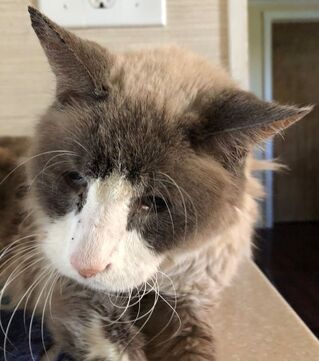
This week, my family experienced the end of an era. Sparky died.
Sparky (a.k.a. Sparks or Sparkles or Sparky-doodle) came into our lives when my son Brian was in kindergarten. My husband took Brian and his brother, Matthew, to the county dog pound and let them each pick out a kitten. Matt brought home a small gray kitten he named Tiger. Brian picked out a beaiutfil, lilac point, Siamese-type kitten. We learned then that it's best to get kittens in pairs, because they play with each other.
Tiger passed away when he was seven. Matt died when he was 24. Brian and Sparky hit their 24th and 19th birthdays respectively this year. Nineteen is really old for a cat, although I've seen and heard about older cats.
Sparky raised many of our other cats. He served as "good old Uncle Sparky" to Guido, Sally, Brutus, and Alice. Guido was good enough to take over kitten rearing for Muffin who then assumed the "uncle" mantle for Cooper. (Guido, by the way, is a jerk. Muffin and Cooper are obnoxious, too.)
When Sparky moved permanently into the kitchen and became the "kitchen kitty," his small world became much smaller. Whether he'd had a stroke or was simply going senile, he'd get lost if he wandered beyond the kitchen. He stuck to familiar territory, mapping out a path to the litter box and a path to the sink. He refused to drink water from a bowl; so we learned to turn on the faucet and leave it at a thin trickle so he could drink. When he was hungry, he'd yowl. Loudly.
When he was about 14 year old, I began feeding him canned cat food to supplement his lifetime diety of dry kibble. He was picky. Not only did he have firm preferences with regard to dry cat food, but we learned to cater to his wet cat food preferences. He would only eat pate. Not morsels, shreds, or any other consistency. He only liked certain brands; luckily for us, the cheaper brands sufficed. He only liked certain flavors: some he consistently disliked and others he disliked only sometimes. Until lately, he'd still snack on dry cat food. Amazingly, he still had all his teeth.
Making the decision to end a pet's life is never easy. It hurts. However, Sparky had been on the decline for years. His beautiful blue eyes deteriorated first, a holdover from his Siamese heritage. Then his body weakened and his balance worsened. Several months ago he stopped using the litter box. Last week he lost the strength and coordination to walk. Over the weekend, he lost interest in food and water, but not affection.
I decided it was time to say goodbye and let him go gently into that good night. (Apologies to Bob Dylan.)
Sparky was the last pet remaining from my childrens' childhood. We have other pets, but none go back as far in our family's memory as this gentle old cat.
Good-bye, old buddy. You will be missed.
September 26, 2023
Self-publishing isn't DIY
When it comes to self-publishing, many authors entertain the misconception that the term means "do it all yourself." Actually, what self-publishing means is that the author publishes his or her own work instead of going through a traditional publisher.
A traditional publisher employs or hires professionals to massage a manuscript into shape, something suitable for public consumption. Whipping a manuscript into shape entails tasks such as developmental editing, line editing, copy editing, proofreading, cover design, and book design. When an author self-publishes, that means the author is responsible for all the tasks performed by a traditional publisher.
I've said ad nauseum that authors should not rely upon themselves for editing. Trust me. I'm an editor and I learned that lesson the hard way. A manuscript benefits from an editor's objectivity and fresh perspective. Also, editors do different things. A developmental (or structural) editor takes a bird's eye view of the story and doesn't concern himself with the nitty gritty details of grammar and context. A copy editor isn't responsible for detecting and correcting plot holes. A line editor often bridges the gap, but is more concerned with how the author writes what is meant than with either big picture items or correct punctuation. Then we have substantive editors like me who don't separate developmental, line, and copy editing, giving the manuscript to a holistic treatment. Finally, there are proofreaders who put the final polish on a manuscript, correcting errors before it goes public.
As the author is too close to his or her own manuscript to see its flaws, so, too, is the author is primarily a writer, not a graphic artist or graphic designer. These are much different skills from writing, and few authors do design really well. Just like editing, it's best to hire cover art to the pros who know the genre, understand the tenets of effective cover art, and have the technical skills to render an appealing image that conveys the genre and the story. If you haven't noticed, genres tend to have their own distinct design trends and rules. A font you might use on the cover of a horror story probably isn't something you'd use on the cover of a cozy mystery.
The graphic design aspect of producing a book involves more than filling the pages with text, especially if your manuscript includes charts, graphs, and images. A book designer considers paragraph justification and page justification, widows and orphans, kerning and leading, and more. The juxtaposition of title fonts and body text must be complementary as well as easy to read.
Each of the major components of producing a book--editing, book design, and cover art--involves disparate skills that appear to be related and generally aren't mastered by any one person, much less by most authors. This means that producing a top quality book demands a team effort. When an author decides to self-publish, the author is responsible for hiring the professionals to do what she or he cannot do or does not do well. Lucky for those authors, the gig ecnonomy teems with feelance editors, designers, and artists.
These professionals don't work for free. In fact, their combined services add up to a signific.ant chunk of change. Because they don't work cheaply, traditional publishers only pay authors a small percentage of revenues received from book sales. The publishers have to pay these pros regardless of whether the books they produce sell. If you're self-publishing, the freelance pros you hire expect to be paid for their work regardless of whether your book generates any profit.
Self-publishing isn't free. Not really. You can produce a book and publish it without spending any money on hiring the professional services that will elevate your book to the next level, but that doesn't mean you should. For best results, hire and pay for those services. Yes, you'll have to dig into your pockets, probaby deeply, so start saving now before you're ready to hire those pros.
Self-publishing isn't really "do it yourself." The author writes the story, but making it marketable depends on a team of paid professionals.
Hen House Publishing provides ghostwriting, editing, proofreading, and book design services to assist independent authors on their
#henhousepublishing #editingservices #bookdesign #pagedesign #proofreading #ghostwriting
A traditional publisher employs or hires professionals to massage a manuscript into shape, something suitable for public consumption. Whipping a manuscript into shape entails tasks such as developmental editing, line editing, copy editing, proofreading, cover design, and book design. When an author self-publishes, that means the author is responsible for all the tasks performed by a traditional publisher.
I've said ad nauseum that authors should not rely upon themselves for editing. Trust me. I'm an editor and I learned that lesson the hard way. A manuscript benefits from an editor's objectivity and fresh perspective. Also, editors do different things. A developmental (or structural) editor takes a bird's eye view of the story and doesn't concern himself with the nitty gritty details of grammar and context. A copy editor isn't responsible for detecting and correcting plot holes. A line editor often bridges the gap, but is more concerned with how the author writes what is meant than with either big picture items or correct punctuation. Then we have substantive editors like me who don't separate developmental, line, and copy editing, giving the manuscript to a holistic treatment. Finally, there are proofreaders who put the final polish on a manuscript, correcting errors before it goes public.
As the author is too close to his or her own manuscript to see its flaws, so, too, is the author is primarily a writer, not a graphic artist or graphic designer. These are much different skills from writing, and few authors do design really well. Just like editing, it's best to hire cover art to the pros who know the genre, understand the tenets of effective cover art, and have the technical skills to render an appealing image that conveys the genre and the story. If you haven't noticed, genres tend to have their own distinct design trends and rules. A font you might use on the cover of a horror story probably isn't something you'd use on the cover of a cozy mystery.
The graphic design aspect of producing a book involves more than filling the pages with text, especially if your manuscript includes charts, graphs, and images. A book designer considers paragraph justification and page justification, widows and orphans, kerning and leading, and more. The juxtaposition of title fonts and body text must be complementary as well as easy to read.
Each of the major components of producing a book--editing, book design, and cover art--involves disparate skills that appear to be related and generally aren't mastered by any one person, much less by most authors. This means that producing a top quality book demands a team effort. When an author decides to self-publish, the author is responsible for hiring the professionals to do what she or he cannot do or does not do well. Lucky for those authors, the gig ecnonomy teems with feelance editors, designers, and artists.
These professionals don't work for free. In fact, their combined services add up to a signific.ant chunk of change. Because they don't work cheaply, traditional publishers only pay authors a small percentage of revenues received from book sales. The publishers have to pay these pros regardless of whether the books they produce sell. If you're self-publishing, the freelance pros you hire expect to be paid for their work regardless of whether your book generates any profit.
Self-publishing isn't free. Not really. You can produce a book and publish it without spending any money on hiring the professional services that will elevate your book to the next level, but that doesn't mean you should. For best results, hire and pay for those services. Yes, you'll have to dig into your pockets, probaby deeply, so start saving now before you're ready to hire those pros.
Self-publishing isn't really "do it yourself." The author writes the story, but making it marketable depends on a team of paid professionals.
Hen House Publishing provides ghostwriting, editing, proofreading, and book design services to assist independent authors on their
#henhousepublishing #editingservices #bookdesign #pagedesign #proofreading #ghostwriting
September 5, 2023
Why the surprise?
We all remember the hullaballoo in 202 and 2021 with the wild spread of a novel coronavirus not so affectionately called COVID-19. Shutdowns, shelter-in-place, mask mandates, social distancing: they began with exhortations to comply to "flatten the curve," meaning to slow transmission so hospitals and doctors wouldn't be overwhelmed. Slowing tranmission quickly morphed into "stop the spread," which as we all either knew or discovered could not and did not happen.
The virus still spread like wildfire. A lot of people died. Then came reports of anyone who tested positive for the virus was considered a COVID fatality regardless of the actual cause of death. Public trust eroded. Some people followed the money: hospitals received extra funds for COVID-related deaths, so they every incentive to report as many deaths as possible as COVID-related. Public trust further eroded. Drug companies rushed through research and production to produce vaccines of dubious effectiveness and widely reported, terrible side effects. Society quickly divided between the vaccinated and the unvaccinated, regardless of whether one had already built up immunity or at least resistance via already contracting the disease.
Due to ethical concerns regarding the vaccines and distrust of public officials' widely varying recommendations, many people resisted vaccination. The CDC revised its definition of "vaccine," which did little to build the public trust. The vaccine—which still does not have FDA approval—remained a contentious issue with many advocating for "herd immunity." Forced vaccinations further eroded public trust, especially in high profile cases when seemingly healthy individuals died from severe heath issues not present before vaccination.
Strangely enough, one of the least political groups in the USA—Amish and Mennonite communities—relied on herd immunity. Generally averse to technology and advanced medicine, they also cherish those things we lost during two years of pandemic craziness: community and care. Our children also lost two years of education, a social catrosphe that will resonate for decades.
This year, the news is being filled with articles and broadcasts of a new and even more easily transmissible variant of COVID-19. They all express suprise and come loaded with dire warnings. Some public and health officials and schools are once again mandating face masks. Will they also soon order shutdowns and shelter-in-place mandates?
I don't know why this is a surprise. Every year in the USA, school starts in August after a summer break lasting a few weeks to three months. All coronaviruses (there are seven known human coronaviruses) are readily transmissible, particularly in crowded conditions. Bringing hordes of children and teens indoors with adults into school buildings creates the perfect atmosphere for the spread of germs. This happens every year. School starts, kids get sick, they bring their germs home to share with families, their infected parents go to work, and those parents spread the germs to their coworkers.
In short, the rising numbers of infection are not a suprise. It's predictable. What's also predictable is the rising furor over a renewed epidemic comes as election season gets under way. I dislike linking the two together, but it's been too coincidental to be happenstance.
Review the information and consider the sources of that information. Life is not without risk, so you have to weigh the risks of another round of social isolation and mandates against the risks of liberty. Then make your choice.
The virus still spread like wildfire. A lot of people died. Then came reports of anyone who tested positive for the virus was considered a COVID fatality regardless of the actual cause of death. Public trust eroded. Some people followed the money: hospitals received extra funds for COVID-related deaths, so they every incentive to report as many deaths as possible as COVID-related. Public trust further eroded. Drug companies rushed through research and production to produce vaccines of dubious effectiveness and widely reported, terrible side effects. Society quickly divided between the vaccinated and the unvaccinated, regardless of whether one had already built up immunity or at least resistance via already contracting the disease.
Due to ethical concerns regarding the vaccines and distrust of public officials' widely varying recommendations, many people resisted vaccination. The CDC revised its definition of "vaccine," which did little to build the public trust. The vaccine—which still does not have FDA approval—remained a contentious issue with many advocating for "herd immunity." Forced vaccinations further eroded public trust, especially in high profile cases when seemingly healthy individuals died from severe heath issues not present before vaccination.
Strangely enough, one of the least political groups in the USA—Amish and Mennonite communities—relied on herd immunity. Generally averse to technology and advanced medicine, they also cherish those things we lost during two years of pandemic craziness: community and care. Our children also lost two years of education, a social catrosphe that will resonate for decades.
This year, the news is being filled with articles and broadcasts of a new and even more easily transmissible variant of COVID-19. They all express suprise and come loaded with dire warnings. Some public and health officials and schools are once again mandating face masks. Will they also soon order shutdowns and shelter-in-place mandates?
I don't know why this is a surprise. Every year in the USA, school starts in August after a summer break lasting a few weeks to three months. All coronaviruses (there are seven known human coronaviruses) are readily transmissible, particularly in crowded conditions. Bringing hordes of children and teens indoors with adults into school buildings creates the perfect atmosphere for the spread of germs. This happens every year. School starts, kids get sick, they bring their germs home to share with families, their infected parents go to work, and those parents spread the germs to their coworkers.
In short, the rising numbers of infection are not a suprise. It's predictable. What's also predictable is the rising furor over a renewed epidemic comes as election season gets under way. I dislike linking the two together, but it's been too coincidental to be happenstance.
Review the information and consider the sources of that information. Life is not without risk, so you have to weigh the risks of another round of social isolation and mandates against the risks of liberty. Then make your choice.
August 29, 2023
Calculating the value of professional editing
It's rather astonishing how often I come across people who think self-publishing equates to doing everything oneself. They're often surprised when I correct them: self-publishing isn't DIY.
When an author's manuscript is accepted by a traditional publisher, the publisher takes on the effort and risk of producing a book. This means the publisher pays the author a percentage (often a small percentage) of the revenues earned through book sales. That percentage is called a royalty. Some publishers pay an advance on the royalty in anticipation of a certain number of units (copies) sold, and the author receives nothing more until book revenues and the author's percentage meet or exceed that advance payment.
Because getting one's foot in the door with a traditional publisher or a literary agent who then would sell the manuscript to a publisher can be extremely difficult, many authors choose to self-publish without having any idea how to go about doing so. They haven't studied the publishing process and make innumerable mistakes along the way in their eagerness to get their books out to the public.
Online publishing platforms like Amazon's Kindle Direct Publishing make self-publishing easy, almost too easy. How-to tutorials mention nothing about ensuring quality, respecting copyrights, effective cover design, etc. They almost never mention marketing.
I'll be the first to admit that I'm one of those folks who would jump from an airplane and figure out how to fly on the way down. That's a fairly adequate analogy for authors who self-publish without studying the process and drawing a map on how to get from Point A to Point Z. People like us learn from the school of hard knocks.
Once I'm able to educate someone on the process of self-publishing, the discussion tends to turn to "do I have to do it that way?" and "how much does it cost?" To address the first: no, you don't have to do it that way. No one has to do it that way. No one will hold a weapon to your head and force you to follow the best process. However, there's a reason why experienced authors advise (i.e., strongly suggest) one do it that way: because that way gets the best result. As for the second question of cost, the answer is always "it depends." The factors affecting cost vary.
The best, most effective self-publishing process takes a lot of time and a lot of money. I've read that at a major publishing house, a manuscript will go through eight editors (or eight levels of editing) before it's released. Frankly, it's a rare individual who can afford that kind of expense and is willing to dedicate that much time to the project. Many authors who seek editing express surprise when they learn that editors do more than correct typos and punctuation errors. (If you're interested in budgeting for the cost of professional editing, you can find a good guideline to editing levels and fees here: www.the-efa.org/rates.)
The gold standard for editing begins with self-editing. Self-editing means the author reviews his or her manuscript with fresh eyes and a critical mind and is ruthless with correcting the flaws in the manuscript. Few authors can do this well, although many try. No author can truly review his or her own manuscript objectively.
Many authors attempt to avoid editing through the use of beta readers. Beta readers are volunteers who read a manuscript and return feedback. They are typically not paid. Being volunteers, usually untrained, and often a friend or relation of the author, the quality of their feedback often varies from poor to adequate. A friend or family member will not want to offend the author and may deliver unwarranted flattery. An unpaid, untrained volunteer may not understand what the author is looking for and what they should be critiquing. And it's hard to hold a volunteer to a schedule or make demands.
An editor's job is not to flatter the author. A smart author prizes the editor's candor because the editor is working in the best interests of the manuscript—not necessarily the author. The editor is not a teacher, although if the author learns from the editor's feedback and works to improve, the author will indeed learn and improve his or her own skill which will benefit future books.
I daresay most authors have fragile egos. They do not tolerate objective criticism or even "constructive" criticism. An author who fears an editor's candor may avoid the editing phase of producing a book and publish a book flawed by poor writing and riddled with errors. Not quite as bad is publishing a book that has been edited only by editing software. As one wise person (not I) said, "Editing software understands rules, not context." Editing software doesn't do exceptions. It applies what it thinks is correct, and the author who accepts those suggestions without considering whether they're either correct or effective does his or her manuscript a disservice.
Forgoing professional editing or relying exclusively on editing software opens the book and the author to scathing criticism on a public forum in the form of reviews. Professional editing won't eliminate negative reviews, because there will always be people who hate your book for whatever reason, but it will reduce them.
I think the most frustrating part of editing is that excellent editing is invisible. The reader doesn't notice how much work went into editing and revising because the reading of the book goes smoothly. However, the reader will notice—and not in a flattering way—the lack of editing or inadequate editing. Think of the books you read. If the content is riddled with errors and a lot of sentences make no sense, you notice. You notice those stumbling blocks of malaproprisms and expository description that stop the story in its tracks.
The value of good editing is difficult to calculate in terms of ROI. There's no direct link to the quality of editing and the number of sales made or lost due to it. It's not an obvious marketing tool. And it's expensive.
Therein lies the rub: Do you invest a lot of money into a book that statistics say won't earn it back? How important is quality to you? If you're determined to beat those dreary statistics, then producing a top quality book is a good start, and top quality entails professional editing, professional cover design, professional book design, and savvy copywriting for the book's cover blurb.
Then there's all that marketing you have to do.
Hen House Publishing doesn't do it all, but what I offer what I do well: professional ghostwriting, editing, and book design.
#editingservices #authorservices #henhousepublishing
When an author's manuscript is accepted by a traditional publisher, the publisher takes on the effort and risk of producing a book. This means the publisher pays the author a percentage (often a small percentage) of the revenues earned through book sales. That percentage is called a royalty. Some publishers pay an advance on the royalty in anticipation of a certain number of units (copies) sold, and the author receives nothing more until book revenues and the author's percentage meet or exceed that advance payment.
Because getting one's foot in the door with a traditional publisher or a literary agent who then would sell the manuscript to a publisher can be extremely difficult, many authors choose to self-publish without having any idea how to go about doing so. They haven't studied the publishing process and make innumerable mistakes along the way in their eagerness to get their books out to the public.
Online publishing platforms like Amazon's Kindle Direct Publishing make self-publishing easy, almost too easy. How-to tutorials mention nothing about ensuring quality, respecting copyrights, effective cover design, etc. They almost never mention marketing.
I'll be the first to admit that I'm one of those folks who would jump from an airplane and figure out how to fly on the way down. That's a fairly adequate analogy for authors who self-publish without studying the process and drawing a map on how to get from Point A to Point Z. People like us learn from the school of hard knocks.
Once I'm able to educate someone on the process of self-publishing, the discussion tends to turn to "do I have to do it that way?" and "how much does it cost?" To address the first: no, you don't have to do it that way. No one has to do it that way. No one will hold a weapon to your head and force you to follow the best process. However, there's a reason why experienced authors advise (i.e., strongly suggest) one do it that way: because that way gets the best result. As for the second question of cost, the answer is always "it depends." The factors affecting cost vary.
The best, most effective self-publishing process takes a lot of time and a lot of money. I've read that at a major publishing house, a manuscript will go through eight editors (or eight levels of editing) before it's released. Frankly, it's a rare individual who can afford that kind of expense and is willing to dedicate that much time to the project. Many authors who seek editing express surprise when they learn that editors do more than correct typos and punctuation errors. (If you're interested in budgeting for the cost of professional editing, you can find a good guideline to editing levels and fees here: www.the-efa.org/rates.)
The gold standard for editing begins with self-editing. Self-editing means the author reviews his or her manuscript with fresh eyes and a critical mind and is ruthless with correcting the flaws in the manuscript. Few authors can do this well, although many try. No author can truly review his or her own manuscript objectively.
Many authors attempt to avoid editing through the use of beta readers. Beta readers are volunteers who read a manuscript and return feedback. They are typically not paid. Being volunteers, usually untrained, and often a friend or relation of the author, the quality of their feedback often varies from poor to adequate. A friend or family member will not want to offend the author and may deliver unwarranted flattery. An unpaid, untrained volunteer may not understand what the author is looking for and what they should be critiquing. And it's hard to hold a volunteer to a schedule or make demands.
An editor's job is not to flatter the author. A smart author prizes the editor's candor because the editor is working in the best interests of the manuscript—not necessarily the author. The editor is not a teacher, although if the author learns from the editor's feedback and works to improve, the author will indeed learn and improve his or her own skill which will benefit future books.
I daresay most authors have fragile egos. They do not tolerate objective criticism or even "constructive" criticism. An author who fears an editor's candor may avoid the editing phase of producing a book and publish a book flawed by poor writing and riddled with errors. Not quite as bad is publishing a book that has been edited only by editing software. As one wise person (not I) said, "Editing software understands rules, not context." Editing software doesn't do exceptions. It applies what it thinks is correct, and the author who accepts those suggestions without considering whether they're either correct or effective does his or her manuscript a disservice.
Forgoing professional editing or relying exclusively on editing software opens the book and the author to scathing criticism on a public forum in the form of reviews. Professional editing won't eliminate negative reviews, because there will always be people who hate your book for whatever reason, but it will reduce them.
I think the most frustrating part of editing is that excellent editing is invisible. The reader doesn't notice how much work went into editing and revising because the reading of the book goes smoothly. However, the reader will notice—and not in a flattering way—the lack of editing or inadequate editing. Think of the books you read. If the content is riddled with errors and a lot of sentences make no sense, you notice. You notice those stumbling blocks of malaproprisms and expository description that stop the story in its tracks.
The value of good editing is difficult to calculate in terms of ROI. There's no direct link to the quality of editing and the number of sales made or lost due to it. It's not an obvious marketing tool. And it's expensive.
Therein lies the rub: Do you invest a lot of money into a book that statistics say won't earn it back? How important is quality to you? If you're determined to beat those dreary statistics, then producing a top quality book is a good start, and top quality entails professional editing, professional cover design, professional book design, and savvy copywriting for the book's cover blurb.
Then there's all that marketing you have to do.
Hen House Publishing doesn't do it all, but what I offer what I do well: professional ghostwriting, editing, and book design.
#editingservices #authorservices #henhousepublishing
August 22, 2023
Procrastination and chores
We all have chores we loathe doing. I hate washing dishes.
Yes, we have a dishwasher, but it doesn't do a good job. I've never met one such machine that did. Nearly half of everything that goes into the dishwasher has to be washed again. I generally consider using it a waste of time and energy.
For many writers, editing is that detested chore. However, just like washing the dishes (and cleaning the toilet), it is necessary ... and for much the same reasons.
The analogy of the dishwasher also applies to editing software. Programs such as Autocrit, ProWritingAid, PerfectIt, and Grammarly may be helpful, but they'll result in a document still needing to be cleaned up. Such programs not only miss "dirt," but they also introduce errors (i.e., depositing "dirt") into the document.
Editing software does not and cannot distinguish nuance or context. It can't detect plot holes or inconsistencies, such as when your protagonist has green eyes on page 17 and blue eyes on page 132. As one person put it so eloquently, editing software knows rules, not context. It does not understand when effectiveness trumps the rules.
Many writers who rely exclusively on editing programs miss the above point. Or, if they know it, often state they cannot afford professional editing.
Another wise person—also a freelance editor—noted that people save up for large expenses important to them: the downpayment for a house or car, new furniture or a large appliance, an engagement ring, or something else. If your book is important to you, isn't it worth saving up to afford editing to make it as good as it can be?
Yes, we have a dishwasher, but it doesn't do a good job. I've never met one such machine that did. Nearly half of everything that goes into the dishwasher has to be washed again. I generally consider using it a waste of time and energy.
For many writers, editing is that detested chore. However, just like washing the dishes (and cleaning the toilet), it is necessary ... and for much the same reasons.
The analogy of the dishwasher also applies to editing software. Programs such as Autocrit, ProWritingAid, PerfectIt, and Grammarly may be helpful, but they'll result in a document still needing to be cleaned up. Such programs not only miss "dirt," but they also introduce errors (i.e., depositing "dirt") into the document.
Editing software does not and cannot distinguish nuance or context. It can't detect plot holes or inconsistencies, such as when your protagonist has green eyes on page 17 and blue eyes on page 132. As one person put it so eloquently, editing software knows rules, not context. It does not understand when effectiveness trumps the rules.
Many writers who rely exclusively on editing programs miss the above point. Or, if they know it, often state they cannot afford professional editing.
Another wise person—also a freelance editor—noted that people save up for large expenses important to them: the downpayment for a house or car, new furniture or a large appliance, an engagement ring, or something else. If your book is important to you, isn't it worth saving up to afford editing to make it as good as it can be?