Murray W. Nabors's Blog
June 30, 2020
New Blog Posts
June 30, 2020
I haven’t posted a blog in a really long time, so I’m trying again, and this is the experimental message, to see if I enjoy posting, if anyone is listening, and if the system works.
It’s time to get back to normal in spite of COVID. I heard a respected physician say that we should continue to hide out in our homes “if it saved even one life.” Well, destroying the economy and hiding out costs lives as well. As it is, all of us take a chance with life every time we get in an automobile. If you are a child or a young adult, automobile accidents are the most likely cause of death should it occur. So should none of us go on car rides until automobiles are totally safe? Right?
When I was a kid and someone in the neighborhood got chicken pox or measles, say, the parents would get all the kids together, so they could all catch it and get over it. Now, we should protect at risk people (older people and those with pre-existing conditions) if they want to be protected. Otherwise, we should get on with things. We seem to be waiting around for a vaccine. When it comes in six months to a year, it will probably be around 35% effective (like the flu vaccine in good years) and so won’t be as much of a game changer as is to be hoped. Also, the vaccines are being developed by for-profit companies or political groups who are more focused on profit or on being first than on a good and safe product. I’m hoping for a good and useful vaccine but not much of a believer that it will really come about.
Politics. Once again we appear to have a race for president populated by idiots. Trump knows how to make business work, but he doesn’t know how to get along with people or keep his mouth shut. Sleepy Joe thinks his sister is his wife, and is being kept in his basement not so much because of COVID but because of every gaffe-ridden sentence that comes out of his mouth.
The News nowadays consists of headlines such as when “Fulla Balony” (a movie star or sports figure) tells NPR that “We should not have statues of people up in the public square unless they were perfect.” First of all, why should I care what any movie star or sports figure thinks? Secondly, we should learn that historical figures were mixtures of bad and good traits. We should honor the former and learn from the latter. The police should clean up their act, but to abolish the police is to return to the days of Jean Jacques Rousseau, who was a complex and interesting political philosopher (1712-1778), who had this re-occurring weakness in believing that people were naturally good and would behave themselves in society with little or no supervision.
Social media and the politicization of news media has given us news that is mostly people with an ax to grind and with poorly thought out opinions basically yelling at each other with no particular interest in discussion or compromise leading to progress. To me, most of the news headlines shouldn’t be news at all.
So there, I got a few of those topics off my chest, so if future blogs I will turn to, what to me are, more interesting topics.
Murray


November 20, 2014
The Farm versus The College
So now it’s November of 2014. After a North Dakota winter last year (-20 night after night after night), propane prices up to $5.00 a gallon, and hay prices through the roof I have taken two big steps: I have closed down the greenhouse for the winter and sold or given away all the goats, alpacas, horses, cows, and donkeys. I haven’t decided about the birds yet.
So some plants got taken to school or given to school (the large ones) while others are in the house. But it’s quite a downsizing from last year. As for the animals, no one was interested in them besides me anymore, and I need the money to put four more kids through college. Also, the barber pole worm epidemic had become a huge problem. So maybe in a few years, I’ll start over again when I’m retired. We’ll see. I miss the animals and plants, but not when it’s bad winter weather and I’m out in it throwing hay and firing up kerosene heaters when the greenhouse temperature system fails. That’s a lot of cold work!
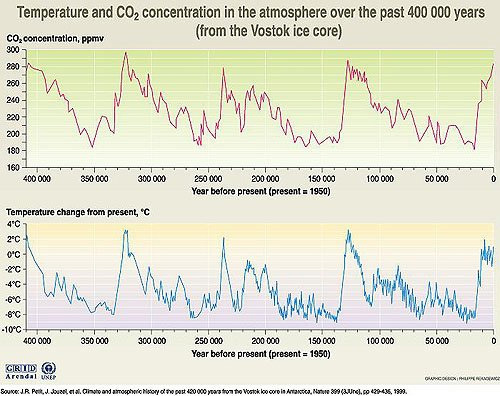
Maybe we are witnessing the start of a new ice age. Temperatures have been steadily climbing since the last one, and maybe we are at the peak. After all, a new ice age starts when one more snowflake falls than melts! That would be exciting, and it would put an end to all the concerns over global warming. Just this month (November 2014) we have had a very atypical cold spell from the arctic along with six feet of snow south of Buffalo.
Goat Mamas
January 6, 2014 Goat Mamas. The current very cold weather has caused a problem for my pregnant goats. If they deliver in the cold, their babies will freeze within minutes unless I just happen along at the right time. So I have moved the most pregnant females—five of them—into a small, hastily constructed pen in the greenhouse. For goats, a greenhouse full of plants is like a candy store for humans, so I hope they don’t escape from the pen and eat everything in sight. I also hope and that I have picked the right females, who are Gwenna, Sunshine, Sweety, Speckles, and Rocky Road. I left other females with the herd because they didn’t look quite as ready to deliver. It’s hard to tell with goats until a few hours before birth of the kid or kids. Sometimes they become vocal and start acting differently…sometimes not. Likewise, some are good mamas and some aren’t. Some nurse their babies on their own. Others have to be taught the procedure. A few never learn. We use Chloe, one of our Great Pyrenees dogs, to help clean up the babies, especially if twins or triplets are born. She’s a good helper. Greenhouse Heating. I have a 3,000 square foot greenhouse, covered with double walled poly and heated with a propane furnace. Should the furnace go down or the outside temperature drop so low (below -10F) that the furnace can’t keep the greenhouse at 45F, then an alarm system notifies me that things are getting too cold quite rapidly. At that point, I rush down, plug the propane furnace fan into a generator and/or fire up kerosene shop heaters, portable propane heaters, and anything else I can find. These latter solutions will not work well if animals such as goats are in the greenhouse because of the carbon monoxide produced by temporary heaters in a closed space. At -8F, the propane furnace barely maintains 45F while sucking up propane like a drunk with a new bottle of wine. I noticed on the news that the temperature up in the Yukon was exactly the same as what the Curiosity Rover is currently measuring on the surface of Mars.
January 13, 2014
The Progress of Spring
The Progress of Spring. January 13, 2014. Of the seasons, I much prefer Fall and Spring. That’s when things are happening, changes are occurring. They are dynamic seasons unlike Summer and Winter when we are stuck with way too much heat or cold. Fall begins, for me usually, sometime in August when it’s still summer and something unexpected occurs for just a moment. A tiny taste of cold some summer morning, a cool breeze that shouldn’t be coming out of nowhere, or even a yellow leaf or two in an otherwise forest of green. Then I know that fall is coming
So, autumn is a continuing contest between summer and winter with summer winning the early battles and winter making increasing inroads until summer admits defeat and retreats to the other hemisphere of the planet.
The longest day of summer is in late June and the strength of summer is that it is able to hold sway for several months beyond the longest day.
After winter solstice around December 2l, the days grow slowly longer, but winter is still king, actually increasing in strength for several months. The day length increases barely at all at the equator to ten or more minutes a day in the far north. North of the Arctic Circle at least a few days have no sunlight in winter and twenty four hours of sunlight in the summer.
Today is a snow melting day in the 40’s. Summer is making an attempt at a modest January thaw. Last week for a day or two the temperature was below zero all day long. Winter ruled, especially at night when the temperature was way below zero and the wind made it seem much colder.
Killing Time and Sleeping Our Lives Away
Killing Time and Sleeping Our Lives Away. January 13, 2014. Commuting to work for, say, a half hour. A lot of people do it. A few shorter, a lot longer. That’s 30 minutes times 5 working days times 48 work weeks, which equals 7200 minutes or 120 hours or 5 days a year. Wow!
Books-On-Tape or CD’s or DVD’s or podcasts pass the time more profitably compared to, say, looking around or listening to the radio.
Life, at times seems infinite in length, but, in reality, is quite finite. So wasting time would seem to be somewhere between just stupid and a cardinal sin, especially if you aren’t enjoying the wasting. Cats, at least, seem to like sitting around or doing nothing for countless hours every day. The idea of being a “working cat” no longer seems to appeal once the comforts of home are realized.
My son has put together a “Bucket List” of things he wants to do before reaching 30 in two years. He reckons that if he doesn’t get started, lots of books will go unread, movies unseen, conversations unspoken, and adventures unaccomplished by the time he is old. And he’s right. I want lots of time to read, talk, think, write, research, travel and so on, even to accomplish on occasion. And the time I waste when I could be doing these things seems to grow every time I consider.
Let’s see. (1) To and from work takes 15 + 15 = 30 minutes. (2) Showers and getting ready morning and evening take 30 + 30 = 60 minutes. (3) Doing chores morning and evening—we have livestock = 60 minutes. (4) Some meetings = 60 minutes. (5) Staring into space = 30 minutes. (6) Dealing with pointless or annoying e-mail = 30 minutes. (6) Riding in the car on the way to various places = 30 minutes. The grand total is 5 hours a day. And I don’t even play video/phone games use social media, watch TV, or watch sports, all of which, in my opinion are superb time wasters.
Just think, instead of wasting all this time I could be listening to books or podcasts, thinking about useful ideas on a variety of topics, dictating books or letters, reading, learning French, exercising, and having fun!
Perhaps I’m sounding like a strict, no-fun, idleness is evil puritan. But, in fact, nothing can be more fun than learning or doing!
I wonder where Blogging fits into this scheme of things?
January 9, 2014
The Winter Solstice
The Winter Solstice. January 9, 2014. The Winter Solstice on December 21 is the shortest day of the year. Right? Then how come the sun continues to rise later and later as we move into early January? It turns out that this is complicated. In fact, after the Winter Solstice, the Sun rises later but sets even later ; thus, the days get longer. Here’s a link the helps—maybe—explain what is happening. http://www.thenakedscientists.com/HTML/questions/question/3173/
January 8, 2014
The Beauty of Simple Solutions and Small Changes
The Beauty of Simple Solutions and Small Changes. January 8, 2014. One of my New Year’s Resolutions is to enjoy what can happen when I make small changes in the way I do things. For example, in the gift shop of the Nelson-Atkins Museum of Art in Kansas City, after enjoying a very nice Monet exhibit, I found a small purple container that opened. What could it be? Inside was a garden variety contact lens case. The container not only held the case but also had a tiny mirror in the lid. For me, this is a great invention. First, the container is larger than a contact lens case, so it’s easier to find when I set it down somewhere, which I seem to do frequently. Second, it doesn’t look more or less like every other contact lens case in the house. So I don’t have issues with deciding whose lenses I am putting on. Sounds stupid? Maybe. Why don’t I just get a colored case or put my name on a regular case with a Sharpie? I don’t know the answers to those questions, but the new container looks classy, works great for me, and improves things considerably.
A second example was my decision to buy driving gloves. I got a very nice pair, actually, on sale at a hardware store, for five dollars. Really! I leave them in the car, so I’m not always losing them or sticking them, or worse one of them, into one miscellaneous pocket or the other of one coat or another. Also, they are nice gloves and, since they stay in the car, I don’t put them on to haul and feed hay or mess with various other outside chores. For those, I bought a not particularly nice pair of cloth gloves—for three dollars. When not on my hands they live in the mud room where they can be wet and muddy or even smell and no one much cares. One of my nice below zero mittens is now being mailed back from Colorado where I left it. These are now going to live in my office because I use them in winter for my daily walks around campus.
Finding small life improvements is making life nicer on a daily and continuing basis. I’m looking for more!
January 3, 2014
New Year’s Blog 2013. Earth’s Future Seminar
January 3, 2013.
Happy New Year Everyone! I am busy preparing my seminar on Possible Futures of Planet Earth and the United States.for this coming spring semester at Missouri Western State University. This will be an Honors Seminar for 15 students. We will focus on a number of issues that impact our future. The emphasis will be on discussion and discovery. Topics for investigation include climate change, the national debt, global politics, population growth, food production, natural resources, energy, health, education, and more. What problems do we face and how can we solve them? This seminar is an expanded version of one I taught in Spring 2013. I’ll tell more about it in future blogs.
Last year, I taught a seminar entitled Climate Change and the Future of Planet Earth the books I assigned were unusual and interesting in different sorts of ways. You might find them interesting.
1. Coyote by Allen Steele. The first book of a series, Coyote is the story of a journey from Earth to another habitable planet that is 46 light years away. It’s a coming of age story as well as a story about the future of Earth. Great read! Excellent series! The science is okay; the psychology is spot-on.
Amazon.com review. “Coyote (2002) is the first novel in this series. Except for a minor quibble or two, I found this story a pleasure to read.
Allen Steele has previously used themes similar to the near space frontier works of Arthur C. Clarke. Coyote, however, echoes several themes in Robert A. Heinlein’s works, including the Second American Revolution and the theft of a starship by political refugees.
The title says Coyote is a novel of interstellar exploration, but it is really a story of a great trek across 46 light years to settle a planet — OK, a satellite — in another solar system. Much of the novel concerns the trials and tribulations of two adolescents: Wendy and Carlos. In this sense, Coyote is a coming of age story much like Heinlein’s juveniles.
The story starts with the theft of the United Republic Service Ship Alabama by some of its crew and a group of “dissident intellectuals” fired from the Federation Space Agency. Since the ship can cruise at only .2c — 2/10ths of light speed — the trip will take 230 years earth time.
After the escape, one crew member — Comtech Leslie Gillis — is awakened from biostasis and is not allowed by the ship’s AI to return to this preserving state. Gillis spends the next 32 years as the only awakened person on the Alabama. Sometimes sane and other times mad, Gillis leaves behind some mural paintings, an epic novel and a mysterious note.
Upon reaching Coyote, the crew and passengers are awakened from biostasis, encounter the mural and novel (and note), and are much puzzled.
Coyote is habitable, of course, yet greatly different from Earth. The colonist find much strangeness and danger, but are able to adapt.
While the science and technology is very much 21st century, the strongest aspect of thisnovel is character development. Even his villains are believable. Steele deals realistically withteenage sex and pregnancy among his characters, something that Heinlein was not allowed todo until very late in his career.
The novel ends with a number of loose strings, so I hope that a sequel is forthcoming.”
2. Meterology by Steven Ackerman and John Knox. Third Edition. If you are going to understand Climate Change, understanding how weather works is a good place to start.
Amazon.com review.
“This book has won a Talby Award from the Society of Academic Authors. Please see press release below.
Meteorologists’ book wins visuals award
WINONA, Minn., March 24, 2003 — A college meteorology textbook by Steve Ackerman and John Knox won a William Henry Fox Talbot Prize for excellence in visuals from the Society of Academic Authors. The book, Meteorology: Understanding the Atmosphere, published by Brooks/Cole under the editorshop of Keith Dodson, was praised by one member of the SA2 panel of judges as an “exceptional job pulling together relevant data to be presented in original graphic formats.” Said other judges: “The text is visually sophisticated, truly interesting, and up-to-date, with always apt and sometimes ravishing images, figurative models, and tables used to support its thoughtful pedagogy. This book has some of the most pretty and apt graphics that Ihave ever seen in a textbook.””Quite simply, the production quality is superb.” “Visuals are integral and are used generously.” Learning of the award, Knox said: “I’m excited to see that thejudges appreciated our efforts so thoroughly — especially since Steve and I are both first-timeauthors. Knox is a research scientist and lecturer at the University of Georgia. Ackerman is a professor at the University of Wisconsin-Madison.”
3. Animal, Vegetable, Miracle by Barbara Kingsolver. This is the true story of a family adventure as they move to a farm in rural Virginia and vow to eat locally for one year. As energy becomes more and more expensive–at least the fossil fuel versions–eating locally will become important. A study of Earth’s future needs to consider how we produce and obtain our food.
Amazon.com review. “Three hundred and sixty-eight pages, no pretty pictures, and it’s about food? Yes it is, and it’s fascinating. Written by best-selling novelist Barbara Kingsolver, her scientist hubby and teenage daughter, “Animal, Vegetable, Miracle” chronicles the true story of the family’s adventures as they move to a farm in rural Virginia and vow to eat locally for one year. They grow their own vegetables, raise their own poultry and buy the rest of their food directly from farmers markets and other local sources. There are touching human stories here (the family’s 9-year-old learns a secret to raising chickens for food: don’t name them!) but the book’s purpose is serious food for thought: it argues the economic, social and health benefits of putting local foods at the center of a family diet. As Kingsolver details the family’s experience month-by-month, husband Steven adds sidebars on the problems of industrial agriculture and daughter Camille tosses in some first-person essays (“Growing Up in the Kitchen”) and recipes (“Holiday Corn Pudding a Nine-Year-Old Can Make”).
And it is all so well written! Kingsolver can veer way off topic — wandering off into subjects like rural politics, even turkey sex — and still, somehow, stay right on point. Her husband can say more in two pages than some professors I know can say in 200, and the daughter’s writings… well I often couldn’t tell who was writing what without checking for the byline.
The book looks and feels great, too. The dust jacket has been pressed into the nubby texture of burlap. The pages have ragged edges, which makes them soft on your fingers.
Reading this book, drinking my Phosphoric Acid Diet Coke and snacking on some Partially Hydrogenated Palm Kernel Oil Walt Disney World Hungry Heroes Yogurt Pretzels, I suddenly felt like I was a kid again, sitting in my bedroom in 1969 listening to that Joni Mitchell “Woodstock” lyric: “Time to get back to the land, and set my soul free.” Now that song is stuck back in my head! Maybe it should have never left.”
4. Omnivore’s Dilemma: A Natural History of Four Meals by Michael Pollan.
Amazon.com review. “When I bought this book for my dad he simply said, “A book about food?” I laughed and tried to tell him it is probably more about what is wrong with the country (government, business, foreign policy) than it is about food.
I heard Michael Pollan speak on NPR about this book and that sparked my interest. He was railing against corn as he does in the first section of the book here: For instance, I had no idea we used so much fossil fuel to get corn to grow as much as it does. The book provides plenty of other interesting facts that most people don’t know (or want to) about their food.
1) We feed cattle (the cattle we eat) corn. OK. Seems fine. But I never knew cows are not able to digest corn. We give them corn so the corn farmers -who are protected by subsidies and at the same time hurt by them – can get rid of all the excess corn we produce – (more of the excess goes into high fructose corn syrup which is used in coke and many other soft drinks). This sees company owned farms injecting their cattle with antibiotics so they can digest the corn. Not just to shed farmers’ excess corn but to also:
a) Get the cow fatter in a shorter amount of time because . .
b) A cow on this diet could really only survive 150 days before the acidity of the corn eats away at the rumen (a special cow digestive organ FOR GRASS, not corn).
c) Also the pharmaceutical companies get big profits because they manufacture large amounts of antibiotics for these large mammals.
All this may lead to increase in fat content and other peculiarities in the meat we eat.
2) The amount of fossil fuel we use to grow food is ridiculous and helps keeps the Saudis happy. If you buy an apple from Washington and live in New Jersey, think of how much gas went into transporting that fruit to me! Better to buy from Iowa. Better than that: buy from a farmer’s market and this is one of Pollan’s main suggestions:
Buy your food local and maybe you can even find out what is exactly in your hot dog.
3) CAFOS – large corporate feeding pens – where pigs (who are very smart animals) and even chickens display signs of suicidal tendencies.
4) Pollan talks about Big Organic and spends a lot of time here. “Big Organic” is seemingly an oxymoron. He shows how Big Organic companies treat their animals and farms in many similar ways to other industrial farms. However, he makes you think by talking to one organic executive who says,
“Get over it . . . the real value of putting organic on an industrial scale, is the sheer amount of acreage it puts under organic management. Behind every organic TV dinner or chicken or carton of industrial organic milk stands a certain quantity of land that will no longer be doused with chemicals, an undeniable gain of the environment and public health.” – pg. 158
True, but the similarities between big companies and how supermarkets only want to deal with them is what Pollan thinks is the problem with our food.
5) Pollan focuses the most of his book on Joel Salatin’s Polyface Farms in rural Virginia. Salatin calls himself a “grass farmer” (no not THAT grass). You could call it “real organic” but for Pollan it is how we should be farming and what we should eat. Cows, chickens, pigs roaming freely eating grass, and tasting like they should in the end. The problem is that not every area of the USA is as fertile as southwestern Virginia . . .but I am sure Pollan would suggest that each region should specialize in its delicacies and get used to not eating things that aren’t in season or animals we don’t see. It would be hard for the average American to not be provided with bananas from January – December, but if we want to cut back on fossil fuels (though Pollan notes – trade is good), if we want our eggs to taste like eggs and chicken to taste like chickens and not McChickens, we need to do a better job of eating local. This sends Pollan on his final journey, to hunt for his own food and provide his helpers, with a meal totally foraged by him.
A lot of cool facts here that I never knew or took the time to care about (I never knew the mushroom was so mysterious). I would have liked him to talk more about trade, different areas’ food specialties and also how preparing a meal such as his at the end seems a little too time consuming even for the outdoors enthusiast.
I think all Americans – conservatives, liberals, whatevers – can enjoy this book. Liberals for the “return to nature mentality,” conservatives for the same reason: Pollan rails into Animal Rights’ activists and shows how though they may have good intentions; they would rather upset the balance of nature before they kill anything.
Omnivore’s Dilemma is a tremendous contribution, exposing how big corporations and old government practices continue to harm us and our country. The way we thought about food was changed with “Super Size Me” hopefully this book will change they way we want to go about obtaining our food.”
In the seminar we talked a lot about the Scientific Method. Surprisingly, about half the class had never seen Al Gore’s movie “An Inconvenient Truth” and really had no idea who he was. So we backtracked a bit and started with that video. The problem with it is that Gore accepted at face value every bit of evidence that supported global warming as Gospel truth. Some of it turned out not to be true, and this has hurt the standing of his basically correct idea. He also tended to ignore natural planetary cycling between warm and cold periods. At present we are at the top of a major, natural warming cycle. Human activity is no doubt increasing this considerably, but the basic cycle of ice ages alternating with warm periods was established long before humans came along. I’ll talk much more about this later.
The scientific method uses evidence to support hypotheses–a well supported hypothesis becomes a theory. However, all sorts of other factors enter in besides the actual data. These factors include scientific bias in which the scientific investigator supports a particular theory in advance of and even in spite of what the evidence might say. Mendel had this problem. Even though his hypotheses have been shown over and over again to be correct, his data really are too good to be true. For example, if you toss a coin a hundred times will you get 50 heads and 50 tails? Not very often. So Mendel apparently believed he would get, say a 3:1 ratio of tall to short pea plants. Those plants which were in between were put, by Mendel or his assistants, into the pile that needed strengthening to support the 3:1 ratio he believed he would obtain. But his 3:1 ratios are much better than they should be. Unfortunately Mendel’s records were destroyed in a fire, so we will never know for sure. Mendel’s alteration of the data to support his hypothesis is known as “cooking” the results.
In addition to scientific bias, the profit motive can strongly influence scientific conclusions. For example, Tamiflu is widely used as an antiviral and even stockpiled by the government even though the research results supposedly supporting it’s usefulness have yet to be published. Likewise, up to 90% of heart bypass surgeries have been shown not to increase lifespan. This particular surgery continues to support both physicians and hospitals. Ditto for statins. For people with an interest in this topic I suggest Dr. Stephen Sinatra’s book The Great Cholesterol Myth: Why Lowering Your Cholesterol Won’t Prevent Heart Disease and the Statin-Free Plan that Will. Note that Sinatra is a Board Certified Cardiologist.
Political bias can also affect the interpretation of scientific results. For example, if my political views support those of pharmaceutical companies I’m likely to ignore evidence that research supported by these companies supports the usefulness of particular drugs much more frequently than research not supported by them. See the article summary below:
BMJ. 2003 May 31; 326(7400): 1167.
doi: 10.1136/bmj.326.7400.1167
PMCID: PMC156458
Pharmaceutical industry sponsorship and research outcome and quality: systematic review
Joel Lexchin, associate professor,1 Lisa A Bero, professor,2 Benjamin Djulbegovic, associate professor,3 and Otavio Clark, chief of clinical oncology section4
Author information ► Article notes ► Copyright and License information ►
This article has been cited by other articles in PMC.
Go to:
Abstract
Objective To investigate whether funding of drug studies by the pharmaceutical industry is associated with outcomes that are favourable to the funder and whether the methods of trials funded by pharmaceutical companies differ from the methods in trials with other sources of support.
Methods Medline (January 1966 to December 2002) and Embase (January 1980 to December 2002) searches were supplemented with material identified in the references and in the authors’ personal files. Data were independently abstracted by three of the authors and disagreements were resolved by consensus.
Results 30 studies were included. Research funded by drug companies was less likely to be published than research funded by other sources. Studies sponsored by pharmaceutical companies were more likely to have outcomes favouring the sponsor than were studies with other sponsors (odds ratio 4.05; 95% confidence interval 2.98 to 5.51; 18 comparisons). None of the 13 studies that analysed methods reported that studies funded by industry was of poorer quality.
Conclusion Systematic bias favours products which are made by the company funding the research. Explanations include the selection of an inappropriate comparator to the product being investigated and publication bias.
The point of all this is that students need to understand that not only is collecting accurate data difficult to begin with but also interpreting data in a way that doesn’t add bias to the interpretation is difficult as well. Determining whether or not global warming is causing climate change is a perfect example of all these ideas and problems coming together. Science is a human activity. Despite the validity of the scientific method, scientific results are subject to all sorts of human-induced perturbations.
September 5, 2012
Excellent Book Series #1
The Mitford Series by Jan Karon. First book: At Home in Mitford
It’s easy to feel at home in Mitford. In these high, green hills, the air is pure, the village is charming, and the people are generally lovable. Yet, Father Tim, the bachelor rector, wants something more. Enter a dog the size of a sofa who moves in and won’t go away. Add an attractive neighbor who begins wearing a path through the hedge. Now, stir in a lovable but unloved boy, a mystifying jewel theft, and a secret that’s sixty years old. Suddenly, Father Tim gets more than he bargained for. And readers get a rich comedy about ordinary people and their ordinary lives.
The first in a series of novels, this heartwarming book introduces readers to a small, charming North Carolina town and its equally charming denizens. Filled with the mysteries and miracles of everyday life and rich, provincial humor, At Home in Mitford will have readers clamoring for more. Followed by a sequel, A Light in the Window (source: Barnes & Nobel website).