Michael Keyton's Blog
September 11, 2026
Life is nasty, brutish and short
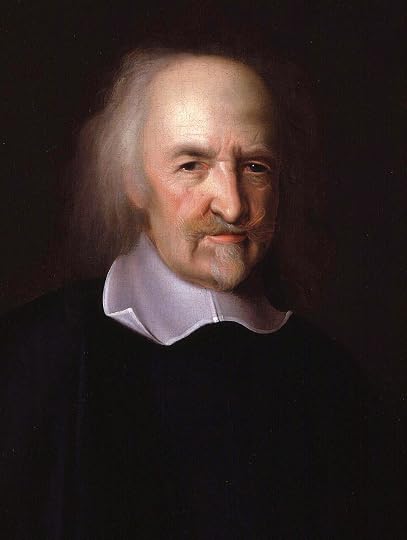 Thomas Hobbes
Usk is now a small but pleasant town, but exploring Usk’s House of Correction Keeper’s Book for 1821 – 34 is both chilling and instructive:
A lady from Llanfoist called Mary Howard was sentenced to a year’s hard labour for bearing a child out of wedlock. There is no record of what happened to the child.
Little mercy was shown to vandals. William Morgan was imprisoned for a month for venting his ‘unlawful and malicious’ rage upon ‘one chestnut tree and one gooseberry tree in a certain garden.’
Welfare claims were not encouraged Richard Powell of Llangibby spent a month in prison for not providing for his family.
In 1827, James Williams was given three months for stealing three cabbages, a month for each cabbage.
In 1871, the Monmouthshire Merlin reported the case of William Betts (15) and James Betts (11) and Joanna Betts their mother. The two boys were convicted of stealing a lump of coal from a railway wagon from Newport docks. They were given a lashing and a day in gaol to ponder on their crime. Their mother was given 12 months hard labour because the boys had been her responsibility. She died within a year of her release.
Twelve-year-old Sarah Hone was sentenced to hard labour for stealing a scarf. Soon after her release, she was sentenced to five years in a reformatory school for sleeping in somebody’s back lavatory in order to escape her drunken father. Rehabilitation clearly worked for her; she died in a Monmouthshire workhouse in 1899.
Jane Ann White was given three months hard labour for stealing some rashers of bacon, Randolph Pearcey six months for stealing six sticks of wood. Gardener George Peglar was given three years for stealing a pair of brass candlesticks. Olaf Hansen, a sailor, stole a mouth organ and was given seven days, and ragman, Will Wiltshire, blew a horn in the street and was sentenced to seven days for disturbing the peace.
One's first instinct is to recoil at the harshness of a previous penal code but, it raises some obvious questions when you consider what now prevails: shoplifting increasingly a lifestyle choice with instances of staff being sacked for trying to prevent it, and whole areas of the country where it is not safe to be out after dark. Will Wiltshire, given seven days imprisonment for blowing a horn, would give a rueful shake of the head if he was to wander Newport now on a Saturday night.
There is no obvious answer as to whether we are now too lenient or the past over harsh, but it would be foolish to ignore Thomas Hobbes’ dictum that life is ‘nasty, brutish and short,’ and that left to themselves, people pursue their own interests at the expense of everyone else. His solution was a social contract whereby an authoritarian state would enforce obedience in exchange for peace, law and order.
Different countries offer different solutions. The San Salvador approach might have some merit, at least for those not incarcerated.

The Chinese have adopted a different approach to the problem with its surveillance society and social credit system. There, good behaviour is encouraged by an all enveloping 'stick and carrot' approach.
For me the worst solution is just to ignore the problem. So, what is my solution? I have none other than a warning. In Thomas Hobbes’ Social Contract, the people should no longer feel obliged to obey or accept a government that fails in its part of the bargain.


September 4, 2026
Mr Toad's Folly (No, not really)
Last week I discovered my tumour had increased by 2 millimetres. The same day I bought a 65inch wall mounted TV. The alternative could have been worse. A 2-millimetre wall mounted TV would be poor compensation for a 65inch tumour.
The two events were not directly related, the decision to splurge having been taken a week earlier. We were visiting friends who had one and, rather like Mr Toad, immediately fell in love. I remarked wistfully and with a degree of resentment that our inoffensive and perfectly adequate 43inch Panasonic—twenty years old and still going strong would likely outlive me. The grievance was sharpened by the fact that over the years I had squirrelled away money to buy its replacement when the Panasonic finally flickered and died.
“Then we’ll do it,” my wife said. “We’ll go out and buy one.” She wasn’t too happy about the size, preferring I suspect its smaller 55inch equivalent.
I spent a deliriously happy week researching technology I’d never heard of before, accessed Which and scoured obscure YouTube videos on the merits of Oled screens vs those powered by RGB min-leds, organic, inorganic, screen burn, so that when we finally descended upon our shop of choice, Richer Sounds, I wouldn’t look a complete and utter idiot. That was the theory at least.
To my intense relief, my wife was immediately seduced by a large screen—yes 65 inches eye-stopping in its clarity and richness. We both were, until a salesman intervened to reinforce our decision. Yes, he said RGB mini-led technology had its merits. It was less reflective of light, a bonus when watching on bright sunny days, but there’s a price. Such TVs lack the richness and clarity of OLED. He directed our gaze back to the TV we had already set our hearts on—which came with free speakers and a soundbar.
“Why the good price?” I asked.
“They’re 2025 models,” he said. “The 2026 model is almost twice the price for—” he shrugged, “fairly minimal enhancements.”
And so now we await delivery and installation. And my mind goes back to my first TV experience in the mid-fifties when the appearance of an aerial on a chimney denoted an immediate upgrade in status. No. 10 Ribblesdale was the first in our street to boast a small 14 inch black and white TV. From that moment on we wiped their front window clean with our noses, catching glimpses of Rin Tin Tin and Robin Hood. Little did I suspect then the future — nor the future Mr Toad who tends to prefer books to the screen but had to have a 65-inch TV!
August 21, 2026
My newly buffed feet
Last week I was visited by a chiropodist. In all my life, I never suspected that such a thing would happen – and it took months of persuading. One of the results of immunotherapy is muscle inflammation and a consequent inability to reach my toes. My wife is an angel in every respect but one: toes. She doesn’t do toes. Everyone has their breaking point, and my toes are her Rubicon.
As a result, weeks passed and my toenails continued to grow until they resembled the fingernails of Cixi, the late Empress of China. She carried on the ancient tradition of long nails denoting status and wealth. Her fingernails were six inches long. My toenails were getting there and denoted nothing but holes in my socks.
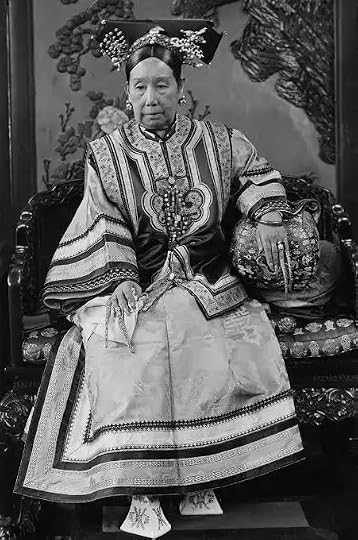
But a chiropodist? I’m reluctant to get my hair cut or pay for a dentist. Toenails for God’s sake.
Anyway, the great day came. A shiny white car pulled up outside the house. A trim, clever-looking blonde stepped out and immediately reassured. The white uniform helped. Within minutes I was putty in her hands.
She admired my feet and then set to work with her various implements. Nails cut. Job done? No, not at all. This was but the beginning. They were next filed and buffed, the crevices between my toes explored, rough skin sanded, and each foot gently oiled. A grown man purring with pleasure. This was indeed the life. What had I been missing all these years?
Buffed feet for one. I now have buffed feet.
August 14, 2026
Essence of Kali
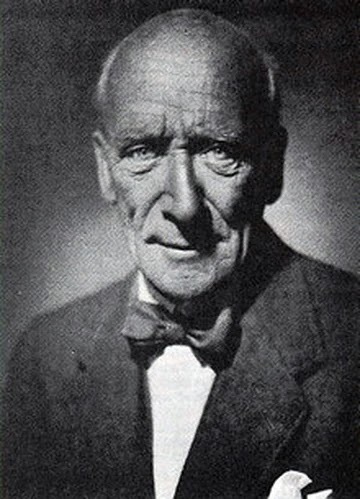
Algernon Blackwood, Arthur Machen and M R James were the premier horror writers of their day, though Blackwood perhaps the more prolific. He shared a deep interest in the occult with Aleister Crowley, and H P Lovecraft regarded him as a formative influence. One of his more interesting creations was the Occult Detective – Dr John Silence. Think Sherlock Holmes fighting demons and ghosts. With his mischievous black cat named Smoke and a world-weary golden collie called Flame, he battled ‘malevolent ghosts, astral werewolves, fire elementals, the cult of Asmodeus, and other fiends.’
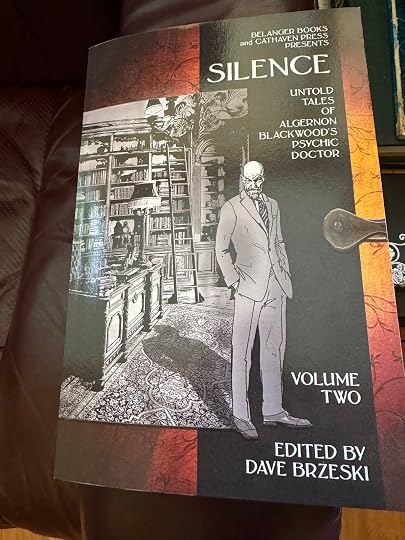
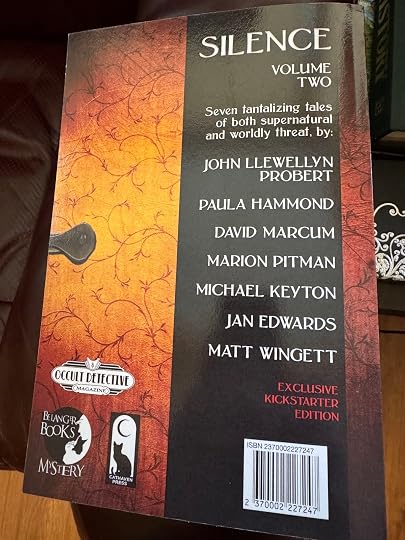
I remember enjoying the stories on first reading them and being disappointed that he wrote only six! It’s why I was intrigued by a new and unexpected challenge, and one that paid: an anthology of new John Silence stories. Could I master the mannered Edwardian prose of Blackwood himself – never mind write a convincing story of the occult?
Glad to say, I could, and my story—Essence of Kali is one of seven in an impressive new anthology:
ALGERNON BLACKWOOD’S PSYCHIC DOCTOR
August 6, 2026
The World at his Feet
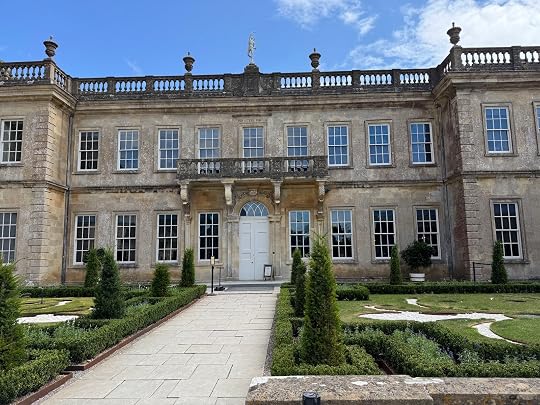
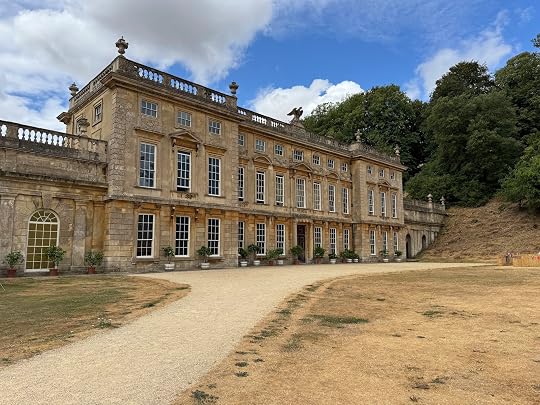
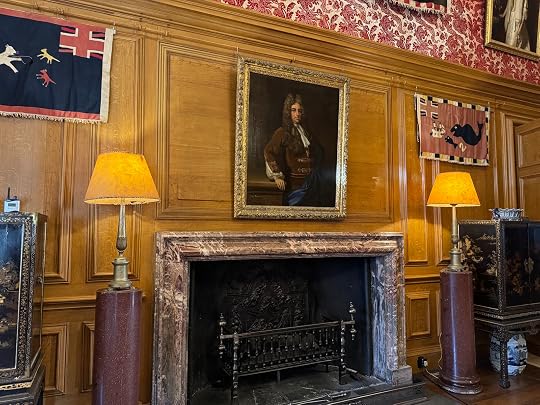
Sir William Blathwayt (1649--1717) had the world at his feet and made a small fortune as a result. It was a case of energy, ability and chance, or perhaps luck. Born in the year a king was executed, an event which signified the dawning of a new age, he prospered under James II as Secretary of State for War and chose the winning side when William of Orange came on the scene and drove the old king into exile. He was lucky in his choice of wife, Mary Annn Wynter, the heiress of Dyrham Park, whom he married in December 1686. Between then and her death in 1691 she bore him four sons and a daughter. The two events may not be unrelated.

His greatest piece of luck was being born when he was and achieving office when he did. The late C17th and early C18th witnessed global transformation and the underpinnings of the British Empire to come, and William Blathwayt knew exactly how to tack his sails. When William of Orange came to the throne, all things Dutch became the rage; aristocrats competed as to who could most slavishly imitate the new king—few more effectively than Sir William Blythwaite who demolished Dyrham’s dilapidated Tudor mansion and replaced it with the present Dyrham House and gardens, which copied almost exactly the new king’s palace and gardens.
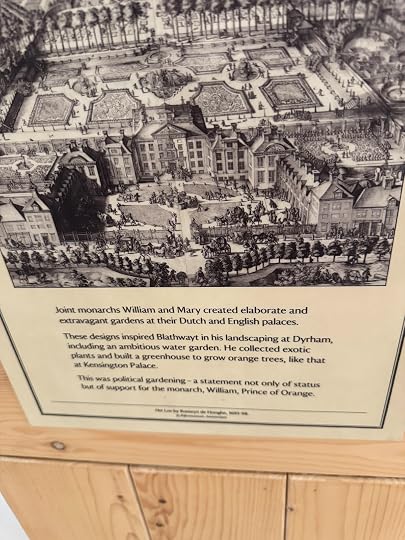
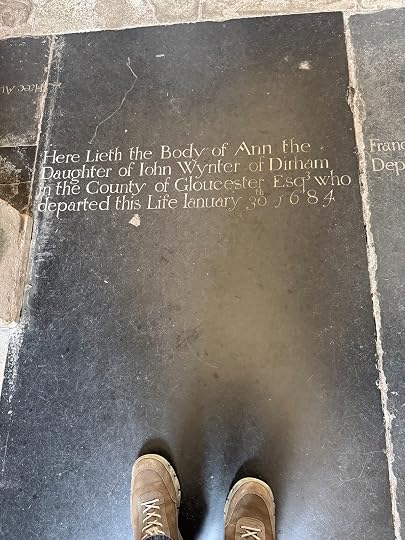
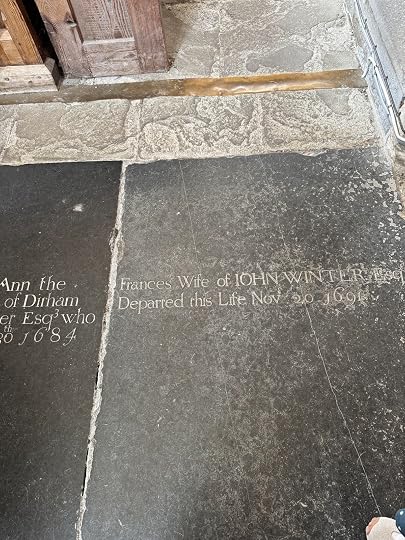
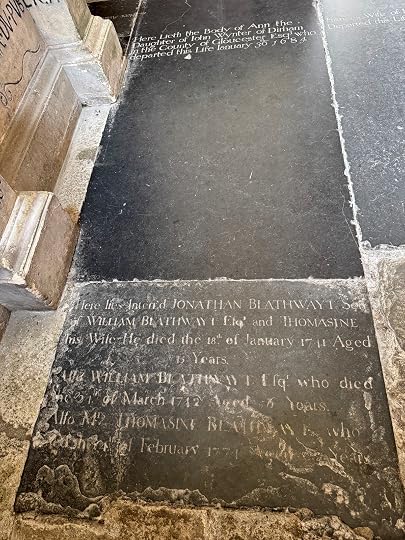
Mary, however died from her various exertions and never lived to see the house completed. She was buried in the adjacent medieval church, where her husband and children in due course also took up residence. It was a salutary experience walking from the house, family portraits and their graves, where my feet are artfully shown.
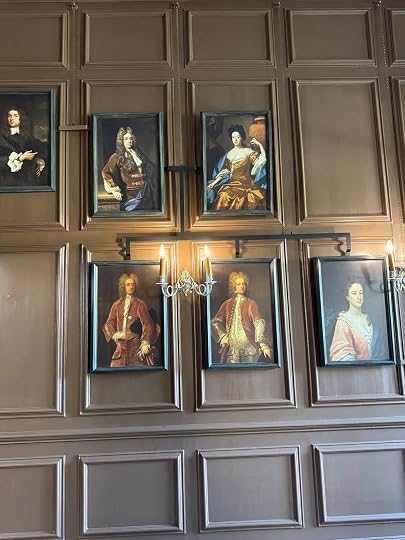
From the second portrait in order: William Blathwayt, Mary Wynter, William Blathwayt II (1688- 72) John Blathwayt (1690-1754) soldier- fought at Culloden - and musician, Anne Blathwayt (1691-1717)
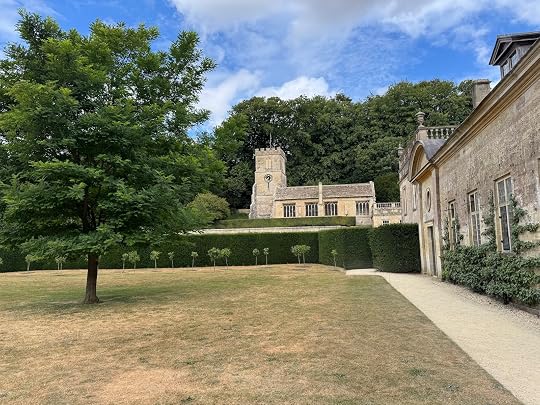
St Peter's Church

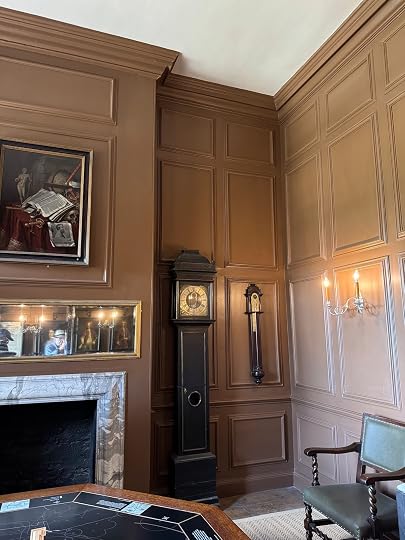
The Dutch fashion of panelling up to the ceiling
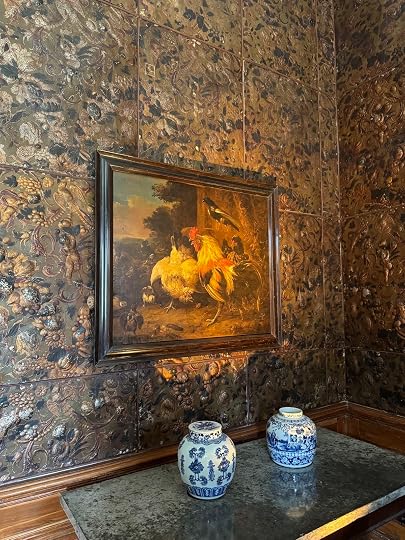
The Dutch fashion for embossed leather wall coverings
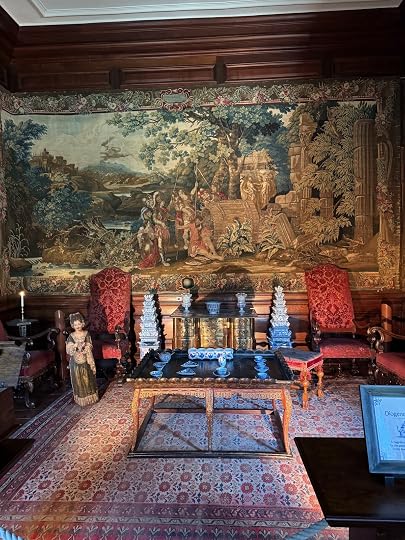
The Diogenes room named after the central figure in the tapestry
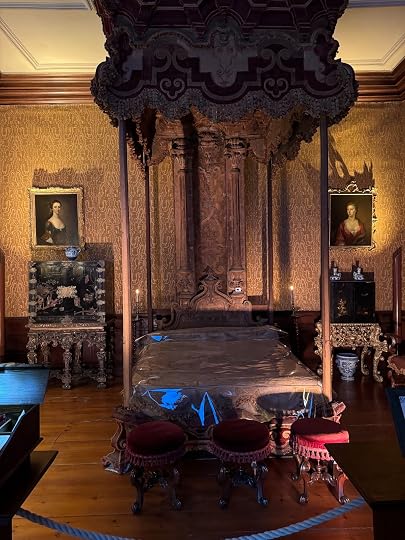
The State bedroom. No monarch actually slept there, but every great house had one just in case and as a status symbol. Out of picture to the right are two ornately carved armchairs for important visitors to any in-bed monarch. To the left are two armless chairs for the less important. And two stools at the foot of the bed for nonentities.
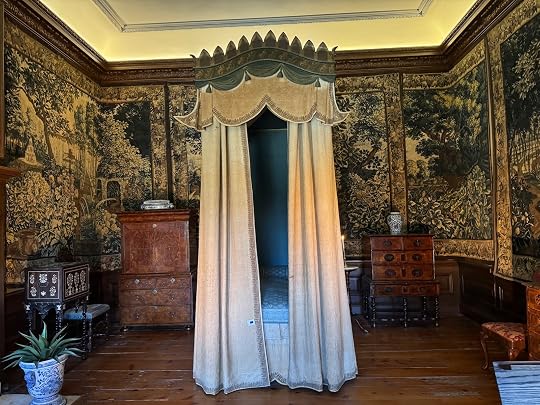
The Tapestry Bedroom richly furnished with Flemish tapestries
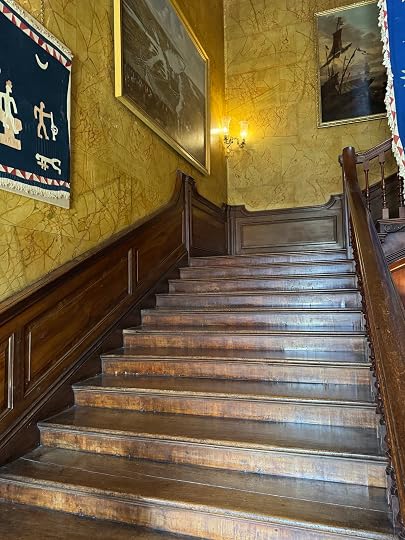
Best Staircase, so called because it led to the best rooms. Made from red cedar wood, it was shipped from Carolina at enormous expense - perk of the job. Sir William was Surveyor and Auditor General of Plantation Revenues at the time, amongst other positions. The cedar wood oils left a strong and pleasant odour. Sir William had only one complaint: it took longer for the wood to travel from Bristol docks to Dyrham Park than the time it took to sail the Atlantic. You wonder at the number of horse and carts it took to carry it all - and at the state of the pre toll gate roads of the time.
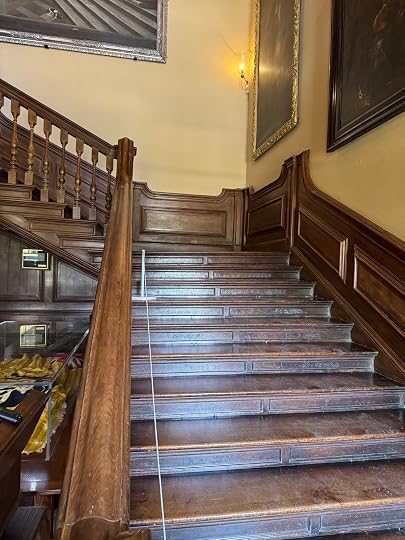
Old Staircase and the rooms above. As a high ranking government official, Blathwayt used British diplomatic, military and colonial networks to source his materials from across the world: Carrara marble from Italy, pine timber from Sweden, rare and valuable timbers for his staircases; in particular, black walnut and red cedar from Virginia. Dutch east asian networks sourced him fine porcelain, damask and silk.
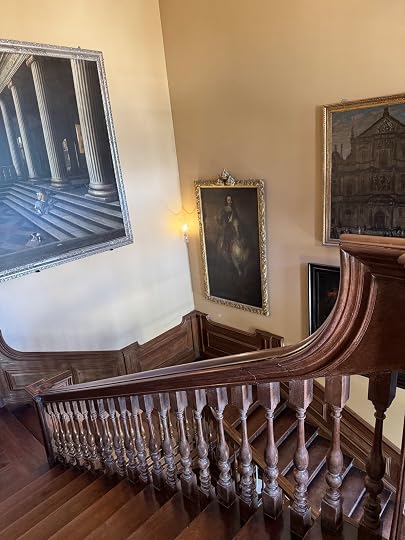
The National Trust, with great sensitivity ask you to avert your eyes or even take an alternative route as you reach the first floor. The reason are the two side tables in the room above, showing two enslaved men each holding a large scallop shell. You may stop reading here if you wish or take it as part of the time.
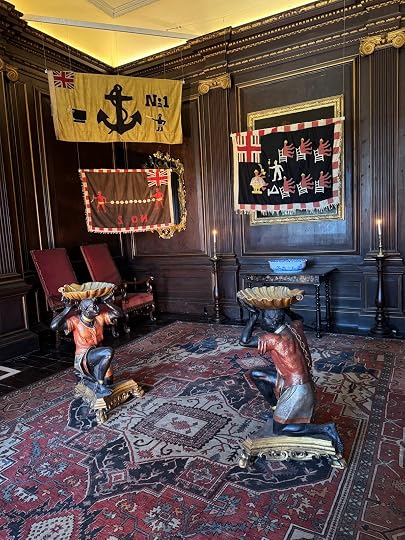
I had to avert my eyes from some obscure exhibition of modern fabric art scattered randomly across the house and covering some very fine paintings.
July 31, 2026
A mind unto itself
I was no longer a pale and tubby boy in spectacles, naked but for khaki shorts and plimsols. I was Lone Eagle, lithe and bronzed surrounded by other small boys immersed in the same delusion; Cheyenne undergoing one of a series of rites: endurance running. The red-brick terraces of Ribblesdale Avenue had changed into canyons, Colorado or Utah, we weren’t choosy. On other occasions, I’d be Little Feather, a Mohawk pursued through northern forests by Iroquois; a cowboy on a blood-red plain surrounded by menacing buttes watched by the silhouettes of distant Indians.
The images came from the Westerns that dominated the 1950s and early 60s. So vivid were they in our minds, it was easy to layer them over red-brick and tarmac. We could even turn grey skies blue.
All this coursed through my mind as I stared at my wife, unwilling, unable to believe. “Are you saying—” I paused to get this straight. “That you can’t picture this cup when you shut your eyes?”
“I can’t visualise anything,” she said. “This apple.” She held it up to remove all doubt she meant this apple; positioned it in front of her face and closed her eyes. “Gone.”
“In your mind’s eye,” I urged. “You must be able to imagine it.”
“No. I can’t. There’s nothing.”
I closed my own eyes and saw a whole bowl of them, an orchard in a sun-kissed valley (visualisation comes with cliché) I imagined eating one, heard the crunch, salivated at the sharpness of its juice.
This was my first introduction to Aphantasia and a whole new world I never knew existed. Mind you, as she confessed, she’d only recently discovered it herself. Until then she’d assumed everyone shared the same inability. For her it was normal. For me it would be like living in a prison cell – but only because I’d know what I was missing.
“How do you recognise people?” I asked.
“I remember faces when I see them. I know exactly what I see. I just can’t visualise you when you’re not there.”
Later, I googled it, and there it was. Aphantasia—the opposite of Hyperphantasia, the tribe to which I belong. I wonder how many live and work together unaware of the other’s ability/inability to visualise things. It’s not exactly a conversation starter. It just doesn’t come up? Why should it if each assume things are as they are?
Aphantasia (I love the name, a good Rom-Fantasy title) tends to cluster around those gifted in Stem subjects like science, computers or maths. It may have some evolutionary advantages; PTSD tends to be less severe for example. I on the other hand have to stop people in mid-flow when they describe a broken arm or a tooth extraction gone wrong. I immediately feel it, and a wince becomes a shudder of imagined pain.
The brain is a weird and wonderful thing, a mind unto itself.
July 24, 2026
Money never hugs you back
I’ve been hugged many times, but there are hugs and hugs, and there are some that can be overwhelming. One such was a week or two ago and brought to mind something I experienced in 1982.
In 1982 I visited Sousa Junior High School in the Bronx as part of my one-year teacher exchange in New York. Its principal was Dr H Wilson Brindle. At first glance he looked an avuncular, middle-aged black man, but as I walked in and he rose from his desk perception radically changed. He radiated an invisible charge, growing stronger as he approached me. When he offered his hand, the effect was almost electric. You can read (and it’s worth reading) more about him here.
So back to the hug. I give them and I take them now as a matter of course. In fact, when I think of it, that too is largely a result of that year in America when everyone seemed to hug at the drop a hat. I on the other hand was a cold Northern fish. Hugging was something done between consenting adults, which in a sense it is. All this was new to me at the time, but I learnt and adapted and never looked back. Thank you, America!
Hugs aren’t meant to be rated, as in Strictly Come Dancing, but there are hugs that unaccountably transcend the normal. They possess a strong and mysterious power creating an immense sense of well-being—so much so you don’t really want it to end. They are few and far between, perhaps mercifully; they could be some kind of gateway drug to something else entirely. But seriously, what on earth is it?
Spiritual? For Hildegard of Bingen there is no doubt in the matter, and I rather think I’d like being hugged by her. ‘The mystery of God hugs you in its all-encompassing arms.’ Anoir Ou-Chod thinks on similar lines. ‘A hug is the bridge between two souls.’ Though I have less inclination to be hugged by him.
Politicians, perhaps predictably, approach hugs more warily. ‘Once a bear’s hug has got you, it is apt to be for keeps.’ Harold MacMillan.
Lyndon Baines Johnson thought much the same thing. ‘Hug your friends tight but your enemies tighter – hug them so tight they can’t wriggle.’
Clearly some hugs come with health warnings, but whether spiritual or unexplained charisma on tap they can be a force to be reckoned with.
July 18, 2026
Biggus Dickus
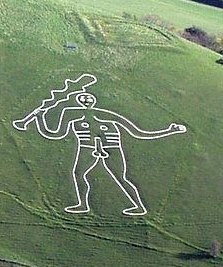
The penis has dominated man’s thinking for millennia. Thousands of small bronze amulets or carvings have been found of a winged phallus—the Fascinus—a minor Roman deity. Used to ward off the evil eye, one presumes they were effective. Then there is the Secret Figurine, peculiar to Anglo-Romano Britain. Found all over England, these were pocket sized figurines depicting a small man in a pointed hood. When unlocked, the outer coat opens to reveal that the entirety of the body is a penis with legs. I swear, if I was a young and thrusting entrepreneur I’d be manufacturing thousands of these little beauties. If you ask me, the market’s wide open.
Even landscape is affected by the noble penis. The famous Cerne-abbas-giant with his impressive appendage was once a resting place for young woman seeking a husband. In Irish myth and legend, glens and valleys were caused not by glaciation but the far more satisfactory story of ancient giants gouging the earth with their dangling appendages.
The Gaelic name for one Cairngorm mountain is Bod an Deamhain or Penis of the Demon. It was changed to Demon’s Peak when the easily offended Victoria came to visit it.
Similarly, The Old Man of Hoy has proved a more acceptable name than its Gaelic original.
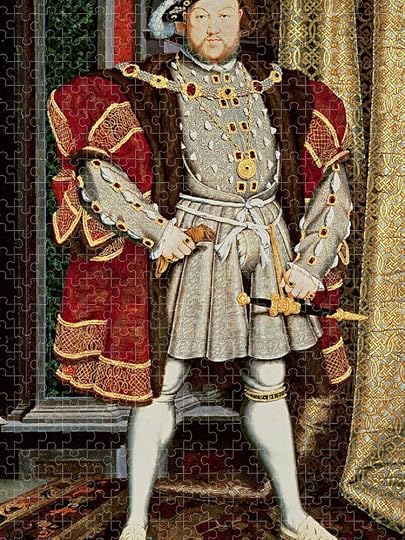
In fact the last great manifestation of the penis is to be found in the noble codpiece exemplified by that of Henry VIII. Since then, it seems to have withered away in a manner of speaking.
That is until the recent furore surrounding the Bayeaux Tapestry! And boy, has it excited academics. In case you need to know and can’t afford the £33 to see the actual thing, there are 626 human figures, 190 horses, 35 dogs, 37 trees 32 ships, 33 buildings—and 93 penises on display!
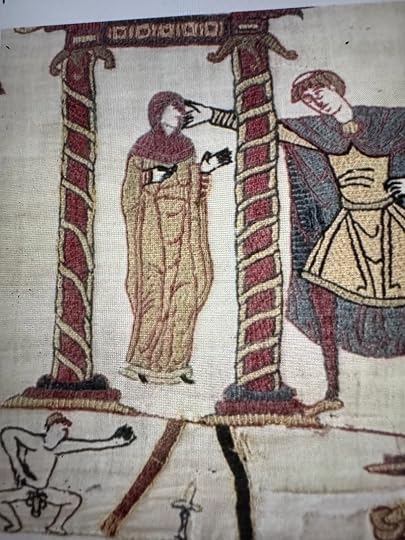
Four of them are attached to men. Others detect five or even six men wih them, though one of those is only a pair of testicles, the penis itself obscured by an axe handle. Talk about excitable dons!
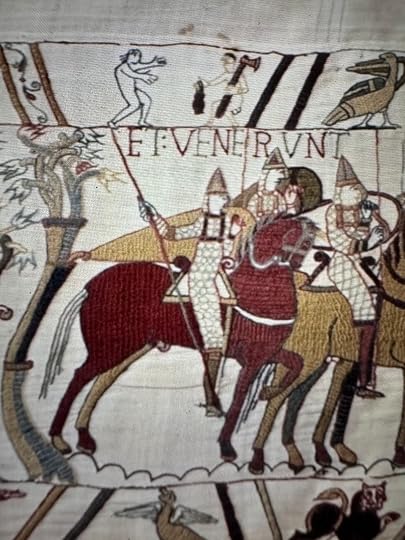
As in most things, there is a serious point to be made and these dedicated and sharp-sighted men go about it. They note that every male figure on the large middle panels display nothing but their modesty.
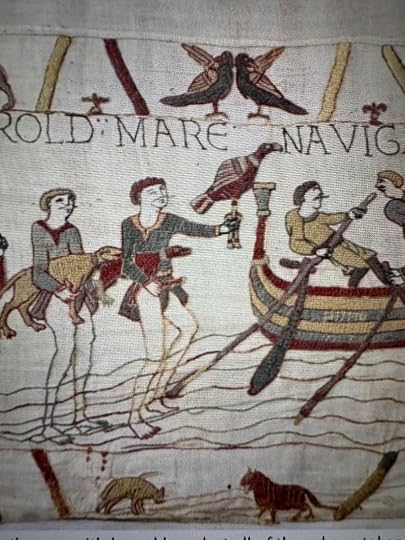
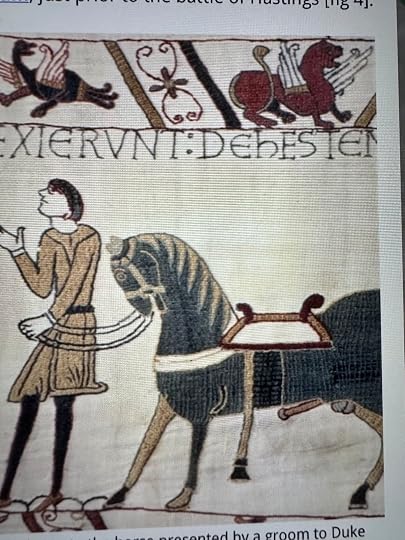
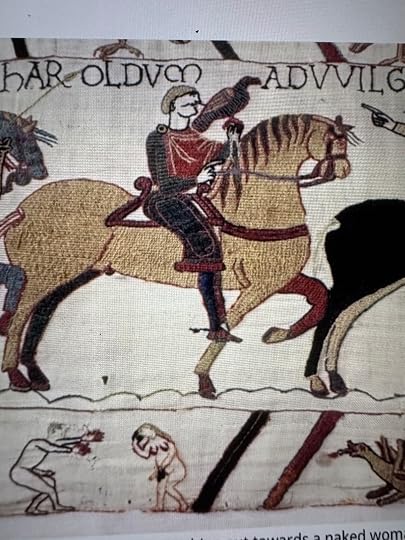
The only penises shown here are equine—88 of them—and used to denote status. King Harold rides a well-endowed stallion. William, the ultimate victor rides a more impressively endowed stallion. His half-brother Bishop Odo rides a modestly endowed stallion more befitting to a man of God. None of the 35 dogs are endowed, which seems a shame.
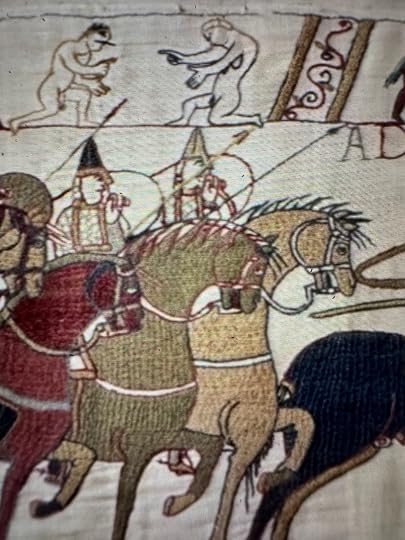
So, where are all the well endowed men? They are to be found in the smaller top and lower panels and offer a sly commentary to the main events or the ‘official version’ in the middle. They are believed to be based on those Aesop’s Fables denoting sexual trickery and deceit and provide a nudge-nudge, wink-wink aside to a particular event shown in the main panels.
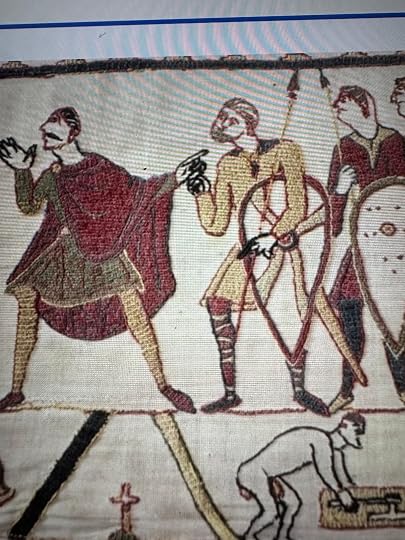
Unfortunately, your £33 entry fee is based on a ‘conveyor’ belt system allowing each visitor a bare 40 minutes. So many penises, so little time.
July 9, 2026
Girls' Shoes!
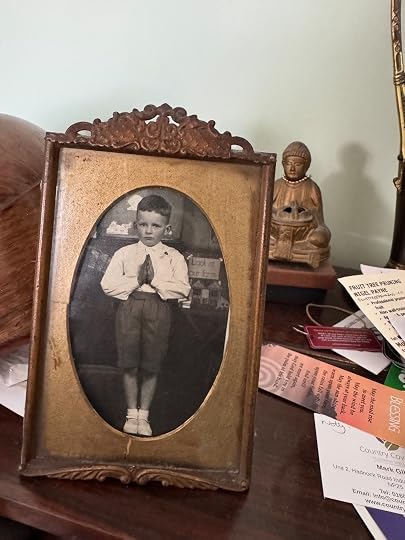
My first Holy Communion I remember as a bit of a disaster. Hospitalisation meant I missed much of the painstaking preparation and what little I had was rushed. I just knew it was immensely important without fully appreciating why. More importantly I was wearing ‘hand-me-down’ sandals. And even worse than that, girls’ sandals one of which wouldn’t buckle.
It was many years later when things finally fell into place. In particular: John 6. 35 – 57.
‘I am the bread of life. Whoever comes to me will never go hungry, and who ever believes in my will never go thirsty…and whoever comes to me I will never drive away. . . For my Father’s will is that everyone that looks to the Son and believes in him shall have eternal life, and will raise them up on the last day. . . . Whoever eats my flesh and drinks my blood …remains in me, and I in them.’
This is both powerful and unambiguous. Even so, for a long time I found it difficult to fully appreciate why priests and Catholics took such risks in C16th England: ruinous fines, broken bones and death for the sake of Holy Communion.
If I had been GK Chesterton, I would have had no problem. No problem at all.
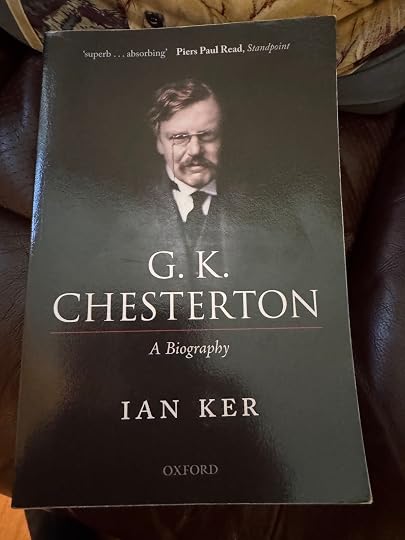
After his reception into the Catholic Church, Chesterton went to High Wycombe to be prepared by Father Thomas Walker for his first Holy Communion. Father Walker remembered the preparation as ‘one of the happiest duties I had ever to perform. . . It certainly did not take long to prepare him for he evidently knew as much as I could tell him. Nevertheless, he said I was to treat him as any child whom I was teaching…I went through the catechism very meticulously explained all the details, to which he lent a most vigilant and unswerving attention. (So aware was Chesterton) of the immensity of the Real Presence on the morning of his First Communion. . . that he was covered with perspiration when he actually received Our Lord. When I congratulated him, he said, “I have spent the happiest hour of my life.” But, at least to begin with, he found it difficult going to Holy Communion, his ‘best happiness.’ He was ‘too much frightened of that tremendous reality on the altar. “I have not grown up with it, and it is too much for me.”’
Deep down, I regret feeling none of what Chesterton experienced that first time, but then I have grown up with it. In fairness, too, I suspect Chesterton may have been feeling something else if he had been wearing girls’ shoes, one of which was unbuckled.
Girls' Sandals!
My first Holy Communion I remember as a bit of a disaster. Hospitalisation meant I missed much of the painstaking preparation and what little I had was rushed. I just knew it was immensely important without fully appreciating why. More importantly I was wearing ‘hand-me-down’ sandals. And even worse than that, girls’ sandals one of which wouldn’t buckle.
It was many years later when things finally fell into place. In particular: John 6. 35 – 57.
‘I am the bread of life. Whoever comes to me will never go hungry, and who ever believes in my will never go thirsty…and whoever comes to me I will never drive away. . . For my Father’s will is that everyone that looks to the Son and believes in him shall have eternal life, and will raise them up on the last day. . . . Whoever eats my flesh and drinks my blood …remains in me, and I in them.’
This is both powerful and unambiguous. Even so, for a long time I found it difficult to fully appreciate why priests and Catholics took such risks in C16th England: ruinous fines, broken bones and death for the sake of Holy Communion.
If I had been GK Chesterton, I would have had no problem. No problem at all.
fter his reception into the Catholic Church, Chesterton went to High Wycombe to be prepared by Father Thomas Walker for his first Holy Communion. Father Walker remembered the preparation as ‘one of the happiest duties I had ever to perform. . . It certainly did not take long to prepare him for he evidently knew as much as I could tell him. Nevertheless, he said I was to treat him as any child whom I was teaching…I went through the catechism very meticulously explained all the details, to which he lent a most vigilant and unswerving attention. (So aware was Chesterton) of the immensity of the Real Presence on the morning of his First Communion. . . that he was covered with perspiration when he actually received Our Lord. When I congratulated him, he said, “I have spent the happiest hour of my life.” But, at least to begin with, he found it difficult going to Holy Communion, his ‘best happiness.’ He was ‘too much frightened of that tremendous reality on the altar. “I have not grown up with it, and it is too much for me.”’
Deep down, I regret feeling none of what Chesterton experienced that first time, but then I have grown up with it. In fairness, too, I suspect Chesterton may have been feeling something else if he had been wearing girls’ sandals, one of which was unbuckled.