
Matt Hart's Blog
November 22, 2023
Athletes Podcast — Biographies of Sporting Icons
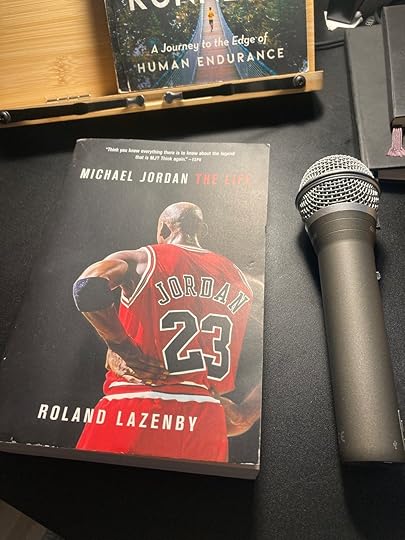
This is my new podcast.
It’s about the best athletes in the world.
It’s about books.
It’s about learning from the greatest of all time.
Condensed wisdom. Great stories.
I’ve launched with three athletes you might be interested in and am working hard to bring you more.
#1 Tommy Caldwell
#2 Kilian Jornet
#3 Lauren Fleshman
The basic podcast is free, but I hope you'll consider joining me as a Patreon member so you can get early access to new podcasts, interviews with authors and athletes, and much much more.
Download. Listen. Rate.
Then check out the books.
Send feedback.
Here’s to a new adventure!


June 19, 2021
Book Notes: "Bright Lights, Big City" by Jay McInerney
"Bright Lights, Big City" by Jay McInerney

Paperback, 182 pages
Published 1984 by Vintage
ISBN-10 : 0394726413 | ISBN-13 | 978-0394726410
Date Finished: Jun 19, 2021
How strongly I recommend it: 8/10
Find it at BookShop.org or Amazon
In my reading travels, I stumbled across a reference to the enormous popularity of the book “Bright Lights, Big City” when it was published in the mid-80s, so I went and picked it up. It’s a frenetic and fast paced look at a drug addict with a literary job in New York City in an era when everyone, it seemed, was doing cocaine. It was a fun repreive from some of the other heavy books I’ve been reading and a great reminder to read more fiction.
My Notes:
Tad's mission in life is to have more fun than anyone else in New York City, and this involves a lot of moving around, since there is always the likelihood that where you aren't is more fun than where you are.
You want to be like that. You also think he is shallow and dangerous. His friends are all rich and spoiled, like the cousin from Memphis you met earlier in the evening who would not accompany you below Fourteenth Street because, he said, he didn't have a lowlife visa.
Your presence here is only a matter of conducting an experiment in limits, reminding yourself of what you aren't. You see yourself as the kind of guy who wakes up early on Sunday morning and steps out to cop the Times and croissants. Who might take a cue from the Arts and Leisure section ad decide to check out an exhibition—...
What you need is a good pep talk from Tad Allagash, but he is not to be found. You try to imagine what he would say. Back on the horse. How we're really going to have some fun. Something like that. You suddenly realize that he has already slipped out with some rich Hose Queen.
But there she is in her pegged pants, a kind of doo-wop Retro ponytail pulled off to the side, as eligible a candidate as you are likely to find this late in the game. The sexual equivalent of fast food.
If an error slips into the magazine, it is one of you, and not the writer, who will be crucified. Not fired, but scolded, perhaps even demoted to the messenger room or the typing pool. [fact-checkers at the magazine]
"Is she pissed," you ask.
"I wouldn't put it that way," Wade says, "I like that word better the way the British use it—colloquial for intoxicated: e.g., Malcolms Lowry's consul getting pissed on mescal in Quauhnahuac, if I remember the name of the town correctly.
"Still got that nasty sinus problem, I see." Wade gives you a knowing look. Though he prides himself on being hip, he is too fastidious to do anything dangerous or dirty. You suspect that his sexual orientation is largely theoretical. He'd take a hot piece of gossip over a warm piece of ass any day of the week.
The writer, a former restaurant critic, lavishes all his care on adjectives and disdains nouns. He describes an aging cabinet minister as "nubbly" and a rising socialist as "lightly browned." You believe that Clingfast gave you this piece in order to see you hang yourself.
The people in the Verification Department tend to look down on fiction, in which words masquerade as flesh without the backbone of fact. There is a general sense that if fiction isn't dead, it is at least beside the point.
All the magazine fiction passes through the department, since no one else wants it you take it upon yourself to do the routine checking—make sure that if a story set in San Francisco contains a psycho named Phil Doaks, there is no Phil Doaks in the San Francisco phone book who might turn around and sue.
If you were Japanese, this would be the time to commit seppuku. Pen a farewell poem about the transience of cherry blossoms and the fleet transit of youth, wrap the sword blade in white silk, plunge it home and pull upward, rightward through your intestines. And no whimpering or sour expressions, please. You learned all about the ritual while checking an article on Japan. But you lack the samurai resolution. You are the kind of guy who always hopes for a miracle at the last minute.
Nothing seems to be what you want to do until you consider writing. Suffering is supposed to be the raw stuff of art. You could write a book. You feel that if only you could make yourself sit down at a typewriter you could give shape to ...
Along the bar are faces familiar under artificial light, belonging to people whose daytime existence is only a tag—designer, writer, artist.
She asks you about writers and artists on the staff. You dish up a standard portion of slander and libel that would never pass the Clinger's requirements of verification.
Once upon a time, you assumed you were very likable. That you had an attractive wife and a fairly interesting job seemed only your due. You were a good guy. You deserved some of the world's booty. After you met Amanda and came to New York, you began to feel that you were no longer on the outside looking in.
Tad comes back, pleased with himself. "Bingo," he says.
It's somewhere past midnight. Anything that starts now is not going to end at a reasonable hour. You think about slipping out and heading home.
She introduced her mother as Dolly. The feed-and-grain salesman, you surmised, was no longer in the picture. There was tremendous tension in the cramped living room. Dolly chain-smoked Kools, flirted with you, and tossed offhand jabs at Amanda.
You both despised people who thought an invitation to X's birthday bash anyway, with your tongues in your cheeks, and while Amanda circulated you snorted some of X's very good friend's private stash of pink Peruvian flake in the upstairs lounge.
You have been inclined of late to underestimate the goodness of the race.
“She can’t hurt you. Nothing can hurt the samurai who enters combat fully resolved to die.”
"Not so dark that she couldn't see you were her ticket out of Trailer Park Land. Bright lights, big city. If you really wanted to do the happy couple thing you shouldn't have let her model. A week on Seventh Avenue would warp a nun.
You know for a fact, or at least you have it on good authority from Amanda, who once did location work with her, that she is a martyr to the search for the perfect nose.
Amanda is, or was, a perfect eight: hips thirty -four, waist twenty-three, bust thirty-three. You also know her shoe, glove and ring size. Clara would be proud. You have all the numbers.
"Omniscience must be a terrible burden, Michael. How do you bear it?"
"You know what I mean. I should know these things. I don't have much time and there's so much I've always wondered about. I was brought up to think sex was an ordeal that married women had to endure. It took me a long time to get over that idea. I feel sort of cheated."
June 9, 2021
Book Notes: "The Nature Fix" by Florence Williams
“The Nature Fix: Why Nature Makes us Happier, Healthier, and More Creative” by Florence Williams

Paperback, 289 pages
Published February 2018 by W.W. Norton & Company
ISBN-10 : 0393242714 | ISBN-13 : 978-0393242713
Date Finished: October 1, 2016
How strongly I recommend it: 9/10
Find it at BookShop.org or Amazon
I received an advanced copy of this book back in 2016 and devoured it in a couple of days.
“Thirty-six percent of people check their cell phones while having sex. Seventy percent of people sleep with their phone.”
Here’s what the data shows: People are least happy at work or while sick in bed, and most happy when they’re with friends or lovers. Their moods often reflect the weather.
As one of Mackerhon’s papers concludes: “On average, study participants are significantly and substantially happier outdoors in all green or natural habitat types than they are in urban environments.”
What (the app) Mappiness reveals—our epidemic dislocation from the outdoors—is an indictment not only of the structures and habits of modern society, but of our self-understanding.
“People may avoid nearby nature because a chronic disconnection from nature causes them to underestimate its hedonic benefits.”
So, we do things that make us tetchy, like check our phones 1,500 times a week.
American and British children spend half as much time outdoors as their parents did.
This book explores the science behind what poets and philosophers have known for eons: places matter. Aristotle believed walks in the open air clarified the mind. Darwin, Tesla and Einstein walked in gardens and groves to help them think. Teddy Roosevelt, one of the most hyper productive presidents of all time, would escape for months to the open country. ON some level they all fought a tendency to be “tired, nerve-shaken, over-civilized people” as hiker-philosopher John Muir put it in 1901.
Our nervous systems are built to resonate with set points derived from the natural world. Science is now bearing out what the Romantics knew to be true.
So why now? Probably because we’re losing our connection to nature more dramatically than ever before. Thanks to a confluence of demographics and technology, we’ve pivoted further away from nature than any generation before us.
I yearned for the mountains. My mind had trouble focusing. I couldn’t finish thoughts. I couldn’t make decisions and I wasn’t keen to get out of bed. I was perhaps, at least in part, suffering from what journalist Louv calls nature deficit disorder.
I personally like Oscar Wilde’s broad definition: “a place where birds fly around uncooked.”
Homo sapiens officially became an urban species sometime in 2008. That’s when the World Health Organization reported that for the first time more people throughout the world live in urban areas than rural ones.
Yet we think of nature as a luxury, not a necessity. We don’t recognize how much it elevates us, both personally and politically. That, ultimately, is the aspiration of this book: to find the best science behind our nature-primed neurons and to share it.
As a journalist who writes frequently about the environment, I often end up writing about the way environment hurts our health from flame retardants getting into human tissue to air pollution’s effects on the developing brain. It was both a pleasure and a revelation to consider how, instead, our surroundings can also help prevent physical and mental problems and align us with the World Health Organization’s definition of health: “a complete state of physical, mental and social well-being, and not merely the absence of disease or infirmary.”
PART ONE Looking for Nature Neurons
IN Japan… it’s gotten to the point where they’ve coined a term, karoshi—death from overwork. The phenomena was identified during the 1980s bubble economy when workers their prime started dropping dead, and the concept reverberated into the future and throughout the developing world: civilization can kill us.
I spent too much time sitting inside. I meant 10 multiple social media platforms that attenuate my ability to focus, thank itself reflect.
A couple months after I moved, I told my new doctor I was feeling depressed. She did what general practitioners everywhere are doing and set me off with a script for Zoloft.
Moving on, I tried to grasp the distress crowds favorite darling, meditation. The science is very convincing that it changes your brain in ways that make you smarter and kinder and generally less ruffled by life. The problem is, as with antidepressants, meditation doesn't work for many of us.
If there's one man who can demonstrate how forest therapy works, it's Yoshifumi Miyazaki. A physical anthropologist vice director of the Center for environment, health and field sciences at Chiba university on the outskirts of Tokyo, he believes that because humans evolved in nature, it's where we feel most comfortable, even if we don't always know it.
One powerful example: snake! Are visual cortex picks up snake patterns and movements more quickly than other kinds of patterns. It's likely that snakes even drove the evolution of our highly sensitive depth perception.
Primate too involved in places seething with venomous snakes have better vision than primates who didn't evolve in those places.
The biophilia hypothesis posits that peaceful and nurturing elements of nature helped us regain equanimity, cognitive clarity, empathy and hope.
Throughout our evolution, we've spent 99.9% of our time in nature. Our physiology is adapted to it. During every day life, a feeling of comfort can be achieved if our rhythms are synchronized with those of the environment.
By contrast, Muir wrote of time not in the wilderness, “I am degenerating into a machine for making money.”
.. found that leisure forest walks, compared to urban walks, deliver a 12 decrease in cortisol levels. But that wasn’t all; they recorded a 7 percent decrease in sympathetic nerve activity, a 1.4 percent decrease in blood pressure, and a 6 percent decrease in heart rate… also better moods and lower anxiety.
We suffer the consequences: a long trail of research dating back to the 1930s shows people who produce chronically high cortisol levels and high blood pressure are more prone to heart disease, metabolic disease, dementia and depression.
The renewed interest of late represents a convergence of ideas and events: the relentless march of obesity, depression and anxiety (even in affluent communities and despite more medication), the growing academic and cultural unease with our widening breach from the outdoors.
Will you brought a group of middle-aged Tokyo businessman into the woods in 2008. For three days, it's been a couple of hours each morning hiking. At the end, blood test showed their natural killer cells had increased 40%. Moreover, the boost lasted for seven days. A month later, their NK count was still 15% higher than when they started.
Since 2002, studies have attributed healthful properties to soil compounds like actinomycetes—which the human nose can detect at concentrations of 10 parts per trillion—and of course we harvest mod spores to make critical antibiotics like penicillin. Dirt can heal:
Sleeping with vaporized stem oil from hinoki cypress trees, resulted in 20 percent increase NK cells 20 percent. and reported less fatigue while control group no change.
What else to you suggest, Li? If you have time for a vacation don’t go to a city, go to a natural area. Try to go one weekend a month. Visit parks at least once a week. Gardening is good. On urban walks, try to walk under trees, no across fields. Go to a quite place. Near water is also good.”
… even on a snowy blustery day the effects of nature worked.
(published in PLoS ONE) blew the researchers away: a 50 percent improvement in creativity after just a few days in nature.
Among his dozen of influential studies are those showing that exercise causes new brain cells to grow especially in areas related o memory, executive function and spatial perception.
Kramer’s studies helped change the way the profession and society think. They are what scientists dream of.
“Tech is leading us in a negative direction and nature may prevent that.”
Paul Archly was warming up. “Thirty-six percent of people check their cell phones while having sex. Seventy percent of people sleep with their phone.”
Strayer: “The average person looks at their phone 150 times a day. The average teen sends 3,000 text messages a month.”
It wallops us. As Stanford neuroscientists Daniel Levity points out in The Organized Mind, our brains processing speed is surprisingly slow, about 120 bits per second. For perspective, it takes 60 bits per second just to understand one person speaking to us.
The key point, because it’s perhaps what we’ve lost by giving up our connection to the night skies, the bracing air and the companionate chorus of birds.
In other worlds, the world of office towers, traffic lanes and email isn’t ideally suited to our brains’ perceptual and cognitive systems.
One of the compelling theories about nature is that it acts like an advanced drug, a sort of smart pill that works selectively on the default network in the way new estrogen therapy makes bones stronger by targeting some estrogen receptors in the body bu not others that might increase cancer risk.
Studies show that when people walk in nature, they obsess over negative thoughts much less than when they walk in a city.
Woody Allen, “I love nature, I just don’t want to get any of it on me.”
How much of the benefits of nature are really because of what’s in nature versus silly leaving behind the bad stuff of cities and workplaces?
Between N and S Korea there is a surprisingly biologically rich Demilitarized Zone, 160-mile long, 2.5 mile wide buffer.
Maybe it was the translation, but things seemed to be bleeding out of the realm of quantifiable science and into a squigglier place.
S. Korea. Flying out of poverty and through a series of dictatorships to become one of the wealthiest democracies on the planet, the nation now boasts the fourteenth-strongest economy in the world.
“shin to bul ee,” which means “body and soil are one.” Not soul, but soil.
The data on the healing power of the forests kept rolling in. Among the things in Korean researches were finding: immune-boosting killer T cells of women with breast cancer increased after a two-week forest visit and stayed elevated for fourteen days; people who exercised in nature (as opposed to the city) achieved better fitness and were more likely to keep exercising; and unmarried pregnant woman in the forest prenatal classes significantly reduced their symptoms of depression and anxiety.
Scents immediately enter the primal brain, where the amygdala is waiting to command a fight-or-flight response. The emotional amygdala is highly wired to the hippocampus, where memories are stored. A keen sense of smell was critical as we sought food and water in scarce environments.
It’s well known that women living together in dorm rooms are able to synchronize their menstrual cycles; the reason is they are nasally detecting each other’s pheromones.
Svante Paabo is the Swedish paleogenetiist famous for sequencing the genome of Neanderthals and discovering that they interbred with early Asiatic humans (the result: all modern humans, except for Africans).
Women can smell better than men. It’s also enhanced when they are pregnant. It’s an evolutionary advantage. They can tell which baby is theirs by the smell.
Scientists have shown that the hippocampi (the hippocampus is an important brain region for memory) of London cabdrivers grow as they learn to map the city. Our individual brains are adapting to handle modern life, even from one year to the next, but that reflects flexibility, not evolution. In the mismatch between our current lives and our current brains, the primary victim is our paleolithic nervious system. No wonder, then, that when something smells really great we get happy. It's as though we've momentarily stepped through the wardrobe.
Certainly we are not the sensory animals we used to be, and neither are the animals we’ve domesticated. Wolves outperform dogs in tests of general intelligence. Are we self domesticating? Harvard Richard Wrangham makes the case that humans are becoming less aggressive as we’ve evolved into larger social groups.
Scientists have known for a long time that particulate matter from sources like diesel shortens life spans by causing cardiovascular and pulmonary problems.
Black carbon—the tiny particles spewed out in exhaust and other combustion reactions like fires and cookstoves—are blamed for 2.1 million premature deaths annually around the world.
A 2014 study estimated that trees in the United States remove 17.4 million tons of air pollution per year, providing 6.8 billion dollars in human health benefits.
Regardless of your income, the closer you live to these roads, the higher your risk of autism, stroke and cognitive decline in aging, although the exact reasons haven’t been teased out.
In 2010 a young South Korean man collapsed and died after playing fifty straight hours of StarCraft, prompting the government to ban some games between midnight and 6am for anyone under sixteen.
“Cities are a human zoo and I think schools are a human zoo too,” Park continues. “We cannot give up those systems, city and schools. The forest is the only exit we have for those humans who live in the human zoo.”
I was after alpha waves. When the electricity in the alpha wavelength dominates parts of the brain, it’s a sign that you are not hassled by small distractions, probably-solving or, my peeve, meal planning.
“Noise” is undated sound, and levels from human activity have been doubling about every thirty years, faster than population growth. Traffic on roads in the United States tripped between 1970 and 2007.
Human activities in general increase background noise levels by about 30 decibels. The official word for the human-made soundscape is the anthrophone.
By his count, the entire continental United States has fewer than a dozen sites where you can’t hear human-made noise for at least fifteen minutes at dawn.
In fascinating studies, people have been hooked up to electrocardiogram monitors while sleeping through plane, train and traffic noise. Whether or not they woke up, their sympathetic nervous systems reacted dramatically to the sounds, elevating their heart rates, bloop pressure and respiration.
.. this makes sense from an evolutionary standpoint. Sleeping or hibernating animals must still maintain their capacity to react to danger.
If as Stanford neuroscientist Robert Sapolsky points out, lots of mirostresses administer a slow drip over time add up to chronic stress, then even something as harmless as airplanes heard during sleep can accrue in the stress bank. pg 102
: for every 5-decibel increase in noise, reading scores dropped the equivalent of a two-month delay, so that kids were almost a year behind in neighborhoods that were 20 decibels louder (results were adjusted for income and other factors). There's something real to the phrase "you can't hear yourself thing." pg 103
Visitors hearing loud vehicle noise rate parks as 38 percent less scenic than those who don’t hear it. pg 106
"It is a curious thing to observe how almost all patients live with their faces turn to the light, exactly as plants always make their way toward the light." Oliver Sacks Page 119
"We analyze the polyp happens with computers and compare them to forests, Mayor it's actually the same, and "said Taylor. Page 127
So perhaps our comfort in nature it's not really about love for living things or the physical frisson of a good view – it's simply about fluent visual processing. Page 129
"How happy I am to be able to walk among the shrubs, the trees, the woods, the grass and the rocks! For the woods, the trees and the rocks give man the resonance he needs." Beethoven page 129
Kahn concluded that humans can "adapt to the loss of actual nature," but "we will suffer physical and psychological costs." Page 131
The human eye is well designed to respond immediately to color. In our retinas, we have three color-sensing types of cone cells primed to pick up reds, blues & greens, and those comes enjoy a direct line to the brain's visual cortex, a spot of geography in the back of the head. Page 136
Red pops out at us because we have more cone cells dedicated to picking up this color, and in many cultures, red was the earliest color given a name after black and white. pg 136
When the poet Diane Ackerman writes craving the “visual opium” of a sunset, she is not being as metaphorical as she thinks. According to Valtchanov, nature makes us happy because of a neural mechanism in our ventral visual pathway that is tuned to a mid-level frequency range like a clear radio signal. When it finds it, happy molecules flow. pg 137
Sunlight on skin: It turns out that sunlight stimulates the release of of dopamine from the retina, which in turn appears to prevent the eyeball from growing too oblong. Indoor and outdoor light are totally different beasts. Even on overcast days, outdoor light is ten times brighter and covers vastly more of the light spectrum. Educators (and Microsoft)are scrambling to come up with solutions, including installing full-spectrum indoor lights and glass ceilings over classrooms. pg 139
I find the intellectual compulsion to break apart the pieces of nature and examine them one by one both interesting and troubling. I understand it’s the way science usually works. pg 139
The results were significant effects and linear dose response that followed predictions. Compared to sitting in the van, the volunteers did not feel psychotically restored” in the city, but they did in the park and forest. .. after just fifteen minutes. pg 152
Journal of Environmental Psychology
Five hour a month recommendation. But the researchers also noted the dose-response relationship the more nature, the better you feel. five is minimum 10 you’ll reach a new level. pg 155
As we’ve seen in Part One, nature appears to have some immediate effects: a lower pulse rate and the beginnings of a parasympathetic nervous system response leading to feelings of peace and well-being. pg 155
These people may hate bugs, or the sky, or whatever, and no matter how biophilic their brains are supposed to be, they simply can’t relax in nature. pg 157
I was experiencing what the social scientists call the novelty effect, in which things that are new and fresh can make us feel good. pg 157
When we are out in nature, we are generally self-propelled, breathing in oxygen,liberating our lungs and our cardiac capillaries from their usual cramped, desk-hunched configurations, and arresting, temporarily, the slow backward death march of our telemeres. Pg 163
What changed Mitchell mind, gradually, was reading the studies from Japan that showed lower stress among forest walkers but not city walkers. Pg 164
Time in nature, as the structure of this book suggests, appears to have a dose curve. Five minutes is good; thirty-minute stroll is better. Pg 164
Interestingly, though, it was an early American psychologist, Benjamin Rush, who first popularized the idea of nature-ish therapy for his mental patients in an 1812 treatise: "it has been remarked, that the maniacs of the male sex in all hospitals, who assist in cutting wood, making fires, and digging in a garden... often recover, while persons, whose rank excerpts them from such services, languish away their lives within the walls of the hospital." go 173
She described the typical progression of patients, and it resembles the experience of Ottosson during his recovery. For the first week, the participants often spend their garden hours lying down alone in the garden, either in a hammock or on the ground. Because the program operates year-round, they wear large insulated snow-suits as needed. “Many cannot feel anything bc of severe depression. “Now I can taste coffee and enjoy it. “ pg 177
Nature appears to act directly upon our autonomic systems, calming us, but it also works indirectly, through facilitating social contact and through encouraging exercise and physical movement. pg 178
The idea of solvitur ambulando (in walking it will be solved) has been around since St. Augustine, but well before that Aristotle thought and taught while walking the open-air parapets of the Lyceum. It has long been believed that walking in restorative settings could lead not only to physical vigor but to mental clarity and even bursts of genius, inspiration (with its etymology in breathing) and overall sanity. ... Jefferson walked to clear his mind, while Thoreau and Nietzsche, like Aristotle, walked to think. "All truly great thoughts are conceived while walking," wrote Nietzsche in Twilight of the Idols. And Rousseau wrote in Confessions, "I can only meditate when I am walking. When I stop, I cease to think; my mind only works with my legs." pg 181
“I think that I cannot preserve my health and spirits, unless I spend four hours a day at least—and it is commonly more than that—sauntering through the woods and over the hills and fields, absolutely free from all worldly engagements.” Thoreau
The phone talkers by contrast may have been relaxed by being outside in the fresh air, but they were not as liberated from daily cares. 191-192
Note to self: leave the cell phone at home, or at least deep in your pocket, hen in need of cognitive reboot. pg 102
“The more time participants spent in nature, the greater well-being they reported.” pg 195
" by fire they come alive."
He's not the first to think so. The French philosopher Gaston Bachelard wrote in 1938 that fire "begat philosophy." In drawing us together for meal preparation and warmth, fire drove evolution, selecting those of us who could be sociable, communal and even entertaining. Pg 200
In America, Emerson picked up Burke’s themes of vastness and humility, writing in his famous essay “Nature” in 1836, “Standing on the bare ground, my head bathed by the blithe air and uplifted into infinite space, all mean egotism vanishes. That secular transcendence still informs the modern environmental movement. pg 207
"Things that cause people to feel all tend to be information Rich, vast, and things that we have trouble wrapping our minds around," he said. Face tension disappears. "So basically, the body is quieting down a bit so that I can take in information in the environment." Pg 211
" at the end of the day," said Strayer, his eyes glazing the horizon, "we come out in nature not because the science says it does something to us, but because of how it makes us feel." Pg 213
"Between every two pine tree's there is a door leading to a new way of life." John Muir pg 215
PTSD was common after most of these wars—even Homer wrote about it—but it went by different names: shell shock, soldier’s heart, combat fatigue. Frederick Law Olmsted: They start and turn pale at the breaking of a stick or the crack of a percussion cap—it is a terrific disease“. PTSD wasn’t officially named and recognized by the Veterans Administration until 1980. pg 220
In war combat, the stress response isn't small or ephemeral. It's big. And it lasts for days, sometimes weeks or months. It lasts so long that the brain changes—more in some people than in others. Blame evolution. Our nervous systems are naturally hardwired for fear, telling us what to avoid and how to stay safe. Some psychologists argue that fear is our oldest emotion, existing in the earliest planetary life forms and predating even the drive to reproduce. It starts deep in our brainstem, in the Milk Dud—sized amygdala. pg 222
Our nerves systems are naturally hardwired for fear, telling us what to avoid and how to stay safe. Some psychologists argue that fear is our oldest emotion, existing in the earliest planetary life forms and predating even the drive to reproduce. It starts deep in our brainstem, in the Milk Dud-sized amygdala. pg 222
But there’s a reason we feel fear: It may have given us the gift of memory. The very reason we remember anything may be that we must remember near-misses, narrowly avoided dangers, and attacks from predators and enemies. pg 222
At its root, PTSD is a memory disorder. Brain scans of people suffering PTSD show cellular and volume changes in the hippocampus, a region that helps process memories and sits very closer to the amygdala. pg 223
Its founding principe—radical several decades ago and still surprising under appreciated—was that kids with ADHD thrive in the outdoors. Since then, ADHD diagnoses have exploded—to the point where 11 percent of America teens are said to have it—while recess , physical education, and kids’ access to nature have miserably shriveled. pg 234-235
We have come to see the restlessness that was once adaptive as a pathology. A recent advertisement for an ADHD drug listed the “symptoms” to watch for: “May climb or run excessively, have trouble staying seated.” pg 236
He points out that while common stimulant medications for ADHD like Ritalin and Adderall may improve attention skills and academic performance in many kids, they do so at the cost of killing the exploration urge, at least temporarily. “We know these are anti-play drugs,” he said. “That is clear and unambiguous.” pg 240
The bigger question is whether the drugs—and all the enforced sedentary behavior—squeeze the adventure impulse out of kids longer-term. Psychologists tend to disagree on this point, but the truths, no one really knows. It’s not a boutique question. Of the 6.4 million diagnosed kids in America, half are taking prescription stimulants, an increase of 28 percent since 2007. pg 240
As Erin Kenny, founder of Cedarsong Nature School on Vachon Island, Washing, has put it, “Children cannot bounce off the walls if we take away the walls.” tweet pg 241
It was while walking in the woods that he came up with the name: kindergarten. In it, children would absorb the natural world though all their senses. Fredrick Frobel pg 242
Finland reports the same percentage of children diagnosed with ADHD as the US, about 11 percent, mostly boys. But while most adolescents in the US are taking medication, most in Finland are not. pg 244
Tweet: A 2009 study in Pediatrics found that 30 percent of third-graders get fewer than 15 minutes of recess a day, and another study found that 39 percent of African-Aerican students had no recess compared to 15 percent of white students. pg 245
While 80 percent of seven- and eight-year-olds walked to school in 1971, by 1990 fewer than 10 percent did so. pg 245
In the UK, two-thirds of schoolchildren do not know acorns from trees. pg 245
The stats are alarming: Preschoolers are the fastest-growing market for antidepressants in the United States. pg 246
More than 10,000 American preschoolers are being medicated for ADHD. pg 246
According to data from the U.S. Centers for Disease Control and Prevention, nearly one in ten children has a vitamin D deficiency. That’s 7.6 million children. Two-thirds, another 50.8 million, are considered vitamin D “insufficient.” pg 246
It seemed the playful, exploratory, and physical adolescent yours exist to boost learning in mammals, just as SOAR’s Willson intuited. Or, as Green more formally put it, “the adolescent prefrontal cortex is ready to be molded by environmental experience.” pg 246
Tweet: One thing is clear: human brains seem to grow best when they get some time outside. pg 246
Chapter 12
In 2008, our species crossed a significant Rubicon of habitat: for the first time, a majority of us lived in cities. We could now be called, as at least one anthropologist has suggested, Metro sapiens. pg 253
This momentous urban migration could be a good thing. Cities are often the most creative, wealthiest and most energy-efficient places to live. City dwellers typically experience better sanitation, nutrition, education, gender equality and access to health care, including family planning, that their rural counterparts. pg 253
Back in 1965, animal behaviorist Paul Leyhausen described what happens to cats in unnaturally crowded environments: they become more aggressive and despotic, turning into a “spiteful mob.” pg 254
Here are some essential take-homes: we all need nearby nature: we benefit cognitively and psychologically from having trees, bodies of water, and green spaces just to look at; we should be smarter about landscaping our schools, hospitals, workplaces and neighborhoods so everyone gains. pg 254-255
I took away two big lessons from Singapore. For greenery to truly seep into all neighborhoods, there needs to be—if not a totalitarian regime—then at least a strong government vision. Second, urban nature will serve us best when it’s allowed to be a little bit wild, at least in spots. pg 261
In fact, trees might be our single best tool for urban salvation. City dwellers get most excited about two natural features: water and trees. pg 261
Urban trees provide not just aesthetic pleasure but concrete health benefits. … taken as a whole they generally improve people’s physiology in several important ways. pg 262
But are not exercise and the open air within the reach of us all? ~ Walt Whitman pg 265
If there’s one major theme of this book, it’s that the benefits of nature work along a dose curve. pg 265
Moving up the pyramid are weekly outings to parks and waterways, places where the sounds and hassles of the city recede, places that we should aim to imbibe at least several hours a week in the Finish fashion. pg 266
The more we recognize these innate humans needs, the more we stand to gain. pg 266
Distilling what I learned, I came up with a kind of ultra simple coda: Go outside often, sometimes in wild places. Bring friends or not. Breathe.
We still have a long way to go. You can see poverty from space. My own city, D.C., has a clear “tree line” that can be seen in satellite photos analyzed by the Washington Post. To the west of the line, in the affluent Northwest quadrant, the streets glow green from above. To the east, where 40 percent of residents live in low-income neighborhoods, the area looks flat and gray. pg 267
Why shouldn’t doctors prescribe time outside to their patients? It’s taken nearly 150 years for Olmsted’s idea to gain some traction. There aren’t many doctors sending their urban patients to the park, but there are a few. Nooshin Razani, a pediatrician at Children’s Hospital in Oakland, California, has forged a partnership with local parks so inner-city kids can get to them more easily and more often. pg 268
"But are not exercise and the open air within the reach of us all?" Walt Whitman pg 265
April 5, 2021
Book Notes: "Hell's Angels" by Hunter S. Thompson
“Hell's Angels: A Strange and Terrible Saga: A Strange and Terrible Saga” by Hunter S. Thompson

Paperback, 273 pages
Published 1996 by Ballantine Books
ISBN-10: 9780345410085 (ISBN-13: 978-0345410085)
Date Finished: December 23, 2019
How strongly I recommend it: 2/10
Find it at BookShop.org or Amazon
The moment I finished I thought, That was more of a struggle to get through than I thought it would be. With the exceptions of a few brilliant passages, I was underwhelmed. This is a complete surprise to me, as I found some of Thompson's magazine writing to be dazzling (especially his political writing in GQ magazine). I know it was unique for its time, but I'm realizing maybe I've grown to be a fan of his devil-may-care writers-persona more than his books.
I gave it 2 stars. This is undoubtedly an unpopular view, but I could barely get through it this book. There is no real character development. The lede was a mess and an illogically bad choice in my opinion. Why start with the news coverage? Start the goddamn book with you being stomped-out by the Hell’s Angels, Thompson!
I appreciate the character, or the image of Hunter S.Thiompson, the iconoclast, the badass, the madman, more than the author I suppose... and that makes me a little sad.
My Notes:
They rode with a fine, unwashed arrogance, secure in their reputation as the rottenest motorcycle gang in the whole history of Christendom. Pg 5
: the Slaves were the class of Los Angeles, and their women clung tight to the leather backs of these dog-eating , crotch-busting fools as they headed north for their annual party with the Hell’s Angels, who even then viewed the “L.A. bunch” with friendly condescension… pg 5
Beyond that, in his twenty-seven years he has piled up a tall and ugly police record: a multitude of arrests, from petty theft and better, to rape, narcotics offenses and public cunnilingus—and all without a single felony conviction, being officially guilty of nothing more than what any spirited citizen might commit in some drunk or violent moment of animal weakness. Pg 7
But a Labor Day Run is the biggest event on the Hell’s Angels calendar; it is the annual gathering of the whole outlaw clan, a massive three-day drunk that nearly always results in some wild, free-swinging action and another rude shock for the squares. Pg 7
… patch of a winged skull wearing a motorcycle helmet. Pg 8
In any gathering of Hell’s Angels, from five to a possible hundred and fifty, there is no doubt who is running the show: Ralph “Sonny” Barger, the Maximum Leader, a six-foot, 170-pound warehouseman from East Oakland, the coolest head in the lot, and a tough, quick-thinking dealer when any action starts. Pg 10
Country had died in the best outlaw tradition: homeless, stone broke, and owning nothing in this world but the clothes on his back and a big bright Harley. Pg 12
"Last fall, two teen-age girls were take forcibly from their dates and raped by several members of the gang” pg 24-25
“And besides, one girl refused to testify and the other was given a lie-detector test and found to be wholly unreliable.” Pg 25
Afterward, they may ride off again to seek some new nadir in sordid behavior. Pg 26
At the beginning of March 1965 the Hell’s Angels were virtually nonexistent.
The Lynch-Newsweek account of the Porterville incident was hazy in detail, but brutally clear with its image of Hell’s Angels swarming over the town and wreaking havoc on the terrified citizenry. Pg 32
Do the Hell’s Angels actually “take over a town”—as they’re often accused of doing—or merely clog a Main Street and a few local taverns with drunken noise, thus flaying the sensibilities of various locals? Pg 32
If the “Hell’s Angels Saga” proved any one thing, it was the Angels as they exist today were virtually created by Time, Newsweek and The New York Times. Pg 34
The Times took the Lynch report at face value and simply reprinted it in very condensed form. The headline said: CALIFORNIA TAKES STEPS TO CURB TERRORISM OF RUFFIAN CYCLISTS. Pg 34
The incident never occurred. It was created, as a sort of journalistic montage, by the correspondent who distilled the report. But the Times is neither written nor edited by fools, and anyone who has worked on a newspaper for more than two months knows how technical safeguards can be built into even the wildest story, without fear of losing reader impact. What they amount o, basically, is the art of printing a story without taking legal responsibility for it. The word “alleged” is a key to this art. Other keys are “so-and-so said” (or “claimed”), “it was reported” and “according to.” In fourteen short newspaper paragraphs, the Times story contained nine of these qualifiers. Pg 34
…stage of the game, there were a few who felt they were asking a fair price for their act… and their faith was justified when “one magazine” came through with either $1,000 (according to the Times) or $1,200 (according to the Angels).
The result was a piece of slothful, emotionally biased journalism, a bad hack job that wouldn’t have raised an eyebrow or stirred a ripple had it appeared in most American newspapers… but the Times is a heavyweight even when it’s wrong, and the effect of this article was to put the seal of respectability on a story that was, in fact, a hysterical, politically motived accident. Pg 35
Until the Monterey rape they were bush-league hoods known only to California cops and a few thousand cycle buffs. Pg 35
My dealings with the Angels lasted about a year, and never really ended. I came to know some of them well and most of them well enough to relax with. But at first—due to numerous warnings—I was nervous about even drinking. I met a half dozen Frisco Angels one afternoon in the bar of a sleazy dive called the DePau Hotel.. pg 43
Only a few cultivated a noticeable body odor. Those with wives and steady girl friends bathe as often as most half-employed people, and make up for it by fouling their clothes more often. Pg 45
The ceremony varies from one chapter to another but the main feature is always the defiling of the initiate’s new uniform. A bucket of dung and urine will be collected during the meeting, then poured on the newcomer’s head in a solemn baptismal. Or he will take off his clothes and stay naked while the bucket of slop is poured over them and the others stomp it in. Pg 45
That was in early spring of 1965. By the middle of summer I had become so involved in the outlaw scene that I was no longer sure whether I was doing research on the Hell’s Angels or being slowly absorbed by them.
.. views the future with the baleful eye of a man with no upward mobility at all. Pg 53
Here was the Examiner, which had always viewed the Angels with fear and loathing, suddenly presenting them as misunderstood patriots. Pg 56
Whatever else might be said about the Angels, nobody has ever accused them of modesty, and this new kind of press was pure balm to their long-abused egos. Pg 57
… they were generally pleased with the result. At the same time they reviewed their traditional view of the press: not all reporters were congenital liars—there were exceptions, here and there, with the guts of keen understanding to write the real stuff. Pg 57
But that was Bobo’s gig; before the Hell’s Angels came into his life he was one of San Francisco’s more promising middleweight boxers, and it was no feat for him to put down a half dozen unsuspecting tavern brawlers. Later, when he became a karate expert, he happily destroyed a new generation of challengers. Pg 60
The Angels say they are named after a famous World War I bomber squadron that was stationed near Los Angeles and whose personnel raced around the area on motorcycles when they weren’t airborne. Pg 66
A motorcyclist has to drive as if everybody else on the road is out to kill him. Pg 68
We began to see that the Hell’s Angels were assuming a mythical character. They had become golf heroes—vicarious exemplars of behavior most youth could only fantasize (unless swept away in mob activity), and legendary champions who would come to the rescue of the oppressed and persecuted. Transaction article Pg 69
The Hell’s Angels try not to do anything halfway, and outcasts who deal in extremes are bound to cause trouble, whether they mean to or not. This, along with a belief in total retaliation for any offense or insult, is what makes the Angels such a problem for police and so morbidly fascinating to the general public. Pg 70
Many of their “assault victims” are people who have seen too many Western movies; they are victims of the John Wayne complex, which causes them to start swinging the moment they sense any insult. This is relatively safe in some areas of society, but in saloons frequented by outlaw motorcyclists it is the worst kind of folly. Pg 70
The outlaws take the “all on one” concept so seriously that it is written into the club charter as Bylaw Number 10: “When an Angel punches a non-Angel, all other Angels will participate.” Pg 70
The root definition remains the same: a dangerous hoodlum on a big, fast motorcycle. Pg 73
The only consistent difference between the Hell’s Angels and the other outlaw clubs is that the Angels are more extreme. Most others are part-time outlaws, but the Angels play the role seven days a week: pg 74
Chapter presidents have no set term in office, and a strong one, like Barger, will remain unchallenged until he goes to jail, gets killed or finds his own reasons for hangin up the colors. Pg 74
Professional motorcycle racers, who have learned the hard way, wear helmets, gloves and full-length leather suits.
But not Hell’s Angels. Anything safe, they want no part of. They’ll stoop to wearing shades or weird goggles on the road, but more for show than protection. Pg 81
Many a groveling merchant has made a buck off the Hell’s Angels. All they ask is tribute, and naked fear is a very pure form of it. Pg 84
There are literary critics who insist that Ernest Hemingway was a tortured queer and that Mark Twain was haunted to the end of his days by a penchant for interracial buggery. It is a good way to stir up a tempest in the academic quarterlies, but it won’t change a word of what either man wrote, more alter the impact of their work on the world they were writing about. Pg 85
A group of them seen on a highway for the first time is offensive to every normal notion of what is supposed to be happening in this country; it is bizarre to the point of seeming like a bah hallucination… and this is the contest in which the term “outlaw” makes real sense. To see a lone Angel screaming through traffic—defying all rules, limits and patterns—is to understand the motorcycle as an instrument of anarchy, a tool of defiance and even a weapon. Pg 88
There is something pathetic about a bunch of men gathering every night in the same bar, taking themselves very seriously in their ratty uniforms, with nothing to look forward to but the chance of a fight or a round of head jobs from some drunken charwoman. Pg 88-89
The little bikes may e fun, like the industry people say, but Volkwagens are fun too, and so are BB guns. Big bikes, Ferraris and .44 Magnum revolvers are something beyond fun; they are man-made machines so powerful and efficient in their own realms that they challenge a man’s ability to control them, to push them to the limits of their design and possibilities. 92
In the end I narrowed it down to the Sportster, the Bonneville and the BSA Lightning Rocket. All three will run circles around a stock Harley 74, and even the Angel version of the dog—which is anything but stock—can’t run with the newest and best production models without extensive alterations and a very wavy rider. Pg 92-93
With rare exceptions, the outlaw bike is a Harley 74, a giant of a motorcycle that comes out of the Milwaukee factory weighing seven hundred pounds, but which the Angels strip down to about five hundred. Pg 93
A chopper hog, or “chopper,” is little more than a heavy Fram, a tiny seat and a massive, 1,200-cubic-centimeter (or 74-cubic-inch) engine. Pg 94
A fanatic can satisfy the mirror requirement by using a tiny dentist’s mirror, with is technically legal. Pg 95
There is not a Hell’s Angel riding who hasn’t made the emergency-ward scene, and one of the natural results is that their fear of accidents is well tempered by a caller kind of disdain for physical injury. Outsiders might call it madness or other, more esoterica names… but the Angels inhabit a world in which violence is as common as spilled beer, and they live with it as easily as ski bums live with the risk of broken legs. Pg 96-97
People who know them are keenly aware of the “all on one” ethic, which is not covered by any statue of limitations. An Angel on his own turf is as secure as a Mafia runner in a tough Italian neighborhood. Pg 97
Justice is not cheap in this country, and people who insist on it are usually either desperate or possessed by some private determination bordering on monomania. Pg 105
Buck, a huge Indian on a purple Harley, told me later that they’d pegged me for a cop. Pg 112
Earrings, Wehrmacht headgear and German Iron Crosses are virtually part of the uniform—like the grease-caked Levi’s, the sleeveless vest and all those fine tattoos: “Mother,” “Dolly,” “Hitler,” “Jack the Ripper,” swastikas, daggers, skulls, “LSD,” “Love,” “Rape,” and the inevitable Hell’s Angels insignia. Pg 113
As the most-reprehensible celebrities in years, it was inevitable that their trek to Bass Lake would draw large crowds of horrified burghers all along the route. Pg 117
But there is also a quiet menace, an egocentric fanaticism tempered by either years at the helm of a legion of outcasts who, on that sweat afternoon, were measuring the sheriff purely by his size, his weapon and the handful of young rangers who backed him up. Pg 131
Most of the Angels are obvious Anglo-Saxons, but the inkhorn attitude is contagious. The few outlaws with Mexican or Italian names not only act like the others but somehow look like them. Even Chinese Mel from Frisco and Charley, a young Negro from Oakland, have the Linkhorn gait and mannerisms. Pg 156
At first I thought it was for evidence, but after watching them urge the Angels to strike colorful poses and dive into the lake with their clothes on, I realized that the cops were as fascinated as any first-time visitor at the Bronx Zoo. Pg 157
He would ride his bike into a river to fight a bull moose if he thought the beast had it in for him. Pg 160
In accordance with their ethic of excess in all things, the Angels booze with a zeal that seems hardly human. Pg 162
Many swell up with beer, but the swelling bears little resemblance to the stylish pot of the desk-bound world. Even the few fat Angels are built more like beer barrels than water balloons. Pg 172
… and if times are lean all around, a foraging party will hit a supermarket and steal everything they can carry. Few clerks will try to stop a dangerous hoodlum rushing out the door with two hams and three quarts of milk. The outlaws are not apologetic about stealing food, even though it goes against their pride. Pg 173
That sounds a bit harsh. Invariably, the girls who pursue the Hell’s Angels are in the grip of some carnal urgency, and some are deranged sluts, but few really look forward to being gang-raped. Pg 191
More than half of the fifty or so outlaws
Pg 195
More than half of the fifty or so outlaws still standing around the bonfire had lost all contact with reality. Pg 195
The most common penalty for crashing is the urine shower; those still on their feet gather quietly around the sleeper and soak him from head to foot. Pg 195
He introduced himself as Jerry Cohen. Just as he started to explain what he wanted, Tiny rushed up to Barger, threw his arms around him and planted a sloppy wet kiss on his mouth. This is a guaranteed square-jolter, and the Angels are gleefully aware of the reaction it gets. “They can’t stand it,” says Terry. “It blows their minds every time—especially the tongue bit.” Pg 196-197
They consider me a slow learner, a borderline case with only splinters of real potential. My first plunge into folly was getting a limey bike, an insult that I only partially redeemed by destroying it in a high-speed crash and laying my head open. Pg 197
They smoke marijuana so openly that it’s hard to understand why they’re not all in jail for it. California’s marijuana laws are among the most primitive manifestations of American politics. Two convictions for possession means a minimum five years. Pg 211
I was vaguely afflicted by this syndrome, since my name was becoming associated with the Angels and there was a feeling in the air that I could produce them whenever I felt like it. This was never true, though I did what I could to put the outlaws onto as much free booze and action as seemed advisable. At the same time I was loath to be responsible for their behavior. Pg 226
The only problem with the Angels’ new image was that the outlaws themselves didn’t understand it. It puzzled them to be treated as symbolic heroes by people with whom they had almost nothing in common. Pg 227
Conclusions are a bit hazy at this point, and the rash of LSD laws passed in 1965 and ’66 will probably abort any meaningful research on the subject for many years. Pg 236
Several months earlier I would have laughed the whole thing off as some kind of twisted, adolescent delusion… but after spending most of that summer in the drunk-bloody, whore-walloping taverns of East Oakland, I had changed my ideas about reality and the human animal. Pg 241
It is a noisy, ugly, mean-spirited place, with the sort of charm that Chicago had for Sandburg. It is also, a natural environment for hoodlums, brawlers, teen-age gangs, and racial tension. Pg 244
One is passive and the other is active, and the main reasons the Angels are such good copy is that they are acting out the day-dreams of millions of losers who don’t wear any defiant insignia and who don’t know how to be outlaws. The streets of every city are thronged with men who would pay all the money they could get their hands on to be transformed—even for a day—into hairy, hair-fisted brutes who walk over cops, extort free drinks from terrified bartenders and thunder out of town on big motorcycles after raping the banker’s daughter. Even people who think the Angels should all be put to sleep find it easy to identify with them. Pg 261
Postscript:
The first blow was launched with no hint of warning and I thought for a moment that it was just one of those drunken accidents that a man has to live with in this league. But within seconds I was clubbed from behind by the Angel I’d been talking to just a moment earlier. Then I was swarmed in a general flail. Pg 272
March 6, 2021
Book Notes: "Cribsheet" by Emily Oster

“Cribsheet: A Data-Driven Guide to Better, More Relaxed Parenting, from Birth to Preschool" by Emily Oster
Hardcover, 322 pages
Published 2019 by Penguin Press
ISBN-10 : 0525559256 (ISBN-13 : 978-0525559252)
Date Read: March 5, 2021
How strongly I recommend it: 8/10
Find it at BookShop.org or Amazon
A wonderful guide through the biggest decisions around having a child.
My Notes:
We all want to be good parents. We want our choices to be the right ones. So, after we make the choices, there is a temptation to decide the are the perfect ones. Psychology has a name for this: avoiding cognitive dissonance. pg xxii
So a bath isn't a terrible thing, but there is also really no reason to bathe your kid other than some gross-out factor. Most of the blood can just kind of be wiped off. pg 8
Circumcision is an optional procedure. It's not common everywhere—for example, Europeans typically do not circumcise. It has historically been quite common in the US, although circumcision rates have declined some over time, from an estimated 65 percent of births in 1979 to 58 percent in 2010. pg 9
The American Academy of Pediatrics suggests the health benefits of circumcision outweigh the costs, but they note correctly that both benefits and costs are quite small. The decision will often come down to personal preference, some type of cultural linkage, or just a desire to have your son's penis look a particular way. pg 11
This paper also identified the mechanism: swaddling improves sleep because it limits arousal. pg 30
Infants who are put to sleep on their stomach and are swaddled are at an increased risk of SIDS relative to those put to sleep on their stomach alone. But the crucial thing to avoid is putting your baby to sleep on their stomach, not swaddling. But you basically cannot defeat a crying baby with hard work. There may be some things that improve this in the moment, but babies cray—some of them cry a lot—and there is often really nothing you can do. pg 33
Babies who cry a lot are often described as "colicky." Infantile colic isn't a biological diagnosis like strep throat, but a label we give to babies who cry a lot for no identifiable reason. A common definition of colic (although not the only one) is the rule of three: unexplained crying for more than three hours a day for more than three days a week for more than three weeks. pg 33
Infant crying links to postpartum depression and anxiety, and parents—both parents—will need a break. Try to find one, even if it means leaving the infant crying in their crib for a few minutes while you shower. They will be fine. pg 34
.. there is a commonly accepted rule: no sex until six weeks postpartum, after you have had a checkup with your doctor. This is so often cited that I had assumed it was evidence based, that there was some biological reason why you need to wait this long, no more, no less.
In fact, this is completely fabricated. There is no set waiting period for resuming sex after giving birth. The six-week rule appears to have been invented by doctors so husbands wouldn't ask for sex. pg 50
Looking at the data—which, in this case, may not be so helpful, since really the question is when you want to do it—most couples have resumed at least some sexual activity by eight weeks postpartum. pg 51
A final note: Sex after childbirth can be painful. Breastfeeding promotes vaginal dryness and lowers your sex drive. In addition, injuries during birth can have persistent effects. Many women, after having a small person attached to them nearly constantly, really do not want to be touched. pg 51
Many women experience continued pain and discomfort during sex after giving birth. This is not something you should ignore or grit your teeth and learn to live with. There are treatments that can help, including physical therapy. If sex is painful, talk to your doctor about it. pg 51
The prevalence of postpartum depression, even if we focus only on diagnosed cases, is high. An estimated 10 to 15 percent of women who give birth with experience it. pg 52-53
But women with postpartum anxiety also tend to find themselves fixated on terrible things that could happen to the baby, unable to sleep even if the opportunity is there, and engaging in obsessive-compulsive behaviors around infant safety. This can be treated with therapy or, in more severe cases, with medication. pg 56
The study found two significant impacts: In the first year, breastfed babies had fewer gastrointestinal infections (i.e., diarrhea) and lower rates of eczema and other rashes. To put some numbers to it, 13 percent of the children of mothers in the group that wasn't encouraged to breastfeed had at least one diarrhea episode, versus only 9 percent of those whose mothers were encouraged. pg 75
SIDS is rare; ear infections and colds are common. Your kids will get colds for sure, whether you breastfeed or not. SIDS deaths, in contrast, occur in about 1 of every 1,800 births; among babies with no other risk factors (not premature, not sleeping on their stomachs), this is perhaps 1 in 10,000. pg 77
Across a wide variety of studies and locations, there seems to be a relationship here, and a sizable one—perhaps a 20 to 30 percent reduction in the risk of breast cancer. Breast cancer is a common cancer—almost 1 in 8 women will have a form of it at some point in their lives—so this reduction is big in absolute terms. pg 85
Across a wide variety of studies and locations, there seems to be a relationship here, and a sizable one—perhaps a 20 to 30 percent reduction in the risk of breast cancer. [for women who breastfeed] pg 85
Putting them together, breastfeeding initiation and success seem to be higher with skin-to-skin contact, including after a caesarean section. pg 91
Many infants struggle to latch on correctly. Without a good latch, the baby will not get enough milk, and it can be extremely painful for Mom. pg 92
For many women, breastfeeding will hurt for the first couple of weeks whether the baby is latched well or not, so you cannot reliably use pain as a signal. pg 93
For most women, even those whose babies latch well, breastfeeding is at least somewhat painful early on. Any pain should be mostly gone after the first minute or two of nursing, not continue. pg 95
Despite warnings, there is simply no evidence that the use of pacifiers impacts breastfeeding success. This has been shown by more than one randomized trial, including trials that start infants on a pacifier at birth. pg 96
Despite a basically reasonable evolutionary design, this doesn't always work quite as planned. First, it can take a lot of time for your milk to start flowing. Second, even once there is milk, you can have an under-supply. And third, on the opposite end, you can have an oversupply. pg 99
Smoking during pregnancy slows down milk production, as does obesity. Women who have a caesarean section are more likely to have later onset, as are those who have an epidural during labor. pg 100
You can also search for virtually any drug in the LactMed database online. pg 105. [what drugs are transferred to baby during breastfeeding]
However, some babies are quite sensitive to caffeine and get very fussy and irritable. If you find this is the case, you may have to avoid it. pg 106
Your job is supposed to provide breaks for pumping, but they may not always follow the rules. pg 108
It is possible to work while pumping—in some cases—and I strongly suggest you get a hands-free pumping bra. pg 108
Even a really great pump doesn't replicate the baby. This varies across women—some women can have no problem fully breastfeeding but literally never get any milk from a pump; others find producing enough milk is no problem. pg 108
On milk supply:
- The majority of women will have their milk come in within three days after the baby's birth, but for about a quarter, it will take longer.
- The biological feedback loop is compelling: nursing more should produce more supply.
- Evidence on the effectiveness of non-drug remedies (e.g., fenugreek) on supply is limited. pg 110
The latest recommendations from the American Academy of Pediatrics are starkly opposed to the toy-and-blanket-filled crib. The AAP says infants should sleep alone in a crib (or bassinet) and should be placed in the crib on their back to sleep. There should be nothing in the crib with the baby. pg 112
When Finn was born, we had him in our room for a few weeks; Jesse slept on an air mattress in the unfinished attic. This did not feel like a long-term plan. pg 112
Excluding birth defects, SIDS is the most common cause of death for full-term infants in the first year of life in the US. By definition, SIDS is the unexplained death of a seemingly healthy infant under a year old, and 90 percent of these deaths occur in the first four months of life. pg 113
One note: If your infant does roll over, there is no need to go rolling them bac. Once they can do this on their own, they highest risk of SIDS has also passed, probably because the baby now has enough head strength to move their head to breathe more easily. pg 117
In the US, the overall infant mortality rate is around 5 deaths per 1,000 births. pg 120
Notably, there does not seem to be any elevated risk from co-sleeping after three months if both parents are not drinking or smoking. pg 120
The American Academy of Pediatrics recommends that infants be in their parents' room through at least the first six months, and ideally the first year, of life as a guard against SIDS. pg 121
The vast majority—up to 90 percent—of SIDS deaths occur in the first four months of life, so sleeping choices after four months are very unlikely to matter for SIDS. pg 122
: children who slept alone by nine months slept forty-five minutes more during the night than those who were room sharing at nine months. Sleep is crucial for child brain development; it is not just a selfish parental indulgence. pg 123
The final AAP guideline for sleep is that (aside from the baby) your child's crib should be empty, with no toys, no bumpers, no blankets or pillows. Nothing. pg 124
The Bottom Line:
- There are some broad guidelines for sleep schedules.
- Longer nighttime sleep develops around two months.
- Move to three regular naps around four months.
- Move to two regular naps around nine months.
- Move to one regular nap around fifteen to eighteen months.
- Drop napping around age three. pg 134
Vaccinations are among the most significant public health triumphs of the past hundred years (public sanitation is another good one, although less controversial). Simply put, millions of lives worldwide have been saved by the introduction of vaccines for disease like whooping cough, measles, smallpox, and polio. pg 135
Andrew Wakefield [fraudulent paper on vaccines that caused a public scare] pg 138
At the end of the day, there is simply no reason to think autism and vaccinations are linked. pg 144
Some vaccine-anxious parents favor a delayed vaccine schedule, in which children receive vaccines spaced out over a longer period of time rather than being given several at once.
There is no reason to do this, given the evidence on vaccine safety that I outlined earlier, and in fact, the risk of a febrile seizure actually increases if the MMR vaccine is given later. pg 147
The Bottom Line:
- Vaccinations are safe.
- A very small share of people have allergic reactions, which are treatable.
- There are some extremely rare adverse events, most of which occur in immune-compromised children.
- The only more common risks are fever and febrile seizures, which are also rare and do not do long-term harm.
- There is no evidence of a link between vaccines and autism, and much evidence to refute such a link.
- Vaccines prevent children from getting sick.
By comparing the outcomes of children who are born in the "six months" maternity leave policy to those born in the "year" policy, we can learn about the effects of maternity leave without worrying about underlying differences across parents.
The bottom line from this literature is that these parental-leaves extensions have no effect on child outcomes. No effects on children's test scores in school, on income later in life, or on anything else. pg 152
One thing that is commonly seen is that children in families where one parent works part time and the other works full time tend to perform best in school—better than children whose parents both work full time or who have one parent who doesn't work at all. pg 152
The United States has subpar maternity leave policies. Many European countries give months—even a year or two—of paid, or partially paid, leave with guaranteed job security. Many people in the US have no paid leave at all, and even unpaid leave (say, through the Family Medical Leave Act, or FMLA) is typically capped at twelve weeks and is available to only about 60 percent of working people. pg 154
Childcare is expensive, and most of it is paid in "after-taxes" income. This means that your income needs to be considerably more than the cost of childcare to break even. pg 155
The data suggests that—putting aside early maternity leave, which has some significant benefits—there is not much evidence that having a stay-at-home parent positively or negatively affects child development.
This means it really comes down to what works for your family. pg 157
Parents in Sweden get a lot of parental leave, but in addition, once they go back to work, there are a variety of excellent government-provided childcare options. pg 159
The researchers doing this study followed the children through sixth grade and continued to find that day-care quality is associated with better vocabulary outcomes, but not with behavior. pg 162
It is true that quality and price are correlated: more expensive day cares are going to be, on average, higher quality. But the main component of quality—how the care provider interacts with the children—is not about price. pg 165
One of the questions—for example—is whether the child has at least three books. But this is a feature of the family, not the nanny. pg 165
Hiring a nanny is a bit of a leap of faith, and you may have to trust your gut. pg 166
Day care is associated with better cognitive outcomes and slightly worse behavior. pg 167
Having books in your house and reading them to your kid is going to matter much more than what books they have at day care. This seems to be true even though your child probably spends as many waking hours with their care providers as with you. pg 168
Your relationship with an in-home caregiver can be complex. If you have a nanny, one day your child will call you by their name. Will this make you feel bad? There is no uniform answers to this, but it is something to think about in advance. pg 169
The bottom line is that there is simply a tremendous amount of evidence suggesting that "cry it out" is an effective method of improving sleep. pg 176
This finding is consistent across studies. Sleep-training methods consistently improve parental mental health; this includes less depression, higher marital satisfaction, and lower parenting stress. pg 177
"Cry it out" works, helps parents and kids sleep better, and improves parental mood and happiness. pg 177
This particular study found that, in fact, infant security and attachment seemed to increase after the "cry it out" intervention. It also found improvements in daytime behavior and eating as reported by the babies' parents. Note that this is the opposite of the concerns raised about "cry it out" methods. pg 178
Nothing bad happened in any study, and in most cases, the babies seemed happier after sleep training than before.) More recent studies draw the same conclusion. pg 178
Extinction—just leave, and do not return; Graduated Extinction—come back at increasingly lengthy intervals; and Extinction with Parental Presence—sit in the room, but do not do anything. Ferber is a proponent of the second, whereas Weissbluth is more in favor of the first. pg 182
The only general principle from these is that consistency is key. Choosing a method—whichever one—and sticking with it increases success. So the most important consideration here is likely what you think you can do. pg 182
There is relatively little guidance on the appropriate age to start sleep training. Most studies focus on children in the four- to fifteen-month-old period, although these studies tend to recruit people with babies who have been diagnosed with sleep problems, so they are going to be, on average, older. pg 182
The goal of sleep training a ten-week-old baby is to encourage the baby to fall asleep on their own at the start of the night and then only wake when they are hungry later in the night. pg 183
The Bottom Line:
- "Cry it out" methods are effective at encouraging nighttime sleep.
- There is evidence that using these methods improves outcomes for parents, including less depression and better general mental health. pg 187
- There is no evidence of long- or short-term harm to infants; if anything, there may be some evidence of short-term benefits.
- There is evidence of success for a wide variety of specific methods, and little to distinguish between them.
- The most important thing is consistency: choose a method you can stick with, and stick with it. pg 187
The AAP recommendations echo the traditional Western way to introduce your children to food. This begins, between four and six months, with either rice cereal or oatmeal. You feed your child with a spoon.
Then, a few days or a week later, you introduce fruits and vegetables, one variety at a time, every three days. The standard advice is to do veggies first so kids d not learn fruit tastes better. A month or so after that, you introduce meat. All of this is in a pureed form and fed to your baby with a spoon. pg 191
For example, there is no evidence for the order of food introductions. If you'd like to start with carrots or prunes rather than rice cereal, I can find no reason in the published evidence not to. pg 192
Similarly, there is some sensibility behind the idea of waiting between food introductions. Nearly all allergies are caused by one of a few foods—milk, eggs, peanuts, and tree nuts—and it's sensible not to introduce these foods all at the same time. But most people are not allergic to most things. pg 192
An alternative, which has grown in popularity in recent years, is referred to as "baby weaning." In this practice, instead of introducing pureed foods and feeding the kid with a spoon, you wait until they are old enough to pick up foods on their own and then have them more or less eat what your family eats. pg 193
Related to this, once children are starting to eat solid foods, there is randomized evidence that repeated exposure to a food—say, giving kids pears every day for a week—increases their liking of it. This works for fruits, but also for vegetables, even bitter ones. pg 196
Before getting into these, and how you might fix them (hard), you should know that most kids become more picky around two and then slowly grow out of it in their elementary school years. pg 197
Kids are more likely to try to eat it with what researchers call "autonomy-supportive prompts"—things like "Try your hot dog" or "Prunes are like big raisins, so you might like them." In contrast, they are less likely to try things if parents use "coercive-controlling prompts"—things like "if you finish your pasta, you can have ice cream" or "If you won't eat, I'm taking away your iPad!" pg 198
These studies also show that food refusals are more common in families where parents offer alternatives. pg 198
Putting this together leads to some general advice: offer your very young child a wide variety of foods, and keep offering them even if the child rejects them at first. As they get a little older, do not freak out if they don't eat as much as you expect, and keep offering them new and varied foods. If they won't eat the new foods, don't replace the foods with something else that they do like or will eat. And don't use threats or rewards to coerce them to eat. pg 198
Choking hazards—nuts, whole grapes, hard candies— are also to be avoided, for obvious reasons. Babies and toddlers do choke, and these foods are more likely to lead to choking. Grapes are okay in pieces, nuts are okay in nut-butter form, and hard candies are not recommended for other reasons. pg 200
People spend a lot of time telling you how perfect breast milk is, how it's the most amazing food on the planet and contains everything your baby needs! Then, in pretty much the next breath, they hand you a bottle of vitamin D drops and tell you that, actually, breast milk doesn't have enough vitamin D and you'd better remember to give your kid these drops every day, or they might get rickets. pg 201
If they eat only a very limited diet, it is possible a multivitamin would be necessary, but this would be unusual. Even a child who seems like a very picky eater will be getting enough vitamins to sustain them. A baby who is breastfed will get most vitamins this way as well. pg 202
This could be as much as a quarter or more of white children, and higher among children of color (darker skin lowers vitamin D absorption from the sun). Deficiency here is defined as having a blood concentration of vitamin D below some cutoff level. pg 202
The Bottom Line:
- Early exposure to allergens reduces incidences of food allergies.
- Kids take time to get used to new flavors, so it is valuable to keep trying a food even if they reject it at first, and early exposure to varying flavors increases acceptance.
- There is not much evidence behind the traditional food-introduction recommendations; no need to do rice cereal first if you do not want to.
- Baby-led weaning doesn't have magical properties (at least not based on what we know now), but there is also no reason not to do it if you want to.
- Vitamin D supplementation is reasonable, but don't freak out about missing a day here and there. pg 203
Cerebral palsy isn't a disease—like a virus or cancer—or a genetic defect. It's a term to describe motor issues that result from nervous system injury. pg 211
There is simply nothing in the data that would make us think that earlier walking or standing or rolling or head raising is associated with any later outcomes. Looking for delays is a good idea; looking for exceptionalism, or worrying about a child who is at the end of the normal range, is probably not. pg 214
Kids younger than school age get an average of six to eight colds a year, most of them between September and April. This works out to about one a month. pg 215
[Book Reference]: The Portable Pediatrician for Parents by Laura Nathanson.
One thing that has changed since we were children: antibiotics. It used to be common to prescribe antibiotics for cold symptoms, at least some of the time. Not anymore. pg 215
The American Academy of Pediatrics falls squarely in agreement with the second ... They recommend no TV or screen time at all for children under eighteen months, and no more than an hour a day, ideally consumed with a parent, for older children. pg 218
The study's authors noted that the most significant predictor of both how many words the children spoke and how fast their vocabularies grew was whether their parents read them books. pg 220
Baby Einstein does not seem to live up to the name. This is not the way to bring your kid to the head of their day-care class. Of course, if you—gasp!—would like to use these videos to distract your kid while you, say, take a shower, vocabulary development may not be the goal. (More on the question of detrimental effects below.) pg 220
All this is to say that for slightly older children, television can be a source of some learning; this argues (among other things) for curation of what they watch. For very young children, what they watch may actually matter less, since they do not learn much from it, although you cannot rely on the TV to make your child a genius. pg 221
1. Children under two years old cannot learn much from TV.
2. Children ages three to five can learn from TV, including vocabulary and so on from programs like Sesame Street.
3. The best evidence suggests that TV watching in particular, even exposure at very young ages, does not affect test scores.
In the field of statistics, there are at least two broad approaches. The first is "frequent statistics," which approaches learning about relationships in data using only the data we have. The second is "Bayesian statistics," which tries to learn about relationships by starting with a prior belief about the truth, and using data to update it. pg 225
A Bayesian approach is to think about how to incorporate other things you know—or think you know—about the world into your conclusion along with the data. pg 225
The Bottom Line:
- Your zero- to two-year-old cannot learn from TV.
- A three- to five-year-old can learn from TV. (t is worth paying attention to what they are watching)
- The evidence is sparse overall. When in doubt, use your "Bayesian priors" to complement the data. pg 227
At the two-year-old doctor visit, it is common to be asked whether the child has at least twenty-five words they say regularly. At fewer than this, it may be appropriate to bring in some outside help to figure out what is wrong. pg 230
At twenty-four months, for example, the average girl has about fifty more words than the average boy. By thirty months, the most advanced boys and girls are similar, but there are still large differences at other points in the distribution. pg 234
The Bottom Line
- There are some standard tools to determine child vocabulary size, which you can use on your own. There are also some metrics you can compare.
- Girls develop language faster than boys, on average, although there is a lot of overlap across genders.
- The timing of language development does have some link with later outcomes—test scores, reading—but the predictive power is weak for any individual child. pg 237
The main and probably only benefit to potty training a child earlier is that you do not have to change as many diapers. The main reason to wait is that the earlier you start, the longer it takes to complete. We can see this in the same data described above, with the 400 children starting at 18 months. pg 241
If you start training at twenty-seven or twenty-eight months, you can expect to be done by around age three, but it will take ten months to do it. If you start at age three, you finish later, but it'll likely take you less than six months to fully train. pg 243
There is no evidence linking age of potty training with any later outcomes like IQ or education. pg 246
Staying dry at night —or effectively waking up to use the bathroom—is a skill fundamentally different from using the toilet during the day. Many children will remain in a pull-up or diaper at night (and maybe when napping) long after they are fully trained during the day. pg 248
By the age of five, 80 or 85 percent of children are dry at night (meaning not that they do not pee, but that if they do, they wake to use the bathroom).
Doctors generally don't worry about a lack of nighttime dryness until a child is six years old. pg 248
Toddler discipline is, really, parental discipline. Breathe. Take a second. I once told my children, "I'm so mad right now, I'm going to the bathroom for a while to calm down."
The Bottom Line
- There are a variety of programs that have been shown to improve children's behavior. These focus on consistent rewards and punishments, and avoiding parental anger. (Examples include 1-2-3 Magic and the Incredible Years, among others.
- Spanking has not been shown to improve behavior and, indeed, has been associated with worse behavior in the short term and even through adulthood. pg 258
What the research found was that children who were read to more at home showed more brain activation in the areas of the brain thought to be responsible for narrative procession and imagery. pg 262
In particular, researchers have found that the benefits are bigger with more interactive reading. Rather than just reading a book, kids benefit from being asked open-ended questions:
"Where do you think the bird's mother is?"
"Do you think it hurts Pop when the kids hop on him?"
"How do you think the Cat in the Hat is feeling now?" pg 262
If you are inclined to teach your four-year-old to read, you can probably make some progress. There is a separate question of whether you want to, but that is more a parenting choice than a question for the data. pg 263
It should be said that some cases of this prodigious early reading are associated with autism. Hyperlexia (as it is called) is a trait of some high functioning autistic children; children can read but do not understand. pg 264
The evidence I discussed there showed that more time in day care after eighteen months or so was associated with better language and literacy development at slightly later ages. This is about the best evidence we have that preschool might be a good idea. pg 265
... I'd say the weight of the evidence is that some preschool environment around age two or three will, on average, improve the ease with which they transition to school. pg 265
Indeed, the non-Montessori approaches often emphasize the importance of play and argue that early literacy is not an important outcome. pg 267
There are a couple of non-randomized studies from outside the US showing that children who learn to read later do catch up in terms of reading within a few years and that teaching the alphabet early doesn't necessarily impact reading. But on the other hand, we know that programs like Head Start, which focus on early literacy, do improve school performance early on. pg 267-268
In fact, the effects go both ways. Some studies suggest that if men do more chores, the couple has less sex. Some suggest the opposite—that the couple has more sex. pg 277
Since these biases go in both directions, it's virtually impossible to learn anything.
It maybe go good to get your spouse to do the dishes, but the value of that is that the dishes get done, not that you're going to be inspired to start ripping their clothes off in a haze of soap suds and flying plates. pg 278
Although it is not a solution, it is worth noting that couples who are happier in their marriage before kids and who planned their pregnancies tend to have smaller declines and faster rebounds in their happiness. pg 278
So waiting until the first child is at least a year old to get pregnant again may be a good idea. It also just may be easier on you as a parent, given the intensity of the infant stage. pg 287
The Bottom Line:
- The data doesn't provide much guidance about the ideal number of children or birth interval between them.
- There may be some risks to very short intervals, including preterm birth and (possibly) higher rates of autism. pg 288
But there is a flip side. Little kids mean mostly little problems. As your kid gets bigger, the number of things you worry about goes down, but they get more important. pg 290
At the end, let's raise a glass to using data where it's useful, to making the right decisions for our families, to doing our best, and—sometimes—to just trying not to think about it. pg 291
Book Notes on Cribsheet: A Data-Driven Guide to Better, More Relaxed Parenting, from Birth to Preschool by Emily Oster
I’ll be cleaning this up soon…
We all want to be good parents. We want our choices to be the right ones. So, after we make the choices, there is a temptation to decide the are the perfect ones. Psychology has a name for this: avoiding cognitive dissonance. pg xxii
So a bath isn't a terrible thing, but there is also really no reason to bathe your kid other than some gross-out factor. Most of the blood can just kind of be wiped off. pg 8
Circumcision is an optional procedure. It's not common everywhere—for example, Europeans typically do not circumcise. It has historically been quite common in the US, although circumcision rates have declined some over time, from an estimated 65 percent of births in 1979 to 58 percent in 2010. pg 9
The American Academy of Pediatrics suggests the health benefits of circumcision outweigh the costs, but they note correctly that both benefits and costs are quite small. The decision will often come down to personal preference, some type of cultural linkage, or just a desire to have your son's penis look a particular way. pg 11
This paper also identified the mechanism: swaddling improves sleep because it limits arousal. pg 30
Infants who are put to sleep on their stomach and are swaddled are at an increased risk of SIDS relative to those put to sleep on their stomach alone. But the crucial thing to avoid is putting your baby to sleep on their stomach, not swaddling. But you basically cannot defeat a crying baby with hard work. There may be some things that improve this in the moment, but babies cray—some of them cry a lot—and there is often really nothing you can do. pg 33
Babies who cry a lot are often described as "colicky." Infantile colic isn't a biological diagnosis like strep throat, but a label we give to babies who cry a lot for no identifiable reason. A common definition of colic (although not the only one) is the rule of three: unexplained crying for more than three hours a day for more than three days a week for more than three weeks. pg 33
Infant crying links to postpartum depression and anxiety, and parents—both parents—will need a break. Try to find one, even if it means leaving the infant crying in their crib for a few minutes while you shower. They will be fine. pg 34
.. there is a commonly accepted rule: no sex until six weeks postpartum, after you have had a checkup with your doctor. This is so often cited that I had assumed it was evidence based, that there was some biological reason why you need to wait this long, no more, no less.
In fact, this is completely fabricated. There is no set waiting period for resuming sex after giving birth. The six-week rule appears to have been invented by doctors so husbands wouldn't ask for sex. pg 50
Looking at the data—which, in this case, may not be so helpful, since really the question is when you want to do it—most couples have resumed at least some sexual activity by eight weeks postpartum. pg 51
A final note: Sex after childbirth can be painful. Breastfeeding promotes vaginal dryness and lowers your sex drive. In addition, injuries during birth can have persistent effects. Many women, after having a small person attached to them nearly constantly, really do not want to be touched. pg 51
Many women experience continued pain and discomfort during sex after giving birth. This is not something you should ignore or grit your teeth and learn to live with. There are treatments that can help, including physical therapy. If sex is painful, talk to your doctor about it. pg 51
The prevalence of postpartum depression, even if we focus only on diagnosed cases, is high. An estimated 10 to 15 percent of women who give birth with experience it. pg 52-53
But women with postpartum anxiety also tend to find themselves fixated on terrible things that could happen to the baby, unable to sleep even if the opportunity is there, and engaging in obsessive-compulsive behaviors around infant safety. This can be treated with therapy or, in more severe cases, with medication. pg 56
The study found two significant impacts: In the first year, breastfed babies had fewer gastrointestinal infections (i.e., diarrhea) and lower rates of eczema and other rashes. To put some numbers to it, 13 percent of the children of mothers in the group that wasn't encouraged to breastfeed had at least one diarrhea episode, versus only 9 percent of those whose mothers were encouraged. pg 75
SIDS is rare; ear infections and colds are common. Your kids will get colds for sure, whether you breastfeed or not. SIDS deaths, in contrast, occur in about 1 of every 1,800 births; among babies with no other risk factors (not premature, not sleeping on their stomachs), this is perhaps 1 in 10,000. pg 77
Across a wide variety of studies and locations, there seems to be a relationship here, and a sizable one—perhaps a 20 to 30 percent reduction in the risk of breast cancer. Breast cancer is a common cancer—almost 1 in 8 women will have a form of it at some point in their lives—so this reduction is big in absolute terms. pg 85
Across a wide variety of studies and locations, there seems to be a relationship here, and a sizable one—perhaps a 20 to 30 percent reduction in the risk of breast cancer. [for women who breastfeed] pg 85
Putting them together, breastfeeding initiation and success seem to be higher with skin-to-skin contact, including after a caesarean section. pg 91
Many infants struggle to latch on correctly. Without a good latch, the baby will not get enough milk, and it can be extremely painful for Mom. pg 92
For many women, breastfeeding will hurt for the first couple of weeks whether the baby is latched well or not, so you cannot reliably use pain as a signal. pg 93
For most women, even those whose babies latch well, breastfeeding is at least somewhat painful early on. Any pain should be mostly gone after the first minute or two of nursing, not continue. pg 95
Despite warnings, there is simply no evidence that the use of pacifiers impacts breastfeeding success. This has been shown by more than one randomized trial, including trials that start infants on a pacifier at birth. pg 96
Despite a basically reasonable evolutionary design, this doesn't always work quite as planned. First, it can take a lot of time for your milk to start flowing. Second, even once there is milk, you can have an under-supply. And third, on the opposite end, you can have an oversupply. pg 99
Smoking during pregnancy slows down milk production, as does obesity. Women who have a caesarean section are more likely to have later onset, as are those who have an epidural during labor. pg 100
You can also search for virtually any drug in the LactMed database online. pg 105. [what drugs are transferred to baby during breastfeeding]
However, some babies are quite sensitive to caffeine and get very fussy and irritable. If you find this is the case, you may have to avoid it. pg 106
Your job is supposed to provide breaks for pumping, but they may not always follow the rules. pg 108
It is possible to work while pumping—in some cases—and I strongly suggest you get a hands-free pumping bra. pg 108
Even a really great pump doesn't replicate the baby. This varies across women—some women can have no problem fully breastfeeding but literally never get any milk from a pump; others find producing enough milk is no problem. pg 108
On milk supply:
- The majority of women will have their milk come in within three days after the baby's birth, but for about a quarter, it will take longer.
- The biological feedback loop is compelling: nursing more should produce more supply.
- Evidence on the effectiveness of non-drug remedies (e.g., fenugreek) on supply is limited. pg 110
The latest recommendations from the American Academy of Pediatrics are starkly opposed to the toy-and-blanket-filled crib. The AAP says infants should sleep alone in a crib (or bassinet) and should be placed in the crib on their back to sleep. There should be nothing in the crib with the baby. pg 112
When Finn was born, we had him in our room for a few weeks; Jesse slept on an air mattress in the unfinished attic. This did not feel like a long-term plan. pg 112
Excluding birth defects, SIDS is the most common cause of death for full-term infants in the first year of life in the US. By definition, SIDS is the unexplained death of a seemingly healthy infant under a year old, and 90 percent of these deaths occur in the first four months of life. pg 113
One note: If your infant does roll over, there is no need to go rolling them bac. Once they can do this on their own, they highest risk of SIDS has also passed, probably because the baby now has enough head strength to move their head to breathe more easily. pg 117
In the US, the overall infant mortality rate is around 5 deaths per 1,000 births. pg 120
Notably, there does not seem to be any elevated risk from co-sleeping after three months if both parents are not drinking or smoking. pg 120
The American Academy of Pediatrics recommends that infants be in their parents' room through at least the first six months, and ideally the first year, of life as a guard against SIDS. pg 121
The vast majority—up to 90 percent—of SIDS deaths occur in the first four months of life, so sleeping choices after four months are very unlikely to matter for SIDS. pg 122
: children who slept alone by nine months slept forty-five minutes more during the night than those who were room sharing at nine months. Sleep is crucial for child brain development; it is not just a selfish parental indulgence. pg 123
The final AAP guideline for sleep is that (aside from the baby) your child's crib should be empty, with no toys, no bumpers, no blankets or pillows. Nothing. pg 124
The Bottom Line:
- There are some broad guidelines for sleep schedules.
- Longer nighttime sleep develops around two months.
- Move to three regular naps around four months.
- Move to two regular naps around nine months.
- Move to one regular nap around fifteen to eighteen months.
- Drop napping around age three. pg 134
Vaccinations are among the most significant public health triumphs of the past hundred years (public sanitation is another good one, although less controversial). Simply put, millions of lives worldwide have been saved by the introduction of vaccines for disease like whooping cough, measles, smallpox, and polio. pg 135
Andrew Wakefield [fraudulent paper on vaccines that caused a public scare] pg 138
At the end of the day, there is simply no reason to think autism and vaccinations are linked. pg 144
Some vaccine-anxious parents favor a delayed vaccine schedule, in which children receive vaccines spaced out over a longer period of time rather than being given several at once.
There is no reason to do this, given the evidence on vaccine safety that I outlined earlier, and in fact, the risk of a febrile seizure actually increases if the MMR vaccine is given later. pg 147
The Bottom Line:
- Vaccinations are safe.
- A very small share of people have allergic reactions, which are treatable.
- There are some extremely rare adverse events, most of which occur in immune-compromised children.
- The only more common risks are fever and febrile seizures, which are also rare and do not do long-term harm.
- There is no evidence of a link between vaccines and autism, and much evidence to refute such a link.
- Vaccines prevent children from getting sick.
By comparing the outcomes of children who are born in the "six months" maternity leave policy to those born in the "year" policy, we can learn about the effects of maternity leave without worrying about underlying differences across parents.
The bottom line from this literature is that these parental-leaves extensions have no effect on child outcomes. No effects on children's test scores in school, on income later in life, or on anything else. pg 152
One thing that is commonly seen is that children in families where one parent works part time and the other works full time tend to perform best in school—better than children whose parents both work full time or who have one parent who doesn't work at all. pg 152
The United States has subpar maternity leave policies. Many European countries give months—even a year or two—of paid, or partially paid, leave with guaranteed job security. Many people in the US have no paid leave at all, and even unpaid leave (say, through the Family Medical Leave Act, or FMLA) is typically capped at twelve weeks and is available to only about 60 percent of working people. pg 154
Childcare is expensive, and most of it is paid in "after-taxes" income. This means that your income needs to be considerably more than the cost of childcare to break even. pg 155
The data suggests that—putting aside early maternity leave, which has some significant benefits—there is not much evidence that having a stay-at-home parent positively or negatively affects child development.
This means it really comes down to what works for your family. pg 157
Parents in Sweden get a lot of parental leave, but in addition, once they go back to work, there are a variety of excellent government-provided childcare options. pg 159
The researchers doing this study followed the children through sixth grade and continued to find that day-care quality is associated with better vocabulary outcomes, but not with behavior. pg 162
It is true that quality and price are correlated: more expensive day cares are going to be, on average, higher quality. But the main component of quality—how the care provider interacts with the children—is not about price. pg 165
One of the questions—for example—is whether the child has at least three books. But this is a feature of the family, not the nanny. pg 165
Hiring a nanny is a bit of a leap of faith, and you may have to trust your gut. pg 166
Day care is associated with better cognitive outcomes and slightly worse behavior. pg 167
Having books in your house and reading them to your kid is going to matter much more than what books they have at day care. This seems to be true even though your child probably spends as many waking hours with their care providers as with you. pg 168
Your relationship with an in-home caregiver can be complex. If you have a nanny, one day your child will call you by their name. Will this make you feel bad? There is no uniform answers to this, but it is something to think about in advance. pg 169
The bottom line is that there is simply a tremendous amount of evidence suggesting that "cry it out" is an effective method of improving sleep. pg 176
This finding is consistent across studies. Sleep-training methods consistently improve parental mental health; this includes less depression, higher marital satisfaction, and lower parenting stress. pg 177
"Cry it out" works, helps parents and kids sleep better, and improves parental mood and happiness. pg 177
This particular study found that, in fact, infant security and attachment seemed to increase after the "cry it out" intervention. It also found improvements in daytime behavior and eating as reported by the babies' parents. Note that this is the opposite of the concerns raised about "cry it out" methods. pg 178
Nothing bad happened in any study, and in most cases, the babies seemed happier after sleep training than before.) More recent studies draw the same conclusion. pg 178
Extinction—just leave, and do not return; Graduated Extinction—come back at increasingly lengthy intervals; and Extinction with Parental Presence—sit in the room, but do not do anything. Ferber is a proponent of the second, whereas Weissbluth is more in favor of the first. pg 182
The only general principle from these is that consistency is key. Choosing a method—whichever one—and sticking with it increases success. So the most important consideration here is likely what you think you can do. pg 182
There is relatively little guidance on the appropriate age to start sleep training. Most studies focus on children in the four- to fifteen-month-old period, although these studies tend to recruit people with babies who have been diagnosed with sleep problems, so they are going to be, on average, older. pg 182
The goal of sleep training a ten-week-old baby is to encourage the baby to fall asleep on their own at the start of the night and then only wake when they are hungry later in the night. pg 183
The Bottom Line:
- "Cry it out" methods are effective at encouraging nighttime sleep.
- There is evidence that using these methods improves outcomes for parents, including less depression and better general mental health. pg 187
- There is no evidence of long- or short-term harm to infants; if anything, there may be some evidence of short-term benefits.
- There is evidence of success for a wide variety of specific methods, and little to distinguish between them.
- The most important thing is consistency: choose a method you can stick with, and stick with it. pg 187
The AAP recommendations echo the traditional Western way to introduce your children to food. This begins, between four and six months, with either rice cereal or oatmeal. You feed your child with a spoon.
Then, a few days or a week later, you introduce fruits and vegetables, one variety at a time, every three days. The standard advice is to do veggies first so kids d not learn fruit tastes better. A month or so after that, you introduce meat. All of this is in a pureed form and fed to your baby with a spoon. pg 191
For example, there is no evidence for the order of food introductions. If you'd like to start with carrots or prunes rather than rice cereal, I can find no reason in the published evidence not to. pg 192
Similarly, there is some sensibility behind the idea of waiting between food introductions. Nearly all allergies are caused by one of a few foods—milk, eggs, peanuts, and tree nuts—and it's sensible not to introduce these foods all at the same time. But most people are not allergic to most things. pg 192
An alternative, which has grown in popularity in recent years, is referred to as "baby weaning." In this practice, instead of introducing pureed foods and feeding the kid with a spoon, you wait until they are old enough to pick up foods on their own and then have them more or less eat what your family eats. pg 193
Related to this, once children are starting to eat solid foods, there is randomized evidence that repeated exposure to a food—say, giving kids pears every day for a week—increases their liking of it. This works for fruits, but also for vegetables, even bitter ones. pg 196
Before getting into these, and how you might fix them (hard), you should know that most kids become more picky around two and then slowly grow out of it in their elementary school years. pg 197
Kids are more likely to try to eat it with what researchers call "autonomy-supportive prompts"—things like "Try your hot dog" or "Prunes are like big raisins, so you might like them." In contrast, they are less likely to try things if parents use "coercive-controlling prompts"—things like "if you finish your pasta, you can have ice cream" or "If you won't eat, I'm taking away your iPad!" pg 198
These studies also show that food refusals are more common in families where parents offer alternatives. pg 198
Putting this together leads to some general advice: offer your very young child a wide variety of foods, and keep offering them even if the child rejects them at first. As they get a little older, do not freak out if they don't eat as much as you expect, and keep offering them new and varied foods. If they won't eat the new foods, don't replace the foods with something else that they do like or will eat. And don't use threats or rewards to coerce them to eat. pg 198
Choking hazards—nuts, whole grapes, hard candies— are also to be avoided, for obvious reasons. Babies and toddlers do choke, and these foods are more likely to lead to choking. Grapes are okay in pieces, nuts are okay in nut-butter form, and hard candies are not recommended for other reasons. pg 200
People spend a lot of time telling you how perfect breast milk is, how it's the most amazing food on the planet and contains everything your baby needs! Then, in pretty much the next breath, they hand you a bottle of vitamin D drops and tell you that, actually, breast milk doesn't have enough vitamin D and you'd better remember to give your kid these drops every day, or they might get rickets. pg 201
If they eat only a very limited diet, it is possible a multivitamin would be necessary, but this would be unusual. Even a child who seems like a very picky eater will be getting enough vitamins to sustain them. A baby who is breastfed will get most vitamins this way as well. pg 202
This could be as much as a quarter or more of white children, and higher among children of color (darker skin lowers vitamin D absorption from the sun). Deficiency here is defined as having a blood concentration of vitamin D below some cutoff level. pg 202
The Bottom Line:
- Early exposure to allergens reduces incidences of food allergies.
- Kids take time to get used to new flavors, so it is valuable to keep trying a food even if they reject it at first, and early exposure to varying flavors increases acceptance.
- There is not much evidence behind the traditional food-introduction recommendations; no need to do rice cereal first if you do not want to.
- Baby-led weaning doesn't have magical properties (at least not based on what we know now), but there is also no reason not to do it if you want to.
- Vitamin D supplementation is reasonable, but don't freak out about missing a day here and there. pg 203
Cerebral palsy isn't a disease—like a virus or cancer—or a genetic defect. It's a term to describe motor issues that result from nervous system injury. pg 211
There is simply nothing in the data that would make us think that earlier walking or standing or rolling or head raising is associated with any later outcomes. Looking for delays is a good idea; looking for exceptionalism, or worrying about a child who is at the end of the normal range, is probably not. pg 214
Kids younger than school age get an average of six to eight colds a year, most of them between September and April. This works out to about one a month. pg 215
[Book Reference]: The Portable Pediatrician for Parents by Laura Nathanson.
One thing that has changed since we were children: antibiotics. It used to be common to prescribe antibiotics for cold symptoms, at least some of the time. Not anymore. pg 215
The American Academy of Pediatrics falls squarely in agreement with the second ... They recommend no TV or screen time at all for children under eighteen months, and no more than an hour a day, ideally consumed with a parent, for older children. pg 218
The study's authors noted that the most significant predictor of both how many words the children spoke and how fast their vocabularies grew was whether their parents read them books. pg 220
Baby Einstein does not seem to live up to the name. This is not the way to bring your kid to the head of their day-care class. Of course, if you—gasp!—would like to use these videos to distract your kid while you, say, take a shower, vocabulary development may not be the goal. (More on the question of detrimental effects below.) pg 220
All this is to say that for slightly older children, television can be a source of some learning; this argues (among other things) for curation of what they watch. For very young children, what they watch may actually matter less, since they do not learn much from it, although you cannot rely on the TV to make your child a genius. pg 221
1. Children under two years old cannot learn much from TV.
2. Children ages three to five can learn from TV, including vocabulary and so on from programs like Sesame Street.
3. The best evidence suggests that TV watching in particular, even exposure at very young ages, does not affect test scores.
In the field of statistics, there are at least two broad approaches. The first is "frequent statistics," which approaches learning about relationships in data using only the data we have. The second is "Bayesian statistics," which tries to learn about relationships by starting with a prior belief about the truth, and using data to update it. pg 225
A Bayesian approach is to think about how to incorporate other things you know—or think you know—about the world into your conclusion along with the data. pg 225
The Bottom Line:
- Your zero- to two-year-old cannot learn from TV.
- A three- to five-year-old can learn from TV. (t is worth paying attention to what they are watching)
- The evidence is sparse overall. When in doubt, use your "Bayesian priors" to complement the data. pg 227
At the two-year-old doctor visit, it is common to be asked whether the child has at least twenty-five words they say regularly. At fewer than this, it may be appropriate to bring in some outside help to figure out what is wrong. pg 230
A twenty-four months, for example, the average girl has about fifty more words than the average boy. By thirty months, the most advanced boys and girls are similar, but there are still large differences at other points in the distribution. pg 234
The Bottom Line
- There are some standard tools to determine child vocabulary size, which you can use on your own. There are also some metrics you can compare.
- Girls develop language faster than boys, on average, although there is a lot of overlap across genders.
- The timing of language development does have some link with later outcomes—test scores, reading—but the predictive power is weak for any individual child. pg 237
The main and probably only benefit to potty training a child earlier is that you do not have to change as many diapers. The main reason to wait is that the earlier you start, the longer it takes to complete. We can see this in the same data described above, with the 400 children starting at 18 months. pg 241
If you start training at twenty-seven or twenty-eight months, you can expect to be done by around age three, but it will take ten months to do it. If you start at age three, you finish later, but it'll likely take you less than six months to fully train. pg 243
There is no evidence linking age of potty training with any later outcomes like IQ or education. pg 246
Staying dry at night —or effectively waking up to use the bathroom—is a skill fundamentally different from using the toilet during the day. Many children will remain in a pull-up or diaper at night (and maybe when napping) long after they are fully trained during the day. pg 248
By the age of five, 80 or 85 percent of children are dry at night (meaning not that they do not pee, but that if they do, they wake to use the bathroom).
Doctors generally don't worry about a lack of nighttime dryness until a child is six years old. pg 248
Toddler discipline is, really, parental discipline. Breathe. Take a second. I once told my children, "I'm so mad right now, I'm going to the bathroom for a while to calm down."
The Bottom Line
- There are a variety of programs that have been shown to improve children's behavior. These focus on consistent rewards and punishments, and avoiding parental anger. (Examples include 1-2-3 Magic and the Incredible Years, among others.
- Spanking has not been shown to improve behavior and, indeed, has been associated with worse behavior in the short term and even through adulthood. pg 258
What the research found was that children who were read to more at home showed more brain activation in the areas of the brain thought to be responsible for narrative procession and imagery. pg 262
In particular, researchers have found that the benefits are bigger with more interactive reading. Rather than just reading a book, kids benefit from being asked open-ended questions:
"Where do you think the bird's mother is?"
"Do you think it hurts Pop when the kids hop on him?"
"How do you think the Cat in the Hat is feeling now?" pg 262
If you are inclined to teach your four-year-old to read, you can probably make some progress. There is a separate question of whether you want to, but that is more a parenting choice than a question for the data. pg 263
It should be said that some cases of this prodigious early reading are associated with autism. Hyperlexia (as it is called) is a trait of some high functioning autistic children; children can read but do not understand. pg 264
The evidence I discussed there showed that more time in day care after eighteen months or so was associated with better language and literacy development at slightly later ages. This is about the best evidence we have that preschool might be a good idea. pg 265
... I'd say the weight of the evidence is that some preschool environment around age two or three will, on average, improve the ease with which they transition to school. pg 265
Indeed, the non-Montessori approaches often emphasize the importance of play and argue that early literacy is not an important outcome. pg 267
There are a couple of non-randomized studies from outside the US showing that children who learn to read later do catch up in terms of reading within a few years and that teaching the alphabet early doesn't necessarily impact reading. But on the other hand, we know that programs like Head Start, which focus on early literacy, do improve school performance early on. pg 267-268
In fact, the effects go both ways. Some studies suggest that if men do more chores, the couple has less sex. Some suggest the opposite—that the couple has more sex. pg 277
Since these biases go in both directions, it's virtually impossible to learn anything.
It maybe go good to get your spouse to do the dishes, but the value of that is that the dishes get done, not that you're going to be inspired to start ripping their clothes off in a haze of soap suds and flying plates. pg 278
Although it is not a solution, it is worth noting that couples who are happier in their marriage before kids and who planned their pregnancies tend to have smaller declines and faster rebounds in their happiness. pg 278
So waiting until the first child is at least a year old to get pregnant again may be a good idea. It also just may be easier on you as a parent, given the intensity of the infant stage. pg 287
The Bottom Line:
- The data doesn't provide much guidance about the ideal number of children or birth interval between them.
- There may be some risks to very short intervals, including preterm birth and (possibly) higher rates of autism. pg 288
But there is a flip side. Little kids mean mostly little problems. As your kid gets bigger, the number of things you worry about goes down, but they get more important. pg 290
At the end, let's raise a glass to using data where it's useful, to making the right decisions for our families, to doing our best, and—sometimes—to just trying not to think about it. pg 291
June 15, 2017
Exclusive: Kilian Jornet Talks Doping
On June 5, 2017, I was lucky enough to be the first person to interview champion ultrarunner and ski-mountaineer Kilian Jornet after he returned from Mount Everest. He was gracious, honest, and fun to talk to.
I've never heard Kilian speak about doping, which has increasingly become a preoccupation of mine, so I decided to ask him. I thought his answers were interesting enough to make my piece, but Men's Journal edited them out. This made sense, since the Q&A was supposed to be about his recent two summits of Mount Everest in a six day period, and my questions about doping were, in fact, out of context with the rest of our interview. But his answers stuck with me and I knew that people would want to hear what he had to say on the topic.
Honestly, my heart was racing when I asked him for the same reason no one ever does—because it could have pissed him off. But it didn't. There was no nervousness in his voice, no hesitation whatsoever, just this calm, measured response...
Did you use any Diamox [on Everest]?
No, no.
Have you ever used any performance-enhancing drugs?
No, I have never used. I have been, for the last eight or nine years, in the WADA program, too. [On Everest] I have the medical kit with me, because I don’t want to die from an edema, but it’s only in case of emergency.
Are you worried about people cheating with PEDs in our sport of ultrarunning?
When I was younger I cared more, because I wanted to win races. So if I thought people were cheating I got angry. In ultrarunning I’m sure in some cases people are doping themselves. I have already achieved the goals I had with competition, so now I don’t care as much about the winning or not. I like to do the things I do and I think, in general, people are clean.
May 3, 2017
Top Four Books of the Year — 2016
"In a time of drastic change it is the learners who inherit the future." ~ Eric Hoffer, philosopher
by Matt Hart
The CEO's of fortune 500 companies read on average a book a week. Tony Robbins writes about his attempt to read a book a day, and how in failing to do so still managed to get through more than 700 books in seven years. Warren Buffett says he spends 80 percent of his day reading.
I've never heard of a good writer who isn't obsessively consuming words... and therefore thinking, empathizing, and considering new concepts constantly. It's quite literally the fodder for your mind to use when conceiving new ideas.
For 2016 I set a goal of reading at least a book a week. For an admitted slow reader this was a Herculean feat. I was forced to adopt a number of new tactics to make this happen, from listening to audiobooks while I was running or skiing, to being sure that I got at least 12 pages read each morning before I opened my computer or left for a run. I am probably incapable of reading fast enough to get through 365 books in a year, but Robbins's 100 books in a single trip around the sun could be my next aspirational goal.
I did, however, get through 61 books, some long, some short, some terrible, and some wonderful.
Here are the four best books I read last year:
Big Magic: Creative Living Beyond Fear by Elizabeth Gilbert [image error]

I can't explain how much this book moved me and motivated me to create, so I'll just quote directly from the source. Elizabeth Gilbert has done something special here.
"If I want creativity in my life I will have to make space for fear too."
"If anything I think that my genius spent a lot of time waiting around for me. Waiting to see if I'm truly serious about this line of work."
"I sent more and more work out and was rejected, rejected, rejected. I disliked the rejection letters, who wouldn’t, but I took the long view. My intention was to spend my entire life in communion with writing, period."
"So, yeah—here’s a trick: Stop complaining. There are so many good reasons to stop complaining if you want to live a more creative life. First of all, it's annoying. Every Artist complains, so its a dead and boring topic. Second, of course it's difficult to create things; if it wasn't difficult, everyone would be doing it, and it wouldn't be special or interesting. Third, nobody ever really listens to anybody else's complaints, anyhow, because we're all too focused on our own holy struggle, so basically you're just talking to a brick wall. Forth, and most important, you're scaring away inspiration. Every time you express a complaint about how difficult and tiresome it is to be creative, inspiration takes another step away from you, offended."
"Most of my writing life, to be perfectly honest, is not old-timey freaky voodoo style big magic. Most of my writing life consists of nothing more than unglamorous disciplined labor. I sit at my desk and I work like a farmer that's how it gets done."
I love this.
Why We Run: A Natural History by Bernd Heinrich [image error]

Some storks and vultures cool themselves by shitting down their legs when it's hot out. "The blood in the bird’s legs is cooled by the evaporation, which reduces overall body temperature by as much as 2 degrees celsius."
In this seminal work by Bernd Heinrich, he weaves a tale of human and animal endurance running that is broad enough to fascinate even the non-athletes. His deep knowledge of biology and the natural world allows him to compare us, as Homo sapiens sapiens, to other species in a way that elucidates how we are able to run farther than any other mammal.
"We are, deep down, still runners, whether or not we declare it by our actions.” Bernd Heinrich
The original title goes a long way to properly describing the book, "Racing the Antelope: What Animals Can Teach Us about Running and Ourselves.” Driven by a basic curiosity to explain the world and the long-distance runners in it, this one is on par with Haruki Murakami's "What I Talk About When I Talk About Running: A Memoir," with more science intermixed. Okay, admittedly it doesn't hurt that Heinrich was an ultrarunner and I am personally obsessed with learning about evolution, but I think this is a true classic either way, and something to aspire to.
[image error]
 The Demon-Haunted World: Science as a Candle in the Dark by Carl Sagan
"All our science, measured against reality, is primitive and childlike—and yet it is the most precious thing we have." — Albert Einstein (1879-1955).
This quote represents the exact point Carl Sagan so elegantly drives home in his 1996 book
The Demon-Haunted World
.Science is our best tool of discovery. It allows us to shine a light on the dark corners of the unknown. Where religions claims knowledge based on a book that a man wrote of some God's revealed truths, science, instead takes a hypothesis based on observation. Even more important, the scientific method compels the brightest minds in the field to then go about trying to disprove each other's ideas. This helps flush out what might be wrong and allows the process to eventually get us closer to the truth.
"63% of American adults are unaware that the last dinosaur died before humans arose."
Throughout, Sagan skillfully dismantles such non-sense as alien abductions, faith healing, mysticism, alternative medicine, and other such pitfalls of magical thinking. In a strikingly prescient section Sagan even warns us to watch out for the timeless and Trumpian political tactic of scapegoating "the other." The most important chapter however might be where Sagan lays his groundwork for the "Bullshit Detection Kit"—a set of itellectual tools that, especially now, we need more than ever.
Sapiens: a Brief History of Humankind by Yuval Noah Harari [image error]

The Financial Times called Sapiens, "a riveting, myth-busting book," that "cannot be summarized," so I won't try to do that here. Harari's ambitious tomb walks us through the history of mankind after all.
One of the ideas I hadn't conceptualized yet, and that lingered in my brain after reading it was this: "The truth is that from about 2 million years ago until around 10,000 years ago the world was home, at one in the same time, to several human species." Imagine being out gathering in the forest and running into another species of our homo genus. A creature that looks like you, but is actually as different as a wolf is to a dog. Shockingly similar anatomically, but with varying levels of intelligence. So, we shared the earth with other Homos before we became the only one to not go extinct. Mind. Blown.
Although I can't agree with everything Harari puts forward in this book, if any of this piques your interest, this one is worth spending time with. A book at its best should challenge our basic narrative of the world, and Sapiens does that more than any other book I read this year.
Some other titles to explore that very nearly landed on this list:
Genius in Disguise: Harold Ross of the New Yorker by Thomas Kunkel: A history of The New Yorker's humble beginnings and it's peculiar founder. Did you know the magazine was more focused on humor before Hiroshima?
The Nature Fix: Why Nature Makes us Happier, Healthier, and More Creative by Florence Williams: We evolved outside, amongst it. So, is spending most of our lives inside with our screens damaging to human health? Williams looks at what the science says.
Two Hours: The Quest to Run the Impossible Marathon by Ed Caesar: A wonderful magazine style narrative about the fastest runners on earth. Add to this the fact that one of them was either pushed or jumped off a balcony to his death and you have quite the dramatic story.
January 30, 2017
How Gritty Are You?
"Writing is failure, over and over and over again." ~ Ta-Nehisi Coates
By Matt Hart
[image error]
 Why is talent not enough? How does someone who wasn't born with preternatural abilities become successful? These are the key questions 2013 MacArthur "genius" and professor of psychology at the University of Pennsylvania, Angela Duckworth, seeks to answer in her 2016 book, Grit: The Power of Passion and Perseverance.
Duckworth, who has a BA in neurobiology from Harvard, a MSc in neuroscience from Oxford, and a PhD in psychology at the University of Pennsylvania argues that the secret to outstanding achievement is not talent but a focused persistence called “grit," which she describes as a passion and perseverance for very long term goals.
Through her own first person experiences growing up with a father who was obsessed with success, Duckworth articulates her argument well. She interviewed The Atlantic Monthly's Ta-Nehisi Coates, who has, in the last few years, reached a level of fame unknown to almost all writers, but who still had some shocking and humble things to say about his work.
"The challenge of writing is to see your horribleness on page. To see your terribleness and then to go to bed. And wake up the next day and take that horribleness and terribleness and refine it, and make it not so terrible and not so horrible, and then to go to bed again. And come the next day and refine it a little bit more and make it not so bad. And then go to bed the next day and do it again and make it maybe average. And then one more time if you're lucky, maybe you get to good. And if you've done that, that's a success."
~ Ta-Nehisi Coates

"At this magazine, contract cartoonists, who have dramatically better odds of getting published than anyone else, collectively submit about five hundred cartoons every week. In a given issue, there is only room, on average, for about seventeen of them."
That's a rejection rate of more than 96 percent. Before ascending to the cartoon editors position, Mankoff himself had about 2,000 cartoons rejected between 1974 and 1977. The year he finally had one accepted, he managed to sell the magazine 13 cartoons, then 25 the following year, and 27 the year after that. By 1981 the New Yorker asked him if he'd consider becoming a contract cartoonist which then lead to him becoming the editor.
To be gritty is to keep putting one foot in front of the other.
To be gritty is to hold fast to an interesting and purposeful goal.
To be gritty is to invest, day after week after year in challenging practice.
To be gritty is to fall down seven times and rise eight.
Really talented people don't always stick with things. In the long run the people for whom things don't come easy, in many cases, end up prevailing. Pair this book with Carol Dweck's equally effective treatise in Mindset: The New Psychology of Success and begin to change the way you think about failure.
November 28, 2016
George Orwell's Four Great Motives for Writing
"All writers are vain, selfish and lazy, and at the very bottom of their motives there lies a mystery."
By Matt Hart
[image error]
 Many of us were forced to read the English novelist, essayist, journalist, and critic Eric Arthur Blair (1903-1950) when we were in college. Blair was, of course, George Orwell's pen name. For me, his two books,
Animal Farm
and
1984
, were somewhat of a revelation in what could be accomplished through fiction, and they left a considerable mark on my consciousness.
Many of us were forced to read the English novelist, essayist, journalist, and critic Eric Arthur Blair (1903-1950) when we were in college. Blair was, of course, George Orwell's pen name. For me, his two books,
Animal Farm
and
1984
, were somewhat of a revelation in what could be accomplished through fiction, and they left a considerable mark on my consciousness.In his book, A Collection of Essays , Orwell covers much ground, but it's his essay titled "Why I Write" that is most compelling to me.
"From a very early age, perhaps the age of five or six, I knew that when I grew up I should be a writer. Between the ages of seventeen and twenty-four I tried to abandon this idea, but I did so with the consciousness that I was outraging my true nature and that and that sooner or later I should have to settle down and write books."
He goes on to describe the four major things that he believes motivate writers:
"Putting aside the need to earn a living, I think there are four great motivations for writing, at any rate for writing prose. They exist in different degrees in every writer, and in any one writer the proportions will vary from time to time, according to the atmosphere in which she is living. They are
- Sheer egoism. Desire to seem clever, to be talked about, to be remembered after death, to get your own back on grownups who snub you in childhood, etc., etc. Writers share this characteristic with scientists, artists, politicians, lawyers, soldiers, successful businessman — in short, with the whole top crust of humanity. Serious writers, I should say, are on the whole more vain and self-centered than journalists, though less interested in money.
- Esthetic enthusiasm. Perception of beauty in the external world, or, on the other hand, in words in the right arrangement. Pleasure in the impact of one sound on another, in the firmness of good prose or the rhythm of a good story.
- Historical impulse. Desire to see things as they are, find out true facts and store them up for the use of posterity.
- Political purpose. Using the word "political "in the widest possible sense. Desire to push the world in a certain direction, to alter other people's idea of the kind of society that they should strive after."

In 1936 Orwell volunteered to fight in the Spanish Civil War, an experience that he wrote about in another great first person essay, his book Homage to Catalonia . Without getting into specifics in A Collection of Essays , Orwell writes that this is the moment when he began to align his writing in opposition to totalitarianism.
"Every line of serious work that I have written since 1936 has been written, directly or indirectly, against totalitarianism and for democratic socialism, as I understand it."
A Collection of Essays gives a rare glimpse into the mind of one of the world's great writers and is a master class in essay writing. Complement it with Christopher Hitchen's 2012 book Arguably: Essays by Christopher Hitchens , and you will have, at your fingertips, two of the greatest minds of all time.


