
David The Good's Blog
November 28, 2025
Spider Plants…
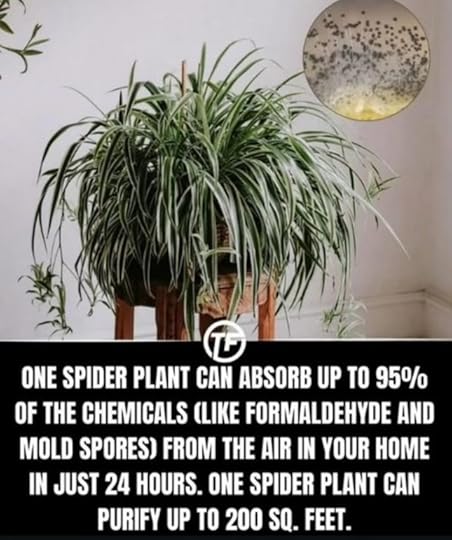
I saw this spider plant graphic on Instagram and reposted it to our store’s Facebook page:
Beneath it in the comments:
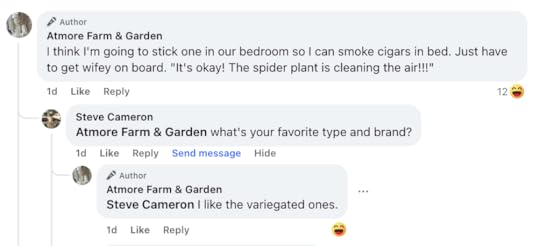
I sent it to Rachel, who writes:

Yes to all of the above.
Though actually, I think Steve was asking about cigars.
I like Oliva, Rocky Patel 90’s series, La Gloria Cubana and Punch the best. Medium smokes, at least Corona sized.
But as wives go, yes – blond and pregnant.
The post Spider Plants… appeared first on The Survival Gardener.


November 11, 2025
Beautiful Persimmons
Last night we had our first frost of the year.
27 degrees Fahrenheit.
That’s a bit cold for Lower Alabama, so we found our jackets, covered our citrus trees, cut our sugarcane and buttoned up the greenhouse.
We also picked the last of the persimmons on our Fuyu persimmon tree.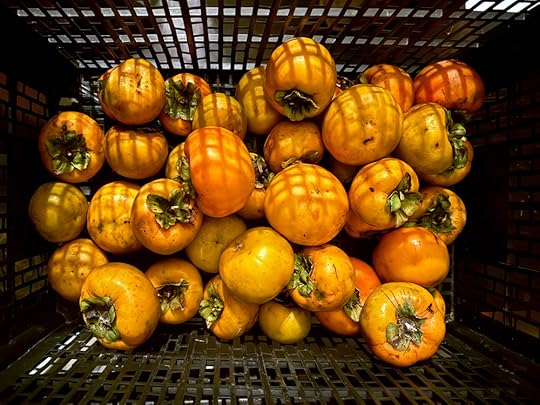 15lbs!
Persimmons are easy to grow in zones 6-9.
They usually bloom after the last frost (unlike some of our peaches), and can take the cold and the heat.
Unlike their wild cousins, the Fuyu persimmon is “non-astringent,” meaning you can eat the fruit before it’s jelly-ripe.
The flavor reminds me of brown sugar, or as I often say, like “honey and sunshine.”
You can see the tree and learn more about this excellent fruit in our new video:
I’ve been very busy at the store lately so YouTube videos have dropped off. Eventually, we’ll find the proper “work/life” balance.
HAHAHAHAHAHAHA
Actually, when the day is over, both my computer and my cell phone are left at the shop. This means that the time I’m home is spent with Rachel and the children, not with chasing work or wasting time online. I’ve also gotten more reading done, as you can see from my reading list on the side bar.
All that aside, if you don’t have a Japanese persimmon tree, plant a few. They are well-worth the investment.
The post Beautiful Persimmons appeared first on The Survival Gardener.
October 31, 2025
What have I become…
I am now a mum salesman.
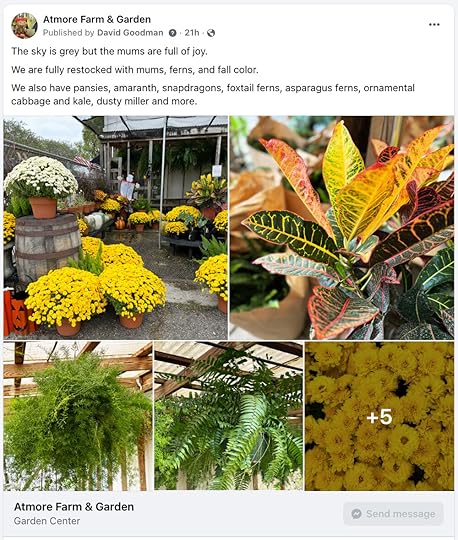
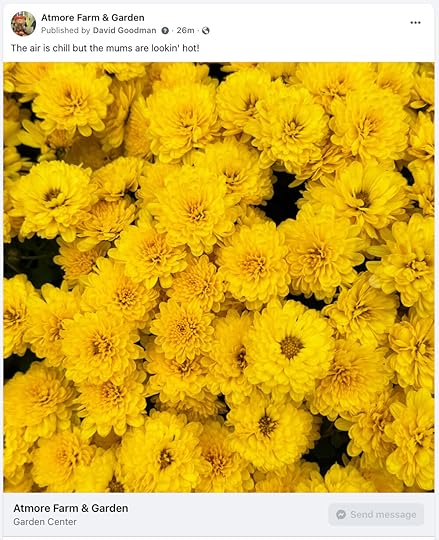
It’s amazing how many mums sell here in the Deep South. They are incredibly popular for porches right now. They don’t last all that long, but they look amazing for a bit. Rather like the ferns everyone hangs on their porches in spring.
I’ve always tried to get people to grow food instead of ornamentals; however, when you buy a working business, you definitely don’t want to break something that helps keep the lights on!
At least, that’s what I tell myself so I can sleep at night.
The post What have I become… appeared first on The Survival Gardener.
October 28, 2025
Fascinating Pumpkin Crosses: Grenada Black x Seminole
We saved seeds from a Grenadian black pumpkin way back in 2019 – and didn’t plant them out until 2024.
When we did, we got this:
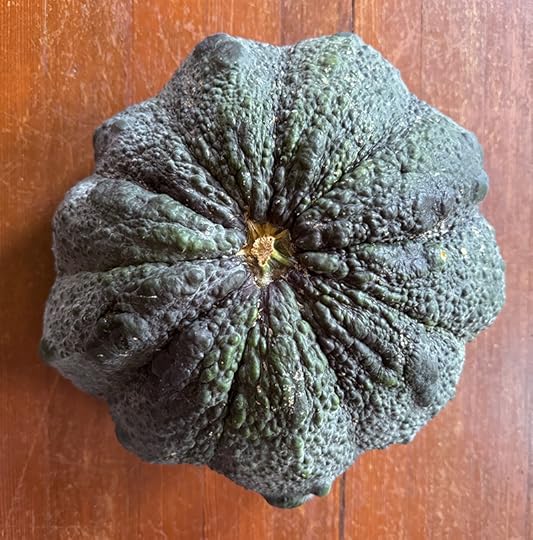
I didn’t think a pumpkin of that color was a Cucurbita moschata. There were lots of interesting pumpkins down in Grenada that happily crossed together, but few looked anything like the C. moschata types we’d grown in the US.
Here are some examples of Grenadian pumpkins:
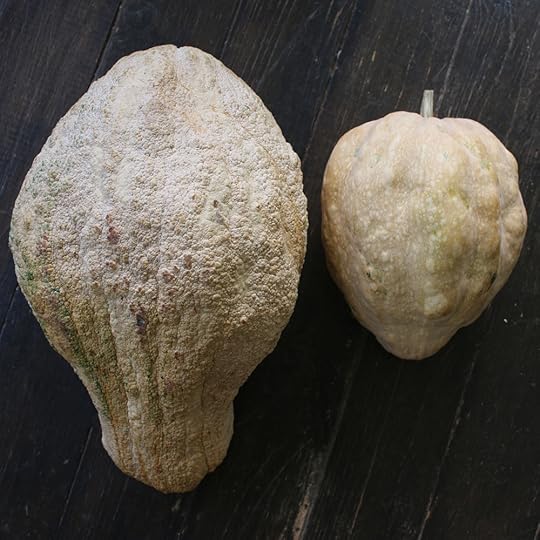
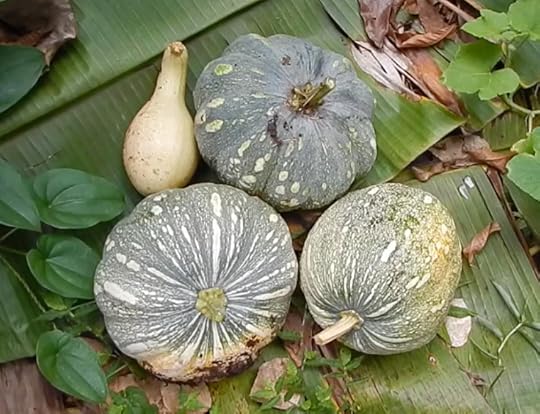
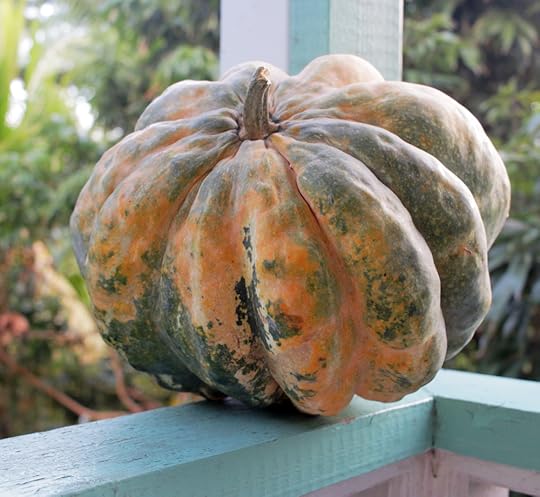
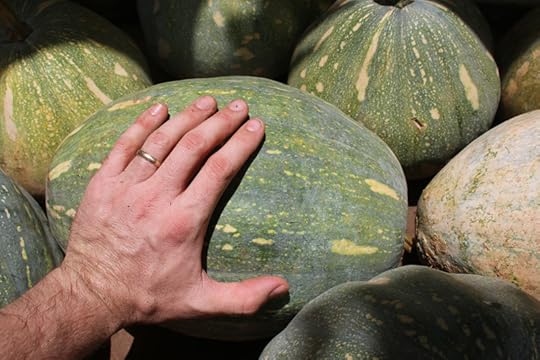
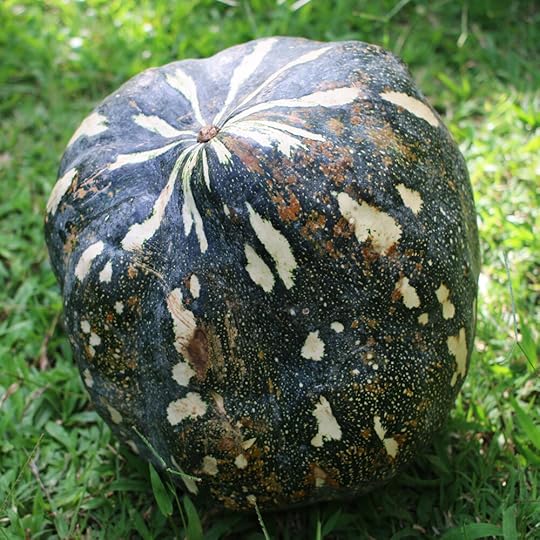
The colors, shapes, and skin textures varied widely.
When I planted the black pumpkin seeds, I assumed it was a different species from the Seminole pumpkins we normally grow.
I was wrong.
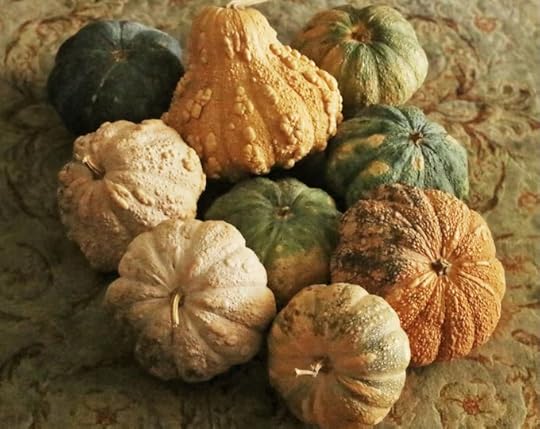
I planted the seeds we saved from the single black pumpkin we grew in 2024 out in the field and ended up with what we now call “Zombie Pumpkins.”
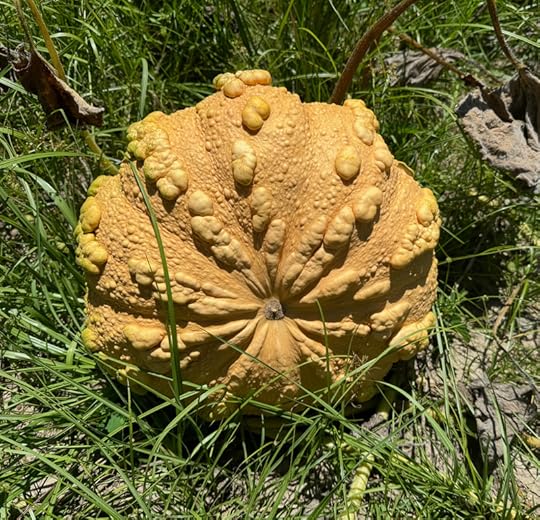
Now I thought those pumpkins were the end of the story.
But oh no… it gets weirder.
This spring we worked hard to get the Grocery Row Gardens cleaned up, mulched and planted. Yet around the edges, we ended up with a few volunteer plants… including pumpkins.
I assumed they were Seminole pumpkins, like usual.
I was wrong again.
They were hybrids between the Grenadian black pumpkin and our line of Seminole pumpkins.
As spring stretched into summer, we lost control of the gardens and the pumpkins conquered all the edges, running over trees, covering rows of peppers, and eating the open spaces beyond the beds.
As the pumpkins developed, the colors, shapes and textures were surprising. Some were almost black, some striped, some tan with warts, some dark green with warts, some round, some like pears – it’s an amazing mix. It seems the Grenadian black pumpkin had a lot of genetic variation in it, unlike our Seminole pumpkin line.
It will be fun to see how they grow next year. They weren’t watered, fed or sprayed, and yet they produced a few hundred pounds of pumpkin. Eating them will be interesting. The “Zombie pumpkins” that had Black Grenada pumpkin mothers were better tasting than either the original Black pumpkin or their Seminole fathers, with thick, non-stringy orange flesh and small seed cavities. If that keeps up, we may have a real winner landrace!
The Caribbean has a similar summer climate to Lower Alabama, which means these guys are right at home here.
Saving seeds and letting things run is a lot of fun – I highly recommend letting your pumpkins cross (on purpose or otherwise!) and seeing what you get. Thank the Lord for happy accidents.
Here’s the harvest video I posted yesterday:
The post Fascinating Pumpkin Crosses: Grenada Black x Seminole appeared first on The Survival Gardener.
September 25, 2025
We Own our Own Farm and Garden Store
New video here!
The post We Own our Own Farm and Garden Store appeared first on The Survival Gardener.
September 12, 2025
He Hates Honeycrisp
This is interesting:
https://www.instagram.com/reel/DN_ioq1kpCS/?igsh=NWRzamUxODE0dms1
I have heard the variety is touchy.
The post He Hates Honeycrisp appeared first on The Survival Gardener.
September 10, 2025
Guilds: Does Nature Really Make Them?
This is a good video on natural tree guilds:
Nature likes to make little patches of associated species.Sometimes, we’ve partly planned out a food forest island, and then nature has planted more. If we like it, we keep it; if not, we don’t – like Jess taking out the poison ivy in this video.A wax myrtle showed up next to one of my plums. Since it’s a native nitrogen-fixer, I left it alone to grow. However, we also get popcorn trees showing up all through the food forest, and we eliminate those with extreme prejudice.At the edges, we get lots of wild blackberries. And out front I discovered a mulberry seedling earlier this week. In my North Florida food forest, beauty berries and wild plums showed up all over. Some of them we let grow, some of them we mow.Nature fills in the gaps!The post Guilds: Does Nature Really Make Them? appeared first on The Survival Gardener.
September 8, 2025
Macropropagation of Banana – Turning One Plant into Many
Interesting information:
I have some Musa basjoo to propagate – I need to try some of these techniques.
The post Macropropagation of Banana – Turning One Plant into Many appeared first on The Survival Gardener.
September 1, 2025
Large Puffballs
As fall approaches, mushroom hunting season is upon us again.
There is a little grass pasture near our pond where puffball mushrooms appear off and on during the year. A couple of days ago I took pictures of this weird specimen:

We have sautéed and eaten these, and they are quite decent. When they’re in fruit, I try to avoid hitting them with the mower so they have time to mature and sporulate.
Unlike most puffballs, these often have some stem. I’m not sure what species they are, but they obviously do not have any gills or pores.
Long ago I became quite interested in mushroom hunting and would regularly go foraging. Then we moved to the Caribbean where mushrooms were scarce. Now that we’ve back, it’s been nice to find mushrooms again. The boletes we’ve found here haven’t been worth eating, but we have had good luck hunting chanterelles in the woods. They are very worth eating. Sometimes one of the kids will forage a basket of them and sauté them as a meal!
I have wondered if it would make sense to bushhog some of the areas beneath the tree canopy in the woods to make more space for wild chanterelles to grow, while also making it easier to harvest them.
If you are interested in mushroom foraging but don’t know where to start, check out my recommended book list on this page.
The post Large Puffballs appeared first on The Survival Gardener.
August 28, 2025
Florida Panhandle Gardening is… Different
This is good insight on the difficulties gardening in the Florida Panhandle:
“I’ve been gardening on the Northern Gulf Coast (Mobile, Pensacola) for about 50 years.
Florida’s Great Northwest is not Florida. It’s Lower Alabama. It’s a completely different environment from anything south of Gainesville.
I currently have about 250 sq ft of raised beds and about 300 gallons of containers.
First, most people miss the season. They think spring starts in April, but if I’m not starting tomatoes and peppers in December/January, I’m behind the curve. The problem is that it’s still freezing here in January.
Last year (2024) we got 12 inches of snow in January, so you have to have a heated greenhouse or start seeds indoors. Tomatoes need to be in the ground by mid-February, at the latest, even though the last frost is toward the end of March. By July, it’s 100 degrees and over 90% humidity. Oh, did I mention we can get 100 inches of rain a year, with averages around 60-70 inches? Like split tomatoes?
By July your tomatoes have quit producing if they’re not dead already. Fungus killed your cucumbers a month ago. Nothing except okra and field peas will germinate in your soil, which is now over 90 degrees.
The gardening season here is really several smaller seasons. Tomatoes, Peppers, Cucumbers, etc. — February to Juneish.
Okra, field peas, beans, etc. — June to Septemberish. Brassicas, Onions, Lettuce, Greens, Peas, etc — September to Januaryish.
Garlic is November/December to Aprilish (but only after vernalization in the refrigerator for the month of October).
Every environment has its own challenges, but those in Northwest Florida are unique.”
That was left in the comment section of this video:
It’s a different world here. It’s so close to being tropical sometimes… and then you get bizarre weather like this:
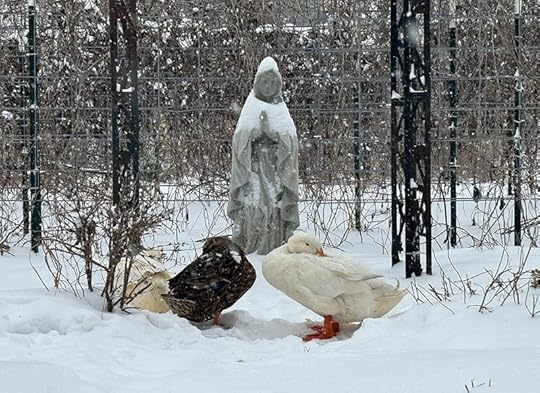
The weather swings are all part of the adventure.
The post Florida Panhandle Gardening is… Different appeared first on The Survival Gardener.
David The Good's Blog

- David The Good's profile
- 49 followers

