D.M. Ritzlin's Blog
May 10, 2021
Review: Swords Against the Shadowland by Robin Wayne Bailey
 Swords Against the Shadowlands by Robin Wayne Bailey
This review previously appeared on the DMR Books Blog.
I don’t get the appeal of pastiches. Sure, I can understand why people want more stories of their favorite characters, but the original stories were special for plenty more reasons than just the character. It’s virtually impossible to copy all aspects of another author’s writing style. Of course, that doesn’t stop people from trying. In Swords Against the Shadowland, the only Fafhrd and Gray Mouser novel not by Fritz Leiber, Robin Wayne Bailey comes closer than most. Unfortunately, he also misses the mark in certain major ways.
Humor was always a component of Leiber’s series, and it is present here as well, but Bailey’s lowbrow approach (dick jokes, etc.) leaves something to be desired. This book was published in 1998, a time when South Park and There’s Something About Mary were the height of American culture. Don’t get me wrong, I can appreciate crude and raunchy humor in its place, as long as it’s handled the right way. I really don’t need to read a scene where Fafhrd accidentally pisses on the Mouser.
Another distracting reminder that this book was written during the Gen-X era is the amount of unnecessary references. The novel’s villain is a wizard named Malygris (no, not that Malygris) who, from his lair in the Vaults of Yoh-Vombis—I mean, the Tower of Koh-Vombi—puts a curse on all magic-users of Nehwon in order to destroy his enemy Sadastor—er, sorry, make that Sadaster. I get it, Bailey, you like Clark Ashton Smith! (Who doesn’t?) Since this is a sword and sorcery novel we’re talking about, I guess I can let it slide. However, I’m much less forgiving about a scene late in the book where a guard quotes
Animal House after getting punched in the face by Fafhrd.
I realize I’m making this book sound horrible, but the dumb stuff I’ve complained about is really only a small portion of the whole. Bailey is a talented writer who crafted a well-plotted sword-and-sorcery tale that even has a few unexpected and cool ideas. The problem is, when the dumb stuff shows up, even though it’s in small doses, it’s so jarring.
When I read fantasy, I want to feel like I’m reading ancient legends of forgotten lands. Anything that reminds me that I’m in the modern world spoils the reading experience. Sadly, too many current writers feel the need to include such material in their stories.
View all my reviews


May 7, 2021
Review: Fierce Tales - Savage Lands
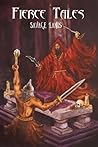 Fierce Tales: Savage Lands by Jeffrey L. Blehar
My rating: 3 of 5 stars
This review previously appeared on the DMR Books Blog.
Millhaven Press is a new publisher on the fantasy scene, but they already have quite a few anthologies to their credit. Savage Lands is the second volume in their Fierce Tales series, and contains five novellas. There’s no introduction and no editor listed, so let’s get right to the stories.
The collection starts off on the wrong foot with Michael Colangelo’s ludicrous “The Wizard of Xogg.” Two Norsemen are hired by a wizard named Karl to return a scepter that was stolen from Viola, Princess of Xogg. Considering the casual tone, sloppy prose, and overall implausibility of this story, I get the impression that Colangelo doesn’t take writing seriously at all. This reads like a transcription of a (very bizarre) children’s bedtime story that was made up on the spur of the moment. At least you can’t say it was predictable.
Thankfully, things pick up a bit with J. Manfred Weichsel’s Burroughs-inspired story, “We May Not Have Fire, But We Sure as Hell Have Fury.” While Vietnam vet George French is on an assassination mission in Guatemala, he gets double crossed. French ends up getting thrown into a volcano. The volcano is some kind of portal, and he awakes in a jungle filled with carnivorous vegetation and hostile snake men. He learns that he is in the distant future and these snake men, the Darskans, rule over the Americans, who are now weak and docile. French is determined to instill the revolutionary spirit into his fellow Americans. There’s some political commentary regarding immigration and failing democracies, but I’m not sure if it’s supposed to be taken at face value. The prose is on the rough side, which is surprising, because the other stories by Weichsel I’ve read were fairly well polished. Nevertheless, the story was entertaining and held my attention all the way to the end.
Next up is “Dreams of Gold” by Jeffery L. Blehar. An exiled man from the Plains seeks passage on Captain Jaffe’s ship to Letarkkan. A goblinoid race known as the Shrevkin are after the Plainsman because he stole a treasure map from them. The Shrevkin set fire to Jaffee’s ship, so he and the Plainsman flee from the city, led by a helpful urchin named Symon. The three follow the stolen map, which they believe leads to a legendary treasure hoard of a Sultan from the Forgotten Times. At 70 pages, this story takes up nearly a third of the book. It definitely would have benefited from some trimming.
Now we get to the good stuff. In Misha Burnett’s “Nox Invictus,” a company of Roman legionnaires stationed in England is slaughtered under mysterious circumstances. Captain Marius interrogates a local, who claims the act was committed by “people of the night.” Marius’ interpreters have difficulty understanding his outlandish claims. “A dark land. Not under the ground, but… behind the air? In another land where there is no sun.” Marius and his men follow a trail to a cave containing a small tunnel. When they pass through, they discover there was far more truth to the villager’s statements than they thought. This was an excellent story. The “dark land” reminds me in some ways of C.L. Moore’s “Black God’s Kiss.” The inhabitants aren’t as bizarre as those in Moore’s story, but they are certainly strange—and deadly.
The final tale is “The Wizard and the Tower Keep” by D.R. Lackner. The story is based on lyrics by Lackner’s epic metal band Legendry. A man from Earth is transported to another world with few memories of his past life. He does not even remember his name. He recovers a powerful artifact known as the Eye of the Kings from the dungeons of Evermorn. The tyrannical wizard Vael desires it so he can gain unfathomable power. Lackner is the only author in the book who attempts exotic prose like the greats of Weird Tales wrote, and the story is much better for it.
I hope Millhaven becomes more selective in the future. If the first three stories in Fierce Tales were as good as the last two, it would be a must-read for fans of sword and sorcery.
View all my reviews
May 6, 2021
Review: Phalanxes of Atlans by F. van Wyck Mason
 Phalanxes of Atlan by F. Van Wyck Mason
My rating: 3 of 5 stars
This review previously appeared on the DMR Books Blog.
I greatly enjoyed F. van Wyck Mason’s historical novels The Barbarians and Lysander. Historical adventure was his specialty. Until recently, I was unaware he had written a “lost world” novel in the style of Haggard. Phalanxes of Atlans originally appeared in the February and March issues of Astounding Stories in 1931, and was recently reprinted by Armchair Fiction in their “Lost World-Lost Race Classics” series.
Many novels of this type start off slowly, only picking up once the protagonists discover the lost world. Not so here. The story begins with explorer Victor Nelson searching for his friend Richard Alden. They became separated when their plane went down before they could return from their Arctic expedition. Nelson discovers signs indicating that Alden was taken by force. He follows the trail to a cave where he encounters bronze-armored men who keep allosaurs as attack dogs.
The leader of this group tells Nelson (in 17th century English) that he is Hero Giles Hudson, descendant of the explorer Sir Henry Hudson. “…the founder of our royal line spoke what he called English. He came from the Ice World to rule wisely over Atlans. He was the greatest Atlantean in history.” Hero Giles takes Nelson to their capitol, Heliopolis, where they learn that Alden has been captured by the Jarmuthians, a race of Beelzebub-worshipping cannibals.
From there the action moves along at a very fast pace, culminating in a daring rescue. Phalanxes of Atlans isn’t in the same league as She: A History of Adventure or Dwellers in the Mirage, and not quite as good as The Barbarians and Lysander, but is still a very enjoyable and fast read.
If that wasn’t enough, the Armchair edition includes a bonus story, People of the Pyramids by William P. McGivern, originally published in the December 1941 issue of Fantastic Adventures. No mention of this story is made on the front or back covers, so I suppose it was meant to be a surprise. Was it a positive one? Well, let’s just say that you’ll get your money’s worth from Mason’s story and leave it at that.
View all my reviews
April 29, 2021
Review: The Weirwoods by Thomas Burnett Swann
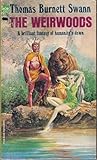 The Weirwoods by Thomas Burnett Swann
My rating: 4 of 5 stars
This review previously appeared on the DMR Books Blog.
In the days when Rome was young, a forest populated by fantastic creatures stood near the Etruscan city of Sutrium. Lars Velcha, a nobleman of Sutrium, abducts a Water Sprite named Vel for his daughter Tanaquil to use as a slave. Tanaquil and Vel befriend Arnth, a wandering minstrel, and together contrive a plan to free the Water Sprite. Arnth travels to the lake in the Weirwoods and enlists the help of Vegoia, the Water Sprites’ sorceress. Things go awry when Vel carelessly misuses Vegoia’s magic, leading to the destruction of Sutrium. Arnth and Tanaquil must escape through the woods from the rioting slaves and Weir Folk (Centaurs and Fauns).
“Well-written” is a frequently used (yet hardly meaningful) adjective that is inadequate to describe The Weirwoods. Swann’s fanciful prose is reminiscent of… no one, really. The characters are not one-dimensional and a great deal of attention is paid to the relationships between Arnth, Tanaquil, and the non-humans. That last fact might be a deterrent to those looking strictly for action-packed adventure, but everything else is done well enough (including the wonderful cover art by Gray Morrow on the 1967 paperback edition) that it could hardly be considered a shortcoming. Recommended.
View all my reviews
April 28, 2021
Review: Swordsmen and Supermen
 Swordsmen and Supermen by Donald M. Grant
My rating: 3 of 5 stars
This review previously appeared on the DMR Books Blog.
“A most unusual volume of swashbuckling high adventure stories with a heavy accent on the fantastic” promises the back cover. The first tale is certainly an unusual choice: “Meet Cap’n Kidd,” a humorous western yarn by Robert E. Howard. The Cap’n Kidd of the title is a furious wild stallion “as full of rambunctiousness as a drunk Apache on the warpath.” Our hero, Breckinridge Elkins, naturally decides to try his hand at taming him. I’m not a fan of westerns, but I found the story amusing enough once I got used to the dialect (sample: “I cooked me nine or ten squirrels over a fire and et ‘em, and while that warn’t much of a supper for a appertite like mine, still I figgered next day I’d stumble on to a b’ar”).
Next we have “The Death of a Hero” by Jean D’Esme. This is actually an excerpt from “The Red Gods,” a novel set in Indo-China that was first published in 1924. In the excerpt, Wanda Redeski convinces a native to rescue her companions who have been captured by priests. The ensuing battle is described vividly, but I’m sure it would have had much more impact in context.
Darrel Crombie contributes the next story, “Wings of Y’vrn,” one of the two originals in the anthology. It’s pure sword and sorcery, ‘70s style, and it’s very goofy. Y’vrn is able to change his shape and create matter via “matrix frames” on his “mental screens.” He has been tasked by Mal-Kiz of S’lmm with stealing Queen Dharga’s wand. Should he fail, the reputation of S’lmm will be sullied. This story is by no means good, but I suppose it could be enjoyed in the same way as dumb B-movies like The Dungeon Master. The introduction claims Crombie is “a writer with a style, vocabulary, and imagination to take the reader back in time to the more fertile days of fantasy production,” but this is no substitute for the real thing. This becomes even more apparent when reading the next story, which was originally published in the July 23rd, 1926 issue of Adventure. “The Slave of Marathon” is part of Arthur D. Howden Smith’s historical series about the Grey Maiden, a mythical sword said to be forged at the beginning of time. In this installment, the sword is in the possession of a Persian who uses it to slay Giton of Athens. Glaucus, an outspoken slave, swears to avenge the death of his master’s friend. This is far and away the best story in the book.
Lin Carter wraps things up with the other exclusive story, “How Sargoth Lay Siege to Zaremm.” To put it bluntly, it’s a rip off of Lord Dunsany. However, Carter actually does a much better job here than with his imitations of Howard and Burroughs.
On the whole, it’s not a bad collection, but probably not worth the trouble of tracking down a copy.
View all my reviews
April 26, 2021
Review: The Snake-Man's Bane by Howie K. Bentley
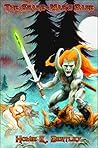 The Snake-Man's Bane by Howie K. Bentley
My rating: 5 of 5 stars
This review previously appeared on the DMR Books Blog.
There hasn’t been a great deal of satisfying material for the discerning sword and sorcery fan released in the past few decades. Apart from the Tolkien clones that have dominated the fantasy genre for quite a while, a large amount of books and stories written these days are either nihilistic and pointless or absurd and nonsensical. Sure, there’s some real sword and sorcery out there, but most of it is just so… mild. The settings aren’t exotic or dangerous. There’s action, but nothing that will get your blood pumping. The sorcery is more like a different kind of science rather than something eldritch and strange, let alone soul-threatening. For all the praise Robert E. Howard gets, you have to wonder how closely modern writers pay attention to his stories.
Fortunately, we presently have a few writers who understand what REH-inspired* sword and sorcery is supposed to be: aggressive, bloody, virile, menacing. Howie Bentley is one of the best, if not the best, writers of this style today. I could go into details about the six stories in this fantastic collection, but why spoil it for you? If you’re interested in sword and sorcery fiction at all, trust me: Bentley delivers the goods.
* As opposed to Clark Ashton Smith’s more mystical strain of sword and sorcery. I must admit I’m a bigger fan of the CAS style (which includes other greats such as Jack Vance and Michael Moorcock) than the REH style. To be honest, there are only two writers in the Howard style that I really love besides REH himself: Poul Anderson and Howie Bentley.
View all my reviews