David Hatton's Blog
September 10, 2019
Belief in Fiction
When I wrote The Medium, I knew it would raise some eyebrows for both believers and non-believers of the afterlife. Belief is a very personal subject, whether it is the subject of God, a particular religion, or whether someone's passed love one is still around. To some people, the belief in these elements allow people to move on, have hope and gives people structure within their lives. While on the other side, people are frustrated that people can be taken advantage of, are misguided or use their beliefs as an excuse to discriminate against others. Most people are in the former or latter, with a fairly limited middle ground of those agnostic people who go "well there could be something out there...".
Therefore writing The Medium was hard. The book follows an atheist who is approached by a psychic claiming to know the whereabouts of his missing wife.
It was a difficult task writing for a niche middle audience. The sweet spot of those who would appreciate the book for what it was... and could keep an open mind to the end and not be disappointed in whatever the outcome would be. They wouldn't be frustrated when the books look at the tricks of psychics, nor would they be horrified should the book take a spiritual ending. Whilst with the extreme ends of the arguments would never be satisfied. The believers would be furious should anyone question the works of a psychic and the non-believers wouldn't even pick the book up in the first place.
I tried to keep the book quite balanced. On one hand the exposure of some of the deceit that well known mediums are known to implore are shown, while on the other, spiritual enlightenment and open mindedness is deep-rooted into the novel.
While niche, it is a fascinating subject, certainly to me, as not even Richard Dawkins himself can possibly say what is in store for us next, as none of us will know until it happens to us. The work of psychics and the question around the beyond is simply a backdrop to The Medium, which is a story about love, devotion, deceit and how people with closed minds on either side of an argument can lose sight of what is really important.
Therefore writing The Medium was hard. The book follows an atheist who is approached by a psychic claiming to know the whereabouts of his missing wife.
It was a difficult task writing for a niche middle audience. The sweet spot of those who would appreciate the book for what it was... and could keep an open mind to the end and not be disappointed in whatever the outcome would be. They wouldn't be frustrated when the books look at the tricks of psychics, nor would they be horrified should the book take a spiritual ending. Whilst with the extreme ends of the arguments would never be satisfied. The believers would be furious should anyone question the works of a psychic and the non-believers wouldn't even pick the book up in the first place.
I tried to keep the book quite balanced. On one hand the exposure of some of the deceit that well known mediums are known to implore are shown, while on the other, spiritual enlightenment and open mindedness is deep-rooted into the novel.
While niche, it is a fascinating subject, certainly to me, as not even Richard Dawkins himself can possibly say what is in store for us next, as none of us will know until it happens to us. The work of psychics and the question around the beyond is simply a backdrop to The Medium, which is a story about love, devotion, deceit and how people with closed minds on either side of an argument can lose sight of what is really important.


September 21, 2018
Writing 9/11 Fiction
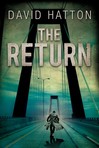
Since I wrote my book, The Return, people have asked me how I felt about starting a novel based on the subject of 9/11. It’s a sensitive subject and can cause a lot of backlash if it isn’t treated as such.
The truth to that answer is that I didn’t.
I never wanted or planned to begin a book about 9/11. The Return started off as a book about a regular guy in the UK who faked his death for his insurance money. It was inspired by the canoe man who was exposed when he appeared on a website for Spanish retail estate. I looked back to that incident to see how people reacted, in particularly his family, his children and his friends.
But for my book, I wanted more than just the people surrounding the main characters to react; the world needed to be against him. When I looked back to Canoe Man, I realised that besides those surrounding him, the rest of the world didn’t particularly care; if anything they found it funny. Maybe some people even gave him a high five.
For The Return, I needed something which really hit home with the reader and the public that what Marty, the guy who faked his death, did was wrong. I looked to the London bombings and other attacks which had happened but everyone was accounted for. I even looked to create an entirely new attack for the purpose of fiction but nothing held the emotion of not only a country, but the world, more than 9/11. Whoever you are, if you’re old enough to remember back to 2001, you will remember where you were that day and the feelings people had around that time (and since).
People disappeared that day and people took advantage of that day too. To date no one that we are aware of got away with an insurance scam, but who knows what the future will bring. It was perfect for Marty and his family to fit into this story and for the reader to really believe the fury of not only the family but the anger across the country and beyond.
So what then? I now have a 9/11 fiction book on my hands. It had to be managed sensitively. To manage this, real life stories and quotes had to be put into the book. A sense of hope for those from New York which was instilled by their residents had to play a part too. And without giving too much away, justice for those who took advantage of that day for their own gain had to be included.
It’s an interesting debate; some may argue that Marty and I are not that different, maybe we aren’t. I thought from the the beginning that I wasn’t going to use 9/11 to make a name for myself or increase my profit margins from it, but to simply do what I love. In Marty’s case he used that day to protect those he loved.
I know some people will find it tasteless or offensive. I imagine most people who criticise it as offensive wont have read it. It won’t be to everyone’s taste even as a simple piece of fiction anyway but I wrote something I would love to read.
More than anything though I personally believe I have caught onto the passion and the spirit of New York, which I felt on my three visits to the great city. That despite their set-backs in 2001, they managed to carry on and ensure the American Dream was still possible in a world of nightmares.
The truth to that answer is that I didn’t.
I never wanted or planned to begin a book about 9/11. The Return started off as a book about a regular guy in the UK who faked his death for his insurance money. It was inspired by the canoe man who was exposed when he appeared on a website for Spanish retail estate. I looked back to that incident to see how people reacted, in particularly his family, his children and his friends.
But for my book, I wanted more than just the people surrounding the main characters to react; the world needed to be against him. When I looked back to Canoe Man, I realised that besides those surrounding him, the rest of the world didn’t particularly care; if anything they found it funny. Maybe some people even gave him a high five.
For The Return, I needed something which really hit home with the reader and the public that what Marty, the guy who faked his death, did was wrong. I looked to the London bombings and other attacks which had happened but everyone was accounted for. I even looked to create an entirely new attack for the purpose of fiction but nothing held the emotion of not only a country, but the world, more than 9/11. Whoever you are, if you’re old enough to remember back to 2001, you will remember where you were that day and the feelings people had around that time (and since).
People disappeared that day and people took advantage of that day too. To date no one that we are aware of got away with an insurance scam, but who knows what the future will bring. It was perfect for Marty and his family to fit into this story and for the reader to really believe the fury of not only the family but the anger across the country and beyond.
So what then? I now have a 9/11 fiction book on my hands. It had to be managed sensitively. To manage this, real life stories and quotes had to be put into the book. A sense of hope for those from New York which was instilled by their residents had to play a part too. And without giving too much away, justice for those who took advantage of that day for their own gain had to be included.
It’s an interesting debate; some may argue that Marty and I are not that different, maybe we aren’t. I thought from the the beginning that I wasn’t going to use 9/11 to make a name for myself or increase my profit margins from it, but to simply do what I love. In Marty’s case he used that day to protect those he loved.
I know some people will find it tasteless or offensive. I imagine most people who criticise it as offensive wont have read it. It won’t be to everyone’s taste even as a simple piece of fiction anyway but I wrote something I would love to read.
More than anything though I personally believe I have caught onto the passion and the spirit of New York, which I felt on my three visits to the great city. That despite their set-backs in 2001, they managed to carry on and ensure the American Dream was still possible in a world of nightmares.