Athena .'s Blog
May 12, 2024
Spring 2024
Spring is here! What’s not to love about all these new beautiful blooms? Prepare your feed for ALL THE FLOWERS! 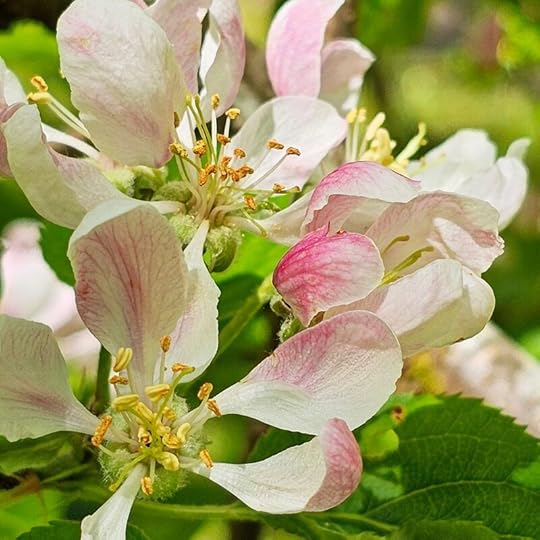


May 8, 2024
Kicking off the 30-Day Creativity Challenge
The 30-Day Creativity Challenge has officially kicked off. The best part of a quick re-boot is the fresh surge of possibilities. There’s a creative community all doing the thing, so you’re not doing it alone. That kind of support makes it more fulfilling and entertaining. Make it as private or as public as you like.
The downside is that if you’re already tired, burned out, overwhelmed or exhausted—it’s a good probability you’re already entrenched in a rut and cannot even fathom where you’ll get the energy to do a single creative exercise, much less a month of exercises. It just sounds like more work! Right?
I set the challenges and exercises up for 30 days to offer a little something to nearly everyone. Sure, those who do more will get more out of it. But those who do even a little will still get a little boost of creative energy from the engagement. Even two challenges or prompts a month can move stuck energy in your creative muscles and get you moving again.
The important part, for me anyway, is that as a creator working in a creative field every day, I need to keep limber and unburdened where creativity is concerned. Heavy creative output can be draining. It can even be emotionally dehydrating if it’s not properly replenished, and the fastest way to replenish the creative well is… play. Play and curiosity will stoke the creative fire faster than any other method.
The fastest way out of a rut, the surest beeline to creative regeneration… is opening to more inspiration by inviting it into your daily experience. Even if it’s just a little at a time. Just one creativity prompt. Just one little exercise.
Then, before you know it, you’re able to breathe a little. When you can breathe, the stagnation and overwhelm shifts its weight on your shoulders, and you can open to a little more inspiration and so on and so forth.
In the end, the application of challenges or prompts reconfigured to your particular discipline or practice on a regular, sustainable basis means you’re busting that blockage wide open and letting the creative whoosh right in. Adding a practice of play and curiosity to your routine, even in small doses, makes a generous difference in your health, wellbeing, and creative output.
How does a photography prompt apply to a theatre major? How could a painting prompt apply to a writer? Would a technology prompt work on a musical creative? Etc.
The downside is that if you’re already tired, burned out, overwhelmed or exhausted—it’s a good probability you’re already entrenched in a rut and cannot even fathom where you’ll get the energy to do a single creative exercise, much less a month of exercises. It just sounds like more work! Right?
I set the challenges and exercises up for 30 days to offer a little something to nearly everyone. Sure, those who do more will get more out of it. But those who do even a little will still get a little boost of creative energy from the engagement. Even two challenges or prompts a month can move stuck energy in your creative muscles and get you moving again.
The important part, for me anyway, is that as a creator working in a creative field every day, I need to keep limber and unburdened where creativity is concerned. Heavy creative output can be draining. It can even be emotionally dehydrating if it’s not properly replenished, and the fastest way to replenish the creative well is… play. Play and curiosity will stoke the creative fire faster than any other method.
The fastest way out of a rut, the surest beeline to creative regeneration… is opening to more inspiration by inviting it into your daily experience. Even if it’s just a little at a time. Just one creativity prompt. Just one little exercise.
Then, before you know it, you’re able to breathe a little. When you can breathe, the stagnation and overwhelm shifts its weight on your shoulders, and you can open to a little more inspiration and so on and so forth.
In the end, the application of challenges or prompts reconfigured to your particular discipline or practice on a regular, sustainable basis means you’re busting that blockage wide open and letting the creative whoosh right in. Adding a practice of play and curiosity to your routine, even in small doses, makes a generous difference in your health, wellbeing, and creative output.
How does a photography prompt apply to a theatre major? How could a painting prompt apply to a writer? Would a technology prompt work on a musical creative? Etc.
May 3, 2024
Creativity Refresh
As I’m whooshing toward summer with the prep for Elder Glade Publishing’s launch plans, and our new distribution platform, I’m coming off a three-year Hollywood scripting binge. Exhausted. Unpaid. Teetering on burnout… with a much bigger push in the very near future. So this might be the only couple of months where I’m not stretched to breaking.
Thus we decided it’s the best slot to pop in a 30-Day creative refresh and reboot. A play month. I’ll be able to put my hands in clay! Sit at my writing desk for FUN! And catch up on the tidiness and orderliness of my art space and energies. I. Am. STOKED! Well, more relieved at the moment—it’s just nice to know a breather is coming. Then I’ll be stoked.
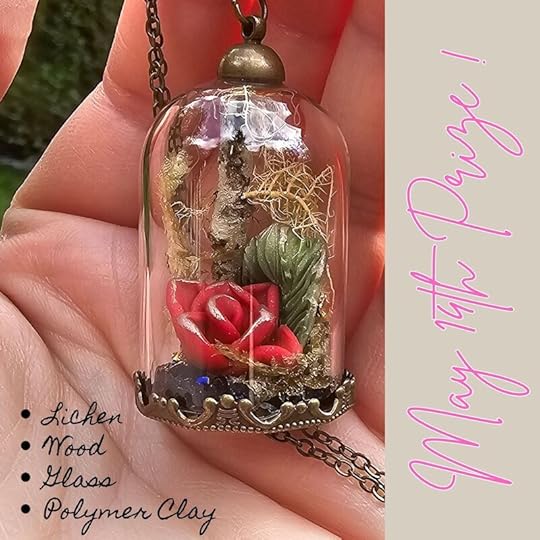
This also gives me a chance to move out some polymer projects and order fresh clay. I pulled out a box of earrings and jewelry I made ages ago with the intent to give away and just never got around to it. So I’ll package up some of those art projects as little incentives and send to readers or give away as prizes.
Whether you’re looking for a refresh, or just want access to the behind-the-scenes blogs and videos, pop on over to the free registration for the 30-Day Creativity Challenge. Games, prizes, prompts and creative community. See you there!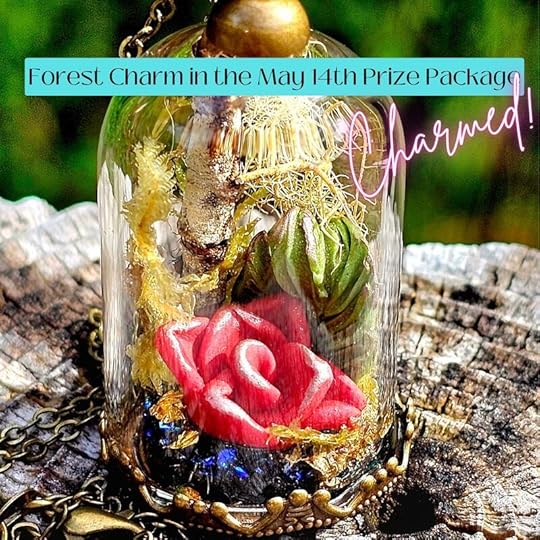
Thus we decided it’s the best slot to pop in a 30-Day creative refresh and reboot. A play month. I’ll be able to put my hands in clay! Sit at my writing desk for FUN! And catch up on the tidiness and orderliness of my art space and energies. I. Am. STOKED! Well, more relieved at the moment—it’s just nice to know a breather is coming. Then I’ll be stoked.
This also gives me a chance to move out some polymer projects and order fresh clay. I pulled out a box of earrings and jewelry I made ages ago with the intent to give away and just never got around to it. So I’ll package up some of those art projects as little incentives and send to readers or give away as prizes.
Whether you’re looking for a refresh, or just want access to the behind-the-scenes blogs and videos, pop on over to the free registration for the 30-Day Creativity Challenge. Games, prizes, prompts and creative community. See you there!
March 28, 2024
Elder Glade Submissions
Just a reminder that Elder Glade Publishing opens to submission in four months! #wsite-video-container-441268469423381177{ background: url(//www.weebly.com/uploads/b/123722149-25... } #video-iframe-441268469423381177{ background: url(//cdn2.editmysite.com/images/util/video... } #wsite-video-container-441268469423381177, #video-iframe-441268469423381177{ background-repeat: no-repeat; background-position:center; } @media only screen and (-webkit-min-device-pixel-ratio: 2), only screen and ( min-device-pixel-ratio: 2), only screen and ( min-resolution: 192dpi), only screen and ( min-resolution: 2dppx) { #video-iframe-441268469423381177{ background: url(//cdn2.editmysite.com/images/util/video... background-repeat: no-repeat; background-position:center; background-size: 70px 70px; } } Check out the Elder Glade Publishing Mission Statement here.
March 23, 2024
Open Casting Call for Aspersions
 Open Casting Call for Aspersions
The title was clickbait. My apologies. This article is really about the process of working with and protecting your creative energy and spirit from those who cast aspersions upon it, AND the setup for the open submission process for Elder Glade Publishing. You can jump to those sections below.
Or listen to this article as it is read by text to voice translation. It’s about 22 minutes long. In the newsletter made public on my blog, Failure is Creative Compost, I talk a lot about making mistakes. In that article, I typoed a phrase and wrote “cast dispersion” rather than “cast aspersion.” I chuckled when I realized it the next day because it completely changed the sentence and meaning. (It gets funnier the further down you read. I kept imagining myself running around throwing rose petals on the winds for dispersion. Lol!)
Both are legitimate words and so spellcheck would not have noticed the difference. On my personal blog, I don’t generally use an editor, as I mentioned in that exact post. On the publishing house blogs, yes, editors are employed. It’s the difference between a public profile and a personal profile. For just little old Athena? Naw. No need to bother the editors for a raw, human voice. My whole platform since the days of TheBlissQuest has been on being seen as raw and as unfiltered as possible because being human is being real and in the moment. Still, I have since gone back and corrected the typo, along with a few others because I often do that when I notice a mistake and rather than looping infinitely on the error. Just fix it. No need to ruminate upon a spill emotionally or mentally, just wipe it up and keep moving. No fuss. No muss. No hours of internal trauma required about worthiness and value and perceived loss of status. Yadda yadda. Just a click, a fix, and voila.
But boy, howdy, does it trigger the fuck out of people when there are typos on a personal blog. Same for the swearing—which is why I don’t bother correcting that voice either. It assures a nice tidy filter on my following! The quickest way to be delegitimized as a publisher/writer is to make silly typos or drop a bunch of f-bombs in public, right? Good, then we’re staying on course for non-containment protocol.
The series of posts I had mapped out prior to Elder Glade Publishing’s open submission portal were related to imperfection and a different kind of storytelling plan for our future, so the original goal to keep Athena the author a separate platform from Elder Glade Publishing’s up-front presence may need to be re-imagined so we can talk bluntly and openly about creative energy protections and human expectations.
This is Athena, the author, talking to creatives out there who may be interested in the open submission process to Elder Glade Publishing this summer. You. Yes, you. And all other creatives who struggle with worthiness or fear of being imperfect.
If you are a creator, a writer, and you have not been submitting your work to publishers for fear of not being taken seriously, or you’re one of the writers discussed in the later Section A, or you’ve been rejected by everyone else—please consider applying in July. Dear Creative, protect your creative energy. It is precious. I am personally used to the volume of critical notes and toxic feedback that comes from the general public (and people I know) regarding imperfections, mistakes and failed expectations. Not all people, not all creatives are okay with that level of criticism. I don’t mind it, but I had to learn that skill. There are days where I still slip up and let something bother me, or I roll my eyes so hard I land a headache, but in the general practice of protecting my creativity and spirit—this is the method I use, and it may help you as well. You too, can protect your creative spirit with this easy four step program.
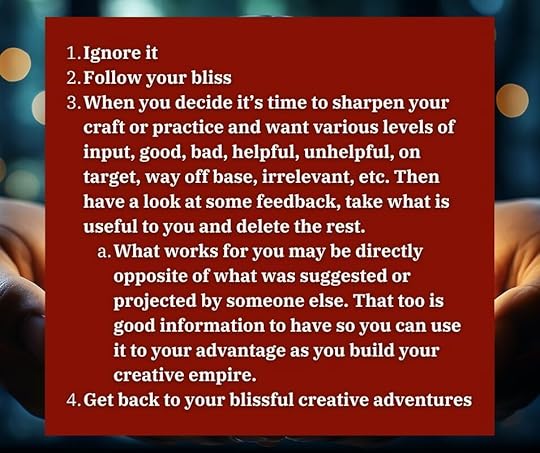 See? Easy peasy.
When and IF you decide step three is useful, I’ve attached my handy guide to accepting critique as a downloadable PDF. This is the process I use when evaluating feedback from folks in the entertainment world, and even some of my editorial reports. [image error] feedback_notes_process_for_athena.pdfFile Size: 152 kbFile Type: pdfDownload File Someone out there will always know more or be better than you. Keep in mind, however, that statement goes both ways. You’re up one round, and down another. You’re par for the course, or somewhere in the weeds. Getting snagged in the sand trap does NOTHING for your craft or personal development, so don’t linger in someone else’s sand hole. Yeah?
My favorite argument from people when I don’t adapt their advice, usually unsolicited, or roll into change mode for their criticisms is, “You just don’t know how to admit you’re wrong.” Or “You’re such an amateur.”
I mean, that’s partly true. But the irony is that in many cases, if not the majority, notes and feedback, criticisms and aspersions on my creative work are missing CONTEXT. It also presupposes they have the “right” answer. Which for them, very well may be the truth—but for me, does not fit into my operating mode, context, or intention—or even my reality in some cases. Thus, many of those well-intended notes are really just personal projections from people who are operating containment protocols. No shade on them, they are where they are with the process, too. As are we all.
I have zero arguments with people pointing out inaccuracies on mathematical facts, typos, or measurable metrics because of Section A, and because I appreciate being given the option to tone that section of communication or numerical facts.
As to notes on emotional context, characters, world and craft in general—I only take the notes that improve the work, not the notes that just make it different.
You, dear creator, are what you decide to be, regardless of the metrics applied by anyone else including myself. Don’t linger in my sand trap either.
Section A – Context for creatives of all varieties. The non-linear brain.
I don’t like labels or personal excuses in my own craft and process. However, what I’m about to say, I’ve never admitted publicly before.
I’m dyslexic (specific to bd, pq and a few others, but this strangely does not impact numbers) have been diagnosed by random doctors with various non-linear brain patterns, and a handful of other chemical imbalances. I take it ALL with a grain of salt because over the 45 years of constant medical mis-diagnoses, missed obvious easy corrections to vitamins, or unsupported traumatic events all wrapped into one belief system I currently carry that our institutions are not designed to make or keep us well, but are designed instead for profit and containing; which may or may not be accurate for specific individuals at any given time—I have chosen over the last two decades to completely ignore the framework of this “diagnostic box” and re-design my own. I don’t advertise this because it’s a non-conversation. I hit a snag and worked around it the best I could. Nothing else to do but carry on!
For every doctor that said one thing- a different doctor said another, which gave me, the creative, the opportunity to decide, “Maybe they just don’t know me and what I can do, and what I can build. Maybe their very limited range of acceptability or normal is just not within my LOD. Cool. Build a new LOD.” Turns out, my complaints were curable with non-invasive, non-pharmaceutical supports, and training.
I always knew spelling was a mother-fucking challenge. Early on in life I just assumed my last incarnation spoke a different language, so I was somehow karmically inhibited by English. When I launched TheBlissQuest the number of people globally who took time out of their day to help me with spelling—either politely or impolitely-- over those eight years was incredible, and yet, it still doesn’t fully stick. To say it was a bombardment of advice would be an understatement. The truth is, we live in a world where the impact of your idea is only as valuable as your ability to generate buy-in… which is dependent upon your ability to communicate it articulately, and accurately through the intellectual perfectionism containment net. And because we live in a “containing culture,” as mentioned in the Failure is Creative Compost blog, the system is designed to keep ideas and people in or out of tiers by applied “bulk judgements” applied without context or emotional resonance.
Interestingly we gravitate to art, to flow, and creative expression as a human species because it’s the only true place where emotional freedom still has some room to breathe.
As a creator, I embraced my odd patterning, re-routed my rhythms to support my odd processes and built structure around it. Then slowly, I began retraining my brain and methods to a progress model to reach my own goals and metrics—no one else, just my own. Magic happened.
I took the chocks off my editorial process and began writing auditorily: writing what I HEAR or SEE as I’m processing a scene. I knew this would create issues with homonyms and with spelling, but I wanted to capture the ideas and concepts—the emotional translations into form without losing the flow. Then, when I could afford it, and time allowed, I’d have an editor tidy it up for the audience. That was not always time efficient or affordable. Writing auditorily, I can dump mega chunks of content three times faster, which supports my personal end goal to be productive. Yet does not support the goal of precision.
Part of my give in the creative process is to hand over, release control of the monitoring of detail and precision to those people who find joy in that element of a build. I do not find joy in that part of the build, and it sucks mega-Jules of precious creative energy to refocus and target that functional process by re-formatting my brain to those tasks, then rolling my brain BACK to the imagination and innovation track. I can do it, but it is energetically costly, and often still leaves gaps.
Hiring out that part of the process to people who love it and excel in that talent zone is a collaborative creative step, supports economic business relationships, and benefits us both. (Again, dependent upon my time and budgets) I do what I can and keep moving forward—because there are worlds to be built.
Do I have a high bar for the editors I work with because of that need to cover that function? You bet I do. I have a very high bar because they are covering my naked backside. But they are still people, and people will make mistakes too.
In the meantime, I invite readers and followers to make themselves comfortable with their own levels of perfection, and how that sits with their worldview and needs.
Because someone else’s relationship with perfection and the context of the perception of perfection is really none of my business. The Discovery Process I’m 100% convinced we are all creative. We are, however, taught to create only within an acceptable framework of expression. For lack of terms I’ll say, pink thinking and expression, which we say socially is the “literary” or “factual” intellectual creative expression. This is also a metric associated with the standard IQ test, and other scoring methods I believe often lack an emotional context.
But there’s another creative expression I’ll call salmon. Pink and salmon can look an awful lot alike—but one is socially acceptable and the other is not. One is considered to be industrial and intellectual, and the other is not. Salmon is considered to be too emotional, too conversational, loose—in other words, too human.
This is why AI is a tinder box. It is being trained primarily off of the human misconception that thoughtforms have a right or wrong communication patterning. AI is being built by engineers with moralistic, and/or containered concept management. This or that. I or other. We vs. They. Which requires discernment and then the application of context within an artform that is language, and language is also a moving breathing art of its very own.
It also doesn’t factor in the socio-economic inequity between intellectual and emotional producers. To a large degree, the heavy-thinker creatives are either afforded time or finances to formal education, training and the time to process thoughts intellectually and into a streamlined format. Whereas the emotional creatives, are to a large degree, living in survival mode (financially or conditionally) which is a feeling place of creative expression.
Innovation takes place in both hemispheres of the brain and both those different human lived experiences, but access to financial resources does impact the form of expression and the functional delivery of that idea. Having the TIME to sit, process, analyze is a class benefit. To have the time and wealth to be able to study, practice, and formalize a standard delivery method is a luxury.
To inhibit ideas that aren’t disseminated through that method of procurement and process is a form of class warfare.
Hunger can make you try harder, fight harder, and strive—but if it leads to malnutrition, exhaustion, and burnout, it will lower intelligence levels and cognitive functions. Poverty can make one exceptionally creative, or entirely overlooked despite that creativity. Simply by the measure of unconscious bias and perceptions taken out of context.
The differences in brains, life experience, pink or salmon expressions (among all the other variances), craft and infinite human diversities is why art is such a kaleidoscope of beautiful possibility. These variations allow a taste of something for everyone. Any personal taste can be satisfied by any number of expressions.
Creatives, especially non-linear brained creatives, are often shamed so hard by standardized measures of acceptable intellect or conditioned measures, they give up trying altogether on their emotionally aware artforms and never move beyond the rudimentary stages of their creative containments. Shame is the ceiling applied by the process monitors or early-stage gate keepers. (back to the discussion of farmable energy in previous post)
This in turn forces salmon creatives to adapt to pink protocols to be taken seriously or admitted into the room. This can look a lot like “doing time” “paying dues” “running the ropes” and various training-into-ideal-form processes for stackable containment. Ironically, then they spend the greater portion of their editorial process and notes and feedback from the same gatekeepers trying to re-inject the salmon nutrients back into their work after over-intellectualizing the creative process into stale confinements that critically undermined the emotional concepts and character arcs and altered the original voice.
All that “find your author voice” bullshit? What they really mean by that is, “re-find your voice.” They mean go back to who you were as a creative before you were conditioned.
The mistake publishers, gatekeepers, and even audience members make with regard to content is in the assumption of intellect by comparing salmon to a pink measuring tape. Cool if that fits the mandate of what a publisher or company is looking for specifically. But occasionally, when they aren’t actively attempting to apply that rigor, they take on something that is human, emotional, loose, and it hits an open audience target with so much force it goes instantly viral, mega, because it had not been distilled three times unto death but has only been brewed. Then that publisher, studio, industry spends a decade attempting to copy that success, when all they need to do is open the net a little wider and broaden their scope.
Big publishing and entertainment studios want hits. They want acclaim. They want to participate in world and cultural development. They want profit.
Like, as do we all to some measure or another. The commonly applied scale of audience base intellect vs emotional intelligence is, I believe, a total mystery to the large companies so removed from their core market purchasers. They don’t know what the audience wants anymore. They’ve rarely had an honest sit-down with a subscriber or reader.
They certainly don’t want to be perceived as un-intellectual, or low class as they call it (classism), uneducated, or ignorant, or sloppy. Who wants to be judged in such a way?
As the salmon creatives are often, not always but often, falling within the realm of emotionally creative and/or non-linear minds, they can have superpowers in areas of world building, character connection and reference. They can connect disparate lines of logic an intellectual would never notice. They can recognize a pattern or probability far in advance of the immediate, obvious data and re-calculate to hit that far out target with better precision than the average intellectual with near vision, hyper detailed visibility. They can see scope and scale beyond standard implementation, imagine probabilities in realms that have not even broken ground yet in plausible reality and so on, but they can also be lacking in formal protocol or what may seem like “educated” practice.
I know a great many salmon creatives with brilliant ideas, human stories…and terrible formal execution. They often die on the cross of industry aspersions (see what I did there? Lol!), their creative impulses withered and crushed. Their work, however, was and is--exceptionally creative, imaginative and rare. They were just swimming up the wrong river.
That is not to say execution, tradition, audience standardized expectations of articulate accuracy and formal presentation are invalid or unnecessary. No, it’s already part of our socially conditioned expectation. IT HAS A PLACE in the dialog, just not a final say in the overall story.
Pink creatives, the hyper-intellectuals are just as magnificent as their salmony counterparts. The methods used are just as wonderful, specific, and detailed as you could hope for. Without their meticulous accuracy—there would be typos galore in the literary world. There is no this or that in this conversation, it’s an invitation to teamwork.
What I’m saying is that content submissions should open the target zone with some scalability and with respect to ideas, concepts, and the spirit of the art. The spectrum between intellectual intelligence and emotional intelligence should be hitting within a range of discovery and only then should the form and function measure be applied as a cleanup tool for audience expectation and clarity of delivery.
There will still be cracks in that system. There will still be errors, disappointments, failures. There will still be humans with judgments and critiques, and complaints. Perfection is a myth. Just do your best.
**See above four-step guide to processing criticism. Submissions to Elder Glade Publishing The plan was to release this information next month, after it had a chance to go through the EGP side of the release process with an editor —but under the circumstances….
This open casting call is for authors and creators for July 2024 submissions to Elder Glade Publishing. Our submission process will be through webforms, because first and foremost, we are looking for ideas, concepts and tones—and the creatives who will build them with us.
We are looking for creators for Storyverse builds. (More on Storyverse later) The idea is, we are not looking for perfect delivery, exceptional sentence structure, formally educated spelling and punctuation—we are looking for creators with flex, imagination, and a creative force that’s uncontained (not stuck in a stackable container). We’re not rejecting content because the font isn’t standard, or the format isn’t industry snuff.
If the submission concept falls into the mandate we’re ready to build out, and does not compete with any active projects we have in the pipeline, then we’ll request a manuscript, script, or content cube. When that happens, yes, we’ll be evaluating some formal ability to a degree, and the skillset to take feedback, work as a team and show up to the table. Precision accuracy of sentence structure and spelling is not the end all be all in the decision-making process… that’s what editors are for. Can you communicate your goal well enough to be a builder? Do you have a novel, script or plan that will entertain and show your imagination?
Please stop by the Elder Glade Publishing submission portal in July. Formatting and submission policy. This will be clarified and released formally on the EGP site later. We are not asking for a synopsis or query letter, because we understand the linear skillsets of those submission devices are a fully different level than the creative work itself. Query letters and synopses are for measuring how tight and succinctly a writer can deliver an idea while also selling themselves as an individual—which is usually not an accurate yardstick of a successfully imaginative IP. It can be, but not always.
You might be a shitty speller. I know I am. You might think of yourself as a hack. Some days I think I’m a hack, too.
Know what? I still submitted my work, I still tried. I wasn’t a fit for anyone, and that’s okay by me because I love what I do. It doesn’t stop me from building, creating, loving or living—if anything it just helped me understand that there are probably a lot more people like me than not. Maybe even with similar challenges to the creative process.
So rather than continuing to smash my face against a system, I figured I’d just go around it, chop some bramble to make a trail and shoot up a flare for anyone looking for an alternate pathway. Maybe we’re headed the same direction? Worth a shot, right?
If you made it to the end of this epically long tale, then I salute you, my creative friend.
And I look forward to seeing you around as we continue to build out the new pathways.
Sincerely,
Athena
March 21, 2024
Failure is Creative Compost
 It’s Spring Equinox today, the first day of spring in the northern hemisphere. Not a moment too soon.
I decided to finally get on this quarterly newsletter, fresh with the spring seasonal plantings. If you’re receiving this newsletter, Happy Ostara to you! Happy Nowruz! May your astral new year begin with all the joy.
Failure is Compost for Your New Spring Garden.
Starting out the astral new year I’m coming out of the gate with a heavy-hitting letter about my list of failures. This last year was one epic chop and drop learning experience. While I know there is no such thing as failure, per se, I can’t help but feel like sometimes the circuitous route to a sliver of success can FEEL like failure after failure.
I have to remind myself on the long days that it only feels like failure when I can’t see around the next bend and the sun hasn’t come out yet. But the sun will come out—it always does. The key is not fearing failure as it is part of the process. A key part of the process.
Still, every spring during my review window I sit down and have a conversation with my failures.
Failure and I go way back. We’re old pals. I hold their hair when they’re hurling in the John, and they hold my hand when I’m weeping in my cereal. We’re buds.
We didn’t always have a great relationship--lots of judgy, complaining, bickering stand-offs. But over time, I began to realize failure was one of those unshakable companions that would never walk out on me. No matter how hard I tried to ditch the bitch, they always seemed to show up at the most incredibly defining moments in my life… margarita in hand. Consolation or celebration really just depends. I fail a lot. Like, a lot-a lot. And I’m not only okay with it, I find a great deal of satisfaction in the failure process. It keeps me humble. Okay, humbl-ish. It also keeps me oriented to priorities.
Most importantly, and I cannot stress this enough, failure is the compost from which I build my extravagant gardens. Without it, my creative soil would be nutrient deficient, my permaculture life design would be missing those critical enzymes, minerals, and building blocks from which all interdependent creative projects, my flora and fauna, need to grow strong, lusty and vibrant. The more I fail, the bigger I build.
If you had a friend who holds your hand when you’re weeping AND generates a creative substrate from which to design worlds full of flowers, books, communities, and tribe—would you not love that friend and be grateful for them?
Yes, failure is my friend, and I am proud to call them as much.
Keeping in the garden vernacular, failure is the compost of process. Because I adore process design, workflow and strategy, I do regular reviews on my screwups. Where did I go wrong? What could I have done better? Why didn’t this work? This isn’t an inner party to bash Athena. I mean, in the early days, it felt a lot like self-flagellation and will sometimes slip that direction if I’m not paying attention. No. Now when I do my reviews it’s a step outside my own skin to look at things impersonally as I provide my inner self a bit of tender loving care, such as my favorite dinner, candles, and treats.
I don’t think of it as babying, I think of it as—give the human woman a fucking break, while you bust her tits, yeah? Because that’s how I talk to my girlfriends, that’s how my failure meetings talk to me. Then I can be straight with myself. Then I can be honest. Then I can really see what needs to be accounted for, owned, released, or reconfigured. Meanwhile, I enjoy my favorite wine and some chocolate cake, then make lists of planning and improvements. Yes, I pour a second glass of wine for my friend, failure, and when we wrap up, I drink theirs too. I’m only human.
It takes practice.
Humanity has a poor track record with our failure relationship. Like any relationship it needs to be tended, looked after and appreciated. As a culture our fear of failure, judgement, and general shaming of imperfection is so cringe that we even cast dispersions on a beautiful rose with an uneven number of petals.
Becoming a Connoisseur of Imperfection.
Building my relationship with failure meant first and foremost I had to learn to separate my expectations of what is worthy of praise to me and my efforts, versus what is OTHERS’ worthiness of praise to their efforts. Also known as the game of “whose box am I in?” (Spoiler: you have to take a whiskey shot whenever you realize you’re in the wrong box.)
Growing up in a world where ideas, information, influences, expectations, demands, judgements, CONTAINERS, from all spectrums come at you like buckshot, irrespective of context or appropriateness, value or need—it is overwhelming to say the least, and psychologically damaging, even deadly. I call this “The Wind.” The wind hits you in the face when you pop your head out of the container. The wind can also be circumstances, events or life flow that’s entirely out of your control.
Does this wind make me stronger when I stand against it? Or does it blow me down? Does it swoosh me in the direction that feels right and natural and where I wish to go already? Or is it creating an obstacle that I should take heed of and move around or block?
Then there are the containers. There’s much more about this section in my creativity workbook, but the gist is that our society is built on the premise of stackable containments which enables lower functioning thought paradigms to manage mass energy reserves toward an end goal, usually a hierarchy, but in place of that hierarchy could be profit, or God, or both masquerading as salvation or “right-ness” to the exclusion of anything outside the given containment protocol for mass farming of energetic population or labor. In this model you are either the profitable fruit, or the weed to be pulled.
In this model, creativity and innovations are weeds—they directly compete with the structural harvesting of human potential and stackable labor matrices. Creative, inspired people are difficult to harvest, and systems run the risk of that creative energy infecting a contained labor force. Cost benefit analysis says, it’s better to lose the possible smaller creative boost by plucking out the weed that might destabilize a hierarchy with innovation.
If you got your knickers twisted reading that, be assured, I personally don’t care. I don’t care who is at the top of which hierarchy, or which containment methods are used to farm your energetic population reserves. Free will by design.
I’m a weed in the structural container paradigm—I just don’t fit anywhere in that profit model. Happily, so. But you do you and what makes you happy supporting your world view.
If what I just read makes sense to you, keep an eye out for that workbook coming soon.
The purpose of understanding wind and containers is to fundamentally recognize that in this framework as described above—perfection is unachievable and the reach for it is the most nefarious containment protocol ever invented. It is the impossible rotten carrot plated in platinum designed to be granted to the grand poohbah of achievement or specimen of noteworthy value, but will always be withheld because by law of the stackable containers, you can never be allowed to truly reach that moving target or the system will collapse. It is to stay in your container to be harvested, by either the promise of perfection or the fear of being punished for being imperfect.
But don’t despair!! There is another way to get your carrot—a healthy, real carrot with nutrients and collaborative human exchange in an ethical and safe way. It’s risky, but it can be done. Be brave.
Walk out of the casino. Yup. Just walk out.
Stop playing craps at a table where the house makes the rules, and the odds are rigged.
Start failing of your own magical accord. You were always going to fail—the containment method is BUILT to make you
fail and feel like crap in the process, that is how containment protocol works.
How is it designed to make you fail? By leveraging others to push, pull, or shame you back into line. To use toxic strategies to maintain your harvest value, and position of energetic investment into a protocol that will not allow you to “succeed” but thrives off the desperate attempts to do so. Worse, those who are capable of helping you be successful will withhold that help to keep you manageable or outside their competition range. The system gives out door prizes, though, so, YAY!
CHOOSING to fail by exiting the containment areas in favor or your own agenda, gives you a completely different set of odds.
Choosing to step beyond the containments that don’t support your goals, and working only with the winds that push you toward the vision you have for YOURSELF… well, then, you rebel, you.., now you’re a weed.
And where do weeds grow? Anywhere they fucking want to.
They seed on that wind. They grow in the cracks between the containers. They land in the most un-conditioned situations because they aren’t held back—and because they reached beyond their stations, ism, programming, socio-economic prospects, or education levels—those seeds find new areas to land and propagate. It might take forty tries to stick the landing. I might take a thousand gusts of wind.
It could take a lifetime to find the perfect combination of chop and drop soil, and practiced cultivation but eventually you’ll land in the garden of your own design. Whatever that looks like for you.
How you cultivate it thereafter is your own process, your own perma-system, your own reward.
Becoming a connoisseur of imperfection allows you to find those other seeds. It allows you to recognize new layers of experience, beauty, and grace. It allows you to see the concept of the story, even around the author’s typos. It allows you to enjoy a meal, even with and maybe because of a little extra char. It opens up new world views, ideas, creative channels and possibilities when the imperfections become the goal, and discovery becomes the objective.
Perfection, as it is idealized, has but one attainable path to happiness, if indeed perfection can even provide happiness.
Yet, imperfection has infinite pathways to joy. Then, as joy seeps into all the nooks and crannies of your soul—you will know what true perfection really is.
Chop and drop away, my friends.
Once I realized that OTHER people’s idea of perfection is just another stodgy container stacked miles from my end-goal, I redirected my expectations. Now, I aim for a margin within 10% of my landing zone while prioritizing the discovery experience.
This is why I don’t fly jets or perform brain surgery. There’s a time and place for precision.
My building methods are anything but precise. Story, and life, are imprecise by nature. Which is why I believe so many MFA writing programs create writers who struggle to tell stories and audiences struggle to read them.
Story is messy because it’s modeled on life. Audiences struggle to accept or connect with anything that “appears too perfect” when related to stories and storytelling. I reason this is because it looks like a lie and competes with our inner perfection dialog for rational placement of hierarchy within a fictional framework. Perhaps I doth protest too much.
I believe this is what my college creative writing professor, Melody Mackey, meant when she told me to drop out of college my freshman year.
“If you stay in school, you’ll learn to write pretty sentences that no one will read. You’ll learn to create inside a box. Go live your life. Make as many mistakes as you can survive. Then when you’re ready to tell those stories, come back.”
If that sounds familiar, it’s because Auntie Celeste tells Fable the same thing in Murder of Crows. Thank you, Mrs. Mackey!
This echoes much of what my first mentor and creative writing teacher, Terry Folsom, said when I was stuck on a chapter. “Don’t worry about all the “comma diarrhea” or typos and spelling. You’re going to make mistakes and that’s okay. Your job is to create. Your job is to tell the story. It’s an editor’s job to clean it up and make it shine.”
I have been extraordinarily lucky in teachers and mentors that have encouraged imperfection. Have I had the other kinds of teachers and feedback and nitpicking shamers? Totally. But do you know what’s funny? I can’t remember them anymore. There is no rental space for those left in my brain. All those containments were downed out by the phenomenal teachers who lead me down the path of joy to the spirit of story and discovery of self as a woman and a creative.
I’m sure some other darker experiences were noticeable in the moment but they’ve since been tilled under by time and development. In the scheme of building a garden, only the advice of “reach”, “be imperfect”, “be true to you” are the phrases that landed and sprouted roses, peonies, lavender, and strawberries in my little creative universe.
For this spring equinox progress review, I’ve come up with my fail columns; not-quite-on-target, ouch-epic-fail, and next-time-I’ll-try-this. Importantly, I also have a column for Holy shit! That actually worked!
People ask how I build as fast as I do. One—I have no life. So, there’s that. Secondly, after years of participating in Nanowrimo, I learned to blast through the first draft, and even the second draft of any project or process without actively editing myself as I go, because I’ve learned it’s going to evolve six more times before the end anyway. Don’t put the polish on the silver until you’re done moving it around or you’ll introduce smears. This means I’m often on the third draft, just starting revisions while my companions are still on the first chapter of their first draft pretzeled with the fear of not being perfect on the first try.
Plan to be imperfect, especially on the first try. Then the blocks, containments, and barriers fall away. You can always clean it up later, try again, re-target, and align. According to Mrs. Folsom, that’s what editors are for 😊 (can you tell I didn’t have an editor for this newsletter? Lol!)
All that is to say, this spring, this new astral calendar start, I wish you all the beautiful bountiful beginnings of a year for growing your own creative garden. May your past flubs, mucks, flops, and fails become the mulch from which fecundity sprout and abundance adorns your unique life.
May the chop and drop of the past year facilitate a rich harvest for your future dreams.
And may you befriend failure, that little tart, because as companions go, they do bring the best margaritas… and adventures.
January 19, 2024
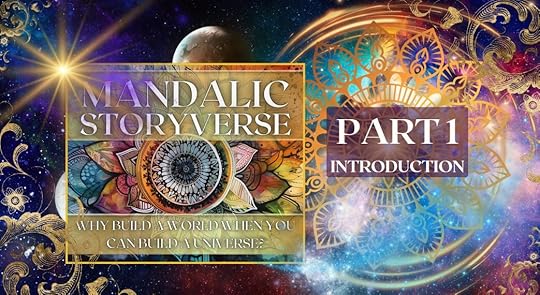
Intro to Mandalic Storyverse Construction
It’s exciting to be where I can break down the Storyverse builder mechanics for teams, and individual creators. In the first attempts to work through the method with individuals, I could see their eyes glazing over—so it took some finagling to put it into a more digestible process.
Still, these courses are not beginner worldbuilding courses and workbooks. They require a basic understanding of narrative structure, and a fundamental awareness of standard worldbuilding practices. Essentially, these tools pick up where a lot of the other resources leave off—where the main-stream educational platforms and materials send writers off to do the thing.
But what if you’re a creator doing the thing, and realize there’s so much more that wasn’t covered and you’re fumbling around looking for the matrix key to unlock greater interdependencies to bring your work to broader scope, scale, and audiences?
Here’s an introduction video link to Mandalic Storyverse Construction. Workbooks and workshops for pre-order soon.
Still, these courses are not beginner worldbuilding courses and workbooks. They require a basic understanding of narrative structure, and a fundamental awareness of standard worldbuilding practices. Essentially, these tools pick up where a lot of the other resources leave off—where the main-stream educational platforms and materials send writers off to do the thing.
But what if you’re a creator doing the thing, and realize there’s so much more that wasn’t covered and you’re fumbling around looking for the matrix key to unlock greater interdependencies to bring your work to broader scope, scale, and audiences?
Here’s an introduction video link to Mandalic Storyverse Construction. Workbooks and workshops for pre-order soon.
January 15, 2024
Country Living
 It was a rough day of issues related to country living; a water filtration malfunction in the most epic way, then spectacular rescue from my neighbors to help cap the water pipe and fix the generator, prep for the storm and cleanup the shattered tree limbs from the storm two days prior--I’m rethinking my winter plans.
The glass biolight sleeve had shattered inside the UV casing, shooting broken glass into the water system, and as I squatted in the shed, temperatures dropping outside, with my hands clamped over the pipe trying to keep the glass from entering the pipe system into the house—I realized many of the issues I’m cleaning up now could have been prevented with regular maintenance that I’d deprioritized during the push to get projects out and contractors settled.
In my panic in the moment, I forgot to reach for the shutoff valve for a whole thirty seconds.
My neighbors are amazing. Once I remembered the shutoff valve, then scrambled for a bucket to try to flush the system I’d managed to contain and capture the remaining glass—I ran to my neighbor to see if they had a 1” compression cap I could borrow to seal off the UV casing and bypass the biolight system until I can order a new glass sleeve. Both my neighbors rushed in ready to help stop the mess from getting worse. I wouldn’t have running water today without them. As it is, I’ll be drinking bottled water until after the hard freeze when I can flush the full system and do a hard reset on the filters and light just to make sure there’s no glass. (Also, bypassing the biolight means whatever comes out of the tap is basically straight river water from a very shallow aquifer—No drinky.)
The first storm that came through dropped a bunch of limbs from the 150-year-old Douglas fir, and shattered my favorite ceramic pots on the deck. Along with rattling the whole house and blowing my tarps all over the yard, the storm flooded the creek and pushed sizable debris around. It also dropped a tree in my neighbor’s yard.
Long story short, this is all just part of living so far off the beaten path. These are the daily issues. Much of which could have been prevented if I had been on my game, but I was not. That sleeve in the biolight system should have been pulled and washed when I shocked the well back in November, but I told myself it could wait a minute. So many other urgent things to tackle first. And now it’s a much bigger problem.
So new winter plans include re-setting the property so I can focus more freely. Yes, winter is my writing and building season—but if my cottage is falling down around my ears, I won’t be able to focus. The to-do list is significant. Basically, everything that wasn’t a top priority for the last 18 months needs to be prioritized over next six weeks. This will also free up some worry around the need to travel to LA and know the house is safe and well-tended while I’m gone. Also, I won’t ask the house-sitter to drink bottled water—the whole water system needs to be redone, flushed, and reset prior to having a sitter.
Plucking a sliver of glass from my hand today before sitting down to write was that moment of—I’m not sure this setup is working anymore. To be able to jump back and forth freely from the woods to the city, I’m going to need a more automated setup and system of upkeep. I don’t have one in place because I hadn’t seen that far ahead. So, now is the time.
This space needs to be a retreat, a safe place to return, write, produce and build (and recover) without interruptions between meetings and events in California. I’m sure everyone has a system to help maintain their sanity during those pushes. Thus, this space will need a reorg and a plan in place for it to run more efficiently and be that kind of safety net spot—at least for a while.
Meanwhile, the ice front is moving in. I’ve got the firewood prepped, the blankets piled up, and the laptop charged for writing. See you all on the other side.
**Update
The ice front moved in. Despite putting a heater on the water system, the pump still froze. So, it’s a good thing I had prepped with bottled water. Oye. Meanwhile two days of below freezing temps and I managed to get much of my re-write list knocked down and a bit of the studio organized. Huzzah!
January 10, 2024
Find the Lighthouse
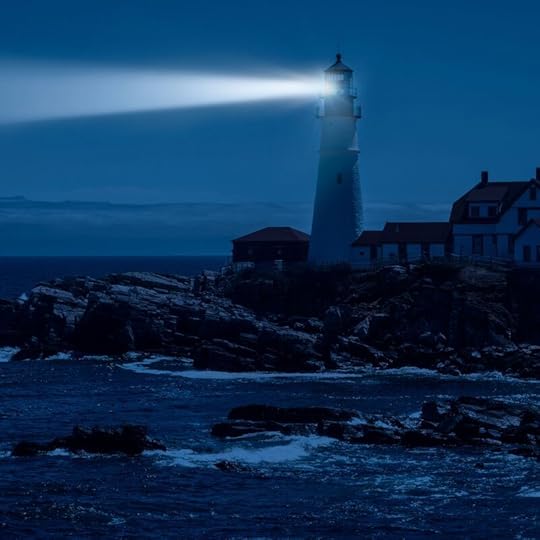 Publishing is a storytelling medium I can happily swim in without feeling disoriented or overwhelmed. I have to remind myself it wasn’t always so. I have to remind myself that there was a time when I constantly needed bearing checks and a lighthouse to avoid the shoals.
The Hollywilds can feel like choppy waters, turbulent and chilly one moment, then warm and calm the next. The only orientation I have in learning not just a new medium of storytelling, but understanding an entertainment industry in the middle of its own structural upheaval and transformation is to look for the lighthouses.
Coming from publishing to screen is not a one-for-one match, of course. But it’s a lot closer than many other fields. Having a financial background and project management/business development backgrounds helps immensely. I’ll say boldly, that those backgrounds probably help more in the conversion to entertainment than any other creative experience I have. It also makes the case for diversifying skill-sets, and for having another form of employment or income that allows my creative side to breathe freely without being beholden to the whims or fickleness of others’ “creative” expectations—which are almost always financially incentivized… and not to my benefit.
When asked what I would do differently? I don’t know. I only know what’s working or not—and that will be different for everyone based on their skill-sets, desires, processes and willingness to grit (more on this in a minute). All I know for me is that the traditional pathways that I keep getting coached toward, by the most well-meaning and wonderful people, don’t actually work for me as an artist or an individual. “This is the way it’s always been done. These are the things you have to do.”
That doesn’t seem to roll in my favor, and from the looks of it—not much in anyone else’s favor either most of the time.
I’m not special. I have no delusions of being important. But I will say, The Pillars of Dawn is not a common size or proportion to what usually fits in those “always how it’s done” models. It’s a full storyverse. A galaxy of interconnected stories.
I can’t even tell you how many “what the fuck is this?” statements I’ve heard from middle-men. Or how many times I’ve been coached to make it smaller, easier, “dumb it down or the executives will be confused and pass.”
Yet, the first two studios we tried both seemed to spot it right away and are kindly reviewing it as a full scale Storyverse. I was asked to put the slides back in the deck that explained the original intent of the scale, and resubmit for review. My heart might just explode with happiness. All I wanted was for it to be considered in its fullness. It can be chopped up and meat-balled after that, because I understand full well that the production restrictions of film are real and resources are finite.
In publishing, I have carte blanche with budget. I can imagine or build or synthesize anything with raw, uncontained language. Words don’t have limits. The mind lives eternally in its capacity to dream ever-bigger.
Hollywild budgets have limits. Thus, while I adore that the scope is under consideration—I’m realistic enough to understand the probabilities. Don’t mind me while I soak it in for a minute, though.
There are tried-and-true paths for other creators. Somehow, my feet never found those. Maybe I pushed too hard to keep my independence. When my author friends were signing agents fifteen years ago, and landing publishing deals with the big houses—I refused to make the core changes that were required to move to an agency. (Take a male pen name, or a gender-neutral name or write other people’s projects, re-write Murder of Crows from Liam’s male point of view, etc.)
I declined two large publishing contracts because I refused to change the Avians to vampires, turn the Muses into men, or “add a magical school” to the core storyline. (If you read Sinnet of Dragons, you’ll know what I did there in a bit of a frustrated “kiss my ass”.)
While my friends were selling thousands of books and gathering thousands of reviews and quitting their day jobs—I was doubling down on a Kickstarter to self-publish and launch a publishing label, while working a corporate gig.
Don’t get me wrong. I tried to give up so many times. SO MANY TIMES. I might still give up. We’ll see. If there’s a coffee shortage, like, ever—I will just fucking quit at everything.
In the meantime, coffee and keep trying. Keep pushing. Keep annoying people by showing up. Keep irritating the way it’s always been done. Keep pulling on the loose strings. Keep whittling the knot in the wood.
Look for the lighthouses, avoid the shoals.
Here’s where the willingness to grit part comes in. Part A is knowing what kind of artist you are, or want to be. What do you need to feel fulfilled? There’s no right or wrong answer to this. IT’s YOUR WORK. YOUR LIFE. Do what fits you.
If you’re the artist who wants to meet a metric, make a paycheck, handoff to let others run the ball while you release creative strings and control. I recommend finding someone, a team even, who will set you up for the life of “handoff + paycheck”. Cool beans! Do that. Find your peeps. I’m learning the middle-men in the Hollywild love those types of writers and even expect it. If being fulfilled means hands OFF. Then you’ve got it made!
If you’re the “other kind”, well, then. You might be in for some grit work. Don’t panic. It’s going to be okay.
Look for the lighthouses, avoid the shoals.
Novelists are frowned upon by many (not all) of the middle-folk of this industry. The teacher in my showrunner course didn’t know I was a novelist and spent half an hour ranting about how novelists “think they’re writers but they aren’t. They don’t even know storytelling, and if you get stuck with a novelist for an adaptation, be prepared to have to handhold and placate in order to take their work and make it better.” Then he lamented no one wants to do adaptations because the writer’s original vision is so lame, and “his author” had only sold 40 million copies so wasn’t even one of those writers you should have to care about their opinions—not like George R. R. Martin or anyone valuable.
No need to take my word for what he said in his rant. You can purchase the class and download it for yourself—IT WAS FUCKING RECORDED and resold as a class.
Avoid the shoals.
If it had been a one-off, that would have been it, but over the last two years there have been multiple instances where similar statements have been made. Ladies, I hate to say this in writing—but every single similar statement that was uttered was made by a dude. Every. Single. One. Still, there are many wonderful male allies in the field. Don’t lose faith. They are here and ready to collaborate.
So, the data is out on whether it’s a dismissal of novelists in general—OR a male dismissal of female voices. Will get back to you on that one.
The point is that when you come in as a novelist there will be bias, and not in your favor when it comes to middle-folk, gatekeepers, and often the producers. And there will be yet more bias if you’re a female novelist.
Look for the lighthouses.
HOWEVER, not all hope is lost. One hundred percent of the time, my involvement with adaptation and my grasp on the source material has been a boost to the performer's interest and engagement. All interactions in person and via email thus far with performers have netted a surprising response, “If you’re going to be involved or be a producer and stay close to what you’ve written in the books—I’m in.” I did not see that coming. What a lovely surprise, especially after smashing my face against the other wall so often that my nose gets bloody whenever I even think of having to email a gatekeeper.
Male, female, non-binary performers have unanimously been encouraging, helpful, and interested in me remaining involved. This is both flattering and worrisome. Because I don’t know how much I’ll be allowed to be involved once I part with the options. So, my concern is that a few will drop out if I stop participating—and I really like them as people and as performers. The Pillars of Dawn won’t be the same without them.
The lighthouse here is that there is no apparent bias from performers regarding gender or storytelling format. HORRAY!
Keep gritting.
Willingness to grit is still sending those emails. It’s still bird-dogging the potentials. It’s still following up with the people who have already determined you to be low value, amateur, undeserving, or false. Worse, they have already decided you can’t script because you’re a novelist—or that the work you’ve submitted is too “something else that’s not quite right”.
Was the formatting wrong? “No, there were no errors. It’s perfectly clean.” (I had help!)
Was the method incorrect? “No, it’s exactly in line with method.”
What’s the problem? “Well, it’s not a shooting script, it’s a concept script. It’s just that it reads different from expected.”
Did I screw up the story? “No! The story is great. Concept good. Dialogue okay. I mean, the dialog could use some tweaking…”
Cool. I can do that. Is there something really wrong with it? “Well, it’s just going to be expensive. So expensive.”
So, it’s not the novelist thing—it’s the cost. “Exactly.”
Ah. More gritting, then.
Willingness to grit is annoying your agent when you know she’s busy. Willingness to grit is going back to those banks and making a case. Willingness to grit is taking out high interest credit to hire pros. Willingness to grit is clinging to your vision as long as you can. Willingness to grit is studying the aforementioned “ways it’s always been done” then finding enough of the similar ground you can live with that’s not a catastrophic compromise and blending it into the work so the “respect” has been paid, and the conversation can move on and the “stodgy old crabs” can feel like you at least earned the right to speak two sentences in their room. (Don’t worry, you can remove those pieces of the changes later, after their flinchy hackles have gone down. )
Willingness to grit is adding yourself back to the emails after a man has consistently removed you from the conversation. Willingness to grit is speaking up when the male producer in the room has asked you to be quiet so he can sell the concept, because “you don’t know how to sell yourself.” When really, he means, “I want to be lead and get the credit for X,Y, Z—before you open your mouth and contradict my plans for controlling your work.”
Willingness to grit is KNOWING that obstacles are present in many forms—and still finding a safe, comfortable, healthy way to navigate around, over, through, across, or under them to get to where you want to be.
Willingness to grit is also having a bingo-point in the back of your brain. That number or metric or moment at which you have already decided to pull the plug because the cost of being actively inhibited by a system or “collaborators” is financially, emotionally, or mentally detrimental or cost prohibitive.
Willingness to grit ends the moment I know without a doubt, there is no future for my work to be made to story-spec and with love in an industry that has no room or appreciation for the process or for me as an artist. That’s okay. I’ve got books to write.
Then bounce. Just peace out, knowing and believing no stone was unturned, no door left untried. Pack up and go live life—back in the woods, writing my novels, and discovering new creators to publish through the label.
Either way, life is good.
The most brilliant gift I can give myself as an artist is to work only with those people who can see me, the work, the vision. And if that’s not in Hollywood, that’s okay. It’s not going to stop me from creating, or writing, building a publish world or engaging with interested parties down the road.
The lighthouses are there to keep you from wrecking on the reef. Orient to the lighthouses until you’re safely in port—even if that port is back home where you started—no deal in hand.
Life is short. Go build something.
January 6, 2024
What Comes Next?
 Best question ever from longtime friend and reader, Sharon. “If you had known the absolute mess you were getting yourself into at the beginning of this journey, would you have gone down this path?”
“Oh, good question! I don’t know. There are so many other rewarding aspects, I want to say yes.... but I would have prepared differently, and stocked up on more alcohol.”
The really funny part is that 2 years ago when I first decided to do this, Mark had asked me to write down my goals so he could help me stay on target. “Pick one that’s really out there, so you can surprise yourself or have something to reach for.”
It took two years, but we landed at that goal at the end of 2023. What happens next is anyone’s guess. I didn’t plan that far out.
I just wanted the full Storyverse for The Life Erotic, and The Pillars of Dawn to be considered for build out. The Life Erotic is smaller, more nimble and easier to move around, easier to place (I mean, aside from the sexy content issues.)
But POD… POD is a behemoth of a storyverse. It’s… massive, complex and cumbersome. It’s not a small world. Mark did his level best to help me trim it down, streamline it, make is smaller and more packageable. God bless him. More fruit baskets for Mark!
The truth is the POD storyverse was never made to be small or agile, nimble or easy to move. We always knew it would take a very specific kind of visionary studio and production team to see the POD Storyverse for what it is, and in a perfect world, they would want to play in it.
I get to play in it every day, so, I wasn’t worried about it. Not really. I mean. Okay. Maybe I was a little worried. One of my early conversations with him in the adaptation was, “I don’t know where to start—there’s so much story I can’t see the forest for the trees. It’s three worlds, ten primary characters, all their cohorts, 36 secondary characters and all the subplots, timelines, and like 172 ancillary characters, plus all the lore, histories, worldbuilding documents, pre-story prep and engines, woven throughout the Mandalic Story Structure. It’s a full Universe.”
He gave me some exercises to help me focus on which parts were the most important, and which parts to exclude because, “execs don’t care about that shit.”
Ah. Great way to start. No one cares about the 43 chapters of LORE?? Good to know.
It’s twenty years’ worth of build, some still in totes and stored on hard drives. My big stretch-goal, the pie in the sky wish, was to just have it considered as a whole universe at least once before allowing it to be chopped up and sold for parts.
The mini-version we built was still immensely satisfying and checked all the boxes for me to feel artistically contented. If we sell that smaller, compact version—I will still be greatly relieved and deeply humbled to be able to send POD out to a larger audience. However, there’s still that knowledge in the back of my mind that POD was designed to be so much more. It was made to be expansive enough to live within for a decade or more of mined material, and all the scoped transmedia materials to match. It was made to compete as an entertainment universe.
Again, not worried. Well… maybe a little.
Between the last two years of learning ropes and picking up the processes, I’ve pushed myself to learn how THEY do it. What is their process? What is their model? Which PMP steps are they most reliant on? And so forth. Workshops, classes, paid coaching, tutorials, private consults, books, pitch practices and more so I could at least sort of understand what was being talked about in the meetings I’m sitting in regarding my material.
Cross-train as much as possible, always. I will always advocate for this. If you’re a creative—learn other creative methods and mediums, so when you can see a gap or an opening, you can hold up the beam and buy some time for a bridge to be built. Also, in this case, I took a showrunning course so I would know how to be a better partner, supporter, and collaborator with the showrunners. That’s just courtesy. It’s on my end to make that stretch, not theirs. (Emmy winner, , is the showrunner for TLE, and he's marvelous! We don't have a showrunner yet for POD, but I have high hopes!)
They will have their hands full learning a new universe and managing teams. It’s not their job to come to me. It’s my job to go to them, and to help hold up the tent while they take in the volume of the build and get oriented. (I built it, so I already know where everything is, and where all the bodies are buried.)
I’m excited to know what happens next! Curiosity is mixed with glowing humility and a warm tingling bubble of creativity I’m trying desperately to keep in check. It’s like the volcanic center that keeps my creative pilot light on just KNOWS bigger, more expansive space is about to open up for the next layer of creation and my engine is SO READY TO BUILD BIGGER! It takes effort to keep the build contained for the moment.
It’s work every day to find things for my brain to focus on so I don’t run ahead and keep ripping the trail. Wait. Wait for the cue to cut more trail, Athena. Wait for the next okay to build out, up, and across the chasm. It’s coming.
I have to remind myself I will get to build more—but for now, there’s some waiting that needs to happen. In the meantime, I can get back to my books and clear out some of those totes.
Do I hope to bring all that world and story to new audiences? Totally.
Do I hope they’ll have as much fun with it as I do? Absolutely.
Would I have planned better if I’d known what I was walking into two years ago? Yep. I would have gotten a wine delivery membership, and added chocolate to my Amazon pantry subscription. But, you live, you learn.
Then again, I supposed it’s never too late for wine or chocolate--- who knows what the next two years will look like….