Lia Mack's Blog: The Blissfully Beguiling B&B Blog
March 27, 2017
How to Use Raw Emotion in Your #Writing
 WARNING - this post contains vivid imagery that may be harmful to those with self-cutting issues. Please proceed with caution.I love the idea of cutting into myself with an Exacto knife, little by little, slice by slice, until the entrails of my being are released, splayed and displayed out in the open.No longer hidden by the depths of my body, before me is the rawness of myself. My guts.I’m speaking figuratively, of course, those who are feeling weak in the knees.Don’t puke, yet…Let me explain.I read it somewhere that writing is akin to bleeding or vomiting or both.(Again, figuratively speaking.)Now, I totally agree that writing is vomiting. It’s exactly how I feel while I’m throwing words up onto a page. Just write as the words come, no censoring, no editing. Just write! Vomiting is first drafts. Vomiting is the only way to just get it done.Bleeding, on the other hand, is editing. And we all know that good writing doesn’t come from vomiting words onto a page. Good writing comes from cutting into those words and killing off your darlings. And if you don’t know what I’m talking about when I say killing your darlings, you need to read Stephen King’s writing craft book On Writing. Read it. I can’t help you if you don’t help yourself.So, we are told that, in order to write, we need to first vomit and then bleed. Two very unique actions.Two very pertinent requirements in the craft of writing. However, two very involuntary actions unless you first gut yourself.When you vomit, when you bleed, yes, something has to happen to create that action. There has to be a want, a need to vomit or bleed.I have to write.I need to write.We’ve all said these words a million times and will say them a million times more. And it’s because we can’t go another second without writing something, anything! And that’s good. If you don’t write, you can’t be a writer. Writers write. It’s what we do.However, again, these two actions – vomiting, bleeding – won’t do anything for your writing unless you have a source from which to vomit, a source from which you can bleed.And this source is your guts.I’m not making this up. Your guts is where your life, your love, your hate, your power, your lies, your fear, your everything lives. It’s all there. And like it or not, without your guts you wouldn’t be.Your guts are the source from which the rawness of yourself resides. It’s the sticky, dark, vulnerability from which you feel, want, desire. It’s that place inside yourself that you don’t talk about. At least, not to anyone real. You might talk about it to yourself, and that right there is probably something you keep to yourself, too, in your guts.Just think about it. Writers are a tad bit on the, shall we say, not-so-ordinary side? And some, if not all of us talk to ourselves and/or our characters, out loud. In the open. Most of us hide this side of ourselves, but what if we didn’t? What if, for a moment, you were to walk out into the open and start up your usual ol’conversation with yourself and your characters? Talking it out. Hashing out some plot hole. Rehearsing some dialogue.Go ahead. Do it. Go out into public and do it. I’ll wait.Seriously. Wherever you are… Go. Do. It. Now.Feeling the ClenchDid you feel that? Did you feel that nervousness, that fear in your gut? If you didn’t, that’s because you weren’t going to do it. So do it now.Let’s see you’re bravery!Let’s see your vitality!Let’s see your ‘don’t-give-a-shit’ness because you’re better than all us cowards and you can easily go out in the open and talk freely to yourself!Do it!You can’t, can you? You’re all talk and a coward just like the rest of us. But you felt it, that fear, anxiety, that excitement. You felt it, didn’t you?Yes, your heart is beating fast, now. Yes, your stomach is tied up in knots, now. But what happened before that? What did you feel first?If you can’t answer that because you didn’t feel it, try it again. Put yourself out there. Wear that tight skirt and flaunt it. Pick up that microphone and sing. Take up that bullhorn and shout into a crowd of your peers or total gawking strangers.That split second before the lights go up… That split second before the eyes are all on you… what do you feel?It’s quick, so you have to pay very close attention to your body to feel it…Do something that scares the shit out of you and tell me where you feel something first…It’s your guts, isn’t it?And, no. That’s not a question. That’s a sly-smiled, head-nodding statement to the fact that you felt it and know it now too. That clench – that tight hold down deep. That’s the source of all that is you.Your fear, your angst, your desire, your want, your need. No matter where those emotions may take you – vomiting, bleeding, loving, flying – it all starts in your guts.So, now that you’ve dissected your emotions to find your true core – your guts – let’s do something fun.Tearing into YourselfGutting yourself is not pretty. It’s not easy either. When I started venturing out into the world of critique groups with my first manuscript, I thought what I’d hear back was the usual fix this, fix that.And I did. I’m no good with grammar. Or spelling.But what I didn’t expect to hear was that my manuscript was nice.Nice…The goal with my novel Waiting for Paint to Dry was to reveal one woman’s quest for inner peace amidst deep depression and suicidal contemplation by bringing her to a point where she has to take back her life from the grips of PTSD due to being raped, or lose her life all together.Nice ain’t anywhere in that healing journey.Not until the end anyway, when she stumbles into love… I am a true love junkie. But I digress.Nice was death to the honesty that I wanted to show and share. My novel, although not a memoir, is a fictionalized representation of my own healing journey back from the dark spots of my life. But it was good that my critique partners thought it was nice that I added in a rape scene. It was good to feel the clench in my guts when they said it was nice that my character was afraid to fly home to resolve her past. They didn’t get it because they didn’t feel it. And that was all my fault. I hadn’t put enough emotion into it, or any emotion!I hadn’t been honest. I hadn’t dug deep. I hadn’t put myself in the way of fear and gutted myself. I hadn’t found my vulnerability and spread it out thin to find the pin points of exactly where my character needed to find freedom.But I was afraid to be honest.I was afraid to tell the truth.Good.That’s just where I needed to be. Afraid to tell the truth. It was the best starting point to tell the truth because it was from here that I found my guts. And boy did I feel them. I was nervous. I was shy. I didn’t want to relive the dark spots. I only wanted to feel the light.So I went back to Stephen King’s On Writing. Yes. This is the book to read when you are learning and relearning the craft of writing. I reread what Stephen King says, that “Writing is not a church. It’s not your family. It’s not politically correct. It’s writing. Tell the truth.” (I’m paraphrasing of course.)Telling The Truth.It only took three little words to make me realize what I had to do. I had to use the clench. I had to utilize the fear. I had to feel it and write it from my guts. And telling the truth made it churn for sure. I made a poster of paper and markers and taped TELL THE TRUTH to the wall above my writing desk. TELL THE TRUTH surrounded me everywhere I went, every word I wrote. If at any time I felt it was nice I deleted it.Went back inside, deep into my guts and found the truth.And it hurt. Oh, my God, did it hurt. I wrote. I cried. I wrote and cried some more. I found truths that not even my years of therapy had found. I wrote and then deleted the truth sometimes too. It was too much. Too raw. Too real.But then I’d write it back in, after taking some time to get used to the pain. The suffering. The dredging up of my past and my sorrow and my journey and my pain. It was real and it was honest. And it made my character come so alive that I cried and cried some more. She was real. So was her pain. And she made it. She made it out of the darkness and into the light.I knew I had gutted myself right when I had to reread and edit and reread and edit the manuscript again and again when my editor and publisher sent it back with edits. I knew I would have to reread my manuscript many times over to get it right, but I had no idea that I was going to also relieve the emotional journey I had gutted into my character’s life. But it was validating. And an eye opener. If I didn’t feel, if I didn’t cry, if I didn’t laugh out loud when I read something that should have made me feel something so strong as to ignite a physical reaction, I dug deep. I peered down into myself and reached for that morsel that had been hiding.Truth.Honesty.I pulled it up out of me and laid it on the page. If it hurt, if it felt real, I knew I had gutted myself right. I knew I had found the right mix of raw emotion so that my character’s emotional journey would translate to my reader.If you don’t laugh out loud and cry your heart out when you’re reading your manuscript, you haven’t gutted yourself enough yet.So reach down. Drag it out. Dissect it. Claw at it with your knife. And if you have no clue how your character should feel because it’s not something you yourself have lived through yourself, you need to do some research, soul searching and ask others how they feel.Find the root. Find the guts.It’s the best way to use raw emotion for your writing.Lia MackThis blog post was originally posted and written for Bad Redhead Media. http://badredheadmedia.com/2015/08/15/this-is-the-reason-to-use-raw-emotion-in-your-writing/


March 22, 2017
33 Coming of the Leaves...
 I have seen 33 coming of the leaves...33 snow melts...33 Springs...Today is my Birthday...Each year we are alive, we receive many gifts. Challenges that make us who we are. Revelations to steer us in the right direction. Visions that show us the way. And each year we live makes us wiser, not just older. Wisdom is the best gift of all, and the longer you live, the more wisdom you gain.“Never mistake knowledge for wisdom. One helps you make a living; the other helps you make a life.” ~ Sandra CareySo, today marks another year that I get to enjoy my life. And another chance to do something special for myself. Ever since I turned 30, I've given myself a Birthday gift of significance. Not anything that you can purchase in a store. Rather, something that I either do for myself that day or vow to do throughout my new year.Last year, Birthday 32, I vowed to write my novel, to put myself first once in awhile, and accomplish something that was indeed very special to me, my dream. And, through much delight and determination, I did it: beginning, middle, end.My gift to myself at 31 was to take my health and my life into my own hands. To figure out what my 'mystery illness' was and get better. And I'm happy to report that I'm still alive - obviously ;) - found out what was wrong and am still working to fix it rather than cover it up as my good ol'doctor insisted I do (yes, yes...another blog, another day...).Some years I do or vow to do something so private for myself that no one knows about it with the exception of me, myself, and I. That was my 30th Birthday present to myself. It was a very hard thing to do, something that was 14 years in the making, but I'm glad I finally did it. And, if my book ever gets published, you'll all know exactly what that gift to myself was! But you'll have to read the book to find out ;)This year...33...Well, I had a sad but important realization just this past weekend: I don't have many (if any) symbiotic friendships outside of my darling husband. And although most people don't even have that, I need to start surrounding myself with friends who put just as much effort into me as I put into them. I listen but seem to never be heard. I give and only give...and then give some more, only to be tuned-out the first moment I have something to say. Left the moment I do something I want to do.I have no qualms in never having something returned to me. I'm a giver. That's what I do. However, I'm seeing more and more that if you only give and give and never receive, sooner or later you start giving away all that is you. Everyone deserves something in return, if only an ear to listen, a shoulder to lean on.So, this year, I vow to no longer be the doormat to 'friends'. I've already tried to rid my life of drama andtoxic people, and it worked and I'm healthier for it! Except, I feel as though I only worked in the family territory, thinking that my friends were toxin free. That is not the case."Love yourself first. Put yourself first. Don't sacrifice who you are for anybody or anything. Don't put yourself in the backseat; don't deny what you know your truth is. That's what makes you amazing, and beautiful, and rare and an individual. And it radiates out like the most beautiful light. And with loving yourself, you will attract people who love you back." ~ Kimberly EliseIf you don't put yourself first, no one will. UPDATE!This blog post was back from 2009... (I'll wait for you to do the math, lol...)I'm glad, oh so super glad, to report that I did, in fact find a great new circle of friends to surround myself with. Friends who are like minded and others who challenge me in ways that are so appreciated. Just friends who were the true sense of the word. Give and take. It's a beautiful thing.But it wasn't the fault of the people that I had previously surrounded myself with that they were takers. I subconsciously, almost purposely, surrounded myself with people who didn't care that I talked, and tuned me out when I did. Why? Because, quite honestly, I didn't want to talk. I didn't like myself enough TO talk. And I wrote a book with a main character who too surrounded herself with people that either didn't listen, didn't want to hear about whatever was in her heart, head, or people who were just plain clueless - not because they were bad people or selfish people. No. It's because my character, like myself, did not like herself enough to talk.That, and she was afraid of all that was inside... This is all, of course, a total subconscious effort. People that either are afraid of what's inside or don't like what's inside themselves (or both) will always surround themselves with people who never engage them in a way that promotes introspection and healing. They will only surround themselves with 'takers' as they, the self-loathing, don't think they are worthy of anyone's time, effort, attention. Love. But that's all old hat, thank God!Now, my question for the sequel that I am writing - where my character is healed and loves herself and is starting to surround herself with the right-for-her kind of people, is this: when my character finally sees that these people (or person) she has surrounded herself with are/is unhealthy... does she just 'cut them out' of her life? Or let them know why she probably won't be calling too often from now on? Do the enabled narcissists in our lives care for or need an explanation? Or, will they not even know that the bridge has burned between you? I've experienced this a few time in my life, lol... people so consumed with themselves, that they don't even notice you've stopped making an effort... hmmmm...I'm leaning toward the they'll call if they care line of thought. Then, if they care, you/I/she can let them know that you've come to some realizations and if they are okay with the new you, great! If not, no worries. You'll find your tribe eventually, and be better for it :)Lia
How to Remove Toxic People from Your Life
 There is a lot to be said about how toxins have a lasting negative effect on your physical health. But what about the lasting effect toxic people have on your mental heath which, in turn, effects your physical health? Where do you draw the line? Is it selfish to remove such people from your life, or is it life saving?What exactly a toxic person is depends on who you talk to. However the underlying result is always the same: they leave you feeling powerless, vulnerable, and depleted. Feeling this way for long periods of time can be detrimental to your well being.People who are aggressively physical have obvious toxicity. But what about the subtle types? The ones that ravage you from the inside out?Someone who:takes and never gives in returnconstantly complainsgossipsputs you downmakes you feel guiltycan only criticizeHonestly, the list can go on and on. So, now that we can pin point these toxics, what do we do with them? I've recently learned what works for me, what helps me stay stress free and toxin free. It's been a health AND life saver:Walk AwaySay, for instance, you are in a room full of people, and someone starts ranting about this or that, complaining about politics or people's lifestyles, and you know - you KNOW - that no matter what you say, however eloquent, you will never change this person's mind...just walk away. You DO NOT have to be there to hear all of the negativity. Your presence is NOT necessary. Leave! Save yourself! Stand up, totally calm. Grab your children, if you have kids, nonchalantly and leave the room. Come back in when you know enough time has passed that everyone else in the room has argued till they were blue in the face with the toxic person, to no avail, and the topic has been changed. Phew! You saved yourself from a toxic encounter!Take Yourself Out of the EquationHow about this...There was a huge misunderstanding and, if it had happened with someone who was able to have a normal conversation, it would be done and over with in a calm conversation. Yet your dealing with a toxic person who DOES NOT have such skills. They are gossiping to everyone how you did this and you did that. It doesn't matter if it's false or true, take yourself out of the equation. Don't play the game. Don't counter act all the assaults. Leave. IF need be, say your bit TO the toxic person, just the facts, totally calmly, and then let it go. Chances are everyone else is just as fed up with this person as you are. They will see that it's just another one of this person's tirades and will start to follow you. They too will remove themselves from this person's path, seeing how calm and relaxed you are not being involved with this toxic person. If they don't, it's not your problem. Take care of yourself.Take ResponsibilityFor your health! It's YOUR health. If you don't take care of yourself, who will? No one. Are you going to continue to let this person shape your life for the worse? Allow yourself to feel the effects of their negativity so much that it is effecting your health? They take and never give. Who is to blame? Them? No! They are always going to do what they do. What they do to YOU is up to YOU. No one else. If you don't want to be treated poorly, don't allow it. Do what you have to do to take control of your life. If that means no longer engaging someone in a conversation because you KNOW it's going to turn sour, don't! If you know that just by being around a certain toxic person brings you down and causes you to feel horrible for days, weeks later, then limit or restrict your contact with that person. You are in charge of your life, of you. Don't let others bring you down. You have to take care of your health so that you can take care of all the other things and people in your life you are responsible for.So, there you have it. My quick tip list for dealing with the toxins in your environment.There are many other ways in which you can save your sanity and your health. If you have any additional ideas and tips, please share! We can all use additional tools in our arsenal against our toxic common enemy.Lia
March 20, 2017
#Writing a Sequel - What to do, What not to do, and everything inbetween...
 So, it's been a long time coming, but, YES, I am in fact writing a sequel to WAITING FOR PAINT TO DRY. I'll wait while you cheer, "Yah!" and then scream, "It's about time!"I know. I know. It is about time. But to be honest, it wasn't a book I was planning on writing. I thought I had wrapped up the ending of WAITING FOR PAINT TO DRY in a nice little bow. Some readers agreed! Some. But...Most, however, did not. And reading through the reviews on Amazon, some readers really, really wanted a sequel right away. Some even left reviews stating, "I would have given this book 5 stars if the author had more books to read... 4 stars until there's a sequel!" Seriously. I had no clue readers would blackmail me... But, even with the withheld stars and angry mob of readers emailing and PM'ing and tweeting me for one, I didn't want to write the sequel. Even when my publisher assured me that, "If the reader wants it, you write it!" I still didn't want to write it. This is, of course, until the demand is so demanding - from readers and publisher alike - that a story presents itself. And finally, thankfully, it did. The mob can calm down now.So, the sequel has been underway and, because of a recent layoff (thank you, previous employer...) I have had some 'quality' time with my manuscript. And it's going great! I anticipate being done with the first draft by end of April.Oh, spoiler alert... writer's have jobs. I know most of you know this, but you'd be SURPRISED how many people are astonished that I have (or had) a fulltime job.But I digress. This post is about HOW to write a sequel! Well, it wouldn't be blogging if I didn't add in a ramble preamble! Have you read a cooking blog lately! There's so much babble the recipe is at the tail end as if it were only a second thought to the inspiration of a blog post. Okay, digress part two...Sequels. So, you've written a story that people are clamoring for you to continue. Congratulations!We writers should be so blessed (and never, ever reluctant) to have a demand for our writing. And it should be easier to write this sequel, since you already have the characters developed, the story's backstory is superbly laid out, and you have people waiting to read it (aka, buy it). THIS is a feat. THIS is huge. THIS is the motivation to get started and keep going until the job is done.And although, yes, writing a sequel is far easier than writing a novel novel, there are just a few things to keep in mind. Otherwise, you readers - and publisher - will not be too happy to pick up any future books. They love these characters, this storyline, this premise, so you need to ensure you do your part to keep things right.... hence... you need to:KNOW WHERE YOU'RE GOINGBefore you start, you need to know where you're headed. Where is the story going to go from the end of book one? Will there be a deviation, big or small, from the original goal? Meaning, will there be an entirely new goal for book #2? Or will this be a continuation of the primary goal? Lay down some groundwork, no matter than you're a panster or a whatever... I'm not married to those 'writer types' at all... and just do it. You need at least a sense of the direction you're going to take. Then remember. Because you need to:KNOW WHERE YOU'VE BEENThis might seem obvious, but I'm sure there are writers out there that have forgotten a few key elements from book #1 that ought to be in book #2! My suggestion is to re-read your first book and take notes. Either before you begin writing the sequel or while you're in the works of writing your first draft, read it. Chances are, you've forgotten a few things, both big and small. Secondary characters. Secondary plot lines! Things that your heroine may have just thought once and then never mentioned again. These are things that your readers WILL remember! For them, this is a world that's full of people they can't wait to see again. And you can bet your bottom they're waiting with braced anticipation (not like an angry mob at all... no...) to see what happens to so and so, and such and such. Don't leave your readers high and dry! Do your homework. Then...PUT THE TWO TOGETHERAgain, this might seem frivolous to mention, but guess what? I'm mentioning it. Why? Because you might be on the verge of fatigue with this idea, this storyline, these characters and you just want it done and over with. Or you might be so super freaking super excited to get to continue on this story and can't wait for it to get into your reader's hands! Either way, you NEED to pay attention to detail here. You need to ensure those research points from re-reading your first book get into your second book. You need to maintain the proper trajectory of the story that needs to be told in book #2 that'll make sense that it goes with book #1. You're readers - and characters - are counting on you! So, do the work. Do the research. Do your homework. And have fun!!It's not every day that you have a mob of readers breathing down your neck, anxiously anticipating your next publication. Seriously. Enjoy it. And write it.Lia
March 14, 2017
Author Ellis Shuman on what a typewriter Bar Mitzvah gift and devoted creative time can do for your writing...
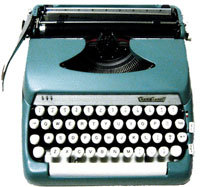 Lia Mack's Interviews with Authors... Because writing is such a solitary act, I really enjoy getting a chance to chat with fellow writers and hope you enjoy our conversations!And although this conversation Ellis Shuman and I had was from a few years ago, his insight and inspiration for fellow writers is, as always, spot on! Thank you, Ellis!
 Today we have with us debut suspense novelist Ellis Shuman, author of Valley of Thracians, a face paced mystery about a missing Peace Corps volunteer in Bulgaria. Ellis is currently working hard at work editing his next book, also a suspense novel, so I'm very glad he took the time out of his busy writing schedule to come meet with us today. Please help me give a warm welcome Ellis Shuman!
 Lia Mack: Ellis, please start us off by telling a little about yourself: Ellis Shuman: I was born in Sioux City, Iowa, and moved to Israel as a teenager with my family. After finishing high school in Jerusalem, I served for three years in the Israeli army. Along with my wife, I was a founding member of a kibbutz in Israel's southern desert. My years on kibbutz, working in agriculture and milking cows, served as background for my short story collection, The Virtual Kibbutz. My wife and I now live in a community in the hills west of Jerusalem. For many years I worked in the hotel industry and my last position in this field was Food and Beverage Comptroller at the Jerusalem Hilton, back in the years when there was a Hilton hotel in Jerusalem. I have worked for the past decade in the online gaming industry, and a few years ago, my position was relocated on a two-year assignment to Sofia, Bulgaria. That experience served as background for my suspense novel set in Bulgaria, Valley of Thracians.Lia Mack: Ultimate question...Why do you write? Ellis Shuman: I grew up with an ever-present urge to tell a story. I inherited my writing abilities from my father, who was a journalist. During my summer vacations as a child, I wrote, edited, and marketed a neighborhood newspaper and went door to door selling copies of the page that told everyone what their neighbors were doing that summer. I have wanted to write a novel all my life, and have many unfinished manuscripts probably gathering dust in some archived online digital folder. Even though I work full time, writing is my hobby. I enjoy writing fiction, but also nonfiction, including book reviews, travel reports, and other stories that I have a need to tell.Lia Mack: Can you describe a bit how your venture into writing looked like? Ellis Shuman: I began writing stories as a boy and was extremely grateful to receive a typewriter as a present for my Bar Mitzvah at the age of thirteen. That typewriter would serve me for many, many years, and in fact, I wrote a manuscript for my first, and eventually unpublished, novel on that machine. I think I still have it in the attic for sentimental reasons. I remember deliberating whether to buy an electric typewriter when they first came out, but in the end elected to go with my first computer. A word processing program was like heaven for me. No more retyping entire pages or whiting out mistakes with Tipp-Ex. I had advanced into the modern age of writing. Even so, when I began writing the stories that became The Virtual Kibbutz, I wrote out some of them by hand in a café because I didn't own a laptop at the time. When I came home in the evenings I would then type up my stories into the computer, giving me a chance to review that morning's creativity. Now I type up everything on a laptop, barely ever visiting the desktop computer we have in our home.Lia Mack: Can you tell us a little about your book? Ellis Shuman: After living for two years in Bulgaria, I wanted to be able to share that experience through my writing. I enjoy reading suspense novels, so I made the decision to write a suspense novel set in Bulgaria. As far as I can see, there are not too many novels, of any genre, available in English that tell about life in Bulgaria. Along with the element of suspense, I became determined to include a sense of Bulgaria in the book. Many readers have stated that Valley of Thracians is part mystery, part travelogue. That's because I write about Bulgaria's history, culture, food, tourist sites, and most importantly, about Bulgaria's people. Readers will be enthralled not only by a fast-paced suspense story, but also by an introduction to a country about which they previously knew very little.Lia Mack: What was the most challenging aspect of writing this particular story? Ellis Shuman: While living in Bulgaria, my wife and I traveled extensively around the country. I guess everything we were doing for two years was research for my novel. I didn't take notes along the way, but I revisited many of the museums, villages, cities, and themes of Bulgarian history in a virtual manner after my return to Israel. Thinking back, there are some places in Bulgaria I would have loved to revisit while I was writing the book because research on the ground is always more effective.Lia Mack: What are you working on now? Ellis Shuman: I wrote one collection of short stories about Israel, and one suspense novel set in Bulgaria. These are the two countries that I think about the most, so I set for myself a challenge - to write a novel that will highlight both Israel and Bulgaria. Living in Bulgaria I felt very comfortable identifying myself as an Israeli, and discovered there is a lot of respect in Bulgaria for Israel and for Israeli leaders. There is also quite a bit of cooperation between the two countries, and this gave me an idea for what I could feature in my next novel.Lia Mack: What does your typical writing day look like? Ellis Shuman: I am always writing, but at my day job my writing is devoted solely to marketing copy. I commute to the office, a drive that leaves me quite tired, and uncreative, at home in the evening hours. In order to gain time for my creative writing, I decided to leave home one hour earlier in the morning. Before I sit down at my office desk, I sit down for a nice cup of coffee in a café not far away. I take out my laptop and manage to get a lot onto paper, or rather into the computer, despite the noise and racket of the cappuccino machine and the customers at the other tables.Lia Mack: Can you share a photo of what your writing space looks like?
  Ellis Shuman: Here is my very unseemly table in the café, off to the side and near the electricity socket that powers up my laptop. I am one of the first people to buy coffee in the mornings, so I have my choice of tables. I don't need anything else around to stimulate me because my mind is working at high speed as I type.Lia Mack: What are your thoughts on authors needing to build a platform? Ellis Shuman: It doesn't matter if a writer is traditionally published or self-published, because in both cases, most, if not all, of the marketing falls upon the author. I think it is essential for an author to establish him/herself on a social platform, but one shouldn't go overboard doing it. I maintain a very active blog, where I write about Israel, Bulgaria, book reviews, travel, and about the writing process. The readership of my blog grew immensely when I became active on Twitter, where I associate with other published and aspiring writers. Someone said that an author has to spend 90% of his or her time marketing. Building a platform is crucial to this endeavor.Lia Mack: If you could go back in time, what advice would you give yourself if you could speak to the aspiring writer you once were? Ellis Shuman: I would tell myself "Keep on writing, you'll eventually find your voice." Writing is an art that takes practice to perfect. I don't say that I am the accomplished author that I want to be at this stage of my life, but I keep on practicing, knowing that one day I will get there. Each article I write is better than the one before, and each book I write will be better than the one previously published. I look forward to what I will achieve in my new book, and I anxiously await the day that I will be able to share it with my readers.Lia Mack: Thank you so much for being my guest author today! Where can readers go online to find you and your work? Ellis Shuman: I blog once or twice a week at Ellis Shuman Writes. Readers can find my books at Amazon:The Virtual Kibbutzhttp://www.amazon.com/The-Virtual-Kibbutz-ebook/dp/B00ASK6VA0Valley of Thracianshttp://www.amazon.com/Valley-of-Thracians-ebook/dp/B00B68J114 And finally, readers are invited to follow me on Twitter: @ellisshuman :) Thank you, Ellis!
March 7, 2017
Where Do You Write? Creating a Writing Sanctuary
It doesn't have to be big. It doesn't even have to be a room. And, contrary to popular belief (or want) it doesn't even have to segregate you from the rest of the world. Of course we'd all love to have that perfect little hideaway, secluded from noise and distraction.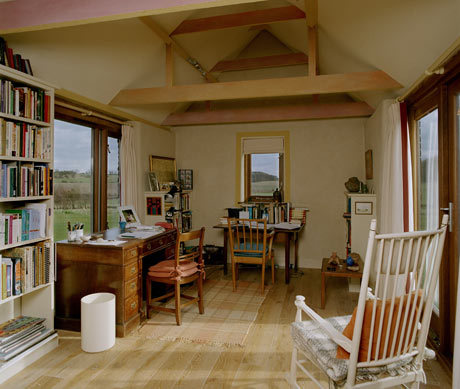 "There, and only there, will I write my masterpiece..." But where you write best sometimes doesn't come with it's own key. I know I used to have one such place. Although it was situated in the belly of the house, my 'office' had a desk, carpeting, a window, and...drum roll please...a door. With a LOCK!!! No heat, mind you. But it was mine... whenever I could carve away even the tiniest amount of time alone to write. One hour, one day, one minute....one minute....one minute...half a minute.... Except, more times than not, the moment I sat down with my hot cup of tea and vanilla-lavender candle aglow, someone needed me. Or someone popped in the door crying and screaming about this and that... "He touched my toy!" the three year old cried. "She hit me!" the five year old cried. "My wife left me!" the thirty-five year old cried. "Oh, wait. There you are! I've been looking all over for you!" Kiss, hug, love... "The kids need you, honey." Suffice to say, my room away from it all wasn't all it was cracked up to be. I hardly ever had more than ten continuous minutes to rub together. And when it takes me thirty minutes to 'get there', aka: into the story, ten ten-minute increments of solitude a day isn't enough to eek out an outline, let alone an entire novel. Surrendering, I took to the dining room table with my laptop. Or if the kids were downstairs, down to the table next to the play area. Outside on the patio table after a good amount of playing and gardening with the kids. Laptop open, manuscript ready, there I sat. Totally open. Totally available. Totally in the middle of things. My novel, my life as I only dreamed it, doomed... But you know what? By being out in the open...everyone leaves me alone ! I don't know if they only felt like they had to seek me out before when I was locked away by myself. Maybe it made them feel uncomfortable to have mommy out of the loop, unavailable for boo boo kisses and such. I don't know...kids, husbands...you know how they are ;) Now, when I sit down to write right where they are, they don't come looking for me. Yes, I still get interrupted. Yes, I still have to stop mid-sentence to help locate a MIA toy or make a snack. For some reason, since I'm writing in the middle of the mix, when I do get asked to stop short and switch gears, I don't loose it, (aka: get taken out of my story) as much. My thinking process isn't stopped as much being out in the open, in the middle of things, as it did when I was totally immersed in solitude. Maybe that's just it. Perhaps creating a writing sanctuary doesn't have to involve candles, closed doors, and a window with a view. It just has to be 'where you write', whether it be the kitchen table or with no table at all. Where do you write? How do you deal with the distractions and interruptions? Do you wait until everyone's gone to bed? Or carve out an hour or two on the weekend? Ever since I left my room to write at the dining room table - an hour here, twenty minutes there, where I can hear and see everything going on around me - I feel as though I've not only written more consistently, but I've written better, as I can write everyday if I want. I don't need to wait for the perfect moment when everyone in the family has been taken care of and everything in the house is done. I can just say, "Hey, they don't need me for the next half hour. I think I'm going to write a little bit." And I do. ;)
"There, and only there, will I write my masterpiece..." But where you write best sometimes doesn't come with it's own key. I know I used to have one such place. Although it was situated in the belly of the house, my 'office' had a desk, carpeting, a window, and...drum roll please...a door. With a LOCK!!! No heat, mind you. But it was mine... whenever I could carve away even the tiniest amount of time alone to write. One hour, one day, one minute....one minute....one minute...half a minute.... Except, more times than not, the moment I sat down with my hot cup of tea and vanilla-lavender candle aglow, someone needed me. Or someone popped in the door crying and screaming about this and that... "He touched my toy!" the three year old cried. "She hit me!" the five year old cried. "My wife left me!" the thirty-five year old cried. "Oh, wait. There you are! I've been looking all over for you!" Kiss, hug, love... "The kids need you, honey." Suffice to say, my room away from it all wasn't all it was cracked up to be. I hardly ever had more than ten continuous minutes to rub together. And when it takes me thirty minutes to 'get there', aka: into the story, ten ten-minute increments of solitude a day isn't enough to eek out an outline, let alone an entire novel. Surrendering, I took to the dining room table with my laptop. Or if the kids were downstairs, down to the table next to the play area. Outside on the patio table after a good amount of playing and gardening with the kids. Laptop open, manuscript ready, there I sat. Totally open. Totally available. Totally in the middle of things. My novel, my life as I only dreamed it, doomed... But you know what? By being out in the open...everyone leaves me alone ! I don't know if they only felt like they had to seek me out before when I was locked away by myself. Maybe it made them feel uncomfortable to have mommy out of the loop, unavailable for boo boo kisses and such. I don't know...kids, husbands...you know how they are ;) Now, when I sit down to write right where they are, they don't come looking for me. Yes, I still get interrupted. Yes, I still have to stop mid-sentence to help locate a MIA toy or make a snack. For some reason, since I'm writing in the middle of the mix, when I do get asked to stop short and switch gears, I don't loose it, (aka: get taken out of my story) as much. My thinking process isn't stopped as much being out in the open, in the middle of things, as it did when I was totally immersed in solitude. Maybe that's just it. Perhaps creating a writing sanctuary doesn't have to involve candles, closed doors, and a window with a view. It just has to be 'where you write', whether it be the kitchen table or with no table at all. Where do you write? How do you deal with the distractions and interruptions? Do you wait until everyone's gone to bed? Or carve out an hour or two on the weekend? Ever since I left my room to write at the dining room table - an hour here, twenty minutes there, where I can hear and see everything going on around me - I feel as though I've not only written more consistently, but I've written better, as I can write everyday if I want. I don't need to wait for the perfect moment when everyone in the family has been taken care of and everything in the house is done. I can just say, "Hey, they don't need me for the next half hour. I think I'm going to write a little bit." And I do. ;)
March 1, 2017
Writing a Novel Based on True Events... Should You Do It?
 This post is from a few years back but, as always, poses some REALLY perfect questions for writers thinking of publishing stories that are based on their own personal lives...My Grandmother was in town for the holidays and, while at my house, she sat shivering as I attempted to start a fire using my first draft. Naturally she asked to read a few pages.I beat around the bush for as long as she'd let me. "I don't know. This is my first draft and my second draft on the computer is so much better." "Computer?" Grandma isn't tech savvy. "Just give me a few pages." So I flipped through what was left and found some relatively good pages - safe page - as what I've written about is taken from my life, and a not so nice part of it. She read through what I handed to her, decided that yes, first drafts do suck, and added then to the fire herself. "See, Grandma. Told ya so." However, this brought up something rather important. Something that I think everyone should consider when thinking about writing a novel based on a true story or true life events. Especially real life events that instantly make people you know say, "Hey. I know who you're writing about...That's you!" If you are thinking of taking your life's experiences and putting them into your book, or making the book all about them, there are questions that I think you really need to sit down with yourself and answer...1. Do you really want this story to get out?Because once it's out, it's out. I do admit, though, that writing is the best form of catharsis available. Talk therapy number two. Throwing a temper tantrum where you get to break something number three. So if you are ready and you don't mind others knowing and you want to write a book about it...go for it. Just make certain you are ready.2. Are you okay with EVERYONE knowing? Grandmas included?When you start writing your book about your own true life experiences, you might have all these lofty ideas that you're going to be fine once it all comes out. Because let's be honest, you're not going to show everyone the book until it gets published. And if it gets published? Who cares! You'll be so excited to even notice anyone's curious glances... HOWEVER, let's shed that daydream for just a second. Everyone you know will want to get a copy of your book...and read it. Are you okay with that? Really? Be honest with yourself... Are you?3. Alright...What are you okay with them knowing? Most fiction work is born directly from the author's life experiences. We write what we know. Otherwise there's no authenticity to it and that's when we loose readers. So it's obvious that we all already write 'based on a true story' to some degree. But what parts of what really happened need to be in your book? Remember, you can always leave out bits and pieces and still make it work for your story. Not everything has to be in there. Especially people's names. In the words of Stephen King (paraphrasing, of course) "Unless you want to be sued, use fake ones."4. And lastly...What is your comfort level?Most importantly, keep in mind that you're comfort level TODAY might not be equal to your comfort level a year from today. So when you're sitting down with yourself - minus your pride, inner sensors, and anything else that gets in the way of you being totally open with yourself - really ask yourself about your level of comfort. Think about what you'll feel like a year from now. Five years. Ten. And so on. Above all, be honest with yourself. And if you're not sure, test the waters. Give a sample to a close friend and hone in on what you feel the moment those pages leave your hands. Do you want to snatch them back and say, "Forget it! Never mind!" Or are you freely giving over your real life thoughts and feelings to others to read, dwell on, talk about, and share with others, so on and so on... Writing a novel based on true life events can be fun, therapeutic, and useful, in the sense that you already have some of your story outlined for you. Whether or not you should really do it, and whether it will work in your story is up to you. ...
September 22, 2015
Doing Good with Trauma
A reporter from my Alma mater UMBC recently took me out to lunch – thank you!! – and asked some really great (and difficult) questions… The result? A wonderful article about my novel Waiting for Paint to Dry and the emotional healing journey that started it all…. Check it out!
August 17, 2015
Gutting Yourself: How to Find and Use Raw Emotion for Your Writing
I was recently a guest blogger at BadRedHead Media about the importance of using raw emotion in your writing… Here’s a little of what I wrote: I love the idea of cutting into myself with an Exacto knife, little by little, slice by slice, until the entrails of my being are released, splayed and […]
July 27, 2015
“To The One”, a courageous powerful poem by guest poet Damara Candace Morey
I’ll be debuting fellow artists’ healing inspired art – writings, poems, painting, you name it… If you’re interested in your artwork being featured here at my blog, please contact me! I read this beautiful, painful, powerful poem last year that made me want to stand up and cheer! Cry! Scream! Rejoice! I asked poet Damara Candace Morey if […]