
 Sign in with Facebook

more photos (1)

Ana’s 2024 Year in Books
Take a look at Ana’s Year in Books, including some fun facts about their reading.
Ana López Gómez’s Followers (13)


776 books
|
73 friends

25 books
|
15 friends

215 books
|
2,881 friends

647 books
|
59 friends

507 books
|
145 friends

524 books
|
64 friends

569 books
|
262 friends

487 books
|
34 friends
More friends…

Ana López Gómez
Goodreads Author
Born
Madrid, Spain
Member Since
September 2013
URL
https://www.goodreads.com/analopezgomez
To ask
Ana López Gómez
questions,
please sign up.


|
Renaissance: El nuevo ciclo de los mitos
by |
|

|
Antología de relatos: La ciudad soñada
by
—
published
2015
—
2 editions
|
|

|
Microterrores II
by
—
published
2015
|
|

|
La dragona en la habitación: Una antología de roles en vivo escrito por mujeres
by |
|
* Note: these are all the books on Goodreads for this author. To add more, click here.

Ana’s Recent Updates
|
Ana López Gómez
is currently reading

|
|
|
Ana López Gómez
rated a book really liked it

|
|
| Me gustó más el volumen 1, pero si eres fan de vampiro es un imprescindible | |
|
Ana López Gómez
rated a book it was amazing

|
|
|
Relectura de uno de mis grandes favoritos. sigue pareciéndome grandioso |
|
|
Ana López Gómez
rated a book it was amazing

|
|
|
Los monstruos de tu infancia son reales, y han venido a matarte. Deseando continuar la saga!!! |
|
|
Ana López Gómez
rated a book really liked it

|
|
|
Ana López Gómez
is currently reading
|
|
|
Ana López Gómez
rated a book really liked it

|
|
| Thriller psicológico ambientado en la España rural. La trama está bien y tiene guiños a Twin Peaks, que siempre es un plus. | |
|
Ana López Gómez
is currently reading

|
|
|
Ana López Gómez
is currently reading

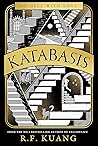
Katabasis
by R.F. Kuang (Goodreads Author) Goodreads Choice Awards Nominee in Readers' Favorite Fantasy |
|
|
Ana López Gómez
rated a book it was amazing

|
|
| Me encanta releerlo por Halloween y me parece un libro maravilloso para que los niños entiendan el significado de halloween | |

“Come sleep with me: We won't make Love, Love will make us.”
―
―
“Andábamos sin buscarnos, pero sabiendo que andábamos para encontrarnos”
― Rayuela
― Rayuela

“I think you should be a child for as long as you can. I have been successful for 74 years being able to do that.”
―
―

“When people dis fantasy—mainstream readers and SF readers alike—they are almost always talking about one sub-genre of fantastic literature. They are talking about Tolkien, and Tolkien's innumerable heirs. Call it 'epic', or 'high', or 'genre' fantasy, this is what fantasy has come to mean. Which is misleading as well as unfortunate.
Tolkien is the wen on the arse of fantasy literature. His oeuvre is massive and contagious—you can't ignore it, so don't even try. The best you can do is consciously try to lance the boil. And there's a lot to dislike—his cod-Wagnerian pomposity, his boys-own-adventure glorying in war, his small-minded and reactionary love for hierarchical status-quos, his belief in absolute morality that blurs moral and political complexity. Tolkien's clichés—elves 'n' dwarfs 'n' magic rings—have spread like viruses. He wrote that the function of fantasy was 'consolation', thereby making it an article of policy that a fantasy writer should mollycoddle the reader.
That is a revolting idea, and one, thankfully, that plenty of fantasists have ignored. From the Surrealists through the pulps—via Mervyn Peake and Mikhael Bulgakov and Stefan Grabiński and Bruno Schulz and Michael Moorcock and M. John Harrison and I could go on—the best writers have used the fantastic aesthetic precisely to challenge, to alienate, to subvert and undermine expectations.
Of course I'm not saying that any fan of Tolkien is no friend of mine—that would cut my social circle considerably. Nor would I claim that it's impossible to write a good fantasy book with elves and dwarfs in it—Michael Swanwick's superb Iron Dragon's Daughter gives the lie to that. But given that the pleasure of fantasy is supposed to be in its limitless creativity, why not try to come up with some different themes, as well as unconventional monsters? Why not use fantasy to challenge social and aesthetic lies?
Thankfully, the alternative tradition of fantasy has never died. And it's getting stronger. Chris Wooding, Michael Swanwick, Mary Gentle, Paul di Filippo, Jeff VanderMeer, and many others, are all producing works based on fantasy's radicalism. Where traditional fantasy has been rural and bucolic, this is often urban, and frequently brutal. Characters are more than cardboard cutouts, and they're not defined by race or sex. Things are gritty and tricky, just as in real life. This is fantasy not as comfort-food, but as challenge.
The critic Gabe Chouinard has said that we're entering a new period, a renaissance in the creative radicalism of fantasy that hasn't been seen since the New Wave of the sixties and seventies, and in echo of which he has christened the Next Wave. I don't know if he's right, but I'm excited. This is a radical literature. It's the literature we most deserve.”
―
Tolkien is the wen on the arse of fantasy literature. His oeuvre is massive and contagious—you can't ignore it, so don't even try. The best you can do is consciously try to lance the boil. And there's a lot to dislike—his cod-Wagnerian pomposity, his boys-own-adventure glorying in war, his small-minded and reactionary love for hierarchical status-quos, his belief in absolute morality that blurs moral and political complexity. Tolkien's clichés—elves 'n' dwarfs 'n' magic rings—have spread like viruses. He wrote that the function of fantasy was 'consolation', thereby making it an article of policy that a fantasy writer should mollycoddle the reader.
That is a revolting idea, and one, thankfully, that plenty of fantasists have ignored. From the Surrealists through the pulps—via Mervyn Peake and Mikhael Bulgakov and Stefan Grabiński and Bruno Schulz and Michael Moorcock and M. John Harrison and I could go on—the best writers have used the fantastic aesthetic precisely to challenge, to alienate, to subvert and undermine expectations.
Of course I'm not saying that any fan of Tolkien is no friend of mine—that would cut my social circle considerably. Nor would I claim that it's impossible to write a good fantasy book with elves and dwarfs in it—Michael Swanwick's superb Iron Dragon's Daughter gives the lie to that. But given that the pleasure of fantasy is supposed to be in its limitless creativity, why not try to come up with some different themes, as well as unconventional monsters? Why not use fantasy to challenge social and aesthetic lies?
Thankfully, the alternative tradition of fantasy has never died. And it's getting stronger. Chris Wooding, Michael Swanwick, Mary Gentle, Paul di Filippo, Jeff VanderMeer, and many others, are all producing works based on fantasy's radicalism. Where traditional fantasy has been rural and bucolic, this is often urban, and frequently brutal. Characters are more than cardboard cutouts, and they're not defined by race or sex. Things are gritty and tricky, just as in real life. This is fantasy not as comfort-food, but as challenge.
The critic Gabe Chouinard has said that we're entering a new period, a renaissance in the creative radicalism of fantasy that hasn't been seen since the New Wave of the sixties and seventies, and in echo of which he has christened the Next Wave. I don't know if he's right, but I'm excited. This is a radical literature. It's the literature we most deserve.”
―
 Goodreads Librarians Group
— 302662 members
— last activity 1 minute ago
Goodreads Librarians Group
— 302662 members
— last activity 1 minute ago
Goodreads Librarians are volunteers who help ensure the accuracy of information about books and authors in the Goodreads' catalog. The Goodreads Libra ...more
 HIGH ON HORROR
— 187 members
— last activity Mar 13, 2016 10:11AM
HIGH ON HORROR
— 187 members
— last activity Mar 13, 2016 10:11AM
A group where fans of horror books and movies can get together and discuss their favorites.
 #LeoAutorasFantásticas
— 765 members
— last activity Jun 29, 2024 03:55PM
#LeoAutorasFantásticas
— 765 members
— last activity Jun 29, 2024 03:55PM
Grupo abierto para todas aquellas personas que quieran conocer (o dar a conocer) a autoras de fantasía, ciencia ficción y terror.
