Joshua D. Jones's Blog
February 5, 2021
Esther Kidnapped: A Girl & Guardian Sample
 THE NEXT MORNING, Mordecai lumbered out of the house and turned to see the sun climb over the Zagros mountains and bathe Susa’s white buildings in its morning gold. The mountain air ensured that the city wasn’t too hot at dawn. By midday, however, the city would be baking.
 Hadassah was still in her bedroom when he closed the door and began his walk to the citadel. He regretted not being able to apologise for his role in the argument the night before. Oh well, I’ll do it tonight.
The workplace emitted a strange vibe that day, and he found himself scratching his head as whispers leaked from behind the doors of his superiors about something called ‘the roundup’. He began looking for answers after the midday meal. He was dictating a purchase order to secretaries when the building rumbled. Dozens of soldiers galloped past the office, and everyone in the room looked to Mordecai for an explanation. He did not have one. That many soldiers usually meant violence.
For a brief second, he feared for Hadassah. No, there’s never violence of that type in the Jewish quarter, he reassured himself. He was, however, frustrated enough to ask for an explanation from higher up, so he crossed the citadel to the office of Susa’s Satrap. Typically, the secretary would be all a visitor saw. Mordecai, however, had ascended high enough to warrant a notice making its way back to the Satrap’s desk. After a ten-minute wait, the office doors swung open. Mordecai entered.
The room had all the ornaments one might expect of a Persian ruler. Whoever had designed the room had undoubtedly wanted to impress—if not intimidate. The Satrap grinned from behind the finely carved table. ‘Greetings, Mordecai! How's our youngest and most prodigious of administrators?’
Mordecai was put at ease by the Satrap’s warm greeting and bowed. ‘Your Greatness, I’m busy, but well.’
‘You labour for the King. Good. How can we help you?’
‘Your Greatness, I seek an explanation of today’s events. Soldiers galloped from the citadel into the city. There are whispers of a “roundup”, and I’m unable to reassure those who work under me. Are we bringing in a network of rebels or criminals?’
The Satrap plucked a grape from the silver bowl on his table and looked at Mordecai thoughtfully. ‘You have nothing to fear. There is no big rebellion. No sedition.’
‘I’m relieved to hear it. But what should I make of the soldiers?’
‘Mordecai, my boy, you serve the Empire well, but the nature of this operation demands secrecy. Panic erupts easily, and we want to guard against that.’ He swallowed the grape and sucked his teeth with epicurean relish. ‘You see, the Emperor is in want of a new wife, and the magi have proposed a new method for selecting one—a strategy that the stars say will bring great blessing to the Empire.’
‘His Majesty won’t arrange a marriage with a royal princess in the traditional manner?’
‘That’s right. Remember how things with Vashti ended? She was a powerful princess. Our Emperor found her beautiful but rebellious. Between you and me, princesses and aristocrat daughters can make spoiled wives.’
‘All of this makes sense Your Greatness, but what has this to do with the soldiers. Will they escort the new bride to the palace?’
The Satrap’s grin widened. ‘Escort her? Well, after a manner, I suppose. You see,’ he lowered his voice, ‘The King hasn’t chosen the girl yet. He will hold a contest to determine who will be the Queen.’
‘A contest?’
‘I suppose it’s fine to tell you now. The news will explode soon enough. As we speak, soldiers in Susa, Pasargadae, Persepolis, Anshan, Babylon, and in each of the cities of royal status throughout the Empire are rounding up that city’s ten most beautiful maidens from non-aristocratic families. They chose these girls weeks ago, but we’ve waited for the right moment to snatch them all up. We escort them, as you say, back here, and then the Emperor chooses his Queen from among them.’
Hadassah.
‘What a wise idea.’ Fears scurried through Mordecai’s mind like rats across a dirty floor. ‘It’s so deserving of our great Emperor. How, may I ask, will His Majesty select from among them?’
‘How? How do you think? The eunuchs will beautify the girls with treatments and, when they are ready, each girl will have her night with the Emperor. The girl who pleases him the most will become the new Queen.’
Hadassah.
‘He’ll spend a night with every girl?’
‘Yes, Mordecai. How else would he do it?’
‘I, um, suppose most men would not be adequately sympathetic to the great challenges our glorious King is willing to undertake for the good of the Empire.’
‘The King is noble in all he does.’
Mordecai forced a nod. ‘Of course. And what, may I ask, will happen to the girls not chosen to be Queen? Will the palace return them?’
The Satrap coughed on his grape mid-swallow. ‘Have you hit your head!? Returned? To their families? A man of your position in the service should know better. The palace never returns its girls. What if she were to one day marry, and her new husband said, “I sleep with the same woman the Emperor once did.” That would be a disgrace! I’ll forget you asked such a question―but only this once.’
‘Thank you. So that means the girls—’
‘Yes, the other girls will live out their days in the royal harem.’
Hadassah!
‘Thank you, Your Greatness. I have taken up enough of your time with my foolishness. I must hurry back to work.’
‘Yes, I think that would be best, Mordecai. Get some rest.’
‘Thank you, Your Greatness,’ Mordecai said, getting up and hurrying out of the room. When he got out of the building, he started running. He did not stop until he reached his empty home.
______________
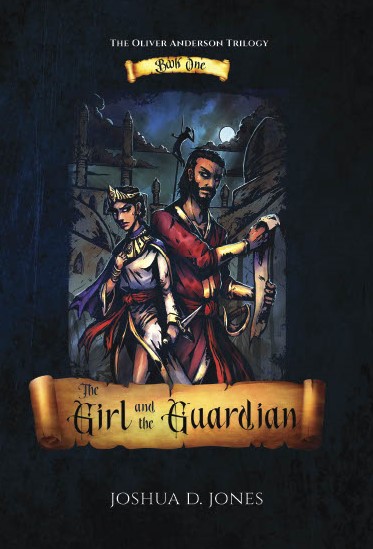 Dive into a Biblical epic with your copy of The Girl and the Guardian - in paperback, hardcover, and kindle on Amazon.


December 18, 2020
The Biblical Case for Seeing Your Family this Christmas
 IN THE BEGINNING of our great, good Story, a Triune, relational God, crafted Creation and pronounced it to be ‘good’. He declared this goodness over everything He made with one exception: He said it was not good that man should be alone. He then created a female counterpart for him and declared that they should form families, multiply, and populate the Earth.
 The Story continues and this good God separates a people for Himself so that they can show the nations what the He is like. One way this nation, Israel, was to do this was by gathering to celebrate festivals during the year: Passover, Pentecost, and Tabernacles. These sacred, festive gatherings were a remembrance to Israel and a testimony to the nations of God’s protection and provision. Though these gatherings were joyous occasions where people saw family and friends who lived at a distance, they still involved risk and cost. Yet the God of Scripture required this festive praise from His people for His glory.
In the New Testament, Christians find themselves with two families. The first is the family they get from God as Creator: their natural family. The second is the family of faith (the Church). As to the second family, Christ and the apostles call us to gather to break bread, share wine, baptise newcomers, lay hands on one another, and greet each other with a holy kiss. We do this at our Sunday worship and at holiday times such as Easter and Christmas.
But Christ gives us instructions for our natural family too. God, through Moses, gave us the Fifth Commandment (Honour thy father and thy mother) for a reason: sin inclines us to not honour them. In Jesus’ day, people found a way to not honour their parents while appearing moral and altruistic. It was called ‘Corban’. People could give a big public gift to God and be released from the burden of having to care for their parents. Hey, we can avoid our obnoxious parents and appear virtuous! Great deal, eh? But Jesus rebuked them for this. He said ‘You have a fine way of setting aside the commands of God!’ (Mark 7.9)
Jesus challenged what was seen to be ethical by bringing people back to God’s commands. He wants to be honoured in a specific way and He has instructed us how. This is both for His glory and for our good. God understands what is best for the world in a way that the world does not. We cannot love our neighbour well if we do not know what they ultimately need.
The people of God have been challenged in 2020 and this challenge is more pronounced in light of the Christmas season. On the one hand, we have secular morality that is based on a materialist view of humanity. It exalts the physical and temporal over the emotional, psychological, relational, and spiritual. This is what we’re tempted to conform to. The Biblical view of humanity, on the other hand, is more relational and focuses more on what is unseen than what is seen.
Different views result in different actions. In 2020, we’ve witnessed society pay any and every cost to preserve temporal, biological life—because, in their view, there’s nothing after death. As Christians, we are not surprised that such a short-sighted project has resulted in increased suicides, depression, loneliness, abuse and divorce. For Christians, we have a different set of values and therefore we assess risk differently. We are called to live well more than just to survive. Our ultimate goal is not to reach 95 years, but to honour and enjoy God in time and eternity.
When my 93-year-old grandmother asks me if I can bring my children over to her house for Christmas, I do so. She doesn’t have much time left on Earth, and she wants to spend them receiving hugs from her great-grandchildren. Who am I to dishonour her? She knows the risks. It would be dishonouring of me to let her final years on Earth to be in isolation—if she is asking to be with her family instead.
How can I claim to ‘love my neighbour’ in the abstract when I can’t even love my grandmother in the concrete?
It wasn’t good for man to be alone in Eden and it’s not good now. Society avoids a possible, physical sickness at all costs. But, for those who belong to our celebrating, relational God, there are countervailing considerations to weigh. We count the cost, take the risk, and honour God by celebrating with both our spiritual and natural families with moral and spiritual freedom.
_________
 Get your copy of The Girl & the Guardian: a Mordecai and Esther epic from Amazon in Hardcover, paperback, or kindle.
November 18, 2020
What is the The Girl and the Guardian?

THE GIRL AND THE GUARDIAN (GG) is the first book in the Oliver Anderson trilogy written by Joshua D. Jones. This series of books was launched to teach adults and young adults about some of the stories of redemption in the old testament.
GG is fast-paced and its genre is Biblical fiction. This genre is currently best illustrated by the popular internet series of ‘The Chosen’, a video series that gives imagined backstory to many of the events recounted in the Gospels while being faithful to the events as historically recorded. Likewise, GG seeks to provide backstory and fill in the blanks of the Esther narrative while remaining faithful to what is authoritatively recorded in the canon of Scripture.
GG is also a split-time novel. The chapters alternate between the modern-day and 5thCentury BC Persia. In the modern-day, we find a Scottish grandfather who is a believer retelling the Biblical epic to his unbelieving grandson, Oliver. If the chapters set in Persia are meant to help the Biblical story come alive, the ones set in Scotland are there to provide theological reflection and application. One of the key themes running through both sets of storylines is Luther’s theology of beauty which he frames around Christ’s atonement on our behalf. The Esther narrative is told in such a way that illustrates this doctrine and the dialogues between Oliver and his grandfather discuss it more directly.
Many modern retellings of Esther tend to remake the story into a 20th/21stCentury romance. This book does not do that. It doesn’t seek to baptise the story in rose petals. While GG does not deliver any gratuitous violence or sex, it does not shy away from the darker themes this book of Scripture and can have a feel that one early reviewer described as “more Game of Thrones than Veggie Tales.” Generally, we advise that the age for reading is at least thirteen or older.
The second book in the series is due to come out in early 2021 and focuses on the lives of Judah and Tamar as recounted in the book of Genesis.
Get your copy of The Girl and the Guardian on Amazon (HERE) in a quality hardcover or kindle version.
October 10, 2020
COVID, Courage, and the Church
[A guest article by James Lowe]
I work for the ambulance service. In March, I attended an Orthodox priest in a richly decorated townhouse, stuffed full of interesting books and art. He had fainted after experiencing chest pain. It was explained that his pain might be indicative of a heart attack, and A&E should be attended. He remained light-hearted as we made jokes and discussed faith together. He made a powerful statement that has stayed with me: when criticising local Christians for their fearful response to COVID he stated, “We rest in the peace of God”. It was a powerful thing for an elderly man suffering a heart attack to say.
The priest was right. The church has been overzealous in its response to COVID. Many congregations are guilty of joining in with the mass panic that has characterised the global coronavirus response. Goaded by mainstream media outlets and most politicians, many withdrew personally and corporately. While much of the population was out panic buying toilet rolls, churches were busy panic planning the most radical reduction in Christian gathering in history. What has been fascinating is not the church’s obedience to the law, but it’s frequent decisions to go even further.

As good data has become abundant and the relatively low risk specified, the regulations have gradually been relaxed: improved data has brought the estimated fatality rate of 1.5% down to 0.6% https://www.statnews.com/2020/08/24/infection-fatality-rate-shows-covid-19-isnt-getting-less-deadly/. Furthermore, the age specific data shows that under 65s are 30 to 100 times less likely to die than over 65s – in the UK that’s about the same risk as driving 100-400 miles. https://www.ncbi.nlm.nih.gov/pmc/articles/PMC7327471/ This has encouraged many to call for more targeted lockdown restrictions or even a complete end. https://newsopener.com/uk/leading-academics-write-open-letter-to-boris-johnson-warning-against-second-lockdown/
Astonishingly, our congregation has consistently been more risk-averse than the government – all despite having less to fear from death and so much to gain from meeting. The relaxing of laws to allow groups of thirty to meet in person saw the congregation continue purely online. Now that the further relaxing of rules permits congregations of any size to meet, they have begun to run services of thirty. House groups are still meeting solely online.
Murrow, writing in the book ‘Why Men Hate Going To Church’, criticises the character of the western church as risk-averse and consisting of predominantly comfort-seeking congregants. The pandemic has born out this sad reality.
Murrow goes further and states that this attitude pushes away most men as they tend to value risk; “Real men visit our churches, look around at the soft males sitting in the soft pews and beat a path to the exit. Real men do not want to be safe – they want to be dangerous.” (Ibid. p.75)
This is not hyperbole. I, as a risk-loving man who follows Christ for the righteous adventure he calls us on, am becoming rapidly disenfranchised by a church culture of fear. I simply cannot relate to those who avoid risk and who will accept severe curtailments of essential, ordained Christian traditions to reduce it.
As Murrow implores churches to ‘set the thermostat to challenge’ he warns of countless men like Al Perkins who confides, “When you reject the things I stand for – excellence, strategic thinking, progress, efficiency, vision, controlled risks – you reject me. I used to take it personally, but I’ve minimised the anger by making my church involvement less of a priority.” (Ibid. p.39, emphasis mine)
When you use a compass, you must account for the ‘magnetic declination’ local to the area. This is the variance in the magnetic field, which shifts over time and often pulls compass needles 15 or more degrees off true north. The West has a ‘risk declination’, and we must account for it when journeying with God. We will be far more risk-averse than previous generations, and so the commands of God and the traditions of our forebears will increasingly seem reckless.
In Risk Is Right, John Piper bluntly attacks risk aversion in Christians and their seduction by the “beguiling enchantment of security” (p35), reminding us that “to live is Christ and to die is gain” (Phil. 1:21)
We would do well to remember the godly sacrifices we esteem. These giants of the faith embraced risk knowing that the reward was greater. They trusted God with the outcome – even if the outcome was death. As Piper asserts “It is the will of God that we be uncertain about how life on Earth will turn out for us. And therefore it is the will of the LORD that we take risks for the cause of God.” (p30)
Let’s look back specifically to our Christian heritage of fearlessness in the face of pandemics.
In describing how bravely Christians dealt with the Plague of Cyprian ravaging the Roman Empire, Bishop Dionysius declares “Heedless of danger [they] took charge of the sick, attending to their every need.”
In a brilliant article summarising Christian responses to pandemics over the millennia, Lyman Stone reminds us of Luther’s loss of his daughter during the bubonic plague. This inspired him to write powerfully of Christian responsibility during pandemics; “Luther provides a clear articulation of the Christian epidemic response: We die at our posts.” https://foreignpolicy.com/2020/03/13/christianity-epidemics-2000-years-should-i-still-go-to-church-coronavirus/

Now of course, the modern understanding of pathogens and expansive healthcare infrastructure alter this response in the West. We might not need to volunteer to treat the sick – in our own countries at least – but we must remain at our stations. In times of crisis – any crisis – the church becomes paramount. It is not just a practical place of care but also a buttress for our very civilisation. A candle in the darkness. An anchor in the storm. Panic is contagious, but so is peace.
In the face of all these warnings, we must continue to see our physical community as vital and seek to care for the spiritually sick – even as that increases our own chance of loss. (Speaking personally, I see the church’s duty to meet in person as far greater than my duty to serve in the ambulance service).
Ultimately the world doesn’t need to ‘not die’ because that will happen anyway. Rather, the world needs to not fear death and to know the glory that lies beyond it. Our peace within risk is one of our great testimonies to the reality of God. We ought not to relinquish it if we wish our words to mean something to unbelievers.
For more, see Jame’s Blog https://thelostartdotlife.wordpress.com/
Download a FREE e-copy of Joshua’s book: Elijah Devotional
September 28, 2020
A NEW Book and a FREE E-book (Elijah Men)
 Hey folks,
I realise we haven't posted much this month. Part of the reason is that we have a NEW book coming out. 'The Girl and the Guardian' is an illustrated, fantasy retelling of the adventures of Mordecai and Hadassah as told in the Hebrew Scriptures. It will be available in hardcover and kindle before Christmas.
In the meantime, we are making an e-copy version of our previous book downloadable for FREE. The kindle and paperback versions are still available on Amazon. This is a non-fiction book of readings aimed to fuel a life of prayer and holiness.
Link to download E-Copy: ELIJAH MEN EAT.
(Mordecai & Esther illustration from the book)
August 14, 2020
Was Jesus a Rule Breaker?
 Pic by Jakayla Toney
IT'S HARD TO ARGUE that Jesus didn't break any rules in his day―breakages he never apologised for. Some of his more well-known misdemeanours involved forbidden Sabbath activities.So the Jewish leaders said to the man who had been healed, “It is the Sabbath; the law forbids you to carry your mat.”’But he replied, “The man who made me well said to me, ‘Pick up your mat and walk.’” -John 5
Halakha (Jewish law) identifies thirty-nine categories of activity prohibited on the Sabbath. Jesus broke several of these getting both himself and his followers in troubles with the boys who liked to think they had more authority to wield then what God had given to them. We see his disciples following his lead after Christ had left the scene in the years following. When the civic leaders of Jerusalem told the disciples to stop holding their large meeting outside the temple, they replied, ‘We must obey God rather than man.’
Compliant Christ?But just before you think Jesus was trying to be the bad boy of early rabbinic Judaism, we see he also obeyed laws when he didn’t have to. In Matthew 17.24, the disciples encounter a tax that Jesus seems to say is illegitimate. Yet Jesus pays it anyway. Why? ‘So that we may not offend.’
What should we make of this? First, Jesus questions the legitimacy of this tax. Then he pays it because he doesn’t want to offend. Is this the same Jesus who offended numerous other times in breaking the hand washing, grain picking, and healing rules? Why break those but not this one? Why cause offence in one situation but not in another?
One might also call to mind Paul who, upon his return from a foreign mission trip, submitted to a burdensome one-week quarantine in the temple in order not to offend certain Jews (Acts 21.24-26). Is this the same Paul who caused riots elsewhere? Are Paul and Jesus inconsistent?
What’s more, where does this leave Christians? When the government misuses its authority (or presumes more than what God has granted it) should Christians comply or resist?
DiscernmentDiscernment comes with maturity. Spiritual maturity is more than age or years lived as a Christian. This maturity is produced by a history of right responses to the Holy Spirit. When we have this maturity, the prioritises of God’s Kingdom become our priorities. When faced with a decision of whether to comply with or resist a law, we look to see what is best for the Kingdom. Sometimes it’s best not to offend. At other times, offensive rulebreaking might be best for the advance of the gospel.
Scripture says to ‘honour the king’. We always want to speak well of the Prime Minister or President even when we, in good conscience, cannot comply with a particular law. We might think of Daniel, who refused to eat the king’s food, but who respectfully expressed this decision. We don’t join the social media mobs in mocking authority figures. We obey magistrates when doing so doesn’t interfere with the calls Christ gives us.
When civil law interferes with the calls of Christ, however, we put Christ first. Even respectful Daniel was thrown into the fire pit shortly after the food incident for failing to comply with a law about kneeling to a statue.
Paul and Jesus sometimes broke the rules because those rules stood in the way of gospel advancement. Jesus saw some of these laws as ‘heavy burdens’ (Matt 23.4) put on the people that kept them from joining in the Father’s work. At other times, however, both Jesus and Paul complied with numbskull rules because doing so opened doors for the gospel.
The questions we now face are: what is best for the gospel? Are the current governmental laws that extend to church worship too burdensome? Do they hinder us in obedience to the God of Scripture? Does resisting or complying help us better call people to repentance?
The answers may depend on our country or state. But, if we discern that the path of Christ cuts across the dictates of certain civil dictates, then may we be prepared to pay whatever prices are necessary to do so._______________________________________________________
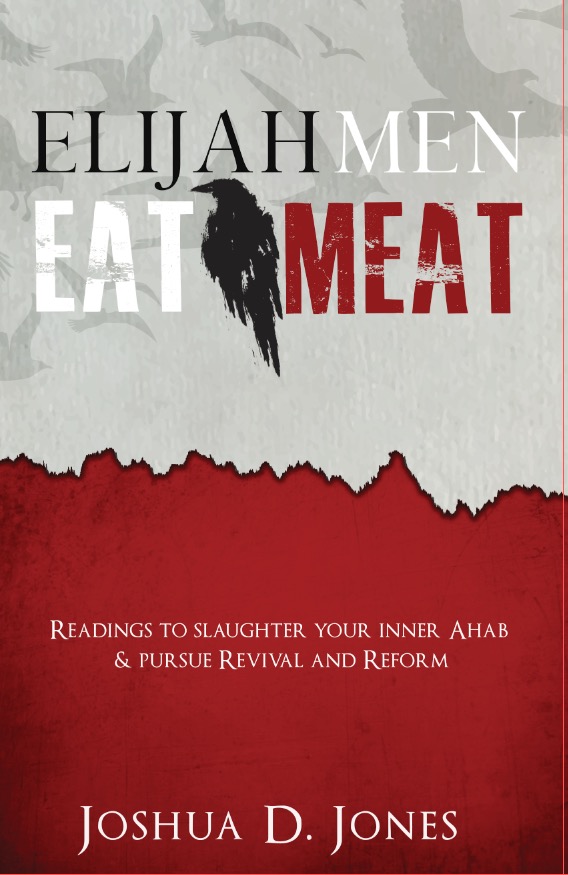 For more, see Elijah Men Eat Meat: Readings to slaughter your inner Ahab and pursue Revival and Reform
 August 1, 2020
Help for Lockdown Cynics
 Photo by Flavio GasperiniA SPIRIT OF CYNICISM HAUNTS the West right now. By itself, this would be nothing new. Media does a good job of keeping us cynical at our governments even under good conditions.
 But this cynicism is particular. There is a section of the public who believe―rightly or wrongly―that they were asked by the government to make large social, emotional, and financial sacrifices needlessly. Let's call them ‘lockdown cynics’. It is to this group that I now attempt, however inadequately, to write. I write not as a political person. It’s not my goal to either confirm or discourage your views. I write as a pastor to equip your heart in light of your convictions.
Perhaps you’re suspicious now. Let me share three reasons why you might be lockdown cynic in hopes that you’ll see I’m trying to understand you. Is that too bad?You were told this virus was far more deadly than it has proven to be. You were asked to put your whole life on hold for a threat you now see as greatly exaggerated.The lockdown has seemed to drag on for far longer than originally projected. The ‘flaten the curve’ excuse doesn’t work anymore. Restrictions on personal liberties no longer make sense to you.Some of the loudest political voices in favour of the lockdown turned a blind eye to other groups. They hypocritically forbade places of worship and other community groups from meeting while abortion clinics, liquor stores, and mass protests carried on as normal. It looked to many like what was declared ‘essential’ came from a less than objective perspective.Understandably, your patience has worn thin. We were told that, if we sacrificed, other people would be safe and lives would be spared. At first, you were willing to sacrifice for so noble sounding a cause. But now you perceive that the narrative, the rules, and the overall significance surrounding these sacrifices has changed―often due more to political posturing than actual data. You now see the lockdown as safetyism gone amuck.
Now, to what degree your perceptions are either valid or not, my simple fingers dare not try to work out. Let those far smarter and better researched than I do the debating. I’m not seeking to change your mind. Write your MP or Congressman and protest peacefully if your conscience so leads you. I’m a pastor. What I wish to do here is give you four words of spiritual guidance to help you manage your social and political convictions.
One: God's in ChargeRemember that crazy time when Ceasar commanded everyone to travel to their hometown in order to be taxed. What a dumb law! What a massive inconvenience! Even pregnant women were travelling!
But God's rule transcended human stupidity and he used this crazy situation to fulfil prophecy and bring about the birth of the Messiah. God is not anxious. He's on the throne. He can bring about good amidst human chaos.
Two: Let Convictions be HumbleThis may sound the hardest, but it must be said: always be open to the possibility that you are wrong. Few seem to do this nowadays. Yes, the Bible speaks about foolish leaders. It warns about the pitfalls of fear and worry. But the pendulum can swing to the other extreme. There are also examples of prophets warning of coming disaster and of people scoff at those warnings―only to later be destroyed.
At the time of this writing, it is being reported that the virus has mutated from humans to infect a cat in the UK and a dog in the USA. If this bug can jump species, we might at least acknowledge the possibility that it could mutate into a more dangerous form. Right now, this virus is only taking out 0.02% of the population with most being 80+. Relatively mild in terms of historic pandemics. But what if COVID mutated and rose to five percent? You couldn’t get people to work at supermarkets. Food would get scarce. People would turn to beasts. I’m not predicting this will happen. Simply saying let’s be humble enough to admit that we don’t know for sure. This storm ain’t over yet.
Three: Mourn Your PainSecondly, the Bible is sympathetic to your pain. It is full of tragically needless sacrifices. Often, we see innocent people suffering because someone else made a bad call. In Judges chapter 11, Jephthah makes a vow. He is at war and he promises to sacrifice to God the first thing that comes out of his gate should God grant him victory. The vow sounds good. Noble even. Jephthah destroys his enemies. He wins! As returns home, he looks for what might trot out of his gate.
Look, something is coming! What is it?
My daughter!
Jephthah’s daughter is sacrificed because of someone else's hasty vow. (Whether she was actually killed or given to the temple as a perpetual virgin servant―like a nun―is debated by commentators. In either case, she would not have been happy.)
This girl had plans for her life. Now, because of someone else’s foolishness, she had to make a radically costly sacrifice. Perhaps you feel the same way.
How did she cope? The Bible says that she went away and mourned with her friends for two months over the whole deal. The Bible doesn’t paint life out to be prettier than it is. It doesn’t polish turds. She accepted the arrows of her outrageous misfortune and wept over them. But not alone. She with those who would understand what this loss meant to her.
Mourning with those who care is always a better path than growing bitter. Yes, if your conscience leads you to take peaceful action, do so. But don’t let continual rage destroy your soul.
Four: Look to the Bigger SacrificeFinally, yes, you have sacrificed under this lockdown. And you think that sacrifice was needless. Perhaps it was. Jephthah’s daughter also sacrificed needlessly. But there’s an even more important story than hers I’d like you to keep in mind.
There’s another child who was also sacrificed in the Bible because of someone’s foolish actions. This sacrifice cost his actual life. Unlike Jephthah’s daughter, he didn’t have friends to mourn with. They all fell asleep. He wept alone. But it wasn’t his father’s foolish actions that were the cause of his death.
The foolish actions were yours.
The centrepiece of the Christian message is that someone else paid a full and violent sacrifice because of your foolishness against God. He took all of your ignorant words and decisions and buried them with his body in the grave. He rose again three days later to reign and offer mercy in place of judgement.
You will never be free of your bitterness towards the those in authority unless you realise that you too have been foolish. The Innocent One was sacrificed on your behalf. And that Innocent One loves you in spite of you. Only in that love will you find the strength to forgive this world and its governments their monumental injustices.
Then you can―with a humble heart that trusts God's reign, has mourned its losses, and that offers mercy to adversaries―do what your conscience demands in political and social action with a pure and good heart. _______________________________________________________
For more, see Elijah Men Eat Meat: Readings to slaughter your inner Ahab and pursue Revival and Reform June 27, 2020
A Theology of Touch for Touchless Times
 Photo by Anastasia Vityukova
 IT'S EASY FOR OUR HEARTS to somersault with anxious thoughts in 2020. We are told to stay home, wash our hands dozens of times daily, and avoid any physical contact with other people. We are told that, if we do this, we will be good citizens and that society as a whole will be better off. We are told that failure to socially distance ourselves enough could result in people dying. No wonder that even as civil authorities ease up a bit on this message, that many are wary. Christians especially aim to be good neighbours. If not being near or touching others makes me a better neighbour, shouldn’t I, as a Christian, lead by example and stay far from others?―so we ask ourselves.
To this valid question, it may also be worth asking what exactly Scripture does mean by being a good neighbour? Does being a loving person only involve doing everything in our power to minimise a physical risk―whether real or exaggerated? Is physical touch and proximity ever something we can or should set aside for a significant length of time? What do the Scriptures teach us about physical touch?
Touch: A Biblical Overview When God created humanity, he made us different than the angels. One of those ways is that we are embodied―we are not just spirits. Another feature highlighted at the beginning of our creation is that ‘it is not good for man to be alone’.
Throughout the Hebrew Scriptures, the importance of appropriate physical touch is highlighted as something that is part of our humanity in acts of encouragement, comfort, and affection. Sometimes, due to sin and death, the Israelites were told not to touch a dead body or a leper at the risk of one week of self-isolation.
In the New Testament, with the arrival of Jesus as the Messiah, physical touch gets taken to a whole new level. ‘The Word became flesh and dwelt among us’. What a scandal! Now the divine nature is touching people.
Jesus breaks some social guidelines in regards to touch. He touches lepers (Matt 8.3). He touches women (Mark 14.3; John 12.3). He touches children (Matt 9.13). He touches his disciples’ feet in a counter-cultural way. His disciples are sometimes embarrassed by all of this touching, but Jesus doesn’t seem to mind. He’s here on earth to love and people and he doesn’t mind going against the solid, tyrannical, and unmoving opinion of the majority to do it.
After the resurrection, much is made of both Mary and Thomas touching Jesus and the physical sharing of bread with the two disciples on the way to Emmaus.
The apostles follow Jesus’s example. The two sacraments we are given both involve physical touch: breaking and sharing bread together and baptism. Both Peter and Paul emphasised the importance of greeting ‘one another with a holy kiss’.
Specifically, the ‘laying on of hands’ as a means of blessing and encouragement are emphasised to a much greater degree than we in the West tend to acknowledge. Look what an important category the writer of Hebrews puts this practice in:
Let us go on unto perfection; not laying again the foundation of repentance from dead works, and of faith toward God, of the doctrine of baptisms, and of laying on of hands, and of resurrection of the dead, and of eternal judgment. -Heb 6.1,2
Touch-PhobiaWe in the West, with our high value on privacy and personal space, don’t fully appreciate the role physical touch plays in relationships. Brits and Americans tend to touch each other very little compared to other cultures. Even in churches, many adults are afraid to touch children lest it be misunderstood. Even under normal conditions, we are under touched and some people’s mental health suffers because of it.
So far, so bad. But now we’ve drunk a cocktail of legitimate science, politics, pseudo-science, and anxious activism. The results? Voila, we’ve made ourselves into a society of untouchables. Not just for weeks, but for months on end. Not content to impose these weights on ourselves, we’ve also dumped them onto our children’s psychology making them believe they should not hug or touch their friends lest their grandmothers die.
Us humans tend to be very good at doing what is bad for us. What this lockdown will do to the emotional and mental health of a generation remains to be seen.
It is hard to read the Scriptures and not get a sense that loving bodily connection and engagement is an essential part of Christian fellowship. There are, indeed, times when touch is not appropriate. There is a ‘time to refrain from embracing’ (Ecc 3.5). But how should Christians discern when those times are? We do not take our cues from a world that gets blown about by the winds and waves of media-driven anxiety. Our value systems are different. Our views on risk-taking, life, death, and the body are all seen through a different lens. Janet Sutton’s insight is helpful:
From very early on in their history, Christian communities described themselves as the Body of Christ (1 Cor. 12). This understanding of corporate embodiment is a fundamental aspect of the common Christian life, both in the way individual members feel a tangible sense of attachment to each other, and how they reach out together to the world around them.
As Christians, we are to value and guard the importance of appropriate physical touch in our communities. This includes guarding against people who would want to touch others in abusive ways. But it also includes guarding against a wider societal thought that physical touch is of little importance and something we can easily do without.
June 25, 2020
Recovering from Biblical Manhood and Womanhood by Aimee Byrd (a review)
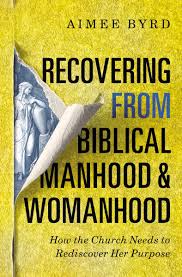 I MAY BE A LITTLE late to the party as my social media feeds were a flurry with comments about this book at least a month ago. But, on this rare occasion, my tardiness may be somewhat justified: I only just received the book in the post last week (Disclaimer: I received the book for free from the author for an unbiased review).
Considering the controversy the book had seemed to garner on social media, I was surprised to find the book not particularly controversial. You would’ve thought she was Rob Belling it. But I didn’t find that to be the case. Yes, the title gives you the expectant taste of denunciations. But little is actually denounced that anyone in my circles would care to uphold. This is why I am surprised that the book received so much attack from the few, the proud, the more-or-less appalled at everything we don't agree with crowd.
And this may be a cultural thing. The sorts of ‘Biblical Manhood and Womanhood’ that Byrd critiques is simply outside my experience. My experience tells me that Americans, by contrast to reserved Brits, tend to take issues to greater extremes―so I give her the benefit of the doubt and not assume she is strawmaning or inventing a boogeyman debating opponent.
Though I am in a ‘complementarian’ Christian denomination here in the UK, I don’t know any churches that take this authority/submission concept to the lengths she describes. She describes churches that teach that all women should be submitted to all men (p105) and churches where:
Whenever a strong woman is portrayed in Scripture, teaching or leading a man in any salient way, the popular explanation is often that God is making a point that there were no good men at the time. (p57)
Shocking quote! Just where isthe Oxford comma?! Americans. Oh, yeah―the idea that God only uses women because there are no men around is also ridiculous. Only in my circles, such a concept isn’t ‘popular’. It is unknown. I'm not saying such churches don't exist on this side of the Atlantic, only that it's outside my sphere.
The book touches on a variety of subjects. Her dealing with the nature of discipleship and parachurch organisations was interesting. If some of my British reformed brothers and sisters would be unsure of what to make of the critiques in the first part, they would surly amen Byrd enthusiastically in this section. She makes a strong case for discipleship being the corporate work of men and women in the local congregation. This could’ve been a book on its own.
What did I enjoy most? I found her questions around the publishing and marketing of women’s devotional and Bibles to be more than fair. Most of all, I appreciated her engagement with non-Evangelicals who also hold to a complementary view of the sexes without centring this complementary on the authority/submission dynamic: Pope John Paul II, Sister Prudence Allen, Paul Zancanaro, etc. My biggest critique is there wasn't more of this as it was my favourite bit. Very few Evangelicals know how Eastern Orthodox or Roman Catholics understand gender dynamics.
Byrd is a gifted writer, so the book is not hard to plough through. Otherwise, I felt like a bit of an outsider in some parts. The book is certainly not 'feminism' or even 'egalitarianism'. It is a critique of some applications of a strand of complementarianism. Fair play.
June 8, 2020
The Christian and Black Lives Matter
 photo by Markus SpiskeWHY DON'T ALL CHRISTIANS join Black Lives Matter?
 Many Christians have been using the hashtag, posting affirming articles, and even attending BLM rallies. In some corners of the Christian world, it’s almost the expected thing to do and those who don’t are looked at by some with a degree of suspicion. Does that person not care about black lives?
In most instances, the answer is ‘God forbid’! Many who have not shown support for BLM are grieved by the viral video that showed Derek killing George. Christians who don’t join are usually not heartless nor are they thoughtless. They care and they have reasons for not joining BLM.
What might those reasons be?
Different 'Races'?First, there’s the issue and language of ‘race’. BLM states that ‘We see ourselves as part of the global Black family.’ By contrast, the Bible doesn’t teach that there are ‘races’. Yes, that is common speak, even among many professed Christians. But Christians reject the haphazard materialist and evolutionary worldview that teaches that varying degrees of melanin in our skin makes us different races of creatures.
Christians believe that God created one couple, with dignity as God’s image-bearers, and that all humanity comes from them. We are one family with many cultures and ethnicities―but we are not sperate races. A Chinese man can marry a Latin woman and still make babies. Genetically and Biblically, we are all the human race―the sons of Adam and the Daughters of Eve. This is why Paul proclaimed to the Athenian philosophers that it was ‘from one man God made all the nations’ (Acts 17). Being Adam’s children is both the glory and shame that we all share. This is why some Christians prefer to use the term ‘ethnic conflict’ instead of ‘racism’―it is more accurate and reinforces the truth of our united humanity.
We were born into a world that taught us to think in terms of divided humanity along the lines of degrees of skin pigmentation. ‘Black’, ‘Asian’, ‘Latin’, ‘Caucasian’, etc. When we begin to see others through the Biblical lens of a fallen human family, then we feel differently about ethnic conflict. The world sees a Japanese man killing a Chinese man. A Christian, however, sees one of God’s image-bearer killing another image-bearer. A human like me kills another human like me. Haruto kills Zhang Wei. Derek kills George. Cain kills Abel.
Read the Fine PrintSecondly, the BLM organisation stands for many other things than just racial reconciliation―a goal that, by itself, Christians share. Have you been to the BLM website? Did you read closely? Do you really support abortion up to nine months? Do you really support transgender ideology? Are your really at war with cis-hetero-normative notions of family and marriage? If not, we are you suggesting people should donate money to them? This is not Rev Martin Luther King’s civil rights movement. It’s a ‘justice’ movement rooted in values that have been historically seen as incompatible with Biblical faith.
The Root of Ethnic ConflictThird, Christians diagnose ethnic conflict differently. BLM stated mission is ‘to eradicate white supremacy and build local power to intervene in violence inflicted on Black communities by the state and vigilantes’. Now, on its own, we can all agree that eradicating white supremacy is a laudable goal (thought here may be different understandings about what exactly ‘white supremacy’ actually is). Ethnic conflict of any kind, regardless of the ethnicity that wields it, has been affirmed by Christians as a sin for 2,000 years.
The difference that some Christians see between BLM and Biblical faith is that racism is simply the fruit of a much deeper problem. Pride. Racism is like a weed―if you try to remove it without getting to the root, it will only spring up again. Cain only murdered Abel after their parents proudly rebelled against God and were kicked out of the garden. Trying to get proud and unredeemed people to get along is a noble desire, but we will be unable to get along if our pride remains unchallenged.
The SolutionLastly, the cure that the Bible puts forward is different from the cure proposed by BLM. Christians believe that God sees the fallen sons of Adam hurting each other and that He cares deeply. But He calls us to address this tragedy in a different way than the society around us. In wider society, people fight racism by us lots of advice―both good and bad―on things we should do.
But the Christian message isn’t primarily one of good advice. It’s one of good news. BLM hopes for racial reconciliation based on what humanity might do. Christians proclaim that ethnic reconciliation has already been done. Jesus accomplished reconciliation through his broken body on the cross. As he died Jesus proclaimed ‘It is finished!’ People could now be reconciled with God and, being reunited with Him, be reconciled with one another.
Like BLM, we hear the shed blood of brother Abel calling out for justice. But, unlike BLM, we also hear the blood of a new and greater Abel calling out for mercy. And, it’s on the basis of this innocent blood that we proclaim the good news of reconciliation―first to God and then to each other.
Not just BLM, but any justice movement that rejects the Redeemer will fail to redeem.
As Christians, we affirm our unity in Adam by birth and call people to be part of God’s family through a second birth. I’m fully one with Christians of other countries, cultures, skin colours, and languages. I am not one with someone who looks like me but who is not in Christ. Christians identify as fallen children of Adam who have also become children of God through the work of Jesus. There is not ‘God’s white family’ or ‘God’s Asian children’. In Christ, Jews, Asians, Arabs, whites and blacks are all equally my brothers and sisters.
Once we are baptised, old ethnic divisions mean nothing. If racism is found among Christians, it is evidence they have not really met Jesus or understood who he is. This is why John writes, ‘whoever does not love their brother and sister, whom they have seen, cannot love God, whom they have not seen’ (1 John 4.20)
If you have hatred in your heart towards of humans of Asian, European, or African descent, then come to Jesus. Confess your pride and be washed and forgiven. Admit the futility of your own heritage and ask God to make you part of the new humanity that He is creating through the innocent blood of His murdered Son.
As Christians, our hope is centred on a God of Justice and on a Redeemer who justifies. BLM removes both of those. That’s why some of us are hesitant to use their hashtag.
_______________________________________________________
For more, see Elijah Men Eat Meat: Readings to slaughter your inner Ahab and pursue Revival and Reform