Sanna Hines's Blog
March 2, 2016
What does "Shining Ones" mean?
The first Irish fairies were not small and winged, but tall, ageless and sometimes radiant. They were the Tuatha dé Danann (Clan of Danu), who possessed more-than-human abilities.
In Ireland, they encountered fierce, seafaring raiders called Formorians, also people with extraordinary talents but normal lifespans. The two groups clashed.
The TDD eventually defeated the Formorians, but were, themselves, vanquished by incoming Celts. Banished to the hills, the TDD gained the name People of the Hills (Daione Sidhe), which was shortened to Sidhe (pronounced Shee). The Sidhe fought against Viking with mortals at the Battle of Clontarf, 1014 C.E.
In later years, not everyone felt comfortable naming them. Just as characters in the Harry Potter series called Voldemort “You-Know-Who” or “He-Who-Must–Not-Be-Named,” the Irish referred to these powerful beings as “Shining Ones”, “Gentry” or “Fair Folk.” Fair folk is the source of the word fairy.
Shining Ones: Legacy of the Sidhe explains what the ever-living ones and their descendants are doing today. And who knows? If you’re Irish, you might be part-Shining One, too.
In Ireland, they encountered fierce, seafaring raiders called Formorians, also people with extraordinary talents but normal lifespans. The two groups clashed.
The TDD eventually defeated the Formorians, but were, themselves, vanquished by incoming Celts. Banished to the hills, the TDD gained the name People of the Hills (Daione Sidhe), which was shortened to Sidhe (pronounced Shee). The Sidhe fought against Viking with mortals at the Battle of Clontarf, 1014 C.E.
In later years, not everyone felt comfortable naming them. Just as characters in the Harry Potter series called Voldemort “You-Know-Who” or “He-Who-Must–Not-Be-Named,” the Irish referred to these powerful beings as “Shining Ones”, “Gentry” or “Fair Folk.” Fair folk is the source of the word fairy.
Shining Ones: Legacy of the Sidhe explains what the ever-living ones and their descendants are doing today. And who knows? If you’re Irish, you might be part-Shining One, too.


January 29, 2016
Multifaceted Brigid
…and Brigit, that was a woman of poetry, and poets worshipped her, for her sway was very great and very noble. And she was a woman of healing along with that, and a woman of smith's work, and it was she first made the whistle for calling one to another through the night.—Lady Gregory, Gods and Fighting Men, 1904 The Tuatha dé Danann arrived in Ireland without their goddess-mother, Danu. Danu does not appear in the annals as a living presence. The role of feminine divine fell to her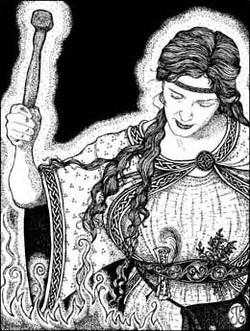
January 12, 2016
Getting to Know You
I’ve always enjoyed the humor in scenes with strangers who pretend to be married. In this excerpt from Shining Ones: Legacy of the Sidhe, Sam, an ordinary man, and Tessa, Danann shapeshifter, pose as a couple for the benefit of their powerful and potentially dangerous host. Desmond assigned the bridal suite to Tessa and Sam. They looked at each other, neither willing to confess to lying about their marital status. After Desmond left, Sam broke the silence. “So, which side of the bed do you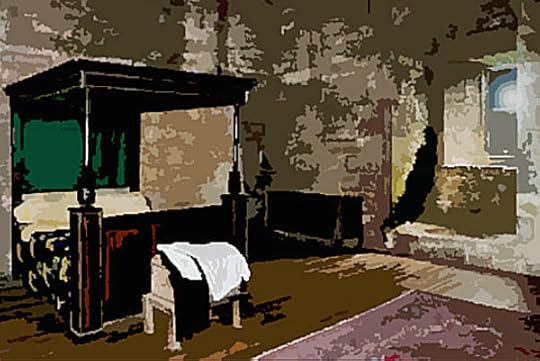
January 9, 2016
Tory Island--Balor's Base
Scota gazed at rocky, treeless Tory Island, feeling a sense of homecoming as the launch made its way from the yacht Thoraígh to the island’s pier. Atop the fierce island cliffs, the great Balor’s fortress once stood. Her ancestors came back to the island after the defeat at Mag Tuired, vowing vengeance on Dananns forever. Scota would continue their mission.
—Excerpt from Shining Ones: Legacy of the Sidhe
For a beautiful view of the island and the story of Lugh's birth, enjoy this video:
Tales of the Formorians, Tory Island
https://www.youtube.com/watch?v=U5Ldq...
—Excerpt from Shining Ones: Legacy of the Sidhe
For a beautiful view of the island and the story of Lugh's birth, enjoy this video:
Tales of the Formorians, Tory Island
https://www.youtube.com/watch?v=U5Ldq...
Tory Island--Balor's Base
Scota gazed at rocky, treeless Tory Island, feeling a sense of homecoming as the launch made its way from the yacht Thoraígh to the island’s pier. Atop the fierce island cliffs, the great Balor’s fortress once stood. Her ancestors came back to the island after the defeat at Mag Tuired, vowing vengeance on Dananns forever. Scota would continue their mission. —Excerpt from Shining Ones: Legacy of the Sidhe Video: Tales of the Formorians, Tory Island on YouTube 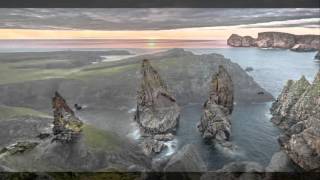
December 16, 2015
First Love: Cliodhna's Passion for Ciabhan
AND it was in the time of the Fianna of Ireland that Ciabhan [pronounced Kee-von] of the Curling Hair, the king of Ulster’s son, went to Manannan’s country. Ciabhan now was the most beautiful of the young men of the world at that time, and he was as far beyond all other kings’ sons as the moon is beyond the stars. And Finn liked him well, but the rest of the Fianna got to be tired of him because there was not a woman of their women, wed or unwed, but gave him her love. And Finn had to
December 9, 2015
Who were the Formorians?
In my novel, Shining Ones: Legacy of the Sidhe, Formorians are the bad guys. They’re used to this role: they’ve been the villains of Irish mythology for thousands of years. Fierce, seafaring people from the North (most likely Scandinavians), they were pirates and warlords who demanded tribute of food and slaves. In the Irish annals, they’re monstrous and grotesque, with body parts in all the wrong places (lips on breasts, eyes on backs, mouths in stomachs). Scottish legends describe them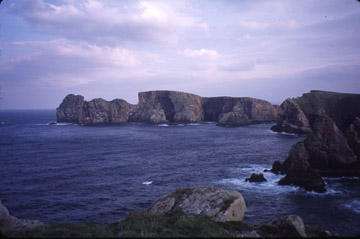
November 11, 2015
Enter the Amazing World of Irish Myth and Magic
Ireland’s Tuatha dé Danann: Myth or History? If you were an Irish school child before World War II, you’d have learned your history began with the Mythological Cycle, accounts written by medieval monks based on oral tradition going back at least two millennia. Though these texts were considered factual until the 1940s, later historians regarded them as fabulous tales suitable only for fireside storytelling. One of the texts, the Lebor Gabála Érenn (The Book of the Takings of Ireland,