Michèle Phoenix's Blog
October 27, 2025
PIECES OF PURPLE – Chapter 2
Pieces of Purple is now available, chapter by chapter, as an audiobook and a related videoed conversation.
Both installments of Chapter Two, “The Adoptive Culture,” are now available online.
The audio version of the chapter (with just a graphic on the screen if watching on YouTube)A videoed conversation with an adult MK about the topic of that chapter (full 4K video)You can access them on YouTube (HERE) or as audio only on the Pondering Purple podcast (HERE).
Or…you can watch both videos below.
To avoid missing any installments, make sure you subscribe to the podcast or YouTube channel, or follow me on Facebook, where I’ll announce each new “drop.”
This doesn’t mean that you shouldn’t still purchase the hardcopy of Pieces of Purple! Want to be able to highlight passages, view the discussion questions, have access to the poems that are only in the printed copy, and enjoy the glorious artistic layout designed be Elise Cheung? Click here. (Please send me a message if you’d like to order 10 or more copies.)
The audiobook of Chapter 2:The conversation video for Chapter 2:Note: if you’ve read the book, please please please consider writing even a brief review on its Amazon page. These self-published projects depend on people like you to get the word out.
 Please join the conversation!
Comments
Leave a ReplyYour email address will not be published. Required fields are marked *
Save my name, email, and website in this browser for the next time I comment.


October 14, 2025
PIECES OF PURPLE – Chapter 1
Starting this month and every month going forward, I’ll be releasing two components of each chapter of my book, Pieces of Purple, on its own YouTube channel:
The audio version of the chapter (with just a graphic on the screen)A videoed conversation with an adult MK about the topic of that chapter (full 4K video)Chapter One is available now! To listen to the audio, then view the video conversation, please head to the Pieces of Purple Channel on YouTube (HERE).
Or…you can watch both videos below.To avoid missing any installments, make sure you subscribe to the podcast or YouTube channel, or follow me on Facebook, where I’ll announce each new “drop.”
This doesn’t mean that you shouldn’t still purchase the hardcopy! Just a few reasons why owning the printed book is a good thing too:
The gorgeous interior design by MK Elise CheungThe poetry and TCK quotes that won’t be included in the audio versionThe ability to underline, highlight, and annotate (!)The reference page, acknowledgements, and endorsementsPlease send me a message (see contact field below or click here) if you’d like to order 10 or more copies.
The audiobook of Chapter 1:The conversation video for Chapter 1:Note: if you’ve read the book, please please please consider writing even a brief review on its Amazon page. These self-published projects depend on people like you to get the word out.
Please join the conversation!
PIECES OF PURPLE – CHAPTER ONE
Starting this month and every month going forward, I’ll be releasing two components of each chapter of my book, Pieces of Purple, on its own YouTube channel:
The audio version of the chapter (with just a graphic on the screen)A videoed conversation with an adult MK about the topic of that chapter (full 4K video)Chapter One is available now! To listen to the audio, then view the video conversation, please head to the Pieces of Purple Channel on YouTube (HERE).
Or…you can watch both videos below.To avoid missing any installments, make sure you subscribe to the podcast or YouTube channel, or follow me on Facebook, where I’ll announce each new “drop.”
This doesn’t mean that you shouldn’t still purchase the hardcopy! Just a few reasons why owning the printed book is a good thing too:
The gorgeous interior design by MK Elise CheungThe poetry and TCK quotes that won’t be included in the audio versionThe ability to underline, highlight, and annotate (!)The reference page, acknowledgements, and endorsementsPlease send me a message (see contact field below or click here) if you’d like to order 10 or more copies.
The audiobook of Chapter 1:The conversation video for Chapter 1:Note: if you’ve read the book, please please please consider writing even a brief review on its Amazon page. These self-published projects depend on people like you to get the word out.
Please join the conversation!
September 15, 2025
THE AUDIOBOOK IS HERE!
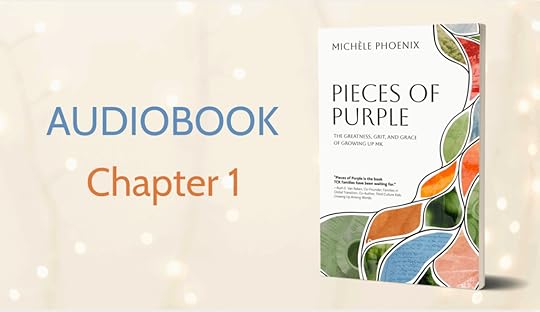
It’s Launch Day! Over the next few months, Pieces of Purple (available here) will be released one chapter at a time as an audiobook. Chapter One became available today. In order to listen, simply search for Pondering Purple by name on your preferred podcast app or click this link. Each chapter will be followed two weeks later by an episode in which I interview an adult MK or MK parent discussing a related topic. I can’t wait to introduce you to some of my favorite people!
To avoid missing any installments, make sure you subscribe to the podcast or follow me on Facebook, where I’ll announce each new “drop.”
This doesn’t mean that you shouldn’t still purchase the hardcopy! Just a few reasons why owning the printed book a good thing too:
Please send me a message (see contact field below or click here) if you’d like to order 10 or more copies.
Note: if you’ve read the book, please please please consider writing even a brief review on its Amazon page. These self-published projects depend on people like you to get the word out.
Please join the conversation!
Your Name* Your Email* Your Message* reCAPTCHASubmitReset
September 2, 2025
TRANSITION WISDOM FROM A SAGE CALLED POOH
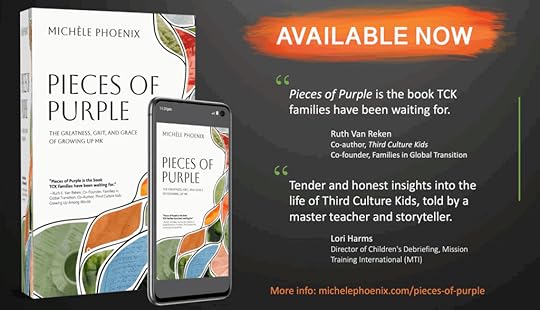
New from Michèle Phoenix. Read more and order HERE.
[The audio version of this article is available on the Pondering Purple podcast.
Click HERE to listen or find it on your preferred podcast platform.]
Transitions are inevitable in the expat life. At best, they’re portals that can usher in change, adventure, and growth—and at their worst, resistance, resentment, and withering.
I’ve read the books, perused the articles, and listened to the podcasts. There are so many valuable insights about change to be gleaned from others on parallel journeys! But I’ve also found that there can be something powerful in learning from less conventional sources—sources that disarm our solely cerebral search for clarity and engage our imagination.
So this is by no means an academic thesis on the subject of transition. It’s a closer look at some of Winnie-the-Pooh’s honey-soaked wisdom about looking for light, forming foundations, and finding our friends. I’m fairly sure A. A. Milne would be surprised to see his bear’s words used in this unconventional exploration, yet I suspect that his beloved character was well acquainted with the topic—and I present this quote as irrefutable evidence: “I’m not lost for I know where I am. But however, where I am may be lost.” A more accurate description of mid-change living has seldom been spoken!
(Note: though most of the quotes here are directly from A. A. Milne’s writing, several others are from adaptations like the Christopher Robin movie and The Little Book of Poohisms. See footnotes for full list of sources.)

“I always get to where I’m going by walking away from where I’ve been.”
The obvious problem with moving to new places is that we’re forced to leave other places behind. The losses are huge, often measured in increments of “knownness” and “homeness.” Of relationships too—the kind that used to sustain and define us. There’s just no getting around the ache of those partings. Winnie said it best. “How lucky am I to have something that makes saying goodbye so hard.”
There’s a tension in those words. A challenge to cling to enough clarity as we say hard goodbyes that we can be thankful for what has been, even as we mourn it. Being able to frame our pain as both grief and gratitude doesn’t dull the ache, but it allows a gleam of something divine into its overwhelming grayness.
The mindset we bring to the impending leap can be helpful as well. Eeyore said, “It never hurts to keep looking for sunshine.” And Piglet concurred, in his own squeaky way. “I wonder what’s going to happen exciting today?”
How wise they are. Intentionally turning our minds toward some form of hope, even as we grapple with daily new-world hurdles, can make the difference between resilience and defeat.
Winnie’s own words are a reminder to stay open to good things. “If it’s not Here, that means it’s out There.” A conscious predisposition to expecting good things can be both an inoculation and an antidote for some of the hardships of transition. If we can keep looking for the silver linings—not only searching for them, but believing we’ll find them—we’ll be able to experience the seasons in which we feel disoriented or lost as passages that lead toward something good.
This isn’t to say that there isn’t value in sitting in the pocket of today. There is honesty and purpose in living squarely in the present, even as we remember yesterday’s challenges and anticipate the gifts that may still lie ahead. In Winnie’s words, “Today is my favorite day. Yesterday, when it was tomorrow, it was too much day for me.” That’s a sweet way of saying, “Congratulations. You made it to yesterday’s tomorrow. And that’s no small achievement.”
When the toll of preparations, planning, and goodbye’ing bleeds into the current moment, reminding ourselves of how much we’ve overcome to reach the “now”—of the courage and grit that brought us to the new phase we’re beginning—can be a calming and strengthening thing.

Once the practical and logistical details of the move re behind us, reality sometimes sets in with a thud. We try to prepare ourselves so we can avoid huge mistakes, but there’s no escaping the occasional stumbles or cultural faux-pas.
“If possible, try to find a way to come downstairs that doesn’t involve going bump, bump, bump, on the back of your head.”
Those of us who have lived cross-culturally might be confident in the skills we’ve developed, but even those don’t make us stumble-proof. If we consider our missteps to be failures instead of giving ourselves grace, we’ll add shame to the already taxing task of transition.
Taking risks is good. Using our cross-cultural skills is great. And giving ourselves permission to not do things perfectly can be downright redemptive. After all, “What’s wrong with knowing what you know now and not knowing what you don’t know until later?”
Some “bump, bump, bumps” will be inevitable as we attempt to find stability while straddling worlds. But that’s not the end of the story. As owl put it, “If the string breaks, then we try another piece of string.” Reaching for those new strings can feel messy and uncertain, sometimes even embarrassing, as transition-seasoned missionaries and MKs—but every bump is also a step forward.
And then there’s faith. There’s no overstating its value in our universe-hopping seasons. When it feels like the places, purposes, and people who were our foundation have been ripped away, the unchanging and ever-present nature of God is the most anchoring of truths.
Though our tendency, in those times, might be to focus less on faith because there’s simply so much to do as we adapt to a new life and environment, prioritizing spiritual nourishment can be a stabilizing gift to discombobulated emotions. As Winnie likes to say, “I’m never afraid when I’m with you.” To be honest, “Never” feels too strong a word. At the risk of offending Pooh, my suggested edit would be: “I’m less afraid when I’m with you.” Given what I’ve learned about transition and faith, that feels just about right.

And then there’s the challenge of building new relationships. Even that can feel like it requires too much effort when we’re pouring out so much just to make it through the day. One of the most dangerous side-effects of transition is isolation—which in small doses might be healthy for people like me who so value aloneness. But when it becomes chronic, we lose the human connection designed by God for both fuel and healing.
Reaching out isn’t without risk, of course. How many of us have tried repeatedly to find a kindred spirit and either been rebuffed or ignored. After numerous failed attempts—or just from lack of social energy—we might find it so much easier to stop trying.
I understand that reticence. I’ve lived it. And I’m embarrassed to admit how often I’ve reached disparaging conclusions about the people around me in order to support my own inaction, labeling them shallow or self-centered for not responding the way I expected.
If only I’d had Winnie-the-Pooh as a mentor in those frustrating transitional phases. “If the person you are talking to doesn’t appear to be listening, be patient. It may simply be that he has a small piece of fluff in his ear.” I’ve learned that that “fluff” could be all kinds of things that have nothing to do with my quick assessment of other people’s shortcomings.
Only time will determine which “Acquaintances of Unknown Status” will become the friends we’re hoping and praying for—the kind to whom we might say, “Being with you feel just right.” The patience it requires to wait for that kindred soul might feel futile, and yet: “Rivers know this: there is no hurry. We shall get there some day.” Because, after all, “Weeds are flowers too, once you get to know them.”
Along with patience, relationship-building will often require initiative—even in times when it feels like too much effort! But, “You can’t stay in your corner of the Forest waiting for others to come to you. You have to go to them sometimes.”
I frequently tell the MKs I work with that taking the initiative will look different for each of us. For extroverts, it might look like joining a club, crashing a party, or walking up to strangers and starting a conversation. To introverts like me, though—or to exhausted extroverts—it might just mean putting ourselves in places where connection could be possible and making sure we look available for someone else to speak to us. There are seasons when that’s all we have to give. And that’s okay.
There are no easy remedies for the discomfort and disruption of our biggest transitions. The challenges and sticking points will be unique to our temperaments and contexts, and the way forward dependent on so many variables.
But there is hope.
I encourage you to be honest in your own self-assessment. To use accurate words for the day-to-day stresses you’re feeling. To speak to others who have been there before you and let their “after picture” breathe some light into the hard place where you find yourself today. Learn from their mistakes and adjust their strategies to your situation. And even as you’re putting out that effort, bring your concerns to the God who cares and listens, because you’re not alone and his help and wisdom are just a prayer away.
And as you muddle through, remember this affirmation from one of our lesser prophets: “You’re braver than you believe, stronger than you seem, and smarter than you think.” If you need a reference for that verse, you’ll find it First Christopher Robin, Chapter…something-or-bother.
Perhaps this quote from Charles Spurgeon is a more appropriate place to end. It’s been helpful to me: “The seasons change, and you change, but your Lord abides evermore the same, and the streams of His love are as deep, as broad, and as full as ever.”
To that, Winnie and I say a heartfelt, “Amen.”
[Quotes from: A. A. Milne’s Winnie the Pooh (1926), The House on Pooh Corner (1928), Pooh’s Grand Adventure (1999), The Tigger Movie (2000), Winnie-the-Pooh film (2011), Disney Adaptations.]
Please join the conversation!
August 5, 2025
STORYTIME! Ripped from the MK Headlines
[Don’t forget to pick up your copy of my new book, Pieces of Purple—The Greatness, Grit, and Grace of Growing Up MK.]
This is an unconventional addition to the blog.
For several years, I’ve been recording audio versions of my TCK-related content for Pondering Purple, a podcast for MKs and those who love them.
With the recent release of Pieces of Purple—a book that sums up pretty much everything I’ve ever taught about MKs—I’ll be recording each chapter as an independent episode starting in September.
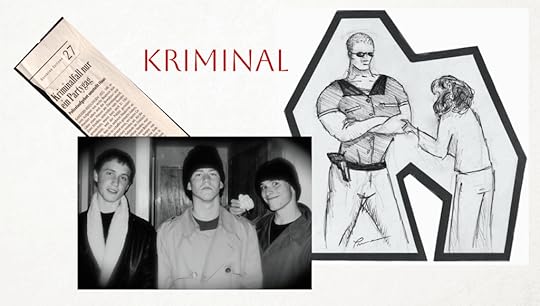
Because the text already exists in book form, I won’t be posting the chapters here, but I wanted to give readers a feel for what the podcast episodes will feel like. So this is a link to a special introduction, featuring my favorite MK story of all time. It involves a love-struck MK, two rambunctious friends, and…thirteen Germany police officers.
You can find the podcast on all platforms (Spotify, Apple, Overcast, etc.) by searching for it by name. Or you can simply click on this link to listen.
 Make sure you subscribe to the podcast so you don’t miss any episodes—and look back through the topics already covered for something you might have missed.
I’ll still be posting articles here as they get written!
Please join the conversation!
June 1, 2025
ATTACHMENT STYLES & THE FAITH OF MKs
[This article also exists in audio form. You can listen to it on The Pondering Purple Podcast. And don’t forgot to pick up your copy of my new book, Pondering Purple—The Greatness, Grit, and Grace of Growing Up MK.]

This one has been a long time brewing. You’ve probably heard about Attachment Theory and, like me, may have wondered what it’s all about. I began my own exploration of the concept a few months back—not in small part because it seemed to have become something of a cultural buzzword. I decided to dig deeper mainly out of curiosity, but the more I learned, the more I pondered the implications of Attachment Theory specifically for MKs—and why it feels so relevant to my own experience.
The lightbulb moment finally struck a couple weeks ago, when I was 33,000 feet in the air between Kenya and home.
This is the equation that caught my attention as I bumped over turbulence while crossing the Atlantic:
Our relationship with our parents shapes our Attachment Style, but our Attachment Style in turn shapes our relationship with God. And when the parents who were so influential in our attachment development work for God, that adds yet another dimension to the work being done in this field.
The notion certainly isn’t original to me—entire books have been written on various aspects of Attachment Theory. But for me, applying it specifically to the MK experience shed a clarifying light on the relational dynamics of my very early years and how they impacted both my future relationships and my faith. Perhaps the same will be true for you.
In the ministry world, the fact that our parents serve God will be intrinsically linked with any exploration of Attachment Styles.
To the MK mind, if God inspires our parents’ work, values, priorities, and passions, it’s easy to assume that he inspires their parenting too. And the security or insecurity it builds into our psyches might just as easily be attributed to God himself.
I’ll note at the outset that this is a complicated topic with layers of fact, perspective, and nuance involved! So please consider this merely a conversation starter. I’ll try to break down some of the key concepts into bite-sized pieces and would love for you to continue your own research as you seek to apply these theories to your understanding of yourself as an TCK or to the children you’re raising as TCKs.

John Bowlby, an English psychologist, was the first to develop a theory around the influence of early childhood connections on the way we navigate relationships later in life. Raised by a mostly-absentee mother, then sent to boarding school at age seven because of World War II, he was naturally intrigued by how he might have been impacted by those factors, and the framework he built around his research eventually became known as Attachment Theory.
The foundational principle that undergirds Bowlby’s work is that infants are biologically inclined to seek connection with caregivers for survival and emotional security—and the patterns they experience as infants and toddlers can establish the way individuals perceive and relate to others, as well as to themselves, later in life.
Though Bowlby’s work focused on relational influences during the infant and toddler years, further research seems to indicate that one’s Attachment Style continues to implant itself in our subconscious through early developmental years, even up until the ages of six or seven. And crises that happen after that—like abuse, abandonment, or isolation—can also add their stamp to how we experience relationships.
Bowlby’s exploration of Attachment Theory yielded the first three Attachment Styles. He wrote about them in the 1950s and 1960s. The fourth was added to the list by Drs. Mary Main and Judith Solomon in 1990.
It’s important to remember that Attachment Styles represent a framework, not a guaranteed outcome.
Unusual personality traits, unique circumstances, or strong relationships outside the core family could divert a child’s Attachment Style from what would otherwise be predictable. The research into this topic identifies reliable trends, not universal truths.
With that caveat stated, let’s take a look at each of the four Attachment Styles.
 1. Secure Attachment
This Attachment Style is characterized by confidence, optimism, and vulnerability in relationships.
This kind of security is fostered by parents who are consistently present, loving, supportive, and reliable—particularly during those critical early childhood years when a sense of value, importance to others, and safety in relationship gets imprinted on our spirits.
A TCK with this form of attachment will feel comfortable with both closeness and independence. She’ll trust others and feel worthy of love. She’ll have the capacity to form healthy and lasting relationships.
2. Anxious Attachment (Preoccupied Attachment)The core question this Attachment Style asks is: Why wouldn’t I believe that someone can love me?
Anxious Attachment is characterized by uncertainty about our worthiness.
This is often related to parents who were not consistent in the attention and care they showed their children—sometimes available and involved, and sometimes distracted or absent. The child with this Attachment Style yearns for connection, but gets stuck in a pattern of trying to earn it somehow—because he learned early in life to question his value and lovability, and his ability to maintain the attention and commitment of others.
A TCK with an Anxious Attachment style will still reach for closeness, but fear rejection and abandonment. He might appear more needy than others. Be overly sensitive and insecure in relationships. It can show up in contradictory ways too: in inordinate clinginess or in a self-sabotaging impulse to end relationships before the other person has the chance to reject him.
3. Avoidant Attachment (Dismissive)The core question of this Attachment Style is: Is there anything about me than can ever earn consistent love?
Avoidant Attachment is characterized by low (or no) expectations. It is a mirror of the absence of caregiving that person experienced as a child from relationally unengaged, dismissive, or seemingly uncaring parents.
Though we all by nature have a deep-seated longing for true connection woven into our DNA, the avoidant person will convince herself that she really doesn’t want or need any form of vulnerable relationship. She’ll tell herself that it probably won’t be returned anyway. And that it’ll hurt a lot less to live without hoping for more.
A TCK with Avoidant Attachment will prefer relational independence to connection and closeness. She might come across as ultra-self-sufficient, aloof, and disinclined to emotional intimacy.
4. Disorganized Attachment (Fearful/Avoidant)The core question this Attachment Style asks is: Why would I ever think that someone could care for me?
Disorganized Attachment is characterized by relational inconsistency. It shows up as volatility in relationships—like a desire for closeness paired with fear of vulnerability. Or in contradictory behaviors—like drawing someone close only to push them away. Where Anxious Attachment desires connection and tries to earn it, Disorganized Attachment has a pattern of opening the door to attachment then slamming it.
A TCK with Disorganized Attachment craves connection as desperately as he fears it. He’s confused by his early relationship with caregivers, set off-kilter by their unpredictability, instability, and chaos. Sometimes there was love. Sometimes there was contempt. Sometimes he felt nurtured and sometimes it seemed those entrusted with caring for him didn’t even know he was there.
When parents are neglectful or dizzyingly mercurial, the adult whose understanding of relationships was formed in that uncertainty will apply the same pattern to future relationships.
The core question this Attachment Style asks is: Why should I risk trusting or depending on anyone?
Those are the bare-bones basics of the four Attachment Styles developed by Bowlby, Main, and Solomon. Just on a human level, they provide a fascinating way to look at how we’ve been formed to enter and abide in relationships—and what we may unwittingly be passing on to future generations.
As I’ve sat with this research for the past few months, I’ve wondered how Attachment Styles might also impact our faith. The Bible, after all, uses the term “Father” to describe God, and faith is primarily framed around relationship with him.
Looking back at my own life, I can see how the defense mechanisms I learned in my early years were directly reflected in my approach to God—how they complicated and undermined it. I’ve seen the same challenges in the MKs I work with.
But I want to affirm that an Attachment Style is not inflexible—whether it be in our human relationships or in our faith.
There is room for growth. For hope and for healing. For reimagined connection with others and with God—God the Father who can disarm the self-defenses we might have learned in our ministry-saturated childhoods.
 God the Father. It’s a comforting image for so many believers, conjuring care, provision, and presence. Those who have experienced human parents who loved them well will easily project those same traits onto the spiritual being also referred to as Father.
But for people who spent their early years with caregivers whose love they perceived as less than fervent, committed, or dependable, our understanding of the word “Father” could trigger the same unhealthy Attachment Styles we learned in hard childhoods. And we’ll assign to him traits that will validate our fear or hesitancy around a dependent relationship.
Those of us with insecure Attachment Styles may even narrow our reading of Scripture to just those stories and descriptions that legitimize our misgivings, not out of conscious self-deception, but as a knee-jerk form of subconscious self-protection—reminding ourselves that he may not be safe. Our expectations of who God is can indeed be shaped by our early human relationships.
If we grew up with Secure Attachment—remember that the question of this style is, “Why wouldn’t I believe that someone can love me?”—we’ll be able to go to God the Father with confidence, knowing that he sees and loves us, that he wants our flourishing, that he is patient and kind and faithful. That’s what we’ve learned from growing up with our own parents.
And the Bible will validate that perception. We’ll dwell on the passages where Jesus shows his goodness. Where he is present and comforting. Where he heals and provides. We’ll look back on our lives and see his “Fatherness” in the blessings we’ve experienced—and our sureness about his father-heart will allow us to place responsibility or blame for the harm we may have endured along the way on forces and factors other than him. We know that fathers love their children and can be trusted.
The faith statement for this style is: Since my own busy, missionary parents found a way to make me a priority,
April 2, 2025
PIECES OF PURPLE – RELEASE DAY!
[This article also exists in audio form. You can listen to it on The Pondering Purple Podcast available on most platforms or by clicking HERE.]
“A deeply moving and essential read for MKs, TCKs, and the parents and caregivers who support them. This book is a lifeline for those seeking understanding and connection in their journey. An absolute must-read!”
—
Kath Williams, National TCK Coordinator, TCK Interlink
IT’S BOOK-RELEASE DAY!
And I’m not quite sure whether to dance a jig or take a nap! I cannot wait for it to get into the hands of MKs and TCKs, missionary families, sending agencies, churches, and mission committees.
What is it about?
The book delves into fifteen specific factors that influence the development of TCKs in both beneficial and challenging ways—factors like social dexterity, cultural malleability, gut-level world awareness, the assets and limitations of unbelonging, the impact of grief on fragile faith, and the too-often-overlooked realities of trauma. In conjunction with each other, these help to explain how TCKs might uniquely navigate identity, hardship, and spirituality.
Here’s what the back cover says:
Pieces of Purple is an ode to the beauty and complexity of Third Culture Kids. It goes beyond the usual inventory of TCK strengths and challenges, uncovering foundational truths that shape this community’s sense of self, world, and God.
Blending memoir, research, and storytelling, Michèle Phoenix draws on a lifetime as a Missionaries’ Kid and more than three decades working with Third Culture Kids to paint a compelling and compassionate portrait, inviting the reader to explore fifteen formative aspects of the MK and TCK experience.
More than anything, Pieces of Purple is a celebration of the immeasurable gift of growing up between worlds. It empowers Global Nomads to better understand their unique traits and needs, and equips those who walk alongside them to love them more wholly and effectively.
“Sharing from her extensive experience in working with MKs, Michèle succinctly and accurately describes the benefits and challenges of growing up between worlds. Her insights should be must-read material for all those who are parenting MKs or walking alongside them.”
—
Matthew Wright, Executive Director, The 631 Solution
Where did the idea to write a book come from?
This book feels different than the novels I’ve written before. It’s so much more of a legacy project to me. It holds the totality of all I’ve ever learned, researched, and taught about Missionaries’ Kids and Third Culture Kids in 57 years as an MK myself and 34 years in MK ministry.
As a single woman with no children, I’ve been concerned that when my life ends, all the research and writing I’ve done on this topic with die with me. I don’t want that to happen.
I was meeting with the missions committee of a partner church in South Carolina last August and the words, “I’m going to write a non-fiction book about MKs!” just kind of fell out of my mouth—because it’s been a dream for so long and I think God was telling me that it was time to take the leap. Then I looked at my calendar and saw that I had no major trips planned between September and December… That kind of break in travel just never happens.
I started writing on September 20th and submitted the 171-page manuscript to my graphic artist on December 17th—somehow managing all the other aspects of this ministry at the same time. (Then I spent a couple weeks trying to remember how to stop typing, breathe slowly, and notice things happening beyond my laptop’s screen!)

Can you help spread the word? I’d be so grateful!
This book is primarily written for missionary families and MKs, but it holds crucial information for other sectors too. Could someone you know use a copy or two (or ten)?
MKs or TCKs in your spheres of influence?
Missionary families?
Relatives of MKs and TCKs?
A pastor?
A church Missions Committee?
A church library?
A sending mission/agency?
A member-care provider?
An MK/TCK school?
A counsellor who helps missionaries families?
“Unlike any other book I’ve read, Pieces of Purple beautifully speaks to the core belovedness of MK and TCK identity. Tender and honest insights into the life of Third Culture Kids, told by a master teacher and storyteller.”
—
Lori Harms, Director of Children’s Debriefing,
Mission Training International (MTI)
If you do read the book, I’d love it if you’d consider writing an honest review and posting it on Amazon and Goodreads. I don’t have any marketing budget or a marketing team, and your feedback will be a really important part of the unofficial word-of-mouth campaign.
To learn more about the content of the book and read some of the amazing reviews it’s received from leaders in the TCK world, click here.
And purchase it, click here:
—> A couple notes about purchasing:
First, the paperback version of the book is gorgeous, thanks to Elise Cheung’s graphic design brilliance, and I highly recommend getting a physical copy if you can.
Second, because I’m using Amazon, the book can be ordered and printed from several global Amazon hubs: Austria, Brazil, Canada, France, Germany, India, Italy, Japan, Mexico, the Netherlands, Spain, the United Kingdom, and the United States. So you may want to check those international sites for better pricing and shipping.
I cannot wait for this labor of love to get into the hands of those who want to understand more about themselves as Purple People and those care for them. My hope and my prayer is that it will increase understanding, promote compassion and self-empathy, point to Jesus’ immeasurable love, and even lead to healing.
Please join the conversation!
Contribute your thoughts in the comments section below.
Use the social media links to Like and Share this article.
Click this link to listen to this article in podcast form on Pondering Purple.
To subscribe to this blog, use the field below.
Pick up Of Stillness and Storm (my novel about a missionary calling gone awry) on Amazon.
Flecks of Gold, a coffee-table book that explores God’s presence in our suffering, is available only from this website. Follow the link to learn more about it.
And don’t miss Pieces of Purple, available from Amazon.
SEND MICHÈLE A MESSAGE:
Your Name* Your Email* Your Message* reCAPTCHASubmitReset SUBSCRIBE FOR BLOG (AND BOOK!) UPDATES: Please leave this field empty.form.es_subscription_form[data-form-id="2"] * { box-sizing: border-box; } body {margin: 0;}#ib2a{padding-top:30px;padding-right:10px;padding-bottom:50px;padding-left:10px;width:450px;background-color:#f4f3ec;}#i0fw6{text-align:center;}#iarpk{height:40px;en:1;width:200px;}#it9g{text-align:center;font-size:24px;margin:0 0 24px 0;letter-spacing:1px;font-family:Georgia, serif;font-weight:100;border-color:#000000;color:#333333;}#i9kx{text-align:center;}#esfpx_email_bce83274f66ad{align:center;padding-top:8px;padding-bottom:8px;padding-right:115px;padding-left:8px;}#imc2g{text-align:center;}#ivrac{padding-top:15px;padding-bottom:14px;padding-right:8px;padding-left:8px;width:200px;margin:10px 0 0 0;color:#b90808;border:2px solid #b90808;vertical-align:middle;line-height:22px;font-weight:800;font-size:20px;background-color:rgba(148,108,28,0);border-color:#b90808;}form[data-form-id="2"] .es-form-field-container .gjs-row{display:flex;justify-content:flex-start;align-items:stretch;flex-wrap:nowrap;}form[data-form-id="2"] .es-form-field-container .gjs-cell{flex-grow:1;flex-basis:100%;}form[data-form-id="2"] .es-form-field-container .gjs-cell[data-highlightable="1"]:empty{border-top-width:1px;border-right-width:1px;border-bottom-width:1px;border-left-width:1px;border-top-style:dashed;border-right-style:dashed;border-bottom-style:dashed;border-left-style:dashed;border-top-color:rgb(204, 204, 204);border-right-color:rgb(204, 204, 204);border-bottom-color:rgb(204, 204, 204);border-left-color:rgb(204, 204, 204);border-image-source:initial;border-image-slice:initial;border-image-width:initial;border-image-outset:initial;border-image-repeat:initial;height:30px;}form[data-form-id="2"] .es-form-field-container .gjs-row .gjs-cell input[type="checkbox"], form[data-form-id="2"] .es-form-field-container .gjs-row .gjs-cell input[type="radio"]{margin-top:0px;margin-right:5px;margin-bottom:0px;margin-left:0px;width:auto;}form[data-form-id="2"] .es-form-field-container .gjs-row{margin-bottom:0.6em;}form[data-form-id="2"] .es-form-field-container label.es-field-label{display:block;}@media only screen and (max-width: 576px){.gjs-row{display:flex;flex-direction:column;}.gjs-cell img{width:100%;height:auto;}}@media (max-width: 320px){form[data-form-id="2"] .es-form-field-container{padding-top:1rem;padding-right:1rem;padding-bottom:1rem;padding-left:1rem;}}

Get blog updates in your email

February 3, 2025
THE INCREDIBLE POWER OF POSITIVE CHILDHOOD EXPERIENCES
[This article also exists in audio form. You can listen to it on The Pondering Purple Podcast available on most platforms or by clicking HERE.]

After a brief hiatus filled by guest posts, I’m back in the saddle. The time I took off to write my upcoming book yielded 170 pages that will hopefully see the light of day in a couple of months. I cannot wait to tell you more about Pieces of Purple—The Greatness, Grit, and Grace of Growing up MK. Keep checking this my blog and my social media (linked below) to stay informed about the book’s release date.
In celebration of the completion of the manuscript, I’m sharing a portion of one of the fifteen chapters with you today. Consider it a preview of sorts.

If you’ve been a reader for a while, you may remember the article on Adverse Childhood Experiences or ACES. In that piece, we explored new research by TCK training that measured the amount of toxic stress MKs and TCKs experience, and how it matches up with the stress of young people in other communities.
The research, originally pioneered by the Centers for Disease Control and Kaiser Permanente, found that people who accumulate four or more ACES during their youth are more likely to experience negative future outcomes like addiction, unexplained medical issues, relational challenges, mental illness, and something best described as “failure to thrive”
TCK Trainings findings indicate that 17% of MKs and 24% of non-mission TCKs are in the high risk group for those life diminishing outcomes.
Of course, that also means that a good number of MKs and TCKs are not in that group, but the percentage of those who are still left me feeling sad and fearful for these people I love. It also motivated me to begin an earnest campaign to educate parents in the Third Culture and Missionary Community not only about prevention, but about trauma, mental health, and the red flags that might indicate that special care is needed.

My own exploration of the topics pointed me to Positive Childhood Experiences (or PCEs) as one of the greatest tools in the parenting arsenal not only for mitigating the impact of Adverse Childhood Experiences, but for blunting their long-term consequences.
So what exactly are PCEs (Positive Childhood Experiences) and how do they relate to the ACEs we’ve already explored? First, a bit of a reminder about the realities of growing up as TCKs:
In Misunderstood, Tanya Crossman reports that 80% of Adult Third Culture Kids were glad to be TCKs, 90% were thankful, and 98% said they would not take back their TCK upbringing if they could.
These statistics indicate that for all the hardships we might experience during our formative years, the blessings of growing up as a TCK are just as undeniable.
I believe that MKs whose Positive Childhood Experiences are powerful enough to retain their brightness despite the darkness of any Adverse Childhood Experiences are able to acknowledge the Hard without losing sight of the Wonderful.
This is where the science related to PCEs becomes essential understanding. It can impact the way Global Nomads live through their early years and lessen the imprint of ACEs on their adult years.

In my work with families, I’ve found that categorizing Positive Childhood Experiences as either Bright-Impact PCEs or Profound-Impact PCEs can help MKs to more easily identify the positive events and environments that have supported their wellness. It also helps parents to craft a plan that blesses their children with both.
Bright-Impact PCEs are significant and important. They’re more short-lived experiences that temporarily bring joy and comfort to children. Just as an accumulation of small-T trauma can have a powerful negative influence on young minds and spirits, an accumulation of Bright-Impact PCEs can have a powerful beneficial influence on the minds and spirits of MKs.
For Global Nomads, those Bright-Impact PCEs will vary with the details that make our stories unique—with each home country, each family dynamic, each glowing memory, each story of personal suffering, overcoming, and thriving. We might joyfully remember:
The sound of monsoon rains on our home’s tin roofEating a meal cooked over smoldering manureProviding food and shelter for thousands of refugeesThe baptism of dozens of new believers in a muddy riverBringing sustainable farming to war-ravaged placesSpending entire days with our friends on public transit in bustling, safe citiesSeeing a baby who had hours to live being nursed back to life in a tent hospitalWitnessing nationals graduate with degrees in theology, music, or ancient languages, to take the reins of ministries in their own countriesWatching a remote village receive its first BibleDigging life-saving wells where water is scarceWatching truth transform lives in places where lies are proclaimed and embracedCutting the ribbon on a new school buildingCreating lodging and paving roads and extending bridges in Jesus’ name across gaping divides between countries, people, and faithsRiding motocross bikes over a sea of sand dunesLearning to cook a traditional meal from a best friend’s abuelaWatching the northern lights reflect on a nearly-still ocean

While Bright-Impact Positive Childhood Experiences might be compared to the chimes and piccolos in a TCK’s symphony, Profound-Impact PCEs are more like the timpani and contrabass. They are foundational family practices and external systems that will influence Global Nomads on a deeper level, fostering a sense of safety and a capacity for hope that are indispensable for resilience and emotional stability.
Research into this phenomenon has shown that survivors of trauma who can identify 6 to 7 Positive Childhood Experiences (the Profound-Impact variety) in their formative years will be 72% less likely to experience depression or mental health challenges later in life.
This data positions PCEs as essential counterweights to the detrimental impact of Adverse Childhood Experiences. They can actually protect against some of the negative future outcomes ACEs have wrought in the lives of TCKs.
There are seven Profound-Impact PCEs parents can cultivate—both in the family culture and in the broader environment—to multiply joy-giving influences in their children’s lives. The more of these positive experiences TCKs are offered, the better their chances will be of avoiding trauma-triggered mental health challenges in the future. (The statements below assume the presence of two parents in the child’s life, but just one parent can foster them too.)
Being able to talk with their parents about their feelings—having Mom and Dad validate emotions, ask follow-up questions, and offer comfortExperiencing the support of parents during difficult times—Mom and Dad being physically present, engaged in the situation, and ready to go to bat for their children as neededEnjoying family traditions in which they regularly participate—finding predictability and stability in celebrating milestones and special occasions togetherFeeling a sense of belonging in a high school setting—having a place among their peers, being involved in extracurricular activities, and feeling socially connected in this critical phase of development—this obviously would have to be adapted for home-schooling childrenBeing supported by friends—finding inclusion and self-esteem-boosting relationships with peers who aren’t related to themBeing genuinely cared for by at least two adults (coaches, mentors, teachers, or friends of the family)—their value and worthiness needs to be validated by adults who invest time and love in themFeeling safe and protected by a parent in the home—knowing that at least one parent is there to shield them, meet their needs, and empower them, while striving to maintain emotional security inside the home

Some of these Profound-Impact PCEs can be cultivated by parents wherever the family serves—with open communication, intentional action, right priorities, and child-focused wisdom.
But life doesn’t happen in a vacuum. The temperaments of individual children, past trauma they’re carrying, family dynamics, and the social and geographical environment they’re living in will also play a role in the availability of Positive Childhood Experiences.
In some cases, making sure a son or daughter receives sufficient PCEs will require parents to increase their intentionality in areas that need attention.
In others, it may force them to make heart-wrenching sacrifices for the best of reasons—the kind of changes that protect the current and future wellness of Global Nomads at the cost of changing locations or communities, and sometimes even leaving the ministry.
Given the gentle care and focus Jesus showed to children—as well as his admonishments to love them well—making hard and heartful decisions for the sake of a suffering child may be the most Christlike of PCEs those who love MKs can offer them.

There’s a French expression I’ve mentioned before that states, “J’sais pas sur quel pied dancer.” I don’t know what foot to dance on. This seems to be a fairly common phenomenon among MKs who have one foot on Planet Hard and one foot on Planet Wonderful. We feel the tension between all we enjoy and all we’ve endured, and often don’t know which foot to dance on.
This goes beyond having a conniption trying to decide who to cheer for during the Olympics and World Cup soccer. We’ve been gifted so much good by growing up as TCKs. What we’ve accomplished and seen, what we’ve learned and assimilated. All priceless.
We wouldn’t trade it for the world.
Some MKs have also been confronted with realities beyond our capacity to handle. We’ve witnessed atrocities or shouldered excessive stress or survived dangerous events or lived with unhealthy alienation and uncertainty.
Yet we still wouldn’t trade the good parts for the world.
I personally experienced family dysfunction, sexual abuse, severe depression, suicidal ideation, and an anxiety disorder during my growing-up years.
Yet I too wouldn’t trade the rest of it for the world.
Grief and joy.
Floundering and flourishing.
ACEs and PCEs.
They exist in tandem in the lives of so many TCKs.
Permission to express struggles, relationships capable of receiving the truth, resources to help process with a knowledgeable guide, and faith in a God who understands and cares—all of those can shine stability, true resilience, and a healthy outlook on self and on God into the complicated existence of Purple Children who grow up cross-culturally in the often-challenging world of ministry.
Please join the conversation!
November 18, 2024
GPS: TRANSITION STRESS AND YOUNG TCKs – What Does “Normal” Look Like?
[This article also exists in audio form. You can listen to it on The Pondering Purple Podcast available on most platforms or by clicking HERE.]

This is the third installment of GPS, a Pondering Purple project whose initials stand for Guest Post Series. The first installment is here and the second is here.
GPS will serve two purposes: it will allow me to introduce you to other voices in the TCK world—and it will carve out some extra time for me to turn some of my own articles into a standalone book that will hopefully be out around the spring of 2025. I’ll share much more on that later!
I’m pleased to bring you this article by Lauren Wells. It first appeared in A Life Overseas and is republished here with permission.

“We haven’t seen our boy act like himself in over a year. We sometimes get glimpses of the fun, playful kid he used to be, but most of the time he’s like a shell of his old self. We don’t know where the kid we knew went.”
Fifteen months earlier, these parents had moved across the globe to a new country and culture. Their oldest son had started attending a local school while the younger siblings who weren’t yet school age stayed home.
“We knew it would be a big transition for him,” they said. “We worried when he seemed to get more and more withdrawn, but we kept telling ourselves this was the normal transition stress everyone warned us about. But it’s been over a year now and it’s just gotten worse.”
I wish I could tell you that this is the only time I’ve had a conversation like this with parents, but it’s not.
The phrase “we figured it was just transition stress” is one I’ve heard many times in my work with hundreds of parents.
When my colleagues and I work with families prior to a move or to train schools or organizations about family care, a topic we cover is how to distinguish between “normal” transition stress and when it has gone beyond that. This preventive approach keeps normal transition stress from growing into a long-term state of emotional unhealth which will eventually turn into a crisis.

So, what is normal transition stress for children?
At what point should adjustments be considered because the transition stress has gone beyond a healthy limit? Knowing how to distinguish between healthy transition bumps and long-term adjustment issues is a critical part of preventive care.
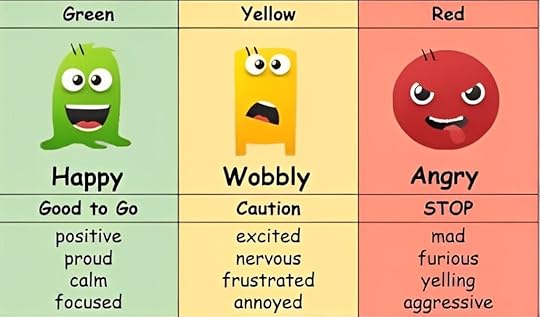
When my company (TCK Training) talks about transition stress for Third Culture Kids, we use the concept of Red Zone/Green Zone. When we’re in the Red Zone, our brain is flooded with stress hormones. This isn’t concerning for a short period of time, and in small doses it can actually be part of resilience building. While a developing brain shouldn’t be exposed to those stress hormones too consistently or for too long, during a major transition it’s normal for everyone to be in the Red Zone for a while.
 What the Red Zone looks like for children/teens:
While these behaviors are all normal during a transition season, some behaviors require immediate support even during the normal Red Zone window of transition:
Any sort of self-harmSuicidal ideation (or any statements that imply that they wish they weren’t alive)Extreme physical aggression toward othersA pattern of under-eating or overeatingDepressive or anxious symptoms that interfere with daily functioningIf your child experiences these symptoms at any point it is important to seek immediate professional mental health support.

In the midst of Red Zone seasons like major transitions, planting “Green Zone moments” is important. This brings the child’s brain momentarily above water. While they still may be mostly in the Red Zone, consistently bringing in Green Zone activities can speed their progress out of the Red Zone.
Green Zone moments can include:
Body movement (going for a walk, playing a sport, etc.)Anything rhythmic – rhythm regulates the brain (music, dancing, coloring, etc.)Talking about why this transition feels so hard (allowing them to share and/or giving them language for why they’re feeling this way)LaughingDeep breathingExperiencing something that feels physically comforting (a favorite food, a cozy blanket, a special treat, etc.)Quality time with a parent, sibling, or close friendHow Long is Too Long?
After a major transition it is common for children to be primarily in the Red Zone for three months. During this time it is important to implement Green Zone moments for/with them. After three months, we typically see that children have fewer Red Zone days/moments. They begin to act more like their normal selves, trending toward a more consistent Green Zone state. When this is happening, we begin to see that:
They can identify friends they like to play withGetting ready for school in the morning isn’t as difficultThey talk about things they’re looking forward toThey want to join activities that brought them joy in the past or that tap into their skills or talentsThey are beginning to feel more confident about how to succeed in schoolThey seem to have a more positive outlookThey are laughing and smiling moreThey are doing “Green Zone moments” without promptingMost often at around 6-9 months after a transition, the stress has eased and children are in the Green Zone more regularly.
 What If It’s Not Getting Better?
The shift from Red Zone to Green Zone may seem slow and drawn out, and even in the best circumstances it can take time. If, after six months, a child doesn’t seem to be trending toward the Green Zone, we have moved beyond normal transition stress. At this point, professional support for the parents (and possibly the child as well) may be helpful.
Shifts need to be made so that we can prevent the child going deeper into the Red Zone.
The following questions can help determine factors that could be contributing to prolonged transition stress. You can begin making small shifts to see if they begin to make a difference. In the home, for example, you might schedule consistent one-on-one time with that child. In the environment, you might add an activity outside school hours that they would enjoy.
In the Home
Are they receiving regular, positive attention from their parents?Do they feel they can talk about their emotions and feel heard and comforted?Do they feel physically safe?Are they sleeping well?Does the family smile and laugh together often?In their Environment
Do they have access to activities that would give them Green Zone moments?Do they have potential friends in their class/school?Is their teacher a factor that is putting them in the Red Zone?Are there specific stressors that they or you can pinpoint?Are there adults other than their parents investing in them?Understanding the progression from Red Zone to Green Zone that happens during a transition season can help parents to monitor their children’s stress levels during times of change.
Not only does this knowledge prevent children staying in the Red Zone for an unhealthy period of time, but it also gives parents strategies for improving family health and tools for making adjustments to get each family member on the right track if it doesn’t seem to be happening naturally.
There is so much hope in knowing what normal looks like and having tools to help your children when their transition stress goes beyond that point. To learn more about going through transitions of any kind, especially as a family, check out TCK Training’s self-directed Transitions Course.
~ About the author:
Lauren Wells is the founder and CEO of TCK Training and the Unstacking Company and author of Raising Up a Generation of Healthy Third Culture Kids, The Grief Tower, and Unstacking Your Grief Tower. She is an Adult TCK who spent her teenage years in Tanzania, East Africa. She sits on the board of the TCK Care Accreditation as Vice Chair and is part of the TCK Training research team focusing on preventive care research in the TCK population.
Please join the conversation!
Contribute your thoughts in the comments section belowUse the social media links to Like and Share this articleMany of these articles are now available in podcast form. Simply search for “Pondering Purple” on your usual pod platforms, or click this link to be taken to its host page.To subscribe to this blog, email michelesblog@gmail.com and write “subscribe” in the subject linePick up Of Stillness and Storm (my novel about a missionary calling gone awry) on AmazonMy latest release—Flecks of Gold—is available now too! Follow the link to learn more about this coffee-table book that explores God’s presence in our suffering.