
Angela Meredith's Blog
April 23, 2026
Celebrating Liberation Day in Rome on 25 April
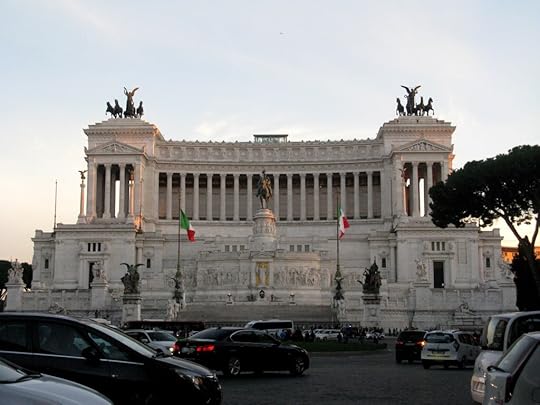
The liberation of Rome after WWII is celebrated on 25 April every year.
Rome was liberated by US soldiers from the 5th Army in April 1945, having faced German troops guarding the city. German troops were ordered to withdraw and they capitulated on 2 May.
On 25 April, the Quirinale Palace and other government buildings mark Liberation Day with official ceremonies.
The Liberation Day holiday often extends to Labour Day on 1 May, so Rome is usually busy at this time of year, before the huge rise in tourist numbers during the summer months.
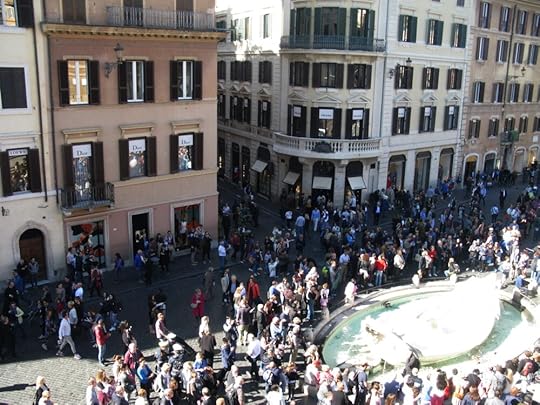 Crowds round the Barca Fountain in Piazza di Spagna


April 20, 2026
Celebrate Rome’s birthday – Natale di Roma – on 21 April!
The official date for the founding of the city of Rome is 21 April 753BC.
Rome was a forested settlement and something of a pastoral idyll, full of shepherds and nymphs. Shepherds, anyway.
It is famous for its seven hills – but has more hills than seven, as you will find if you spend as much time walking round it as I do.
Founding of Rome – the myth
 Via Roma, Verona
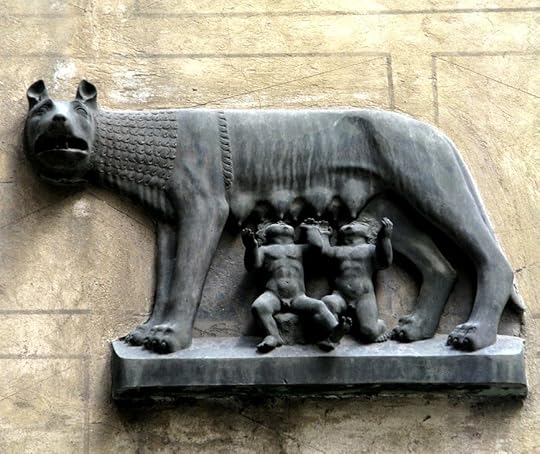
The story of twin boys being placed in a basket and launched down the River Tiber to be discovered and suckled by a she-wolf is legendary. The place where the infants washed up on the bank of the River Tiber now forms part of the boundary of the ancient Campus Martius.
Rome was supposedly founded after the mythical twins Romulus and Remus fought and Romulus killed his twin brother and named the city after himself.
Th twins were descended from the mythical hero Aeneas – hero of Virgil’s The Aeneid – and this lineage was used by Julius Caesar to shore up his own lineage, claiming that he was a direct descendant of the founders of Rome, who were the sons of the nymph Rhea Silva and either Mars or Hercules.
Rome as a settlement can be traced archaeologically to around 14,000 years ago. Coincidentally, this is around the same time as the first recorded military engagements in history – appropriate for an empire that became one of the most effective military machines in the world.
The Roman Empire spread from Rome to Africa, the Mediterranean, the Middle East and Europe, as well as Great Britain.
The Roman governors and generals also married the daughters of local rulers across the globe, or married their own daughters to local rulers – including in Syria, Africa and Spain. So if you have Roman heritage, as I do, you will most likely have a very diverse set of ancestors!
Celebrations for Rome’s birthday
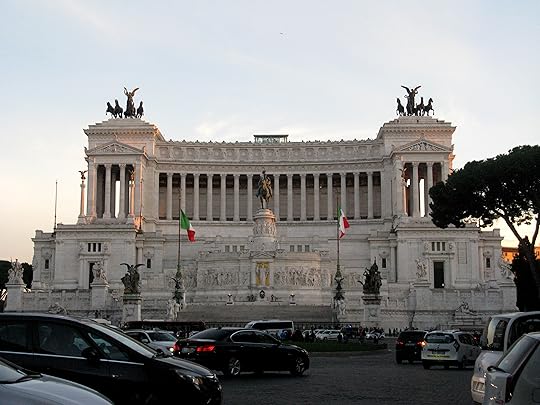 Vittorio Emanuele II Monument
In Rome itself, on the Sunday nearest to 21 April, there is a parade from the Circus Maximus to the Colosseum and Campidoglio – what we know as the Capitoline Hill, where the Vittorio Emanuele II Monument is now located, marking the unification of Italy.
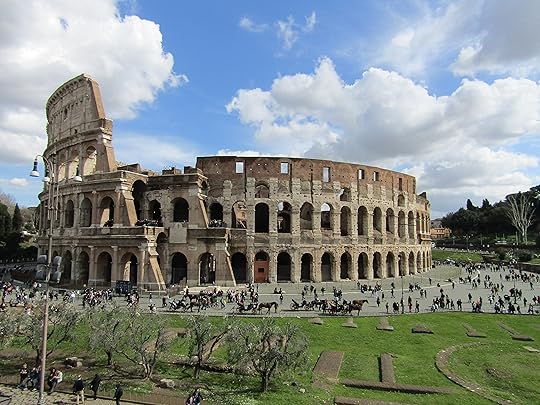 Colosseum
But Natale di Roma is a day of peace in the Eternal City – when Romans get together to mark the origins of Rome and one of the greatest civilisations in history.
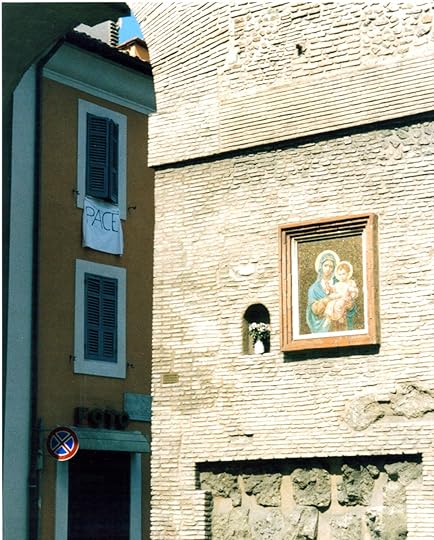
The birthday of Rome is known as Natale di Roma in Italy – and the celebrations include a trench-digging event at the Circus Maximus, known as tracciato del solco. People also dress up and, of course, there will be gladiators and legionnaires aplenty!
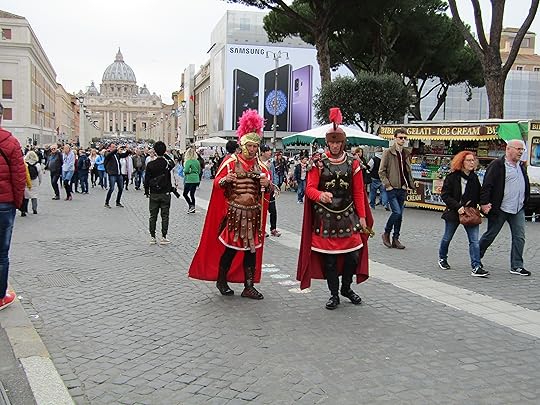 They walk among us still
Calculating the date of Rome’s founding
The date of the founding of Rome was calculated by the astrologer Tarunzio, who was a friend of Cicero, a Roman statesman, orator, lawyer and philosopher, before the Emperor Constantine introduced Christianity into the Roman Empire. Sadly Cicero was assassinated on 7 December 43 BC, the year after Julius Caesar’s death. Happily, Rome survives to this day for us to enjoy.
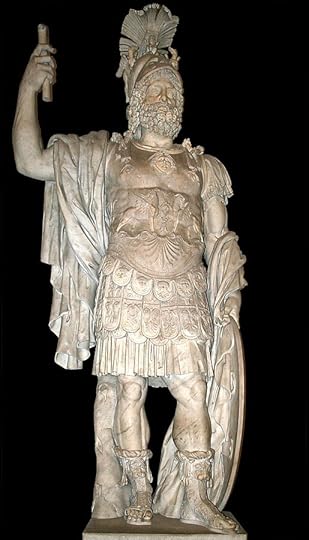 Mars Ultor in Sunday best for Rome’s birthday party
Rome is governed by the God of War, Mars – its horoscope sign should be Aries (20 March-20 April), which is of course, governed by Mars; but its birthday on 21 April makes it a Taurean, sign of the bull. It is also a sign that apparently is fond of singing, dancing, drinking, eating and amor, as well as being bullish and bucolic. Taureans can also be very beautiful and fond of creating a home.
Rome also shares its birthday with the late Queen Elizabeth II of Great Britain, one of the longest rulers in history, who will celebrate her ninety-third birthday this year. Happy birthday!
The sign of Taurus seems to suit Rome rather well!
Happy birthday Roma – buon compleanno! You’re looking good!
Buon viaggio!
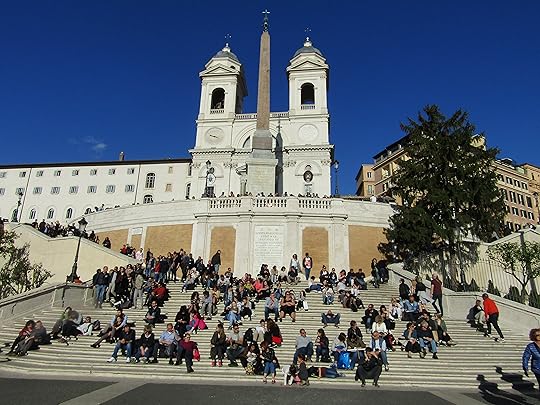 Trinita dei Monti, Spanish Steps
 Senatus Populusque Romanus – citizen of RomeAll images copyright A. Meredith except Mars Ultra and featured image, Sistine Chapel, Michelangelo, Vatican City. (Creative Commons Licence)
April 5, 2026
Easter in Ancient Rome – thanks to Emperor Constantine
What Christians now know as Easter had its roots in the Jewish Passover – the annual marking of the Jews’ liberation from Egypt in the Exodus.
Some wrongly believe the Jews killed Jesus Christ – even though Jesus was a Jew. However, Jesus was put to death by the fifth Roman governor of Judea, Pontius Pilate, who saw his teachings as a threat to the rule of Rome.
Jesus was 33 years’ old when he was crucified – we take the year of the birth of Jesus as AD 1.
Pontius Pilate was born in 12 BC, so historically it is possible to pinpoint exactly when Jesus was crucified and when he was born by looking at other historic dates.
Exodus, when the Hebrews were liberated, took place some time between 1450 BC and 1270 BC – a long time before the birth of Jesus.
After the Exodus, every year the festival of Passover was celebrated to mark the liberation of the Hebrews from slavery in Egypt. It is called the Passover because it refers to the passing over of the forces of destruction when God punished Egypt for enslaving the Hebrews with ten plagues – and ordered the death of each firstborn son of the Egyptians as the final plague. Moses led the Hebrews to freedom when the Red Sea parted to allow them to cross.
How the Jewish festival of Passover became the basis for the Christian festival of Easter much later is open to speculation. Easter marks the crucifixion of Jesus on Good Friday – and his resurrection three days later on Easter Sunday.
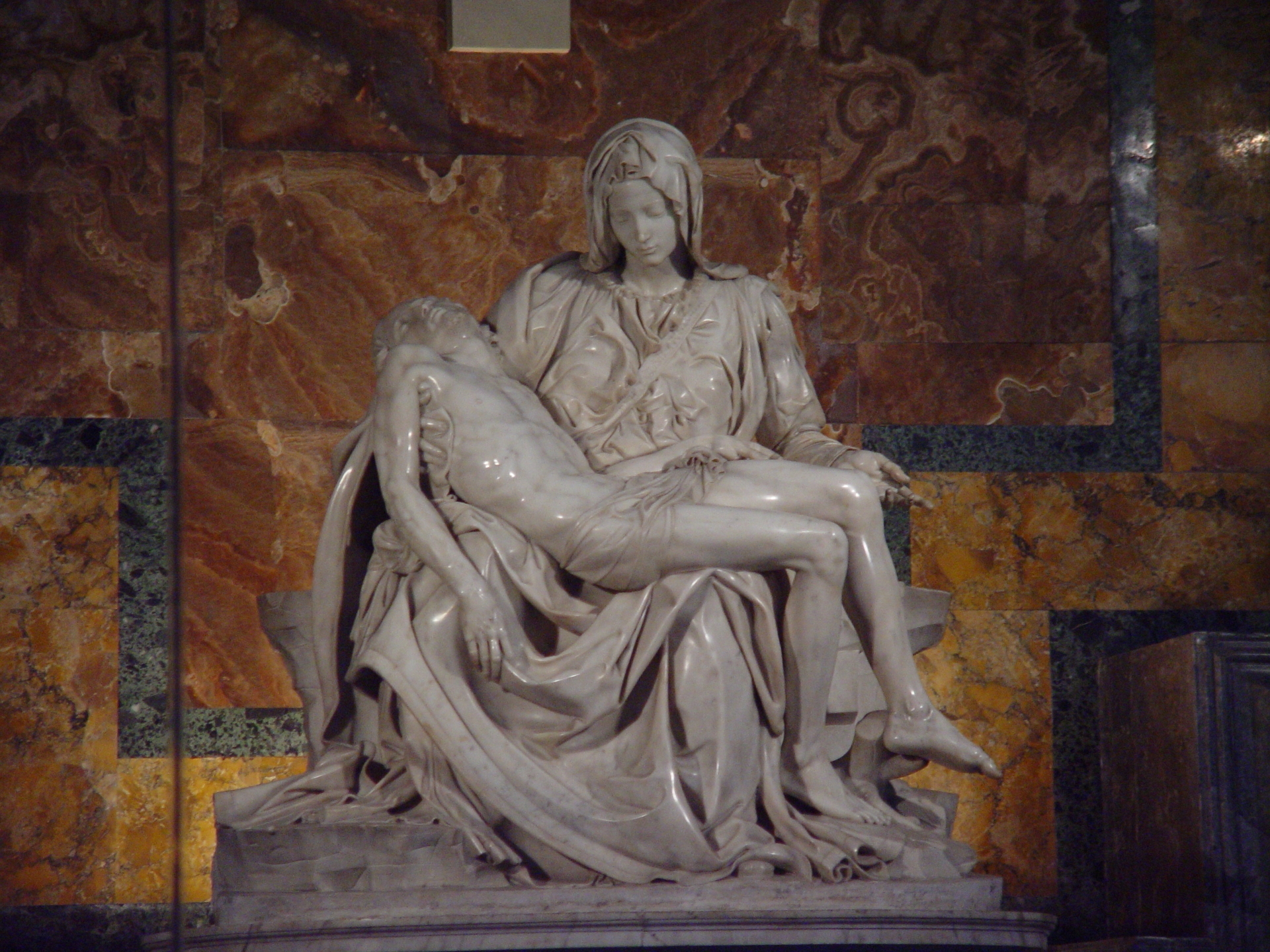 Michelangelo’s Pieta in St Peter’s Basilica
 Before Easter in Christian belief is a period called Lent – beginning 40 days before Easter when Christians fast.
The festival of Passover takes place in the month of Nisan every year – March or April. The festival begins on the 15th of the month and ends on the 21st or 22nd outside Israel. It takes place on different dates each year, though, just like Easter – and extends over seven or eight days, not four as in the case of Easter.
The Julian calendar that was used in the Roman Empire after the death of Julius Caesar in 44 BC was based on Caesar’s addition of an extra day every four years (Leap Year) to account for the rotation of the earth. Some months were shorted and others lengthened, including July and August. July was named after Julius Caesar and August after his successor Emperor Augustus. Because an emperor like Augustus or a great statesman and general like Caesar could not have a short month named after them, these months were lengthened to reflect their status and February was reduced to 28 days except during a Leap Year.
Synchronising Easter with the Passover every year was therefore open to dispute. We have Emperor Constantine (AD 272 – 22 May 337) to thank for deciding when Easter should take place every year.
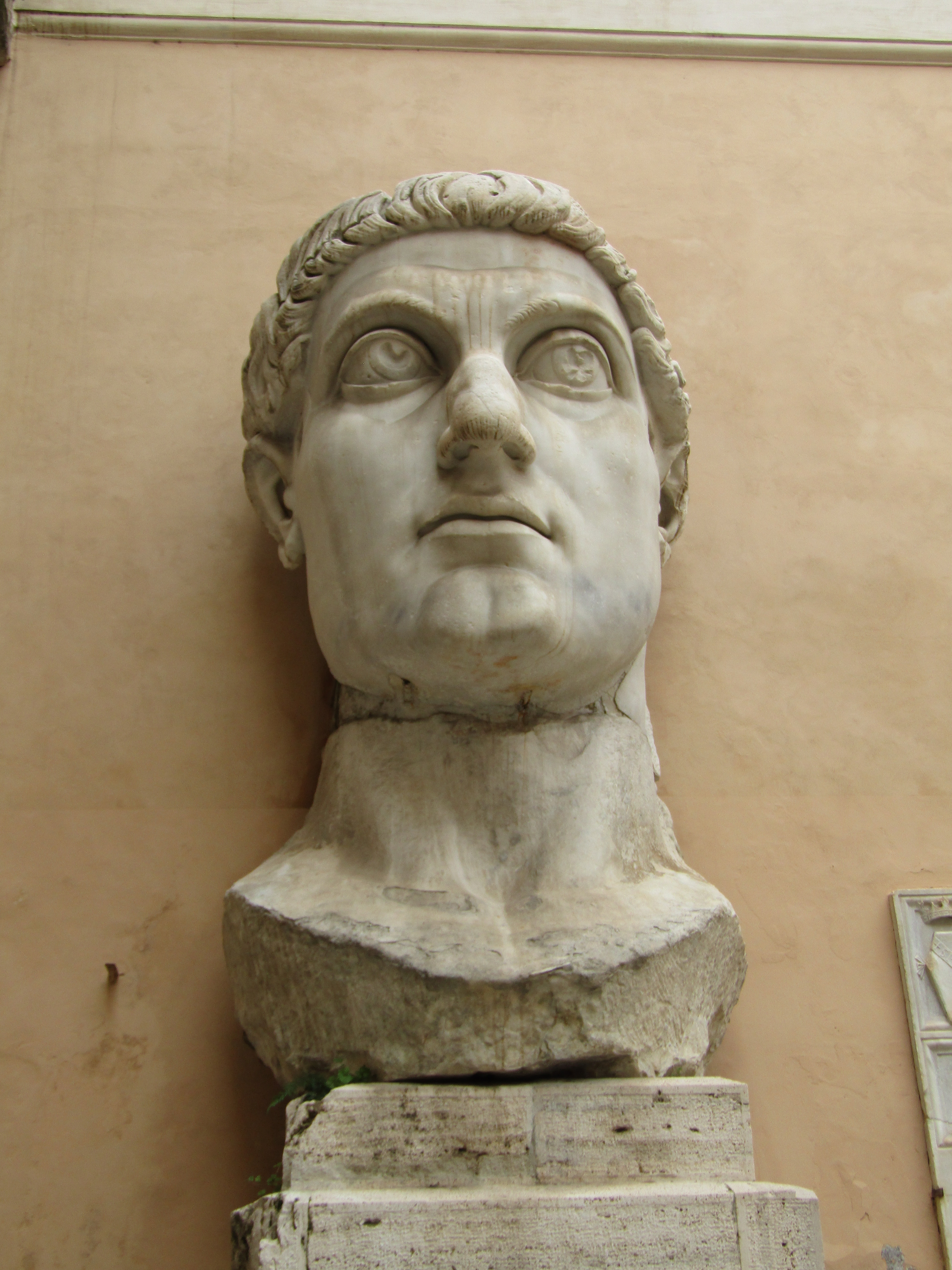 Emperor Constantine, Capitoline Museum, Rome (Image A. Meredith 2018)
Constantine had been born pagan and worshipped the gods Romans worshipped – gods like Mars and Venus and the household gods, the penates. However, he was the first Roman emperor to convert to Christianity, perhaps under the influence of his mother, Helena. There was some religious tolerance in the Roman Empire, however – Rome and Venice have the oldest Jewish communities outside the Holy Land and Julius Caesar was a friend to the Jews of Rome, who mourned him after his assassination.
Emperor Constantine felt that, as a Christian festival, Easter (marking the crucifixion and resurrection of Jesus) should not be linked to another festival of a different religion. He decided that Easter should take place on the first Sunday following the first new moon in spring – which is why Easter varies every year, sometimes at the end of March and in other years, towards the end of April.
 Basilica of Maxentius and Constantine, Forum, Rome
 The giving of Easter eggs is thought to represent the resurrection of Jesus and new life – spring is a time of new life when plants begin to bloom after winter and animals give birth. The tradition of chocolate eggs is also thought to be related to the end of fasting during Lent, when Christian often volunteer to give up eating their favourite foods like chocolate for the duration of Lent.
 Babingtons Tea Shop at Easter
 many of our holidays and celebrations – including Christmas, Easter, the harvest festival, Leap year and Valentine’s day – can be traced back to practices and celebrations in Ancient Rome and other cultures.
But it was Emperor Constantine who decided on when Easter would take place every year – and when we could all tuck into those chocolate eggs to mark Easter Sunday.
In Rome, Easter Sunday is also marked with mass at St Peter’s conducted by the Pope – and Christians travel across the world to be there.
Have a happy and safe Easter, wherever you are and whatever your faith.
Buona Pasqua – e buon appetito!
 Easter in Trastevere, Rome
March 30, 2026
Mensis Aprilis – the month of love in Ancient Rome

Newlyweds in Rome take a passegiata – a walk through the city to visit the ancient sites for wedding photos. This elegant couple are posing for photos on the Capitoline Hill.
Aphrodite was also closely aligned to Venus, the Roman goddess of love. Venus the goddess was named by the Ancient Romans after the planet Venus.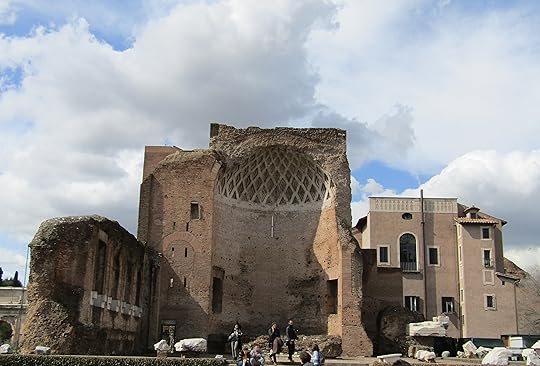
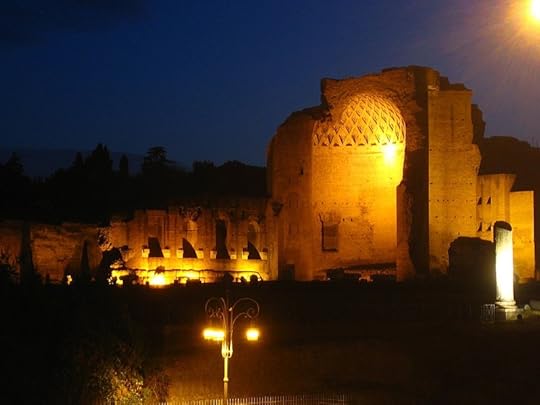 Temple of Venus at night, Forum, Rome
 Rome today is very much a city of roses – there are rose sellers all over the city and many of the roses end up floating in fountains, like the romantic Trevi Fountain.Love in Ancient RomeAlthough Paris is known as the city of love today, cities like Rome and Verona have their own romantic credentials steeped in ancient history.We might think of Ancient Rome as a more violent and military power base, but Roman emperors frequently associated themselves with ancient deities like Venus. And some even fell in love – including Emperor Hadrian, whose lover was a beauteous Greek youth called Antinous.There were many festivals devoted to love in Ancient Rome, including Veneralia (dedicated to Venus Verticordia and Fortuna Virilis), Parentalia (family love) and Lupercalia (the Ancient Romans’ version of Valentine’s Day).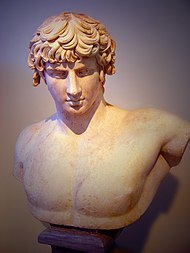
Antinous – a Greek youth who was the lover of Emperor Hadrian, who was devastated when Antinous drowned in the River Tiber.
Julius Caesar and AphroditeJulius Caesar associated himself with Aeneas, the legendary hero of Ancient Rome and Troy, as portrayed in the poet Virgil’s epic Aeneid.Aeneas was the son of Aphrodite and Anchises and as such was descended from the Trojan royal family – the Aeneid also links him to the mythological founding of Rome.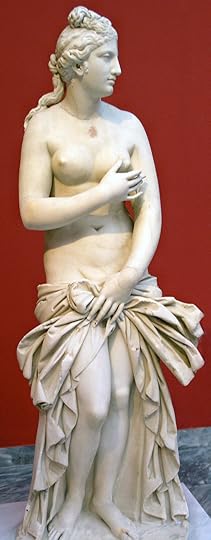 Aphrodite by Antonio Canova (Copy after Praxiteles – Marsyas (2006) CCL)Julius Caesar identifying as a direct descendant of Aeneas also made his line directly descended from the goddess Aphrodite – the epic poem the Aeneid thus adds to Julius Caesar’s own mythology, making him a direct descendant of the founders of the city of Rome.It was, however, Julius Caesar’s attempts to legitimise his succession and establish himself as a perpetual ruler and a demi-god that ended his life, when senators ambushed and murdered him in the Theatre of Pompey on 15 March 44BC, over fears that Caesar was seizing too much power and glory for himself.
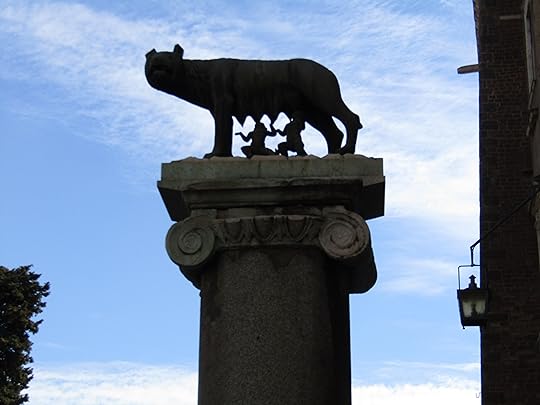
There is less frolicking with nymphs and shepherds in Rome these days, but it is still the Eternal City of romance.
Buon viaggio!
March 17, 2026
St Patrick’s Church in Rome
March 17 is known for celebrating St Patrick – and even in Rome, you can visit a church dedicated to the Patron Saint of Ireland.
St Patrick was actually not from Ireland, but was born in Britain in the fifth century AD. He himself told the story of how he was taken captive by pirates at the age of 16 and transported to Ireland to care for animals as a slave. In his early twenties, he escaped and returned to Britain and his family. However, he returned to Ireland and is credited with bringing Christianity to the country.
Although St Patrick is a prominent Catholic saint, there was not a St Patrick’s church in Rome until 1888 – even though he had been regarded as a saint since the seventh century.
St Patrick’s Rome is situated on via Boncampagni, just off Via Vittorio Veneto – home of la dolce vita. The church opened on St Patrick’s Day in 1911 and has impressive mosaics and frescoes – and a Piéta of Christ being laid in the tomb.

The church is now a popular place for weddings for Irish Catholic couples or those of Irish Catholic descent who wish to get married in Rome.

It is also situated close to the American Embassy in Rome, signifying the ties between America and Ireland, just as St Patrick’s Cathedral in New York symbolises this important relationship.
Note: Be careful about taking photos of the embassy because it is heavily guarded.
Happy St Patrick’s Day!
Buon viaggio!
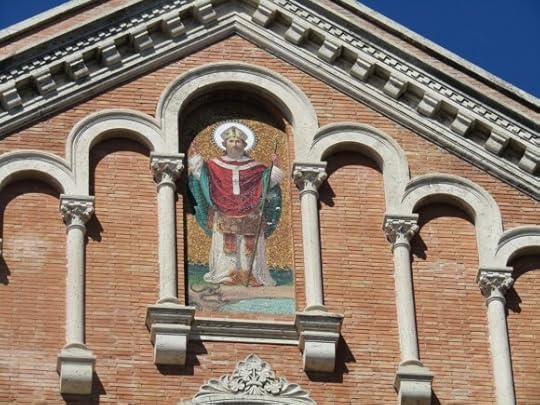

Images copyright A. Meredith, except interior view
March 15, 2026
Adam Richman Eats Italy – Rome
Ever wondered where to eat in Rome? Worry no more – although you will wonder. US foodie adventurer Adam Richman’s Eats Italy series on Discovery and Food Network UK has reached Rome, where he will guide you round some of the best eateries in the Eternal City.
Fancy the best pasta ever? Head to my very favourite street in Rome – Via dei Giubbonari – and tuck in with Adam. You will also be escorted to the site where Julius Caesar was murdered – and Via dei Giubbonari also has some lovely independent boutiques to help work off that pasta.
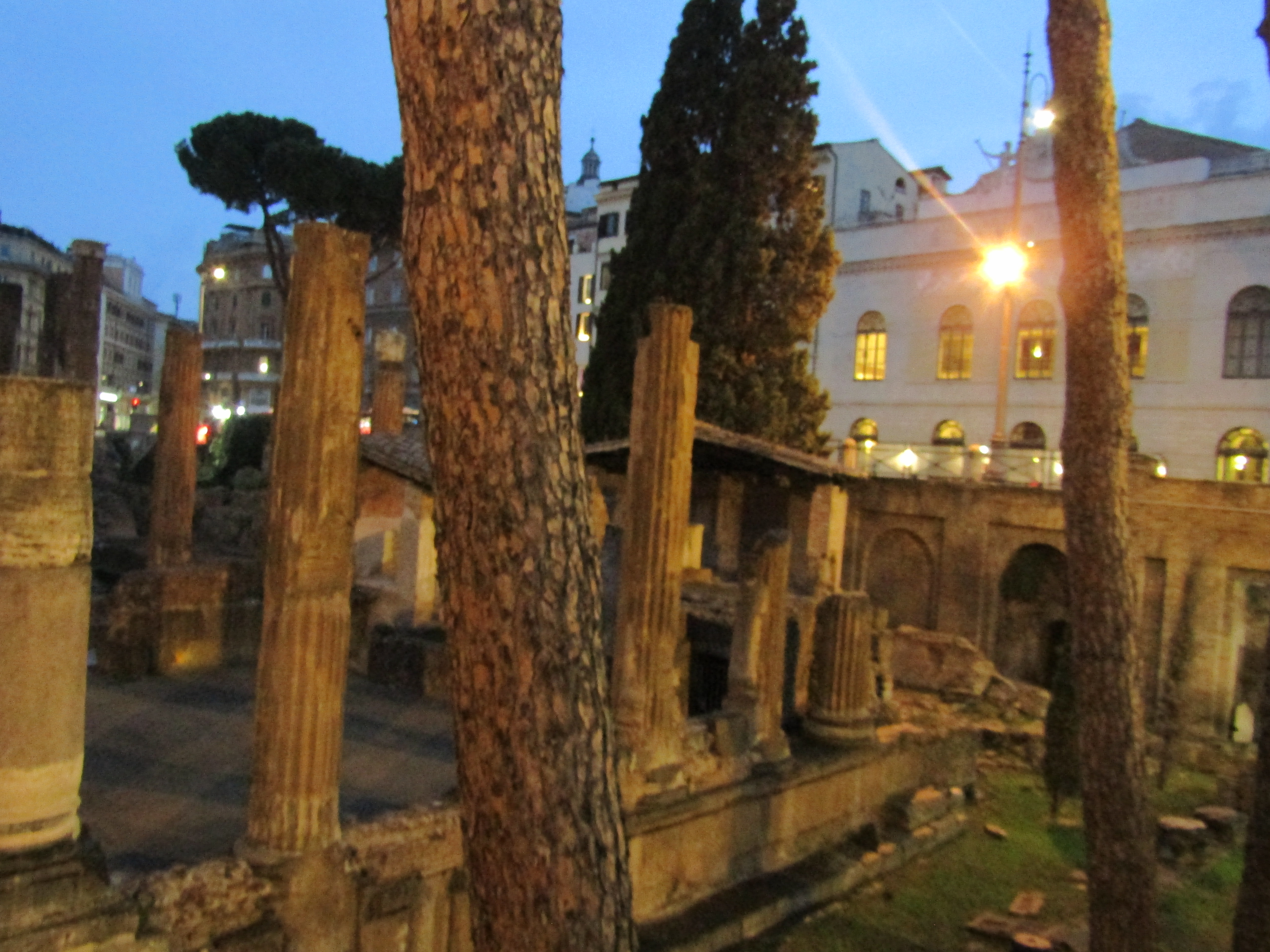
Largo Argentino, where Caesar was murdered at the Theatre of Pompeii (Image A. Meredith)
Want the best gelato in town? No worries. Adam escorts you to a gelateria with secret recipe – and then treats you to the decadent sight of cream being poured into a mixing bowl. Literally freeze frame. And that is just the start. Warning – there is chocolate involved.
We get to see Rome at its best with the sun shining – and meet the leading chefs and food experts you can seek out for yourself on your next trip to the Eternal City.

You can watch the Eat Italy series free on Discovery Plus Channel.
Warning: contains scenes of meat and fish preparation and consumption.
Buon appetito – e buon viaggio!
Feature image and image of pasta copyright Discovery Channel
March 14, 2026
Rome in Spring
Spring officially starts in Rome when the clocks go forward one hour, despite 1 March being the meteorological start of spring.
Spanish Steps and Trinita dei Monti churchAt night the temperature drops and winter seems to return. This can only improve as April begins and Easter arrives. Currently Easter displays are in full swing in the Eternal City – Babington’s window is decked out with Easter eggs and bunnies and sherbet colours are in every shop window: this season, we will mainly be wearing sugar pink, lemon and spring green.
 Babingtons Tea Shop decked out with Easter treats
Easter is a major celebration in Rome – the city is packed and the main focus is St Peter’s. If you have not visited at Easter, it is an experience and the mood is not only pious but buoyant and uplifting and a family time.
 Lent and Easter are important periods in the Roman Catholic calendar – priests wear purple to denote the waiting period before the Crucifixion and Easter
Rome is also busy with tourists at the moment – Sundays are the busiest day because tour parties arrive and locals throng the streets and shops. At night-time, the city is quieter, but there are still plenty of bars and cafes to visit – and the major sights are illuminated, so wandering around before or after supper is an event in itself.
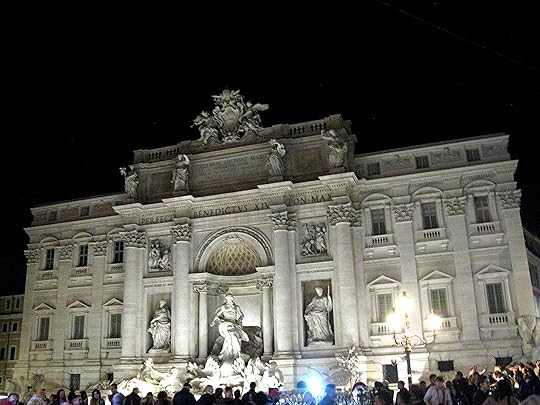 Trevi Fountain – Rome is as exciting by night as by day
At any time of the day, you will need to wear comfortable shoes in Rome, as the cobbled streets are merciless and the amount of walking opportunities endless. Any explorer’s instinct in you will come to the fore once you leave your hotel, as there is so much to see and walking the city is the best way of getting to know it. Every street holds a surprise – an undiscovered building, historical site or even a fascinating shop or workshop.
 Biblio Bar by the Ponte Umberto, near Castel Sant Angelo, is a peaceful cafe that looks like an antiquarian bookstore, with customers of the feathered variety popping into the pretty gardens surrounding it
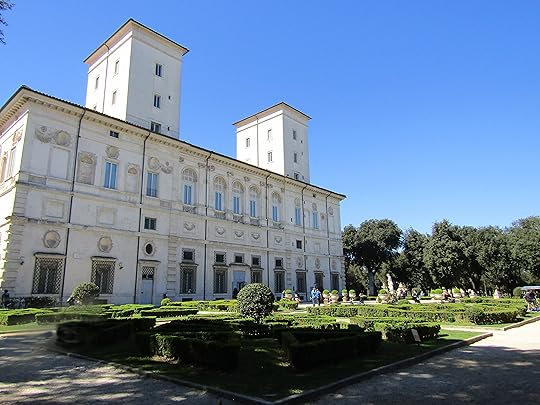 Medici Villa in the Borghese Gardens houses a major museum and art collection – book in advance and stroll through the expansive gardens and parkland, where there are plenty of cafes to sit in the sunshine
One question you might ask is about the weather: does it rain in Rome? At this time of the year, yes it does. But standing in the pouring rain on the Spanish Steps is not such a bad experience – pack a raincoat and a brolly and enjoy!
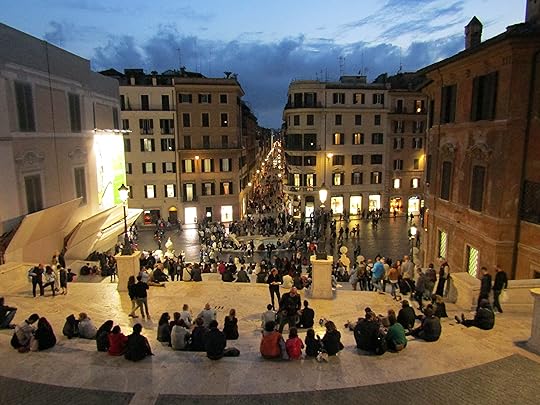 Spanish Steps on a Spring evening
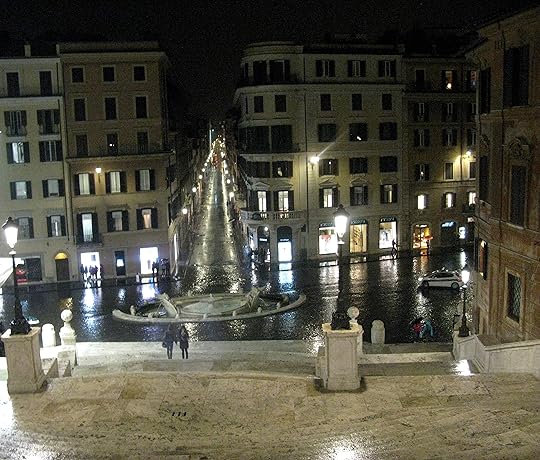 Spanish Steps in the rain
Buon viaggio!
Featured image: Palatino from Circus Maximus
All images © Angela MeredithMarch 12, 2026
Beware the Ideas of March
The Ides of March fall on 15 March and are known as the day the Roman Emperor Julius Caesar was murdered in 44BC by the senators Brutus and Cassius and their supporters, who feared Caesar’s thirst for absolute power.
Caesar was murdered on his way to a senate meeting at the Theatre of Pompey, after being warned by a seer in February that the month of March would turn out to be dangerous, but that the danger would pass on the Ides of March.
The exact location of his death is open to debate, but the entrance to Pompey’s theatre is thought to be in Area Sacra at Largo di Torre Argentino in Rome – although the curved rear wall of the actual theatre can be seen a five-minute walk away in Piazza del Teatro di Pompeii, which is near Campo De’ Fiori.
 Curved wall of theatre’s auditorium, now apartments
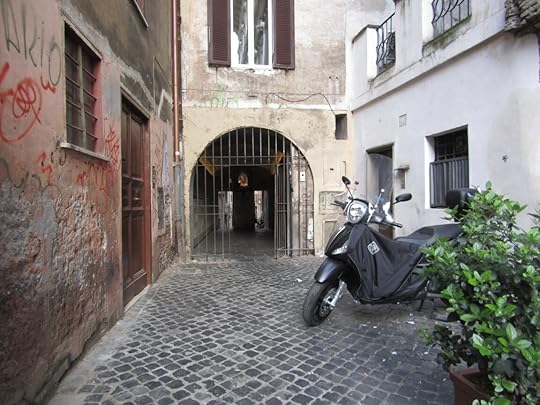 Entrance to Campo dei Fiori from Piazza del Teatro di Pompeo, through the small deconsecrated church of Santa Maria di Grottapinta
 Ceiling of Santa Maria in Grottapinta
Caesar’s wife Calpurnia had warned him not to go to the meeting because she had been experiencing nightmares – even Caesar’s doctor warned him not to go.
He was stabbed 23 times and his death sparked a war to avenge his murder. His famous last words were “Et tu, Brute” to his old friend, Brutus, although there is doubt whether, given the savagery of the attack, he would have had the time to utter this. It is thought Brutus turned against Caesar after the emperor declared himself perpetual ruler and deified himself earlier in 44BC.
 Remains of altar to Julius Caesar in the Roman Forum
Caesar’s successor was Augustus – known as Octavian – who was Caesar’s great nephew through his maternal line. Augustus, Mark Antony and Marcus Lepidus took on and defeated Caesar’s assassins by forming the Second Triumvirate.
Augustus also built a temple to Caesar’s memory. Following his death, Caesar was cremated and the temple is built on the site of his cremation. All that now remains in the Forum, however, is the altar, where people still pay their respects and leave offerings of money and flowers.
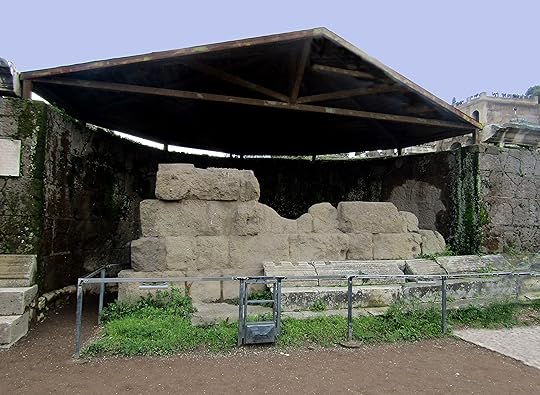 Front view of temple remains
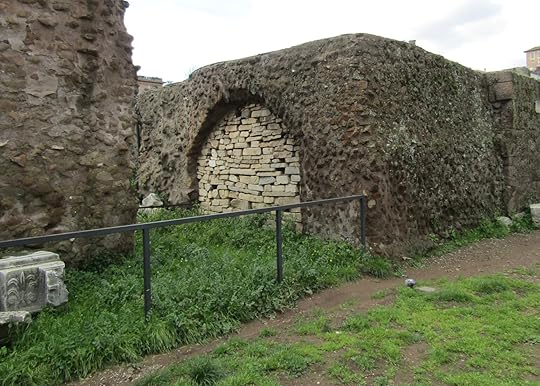 Rear view of temple remains
In Ancient Rome, the Ides of March was also the celebration of the circle of the year, known as the Anna Perenna, after the god of the circle of the year, Perenna – the origin of the word “perennial”. The celebrations involved festivities and was a family time, when people gathered on the via Flaminia on the banks of the River Tiber to hold picnics. The central shopping street in Rome, via del Corso, forms part of the ancient route of via Flaminia, leading to the Tiber.
 The first sign of spring in the Forum – March hare or Easter bunny? He was enormous and quite happy to pose for photos
These days the phrase “Beware the Ides of March” is attributed to the warnings Caesar was given before his killing – which we use as a general warning of anything that might be dangerous or a betrayal. The phrase did not originate with Shakespeare’s play Julius Caesar, as is sometimes thought – the Ides of March marked the first full moon of the New Year in the Roman Calendar and fell either on 13 or 15 March, so simply was a way of expressing the start of the New Year and only came to be a warning after Caesar’s death.
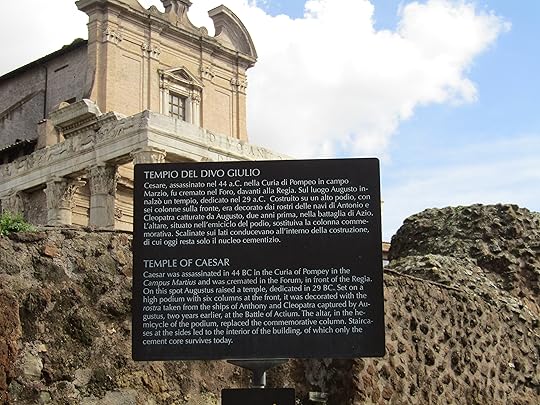
The moral of the story seems to be, if you see a bunch of angry senators heading your way, run – and beware the Ides of March.
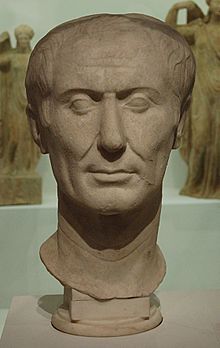 Emperor Julius Caesar
Featured Image: Area Sacra, Rome
Images copyright A. Meredith, except Caesar image.
March 6, 2026
International Women’s Day – Women in the Roman Empire
This year’s theme for International Women’s Day on 8 March is “Rights. Justice. Action. For ALL Women and Girls”, and the campaign theme “Give to Gain”.
In the Roman Empire – which existed from 27 BC to AD 476 – women were considered citizens, but were not allowed to vote or hold official positions. As a result, the knowledge we have about Roman women and their lives is often very general – ie what they would have spent their time doing, where they would have shopped, their social lives. It is only women in the Roman Empire who were members of the nobility, or the mothers and sisters of emperors or generals or statesmen, whose lives are catalogued.

The Roman Empire also spanned the globe from Rome, spreading to Britain, what we know as Europe, as well as Africa and the Middle East, so there was a great deal of diversity in the lives of women during the period of the Roman Empire.
Often noble women were used as pawns in advantageous marriages – incest was generally taboo in Ancient Rome, but the marital lives of the Romans were complicated and it was not unusual for emperors to marry three or four times, possibly marrying the widow, sister, or niece of a former ally or even enemy. Men in powerful positions would also marry their sisters off in order to secure a political or military alliance. Roman generals stationed overseas often married the daughters of local chiefs to secure Roman rule. if you have Roman ancestry, you may find you also have Syrian or African ancestors.
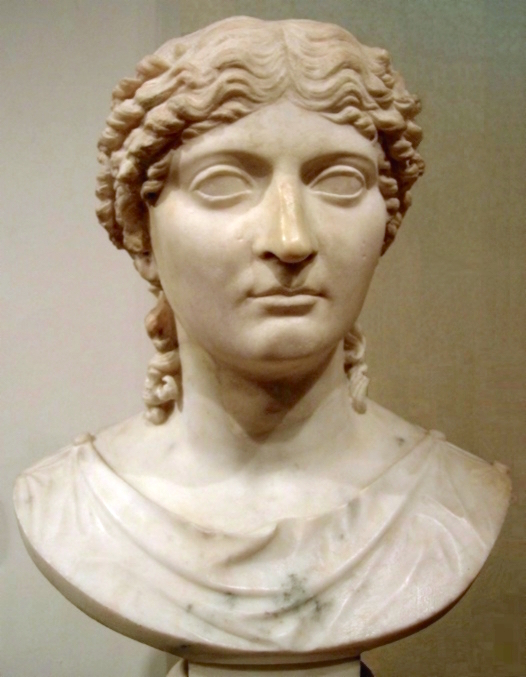 Agrippina the Younger (Image Wikipedia CCL)
Women did not rule in the Roman Empire – but they could be power brokers or seek to influence their husbands or sons. Emperor Nero famously had his mother Julia Agrippina killed because of her influence over him – it was also Nero’s general Suetonius Paulinus who crushed the revolt by Boudicca in Briton. Eventually even Cleopatra, Queen of Egypt, was defeated by Augustus – who was Julius Caesar’s great-nephew and adopted son. Cleopatra famously had an affair with Julius Caesar and bore him a son, before switching her alliance to Mark Antony in 41BC and bearing him twins. Mark Antony was a distant cousin of Caesar through his mother – and Augustus (formerly Octavian) had decided the widowed Antony should marry his sister, Octavia Minor in 40 BC. Antony complied but returned to Cleopatra and she bore him a son in 37 BC, leaving Octavia in Rome to care for all nine of Mark Antony’s children.
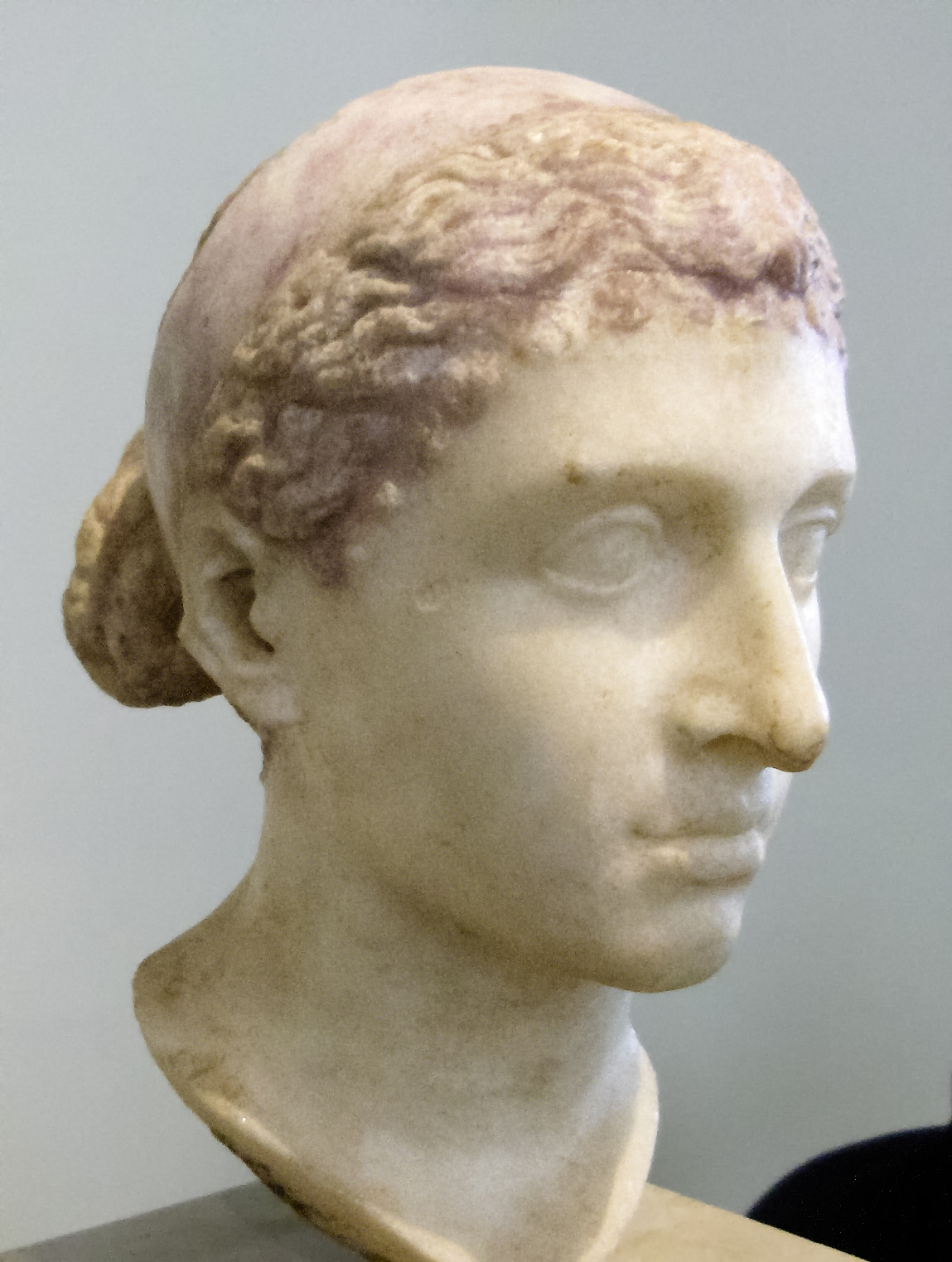 Cleopatra, Queen of the Ptolemaic Kingdom, Altes Museum in Berlin (Image: Louis Le Grand)
Just this one vignette of life in Ancient Rome shows how women were used as pawns – and also how they used their sexuality or marriageability to survive in what was a masculine and frequently violent environment.
Boudicca paid the price for opposing Rome after her daughters were raped and she set about burning Colchester and London in revenge. It is said that, like Cleopatra, she poisoned herself, but it is not actually known what happened to her. One of her last battles in London was in Barnsbury, Islington; but her last stand was at the Battle of Watling Street in AD 61 and the exact location is thought to be near Mancetter in Warwickshire – both places I have lived near and which are steeped in history.
 Bronze statue of Boudicca and her daughters, Westminster, London (Image: Wikipedia CCL)
But it is easy to see how the Roman Empire dealt with women – and especially women with power. Women were disposable once they became a problem or were no longer useful.
Daily life in Rome for women varied according to their status – women would be known by their family names or “gens”, so those from the Julio-Claudian dynasty or gens were known as Julia or Claudia. Females belonged to their fathers and husbands and thus were usually named after their fathers or one of his male relatives. Emperor Augustus named his daughter Augusta, for example. In families, daughters could bear the same name – hence Julia Major and Julia Minor – or Julia the Elder and Julia the Younger.
Females would receive a basic education – but it was envisaged that any education a girl acquired would be to benefit her husband in his business, rather than for her own benefit. Women could attend social events like festivals and gladiatorial bouts – but the most public calling they were allowed was to act as Vestal Virgins in the temples. The wealthier a woman’s family was, the better she would be educated and the more comfortable her life. Women born a “plebeian” held no authority but could lead a comfortable life if their husband ran a successful business as a tradesman. Those leading humbler lives would live with elderly family members in cramped living conditions. The great fire of Rome is said to have started in the cramped living quarters of poorer families in Rome, where the proximity of families and cooking habits posed a real fire risk. But for most girls, marriage was a certainty, whatever their position in life.
Girls could even be killed for refusing to take a husband – the usual age for marriage was in the teens or even early twenties, but the legal age for marriage for a girl in Ancient Rome was 12 for a girl and 14 for a boy. St Agnes of Rome (AD 291 – AD 304) is a virgin martyr who refused to take a husband because she said she was married to god. Born to a noble Christian family, she refused any suitor and at the age of 14 was dragged naked through the streets of Rome to a brothel. There is much myth about what happened – some say she prayed and hair grew over her body, or that any man who attempted to rape her was blinded. But eventually she was burnt at the stake – except the wood would not catch fire, so soldiers beheaded her. Regardless of how much of the story is myth and how much is true, the sheer pointless violence towards women that such stories demonstrate is horrifyingly primitive – and yet, even today, women all over the world are controlled and brutalised and denied self-expression, let alone equality and choice.
 Statue of St Agnes, Church of St Agnes, Piazza Navona, Rome (Image: A Meredith 2019)
Many of you may have seen or visited the Church of St Agnes in Piazza Navona in Rome – or attended a concert there. It is a small but very beautiful church and offers a shady retreat from the heat of Rome in summer.
Sadly, many of the attitudes towards women in Ancient Rome are not unknown today – and breaking down the barriers of a longstanding global culture of inequality between men and women is an ongoing process.
But the sexes – all the sexes, however you identify – can be of great help and comfort to each other. We should complement, not oppose each other.
On the morning of Julius Caesar’s murder, his third wife, Calpurnia, begged him not to attend the meeting where he met his death. She had been awake most of the night, after experiencing terrible nightmares that seemed like portents of disaster. But Caesar ignored her, ate his breakfast – and like many a husband, set off to work, in this case to the Teatro Pompeii for a meeting of the senate. There he was brutally stabbed to death by men he considered his colleagues, friends and allies.
If only he had listened to his wife. As Boudicca once said, “It takes skill to win a battle, but brains to win a war.”
Boudicca may have lost her last battle, but she fought to the end. Caesar also lost his last battle – by not paying attention to his wife. Perhaps we need to work together a bit more…
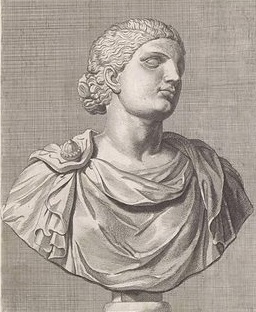 Bust of Calpurnia by Hubertus Quellinus (Image: Wikipedia CCL)
International Women’s Day dates back to 8 March 1857, after garment workers in New York factories staged a protest over their working conditions. The first Women’s Day celebration in the US took place in New York in 1909.
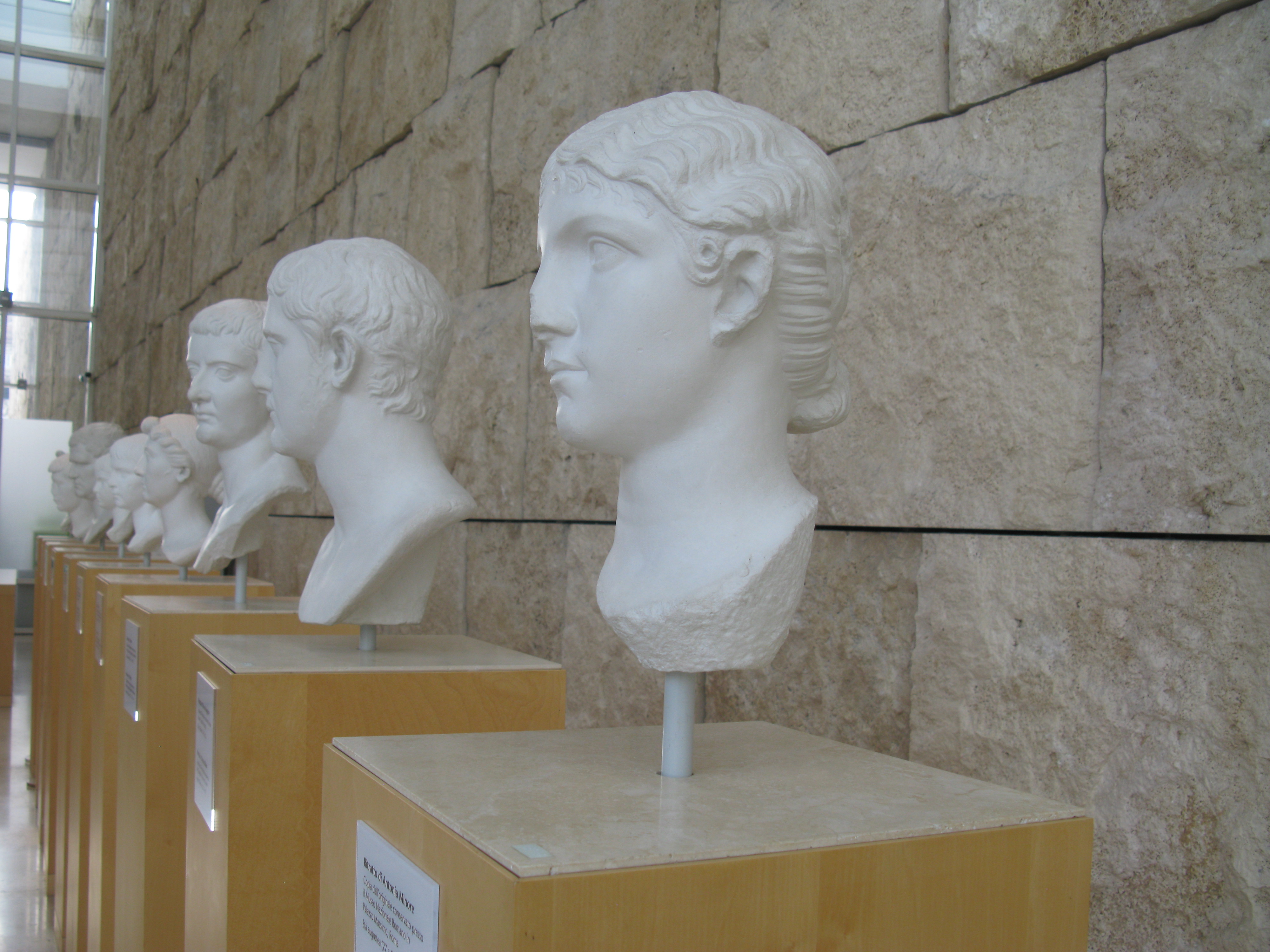 Display of the busts of Roman emperors and their female relatives, Ara Pacis, Rome (Image: A. Meredith 2019)
March 3, 2026
March 1 – start of the Roman calendar
March 1 is an important day – not only are you required to say “White Rabbits” before you speak to anyone else on the day, to ensure good luck for the rest of the year, but March 1 was also the original start of the year in the Roman calendar.
It is not known when the New Year was changed to January 1 in the Roman Empire – the Julian calendar was reformed by Julius Caesar in 46BC and this is when the change might have taken place. It is believed January was chosen because the god Janus looks both ways – ie at the old year passing and the new year approaching.
The original Roman calendar was thought to have been drawn up by the first King of Rome, Romulus and originally the Roman year had ten months and 304 days and started in March.
The updated calendar had 12 months and 355 days, but both versions depended on the cycles of the moon and agricultural seasons. Rome was originally a small agricultural settlement, making its development into one of the most successful empires ever know even more remarkable.
March is an excellent time to visit Rome if you do not like the heat and crowds of tourists. It can be rainy – but it can also be gloriously sunny with temperatures in the low 70sF. It is cool at night so pack some warmer clothes and a raincoat and umbrella. Walking round sites like the Forum is a lot easier, though – and you can at times have the site to yourself. You might even see a March hare or two enjoying the spring sunshine with you!
Buon viaggio!
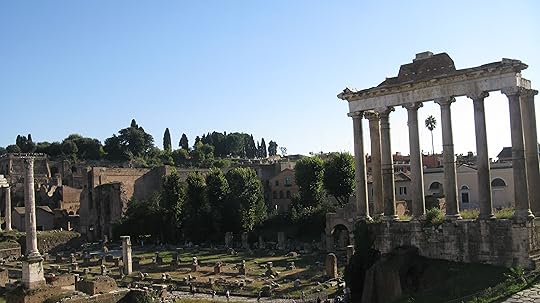
Featured image: Vittorio Emanuele II monument, which stands on Capitoline Hill overlooking the Forum. Vittorio Emanuele II was the first king of a unified Italy. The monument was designed at the end of the 19th century and was completed in 1935. It is constructed from white marble and was controversial because of its site occupying a large expanse of the ancient Capitoline Hill.
Angela Meredith's Blog

- Angela Meredith's profile
- 1 follower

