
Maria Savva's Blog - Posts Tagged "book"
The Conjure Man by Peter Damian Bellis - writing competition for readers!
I wanted to let you all know about a contest being run by a good friend and fellow author, Peter Damian Bellis, author of The Conjure Man
Any of you who follow my reviews will know that I really enjoyed this novel. Peter is offering a free pdf copy of the book to anyone who registers for this competition. Really a chance not to be missed!
All you have to do is read the book and write a personal reaction to it and you'll be in with the chance to win a great prize. See Peters website for details. Here's the blurb with all the information you'll need. Good luck!
One Million Dollar Writing Contest for Readers
Why let the writers get all the awards? We thought it was about time someone gave the READERS some awards. After all, without readers, there wouldn't be any awards! So here's your chance to win a prize for reading a book.
STEP ONE: Read The Conjure Man, a mythic novel set in South Carolina. (We'll send you a FREE pdf copy of the novel to read - all you need to do is REGISTER!). Go to www.riverboatbooks.com/page9 to REGISTER!
STEP TWO: Write a personal reaction to the novel - this can be anything from what the novel means to you, how it speaks to you, what it reveals to you, how it changed the way you thought about something, anything, spiritual things, love, sex, death, whatever you like. You can write a personal reflection essay, compare the book to other books, movies, your experiences, art, - what you write about is wide open.
STEP THREE: SUBMIT your essay. Go to www.riverboatbooks.com/page9 for details.

Any of you who follow my reviews will know that I really enjoyed this novel. Peter is offering a free pdf copy of the book to anyone who registers for this competition. Really a chance not to be missed!
All you have to do is read the book and write a personal reaction to it and you'll be in with the chance to win a great prize. See Peters website for details. Here's the blurb with all the information you'll need. Good luck!
One Million Dollar Writing Contest for Readers
Why let the writers get all the awards? We thought it was about time someone gave the READERS some awards. After all, without readers, there wouldn't be any awards! So here's your chance to win a prize for reading a book.
STEP ONE: Read The Conjure Man, a mythic novel set in South Carolina. (We'll send you a FREE pdf copy of the novel to read - all you need to do is REGISTER!). Go to www.riverboatbooks.com/page9 to REGISTER!
STEP TWO: Write a personal reaction to the novel - this can be anything from what the novel means to you, how it speaks to you, what it reveals to you, how it changed the way you thought about something, anything, spiritual things, love, sex, death, whatever you like. You can write a personal reflection essay, compare the book to other books, movies, your experiences, art, - what you write about is wide open.
STEP THREE: SUBMIT your essay. Go to www.riverboatbooks.com/page9 for details.


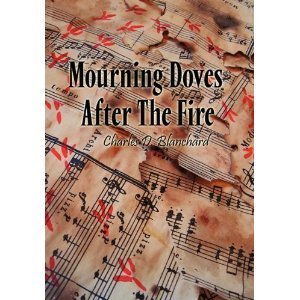
Meet Charles Blanchard, author of 'Mourning Doves After The Fire', and enter to win a signed copy!
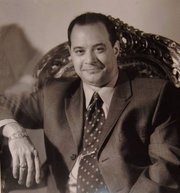
Sometimes when you read a book, you can tell that there is something special about the author, you can feel the passion they have for writing, and you can foresee great things for them. That is how I felt when I read Charles Blanchard's debut novel,Mourning Doves After The Fire.
I met Charles online when I reviewed his novel for Bookpleasures.com. He is just starting out in his writing career, but I just know he is going to be a name to look out for in the future.
Here are Charles's replies to my interview questions:
When did you first discover your love of writing?
I don't know if I can honestly say that I love writing. It is very difficult. As an architect designs a building, you have to start with a blueprint or outline and then attempt to seamlessly support the outline with as much valuable information and creative narrative as possible and hope and pray that what you have created is strong enough so the building doesn't collapse. It takes discipline and patience. The enjoyment for me comes after I have completed a piece of writing and when I know its good enough to go on to the next paragraph.
Is there a particular author, or book, that inspired you to start writing?
I was inspired by what was possible with the written word in the works of Marcel Proust and Thomas Pynchon. In the case of Proust, I found that reading just a few pages of Remembrance of Things Past, at night before retiring, satisfies my literary intake for the day as the sentences are so broad and rich yet they convey the simplest action or thought or emotion. For example, it is easy to say, "She was very attractive but very different from other actresses as she had none of the diabolical expressions that I would have expected given her chosen profession." If you had given that sentence to Proust, he would say, "I felt somewhat disillusioned, for this young lady was in no way different from other pretty women whom I had seen from time to time; only better dressed. I could find no trace in her of the theatrical appearance which I admired in photographs of actresses, nothing of the diabolical expression which would have been in keeping with the life she must have lead." Incredible usage of words.
When I read bits from Thomas Pynchon's Gravity's Rainbow, I lose the storyline, but it doesn't matter. I just enjoy the ride. Each new scene seems to have nothing to do with the preceding scene as if Pynchon wrote whatever came into his head at the moment he was writing it. Every scene is so rich and wonderfully written that the pure enjoyment of being in the hands of such talent is rewarding enough.
In your debut novel, Mourning Doves After The Fire, there are many references to classical music, is that your favourite type of music?
I enjoy many types of music including classical, pop, and light jazz. I usually play classical when I am writing as it seems to add to the creative process without being distracting.
Abby Whitman, the main character in the novel is a pianist, are you musical?
Abby is like so many who have the desire to find their place in the world. She is never a great pianist but she does come into contact with Madison, a younger girl who like Abby, plays classical music on the piano and Madison clearly has more talent. They do share that common bond between them in the summer camp. I do not play an instrument myself. I wanted to combine my appreciation for music, as it is so much a part of my life every day, into a fictional narrative with characters who also share an interest in music and in the composers of the past.
Mourning Doves is set in 1910. Historical novels are notoriously difficult to write because there is so much research involved to make sure that all the historical detail is accurate. How did you go about researching the historical data for the book and did you find it difficult?
Researching was the best part of the work. There was always something new to discover. I read diaries of doctors who lived in the time of my novel to get a sense of how they thought of themselves as medical practitioners and how they were perceived by the community they were in. And how to be careful not to allow their emotions to get in the way of their work. I found it fascinating. It was also fun to research the clothes people wore at the time. What they did for fun as well as attempt to capture the struggle of daily life and to find love, one hundred years ago.
Your novel is also part fable, as we follow the group of birds in their struggle to survive. That’s an interesting concept. What gave you idea of including the birds as characters in your book?
I have a large tree outside my apartment here in New York and each morning and night the birds wake up and chirp away with such enthusiasm they wake me up in the morning and not my alarm clock. I wonder what they could be talking about. Do they actually communicate with each other in a way that we as humans do not understand? I'm certain that they do. I believe they are chatting away about where they are going to find food and at night they are gathered again in the tree chatting away about their experiences they had that day in their search for food. They could also be talking about one of their own who may have died. That led me to think about the obstacles that animals face everyday not only in the interaction with other animals but interacting with humans. I began to read a bit of fiction where the main characters are animals that speak and think just as humans do. The idea for the primary animal character to be a mourning dove came about as a mourning dove was and is almost always on my window sill asking for food, so I leave some bread there once in awhile.
That led to research on the living habits of birds and how they relate to their human counterparts - how we look after them by feeding them, cleaning up after them, as they come to expect that there will be food waiting for them in the same place and at a certain time of day, much the same as parents look after their own children. I gave the birds a distinct voice as I felt corresponded with the setting of the story - they live in the large oak tree near the main character's home, and how they would react not only to their own daily struggles but also by placing a human character nearby who occasionally takes time to notice the birds once in awhile. In a way, the lives of man and beast are intertwined more often without realizing it.
When Abby Whitman discovers that she has cancer, her doctor tries a revolutionary treatment on her. Did you have any medical knowledge before writing the book, or was your portrayal of this based on research, or just totally made up?
Part of the book deals with the treatment of cancer that was available in 1910. Actually there was no real treatment, only surgical procedures to remove the cancer, provided it did not spread too far. I came across a doctor who did actually experiment treating cancer patients by injecting bacteria into the tumor in the hope that the antibodies would attack not only the bacteria but the tumor into which the bacteria was injected and hopefully destroying the tumor or shrinking it considerably. The patients who were deemed as suitable candidates for this procedure was if the tumor was localized, not spread out in the body. This was the most interesting part of the research.
How long did it take you to write Mourning Doves?
About two years - most of that time was devoted to research and the actual writing was about seven or eight months.
There are many characters in your novel. Did you base any of them on people you know, or are they totally fictional?
They are all fictional. I populated by book with characters who have had a life prior to their introduction into the story. Even if a character is only in one chapter, I researched what they might have done prior to their life in the book to give substance and some depth to them without digressing too much and keep the story moving.
Which one of the characters in Mourning Doves can you most relate to, and why?
The characters are so varied, and each one displays his or her own abilities according to their strengths and weaknesses including the widowed mourning dove. I would choose the two main characters as I felt I became better acquaintance with them as the story progressed. Abby Whitman exhibits courage and determination and trust in her doctor when he approaches her regarding an experimental treatment for eradicating the cancer inside her. Dr. Raymond Fletcher, who secretly cares for Abby beyond his professional capacities, comes from a broken home. His efforts to save Abby's life become his reason for living. We see the frayed relationship he has with his father when upon his mother's request, Dr. Fletcher visits his parents, whom he has not seen for a long time and an attempt is made to reconcile with his estranged father.
Do you have an tips for someone who is considering self-publishing their own book?
As this is my first published work, the idea of attempting to seek an agent who would genuinely represent a first time novelist and attempt to convince a publishing house to “take a chance” on me, was too daunting a task to even contemplate so I chose to self publish.
I knew of the POD company, Xlibris, from correspondence over the years and I did some research on their current mode of operation. When they sent me an email offering half off their publishing packages, I thought $1500 for a premium package was doable so I went with it. I must say that the final product (hardcover and softcover) was well done, nice cloth binding , etc. Xlibris is rather unusual in the sense that when you call them, you will reach their customer service, located in the Philippines. The executives who run Xlibris do not have any contact information at all, so you are essentially at the mercy, if you will, of an overworked CS rep in a distant country who has to listen to complaints all day.
The bottom line is don’t expect to make millions with a self published book. The marketing which is mostly the responsibility of the author takes tremendous effort and the expectations should be realistic. At the very least, the book is yours and you have control over every aspect of it from the editing to the design of the cover. You have to continue your passion and begin another book so you can build a nice resume of work. Who knows, maybe one day the effort will be truly appreciated, but don’t get depressed if you don’t get a call from one of Oprah’s people begging you to be on their show.
Who are your favourite authors and what is it about their writing that you like?
One of my favorite novels is Cold Mountain by Charles Frazier. The writing captures the rhythmic flow of the language of the late 19th century with such grace and beauty that reading it is like listening to a piece of music. There is also a sense of place. The description of landscape and man's relationship to the land is vivid and becomes as important a part of the novel as the main character, Inman.
Are you reading a book at the moment?
I am reading The Stones Of Summer. Its a novel by Dow Mossman, published in 1972. When it came out, it received rave reviews and then the book and author went unnoticed for 30 years until a fan of the book attempted to find out how a book that good could just disappear without a trace. He made a documentary about his efforts to locate the author. Before the documentary came out, the book wasn't even listed in the New York Times Book Review Index for 1972. The Stones of Summer is without question, the Holy Grail of modern literature. Never before have I read such descriptive passages. Consider the first paragraph. "When August came, thick as a dream of falling timbers, Dawes Williams and his mother would pick Simpson up at his office, and then they would all drive west, all evening, the sun before them dying like the insides of a stone melon, split and watery, halving with blood. August was always an endless day, he felt, white as wood, slow as light."
What do you think of ebooks?
As a book collector, I prefer the traditional hardcover book. I buy paperbacks on Amazon and I always reserve books through my local library. There is a facility that the ebook reader provides. For example, it's portable and it can carry hundreds of books in a single device as opposed to carrying heavy books around. In a way it's like having a library at your fingertips. But does one actually have the time to read hundreds of books at once? I am used to having at least a couple of books in my carry on bag. When I read a book I like to feel the pages as I am turning them. That feeling is lost on an ebook device. Also, I must admit that while browsing current fiction in the bookstores, I have been so attracted by the jacket that I purchased the book right away. One cannot add a book with a beautiful cover design to their home library if it only exists as an ebook. I also realize that we live in a world where paper is not environmentally friendly. Go figure. One cannot ignore the rise in ebook sales. We as authors who love print must accept that we live in a digital world, where eventually most of the profit we derive from our published work will come from ebook sales.
How important are reviews for you as a writer?
Reviews are important as they give varied opinions and creative suggestions on the work, often on things the author may have missed. And it does help to have that input from the reader who is after all the intended recipient of ones effort.
How did you go about choosing a cover for your book?
I designed the cover myself. I took sheet music and stained it with tea. I set fire to certain sections of the sheets to give it that burned look that it had been partially destroyed in a fire. Lastly I painted bird footprints in bright red paint over the burned sheets.
What are you working on at the moment?
I am working on a novel in which all of the characters are primarily animals with their own voices and ideas and obstacles to overcome.
Where can people buy your book?
The book is available as an ebook, softcover and hardcover on many websites including Amazon, Barnes & Noble, and Borders. Here are some links.
Amazon.com
Amazon.co.uk
Barnes and Noble
Borders
Books on Board
Do you have your own website or blog where people can read more about your work?
The book webpage is: Mourning Doves After The Fire
Thank you, Charles, for answering my questions :)
Now, here's your chance to win a signed copy of Mourning Doves After The Fire. Leave a comment below, and you'll be entered into a draw! One lucky winner will be picked on 12th April 2011.
Good luck!!
Meet Andrew Blackman, and enter to win a signed copy of 'On The Holloway Road'!
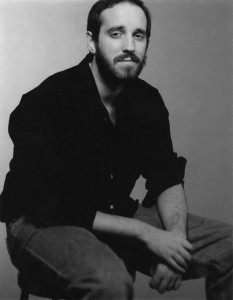
I'm thrilled to be introducing you to an award winning author, and fellow Londoner, Andrew Blackman. His debut novel, On the Holloway Road won the Luke Bitmead prize in 2008. I met Andrew through Goodreads about two years ago, and his novel remains one of my favourite books. I was attracted to the title, as I am from North London and know the Holloway Road well; in fact, I used to work in an office on the Holloway Road.
His novel is about two very different young men who form an unlikely friendship. They set off on an adventure together, full of entertaining twists and turns. The thing that struck me most about the book is that it is extremely well written; it reads as if it was penned by an author with years of fiction writing experience behind him.
On The Holloway Road is one of the books in my library that I want to read again.
If you haven't read it, you can enter a competition by leaving a comment on this blog post. Anyone who comments will be entered into a draw to win a signed copy of this award winning book. A winner will be picked at random on 10th May 2011.
Here are Andrew's answers to my interview questions:
Your debut novel, On the Holloway Road won the Luke Bitmead prize 2008. Can you tell us a bit more about that prize and how you went about entering the contest.
Luke Bitmead was a novelist for Legend Press who died at a tragically young age. His family set up the award in his memory, to give £2,500 and a publishing contract to the author of the best unpublished manuscript they received. I submitted my manuscript and won, and a year later On the Holloway Road was published. It’s an annual contest and is free to enter, so I’d encourage any unpublished writers to give it a try.
Your background is in journalism, and I understand you’ve written for The Wall Street Journal, and many other newspapers across America. How does writing non-fiction compare to writing fiction, and which do you prefer?
I prefer fiction, definitely. Free from the necessity to get the small facts right, I can explore larger truths. Journalism can often provide a very misleading view of the world – something is newsworthy because it’s the exception, not the rule. In my fiction I deal with people who are unexceptional in many ways, and in doing so I aim to explore what it means to be human, at least in this particular time and place. The Wall Street Journal was a great place to work, though. It has very high standards, and in my three years there I learned a lot about writing and editing my work, often under great time pressure. I stopped being so protective of my words and understood that they could be subjected to an almost infinite process of improvement.
When did you first discover your love of writing, and is there a particular author, or book, that inspired you to start writing?
I have always been quite shy, and struggle to express myself clearly in the heat of conversation - by the time I’ve thought of the right thing to say, it’s usually far too late! As a child I discovered that writing allowed me the time and tranquillity to come up with the right words and say what I really meant. In my early teen years I plunged into War and Peace, which took me months to read but introduced me to a whole new world. I loved the fact that as a teenager in suburban London I could live for a few hours each day in the Russia of the Napoleonic Wars. I decided that I wanted to create worlds of my own, to let other people visit them.
I read that you won the Daniel Singer essay prize. Can you tell us a bit more about that?
I won that prize in 2004, for an essay entitled “What is the Soul of Socialism?” I was working for The Wall Street Journal at the time, which is on the opposite end of the ideological spectrum, so I didn’t talk about it with my colleagues – I think I was the only socialist on the payroll, and would probably not have been on it much longer if they’d realised! But it was a wonderful experience, because it was the first time I’d been rewarded for writing something I really believed in. The essay was published in Monthly Review a year later – it’s still available online here – and I delivered a lecture based on the essay at the 2005 Left Forum at CUNY Graduate Center.
I thoroughly enjoyed On The Holloway Road. I found the characters very believable and realistic. Did you base the characters on people you know?
No, I didn’t base them on anyone I know. I’m always watching people, whether it’s friends and family or just people on the Tube, and if I something strikes me for whatever reason, I write it down in my notebook as soon as I get the chance. So I build up my characters from the physical attributes, facial tics, phrases and character traits of probably hundreds of different people, along with plenty of things I just make up.
Jack and Neil, the two main characters in On the Holloway Road, are very different, and yet they form a friendship based on their view of the world.
Which one of the characters can you most relate to, and why?
I relate to both of them, and in some ways they reflect different sides of my own personality. Jack is drifting, lonely, depressed, looking for meaning, while Neil is more energetic and boisterous, but also quite childlike and naïve in his expectations of people. They are both in their own ways looking for something more out of life, a way to live more authentically, and this is something I relate to very strongly.
Jack is an aspiring novelist. Is any part of the novel autobiographical?
Congratulations, you’ve hit on the only part of the book that is autobiographical! The road trip and the events are all fictional, but Jack’s struggles with his long, turgid literary novel are strongly based on my own experiences with a novel I was writing before On the Holloway Road, a novel that has not been and never will be published. I think I was trying too hard, and began writing On the Holloway Road as a way to escape for a while and find the enjoyment of writing again. I wrote fast, spontaneously, and completed the first draft in a month. To my amazement it was better than the novel I’d spent years struggling with, and so I abandoned the old one and felt very free as a result.
Jack Kerouac’s On the Road was obviously a great influence for your novel. What was it about that book that captured your imagination?
When I read the book at different points in my life, I got different things from it. As a teenager, probably like many people, I was intoxicated by the glamour and excitement of a road trip across the vast open spaces of America, the free-wheeling life of parties and hitch-hiking. But when I went back to it more recently, I was struck by the ultimate failure of Sal and Dean’s mission. For all the travelling back and forth across the continent, they keep ending up back where they started, with everything broken – for all the imagery of the straight open road, it’s actually quite a circular novel. I was interested in how a similar trip would play out in the more narrow confines of 21st century Britain.
Who are your favourite authors and what is it about their writing that you like?
I love Milan Kundera,Kazuo Ishiguro, andJorge Luis Borges, because their stories make me think about the world in a new way. Beautiful writing is not enough, for me – I look to books to introduce me to new worlds and to challenge my assumptions. A couple of writers I’ve come across more recently and been very impressed by are Preeta Samarasan and Chimamanda Ngozi Adichie.
Is there a book you own that you’ve read more than once?
I’ve read the Tao Te Ching more times than I can count. It’s on my nightstand and I turn to it whenever I am feeling lost or confused.
What was the last book you read?
Edgelandsby Paul Farley and Michael Symmons Roberts.
Are you reading a book at the moment?
Yes, I’m reading .A History of the World in 10 1/2 Chapters by Julian Barnes. I’m also listening to an audio book of To Kill a Mockingbird.
What do you think of ebooks?
Not much! I have always loved books, and currently don’t see an ebook offering anything that a physical book doesn’t (at least in fiction – in non-fiction or reference I can certainly see that the ability to search by keyword and to include videos or other material would enhance the reading experience). For me, novels are a respite from the world of gadgets and electronic screens. Everyone always tells me how great it is that I can carry hundreds of books with me at once, but I’ve never wanted to do that – one at a time is enough for me!
How important are reviews for you as a writer?
Reviews are vital, as they are one of the main ways that people find out about your book. For On the Holloway Road I didn’t get too many reviews in the national papers – just a short review in the Daily Mail – but all the reviews on sites like Amazon and Goodreads are very much appreciated. It’s also great to hear from readers even if they don’t write a formal review, but just email me or leave a comment on my blog.
How did you go about choosing a cover for your book?
My publisher, Legend Press, handled that side of things. I was happy with what they did – I’d probably have gone for something obvious like a road stretching off into the distance, but they had a graphic designer work on it and came up with something much darker and more abstract, which fits the content of the book perfectly.
What are you working on now?
I’ve just finished work on a second novel, called A Virtual Love, which is about love in the age of Twitter and Facebook, and am starting on a third one now.
Where can people buy your books?
It’s in a lot of bookshops – not as many as when it first came out in 2009, but check there first. They can always order it within 24 hours so it’s usually faster than online ordering. Or you can go online and order a physical copy or ebook from the usual suspects – Amazon UK, Amazon US, the Book Depository, Waterstones, etc. If you want a signed copy, you can buy it direct through my website – I’m currently offering free worldwide shipping (for a limited time, so might not be available if you’re reading this some time in the future!).
Thank you, Andrew, for answering my questions :) Your new novel sounds intriguing. Can't wait until it's released!
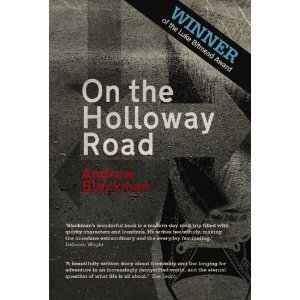
Remember, by leaving a comment on this blog post you can enter to win a signed copy of Andrew's book! This is an international competition. Good luck!!
Meet author Marty Beaudet and enter to win 'By A Thread' or 'Losing Addison'!

I met Marty Beaudet online on Bestsellerbound.com. When he first joined us on that forum, he was a newly published author, having just finished his debut novel By A Thread. He was frustrated because life as an independent author was not working out as he had hoped. Why were people not buying his book? Why wasn't he a bestselling novelist yet?
Some of us who had been networking and marketing our work for years, and still selling about 1 book a month on average, wondered whether he was just not cut out for this self-published road. Was he expecting too much? Did he really have the passion to carry on writing even when months could go by without a book sale?
Over the few months that I have known him, I have grown very fond of Marty. He does have drive and passion. He knows he has an amazing talent as an author. When I recently read his novelette, Losing Addison, there was no doubt in my mind that this author is something special.
As well as answering my interview questions, Marty has very generously offered to give away a copy of each of his books! All you have to do to enter the giveaway is leave a comment. Random winners will be picked on 15th May 2011.
Here are Marty's answers to my interview questions:
Your debut novel, By A Thread is a political thriller that has been getting some great reviews. It’s been described by many reviewers as a conspiracy novel. I haven’t read it yet, and I don’t usually read political thrillers. What would you say to a reader like me to persuade me to read it?
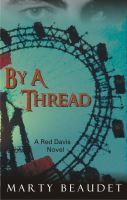
My decision to write a book stemmed, in part, from my dissatisfaction with many of the books I had read. I like the puzzle-solving aspects of mysteries, suspense, and thrillers, but too often those kinds of books lack any real human component. The characters are often cardboard cutouts that seem to be used over and over again. Romance in such books is frequently trite, a cynical nod to the fact that sex sells. The confines of genre labels seems to assure that mainstream novels never stray far from the "successful" template, but it also makes them boring and predictable, in my opinion.
In writing By A Thread, I was determined to tell a story that was as much about the personal lives of the characters as it was about the intrigue in which they were engaged. What's more, I chose characters who were at times antithetical to the stereotypes readers have come to expect: Mormon missionaries, gay characters, Muslims who are NOT terrorists, self-doubting intelligence agents, Americans who are NOT all good guys, a strong female leader, and so on.
Alas, in order to market the book, even in the self-publishing realm, I am forced to assign a genre label to it. So I have settled for calling it a "political thriller with a heart," in order to convey the idea that the characters' personal relationships are every bit as urgent as the suspected conspiracy that drives them to action.
How much research went into writing ‘By A Thread’, and how long did it take you to write?
A huge-—and probably inordinate—-amount of research went into the book! I wrote it over an eight-year period, with a three-year health-induced hiatus in the midst. I love novels whose details are so explicit and accurate as to both teach me something about the real world in which they purport to take place, and to keep me guessing as to which parts are actually true. I'm fond of saying, "If the reader can tell where truth ends and fiction begins, the writer hasn't done his job." Consequently, my research was so detailed as to describe the actual furnishings of the actual apartments in which the characters live! I used real-life train schedules to determine arrival and departure times. If you were to go to Vienna today, you would be able to visit every venue in the story and see it exactly as I described it. In addition, the hypothetical political crisis in the book is based on real-life disputes about the U.S. Constitution, and the book's intelligence activities are grounded in reality, as well. One appreciative reader, himself an intelligence veteran, told me he knew immediately that I had an intelligence background when he read the book.
Your latest book, a novelette, Losing Addison, was inspired by a dream. Can you tell us a bit more about how that came about?
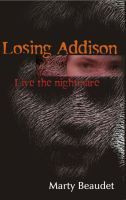
One morning in March I awoke, struggling with myself and the bedcovers. I had been having a nightmare. As I lay there staring at the ceiling and trying to come fully awake, I drifted in and out of the nightmare again. Each time I did so, more and more details of it became clear to me. My waking mind would ask a question, and my dreaming mind would answer it. It was so explicit as to seem an actual memory to me, as though I hadn't dreamt it, but lived it at some time. Finally, I could contain myself no longer; I flew out of bed, skipped breakfast and the bathroom, and began writing. I wrote only about 1,000 words before I was exhausted. I wanted to know more, but I felt I shouldn't push myself or the story would become a contrivance. Each day after that, for fifteen days, I wrote an additional thousand words and posted it to the new Losing Addison blog I'd begun. I didn't know where the story would go each day until it flowed out of me. I was so in awe of this process that I didn't even go back and read what I'd written until the entire thing was done, for fear that somehow my conscious efforts to fiddle with it would pollute it!
I was hooked on Losing Addison from the start. It was written as an online serial, unedited, but it reads like a fine-tuned psychological thriller. It’s almost as if you were writing something from memory. Are any of the characters or events in Losing Addison based on real life?
My experience with dreams—-as I am sure is common with others—-is that events are rarely linear and details come in and out of focus. For instance, my mother in one moment will suddenly be my sister in the next; or I'll be in San Francisco in one instant, then suddenly in Portland. This dream was no different. What was different was the progressive nature of the relationship among the characters and events. This provided a framework over which I laid details based on my own life experiences. Am I making any sense?
It's like this: suppose I tell you to imagine a time when you argued with a sister and ended up throwing something at her. Then I tell you to write it down. As you do this, your mind will recall details of the setting—location, time, persons present, what they were wearing, what was said, what you threw—-information that I didn't provide you. My writing process was similar. The dream told me what the gist of the event was, but not the details. As I attempted to describe it, pictures would pop into my mind that were a product of actual persons, places, and things in my own life.
Oh, one other thing: when my mother was pregnant with me, I/we were supposed to be twins. My four older siblings had been allowed to suggest names for the twins. They were all fans of the Mickey Mouse Club on television at the time, which featured a couple of twins on the Triple-J ranch, named Spin and Marty. When I came out alone, I'm fortunate that they named me Marty, not Spin! (Though I've considered using that as a pseudonym!)
Which one of the twins from Losing Addison, Addison or Les, can you most relate to, and why?
They are both me! I see in their struggle my own inner conflicts, especially in reconciling my erstwhile Mormon faith with being gay. There's my overly analytical, second-guessing self in Les, and my devil-may-care rebel in Addison.
Is there a particular author, or book, that inspired you to start writing?
Generally speaking, no. As I said earlier, many of the books I have read inspired me by leaving me wanting more, or a different turn of events than the author had provided. As I read these, I often found my mind wandering and rewriting the story with a different outcome. In particular, I found the absence of any gay characters like myself to be disappointing. We all want to jump into the skin of a book's character once in a while. On the other hand, most books labeled "gay fiction" are pulp or borderline pornographic. I'm no prude by any means, but that's not what I'm interested in reading. I want intellectual engagement. Anyone who can do that gets my book-buying dollar.
The one author who influenced me the most at the time that I started writing was Dean Koontz. In particular, From the Corner of His Eye really grabbed me. It was an ordinary story about ordinary people caught up in a crime. But slowly a paranormal element began to expose itself in a completely unexpected turn of events. I thought it was brilliant! It crossed genres. Crime, mystery, thriller, paranormal—-all rolled up into one. I thought, yes, I can do that too!
When did you first discover your love of writing?
Very late, indeed. In high school I took a creative writing course and hated it. The idea that creativity could be yoked to assignments and schedules seemed antithetical to me. I succeeded only when I wrote about my own experiences. But I never made the connection back then that non-fiction could be made into fiction in the hands of a skilled storyteller.
In my thirties I became a political activist in San Francisco and in the Mormon community. This necessitated putting feelings into writing to promote or defend various causes. I found that my passion enabled me to do this effectively and I became a spokesperson for several causes over the next decade. I was eventually hired as a staff writer and editor for several magazines, but had still not written fiction. As an avid reader however, I found my longing to write a novel growing over the years.
Do you have any tips for someone who is considering self-publishing their own book?
Yes. Beware of other writers who offer you tips! Truly, I found an overabundance of advice in the online writers' community when I was introduced to it last year. Much of it was contradictory and lead me in so many directions at once that I considered giving up completely. You might recall that when I joined Bestsellerbound my posts were so full of frustration and complaints that I got people's hackles up! (A shoutout to Joel Kirkpatrick who so graciously took me aside and cleaned up my act!) I was doing everything I'd been told on one hand, only to find that I was annoying people on the other hand.
I'm still not sure of what I'm doing! Do I tweet too little or too much? Am I required to blog about things other than writing? Or do I bore and annoy with off-topic posts? Are mentions of my books considered unwanted advertisements or useful links to something of interest to potential readers? I never know the answers to these things. And when my Twitter mentions and retweets dry up, and blog hits fall to zero for a week, I'm always second-guessing myself, wondering who I've offended and how!
So, no, I'll leave the advice-giving to those who have come before me. I'm flying by the seat of my pants out here!
Who are your favourite authors and what is it about their writing that you like?
Well, I've already described Dean Koontz. But even he has trailed off into commercial schlock at times, likely the result of deadlines and production quotas imposed by traditional publishers. I'm not a die-hard fan of anyone in particular. I come across books I love and books I can't finish. It doesn't seem that the author is any guarantee of the outcome. I read Stieg Larsson's first "The Girl Who…" book, but couldn't finish the overly dense, excruciatingly inner-monologue-bound, second one. Khaled Hosseini, on the other hand, thrilled me with both The Kite Runner and A Thousand Splendid Suns I read The Kite Runner twice. I've liked books as random as Bel Canto (Ann Patchett) and Ballad of the Whiskey Robber: A True Story of Bank Heists, Ice Hockey, Transylvanian Pelt Smuggling, Moonlighting Detectives, and Broken Hearts (Julian Rubenstein). I absolutely loved Middlesex (Jeffrey Eugenides), and I thoroughly enjoyed Kim Stanley Robinson's "Mars Trilogy," a gift from a friend, and the first fiction I had read in nearly a decade prior.
Since becoming an indie writer, however, I'm now committed to buying only indie titles. There are too many gems out there that I'll never have time to read. I don't need to risk formulaic commercial novels any more. I will still read a mainstream book that is loaned to me however, if it comes with a recommendation from family or friends.
Is there a book you own that you’ve read more than once?
The Kite Runner, Lord of the Rings, Ballad of the Whiskey Robber, The Russians, From the Corner of His Eye, On the Road,Tales of the City, and probably others I can't remember.
What was the last book you read, and are you reading a book at the moment?
I'm currently reading both Jason McIntyre's Thalo Blue and Darcia Helle's The Cutting Edge. While driving I'm also listening to Lifeguard by James Patterson and Andrew Gross, loaned to me by a neighbor. I don't remember the name of the last book I finished! It was something I won on fReado's Bookbuzzr. Prior to that was Josh Bazell's Beat the Reaper.
What do you think of ebooks?
A curse and a blessing! I don't own an ereader and can't afford one. We live on very little, as I have chosen to be a writer and only work part time. As a reader I'm frustrated by the number of books by indie authors (such as those mentioned above) that aren't available in print. My only guaranteed reading time each day is at bedtime. I can't hold my computer to read ebooks in bed! Other reading opportunities are in the bath and on public transit, both places where a print book is more practical than a computer. Similarly, none of my closest friends and neighbors with whom I share reading interests own an ereader or iPad. Consequently, I can't share with them those downloaded indie titles I know they'd love.
On the other hand, as a writer I'm grateful for the opportunity ebooks give me to circulate my writing among a much larger audience than print books alone can offer. My recent novelette, Losing Addison, would never have been published in print by a traditional publisher. The cost of producing it, even as a self-published title, likely means that it will find its greatest audience in its ebook form.
Personally, I will never abandon print books. I love to hold them. And, as a graphic designer, I thoroughly appreciate good cover art. It's about the only art I can afford now! I believe that down the road, print books will experience a resurgence, just as vinyl has in the music world.
How important are reviews for you as a writer?
Would I sound too pathetic if I said "they're everything" to me? It's true, for this reason: Storytelling, like a conversation, requires two parties. I have no interest in a carrying on a monologue. I don't write to hear myself think. I write to share. Even if there were no monetary recompense for writing (and oftentimes there isn't when the books are balanced), my greatest joy is to read or hear and share the excitement of others as they discover the story that has captured my imagination in creating it. And, while I have been fortunate thus far to have had only one bad review (a Mormon who thought By A Thread was "not an LDS book"), I feel that constructive criticism will help me refine my work in the future.
How do you go about choosing a cover for your books?
I have been a part-time graphic designer for twenty-four years, so I do all my own cover work, including photography. Since the City of Vienna is a character in By A Thread, I chose an iconic symbol of that city as a focal point for the cover: the Riesenrad (Ferris wheel) at the Prater amusement park on the Danube. It has the added cachet of being an iconic symbol of the movie "The Third Man," about intrigue in post-war occupied Vienna. What better choice for my political thriller?
The cover of Losing Addison came to me as readily as the story itself did. I created it in about thirty minutes, starting with a photograph I had taken of an acquaintance several years ago. I knew it needed to be dark and mysterious, and tweaked it for that effect. The idea of a face over a face stems from the interaction of twins in the story. Creating covers is one of my favorite parts of the process! I'd love to do it for other authors, as well.
What are you working on now?
Ack! I'm going in so many directions at once now! Last November I sat down to write an entirely different, coming-of-age-in-the-high-desert story. But I had barely begun when I acceded to the requests of several fans who wanted me to write a sequel to By A Thread. The cynical, marketing-oriented part of my brain said, "strike while the iron's hot!" But I got 20,000 words into it and hit a wall. Like By A Thread, The Third Token has complex plot threads that gradually interweave. I found that, while I loved writing my protagonist, the creation of a villain was dragging me down. I don't like to get into evil people's heads! It doesn't come easily to me.
Losing Addison was such a refreshing and unexpected break from The Third Token, that I decided to explore some other ideas that were bubbling to the surface. I wrote three chapters of a new psychological thriller, but balked when I delved further into Jason McIntyre's Thalo Blue, because I found too many similarities between the two, even though I'd written mine before reading his. I then began another project, but am second-guessing myself on it now because it would likely find only a limited audience. I'm wondering if I should go back to my other projects first. As you can see, there is no method to my madness!
Where can people buy your books?
Readers wanting print editions can get the best deal by watching for my oft-tweeted discount codes and going to CreateSpace to use them. Currently, code DKAYY424 offers a $3 discount on By A Thread.
Code NGD939PC offers $2 off of Losing Addison.
Amazon doesn't allow author discounts, but has the advantage of free or combined shipping if you're buying multiple books. Both By A Thread and Losing Addison are available for Kindle at Amazon, as well.
Losing Addison is also available in all digital formats at Smashwords. (Readers of this blog may use code EW27M for a 50-percent discount there through the end of May.) By A Thread is on Smashwords, as well.
European buyers can also purchase my ebooks from XinXii (the price includes a VAT tax).
Do you have your own website or blog where people can read more about your work?
By A Thread has a website that offers reviews, as well as insights into both my background and the novel's, including links to the real-life counterparts to the story's elements and characters. There is also a By A Thread blog where I post related stories, occasional contests, and discount offers. Losing Addison has its own blog, where I post reviews and discounts.
Thank you, Marty.
Remember to win a copy of either By a Thread or Losing Addison, leave a comment below. Good luck!!
Meet Mark McKenna, author of The Word Gang, and enter to win a copy of the book!
[image error]
I recently met Mark McKenna on Goodreads when he approached me for a review of his book The Word Gang. The thing I love about reviewing is that sometimes I get to read books that I wouldn't have otherwise chosen to read, and then I absolutely love them. That's what happened with The Word Gang. It's a Young Adult book, that can be enjoyed by young and old alike. It's one of the best debut novels I have ever read.
I had to invite Mark here to introduce him and his wonderful book to you.
As well as agreeing to answer my interview questions, Mark is also giving away a copy of the book to one lucky reader of my blog. All you have to do is leave a comment here to enter! A winner will be picked at random on 20th May 2011. It's an international competition.
Here are Mark's answers to my interview questions:
The Word Gang is your debut novel. I was fascinated to read on your website how the story evolved over a period of 17 years. The idea came to you in a dream, and you were hesitant about writing it as you felt you were not a writer. What have you learnt about what it means to be a writer over your 17 year journey?
The first thing was how difficult it is to write. My first version was 122,000 words long, containing every amateur mistake a beginner could make. I loved it. My next version was 96,000 words; it actually had more details than the earlier one. I loved it, too. The came 86k, then 76k, then 73k and the final book was 71,000 words. Each version came after professional editing, after more experience writing, writing other novels in between, etc. Each version came at the expense of my ego and with a certain amount of pain, or at least "getting used to" whatever shortcoming had been revealed. And I'm still not sure about what I've written, although reviewers so far have been kind.
At the end of your book, you call it ‘an imperfect labor of love’. I was surprised to read that as I could see nothing ‘imperfect’ in it. Can you explain why you feel it is imperfect?
Every time I open the book I find something I want to change. One good thing about finally publishing a book — it puts an end to all that.
The Word Gang is the story of three kids in school who start using big words to be disruptive. How did you go about choosing the obscure words that the characters use in the novel?
I had fun. I own all the dictionaries mentioned in the book (including the moldy one) and I love looking through them. I searched for words hardly anyone would know. I felt it would add to readers' enjoyment to be a bit mystified. The Word Gang was partly written to explore words, big and small, as well as the intention behind their use.
I also like to revive obsolete words — it’s like finding a valuable antique in a junk shop, taking it home, and putting it out for people to enjoy. “Covenable,” for example, means “agreeable,” “appropriate,” or “suitable.” It comes from "coven" originally an assembly, meeting, or company. Only later (1600s) was it used for a gathering of thirteen witches. It's related to the word "convent" as well.
I think the book is a very realistic portrayal of how teenagers might behave. Did you base the teenage characters on any real teens?
No, I really don’t know where my characters came from. It’s a mystery. I’m thinking of calling my short story collection Who Are These People? because that’s the way I feel about them. Of course, I was a teen myself a while ago, as Mr. Spinoza says, “back when God was a boy.”
Mr. Spinoza is a loveable eccentric character who speaks many languages. Do you speak more than one language?
I studied Spanish and German in high school and college. At one point I wrote papers in both languages, now I'd need a dictionary to read them.
Aside from the big words, there are a few historical references and words spoken in other languages in the book. How much research did you have to do, and how did you go about it?
I love the Internet. All the things I needed (the specs on BD's 1968 Camaro Z-28, for example) were there and waiting. Some knowledge I'd just picked up along the way. I've worked on my own cars and held a lot of jobs we would call "grunt work" in the US. In the first paragraph of The Word Gang the lines -- The lark’s on the wing. The snail’s on the thorn -- are part of a long poem called Pippa Passes by Robert Browning. The last lines of that section of Browning’s poem -- God's in His Heaven, All's right with the world -- are spoken by Mr. Ralston near the end of my book. I used that allusion because I felt there was some connection between Kalisha and Pippa, a certain innocence that protected them from, and changed, their worlds. I've always liked the poem Thirteen Ways of Looking at a Blackbird by Wallace Stevens so I included it, too. I admire the French photographer Robert Doisneau. The book of his photographs that Mr. Spinoza shows Kalisha (Three Seconds from Eternity: Photographs) is a real book that I own. (I mention “real” works of art, because I also made some up!) It was fun, throwing in things I knew and liked, including a very tasty recipe for lasagna.
Which of the characters in the book can you most relate to and why?
I relate to them all. I like Mr. Spinoza's secret studying -- it's sort of like the writer's life. I always felt out of place at school so Kalisha, BD and Sahmbaht all act out parts of my rebellious nature. Of course, they're bolder than I was, and somewhat quicker off the mark. I always think of the perfect comeback a day too late.
I saw from the back cover of your book that the Chief Editor of the Oxford English Dictionary read and enjoyed the book. That’s quite an endorsement. How did he come to read it?
Kalisha’s life is transformed after she is given the Compact Oxford as a gift. Because of the connection to the OED I wrote to John Simpson and asked if he would read it. I think that was the 86,000 word version. He did and offered suggestions, which I followed. He was, I would say, ‘cautiously supportive’. (My characters use words improperly at times, and not always with the noblest of intentions.) Then I asked John if he would look at my final version. He said yes again. Having him read my book was one of the main reasons I was able to persevere over the years. I can’t tell you what it meant to have someone with his status in the world of words offer comment and support. It was HUGE. I feel very fortunate and grateful.
Your book is being promoted as a young adult book (although I think that adults will enjoy it just as much as teens), what in your mind is the target age group for your book?
When I began writing the book I didn’t even know there was such a thing as “Young Adult”— that’s how naive I was. At one point a literary agent said to me, “This book falls squarely into the Young Adult category.” I said, “Fine.” I thought the book would be suitable for ages 14 and up, but a 12 year old was one of my first readers and wrote a great review. Young readers are very sophisticated nowadays.
Are there plans for a sequel to The Word Gang?
I’m about three chapters into a sequel called The Word Gang Rides Again. It’s a murder mystery that’s solved, in part, by good vocabulary. None of my main characters are “the victim,” but someone in The Word Gang is... *suspenseful organ music*
Do you have an tips for someone who is considering self-publishing their own book?
The advice I would give is the advice I ignored: Learn something about marketing your book. For example, many review sites will only take a book BEFORE it’s published, three to six months before. I didn’t know that. I was so wrapped up in producing the book I let all that go.
Who are your favourite authors and what is it about their writing that you like?
I like Isaac Bashevis Singer. I like the easy way he tells a story; his voice is beautiful. My character, Mr. Spinoza, is named after a character in one of his short stories, The Spinoza of Market Street. I like Sigrid Undset, who wrote Kristin Lavransdatter. That book felt so realistic I thought Undset was somehow mystically channeling 13th century Norway. Later I found out her parents were archeologists or anthropologists, and they specialized in that era. Her childhood home was filled with artifacts.
I like science fiction and mysteries.
P.G. Wodehouse is a favorite. His similes are delightful; Jeeves and Bertie Wooster are immortal gods to me. Mark Twain...
When I visit the library I always get some brand new books and then wander through the older fiction. Rumer Godden, is a lovely writer for example. Nathaniel Hawthorne. I recently read The Blithedale Romance. What I like about Hawthorne is the fact that I always feel a modern sensibility peeking from behind the archaic language. And Charles Dickens— I just re-read Great Expectationson my phone! I read it in high school but I found it much more enjoyable as an adult. I likeScarlett Thomas. The End of Mr. Y and PopCo. She’s a quirky writer and I like quirkiness in all forms. The more I think about your question, the more writers I could name. There was a book called The Theory of Everything I liked, by Lisa Grunwald. Leo Tolstoy. My father gave me his collected short stories when I was a teen and it made a big impression. Independent People by Halldór Laxness.
Is there a book you own that you’ve read more than once?
Kristin Lavransdatter, two or three times. The hobbit books, three or more times. There’s a wonderful book called Alaska Man's Luckby Hjalmar Rutzebeck. I read that several times. Out Stealing Horses by Per Petterson, twice. Roughing It by Mark Twain, two or three times. I like books that transport me to a different world, or a different time. You read a book from the 1700s and think, “Ah, a man, just like me.” Many modern books are like modern movies: consumed. I consume them myself, but they leave no lasting impression. Tasty, but like lunch four days ago.
What was the last book you read?
I just finished Judas Unchained, a sprawling “space opera” by Peter F. Hamilton. Quiet Days in Clichy by Henry Miller. The ITCH : A Novel by Benilde Little and Rembrandt's Hat, stories by Bernard Malamud.
Are you reading a book at the moment?
I’m reading two: Oblivious by Neil Schiller and Green by Ted Krever. I met both of these authors on the Goodreads website and we exchanged books via email. Very different books, but they’re both as good as anything being offered by traditional publishing. They are real finds.
What do you think of ebooks?
I’m ambivalent. When I read Great Expectations on my phone I thought it was hurting my eyes. It was fun though, to be able to take out the phone every time I had a few free minutes. It opened to the right page every time, smart little phone that it was. The process gave me a sense of freedom similar to the freedom I felt as phones evolved. First it was long cords (always tangled) then you could talk in your backyard, then with modern cells, almost anywhere. With ebooks I can read in more places, and with more ease.
I don’t own a Kindle or a Nook, but I have nothing against them. I do like paper books and I love libraries -- but if the times have to change it’ll be good for the trees.
How important are reviews for you as a writer?
I’ve had only three reviews so far. I have about five or six more coming out. I do enjoy seeing what others take away from my writing, especially people who don’t personally know me.
How did you go about choosing a cover for your book?
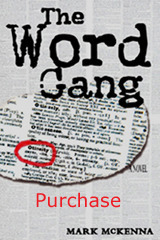
I wanted the title to be in a funky font that would contrast with the neat type of a dictionary entry. I chose the word “otiosity” because “otiose” is the first word Kalisha learns and uses.
I first learned the word “otiose” before I started writing The Word Gang. I was making tofu sandwiches for Wildwood Natural Foods in Fairfax, CA in the early 80s. Great sandwiches; we overdosed the entire San Francisco Bay Area on soy. We had a mock tuna salad called “Tofunofish.” We also made rows of seitan submarine sandwiches we called “The Wheat Meat Fleet.” For the tempeh sandwiches we cut out a center portion of a tempeh burger so a special sauce could be added. This left us with “otiose wads of tempeh,” a phrase we all used and enjoyed. So the word was a “natural” for the cover of my book. (Ouch, sorry.)
What are you working on now?
I have a completed science fiction novel called The Borzoi Suite. I’d like to put it online as a collaborative project -- invite other artists to add text or pictures -- a sort of wiki book. I have a number of short stories I’m thinking of publishing. One is a series featuring the same character, Frankie P. that could stand alone as a book. Then there’s the sequel to The Word Gang.
Where can people buy your book?
The book’s website has all the links to buy, more information, and a link to read a few chapters.
The Word Gang
Do you have your own website or blog where people can read more about your work?
On Facebook: The Word Gang Fan Page
On Goodreads: Author Page
Thanks, Mark :)
Remember, you can enter to win a copy of The Word Gang by leaving a comment below. Good luck!
I recently met Mark McKenna on Goodreads when he approached me for a review of his book The Word Gang. The thing I love about reviewing is that sometimes I get to read books that I wouldn't have otherwise chosen to read, and then I absolutely love them. That's what happened with The Word Gang. It's a Young Adult book, that can be enjoyed by young and old alike. It's one of the best debut novels I have ever read.
I had to invite Mark here to introduce him and his wonderful book to you.
As well as agreeing to answer my interview questions, Mark is also giving away a copy of the book to one lucky reader of my blog. All you have to do is leave a comment here to enter! A winner will be picked at random on 20th May 2011. It's an international competition.
Here are Mark's answers to my interview questions:
The Word Gang is your debut novel. I was fascinated to read on your website how the story evolved over a period of 17 years. The idea came to you in a dream, and you were hesitant about writing it as you felt you were not a writer. What have you learnt about what it means to be a writer over your 17 year journey?
The first thing was how difficult it is to write. My first version was 122,000 words long, containing every amateur mistake a beginner could make. I loved it. My next version was 96,000 words; it actually had more details than the earlier one. I loved it, too. The came 86k, then 76k, then 73k and the final book was 71,000 words. Each version came after professional editing, after more experience writing, writing other novels in between, etc. Each version came at the expense of my ego and with a certain amount of pain, or at least "getting used to" whatever shortcoming had been revealed. And I'm still not sure about what I've written, although reviewers so far have been kind.
At the end of your book, you call it ‘an imperfect labor of love’. I was surprised to read that as I could see nothing ‘imperfect’ in it. Can you explain why you feel it is imperfect?
Every time I open the book I find something I want to change. One good thing about finally publishing a book — it puts an end to all that.
The Word Gang is the story of three kids in school who start using big words to be disruptive. How did you go about choosing the obscure words that the characters use in the novel?
I had fun. I own all the dictionaries mentioned in the book (including the moldy one) and I love looking through them. I searched for words hardly anyone would know. I felt it would add to readers' enjoyment to be a bit mystified. The Word Gang was partly written to explore words, big and small, as well as the intention behind their use.
I also like to revive obsolete words — it’s like finding a valuable antique in a junk shop, taking it home, and putting it out for people to enjoy. “Covenable,” for example, means “agreeable,” “appropriate,” or “suitable.” It comes from "coven" originally an assembly, meeting, or company. Only later (1600s) was it used for a gathering of thirteen witches. It's related to the word "convent" as well.
I think the book is a very realistic portrayal of how teenagers might behave. Did you base the teenage characters on any real teens?
No, I really don’t know where my characters came from. It’s a mystery. I’m thinking of calling my short story collection Who Are These People? because that’s the way I feel about them. Of course, I was a teen myself a while ago, as Mr. Spinoza says, “back when God was a boy.”
Mr. Spinoza is a loveable eccentric character who speaks many languages. Do you speak more than one language?
I studied Spanish and German in high school and college. At one point I wrote papers in both languages, now I'd need a dictionary to read them.
Aside from the big words, there are a few historical references and words spoken in other languages in the book. How much research did you have to do, and how did you go about it?
I love the Internet. All the things I needed (the specs on BD's 1968 Camaro Z-28, for example) were there and waiting. Some knowledge I'd just picked up along the way. I've worked on my own cars and held a lot of jobs we would call "grunt work" in the US. In the first paragraph of The Word Gang the lines -- The lark’s on the wing. The snail’s on the thorn -- are part of a long poem called Pippa Passes by Robert Browning. The last lines of that section of Browning’s poem -- God's in His Heaven, All's right with the world -- are spoken by Mr. Ralston near the end of my book. I used that allusion because I felt there was some connection between Kalisha and Pippa, a certain innocence that protected them from, and changed, their worlds. I've always liked the poem Thirteen Ways of Looking at a Blackbird by Wallace Stevens so I included it, too. I admire the French photographer Robert Doisneau. The book of his photographs that Mr. Spinoza shows Kalisha (Three Seconds from Eternity: Photographs) is a real book that I own. (I mention “real” works of art, because I also made some up!) It was fun, throwing in things I knew and liked, including a very tasty recipe for lasagna.
Which of the characters in the book can you most relate to and why?
I relate to them all. I like Mr. Spinoza's secret studying -- it's sort of like the writer's life. I always felt out of place at school so Kalisha, BD and Sahmbaht all act out parts of my rebellious nature. Of course, they're bolder than I was, and somewhat quicker off the mark. I always think of the perfect comeback a day too late.
I saw from the back cover of your book that the Chief Editor of the Oxford English Dictionary read and enjoyed the book. That’s quite an endorsement. How did he come to read it?
Kalisha’s life is transformed after she is given the Compact Oxford as a gift. Because of the connection to the OED I wrote to John Simpson and asked if he would read it. I think that was the 86,000 word version. He did and offered suggestions, which I followed. He was, I would say, ‘cautiously supportive’. (My characters use words improperly at times, and not always with the noblest of intentions.) Then I asked John if he would look at my final version. He said yes again. Having him read my book was one of the main reasons I was able to persevere over the years. I can’t tell you what it meant to have someone with his status in the world of words offer comment and support. It was HUGE. I feel very fortunate and grateful.
Your book is being promoted as a young adult book (although I think that adults will enjoy it just as much as teens), what in your mind is the target age group for your book?
When I began writing the book I didn’t even know there was such a thing as “Young Adult”— that’s how naive I was. At one point a literary agent said to me, “This book falls squarely into the Young Adult category.” I said, “Fine.” I thought the book would be suitable for ages 14 and up, but a 12 year old was one of my first readers and wrote a great review. Young readers are very sophisticated nowadays.
Are there plans for a sequel to The Word Gang?
I’m about three chapters into a sequel called The Word Gang Rides Again. It’s a murder mystery that’s solved, in part, by good vocabulary. None of my main characters are “the victim,” but someone in The Word Gang is... *suspenseful organ music*
Do you have an tips for someone who is considering self-publishing their own book?
The advice I would give is the advice I ignored: Learn something about marketing your book. For example, many review sites will only take a book BEFORE it’s published, three to six months before. I didn’t know that. I was so wrapped up in producing the book I let all that go.
Who are your favourite authors and what is it about their writing that you like?
I like Isaac Bashevis Singer. I like the easy way he tells a story; his voice is beautiful. My character, Mr. Spinoza, is named after a character in one of his short stories, The Spinoza of Market Street. I like Sigrid Undset, who wrote Kristin Lavransdatter. That book felt so realistic I thought Undset was somehow mystically channeling 13th century Norway. Later I found out her parents were archeologists or anthropologists, and they specialized in that era. Her childhood home was filled with artifacts.
I like science fiction and mysteries.
P.G. Wodehouse is a favorite. His similes are delightful; Jeeves and Bertie Wooster are immortal gods to me. Mark Twain...
When I visit the library I always get some brand new books and then wander through the older fiction. Rumer Godden, is a lovely writer for example. Nathaniel Hawthorne. I recently read The Blithedale Romance. What I like about Hawthorne is the fact that I always feel a modern sensibility peeking from behind the archaic language. And Charles Dickens— I just re-read Great Expectationson my phone! I read it in high school but I found it much more enjoyable as an adult. I likeScarlett Thomas. The End of Mr. Y and PopCo. She’s a quirky writer and I like quirkiness in all forms. The more I think about your question, the more writers I could name. There was a book called The Theory of Everything I liked, by Lisa Grunwald. Leo Tolstoy. My father gave me his collected short stories when I was a teen and it made a big impression. Independent People by Halldór Laxness.
Is there a book you own that you’ve read more than once?
Kristin Lavransdatter, two or three times. The hobbit books, three or more times. There’s a wonderful book called Alaska Man's Luckby Hjalmar Rutzebeck. I read that several times. Out Stealing Horses by Per Petterson, twice. Roughing It by Mark Twain, two or three times. I like books that transport me to a different world, or a different time. You read a book from the 1700s and think, “Ah, a man, just like me.” Many modern books are like modern movies: consumed. I consume them myself, but they leave no lasting impression. Tasty, but like lunch four days ago.
What was the last book you read?
I just finished Judas Unchained, a sprawling “space opera” by Peter F. Hamilton. Quiet Days in Clichy by Henry Miller. The ITCH : A Novel by Benilde Little and Rembrandt's Hat, stories by Bernard Malamud.
Are you reading a book at the moment?
I’m reading two: Oblivious by Neil Schiller and Green by Ted Krever. I met both of these authors on the Goodreads website and we exchanged books via email. Very different books, but they’re both as good as anything being offered by traditional publishing. They are real finds.
What do you think of ebooks?
I’m ambivalent. When I read Great Expectations on my phone I thought it was hurting my eyes. It was fun though, to be able to take out the phone every time I had a few free minutes. It opened to the right page every time, smart little phone that it was. The process gave me a sense of freedom similar to the freedom I felt as phones evolved. First it was long cords (always tangled) then you could talk in your backyard, then with modern cells, almost anywhere. With ebooks I can read in more places, and with more ease.
I don’t own a Kindle or a Nook, but I have nothing against them. I do like paper books and I love libraries -- but if the times have to change it’ll be good for the trees.
How important are reviews for you as a writer?
I’ve had only three reviews so far. I have about five or six more coming out. I do enjoy seeing what others take away from my writing, especially people who don’t personally know me.
How did you go about choosing a cover for your book?
I wanted the title to be in a funky font that would contrast with the neat type of a dictionary entry. I chose the word “otiosity” because “otiose” is the first word Kalisha learns and uses.
I first learned the word “otiose” before I started writing The Word Gang. I was making tofu sandwiches for Wildwood Natural Foods in Fairfax, CA in the early 80s. Great sandwiches; we overdosed the entire San Francisco Bay Area on soy. We had a mock tuna salad called “Tofunofish.” We also made rows of seitan submarine sandwiches we called “The Wheat Meat Fleet.” For the tempeh sandwiches we cut out a center portion of a tempeh burger so a special sauce could be added. This left us with “otiose wads of tempeh,” a phrase we all used and enjoyed. So the word was a “natural” for the cover of my book. (Ouch, sorry.)
What are you working on now?
I have a completed science fiction novel called The Borzoi Suite. I’d like to put it online as a collaborative project -- invite other artists to add text or pictures -- a sort of wiki book. I have a number of short stories I’m thinking of publishing. One is a series featuring the same character, Frankie P. that could stand alone as a book. Then there’s the sequel to The Word Gang.
Where can people buy your book?
The book’s website has all the links to buy, more information, and a link to read a few chapters.
The Word Gang
Do you have your own website or blog where people can read more about your work?
On Facebook: The Word Gang Fan Page
On Goodreads: Author Page
Thanks, Mark :)
Remember, you can enter to win a copy of The Word Gang by leaving a comment below. Good luck!
Meet musician and author, Bill See, and enter to win a copy of '33 Days'!

I am very excited to be introducing you to my guest today. Bill See is a talented musician and gifted writer. His band Divine Weeks made a bit of a splash in the LA music scene in the late '80s and early '90s. They toured America and Canada for a month in the 1980s, and that tour is documented in his book, 33 Days: Touring In A Van. Sleeping On Floors. Chasing A Dream..
As you can tell from the title of the book, Divine Weeks was not a major label rock band that stayed in plush hotels when they toured; Divine Weeks were a grass roots, indie band, touring because of their passion for music. They were four young men willing to take risks to chase a dream. The book is an inspirational memoir. Bill See's words exude wisdom. He is a man with an enthralling story to tell about his experience as an indie musician, and about his life journey.
Anyone who has ever had a dream will be able to relate to Bill's book.
I met Bill through Bookpleasures.com. He had requested a review of his book, and being a music fan, I could not resist reading it. I'm glad I did. It's now one of my favourite books.
As well as taking the time to answer my questions, Bill has very kindly agreed to give away an ebook copy of 33 Days to one of my blog followers, this is an international giveaway. (If the winner is from the US or Canada he/she will have the choice of either an ebook or paperback!).
To enter, all you have to do is 'like' this blog post or leave a comment below!
A winner will be chosen on 20th July 2011.
Here's the interview:

I read on your blog that you do not consider yourself an author and that you put 33 Days together to document the Divine Weeks tour. When I read 33 Days, I felt like it was written by a born writer. I definitely think you have a talent as an author. Have you ever dabbled in other writing, apart from writing song lyrics?
That's very kind of you to say. That's just my self effacing humor. I've always written. After all, "33 Days" is taken from the journals I kept at the time. I guess I just meant I'm a musician first and never fashioned champion myself as an author per se.
One very interesting thing about 33 Days is the way it’s like an interactive read because you have a website where fans of the book can listen to the band’s music and there are also lots of photographs of the tour contained in the book. I have listened to the free mp3s on your website and really enjoyed the tracks. Are Divine Weeks’ albums still available to purchase, or do you have any plans to re-release the songs?


Divine Weeks' first record "Through and Through" is out of print, but you can find copies on ebay all the time. Maybe it'll get reissued thanks to the book. That would be a nice bi-product. Our second record "Never Get Used To It" and the singles that were released around that time are available on itunes and amazon, I think. I did try and make the reading experience interactive and the 33 Days website is designed for that purpose, but the truth is I initially thought about making "33 Days" fictional or just slap a "base on true events" tag on it because I didn't want the book to be limited or relegated to the band memoir scrap heap. Because it's not a conventional story about a band's conquests on the road. If anything, it sets out to debunk a lot of rock and roll myths and show what it's really like at the most base level and show that, like a lot of other tragically under appreciated bands, we made music because it hurts too much not to.

Your bio states that you released 5 solo records. Can you tell us a bit more about those?
After Divine Weeks broke up, I spent a lot of time staring into my ceiling trying to figure out what to do next. I spent a few years dabbling in different genres and my first solo record "Lovecoats" reflects that. Kind of all over the map. "In Sickness and In Health" was my second record and as the title suggests is sort of me musing on the mysteries of marriage. After that I did a record called "That Mercury Sound" which is a more a soundscape record. Soundtrack stuff. Then I did a record called "Union" which was my response to 9/11 and George W. Bush's America. And the last thing I did was "Hillflower Grace" which is about love, intimacy, and finding out my heart was still capable of loving and being loved. It's funny, after making music for 25 years I'd never really done a record completely about love. I've always said if you want to know something about me listen to my music. It's all there. I don't write lyrics so it makes you feel like you're reading tea leaves. My life is all there in the songs and my records all capture a time and place and specific portion of my life. And as I say at the end of "33 Days," I'll be making music until my last breath. Whether it's music that ends up on the radio, on record or just stuck in an old shoe box stuck in the back of my closet. I'm a lifer.
From reading 33 Days, I got the impression that the month you spent together as a band touring was pretty intense and emotional; you all learnt a lot about each other. Do you still keep in touch with the other band members?
Well, we grew up out there on the road. Our lives were changed. It's impossible to deny or play down an experience like we had. I can't say we knew what was in store for us when we left, but we did leave town all feeling like it was going to be a watershed moment if just let it. And it was. We all had a lot of baggage we tried to leave behind, but it followed us anyway. We were 22 and facing big nagging life decisions. Rigid cultural expectations, stultifying family dynamics, decisions on school, deteriorating relationships. Had we not been best of friends first, maybe things would have been simpler albeit lonelier. "33 Days" is as much about friendship and finding out what you're really made of for the first time in your life. And that's why I chose that time period for the book because there's nothing like that 22 year old voice -- first time out on your own and no where and no one else to turn to but each other. So to answer your question, yeah, I'm in touch with the band. It's like having war buddies who share near death experiences. It makes for life long bonds.
Divine Weeks certainly seemed to create quite a stir in the LA music scene in the late ‘80s. Are you still quite well known as a musician out there? And, since releasing the book have you re-connected with any old Divine Weeks fans

Divine Weeks had modest success. We were a big deal around L.A. for a time but on a relative scale. We were not a big major label band. I'm not well known so much anymore, but sure, the book has stirred some interest, and I've been reacquainted with some folks who followed us back in the day. I've got a lot of friends who were in bands that had more success so in promoting "33 Days" I've tried to make it clear the book is not the Divine Weeks story. I didn't set out to try and prove my case that Divine Weeks not making it was some great act of injustice. Basically I wanted to write a book about a moment at the crossroads of our lives. That now or never moment we all have at about 22 where we have to seize or moment or fold up our tent. "33 Days" is for two distinct audiences. For those of us in our 40s or beyond, it's supposed to make you sit up in the middle of your life and ask yourself did you seize your moment? And it's for kids in high school or college just coming up to that crossroads, and it's a cautionary tale about the perils of sitting on your dreams.
Many bands from the ‘80s have regrouped for reunion tours lately. Have you ever considered doing this with Divine Weeks?
Divine Weeks regrouped for one show in 2004 as a send off to our bass player George Edmondson before he headed back east to become a professor at Dartmouth. I'd never play a Divine Weeks show without each original member of the band in place. Our guitar player Rajesh Makwana and I played a few Divine Weeks songs as part of my book release party here in L.A. last month, and it was a great to revisit those songs, but no, unless it was all four of us, I could never call it a Divine Weeks show.
[image error]
For those who may not have heard of the band, or listened to the free mp3s on your website, how would you describe Divine Weeks’ sound?
Divine Weeks was a live band. Very physical, visceral band. In the book I called us musically close to The Who at Woodstock circa 1969 crossed with early REM. That's a fairly close description but probably still not quite there.
Many people have been comparing the recent changes in the indie book publishing world (the advent of ebooks, and self-publishing becoming more acceptable) with the way the indie music scene broke through into the mainstream. As someone who has experience in the indie music scene, what is your take on this?
I think there's a lot of similarities so far as technology opening up the possibilities to authors in the same way the internet fazed out total reliance on the middle man in music. That being record companies, record stores and distributors. The music business was revolutionized by the internet whereas in the publishing world, we're still in the early transition period so it remains to be seen whether we'll see the same overhaul or not. I think it'll depend on how the publishing world reacts to it. History has already shown us the music industry reacted slowly and arrogantly to file sharing. For all the talk of the morality of illegal downloading, the music business itself has only itself to blame. File sharing and illegal downloading was the reaction of consumers who didn't want to pay $20 for a CD that had only one good song on it. I don't know if you can make an equal comparison with the publishing industry, but certainly the insular world of publishing elicited a similar level of outrage from aspiring authors. So, we'll see.
In your opinion, is it easier or harder for a new band to make it in the music industry these days than in the 1980s?
I think the answer is, “making it” has been redefined. I mean, it all comes down to motives. If flying around in Leer jets is your standard of success, well, that takes a lot of money and hype behind you, so you'll probably have to find a major label and then pray for a lot of luck. But honestly, the old model of getting signed to a major record label and slowly building a body of work over a number of albums is a thing of the past. It's all about "the song" now. With the music industry in such a state of flux, “making it” is such a relative term now. What’s happened the last 10 years in the music business is the full maturation and modernization of the original D.I.Y. indie credo: eliminating the middle man, no longer having to be reliant on record labels, radio stations and traditional media outlets. Going indie is not just some middle finger to corporate America. It’s actually the only logical choice. But you can’t be afraid of work, rejection, and learning how to become web savvy.
I imagine that as a musician you keep up to date with the current music scene? I saw your video on YouTube about the music scene in LA back in the ‘80s. How much has it changed since then?
Well, you have to keep in mind, I came by way of the punk rock D.I.Y. movement of eschewing major labels, putting out your own records and booking your own tours. I was inspired by the whole idea that success doesn't come to you. You go to it. So while a lot of my peers in the 80s sat home making demo after demo and sending them off to big record companies who didn't know what they were doing, I was following the breadcrumbs left on the highway by bands like Black Flag, the Minutemen and Husker Du. The culture was to do it yourself. Get in a van, and take it to the people, forget staying in hotels, ask from the stage for a floor to sleep on. That's still going on for a lot of young bands. What's changed is the internet.
It's revolutionized everything and empowered indie bands everywhere. With a mobile network, laptop, and printer, you can make CDs, stickers and t-shirts from the back of your van, and consequently you can actually make some money while on the road. With Facebook, Twitter and YouTube you can get the word out about gigs, post live clips, release new downloadable songs anytime you like – self-promoting with little or no overhead cost.
It’s a new world now with bands finding alternative ways to get the word out. Some are still hitting the highways like always and some are “touring” virtually by monetizing its videos on YouTube. It's an exciting time. We’ll see where we are in 10 years as bands continue to evolve the new paradigm of touring, weaning themselves from reliance on labels and reestablishing an intimate connection with the audience.
What music do you enjoy listening to these days? Do you have any favourite bands?
Arcade Fire is the best big band in the world right now. And they still seem hungry. The proverbial sky is the limit for them. Anything Jack White does I love. I like Death Cab for Cutie's new record. Wilco has a new record coming out without a major label behind it that I'm looking forward to. I didn't love Radiohead's new record, but I'm still a fan. I'd like to see a strong willed producer come in and order them around for their next record. The Kings of Leon next record will be telling. They're at the same place U2 was in the mid 80s before they made the Joshua Tree. They could become the biggest band in the world with the right record, but we'll see how bad they want it.
CDs or mp3s/downloads? Which do you prefer?
I still listen to vinyl and cassette tapes! But I do listen to CDs, I do download MP3s, and I do love my ipod. So as a music fan, I welcome anything that improves the listening experience. For the music maker, taking a historical perspective, I'm saddened that the art of album making is dying. I'm a fan of bands and artists who show over the course of an entire album where they are and where they're headed.
In the mid-90s with FCC deregulating media and the rise of media conglomerates people forgot that record companies were beholden to radio, who were beholden to advertisers, so radio would hone in on only a snippet of a song. Radio would go back to labels and say your music didn’t test well and ask bands what else they had. So, it really became the search for THE SONG. Not a body of work. “What’s that song?” Not WHO does that song. We don’t care about a band’s career anymore. What we care about is hunting and gathering. We’ve got to have it. Not much different than the search to find the shades or shoes you saw Angelina Jolie wear in her latest movie. Gotta have it.
What was the last CD/mp3 you purchased?
Can't remember which was the last, but it was either the new Death Cab for Cutie's record or Adele's "Rolling In The Deep." I'm late to the Death Cab for Cutie party, but like their new record. And I love Adele's voice and love that she doesn't have a perfect pop star body.
Do you have any tips for musicians who may be starting out now and maybe planning a similar tour to Divine Weeks’ 1987 tour?
What did Bette Davis say? "Growing old isn't for sissies." Same thing for trying to make it on your own in the music business. It ain't for sissies. Basically it comes down to motives. If making music to you is art and a source of salvation and sustenance, going indie is a true viable option now. Forget trying to get signed to a major label and forget trying to get played on commercial radio. That old model is dead. Don't sit there waiting to be discovered. Go out there and make it happen. Don't tell me you would if you the had time or the know how. Those are just justifications for inaction. What’s happened in the last 10 years in the music business is the full maturation and modernization of the original D.I.Y. indie credo: eliminating the middle man, no longer having to be reliant on record labels, radio stations and traditional media outlets. But you can't be afraid of work. You've got to be web savvy, singular minded and committed to your goals, and reconcile that success is relative and something you have to define for yourself. Going indie is not just some middle finger to corporate America. If you know what you're doing and if you align yourself with band members that share your desire and vision, you can make a sustainable living now out on the road. What's great is there are so many resources to get tips for how to do it now. When we headed out on our first tour, all we had was word of mouth.
Your book is ultimately all about following your dream. What is your dream these days?
I spent 12 years writing my book so that, at the end of the day, I had exactly the story I needed to tell. No compromises. The motive was to be completely at peace before I let it go. That's something I knew I needed to achieve in order to be in the proper frame of mind to try and sell the movie rights. "33 Days" is filled with these made for the movies set pieces. I didn't set out to make it like that. It just naturally worked that way. So that's the next dream, I guess. And you know, it would be odd seeing someone take something so close and intimate and change it, but hey, I wrote the story I needed to tell and if someone buys the movie and changes it, this would be a good problem to have.
Do you have any tips for someone who is considering self-publishing their own book?
Don’t wait until you publish to start researching marketing and publicity. The one concession I’d make to commerce over art would be titling the book. That’s the number one search tool. Really think about the keywords people would use to find not just your type of book but things that may be connected to it and get those in your title. Utilize facebook, twitter, youtube and have an interactive website. And most importantly, don’t let go of editing the book until you are truly at peace with it. Because if you put yourself in the position of standing there waiting for someone to validate something you’ve poured your heart and soul into it’s like — holding out a beggar’s bowl and letting what’s dropped in there determine the value of your creation. And that — is a bad scene.
Who are your favourite authors and what is it about their writing that you like?
Well, of the classics, I love Kerouac, Salinger, Bukowski. These are authors that kind of shoved me out the door and hunger for experience. Of the more current ones, I really dug Mark Edmundson's "The Fine Wisdom and Perfect Teachings of the Kings of Rock and Roll" and Mahbod Seraji's "Rooftops of Tehran." Both are great modern day coming of age stories. I tend to gravitate to that genre and like I said, "33 Days" is modeled on that.
Is there a book you own that you’ve read more than once?
Gosh, several. "To Kill A Mockingbird," "On The Road," and "Catcher in The Rye," to name a few.
What was the last book you read?
Rob Sheffield's Love Is a Mix Tape. Very moving, very funny. Highly recommended.
Are you reading a book at the moment?
I'm reading the new Bob Mould book. He's a personal hero of mine. Plus it's put out on my old friend Reagan Arthur's company who also put out Tina Fey's book. I love to see great things happen for great people.
What do you think of ebooks?
I love them. I have my Kindle, and it's really made me get back into reading all the time. I think for self published authors, it's great because it's so affordable to produce and get out there. I don't agree with the criticism I hear from other self published authors who say we shouldn't sell ebooks for $2.99 or $1.99 or whatever because it makes it impossible for people selling them for what the major publishing houses sell them for. I think that's short-sighted. Especially if we're talking about a first book. It's all about getting as many eyes on your book as possible, building a brand name, and then slowly building a body of work. If you got into self publishing to make money, good luck to you, but personally I'd rather have people actually read my book than be obsessed over my profit margin.
What are you working on now?
To be honest, publicizing "33 Days" is a full time job. I had no idea finding time to write the next book would have to take a back seat like it has. It's frustrating on one level, but for me, I've always moved onto the next project too soon and not stood up for my stuff. I'm not going to let that happen with "33 Days." I believe in this story and I want to see the book get its just due and maybe get it on the big screen.
Where can people buy your book?
All the links to buy the book are on the 33 Days website at http://www.33daysthebook.com/
The ebook is at:
Amazon
Barnes and Noble
Smashwords
ibookstore
The paperback is at:
Lulu.com
Amazon
Thank you Bill, for answering my questions. It was a pleasure to chat with you.
Remember, you can enter to win a copy of Bill's book by 'liking' this blog post, or leaving a comment below. Good luck!

Double launch day! 'The Dream' and 'Into The Light!' and a 48hr giveaway!
My excitement for my book launch today has been doubled because I am launching on the same day as my good friend and fellow author, Darcia Helle.
For those of you who might be new to my blog, I'll explain a bit about how I connected with Darcia.
Last summer I was invited by Darcia to join BestsellerBound.com as a resident author. Up until that time I didn't really know Darcia, except that I was a friend through Goodreads and maybe some other networking sites. I was very impressed by her website and blog so I agreed to join her and Stacy Juba in launching BestsellerBound. That message board is now very popular with independent/small press authors and readers. If you haven't already been there to have a look, please do join us. We love meeting new authors and readers.
A few months ago I found out that Darcia was busy writing her new novel, 'Into The Light'. As I was planning to release my new novel, 'The Dream', it made sense to launch the books together, especially as they are both books that feature ghosts!
More about the books:
The Dream:
Blurb: Lynne cannot shake her feelings of dread; her dreams tell her she is making a terrible mistake, she must not marry Adam. But, how can she believe the dream? Lynne and Adam have shared their lives for three years now. She is certain she loves him. It is not that love, which her dream warns against. It doesn't matter that she loves this man she will soon marry. If she marries him, the voice in her dream says her soul mate will die. Her true love will perish. Soon, Lynne's world is transformed and becomes almost unrecognisable, except for the déjà vu. Time doesn't seem to mean much anymore, and things are not quite as they seem. As her world spins out of control, Lynne must sort out what's real and what isn't to fulfill her destiny.
Link to the book trailer: The Dream - Book Trailer
Where you can read a sample: Goodreads
Where you can buy it! Lulu.com for the paperback version. Save 30%!
The paperback version will also soon be available on Amazon and B&N and other such sites. You can also order it from any bookstore or library quoting the ISBN: 978-0-9564101-5-3
Ebook!
Amazon Kindle
Journal-Store
Smashwords.com Where you can download in any format to suit your ereader.
Into The Light:
The blurb:
Max Paddington refuses to go into the light until he finds his killer. This presents a dilemma, since Max is even less competent as a spirit than he was as a live person. No one sees or hears him and he can't manage to get anywhere or do anything on his own.
Joe Cavelli is a private investigator, living an ordinary life. Then one day he walks across a parking lot, gets yelled at by a ghost, and his life only gets stranger from there.
Max and Joe team up to find Max's killer. In the process, they form an unlikely friendship and change each other's lives in ways they never expected.
Link to the book trailer: Into The Light - book Trailer
Where you can read a sample: Darcia's Blog
Where you can buy it! On Darcia's website (print copy pay via paypal): The Book will also soon be available on Amazon and other good book stores. You can order it from any bookstore or library quoting ISBN: 978-1463640200
Ebook version on
Amazon Kindle
Smashwords
Contest!
Darcia Helle is currently hosting a giveaway where you can enter to win a print copy of both our books! It runs until Wednesday 20th July, so be quick, this is a 48hr giveaway! Here's the link to the contest: Giveaway!
Enjoy the books!
For those of you who might be new to my blog, I'll explain a bit about how I connected with Darcia.
Last summer I was invited by Darcia to join BestsellerBound.com as a resident author. Up until that time I didn't really know Darcia, except that I was a friend through Goodreads and maybe some other networking sites. I was very impressed by her website and blog so I agreed to join her and Stacy Juba in launching BestsellerBound. That message board is now very popular with independent/small press authors and readers. If you haven't already been there to have a look, please do join us. We love meeting new authors and readers.
A few months ago I found out that Darcia was busy writing her new novel, 'Into The Light'. As I was planning to release my new novel, 'The Dream', it made sense to launch the books together, especially as they are both books that feature ghosts!
More about the books:
The Dream:
Blurb: Lynne cannot shake her feelings of dread; her dreams tell her she is making a terrible mistake, she must not marry Adam. But, how can she believe the dream? Lynne and Adam have shared their lives for three years now. She is certain she loves him. It is not that love, which her dream warns against. It doesn't matter that she loves this man she will soon marry. If she marries him, the voice in her dream says her soul mate will die. Her true love will perish. Soon, Lynne's world is transformed and becomes almost unrecognisable, except for the déjà vu. Time doesn't seem to mean much anymore, and things are not quite as they seem. As her world spins out of control, Lynne must sort out what's real and what isn't to fulfill her destiny.
Link to the book trailer: The Dream - Book Trailer
Where you can read a sample: Goodreads
Where you can buy it! Lulu.com for the paperback version. Save 30%!
The paperback version will also soon be available on Amazon and B&N and other such sites. You can also order it from any bookstore or library quoting the ISBN: 978-0-9564101-5-3
Ebook!
Amazon Kindle
Journal-Store
Smashwords.com Where you can download in any format to suit your ereader.
Into The Light:
The blurb:
Max Paddington refuses to go into the light until he finds his killer. This presents a dilemma, since Max is even less competent as a spirit than he was as a live person. No one sees or hears him and he can't manage to get anywhere or do anything on his own.
Joe Cavelli is a private investigator, living an ordinary life. Then one day he walks across a parking lot, gets yelled at by a ghost, and his life only gets stranger from there.
Max and Joe team up to find Max's killer. In the process, they form an unlikely friendship and change each other's lives in ways they never expected.
Link to the book trailer: Into The Light - book Trailer
Where you can read a sample: Darcia's Blog
Where you can buy it! On Darcia's website (print copy pay via paypal): The Book will also soon be available on Amazon and other good book stores. You can order it from any bookstore or library quoting ISBN: 978-1463640200
Ebook version on
Amazon Kindle
Smashwords
Contest!
Darcia Helle is currently hosting a giveaway where you can enter to win a print copy of both our books! It runs until Wednesday 20th July, so be quick, this is a 48hr giveaway! Here's the link to the contest: Giveaway!
Enjoy the books!
An update and news about my latest interview...
The Dream has been published for just over a week now, and I have already started writing my next novel. I told myself I would have a rest after completing The Dream as it was very hard work getting it finished! But as they say, there is no rest for the wicked, so I am on to my next project. In fact, far from feeling bogged down, I am actually enjoying it. As with all my work, it is slightly different from the other novels I have written to date... I like to try new things. This one is quite deep and deals mainly with crime and the psychology behind that and the impact of it. I shall say no more for now. With this one, I have started off with a plan, but am drifting away from that and into quite interesting territory. I have written about 12,000 words so far, although it's hard to be precise as I have gone back to writing it with pen and paper rather than typing it. It just seems to suit me better that way.
In other news, my latest short story: 'Isolation', will be featured in "The BestsellerBound Short Story Anthology-- Volume 2", which is to be released very soon... any day now I am told. Watch this space for further news.
You can read all about my new novel, 'The Dream', on Darcia Helle's blog:
Interview -- Dreaming With Maria Savva
In other news, my latest short story: 'Isolation', will be featured in "The BestsellerBound Short Story Anthology-- Volume 2", which is to be released very soon... any day now I am told. Watch this space for further news.
You can read all about my new novel, 'The Dream', on Darcia Helle's blog:
Interview -- Dreaming With Maria Savva
Music and 'The Dream'
As many of you who follow my blog know, I have a few obsessions... apart from reading and writing, I also love music. I was therefore thrilled to be invited to West of Mars to discuss my new release The Dream and to reveal what songs remind me of the book.
Click on the link, to find out which song I most associate with The Dream, and why...
West of Mars
Thanks to Susan Helene Gottfried, author of Trevor's Song, for inviting me to West of Mars!

Click on the link, to find out which song I most associate with The Dream, and why...
West of Mars
Thanks to Susan Helene Gottfried, author of Trevor's Song, for inviting me to West of Mars!
Enter to win a signed copy of Pieces of a Rainbow!
My short story collection,Pieces of a Rainbow, is one of 3 books in this month's Novelrank giveaway. This will be the last ever book giveaway by Novelrank, so don't miss your chance to get involved.
The other two books in the draw are:
Trust No One by Teresa Cooper
and The Ball's in Her Court by Heather Justesen.
Click the following link to enter:
Novelrank Giveaway
Good luck!

The other two books in the draw are:
Trust No One by Teresa Cooper
and The Ball's in Her Court by Heather Justesen.
Click the following link to enter:
Novelrank Giveaway
Good luck!


