
Maria Savva's Blog - Posts Tagged "reviews"
Second Chances - reviews
Following on from my last blog post, Pinnacle: Author and Book Promotion's website has now posted a wonderful review of Second Chances. The book will also be spotlighted on the site for 1 month as will the book trailer.
You can read the review here:
Review of Second Chances on Pinnacle
There are also some lovely reviews on Amazon. I have 5 stars from a top 100 Amazon reviewer! And 4 stars from a top 50 reviewer who is also a 'vine voice' on Amazon! Both of these reviewers have written fabulous reviews on Amazon.co.uk
You can read the reviews here:
Reviews on Amazon.co.uk
The book is now available to purchase on Amazon UK and US, Lulu.com, and booksamillon.com
You can order it at any bookshop or from your local library.
If you read the book and enjoy it, please don't forget to tell your friends about it and to post a review on Amazon.
You can read the review here:
Review of Second Chances on Pinnacle
There are also some lovely reviews on Amazon. I have 5 stars from a top 100 Amazon reviewer! And 4 stars from a top 50 reviewer who is also a 'vine voice' on Amazon! Both of these reviewers have written fabulous reviews on Amazon.co.uk
You can read the reviews here:
Reviews on Amazon.co.uk
The book is now available to purchase on Amazon UK and US, Lulu.com, and booksamillon.com
You can order it at any bookshop or from your local library.
If you read the book and enjoy it, please don't forget to tell your friends about it and to post a review on Amazon.


A-Z of Self Publishing and Writing tips - H - J
In today's instalment, I will be providing more tips for indie authors and there is some useful information for readers of indie books about how they can help their favourite authors.
H
Honesty
This is a hot topic at the moment. Everyone knows that reviews can influence readers when choosing a book to read. Recently, an indie author was accused of writing reviews for his own books under a pseudonym, and he owned up to it http://www.dailymail.co.uk/news/artic...
I am sure that many writers do this and I can see why they would be tempted to do so, but I would advise against it. Not only for the reason that you can get caught, but because I believe that honesty is important, in life, and in how we promote ourselves and our work.
There are some authors who are so keen to get great reviews for their own books that they do something similar to the above in that they write glowing reviews for other authors' books in the hopes of getting a great review in return. This again is dishonest and not something I would recommend.
I believe that you should be honest in your approach to your own writing and promotion, and in your approach to reviewing other authors' books. That is the only way that the indie book industry can prosper. There are many trashy, badly edited, and frankly, rubbish books produced by indie authors because of the ease of publishing these days. It does no one any good if we go around giving 5 star reviews to such books. It will only bring down the standards in the industry and lead to critics finding more ways to find fault with us as a group.
In the same way, if an author gives his or her own book 5 stars and a glowing review, using a pseudonym, when in fact the book is full of typos, how does that help promote the indie book industry as a whole? If you are so sure that your book is great, you should be willing to send it out to others for reviews. There is no need to review your own book in this way.
Having said that, I have nothing against an author reviewing their own book under their own name. This is a nice idea, because it gives the reader something extra from the author, and these days, with all the social networking sites, readers are interested in getting to know the authors as well as the product.
Honest reviews are great, even when they are not glowing reviews. Most authors will admit, sometimes reluctantly, that they learnt something from an honest critical review that helped them improve their writing. I take into account every criticism in reviews of my books and see how I can approach my next book in a way that could maybe avoid this criticism. I'm talking about reviews by normal people here, not the ones by the trolls whose only mission appears to be to upset people with nasty one star reviews. Authors can safely ignore those types of reviews.
Okay, I'm off the point here, so to conclude, I do believe that when it comes to promoting your writing as an indie author honesty is the best policy. It will reflect well on you and on the industry as a whole. It will help the books that deserve recognition to find that and it will help those authors who may need assistance in fine-tuning their work to be able to do so.
Helping others
I truly believe that the best way to promote yourself as an author is to help other authors. For example, you could do reviews, if you have time, or you could host the authors on your blog, interview them, etc. By doing this you can build up a following of readers who are looking for new reads and because you are an author they may also consider reading your books.
On my blog, I have been promoting my favourite authors and books for a while now, and I do find that it helps to build up a following for the blog. It also keeps the blog interesting and varied. You don't want to be talking about yourself and your books all the time, after all.
Here are a few tips for authors and readers as to how you can help indie authors:
Review books that you've enjoyed reading. This is perhaps the most important and best way you can help your favourite authors. Amazon is the biggest retailer for eBooks these days, so an Amazon review would be fantastic. You don't have to be a professional reviewer to review a book. You can just write a couple of lines saying why you liked the book. All and any positive reviews are always gratefully received by an author. I cannot stress this enough. So, if you've read a great indie book recently but haven't reviewed it on Amazon, go there now... come back here and read the rest of this post later! Go!
Amazon is not the only place to leave reviews. As we all know, you can leave reviews here on Goodreads and as there is a large population of readers here, that is a fabulous way to help an author. You can also join sites such as Shelfari and LibraryThing where you can list all the books you've read, and leave reviews.
Barnes and Noble is also a big bookseller, so leave a review there too.
I suppose to cut a long story short, I am saying you should review your favourite books wherever and whenever you can.
Tag and Like the books on Amazon
You will see under the title of every book on Amazon there is a 'Like' button. So, please go there now and make sure you click that button for every great book you've read recently. This helps enormously because Amazon takes account of how many 'Likes' a book has when it decides which books to promote.
Similarly, on the book page, after the reviews, there is a list of 'Tags' associated with the book. The more times a book has been tagged the more visible it will be on Amazon. Usually there are already tags listed for the book, but where you find no tags, you should add your own. These are just words that are associated with a book that help readers to discover it. So, for example, if you've just read a mystery book, you could add the tag 'mystery', and when customers are looking for mystery books the book will show up in the list if it has enough tags to make it prominent.
Amazon Author Pages
While we are on the subject of Amazon, most authors have their own author page there. This page has a 'Like' button on the top right hand corner. Make sure you go there and Like all your favourite author pages.
Tell your friends
If you've read a good book, tell your friends. Word of mouth helps to promote books. Amazon has links on each book page allowing you to post to Twitter, Facebook and Pinterest. Make use of these.
I
Indie writer
What does it mean to be an indie author? Readers may be confused, so I will take a bit of time to explain it. I know that before I started publishing my own books I had no idea of what was involved in the self-publishing process. I mainly bought books that I found on the bookshelves in my local bookshop. None of those were indie books. Most of the bookshops you'll find on your high street (unless they are independent bookshops who make an effort to stock books by independent authors) will only stock bestsellers or books that are published by traditional publishing houses. There is a reason behind this which is logical. They are a business and they want to sell books. Books that are being hyped with big advertisements posted everywhere are more likely to sell. So, if you want to help your local independent author, you need to go to independent, smaller bookshops, the kind of places that are open to stocking books by local authors that are trying to make a name for themselves. Indie books are also easy to find on most Internet stores like Amazon and Barnes and Noble these days.
Being an indie author means that you are self-publishing your books, so you are independent of a publishing house. The tools used to publish books these days are readily available on the Internet and this has led to a surge in people publishing their own books. Is this a good thing?
Readers may be told that the reason a writer will publish their own work is because they cannot find a traditional publisher willing to publish them. This is often far from the truth.
Many authors (and I'm one of them) like the freedom that comes with self-publishing. It would take a lot to entice me to agree to have my books published by a publishing house. For one, publishing house like books to fit within a certain word count, they like their books to easily fit into a category/genre, they don't like things that are outside of the norm. And, most importantly, they take a big slice of the royalties. Many big name authors are turning indie these days. For artists, the ability to keep control over our work makes self-publishing an attractive alternative. It's a choice that a writer makes these days rather than being forced into it because they can't find a publisher.
Readers should bear in mind that when you buy indie books you are supporting the artist. The work is independently produced by the writer. They are typically people who are driven by a passion for writing, and determined to get their books published because they have a story to tell, or they like to tell stories. By buying indie books, you can be sure that the money you spend is going to the artist and not to a publishing company. It's very much like supporting a small business rather than going to a large superstore.
The quality of the books produced by indie authors will vary, which is why there has been a lot of hoo-hah about people being able to publish their own works. The fuddy-duddies will tell you that an independent book can never be up to the standards of large and established publishing houses. However, I see no reason why indie books cannot be just as polished and just as good as those published in the traditional way.
I have read many indie books over the past 3-4 years and have found that many are well written and well edited. There are those that fall below the standards you would expect. It's important to have a way to separate the wheat from the chaff, so to speak. People should not turn against indie books just because they've read one that doesn't quite come up to scratch.
There are reasons some of the books are not very well edited. For example, it may be that this is the debut novel or first book written by the author and they were so keen to see their masterpiece in the shops that they didn't take the type to polish the manuscript before publishing. It's very exciting when you finish writing your book and you want the world to see it, but as I have said before in this series, you cannot cut corners if you are serious about your writing.
A great way to discover new indie authors and make sure that the author is someone who cares about his or her art, is to download the free books from Amazon. There are always freebies available, and you can look on them as samples of the author's work.
Indie authors (those who take pride in their work) work very hard to make sure their books are the best they can be, and this means hours of labour. Being an indie author often means doing your own editing, designing your own cover, and taking care of all the promotion. It's a full time job, but most of us also have day jobs. You can show your support for indie authors by trying the freebies and buying one of that author's other books.
There are also blogs all over the Internet that review indie books and you can look for recommended books from those sites to make sure you are getting a good quality book. I recently launched a blog with authors Darcia Helle and J. Michael Radcliffe , which features reviews of Indie books that we have read and enjoyed. You can keep up with the blog to find new books to read, here: Bestsellerbound Recommends. We also have an Amazon carousel across the top and bottom of the blog showcasing books that we recommend. Take a look, there's something for every taste.
At least where someone else has read the book, you know whether it is worth reading, that's the idea behind BestsellerBound Recommends because we also got to the stage where we wanted to be able to tell whether a book we are going to read is worth it or whether it would be riddled with typos.
It's important, if you intend to be an indie author long-term, that you take pride in the work you produce and make sure you are not giving other indies a bad name.
Happily, most of the indie authors I have met over the years have been really professional in their approach to their writing and publishing, and are willing to work as hard as they can to produce books they can be proud of.
J
Journey
Self-publishing should be looked upon by the author as a journey. All along your journey, you will keep learning. When you publish your book, you haven't reached a destination, you are still travelling. You have to keep going with the marketing and promotion, and with writing the next book. It's not an easy journey. The writing and editing itself will take many hours each day, as will the publishing, formatting, and promotion. You should not expect to get results straight away as most writers don't see any rewards for years, and some are still waiting to see a reward for their hard work even after many years. Just as Ralph Waldo Emerson said, “Life is a journey, not a destination." This also applies to your writing life. You should learn to enjoy the journey rather than focusing on what you expect the destination will be. Many authors become very frustrated early on because they have unrealistic expectations. Remember that not every author that publishes a book will become as successful as J.K. Rowling. Yes, it happens but it's rare. So, try to enjoy your journey.
You can find my previous blogs in this series, here:
A-C: http://nutsandcrisps.wordpress.com/20...
D-F: http://www.goodreads.com/author_blog_...
G: http://www.goodreads.com/author_blog_...
H
Honesty
This is a hot topic at the moment. Everyone knows that reviews can influence readers when choosing a book to read. Recently, an indie author was accused of writing reviews for his own books under a pseudonym, and he owned up to it http://www.dailymail.co.uk/news/artic...
I am sure that many writers do this and I can see why they would be tempted to do so, but I would advise against it. Not only for the reason that you can get caught, but because I believe that honesty is important, in life, and in how we promote ourselves and our work.
There are some authors who are so keen to get great reviews for their own books that they do something similar to the above in that they write glowing reviews for other authors' books in the hopes of getting a great review in return. This again is dishonest and not something I would recommend.
I believe that you should be honest in your approach to your own writing and promotion, and in your approach to reviewing other authors' books. That is the only way that the indie book industry can prosper. There are many trashy, badly edited, and frankly, rubbish books produced by indie authors because of the ease of publishing these days. It does no one any good if we go around giving 5 star reviews to such books. It will only bring down the standards in the industry and lead to critics finding more ways to find fault with us as a group.
In the same way, if an author gives his or her own book 5 stars and a glowing review, using a pseudonym, when in fact the book is full of typos, how does that help promote the indie book industry as a whole? If you are so sure that your book is great, you should be willing to send it out to others for reviews. There is no need to review your own book in this way.
Having said that, I have nothing against an author reviewing their own book under their own name. This is a nice idea, because it gives the reader something extra from the author, and these days, with all the social networking sites, readers are interested in getting to know the authors as well as the product.
Honest reviews are great, even when they are not glowing reviews. Most authors will admit, sometimes reluctantly, that they learnt something from an honest critical review that helped them improve their writing. I take into account every criticism in reviews of my books and see how I can approach my next book in a way that could maybe avoid this criticism. I'm talking about reviews by normal people here, not the ones by the trolls whose only mission appears to be to upset people with nasty one star reviews. Authors can safely ignore those types of reviews.
Okay, I'm off the point here, so to conclude, I do believe that when it comes to promoting your writing as an indie author honesty is the best policy. It will reflect well on you and on the industry as a whole. It will help the books that deserve recognition to find that and it will help those authors who may need assistance in fine-tuning their work to be able to do so.
Helping others
I truly believe that the best way to promote yourself as an author is to help other authors. For example, you could do reviews, if you have time, or you could host the authors on your blog, interview them, etc. By doing this you can build up a following of readers who are looking for new reads and because you are an author they may also consider reading your books.
On my blog, I have been promoting my favourite authors and books for a while now, and I do find that it helps to build up a following for the blog. It also keeps the blog interesting and varied. You don't want to be talking about yourself and your books all the time, after all.
Here are a few tips for authors and readers as to how you can help indie authors:
Review books that you've enjoyed reading. This is perhaps the most important and best way you can help your favourite authors. Amazon is the biggest retailer for eBooks these days, so an Amazon review would be fantastic. You don't have to be a professional reviewer to review a book. You can just write a couple of lines saying why you liked the book. All and any positive reviews are always gratefully received by an author. I cannot stress this enough. So, if you've read a great indie book recently but haven't reviewed it on Amazon, go there now... come back here and read the rest of this post later! Go!
Amazon is not the only place to leave reviews. As we all know, you can leave reviews here on Goodreads and as there is a large population of readers here, that is a fabulous way to help an author. You can also join sites such as Shelfari and LibraryThing where you can list all the books you've read, and leave reviews.
Barnes and Noble is also a big bookseller, so leave a review there too.
I suppose to cut a long story short, I am saying you should review your favourite books wherever and whenever you can.
Tag and Like the books on Amazon
You will see under the title of every book on Amazon there is a 'Like' button. So, please go there now and make sure you click that button for every great book you've read recently. This helps enormously because Amazon takes account of how many 'Likes' a book has when it decides which books to promote.
Similarly, on the book page, after the reviews, there is a list of 'Tags' associated with the book. The more times a book has been tagged the more visible it will be on Amazon. Usually there are already tags listed for the book, but where you find no tags, you should add your own. These are just words that are associated with a book that help readers to discover it. So, for example, if you've just read a mystery book, you could add the tag 'mystery', and when customers are looking for mystery books the book will show up in the list if it has enough tags to make it prominent.
Amazon Author Pages
While we are on the subject of Amazon, most authors have their own author page there. This page has a 'Like' button on the top right hand corner. Make sure you go there and Like all your favourite author pages.
Tell your friends
If you've read a good book, tell your friends. Word of mouth helps to promote books. Amazon has links on each book page allowing you to post to Twitter, Facebook and Pinterest. Make use of these.
I
Indie writer
What does it mean to be an indie author? Readers may be confused, so I will take a bit of time to explain it. I know that before I started publishing my own books I had no idea of what was involved in the self-publishing process. I mainly bought books that I found on the bookshelves in my local bookshop. None of those were indie books. Most of the bookshops you'll find on your high street (unless they are independent bookshops who make an effort to stock books by independent authors) will only stock bestsellers or books that are published by traditional publishing houses. There is a reason behind this which is logical. They are a business and they want to sell books. Books that are being hyped with big advertisements posted everywhere are more likely to sell. So, if you want to help your local independent author, you need to go to independent, smaller bookshops, the kind of places that are open to stocking books by local authors that are trying to make a name for themselves. Indie books are also easy to find on most Internet stores like Amazon and Barnes and Noble these days.
Being an indie author means that you are self-publishing your books, so you are independent of a publishing house. The tools used to publish books these days are readily available on the Internet and this has led to a surge in people publishing their own books. Is this a good thing?
Readers may be told that the reason a writer will publish their own work is because they cannot find a traditional publisher willing to publish them. This is often far from the truth.
Many authors (and I'm one of them) like the freedom that comes with self-publishing. It would take a lot to entice me to agree to have my books published by a publishing house. For one, publishing house like books to fit within a certain word count, they like their books to easily fit into a category/genre, they don't like things that are outside of the norm. And, most importantly, they take a big slice of the royalties. Many big name authors are turning indie these days. For artists, the ability to keep control over our work makes self-publishing an attractive alternative. It's a choice that a writer makes these days rather than being forced into it because they can't find a publisher.
Readers should bear in mind that when you buy indie books you are supporting the artist. The work is independently produced by the writer. They are typically people who are driven by a passion for writing, and determined to get their books published because they have a story to tell, or they like to tell stories. By buying indie books, you can be sure that the money you spend is going to the artist and not to a publishing company. It's very much like supporting a small business rather than going to a large superstore.
The quality of the books produced by indie authors will vary, which is why there has been a lot of hoo-hah about people being able to publish their own works. The fuddy-duddies will tell you that an independent book can never be up to the standards of large and established publishing houses. However, I see no reason why indie books cannot be just as polished and just as good as those published in the traditional way.
I have read many indie books over the past 3-4 years and have found that many are well written and well edited. There are those that fall below the standards you would expect. It's important to have a way to separate the wheat from the chaff, so to speak. People should not turn against indie books just because they've read one that doesn't quite come up to scratch.
There are reasons some of the books are not very well edited. For example, it may be that this is the debut novel or first book written by the author and they were so keen to see their masterpiece in the shops that they didn't take the type to polish the manuscript before publishing. It's very exciting when you finish writing your book and you want the world to see it, but as I have said before in this series, you cannot cut corners if you are serious about your writing.
A great way to discover new indie authors and make sure that the author is someone who cares about his or her art, is to download the free books from Amazon. There are always freebies available, and you can look on them as samples of the author's work.
Indie authors (those who take pride in their work) work very hard to make sure their books are the best they can be, and this means hours of labour. Being an indie author often means doing your own editing, designing your own cover, and taking care of all the promotion. It's a full time job, but most of us also have day jobs. You can show your support for indie authors by trying the freebies and buying one of that author's other books.
There are also blogs all over the Internet that review indie books and you can look for recommended books from those sites to make sure you are getting a good quality book. I recently launched a blog with authors Darcia Helle and J. Michael Radcliffe , which features reviews of Indie books that we have read and enjoyed. You can keep up with the blog to find new books to read, here: Bestsellerbound Recommends. We also have an Amazon carousel across the top and bottom of the blog showcasing books that we recommend. Take a look, there's something for every taste.
At least where someone else has read the book, you know whether it is worth reading, that's the idea behind BestsellerBound Recommends because we also got to the stage where we wanted to be able to tell whether a book we are going to read is worth it or whether it would be riddled with typos.
It's important, if you intend to be an indie author long-term, that you take pride in the work you produce and make sure you are not giving other indies a bad name.
Happily, most of the indie authors I have met over the years have been really professional in their approach to their writing and publishing, and are willing to work as hard as they can to produce books they can be proud of.
J
Journey
Self-publishing should be looked upon by the author as a journey. All along your journey, you will keep learning. When you publish your book, you haven't reached a destination, you are still travelling. You have to keep going with the marketing and promotion, and with writing the next book. It's not an easy journey. The writing and editing itself will take many hours each day, as will the publishing, formatting, and promotion. You should not expect to get results straight away as most writers don't see any rewards for years, and some are still waiting to see a reward for their hard work even after many years. Just as Ralph Waldo Emerson said, “Life is a journey, not a destination." This also applies to your writing life. You should learn to enjoy the journey rather than focusing on what you expect the destination will be. Many authors become very frustrated early on because they have unrealistic expectations. Remember that not every author that publishes a book will become as successful as J.K. Rowling. Yes, it happens but it's rare. So, try to enjoy your journey.
You can find my previous blogs in this series, here:
A-C: http://nutsandcrisps.wordpress.com/20...
D-F: http://www.goodreads.com/author_blog_...
G: http://www.goodreads.com/author_blog_...
A-Z of Self-publishing and writing tips: Q - S
Continuing with my series of writing and self-publishing tips, today I will be dealing with a few common mistakes writers make in their manuscripts and also giving you a list of resources for writers and readers.
Q
Quotes, quotation marks
It doesn't matter whether you use single or double quotation marks for dialogue. Double quotes are more common in American English, whereas in the UK we tend to use single quotes for dialogue. The thing to note is that where you use double quotes for dialogue, you should use single quotes when you have speech within speech, and vice versa.
An example:
'Margery said she would be coming to tea; I asked her what time and she said, "See you at four".'
"Margery said she would be coming to tea; I asked her what time and she said, 'See you at four'."
Quotation marks are often used wrongly to emphasise a word in a sentence, when italics should be used instead, e.g.:
The meal was "delicious".
Italics should be used for emphasis:
The meal was delicious.
The reason I say that this usage is incorrect in this case is because the accepted use for quotation marks in prose (when not relating to the word itself) is for irony. So for example, in the above sentence by saying "delicious" in quotes, one might assume that the narrator didn't really like the meal.
You can use quotes to single out certain words in a sentence when the emphasis is on the word itself, e.g.
If you wanted to single out the word, 'horse' in a sentence, it is acceptable to use the quotes as I have just done.
Have I confused you enough yet? Good.
Who said writing was easy?
Another other thing I want to say about quotes is that the general rule is, where you use double quotes for speech, you should use single for highlighting other words. An example:
'Where are you going?' asked Jessica.
I wanted to tell her I was going home; I was tired, and needed to sleep. To be honest, I didn't really know where "home" was.
Question marks
Incorrect use of question marks. Another common mistake. I used to do it quite a lot which is why I'm an expert. (Having said that, I still do it quite a lot in my first drafts... )
Question marks should only be used at the end of a sentence when a direct question has been asked.
How are you?
Where are you?
Are you sure you know how to use question marks?
Some examples of inappropriate use of question marks:
It was possible Duncan was feeling the same way about it?
If he went to bed now, he might not be able to sleep?
Perhaps Matthew would ask her out?
I've also noticed a common usage of question marks in the wrong part of the sentence. For example:
Would he end up alone; someone once told him he might?
(Yes, that sort of mistake happens a lot!)
Would he end up alone? Someone once told him he might.
Much better, see?
So, we just need to think a bit more about where the question mark should be in the sentence.
R
Reviews
I could probably write a whole book just dedicated to these little things that mean a lot and then again don't mean much at all... Reviews... can't live with them, can't live without them.
For readers:
A heartfelt plea:
Please, please, please, WRITE A REVIEW IF YOU LOVE/LIKE A BOOK. IT MEANS A LOT, WHICH IS WHY I AM TYPING IN CAPITAL LETTERS!!!!!
If you don't love/like a book... be kind!! I cannot stress that enough. There will be things we don't like about a book, and I am all for free speech, BUT there is always something to like/love about even a rubbish book. DO NOT give a 1 star review unless you can back it up with a REAL reason. If a book has offended your soul, you can give a 1 star review... I have done so in the past. Otherwise BE KIND. Do you know how many months... if not years... of a writer's life is spent writing a book? They have written something AND had the courage to let others read it. That alone should warrant a bit of respect. No matter what a writer tells you, our books are personal to us. Most of my fiction contains stuff from my personal life which is fictionalised. Writers are often sensitive souls and may use their writing as a way of trying to comprehend the world we live in. DO NOT write a review without thinking about what you are writing. By all means, if you notice something the writer could have done better, point it out. Many of my more 'critical' reviews have pointed the way for me to become a better writer. HAVE A HEART when you're writing a review as most authors (especially independent authors who are just starting out) will read your review and WILL take it to heart.
Most writers will admit that their first book is not their best work, but having someone completely tear it apart in a review does no one any good. A writer improves with each book he or she writes. A little encouragement can go a long way.
Whenever I read a book that I don't like much, I try to point out the good and bad aspects in my review. If I honestly cannot give 3, 4, or 5 stars, I won't review it.
Be honest with your reviews. Even if you have a few negative things to say (among the nice things!!) the writer will thank you. Maybe not immediately, but later when they are more experienced.
A final and important point is -- your review does not have to be a masterpiece. It can be one or two lines saying what you liked about the book. You do not have to rehash the whole storyline in a review; in fact, I don't like the reviews that give away too much of the story. Be brief but say what you want to say. Why you think others should read the book. And, yes, say what you didn't like about it, that will help the writer; but try to be kind.
For Writers:
The best advice if you want to stay sane is DO NOT read the reviews. But most writers are curious creatures. Curiosity is one of the things that fuels our creativity. We cannot help but read the reviews, word for word... and then we concentrate on the negative parts of the review and start to cry... yes, I've been there a few times.
As you get more experienced as a writer, the bad reviews will not faze you as much (hopefully because you will have many good reviews to balance them out). I read a great piece of advice recently; it goes something like: one third of the audience will love your work, one third will be indifferent, and one third will hate it.
This puts things in perspective. If you have lots of bad reviews you're just not reaching the right audience.
Reviews are needed because the more reviews you have, the more sales you get; that's just the way it goes. Readers will be more likely to buy a book with 1000 reviews than one that only has 10. It seems more popular.
Whenever you're feeling down about a 1 star review, go and check out your favourite bestselling author's Amazon page; you'll see that even the big names get lots of 1 star reviews.
Finally, and probably the most important thing: a review is only ONE person's opinion. It doesn't mean your book is fantastic or rubbish. It means the book is fantastic or rubbish in THAT person's OPINION.
NEVER think that your work is that great that it should only ever get 5 star reviews... you are fooling yourself.
Resources for writers
We all know it's important for writers to make use of companies/websites that can help to perfect and promote our work. Here is a list of useful sites I have found and would recommend:
E-Book Formatting:
eBookBuilders: http://www.e-bookbuilders.com/

This is an e-book formatting company that will format your book as an epub and Kindle/mobi. I used the company for the kindle version of my novel Haunted, and was very pleased with the professional looking results, and the speedy service.
Ellie Mendez: http://www.ebook-format.com/
When I was looking for someone to format my book Coincidences for Smashwords I found Ellie via a fellow author, Susan Buchanan. eBookBuilders don't do Word formatting and Smashwords only accept .doc files, so I used Ellie's service for formatting. I was very pleased with quick and professional service, and the results!
Proofreading:
Proofread Julia: http://www.facebook.com/ProofreaderJulia
I usually use fellow writers for proofreading/beta reading, but have recently been introduced to Julia, who does this for a living, and she is good because I have read a book that she proofread You Wish... by Terry Tyler. She is in fact, Terry's sister. I am thinking of using her services for my next book. It's always good to have professional results.
Editing:
West of Mars: whttp://westofmars.com/susans-editing-...

Author Susan Helene Gottfried offer an editing service. I used her for my book, Haunted, and was pleased with the results.
Other editors that have been recommended to me by other authors are:
Dionne Lister http://dionnelisterwriter.wordpress.c...
Robert Helle: https://twitter.com/cubfan0217
All of the above services have reasonable rates, and it's definitely worth spending a bit of money to make sure you have a professional product.
Websites that are good for promotion:
BestsellerBound Recommends: http://quietfurybooks.com/bestsellerb...
This is a blog started by Darcia Helle, which I contribute to and help to maintain, along with author J. Michael Radcliffe.
If you're an indie author and would like to be featured, check our our submissions page and rules here: http://quietfurybooks.com/bestsellerb...
Celebrating Authors:
This site is similar to BestsellerBound blog; indie authors can choose from a list of promotional opportunities: http://celebratingauthors.blogspot.co...
World Literary Cafe: http://www.worldlitcafe.com/
This site does everything from promoting free Kindle books to interviews, and has special features; for example, there is a #WLCTwitterFollows group where you list your Twitter name and then people from the writing community follow you on Twitter & you follow back. A good way to build up a following.
Also, don't forget that doing interviews on your fellow authors' blogs is also good for promotion. As are giveaways (mentioned in one of my earlier posts in this series).
Review sites:
Orchard Book Club: http://www.facebook.com/OrchardBookClub
http://orchardbookclub.wordpress.com/
Juniper Grove: http://www.junipergrove.net/
BestsellerBound Recommends has a list of reviewers: http://quietfurybooks.com/bestsellerb...
The above review sites are also great places for readers to find new authors and books.
S
Spelling
Please don't only rely on spellcheck on your PC. It will not pick up words that can be spelt in different ways, e.g. there, their, they're, may have been used wrongly or you may have used 'if' instead of 'is'. Just because a word is correctly spelt, it doesn't mean there are no errors in the document. Again, this is where a good proofreader can come in handy.
Show Vs Tell/Storytelling
One of the most common things that editors complain about is how much 'telling' instead of 'showing' there is in a book.
Telling would be e.g.
Adam used to work for a supermarket. He worked long hours. Never came home until late in the evening. His wife didn't like that. She always used to complain at him. Nagging. He hated the nagging.
Showing this would be, for example:
Adam turned his key in the front door.
'Where have you been?' asked Jodie, frowning. Her arms crossed in front of her showed that she was not happy.
'I've been at work.'
'You're always working! How long do bloody supermarkets stay open these days?'
'It's a twenty-four hour store.' Adam pushed past her and walked into the living room.
As you can see, there is more action in showing as opposed to telling, and readers prefer something that will help them imagine the story.
Having said that, I believe there is a place for both showing and telling in a good novel. Finding the balance is the tricky bit.
I find that my first drafts are always full of telling. This is because I believe in getting the story down on paper as quickly as I can. I then take my time to edit. I look for scenes that can be developed from the 'telling'. It's all part of the editing process.
Where there is too much 'telling' in a book, it often makes the reader feel dissatisfied. It make me (as a writer) feel that the book could have been improved if more time had been taken to develop the scenes.
Smashwords

Smashwords.com is a site where indie writers can publish an e-book so that readers can download from the site in any e-book format they choose. I think it's a great site and believe that many readers haven't heard of it. It tends to be only indie authors that use the site, which is a pity because there are lots of bargain books and fabulous reads on the site.
For writers, you can also choose to publish the book so that it's distributed by Smashwords to Barnes & Noble, Sony, iBookstore, and other sites.
If you're an author outside the US, you will need to submit tax details to avoid the withholding tax (much in the same way as Amazon KDP).
************************************************************************************
I hope you'll find the above tips and recommendations useful.
Thanks for reading.
Q
Quotes, quotation marks
It doesn't matter whether you use single or double quotation marks for dialogue. Double quotes are more common in American English, whereas in the UK we tend to use single quotes for dialogue. The thing to note is that where you use double quotes for dialogue, you should use single quotes when you have speech within speech, and vice versa.
An example:
'Margery said she would be coming to tea; I asked her what time and she said, "See you at four".'
"Margery said she would be coming to tea; I asked her what time and she said, 'See you at four'."
Quotation marks are often used wrongly to emphasise a word in a sentence, when italics should be used instead, e.g.:
The meal was "delicious".
Italics should be used for emphasis:
The meal was delicious.
The reason I say that this usage is incorrect in this case is because the accepted use for quotation marks in prose (when not relating to the word itself) is for irony. So for example, in the above sentence by saying "delicious" in quotes, one might assume that the narrator didn't really like the meal.
You can use quotes to single out certain words in a sentence when the emphasis is on the word itself, e.g.
If you wanted to single out the word, 'horse' in a sentence, it is acceptable to use the quotes as I have just done.
Have I confused you enough yet? Good.
Who said writing was easy?
Another other thing I want to say about quotes is that the general rule is, where you use double quotes for speech, you should use single for highlighting other words. An example:
'Where are you going?' asked Jessica.
I wanted to tell her I was going home; I was tired, and needed to sleep. To be honest, I didn't really know where "home" was.
Question marks
Incorrect use of question marks. Another common mistake. I used to do it quite a lot which is why I'm an expert. (Having said that, I still do it quite a lot in my first drafts... )
Question marks should only be used at the end of a sentence when a direct question has been asked.
How are you?
Where are you?
Are you sure you know how to use question marks?
Some examples of inappropriate use of question marks:
It was possible Duncan was feeling the same way about it?
If he went to bed now, he might not be able to sleep?
Perhaps Matthew would ask her out?
I've also noticed a common usage of question marks in the wrong part of the sentence. For example:
Would he end up alone; someone once told him he might?
(Yes, that sort of mistake happens a lot!)
Would he end up alone? Someone once told him he might.
Much better, see?
So, we just need to think a bit more about where the question mark should be in the sentence.
R
Reviews
I could probably write a whole book just dedicated to these little things that mean a lot and then again don't mean much at all... Reviews... can't live with them, can't live without them.
For readers:
A heartfelt plea:
Please, please, please, WRITE A REVIEW IF YOU LOVE/LIKE A BOOK. IT MEANS A LOT, WHICH IS WHY I AM TYPING IN CAPITAL LETTERS!!!!!
If you don't love/like a book... be kind!! I cannot stress that enough. There will be things we don't like about a book, and I am all for free speech, BUT there is always something to like/love about even a rubbish book. DO NOT give a 1 star review unless you can back it up with a REAL reason. If a book has offended your soul, you can give a 1 star review... I have done so in the past. Otherwise BE KIND. Do you know how many months... if not years... of a writer's life is spent writing a book? They have written something AND had the courage to let others read it. That alone should warrant a bit of respect. No matter what a writer tells you, our books are personal to us. Most of my fiction contains stuff from my personal life which is fictionalised. Writers are often sensitive souls and may use their writing as a way of trying to comprehend the world we live in. DO NOT write a review without thinking about what you are writing. By all means, if you notice something the writer could have done better, point it out. Many of my more 'critical' reviews have pointed the way for me to become a better writer. HAVE A HEART when you're writing a review as most authors (especially independent authors who are just starting out) will read your review and WILL take it to heart.
Most writers will admit that their first book is not their best work, but having someone completely tear it apart in a review does no one any good. A writer improves with each book he or she writes. A little encouragement can go a long way.
Whenever I read a book that I don't like much, I try to point out the good and bad aspects in my review. If I honestly cannot give 3, 4, or 5 stars, I won't review it.
Be honest with your reviews. Even if you have a few negative things to say (among the nice things!!) the writer will thank you. Maybe not immediately, but later when they are more experienced.
A final and important point is -- your review does not have to be a masterpiece. It can be one or two lines saying what you liked about the book. You do not have to rehash the whole storyline in a review; in fact, I don't like the reviews that give away too much of the story. Be brief but say what you want to say. Why you think others should read the book. And, yes, say what you didn't like about it, that will help the writer; but try to be kind.
For Writers:
The best advice if you want to stay sane is DO NOT read the reviews. But most writers are curious creatures. Curiosity is one of the things that fuels our creativity. We cannot help but read the reviews, word for word... and then we concentrate on the negative parts of the review and start to cry... yes, I've been there a few times.
As you get more experienced as a writer, the bad reviews will not faze you as much (hopefully because you will have many good reviews to balance them out). I read a great piece of advice recently; it goes something like: one third of the audience will love your work, one third will be indifferent, and one third will hate it.
This puts things in perspective. If you have lots of bad reviews you're just not reaching the right audience.
Reviews are needed because the more reviews you have, the more sales you get; that's just the way it goes. Readers will be more likely to buy a book with 1000 reviews than one that only has 10. It seems more popular.
Whenever you're feeling down about a 1 star review, go and check out your favourite bestselling author's Amazon page; you'll see that even the big names get lots of 1 star reviews.
Finally, and probably the most important thing: a review is only ONE person's opinion. It doesn't mean your book is fantastic or rubbish. It means the book is fantastic or rubbish in THAT person's OPINION.
NEVER think that your work is that great that it should only ever get 5 star reviews... you are fooling yourself.
Resources for writers
We all know it's important for writers to make use of companies/websites that can help to perfect and promote our work. Here is a list of useful sites I have found and would recommend:
E-Book Formatting:
eBookBuilders: http://www.e-bookbuilders.com/
This is an e-book formatting company that will format your book as an epub and Kindle/mobi. I used the company for the kindle version of my novel Haunted, and was very pleased with the professional looking results, and the speedy service.
Ellie Mendez: http://www.ebook-format.com/
When I was looking for someone to format my book Coincidences for Smashwords I found Ellie via a fellow author, Susan Buchanan. eBookBuilders don't do Word formatting and Smashwords only accept .doc files, so I used Ellie's service for formatting. I was very pleased with quick and professional service, and the results!
Proofreading:
Proofread Julia: http://www.facebook.com/ProofreaderJulia
I usually use fellow writers for proofreading/beta reading, but have recently been introduced to Julia, who does this for a living, and she is good because I have read a book that she proofread You Wish... by Terry Tyler. She is in fact, Terry's sister. I am thinking of using her services for my next book. It's always good to have professional results.
Editing:
West of Mars: whttp://westofmars.com/susans-editing-...
Author Susan Helene Gottfried offer an editing service. I used her for my book, Haunted, and was pleased with the results.
Other editors that have been recommended to me by other authors are:
Dionne Lister http://dionnelisterwriter.wordpress.c...
Robert Helle: https://twitter.com/cubfan0217
All of the above services have reasonable rates, and it's definitely worth spending a bit of money to make sure you have a professional product.
Websites that are good for promotion:
BestsellerBound Recommends: http://quietfurybooks.com/bestsellerb...
This is a blog started by Darcia Helle, which I contribute to and help to maintain, along with author J. Michael Radcliffe.
If you're an indie author and would like to be featured, check our our submissions page and rules here: http://quietfurybooks.com/bestsellerb...
Celebrating Authors:
This site is similar to BestsellerBound blog; indie authors can choose from a list of promotional opportunities: http://celebratingauthors.blogspot.co...
World Literary Cafe: http://www.worldlitcafe.com/
This site does everything from promoting free Kindle books to interviews, and has special features; for example, there is a #WLCTwitterFollows group where you list your Twitter name and then people from the writing community follow you on Twitter & you follow back. A good way to build up a following.
Also, don't forget that doing interviews on your fellow authors' blogs is also good for promotion. As are giveaways (mentioned in one of my earlier posts in this series).
Review sites:
Orchard Book Club: http://www.facebook.com/OrchardBookClub
http://orchardbookclub.wordpress.com/
Juniper Grove: http://www.junipergrove.net/
BestsellerBound Recommends has a list of reviewers: http://quietfurybooks.com/bestsellerb...
The above review sites are also great places for readers to find new authors and books.
S
Spelling
Please don't only rely on spellcheck on your PC. It will not pick up words that can be spelt in different ways, e.g. there, their, they're, may have been used wrongly or you may have used 'if' instead of 'is'. Just because a word is correctly spelt, it doesn't mean there are no errors in the document. Again, this is where a good proofreader can come in handy.
Show Vs Tell/Storytelling
One of the most common things that editors complain about is how much 'telling' instead of 'showing' there is in a book.
Telling would be e.g.
Adam used to work for a supermarket. He worked long hours. Never came home until late in the evening. His wife didn't like that. She always used to complain at him. Nagging. He hated the nagging.
Showing this would be, for example:
Adam turned his key in the front door.
'Where have you been?' asked Jodie, frowning. Her arms crossed in front of her showed that she was not happy.
'I've been at work.'
'You're always working! How long do bloody supermarkets stay open these days?'
'It's a twenty-four hour store.' Adam pushed past her and walked into the living room.
As you can see, there is more action in showing as opposed to telling, and readers prefer something that will help them imagine the story.
Having said that, I believe there is a place for both showing and telling in a good novel. Finding the balance is the tricky bit.
I find that my first drafts are always full of telling. This is because I believe in getting the story down on paper as quickly as I can. I then take my time to edit. I look for scenes that can be developed from the 'telling'. It's all part of the editing process.
Where there is too much 'telling' in a book, it often makes the reader feel dissatisfied. It make me (as a writer) feel that the book could have been improved if more time had been taken to develop the scenes.
Smashwords
Smashwords.com is a site where indie writers can publish an e-book so that readers can download from the site in any e-book format they choose. I think it's a great site and believe that many readers haven't heard of it. It tends to be only indie authors that use the site, which is a pity because there are lots of bargain books and fabulous reads on the site.
For writers, you can also choose to publish the book so that it's distributed by Smashwords to Barnes & Noble, Sony, iBookstore, and other sites.
If you're an author outside the US, you will need to submit tax details to avoid the withholding tax (much in the same way as Amazon KDP).
************************************************************************************
I hope you'll find the above tips and recommendations useful.
Thanks for reading.
The love/hate relationship with our favourite books
"No story is the same to us after a lapse of time; or rather we who read it are no longer the same interpreters." George Eliot
I spotted this quote on Facebook the other day. There is so much truth in it. It made me think of books that I've read more than once, at different stages of my life. Some I loved when I read them in my twenties didn't seem so great when I read them again in my thirties. Some I hated because they were books I might have been forced to read at school,I actually enjoyed reading after years had passed.
This is a very important thing for not only authors but readers to acknowledge. As we change, as we grow, as we learn more and go through new experiences, books will mean different things to us.
If ten people read the same book, they'll probably all take away something different from it, and much of the reason for that is they won't all relate to the same characters in the book; it all depends on their life experience.
One of my favourite authors, Paulo Coelho once said: “It's not my business if people like or dislike [my writing],”
That is very true. The reasons why a reader may or may not like a book will more often than not come down to their own life experiences, not whether the book is any good or not.
This is an important point to consider when reading and writing book reviews.
I was once warned by a fellow writer that it's not a good idea to go back and read a book that used to be your favourite because chances are you might not like it anymore. At the time, I didn't think that was likely, but he was proved right when I re-read a book that I'd previously raved about and recommended to others, only to find that I didn't really find anything amazing about it anymore.
Our taste in books will change as we change, just like our taste in music, films, etc.
So, never completely write off that novel you thought you hated, and don't be too disappointed when you go back and read a book you loved 20 years ago only to find you don't like it anymore. :)
The most important thing is to keep an open mind when it come to literature and read as much and as widely as you can.
I spotted this quote on Facebook the other day. There is so much truth in it. It made me think of books that I've read more than once, at different stages of my life. Some I loved when I read them in my twenties didn't seem so great when I read them again in my thirties. Some I hated because they were books I might have been forced to read at school,I actually enjoyed reading after years had passed.
This is a very important thing for not only authors but readers to acknowledge. As we change, as we grow, as we learn more and go through new experiences, books will mean different things to us.
If ten people read the same book, they'll probably all take away something different from it, and much of the reason for that is they won't all relate to the same characters in the book; it all depends on their life experience.
One of my favourite authors, Paulo Coelho once said: “It's not my business if people like or dislike [my writing],”
That is very true. The reasons why a reader may or may not like a book will more often than not come down to their own life experiences, not whether the book is any good or not.
This is an important point to consider when reading and writing book reviews.
I was once warned by a fellow writer that it's not a good idea to go back and read a book that used to be your favourite because chances are you might not like it anymore. At the time, I didn't think that was likely, but he was proved right when I re-read a book that I'd previously raved about and recommended to others, only to find that I didn't really find anything amazing about it anymore.
Our taste in books will change as we change, just like our taste in music, films, etc.
So, never completely write off that novel you thought you hated, and don't be too disappointed when you go back and read a book you loved 20 years ago only to find you don't like it anymore. :)
The most important thing is to keep an open mind when it come to literature and read as much and as widely as you can.
Favourite reads 2017
Here's a list of ten of the best books I read this year.
If you're looking for something to read, try one of them - you won't be disappointed!
(Slight Return) - Neil Schiller

My review: https://www.goodreads.com/author_blog...
Buy links:
Amazon UK: https://www.amazon.co.uk/dp/B075PBR6F6/
Amazon US: https://www.amazon.com/dp/B075PBR6F6/
******************
Dark Flash - Maria Haskins

My review: https://www.goodreads.com/author_blog...
Buy links:
Amazon UK: https://www.amazon.co.uk/Dark-Flash-M...
Amazon US: https://www.amazon.com/Dark-Flash-Mar...
************************
Redhead - Jason McIntyre

My review: https://www.goodreads.com/author_blog...
Buy links:
Amazon UK: https://www.amazon.co.uk/Redhead-Dove...
Amazon US: https://www.amazon.com/Redhead-Doveta...
**********************
Condemned - Darcia Helle

My review: https://www.goodreads.com/author_blog...
Buy links:
Amazon US: https://www.amazon.com/dp/B07562J92P
Amazon UK: https://www.amazon.co.uk/dp/B07562J92P
************************
Dark Flash 2 - Maria Haskins
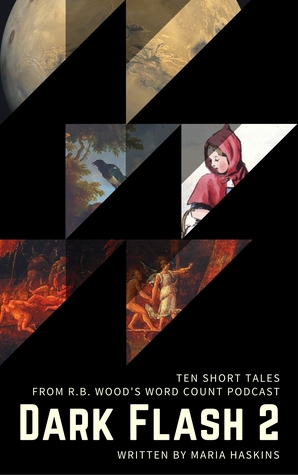
My review: https://www.goodreads.com/author_blog...
Buy links:
Amazon UK: https://www.amazon.co.uk/dp/B0776NSXR2
Amazon US: https://www.amazon.com/dp/B0776NSXR2
**************************
Forever Freaky - Tom Upton

My review: https://www.goodreads.com/author_blog...
Buy links:
Amazon UK: https://www.amazon.co.uk/Forever-Frea...
Amazon US: https://www.amazon.com/Forever-Freaky...
***************************
Deathbed - Jason McIntyre

My review: https://www.goodreads.com/author_blog...
Buy links:
Amazon UK: https://www.amazon.co.uk/dp/B01N1QQSDJ/
Amazon US: https://www.amazon.com/dp/B01N1QQSDJ/
*************************
Invisible Victims - Kat McCarthy

My review: https://www.goodreads.com/review/show...
Buy links:
Amazon UK: https://www.amazon.co.uk/gp/product/B...
Amazon US: https://www.amazon.com/gp/product/B01...
***********************
The Power of Now - Eckhart Tolle
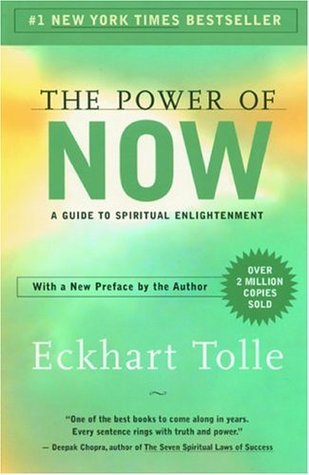
My review: https://www.goodreads.com/review/show...
Buy links:
Amazon UK: https://www.amazon.co.uk/dp/B002361MLA
Amazon US: https://www.amazon.com/dp/B002361MLA
************************
Stuff The Turkey - Tara Ford

My review: https://www.goodreads.com/author_blog...
Buy links:
Amazon UK: https://www.amazon.co.uk/gp/product/B...
Amazon US: https://www.amazon.com/gp/product/B01...
If you're looking for something to read, try one of them - you won't be disappointed!
(Slight Return) - Neil Schiller
My review: https://www.goodreads.com/author_blog...
Buy links:
Amazon UK: https://www.amazon.co.uk/dp/B075PBR6F6/
Amazon US: https://www.amazon.com/dp/B075PBR6F6/
******************
Dark Flash - Maria Haskins
My review: https://www.goodreads.com/author_blog...
Buy links:
Amazon UK: https://www.amazon.co.uk/Dark-Flash-M...
Amazon US: https://www.amazon.com/Dark-Flash-Mar...
************************
Redhead - Jason McIntyre
My review: https://www.goodreads.com/author_blog...
Buy links:
Amazon UK: https://www.amazon.co.uk/Redhead-Dove...
Amazon US: https://www.amazon.com/Redhead-Doveta...
**********************
Condemned - Darcia Helle
My review: https://www.goodreads.com/author_blog...
Buy links:
Amazon US: https://www.amazon.com/dp/B07562J92P
Amazon UK: https://www.amazon.co.uk/dp/B07562J92P
************************
Dark Flash 2 - Maria Haskins
My review: https://www.goodreads.com/author_blog...
Buy links:
Amazon UK: https://www.amazon.co.uk/dp/B0776NSXR2
Amazon US: https://www.amazon.com/dp/B0776NSXR2
**************************
Forever Freaky - Tom Upton
My review: https://www.goodreads.com/author_blog...
Buy links:
Amazon UK: https://www.amazon.co.uk/Forever-Frea...
Amazon US: https://www.amazon.com/Forever-Freaky...
***************************
Deathbed - Jason McIntyre
My review: https://www.goodreads.com/author_blog...
Buy links:
Amazon UK: https://www.amazon.co.uk/dp/B01N1QQSDJ/
Amazon US: https://www.amazon.com/dp/B01N1QQSDJ/
*************************
Invisible Victims - Kat McCarthy
My review: https://www.goodreads.com/review/show...
Buy links:
Amazon UK: https://www.amazon.co.uk/gp/product/B...
Amazon US: https://www.amazon.com/gp/product/B01...
***********************
The Power of Now - Eckhart Tolle
My review: https://www.goodreads.com/review/show...
Buy links:
Amazon UK: https://www.amazon.co.uk/dp/B002361MLA
Amazon US: https://www.amazon.com/dp/B002361MLA
************************
Stuff The Turkey - Tara Ford
My review: https://www.goodreads.com/author_blog...
Buy links:
Amazon UK: https://www.amazon.co.uk/gp/product/B...
Amazon US: https://www.amazon.com/gp/product/B01...


