Ed Markham's Blog
September 13, 2015
Cool Research For Writers: Spotting Liars
Note: This is a recurring series highlighting a published research paper that contains cool fodder for writers. The research: "Lie Catching and Microexpressions," Paul Ekman, The Philosophy of Deception. Can you tell when someone's lying to you? If you answered yes, you're probably lying to yourself, because research from psychologist Paul Ekman shows we're all pretty crappy at spotting deception in others. Ekman has spent years identifying and cataloguing the many muscles and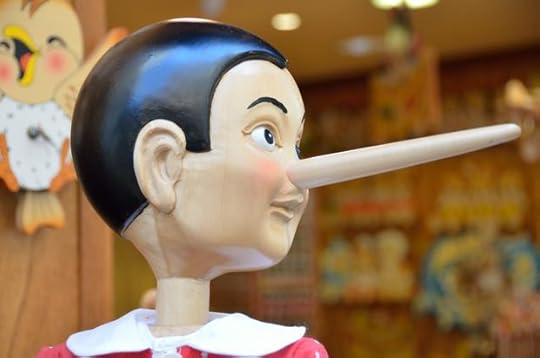


August 25, 2015
Cool Research For Writers: 'The Chills'
Note: This is a recurring series highlighting a published research paper that contains cool fodder for writers.
The research: "You Give Me the Chills." N.P. Leander. Psychological Science, May 2012
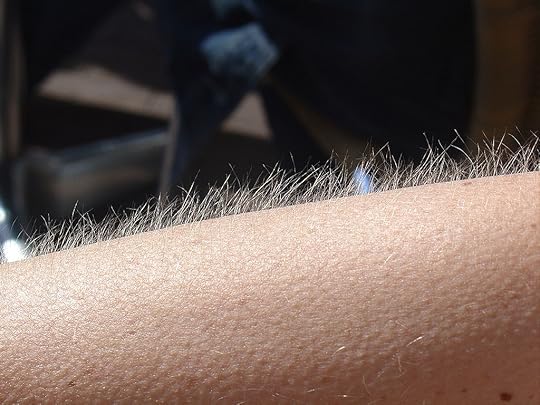
Has someone ever "given you the chills," but you couldn't figure out why? This study finds people feel physically cold--and even get the chills or goose bumps--when they encounter a person whose "nonverbal behavior" is somehow off or inappropriate.
This study focuses on social mimicry, or the idea that we all unconsciously tweak or modulate our behaviors to match those of the person (or people) we're spending time with.
For example, if you're with a friend who's smiling and gesturing in a certain way, you'll tend to smile back and gesture in similar ways. We all do this without thinking as a way to reassure others that we're normal and likable.
This study finds that, when someone doesn't follow the rules of this social mimicking--or something else about their non-verbal behavior is just odd or off putting--they end up giving their companions the chills. (The whole field of embodied cognition is just ripe with cool studies like this one.)
So that character in your book who gives people the chills? Maybe adjust his body language to make his goose bump-inducing qualities more authentic.
The research: "You Give Me the Chills." N.P. Leander. Psychological Science, May 2012
Has someone ever "given you the chills," but you couldn't figure out why? This study finds people feel physically cold--and even get the chills or goose bumps--when they encounter a person whose "nonverbal behavior" is somehow off or inappropriate.
This study focuses on social mimicry, or the idea that we all unconsciously tweak or modulate our behaviors to match those of the person (or people) we're spending time with.
For example, if you're with a friend who's smiling and gesturing in a certain way, you'll tend to smile back and gesture in similar ways. We all do this without thinking as a way to reassure others that we're normal and likable.
This study finds that, when someone doesn't follow the rules of this social mimicking--or something else about their non-verbal behavior is just odd or off putting--they end up giving their companions the chills. (The whole field of embodied cognition is just ripe with cool studies like this one.)
So that character in your book who gives people the chills? Maybe adjust his body language to make his goose bump-inducing qualities more authentic.
Cool Research For Writers: 'The Chills'
Note: This is a recurring series highlighting a published research paper that contains cool fodder for writers. The research: "You Give Me the Chills." N.P. Leander. Psychological Science, May 2012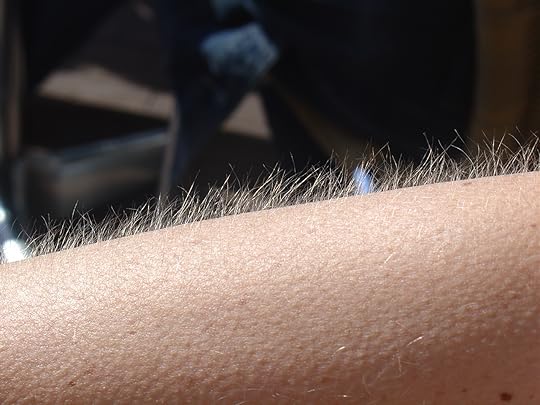 Has someone ever "given you the chills," but you couldn't figure out why? This study finds people feel physically cold--and even get the chills or goose bumps--when they encounter a person whose "nonverbal behavior" is somehow off or inappropriate.This study focuses on social mimicry, or the idea that we all unconsciously tweak or modulate our behaviors to match those of the person (or people) we're spending time with.For example, if you're with a friend who's smiling and gesturing in a certain way, you'll tend to smile back and gesture in similar ways. We all do this without thinking as a way to reassure others that we're normal and likable. This study finds that, when someone doesn't follow the rules of this social mimicking--or something else about their non-verbal behavior is just odd or off putting--they end up giving their companions the chills. (The whole field of embodied cognition is just ripe with cool studies like this one.)So that character in your book who gives people the chills? Maybe adjust his body language to make his goose bump-inducing qualities more authentic.
Has someone ever "given you the chills," but you couldn't figure out why? This study finds people feel physically cold--and even get the chills or goose bumps--when they encounter a person whose "nonverbal behavior" is somehow off or inappropriate.This study focuses on social mimicry, or the idea that we all unconsciously tweak or modulate our behaviors to match those of the person (or people) we're spending time with.For example, if you're with a friend who's smiling and gesturing in a certain way, you'll tend to smile back and gesture in similar ways. We all do this without thinking as a way to reassure others that we're normal and likable. This study finds that, when someone doesn't follow the rules of this social mimicking--or something else about their non-verbal behavior is just odd or off putting--they end up giving their companions the chills. (The whole field of embodied cognition is just ripe with cool studies like this one.)So that character in your book who gives people the chills? Maybe adjust his body language to make his goose bump-inducing qualities more authentic.
Cool Research For Writers: 'The Chills'
Note: This is a recurring series highlighting a published research paper that contains cool fodder for writers. The research: "You Give Me the Chills." N.P. Leander. Psychological Science, May 2012 Has someone ever "given you the chills," but you couldn't figure out why? This study finds people feel physically cold--and even get the chills or goose bumps--when they encounter a person whose "nonverbal behavior" is somehow off or inappropriate. This study focuses on social mimicry, or the