Francis Chapman's Blog
December 16, 2022
Good Things Come To Those Who Wait…
It’s out! It’s finally out!
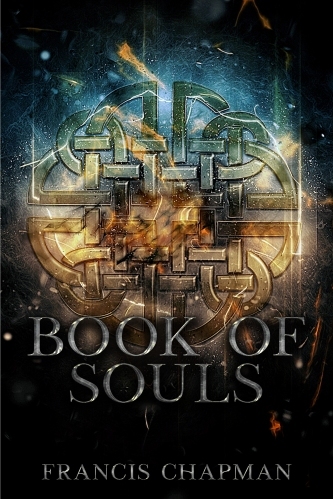
Book of Souls is now available through the Kindle store.
I’m sorry it has taken longer than it should, the delays have been caused by a mixture of great things (like getting married) and some significantly less great things (like having a broken kneecap.)
It’s so exciting to have finally realeased the second installment of the trilogy, and I hope that some of you will be just as excited to catch up with Yossef of Arimathea, Pontius Pilate, and see which direction the story is going in.
I am really fortunate to have had so many of you take the time to review Book of Yeshua. It’s truly amazing, and a real privilege, to read different reactions to something you’ve written. As you may know, books on Amazon live or die based on the number of reveiws, so if you do buy Souls, please consider reviewing it.
Wishing you a happy Yule!
Francis Chapman


November 17, 2021
Book of Souls update
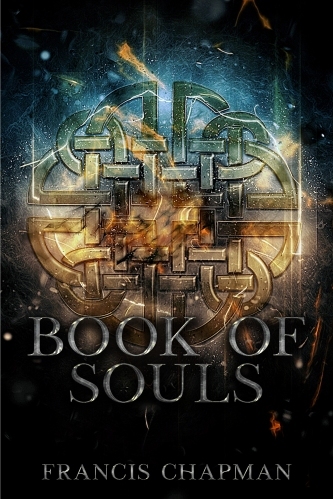
I need to start off with an apology, Book of Souls should have been out a while ago, and even with various delays (health and pandemic related) I had hoped to have had Souls out by now. But alas…. life, as it is wont to do, has gotten in the way. Most recently, I have been coordinating the move for an elderly relative. In my naivety, I thought that selling a house, buying a house, and organising the physical move would use up a week or two of my time… I am, now, older and wiser, and know that it is essentially a full time job, and one of the most stressful things you can do in your life.
We’re not quite over the line of the move, but we’re very close and I’m now in a better position to dedicate the time I need to completing the book. As such, I’ll be announcing a revised publication date shortly, so stay tuned! As a fan of both George RR Martin, and Patrick Rothfuss, I know how frustrating it is to be waiting on a book, and I’ll be throwing everything I can at Book of Souls, to get it out as soon as possible!
For those who have been wondering what Francis Chapman does for fun, I can tell you that in my (extremely limited) free time I have been:
-Watching the Cleveland Browns stumble through an initially promising and thus far frustrating season
-Torn between wanting Rose Ayling-Ellis and John Whaite to win Strictly
-Enjoying watching Jeff Probst, the deluded God-type figure who rules supreme over his Fiji-stranded Survivor subjects
-Eagerly anticipating The Wheel of Time series on Amazon and season 4 of Discovery on Netflix
-Reading Gene Wolfe, Robert Jordan and Robert Galbraithe
-Plotting a (potentially violent) revolution to overhaul the conveyancing and estate agent industries.
February 22, 2021
Desert Island Discs

If I were to be invited on to Desert Island Discs (something that seems unlikely at this fledgling stage in my career as an author), these would be my choices.
The Rules
For those of you unfamiliar with the concept, Desert Island Discs is a British radio program which (a quick google search tells me), has been running since the 1940s. The format is the same every week, with guests asked to choose eight songs, one book, and one luxury to take with them to a (hypothetical) desert island on which they would be stranded for the rest of their life.
The book is additional to the complete works of Shakespeare, and a bible (or in more recent years, equivalent religious or philosophical text.) The luxury item must be innanimate and no use in attempting to escape the island
My Song Choices
Gabriel Fauré – Pavane, op 50I am not a hugely knowledgeable, or interested in classical music. Most of the classical music that I listen to I was exposed to by television/film. In the case of Fauré’s Pavane, op 50, hearing it for the first time represents one of my strongest musical memories. In June 1998 (I was nine at the time) England played Argentina in the football World Cup. This was absolutely huge for me at the time, as a boy I was football mad, and England had not qualified for the 1994 World Cup, which I would have been too young to appreciate anyway. England lost an extraordinary game in heart-breaking circumstances with David Beckham being sent off following significant provocation from Diego Simeone, England defender Sol Campbell having an extra time winner dubiously ruled out, and England ultimately losing a penalty shoot-out.
As I watched the ITV credits rolled over shots of distraught England players, feeling every bit as distraught as the weeping players (football really matters, when you’re nine years old) Pavane Op 50 faded in. It was the saddest, and most beautiful piece of music I’d heard in my short life. To this day, it retains the capacity to move me. To take from my reality, and make me feel emotions unconnected with my present circumstances.
2. Elbow – One Day Like This
Over the years I’ve tried using a number of different songs as alarms to wake up to. One Day Like This is the only one that I didn’t grow to hate due to over-exposure and association with waking up at an unreasonably early hour. Listening to One Day Like This, watching the sun rise over a glistening sea, nibbling on a mango, my tropical seculsion might not feel so bad.
3. Lou Reed – Perfect Day
A beautiful, and uplifing song. And not, as is commonly suggested, an ode to heroin addiction. So states Lou Reed himself, and given that he wrote it, I think we ought to trust him on that. Celebrating the beauty in the simple pleasures in life, I’d hope it might be an affirmative choice to a simpler life on the desert island.
4. New Order – Dream Attack
My favourite song, by my favourite band. Possibly not a great choice, in as much as it would compound a sense of loneliness, given that the song celebrates the importance of, and strength to be drawn from, human connection. But I couldn’t not take it.
5. Randy Newman – In Germany Before The War
Sure, it’s unreletingly depressing. But it’s also beautiful. A perfect song.
6. The B-52s – Rock Lobster
I have to take something a little more fun and upbeat to compliment my thus far rather depressing selection. I’m sure I could get several hundred enjoyabe listens to this disco/punk fusion while sipping water from a halved coconut husk or gutting a fish.
7. Destiny’s Child – Survivor
Despite having loved this song for ages, it was only very recently that I discovered that the inspiration for the song came from my favourite reality TV show (Survivor, obviously). Fun, inspirational with regards to toughing it out while stranded, and evocative (retrospectively) of a TV series I’ve gotten a huge amount of enjoyment out of.
8. Eminem – Stan
Probably the best story ever told in song format. Almost like cheating and taking an extra (short) story with me. Plus it has an awesome beat.
My Book Choice
I came very, very close to choosing Solzhintsyn’s “One Day In The Life Of Ivan Denisovich”, an amazing book, highly re-readable, and a source of inspiration concerning the capacity of the human spirit for endurance in the face of adversity. But in the end I plumped for escapism, and decided to go with R Scott Bakker’s “The Darkness That Comes Before.” As one of the most ambitious and immersive fantasy novels ever written, it would be like taking a second reality with me, to disrupt the mononty of a life of solitude.
My luxury item choice
Easy. A stationary set comprised of a very large notebook and pens. The ability to write, to create characters, and other worlds, would be absolutely crucial for my mental fortitutde!
December 28, 2020
Dying for our sins
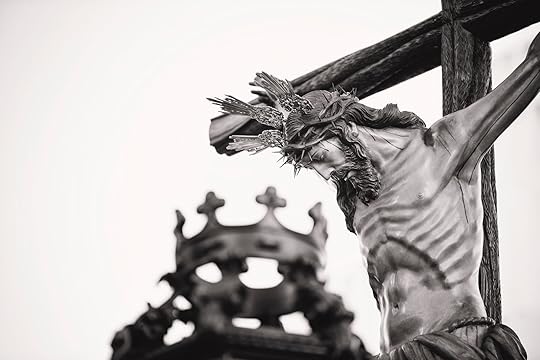
“Christ died for sins, once for all.” So says the apostle Peter in the New Testament. That sounds great. Humanity is redeemed, our relationship with God mended, and we didn’t even have to show any contrition or kindness. I was nearly going to write that we “didn’t even have to lift a finger”, but of course that isn’t quite true.
For the plan to work, humanity did have to torture and execute what the New Testament describes as the purest soul to ever walk the earth. And this act of moral evil is rewarded. The enquiring mind must examine the implications of such a notion, and consider what it tells us about God, Christianity, and ourselves.
The most striking implication of Jesus dying for our sins concerns God, and his nature. That God required a blood sacrifice to fix his relationship with humanity tells us that one of two things must be true. Firstly that without a blood sacrifice, God was unable to mend the relationship. Put simply, the blood sacrifice was necessary. But this threatens the notion of God’s omnipotence. How can God be all powerful, if he is unable to change something without a great personal sacrifice?
Alternatively, in order to protect the notion of his omnipotence, one could posit that God didn’t actually require a blood sacrifice, but orchestrated one anyway. This shows a particular cruelty in God’s nature, and is incompatible with the notion of God’s omnibenevolence, a second tenet of the God of classical theism as propounded by Christianity. Either way, Jesus dying on the cross for the sins of humanity is incompatible with God as described by the Christian faith.
A second important consideration of God’s nature stemming from the notion of Jesus’ blood sacrifice concerns his role as a judge. There is something decidedly unfair about humanity not having to work for its redemption. Whether one is saved, or damned, is not a matter of whether one has earned, or deserves, redemption, but simply whether one lived and died prior to or after Jesus’ death on the cross nearly two millennia ago. There is an inconsistency and simple unfairness to this which should make one question whether the God of Christianity is even worthy of worship.
Jesus’ death on the cross tells us much about human nature, at least when perceived through a Christian worldview. It tells that human beings are incapable of redeeming themselves. The moral agency of human beings is essentially worthless, we are loved by God, but not truly worthy of his love. This is a particularly bleak view of humanity and disregards our great capacity for love, kindness and altruism, while focusing exclusively on our capacities for violence, unkindness and selfishness.
December 18, 2020
Three books you should read…
…if you enjoyed Book of Yeshua
To be completely honest, these are the books that everybody should read. These are the books that inspired me to write, and if I can convince someone to read one of these books then I will consider myself to have done a good deed on the advent of the festive season, content in the knowledge that the reader’s life will have been significantly enriched.
The Darkness That Comes Before by R Scott Bakker
The most obscure book on this list, The Darkness That Comes Before is the first in the Prince of Nothing trilogy. Bakker is a philosophy professor, and his books are packed, as you might imagine, with philosophising. But I give you my solemn promise that it is never, ever dry. Bakker’s world building, character development, and complex and logical magical systems make for a world that is truly immersive. Every single page makes you feel. Despite the fact that everything in Prince of Nothing is fantastical, it is, at its heart, an exposition on humanity.
The Prince of Nothing chronicles the rise of a false prophet, whose superior intellect and breeding (the monastic sect from which he hails has been secluded and uses selective breeding for traits of intellectual and physical superiority) is mistaken for divinity, The Prince of Nothing is one of the most ambitious series ever written, and the execution is magnificent.
A quick word of warning before you rush to buy it (which you should) – Bakker’s work is dark. Really dark. Cannibalsm, incest, rape, and slaughter are not merely alluded to do, but described in graphic detail, and not fleetingly.
Illustrative quote:
“I am my thoughts, but the sources of my thoughts exceed me. I do not own myself, because the darkness comes before me.”
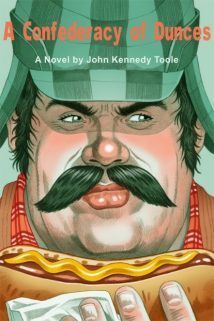
A Confederacy of Dunces by John Kennedy Toole
When Patrolman Mancuso attempts, and fails, to arrest Ignatius J Reilly outside of a New Orleans department store, a series of events are set in motion that culminate in the necessity of Reilly, a work-shy, gluttonous intellectual seeking employment after years of inertia.
While the supporting cast of characters, nearly all of whom could be described as “long-suffering”, are brilliant, the novel’s protagonist (although one could debate the appropriateness of such a term) steals the show. Ignatius J Reilly is, quite simply, the funniest character ever written. He was not made for this world, but is forced to live, if not function, in it anyway. This larger-than-life character (a phrase that is used to describe many fictional characters, but is never more appropriate than when applied to Ignatius) tears through small pockets of New Orleans, leaving destruction in his wake.
Ignatius’ insight, narcassim, and total lack of self-awareness is sad, funny, and even beautiful, such is the perfection of his construction.
A Confederacy of Dunces is not the only book that has amused me, but it is the only book that has caused me to actually laugh aloud. Which I did on a number of occasions. It is the only book that compelled me to read whole sections aloud for the (I hope) benefit of others.
Illustrative quote:
“You can always tell employees of the government by the total vacancy which occupies the space where most other people have faces.”
The Gunslinger by Stephen King
Bakker is brilliant becuase of his world, Toole because of his characters. Stephen King’s genius lies in his extraordinary plots, and The Gunslinger, and the entire Dark Tower series represents his greatest masterpiece. Never have I felt a greater compulsion to continue reading a book, to find out “what happens next.”
Everything in the entire series is laid out beautifully. There are no twists, that are without foundation, there is no subverting the audience’s expectations merely for the sake of it. Every single detail has been thought about, and woven into an extraordinary tapestry, every part of which is intricate, and an integral part of the whole.
It’s Lord of the Rings without Tom Bombadill and unkillable wizards. It’s Game of Thrones with a proper ending, and guns. It transcends genre, being more than both a fantasy series, and a series of thrillers. It’s one of the best things you’ll ever read, and if you haven’t done so already, go buy it. Now.
Illustrative quote:
“Shall there be truth between us, as two men? Not as friends, but as equals? There is an offer you will get rarely, Roland. Only equals speak the truth, that’s my thought on’t. Friends and lovers lie endlessly, caught in the web of regard. How tiresome!”
December 1, 2020
Happiness without religion
If religion makes you happy, should you automatically discard it, just because you don’t actually believe? My answer would be: not necessarily. Religions serve a purpose. They can knit communities together, form and consolidate a moral code, and inhibit some of the more destructive behaviours of certain individuals. This is not to say that religion is incapable of dividing communities, undermining an individual’s moral code, and indulging destructive behaviours.
The human predisposition to religion is shown through its universality. Study any society, from any part of the planet, and you’ll find a religion present. But for individuals, perhaps the most important role religion plays is in addressing concerns about death. The idea that loved ones simply cease to exist is, frankly, difficult to process. The idea that they live in the clouds, playing volleyball, drinking fanta and enjoying a life of eternal bliss is far more comforting.
The hard atheist notion that we have only this life, and we should make the most of it represents good advice, but offers little comfort for someone on their deathbed, or mourning the loss of a loved one. It also runs against human nature, and more specifically, the thing that makes us human: the ability to contemplate questions beyond our immediate understanding. The inclination to speculate.
But here’s the thing, we need not choose between the cold materialism of hard atheists like Richard Dawkins (there is only what we can observe empirically) and religious doctrine that requires the individual to sacrifice their moral agency. There is no overwhelmingly powerful scientific hypothesis I know of that discounts the possibility of an afterlife.
In fact, I would go further and say that given what we know of energy, that it can be transferred, but never destroyed (first law of thermodynamics), and the similarity between consciousness and energy, it seems likely that our consciousness persists beyond the destruction of our body.
So cherry pick the best of what religion has to offer us. Celebrate Christmas (ideally by reconginsing that the vast majority of traditions were appropriated from pagan cultures). Picture loved ones exisiting happily in a place free from pain and suffering. Express and share your gratitude for things in your life that bring you joy. Even if you don’t accept the religious beliefs of your culture, you can do these things without sacrificing your integrity.
Just don’t give up your moral agency. Because when you believe something is right or wrong simply because a book, document, or authority figure tells you, that’s when you get the crusades, and the execution of homosexuals, and people blowing themselves up in crowded market places.
November 20, 2020
Yule, Book of Souls, and Short Stories
Preparations for Yule are now well underway in the Chapman household. Personally, I am most looking forward to our Hygge day, which we celebrate on the 22nd. Pyjamas are mandatory, books are highly encouraged, seasonal music is played and warm, comforting foods like Warm Bean Dip and mince pies are consumed in obscene quantities.
Beyond filling your head with such festive images, I just wanted to give a quick update to say that I have seperated my book reviews from my author page. So for those interested in reviews of sci-fi, mysteries, thrillers, and fantasy novels, please head over to Unfettered Howling.
Work is now well underway on the sequel to Book of Yeshua, Book of Souls, which I am aiming to publish in the Spring of 2021. Keep an eye out for an excerpt, which will be published in the coming months, and also (in the coming weeks) for short stories relating to characters from Book of Yeshua. These are available for free to all members of the Francis Chapman mailing list.
Join the Francis Chapman mailing list
Use the unsubscribe link in those emails to opt out at any time.
Processing…
Success! You're on the list.
Whoops! There was an error and we couldn't process your subscription. Please reload the page and try again.
November 14, 2020
Book Review: The Silent Patient by Alex Michaelides
Alice murdered her husband, Gabe, and has not spoken a word since. Existing in psychiatric care, avoiding a prison sentence on the grounds of diminished responsibility, Alice, and her motives, remain a mystery. Though once a sensationalist case, it has now been largely forgotten, and only psychotherapist Theo seems interested in unlocking Alice’s memory.
The premise is a strong one, and carries The Silent Patient far. There really is no way you could give up on the book without understanding Alice’s motivations. There are enough clues, given through Theo’s interactions with those individuals who used to be part of her life, Alice’s diary, and the deliberate clues she left behind in a painting, “Alcestics” (also the name of a Greek tragedy about a mute woman) that you as a reader are able to theorize, without putting everything together too early.
Alice, when you see things from her perspective, is a fantastic character, with a unique and plausible world-view. You really do feel the world differently when explored through her artistic sensitivities. Theo, conversely, is a bland character, who perceives a grey, featureless world almost exclusively in terms of rigid psychological analysis. This is, of course, deliberate (pertaining a great deal to the twists at the end of the novel), but there are certainly times when reading Theo feels like a chore.
Other supporting characters are well drawn, despite playing limited roles. Michaelides is economical and clever with her characterisation. These are nothing more the acquaintences, but you have a strong sense of their essences without being dependent on stereotype.
Michaelides gambles in The Silent Patient. The red herrings are small, and underdeveloped. There are no significant misleading lines of investigation for the reader to follow, so the success of The Silent Patient is almost entirely dependent on the success of the large twists at the end. And broadly, it’s succesful. It certainly achieves one moment of jaw-dropping realisation (or did, at least for me). However it would be possible given the evidence in the text to anticipate it
The Silent Patient is, broadly, a fun and flawed book, with an ending (on which it is entirely dependent) that worked for me. I wouldn’t, however, characterise it as a thriller. More a mystery with thriller aspects.
If this book was a quarterback, it would be:
Teddy Bridgewater – Somewhat pedestrian for long periods, interspersed with moments of greatness. Strong in the fourth quarter, but could be undone with strong anticipatory defense.
You should read this book if:
You enjoy unravelling a mystery with evidence provided by the format of the text, rather than the details provided therein for the first half, and if you enjoy a strong twist at the end.
You should avoid this book if:
You are expecting a psychological thriller. Characters psyches are, broadly, hidden from view until the end.
I want to see the author write:
Cosy mysteries in the vein of Agatha Christie.
The Silent Patient is available on Amazon
As an Amazon Associate I earn from qualifying purchases[image error][image error]
November 5, 2020
Book Review: The Turn of the Key by Ruth Ware
In The Turn of the Key, Ruth Ware sets up the reader to feel the overwhelming stress and responsibility of looking after someone else’s children. Rowan Caine is thrown into the deep end, taking full responsibility for her charges in a smart house in remotest Scotland with no-one to support her efforts, apart from the occasional remote check in from Sandra, the children’s mother, and Jack, the handyman.
Rowan herself is somewhat lacking as a character, with little to explain her motivations, and behavoiurs, although this isn’t entirely due to Ware’s abilities as an author, and has much to do with the twists for which the reader is being set up later in the novel. Nevertheless, I never found myself particularly caring what happened to Rowan, despite feeling the stresses she endures. And that’s a huge problem in this novel.
Where Ware really excells is in her settings. The Victorian style multi-story house which has been converted into a ‘smart house’ is a character in itself, and a hugely important one. I honestly felt trasported to the Cairngorms – the snow-peaked mountains, picture myself exploring the deadly and beautiful poison garden, and even felt myself pummeling the ipad trying to shut off the loud heavy metal music that blares through the house in the middle of the night.
The foundations for the twists at the end of Turn of the Key are, in general, strong, and everything fits together nicely, even if the fate of our protagonist is never entirley clear. However, I was frustrated by some obvious plotholes, most notably the inconsistency with which security cameras were used.
Ware has a lot of talent, and with a better cast of characters, she could be capable of producing something truly enthralling.
If this book was a quarterback, it would be:
Matt Stafford – Excellent technique, and capable of some really good things. But watching Stafford, or reading Turn of the Key, you do end up asking yourself ‘do I really care about the outcome here?’
You should read this book if:
You love a truly beautifully crafted setting, and a house that is a character in itself.
You should avoid this book if:
You want to feel a true connection with and empathy for the protagonist.
I want to see the author write:
A thriller with less mystery and with greater character development. Set somewhere remote.
The Turn of the Key is available on Amazon
As an Amazon Associate I earn from qualifying purchases[image error]
Book Review: The Turn of the Key
CAUTION: Minor spoilers lurk below.
In The Turn of the Key, Ruth Ware sets up the reader to feel the overwhelming stress and responsibility of looking after someone else’s children. Rowan Caine is thrown into the deep end, taking full responsibility for her charges in a smart house in remotest Scotland with no-one to support her efforts, apart from the occasional remote check in from Sandra, the children’s mother, and Jack, the handyman.
Rowan herself is somewhat lacking as a character, with little to explain her motivations, and behavoiurs, although this isn’t entirely due to Ware’s abilities as an author, and has much to do with the twists for which the reader is being set up later in the novel. Nevertheless, I never found myself particularly caring what happened to Rowan, despite feeling the stresses she endures. And that’s a huge problem in this novel.
Where Ware really excells is in her settings. The Victorian style multi-story house which has been converted into a ‘smart house’ is a character in itself, and a hugely important one. I honestly felt trasported to the Cairngorms – the snow-peaked mountains, picture myself exploring the deadly and beautiful poison garden, and even felt myself pummeling the ipad trying to shut off the loud heavy metal music that blares through the house in the middle of the night.
The foundations for the twists at the end of Turn of the Key are, in general, strong, and everything fits together nicely, even if the fate of our protagonist is never entirley clear. However, I was frustrated by some obvious plotholes, most notably the inconsistency with which security cameras were used.
Ware has a lot of talent, and with a better cast of characters, she could be capable of producing truly enthralling.
If this book was a quarterback, it would be:
Matt Stafford – Excellent technique, and capable of some really good things. But watching Stafford, or reading Turn of the Key, you do end up asking yourself ‘do I really care about the outcome here?’
You should read this book if:
You love a truly beautifully crafted setting, and a house that is a character in itself.
You should avoid this book if:
You want to feel a true connection with and empathy for the protagonist.
I want to see the author write:
A thriller with less mystery and with greater character development. Set somewhere remote.