Debbie W. Wilson's Blog
November 24, 2025
Thanksgiving Gratitude: Receiving God’s Gifts with Joy
One year Larry picked up some small gifts for some visiting children. Their delight in receiving them gave us as much, if not more, pleasure than if we’d received gifts. This reminds me how important receiving God’s gifts is to both our hearts and His. Gratitude is a gift. If our hearts swell when someone enjoys the gift we’ve chosen for them, I imagine God also smiles when we appreciate His gifts.
While Larry likes to give to others, he’s always felt awkward receiving. I bought him a nice watch as a wedding gift. I couldn’t wait for him to unwrap it. Instead of being excited to see what I’d gotten him, he tossed my wrapped present into his car trunk. “I’ll open it later.” He showed little interest in my carefully selected gift.
When we select a good gift, our hearts thump with the anticipation of the receiver’s joy. If, for whatever reason, they dismiss our gift, we feel deflated. If we feel that way, does God?
Below are some of the gifts God offers us. As you look through this list, consider how receiving God’s gifts changes the way we experience Thanksgiving. If you aren’t enjoying any of them, make sure you’ve unwrapped them by faith. Larry couldn’t enjoy my gift while it stayed unopened in his car.
His Love“This is how God showed his love among us: He sent his one and only Son into the world that we might live through him” (1 John 4:9 NIV).“But God demonstrates his own love for us in this: While we were still sinners, Christ died for us” (Romans 5:8 NIV).“But because of his great love for us, God, who is rich in mercy, made us alive with Christ even when we were dead in transgressions” (Ephesians 2:4-5 NIV).“For God so loved the world that he gave his one and only Son, that whoever believes in him shall not perish but have eternal life” (John 3:16 NIV).Joy and Peace“You make known to me the path of life; you will fill me with joy in your presence, with eternal pleasures at your right hand” (Psalm 16:11 NIV).“May the God of hope fill you with all joy and peace as you trust in him, so that you may overflow with hope by the power of the Holy Spirit” (Romans 15:13 NIV).Wisdom and Direction“If any of you lacks wisdom, you should ask God, who gives generously to all without finding fault, and it will be given to you. But when you ask, you must believe and not doubt,because the one who doubts is like a wave of the sea, blown and tossed by the wind” (James 1:5-6 NIV).“I will instruct you and teach you in the way you should go; I will counsel you with my loving eye on you” (Psalm 32:8 NIV).His Promises“And we know that in all things God works for the good of those who love him, who have been called according to his purpose” (Romans 8:28 NIV).“If you then, though you are evil, know how to give good gifts to your children, how much more will your Father in heaven give good gifts to those who ask him!” (Matthew 7:11 NIV).His Presence“Have I not commanded you? Be strong and courageous. Do not be afraid; do not be discouraged, for the Lord your God will be with you wherever you go” (Joshua 1:9 NIV).
Strength“He gives strength to the wearyand increases the power of the weak” (Isaiah 40:20 NIV).“For God has not given us a spirit of fear, but of power and of love and of a sound mind” (2 Timothy 1:7 NIV).“I love you, Lord, my strength. The Lord is my rock, my fortress, and my deliverer; my God is my rock, in whom I take refuge, my shield and the horn of my salvation, my stronghold” (Psalm 18:1-2 NIV).Our Every Need“The Lord is my shepherd; I shall not want” (Psalm 23:1 NIV).“Every good and perfect gift is from above, coming down from the Father of the heavenly lights” (James 1:17 NIV).“His divine power has given us everything we need for a godly life through our knowledge of him who called us by his own glory and goodness” (1 Peter 1:3 NIV).“And my God will meet all your needs according to the riches of his glory in Christ Jesus” (Philippians 4:19 NIV).See also Matthew 6:31-33 and James 1:17).
I learned Larry felt awkward receiving my gift because his family didn’t give many gifts. Our reluctance to receive and appreciate our Father’s good gifts not only deprives us but also robs God. This Thanksgiving, may we delight our Lord by recognizing and receiving His gifts with grateful hearts.
What gift from the Father would you add to this list?
#ThanksgivingGratitude begins by learning to receive God’s gifts with joy. A short devotional to jumpstart your Thanksgiving week. #ChristianDevotional
Share on X
Click here to comment.
Blessings,

#MondayLinkUp #InstaEncouragements, #Let’sHaveCoffee, #Grace&Truth
The post Thanksgiving Gratitude: Receiving God’s Gifts with Joy appeared first on Debbie W. Wilson.


November 17, 2025
Should You Apologize? A Christian Guide to Discernment
Have you ever wrestled with whether you should apologize or not? When a friend asked me this question, two experiences came to mind that clarify the difference between false guilt and the Holy Spirit’s correction—and why it matters for Christians seeking God’s guidance.
Recognizing False GuiltAt a women’s event, I noticed two visitors talking in a corner and introduced myself. One glared at me. The other was polite but distant. What had I done to offend them?
Later I tried again, thinking I might have interrupted a private conversation. The response was the same—cold and dismissive. The encounter haunted me for three days. Had I been too forward or insensitive? Did I need to apologize? If so, for what?
I considered calling my close friend who’d also greeted them. Maybe she knew what was going on. But I hated to come across as petty.
To my surprise, when my friend invited me to lunch, she brought them up. Their palpable animosity had left her questioning herself too. Both of our consciences had joined forces with a stranger’s rudeness and accused us. Rationally, we knew we hadn’t wronged anyone, but our emotions whispered, “You must have done something.”
False guilt often works that way. It’s vague, accusing, and directionless. It offers no clear step to take—just a lingering sense of blame.
Recognizing the Spirit’s CorrectionOn another occasion, while working in the kitchen, I felt a nudge to apologize to my son, who was a teenager at the time. We’d argued earlier that day. I immediately deflected this very clear command. Did You hear how he talked to me?
Instead of easing, the pressure to apologize intensified, and I continued to resist. Excuse me, but shouldn’t he be the one apologizing to me?
None of my rationalizations quelled the inner voice within me. Finally, I relented, climbed upstairs, and knocked on my son’s bedroom door. “Brant.”
“What?”
Well, this wasn’t the response I’d hoped for! “I want to apologize for the tone I used with you earlier. Will you forgive me?”
He said, “I knew you’d be back.”
I received no apology, but I did receive peace. I’d obeyed. Later, my son’s words broke through. He’d counted on me to be the adult. I was so thankful the Holy Spirit had been persistent with me and I hadn’t let my son down.
Unlike condemnation, the Spirit’s correction is specific and actionable. He doesn’t shame us; He corrects and guides us.
How to Discern the DifferenceCondemning thoughts come from the world, the flesh, and the devil. Romans 8:1 tells us “there is now no condemnation for those who are in Christ Jesus” (NIV). Condemnation feels like a heavy fog of blame without clarity. Someone’s withdrawal or change in demeanor may trigger these feelings.
The Holy Spirit’s conviction, however, points to a specific action or attitude. He shows us what to do—and gives us grace to do it—as in: “Apologize to your son.”
When God wants us to apologize, we know it. We may squirm or argue, but we can’t shake that inner prompting. To confirm God is behind the impression, we can pray:
God’s Promise“Search me, God, and know my heart;
test me and know my anxious thoughts.
See if there is any offensive way in me,
and lead me in the way everlasting” (Psalm 139:23-24 NIV).
“I will instruct you and teach you in the way you should go; I will counsel you with my loving eye on you” (Psalm 32:8 NIV).
Our feelings don’t always tell the truth. Sometimes we feel guilty when we’ve done nothing wrong, and other times we feel fine when we are wrong. Christ—not our emotions—gives the accurate appraisal.
Learning to recognize His voice helps us distinguish between fruitful correction and feckless condemnation. Christ doesn’t burden us with confusion; He leads us with clarity. Today, invite Him into whatever is troubling your conscience. Let His Spirit clarify, correct, or comfort—and walk forward in the freedom He provides.
“If our hearts condemn us, we know that God is greater than our hearts, and He knows everything” (1 John 3:20 NIV).
Condemnation paralyzes; conviction frees. One pushes you down—One draws you closer. #HolySpirit #ChristianLiving #discernment
Share on X
Click here to comment.
Blessings,

#MondayLinkUp #InstaEncouragements, #Let’sHaveCoffee, #Grace&Truth
The post Should You Apologize? A Christian Guide to Discernment appeared first on Debbie W. Wilson.
November 10, 2025
Why Contentment in Christ Is the Best Gift This Season
The holiday season is upon us—a time that can be both wonderful and tempting. Someone once said, “How much is enough? Just a little bit more than you have.” Ironically, a season that commemorates Thanksgiving and God’s greatest gift—Jesus—also invites comparison, self-pity, and self-indulgence.
That’s why learning contentment in Christ may be the best gift we can give ourselves and those we love this Christmas.
Contentment in PrisonFrom prison, the Apostle Paul wrote, “I have learned how to be content with whatever I have. I know how to live on almost nothing or with everything. I have learned the secret of living in every situation, whether it is with a full stomach or empty, with plenty or little. For I can do everything through Christ, who gives me strength” (Phil. 4:11-19 NLT).
False accusations and an assassination plot had thrown Paul into prison, keeping him from visiting the churches and planting new ones. Chained between palace guards, I can only imagine what his living quarters, company, and food were like. Yet Paul didn’t whine, plead, or complain about the injustice that put him there. As someone who too easily grumbles when life’s unfair, I stand amazed!
Discontentment in ParadiseNow, contrast Paul with Eve. Adam and Eve lived in paradise—perfect health, perfect weather, and perfect fellowship with God, each other, and the animal kingdom. Yet, they fell for the serpent’s lie: “You’re missing out.”
God had told Adam not to eat of the Tree of the Knowledge of Good and Evil or they would die (Gen. 2:16-17). Adam and Eve probably didn’t know what death was. They certainly lacked the knowledge of evil. Did that ignorance make them more vulnerable to Satan’s whisper that God was holding out on them?
I don’t think so. They knew God’s character. He’d never given them any reason to mistrust Him. They could have easily brought their concerns to Him.
The Bible warns us to be innocent of evil too. All knowledge isn’t good. Adam and Eve had the same resources Paul had. They had direct access to the triune God. Perhaps fearing they’d lose their nerve, instead of asking God about what the serpent promised, they took the bait.
Application for UsWhen we obey God, we rarely see the pain we escape. If Adam and Eve had resisted temptation, they’d never have known heartbreak, betrayal, grief, and shame. They’d never have smelled death’s stench or felt the helplessness of being unable to ease the suffering of a soul seeking relief. They’d never have lost two sons in one day—one murdered, the other the murderer.
If they’d trusted God and learned the secret of contentment, today there would be no divorce lawyers, no treatment centers, no grief groups, hospitals, or armies.
When we find our contentment in Christ, comparison loses its grip. The pull to measure our circumstances, celebrations, or families against someone else’s—or even against our past—fades. New possibilities open.
The desire for something other than what God has allowed can be deadly. While godly desires move us to act in faith, nothing on this earth will ever satisfy carnal ones.
Paul found contentment in prison. Eve lost it in paradise. Like Paul, we can learn contentment in Christ by:
Remembering who God is and how much He loves us.Giving thanks for what we have instead of pining for what we wish we had.Praying with thanksgiving and thinking on what is good and lovely.God promises His peace and presence to those who do (Phil. 4:4-9).
Like Paul, Adam, and Eve, our choices impact more lives than we can measure. We may never know the pain we’ve escaped by walking with God—but that’s the fruit of contentment in Christ, and something I’m grateful to miss out on.
Paul found contentment in prison. Eve lost it in paradise. Learn how to find yours this holiday season. #Faith #ContentmentInChrist #Gratitude #ChristianLiving
Share on X
Blessings,

#MondayLinkUp #InstaEncouragements, #Let’sHaveCoffee, #Grace&Truth
The post Why Contentment in Christ Is the Best Gift This Season appeared first on Debbie W. Wilson.
November 3, 2025
Hope Restored: How God Restores the Brokenhearted | Susan G. Mathis
I’m delighted to welcome back award-winning author Susan G. Mathis, who brings history and faith to life through her Thousand Islands fiction series. In this post, she introduces her newest story, Irish Rose Orphans’ Christmas, and reflects on how God restores the brokenhearted—especially orphans—and brings hope to the forgotten.
Hope RestoredThere are few stories more stirring than those of children who have lost everything—family, home, and the sense of belonging that anchors a soul. Orphans carry a kind of sorrow that is hard to name. Yet again and again, we see a truth that runs through Scripture and life alike—God meets the brokenhearted where they are and turns ashes into beauty. Even in the quiet corners of loss, He is writing a story of redemption.
When God Restores the BrokenheartedFrom Genesis to Revelation, the Bible reveals God’s tender heart for orphans. “A father to the fatherless, a defender of widows, is God in his holy dwelling” (Psalm 68:5).
In a world that often overlooks the small and the voiceless, God sees. He not only sees, but He acts—raising up protectors, communities, and even nations to care for those who have no one else. Through His people, He provides love where there was abandonment, family where there was loss, and purpose where there was despair.
Every orphan’s story—whether in a dusty orphanage of 19th-century New York or a shelter today—is a reflection of that divine compassion. When the world casts away, God gathers close.
Loss carves deep wounds, but it also creates deep places where faith can take root. Many orphans, despite the hardships they face, discover that the very emptiness of their lives becomes the space where God’s grace moves most powerfully.
Like the orphans of old—those Irish girls who went out to serve in wealthy homes with little more than a prayer and a promise—hope often begins in the smallest ways—a kind word, a simple meal, a reminder that they are seen. Over time, they begin to believe that maybe, just maybe, God has not forgotten them.
Through His providence, strangers become mentors, teachers become encouragers, and new families—whether by blood or by faith—become reflections of His love. The God who once set the lonely in families (Psalm 68:6) still does so today.
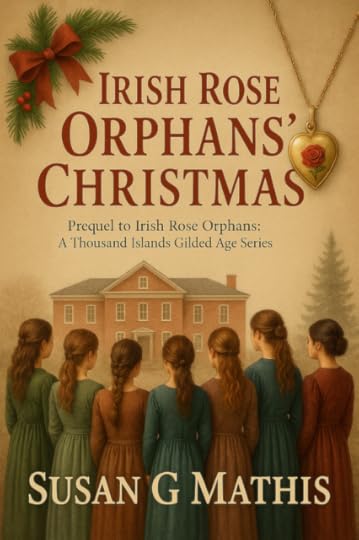 About Irish Rose Orphans’ Christmas
Get ready to fall in love with seven girls and their unforgettable stories! This heartwarming prequel sets the stage for the upcoming Irish Rose Orphans: A Thousand Islands Gilded Age Series, where seven spirited young women serve the islands’ elite!—author Donna Schlachter
Brooklyn, 1876At the Irish Rose Orphan Asylum for Girls, seven young women are about to experience a Christmas that will change everything—their last one together before stepping into lives of service among strangers in the Gilded Age. United by trials and an unbreakable bond, they’ve pledged to remain “forever sisters.” But as the season of parting approaches, buried wounds rise to the surface.
Twin sisters Annie and Taryn remain divided by a silent rift. Fiona grapples with the ache of abandonment. Vivian hides her fear of being left behind beneath a cheerful façade. Cassie, ever the want-to-be teacher, tries to steady the group as Isabel and Gloria struggle with the agony of separation.
When Sister Rose invites the girls to prepare their hearts during Advent for a deeper calling, each young woman must face the truth of her past and the hope of her future. A final gift—tin lockets adorned with the Irish Rose—become tokens of hope, courage, and an everlasting sisterhood. This Christmas, seven orphans will discover that no matter where life leads them, love and faith will go with them.
Hope Restored: How God Restores the Brokenhearted | Susan G. Mathis #newbook, #Christmas, #hope
Share on X
 Susan G Mathis is an international award-winning, multi-published author of stories set in the beautiful Thousand Islands, her childhood stomping ground in upstate NY. Susan has been published more than thirty times in full-length novels, novellas, and non-fiction books. She has sixteen in her fiction line including, The Fabric of Hope: An Irish Family Legacy, Christmas Charity, Katelyn’s Choice, Devyn’s Dilemma, Sara’s Surprise, Reagan’s Reward, Colleen’s Confession, Peyton’s Promise, Rachel’s Reunion, Mary’s Moment, A Summer at Thousand Island House, Libby’s Lighthouse, Julia’s Joy, Emma’s Engagement, Madison’s Mission, and Irish Rose Orphans’ Christmas. She is also a winner of more than two dozen book awards, and she’s a published author of two premarital books, two children’s picture books, a dozen stories in compilation books, and hundreds of published articles. Find out more at www.SusanGMathis.com.
Susan’s website: https://www.susangmathis.com/fiction-books
Buy links: Amazon | Barnes&Nobles |
Social media links: Website |Author Central | Facebook | Twitter | Blog | Instagram| Goodreads l Book Bub| Pinterest |
Thank you, Susan!
Blessings,

#MondayLinkUp #InstaEncouragements, #Let’sHaveCoffee, #Grace&Truth
We participate in the Amazon Services LLC Associates Program, an affiliate advertising program designed to provide a means for us to earn fees by linking to Amazon.com and affiliated sites. This doesn’t add any cost to the purchase.
The post Hope Restored: How God Restores the Brokenhearted | Susan G. Mathis appeared first on Debbie W. Wilson.
October 27, 2025
Wisdom and Prudence for Life’s Journey | Katherine Pasour
I’m delighted to welcome Katherine Pasour as today’s guest. She shares timeless wisdom from Stay the Course: A Devotional to Survive and Thrive in Your First Year of College (and Beyond)—truths that guide not only young adults but all of us. In a world filled with distractions and uncertainty, Katherine reminds us that God’s wisdom and prudence lead to peace, purpose, and protection.
Gaining Wisdom and PrudenceOver three million students in the United States graduated from high school last May. These precious young adults entered the work force or began the new adventure of college. They are our future. We hope and pray this generation is gaining wisdom and prudence as they spread their wings to fly.
“I, wisdom, dwell together with prudence; I possess knowledge and discretion” (Proverbs 8:12 NIV).
Prudence can be defined as being careful and having good sense (we need a dose of this insight no matter our age, don’t we?) Another characteristic of prudence is forethought—thinking about something before you do it.
Good advice.
Our young adults will face many new decisions in their new jobs or in college.Examples?
Choosing friends and who to hang out withSetting schedules—getting up for work or class, social activities, adequate sleepDeveloping a good work ethicSelecting social activities—when, what, where, and with whomThese are somewhat benign choices, not particularly dangerous (although they can be). Choosing our friends wisely helps keep us safe. The decisions we make in selecting friends and choosing social interactions affect our ability to succeed in college or in our careers. Developing and nurturing a good work ethic is a strength that benefits us throughout life.
Being prudent and wise enables us to use good sense in making decisions. If an activity or a person interferes with our ability to be successful in college or in our job, our good sense should tell us to limit contact with that person or activity.
Other more serious distractions and behaviors seek to entice our young adults:Being fully committed to the goal is essential for academic in success. A check-up for students—are you attending classes all classes? Keeping up with homework? Maintaining good study habits? Avoiding the temptations of staying out too late or engaging in risky behavior?A good work ethic is essential for success in school or the work force. In your job, are you always prompt, completing tasks as assigned, and maintain a positive attitude?Do you avoid dangerous behaviors such as drugs, alcohol, or unhealthy personal relationships?Do we spend within our budget?Are healthy nutrition choices, exercising regularly, and getting enough sleep priorities?“Be very careful, then, how you live—not as unwise, but as wise, making the most of every opportunity, because the days are evil” (Ephesians 5:15-16 NIV).
Prudence and wisdom, no matter our age, serve to protect us and help us achieve our goals. Think and pray before decisions. Ask—will this action support me on my journey to be successful in college or my career or will this decision bring harm to me or others?
Dear reader, the words above are adapted from Stay the Course: A Devotional to Survive and Thrive in Your First Year of College (and Beyond). However, the heart of this message calls to each of us. As a young adult, parent, grandparent, or concerned citizen, our prayers for our young adults, our country, and our world are imperative. These are terrifying times—no one seems to be safe. Whether on a college campus, riding a bus, walking on city streets, or sleeping in our home, we are threatened by violence.
Our fervent prayers are needed.Gracious Father, There’s so much violence and hatred in our world. Your message, as given to us through our Savior, Jesus, is one of mercy, love, and forgiveness. Please help each of us to be an instrument of peace and love. Guide us that we may we be the light and love of Jesus in our tiny part of the world and may our efforts spread to the nations.
Meet Katherine Pasour Katherine Pasour is an author, teacher, speaker, farm girl, and advocate for wellness. Through her writing and weekly blog, she strives to share her love for Jesus and her passion to help others achieve a healthier and happier lifestyle. Dr. Katherine has written Honoring God with My Body: Journey to Wellness and a Healthy Lifestyle and Stay the Course: A Devotional Handbook to Survive and Thrive in your First Year of College (and Beyond).
Katherine also writes for Refresh Bible Study Magazine, Lighthouse Bible Studies, Arise Daily Devotions (Advance Writers and Speakers Association), and Living By Design Ministries. Read more of Katherine’s writing on her blog or connect with her on Facebook, Instagram, and Twitter.
Wisdom and prudence aren’t just for the young. In this guest post, Katherine Pasour shares biblical guidance for wise living in today’s world. #Wisdom #Faith #ChristianLiving
Share on X
Thank you, Katherine!

#MondayLinkUp #InstaEncouragements, #Let’sHaveCoffee, #Grace&Truth
We participate in the Amazon Services LLC Associates Program, an affiliate advertising program designed to provide a means for us to earn fees by linking to Amazon.com and affiliated sites. This doesn’t add any cost to the purchase.
The post Wisdom and Prudence for Life’s Journey | Katherine Pasour appeared first on Debbie W. Wilson.
October 13, 2025
How Much Worry Is Too Much? What Philippians 4:6 Says About Anxiety
How much worry is too much? Which of your concerns does God want to hear about? According to Philippians 4:6 (NIV), “any” and “all” are the respective answers.
“Do not be anxious about anything, but in every situation, by prayer and petition, with thanksgiving, present your requests to God.”
A young mother approached me after I’d spoken on worry. “It’s hard to see how worry is so bad. It’s not like murder or adultery.”
I reminded her that small choices over time add up to big changes and used Hurricane Fran to explain.
When Hurricane Fran approached the East Coast, we thought Raleigh was safe. After all, the weather reports said the brunt of the storm would hit South Carolina. However, in the middle of the night, high winds and crashing trees woke sleeping Raleigh.
Walking outside the next morning, the scent of what smelled like Christmas trees greeted us, but the destruction looked like a war zone. How could the weather reports have been so wrong?
We learned that out in the Atlantic Ocean, the storm had shifted only a few degrees north. That small change, taken out over hundreds of miles, had moved the storm from South Carolina to the middle of North Carolina.
A shift of only a few degrees in our thinking and attitudes, taken out over five, ten, or fifteen years, makes us into different people than we’d have otherwise been, too. God has good reason for forbidding worry—it changes our character.
Redirect Worries Through PrayerPhilippians says to wrap every worry in prayer and send it to God. A parking place at the concert is not too small a request for Him. An unhappy relationship or broken past is not too big for Him. He numbers the hairs on your head and yet names each star. Nothing is too big or too small for our heavenly Father. If it concerns you, it matters to Him.
We are to present our requests believing that God hears and answers in the best possible way. When we pray, we must thank Him for listening and acting. We don’t just dump our worries on Him as if He’s a mere sounding board.
Thank You that You hear me and are involved in my life. Since You allowed this, I know it is for my good and the good of all who love You. Thank You for accomplishing something wonderful in me through this. Please … heal, provide, change … However, recognizing You know best, I offer up this situation and ask for Your very best. Thank You for listening and handling this concern.
Thanksgiving demonstrates faith and brings hope. I’m speaking to the One who can handle this. Faith pleases God and unleashes His power. Faith trusts God to use my circumstances to accomplish something that could not otherwise be accomplished.
Jesus invites us to bring our worries to Him—and to leave them. He cares. Let’s offer them with thanksgiving.
Cynthia Simmons and I discuss this topic in more detail on her radio podcast. Click here to listen.
Don’t Panic: Stress Cure with Amazing Tool Kit

How Much Worry Is Too Much? What Philippians 4:6 Says About Anxiety #worry, #prayer
Share on X
Blessings,

This post has been updated and was originally published October 24, 2011
Sometimes I link to these great sites:#MondayLinkUp #InstaEncouragements, #Let’sHaveCoffee, #Grace&Truth
The post How Much Worry Is Too Much? What Philippians 4:6 Says About Anxiety appeared first on Debbie W. Wilson.
October 6, 2025
Right Goal, Wrong Way: A Warning from 1 Chronicles 13
In an age of grace, some Old Testament stories jar me. While I can’t wrap my mind around some of them, I recognize their warning. Today, God may not strike us dead when we sin, but sin is no less serious. And how we—especially God’s people— treat God matters. 1 Chronicles 13 delivers one such jarring lesson.
King David, a man after God’s heart, wanted to bring the ark of God back to Israel. A great goal. The Philistines had taken the ark in battle. And though they no longer had it, the ark had never returned to Jerusalem.
“Then David consulted with the captains of the thousands and the hundreds, even with every leader. David said to all the assembly of Israel, ‘If it seems good to you, and if it is from the Lord our God, … let us bring back the ark of our God to us, for we did not seek it in the days of Saul.’ Then all the assembly said that they would do so, for the thing was right in the eyes of all the people” (1 Chron. 13:1-4 NASB).
All the leaders and people agreed. Can you imagine that kind of unity today? David even referenced the Lord in his thinking. However, he failed to seek God directly or to read what the Scriptures said about transporting the ark.
The people no doubt assumed their religious leaders must be heeding God’s instructions. They gathered in jubilant celebration. When the oxen pulling the cart that carried the ark stumbled, Uzza reached out to steady the ark.
Good Intentions, Wrong Execution“The anger of the Lord burned against Uzza, so He struck him down because he put out his hand to the ark; and he died there before God (I Chron. 13:10 NASB).
That moment stops me. How often have I polled people when making a decision instead of seeking God directly? “I’m thinking of this—what do you think?” I see this a lot.
A youth worker says, “My brother’s youth ministry exploded after they hosted a comedian. Should we try that?”Parents say, “The Jackson’s sent their child to this camp, and she returned more confident. Let’s send Melissa this summer.”Business leaders say, “This consultant turned ABC Accounting around. What do you think of hiring him?”Seeking good counsel is wise. Proverbs 11:14 (NASB) says “In abundance of counselors there is victory.” But even a good idea will go bad if it’s not carried out God’s way or in His timing. For example, we know sex is God’s idea. But it is only good between one man and one woman who are married to each other—no matter how many in our culture say otherwise.
This passage holds an important warning for us. In the Old Testament, God’s holiness broke out against those who didn’t treat Him as holy—by His definition, not theirs. While Jesus gives us direct access to a holy God, we must still treat Him and His Word with reverence.
God had taught Israel how to handle the ark: only Levites could carry it. David and all of Israel’s leaders neglected to read Moses’ recorded instructions. They’d failed to ask God how to return the ark.
David learned from his mistake and called the Levites together.
“‘Because you did not carry it at the first, the Lord our God made an outburst on us, for we did not seek Him according to the ordinance.’ … Then the Levites carried the ark of God on their shoulders with the poles thereon, as Moses had commanded according to the word of the Lord” (I Chron. 15:13-15 NASB).

God’s will and ways protect us from unnecessary loss and suffering. A nation’s opinion—no matter how united—means nothing if God says otherwise. Instead of pushing ahead with a good idea, let’s pause and ask our Lord, “Am I pursuing the right goal? And if so, am I pursuing it the right way? If the Scripture says no, we must stop—even if we stand alone.
Good intentions aren’t enough. David learned the hard way that God’s will must be done God’s way. #BibleLesson #1Chronicles13 #Faith
Share on X
Blessings,
#MondayLinkUp #InstaEncouragements, #Let’sHaveCoffee, #Grace&Truth
The post Right Goal, Wrong Way: A Warning from 1 Chronicles 13 appeared first on Debbie W. Wilson.
September 29, 2025
Can I Trust the Bible?
When I was a young believer, a discussion with two cult members left me confused. I asked God to show me the truth. They claimed Jesus was the Son of God but not God the Son. Was Jesus truly God?
Later that day, I stumbled across Colossians 2:9 (NASB), “For in Him all the fullness of Deity dwells in bodily form.” I marveled that God cared enough to answer my prayer so quickly and clearly. I wasn’t thinking about my question when I was reading.
Since then, God’s Word has spoken to my specific needs countless times. I used to wonder how God knew I’d be in that place in my Bible on the very day I needed that wisdom. Now I realize His Word is living. His Spirit uses where I am to speak to me or draws my attention to the passage I need.
But it wasn’t always that way. For years, my Bible reading raised more questions than answers. In college, I joined a small group Bible study that changed everything. These women read the Bible as if it meant what it said. Do I hear a “Duh”?
My teenaged youth group didn’t believe the Bible meant what it said—or at least that it applied to today. Picking and choosing what applied stripped the Bible of its power, comfort, and insight.
During that small group study, I made a shift that would forever change my life: I decided to trust the Bible. I began reading it as if it meant what it said and living by it as best I could. In other words, I chose to trust God’s Word over the culture and my own reasoning—and everything changed.
The Bible became alive, and my whole worldview changed. Even the way I viewed the news shifted. I told a friend, “I feel like I’ve been walking around blindfolded all my life. Now I can see.”
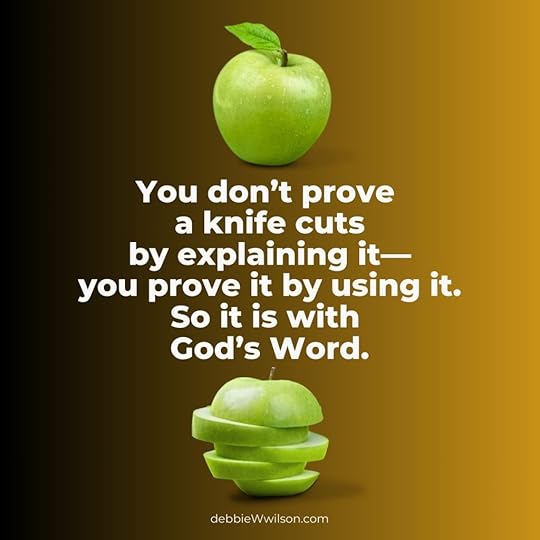
Someone once asked, “How do you prove a knife cuts? Do you explain its purpose and how it’s made?” The best way to prove it cuts is to use it. Pick up a crisp apple and slice it. Similarly, how do we know God’s Word is true? Read it and apply it.
Trusting the Bible boils down to trusting God. It would be foolish to think an all-powerful God could not preserve His Word for His people.
What about the Old Testament?Some people say they only trust the New Testament. But Jesus and Paul quoted the Old Testament. Jesus used the Old Testament to explain His crucifixion after His resurrection. We may not always understand it, but God recorded every word for our benefit.
Two Helps for Understanding the Bible“For whatever was written in earlier times was written for our instruction, so that through perseverance and the encouragement of the Scriptures we might have hope” (Romans 15:4 NASB).
To get the most from Scripture, we need two essential ingredients:
Humility: When we approach the Bible, we must recognize our limitations and prejudices. We need to humble ourselves before God and ask Him to grant us understanding (Psalm 25:9).The Holy Spirit: The Bible is a spiritual book. The Holy Spirit gives us understanding and applies God’s Word to our lives.More Suggestions for Growing in God’s WordGet a translation you enjoy—one that’s clear and easy for you to read.Choose a regular time and place to meet with God.Work through a book of the Bible or a structured study rather than skipping around. [Here’s a simple guide on “How to Get More from Your Bible.”]Pray: Ask the Holy Spirit to speak to you in a way you can understand.Live what you learn—use it, or you’ll lose it.“The person without the Spirit does not accept the things that come from the Spirit of God but considers them foolishness, and cannot understand them because they are discerned only through the Spirit” (1 Corinthians 2:14 NIV).
God promises incredible blessings to those who follow His Word, and He warns of the snares that befall those who ignore His wisdom. The Bible is our sustenance and our light in a dark world. Cherish this priceless gift from God.
“All Scripture is inspired by God and is useful to teach us what is true and to make us realize what is wrong in our lives. It corrects us when we are wrong and teaches us to do what is right” (2 Timothy 3:16 NLT).
How has the Bible changed your life? If you know someone who’s questioning the Bible, tell them how it’s changed you.
Can you trust the Bible? Yes—and here’s why. #Bible, #Faith,
Share on X
Blessings,
#MondayLinkUp #InstaEncouragements, #Let’sHaveCoffee, #Grace&Truth
The post Can I Trust the Bible? appeared first on Debbie W. Wilson.
September 22, 2025
Whispers of Eternity: Hope Beyond Death
From school shootings to a public stabbing to Charlie Kirk’s assassination, our country has faced heartbreaking tragedies in recent weeks. The deaths of children, young adults, and a Christian community leader force us to face a sobering reality: death affects us all.
While we hope and pray our own deaths will come peacefully, we can’t deny the facts—statistically speaking, death claims 100% of us. That’s why it’s never too soon to consider our eternal destiny.
Physical Death Is Not the EndThe Bible teaches that physical death is not the end. Every one of us—believer and unbeliever alike—will continue to exist somewhere. Scripture is clear: we will spend eternity either with God in heaven or separated from Him in eternal torment (Matthew 25:46).
Whispers of EternityLast weekend, a hospice and oncology nurse who has witnessed many people’s final moments shared about one case where a woman who did not know God had slipped into a coma. Suddenly, she sat up, screamed, “I don’t want to go,” and collapsed in death.
In an interview, author Lee Strobel shared stories from his book Seeing the Supernatural of people who experienced something similar. One man’s terrifying near-death experience so shook him that, when he returned to life, he surrendered to Jesus Christ.
In contrast, the testimonies of those who’ve seen their believing loved ones pass into eternity reveal peace and even joy.
A friend stood at his father’s bedside as he drew his last breath. Suddenly, his father’s eyes opened wide, and he exclaimed, “Oh son, I see Jesus and your mother standing beside Him.”. I was in Colorado the summer of the “Big Thomson Flood” which took the lives of some of the women in our ministry. Dr. Bill Bright visited the morgue where many victims lay. The morgue staff kept asking, “Who are these women?” because, unlike so many flood victims whose faces had terror etched across them, these women’s faces reflected peace—even joy.
.A friend who cared for her father when he was dying said he kept saying, “Can you see the flowers? They’re so beautiful!” When she admitted she couldn’t, he replied, “Of course you can’t. It’s so beautiful.”
.My brother-in-law suddenly passed away while boating with friends and family. He kept looking into the heavens talking about how beautiful they were. His friends started teasing him because he couldn’t take his eyes off the sky. Moments later, he was in heaven.
These “whispers of eternity” remind us that heaven is real—and so is hell.
Two Choices: Justice or GraceThe Bible says, “Today is the day of salvation” (2 Corinthians 6:2 NLT). After death comes judgment (Hebrews 9:27). Today is our opportunity to receive God’s gift of eternal life. After death, it will be too late.
Have you recognized your need for a Savior? None of us is good enough to earn heaven. Our thoughts, attitudes, and actions fall short of God’s perfect standard (Romans 3:23).
Justice demands the penalty for sin:
“For the wages of sin is death, but the free gift of God is eternal life through Christ Jesus our Lord” (Romans 6:23 NLT).
Grace steps in and pays the penalty for us:
“For this is how God loved the world: He gave his one and only Son, so that everyone who believes in him will not perish but have eternal life” (John 3:16 NLT).
We choose: Justice or Grace.
Receive God’s Gift“But to all who believed him and accepted him, he gave the right to become children of God” (John 1:12 NLT).
If you’ve never accepted God’s gift of salvation found in Jesus Christ, please don’t wait. You can receive Him today by sincerely praying something like this:
Dear Lord, I know I’ve fallen short in many ways. I need Your forgiveness. Thank You for dying on the cross for my sins. Please wash away my sins, come into my life, and make me the person You created me to be.
If you prayed this in faith, welcome to the family of God! Tell someone about your decision and find a Bible-believing, grace-filled community where you can grow. I’d love to hear from you too. Visit my free resource page and book page to help you grow in your faith and experience the joy of knowing Jesus.
Hope Beyond DeathI close with this invitation from Revelation.
“The Spirit and the bride say, ‘Come.’ Let anyone who hears this say, ‘Come.’ Let anyone who is thirsty come. Let anyone who desires drink freely from the water of life” (Revelation 22:17 NLT).
Death is certain—but it’s not the end. Eternity offers two choices: justice or grace. Have you secured your hope beyond death? #HopeBeyondDeath #Faith #Heaven
Share on X
Here is a link to Charlie Kirk’s Memorial service. In the first minutes, his pastor Rob McCoy clearly shares the gospel message. At 2:38, Marco Rubio also shares the message of Christ. Both short blurbs are worth listening to.
Blessings,
#MondayLinkUp #InstaEncouragements, #Let’sHaveCoffee, #Grace&Truth
Jonathan Cahn, The Book of Mysteries (Lake Mary, FL: Charisma House Book Group, 2018), 286
We participate in the Amazon Services LLC Associates Program, an affiliate advertising program designed to provide a means for us to earn fees by linking to Amazon.com and affiliated sites. This doesn’t add any cost to the purchase.
The post Whispers of Eternity: Hope Beyond Death appeared first on Debbie W. Wilson.
September 15, 2025
The Charlie Kirk Legacy: A Life That Still Speaks for Christ
How do we make sense of senseless evil? When a life devoted to truth and faith is cut short, our hearts cry out for understanding.
Last week, like millions around the world, I was deeply shaken by the assassination of Charlie Kirk. He was a man who loved Jesus and willingly walked into the lion’s den of university campuses to reason with students. Motivated by his walk with Christ, he invited his audiences to choose the topic they wanted to discuss.
Charlie’s kind and gracious spirit coupled with his faith and brilliant mind, drew enormous crowds. He also drew death threats—and last week, an assassin’s bullet.
Why such hate? I can think of two reasons.
Radical ideologies can’t stand up to facts.We’re in a spiritual battle between good and evil.Just as Cain killed Abel because Abel was good and Cain practiced evil, so those who practice evil hate those who practice good.
“Do not be like Cain, who belonged to the evil one and murdered his brother. And why did he murder him? Because his own actions were evil and his brother’s were righteous” (1 John 3:12 NIV).
This tragedy reminds me that we’re not simply dealing with “differences of opinion.” In cases of abject hatred, we are confronting evil—evil that, unless repented of, leads to eternal death.
The Stench of Death Versus the Fragrance of ChristDid you know that believers give off a fragrance?
Even though I don’t drink coffee, the aroma of a good coffee shop makes me want to inhale deeply. The smell of steaks grilling can do the same. Pleasant aromas release good feelings while others, like rotten eggs, repulse us.
The fragrance Christians release has a fascinating twist. The Bible says the fragrance of Christ smells different—depending on the heart.
“Our lives are a Christ-like fragrance rising up to God. But this fragrance is perceived differently by those who are being saved and by those who are perishing. To those who are perishing, we are a dreadful smell of death and doom. But to those who are being saved, we are a life-giving perfume. And who is adequate for such a task as this?” (2 Corinthians 2:15-16 NLT)
When we walk with Jesus and proclaim Him as our hope, those being saved experience the sweet fragrance of life. But those rejecting Christ smell the stench of death—our very lives convict them of sin and judgment.
Charlie Kirk knew this truth. Like Jesus, he stepped boldly into hostile places because he believed the truth could set people free. Tragically, one who smelled death ended Charlie’s life—failing to realize the fragrance came from Christ, not Charlie.
Though Charlie Kirk is gone from us, he is very much alive in heaven. Just as Abel still speaks, and as the martyrdom of Jim Elliot, Nate Saint, and their companions sparked a missionary movement, I believe God will use Charlie’s death even more powerfully than his life. For example:
Dr. Naomi Wolf wrote, “I am getting texts from people—young people especially—saying that Kirk’s death has changed them forever; that they are becoming better men and women than they were.”Turning Point USA, the group Kirk founded and ran, says campus chapter requests have surged to over 37,000 since his assassination less than a week ago.
Charlie’s faith and courage call us to pick up our crosses and follow Jesus without fear. For as Paul reminds us:
“You see, we are not like the many hucksters who preach for personal profit. We preach the word of God with sincerity and with Christ’s authority, knowing that God is watching us.” (2 Corinthians 2:17 NLT)
Evil may silence a voice, but it cannot silence the truth of Christ. The fragrance of Charlie’s faith lingers on, stirring hearts and pointing people to Jesus. May we be bold enough to carry that fragrance into our families, our communities, and our culture—no matter the cost.
Evil may silence a voice, but it cannot silence the truth of Christ. Charlie Kirk’s faith still speaks, calling us to follow Jesus with courage. #CharlieKirk, #Hope
Share on X

To learn more about biblical heroes of the faith, check out my Big God books.
Here is a link someone shared with me of when Charlie Kirk spoke at a church in Raleigh.
Blessings,
#MondayLinkUp #InstaEncouragements, #Let’sHaveCoffee, #Grace&Truth
The post The Charlie Kirk Legacy: A Life That Still Speaks for Christ appeared first on Debbie W. Wilson.