Holly Walrath's Blog
November 19, 2025
Save the Date: Book Launch for CLUB MAGRITTE by Nicola Lombardi
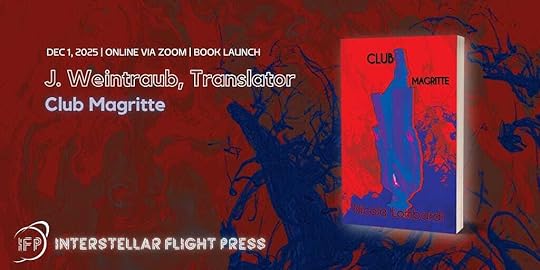 FREE ONLINE BOOK LAUNCH! REGISTER HERE!
Join us for a free online book launch celebration with translator J. Weintraub, who will read from Nicola Lombardi’s new horror novella CLUB MAGRITTE.
Event Details:
DATE: December 1, 2025
TIME: 6:00pm CST
LOCATION: Online via Zoom (Registration Required)
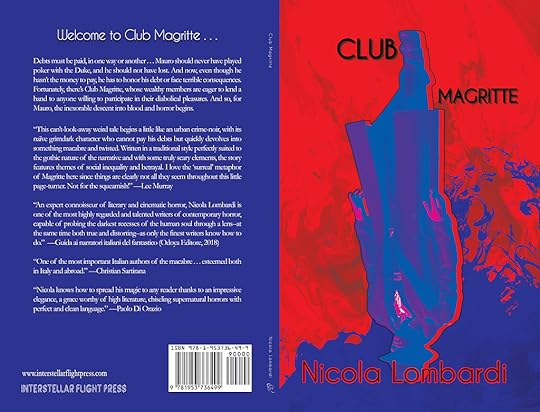
Club Magritte
by Nicola Lombardi
Translated by J. Weintraub
Debts must be paid, in one way or another . . . Mauro should never have played poker with the Duke, and he should not have lost. And now, even though he hasn’t the money to pay, he has to honor his debt or face terrible consequences. Fortunately, there’s Club Magritte, whose wealthy members are eager to lend a hand to anyone willing to participate in their diabolical pleasures. And so, for Mauro, the inexorable descent into blood and horror begins.
About the Translator
J. Weintraub has published fiction, essays, and poetry in all sorts of literary places and his plays have been produced throughout the USA and internationally. As a translator he has introduced the Italian and Swiss horror writers, Nicola Lombardi and Davide Staffiero, to the English-speaking world, and his annotated translation of Eugène Briffault’s Paris à table: 1846 was published by Oxford UP in 2018. His collection of speculative fiction, A Visit to the Catacombs, is scheduled for publication in 2026. More at https://jweintraub.weebly.com/
About the Author
Nicola Lombardi, an active participant in the Horror Writers Association, has published in Italy the novels The Gypsy Spiders, Black Mother, Night Calls, The Red Bed, The Tank, Strigarium, and The Engraver, as well as seven collections of stories. In addition, he has published novelizations from the films of Dario Argento (Profondo Rosso and Suspiria) and translated works by Jack Ketchum, Seabury Quinn, and many others for the Italian market. In 2021, Tartarus Press published his collection The Gypsy Spiders and Other Tales of Italian Horror (“Lombardi maintains a nervy, churning atmosphere, keeping readers just off-balance enough to let the big beats feel shocking and subversive. . . . Lombardi has a knack for writing endings that linger. Lovers of postwar narratives and surrealist horror won’t want to miss this.” — Publishers Weekly). Full bibliography at www.nicolalombardi.com.
“An expert connoisseur of literary and cinematic horror, Nicola Lombardi is one of the most highly regarded and talented writers of contemporary horror, capable of probing the darkest recesses of the human soul through a lens — at the same time both true and distorting — as only the finest writers know how to do.” — Guida ai narratori italiani del fantastico (Odoya Editore, 2018)
“Nicola knows how to spread his magic to any reader thanks to an impressive elegance, a grace worthy of high literature, chiseling supernatural horrors with perfect and clean language.” — Paolo Di Orazio
 [image error]
Save the Date: Book Launch for CLUB MAGRITTE by Nicola Lombardi was originally published in Interstellar Flight Magazine on Medium, where people are continuing the conversation by highlighting and responding to this story.


October 27, 2025
FIND YOUR FRIENDS Upends Revenge Horror
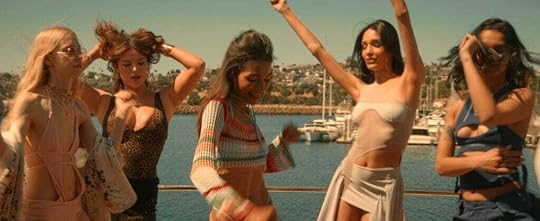 Images Courtesy Izabel Pakzad
Content Warnings: Discussions of Assault and Violence Against Women
I went into the Fantastic Fest screening of FIND YOUR FRIENDS (dir. Izabel Pakzad, 2025) with absolutely no previous knowledge about the film other than the scant info in the film guide, and I walked out feeling absolutely electrified. It is the first movie I’ve seen in a while where the audience was literally cheering for characters to be killed, and the sensation of watching that from a female audience was, to say the least, thrilling. I grew up watching horror, whereas as teens, we would laugh, ooh and ahh, groan when things got cringey, and scream as warranted. But it’s been a while since a film riled up an audience, or me, for that matter.
The film is part girl’s trip, part horror, as it follows five friends on a drunken, drugged vacation to Joshua Tree for a party in the desert. The main character is Amber (Helena Howard, previously in I Saw the TV Glow, 2024), who struggles to cope with the party girl culture when her friends leave her with a stranger on a yacht, and she is sexually assaulted. Amber spirals as the friends have the worst possible response: They start to gaslight Amber, questioning whether she was too drunk and insisting they thought she “wanted him”.
As the young women head off to Joshua Tree, they land at an Airbnb surrounded by the desert and various “redneck” men. They are there to attend a concert and part, but no matter where they go, because they are young, beautiful, and confident, they encounter men who, at every turn, are a disappointment.
Tempers are on edge under the baking desert sun as the women fight over Amber’s slowly unraveling mental state. Here, the film is overtly critical of toxic femininity, a topic rarely covered in today’s film landscape. The women get trashed only to wake up hungover and start drinking again. They leave each other at parties, see sexual exploits (and assault) as a rite of passage, and rarely surface to the level of acknowledging the harm all this creates.
Despite the possibility for each character to feel like a stereotype, the film does its best to present each woman as multifaceted. One scene that stood out to me was the pool scene at the Airbnb. The girls are drinking and dancing, playing loud music. They begin chanting “loving on you, loving on you” as they circle each other one by one. For each woman, the others provide manifestations of their future lives, and we learn that each of them is actually intelligent, educated, and talented in one way or another.
This scene invokes an almost witchy vibe. It plucks something out of female culture that is often derided — the idea that we can manifest what we desire — and gives it a subtle power.
As the women head to a concert and then a drunken afterparty, things get worse as several local men begin following the women and harassing them. Amber is put in danger by leaving the party, but her friends let her go. Amber is almost assaulted by the men, only to escape at the last minute.
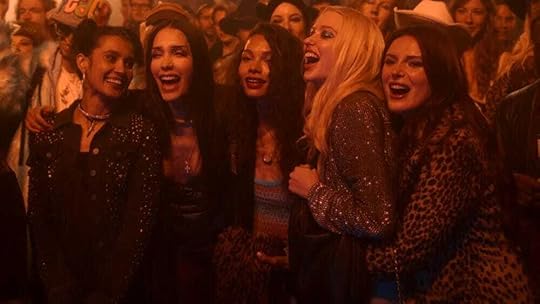
For watchers who struggle with female friendship, the film will feel all too familiar. That’s part of the horror here. It’s not just that women aren’t safe anywhere; it’s that they aren’t safe even among themselves.
The film’s best parts are its surprisingly violent vengeance moments. In the end, women watching the film get to witness something rarely (if ever) presented on film — revenge assault not on a woman, but on a man. This is the part where the audience, made mostly of women, hooted and hollared, screaming for the characters to carry out their very bloody, horrific actions in excruciating detail. (The last scene, in particular, is creepy with a capital C that stands for CASTRATION — You can guess why.)
It’s clear that women need and want the release of watching raw, complex, violent horror films. With beautiful cinematography of the desert in aching blues and oranges, the film is captivating and hard to look away from.
Some audience members may stay away from this one because the director, Izabel Pakzad, is dating James Franco, who was accused of sexual harassment and fraud in 2021 in a settled suit. It’s a curious connection, given the film’s themes and on-screen sexual assault. It certainly gave me pause when I learned about it, and I think it will draw a lot of conversations.
This review is part of Interstellar Flight Press’ coverage of the 2025 Fantastic Fest Film Festival, hosted by Alamo Drafthouse in Austin, Texas.
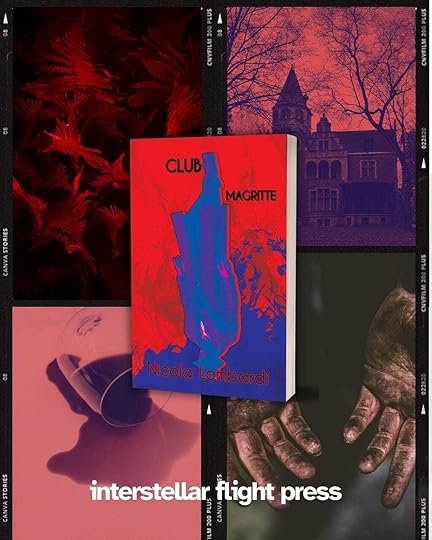
 Love what we do? Drop us a tip and get access to our writer’s Discord!
Interstellar Flight Magazine publishes essays on what’s new in the world of speculative genres. In the words of Ursula K. Le Guin, we need “writers who can see alternatives to how we live now, can see through our fear-stricken society and its obsessive technologies to other ways of being, and even imagine real grounds for hope.” Visit our Patreon to join our fan community on Discord. Follow us on Twitter, Facebook, or Instagram.
[image error]FIND YOUR FRIENDS Upends Revenge Horror was originally published in Interstellar Flight Magazine on Medium, where people are continuing the conversation by highlighting and responding to this story.
October 13, 2025
Introducing CLUB MAGRITTE by Nicola Lombardi

Interstellar Flight Press is delighted to announce the publication of our first-ever translated work, Club Magritte by Italian author Nicola Lombardi, translated by J. Weintraub.
Debts must be paid, in one way or another . . . Mauro should never have played poker with the Duke, and he should not have lost. And now, even though he hasn’t the money to pay, he has to honor his debt or face terrible consequences. Fortunately, there’s Club Magritte, whose wealthy members are eager to lend a hand to anyone willing to participate in their diabolical pleasures. And so, for Mauro, the inexorable descent into blood and horror begins.
Praise for CLUB MAGRITTE
“This can’t-look-away weird tale begins a little like an urban crime-noir, with its naïve grimdark character who cannot pay his debts but quickly devolves into something macabre and twisted. Written in a traditional style perfectly suited to the gothic nature of the narrative and with some truly scary elements, the story features themes of social inequality and betrayal. I love the ‘surreal’ metaphor of Magritte here since things are clearly not all they seem throughout this little page-turner. Not for the squeamish!”
— Lee Murray
“An expert connoisseur of literary and cinematic horror, Nicola Lombardi is one of the most highly regarded and talented writers of contemporary horror, capable of probing the darkest recesses of the human soul through a lens — at the same time both true and distorting — as only the finest writers know how to do.”
— Guida ai narratori italiani del fantastico (Odoya Editore, 2018)
“One of the most important Italian authors of the macabre . . . esteemed both in Italy and abroad.”
— Christian Sartirana
“Nicola knows how to spread his magic to any reader thanks to an impressive elegance, a grace worthy of high literature, chiseling supernatural horrors with perfect and clean language.”
— Paolo Di Orazio
“Lombardi, a veteran of literary horror, manages to describe distressing psychological moments, delving into the most underground meanderings of the subconscious with great skill . . . Lombardi writes words and phrases in such a fascinating way that it captures you from the very first description.”
— Progetto Babele
About the Author
Nicola Lombardi, an active participant in the Horror Writers Association, has published in Italy the novels The Gypsy Spiders, Black Mother, Night Calls, The Red Bed, The Tank, Strigarium, and The Engraver, as well as seven collections of stories. In addition, he has published novelizations from the films of Dario Argento (Profondo Rosso and Suspiria) and translated works by Jack Ketchum, Seabury Quinn, and many others for the Italian market. In 2021 Tartarus Press published his collection The Gypsy Spiders and Other Tales of Italian Horror (“Lombardi maintains a nervy, churning atmosphere, keeping readers just off-balance enough to let the big beats feel shocking and subversive. . . . Lombardi has a knack for writing endings that linger. Lovers of postwar narratives and surrealist horror won’t want to miss this.” — Publishers Weekly). Full bibliography at www.nicolalombardi.com.
About the Translator
J. Weintraub has published fiction, essays, and poetry in all sorts of literary places and his plays have been produced throughout the USA and internationally. As a translator he has introduced the Italian and Swiss horror writers, Nicola Lombardi and Davide Staffiero, to the English-speaking world, and his annotated translation of Eugène Briffault’s Paris à table: 1846 was published by Oxford UP in 2018. His collection of speculative fiction, A Visit to the Catacombs, is scheduled for publication in 2026. More at https://jweintraub.weebly.com/
Introducing CLUB MAGRITTE by Nicola Lombardi was originally published in Interstellar Flight Magazine on Medium, where people are continuing the conversation by highlighting and responding to this story.
October 6, 2025
WEAPONS Asks: Who Gets to Die to Save the Children?
 Images courtesy Warner Bros.
Weapons (Warner Bros., 2025), by director Zach Cregger, is a slick feature focused on the horror of lost children, starring Julia Garner as a wayward teacher and Josh Brolin as a devoted dad. It’s been fairly popular and a big hit in the horror scene, but I left the film feeling a bit dazed by its choice of victims.
In the last few years in horror, there’s been an important conversation surrounding the history of horror and its more problematic tropes. Specifically, filmmakers like Jordan Peele and Rose Glass (Saint Maud) have worked to reframe who dies in a horror film. Whereas horror has a long history of killing off marginalized characters, including people of color, queer people, and the “slutty cheerleader”, most contemporary filmmakers try to frame deaths as non-moral in nature.
Weapons, alas, falls back into that old trap. And I think it has to do with the children.
Here’s the setup of Weapons, spoilers ahead.
The film opens with an unknown child narrator (Scarlett Sher), who explains that in this small town, one day, all the children got up in the middle of the night, walked out of their houses, and never came back. Only one student, Alex, survived.
As the story unfolds, it’s told in sections, each broken into a different point of view. These points of view become archetypal characters, which I believe sets them up for the problems with this film:
 Justine (The Teacher)
The children were all in one class at the local elementary school, taught by Justine (Julia Garner). Justine is targeted by the town, who are convinced she knows something about the missing children. As we quickly learn, Justine is not as squeaky-clean as she seems on the surface. As she wrestles with the guilt of having her entire class vanish, Justine meets up with an old flame, the local cop Paul (Alden Ehrenreich), and the two hook up.
Justine is the only one who thinks that her one remaining student, Alex, might be in trouble. She begins stalking him, trying to find out the truth about the missing students. Julia Garner has an excellent skill at playing morally gray characters (see The Royal Hotel, 2023), and she generates a lot of empathy on screen.
Justine’s character falls into the stereotype of a woman who is constantly gaslit by those around her. Her principal thinks she cares too much about her kids and crosses boundaries, and thus won’t believe her concerns about Alex. She drinks heavily to deal with the stress (but who could blame her?)
The film can’t kill off Justine, after all, someone has to play the final girl here, so let’s put her aside for now.
 Archer (The Dad)
Archer is the father of one of the missing children and the loudest person against Justine. Josh Brolin is equally curmudgeonly and fatherly, determined to solve the mystery of the missing children. He starts putting together videos from doorbell cams and realizes the children were all headed toward one section of town when they left their homes.
Archer and Justine eventually team up, as Archer is the only one who believes Justine’s worries over her one remaining student, Alex.
Brolin’s character quickly takes up a lot of emotional space in the film, and while it would have been easy to kill off his character, I think he was saved by the filmmakers for the parents in the audience: You have to have a parent reunited with a kid in a story where kids are missing. The central, emotional point of the story can’t just be their teacher.
 Paul (The Corrupt Cop)
Paul is a cop who is cheating on his wife with Justine. When he gets caught out, his stress boils over, and he ends up beating up James, a drug addict. Paul hits all of the cop stereotypes: fear of getting injured on the job that overrides what should be a sense of preserving justice, the immediate lack of compunction to cover up his mistakes, plus he is a cheater too. Paul’s actions against James are justified in the film by James leaving syringes in his pockets for Paul to find.
In relationship to the missing children plot, Paul becomes the representative for the police, who rarely handle missing children cases appropriately.
Paul has got to go, and as an audience member, it’s hard not to root for his death. But his character is so stereotypical, and it’s a shame Paul was never given a chance to redeem himself if only to break the stereotype.
 James (The Drug Addict)
James (Austin Noah Abrams) is unhoused and living in a tent in the woods, where he spends most of his time trying to get more money for drugs. His character is the saddest of the stereotypes presented in this film, not because he’s addicted, but because of how one-note the film makes his character. I’m not sure whether we’re meant to think he’s funny (i.e., a joke) or hate him, but the setup for the tension with his character is that he is the first bystander to truly discover the missing children’s whereabouts.
Of course, as audience members, this is meant to worry us. A drug addict surely would never do the “right” thing and report the missing kids. Oh no! Will the kids ever be saved? Don’t worry — the film solves this by giving James a big cash reward to dangle in front of him as motivation.
James makes for an easy kill, right? Drugs are bad, kids.
For me, James’ death was complicated. Austin Noah Abrams plays the character for laughs, but James is really kind of a tragic figure, and once again, I found myself longing for some reversal of fate here.
 Marcus (The School Principal)
Marcus (Benedict Wong) is the devoted school principal who has to juggle the crisis of losing a whole class of students and having their teacher go slightly off-course.
In at least one original script for this film that I read, Marcus is straight. But in the final film, Marcus is gay and married to Terry (Clayton Farris). In the film, the two go grocery shopping together and then spend time sitting at matching TV dinner trays with Disney T-shirts. They have the most brutal, most gory on-screen moments.
That should tell you all you need to know: Marcus and Terry have got to go.
Marcus’ death really left a sour taste in my mouth. As the only character who isn’t white in the film, and as a queer character, the extra gore in his death felt particularly frustrating.
As innocent as it may have been meant, Marcus’ death is a subconscious judgment on anyone queer who is in a job close to children. In a world where queer people are often forced back into the closet in order to keep their jobs around kids, the film’s killing off of Marcus was difficult to watch.
 Alex (The Survivor)
The last section of the film reveals the most, focusing on the one remaining student, Alex.
Where I feel the film succeeds is in Alex’s story. As we learn, Alex’s strange Aunt Gladys comes to stay with the family and ends up doing weird magic to turn his parents into her slaves — her weapons. As Alex is forced to go to school and keep up appearances while his parents are trapped at home, his story becomes a compelling metaphor for child abuse. Like many abused kids, Alex goes along with what his aunt wants, forced to follow her increasingly bizarre rules in order to keep his parents alive. When Gladys convinces him to turn on his classmates, he does so. This echoes the way abusers often make their victims complicit participants in their schemes. It also echoes how abuse victims, especially children, are often very good at hiding the abuse they endure.
Even the villain — a crone, echoing fairy tale villains — is a stereotype. Alex’s Aunt Gladys falls directly into the trope of a wicked witch kidnapping children. She has no backstory or nuance.
Some have said that the message of WEAPONS is that children are weaponized to perpetuate harm — in the way that, as a society, we “allow” school shootings to continue. And partially, this is true. It’s a horrendous reality that our society refuses to pass gun legislation to prevent these kinds of losses. The loss of children reverberates through communities, destroying them. Art can be a metaphor that makes us rethink our choices. It can help us decide to change things.
But if that is the goal, I don’t think the film succeeds because of who it ends up allowing to die on the martyr table for its children. The message that comes off is that marginalized people should die to “save the children”. That imperfect people deserve to die. The reality is that marginalized people are often at the forefront of the fight to make change. Gun violence disproportionately impacts marginalized people. Gun laws today are inherently racist.
While WEAPONS is satisfyingly spooky and has an absolutely bonkers end scene that I really enjoyed, it ultimately struggles to make its message clear.
 Love what we do? Join our fan Discord for just $1/month

Interstellar Flight Magazine publishes essays on what’s new in the world of speculative genres. In the words of Ursula K. Le Guin, we need “writers who can see alternatives to how we live now, can see through our fear-stricken society and its obsessive technologies to other ways of being, and even imagine real grounds for hope.” Visit our Patreon to join our fan community on Discord. Follow us on Twitter, Facebook, or Instagram.
[image error]WEAPONS Asks: Who Gets to Die to Save the Children? was originally published in Interstellar Flight Magazine on Medium, where people are continuing the conversation by highlighting and responding to this story.
September 15, 2025
The Best Speculative Poetry of the Year Is Award-Worthy

This is my seventh year reviewing books from the SFPA (Science Fiction and Fantasy Poetry Association) Elgin Award for best speculative poetry book. A full list of nominated books is available on the SFPA website. This year’s award chair is Juleigh Howard-Hobson, who I would like to thank for diligently tracking nominations. Here are my previous reviews:
The Best Speculative Poetry is IntersectionalThe Best Speculative Poetry of the Year is ExplosiveThe Best Speculative Poetry of the Year is EpicSpeculative Poets Renegotiate Femininity & the StrangeThe Best Speculative Poetry Engages in Experimental FormsThe Best Speculative Poetry is Creepy AFAbout the Awards: The Elgin Awards, named for SFPA founder Suzette Haden Elgin, are presented annually by SFPA for books published in the preceding two years in two categories, Chapbook and Book. Chapbooks must contain 10–39 pages of poetry and books must contain 40 or more pages of poetry. E-books are eligible, as well as print. Books that won first–third place in the previous year’s Elgin Awards are ineligible. Single-author and collaborative books are eligible; anthologies are not. Books containing fiction as well as poetry are not eligible. Books must be in English, but translations are eligible. In the case of translations that also contain the poems in the original language, those pages will not count toward the total page count. Nominated books must be made available to the Chair upon request to remain eligible.
Thoughts on This Year’s BooksThis year, I assisted in two major renegotiations of the speculative poetry genre. I was involved in the creation of the SFWA (Science Fiction and Fantasy Writers Association) Nebula category for poetry, and I launched the Speculative Poetry Initiative to add poetry as a category at the Hugo awards. While both are still nascent projects, it has hammered home to me a few things that matter about speculative poetry:
1. Poetry Can Be Speculative, and It Should Not Have to Prove ItOne common myth is the idea that poetry is inherently non-speculative. In discussing, reviewing, and researching speculative poetry, I constantly come across the idea that because poetry so heavily deals in metaphor, it is in some way less speculative than fiction.
Of course, this is absurd. The monster in a horror story can be a metaphor — for the othered, for abuse, for trauma — but what speculative poetry does is puts the metaphor first. This metaphor-leading aspect often leads to the frustrating argument of whether a poem is speculative or not — a debate that rarely, if ever, occurs in fiction, and like the question of “What is a poem?” is endlessly exhausting because it inherently excludes.
For example, on this list are works that use folklore and cultural mythology. The authors writing these works are speculative writers, and they are using a deep history of their ancestors. Yet, it’s all too common for Westerners to question whether these works are speculative or merely rooted in history. This is not a question that would be asked of, say, Greek mythology or American cryptids, or Christian mythology. Just because the speculative draws from a cultural mythology does not mean it is not speculative.
Speculative poets have spent much of their time proving they get to exist in the same places as fiction writers. It’s time to stop questioning whether a work is speculative — and instead think of the speculative as a lens through which we can view a piece of literature.
2. The Beating Heart of Speculative Poetry Is Small Press, Indie, and Self-PublishingIn a recent frustrating encounter, I was told that a major press and reviewer of speculative works refused to review self-published works. This is, in my opinion, a Very Bad Precedent. If you want to celebrate poetry, you have to embrace self-published works. Poetry has a long history of being self-published — the earliest works of poetry were songs carried from generation to generation, epic narratives told in rhyme so that they would be easier to remember. When poems began appearing in print, they often appeared in small zines, chapbooks, and other self-published or indie-financed publications.
Like gorilla warfare, poetry spread through a defiance of norms. Poetry has always been about resistance — resistance to the paragraph, resistance to narrative conventions, resistance to the gatekeepers. Poems are scrawled on walls in Pompeii and painted on the streets today. Speculative poetry is no different. Each year, new presses pop up, and while some of them may not stay, that does not make their works less valuable in the history of poetry.
3. Reading Award-Nominated Works MattersSpeculative poetry is a radical field right now, full of the strange and bizarre, full of works that defy categorization. That makes it one of the most exciting genres to read. And reading from the Elgin nominee list is a fantastic starting place.
The best thing you can do to support speculative poetry right now is to read it. Read widely. Review works. Share works. Read more poetry!
How I Create This ListHow do I pick books for this list? This is merely a recommended reading list, not a “best of” list because the list I am pulling from is the nominated works from the SFPA membership. My primary concern is highlighting works I feel deserve more reads. I tend to skew heavily feminist, focusing on writers of color, LGBTQIA+ voices, and disabled poets. The list is subjective to my tastes. I spend less time on men (cis-gendered, heterosexual) because those voices have enough support. I always make a Goodreads list of the total nominated works, which you can access here.
Lastly, in the past, there has been some (IMHO short-sighted) discussion as to whether such lists are “bad” because they skew members’ voting towards one work or the other. I find this difficult to believe because I review a huge number of books selected for the Elgin. I also believe the SFPA membership has enough independent thought to be able to do their own voting. The list is not to highlight those works I think you should vote for but to highlight the amazing works nominated each year and lift up the endeavor as a whole. Vote as you see fit.
One more note: I am writing from my perspective. If I make an error, please comment or message me. I never want to misrepresent a work simply because I misread it. Also, this list may contain works I wrote or edited. I feel poets should be vocal about promoting their work, but if this bothers you, you can scroll on past.
A frustratingly necessary note for 2024+: I don’t review books that use LLMs/AI in the art or text, nor do I support authors who support those programs. It has become increasingly clear that the companies that run those softwares have massively infringed on the copyrights of artists, authors, and creatives. While I believe poetry can explore the juxtaposition between technology and art, and I would be interested to see an author actually subvert the outright theft and blatant disregard for creative capital these programs and their owners exploit for mass profit, I have yet to see that happen.
Chapbooks The Annotated Daniel by James Rome and James Knight (Steel Incisors, 2023)
The obscure, strange, and enigmatic are the home of speculative poetry, and The Annotated Daniel is certainly an example of that truth. James Knight is the publisher behind Steel Incisors and the artist for this illustrated book of poems that follows an imaginary prophet (inspired by the Daniel of the Christian Bible), Daniel, who is “a Facebook profile accredited to a self-styled social media prophet”. The book opens with a “translator’s note” that places the book in a far future where an imaginary “digital archaeologist” is rendering the poems after they have digitally decayed, presumably due to some internet apocalypse.
The trouble with hyperexperimental poetry is that it often requires an explanation for the less astute (or, honestly, let’s face it, average-not-in-a-derogatory-way reader). This book is no different: It really, really would have benefited from an Author’s Note or similar background context. A Google search provides no further information because, like most speculative and experimental poetry, this title has been little reviewed.
Without such, the work is, as it mentions, mostly indecipherable. This does not make it less worth reading, though, as in the context of the Elgin Award, it is interesting to consider as part of the existing non-canon that is speculative poetry. While interesting for its frame structure, this work ultimately struggles to hold meaning.
The Daniel of the Bible is seen as a figure of persecution, protected by God when thrown into the lion’s den. The Annotated Daniel reads like an erasure poem — but of a piece of found text that no longer exists. The illustrations mix unrecognizable text with red, blood-like figures that are at times female but rarely male, a frustrating artistic convention. Nevertheless, the work does raise interesting questions about what might survive in a post-internet world.
 Micropoetry for Microplanets by Brian U. Garrison (Space Cowboy Books, 2024)
Garrison’s mini-chapbook explores the dwarf planets Ceres, Orcus, Pluto, Haumea, Quaoar, Makemake, Gonggong, Eris, and Sedna, each paired with illustrations by Gowri Savoor. The poems are haiku, but each has a small explanatory epigraph-like addition:
Half-charmed by Neptune,
but less tethered than a moon.
Orcus runs unleashed.
Orcus is somewhat lassoed by the gravitational heft of Neptune but is not corralled so tightly as other wannabe planets.

The book ends with a chart of the orbital radius and period of the planets, as well as their surface temperatures, including additional notes (some humorous) on each planet.
The result is a charming book that is easy to read and educational, if excessively slim. I personally would love to see a much longer version dedicated to a much larger pantheon of the cosmos. For those who enjoy the artwork, Garrison has an Etsy page with framed works available for purchase.
 The Inca Weaver’s Tales by Katherine Quevedo (Sword & Kettle Press, 2025)
A descendant of a family from Ecuador and Peru, in her new chapbook, Quevedo focuses on the Inca and, particularly, their textiles. This book is part of the Sword & Kettle Press “New Cosmologies” collection, a series of mini-chapbooks made up of “reinterpretations and retellings, original cosmologies and personal mythologies…beginnings of universes and ends of worlds” (https://www.swordandkettlepress.com/n... ) The collection, which is a true chapbook in that the print version is woven with actual thread, opens with an invitation to stare into the loom, a play on “spinning” a yarn in “The Inca Weaver Begins.” Quevedo’s poems conjure the voice of the Inca, exploring themes of the seasons, planting, folklore, nature, the sacred, and community. Like discovering a lost story retold in contemporary verse, reading Quevedo’s work feels like stepping into the past.

 Artwork from The Second Dream, Steel IncisorsThe Second Dream by Madelaine Culver (Steel Incisors, 2024)
Madelaine Culver is a visual poet pursuing a PhD in horror cinema. Her debut chapbook, The Second Dream, is ekphrastic poetry inspired by the 2013 horror film starring Scarlett Johansson, Under the Skin. The film follows a young woman who lures men to their deaths and is heavy on sci-fi visuals as well as femme-as-horror tropes. This is a metatextual work; the titles in the book correspond with the titles for the tracks on the film’s musical score, composed by Mica Levi. Culver’s book features ink illustrations paired with short image-heavy poems that explore alienness as a theme. A short but fascinating read that pairs nicely with the source material that inspired these spacey, lo-fi poems.
 Water-Kin by Mahaila Smith (Metatron Press, 2024)
A unique digital-only publication, Water-Kin is part of Metatron Press’ Digital Publication Series. Woefully, the website lacks publication information such as the date of publication, but its design is satisfying to read on-screen, both on a computer and on a phone.
The opening poem, “Standardized Education,” sets up a world where a company named Utopic Robotics has taken over automation. The poem is written from the perspective of said corporation, encouraging the reader, “Do not fret in the middle of the night, / you are loved by many information systems / and automated processes.” The obvious implication is that in today’s world of Amazon and DoorDash superfast delivery, humans might (or have we already?) become dependent on automation to a worrying degree.
Rich with humor, in Smith’s world humans have become one with the machine, “Living in abstract, in cars, apartments, offices, streets. / Getting nutrients from preservative-rich breads, and cryogenically preserved meat.” It’s not a far cry from our current reality, and yet somehow, these poems are cozy to read. Smith is a queer writer, and although queerness is part of the worldbuilding here (they always write in a femme-first future, where women are the main characters), it’s not the central impetus.
Readers of Mahaila Smith’s work will notice overlap between this work and their other, Seed Beetle (Stelliform Press, 2025), which is sure to be on the Elgin Award nominee list next year. I adore a writer who can sustain a world beyond just one book, and to me, this title fits into that category.
Full-Length Books Ambush at Still Lake by Caroline Bird (Carcanet, 2024)
Whimsical and strange, Caroline Bird refers to her collection as a series of “upside-down jokes”: In the beginning, the reader is laughing, by the end, they’re dismayed (https://carcanetblog.blogspot.com/2024/06/ambush-at-still-lake-caroline-bird.html). The poems explore parenting-as-horror, where a grandmother’s last wish is to dangle her grandchild from a window (by the ankle, no less!), sentient ants imagine the Hoover is God, and a mother becomes trapped in her child’s crayon art. Caring for children is a strange, hallucinatory experience at times, and Bird captures the weirdness in these hilariously disturbing poems. Pulpy, charming, and bizarre.
 At Summer’s Wistful End by K.A. Opperman (Jackanapes Press, 2024)
K.A. Opperman has written three books of poems inspired by Halloween and the autumnal season: This one, Past the Glad and Sunlit Season, and October Ghosts and Autumn Dreams. As someone who struggles with reverse seasonal depression (the summer is my worst season), fall is the season when I come alive. Followers of the pumpkin path will recognize a kindred spirit in Opperman, who manages to convey the wistful feeling of summer’s end, the joy of realizing there are just so many days left to Halloween, the knowledge that October is coming like a promise to those of us spooky-season connoisseurs. Opperman is one of the few poets who can approach rhyme as it should be used — here, to inject a childlike wonder that makes reading this book feel like falling through a portal to Halloween Town. This series is a solace for lovers of soft horror and fall vibes.
 Bestial Mouths by Brenda S. Tolian (Raw Dog Screaming Press, 2024)
Dedicated “to women and girls who are lost or missing…,” Brenda S. Tolian’s book is a solid addition to RDSP’s ongoing excellent line of horror poetry, often with a feminist slant. Tolian explores female figures in horror, mythology, and history, from Medusa to Inanna to Lilith. I never grow tired of seeing women recast as the monster, and if you enjoy seeing tropes flipped, this is a worthwhile read.
 Calypso by Oliver K. Langmead (Titan Books, 2024)
Nominated for both the SFPA Elgin Award, Hugo Award (in its first poetry category ever), and the BSFA award, Calypso is an epic novel-length poem in the truest sense of the word, since it follows the narrative of a sci-fi epic story across the universe. Rochelle, the main character, is an engineer on Calypso, a colony ark headed for a new Earth. Rochelle leaves her children to be put in cryostasis, only to awaken to a new reality where the ship is abandoned, its gardens overrun, orbiting a strange ice planet. Langmead does an excellent job of differentiating points of view using different poetic structures. Rochelle’s point of view is arranged into four-line sentence-stanzas, each with an indented first line, while Sigmund’s point of view is right-aligned. At once readable and poetic, Calypso is a fantastic entry into the contemporary speculative epic poetry genre, and even those who don’t often read poetry will find the narrative accessible. Like The Martian, but in poetry form.
 Death Styles by Joyelle McSweeney (Little, Brown Book Group, 2024)
Readers who want a bit of context will appreciate flipping to the back of McSweeney’s book to first read the illuminating afterword. There, McSweeney explains that she wrote Death Styles after the loss of her infant daughter as part of a daily processing of grief. Each poem (with the exception of a sort of epilogue at the end) includes the date written, and these poems span a period from August 2020 to May 2021. The poet set a goal of writing a poem a day, each beginning with an inspiration — Mary Shelley, Mary Magdalene, Medea. Each poem starts in the ordinary, the mundane. Walking the dog. Encountering a skunk. Laundry. Dishes. Yet in a surreal, dreamlike, stream-of-consciousness style, McSweeney peels back the layers of grief, slowly letting the reader into a very close, memoir-like experience. How do we move on after tragedy? It’s slow, a day-by-day recovery, until one day, we no longer need to write every day. Until we remember the other people in our lives who need us.
 Fox Spirit on a Distant Cloud by Lee Murray (The Cuba Press, 2024)
Winner of the NZSA Laura Solomon Cuba Press Prize (2023), Murray’s latest full-length collection focuses on the Chinese mythical figure of the fox spirit (húli jīng), which Murray uses as a metaphor for lost, abused, and troubled (troubling) women. Some poems are shorter, while others, like “女 girl”, are epic, prosaic poems. This en-fictioning makes for captivating, narrative poems that draw the reader through stories of women at junctures in life. Murray’s work asks: What is poetry? What is fiction? What is woman? What is girl? What is love? What is fear? making it a captivating read that defies genre.
 Mexicans on the Moon: Speculative Poetry from a Possible Future by Pedro Iniguez (Space Cowboy Books, 2024)
Featuring an introduction by horror favorite Gabino Iglesias, Iniguez’s poetry falls into the Chicano/Latine futurism subgenre, which mixes Mexican folklore and magical realism with science fiction tropes. The book is laid out in four parts: Earth, Frontiers, Futures, and Aftermaths. It’s not new for authors to use the idea of brave new worlds as a metaphor for border-crossing, but it’s rarely approached authentically. As Iglesias says in the introduction, Iniguez’s poems “[shine] a bright, knowing, empathetic light on the workers, the immigrants, the Others. He celebrates outsiders in and out of our planet.” That being said, there’s plenty of satisfying criticism of the system, with poems like “American as Atomic Pie” that blends a reproach of American Essentialism with the threat of nuclear war, or “Babysitter of Tomorrow,” in which an Augmented Reality babysitter is generated to be just Mexican enough to please white parents. Some poems use an experimental, found structure, while others are in the form of haiku or free verse. This book is an example of how small press publishing and contemporary speculative poetry make it possible to explore provocative ideas that wouldn’t otherwise make it into the world. Iniguez’s book won the 2024 Bram Stoker Award, and rightfully so.
 MOTHERDEVIL by Kailey Tedesco (White Stag Publishing, 2024)
the end of the world . . . . . . is with child
Generational trauma abounds in Kailey Tedesco’s haunting MOTHERDEVIL, which explores the point of view of the Jersey Devil’s mother through poems about the body, pregnancy, motherhood, grief, loneliness, and folklore. Sharply on-theme, Tedesco’s poems use white space to give thought to the mother-monster, a trope rarely explored through the female gaze. These poems are part absurd wordplay, part confessional, and all horror. My favorite is “self-succubus” — a sexy and taboo metaphor for masturbation that brings the reader close to the dirty discomfort of mothering and motherhood, of the body as womb. “it is only a matter of time before only i call / & call & call my name” the speaker insists, a voice that carries through this truly excellent collection.
 Tea for the Wicked by Serena Morrigan (Self-published, 2024)
Morrigan’s gurlesque poetry is campy and stuffed with spooky humor, as well as beautifully designed with line illustrations and rich typesetting that bring out the gothic interior of this delightful self-published work. The book is sectioned into six parts: “carnival carnage,” “gothic grotesque,” “asylum anthologies,” “macabre melancholy,” “graveyard grimoire,” “haunted hearts”. Each section captures the vibes immaculately, making individual themes that make for an enjoyable short reading sesh if you’re in a rush. Heavy on the alliteration, this work is punny, spooky, and strange — like sitting down to a tea party with Alice.
 The Black Ship by David Clink (Aeolus House, 2023).
With the sea as its theme, this collection explores the dark waters of psychological horror. The book’s first section, “Waters”, was the most appealing to me, where urban legends like a penny on a railroad track dash against familiar ghosts. The poems are mostly two-stanza creations, relying less on the structure than the cozy, just-out-of-reach feeling of each miniature story. Yet some prose poems can be found too, like “The Dead Languages of the Wind”, a haunting piece that imagines people swept up in storm season. Other sections are more personal and intimate, but still enjoyable to encounter, like “My Mother’s Bones Glow So Beautifully,” about the author’s mother after her death, a chilling poem that is somehow still sweet in its honoring of grief: “My mother lets down a rope of tapestries / woven from a lifelong journey of collecting, / and as she takes that first step out, her bones / glow in the late evening moonlight.”
Join our fan Discord for $1/month and get access to our weekly writer accountability check-ins, plus meet other fans of SFFH, all to support a small press!

Interstellar Flight Magazine publishes essays on what’s new in the world of speculative genres. In the words of Ursula K. Le Guin, we need “writers who can see alternatives to how we live now, can see through our fear-stricken society and its obsessive technologies to other ways of being, and even imagine real grounds for hope.” Visit our Patreon to join our fan community on Discord. Follow us on Twitter, Facebook, or Instagram.
[image error]The Best Speculative Poetry of the Year Is Award-Worthy was originally published in Interstellar Flight Magazine on Medium, where people are continuing the conversation by highlighting and responding to this story.
Book Launch for THE HOUSE OF ILLUSIONISTS by Vanessa Fogg

FREE ONLINE BOOK LAUNCH: Join us for a reading with Vanessa Fogg on November 3, 2025
The House of Illusionists
by Vanessa Fogg
A short story collection reflecting the light and dark in human emotion and fantasy.
A sea-witch calls to souls from the deep. In modern suburbia, a middle-aged woman fights to keep her daughter from the clutches of a Faerie Queen. . . and finds herself confronting her own past and deepest desires. Sinister clowns run a candy shop on an idyllic resort island. A pair of neuroscientists fall in love amidst their quest to map the human mind. A woman is haunted by a starving ghost, and professors of magic do their best to keep students safe during a time of terrible war. In her debut collection, Vanessa Fogg spins fantastical tales set in worlds both close and distant from our own, exploring relationships, love, passion, and connection across space and time.
About the Author
Vanessa Fogg dreams of selkies, dragons, and gritty cyberpunk futures from her home in western Michigan. She spent years as a research scientist in molecular cell biology and now works as a freelance medical/science writer and editor. Her fiction has appeared in Lightspeed, Podcastle, GigaNotoSaurus, The Deadlands, Neil Clarke’s The Best Science Fiction of the Year: Vol 4, and more. For a complete bibliography, visit her website at vanessafogg.com.
 [image error]
Book Launch for THE HOUSE OF ILLUSIONISTS by Vanessa Fogg was originally published in Interstellar Flight Magazine on Medium, where people are continuing the conversation by highlighting and responding to this story.
September 5, 2025
Introducing LISTEN — A POETIC CREATURE by Griffin Rockwell

All this happened,
more or less
Now, listen to me
- / — / — / — / — / -
I have, doubtless,
excited your curiosity
Shall I make my report?
Interstellar Flight Press is delighted to announce our newest poetry book by Griffin Rockwell!
listen — a poetic creature is a book-length cento that stretches the boundaries of speculative poetry. Griffin Rockwell asks the reader to see the alien(ated) “creature” in a new light, stitching language out of the words of science fiction’s greats. At the heart of these lines, a being yearning for answers finds transformation and revelation.
About the AuthorGriffin Rockwell is a queer poet who can frequently be found writing about gender, science, space, and unusual connections. Xe is the author of the Elgin Award-nominated chapbooks body in motion (perhappened press) and Lexicon of Future Selves (VA Press), as well as two microchapbooks; their work has appeared in AGNI, Cotton Xenomorph, Whale Road Review, Palette Poetry, and elsewhere. Find xer website and socials at https://linktr.ee/griffinrockwell.
About the Cover Artistm. mick powell is a queer Black Cape Verdean femme, an artist, an Aries, and author of the chapbook threesome in the last Toyota Celica (Host Publications, 2023) and DEAD GIRL CAMEO (One World Books, Summer 2025). www.mickpowellpoet.com
Advance Praise“Griffin Rockwell’s listen — is further proof that the poet is a student of language, how it moves, and how its movement shifts meaning as a result. A book-long epic cento of lines pulled from science fiction novels, Rockwell’s chapbook is a poetic Frankenstein of its own right, in which the old classics come together to create something wholly new and unique. Though the history of classic sci-fi texts haunt the work, the voice that emerges is cohesive, contemplative, curious, and startlingly open about the complexities of identity, feeling, and being. And Rockwell’s speaker,in their brilliant and sly way, reveals what it means to create a new self from the shards of useless rules and societal standards, what it means when the ‘truth, [flashes] out from an // accidental piecing together // of separated things.’”—Taylor Byas, author of I Done Clicked My Heels Three Times
“Like a call to adventure from a Legend of Zelda fairy, listen — a poetic creature grabbed my attention from word one. It is a formally playful read, flashing images of Frankenstein, Lovecraft, and Slaughterhouse-Five just long enough to display beneath a familiar quest of personal transformation. Despite the span of its source material, it maintains an authentic, consistent voice pulled forward by its creative layout and line breaks. As a trans text, listen — moves towards self-acceptance beyond binaries without tidy answers and blurs the bias within sci-fi canon with confidence and care. It shined a warm light on the messy, poetic creature in me. I’m sure it will do the same for you.” — Warren Longmire, author of Bird/Diz: An Erased History of Bebop
“listen — feels at once like a work of epic poetry and something altogether new and form-breaking. If you’ve ever felt sympathy for a monster, then this is the book for you. Beautiful, often heartbreaking and, despite the ‘creature’ at its heart, it’s wonderfully human.” — Chloe N. Clark, author of Collective Gravities

 Join us for the book launch online via Zoom on October 6th, 6pm CST[image error]
Introducing LISTEN — A POETIC CREATURE by Griffin Rockwell was originally published in Interstellar Flight Magazine on Medium, where people are continuing the conversation by highlighting and responding to this story.
August 1, 2025
A WorldCon Offsite Reading: Humankind
 Join us for an IFP Offsite Worldcon Reading!
Date: Thursday, August 14th, 2025
Time: 7:00pm PST — 9:00pm PST
Location: Seattle Beer Co. 1427 Western Ave
Free to attend, 21+, RSVP Here
Featured ReadersAndrea BlytheAndrea Blythe is an author, poet, and game writer. Necessary Poisons is her fourth collection of poetry. Her previous chapbooks include Twelve: Poems Inspired by the Brothers Grimm Tale (Interstellar Flight Press, 2020); Your Molten Heart / A Seed to Hatch (2018), a Kickstarter-funded collection of erasure poems; and Every Girl Becomes the Wolf (Finishing Line Press, 2018), a collaborative chapbook she coauthored with Laura Madeline Wiseman. She is a member of the Science Fiction and Fantasy Poetry Association and the Horror Writers Association. Find her on Twitter @AndreaBlythe or at www.andreablythe.com.
Priya SridharA 2016 MBA graduate and published author, Priya Sridhar has been writing fantasy and science fiction for fifteen years, and counting. Capstone published the Powered series, and Unnerving Press published Offstage Offerings. Priya lives in Miami, Florida with her family.
Adria BailtonAdria Bailton (she/they) imagines entire worlds and universes to share while spending her days studying atoms, the smallest unit of matter. More of their stories where they strive to create characters that reflect their own bisexuality, neurodiversity, and disability appear in Worlds of Possibility, The Colored Lens, and Constelación, among others. Her debut YA science fiction novel, Worlds Divide, is forthcoming from Balance of Seven Press in Spring 2026. They create from the US PNW, on the traditional territory of several Indigenous nations, including the Stillaguamish, Suquamish, and Duwamish. Find her at www.adriabailton.com
Alex KingsleyAlex Kingsley (they/them) is a writer, comedian, game designer, and playwright. They are a co-founder of the new media company Strong Branch Productions, where they write and direct sci-fi comedy podcast The Stench of Adventure and other shows. Their debut novel Empress of Dust was published by Space Wizard Science Fantasy in Fall 2024, and the sequel Relic of Haven comes out in Fall 2025. Their short fiction has appeared in Translunar Travelers Lounge, Radon Journal, Sci-Fi Lampoon, and more. In 2023, they published their short story collection, The Strange Garden and Other Weird Tales. Alex’s sci-fi plays have been produced in LA, Philadelphia, and Chicago. Alex’s SFF-related non-fiction has appeared in Interstellar Flight Magazine and Ancillary Review of Books. Their games can be downloaded pay-what-you-will at alexyquest.itch.io. This Fall, they will begin their graduate studies in speculative fiction at the University of Illinois, Chicago.
John CiminelloJohn Ciminello is author of three chapbooks of poetry. His work has appeared in several anthologies such as Songs from the Flowering Mountains (2021) and Heartbeat of the Universe (2024). He resides in Naselle, on the southwest coast of Washington. Each morning, he does a walkabout in the woods to taste the sweet moist maritime air of beginnings. His poetry is an expansion of what he sees and feels through the cedar, raven, basalt, and mushroom worlds. He takes in the outside world then travels inward. His poems are a blend of musings, missions, medicine and mischief.
Christopher CokinosChristopher Cokinos’s 2024 nonfiction book, Still as Bright: An Illuminating History of the Moon from Antiquity to Tomorrow, came out from Pegasus to high praise from Kirkus, Sky & Telescope and other venues. It was a “Best of” in the Globe & Mail’s 2024 list. Last year he also led an all-artists lunar surface analog mission at the SAM facility at Biosphere 2. He’s had work recently in Esquire, Scientific American and Astronomy. He volunteers with The Planetary Society and wants all of us to save NASA.
Betsy AokiBetsy Aoki’s poetry has been published in Uncanny Magazine, Asimov’s Science Fiction, Fantasy Magazine, Strange Horizons, The Deadlands and is forthcoming in Nightmare Magazine. She is currently Poetry Editor for Uncanny Magazine. Aoki’s debut poetry collection about women in technology, Breakpoint, was a National Poetry Series Finalist. Its signature poem, “Slouching like a velvet rope,” was selected by Pulitzer Prize winner Jericho Brown for the Auburn Witness Poetry Prize.
Ursula WhitcherUrsula Whitcher is a writer, mathematician, and poet whose work can be found in places including Asimov’s, Analog, and The Deadlands. Ursula’s collection of interwoven stories North Continent Ribbon is shortlisted for the 2025 Le Guin Prize for Fiction.
Tod McCoyTod McCoy is a playwright, poet, editor, and fiction writer whose work has appeared in Asimov’s, Heartbeat of the Universe, The Stafford Challenge Anthology, Bronies: For the Love of Ponies, and Hummingbird Magazine, among others. He is co-editor of Pocket Workshop: Essays on Living as a Writer. His theatre work has been produced in Seattle, Portland, Missoula, Tempe, and Vancouver, BC. He received an MA in English from Arizona State, is a graduate and board member of the Clarion West Writers Workshop, and is the publisher behind Hydra House Books, a science fiction and fantasy press. He lives outside of Missoula, Montana, with his artist-witch wife, a goblin child, and a variety of animal familiars.
Joe HaldemanJoe Haldeman has won five Hugos and five Nebulas and is an SFWA Grandmaster of science fiction. His best-known book is THE FOREVER WAR. His latest novel is WORK DONE FOR HIRE. He’s won the Rhysling Award for his poetry. Joe was a combat soldier in Vietnam, which strongly influences his work. He’s retired from M.I.T, where he taught every fall semester for 30 years. When Joe’s not writing or teaching, he paints, bicycles, plays the guitar, and is an amateur astronomer. He’s been married to Mary Gay Potter Haldeman for 60 years.
[image error]A WorldCon Offsite Reading: Humankind was originally published in Interstellar Flight Magazine on Medium, where people are continuing the conversation by highlighting and responding to this story.
June 18, 2025
Introducing THE HOUSE OF ILLUSIONISTS: AND OTHER STORIES by Vanessa Fogg

“The House of Illusionists is a treasure box for anyone who loves exquisitely crafted speculative fiction. Every story spins its own kind of quiet, lustrous magic, and in every story, in every character, Fogg finds a twist, a turn, a chink, a crack, a different point of view. One of the things I love most about Fogg’s stories is that she has a singular ability to portray love in all its messy, complex, everyday glory, always finding beauty in the darkness, and the darkness in what’s beautiful.”— Maria Haskins, editor, reviewer, and author of Wolves & Girls
Interstellar Flight Press is delighted to announce the publication of THE HOUSE OF ILLUSIONISTS by Vanessa Fogg. Now available for pre-order!
A sea-witch calls to souls from the deep. In modern suburbia, a middle-aged woman fights to keep her daughter from the clutches of a Faerie Queen. . . and finds herself confronting her own past and deepest desires. Sinister clowns run a candy shop on an idyllic resort island. A pair of neuroscientists fall in love amidst their quest to map the human mind. A woman is haunted by a starving ghost, and professors of magic do their best to keep students safe during a time of terrible war. In her debut collection, Vanessa Fogg spins fantastical tales set in worlds both close and distant from our own, exploring relationships, love, passion, and connection across space and time.
Stories include “Wild Ones,” “Traces of Us,” “Sweetest,” “Taiya,” “The Wave,” “The Young God,” “The Message,” “The Things That We Will Never Say,” “The Breaking,” “All the Souls like Candle Flames,” “Of Milk and Blood,” “Between Sea and Shore,” “Wings,” “Fanfiction for a Grimdark Universe,” “Once on a Midsummer’s Night,” “An Address to the Newest Disciples of the Lost Words,” and “The House of Illusionists.”
“Fogg’s gorgeous language and fantastical worlds are a means of exploring the human heart. Each story in this collection is masterfully done, and the whole is absolutely stunning!” — A.C. Wise, author of Out of the Drowning DeepAbout the Author
Vanessa Fogg dreams of selkies, dragons, and gritty cyberpunk futures from her home in western Michigan. She spent years as a research scientist in molecular cell biology and now works as a freelance medical/science writer and editor. Her fiction has appeared in Lightspeed, Podcastle, GigaNotoSaurus, The Deadlands, Neil Clarke’s The Best Science Fiction of the Year: Vol 4, and more. For a complete bibliography, visit her website at vanessafogg.com.
Join us for the book launch:
“In The House of Illusionists, author Vanessa Fogg guides us through black lakes of despair, starving cities, and fanfiction futures, breaking barriers in a sweeping, otherworldly collection that speaks to the heart of humanity. This book squeezed every emotion out of me. Possibly my favourite read of the year. Transcendent and timely.” — Lee Murray, five-time Bram Stoker Award®-winning author of Grotesque: Monster Stories[image error]
Introducing THE HOUSE OF ILLUSIONISTS: AND OTHER STORIES by Vanessa Fogg was originally published in Interstellar Flight Magazine on Medium, where people are continuing the conversation by highlighting and responding to this story.
June 5, 2025
What’s New from Interstellar Flight Press
Dearest space worms,
We apologize for a bit of delay in correspondence lately, our editor has been hard at work on a certain project (herding poets like kittens to get a Poetry Hugo Award). We have some exciting things in the works, including a Worldcon offsite reading at a local brewery in Seattle, plus two new 2025 titles.
See you in the void!
Holly Lyn Walrath
Managing Editor
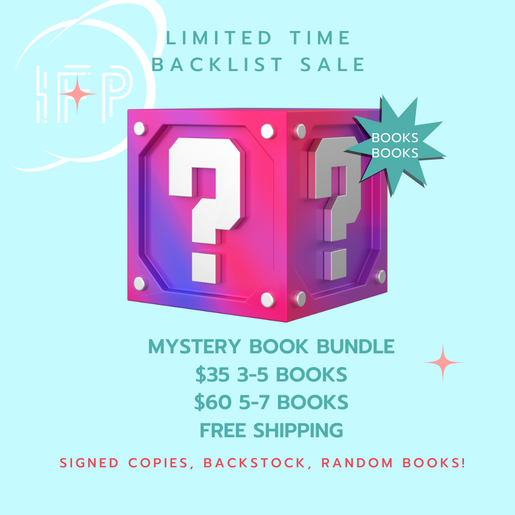 We have books for sale! It’s almost like we are a press!
 The Proverbial Shifter: A Linguistic History of Werewolves
Roxane Llanque takes readers on a journey through the etymology and cultural significance of the werewolf across history. Learn about the different interpretations of werewolves, from the early mythological figures like the Sumerian and Greek transformations to the Icelandic Kveldulf, who embodies the idea of the outsider revealing a more animalistic side under the cover of night. This deep dive reveals not just the linguistic evolution of the term “werewolf” but also its representation of humanity’s struggles between civilization and primal instincts.
 How Ghost Stories Are Really Love Stories: An Analysis of the Presence in Presence (2024)
Sarah R. New reviews the 2024 film “Presence” directed by Steven Soderbergh. The story revolves around a family — Chris, Rebekah, Tyler, and Chloe — who move into a haunted house. The unique conceit of 2024’s Presence is a truly modern ghost story, allowing us to not only see from the ghost’s point of view but also experience their feelings as well. While this is an obvious example of grief as love in the horror genre, the conceit allows us to explore this trope in a different setting, emphasising how grief can be felt on both sides.
 Speculative Poetry to Save America and the Earth: Book Review: Mexicans on the Moon by Pedro Iniguez
Rowan Minor reviews Mexicans on the Moon. Pedro Iniguez is a Mexican-American horror and science fiction writer from Los Angeles, California. A Rhysling Award finalist, he has led writing workshops and has spoken at various colleges. Iniguez has been published in several venues, including: A Night of Screams: Latino Horror Stories, Worlds of Possibility, Nightmare Magazine, Star*Line, and Eye to the Telescope. His debut poetry book, Mexicans on the Moon: Speculative Poetry from a Possible Future, is a collection of fifty politically charged science fiction poems divided into four sections: Earth, Frontiers, Futures, and Aftermath.
 Pink Kryptonite Made Superman Gay: Internalized Homophobia, Confirmation Bias, and Acknowledging the Problematic Past
E. N. Díaz’s personal essay reflects on the cultural reactions to the concept of pink kryptonite, introduced in a 2003 Supergirl comic, which controversially turned Superman gay. In this personal essay about the complexity of queerness and fandom, Díaz recalls the pop culture that shaped their understanding of societal prejudices against LGBTQ+ individuals. A critique of the modern approach to accountability.
 The Wicked Movie and Ableism in Fandom: The Complexity of Unlikable Characters with Disabilities
Chloe Smith critiques fandom’s response to the 2024 Wicked film and Nessarose, a wheelchair-using character played by Marissa Bode. Smith rebuts the harmful comments and bullying online by fans who conflated Nessarose’s unlikable character with her disability. Wicked is a film that shows how unfairly those who are different can be treated and preaches kindness and unity as a result.
 AJ Hackwith’s TOTO Provides a Fresh Take on an Old Classic: Oz Reimagined through the Eyes of the Beloved Terrier
Lisa Timpf reviews AJ Hackwith’s book TOTO, which looks at the Wizard of Oz through a dog’s eyes. Toto is a tough-talking terrier who makes up for his small size with a big attitude, and his narrative is imbued with a healthy dose of humor. This new take on the Ozian adventure is worth a look for speculative fiction fans who enjoy witty and subversive re-interpretations of old tales.
 Why Prince of Persia: The Sands of Time Was a Milestone in Video Game History: One Thousand and One Nights and the Iconic Game
Grant Butler revisits Prince of Persia: The Sands of Time from the early 2000s. What makes The Sands of Time a noteworthy moment in video game history is that it feels like it could be an epic adventure novel or a blockbuster film without any animated elements whatsoever, which actually happened in 2010 when it was adapted into a live-action feature film by Walt Disney Pictures. And the reason it feels like it could be an epic adventure novel or film is because a huge influence on its storyline and structure is One Thousand and One Nights, the centuries-old collection of Middle Eastern folk tales.
 The Truths and Travails of Womanhood: A Review of Mystery Lights, Short Story Collection by Lena Valencia
Archita Mittra reviews Mystery Lights by Lena Valencia. Lena Valencia’s debut collection, Mystery Lights (Tin House Books, 2024), comprises ten tightly written tales, illuminating the truths and travails of womanhood. Though the stories are firmly anchored in our reality, beset by patriarchal and other societal inequalities, Valencia’s prose is inflected with a slight speculative bent, adding an air of mystery and surrealism to the lives of the female characters she writes about. While not every tale manages to be memorable or particularly insightful, they do open up interesting conversations on femininity and horror.
 Who Gave this Robot a Gun?: On Binaries and Personhood in Rossum’s Universal Robots and The Murderbot Diaries by Martha Wells
In this fascinating long-form essay, Alex Kingsley explores what it means to be human through the lens of famous robots and Martha Wells’ Murderbot. The binary of “man v. machine” has been systematically deconstructed to call into question where man ends and machine begins — and to call into question if the distinction even matters. In this article, I will put two culturally significant pieces of robot fiction in conversation with each other: Rossum’s Universal Robots (RUR) to serve as an example of seminal AI narrative, and The Murderbot Diaries to illustrate how the ambiguity of sentient existence is now embraced instead of reviled.
 Pathetic Men, Tender Gayness, and Losers: An Interview with Alex Kingsley, Author of Empress of Dust
Alex Kingsley is an IFP writer, comedy sci-fi podcast extraordinaire, playwright, and lover of all things strange and weird. As evidenced by their short story collection, The Strange Garden and Other Weird Tales, Kingsley knows how to engage with the off-putting and weird and find levity and joy paired with fantastic world-building. That collection features a story about a Frat boy ghost befriending the living and, my personal favorite, a lawyer working for Hell. Kingsley’s debut novel Empress of Dust, the first installment of the Bastion Cycle series, came out in 2024. Grace Kameyo Griego was lucky enough to get to interview them about Empress of Dust and their experience as a writer.

Interstellar Flight Magazine publishes essays on what’s new in the world of speculative genres. In the words of Ursula K. Le Guin, we need “writers who can see alternatives to how we live now, can see through our fear-stricken society and its obsessive technologies to other ways of being, and even imagine real grounds for hope.” Visit our Patreon to join our fan community on Discord. Follow us on Twitter, Facebook, or Instagram
[image error]What’s New from Interstellar Flight Press was originally published in Interstellar Flight Magazine on Medium, where people are continuing the conversation by highlighting and responding to this story.