Virginia A. Simpson's Blog
April 10, 2026
The Other Side of Young
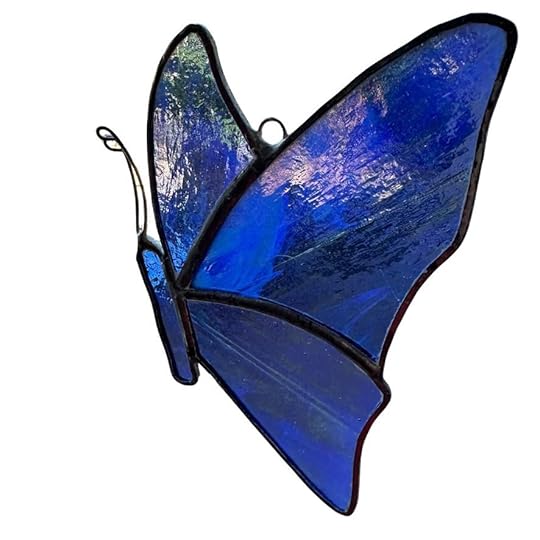
I rarely post on my website anymore. There’s a reason. My writing has moved. I’m writing weekly on Substack about grief, aging, and the lessons learned from a long life. Join me at The Other Side of Young.”
https://ginnisimpson.substack.com
Subscriptions are free. Paid subscriptions support my work and help me keep writing.
The post The Other Side of Young appeared first on Virginia A. Simpson.


April 7, 2026
Ten Years Later, I’m Still Talking to My Mother
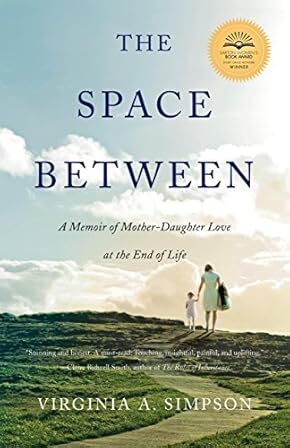
Ten years ago, on April 5, 2016, my book The Space Between: A Memoir of Mother-Daughter Love at the End of Life was published. It went on to win numerous awards, something I hadn’t expected.
I never planned to write about my mother or the last years of her life when I became her caregiver. In a weekly writing group, her story came out on the page, and I realized I was writing about a race against time to heal our relationship before she died.
As I wrote, I was coached by Linda Joy Myers, President of the National Association of Memoir Writers, who pushed me to go deeper than I thought possible. I eventually titled the book after something Barbara Walters said about the infinitely small space between life and death. In that space, I found room for a lifetime of trying to understand what we lived through.
This is part of what I’ve learned since my mother died and I wrote about us—death may have ended her life, but it didn’t kill our relationship. Writing about her taught me to examine us and keep learning who she was and who we were together.
I now understand her in ways I couldn’t while she was alive. I believe she would be proud.
Shortly before she died, my mother shared this sage advice, learned after a long life: Having Fun, Being Kind, and Loving are the most important things.
I never buried my mother. She was cremated, and I took her cremains out into the ocean where I scattered them, setting her free to travel around the world.
Since its release, The Space Between: A Memoir of Mother-Daughter Love at the End of Life has connected with caregivers and people who anticipate that role in their lives. These connections have been the greatest honor.
If you are a caregiver or know you will be, I wrote this book for you. Following are a few links where you can find The Space Between: A Memoir of Mother-Daughter Love:
Bookshop.org (best indie-friendly option):
IndieBound (local bookstore finder):
indiebound
Powell’s Books:
https://www.powells.com/book/the-space-between-9781631520495
Barnes & Noble:
https://www.barnesandnoble.com/w/the-space-between-virginia-a-simpson/1122601912
As I look back on these ten years, and the twenty-one years since I said goodbye to my mother, I’m reminded of these lyrics by Joni Mitchell. We’re captive on the carousel of time, just trying to make sense of the circles we travel…. We can’t return, we can only look behind from where we came.
Joni Mitchell – “The Circle Game”
Wherever I am, whenever I’m near the ocean, I imagine she’s there and I say, “Hi, Mom.”
The post Ten Years Later, I’m Still Talking to My Mother appeared first on Virginia A. Simpson.
February 18, 2026
Another Self-Help Book
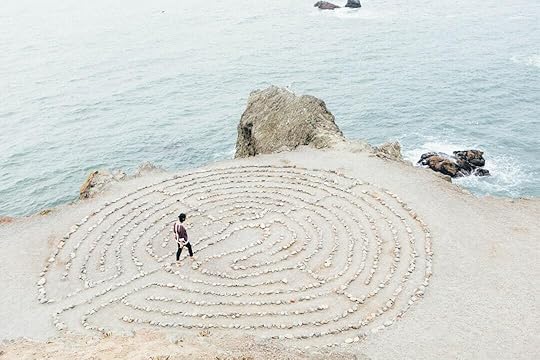 Photo by Ashley Batz on Unsplash
I read my first “self-help” book as a teenager. When I was fourteen, a Family Services counselor I saw one time recommended Psycho-Cybernetics. It made an impression, not because I understood it, but because it introduced ideas that seemed important. I kept the book for years, intending to reread it. I never did.
In my twenties, I actively sought out self-help and metaphysical books. I inhaled them.
I read them for answers. To understand life. I wanted to live better. I wanted to be happy. I wanted enlightenment.
I loved Your Erroneous Zones by Wayne Dyer. I don’t remember the chapters or the language, only the idea that guilt and worry were two ends of the same thing. Guilt was described as worrying about the past, while worry was fretting over an imagined future. The idea made sense. I remembered it.
What I didn’t do was integrate it into my life.
I went right on feeling guilty about nearly everything, with worry as my ever-present sidekick.
I read I’m OK, You’re OK, never believing for a second that I was anything close to OK. OK was for everyone on the planet who wasn’t me.
I kept reading.
The Road Less Traveled
Passages
The Aquarian Conspiracy Be Here Now
The Teachings of Don Juan
Only one idea from those books still stands out clearly. In The Teachings of Don Juan, Carlos Castaneda writes that death is always beside us, close enough to reach out and tap us on the shoulder at any moment.
I believed him, and it scared me. But not enough to wake the part of me that needed to hear it, or to be present for my life and change how I moved through each day.
I didn’t stop after reading any of those books. I haunted the self-help shelves of bookstores, looking for the one book that would fix my life.
I also turned to fiction.
In Stranger in a Strange Land, I learned about waiting is. Not as resignation, but as patience. There was no point being upset that we weren’t yet where we wanted to be. Waiting, the book suggested, teaches us that when the waiting is fulfilled, the change we seek will come.
I believed that, too.
But I didn’t live it.
Watership Down showed me something more specific. One rabbit senses danger and urges the others to leave. Some are too afraid to go. They stay because staying feels safer than change. What they don’t know is that a developer will destroy their warren. Those who stay die.
I understood what the book was saying. I wanted to live with the courage of the rabbits who left, but fear kept me rooted in old patterns. Still, the message never left me. It took a long time, but eventually the lesson got through, and I made the changes necessary to find a life that worked better for me.
The Hobbit taught me that when we’re forced onto a journey we never wanted to take, we discover something essential about ourselves, something we would never have known if we’d stayed home.
I continued to read as I searched for enlightenment and the one true answer that would fix my life.
One day, I had my hand on yet another self-help book, ready to buy it, when a thought stopped me. If I hadn’t learned or lived what all the books I’d already read had taught me, what made me think this one would be any different? That was the moment I understood that no book was going to fix me. I had to do that myself.
Recently, someone recommended a book to me. It’s popular. It’s everywhere. I started reading it and quickly realized I’d seen it before. The language was new, but the message wasn’t. It was the ancient concept of detachment and acceptance—the same truth I’d encountered decades ago, just dressed in modern clothes.
And still, part of me wanted to congratulate the author for creatively repackaging wisdom that has been passed down through the ages in a way that resonates and helps people today.
I understand how someone who doesn’t really know me might think I need it. People see through their own lenses. They notice what stands out to them and draw conclusions from there. They believe they’re seeing the whole picture, when they’re really seeing their version of me.
I know the difference because I have friends who’ve known me for decades. People who respond to me in ways that align with how I know myself. Their presence gives me a reliable reference point. It allows me to discern when someone is actually seeing me, and when they’re responding to an idea of who they think I am.
But Enough about me.
 Photo by Tim Mossholder on Unsplash
If you’ve been reading the books, working with a therapist or coach, listening carefully, and your life still isn’t working the way you want it to, maybe you don’t need more information.
I’d like you to consider that it may be time to take everything you’ve already heard and read, and begin to use it all.
I believe the wisdom is already there, inside you, even if you haven’t recognized it yet.
And if you’re someone who needs permission, please accept this essay as an invitation to claim the wisdom and power that are already yours.
The post Another Self-Help Book appeared first on Virginia A. Simpson.
July 13, 2024
Music Till The End
[image error]
Photo by Mohammad Metri on Unsplash
I’m listening to my End-of-Life playlist as I write this. Because I hadn’t reviewed it in a long time, I decided to see if I still want all these songs.
As I listen, the traumas and dramas of the outside world begin to fade. Right now, Up On the Roof plays and I’m smiling. It’s early in the morning and I’m smiling, not only my lips widening upward but my entire body lightening. The heavy burdens of outside threats and the inner turmoil in my body have melted away.
And I think, this is how I’d like my life to end—floating away on the sounds I’ve loved.
Music has carried me through some of my worst days. It has lifted me and helped me cry tears that needed to be released. It has given voice to words I couldn’t express about what I felt. It has taken me out of the horror story that was my teenage life.
I just finished reading Barbra Streisand’s book and thanks to my iPad, I could listen to the songs she mentioned. This reminded me how much I love music. I’d forgotten to play music the way I did when I was young.
I recall dancing around my first two apartments, blasting my stereo as I cleaned my home. Music playing when I returned home from work or school and did my homework. Music on when another breakup broke my heart, and I needed to cry or find inspiration. Gloria Gaynor’s I Will Survive pointed me toward self-empowerment and let me know this heartbreak didn’t mean the end of me, and I found a new beginning.
Right now, I’m listening to Stevie Wonder’s Free. Few have heard this song, but it’s the one I want played at my memorial or celebration of life. “And I’m free to be nowhere but every place I need to be…free from feeling heat or knowing bitter cold…I’m gone, but still living, life goes on without a beating heart.”
Music plays and I’m present. No concerns. The sounds, words, beat moves through my body and I am one with the world. One with myself. No longer scattered by caring about things beyond my control.
Theme From A Summer Place just came on. It’s on my list because it’s Bobby’s favorite song. I used to exercise to it when I was in high school. The movie, A Summer Place is a soap opera, but it’s delightful because Sandra Dee was beyond adorable and remains one of my favorites. Oh, how I loved Gidget and James Darren singing to her. Talk about a crush. Fond memories.
I’d forgotten how music saved me until I began listening to my playlist this morning and remembered music transports me out of any concerns as I float along with each song.
And now, Louis Armstrong sings It’s A Wonderful World. We played it at our wedding when we entered the reception holding hands. Here’s a picture:
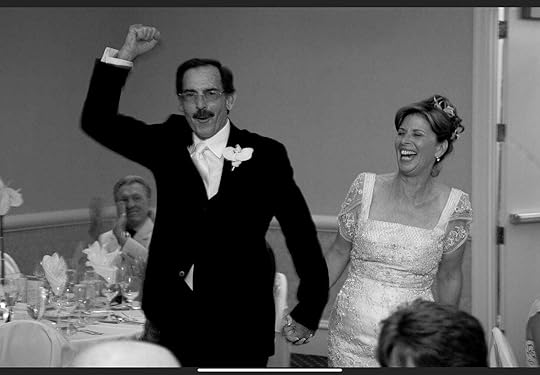 Bob & Ginni’s wedding
What are the songs that transport you to special places? Please share so we may all enjoy.
I wish you all a day where music lifts your soul, and you find peace and joy.
This post first appeared in my Substack newsletter “The Other Side of Young, where most of my online posts now appear. If you’d like to read more of me, subscribe to my newsletter at: ginnisimpson.substack.com
The post Music Till The End appeared first on Virginia A. Simpson.
December 7, 2023
Never Visit A Dying Person
Never Visit A Dying Person
I bet you’re scratching your head right now. Why wouldn’t you want to visit a dying person? Would you abandon your wife, husband, mother, father sister, brother, best friend at a time like that? Of course, you wouldn’t.
Before a fit of disgust at my callousness takes over, I’m going tell you what I mean when I say, Never visit a dying person.
After a young woman named Beyhan died, her friends put together her words and published a small book called A Spirit Soars: Beyhan’s Journey. Beyhan said, I could always tell when someone was visiting a dying person. She meant that because they no longer saw her as the person she still was, they treated her differently. The message is this: Visit the person, not their disease, diagnosis, or prognosis.
In 1990, while sitting at my desk working on my dissertation, my phone rang. The voice on the other end said, “Hi, Ginni, it’s Sharon.”
“Hi, Sharon. How are you?”
“Not so good. I have lung cancer and the doctors say I have two months to live.” Sharon had never smoked.
I told her I’d like to visit but had a cold. I asked if I could call when I felt well enough to come over.
A couple weeks later, I pulled up to her charming home in Palo Alto. Although born in Toronto, Ontario, Canada, Sharon’s home and garden had an English aesthetic.
As I walked to her doorway, I said a small prayer. If I can’t say something wonderful, please don’t let me say anything that could hurt. I also repeated advice offered by one of my more spiritual teachers: Show up, pay attention, tell the truth, and don’t be attached to the outcome.
Armed with only my small prayer and words of advice, I knocked on Sharon’s door.
Sharon had always been slender, but she’d lost weight. She still had all of her short, blonde hair. Total hair loss was still a few weeks away. Her blue eyes were now more vibrant against her pink cheeks. Seeing me, she smiled, opened her arms, and wrapped them around me.
For the next ten months, I visited Sharon every week or so. Always arriving with no preconceived agenda, I let our time together unfold with Sharon leading the way. Although we did simple things, against the backdrop of diminishing time, each moment filled itself with profound meanings and connections.
Sometimes we’d sit in her garden and talk as we sipped our hot tea. Other times, she had me drive her places because she had things she wanted to accomplish.
She wanted to buy a tree to plant in her yard. As we meandered the aisles and she inspected the trees, she said, “The cancer has moved into my bowel.” She spoke casually, as if sharing that she’d bought a new blouse. As we walked on, she added matter-of-factly that the pain was getting harder to control. She picked out a lovely tree with lavender flowers.
Another time, we enjoyed the shops on the main street in Los Altos. In one shop, she selected a cozy for her tea pot. In another, she noticed a small book, and asked if families usually had books for friends to sign. I told her yes, and she purchased the book. That day, she purchased other items she believed her husband and son would need after she was gone.
Sharon pragmatically prepared for the time she would no longer be here. As soon as I arrived one morning, she led me to her dining room and asked me to sort the photos strewn across the table. On the back of each photo she wrote the names, their relation to her, and what they were doing. “I want my son to know his family when I won’t be here to tell him.” Even as I write this now decades later, I still feel the sense of awe for this thoughtful expression of love showed for her child.
And then there was the day I wished I could have been anywhere else. While on our way to a doctor’s appointment, she talked about something I knew would happen after she was gone. I heard myself say I would tell her husband or son. Horrified, I realized I had bypassed her. I hoped she hadn’t noticed, but she had. “Or, me, Ginni. You could tell me.”
I remained silent, wishing I could find the eject button to push and release me from the car. It wouldn’t have mattered to me if I splatted onto the road. I knew I had to say something or I’d never be able to talk or look at her again.
“Excuse my silence, Sharon. I’m trying to get my feet out of my mouth.”
“Oh, Ginni,” she said with a playful slap on my arm, “I’m not that sensitive.” And we drove on.
One day she was in her yard when I arrived, sitting with a woman who’d attended graduate school with us. Ruth, a therapy intern, asked Sharon questions about dealing with a client. She hung on every word Sharon spoke, as though each syllable contained the most important and profound thing she’d ever heard. When I spoke, Ruth brushed me off.
Before Ruth left, she hugged Sharon, and I noticed Sharon wince. Once she was gone, I asked Sharon if I’d ever hurt her when I hugged her. “Oh, no, Ginni, your hugs are perfect.” She let me know that she’d noticed how Ruth had responded when I spoke and she didn’t like it. We continued sitting outside in her English garden sipping tea. “I like being with you because, unlike the others, you’ve already thought about these things and don’t treat me differently.” She knew I worked with dying and grieving people.
Over dinner one night, a mutual acquaintance of ours from school said she wanted to see Sharon, “but I’ve never been with a dying person before.”
“If you think you’re visiting a dying person instead of realizing you’re visiting Sharon, who’s dealing with the biggest challenge of her life, then don’t go.” Sheryl heard my words and a few days later went to see Sharon.
Sitting across from Sharon one morning in her yard, I couldn’t believe what I saw. I blinked hard to reset my vision. She was transparent. She was ethereal, with spaces like a honeycomb.
“Sharon! I can see through you!”
She laughed. “You’re not the first person who’s told me that.”
I wondered if maybe we don’t die all at once and parts of us let go, moving on before our last breath. Even as part of her was fading, I saw Sharon’s spirit shining with a vibrancy death couldn’t touch.
I met her son, 21 years old, one afternoon. The two of them were struggling to communicate. In their conversation and what they said to me, I realized Sharon and her son both saw her as a dying person. This colored their communication and stood between them speaking authentically. When I pointed this out, they both stared at me for a moment. Then they turned towards each other and began sharing from their hearts, fear no longer standing between them. Sharon asked if I could come back in a week and work with them again. I agreed.
The day we were to meet, Sharon called to tell me it wasn’t a good day to visit. I could barely hear her voice, and I knew. I purchased a beautiful card, wrote her a note, then headed to her house. Something stopped me from knocking on the door, so I left the card on her doorstep, hoping she’d be alive to read my words of love and gratitude, but sensing she wouldn’t.
I later learned that she probably took her last breath around the time I left the card.
About an hour later. her husband called to say she was gone. Sharon Brady was only 48 years old.
Ten months had passed too quickly since her first call to me. I immediately picked up something from the market her husband could share with visitors. Sharon wasn’t there, at least not her body, but I could feel her everywhere. Her husband retrieved a small package from their dining room table and handed it to me. Sharon had left a blue stained-glass butterfly she’d made and a handwritten card. In faded handwriting I knew must have been written through pain and the closeness of death, she said, Thank you for all your understanding, visits, and kindness.
I never visited a dying person and Sharon knew it.
I still miss her.
***The butterfly at the top of this post is the gift Sharon created and left me.
Never Visit A Dying Person appeared in Next Avenue on December 1, 2023, as the Editor’s Pick. Next Avenue is an online publication produced by PBS, dedicated to covering issues that matter most as we age. Here’s the link if you’d like to take a look: https://www.nextavenue.org/never-visit-a-dying-person/
If you’re interested in reading more of my writing, please subscribe to my newsletter, Musings From the Other Side of Young on Substack. ginnisimpson.substack.com.
The post Never Visit A Dying Person appeared first on Virginia A. Simpson.
August 27, 2023
How Sunny Got Her Name
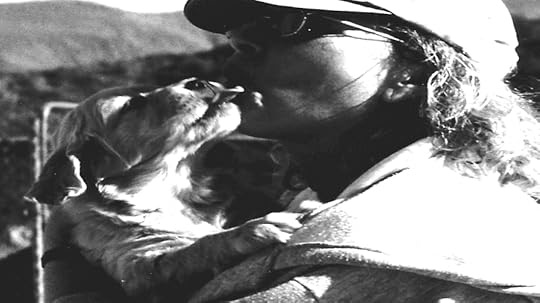
Photo of Sunny, six weeks old—Our first moment together and our first kiss
Everyone called her Sunny but her real name was Sunshine Hope. I was the only one who called her Sunshine. I named her after Maggie, my first Golden Retriever, who had breathed herself out of this life in my kitchen the year before Sunshine was born. That afternoon, her vet diagnosed Maggie with cancer and told me she had only four days to live. A few hours later, she died peacefully. I stayed with her until the last of her life force left her body and exited my home through the window.
I figure one of two things led to Maggie’s quick death. Either she heard her diagnosis and thought it would be a lousy four days or she waited until I knew her end was soon so her death wouldn’t be a complete shock. Maybe she knew I’d already lost a few people to sudden death that came with no warning and understood what that does to a person’s heart and soul.
Maggie came into my life a few months after my Holly died in my arms at age 16-1/2. We were outside in my backyard. Her wonderful vet, the most gorgeous man you can imagine, came to our home the day chosen for Holly’s end. I had done everything to keep her alive the past few months. Now there was no hope and I had to select the day to end her life. The first Thursday in February. The weather was kind to us and although there was a chill in the air, the sun shined upon us that sad day. The last few days before Holly died, I held her in my arms and thanked her for being my dog. We both cried. Yes, Holly cried gentle tears.
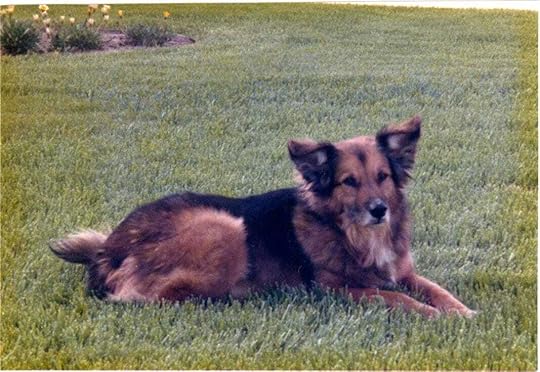 Holly at 9 years old
After Holly died, as I lay in bed that night, I felt her body up against mine, but instead of embracing her presence, I felt fear and she left. I wanted to call her back, I did call her back, but to my deepest regret, she never returned.
My now ex-husband wanted a Golden Retriever, and so a few months later, Maggie came into my life. When I first held that small puff of yellow, I looked into her golden eyes and said, “I’m only willing to do this again because I loved Holly so much.”
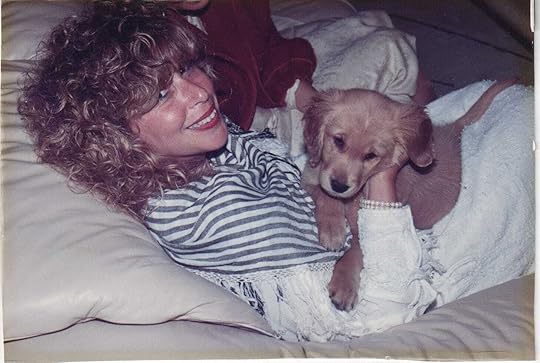 Holding Maggie
It didn’t take long for me to fall deeply in love with my first Golden Retriever. They’re a fabulous breed, smart and full of fun. Goldens are puppies at heart until they die.
Maggie died October 21, 1999, the year my mother almost died and came to live with me. Starting in August, I began getting on the floor with Maggie and singing, “You Are My Sunshine.”
You are my sunshine
My only sunshine
You make me happy
When skies are grey
You’ll never know, dear,
How much I love you
Please don’t take my sunshine away.
A year after Maggie died, the Today Show honored the 100th birthday of the man who wrote You Are My Sunshine. As I listened to another verse of the song I didn’t recall hearing before, I understood why I’d been singing the song to Maggie. Something inside me had known we didn’t have long.
The other night, dear, as I lay sleeping
I dreamed I held you in my arms
When I awoke, dear, I was mistaken
And I hung my head and cried
I loved Maggie with all my heart and really liked the name Maggie. I resisted the temptation to give my next Golden the same name.
And so, I gave my new Golden the official name Sunshine Hope in memory and honor of my Maggie.
In life, we will experience many losses and we can’t allow the possibility or probability of being hurt to stop us from loving. As Queen Elizabeth II said, Grief is the price we pay for love.
And the privilege of loving is more than worth the price of admission.
The post appeared first on Virginia A. Simpson.
August 18, 2023
Finding the Right Love Song
geralt from Pixabay
First things first—Love isn’t a noun. Love is a verb revealed through actions, not words.
Before I continue, I’d like to share the ways I learned about love from songs.
Released by The Playmates when I was eight years old, “What Is Love?” told me it’s Five feet of heaven in a pony tail. The cutest pony tail that sways with a wiggle when she walks. I had a ponytail, but I was still a few inches away from being five feet tall and finding love.
Paul Anka sang “Puppy Love,” which I was certain had nothing to do with the way I felt about Jackie, the puppy we got when I was eight.
I was nine years old when Steve Lawrence sang, Thought I was in love before And then you moved in next door pretty blue eyes. He saw her from a window, would sit by her doorstep so they could meet, and asked her to come out So I can tell you what I have to say That I love you, love you pretty blue eyes.
The lesson? All I needed was blue eyes and then a stranger would love me. My eyes were brown, so what chance did I have?
According to Merry Clayton’s 1963 “Shoop Shoop Song,” the only way to know if someone loves you is not in eyes or sighs. If you wanna know if he loves you so it’s in his kiss.
Listening to B. J. Thomas sing “Hooked On A Feeling,” in 1968, led me to search for feelings so I’d be high on believing that you’re in love with me.
Of course, there were many other songs during those formative years, but I think you get the idea of how songs convinced me that all I needed was a certain look and lots of feelings in order to know love.
I won’t go into all the songs I listened to after breakups (Skeeter Davis, “The End of the World,” Barbra Streisand and Neil Diamond, “You Don’t Bring Me Flowers Anymore,” The Carpenters, “I Won’t Last a Day Without You,” etc.) that were ready to pierce arrows into my broken heart and prove I’d never be okay without that one person. Filled with feelings, albeit mostly heartbreak, proved how much I cared, even if I hadn’t known that before the person was gone.
Then a miracle—Gloria Gaynor’s “I Will Survive” offered the possibility of existing without a human appendage to rely on. As long as I know how to love I know I’ll stay alive. Freed of believing I had to love someone in order to be whole, I realized that feeling something for another person does not necessarily mean love.
Love is more than what you feel, it’s what you do.
Love isn’t what you say, it’s what you do.
Love isn’t great chemistry, it’s what you do.
It’s easy to have chemistry with some cute, fit, sexy guy or gal, but what about years later when body parts start their descent towards the floor, the man with the beautiful head of hair is bald, or you both have packed on a few extra pounds? If you’ve loved well, you will share a more profound chemistry because it will have come from deep friendship and love.
So how do we find love? The first place to look for love may surprise you. Love isn’t waiting for you out there somewhere, and another person doesn’t embody it.
Before you seek a loving relationship with someone, search inside and love yourself.
For a long time, I didn’t understand that love had to exist inside us and had to be for ourselves before we could truly love another. I recently finished the manuscript for a memoir I’ve worked on for years, and as I sought to understand my unsuccessful search for love, my writing revealed what I had to learn so I could love myself enough before I could truly love another person.
Love is not need. Love is not looking for someone to fill our emptiness or make us whole.
The song, “People,” from Funny Girl, is beautiful, but the advice Barbra Streisand sang was wrong:
With one person, one very special person
A feeling deep in your soul
Says you were half now you’re whole
It’s no one else’s job to make us whole or fix our lives. We must do that for ourselves. It starts and ends with loving ourselves enough to not get in our own way when it comes to fulfilling our dreams. Loving ourselves enough so we can allow others to live their best lives without expecting them to compromise in order to make us comfortable.
The first time I listened to “The Greatest Love of All,” sung by Jane Olivor, and later by Whitney Houston, I knew I’d heard a song that finally told the truth:
I found the greatest love of all
Inside of me
Learning to love yourself
It is the greatest love of all
I omitted the lyrics that finding the greatest love is easy to achieve. I wish it were easy, but if you’d experienced abuse or knew a day where you felt no one in the world loved you, then finding the love inside is hard because you don’t know what it is. But I also know it can be done, and the adventure of searching and finding love inside ourselves is one of the greatest journeys of a lifetime.
If you haven’t yet packed your bags and started your journey, what’s stopping you?
I could write a lot more about love. Instead, I will stop now and invite you to share about love in your life so we can all learn from each other. What was your music of love?
Jane Olivor The Greatest Love of All
P.S. I guess I do have more I want to share. I spent a lifetime looking for love armed with the wrong ideas about love, so I made poor choices and connected to men who weren’t right for me. I didn’t love myself so how could I love another person for the right reasons? Finally, at 53 years old, I found love because I was unwilling to fall in love with the wrong person, and willing to be alone the rest of my life unless I was certain I was making a wise choice. Because of this decision, I gifted myself the most profound love of my life. Bobby and I have been together for 20 years and married 16, and never a day goes by that I’m not grateful. I never before understood love could grow into something so much deeper and more profound than what my early life and songs had promised.
**Be sure and check out my Substack newsletter: https://ginnisimpson.substack.com/
The post Finding the Right Love Song appeared first on Virginia A. Simpson.
July 31, 2023
Ode to My Personal Maid
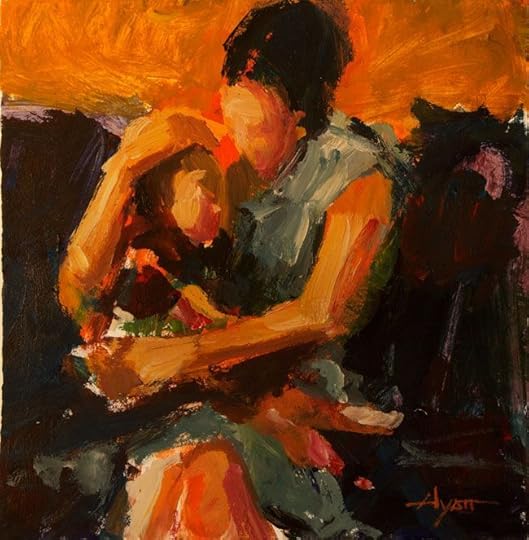
She was my personal maid, laundress, nurse, chef, chauffeur, social planner, personal shopper, and hairstylist. She also paid for everything I needed. I was a kept girl and didn’t know it.
Before you fill yourself with envy, I’d like to tell you her name. Can you guess?
Her name was Ruth, and I called her Mom.
As a child, I didn’t realize everything my mother did for me. Why would I? That’s just how life was. I couldn’t remember anything different. And I didn’t recognize all she did for me every single day.
I especially didn’t acknowledge anything when I was a teenager. I was too busy being snarky and believing I was smarter than her. Oh, the arrogance of youth.
About 25 years ago, a licensed clinical psychologist friend told me that not long ago, one east coast state had a law allowing parents to kill their unruly, disrespectful teenagers. Today’s teens are lucky that law no longer exists.
Looking back, I give my mom credit. I don’t know how she tolerated my sass and unpleasant moods. I don’t think I’m why she had at least one scotch on the rocks every night after she came home from work. But I’m now certain I couldn’t have made her already difficult life any easier.
Being young, I didn’t understand everything she coped with and what the loss of the two men she loved meant to her. I resented how she changed after dad died, and I never understood it was because she was mortally wounded. I just wanted my happy, easygoing mother, not this sullen, sarcastic woman who often drank too much.
I didn’t appreciate my mom’s patience. I took for granted how she kept feeding, supporting, clothing, and cheering me on no matter what.
My mom loved me like no one else could. She loved me because I was her daughter and despite of anything I did. She loved me unconditionally. Did she always like me? Doubtful. I’m confident she didn’t. She wasn’t a saint, so I can’t claim she was always patient and sweet. As a teenager, I hung on to her negative attributes without appreciating everything she continued to do for me. I didn’t appreciate how she was always there when I needed her or how she loved me enough to tell me the truth when I needed to hear it, even knowing I might get angry.
My mother showed me love, but it took her death and all the time since to understand the depth of her love and everything she taught me.
I didn’t realize this was what I would write when I started, but since I’m here, I hope you’ll take time to reflect on your relationship with your mother or father. I understand some people have never known love. There are parents who are incapable of loving and caring for their children in the way they should have. And if that describes one or both of your parents, I’m sorry. But maybe there was one person in your life who gave you unconditional positive regard, showed you that you were good enough just as you are, and you can reflect on the gifts they gave you.
None of us goes through this life alone. We build upon our inherited genetics and the experiences offered to us by the people around us as we grow into adulthood and throughout our lives.
Maybe I’ve written what I have today because August is almost here. You see, August is an important month. I was born in August. My mother was born in August. And my mother died in August. It’s a month of memories filled with tears and smiles.
And this August, I will add a huge loving thank you to the woman who loved me enough to never give up believing in me.
My wish is that you take time to reflect on your relationship with your mother. Write down your thoughts. And if your mother is still alive, please thank her. Thank her for me because I can’t thank my mother other than through writing and in my heart.
I hope you’ll share what you learned.
Ode to My Personal Maid first appeared in my Substack Newsletter, Musings From the Other Side of Young
The post Ode to My Personal Maid appeared first on Virginia A. Simpson.
July 6, 2023
Public Service Announcement
Public Service Announcement
(PSA)
This is a warning and information that might save your life or the life of someone you love.
If you’ve heard of TIA’s, you probably think of them as unimportant tiny strokes. You’re right about small and stroke, but mistaken about unimportant.
In case you’re not familiar, TIA stands for Transient Ischemic Attack. TIA’s are believed to be of fleeting duration, causing no harm to the brain. This is only partially true. According to some medical websites, they only last a couple of minutes and don’t result in permanent damage. Don’t let this fool you.
A TIA, often referred to as a ministroke, serves as a crucial warning. If you suspect you’re having one, call 9-1-1 immediately. It’s vital that you visit the emergency room since a TIA indicates you’re in danger of a major stroke. The risk may manifest immediately after a TIA, within the first month, or even after a year.
If you suspect a TIA, go to the hospital.
The symptoms of a TIA are similar to those of a stroke. Their duration is typically only a few minutes, but could extend up to 24 hours. According to the Mayo Clinic, symptoms include:
Muscle numbness or weakness, typically on one side of the bodyTrouble with speech or understanding spoken languageExperiencing dizziness or a loss of balanceDouble vision or visual impairment in one or both eyes.But what if your experience is different? If you suspect something off, don’t ignore it. Err on the side of maybe you’ll look silly, and get to the ER immediately.
Two weeks ago, I was in the car with my husband running errands. I didn’t think anything of it when I spoke and the wrong word came out. Thought it was just a silly aberration. I took notice when my inability to say the right words persisted despite my efforts. In fact, I forced myself to pay attention. The word was clear in my mind, but I couldn’t pronounce it correctly when speaking.
I waited for it to end, but half hour into this strange world of odd words coming out of my mouth, I forced myself to acknowledge what was likely happening. We had just turned into the Trader Joe’s parking lot, blocks away from the hospital. I forced reality to take precedence over any doubt and told my husband to get me to the hospital.
Fortunately, my neurologist advised me a few years back to call 9-1-1 and go to the ER immediately if I ever suspected a TIA as it indicated a high risk of a major stroke. I want to emphasize that even armed with this information, I still had to push away my inclination to think this was nothing. It would pass and I’d be fine. Please keep this in mind, because denial is not something we choose. We’re just there, and if we’re to survive, we must force to the forefront important information that may save us.
The hospital was so close that driving there was a better choice than waiting for an ambulance. I walked in and explained to the intake person what had happened. By then, I could speak, but intermittent glitches impeded my ability to get words out. This was not like other times when I might not remember a name. I felt like a piece of equipment with faulty wiring that prevented optimum functioning.
I was taken in immediately and the tests began. My blood pressure was over 200. I’ve never had high blood pressure in my life! After the initial intake, I was moved into one of the private ER alcoves. A nurse stayed with me the whole time and hours later, accompanied me to the room where I spent the night.
Many blood tests, an EKG, echocardiogram, CT scans, one with and one without contrasting dye, and an interesting drive to another facility for an MRI, revealed the TIA. I was sent home the next day.
And here’s where I am today. Right now, as I write, I continue to be at high risk of a major stroke. Fun times!
I want to share something important I’ve learned. It isn’t true that there are no remnants of a TIA after a short while. For more than a week after I left the hospital, I continued to struggle to say the right word. I could feel the glitch that caused me to pause before I could get my brain and mouth to cooperate with each other and allow me to speak. Yes, for more than a week, which is longer than symptoms immediately disappearing.
Because I care, I stopped everything to write today hoping you will pay attention and if you ever suspect something, you won’t brush it off and think you can tough it out. You can’t. Don’t take the chance of a major stroke that could damage your cognitive and physical abilities, or kill you.
If you suspect anything, even if you’re young, please call 9-1-1. The life you save may be your own.
Thank you for reading.
The post Public Service Announcement appeared first on Virginia A. Simpson.
April 18, 2023
Trauma and the Unexamined Life

My first experience with how the body stores traumatic memory came decades before I learned such a thing existed.
The year was 1991. Phil’s dad had died, and I was with him and his brother to help select his father’s casket. We were at Hillside Memorial Park and Mortuary, where my dad had been entombed into a wall in 1961.
I entered a door and as soon as I stepped inside, a powerful gut punch doubled me over. No one was there. The punch came from something other than another person’s fist. The punch came from my body’s memory of trauma.
I didn’t think of it when I stepped through the doorway and entered, but as soon as the punch came, I remembered. The last time I was there was the day of my father’s funeral. It was the last time I saw my father’s body, white and unfamiliar, inside a casket. More than anything, seeing my once tan, vibrant, alive father now posing as a dead white something, broke my stoicism, and I ran into the arms of my mom’s best friend, crying. Deep sobs. The last deep sobs until decades later, when I’d finally peeled away the steel that covered my loss.
My body kept the score. My body remembered what my mind had forgotten. Walking inside a place of trauma for the first time in 30 years woke up the depth of trauma I didn’t know I’d experienced the day of my father’s funeral.
But there it was. And it was now 1991 and I didn’t have the knowledge or words to tell anyone what had happened. Wouldn’t people think I was weird to feel a sock in my stomach when I entered an empty room? I’d never heard of trauma, and the seminal work of Bessel van der Kolk didn’t exist. He hadn’t written The Body Keeps the Score.
I didn’t know painful memories remained hidden in my body.
My body had kept the score. My body knew what my mind had tamped down and forgotten. My mind had created a way for me to keep going despite of everything that had happened in my young life.
My mind had created an unhealthy way for me to live. And what it had created worked for a while. Even years of body work and therapy that I believed stripped me raw and allowed me to create a new me in 1981 hadn’t excavated what remained inside my body.
The pain of seeing my father dead in a casket may have remained had I not walked into the room at the funeral home that day in 1991. The day we were planning another father’s funeral. This time it was my lifelong friend who lived next door who lost his dad.
As I write this, I wonder, if I walked through those doors again, would my body again remind me of the extreme trauma I experienced at 12? Or was that one experience enough to shake loose and heal another fragment of myself?
I also wonder what lives inside us that informs our todays. I believe it is worth thinking about so that our past no longer remains the driver behind the vehicle that is us. And, if you’re young, it’s worth dealing with our traumas when they occur rather than thinking ignoring the pain will make it go away. It doesn’t.
What we don’t address remains and ripples throughout our lives, affecting all our choices and relationships.
Examining our lives as uncomfortable experiences arise is difficult, but it is important. The more we know about how we react and what we feel gives us the opportunity to choose from a place of power and awareness. In fact, it allows us to choose. When we’re asleep, the unconscious chooses, and often, we don’t recognize until much later that we’ve lived on rote and made choices that impeded rather than enhanced our lives.
Living an authentic life isn’t easy because it demands we acknowledge who we are—the good, the bad, and the ugly. Once we do, we can laugh at what once embarrassed us, and enjoy our days.
And days is all we have. Moments that add up to days that become years, then decades, and then one day you read that the age you now are has been declared old.
Don’t fall back to sleep.
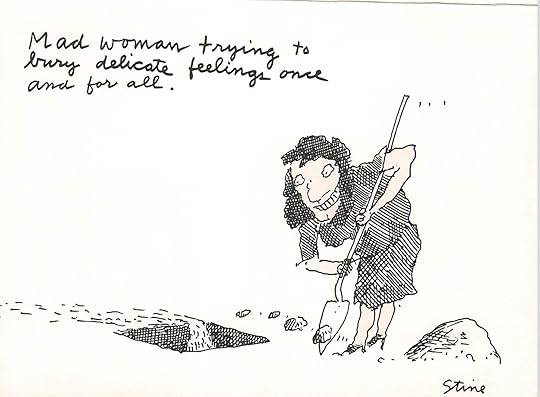
Don’t Go Back to Sleep, Rumi
The breeze at dawn has secrets to tell you.
Don’t go back to sleep.
You must ask for what you really want.
Don’t go back to sleep.
People are going back and forth
across the doorsill
where the two worlds touch.
The door is round and open.
Don’t go back to sleep.
The post Trauma and the Unexamined Life appeared first on Virginia A. Simpson.