Andrew Boylan's Blog
June 20, 2018
Natural Born Killers, LSD, God, and Prison Reform
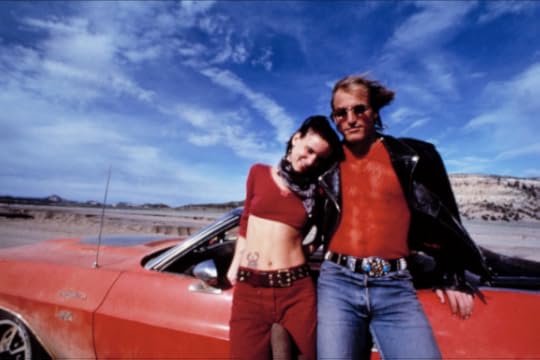
I was bartending at a hotel in New Mexico a few years after Natural Born Killers came out when the woman who was the set decorator walked in. It was a slow spring afternoon. The winds that cut the high desert from March until May whipped up dirt and fine stones in the street. Dust caked the quarter panels and hoods of Mercedes, BMW, and Lexus waiting in the street for the valets to corral them into the garage.
I don't remember how our conversation circled around to her job. For some reason a lot of conversations over the bar in those days moved in that direction. I was fresh out of college and most people were interested to learn what I was doing in New Mexico. Santa Fe is a town full of artists, and tourists and visitors love to live vicariously through the broke painters, writers, and musicians slinging drinks or waiting tables or parking cars. That's the kind of work towns like Santa Fe offer offer wannabe artists trying to make a stake in their craft.
When I told her that Natural Born Killers was a movie I really liked, and Oliver Stone was an artist I held in high esteem, she was more than eager to idle the afternoon away with stories from set. Although, the most interesting stories came from pre-production. My favorite story was her tale of Oliver Stone, herself, and a few other key players driving around the back roads of New Mexico high on LSD trying to find the films visual palette. She also told me about a list of four books he required everyone to read for inspiration. I recall her saying that each of the books were disturbing in their own way. However, spoke at length about one book that left a particular scar on her psyche. The book examined in detail the horrors of a prison riot at the state penitentiary. This riot has been agreed upon by most experts as one the worst in our nations history. A unique design of the architecture led to this riot last long enough that the full range of depravity could be reigned down on the guards and the least popular inmates. A few years later, I read the book she described. However, another decade down the line I would incorporate much of the horrors of that riot in my first novel, SACRIFICE. But in a weird twist of inspiration, most of what I wrote about came more from the woman's description than the actually source material. That is one of my favorite things about art. Art references other art in the most unexpected ways. It is a living organism desperate to thrive and it reaches out its long tentacles to grab things from any where it can find it. It begs, borrows, and steals. It eats the world in order to stay alive.
For me, that is the tremendous genius of Natural Born Killers. It is a movie that references so much. It is an onslaught of the senses riffing on the history of the world, cinema, violence, and depravity. It is a conversation between genres and the very medium of film. There are internal and external conversations with in the very construct of the film itself. It is more than just a cultural reference of a moment in our nations history. It is a comment on the very medium itself.
Oliver Stone is trying to capture hell on film. Like many of best Medievalist and renaissance painters, he is trying to tap into the horror a living hell. Which takes me back to the set decorators story about driving through the desert on hallucinatory drugs trying to find a vision. This is not far from the Medieval mystics, spiritualist, and artists eating plants and fungus that triggered hallucinations that ultimately brought them into communication with God or I'm quite certain at times--the devil. Recently, I was listening to a podcast with Ezra Klein of the Vox Network, talking about LSD. One thing that struck me as particularly interesting was the experiment with LSD and terminal cancer patients. In the interview, the subject of the interview spoke to the fact that LSD opens a particular area of the brain that diminishes the ego. And by diminishing the ego the patient feels more connected with the universe, the earth, and finds a peace with dying. They begin to see that they are part of something greater than themselves. And the more the interviewee spoke, the more it sounded like much of the language of Jesus. Humility is what gives us peace with our lives on earth. When we suppress the ego we find a greater level of fulfillment and peace in our lives.
I do not think that Natural Born Killers is a particularly spiritual film. But I do believe that Oliver Stone in the 1990s was searching deeply for something. Much of that was mashed up with a sort of hackneyed political point of view. But underneath he seemed to be trying to find an answer to the emptiness of humanities search for vanity and fame. Mickey and Malory are on a blood lust fandango across the southwest for fame and notoriety. They want both a story told about them, but more so, to have a story about themselves to be told. And the easiest story to make the headlines is a story about blood and rage.
I can't help think that the early LSD journey that is echoed throughout this story opens a spiritual door that gives the shallowness of Mickey and Malory a larger canvas than they deserve.


June 5, 2018
1970s and 1980s Movie Novelizations
When I was a kid my parents were very strict about what movies my siblings and I were allowed to watch. I can still hear the arguments me and my dad would have standing in the video store. We lived in a small town and I can only imagine how my dad felt knowing that his friends, parishioners, and neighbors were listening to him debate with his son about why I couldn't rent Critters 2 or Silent Night, Deadly Night or Action Jackson.
I remember standing for what seemed like hours in the horror section of the video store trying to imagine what these movies I would never be allowed to see were about.
The peculiar thing about my dad, for as conservative and repressive he was about the films I was allowed to see, he never once stopped me from reading a book. (Not entirely true, he didn't want me to read John Updike books. Because of there sexual nature. A particular stain on my father's bookshelf was Updike's Couples which he believed was an abomination. Which was ironic since he owned it. However, my dad grew up in the town where Updike wrote most of his most enduring books. Updike was a local legend and he bought all his early works because, I believe, it made him feel famous by proximity.) For the most part, my dad never intruded into my world of reading. My shelves were dotted with Stephen King and a host of lesser '70s and 80s horror writers. Many of the books were bought for a quarter at library book sales or yard sales.
As much as I loved B-horror books and best selling thrillers, I was a sucker for novelizations. Often this was the only way I was able to find out what existed beyond the posters of the films my dad wouldn't allow me to watch.
I still remember the summer the boy scout troop went Lone Wolf McQuade. I spent an entire week breaking my father down. We argued every time we were in the car together. I cornered him after work. I ambushed him at breakfast when all he wanted was five minutes to drink a cup of coffee and scan the morning headlines. I was unrelenting. I still recall the basic premise of my argument was that I didn't want to be a boy scout anyway. My mother forced my brother and I into it. (And I could go down a dark path if I say much more about boy scouts. The kind of path that is scarier than any horror movie the minds of Hollywood and underground cinema's in New York can ever think up.) And the movie day was a bonus for all the kids who reached 1st Class and above. So I thought given that I put in the work for my badge even though I didn't want to be in scouts at all I should at least reap the benefit of going to see a Chuck Norris movie.
But my dad never stopped me from reading movie novelizations books. I still remember Flatliners, Jaws, The Revenge, and Adventures in Babysitting. I was much less likely to find these types of books at library sales and yard sales. So they were actually kind of a big ticket item. I would find them at the bookstore in the mall or occasionally on a spinning rack at the pharmacy.
One of my favorite scenes in any movie is the scene from Annie Hall when Woody Allen's character criticizes Annie for writing the novelization of a new movie. He tells her the work is beneath her. That she is too smart for it. Although several scenes later he sets her up as the dim foil in a larger joke about existential philosophy and comedy. So who is beneath what is still a matter of varying degrees.
When I was about eighteen years old, writing short stories, and dreaming about being a writer, I couldn't imagine any job better than writing novelizations of movies. First and foremost, I loved movies. My sophomore years of college I moved back to New England from California and I was not happy about it. So instead of drowning myself in booze, which most college kids did, I drowned myself in movies. I would go to the theater after my last class and I would stay there until sometimes eleven o'clock or midnight. I would see two or three movies in a row. I didn't care what they were. I just wanted to exist entirely in a darkened movie theater. And if I could have found a small publishing house that would pay me pennies a word to write novelizations of the movies I watch from 1994-1995 I could have paid my student loans back twice as fast.
However, novelizations were a product of a time before video stores and multiscreen cineplexes. They filled a need that was born of the single run movie house. Whole swathes of the country didn't ever receive certain movies in the 1970s and 1980s. So a pulpy press in New York would have a contract writer pen the most popular movies that weren't already based on a book into a 200-page manuscript and they would sell them throughout the country. But I would still take the job in a heartbeat.
Over the years, I have thought about these novelizations. In fact, when I started writing all I wanted to do was write short stories and novels. However, no one would ever publish anything I wrote. I have stacks of rejection letters in my office. Sometime around 2007, I met some producers in Los Angeles who like my writing and wanted to develop my stories into a movie. That never happened. But I did pen my first screenplay that year. For the first time, in my writing life, I wasn't rejected. Actually, I got offers of representation. I sat in meetings where people told me how much they loved my work. I got hired to write on other projects. The tide suddenly turned. And for about seven years I wrote almost exclusively for the screen big and small. I put my novel writing dreams on the shelf--so to speak. And honestly, I love the craft of screenwriting. Between 2014 and 2015, my wife and I made a dramatic decision. We had two children and we didn't want to put them in school in New Mexico. So we packed the car and moved back to New England. When we arrived I didn't realize how much I was actually giving up when I left. I thought the world is online. I can still work from Boston the same as New Mexico. But I quickly found when you are out of sight of your contacts, you are also out of mind. And all the work dried up. Also, I couldn't find a job in Boston that would pay the extream cost of living jump.
So, I began digging through all my filing cabinets of projects that never got off the ground. I found the screenplay for SACRIFICE. I knew it was a good story. I had been given a lot of compliments on it over the years. Pretty much everyone who ever read it liked it. So I thought I will turn it into a novel. And I did. Then it got published.
Fast forward another year and a half, and we are right here today. And I have been thinking about how my dream of novelization writing has been half-realized. Now I am going to take it the second half.
Last month, I was in Los Angeles for the premiere of my latest movie--At Your Own Risk. I am extremely excited for that movie to open. I think it is one of the better things I have written. The premiere was sold out, and a lot of people spoke very highly of it.
While I was in LA, discussions began on the next film. It is tentatively called NIGHT TERRORS. I am hard at work on it as we speak. However, I have decided to try an experiment. I am writing NIGHT TERRORS as both a book and a screenplay simultaneously. I intend to publish the book before Halloween and I believe the film will start shooting sometime later this year.
What I am really excited about, is that I have several of these ideas cooking. I began talking about this project with my old screenwriting partner. The two of us had been batting around a couple ideas over the last few years, and we are going to jump head first. So after night terrors he and I will collaborate on two screenplay/novels. There will be horror/psychological thrillers. One in about two people who roam an unnamed city trying to find a video cassette that their friend possessed just before he died. The idea came out of us talking about how much we missed the old days before streaming when you had to seek out cult movies. We started talking about all the night we became obsessed with finding a certain movie to watch and we would drive for hours all over the city checking every rental and retail location in a desperate search for some obscure horror movie. Those adventures are lost today because everything is at the touch of a button on Shudder, Filmstruck, ITunes, AmazonPrime, etc. So we started to wonder what if someone we knew died and they had a video with something on it we needed to get back or something we didn't want anyone else to see. The movie/book will be in the spirit of AFTER HOURS, MYSTERY DATE, or THE MUSTACHE. (By the way, if you have never seen the movie THE MUSTACHE, stop everything and go find it. It is amazing.)
April 6, 2018
Action Novel of Ideas
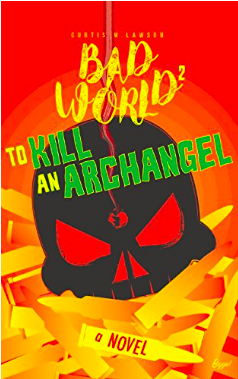
Curtis M. Lawson writes like a teenager who just graduated from his learner's permit--with abandon. BAD WORLD 2 starts at 100 mph and never takes the foot off the gas. An action novel of ideas! As though 90s action movie committed a drive-by on a post-doc writing a dissertation on nihilism.
If you are looking for a fun, fast-paced read this spring you could do a lot worse than reading Curtis M. Lawson's sophomore effort in his Bad World series. You don't have to read the first book to enjoy this heist story. But I recommend you grab a copy anyway. Together they'll give you the perfect adrenaline shot.
March 15, 2018
Why I Won't Publish DAPHNE As A Book
Here is why I have decided not to publish DAPHNE as a book:
Throughout history, storytelling devices have changed. People told stories by firelight after the long, hard day of living rolled into night. Stories were painted on cave walls. Scribes etched tales on papyrus. Each of these tools demanded a different style of narrative technique. By the twentieth century, the most effective form of storytelling was still images rapidly exposed to a beam of light.
Let me pause for a moment. I want to be very clear. I do not think books are dead. Only a fool would say that. And plenty of fools have said that before me.
I do think with the advent of Google, the interweb, and sophisticated algorithms how we disseminate stories has begun to change.
The more I have been developing DAPHNE the more I believe it is not built to be placed between two cardboard covers. Nor do I think it could be filmed as a traditional movie.
Ironically, the entire book takes place before the arrival of the internet as we know it.
But the story itself is a rabbit hole of sorts. It is the story of girl's search for her dead mother. A girl's search for a mother who was an illusion to herself. By the very nature of her illusory personality, the daughter is confronted by a continually changing vision of who her mother was.
For a very long time, I have been interested in examining characters through the voices of others. Before I wrote SACRIFICE I wrote a crime novel called THE WAY A GIRL FALLS TO PIECES about a murder in Wyoming where the only thing we know about the dead girl we learn through her suspected killers. It was a Rashomon-esque exercise for the #metoo generation. However, ultimately, I couldn't get the plot to work.
For me, plot has always been secondary. I find plot tiresome. That is not to say I don't like story. I do like good storytelling. I prefer interesting characters. I am most often entranced by great atmosphere. I like mystery. A sense of mystery. Something mysterious going on. But I find the actually solving of mystery loathsome. I could never sit down and watch a BBC mystery. Once the wheels start turning, and I sense the machinery working under the pages or beyond the screen, I wander off on the story.
Every time I tried to put the pieces of DAPHNE together in what would resemble a story I found the result utterly exhausting and tedious.
I began to think about how we build stories in our lives today. I thought about how the internet works when you begin to research or follow the threads of some story you suddenly find compulsive one morning. The way one article leads to another. The way one you might read something written by someone about someone else and suddenly become more interested in reading something else by the person who was writing about the other person you were interested in and begin to read more writing by said writer and then suddenly come upon a totally different persons story amid that writer's writing and begin reading more about that other person. How these tangents can go on and on, infinitum.
I began to think how the process of Daphne's discovery might be as important as the discoveries themselves. Ironically, I believe DAPHNE started this way. When I originally conceived this idea it wasn't intended to be a book. Or, at least, it wasn't going to be limited to just a book. It was going to be some kind of hybrid film/book. But I realized soon that was way too expensive and very unlikely to get financing.
So, I have decided to publish it on my website. It will begin with elements of the story told in multiple genres and a variety of voices. If I can find the money lying around somewhere I will incorporate the film ideas I have for it. Also, photography and voice recordings will follow as time and expense permits.
My intention is to have the first part--THE FRAGRANCE COMMERCIAL--posted to my website by the end of the month.
February 24, 2018
Coming Soon
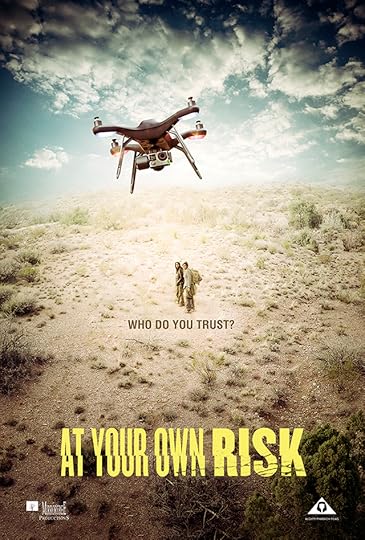
I am very excited to announce that the film I wrote, At Your Own Risk, will be premiering at The Artemis Women in Action Film Festival in Santa Monica, California.
January 2, 2018
A True Crime Story
Huddled around firelight, men told stories of brothers killing brothers, brothers selling brothers, floods, cities on fire beyond the plains.
When it came time to preserve the best accounts, the scribed searched high and low for the best hand. Papyrus being as scarce as it was in the desert.
One boy in all of Egypt was coveted for his stroke. Raised by the king’s own tutors.
But after the body was discovered, Moses vanished.
The victim was of low birth. Even the scribes soon forgot.
By then, Moses’ own story took an unexpected turn.
December 28, 2017
AFTER THE BOOK BURNING
“Nobody outside school would believe it,” Sarah said. She just finished telling me about the campus book burning. Outside her dorm window, two men in orange vests shoveled ash off the quad. I missed most of what happens after dark because I pour drinks at a repertory theater to cover tuition.
The night I met Sarah we made-out in the drama building bathroom. How she worked her hand inside my fly I’d never peg her for book-burner.
We were going to Maine for the weekend. But there was a test Monday, and she couldn’t find the book. There were clothes and notebooks, pens and underwear flying everywhere.
A mile outside Sarah’s hometown we pulled into a roadside diner for coffee. All the cigarettes burned a hole in my empty stomach. The booth in the back had a window looking onto the parking lot.
A waitress in a blue apron poured coffee. Sarah lit two cigarettes at once. The gesture was stolen from a Humphrey Bogart movie we liked. It had an efficiency in-keeping with our ambition.
A Harley-Davidson thundered into the lot. The man on the bike had gray, wind-swept hair and goggles.
“Don’t you ever wonder how long it takes getting all that leather laced and snapped? Exhausted thinking about it.” Sarah was in her sophomore slump—everything made her tired.
Bells rang above the man’s head coming in the door. He looked at the bells and shook his head.
Our waitress said, “Earl, that’s a pretty bike. But I’ve told you that before.” She stared out the window as she poured.
“I’m proud of it.”
Sarah leaned across the table. She said, “This is the spitting image of where I grew up. The exact picture.”
The man in the goggles asked the waitress about an after-church group she missed. She blamed the kids, the ex-husband. Of course, there was always work. “Food doesn't just grow on trees,” she said.
Sarah had both elbows on the table with her chin resting in the palms. She wanted me to know her father took care of her and her brother the years her mother took-off west, the desert. Her dad hammered into her head what a selfish bitch she was. How kids got in the way of all her dreams.
“What kind of things?” I said.
She shrugged. “They were high school sweethearts. When mom got knocked-up, they did the right thing. Skipped college.”
I heard all the words she said, but the conversation behind my head nagged for my attention. A man in Carhartts sidled into the booth with the biker. Earl and Carhartts talked about how good the waitress looked. Both men had dirt on the guy who divorced her.
It was tough keeping both conversations straight. When I picked up a couple lines from Sarah's story I missed a beat-change behind my head.
“Can you imagine half your life listening to your father tell you your mom had no interested in you?” Sarah scraped her fork across her plate fighting for an errant fleck of egg.
“You sure she won’t mind my being here?”
“Dad said all those years without kids kept her edges smooth.”
After burning half her books and C.D.s Sarah needed some non-judgmental space.
The big Colonial her mom owned had a bronze plaque hung by the door commemorating the first family who lived there.
Inside was the clean smell of emptiness and high ceilings. Dust mots twisted in the white, February light streamed through the large windows.
In the kitchen, she opened the refrigerator, which cast a different hue on the room. She drank orange juice from the box. She held it out if I wanted some.
Her room was decorated like a little girl’s room. The wallpaper had tiny, yellow flowers. The lampshade stenciled with bonneted girls blowing the seeds off dandelions.
She put her bag down beside the closet. She reached for mine and set it next to hers. My parents would never stand for an arrangement like this.
We stomped our feet on the porch. Tried to glean warmth from the glowing end of our cigarettes. Her kid brother clicked over the seams of the sidewalk on a skateboard. He was taller than I expected. Blond hair covered his eyes.
She dropped her cigarette standing, crushed it under her shoe.
“You drove up here today?” The kid said.
“Me and Bailey.”
“You Bailey?” The kid brother studied the smoke drifted off my cigarette.
“That’s me,” I said.
He didn’t seem to like the answer.
“You the one she told me about on the phone?”
“I have no idea.”
“Jimmy,” she said.
"Well, that’s nice.” The kid brother left.
With the kid gone, Sarah lit a fresh cigarette.
“Sorry about that.”
“It’s fine.”
“He’s okay.”
“I’m sure.”
Every semester I became increasingly confused, uncertain. This was senior year.
In the evening, we watched a nature film about sharks. Sarah got off on predatory animals. The slaughter of so many seals intoxicated her.
The plan was dinner with her mom around six. The movie came on at seven-thirty. Her brother said, “She won’t show." He left to hang out with a girl.
Sarah stood at the bay window watching the street. The T.V. was off. The curtains clenched in her fist.
Every table in the restaurant had red and black checked tablecloths, candles burned. Her father took her when she was a girl.
Only two other couples dined, but the hostess sat us in the back. When the hostess noticed Sarah put cigarettes beside the polished silverware, she said, “You can’t smoke in here.”
“Really?”
“Yes.” The hostess emphasized her point by leaving the table.
“When I was a kid, nobody in town would stand for this. I remember one town went so far as to sue the state when they wanted to build a highway off-ramp. One of those quintessential Maine-towns people from New York take pictures off. They had no interested in making it any easier for people like that. That’s the Maine I remember. Where you did what you want.”
“I don’t think it’s your freedom they’re trampling on.”
“Like that school—rules, signing mission statements, pledging beliefs because God loves you so much it would make him sad you didn’t.”
In the morning, we found Jimmy downstairs eating cereal cross-legged in the middle of the kitchen table.
Sarah told him, “Morning.”
He looked up from his bowl.
Sarah asked, “Any mom?”
“She hardly ever comes home anymore,” Jimmy said as though Sarah should have known. He shoved a big spoonful in his mouth. Milk leaked out the corners when he chewed.
“What is it?”
“What’d’ya want me to say?”
“Fine,” Sarah said. She turned her attention to me. But when she spoke she was talking to her brother. “We’re going for breakfast.”
“Leave me one of them cigarettes.”
Sarah made a fist. I heard secondhand how she hit a girl once. Nearly knocked her teeth out. A story got out the victim and I went on a hike to Gull Pond. She punched her on a Friday in the campus coffee shop.
Her brother scooped cereal from his bowl and crammed it in his mouth.
Sarah rushed the door, leaving.
I dropped a couple smokes on the table. Painless simony before I hustled into the frigid morning.
We fell asleep after breakfast naked in the penitent winter light that fell through the window.
When I woke nothing in the room changed except the sun no longer touched our bodies.
Downstairs, the living room door was closed. I could hear Sarah and what must have been her mother. They were crying.
“That’s why I left Sarah,” her mother said.
I moved closer to the door so I could hear.
“I lived for three years in Jerome, Arizona. The whole town built on the steep face of a cliff. You could almost fall off the street if you stood too long in one place.
“I fell in love there. I fell in love with the man owned the only pizza shop in town. He was so skinny. So much pizza, never gained a pound. Whole three years I lived there we got on real well. Like I said, I loved him. Everything was aces until he wakes up one morning with a big idea. Let’s get married, that was his idea. He made a real proposal. One knee, the whole business. Sun setting off the deck of his pizza shop. You can’t imagine the sight. I don’t blame your dad for not proposing. We were in it. Sixteen. It was what we had to do. But with the pizza man, I didn’t owe him anything. He cried about it. If you ever decide to go through with it, put on the white dress. Know this: It’s not some pledge in front of people you know. It’s not about loving only one person. It’s accepting the guidelines.”
They were still talking but I walked away. On the front porch, I lit a cigarette.
That was when I saw Sarah’s kid brother running down the street. He moved so fast the blonde hair blew out of his face and I could see his eyes for the first time. The most frightened eyes I’d ever seen.
Then I saw what spooked him. Three guys ran best they could manage as fat as they were.
A large, red stain splattered across the front of the kid’s coat. Blood crusted under his nose and around his mouth.
I tossed my cigarette on the front lawn and stepped into the street. It didn’t seem right watching him from the steps.
He skidded on some loose gravel getting around behind me. His breath came in white billows. His face gleamed where the sweat crystalized on his face.
Sarah’s brother got out two words. One was kill. I looked from the kid back to the three men coming. No matter how lawless Sarah tried to paint Maine, nobody around here murdered anyone in the middle of the street.
The first man to reach me sucked the frosted air. “That your boy?”
“They were gonna tie me to a tree,” the kid said. “They’d have left me to freeze.”
By the man’s face, I knew the kid hadn’t lied.
Once lined side-by-side, the family resemblance marked them each. The youngest spoke up, “It’s to do with our sister.”
The other said again, “He’s gotta make this right.”
My dad wasn’t a fighter. He wasn’t much with his hands. He hated tools. On a Sunday Morning, two-hundred-and-fifty congregants listened for one sentence that would sustain them through a week of small failures.
“Abortions expensive,” another of the group said.
“How’ll he pay you tied to a tree?”
The three men looked from one to the other until they gave each other serious consideration.
The front door opened behind me.
Sarah’s mother stepped onto the porch with a shotgun. The kid scrambled up the steps and found safe haven in the shadow cast by the early descent of winter sun. Sarah’s mother cocked the rifle. I knew enough about guns the only reason to cock it was to expel an empty casing.
“We ain’t stepped foot on your land, ma’am.”
“Maybe not.”
“We were just talking this out,” I said.
But she had the gun. The grand gesture was always simpler. Making a stand with a shotgun took a lot less patience than the unyielding tedium of changing diapers, following up on homework, the incessant reminder to use “please” and “thank you.”
On the drive back to school Sarah fretted about the book she was certain burned. There was no way to have the paper done in time.
I didn't have the heart to tell her no one ever burned books to purge sin. They burned them to keep illiterates trapped in the burden of their history.
December 21, 2017
The Day We Weren't Shot
We never had any money because my dad didn’t believe in a gospel of prosperity. He didn’t believe a benevolent force in the sky doled out small and large gifts with indiscriminate whimsy.
But our house was always open to our friends. There was always something to snack on even if it came from the health food co-op.
I knew other preachers’ kids from camp, they wore designer sneakers, yet didn’t think their souls were depraved.
The truth. My soul was depraved. I sold girly magazines in the back of the bus for twenty dollars to the popular kids who could afford it. It’s true what they say about God.
I found the magazines in a brown bag with shoe-print stomped on it in a parking lot behind a liquor store near Haymarket Square. This was during a school trip to the big city.
During the long ride out of the suburbs, a friend swore to me he would jump in front of the bullet if someone shot at us. He would die for me, he said. That was why he took the window seat, he said.
The class wandered an art museum that day. I stopped at a painting of a beaten man in tattered clothes trying to climb out of hell. My friend wanted to sneak off from the rest of the group. He didn’t have a plan. He just thought it would be fun to escape the chaperones. But I couldn't pull myself from the picture. I needed to know if the man would ever get out.
Nobody shot at us that day.
December 13, 2017
The Phone Number
People leave bits from their lives in the books they read. I’ve found movie tickets, grocery lists, dry cleaning stubs, letters that were never mailed, restaurant receipts. Sometimes they even leave messages. Brief elliptical phrases scrawled in margins about what they just read or how they felt while reading it. Secret codes that build on the text of the story. Secret windows they open into their lives without even knowing what they are doing.
Inevitably, they discard the books. Some people leave their old books at the Salvation Army or homeless shelters or sell them for a nickel at the end of their driveway or pawn them off on used bookstores for credit that will be used to buy other people’s books filled with other people’s secret messages scribbled in margins or on the cover or the inside flaps.
I never buy new books. Not just because I can’t afford them. Also, I love finding other people’s secrets.
Today I found a phone number.
Let me go back to the beginning.
My day started at the little breakfast place down the street that offers coffee, one egg, and a slice of toast for one dollar and ninety-nine cents. How they make a profit, I have no idea?
After a few refills of coffee, I strolled across the street to the used bookstore. I wanted something new to read.
The phone number was written in precise-hand, along the top margin, on page two hundred and twelve.
I stared at it for a long time.
Any interest I had in the story faded away.
I had to call the number.
Shortly after I had to give up the car the cell phone went. Having a landline stopped making sense a long time ago. There is no phone in my apartment. The apartment I can barely pay for.
Only payphone I know about stands outside the Stop ‘n Go. The man behind the glass sells international calling cards at three-point-five cents per minute. He sells those cards to the men who stand out front of the hardware store waiting for someone to pick them up. They wait all day in the heat praying they will be chosen to do some form of backbreaking labor at a fraction of the cost they should rightfully be paid. They silently pray to an invisible god that they will be chosen for exploitation. It is a simple prayer. That way at night they can use the calling card to call a wife or girl friend or mother of their children to let them know how much money will be mailed that week.
I have found phone numbers before inside used books. Sometimes they were scrawled inside hearts. Sometimes they were underlined. But I never imagined dialing the number.
The sun had yet to burn-off the morning cold. Nobody was fool enough to stand outside the Stop ‘n Go. A pile of snow stood beneath the pay phone. The plow must have dumped it there.
On the third ring, a woman answered.
“Derek?” She said.
My name was not Derek. For a brief instance I wondered what she might say if I said yes.
Instead she kept talking: “It has to be you. I don’t know anyone else from that area code.”
I glanced around me.
“Are you there, Derek?”
The way she said the name it didn’t sound like she knew Derek very well, or perhaps a long time had expired since last they spoke. I wanted to say yes. I wanted to see what would happen if I said yes. But I couldn’t bring myself to say anything. I didn’t want the conversation to end. It seemed whatever I might say would disrupt the conversation. I wondered if I had anything in common with Derek? For a moment, I became more fascinated by the notions of Derek than the stranger on the other end of the line.
“Is this the call?” She said. “Is this the call you warned me about? Is that why you aren’t saying anything? That’s best. I totally understand. I’ve seen it on the news. Oh no, but I said your name. I didn’t know what else to say? We should have come up with a code. A secret word. Something only you and I would understand. You should have thought of that. Do you still have the book?”
I held it up next to the phone as though she could see it. I felt like a dope standing there with the phone in one hand and the book in the other.
“Did you ever read it?” She wanted to know. “I know that’s a strange thing to say right now, what with everything else going on in the world. I often wondered if you ever read it. There were nights when I lay awake in bed imagining you reading it.”
I looked at the cover of the book. I turned it over and looked at the back jacket. Inside the back flap I studied the writer’s face. He was about my age in the picture. My feet were getting cold in the snow.
“It seems very strange circumstances for a book recommendation. The strangest circumstances, perhaps. I know we didn’t know each other very well. I feel like I know you sometimes. But I don’t. I have to remind myself that you can’t really know someone only after a week. It does sometimes feel like it was much, much longer. But I can’t know you and I remind myself of that. I thought maybe if you read the book you might understand something about me. That’s one of those things about books, they tell you as much about the reader as anything. But maybe you don’t think about that kind of thing. I thought, if you did read it, maybe it might mean something. Maybe it might make that week mean something different from what it was. Maybe you have a lot of weeks like that. Or weekends. Or nights…”
I stomped my feet because someone once told me that was the best way to stay warm.
“I don’t have those kinds of night, Derek. That’s why I read so many books. They comfort me. That’s why I asked you to take it. I was giving you a small piece of me. I didn’t know if this day would ever come. You warned me. You impressed upon me that one day there would be a need for you to call me again. That something would happen and you would reach out. You would come for me…”
My hands trembled as she spoke. It wasn’t the cold any more. I had set something in motion. Perhaps something that never should have been started. I could hear it in her voice.
December 6, 2017
The Weekend After the Cat Kicked It
Polly and I are tossing back Black Label doubles—stuff cheap enough to get us both over the barrel—and this guy comes up and starts a row. Just one of a million nights out of a year, and who am I, just a face, and he comes up to our table. I had my choice; we wouldn’t have even been out. But Polly she likes a chance to put something nice on, go out on the town. I work delivering packages for Airborne Express and don’t get much down time; so when I have a night off she likes to go out-- show herself off. She’s no fancy pants, I mean, she’ll like a place where she can fit in with jeans, but a new blouse, a dressy silk number she picked up with her weekly check. She likes to have a place she can show it off. So, I took out the paper when I got home this morning. I hate movies, even when there’s something that looks decent, so I skip right over that section. There are no decent bands around anymore; just two-cord would be rock stars charging an arm and a leg to play poor cover songs I don’t care for anyway. I did find one bar didn’t look so bad, with music from nine to twelve, a folk band, and a few pool tables to boot.
I call Polly up around seven. We’ve been hashing out the idea of merging rents; but that is risky stuff and neither of us is too keen on it just yet. So, I get her on the phone and give her the hiddi-ho.
Hi. How’s things? I give her.
She responds, Good, good. I got my cat down at the vet, she tells me. Somebody took him out with a Caddy. Some rich bitch, and she didn’t even offer to pay. I guess she thought she’d done her John Q. Good Citizen deal bringing Randy in at all.
She loves this cat. I’ll never understand giving something you love a name like Randy. Her excuse is it’s the name of her first real boy friend. Some say the first is always their true love. Me, I think her cat’s her true love.
Anyway, she continues, The vet gave it thirteen stitches across the stomach. Sixty-five bucks. I brought it home, gave him some milk. He goes for his usual nap, on top of the T.V., and I went out. Just down the street for some bread and a six-pack of Heineken. When I get home he’s dead. Still laying on the T.V., dead. I cried all frigging afternoon. Then I got drunk.
She was still a little drunk while we were on the phone. I told her how sorry I was, even though I hate cats, especially the ones named after my girlfriend’s first love. I hold off on telling her what I’ve planned. I mean this whole dead cat scenario sounds like a foot in the door. I could care less about the bar. What I really want sounds more feasible with this sob story.
Then she says, So, we got to go out, get loaded. I don’t want to be sober at least until I go back to work Monday.
There goes my paycheck this week. If we’re going to booze up all weekend and I’ve got rent and credit card bills, I can say good-bye to any savings this week.
So, that’s how I wound up here staring down some greaser, a real number, too. Straggly reddish-blonde hair, untrimmed mustache, beady eyes that look black in the dark room. I still haven’t figured out why it’s me he’s picked.
An hour ago I caught him setting eyes on Polly. But I’m a really low-key guy, so I just relax. He can peruse the menu, just as long as he doesn’t plan on any entrées.
Then here he is. Both fists set on the table. This guy, he grins over the table scattered with used shot glasses; planting those black beads on me. What a perfect smile! Unbelievable, the way some people are just positive they shit ice cream. His straggly goatee hides the ends of his smiling mouth, but I’m convinced there is a devilish turn to the end of his lips.
With some serious suave he turns his eyes on innocent old Polly. She is smiling like she has just won Miss America and this character is about to bestow her with the wreath.
“Sweet heart,” He says. I’m not even in the same state by this point. “Whaddaya say we blow this skeet shot?”
What a come on! I’d bet my whole savings this guy has a lifetime subscription to GQ.
“Hay, ace,” I say, “ You mind, take a hike, bud. Her and me, we ain’t got no trouble with you. Why don’t you just talk a walk? What do ya say, get a drink on me, or something.”
While he’s getting a close up once over of Polly and her new pink blouse, I give a quick glance at the bouncer holding up the wall. He’s got the goods on us, but must think it’s going fine because he’s not anxious. Bouncers are like trained dogs, they love the smell of aggression, and he’d be at least rolling his sleeves he thought anything was up between pretty boy and me and Polly. Must think I’ve got it under raps.
“Mind if I take this seat?” He asks.
He is already in it and I don’t bother offering the boot, instead I finish my drink, and give two fingers for the waitress. She’s counting tips at an empty table. They must be good because she’s on her way over.
“Yeah, what can I do you for?” She asks, giving the little scene a once over, like she’s watching some play and not sure what it’s telling her.
“Two Black Label doubles.” I gesture to slap happy across the table.
“Yeah, how ‘bouts a gin. Gin’s good. Make it the Bombay Sapphire, mac here’s got it on his tab.”
“No way, give him the well.”
“Whatever you say, boys,” and she is gone.
He takes his pack of menthols out of his tight black genes; he has to stretch his leg across half the bar to do it. He offers one to Polly and takes one for himself. He looks at me and lights up. Polly turns in upside down and puts it in an empty shot glass. Most people wouldn’t have any trouble taking this signal.
“So, whaddaya say? Clear out with me?”
“Mick, I’ve been as cordial as you’re gonna see, now take a breather. I don’t wanna have to take this any wheres else.”
“Excuse me?”
“Please Clive,” Polly speaks. She doesn’t seem committed to any particular action. I don’t even know, she could be up and out the door with Mr. Regular Dental Visits here in a heartbeat, or she could just stay. I’ve no idea.
“Yeah, Clive. Why don’t you step out, go get our drinks at the bar, or something? Make yourself useful.”
“That’s it, hit the road pal.”
“Oh, baby.” He says this with such apathy I don’t even know how to take it.
Then he looks to me with these death eyes. These eyes seem to grow out from under his lids, and they fix on me. I wait for them to beam red light, and fangs to slide out over his pale lips. They don’t, of course. He just stays on me with these eyes.
“You don’t got to get all uptight on me,” he says.
The music is over. The band is packing their things. People are clearing out. A guy and his girl pass behind smiles-a-lot, kissing, letting their tongues come out their mouths and touch in front of God and everybody.
I raise a hand trying to shake his eyes off me. “Pal,” I tell him, “Let’s relax and just cut our losses.”
“Whose losses? You don’t think I’ve lost, do you?”
“Would you make your peace and be off?”
The waitress brings around the three drinks. She smiles. There is no way she has any idea what’s going on. She leaves, expecting a good tip.
“Don’t worry, bud,” he starts. “I’ll let you join in I need the hand.”
“Okay,” Polly sets in, “That’s the end of the line. I don’t care who the hell you think you are; just make way. Skiddatle.”
“So, that’s how you are.”
That’s when he gets up. He is standing over the table, again. Looking at us both. He seems to have no idea what has just happened. As though he is standing there, forgiving us for some injustice. I can feel it: We’re being absolved of some social crime against him. He moves to the door like a Bishop from the pulpit to the sacraments. He’s gone. I feel the weight slowly lifting. What remains is a vague trembling in my fingertips. I put out the waitress’s money like offering simony for some unconscious guilt he’s burdened me with.
At home, we break out the bottle of vodka I keep in the freezer. We put down a half pint at the kitchen table. We use paper cups; I don’t often remember to wash dishes.
Our eyes get real funny, smiling and cloudy. On each other’s arms, we make way up the stairs. I took a three-year lease on studio with a loft because my last girlfriend kidded herself she was a painter. We stuck out six months on the lease before she took off with a dime store poet for panhandling in Harvard Square. I don’t have much use for the space, but she left all her paraphernalia when she busted loose and I have her half-finished work all over the large room downstairs.
We finish the bottle on the bed.
“That guy was a real piece of work,” Polly begins.
I'm staring at the ceiling. She is working at the buttons of my shirt.
“No, joke,” I say. “I thought we were gonna have a real show for a while there.”
“I could see right off he was harmless. He didn’t have that instinct. He was a joke.”
“I don’t know. He had those eyes.”
“It’s a defense thing. I see it all the time down at the shelter. He was weak. We were just letting him have his time.”
Polly is a social worker. She is the head of things at the shelter in Quincey. She went to college to learn to pass around free chowder and sandwiches to the downtrodden. I like it, though. She’s a real bleeding heart. I get away with a lot.
“I guess you’d know.”
“I see it all the time.”
She’s down to my jeans by this point. I pull her new blouse over her head, and her breasts fall out her bra. They are beautiful, perky numbers with dark, red nipples that are tight and round. I think they’re what won me over too her. She was real nice when we first met, but it’s hard to find nice nipples. Good small nipples are a real catch.
I’m awake at eight-fifteen. Me head throbs, and I pick small, curling hairs off my lips and tongue. Polly is working hard at sleeping.
There is no booze in the house. If Polly meant good on her project for the weekend I know I’d better go fill up for when she is awake.
I take the car out of the driveway. This is a bad idea, my head is cloudy, and reaction time is slim. I drive out on the highway, going north. Saturdays this is a clear highway, and I know a place open at this hour.
I pull into the small market with the separate liquor store off in the back. It is a hole in the wall place. Owned by an elderly man, a tall man. It seems he is too tall for his age. The lights are sour milk yellow. Loose, dry skin falls under his eyes and is slack by his cheeks. He looks like it was a war getting out of bed. He raises his canister of coffee to me as some kind of salute. I gesture back, but my heart isn’t real into it. At his age, I’ll see things that way.
This morning I make it as far as the cooler. I take out a case of Milwaukee’s Best. Then I go and find the good stuff, Black Label. I pick up a new bottle of vodka, too. The hangdog old man at the counter steals my money.
Outside I fire up the old Toyota Corona with all its 175,000 miles, concentrating to figure out what I’d forgot. I stare into the rearview mirror, examining the road behind me. Everything is dead, even for a Saturday morning. Some people do have jobs even on Saturdays. Where are they?
Then it comes to me, what I forgot: A scratch ticket. Whenever I buy the booze I have to get a ticket, just a buck, but it makes me feel right, keeps things in perspective. It reminds me why my life is where it is.
I leave the car running and go back inside. The old man looks at me. Sizing me up, really. Wondering if I didn’t get enough, or if I should be in rehab, or A.A. I alleviate the stressed vain bulging at his left temple by telling him why I’m back.
“You know this whole racket’s a sham,” he explains. “It’s just another one of those government conspiracies. All the winning tickets are in the rich people communities. They plan it out. You wanna buy one of these pieces of crap go up to Rockport or Boxford or somewheres else like that. It’s something the state does to extract money from the lower-middle class and poor they don’t think pays enough in taxes.”
Paranoia is an infection. It festers in people who don’t have enough to do to occupy their time. They sit around all day in places like this drinking coca-cola and eating ring dings trying to figure out where the armies hiding all the aliens. Convincing themselves the government’s created AIDs and Cancer to kill off all the underprivileged in order to cultivate a race of elite intellectuals who can spawn a new humanity in test tubes. How the weather bureau raises the ocean temperature ten degrees when they put it in the papers so people will be more apt to go to the beach and spend there dollars on the state.
While I’m thinking this, these two guys come bursting through the door with nylon stockings over their faces. Both men are holding these big pistols out in front of them. One, the shorter one, puts his gun to my forehead, digging it in real deep. I just stand there, my scratch ticket between the fingers of my left hand.
The other throws a sack at the old man whose face is no longer so hang-dogged.
“Give it here.”
He fidgets in the register.
“Don’t fool all around with that shit. I know you have the good stuff in the safe. Let’s have it.”
The whole experience is over in a matter of moments. The tall one gets on the counter. He kicks the old guy in the face. “Where’s it at?” He points, but I can’t make out where because he is too far under the counter for me to see. The short guy keeps checking over his shoulder, then looking to the door, then at me. “Don’t move, I mean it,” he tells me. I don’t, just lock my knees and wait. I can feel my nerves wanting to rattle apart my body but I fix my legs at the knees and clench up my stomach, holding with all I’ve got to make my body override the messages my brain is sending out.
They leave through the front door. The tall guy has the money bag over his shoulder. I hear the car’s engine burst and sputter, not knowing how I missed it the first time, and they’re gone as if they had never stepped in the place. Except I know they have because I can feel it on my forehead. The old man is crying on the floor with blood running down his face. I go around behind the counter.
“Here take my hand,” I stretch it out in front of him. “Take it, let’s get you clean.”
“Forget me, call the cops. Call the damn 911; it has got to be good for something. Stop messing around with me.”
“They’re history, man. Those guys are last nights news.”
“Fuck that, call them up. You know how much money I just lost.”
I go to the pay phone and call 911. I get this lady. I explain where I am and why I’m calling. She says to me she sent someone straight away. They’ll be right here, she says. She asks me if I have a description of the getaway vehicle. I don’t, I tell her. She says, again, that they will be right here.
“Now that that’s all set, how are you?”
He sops up blood from his forehead with a paper towel roll. His eyes squint.
“I’m good. They took all my dough.”
“I know.”
“No. I mean everything. Saturdays I put all the weeks’ dough in this volt, my son comes and takes it to the bank for me. They got all of it. Every damn last cent.”
I don’t know what I have to say. I put my ticket into my pocket. I’ve been holding it the whole time. I want to give this guy some words, or something. But there’s nothing coming to mind.
I wait around for the cops to show. I help straighten up some of the stuff that got tossed around in the confusion. The old man goes to the bathroom. I can hear him crying through the door. The cops finally show and I give my statement. There isn’t much to give. Then I go out to my car, which is still running.
Back at my place I park in the driveway and kill the engine. I look at my hands shaking like beach grass. My fingers have left a deep imprint on the steering wheel.
Polly is still sleeping when I walk in the house. Nothing is different since I went out, so I figure she hasn’t been up from the time I left. Sitting down at what I make do for a kitchen table I take out the bottle of Johnny Walker and split the seal with my ignition key. I work at steadying my hands. I use one of the dirty, paper cups from last night. I fill it. Then swallow it with one gulp.
It burns going down my throat. Soon I can hold my hands steady without concentration. I take the scratch ticket out of my pocket and set it on the table and watch it.
That guy last night, I should have had it out with him. I should have tossed his ass. Right outside with the bouncer and the rage junkies watching, surrounding us.
I move the scratch ticket dead center in front of me. It lies between my hands. I pour a long one and look at it. I take a pull. Then another. A spider comes walking across the table. It goes straight for the bag of booze.
On the other side of the table, Polly has left her cigarettes from last night. I take one. I light it and let it rush into my lungs. The spider works its way back over the table to my glass. I permit this. It ascends the side and struts around the rim. The cigarette has burned to a nice rosy ember. I turn it over and slowly move in above the spider. It doesn’t seem to notice. I get right down near it and get it. The carcass writhes and falls from the glass and shakes on the table.
I decide to scratch the ticket before my eyes are too far-gone and I can’t see anymore. The game is one of those where you have to beat the dealer’s hand. I hate that kind and can’t remember why I bought it. I work off the first group and lose by one: 6-7. This is always the way with these things. The next is a 2 for me, and a 12 for the dealer. I win on the third: 9-6. I work off the last round before seeing what I won. I’m not all too concerned; it’ll be a buck or two. It is here that I am wrong. It is not a dollar. The thing is a $2,000 card.
This is exhilarating, for the moment. I pour a fresh scotch. I start thinking. I’m not the good luck kind of a guy. I re-check the figures. 6-7. 2-12. 9-6. 9-6. Huh. Two thousand is like three weeks pay. I start thinking Chinese ideologies. Ten billion people and you would think they’d have some healthy insights. This Ying-Yang bit comes to mind. I’ve been having God knows the rottenest bit of luck this weekend. Beginning with Polly’s cat kicking the old bucket. These are no isolated incidents, I assure myself. This is the general course of my life. Have I got a little of the Yang suddenly?
This is when Polly starts down from our room. Her face is a bad mask of itself. Her cheeks are puffy, blotchy red. In places, her hair looks sticky, matted from sleep.
Polly holds off saying anything. Standing at the table she takes a pull off the bottle of scotch. She collapses into a chair.
“You started in without me,” Polly reprimands.
“I can’t believe it myself. It was on your . . . our account I even went out at all. We needed some fresh artillery. I wouldn’t have taken to it only you can’t imagine what’s happened.”
“So, what happened? You’re all sweaty. You look shook-up.”
“That’s a way to put it.”
“Yep.”
“Will you believe me?” I want to know. She gets in these ways and it’s hell to get her to take anything I say serious. I know she puts up with a lot of shit where she works. With the people she has to deal with she has seen it all.
“Don’t I?”
“There was a hold-up this morning. You know the mini-mart we sometimes go to, the one off the highway. This guy put a gun in my face.”
“Damn it, you don’t kid about that stuff.”
“See, I knew it.” I freshened up my scotch and relaxed into my chair. It doesn’t surprise me, this attitude.
“Okay, fine. You’re for real?”
“I’ve been about to laugh crazy for the last I don’t know how long.”
She leans in for the bottle. Some of the scotch spills over on the table. She rubs her finger in the gold pool of liquor. Over her glass, she looks at me. Fear is crowding in the bloodshot, white parts of her eyes. I hadn’t realized she actually might be falling in love with me.
“Pass me one of those cigarettes,” she says.
I take a new one for me and give her the pack. She fumbles one onto her dry bottom lip and clamps down the top one. I light both.
“I need to tell you, Polly, there’s something we need to talk about.”
I’m not thinking just about this weekend. We both haven’t been handed the best lot from life. One night we talked about it. We were sweating off a bad round of sex. We got into how we both had spent the better part of our lives in a bad way. That night she told me about being married before, when she was young. He was from her hometown in New Hampshire. His head was crushed when a scaffold fell while he was painting a house. She said there wasn’t even enough face left to identify him. It didn’t matter; everybody, including the foreman, watched it happen. Her best friend’s boyfriend just got his leg busted off in it. I explained how my luck had been just about as bad.
“What are we talking about?”
“Take a look at this.” I pass the ticket across the table to her. Her face goes blank, no expression.
“Are you telling me things are looking up?”
“No.”
“Fuck me.” She mumbles in her deep and low way.
We move to the sofa across the room with a T.V. set out in front. I start cutting the seal on the vodka. Polly finishes off the last few pulls of scotch at the bottom of the bottle.
She sits down beside me, puts her hand on my knee.
Much later in the day, the sun is going down. Outside the window, the sky is lavender. Clouds are rushing by. All around is a spectacle.
I start thinking about the ticket. Most specifically, I am thinking about the two thousand bucks. I think about our savings, too. A while back, around the time we discussed moving in together, after deciding it was a bad idea, we started a joint bank account instead. What a strange idea? We figured it would add dimension to our relationship.
Polly starts talking. At first, it’s just a dull blend of words. Then I realize she’s saying something.
“We should get the hell out of here,” I hear her say. “Massachusetts. We should get out. We have this money; it’s ours. Let’s use it before anything can go wrong.”
“What you mean?” I slur. “Where? Where would we go?”
“I don’t know. As far as possible from this place. Anywhere?”
“You really think. Just a while ago we were worried just moving in together.”
“What’s stopping us? Things go bad we can still split. You can always come back here.”
I take the bottle out of her hand. I can feel perspiration on the bottle.
“Name a place,” I say. “Anywhere, something tangible.”
“Nebraska,” she gives.
“What’s in Nebraska?”
“Who cares?”
“And that’s where you’d have us go? Nebraska.”
“Fuck you, then. Why not? What we have to lose?”
“But it’s the middle of nowhere.”
“Exactly.”
“You’re drunk.”
“So are you.”
“But at least I haven’t gone in for silly talk. At least I’m holding my own, not talking nonsense.”
“What is in our way?”
She is right. I want to talk it out of her, but I know, she is right. I have a dead-end job, she hates watching people worse off then her sink through self-pity and despair, knowing they’re right to feel the way they do. There is fear. The sun comes up, and we have a good day at the job so we drink. I get a flat and am an hour and a half late on my deliveries: We drink. A cat die at the wheel of an impatient driver: We make a marathon of it.
Next day I wake up and am in a ball on the floor. The room is spinning around and around. A knife is cutting my brain like a pie. I put my hand to it, convinced I have no skull. It is there all right. I want to puke, but there is nothing.
I watch the toilet water as I flush and flush and flush. Spinning and spinning like a roulette wheel with no little ball bearing to announce my winnings.
I get up, and go for the fridge. I tear off parts of the Milwaukee’s best box and take a can. I punish it in a few seconds. I take another. As I hold it, sipping, I look for something my stomach won’t reject. There isn’t much food around. I take some eggs. Then I realize how heavy eggs are. I shut the door. I started opening and shutting cabinet doors. I find the hot pot and plug it in. I pour water in the pot. I shake a rice bag in the water. The egg timer sits by the toaster. I set it on five minutes.
I hear Polly on the stairs, but don’t look for her. I just wait for the five minutes to end and sip at my beer.
“You think about Nebraska?” She asks, balancing herself at the stair bottom.
The question comes from a long time ago.
“Do you want rice?” I ask her.
“No. A beer sounds good.”
I get a fork from the drawer and take it with the rice and beer to the table.
“I don’t know about the whole thing,” I begin.
“What’s to know, really,” Polly starts, “let’s just go.”
“When?”
“Tonight. Tomorrow. We can go a few hours; get a place in New York State for the night. It’d be a start. In the morning we could go on.”
I sit with my rice and nibble. She looks at me, periodically drinking her beer. Outside the sun is everywhere.
I guess there really is nothing to say. Maybe Polly is right about the getting up and doing it, no delays, no calling bosses, landlords. People we would never need to see again.
I look at her swollen face. Her blue eyes are dull in the well-lit room. She takes the beer to her small, red mouth and drains it. I keep looking at her. Searching for all the things she isn’t going to say. Finally, I smile. The last thing I do is rap my knuckles on the table. She laughs at me. Her whole face starts glowing.