Becky Wade's Blog
January 16, 2022
What I Read in 2021
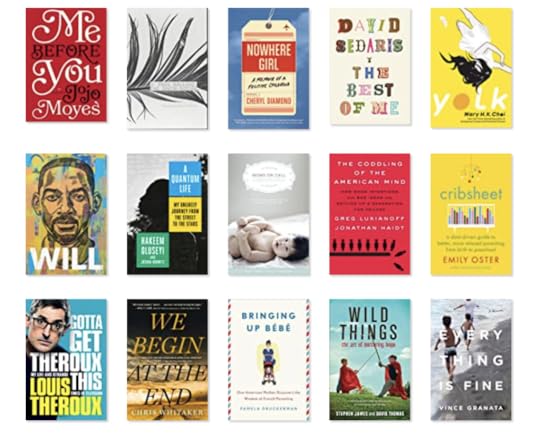
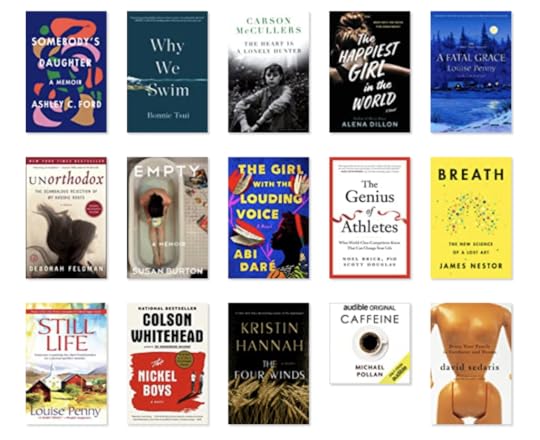
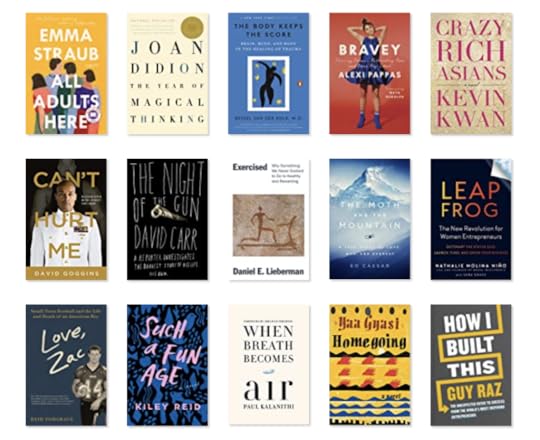
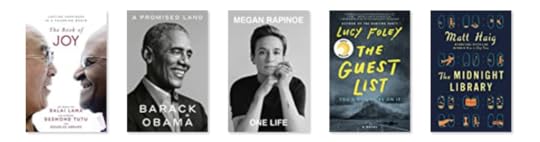
Another year, another Goodreads reading challenge down! I was 2 books shy of my 2021 goal of 52 books, but still happy to hit 50 amidst a big move, a new coaching job, and a baby.
I’m officially halfway through my mission to average one book per week for a decade, and at this point I’m right on track, not a book to spare in either direction. Five down, five to go!
Here’s everything I read in 2021, followed by my 5 favorites and 5 I’m most excited about reading in 2022.
5 Favorites from 2021:
Everything is Fine by Vince Granata- A heavy, captivating, and thoughtful portrayal of a family’s struggle with mental illness and ensuing tragedy. Best book I read all year.
Will by Will Smith- The audiobook of 2021, in my opinion! I don’t listen to a ton of books, but this is definitely one worth listening to rather than reading–especially if you’re a Will fan like me.
A Promised Land by Barack Obama- Loved this as much as I expected. Excellent storytelling and behind-the-scenes insight that left me impressed, nostalgic, and hopeful.
The Coddling of the American Mind by Jonathan Haidt and Greg Lukianoff- Unexpectedly interesting and informative. Although mostly written in the context of universities, the points made have applications everywhere.
The Night of the Gun by David Carr- Another heavy read, this one about substance abuse, written from an interesting angle (a NYT journalist’s attempt to investigate and fact-check his own past). Very sad, very well done.
5 I’m Excited to Read in 2022:
How She Did It by Molly Huddle and Sara Slattery
Rebecca by Daphne du Maurier
Fifty Words for Rain by Asha Lemmie
The Anthropocene Reviewed by John Green
Crying in H Mart by Michelle Zauner
Find me on Goodreads, if you’re on it!
The post What I Read in 2021 appeared first on Becky Runs Away.


April 9, 2021
Signed Book x R8 Giveaway!
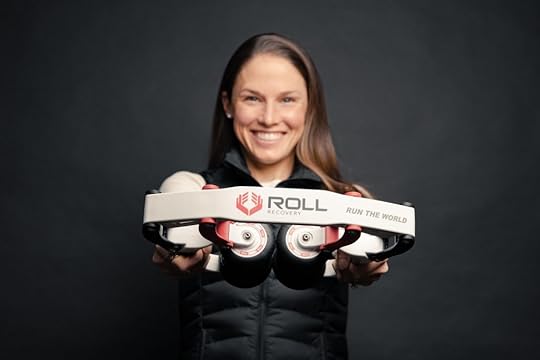
I announced yesterday on Instagram that I’m doing a giveaway with ROLL Recovery, one of my favorite recovery-focused companies who also calls Boulder home.
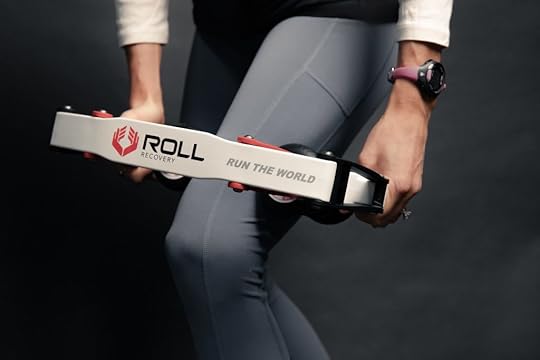
Up for grabs:
Signed copy of my bookOne-of-a-kind R8 (deep tissue massage roller) inscribed with RUN THE WORLD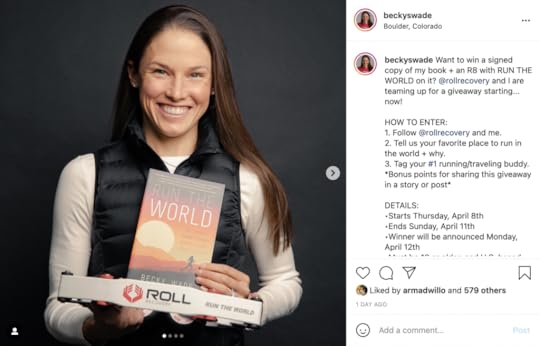
To Enter:
Follow me (@beckyswade) and ROLL Recovery (@rollrecovery) on Instagram.Leave a comment on one of our giveaway posts telling us your favorite place to run in the world and why.Tag your #1 running/traveling buddy.{Get bonus points by sharing our giveaway in a story or post.}More Details:
Contest runs from Thursday, April 8th through Sunday, April 11th.Winner will be selected and announced on Monday, April 12th.*Must be over 18 and U.S. based to win.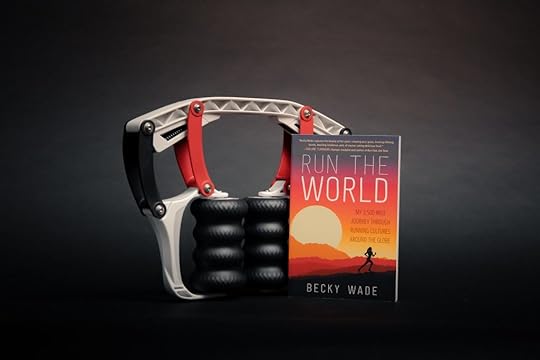
The post Signed Book x R8 Giveaway! appeared first on Becky Runs Away.
March 14, 2021
My Take on Mileage
My three most recent PodiumRunner articles are all about mileage:
How to Run Well Off Low MileageHow to Stay Healthy While Running Monster MileageFinding Your Mileage Sweet SpotBut none of them include my take on the matter–instead, I feature some high- and low-mileage exemplars–so I thought I’d write a personal follow-up here.
Here’s how my mileage has progressed over the years:
Fun Run Days (9-11 years old): My first few years of “running” consisted of maybe a dozen runs per year. Most of those were short romps around the neighborhood with my dad, who would swing by our house after his real run to scoop up any of his 4 kids that wanted in on the action. Once or twice a year, we’d all hop in a Dallas fun run like the Turkey Trot and Jingle Bell Run. If I’m being honest, the running was definitely a means to a (t-shirt and post-race snack) end.Typical weekly volume: Less than 1 mile per week, on averageMiddle School Track (11-14 years old): Other than a very relaxed middle school track season each spring, in which I mostly ran the 100m and 200m (I know–hilarious), I didn’t go on many actual runs. I was so busy with soccer, basketball, swim team, tap, ballet, jazz, piano, cheerleading, etc. that adding runs to the mix didn’t really cross my mind. The only exceptions were our once- or twice-a-year fun runs, and the occasional jog with my dad.Typical weekly volume: ~1 mile per week, on average (doesn’t include running done in the context of other sports)First Half of High School Cross Country & Track (14-16 years old): The summer before freshman year of high school is when I started running with any kind of regularity. Curious but undecided about cross country, I spent that summer slowly building endurance with my dad at White Rock Lake. A few of those runs ended in tears–Dallas summers are no joke!–but mostly they left me with super fond memories: my first 9-mile lap of the lake, post-run Einstein stops, and the sneaky satisfaction I felt every time I ran, showered, and slipped back into my sleeping bag before my friends woke up. I spent my freshman and sophomore seasons adjusting to the training and learning what it feels like to push myself. Come spring track, however, I returned to the sprints and mostly raced the 300-meter hurdles (which, for some reason, I still considered my main event).Typical weekly volume in summer/fall: 20-30 milesTypical weekly volume in winter/spring: 10 milesSecond Half of High School Cross Country & Track (16-18 years old): Sometime around junior year, I started identifying more as a distance runner than a sprinter–though it wasn’t until my hurdles coach passed away that I fully made the switch. My last 2 cross-country seasons saw a good deal of improvement, largely thanks to coach Maureen Shinnick–a former Notre Dame runner and amazing person who returned to coaching at the perfect time–and teammates like Allison Devereux, Katherine Devlin, Lee Fountain, Erin Cochran, and my sister Rachel, who kept it all fun. Due to a knee injury the winter of my senior year, I only ran the 1,600m and 3,200m on the track for one season. At the time, I was stoked about my PRs from that season (5:07 and 11:09). Looking back… I’m lucky they caught the attention of any college coaches, and were enough to convince future Rice coach Jim Bevan that I had potential.Typical weekly volume in summer/fall: 30-40 milesTypical weekly volume in winter/spring: 20 milesCollege Cross Country & Track (18-23 years old): At Rice, it quickly became evident that I could handle a decent load, and that I got better as the reps and races got longer. My weekly mileage crept up from a peak of 55 the summer before my freshman cross-country season to a college-high of 85 for a single week the winter of my 5th year. For the most part, 60-70 miles seemed to be my sweet spot for 5K, 10K, and 3,000m steeplechase training, with a full day off every week or every other week. I will say that I sustained several injuries in those years, including an unidentified knee issue that knocked me out for a couple months my sophomore year, a labral tear in my hip that required major surgery and ate into 2 years of competing, and semi-frequent but not-too-serious aches and pains that each set me back a couple days to a week or so. Looking back, I think that it took my body a few years to catch up to my desire and aerobic capacity. But by the fall of my 5th year, we had things dialed in and it would be almost 4 years before my next big setback.Typical weekly volume: 55-75 milesPro Road & Track (24-Now/32 years old): My first year after college, I held pretty steady around 75 miles per week while traveling the world on a Watson Fellowship. I ran my first marathon 5 months after returning home, and have been focusing mostly on half marathon to marathon distances since then (with 1 season of steeplechasing and several 10K-ish road races thrown in). At this point in my career, the range I feel most comfortable at is 90-110 miles per week while marathon training (and healthy!), and 70-90 while focusing on shorter distances, which usually happens between a post-season break and my next marathon build. I’ve gone as high as 122 miles in a week, but have learned (especially at altitude) that anything above 115 teeters on risky for me, while also rendering my workouts more hit-or-miss.Typical weekly volume: 75-115 milesThe point of this is not to suggest how other people should structure their training or to pretend like my progression has been perfect. (It most definitely has not.) Instead, I hope to show–as I did in the PodiumRunner articles linked up top–that there are more avenues to improvement than routes to get lost on in Boulder. Mine is just one.
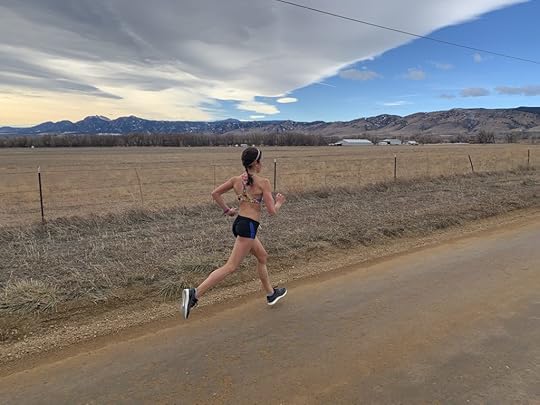
The post My Take on Mileage appeared first on Becky Runs Away.
March 3, 2021
Favorite Quarantine Meals, Part 2
I’ll speak for myself, but the second half-year of the pandemic has been way harder than the first. Boulder got its first snow on September 8th–six whole months ago!–and away went most opportunities for outdoor dining, coffee shop working, and socializing. If I felt like a fenced-in dog during the spring and summer, by this point I’m a caged animal.
Things that have kept me going in recent months: (as safe as humanly possible) road trips to see family in Texas and Arizona; running, swimming, Tina walking, and really anything that gets me out my head and away from my desk; a ton of good books (here’s everything I’ve read in 2021 so far); podcasts GALORE (a post on that is in the works); abundant Zooming, FaceTiming, and group texting with family and friends; and lots of fiddling and feasting in my happy place: the kitchen.
Here are some favorite meals from the last six months:
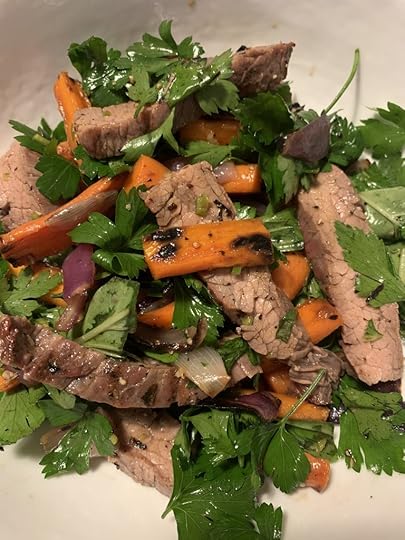 1. Grilled Carrots, Steak, and Red Onion
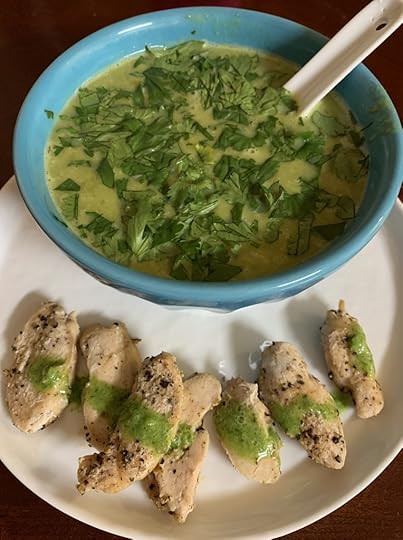 2. Sweet Pea-Coconut-Ginger Soup
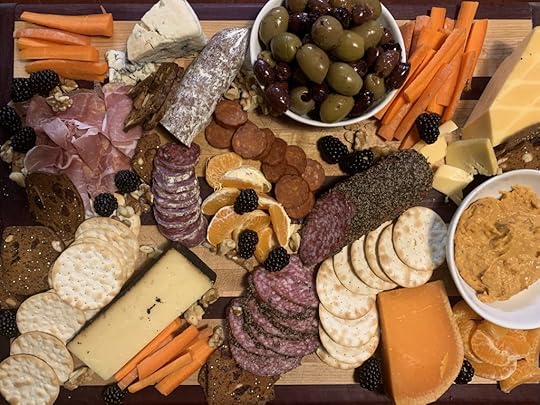 3. Birthday / Valentine’s Day Charcuterie Board
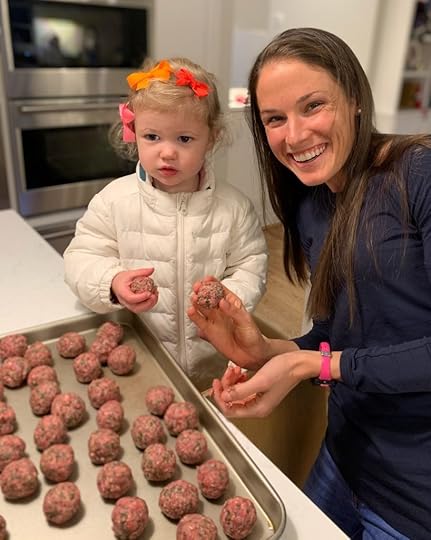 4. Grandma Firth’s Meatballs
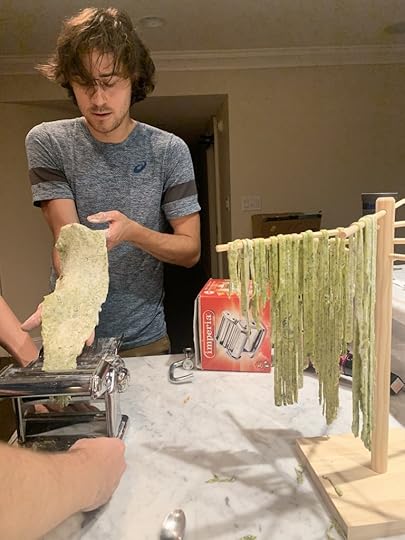 5. Basil Pasta from Scratch
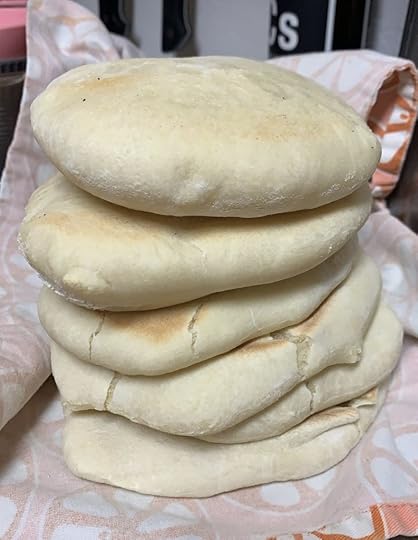 6a. Fluffy Pitas
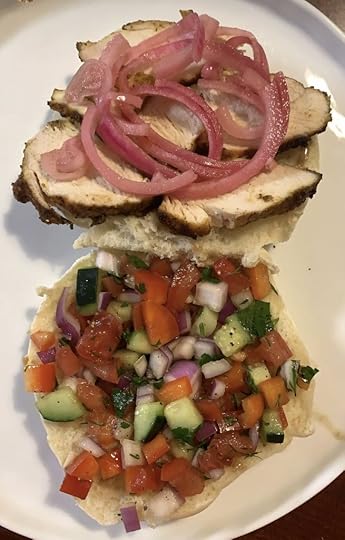 6b. Chicken Shawarma Pitas
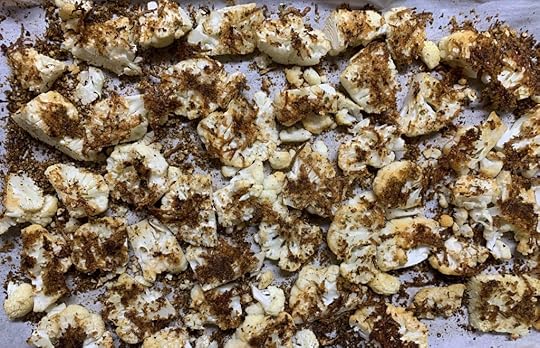 7. Roasted Parmesan Cauliflower
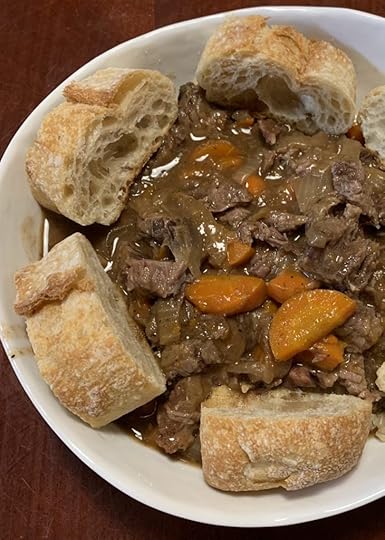 8. Pot Roast with Baguette
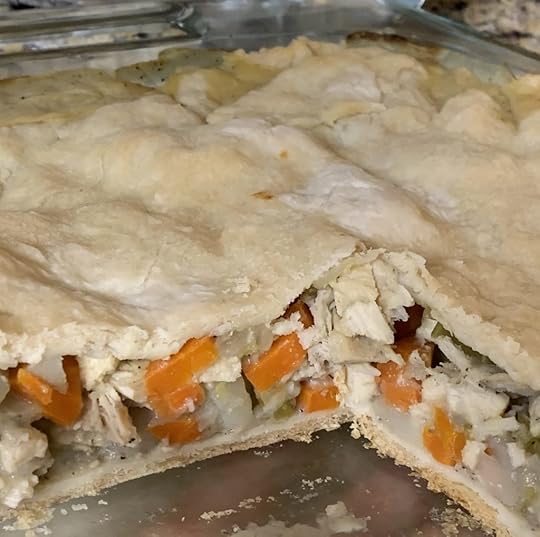 9. Chicken Pot Pie
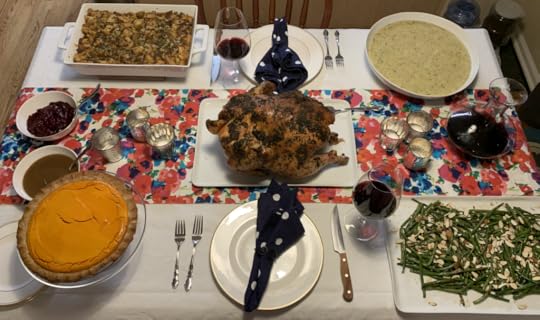 10. Thanksgiving Feast for Two
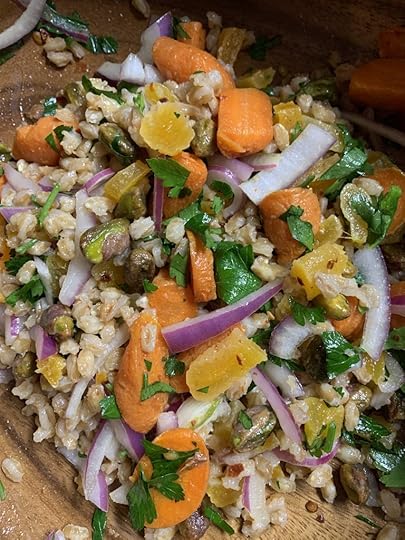 11. Farro, Apricot, and Pistachio Salad
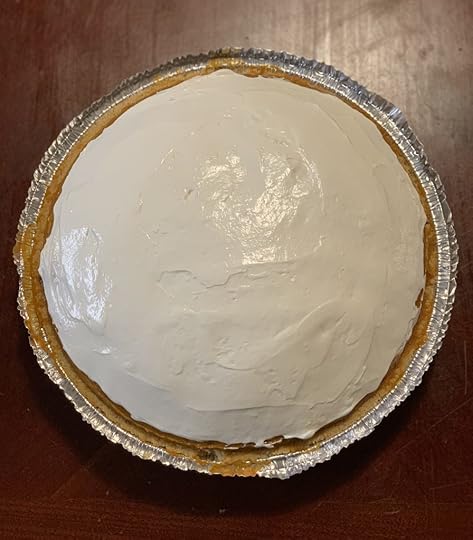 12. Double-Layer Pumpkin PieGrilled Carrots, Steak, and Red Onion with Spicy Fish Sauce // This was the first recipe I made from Joshua McFadden’s Six Seasons–a gift from my super thoughtful friend and Rice teammate Britany–and I’m going to call it my favorite meal from 2020. I said it.Sweet Pea Soup with Coconut and Ginger // I love everything about In Bibi’s Kitchen, another gift from a sweet friend and Rice teammate, Halsey. (Those gals are objectively the BEST.) All the recipes come with stories from the African grandmothers who contributed them, and this flavorful soup from Comoros is a favorite so far.Birthday / Valentine’s Day Charcuterie Board // Just about any occasion is worthy of a charcuterie board, so a week with 2 things to celebrate is doubly justifiable. Will and I followed our general philosophy spelled out here, and captured the assembly process in an Instagram Reel.Grandma Firth’s Meatballs // Will’s grandma’s meatballs have become a Christmas Eve / Dad’s birthday tradition in the Wade family, and this batch was extra special thanks to my sweet little helper Addie. My sister made this bibb salad with truffle vinaigrette and mimolette on the side, and it definitely gave our meatballs a run for their money.Homemade Basil Pasta // Pasta from scratch can be messy and labor intensive, but it’s so worth it. Will, his brother Peter, our sister-in-law Christine, and I added a ton of fresh basil to our dough, and were happy with the colorful and flavorful noodles that resulted.Chicken Shawarma Pitas // These came from the newest addition to my cookbook collection, which I’m already obsessed with (thanks, Mom!): Eating Out Loud by Eden Grinshpan. I love a meal with several components–the more, the better–and I got to try 6 new recipes for this meal alone. Loved it all!Roasted Parmesan-Crusted Cauliflower // Another “cookbook” that I’ve been plowing my way through since Christmas is a recipe collection my mom put together with nearly 100 family favorites. (Talk about a labor of love!) This herby parmesan cauliflower from RecipeTinEats is a mutual favorite.Pot Roast // Winter meals aren’t the most photogenic (see photo #9 too), but they’re some of the best, in my opinion. It’s hard to beat a good pot roast, and this one from my mom’s recipe collection hit the spot. Bread for dipping / scooping / mopping is a must!Chicken Pot Pie // Another winter classic: chicken pot pie! This version, which I made with my mom’s homemade crust recipe, made for one happy husband and several days of leftovers.Thanksgiving Feast for Two // Believe it or not, this feast was for just Will and I (fine, Tina helped a tiny bit). Our 2020 spread included a 19-lb. turkey, sausage stuffing, mashed potatoes, gravy, cranberry sauce, garlicky green beans, and a carrot pie (in no way healthy, and shockingly delicious).Farro and Roasted Carrot Salad with Apricots, Pistachios, and Whipped Ricotta // Another Six Seasons recipe, this farro salad is simple, fresh, a little sweet, and full of texture. I could riff on it daily and never burn out.Double-Layer Pumpkin Pie // It wouldn’t be a holiday in the Wade household without this layered pumpkin pie. I’ve been helping my mom make it since elementary school, and still jump at the chance to make (and eat!) it.
Two meals that didn’t *quite* make the cut but were serious contenders:
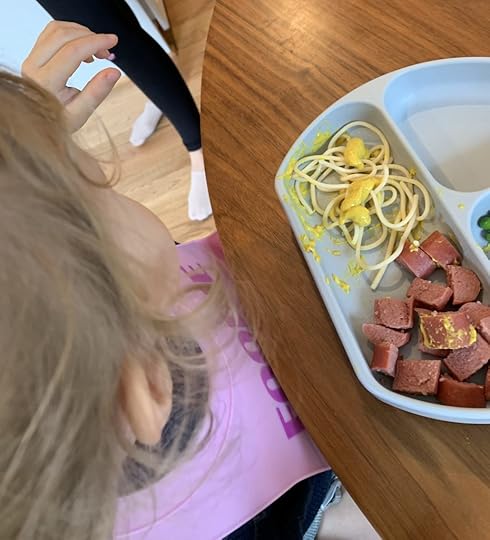 1. Pasta with Mustard
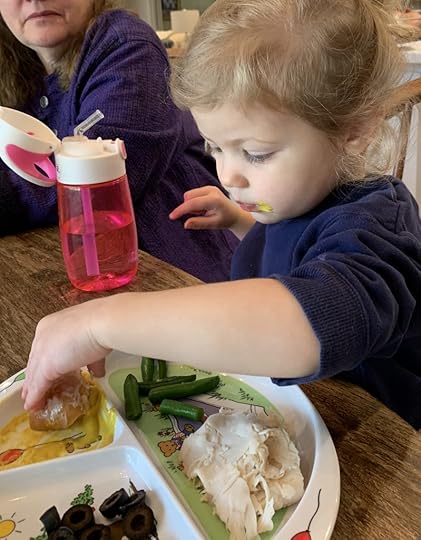 2. Donuts with Mustard
You do you, Ad.
The post Favorite Quarantine Meals, Part 2 appeared first on Becky Runs Away.
December 30, 2020
What I Read in 2020
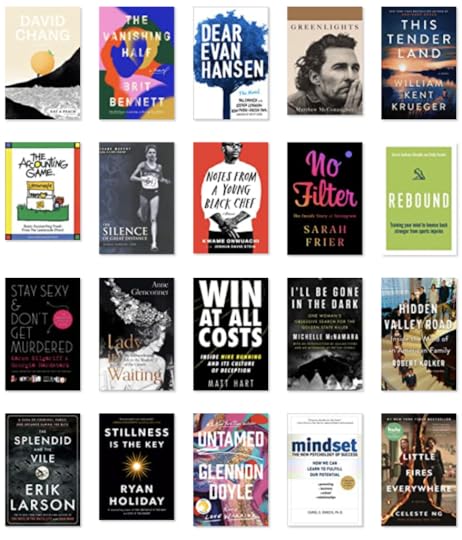
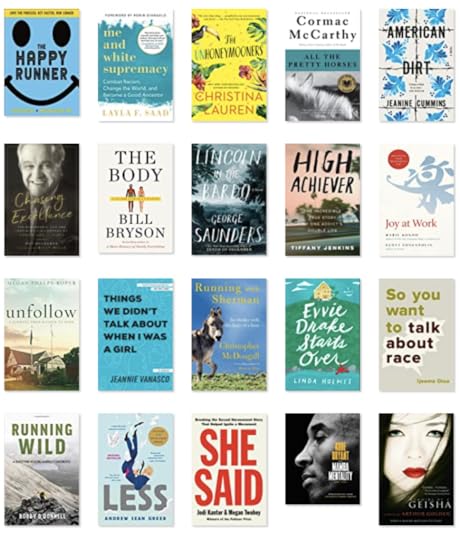
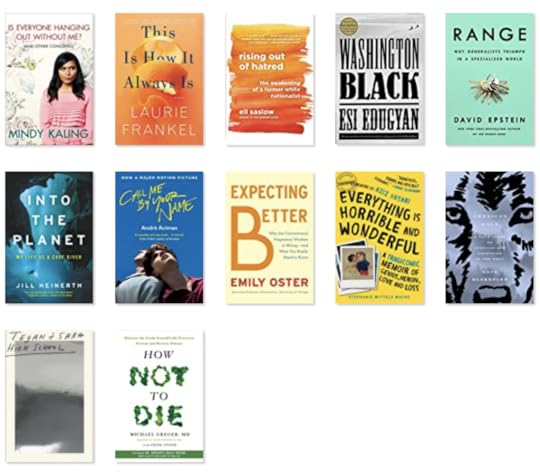
My ten-year mission to read a book a week (on average) continues! Unlike last year, 2020 was not a year to overachieve; I just squeaked by with 52 books, and am plenty satisfied with that. My average over four years is now 53 books / year, not leaving me a ton of wiggle room for 2021.
Here is everything I read this year, starting with the most recent. Keep scrolling to learn which ones I loved most and what I’m excited to read in 2021. Also, let’s connect if you’re on Goodreads!
5 Favorites from 2020:
American Dirt by Jeanine Cummins- Super intense, heart-wrenching, and relevant to current events. My favorite book of the year, and the only fiction on this list.
Hidden Valley Road: Inside the Mind of an American Family by Robert Kolker- A fascinating and tragic account of a family with 12 kids, 6 of them diagnosed with schizophrenia.
She Said: Breaking the Sexual Harassment Story That Helped Ignite a Movement by Jodi Kantor and Megan Twohey- All about #MeToo, the brave voices behind the movement, and the painstaking reporting that brought it to the forefront of national consciousness.
American Wolf: A True Story of Survival and Obsession in the West by Nate Blakeslee- An especially fitting read this year because Colorado recently voted for the reintroduction of wolves! It reads like a story and will turn just about anyone into a wolf fan.
Greenlights by Matthew McConaughey- Shocked by how much I enjoyed this (I barely knew anything about McConaughey beyond his acting and Texas roots). He’s a great writer and story-teller, and his memoir is one of the best audiobooks I’ve ever listened to.
5 I’m Excited to Read in 2020:
A Promised Land by Barack Obama- I’m a quarter in and loving it.
Homegoing by Yaa Gyasi
Evicted: Poverty and Profit in the American City by Matthew Desmond
Unacceptable: Privilege, Deceit, & the Making of the College Admissions Scandal by Melissa Korn and Jennifer Levitz
What Is a Girl Worth? My Story of Breaking the Silence and Exposing the Truth about Larry Nassar and USA Gymnastics by Rachael Denhollander
The post What I Read in 2020 appeared first on Becky Runs Away.
October 17, 2020
My Not-So-Secret Cross-Training Secrets
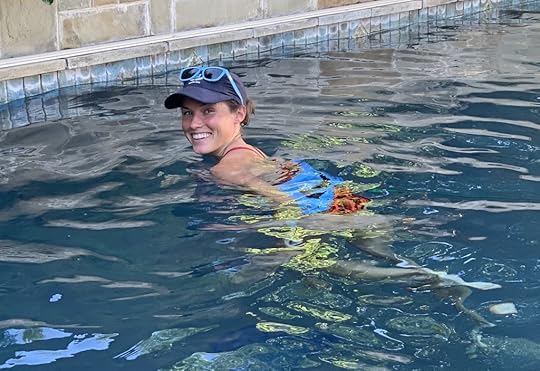
If you’re here because you’re sidelined from running, let me start with this: I feel you! This post is for you. I’m currently working through a heel injury that’s been plaguing me on and off for months, and my existence seems to revolve around my eventual (glorious!) return to full running: PT and doctor appointments, rehab exercises galore, a ton of pool and gym time, plus my normal weight, core, and stretch sessions. Some days it literally is a full-time gig! So much respect for injured parents, students, and 9-to-5 workers.
If, on the other hand, you’re healthy and ripping: Go you!! Slight sarcasm and envy aside, I hope you’ll stick around too. The unfortunate reality, if you run with any sort of consistency, is that you’ll almost certainly face a bump in the road that will knock you off your feet for a few days up to much longer. Bookmark this page for quick access when you’re in the trenches, or better yet, share it with a friend who’s trudging through a setback of her own.
There’s a LOT I could say about the injury process, but I want to focus this on one important and consuming part of every injury: cross-training. I have no credentials in this area besides a whole lot of experience; I’d estimate that all together I’ve cross-trained exclusively for about a year of my life. I’ve learned a thing or two, and I’m happy to share it. If my words spark any questions, please: leave a comment below or message me on Instagram. No doubt someone else is wondering the very same thing.
How to Cross-Train Like a Champ
1. First, establish your cross-training “coach.”
Maybe it’s your running coach, maybe it’s your doctor/therapist/trainer, or maybe it’s a friend who’s cross-trained through his/her own injury and come out the other side in good shape. Just don’t wing it as you go, or you’ll likely over- or under-do it, and question yourself all the while.
Along with my coach Jim Bevan, I’m fortunate to receive cross-training oversight from former Rice runner and current PT star Katie Gwyn. She knows running, swimming, and the human body really well, and I feel good about implementing her recommended training load.
2. Then, create your cross-training wheelhouse.
Start with my list below, and scratch out the activities that cause pain, that you don’t have equipment for or access to, or that you simply hate. (Not knowing “how” to do any of these is not a good reason to exclude it. Find someone who does, get them to show you, and get going!)
Antigravity treadmill (or alternative)- consider AlterG but also Lever and Lightspeed LiftUnderwater treadmill– a luxury often found at universities and hospitalsWater jog– try with and without a floatation belt (I find that my form is way cleaner with a belt, but I definitely have to work harder)Lap swim– use a pull buoy if kicking doesn’t feel goodCycle– try both upright and recumbent bikes, or venture outsideElliptical (or ElliptiGO)- the machine I’m able to work the hardest onStair stepper– I’ve can’t imagine many injuries in which you can do this but not run… but maybe?Arm Crank– my very last resort since it’s irrelevant to running and super hard to get your heart rate up
Don’t forget strength and core work! They’re easy to neglect when you’re so dialed on aerobic fitness, but extra important to stay on top of when you’re off your legs for an extended period. Just steer clear of anything that aggravates your injury.
During my heel injury, I’ve been able to swim, water jog, cycle, elliptical, and lift. The more things in the mix, the better, in my opinion; you’re less likely to get bored or to specialize too much in one non-running activity. As I get back into running, I’ll use a Lever Running unit on our treadmill to lighten the load and promote a smooth, even stride.
3. Rotating through whatever activities are left, try to roughly match your cross-training to your running.
It’s hard to say exactly how off-land training translates to land, and it does so differently for each person, but one rule of thumb that Katie shared with me is: at minimum, cross-train the same number of minutes you’d normally spend running. If you’re an 800-meter specialist, then, your cross-training should look quite different than that of a marathoner.
A pretty typical cross-training day for me, in marathon mode, looks like: 45-minute swim (with intervals) immediately followed by a 45-minute recovery session on a bike. Most afternoons, I finish up with 45 minutes of water jogging (with moderate efforts, mostly to pass the time). Even though it’s tempting to plow through, I build in one super light day per week of 0-60 minutes of cross-training, which gives my body and mind a much-needed rest.
4. Balance hard workouts with recovery sessions, and enter each session with a purpose.
If your goal is to preserve a high level of fitness and return to racing as soon as possible, know that you can do interval sessions more frequently than you do on land, since you’ll recover quicker and won’t beat up your legs from impact. I highly recommend monitoring your heart rate in the mornings (to be sure you aren’t over-training) and during workouts (to be sure you’re working at an appropriate level).
Swimming’s a little different, but you can’t go wrong by replicating some of your running workouts on a bike or elliptical. Start with shorter intervals (since it can be hard to maintain a tempo-like effort when you’re still adapting to a new exercise), play around with your recovery times (which should be shorter than on land), and try to keep your heart rate in a similar range as it would be during hard running sessions.
5. Make it fun!
It’s possible, I swear. Here are some ideas:
Recruit a cross-training companion. If you have an injured friend or teammate, treat him/her like your training partner. Keep each other accountable, commiserate together, and make the whole process a little easier on you both.Build some bumpin’ playlists. It may seem insignificant, but I can’t overstate how much I rely on music when I’m injured. I constantly refresh my Spotify playlists with new songs, ask for recommendations from friends, and recycle pump-up jams from old races and cross-training stints. Stockpile good podcasts and audiobooks. I can’t listen to them while I’m working super hard, but I love listening to podcasts and audio books during recovery sessions. They make the time fly and often teach or uplift me too.Compete with yourself. Can you get your heart rate a little higher than in past workouts? Stay in the saddle a bit longer? Establish some new pool or lifting PRs? Try not to get too out of touch with that competitive instinct–soon enough, you’ll need it!
Here’s the playlist I’m jamming to right now. My favorite non-running podcasts include Ear Hustle, Milk Street Radio, The Sporkful, My Favorite Murder, and The Drive by Peter Attia.
Wherever you are in your injury process, I wish you swift and total healing–and maybe even heightened fitness from all of your off-land work.
The post My Not-So-Secret Cross-Training Secrets appeared first on Becky Runs Away.
September 19, 2020
Nightly Stretching Routine
Like many runners, stretching is not my favorite. First off, it’s confusing: one day I hear that stretching’s bad for distance runners, and the next I hear we’re too tight and slower because of it. It also takes time but doesn’t have an easily-measured relationship to running performance.
What I do know is that I feel good when I move my body in non-running ways, without lingering in any one position for too long. And my favorite time of day to do it–also my best bet for actually doing it–is in that post-dinner, pre-bed window. Typically, Will and I put on an episode of whatever we’re currently into, I sprawl out on the ground and do my stuff, and by the time the credits roll, my body’s gotten some major TLC and my mind knows it’s about time to sleep.
I don’t think the specifics of a stretching routine matter as much as the consistency of one. But the sequence I’ve grown to love was introduced to me by my good friend Chelsea (Reilly) Sodaro about five years ago. I’ve basically been doing it since! Created by Jim and Phil Wharton, it’s a rope-assisted active-isolated stretching routine, which means that you use a rope to stretch one muscle at a time for no more than two seconds, while at the same time contracting the muscle opposite to it. You release that stretch, repeat it several times, and then move onto the next muscle.
For a way better description, I highly recommend checking out The Whartons’ Stretch Book or watching whatever relevant YouTube vids hold your attention. For an extremely unhelpful but fun demonstration, here’s this:
I end every session by focusing on two areas that are chronically stiff/tight/locked up: back/thoracic spine and hip flexors.
I figure if I can spend a few hours a day getting ready to run, driving to run, running, strength training, and cross training… I can probably cede 20 minutes at night going easy on my body and kick-starting the recovery that happens when I sleep.
The post Nightly Stretching Routine appeared first on Becky Runs Away.
September 13, 2020
DIY Charcuterie Board
Most people associate Châteauneuf du Pape with wine. But the first thing that comes to my mind is charcuterie–specifically an epic spread of meat, cheese, and fruit that Will and I shared one night on our honeymoon (accompanied by some of that famous wine, of course.)
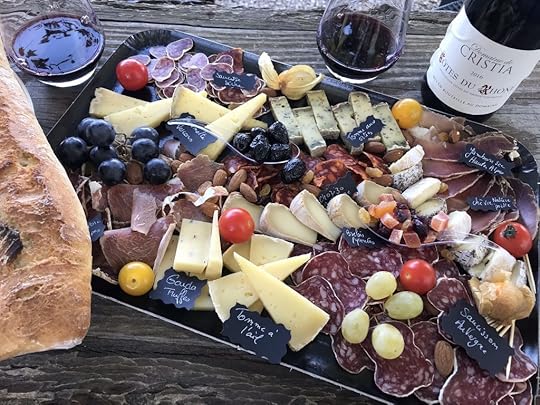 The Charcuterie Board of All Charcuterie Boards, in Châteauneuf du Pape, France
My second fondest charcuterie memory is from Québec City, where Will and I spent a week recovering from last fall’s Toronto Marathon. Though much less legit-looking than our French version, we had a blast building our board from various shops on Rue Saint-Joseph (Saint-Roche neighborhood–still obsessed).
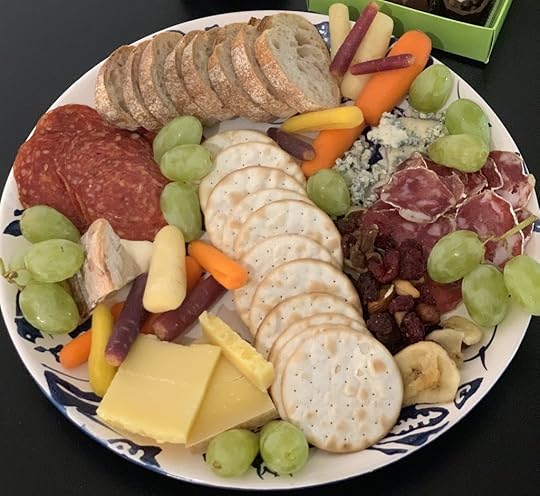 Our DIY Charcuterie Plate in Québec City, Canada
A few weeks ago, we decided that a charcuterie board was the obvious way to christen our new table and cutting board (both of which Will made!). So to Whole Foods we went for an expert-advised array of meat and cheese. We also grabbed fruit, crackers, and olives; made a few condiments and nibbles; and stocked up on Perrier and wine. The finished product was, admittedly, about as expensive as the fancy restaurant boards we were trying to undercut. But owning the whole process was super fun–and no one’s complaining about leftovers here.
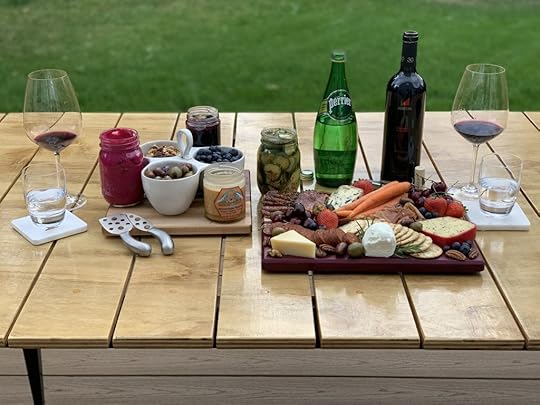 Our Most Recent Charcuterie Attempt in Boulder, CO
Putting together your own charcuterie board is as simple or as involved as you want it to be. If you have time to spare, there are a few things I think are worth making. Start with the Make section below if that’s you! If you’re pressed for time, there’s zero shame in a quick grocery run and an at-home assembly. For those folks, skip to the Buy section, and grab some hummus, jam, nuts, and pickles while you’re out.
I’m by no means a charcuterie pro, but here’s a loose template we used for our recent spread. If you give it a go, let me know how it turns out and what you’d change for next time!
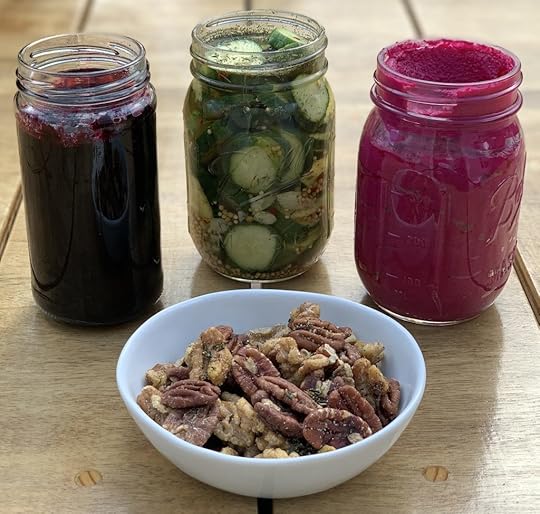 Homemade Contributions: Blueberry Jam, Pickles, Beet Hummus, and Herby Nuts
Make (If You Have the Motivation & Time)
Beet Hummus // I followed this recipe, reprinted from Run Fast. Eat Slow.
Dill Pickles // I made these, with Kirby cucumbers from the farmer’s market.
Herb-Toasted Nuts // Using this as a guide, I used pecans and walnuts (because that’s what I had) plus herbs from our planter.
Blueberry Jam // Half Baked Harvest Cookbook has a good, simple recipe. Use whatever fruit you have in excess!
Buy (Unless You’re Mother Noella Marcellino )
Cheese // Three to six varieties should do the trick, depending on your crowd size. For the two of us, we mixed two classic options (parmesan + chèvre) with two bolder ones (Red Dragon cheddar with mustard seeds and brown ale + blue with caramelized onion). A good rule of thumb is to include one soft cheese (like goat or brie), one firm (parmesan or manchego), one aged (gruyere or aged cheddar), and, if you’re into them, one blue (gorgonzola or roquefort).
Meat // For meat, we played it safe with three kinds: prosciutto, salami, and pepperoni. It’s always a good idea to ask someone at the meat counter what they’re excited about right now or what they’d recommend for your particular spread. If you have access to a specialty meat shop, hit that up for sure!
Produce // Fruit-wise, you can’t go wrong with fresh berries, grapes, or whatever else is in season. Figs, apricots, grapefruit, pomegranate… there’s no wrong move! Vegetables are definitely not required, but if they’re unobtrusive and colorful, they won’t hurt, either. We included a few thin carrots from our farmers market.
Condiments // Along with our hummus and blueberry jam, we added Mountain Peach Whipped Honey (a souvenir from last year’s Lafayette Peach Festival). A grainy or honey mustard would be nice too.
Carb-y Things // It (almost) goes without saying that you’ll need vessels for your cheese, meats, and spreads. Good crackers, thinly sliced bread, pretzels, and/or breadsticks are all good calls.
Extras // This is for the overachievers out there. If you want to round out your board with some nice but nonessential elements, here are some ideas: fresh herbs (like basil, thyme, and/or rosemary); olives; honeycomb; roasted red peppers; mixed dried fruit; and marinated artichokes.
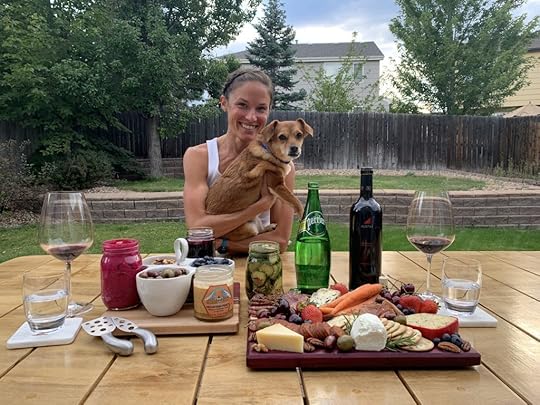 Tina-approved.
The post DIY Charcuterie Board appeared first on Becky Runs Away.
September 2, 2020
Favorite Quarantine Meals, 6 Months In
Has it seriously been six months since COVID-19 hit the U.S. and #StayHome became a thing?
It’s wild to think how normal the Olympic Marathon Trials weekend felt, even with Trump’s interruption of the broadcast to announce the first positive case in the U.S. I remember seeing a few face masks on my flight back to Boulder on March 1, and thinking they seemed a bit overkill.
That next week, which I spent with family in Dallas, things escalated quickly: Elbow taps replaced handshakes. Mass events were cancelled. Foreign travel was discouraged. Workplaces went virtual. And those masked-up travelers from one week earlier started to look pretty wise. When I flew back to Boulder on March 10, I figured, like many, that the virus would wash over in a few months max, and it would all just be a weird blip on the radar.
Yet here we are six months later, with vaccinations in the works but no real end in sight. In some respects, it seems like March was a lifetime–not a half year–ago. Most of us have spent more time in our homes and less time with other humans than any other stretch of our lives so far. But in other respects, without the typical signifiers of passed time–major races, birthday parties, family gatherings, and such–it also feels like time has halted and I’m waiting to pick up where we all left off.
Besides our local trails, one of the few places I’ve felt “normal” through all of this is our kitchen. I’ve always enjoyed cooking and loved eating, but never before has food been such a vital bridge to the world beyond our walls. I may not come out of 2020 with many wins, but a stronger, more expansive cooking game is one I’ll gladly take.
Here are some of our favorite creations from the first six months of quarantine (not including Will’s birthday week meals, which you can find here):
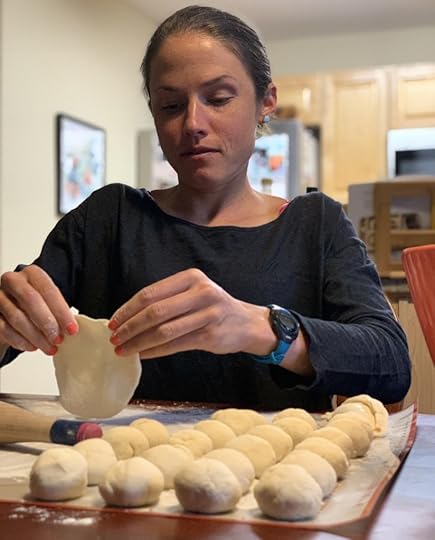 1a. Dumpling Factory
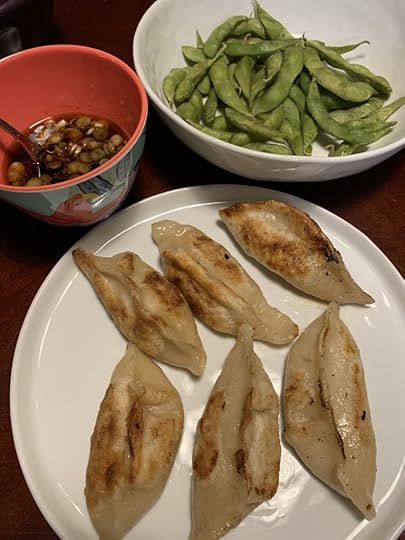 1b. Dumpling Feast
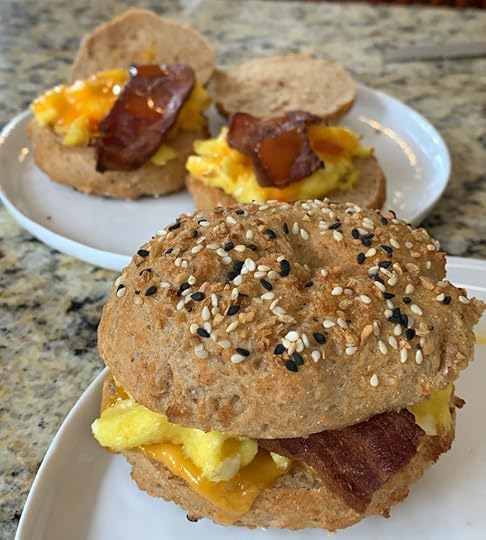 2. Everything Bagel Sandwiches
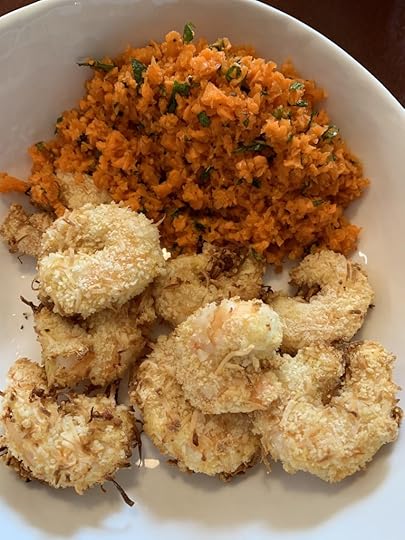 3. Coconut Shrimp & Carrot Slaw
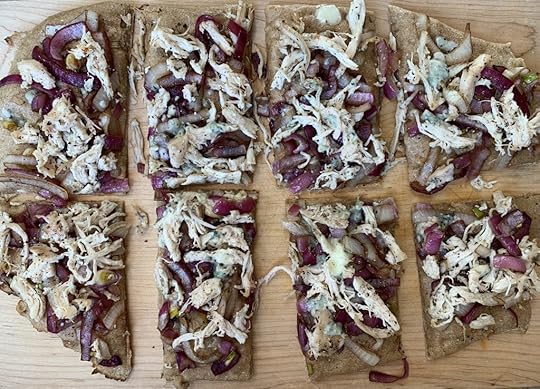 4. Shredded Chicken, Blue Cheese, & Caramelized Onion Pizza
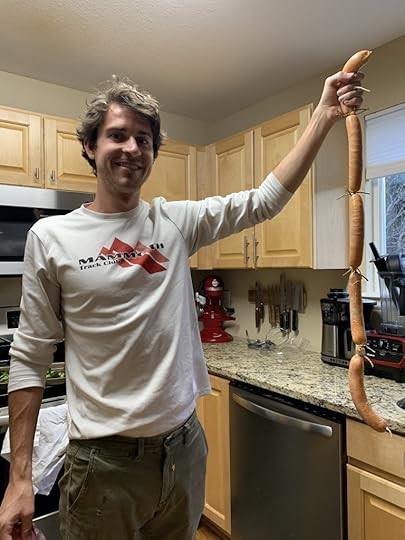 5. Chicken Sausage
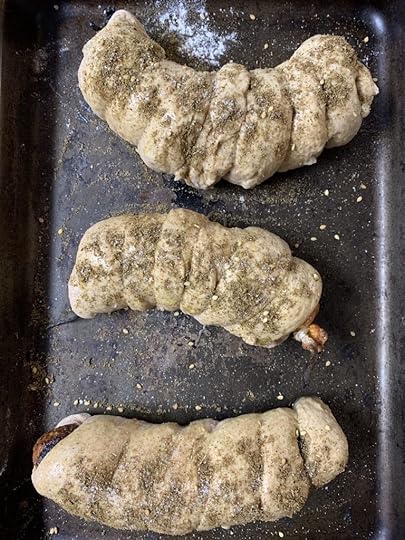 6. Za’atar Bagel Dogs
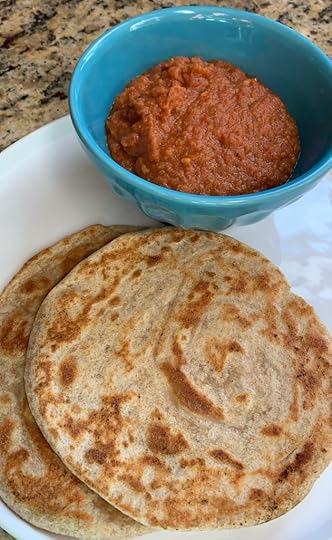 7. Ethiopian Shiro & Yogurt Flatbread
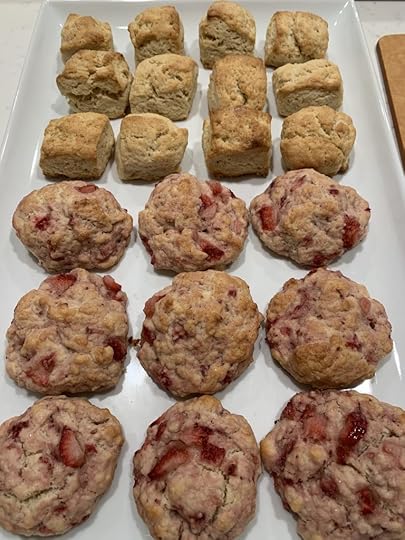 8. Vanilla & Strawberry Scones
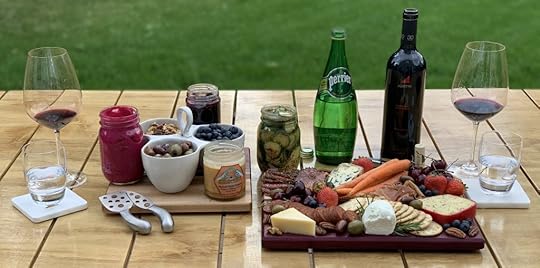 9. Backyard Charcuterie Board
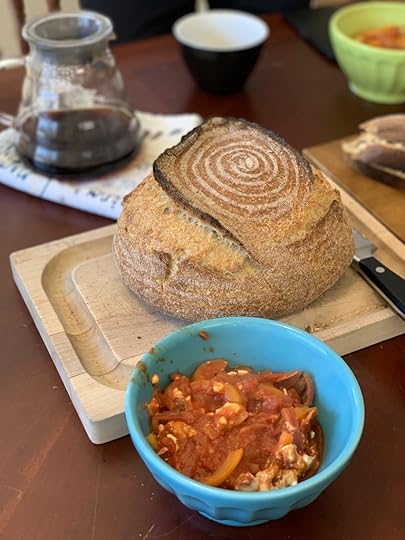 10. Shakshuka & Sourdough
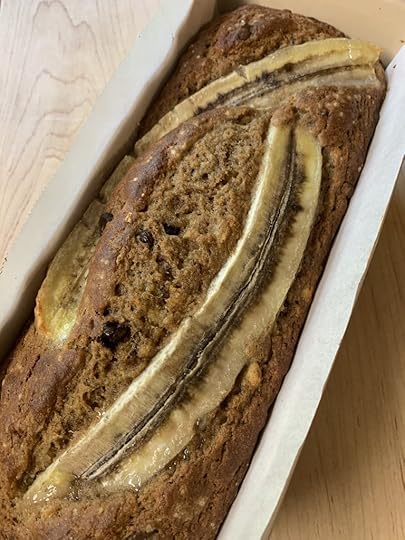 11. Chocolate Chip Banana Bread
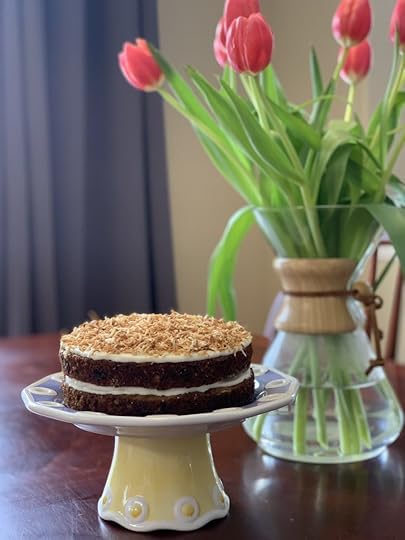 12. Coconut Carrot Cake
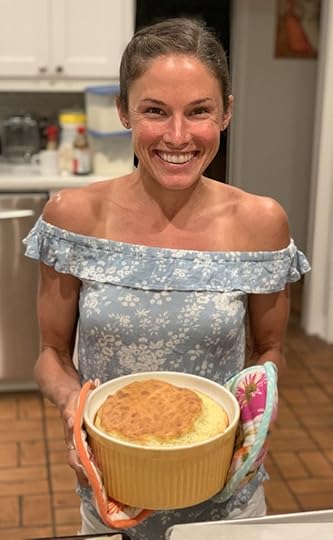 13. Goat Cheese Soufflé
I didn’t follow recipes for everything above, and when I did, I often diverted based on what we had and were feeling. But if you want to recreate any of these meals, here’s some inspiration to get you going:
Chicken Potstickers // loved these!Everything Bagel Sandwiches // 5-ingredient bagels + scrambled eggs, crispy bacon, and cheddarCoconut Shrimp & Carrot Slaw // riffed on this shrimp + this slawShredded Chicken, Blue Cheese, & Caramelized Onion Pizza // Tartine sourdough pizza (a TJ’s batch works too) + baked and shredded chicken + crumbled blue cheese + caramelized onionsChicken Sausage // Kenji López-Alt-style (not a quick project, but a fun one!)Za’atar Bagel Dogs // inspired by Molly Yeh, using Will’s sausageEthiopian Shiro & Yogurt Flatbread // Marcus Samuelsson’s shiro (this one looks good too) + layered yogurt flatbreadVanilla & Strawberry Scones // this base, with strawberries folded in half and the other half topped with coarse sugarBackyard Charcuterie Board // stay tuned for a whole post on this one

July 28, 2020
10 Years Since Hip Surgery, Here’s What I’ve Learned.
This was me, ten years ago today:
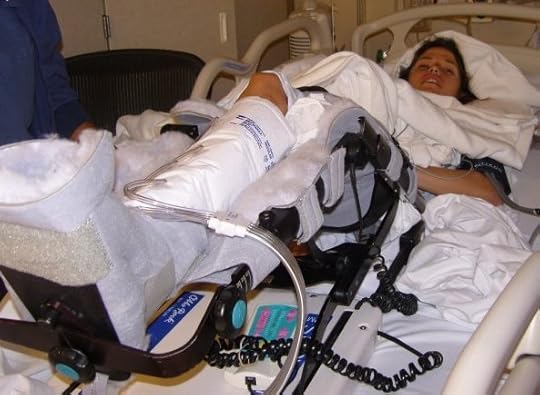 July 28, 2010, right after labral repair surgery on my left hip
Journey to the Operating Table
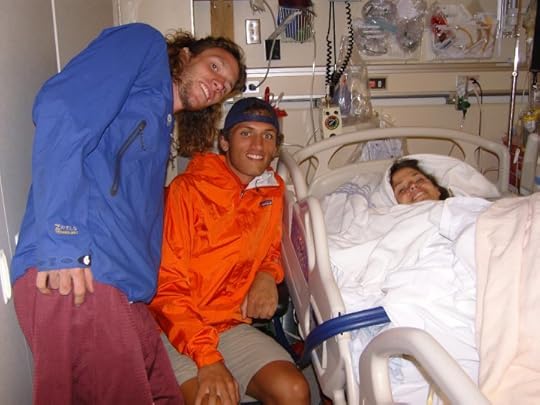 I think the boys liked anesthetized me more than real me.
Although technically in Colorado, where I am now, rather than wrapping up a summer training stint in Boulder and gearing up for my senior year (junior cross-country season) at Rice, as I’d anticipated, instead I was immobilized in a Vail hospital bed, fresh out of hip surgery and still a little woozy from the drugs. (For extremely embellished tales of my behavior in that state, just ask my brother Matt or cousin Ry, who pitched a tent nearby so they’d be with me when I woke up.)
Behind me lay nearly half a year of frustration, misdiagnoses, false hope, and doubts about my mental toughness. Towards the end of that period, I finally got some concrete information to work with when the stars aligned and Colorado–the state I’d chosen to spend the summer in months prior–happened to be home not only to our stellar former Rice doctor Thomas Clanton, but his partner Dr. Marc Philippon, the global authority when it comes to hips. Their MRI revealed a torn hip labrum that was beyond repair by any natural means (which, believe me when I say, I’d tried it all).
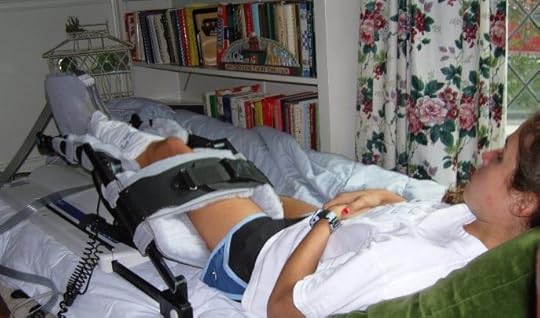 Blissfully unaware of how long my road to recovery would be
 Ahead of me lay an uncomfortable 14-hour drive back to Dallas (my mom is objectively the best), one unplanned night in the ER (I don’t recommend fainting a few days post-surgery), and 17 days of intense rehab, featuring a ribcage-to-kneecap brace, a pair of children’s crutches, foam boots tied together at night, and a Continuous Passive Motion machine that I laid in for several hours each day. Combined with regularly scheduled calf pumps, soft tissue mobilization administered by my parents, non-resistance bike spins, and puffs into a breathing contraption, for a while there rehabbing felt like a full-time job. It wasn’t fun by anyone’s definition, but I was so busy and exhausted that I didn’t have a ton of time to ruminate on my situation or really even see beyond the cozy pallet my mom made me in our playroom. (Pro tip: If you’re ever in a similar situation, get you a Suz Wade STAT.)
Back to Reality
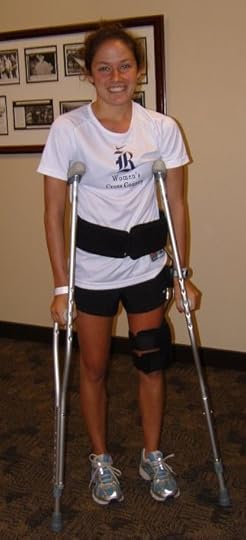 Happy to be on my feet with a healthy hip
And then, the real struggle began. Away went my brace and CPM machine, down went the amount of time I had to spend in crutches, in came the tedious rebuilding and cross-training program, and back I went to Rice, a place I’d only ever navigated as a mobile student-athlete.
I vividly remember the first time I saw my coach post-op. My brother Matt (bless him) had driven me from Dallas to Houston to help me settle into my apartment, and one of our first stops was the Rice athletic department. As soon as I entered Jim’s office, the tears started rolling. I felt ashamed of my crutches, unworthy of my scholarship, and guilty for letting my injury escalate to the point of needing major surgery. His compassion and optimism cleared my eye ducts right out.
The next few months were pretty turbulent. Much of the time, I stayed occupied by a rigorous class schedule, a few hours a day in the training room, pool, and gym, and lots of leaning on teammates, friends, coaches, professors, and trainers. On weekends my team traveled, I often drove to Dallas or Austin to spend time with family, and other times they came to me. I also got a taste of the true college experience that I’d previously avoided for the most part, and surprised myself by how much I enjoyed it.
But there were plenty of other moments when I didn’t hold up so well. Some days I was so stuck in my own misery that I didn’t show up at the track to support my teammates (/closest friends), or I intentionally cross-trained during lunch so I wouldn’t have to feel guilty about feeling jealous of their race recaps and travel plans. It was impossible to predict what feelings would surface when, the only constant being that every day featured alternating waves of positivity and despair. Looking back, I think I was just biding my time until that stage of my life was over and running was returned to me in a tidy little package–an unrealistic expectation, and not a very fun way to live either.
Finding My (New) Stride
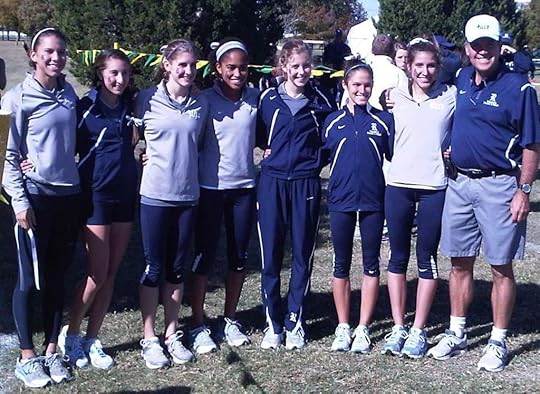 The 2010 Rice University Women’s Cross Country Team a.k.a. My Girls + Jim
Little by little, I graduated from rehab and got started on a walking plan, which progressed to a walk-jog plan and eventually a running one. Jim and Jonathan, our team trainer, came out to the track for all of my “sessions,” and judging by our giddiness on some days, you’d have thought I was breaking records. But all of the hours I spent rehabbing and cross-training translated to running more seamlessly than any of us expected, and after just a few test sessions on land, I was cleared to race the tail end of the cross-country season: the NCAA Regional meet and, God willing, the National Championship.
All things considered, my body held up well in the first test, and our team ended up qualifying for Nationals by a single point over Baylor. We didn’t fare so well at the Big Dance–in fact, we were dead last, 31 out of 31 teams–but making it there for the third year in a row was a big honor, and competing there myself was beyond my wildest dreams even a few weeks prior.
Obstacles Unplanned and Planned
If that sounds like a storybook ending, it was–for a few weeks in November. Some compensatory issues popped up soon after those races (we suspected it was due to the jarring nature of downhill running), and it was another full year before I was able to compete again. All in, that hip injury knocked me out of action for the better part of a year and a half, a stretch that, ten years later, I still consider the hardest part of my 25 or so years as an athlete.
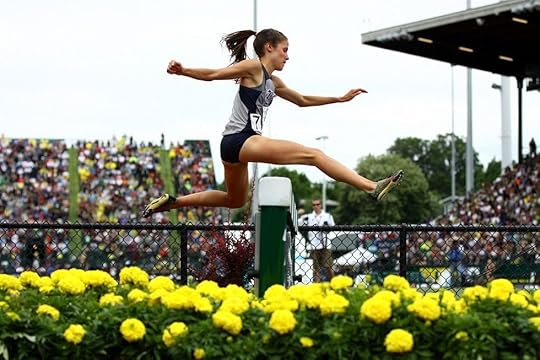 My first Olympic Trials, hosted by Eugene, Oregon in 2012
I eventually did come out on the other side, the next year earning my first All-American honors in cross-country and qualifying for the Olympic Trials in two events the following spring. But it certainly wasn’t the smooth sailing it probably looked like from the outside: I had to spend 10 days on an underwater treadmill in the middle of that cross-country season, I barely ran a step for the 4 days leading up to my big 10K breakthrough on the track, and I had to work super hard to read and trust my body again after treating it like an enemy for so long.
Takeaways
Fortunately, 10 years later, some scars and a slight hitch in my stride aren’t the only leftovers from that ordeal. Several lessons have stuck with me, helping shape my approach to running today.
Here are 10 of the big ones, with some advice sprinkled in for those going through their own struggles with injury or otherwise:
This is why it’s important to choose a school or city you’d be happy at were sport taken away from you. (Fortunately, with Rice I totally did.)This is also why it’s imperative to build meaningful relationships outside of sport, something that I admittedly did not do a great job of before my hip saga.That said, good teammates are a lifeline in times like these. Among so many sweet things they did for me while I was sidelined, one that still moves me to think about was this big stack of index cards Britany sent me right after surgery, one for each day of my expected healing process, each one containing an uplifting, flattering, or funny message.So, too, are supportive family members. I know we don’t get to choose them, but boy, am I thankful I got the parents and siblings I did. From being there during and after my surgery and lugging me and my serious baggage home from Colorado, to spending a night in the ER with me, chauffeuring me all over the place, and helping me out of cars and chairs and beds for a few weeks… there is no way I could have done it on my own. Zero.Going through an injury with a teammate/friend is so much easier than doing it alone. I’d go so far as to say that Halsey, my main cross-training partner during this one, and I had fun swimming laps, racing to and from campus on our bikes, and bemoaning our fragile bodies together (though obviously I wish she weren’t hurt either!).It’s okay–even healthy–to feel all the feels. Some days I was a super motivated cross-trainer and supportive teammate, and other days all I wanted to do was wallow in self-pity and avoid anything running-related. While too much negativity is corrosive, the continual suppression of emotions is, too.The tenacity and work ethic that make good runners also make good rehabbers. It helped me to treat my recovery as I would a running plan, mapping out all of the tasks I needed to accomplish each day and each week so I felt productive and anchored by goals of some kind.It’s possible to stay super fit by cross-training. (I only biked for the first several weeks post-op, then gradually added in lap swimming and water-jogging.) Just be sure, if you’re off your legs for long, to give them a chance to catch up to your aerobic capacity. Like I did, I think it’s pretty common for runners to come off an injury really well at first, only to experience other issues soon after because their bodies aren’t quite ready to handle the load.Journaling is one of the most therapeutic and constructive investments a person can make. Other than my training logs, I wasn’t a regular journaler before this injury. But grappling with my feelings and thoughts on paper every day was such a big help during those rough months that I’ve journaled off and on ever since. (I even wrote an Outside article on the benefits of journaling for athletes.)Nothing tests or reveals your love for a sport like a serious injury. I certainly wouldn’t have said so at the time, but looking back now, I’m grateful for my hip injury and the things it taught me about myself along the way. It’s pretty cool, when I think about it, to care about something so deeply that any obstacle, any amount of time away, any number of heartbreaks are worth enduring to get it back.
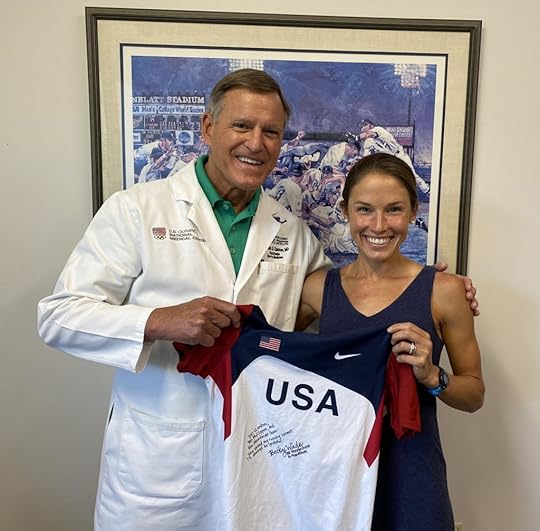 10 years after my surgery and a month before his retirement, I surprised Dr. Clanton in Vail. He and Dr. Philippon saved my running career.
The post 10 Years Since Hip Surgery, Here’s What I’ve Learned. appeared first on Becky Runs Away.