Hetty Crane's Blog
May 19, 2021
The Trials of Designing Your Own Book Cover
When my writing partner and I had finished our first book, Daram, we were excited about publishing it ourselves. We had got two rejections from traditional publishers and two rejections from agents: none of these rejections surprised us. Our book was too long and unwieldy and did not fit any one specific market. Was it fantasy or science fiction? Why had we written a first book that was over six hundred pages long? No publisher would touch a first book that large (unless you had connections in the business).
Well, the short and simple answer is: because we wanted to. Should we change the book, cut it down drastically, and add some dragons and orcs to suit the market? Nope, not our cup of tea.
Luckily, right about that time self-publication was taking giant leaps forward with advances in computer technology, and that meant we could publish and produce our book the way we wanted, with no drastic cuts or changes. We were entirely new to the business of publishing in 2015; it was a steep learning curve, to be sure, but it guaranteed us almost total freedom. The only controlling factor really was the budget for cover design and promotion. And naturally, being first time authors, we had no budget whatsoever.
Since I am a retired graphic designer the task of designing a cover fell to me, since we could not afford to hire a book cover designer. I had not worked in the graphic design industry for years; instead I'd been working in a bookstore, so I at least had a lot of familiarity with how book covers should look, and what the current trends were. But figuring out what kind of cover would work for our story was a different matter because, as I mentioned above, the book does not fit neatly into any one genre: the protagonists are members of a contemporary rock band who are mysteriously propelled either by magic or science into another world and reality where music has magical power. There are no elves or dragons at all, but there is a Princess and her spunky lady-in-waiting and a medieval civil war that has to be won to restore the fallen gods of the realm.
So, how to convey something of this part time-travel / part portal fantasy in eye-catching imagery for a book cover?
My first approach was to focus on the character of the spunky lady-in-waiting, and how what she does with magical music figures strongly in the plot. Hence my first attempt at a cover featured her making a
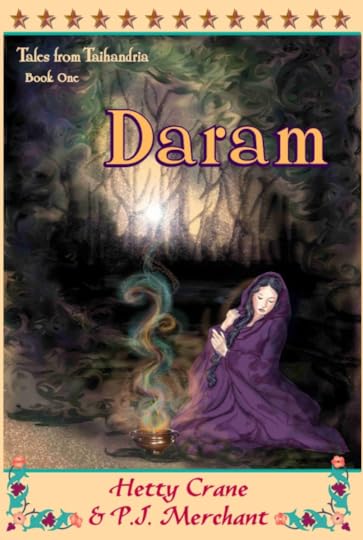
"daram" – an appeal to the gods to send help to her beleaguered country. This image also had the advantage of explaining the title of the book, once readers ventured into the story. The spooky woods where she makes the daram give the image atmosphere and the depiction of the girl and the magic she is doing is intriguing.
The cover was well received by my partner and friends, and lots of people said they really liked it, that it did convey the sense of a fantasy story. The corner arabesques that frame the author names were intentional to give a sense of the medieval fantasy world.
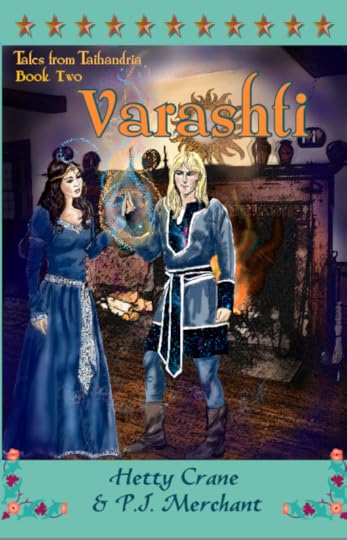
The second book in the series was given a similar look, with a different main colour to differentiate it from the first book, which worked well, and was a standard trend for books in the same series or by the same author.
However, the graphic styling is dated (I did say I was a retired graphic designer) and moreover, hand-drawn characters have long since disappeared from book covers in favour of photographs of real people, preferably people whom the reader cannot recognize. Readers want the freedom to imagine for themselves what the protagonists look like.
Also the title font didn't quite work, looking older and dated.
So back to the drawing board.
Next up I decided to do a take on a central image of the story, that of the harp that one of the main characters plays and loses somewhere on the fantasy journey. Since the fallen gods once manifested themselves as constellations in this world, I turned the harp into a constellation, symbolizing the supernatural power of music, and a background of starry space would indicate that the story takes place in a far distant reality.
This design has the advantage of not depicting any of the characters, and the bold larger image is eye-catching and works well sized very small for computer screen ads, which is where most readers will see the book.
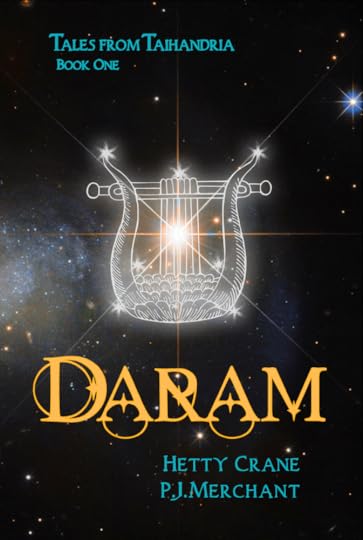
The second book in the series was also given this treatment, focussing on another musical instrument that plays a major role in the plot and making it into a constellation.
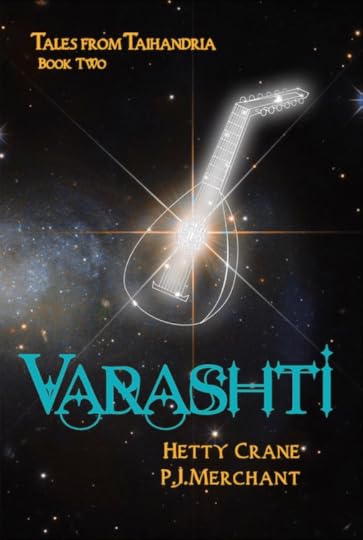
I discovered a font that worked much better for the titles - clean and modern and yet had the element of the stars that were the focus of the story. Covers in the fantasy genre generally require fancy and fantastical fonts usually, and these new fonts fit the bill, but I did not opt for the usual bevel effect fantasy fonts are given, wanting a cleaner, crisper, and more contemporary look to go with the sci-fi element of the story. These covers were very effective.
But I was not entirely satisfied with this design, though it was also well received by family and friends and looked good in small ads on social media. It seemed to lack 'drama.'
I liked the idea of using the instrument imagery for the covers, but I found that maybe the covers were a bit plain and stark and didn't say enough about the fantasy genre or story. Perhaps they looked too sci-fi and not fantasy enough, though I had retained the more medieval-looking fonts for the series titles and author names. But I missed the colour differentiation of the first two cover attempts, the 'prettiness' if you will, and so I tried yet another experiment.
I checked out colour trends in recent fantasy releases and decided to try my hand at using more colour. This time, to indicate the constellation and star aspect of the novel, I put the stars inside the images of the instruments against a coloured background with some interesting texture which I hoped would convey a medieval feel to the image.
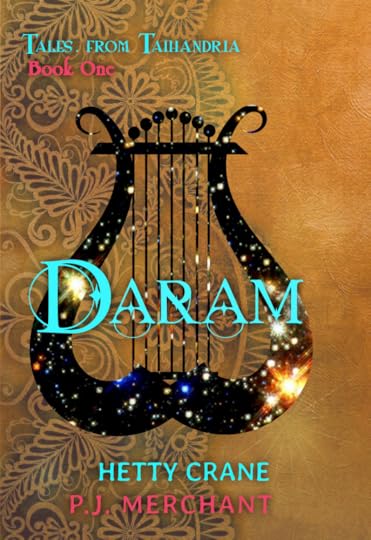
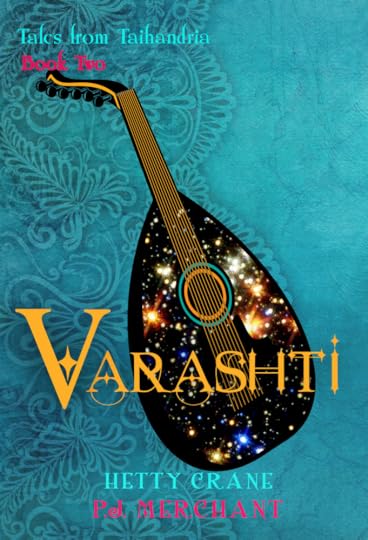
I was still undecided about the fonts for the series title and author names, and tried experimenting with different fonts as you can see above. I was quite pleased with the design and tested it on family and friends again. The results were mixed. Some liked the colourful approach; others preferred the black 'space' covers.
The real test came when I tried using these cover designs in the ads. Somehow they did not really work with the imagery I used in the ads, which is most often medieval fantasy-type imagery that suits the setting of the story and conveys something of the plot drama. Instead, these designs looked out of place - merely 'pretty,' and did not convey enough about the actual genre or story itself to my mind. Moreover, they did not scale well compared to the space covers when shrunk down to the size that typically is used in online advertising.
And so it was back to the drawing board. I decided the best thing to do was work with the space covers and see if more elements could be added to better convey what the story is about and add a little excitement to the imagery. To this effect I added the central characters of the band itself in silhouette, and an overlay of 'magic.'
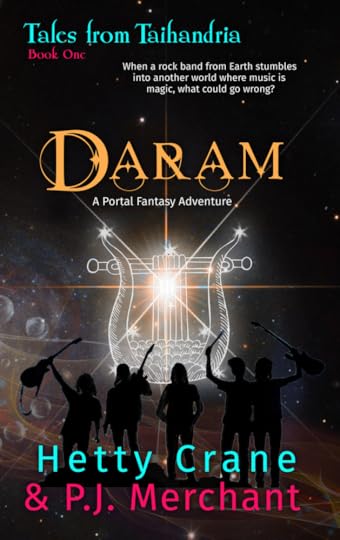
So now the question is, what do readers think about these designs? We would love your feedback! Don't hesitate to comment on this blog; there is no wrong answer, only good positive feedback to let us know which cover works for you and why.
Thanks!!!


April 20, 2021
It's Not My Real Birthday
For the few who might be confused, April 20th is not really my birthday. My birthday is in October. When I chose P.J. as a pen name and had to create a FB profile, I chose that as my birth date in honour
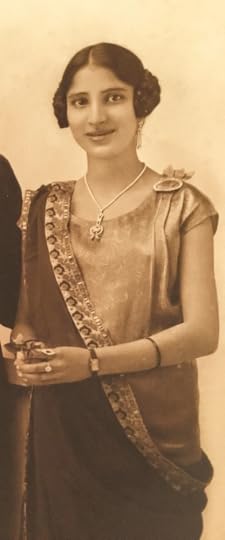
of this lady – my grandmother. It is actually her birthday today.
Aloomummy, as she was known to her grandchildren and great grandchildren and to most of our friends, was an amazing woman. Not because she had done anything astoundingly remarkable in her life (though she did have some good stories of her younger days) but because she was the most cheerful person I have ever known. She could laugh at herself as easily as she did at the absurdities in life while enjoying its pleasures and enduring its knocks with equal measures of calm and common sense.
So today, on her 112th birthday, it seemed appropriate to clear up that confusion. I chose April 20th for many reasons but one of the main reasons was because she was probably one of the very few people to read the first rough and even unfinished draft of Daram (which I had to print out in a large font on loose leaf paper in small instalments that would be easy for her to hold onto while she read).
She fell instantly in love with Colin and Robin and it became her regular practice to scold me (and Hetty, in absentia) because we weren’t working quickly enough to finish the book so she might find out how it would end. Sadly, she passed away before we were able to do so but she left me with an immense sense of encouragement to know that it was possible for someone other than ourselves to become so readily absorbed by this world we had created.
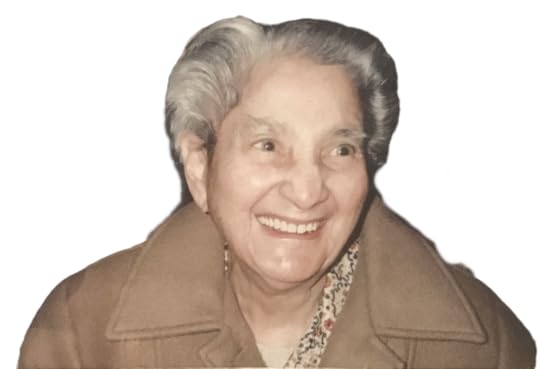
Aloomummy, wherever you are, I hope you like what we’ve done thus far.
Pheroza Merchant
April 10, 2021
Book Review: Harmony Lost by Stella Jorette
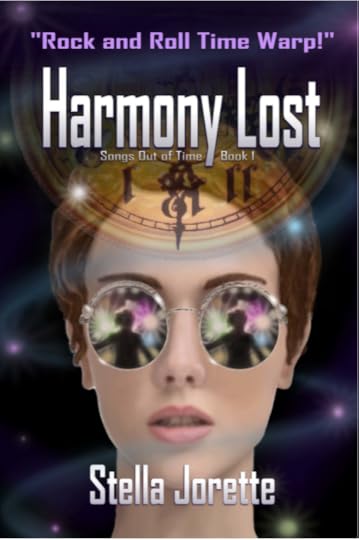
I can’t quite remember where I came across this book, whether in a promo or in one of those Amazon ‘if you liked that, you might like this’ things while I was looking for a book to read. Anyway, I think it was the cover that caught my attention with its Almost Famous echo, so I read the blurb. And it intrigued me, since having grown up in the ‘70’s I super enjoyed the music and the fashions (which were subsequently replaced by the very ugly ‘80s – but I digress) and I loved Almost Famous, Spinal Tap and Still Crazy, the best films to date about the idyllic time of my youth. This book promised the flavour of those films, and I was not disappointed.
There certainly were echoes of all three of those films, but with a twist, adding a sci-fi time travel element I was not expecting, and which became the central premise of story, looking back at the 1970s era through the lens of a more advanced societal and technological perspective. This lens provided most of the humour of the book, but was a little patchy in places. Nevertheless I enjoyed the story very much--the clash of perspectives of the characters was funny and satiric, but mostly gentle, only sometimes descending into caricature, and sometimes filled with savvy insight into the human ego.
I am interested to see where the story goes next. I likely will purchase the next book in the series. I recommend this to people who like an amusing read. It’s got a whiff of Jasper Fforde about it, and even a hint of Marian Keyes. Oh, and I can also compare the wonderful humour and satiric portraits to the fab work of Connie Willis in Bellwether and CrossTalk. Excellent fun. Bravo Ms. Jorette!
Book Review: The Night Raven by Sarah Painter
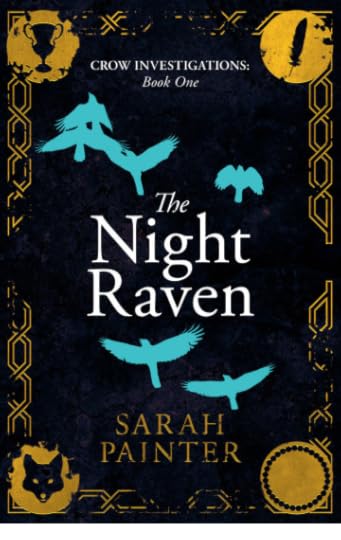
I just finished a most delicious new urban fantasy read, The Night Raven by the very gifted Sarah Painter, author of magical fiction. And her stories are magical. She has an engaging voice, playful and deft, and her observations are keen and amusing.
The story centres on the premise that there still exists old magic from the early pagan days of Briton, going back to Roman times and earlier, and there are four main families who are the inheritors of this once powerful magic. The symbols in each corner of the beautiful cover design symbolize the magical families: the Crows, the Foxes, The Silvers and the Pearls.
The heroine is a single 30-something woman named Lydia Crow, who is starting her own investigation business, hence the title of the series, The Crow Investigations. From her point of view the reader slowly gets to understand the mafia-like relationship of the four magical families who control a great deal of business in the richly detailed setting of London's Camberwell borough. There are complex family relationships, disappearances, break-ins and a murder, and Lydia sets out to understand and solve the mysteries.
The magic Ms. Painter creates is intriguing, a new take on some old themes, and brings to mind the work of Susannah Clarke (Jonathan Strange & Mr. Norrell) but her style is light, witty and very engaging, and borrows a great deal from the chick lit genre. I devoured the first book in a couple of days and immediately went in search of the next books in the series.
If you are looking for a delightful and absorbing escape into a world that is enriched by magic that is both entertaining and haunting, look no further than The Crow Investigations. I can't get enough of Ms. Painter's delightful prose and her ability to draw you into her special magical world.
September 7, 2020
My Writing Process – a Day in the Life
One of my friends recently asked me how I go about writing. She was impressed with the size of both Daram and Varashti and is waiting impatiently for P.J. and I to finish the new book, Anostarja. Her questions were many and varied: what’s my set up like? What are the obstacles I face when I sit down to write? Do I write at a specific time of day? Do I write every day, or do I binge write when inspiration takes me?’
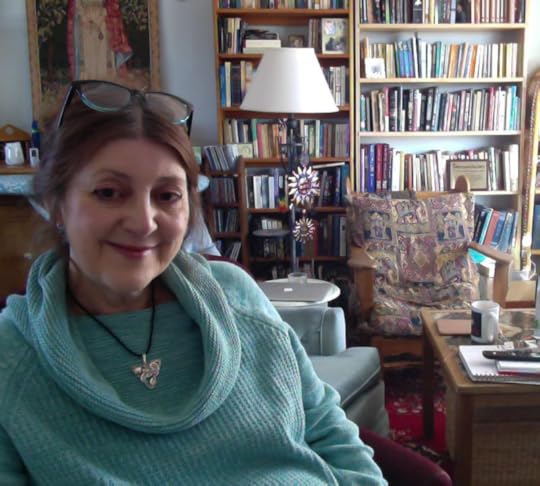
So I had to think about her questions as we chatted over tea (or kai), and I thought I would share my experience with others who have read Daram and Varashti, and who may be curious, or who may be working on their own novels and thus interested in different people’s writing processes.
P.J. and I did not start out wanting to be writers; that is to say, not exactly. We love books, and both read voraciously. We both did our degrees in English literature because we love books. It was only natural that eventually we would want to write one ourselves.
When we started writing Daram, P.J. was a stay-at-home mom, busy with three little ones, and doing some part-time work at her local library’s Story Time for kids. I meanwhile was working as a medical secretary, while finishing university in the evenings while my husband was in graduate school. We lived at different ends of the country, thousands of miles apart, and wrote long letters to one another late in the evenings and on weekends. We began the story simply as an amusement for ourselves, taking turns telling the story, and leaving each other with cliff-hangers to giggle over and resolve.
But as our circumstances changed, her kids went off to school, and I graduated with my BA, and started work in a bookstore, we started taking the storytelling more seriously and set about to make our letter stories into a real book.
In those early days writing Daram, we both scrambled to find time to write, and it was usually late at night, after the day's work and chores were done, and our respective husbands were in bed. The travails of daily life – work, family obligations, and so many disruptions to our best laid plans – often made it impossible for us to write for months, even years at a time, and the ‘book’ was shelved often enough, gathering dust. I also did a lot of volunteer work, setting up and running a local spay/neuter companion animal charity, which became a full-time job in itself. And of course I have hobbies that interest me and take a fair bit of my free time – quilting and painting. But never far from our minds was the landscape and world of Taihandria. Our imaginations lingered there, thinking about our characters, and we were determined to finish telling their story.
These days we are both lucky enough to work exclusively as writers. We don’t make much money with our books, but then we don’t write these stories for money. We write them to satisfy our imaginative lives and to explore the craft of story-telling.
Some authors are very professional and have a strict daily routine and even set themselves goals of writing so many words per day. These kinds of writers are far more organized than I am, though I take that kind of goal-oriented advice to heart and have tried to work to a schedule. In actuality, I am not very successful at that kind of writing because I find I simply cannot push aside other considerations and needs that control my time.
Other writers don’t emphasize a schedule as much and instead rely on inspiration and can produce copious numbers of pages when the spirit moves them. I am somewhere in between. I do need inspiration, but it can’t be summoned up at the drop of a hat, or the dictates of a clock, and there are dry spells when I am flatly uninspired and writing is like pulling teeth. So I do work at it. I struggle through those difficult passages until inspiration deigns to visit me again, and when she does, I tend to make real headway.
I do spend a lot of time (virtually) with P.J., plotting, drawing diagrams, making notes, doing research here and there.
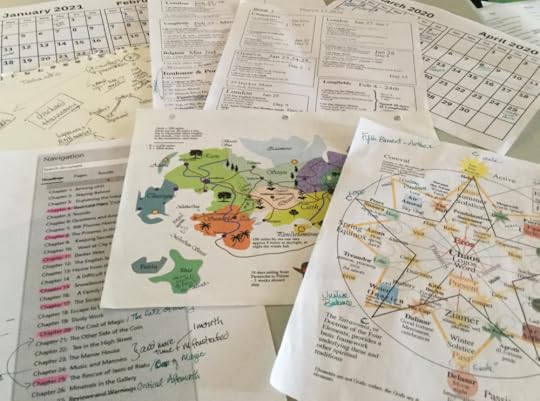
Before I write a pivotal scene I need to see it in my head, like a movie. But even then the scene or ideas are incomplete. In the act of putting words on paper (or screen) the plot can change as different aspects of a moment or a character I’m writing about occur to me, or reveal themselves to me. Heraclitus of Ephesus said, “a man’s character is his fate,” and I find this true when my characters take the stage to either speak or act. Their ‘character,' their innate virtues or faults, dictates what they will do or say, how they react to outside events, or how they change or influence events based on their actions.
As for how I organize myself to write, I start every morning with the idea that I will sit down when the daily chores and errands are done, usually by the early afternoon, and I’m fresh enough to enter into that part of myself that is the 'inner' life, the world of the imagination. I find a comfy chair, get my pad and paper or my laptop, and a big cup of tea (kai). I always start by thinking this will go well, sitting in a comfy chair, tea beside me, the sunlight streaming in through the window. Then the phone rings. I answer it, deal with whatever it is about; but sometimes it’s a sister or friend calling, and soon a half hour or more has passed chatting. I get a fresh cup of tea and sit back down in my comfy chair ready to begin writing.
My twenty-pound cat Buttercup appears and starts poking me. He wants more food. I ignore him for about ten minutes but his paw poking my leg is relentless. He knows the ideal time to get my attention is when I’m stationary in that chair. So I get up and get him more food.
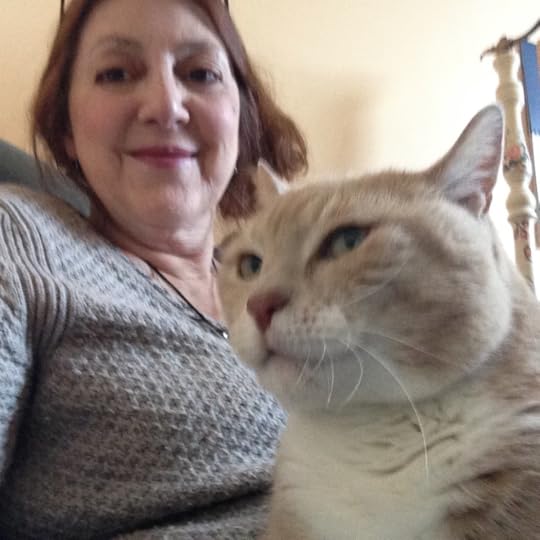
My tea is now cooling and so I take it to the kitchen and nuke it. I go back to my study and sit back down, but now my little rascal cat Harry Potter has woken up and is howling to go out. His temper tantrum continues until I give in and agree to go out with him. Although we have a fenced yard, I play schoolyard monitor with Harry because he has a real tendency for trouble, like his namesake. If it’s a nice warm day I can take my pad and pen and tea and sit outside. But of course I can only write one or two sentences before I am distracted by Harry’s antics, chasing squirrels and birds, and generally creating a ruckus. By the time he settles down to snooze in the sun another hour or even two have gone by. It is now mid to late afternoon and I need fresh tea.
The phone rings again, and after this short distraction, I find myself thinking I should check my email, and Facebook. The email generally goes well, but once down the rabbit hole of Facebook, hours flit by like seconds. And then it’s time to organize supper and get more tea.
After supper I get more tea and try not to get distracted by television. There is always the news one has to keep up with, especially in these days of the pandemic. And as of right now, there is a return, in ‘pandemic bubbles,’ of two of the sports I love, basketball and tennis. So if my teams are playing, there goes the evening. So that leaves me with trying to sit up late like I used to be able to do and write, only these days I find I’m mentally done around ten p.m.
Also, this specific time of the pandemic, both P.J. and I have been volunteering making masks for people, and that work has eaten up a great deal of the spring and summer. However, since August, that work is finally under control and I can put aside mask making. Realizing how time has flown, I am doing my best to prioritize writing and am trying not to get distracted by cats, Facebook, and sports. I can report that I have been having success. P.J. and I are on the home stretch of Anostarja. With any luck, we will have the book out before Christmas, the Danae and our editor willing.
August 23, 2020
Writing During the Summer of the Pandemic
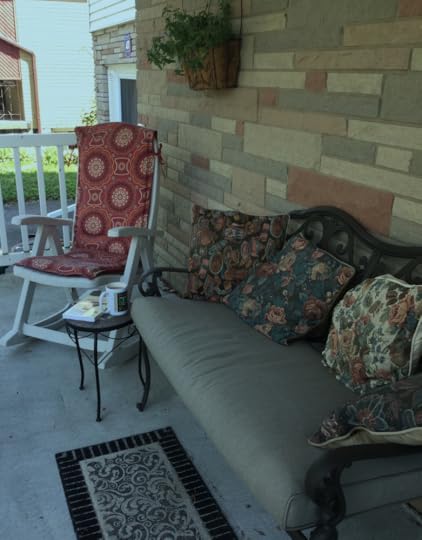
It’s a very hot sticky evening as I sit in my comfy chair and think about how the summer is going, or is almost gone, and how quickly time has fled. It is mid-August, and the garden is looking a little tired due to the excessive heat and very little rain, but the potted flowers, impatiens and petunias, are still holding their colourful heads up somewhat wearily. They are very brave.
I am very grateful for the garden, especially in this summer of the pandemic. So many people I know don’t have one and are stuck inside their apartments with little access to the green spaces that refresh our souls and our imaginations. I was never a country girl and I’m not quite that now. I grew up in a big city and played games with my childhood friends on the hot pavement outside our apartments or small wartime houses, and never really knew what I was missing in those early years. My student years were spent in tiny student digs, in the middle of the hot and smoggy city, where carbon soot collected on all the window ledges, far from green spaces.
Now I am one of the lucky ones and live in a quiet neighbourhood with lawns and gardens, and I hear children playing in green yards, and I watch the birds and the squirrels attentively (and at night, an occasional racoon family), marvelling at their ephemeral lives. Their movement and colour and chirping enrich my own sense of being alive, of appreciating each day, the sunshine or the rain, the grass and the trees, the insects busily going about their tiny little lives, doing the work they must do to survive, just as we all must do.
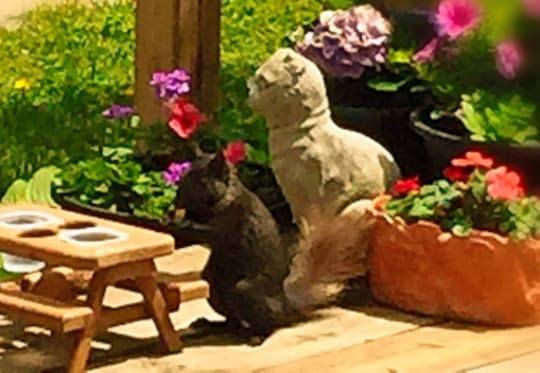
I am so grateful for this small green space this summer because so many spaces that my family and friends were accustomed to taking for granted are so changed since Covid 19 appeared in our lives. We live in bubbles now, constrained and wary, limiting our contacts with people, going out only when necessary for food and things you really need (as opposed to things you think you need but don’t). We don’t see our family much these days, or if we do, it’s at a safe, socially distanced space, wearing masks. I can still tell when people are smiling by the way their eyes crinkle, but oh, I do miss those smiles that I can only imagine now, behind the potpourri of masks we are all wearing.
I haven’t been writing much this summer, though I do have deadlines I want to meet. Instead, P.J. and I have been making colourful masks for people, for family and friends, for anyone who needs one. In my spare time, normally, I am a quilter (when I’m not writing) and I am grateful for the skills I learned from my dear quilting teachers and friends, because these skills have been used to advantage while mask making. I taught P.J. virtually using Facetime how to make masks, and we send them out by mail, or drop them off, and thus feel and hope we are doing something positive to fight the awfulness of this pandemic.
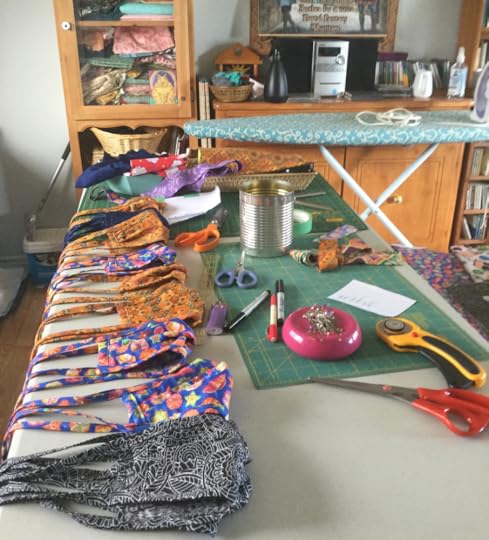
As with every quilt I’ve made, every mask has been made with love, and the sharing is my way of giving hope and comfort to someone.
There is a green space at the bottom of the garden where I like to sit and write, with notebook and pen, or with my laptop, when I can ignore the heat and the daily onslaught of news (that I feel I must keep up with and stay informed about). But of course the news encroaches on my writing, as it does on all the other aspects of our lives. In Anostarja, book three in the Tales from Taihandria series, which we are writing now, Manon is on Earth, searching for the magical music that will save her own world from destruction, just as scientists today are searching for a vaccine that can prevent widespread loss of life here. And although there is no pandemic during the time she is on Earth, she does learn a fair bit of Earth’s history―a long chronicle of oppression and wars, the seemingly endless divisions that set one group of humans against another, and the slow poisoning of the planet that is daily accelerating to crisis proportions. But she also learns about Terran resilience, about the cooperation and sacrifice and hard won hope that have helped humans overcome so much adversity in their checkered past and present.
To write is to respond to the world around us, even as a new world is being created. I am grateful for the opportunity to leave this present Earth and to venture into another world where my characters live. In my garden I can listen to the birds and let my imagination roam and think about the characters in Taihandria, as well as those on Earth. Sometimes I feel bad that we have left those characters in suspended animation, frozen, while we have been making masks ― Periclea grappling with terrible news about her abducted kinswoman and the harsh winter, or Zahir about to find love for the first time. And Colin, who had to stay behind in Taihandria, is reassessing his life and his obligations and is missing his band mates, much as we are all missing our family and friends, and making those same readjustments in our own lives. We promise we will revisit our Taihandrian friends in earnest very shortly, and let them recount their stories to us and to our readers.
April 25, 2020
Writing During Lockdown
It's late Saturday night, and it's been over a month in lockdown for me. I think March 16th was the last 'normal' outing I had to see my dentist, and even that was not quite normal, for their office was preparing for lockdown, cancelling all but emergency appointments, though the government had not announced an official 'stay home' directive as of that date.
Since then my partner and I have been observing all the social distancing rules and regulations when having to go out to buy groceries. Only one of us goes, wearing a mask, and we are diligently keeping lists of things we run short of, making only one trip a week, if that. There was enough advance warning that we did stock up before the official lockdown began, so we are more or less okay. But what we miss, of course, is the old stress-free outings to stores or events, and more than anything we miss the company of extended family and friends. Thank goodness for social apps that keep us all connected.
I'm finding it hard to write at this point in time. Even though my writing partner and I are writing essentially 'escapist' fantasy (that's certainly what the literary world calls it), we are finding it hard to escape to that world of imagination right now. We are rooted to the world of society, and how this pandemic challenges all the norms we are used to living with - freedom to come and go as we please, to hug people, visit family and friends, shop, go to concerts or films, dine out - and it is educational to live this new life, which is daily filled with fear and sadness as we hear the news, grieve, and worry about our loved ones.
I am desperately hoping this is an education for our world - that we, as a society and a culture, learn to live a better, less wasteful and more compassionate kind of life. Our planet is in trouble. We use resources recklessly and are systematically killing off the natural world, poisoning the air and water, killing mammal and marine life with pollution and the destruction of the natural habitats of wildlife. We need to slow down, look at this beautiful world, and take the steps we need to, to save it.
As the days pass and I spend the time inside, keeping busy, cleaning, cooking, watching news, chatting with family and friends via technology, I can't help but think this is teaching me how to be happy and occupied with what we have, that we do not need to rush out and endlessly buy more things and dispose of things, that we don't need a new this or that. I think about my grandmother who was born in the late 1890's and lived through two world wars, and how she made do with next to nothing so many times in her life, and how hard she worked to raise a family of five children, to feed and clothe them, and make a life for her children in a new country, after immigrating from the old one. She survived disease in the days before vaccinations and antibiotics, and childbirth, and lived into her eighties. She was remarkable and even when she had stroke and her speech was severely impaired, she still managed to communicate to us what mattered, how to behave, how to work hard, and how to be happy. Her favourite expression was "Waste not, want not," and I hear her voice inside my head every day as I go about my daily tasks and think about the future, not just of my family, but of all families.
I will keep trying to write, because more than ever in these trying times of enforced solitude, we need art to keep us whole. As Winston Churchill famously and wisely replied, when asked about cutting arts funding during WWII, "Then what are we fighting for?"
March 30, 2020
Why a Rock Band as Heroes
Over the holidays, it was reported to me that my nieces and nephews were looking at Daram, and in reading the back cover blurb, were intrigued and a little confused as to why P.J. and I chose a rock band as the protagonists for a fantasy adventure. They couldn’t see the connection and I guess I don’t blame them. Aside from the obvious notion that rock stars are sexy and glamorous, why choose a rock band for a fantasy novel set in a medieval time period?
It is an odd choice, especially as many of the books using rock stars as the central characters are pretty dismal and are pretty much just ‘adult’ fiction (read erotica or porn). It would seem a real stretch to take your average rock band and plunge them into a medieval/fantasy setting and have it work, given that the protagonists of this kind of fantasy adventure story usually are heroic and noble, and those are hardly the terms one would use to describe your average contemporary rock band. But our taste in rock bands does not run to the average hotel-destroying metal-type grunge bar band that was popular for most of the last half century and whose general popularity has extended into this new millennia.
The type of rock band we fixed upon was a different breed - an Art Rock band, a different type of rock phenomenon that sprang up in Britain in the late 1960s and early 1970s and was comprised of above-average musicians (virtuosos, in fact) with their own interest in fantasy and medievalism. Thus the connection we made between rock bands and fantasy is not all that far-fetched, given our own exposure to the prog rock era in the ‘70s. (We were, of course, very young, and exposed to prog rock and fairy tales, Tolkien and Lewis at approximately the same time).
For anyone who does not know progressive rock music, with its roots in classical and folk music, as well as in traditional rock 'n' roll, you’ve only to Google images of the many bands popular in the early 70s, and you’ll get the connection.
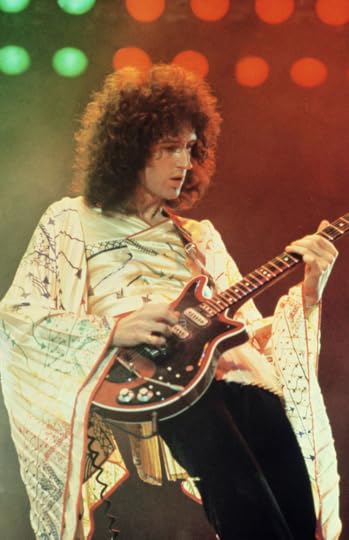
The ‘70s was the era of free love, flower power, psychedelia and harking back to an earlier, golden time in British history. Much like the Pre-Raphaelite artists of an earlier age who revolted against the severe strictures and fashions of Victorian morality, the proggers rejected the drab realities of post-war Britain, its social restrictions and cultural mores, and expressed themselves in elaborate funky costumes with bold decorative patterns, reminiscent of the colourful organic inventiveness of medieval design and the Pre-Raphaelite predilection for velvet and silks. Prog music draws on folk tales and fantasy for narrative content and uses complexities of technique and structure and the rhythms of classical composition and jazz, as well as using traditional rock and folk idioms here and there. It outright rejects the simplicity (and sometimes mindlessness) of standard rock 'n' roll.
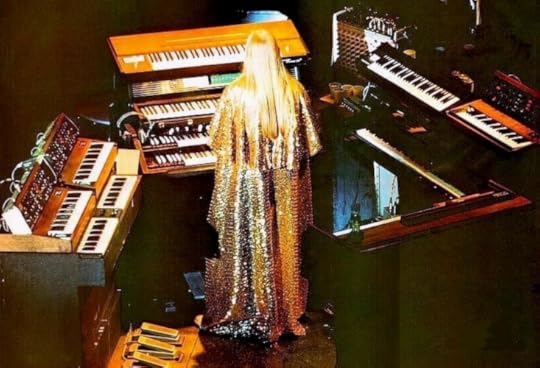
Groups like Genesis and Caravan, Gentle Giant, King Crimson, Jethro Tull, Renaissance, Queen, Gryphon, Greenslade, Nektar, ELP and Yes all dressed in exotic costumes and wrote complicated, symphonically influenced music that relies on musicianship and virtuosity. The melodically sophisticated music and showmanship is vastly entertaining in its theatricality and is stimulating intellectually. And the art rock form carries on with younger groups in this millennium, with bands like Dream Theater, Porcupine Tree, Spock’s Beard and Transatlantic.
Given this type of rock band, is it such a stretch that these kinds of musicians could learn to be noble and even heroic as characters in a fantasy adventure story? Who better than these young virtuoso musicians to visit a medieval world where music has fantastical properties and is imbued with a special magic? These musicians have flash, dash, and especially comic potential and are perfect candidates to invade the fanciful world of Taihandria so that we might chronicle their adventures.
Hetty January 8, 2016
How We Got Started Writing
P.J. and I often get asked how it is we managed to collaborate to produce Daram. The questions we most get asked are who wrote what, how did you decide who was going to write what, and how did you manage to keep the narrative voice fairly uniform, given that different writers have individual voices and styles?
The answers to those questions hinge on how we got started writing, and why we decided to write this story together.

After we graduated from university and got married to our respective sweethearts, our various jobs took us far away from each other. It was too expensive to call one another often, so we wrote long letters detailing the travails of our daily lives. But as we wrote late at night, after our day's work, the impetus was always to try to escape the mundane and share the inner life of our imaginations.
We always loved fantasy and fairy tale - Lord of the Rings, Narnia, Isak Dinesen's Winter's Tales - and we loved the notion of alternate worlds, especially medieval-period worlds that could offer swashbuckling adventures. Our fascination with the time travel of Doctor
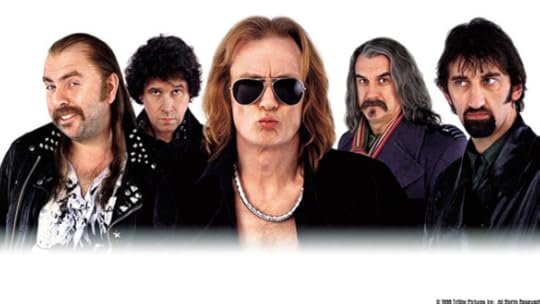
Who (I still long for a Tardis - who doesn't?) led us to embroider our musings to one another with a sunnier and more contemporary take on Twain's Connecticut Yankee in King Arthur's Court. What if a rock band à la Still Crazy / Almost Famous traveled to such an adventure-promising alternate world? The fun this idea promised was irresistible. I would write one chapter in my letter to P.J. and leave a cliff hanger, and her challenge was to pick up the story from that point in her next letter to me. Thus we began the story as entertainment for one another.
Slowly, as our entertainment became more engrossing, as characters took shape in our minds and on paper, we worked on developing the plot. As we approached the work more seriously, when discussing the action of the story, we decided to each take on a set of characters and the action they would be involved in. But this was never a hard and fast rule. We switched back and forth as necessity and interest dictated, relying on each other's stronger abilities regarding certain areas of the plot and story to create the colour and shape of the world of Arethea and the land of Taihandria. At that point we determined that we were essentially writing the story we had always wanted to read, and maybe other folks would enjoy it also.
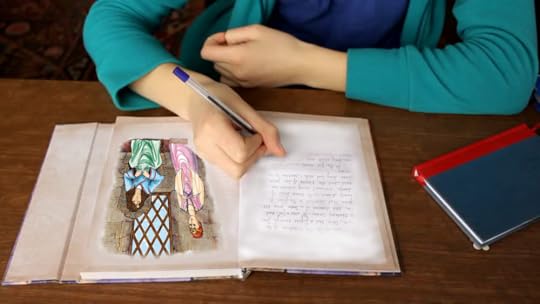
As to how the narrative voice remains consistent, our brilliant editor makes sure that stylistically we are not as distant from each other as we are geographically in real life.
Oh, and the other question we sometimes get asked is, were there disagreements along the way? Of course there were, but they were obviously amicably settled (usually by our brilliant editor), and the story was made better by the rigorous 'discussion' we engaged in.
Hetty
January 22, 2020
The Classics of Fantasy: Why We Read Them and Try to Write Them
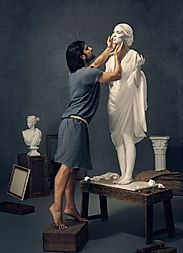
All great fantasy writing makes use of the traditions, forms, and structures of the faery tale, fable, folktale, and legend. Most, if not all, early civilizations have stories and legends about magical beings and events, and wondrous tools and strange superstitions, which in ancient times were passed on in an oral tradition. With the advent of written histories, these stories and legends were recorded and have enriched our understanding of culture and our love of narrative. And over the last three hundred years these legends and tales have been translated into fantasy fiction.
Although Harold Bloom’s seminal work The Anxiety of Influence applies more strictly to poetry and canonical literature, the theory he propounds certainly applies to those of us working in the fantasy genre today. There is a very real danger of fantasy writing being derivative and weak, because, to quote Ecclesiastes, “there is nothing new under the sun.”
And, of course, the seminal fantasy work, Tolkien’s Lord of the Rings, has become the bible and blueprint for a great deal of fantasy writing. I was struck by that forcibly when re-watching Peter Jackson’s film of the book recently. There is hardly a staple of fantasy that Tolkien has not invented or put his indelible stamp on, from magical beings (elves, wizards, orcs, hobbits, dragons, trolls, dwarves, tree creatures, ghosts/spirits, and goblins) to magical tools (rings, staffs, crystal balls, mighty swords, and magical chainmail).
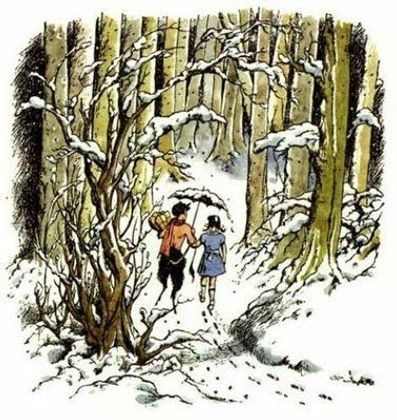
Certainly, there are other great fantasy writers who make use of the magical beings and tools that Tolkien leaves out: C.S. Lewis creates or uses witches, talking animals, a magical lion, dryads, naiads, fauns, centaurs, gardens with magical trees that become magical wardrobes, magical spell books, mermaids, unicorns, giants, ogres, princes and princesses – the list goes on.
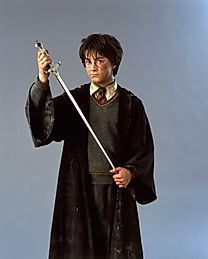
And J. K. Rowling’s wonderfully inventive novels cast a long shadow over recent magic fantasy, as she becomes an influence, a “strong” writer, to use Bloom’s term, that will be hard to avoid.
So, if there is nothing new under the sun, and if it has all been said before, and better, why do we fantasy writers continue to attempt to create fantastical worlds filled with marvels we have already encountered in works by great fantasy authors?
Fantasy is most probably the fastest growing fiction genre in today’s publishing world. Amazon and Goodreads have large sections devoted to fantasy, and the listings are so extensive and varied that finding a new work to read is sometimes overwhelming, even when searching for established writers in the genre. Furthermore, advances in self-publishing make it easier for new writers to create and publish their own fantastical stories, so much so that the field is becoming extremely crowded. Not that this is a bad thing – quite the contrary. Traditional publishing houses, which have long controlled the market, dictating what writers fit what they (as a business with a bottom line) determine the public wants, are now faced with competition from writers who do not write for the marketplace, but rather for themselves and like-minded readers, and this results in creative freedom in a genre that was fast becoming predictable and somewhat stale.

And creative freedom is necessary, for essentially writers attempt to write the story that they always wanted to read - which is not necessarily the story that is already on offer in the stores - even though they / we have most likely already encountered and loved elements of that story countless times before in the work of authors like Tolkien, Lewis, Rowling, Diana Wynn Jones, Doris Lessing, Ursula Le Guin, and other classic writers. We love the stories so much we want to re-experience the journey of discovery, of encountering the characters, their trials, failures, and successes mirroring our own inner journeys of discovery. And while many of us reread the classic stories over and over to the point where we have almost memorized the words on the page, there comes a point where we need variety and change, and to encounter those same necessary elements of the magical tale in a new, slightly different setting. We delight in visiting other worlds, with all their infinite variety, in meeting new and curious characters, in being thrilled by the moments of magic with dragons, swords, spells, fantastical beasts and creatures of myth and legend.
In the best of fantasy writing, there is always a new slant on these time-honoured elements of the genre, a new twist that piques our interest and engages us in the story. It may be the same story, but it is new and fresh, and it satisfies our craving for the mythical journey. So fantasy writers and readers (among whom I count myself and my writing partner P.J. Merchant) struggle to find that new twist, that variant slant on the tried and true fantasy journey, and we continue to engage in the struggle with a measure of delight, and we hope that our readers find that same delight as we envision the familiar journey. The novels we want to read and write may not always be new, as there is nothing new under the sun, but they will be new enough to provide the perfect balance of familiarity and surprise.
* * * * * * * * * * * * * * * * *
What do you think? Why do you read (or write) fantasy? What aspects of fantasy do you most enjoy? I would love to hear your opinion on what makes a good fantasy, and why you continue to read novels in this genre.
Don't hesitate to contact me at hettycrane@gmail.com or through the contact form on this website and I will publish your feedback here.
Hetty February 8, 2017