Alexandre A. Loch's Blog
April 7, 2016
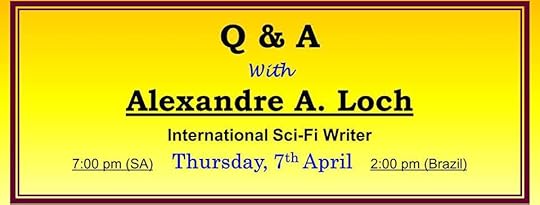
Q&A with me!
Question&Answers is about to start on Facebook Page Books and Everything!
Just write your question on the page’s timeline and I’ll answer it.
For those of you who cannot attend, Q&A will be available for later reading.


April 4, 2016
Laplatia is top 10 in Ultimate Fantasy Book’s best book cover contest!
Dear readers! Laplatia has made it to the top ten in Ultimate Fantasy Books best cover contest! Semi-final!!! Now it’s even more challenging; those of you who are available please click below and cast a vote for number 5! Thanks!
http://www.ultimatefantasybooks.com/c...

March 25, 2016
Why is the number of suicide bombers increasing?
 Have you ever heard about the Liberation Tigers of Tamil Eelam? The Tigers were a group that fought for an independent state in Sri Lanka. They were very organized and even had their own air force. Until 2009, when it was terminated, the movement used terrorism as an important war tactic and had killed the most people in the world with suicide bombers. But few were aware of the Tigers because their war was waged in Eastern soil.
We know about Islamic State and not the Liberation Tigers because ISIS is effective at one thing: spreading terror throughout our homes in the West. With the rise of Islamic extremist movements, terror invaded the West and the numbers of deaths by the Tigers were quickly overwhelmed by those of Al-Qaeda, the Islamic State, and the like. Between 1982 and mid-2015, an estimated 5,000 people died from suicide bombers associated with the Islamic State. This number is as high as 4,800 for Al Qaeda’s bombers. And on this Tuesday was a new tragedy: at least 30 people died because of suicide bombers in Belgium.
Terrorist acts create fear, anxiety, and mass panic. One study showed that three years after the Oklahoma City bombing occurred in the United States, levels of people with PTSD (posttraumatic stress disorder) in the local population were much higher than that expected for other populations. These levels are generally higher than those observed in regions affected by tsunamis and other natural disasters. Terrorist acts involve man versus man punishment, which creates deeper wounds. Thus, they also involve the vile and perverse character of the human being; this wickedness and vileness are absent in natural disasters.
Terrorist acts create a feeling of hopelessness and helplessness, which easily leads to the discrediting of local authorities. People feel insecure and think local authorities are weak and incompetent. A society’s sense of security is depleted, which often causes inappropriate and extreme reactions among citizens and authorities.
And this is all what the terrorists want. That’s why the terror of suicide bombers pays them off.
Even though the suicide act of terrorists may seem irrational, it is a strategic option for terrorist organizations that have a huge military disadvantage compared to those who are attacking them. Terrorists use the “rationality of irrationality.” Suicide attacks are more effective than other types of terrorism because they involve the art of martyrdom, which makes it more convincing to the target population that they are being punished. As the suicide bomber has nothing to lose, the message is that his life is worth what they are fighting for. Thus, suicide bombers are convincing because they increase the credibility of new attacks, which is a key element of this type of act, and trigger the fear that another attack will inevitably occur again anywhere, at any time. Remembering the legendary Sun Tzu: “kill one, frighten thousands.”
It is very important not to go along with the terrorists and give them what they want, which is discord and hatred. After terrorist attacks, the appearance of super-right radicals is a very common reaction. The worsening of segregation, hatred, and xenophobia are also common. Hatred is replied to with hatred. Trumps emerge. The boy Aylan, who was found dead on a Mediterranean beach, reopened a debate from a while ago: close the borders and let thousands be killed by the sea, or welcome them at the risk of our own being killed by terrorists? One needs security without harassing individual freedoms. One must employ vigilance and caution, but not paralysis and paranoia. Studies show that the best way to prevent future acts is to increase homeland security—rationally, without hatred or xenophobia.
The damage of explosions goes far beyond the fatalities of those who died in the attacks. It is necessary for the government and people to contain the wave of hatred—a contaminant that pleases the terrorists very much and makes them continue to blow people up among us.
March 15, 2016
Laplatia on Brazilian Amazon’s best-sellers list
Laplatia hit #1 on Brazilian Amazon’s best-sellers list, category dystopia/science fiction! Thanks to all Brazilian readers!
[image error]
March 9, 2016
Truths and lies on the internet: case report of a suicide broadcast over the web
 Recently the British Journal of Psychiatry, one of the highest impact journals in psychiatry, published a case report about a young Swedish man who committed suicide and decided to broadcast his death over the Internet. At 11:51 AM on October 11, 2010, the 21-year-old created the thread “hanging” on a Swedish forum called Flashback. This forum is known to be notorious, having already been the subject of numerous lawsuits because of controversial content. The article assesses the messages posted on the topic created by the suicidal young man from its opening until its closure, hours after his death.
The thread starter (TS) announces that he will hang himself because he is tired of his life. He says he has Asperger’s syndrome and feels very lonely. TS also comments that he had already made a test to establish whether he would be able to hang himself, which suggests that he is determined to actually carry out his suicide. He then writes that he will utilize a camera to take pictures every 2 seconds and posts the camera’s IP address on the forum for people to follow.
The initial reactions to the post were diverse. Nevertheless, almost half of the messages encouraged TS to commit suicide. Some people challenge him about the veracity of his promise and TS shows that he is clearly determined to take his own life. In a few messages users try to dissuade him from the idea. These messages seem to have some effect on TS, who answers, “Starting to think I might change my mind about killing me, I better hurry up a bit…”
At 13:13, TS writes “OK, let’s do it”, and then he hangs himself. The number of messages in the thread increases more than 10-fold. Even after the act, 49% of people commented neutrally about the event; 27% found it tragic, but 24% thought the fact was humorous or entertaining.
The Internet enables us to get in touch with a great range of people. Even though we can be in this crowd, one can still feel alone. That was a complaint of TS, and also a common complaint about our present time, not only via the Internet but also in the real world. The Internet provides restricted contact that can also be simultaneously intimate. Restricted because we can’t touch people, we can see them but in most cases we only communicate through messages. There is a wheezing in the interpersonal. However, it can become intimate and true because people write things that often they do not have the courage to speak in person. On the contrary, the Internet often involves the false. For example, how many people enter chats pretending to be another person, lying about their attributes and saying things that are not true? Fake profiles, e-mails containing Trojan horses are routine.
TS said that he felt loneliness and sought to transmit the final minutes of his life, perhaps in an attempt to placate a little of his loneliness through an act of reality. However, falsity betrayed him. For many people, who were accustomed to the false nature of the Internet, and also driven by the taboo surrounding suicide, thought it was just another joke of a controversial online forum even though TS had shown the seriousness of his intentions. Perhaps a kind of denial defense by the participants?
Finally, despite all of the reactions to the act, 62% of participants felt that there were ways to prevent the suicide, such as via support messages on the forum or by alerting the police, for example.
The Internet is a vehicle that is capable of generating a lot of lies, but it is—at the same time—able to disseminate truths. The TS case report shows that the network can be a tool to prevent such tragedies, either through the dissemination of truthful information (in breaking of taboos about suicide, there are several studies on “suicide communication” and what to do with it), either through the reception of truths that often do not appear in reality (TS only shared his intentions via the virtual plane by using the Internet as a mean of a legitimate connection).
Ref.: Westerlund M., Hadlaczky G., Wasserman D., 2015. Case study of posts before and after a suicide on a Swedish internet forum. Br J Psychiatry 207, 476-482.
February 28, 2016
Laplatia’s giveaway on Goodreads!
Enter a chance to win 5 paperback units of Laplatia – Or, The City That Could Not Dream on Goodreads!
Already 300 participants registered!
Goodreads Book Giveaway

Laplatia
by Alexandre A. Loch
Giveaway ends March 23, 2016.
See the giveaway details
at Goodreads.
February 25, 2016
Creativity might be related to unethical behavior
 Creativity generally consists of two components: mental flexibility (the ability to find different solutions for the same problem) and divergent thinking (thinking “outside the box”—the ability to think beyond what is usually considered).
In some situations (such as ethical dilemmas), a person’s creativity can be tested. In these situations, an individual has to weigh the desire to satisfy his or her self-interest against the desire to maintain a positive outlook. Here is an example taken from behavioral studies: a person must choose between two rooms in which to watch a movie. An individual with physical disabilities is in one room, and a person without physical problems is in the other. When the film is the same, people tend to choose the room with the handicapped person. However, when the movies are different, people generally choose the room without the person with physical problems, on the pretext that they like that room’s film more—thus revealing the stigma of disability.
Studies have shown that, in these situations, people tend to resolve ethical tensions through rationalizations that benefit themselves by making use of their creativity. That is, they act in a sufficiently “incorrect” way that they gain from their unethical behavior, but they act honestly enough to maintain a positive view of themselves. Thus, they rationalize and elaborate on their justifications so that they can convince themselves that such ethical deviations are morally appropriate—and thus do not negatively affect their self-images. It’s just like committing some minor fraud and justifying it by saying that corruption is widespread, or like committing a minor offense and arguing that “If the government steals, why can I not steal?” Thus, any situation that has room for justifications of potentially incorrect or selfish attitudes can stimulate unethical behavior.
A Harvard group tested the association between creativity and dishonesty in a series of five experiments, each involving more than a hundred participants. People were placed in experimental situations in which they must pass certain tests, and each passed test gained the participant a small amount of money. However, all these tests had room for little tricks, such as subsequently fixing one’s results, interpreting data in a biased way to promote yourself, and so on. The researchers found that creativity was associated with a greater vulnerability to cheating. They could also see that the more creative a person was, the more capacity he or she had for inventing plausible excuses for unethical attitudes, making these creative people more prone to committing unethical acts.
These results resonate with moral accreditation theory. When individuals are aware of their good previous moral actions, they tend to act unethically in later situations on the belief that they have acquired “moral credits” for the previous actions. As such, being able to generate original explanations (excuses) for unethical conduct through creativity can lead people to feel authorized to cheat.
[Ref.: Gino, F., and D. Ariely. “The Dark Side of Creativity: Original Thinkers Can Be More Dishonest.” Journal of Personality and Social Psychology 102, no. 3 (March 2012): 445–459.]
February 16, 2016
Why is Nature’s article about schizophrenia so important

Some time ago, understanding mental illness was more like cheering for a football team: people would wear a team’s T-shirt and cheer the way they pleased. Some cheered for psychotherapy and argued that medicine did no good, while others praised medication and said that psychotherapy was like a placebo. The conception of the psyche was made of multifaceted and disaggregated theories, and each one could choose a “way” to understand his or her patient, and it could have nothing to do with the way another person understood the same suffering.
Even today, we see this breakdown. The other day, I offered an explanation for (interpretation of) the depressive condition of a patient. He soon started talking about physical symptoms and minimizing the facts of his life. He suspected that an explanation of his depression would prevent him from receiving any medication for it. As if he were wrongly conjecturing that we either understand it or medicate it.
In the twenty-first century, a new perspective took hold of the mind sciences: the translational perspective. This perspective includes the understanding that medication changes the connections between neural networks; the idea that psychotherapy is able to change neurotransmission; the finding that environmental factors, such as living in big cities, changes brain architecture; and the evidence that non-drug therapies like meditation and exercise have positive physical effects on the brain. Finally, all mental phenomena were conceived of as having their basis in the brain, but not in a way that reduces any and all phenomena of psychic life to simple electrical impulses. In other words, it is understood now that everything happens in the physical brain (oddly enough, many previous conceptions surreptitiously did not incorporate this idea), but not in a simplistic, direct or reductionist way. As such, this recent perspective does not eliminate symbols and the unconscious from psychology; quite the opposite.
This is the translational research perspective. It is not only interested in knowing if it works but also why. Researchers began to investigate how cities do harm to people’s brains, how psychotherapy and meditation act on the neurons, and so on.
The study, published in Nature, is important because it is prototypical of the years of philosophical transformation that the conception of the human mind has passed through. It involves collaboration between more than 20 countries, a survey of more than 30,000 individuals, and large, translational research. It is not sufficient to know that a particular gene is more prevalent in individuals with schizophrenia. One must also know how that gene works. Step by step, the findings related to the complement factor 4 revealed that it has to do with inflammation and the neuronal pruning process that occurs in the adolescence of every individual. Along with environmental factors, altered genes predispose some individuals to schizophrenia by mechanisms that are beginning to be unveiled. These are theories that have been suggested for a long time, but only now is there a way to understand them.
Findings like this integrate theories on mental health into an increasingly unique and solid body of knowledge, where all areas communicate and deal with the same brain. They deal with the same conception of mind (or at least with similar concepts). Therefore, we will all soon be wearing the same T-shirt and cheering for the same team.
Ref.: Schizophrenia risk from complex variation of complement component 4. Sekar et al., Nature, 2016.
January 26, 2016
Virginia Woolf and the bipolar disorder
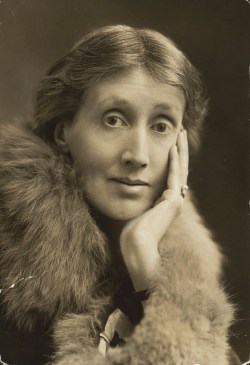 Many wonder if there is any relationship between creativity and mental disorders among writers. For they are often afflicted by such disorder, as was the case of Ernest Hemingway, plagued by depression, and as was also the case of Virginia Woolf.
According to Katerina Koutsantoni, Virginia Woolf seemed to have foremost a genetic predisposition to the development of mood disorders: her father had signs of cyclothymia, alternating outbursts of anger with moments of intense melancholy; her half sister had been institutionalized before turning 18 because of symptoms consistent with schizophrenia; the writer’s grandfather was a taciturn and reclusive person; an uncle of hers finished his depressed life in a mental hospital, dying because he stopped eating, according to reports. In his troubled life Virginia had a first crisis at age 13, after her mother’s death. Symptoms of depression at that time were mingled with unmotivated laughter and mental excitability, which could be interpreted as part of a mixed episode of bipolar disorder. Two other major crises erupted at age 22, with her father’s death, and later on, at age 31, possibly after having an intense argument with her husband. Virginia’s mood episodes were preceded by insomnia, psychomotor agitation and distress, which were perceptible to her family. Those living with the disease, or those who have a relative with the disorder, know that these are warning signs for the beginning of a new episode. But if on the one hand foreseeing a crisis today can be considered a good thing, because there are ways to abort it with drugs, at that time there were no available effective therapy, and seeing a mood swing come could be very distressing. It was not infrequently that she heard voices during these periods as well. With several suicide attempts throughout her life, she finally managed to kill herself by drowning herself in the River Ouse at age 59, when she felt another attack was about to come. In this last one, she said she was going crazy at that time and was certain that she would no longer come back from the state of madness.
Although some hypothesized that Woolf suffered from post-traumatic stress, what is accepted as almost certain is that the writer actually had bipolar disorder with phases of depression, hypomania (agitation, euphoria and pathological states of accelerated thinking), and phases of mixed mood (hypomania and concomitant depression).
There is some research on psychiatric disorders in writers, but in general it is hampered by two factors; writers and other artists are reluctant to be seen through diagnostic labels (which is legitimate to some extent), and they often mistakenly believe that diagnosis and treatment would be sort of frameworks of their production, having the effect of decreasing their creative capacity. Secondly there is also a reluctance of mental health sciences in facing mental disorders in creative geniuses as diseases and not part of a creative temperament because of a romantic bias, as is often done.
Accordingly, research has shown that in fact these artists have a higher rate of psychiatric disorders as compared with the general population. In a survey 80% of writers said they have had some mood episodes throughout their lives, while for a control population that rate was of 30%. Concerning diagnosis, the highest prevalence was of bipolar affective disorder in the studied samples. Another study revealed that personality traits such as psychoticism are related to creative activity.
Thus, both the diagnosis of bipolar disorder and the personality trait “psychoticism” are related to creativity and are more prevalent in writers. The first possibly provides intense emotional experiences that can nourish important substrate for artistic creation. The second favors daydreaming, imagination and fantasy.
Nevertheless, it is critical that exceptions be made, just so we do not fall into the mistake of romanticizing psychiatric illness; in Woolf, the most prolific phase of her writing was after the second crisis, when she found a long period of remission of her symptoms through treatment. It was when she wrote her great works, “Mrs. Dalloway”, “To the lighthouse,” “Orlando”, and “The Waves”. During her crisis, she stated that she “could not think clearly again,” that she lost her concentration and became extremely distressed thereof. So it was with Hemingway too, which produced more after the improvement of his mental state, after having undergone electroconvulsive therapy sessions.
Bipolar disorder may be associated with creativity, but, nevertheless, it should be treated. Not that one wants to block the ability to create with treatment, as this does not happen (it’s a myth), but so as not to miss creative geniuses to the disease, as in the case of Virginia Woolf.
January 19, 2016
The production of literature
 The production of literature has always been the matter of scientific interest, usually involving different areas of knowledge. How do authors produce their works of fiction?
The best and most obvious answer is that there are no rigid rules. But an American researcher interviewed five writers, and proposed to outline some common denominators of literary writing. Two of them were beginners, just about to launch their first books, two were intermediate writers, already with some publications, and a senior writer of great renown in the country was also interviewed. Although each one described a very special form of production style, the researcher was able to find some common grounds.
When asked what triggered the development of their works, the authors in general spoke of “seed events”. Such events were facts abnormal to their daily routine events that marked the writers by showing them something they did not know. Thus, sharing an apartment with a 100-year-old proprietary, interviewing Holocaust survivors, observing a once racist person now carrying an Afro-American baby in her arms, were facts reported by the authors as “seed events”, events that propelled them writing. Such events bring mystery, are intriguing, touching and mobilizing. They are starting points.
Another common denominator is the preference for a writing kingdom. Even before the occurrence of the “seed event”, the writer would have founded a writing kingdom, a physical setting, a place where he could write. A place to let go the writing; an inviting lonely set propitious for him to put his ideas on the paper. “Seed events” often occur in the context of such places. These sites can bring memory seed events, that have occurred in the past, for example. There may be different locations, each involving a “cognitively” specific: a place where people will feel more melancholic, the other where they feel more rational, and so on.
After the “seed events”, they travel between the realm of writing and what they call the fictional world. They oscillate between a more rational writing (the writing world, the real world), and an unplanned and spontaneous writing (fictional world). In the world of writing generally more technical aspects such as the choice of narrative voice are thought. When they talk about this world authors usually employ the first person as “I decided to do this and that with such a character,” “I wanted it to happen in the plot,” etc. On the other hand in the fictional world more passive terms are used, where the characters are more prone to take over, they take over even the author. Ideas flow with more spontaneity, it is the place of the irrational, the emotional, and there the fiction world happens.
Another interesting occurrence that was reported was the degree of contact that authors have with their characters. They are moved by them, they talk to them, ask questions, they sense them, etc. They feel responsible for them. Characters are people like any other, which they could have known in the real world, but are not replicas of someone they know or knew in fact. If on the one hand the world of writing is lonely and wrapped with technique, the fictional world is characterized, on the other hand, by being populated by many characters invented by the writer, by the affection and excitement they bring. Characters act and events take place in this context, many times despite the control or the author’s desire.
Finally, the authors also spoke of the lapses that occur in the preparation of fiction. Sometimes they spend long periods without writing and get back in the fictional world. In these moments they even believe they have lost the voice in fiction, undergoing truly re-entry processes. After the completion of the work, there can also be lapses as these. That’s why, generally speaking, that “push to the complexion of the work should be strong, for it needs to be sustained over long periods of time, through frustration, disruption and feelings of defeat.”
Ref.: Doyle, CL. The Writer Tells: The Creative Process in the Writing of Literary Fiction. Creativity Research Journal 1998, 11(1):29-37.