Matt Lambros's Blog
November 15, 2025
The Sampson Theatre – Penn Yan, New York
This was originally posted on After the Final Curtain’s Patreon in February 2025. For expanded early posts, as well as video walkthroughs and other exclusive content, you can become a patron at: https://www.patreon.com/afterthefinalcurtain
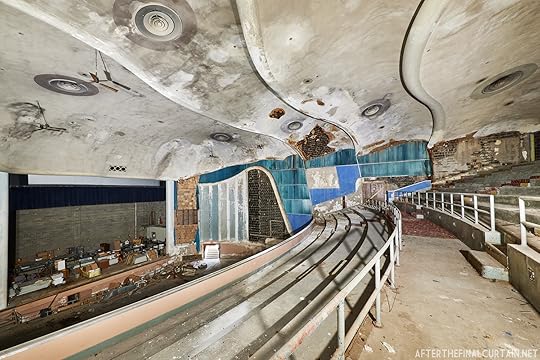
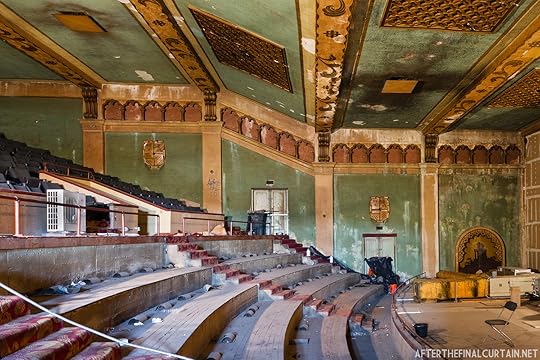
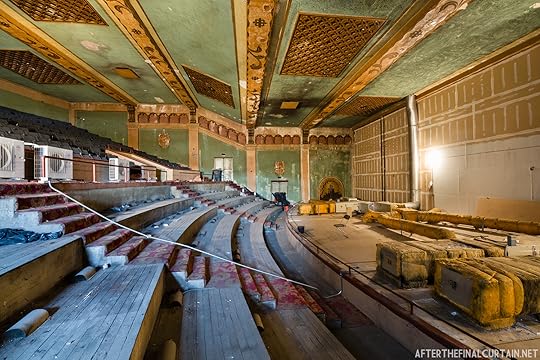
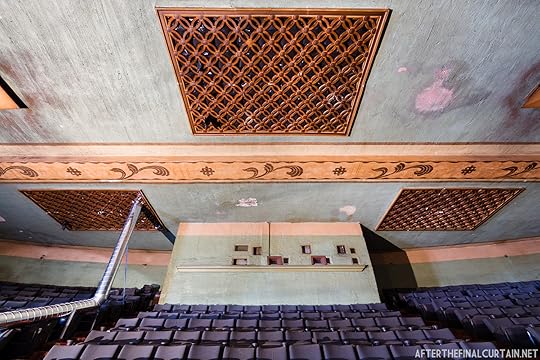
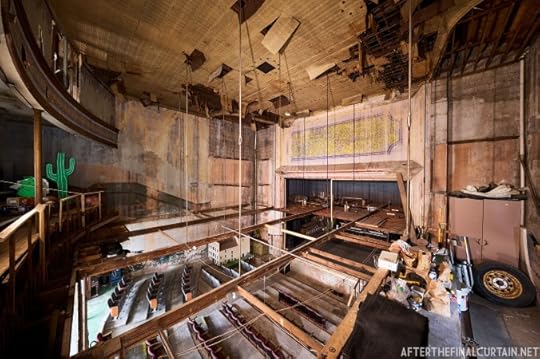 View from the side of the balcony.
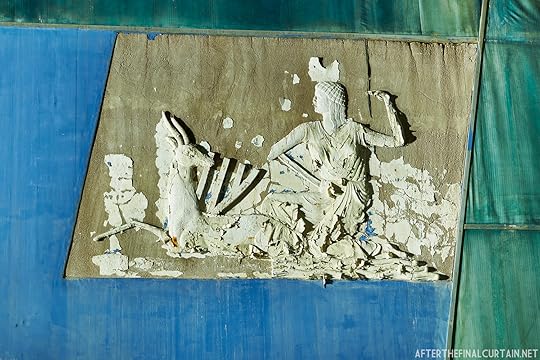
The Sampson Theatre in Penn Yan, New York originally opened on October 12, 1910. Built by local benefactor Dr. Frank Sampson, it was designed as a vaudeville house and entertainment venue. The grand opening featured a speech by President Theodore Roosevelt and a performance of Louis Mann’s comedy, “The Cheater.” The event drew a sell out crowd, with reserved seating priced at $3 and balcony seats available for 25 to 50 cents.
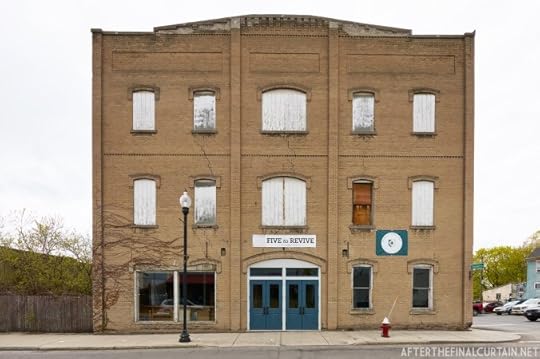 The exterior of the theater in 2021.
For nearly two decades, the Sampson Theatre showcased major theatrical productions, including adaptations of “Uncle Tom’s Cabin,” George M. Cohan’s “Broadway Jones,” and operettas like “H.M.S. Pinafore.” The venue also featured silent films such as D.W. Griffith’s controversial “The Birth of a Nation” and popular serials like “The Perils of Pauline.” Vaudeville acts brought renowned performers to Penn Yan, including Joe Yule, father of Hollywood star Mickey Rooney. Local talent also graced the stage, with students from Penn Yan Academy participating in performances.
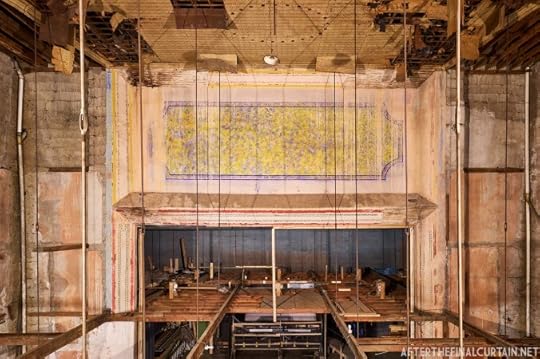
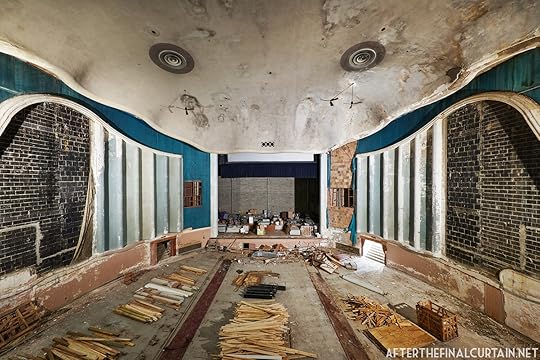
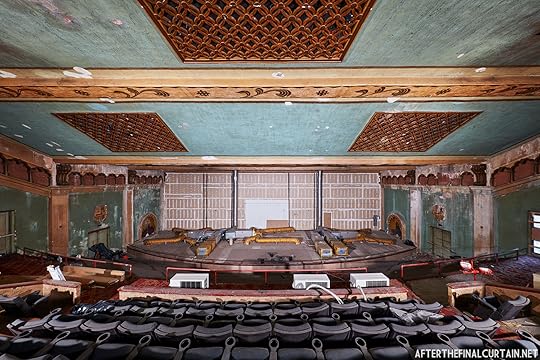
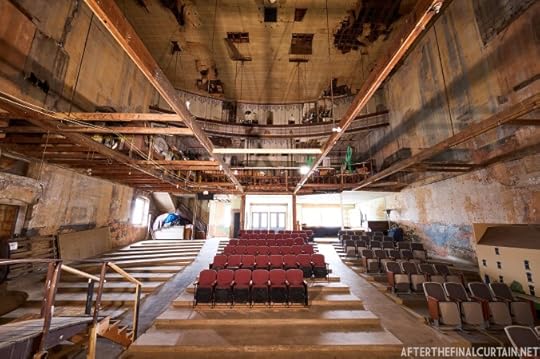 View from the stage area, with some remnants of the false ceiling framing still visible.
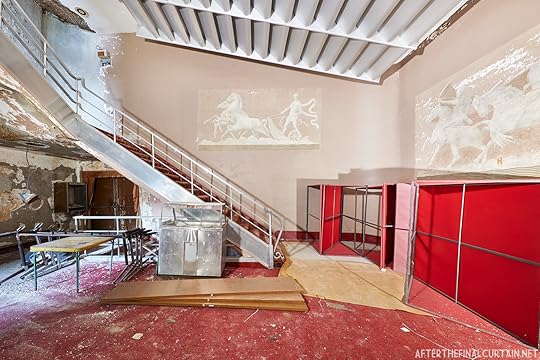
The theater’s use began to decline in the late 1920s as motion pictures gained popularity. In 1928, Harry C. Morse purchased the building and converted it into an indoor miniature golf course. In 1936, Wells Jewett repurposed it as an automobile garage and showroom, leading to significant alterations, including the removal of parts of the balcony. Over the decades, the building housed a car dealership and later a tire warehouse, operated by the Trombley family. Despite these changes, the structure retained its historic identity and significance.
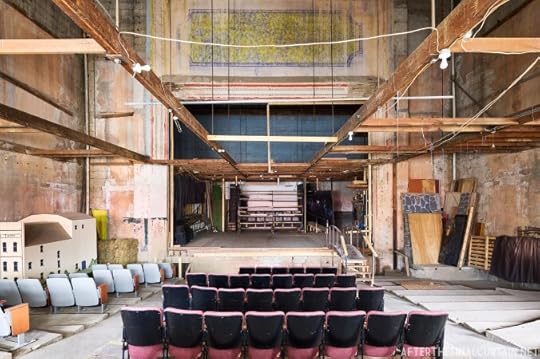
In 2004, the Trombley family gifted the building to the Penn Yan Theatre Company (PYTCo), which began efforts to restore the theater to its original function as a performance venue. The Sampson Theatre has been recognized as an important historic site, listed on both the State and National Registers of Historic Places. Its early use of reinforced poured concrete construction was innovative for a small-town setting, contributing to the building’s longevity despite years of modifications.
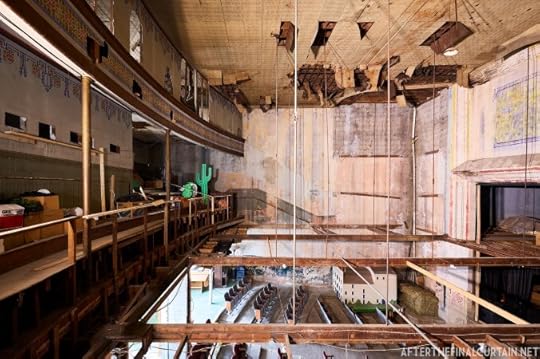
The Sampson Theatre revitalization project has received significant support, including grants from the Rochester Area Community Foundation’s Historic Preservation program and the Keuka Area Fund. The funding aids restoration efforts such as installing vestibule doors and a box office. The theater was also selected as one of the Landmark Society’s inaugural “Five to Revive” preservation priorities. PYTCo continues to work toward its mission of enriching the community by reviving this historic entertainment center, bringing live performances and cultural events back to the heart of Penn Yan.


October 29, 2025
The Demolished White House Theater Where Presidents Watched Movies
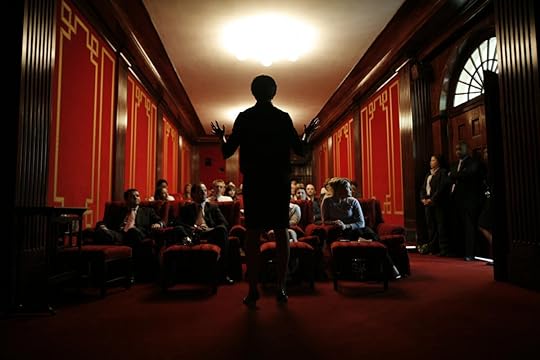 Image Courtesy of the Obama Presidential Library
When I first photographed historic theaters, I learned that much of their power comes from what we don’t see — the rooms behind the walls, the quiet rituals that make them more than just places to sit and watch a screen. The White House Family Theater was one of those spaces.
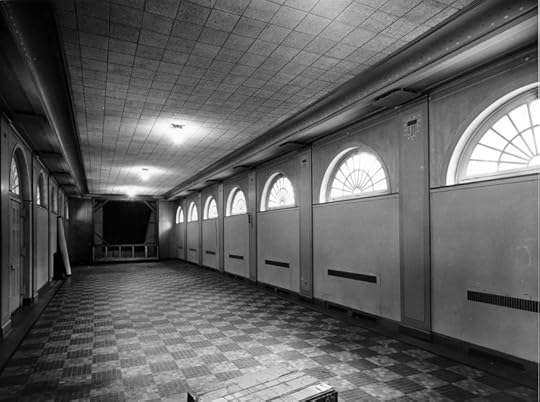 View of the interior of the Theater looking west, during the White House renovation.
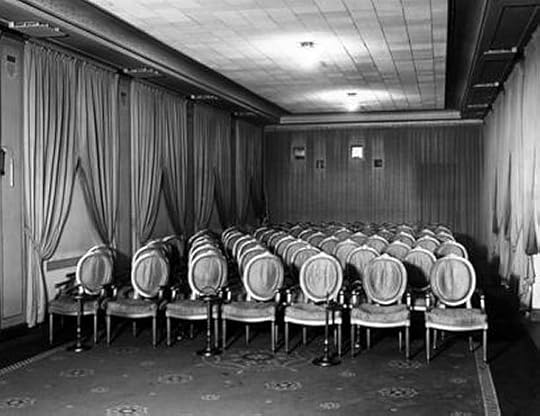
In 1942, Franklin Roosevelt converted a small cloakroom in the East Wing into a private 42-seat movie theater. Every president since has used it in some way. It’s where they watched films with their families, hosted private screenings, and sometimes even practiced speeches. John F. Kennedy watched From Russia With Love there the night before his assassination — the last movie he ever saw. The design evolved through the decades, but its purpose stayed the same: a private, personal corner of the presidency. Earlier this month, that space was demolished without public notice as part of a renovation project.
I’ve been interviewed twice about the theater and its demolition — once for Fast Company (read here) and again for NPR (read here). In both, I spoke about how the space reflected not just changing design trends, but also the way film quietly became part of the presidency itself.
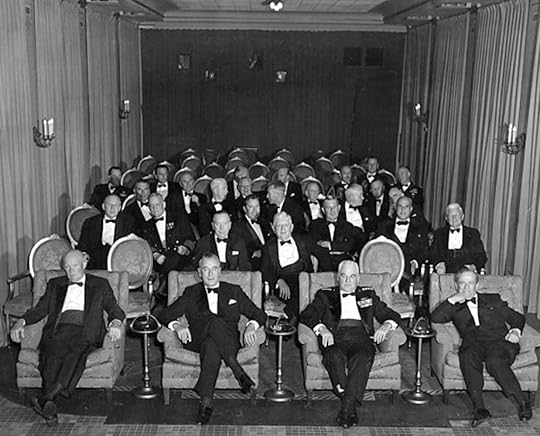 Image Courtesy of the Eisenhower Presidential Library
For those of us who care about the cultural side of history, its loss matters. The White House Family Theater wasn’t open to the public, but it was part of the story of how film became woven into American life — even at the highest level. I’ve written a longer piece on its history and significance, along with my own reflections, on Patreon. You can read it here.
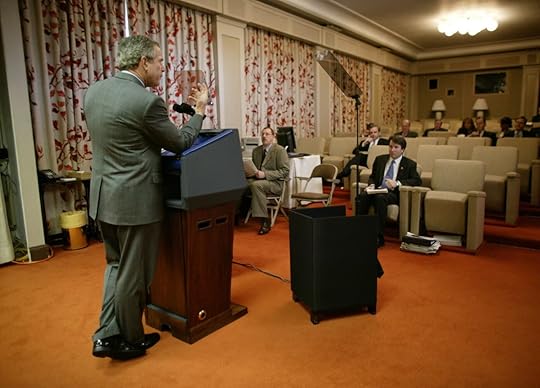 Image Courtesy of the George W. Bush Presidential Library
October 16, 2025
Shea’s Theatre – Ashtabula, Ohio
This was originally posted on After the Final Curtain’s Patreon in January 2025. For expanded early posts, as well as video walkthroughs and other exclusive content, you can become a patron at: https://www.patreon.com/afterthefinalcurtain
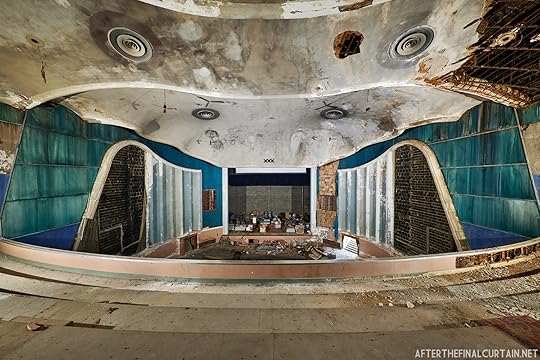
Shea’s Theater, located in the heart of Downtown Ashtabula, Ohio, opened its doors in 1949 during the height of the city’s industrial boom. Designed by Michael J. DeAngelis in the Streamline Moderne style, the theater was a $1 million investment by M.A. Shea with seating for 1,530 guests.
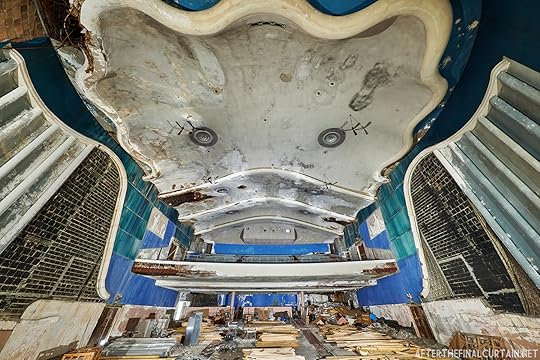
The theater’s heyday coincided with Ashtabula’s economic peak in the 1950s, when the city thrived as a bustling port town along the Great Lakes. Iconic stars like Judy Garland, Mickey Rooney, and Clark Gable graced its screen, while live performances by artists like “Polka King” Frank Yankovic drew record-breaking crowds of nearly 1,700 people.
Despite its initial success, Shea’s began to struggle by the 1970s. Newer theaters in Saybrook Township provided stiff competition, and declining attendance, coupled with financial woes, forced the theater to close in 1973. At the time, the corporation owed significant back taxes and rent, signaling the difficulties of maintaining such a large venue. Efforts to revive Shea’s were made throughout the late 1970s, with the building reopening as a public auditorium in 1977. It briefly hosted live theater, concerts, and community events, but poor attendance and insufficient funding led to its final closure in 1982.
Though its auditorium went dark, Shea’s remained a part of Ashtabula’s community in a limited capacity. A portion of the building became the Ashtabula Senior Center, while the theater’s iconic seats were refurbished and repurposed for the Ashtabula Arts Center. Behind a makeshift wall, the grand main hall sat untouched, a reminder of the theater’s former glory.
The current owner of the theater plans to revive the building in phases beginning with the restoration of its façade and marquee. The hope is to create excitement and community engagement by hosting smaller events in the revamped space while generating momentum for a full-scale restoration. It was recently given a a $500,000 grant from Ohio’s capital budget Although significant funding is still needed, local leaders believe the revitalization of the Shea’s could serve as a catalyst for bringing new energy to Downtown Ashtabula. Work has begun restoring the entryway and lobby of the theater.
September 17, 2025
Rialto Theatre – South Pasadena, California
This was originally posted on After the Final Curtain’s Patreon in January 2025. For expanded early posts, as well as video walkthroughs and other exclusive content, you can become a patron at: https://www.patreon.com/afterthefinalcurtain
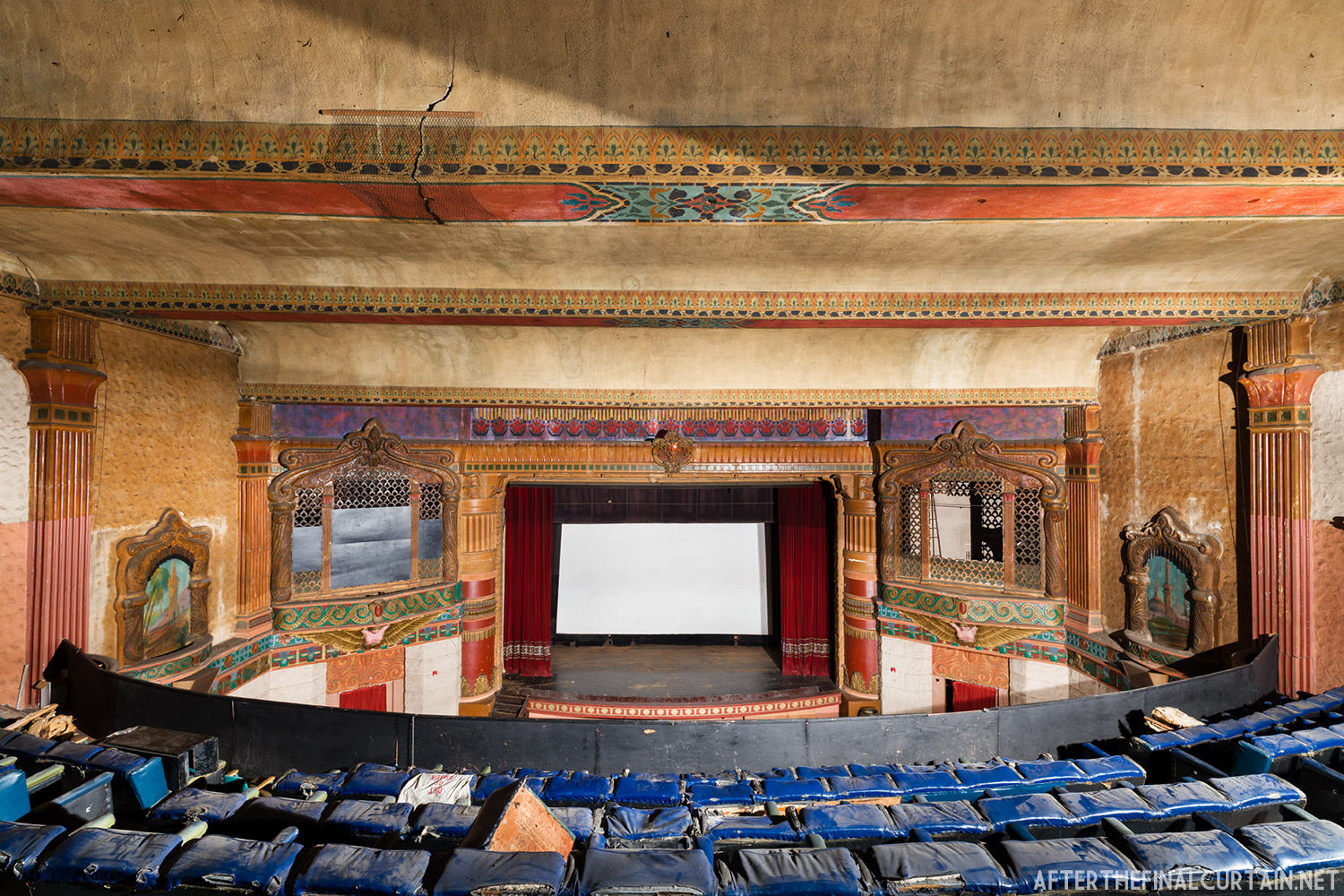
View of the auditorium from the balcony.
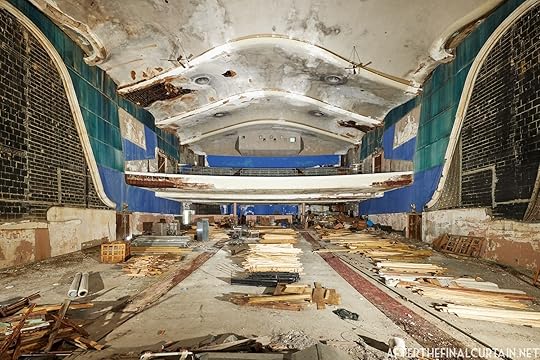
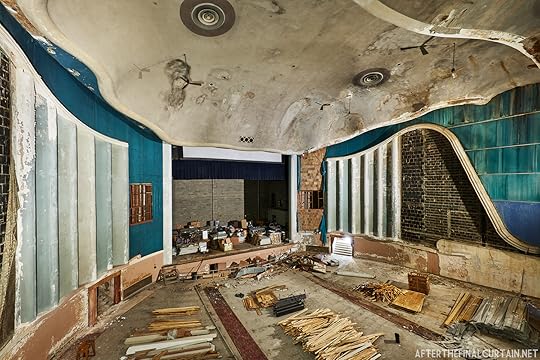
The Rialto Theatre in South Pasadena, California, opened on October 17, 1925, as a venue for vaudeville acts and movies, with a premiere of Universal’s What Happened to Jones accompanied by a live Wurlitzer organ and orchestra. Designed by renowned theater architect Lewis Arthur Smith, the Rialto boasted an eclectic mix of Moorish, Spanish Baroque, Egyptian, and Classical styles, reflecting the opulence of the Jazz Age. Its original seating accommodated approximately 1,200 patrons, including a balcony adorned with intricate stenciling, plaster ornamentation, and mythical harpies supporting the organ chambers. Additional features included a gargoyle above the proscenium with glowing red eyes, a Batchelder tile fountain, and a miniature golf course during the Great Depression.
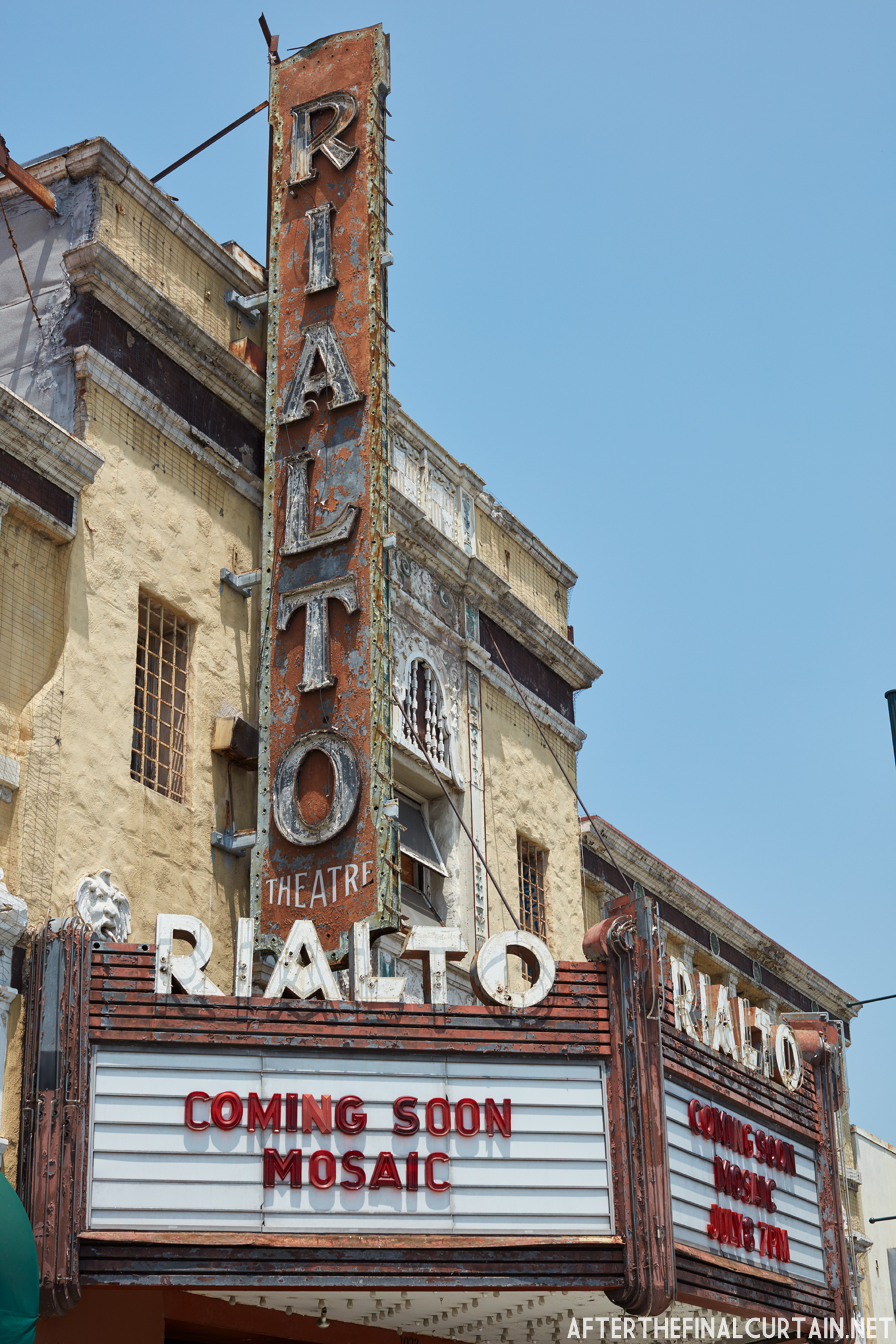
The exterior of the theater was restored before it reopened as a church in 2021.
Built by showman C.L. Langley, the Rialto was one of the last theaters designed by Smith. Ownership transitioned over the years, with the Jebbia family operating it from the 1930s and companies like West Coast Theatres and Mann Theatres leasing the property. The venue hosted diverse programming, including films, vaudeville, and live organ concerts. However, the Rialto faced challenges such as a backstage fire in 1938 and the removal of its Wurlitzer organ during the 1960s after water damage from fire suppression efforts.
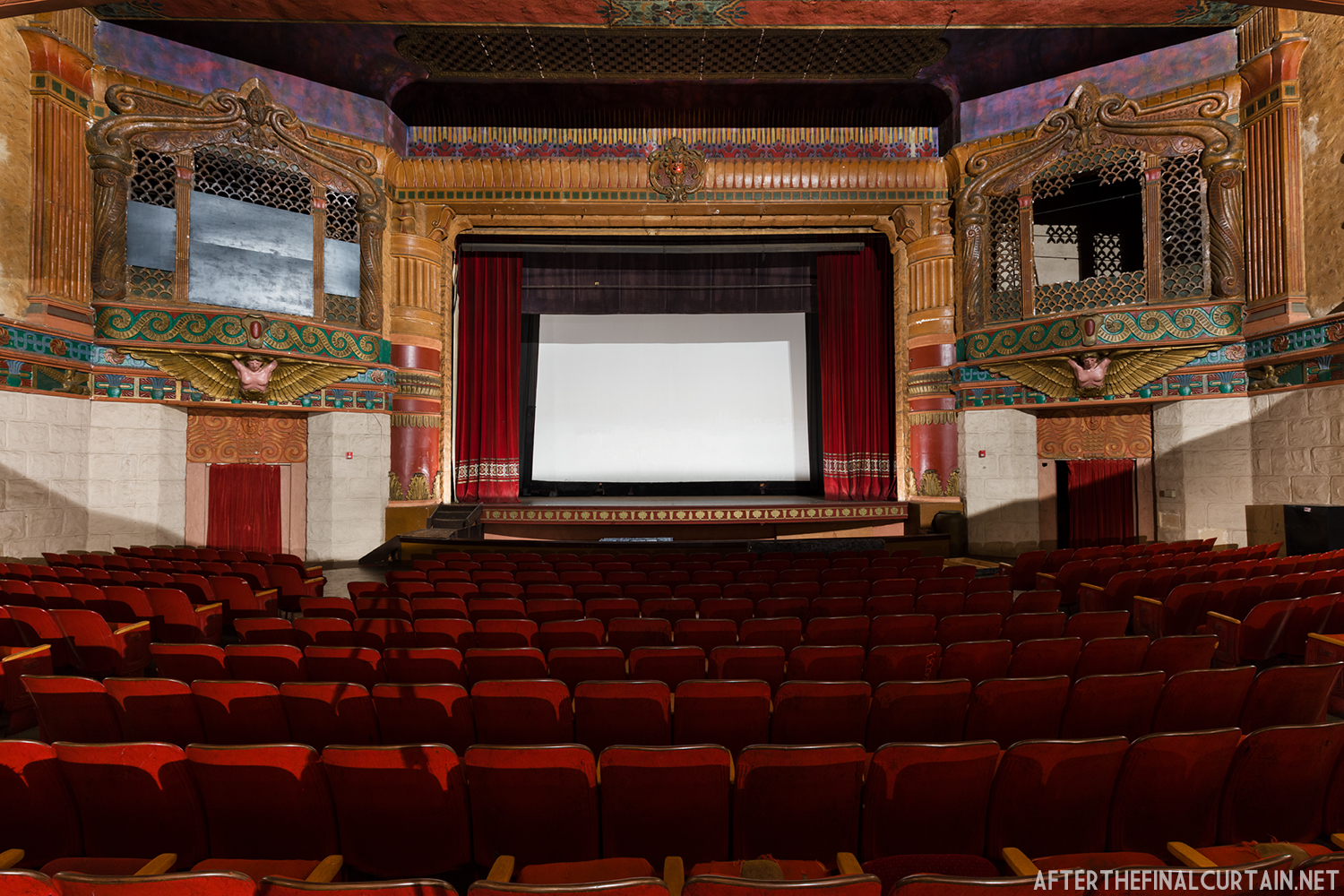
By the 1970s, the theater faced the threat of demolition, but community advocacy saved it, leading to its designation as a Historic Cultural Monument in 1977 and its inclusion on the National Register of Historic Places in 1978. Landmark Theatres took over operations in 1976, offering arthouse films and classic movie screenings. The Rialto gained further recognition as a filming location for movies like The Rocketeer, Scream 2, and The Player. In 2000, it celebrated its 75th anniversary with a series of events, including film festivals and live performances.
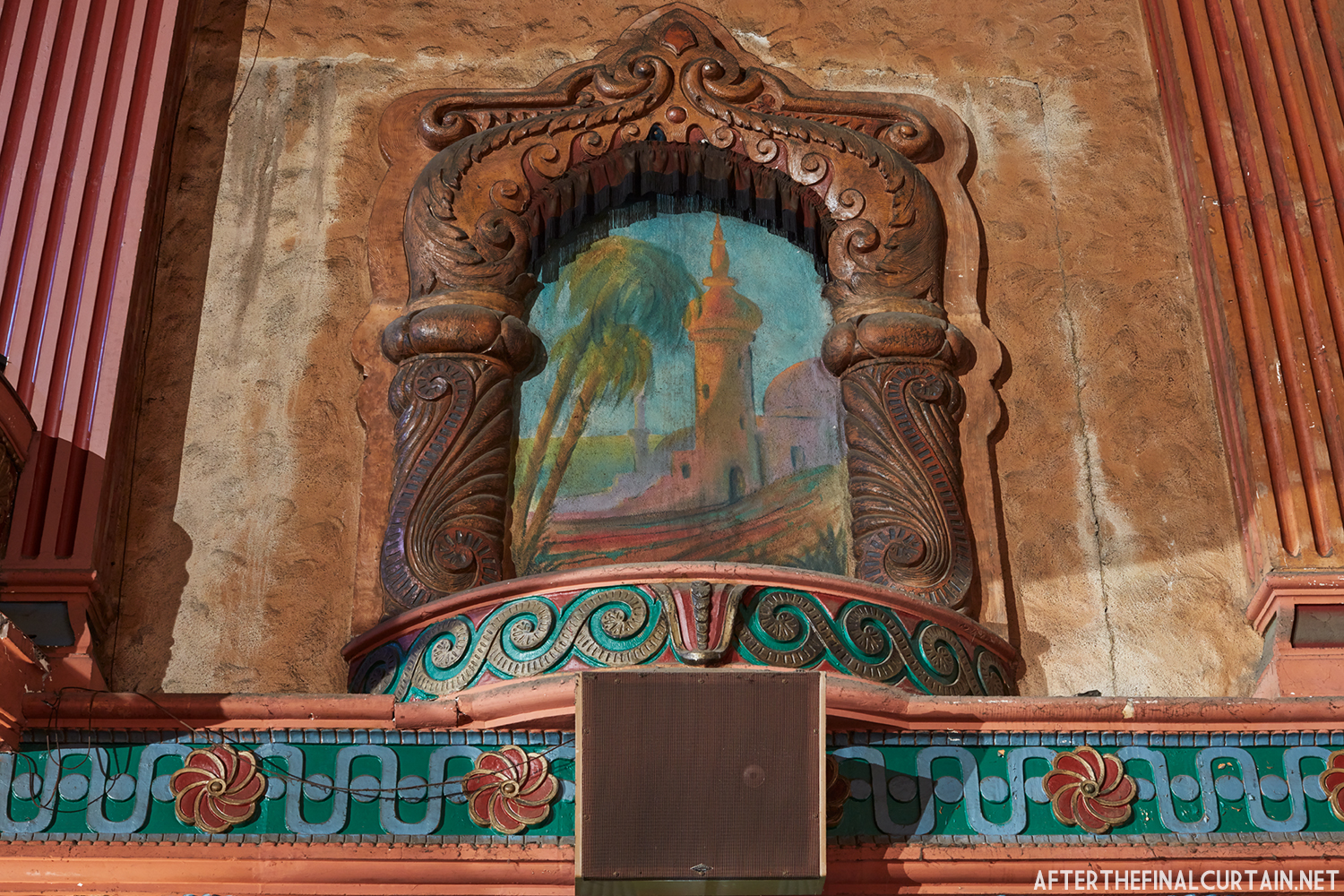
Despite its cultural significance, the Rialto struggled financially and closed in 2007, with a farewell screening of The Rocky Horror Picture Show. After years of neglect and code violations, the building was purchased in 2016 by developer Izek Shomof, who envisioned restoring it as an entertainment venue. In 2017, Mosaic Church signed a 15-year lease and began renovations, preserving key elements of the historic architecture while modernizing the facility.
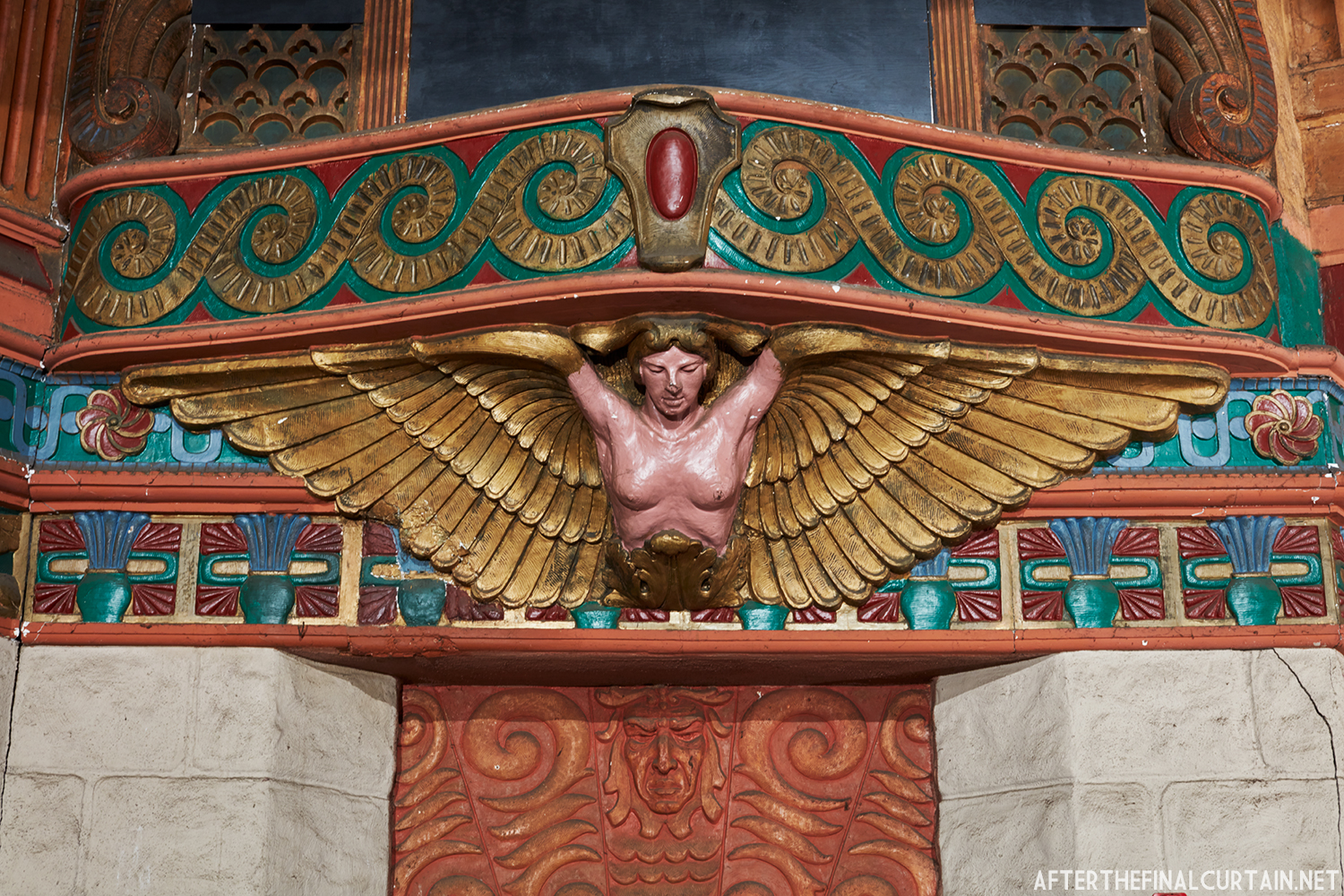
These details, along with many others was covered up when the theater was converted into a church.
On August 29, 2021, the Rialto Theatre reopened as Mosaic Church, with its iconic neon marquee restored and its role as a community gathering space revived. However, the Rialto Theatre’s transformation into Mosaic Church came at a significant cost to its original design and historic features. During renovations, all of the original audience seating was removed and destroyed, with the sloped auditorium floor leveled to create a multi-purpose space. Many of the theater’s iconic plaster sculptures, including the intricately detailed harpies and the glowing-eyed gargoyle above the proscenium, were either covered or obscured. Additionally, the vibrant and historically significant color palette of the interior was replaced with a muted scheme of off-whites, further erasing the theater’s unique Jazz Age charm. These changes, while intended to modernize the space for contemporary use, have sparked concern among preservationists and community members who lament the loss of the Rialto’s architectural integrity.
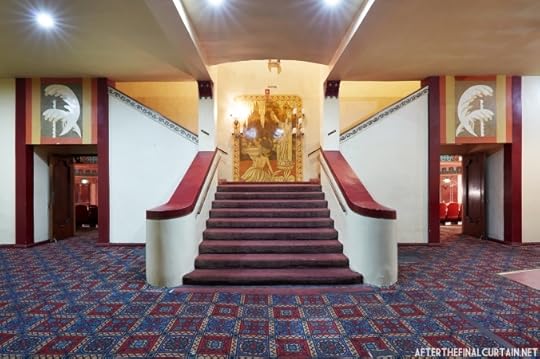 The staircase in the lobby.
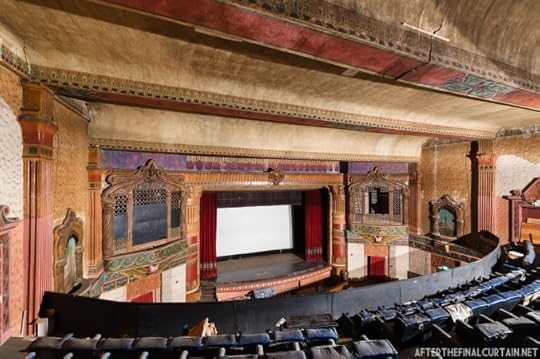 View from the side of the balcony.
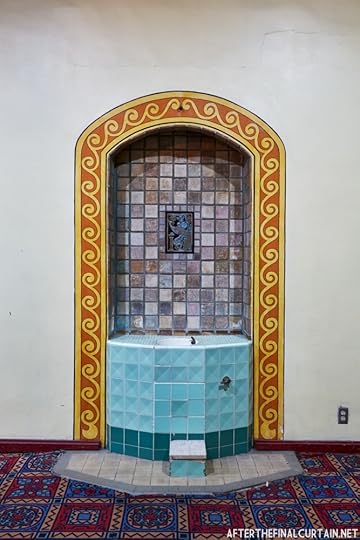 The water fountain the the lobby.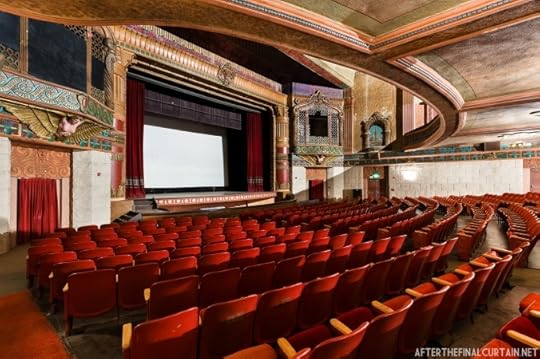
August 19, 2025
Highland Theatre – Los Angeles, California
This was originally posted on After the Final Curtain’s Patreon in December 2024. For expanded early posts, as well as video walkthroughs and other exclusive content, you can become a patron at: https://www.patreon.com/afterthefinalcurtain
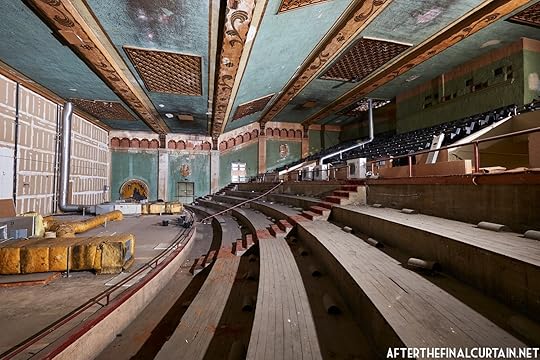
The Highland Theatre, located in Highland Park, Los Angeles, was designed by prominent theater architect Lewis A. Smith. Renowned for its Moorish-style interior, it opened on March 5, 1925, with a special appearance by actress Norma Shearer and the premiere of the film Lady of the Night. Originally seating 1,432 patrons, it was constructed for local banker Clyde M. Church on what was then Pasadena Avenue (now Figueroa Street).
Highland Park, once a bustling entertainment hub, was home to eight theaters, including the Arroyo, Franklin, and York theaters. The Highland Theatre quickly became a centerpiece of the neighborhood’s vibrant culture, operated initially by West Coast Theatres (later Fox West Coast Theatres). Like most suburban theaters of its time, it showcased several films a week.
The venue went through various transformations, including a period as an adult theater, before pivoting to family films in 1975 under operator Arman Akarakian. In 1983, it was converted into a triplex, reducing its capacity to 465 seats across three screens on the main floor, while the balcony and stage areas were left unused.

Designated a Los Angeles Historic-Cultural Monument in 1991, the Highland Theatre retained much of its original decor in the balcony area. Despite challenges, it thrived as a triplex by offering affordable prices and friendly service.
In August 2022, the theater building was listed for sale by the family that owned it for nearly a century. It was purchased in December 2022 by Cyrus Etemad, who also owns nearby properties like the Highland Park Bowl. While Etemad has expressed a commitment to preserving the building as a theater, no specific renovation plans have been announced.
The operator’s 99-year lease, originally signed in 1924, expired in February 2023. Etemad allowed the operator to continue running the theater rent-free for a year. However, on February 29, 2024, the Highland Theatre abruptly closed, citing financial difficulties exacerbated by the COVID-19 pandemic. The final films shown included Bob Marley: One Love and Dune: Part Two.
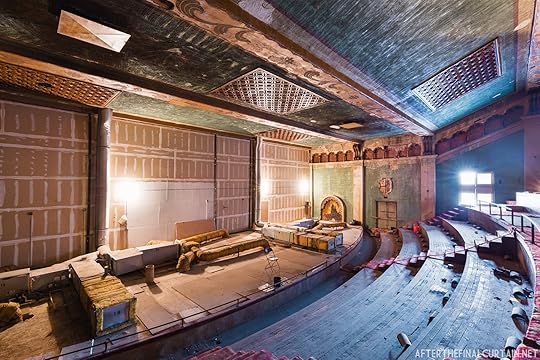
While the closure marks the end of an era, the building’s owner has indicated plans to restore the space for cinema and music events. With its rich history and architectural charm, the Highland Theatre remains a treasured piece of Los Angeles’ cultural landscape, awaiting its next chapter.
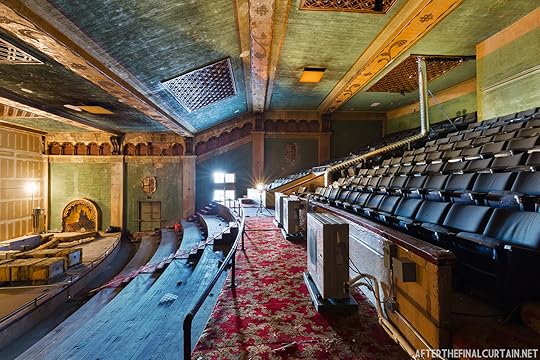
July 16, 2025
The Glove Theatre – Gloversville, NY
This was originally posted on After the Final Curtain’s Patreon in December 2024. For expanded early posts, as well as video walkthroughs and other exclusive content, you can become a patron at: https://www.patreon.com/afterthefinalcurtain
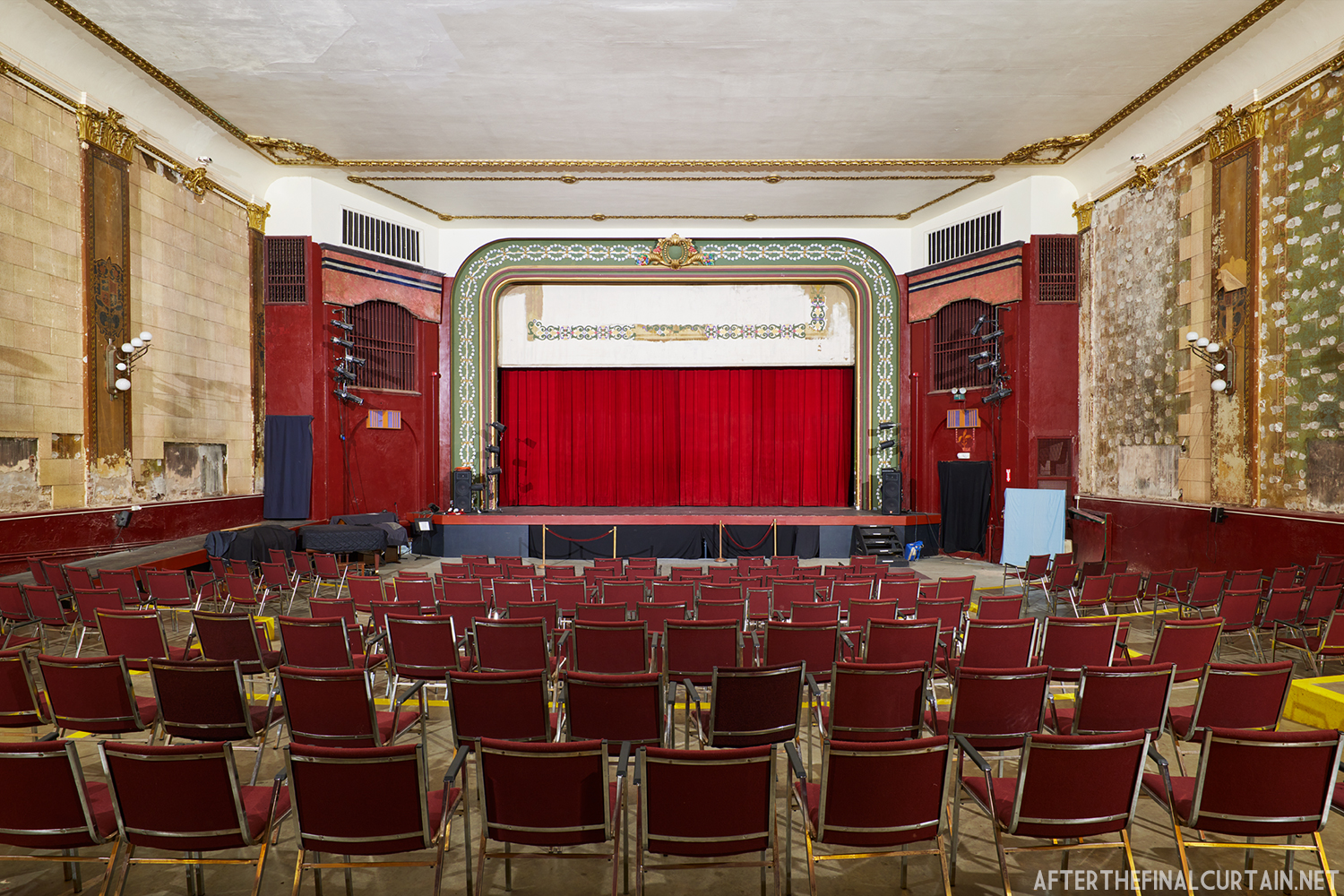
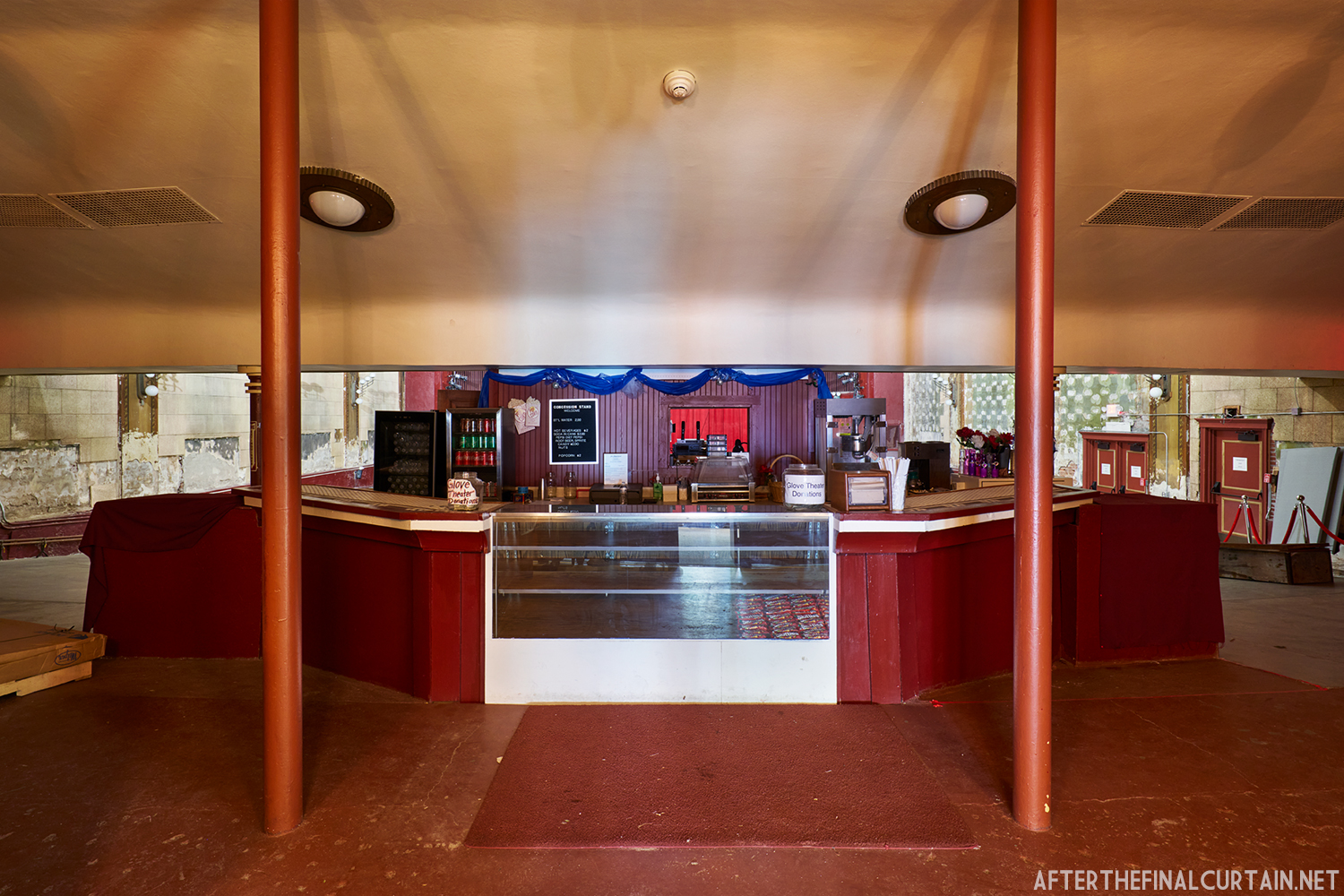
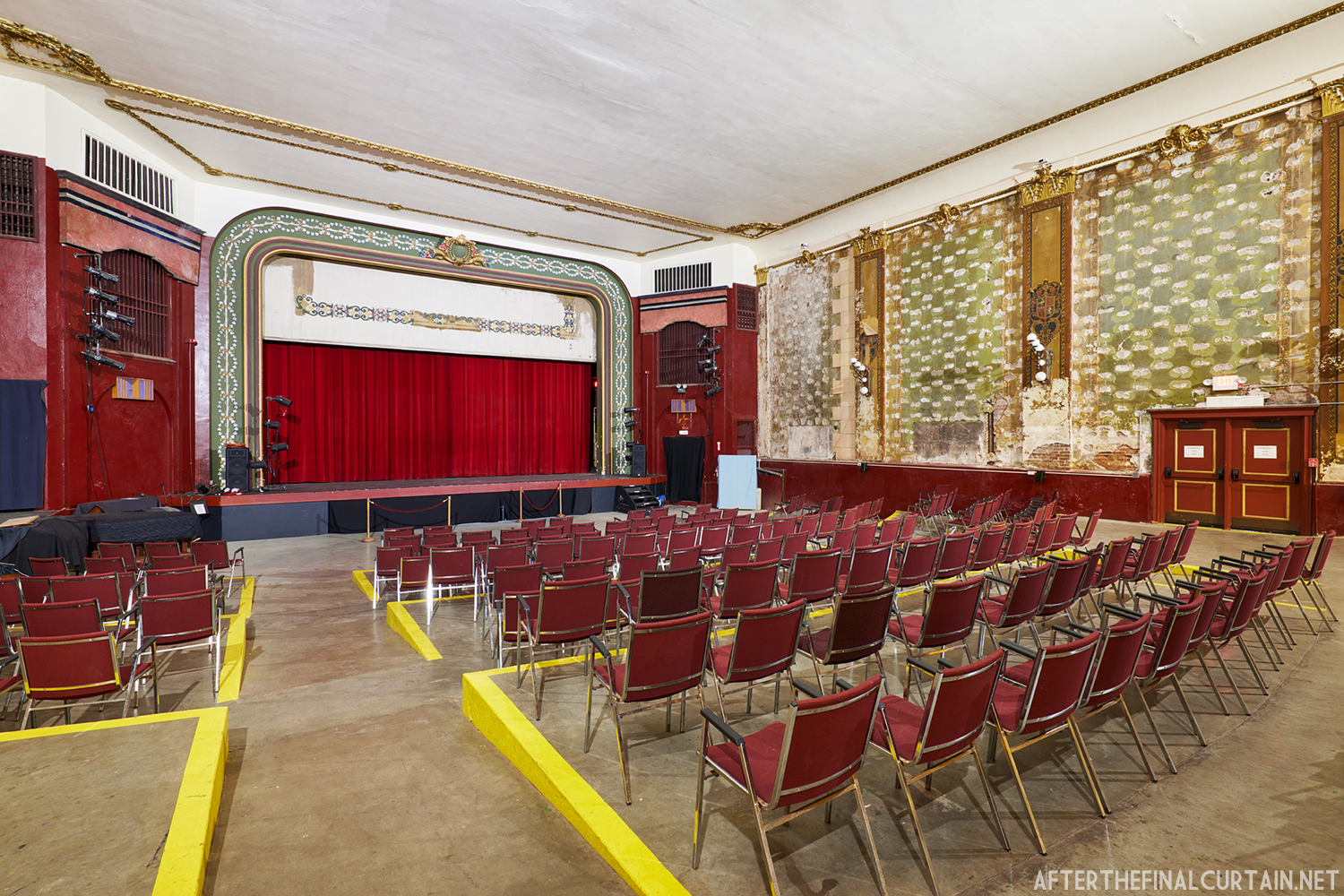
The Glove Theatre opened on October 9, 1914, as an 800-seat venue for live performances, vaudeville, and community events. Designed by architect Linn Kinne in the Classical Revival style, it quickly became a cultural hub in Gloversville, New York. Early years featured notable acts such as John Philip Sousa and Ethel Barrymore in “The Second Mrs. Tanqueray.” In 1920, the Schine brothers purchased the theater, making it the flagship of Schine Enterprises, which grew to operate over 150 theaters. By 1928, the Glove was among the first in the nation equipped with sound, showcasing its innovative edge.
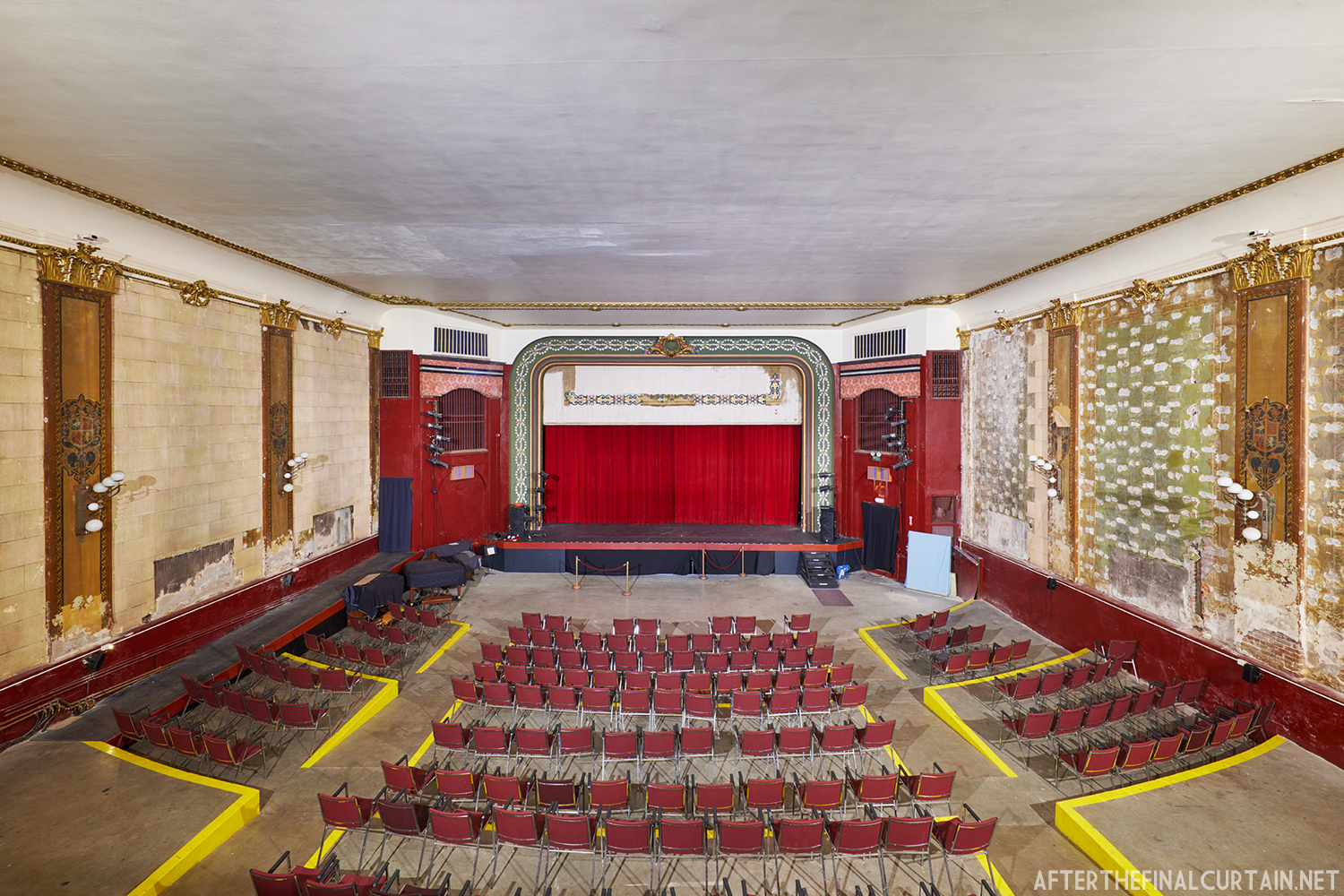
View of the auditorium from the balcony.
A major Art Deco renovation in 1939 modernized the theater, including the addition of its iconic marquee. During this era, the Glove continued hosting renowned acts, including Irene Dunne, Charles Laughton, Charles Coburn, and Sally Rand. It also featured Ziegfeld Follies performers and major events like the premiere of “Drums Along the Mohawk” in 1939.
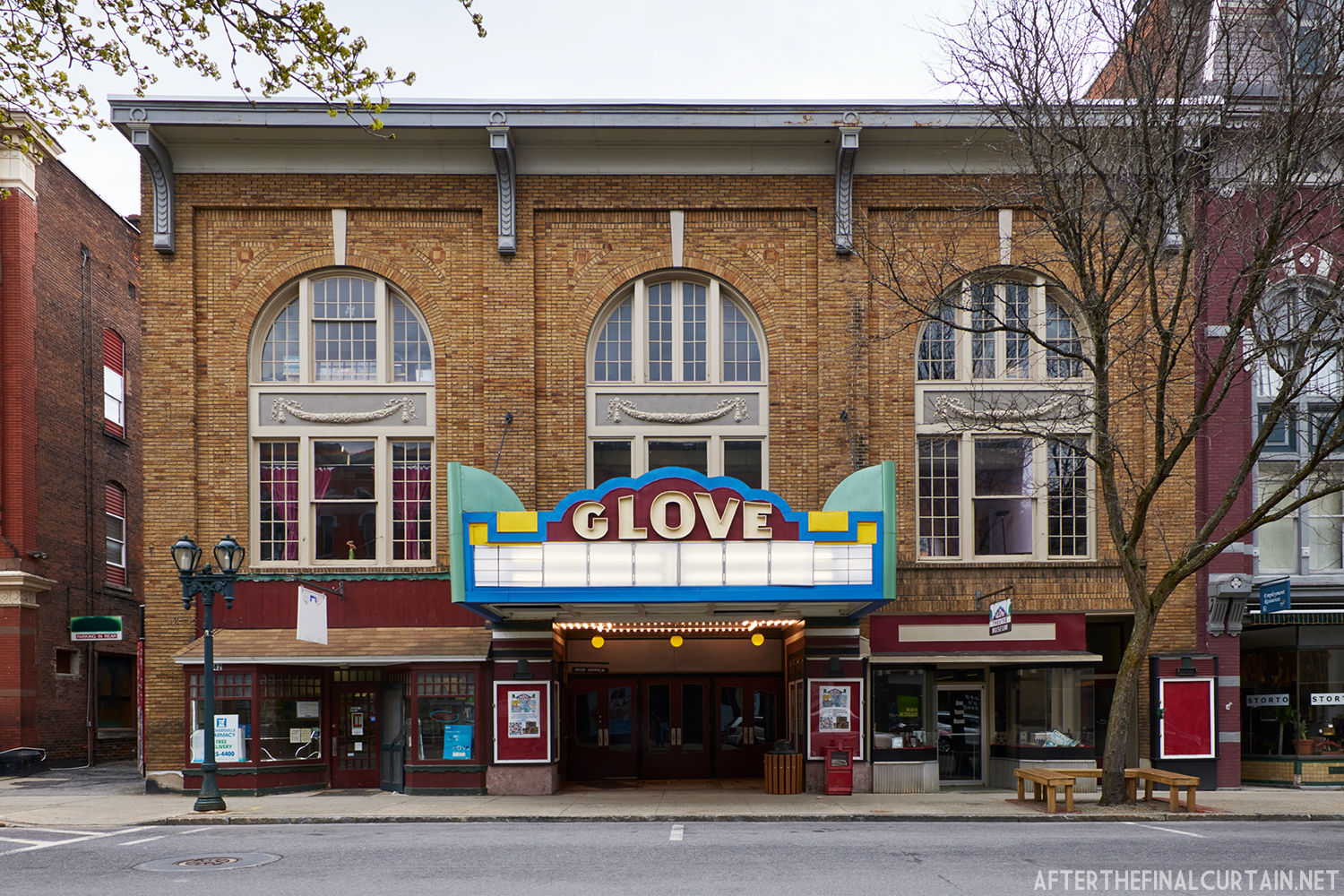
The exterior of the theater.
Throughout the Great Depression and World War II, the theater remained a central community venue, offering newsreels, bond drives, and live entertainment while training veterans to manage theaters in the Schine chain.
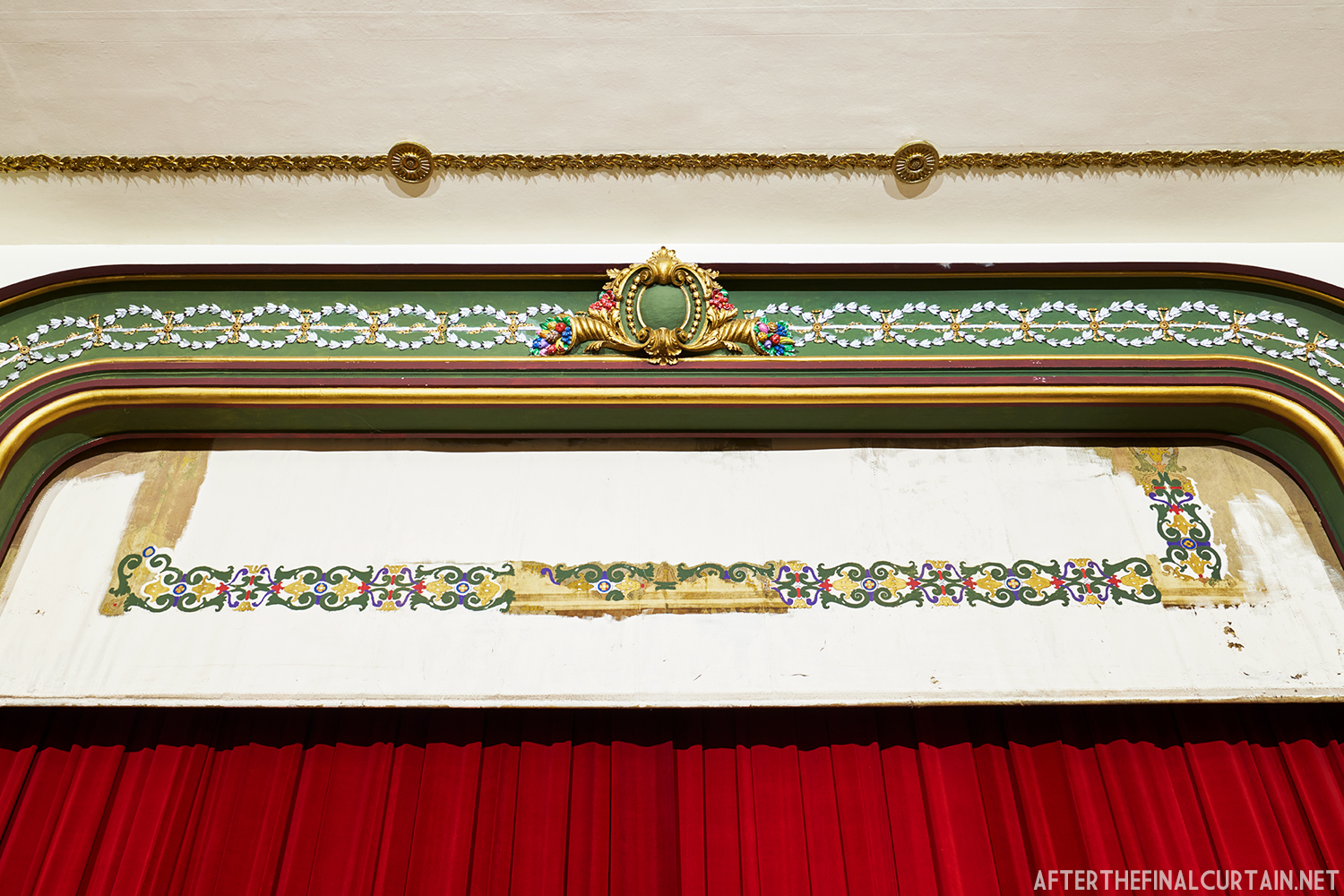
The Glove’s prominence waned by the 1960s as economic shifts affected the region. Despite hosting memorable performances by acts like Tony Randall and Buddy Jewell, the theater closed in 1971, marking the end of regular operations. For over two decades, the building stood vacant, with occasional screenings and events. By 1995, the theater faced demolition, but community members rallied to save it, forming the Gloversville Theatre Corporation.
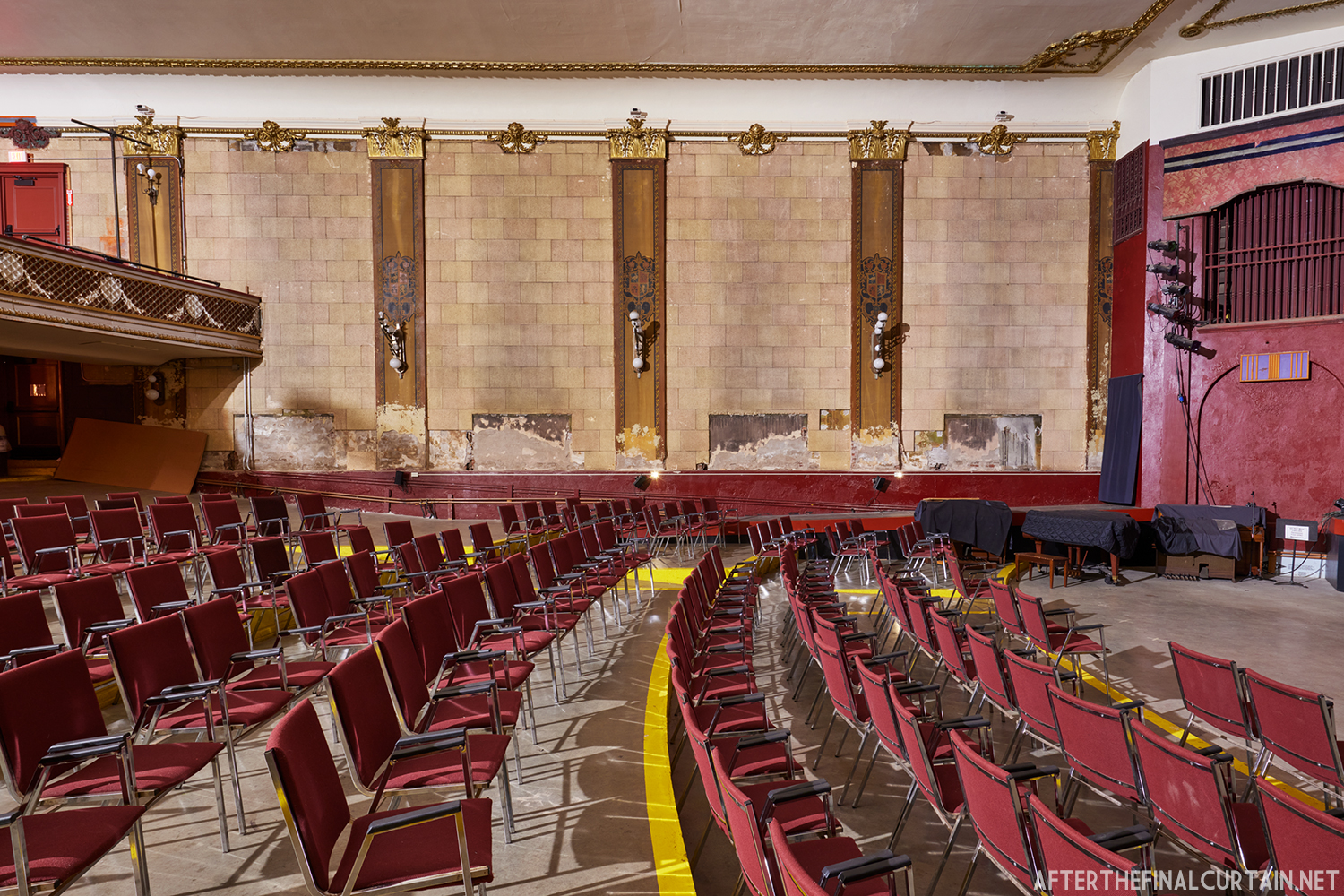
It reopened in 1997 with a grand event, The Phantom of the Glove, featuring local performers and community participation. In the 2000s, the theater hosted a mix of productions, including musicals, concerts, and youth programming. Performances included Alex Torres & His Latin Orchestra, the Wynotte Sisters, the Caroga Arts Collective, and Quintocracy. The Glove also featured unique acts like Zippy the Chimp, Leo the Lion (of MGM fame), and the NoLaNauts. The venue evolved into a community hub, offering affordable and creative programming for families and local artists.
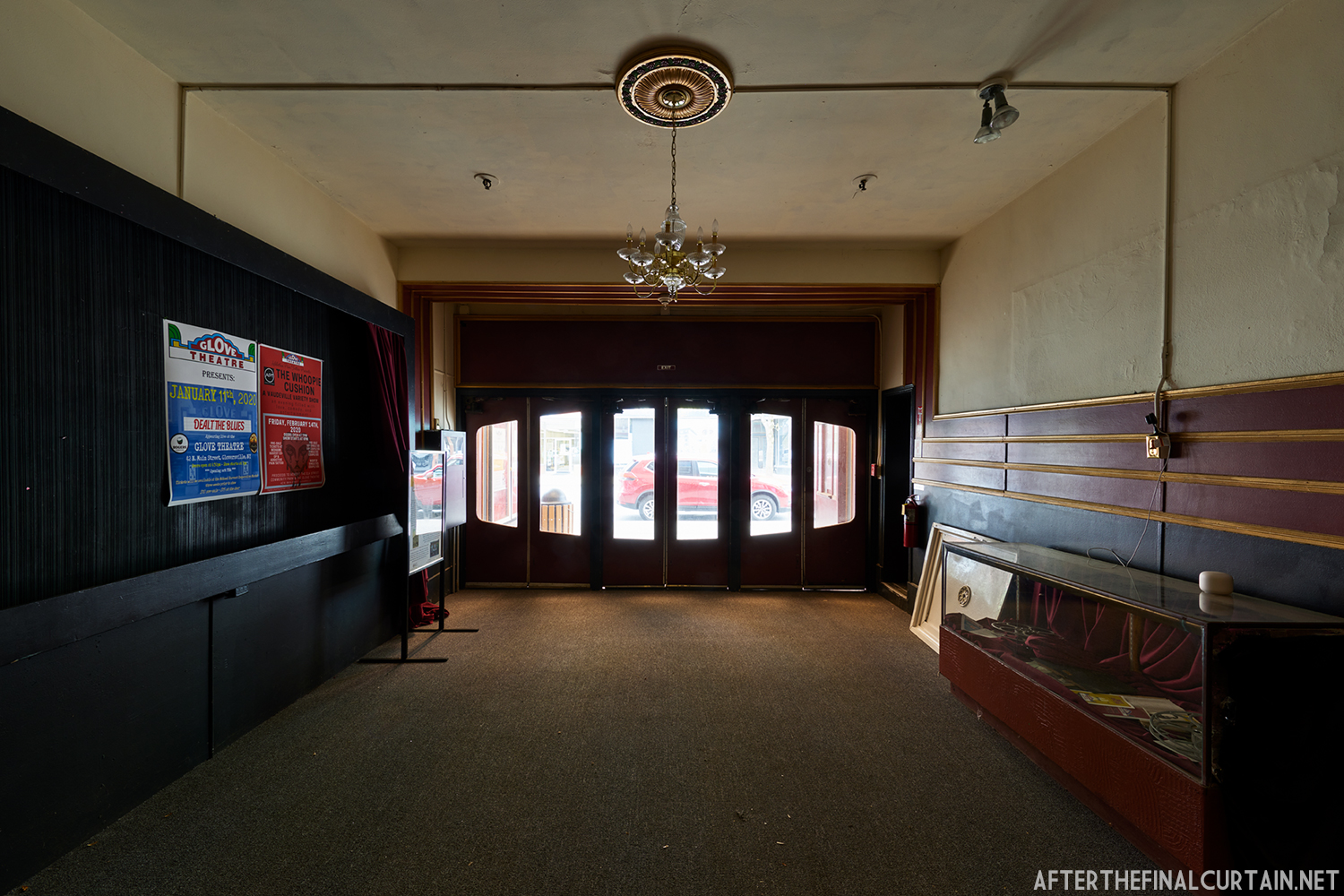
Recent revitalization efforts have reinvigorated the theater. In 2022 and 2023, the Glove received nearly $4 million in grants from New York State to support renovations and expand programming. Weekly movie screenings, vaudeville shows, and live performances have become regular events. Today, the Glove continues to honor its legacy of hosting world-class entertainment while serving as a cultural and historic landmark in Gloversville.
The Glove’s website is: https://www.theglovetheatre.com/
June 12, 2025
Loew’s Gates Theatre – Brooklyn, New York
This was originally posted on After the Final Curtain’s Patreon in February 2025. For expanded early posts, as well as video walkthroughs and other exclusive content, you can become a patron at: https://www.patreon.com/afterthefinalcurtain
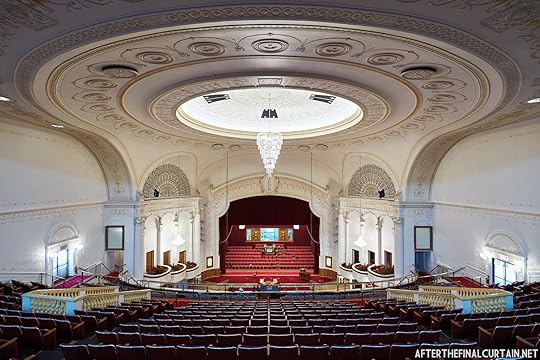
The Loew’s Gates Theatre in Brooklyn, NY, opened on November 21, 1921, as a state-of-the-art movie and stage presentation theatre. Advertised as “The Biggest Theatre Event in the History of Brooklyn,” the grand opening featured Bert Lytell in “Alias Lady Fingers” and in “Hard Luck”, along with live vaudeville performances. The event was attended by New York Mayor John Hylan, Borough President Edward Riegelman, and Loew’s Circuit General Manager Nicholas Schenk. Movie stars such as Mae Murray, Will Rogers, Lew Cody, and Lillian Walker also graced the occasion. The theatre, boasting 3,600 seats, was managed by William Sheehey and featured a Möller 3-manual, 17-rank theatre organ.
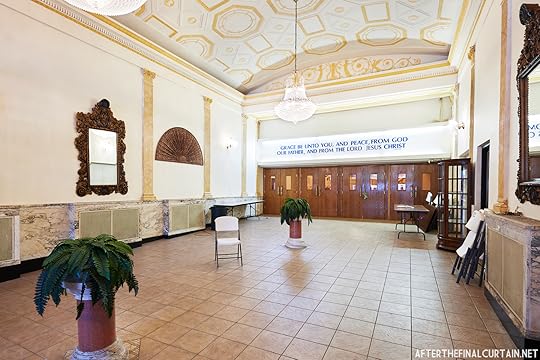
Over the decades, the Loew’s Gates became a staple of Brooklyn’s entertainment scene, hosting both film screenings and live appearances. In 1952, baseball legends Jackie Robinson and Billy Cox joined Happy Felton at the theatre for a special Loew’s MGM Knothole Gang Show, drawing 2,500 attendees. In 1963, horror icons Peter Lorre and Boris Karloff made personal appearances for The Raven. By the late 1960s, Loew’s was among the first major circuits to introduce independent X-rated films, such as Without a Stitch (1970), much to the dismay of Motion Picture Association head Jack Valenti. However, unlike many other theaters, it did not switch to X-rated films full time. The theatre continued to operate as a movie house until its closure on July 13, 1977.
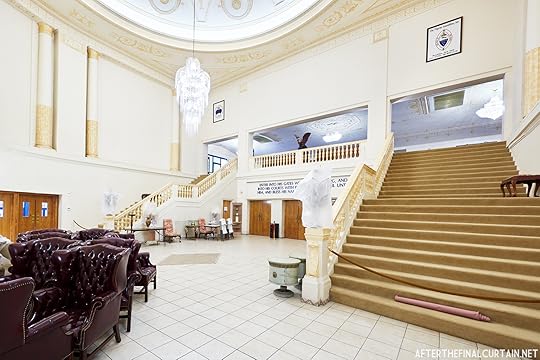
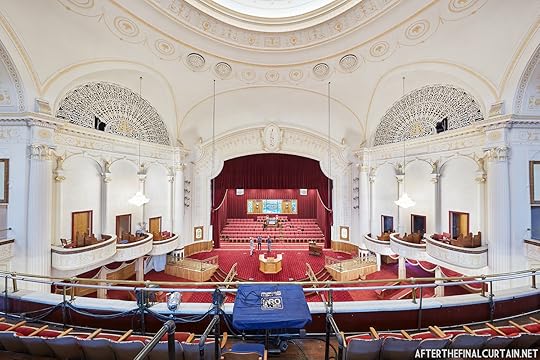
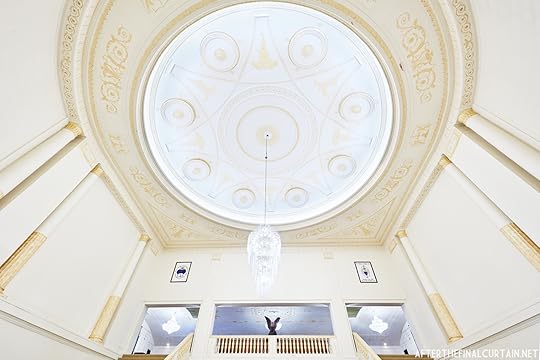
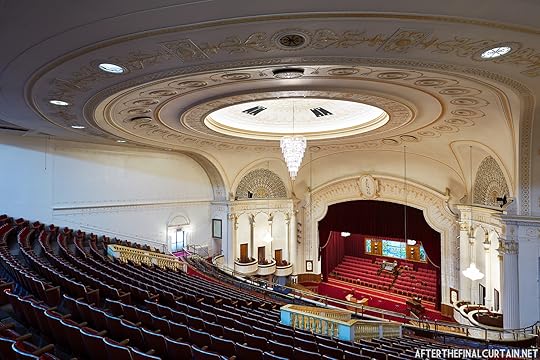
After closing, it was sold to the Triumphant Church of Jesus Christ Inc. on November 10, 1977, for just $10, with the condition that they settle an unpaid NYC tax bill of $74,000. The church, which had previously used the RKO Bushwick Theatre, moved into the Loew’s Gates, as ownership was more attainable than their prior rental situation. Under the leadership of Pastor Roy E. Brown, who also contributed to its interior design, the building was restored and remains in use as a place of worship today.
May 15, 2025
The Berry (White) Theatre – Fort Worth, Texas
This was originally posted on After the Final Curtain’s Patreon in January 2025. For expanded early posts, as well as video walkthroughs and other exclusive content, you can become a patron at: https://www.patreon.com/afterthefinalcurtain
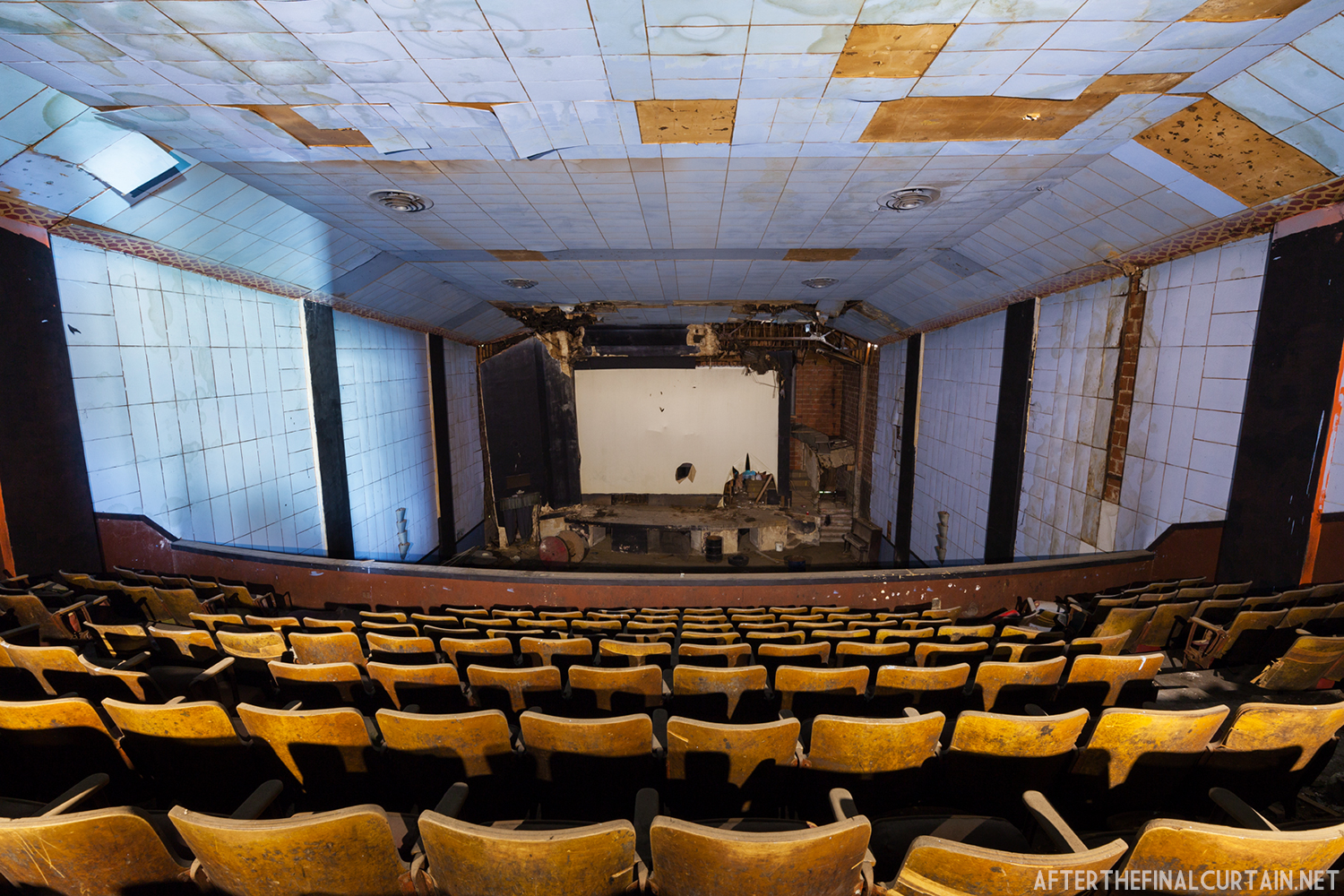
The interior of the auditorium was gutted a few years before the building was demolished.
The Berry Theater, originally known as the White Theater after its owner, M.S. White, was located in Fort Worth, Texas at the intersection of W. Berry and Hemphill Streets. The 682 seat theater officially opened its doors on April 3, 1940.
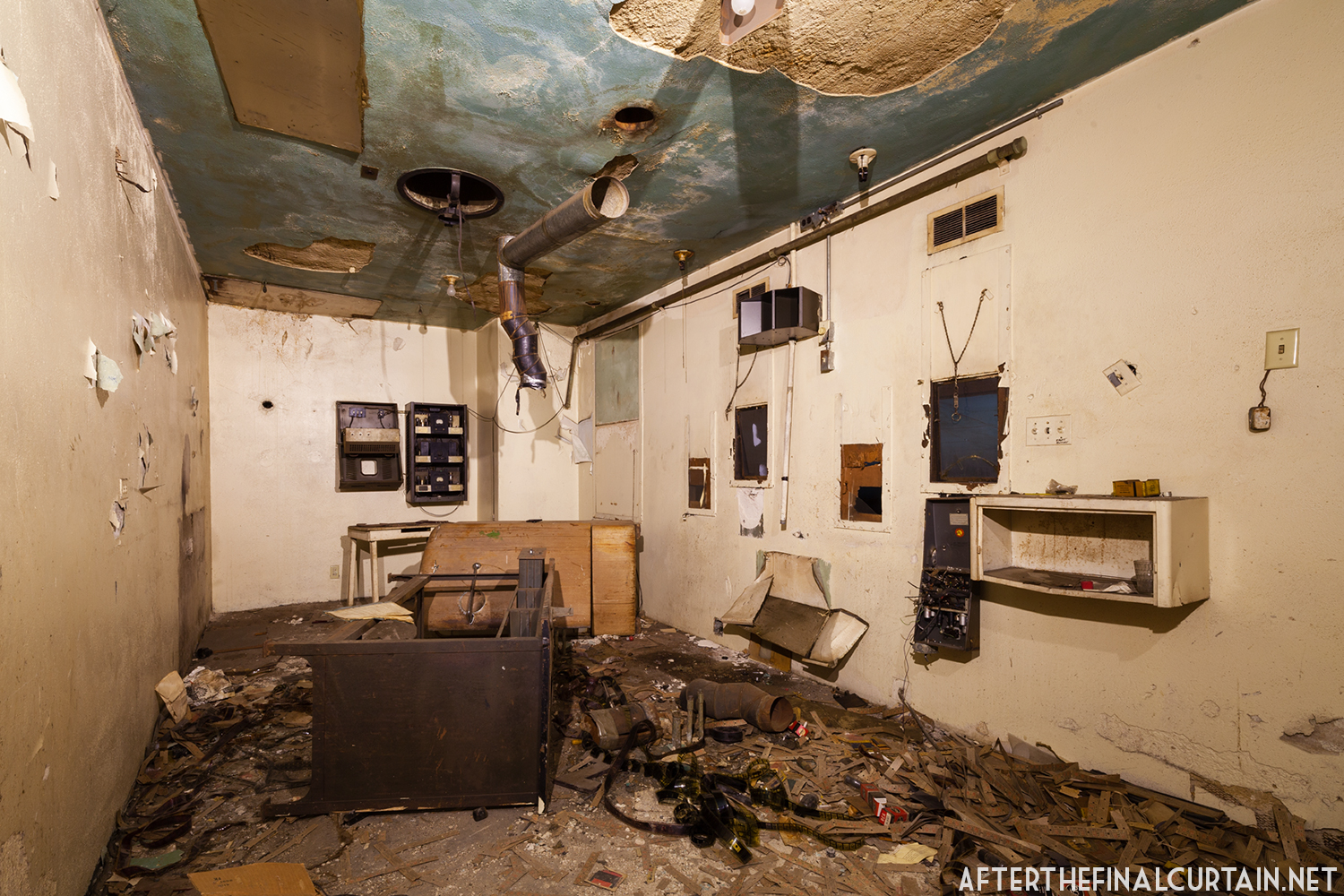
The projection room was largely stripped of equipment.
The building’s design featured a three-story facade that tapered down to a two-story stage house. The theater included a balcony and a distinctive exterior, with the first floor clad in burgundy ceramic tiles and a freestanding box office. The upper levels of the facade were painted stucco, accented with neon lighting that outlined and highlighted its architectural details.
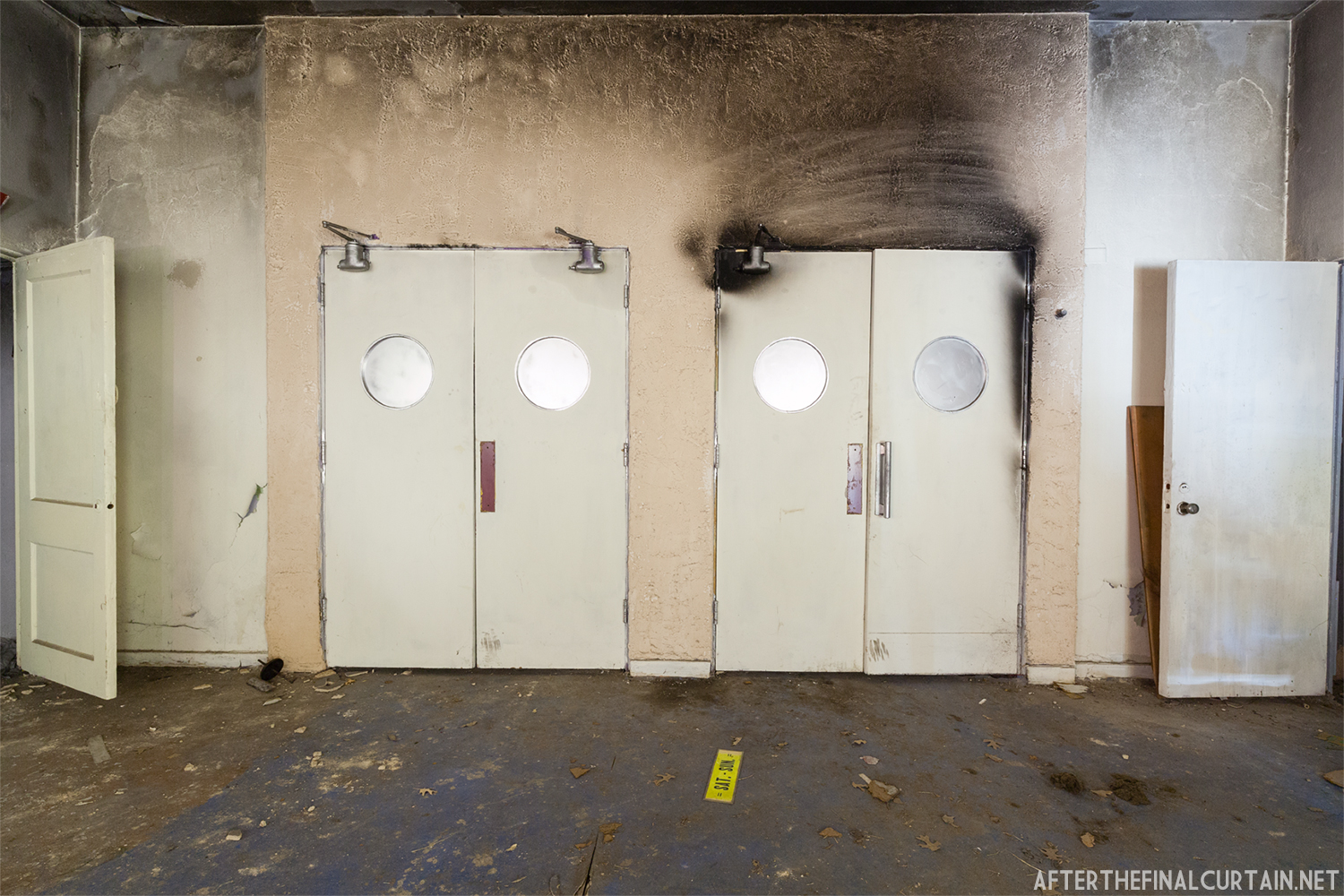
The doors that lead into the auditorium from the lobby.
After decades of vacancy, a commercial demolition permit for the building was issued on July 18, 2023. Demolition began shortly after 9 a.m. on Saturday, July 22, 2023. The site is now a vacant lot.
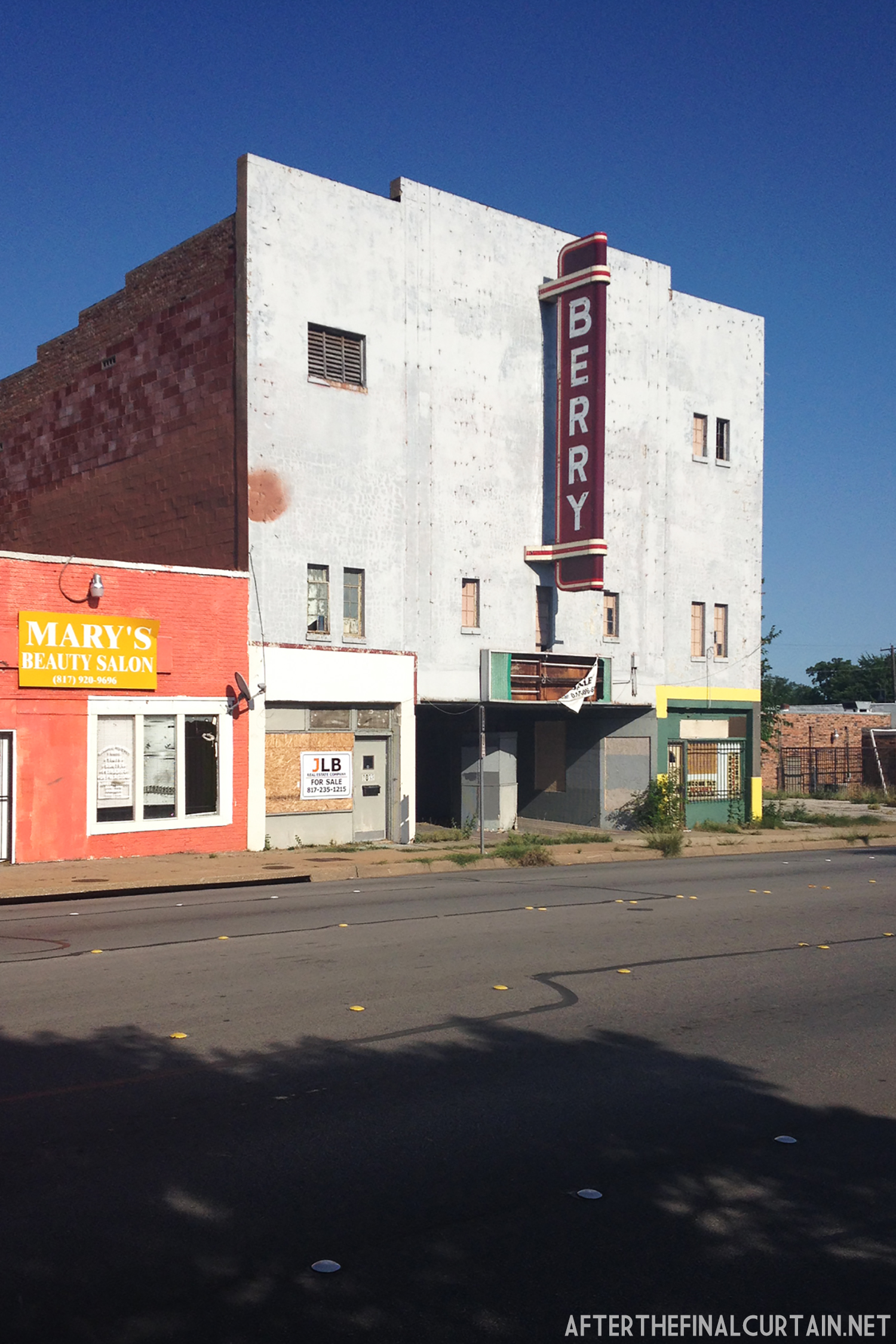
The exterior of the theater.
April 30, 2025
Grand Theatre – Los Angeles, California
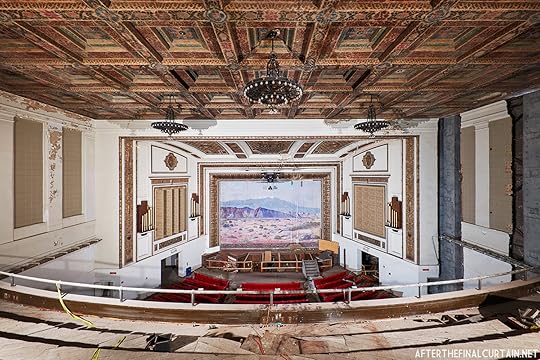 View from the center of the balcony.
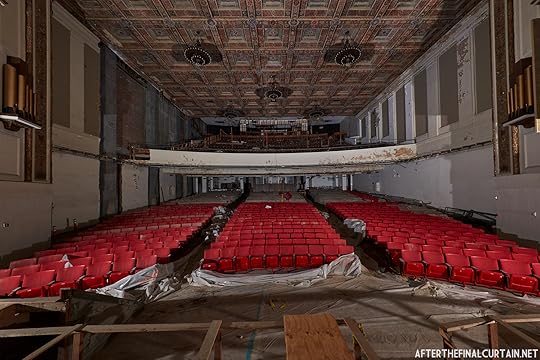
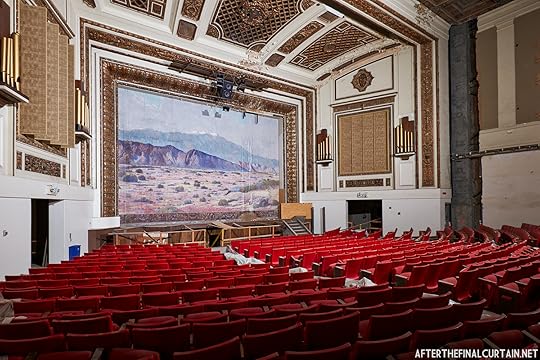
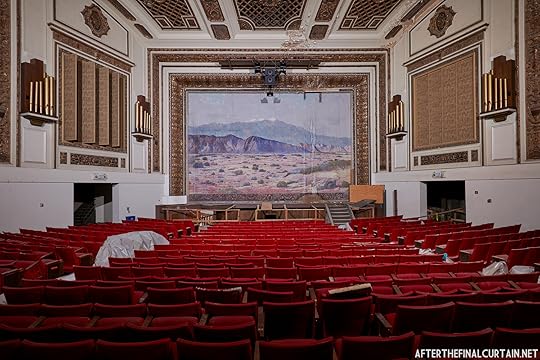
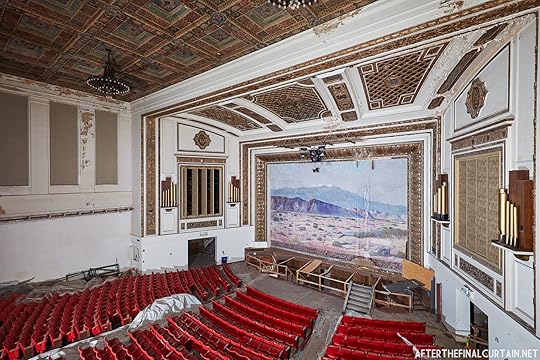
The Grand Theatre at Los Angeles Trade-Technical College opened in 1927 as part of the Los Angeles Polytechnic High School campus. Designed by A.C. Martin & Associates, the 30,000-square-foot auditorium featured a stenciled ceiling, original light fixtures, and a painted fire curtain showing Arrowhead Peak. After the high school relocated, the theater was absorbed into LATTC and used for student productions, lectures, and campus events.
 Looking back at the auditorium from the stage.
It shut down in 2009 when seismic retrofit work was abandoned, and it never reopened. Over time, water damage and mold took over. By 2022, the Los Angeles Community College District formally proposed demolition as part of a campus redevelopment plan. While the building was considered potentially historic under CEQA, the official word was that reuse wasn’t feasible or compatible with the college’s long-term goals.
Demolition began earlier this month. As of now, only the facade is still standing — but not for long. It’s all coming down to make room for a new entry plaza along Washington Boulevard, which the college says is needed for pedestrian safety and visibility. There are no immediate plans to build a replacement theater.
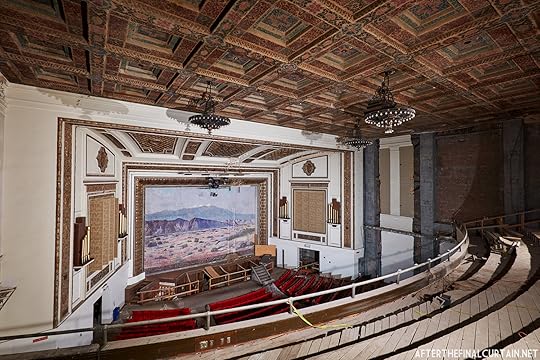
A longtime professor in the Humanities and Theatre department put it this way: “While the Grand Theatre was once a magnificent space, it had become infected with mold and had to be demolished for health reasons. It would have been far more expensive to attempt to save it rather than tear it down and build something new… We need a space suitable for large campus events like graduations and a theatre to accommodate our extensive fashion-design program.”
March 19, 2025
Strand Theatre – Clinton, MA
This was originally posted on After the Final Curtain’s Patreon. For expanded early posts, as well as video walkthroughs and other exclusive content, you can become a patron at: https://www.patreon.com/afterthefinalcurtain
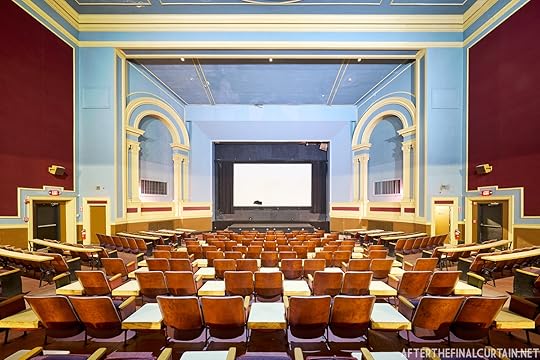 View of the auditorium from the orchestra level.
The Strand Theatre opened in downtown Clinton, Massachusetts, on Labor Day weekend in 1924, built to replace a section of High Street that had been destroyed by fire. Originally named the Philbin Theater, it hosted vaudeville acts, live performances, and silent films before transitioning to talkies in 1929. A naming contest soon after its opening led to the name that would stay with it for nearly a century. For decades, the Strand remained a key part of Clinton’s entertainment scene, offering a mix of live shows and films while competing with other theaters in town.
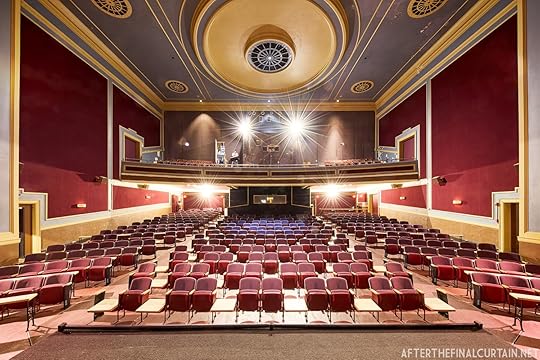
By the late 1970s, changing entertainment trends and declining attendance forced the Strand to close, leaving its doors shuttered for almost twenty years. In 1995, a full-scale renovation transformed the space into a cinema draft house, allowing audiences to watch second-run and classic films while enjoying food and drinks. Some seating was removed to accommodate small tables, but much of the historic charm remained intact. Open six nights a week, the Strand once again became a popular fixture in downtown Clinton, offering an alternative to larger, corporate-owned theaters. The MGM Theatre Report from 1941 documented its original layout of 1,112 seats—715 in the orchestra and 397 in the balcony—confirming its place as a major venue in the area.
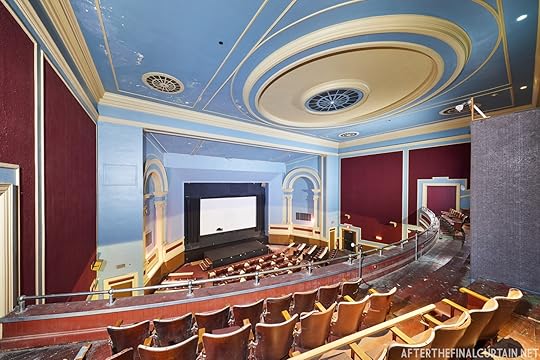 View of the auditorium from the side of balcony.
The COVID-19 pandemic forced the Strand to close in March 2020, and although it reopened in May 2021, attendance never fully recovered. On December 31 of that year, it held its final film screening before closing once again, leaving a significant gap in Clinton’s downtown. Determined to revive the theater, town officials secured $100,000 in state American Rescue Plan Act (ARPA) funds and set aside an additional $300,000 in local ARPA funding. However, in order for the funding to be used, a new owner must be willing to invest an equal amount. Another $70,000 from the Local Rapid Recovery Plan has been allocated to restore the Strand’s iconic marquee, which has long served as a visual anchor on High Street.
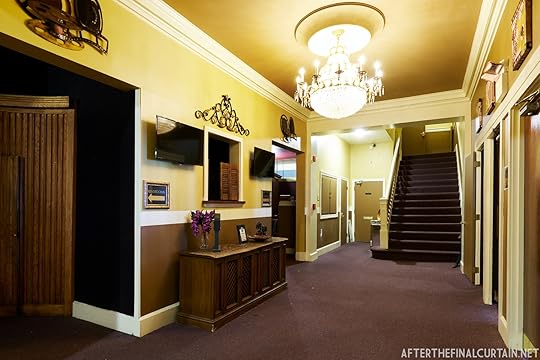
The effort to restore the Strand aligns with Clinton’s larger downtown revitalization project, which has included $4.5 million in infrastructure improvements such as new sidewalks, streetlights, and pedestrian-friendly spaces. Town officials believe the theater could play a key role in attracting visitors to the area, not just as a movie house, but as a multi-use entertainment venue. A retractable screen could allow for concerts, comedy shows, or theatrical performances, making the space more adaptable to modern audiences. A stage already exists behind the movie screen but remains inaccessible in its current configuration. The building is currently for sale.
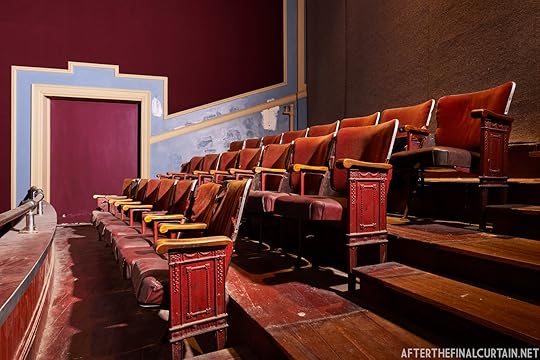 Some of the original seats remain in the balcony.
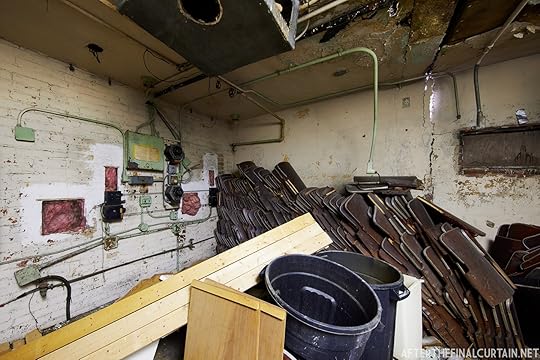 Not much remains in the projection booth.