
Anne P. Collini's Blog
November 17, 2016
Mni Wiconi: Water is Life
Mni Wiconi: The Stand at Standing Rock, is a short film by Lucian Read, one in his recent series on inequality in the United States, entitled: America Divided.
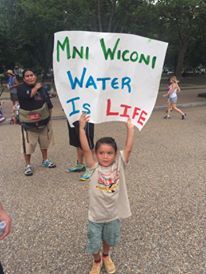
Please take a few minutes to watch this important and gorgeous short film, at this link.
Intended as a primer to the conflict and the players at Standing Rock, the film “turns a camera on the plight of Native Americans, a group that has been neglected and wronged...”
The Goodreads list of books tagged native-american-authors can be found
at this link.
Read named his mini-doc series America Divided before the presidential election. Since, it’s taken on a broader meaning. And now, the natural environment faces increased threat.
As the energy industry is being militarized, President-elect “Trump has selected one of the best-known climate skeptics to lead his U.S. EPA transition team…”
Read more about this unfortunate appointment at these sites:
Scientific American and Green Car Reports
To learn more about the facts and science of global warming, visit these sites:
NASA and NatGeo
Future generations are relying upon us.
Thank you.
Please take a few minutes to watch this important and gorgeous short film, at this link.
Intended as a primer to the conflict and the players at Standing Rock, the film “turns a camera on the plight of Native Americans, a group that has been neglected and wronged...”
The Goodreads list of books tagged native-american-authors can be found
at this link.
Read named his mini-doc series America Divided before the presidential election. Since, it’s taken on a broader meaning. And now, the natural environment faces increased threat.
As the energy industry is being militarized, President-elect “Trump has selected one of the best-known climate skeptics to lead his U.S. EPA transition team…”
Read more about this unfortunate appointment at these sites:
Scientific American and Green Car Reports
To learn more about the facts and science of global warming, visit these sites:
NASA and NatGeo
Future generations are relying upon us.
Thank you.


November 10, 2016
An Interview with International Bestselling Author Catherine Dunne
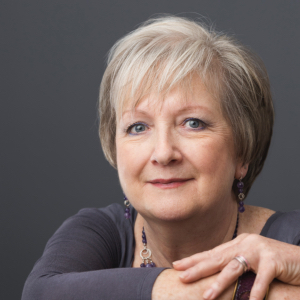
I recently had the very great pleasure of meeting Irish author Catherine Dunne at the Canadian Book Launch of her tenth novel, The Years That Followed, here in my Niagara hometown.
Catherine’s writing has earned high praise in the press: “one of Ireland’s best novelists” … “elegant and intelligent prose” … “she writes brilliantly” … “great talent for making the minutiae of life fascinating, and for exploring the emotional background of her characters with great finesse.”
And now, having met Catherine, I can add that she is a lovely and warm-hearted person.
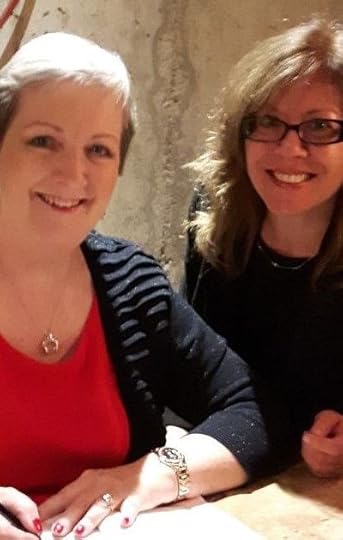
Thank you, Catherine, for so graciously agreeing to answer a few questions.
It’s a pleasure, Anne – and lovely to meet you at Ravine Vineyard in Niagara-on-the-Lake: what a beautiful town it is. My first visit there was back in July, where I saw some productions in the Shaw Theatre Festival. And what an experience that was! I’ll be back for more.
Your latest novel—*The Years That Followed*—is "a story of two wronged women bent on revenge at all costs ... sweeping across the lush European backdrops of Spain, Greece, and Ireland."
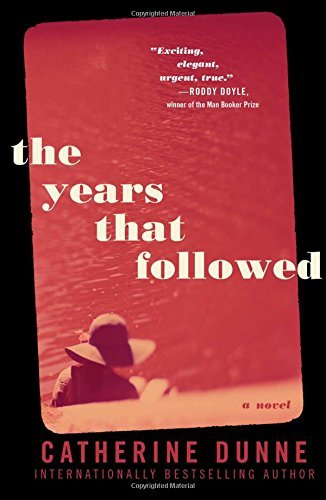
The lives of the two main characters, Calista and Pilar, are “thrown into turmoil by the power of love.”
The power of love is pretty strong. What power, or powers, could a woman possess that might surmount it?
I think we all yearn to experience the ‘power of love’, in one form or another. That’s what makes falling in love such a wonderful adventure. The ‘love’ I explore here in the novel, though, particularly in relation to Calista, is more about the abuse of power. Alexandros’s ‘love’ for Calista exists only in so far as he can control her, bend her will to his, and terrify her into submission with occasional tenderness and the ever-present threat of physical violence. That’s not love as I understand it.
The most devastating weapon an abuser has – even one, perhaps especially one, as charming and plausible as Alexandros – is to erode his victim’s sense of self. ‘This is all I deserve,’ Calista learns to believe. ‘I’ve caused this; it’s my fault; I’m to blame.’
The only way to surmount this is to have a healthy sense of self-worth, which we all need to nurture, women and men alike.
Pilar loves wholeheartedly and passionately. I don’t want to reveal too much of the plot here – but perhaps she is just a little bit delusional, too. ‘Smoke gets in your eyes,’ as the old song goes, and after the challenges she has faced, Pilar is more than a little willing to hold onto her dream of love. She, too, is seduced by a lover’s power – an overwhelming sense of being loved and valued.
When things spiral out of control, the women seek very different kinds of revenge. For Calista, retribution is what she craves. For Pilar, living well and seeking emotional fulfilment make for the best kind of revenge.
*The Years That Followed* was inspired by Greek mythology. Can you tell us a little about that?
I’ve always been fascinated by mythology of all kinds – Greek, Roman, Irish. Fascinated, too, by how every culture has stories that resonate with all of us, because they are stories about what it is to be human. When I re-read some Greek tales a few years back, I was struck by how little I’d understood when I’d read them as a much younger woman.
Back then, they seemed to be about battles and power-struggles and territorial conflict, with one endless war leaching into the other. And they were – except that the battles and struggles and conflicts all had to do with personal relationships. Sibling rivalry, troubled father-son relationships, lustful conquests: mythology has it all.
The women in these tales were, of course, largely silent. We never hear their side of the story. And so, my re-reading of myths provided me with a dual inspiration: the drive to bring the story of Agamemnon and Clytemnestra up to date, and the challenge of making the women’s voices ring clear and true down through the centuries.
Alexandros and Calista play the roles of King Agamemnon and his wife, Clytemnestra. Pilar becomes the Greek chorus, the trajectory of her life illuminating and commenting upon that of Calista.
Was it a huge challenge? Yes! Did I love every minute of it? Yes!
If it were made into a movie, which two actresses would you like to see cast as Calista and Pilar?
That’s a tough one. The women’s roles would see them mature from teenagers to much older women. I’d have to have Penelope Cruz as Pilar – might as well dream big! Rose Byrne as Calista, perhaps – at the start, her character in ‘Damages’ was just the right mix of vulnerability and naivete. But when the chips were down, she showed herself capable of ruthlessness and the determination to survive.
If you could choose a secret superpower, what would it be and how would you use it?
I’d be a Super Peacemaker. These days, I’d be very busy.
Your writing career takes you away from your hometown of Dublin. What are the things you most miss about Ireland, when you're travelling?
Home. Just all the things that make up my sense of ‘home’. Not really specific things – although I’ve realised that, despite everything, I love Irish weather. I wilt in heat and humidity – as July in Ottawa demonstrated! I suppose I miss the comfort and familiarity of being in my own space, after all the newness and alertness of being somewhere different.
Oh, and my own bed. There’s none other like it.
Whose book are you reading at the moment? Do you have a favourite author?
I’m reading non-fiction at the moment. Susan Quinn’s wonderful biography of Eleanor Roosevelt, concentrating on her relationship with Lenora Hickok. It’s beautifully done, and Eleanor is a woman I have always admired.
The most recent work of fiction that I read was ‘My Name is Lucy Barton’ by Elizabeth Strout. Magnificent is the only description.
I have so many favourite authors…that’s the great thing about the quality of fiction being written today. There are always new discoveries to be made.
What advice would you offer to fledgling writers?
Ah! I have a whole series of ‘Rules for Writers’ on my website, as I get asked this question so often. There are two more ‘rules’ remaining, which I will post in the near future – but of course, there is no such thing as sure-fire rules for writing. It’s whatever works, works.
However – nothing will get written unless you sit down and write it. And rewrite it. And rewrite it. No wonderful idea ever became a story or a poem by just thinking about it.
Thank you, Catherine, and best wishes with *The Years That Followed*!
To discover more about Catherine and her work, please visit her website
Anne P. Collini's Blog

- Anne P. Collini's profile
- 46 followers
Anne P. Collini isn't a Goodreads Author
(yet),
but they
do have a blog,
so here are some recent posts imported from
their feed.

