Linda Jones's Blog
October 26, 2019
Still plugging away…!

In case my terrible consistency at providing new content on this blog has made you think I have left the earth in a spaceship, let me reassure you that this is not the case.
I, Diane Hall, am still here, as The Writing Hall, helping authors bring their books to life, to market, and to their readers’ bookshelves. Having been in this guise for more than a decade, it’s perhaps no surprise that I’ve expereinced some shifts and curved balls along the way.
I spent seven years fully self-employed, until 2016, when I needed to ramp my income up a little (my girls were coming up to university age and needed financial help). I returned to work part-time and continued to edit and publish books for authors in my spare time. The downside of that, of course, is having less time to not just do the work, but to mingle with author types online and offline to secure more of the same. And blogging, such as I’m doing now, was far, far down my to-do list.
Whilst I do enjoy being my own boss, there are some aspects that I don’t like quite as much. The same could be said for going to work again and having a boss (well, bosses, I love variety too much to just have one opportunity on the table; luckily, I work some great people, bosses too). Just one example of a benefit from going back to the grindstone: it’s wonderful to know you’ll be paid on the same day each month – hell, to be paid at all!
Time has moved on a lot since I started The Writing Hall’s journey. Time, also, has become more precious, because I don’t have as much of it to share with the authors I work with. The consequence of this is that my freelance prices have generally gone up – whereas I used to loosely base my editing time and skills against an easy-to-understand £10 per thousand words, this is now £15-20 per thousand words (depending on the project and level of editing needed). I know that, against some other providers of the same services, I’ll still be too cheap, but I can live with that – I’m only ever concerned with doing what’s right for me and those I’m lucky enough to work with.
In the New Year, this site and its sister (www.hallgoodbooks.com) will be getting a bit of a revamp. I was a WordPress fan, but I’ve moved over to the dark side, to be a Wix user. I just find Wix so much easier to use (maybe it will help me put more blogs out?!).
One huge change over the last couple of years is that I’ve rediscovered my true love for reading. That an editor is telling you that they never read anything, that may seem strange, but do let me clarify. I’ve spent so many years reading for work/in my career, that I found it difficult to read for pleasure once everything began to take off. If I picked a book up it just felt like work; I wouldn’t read it, I’d automatically dissect it. I couldn’t enjoy it for what it was, I’d always be thinking of how I could have made it better.
Of course, that’s silly, exhausting and quite boring. I can’t remember the book that brought back my reading mo-jo, I’m just happy to say it appeared again one day.
I also have plans, someday, to write again…for me. I have authored books, but apart from Son of the Ringmaster, they’ve also felt like work. It isn’t quite the right time to be penning things as yet, but my family are on the last hurdle of independence from me, so I don’t think it will be too far away. And I am looking forward to that day, too. Though I love editing and publishing – and I do – it’s a thankless job. Readers and the media only see the author (quite rightly) and no one sees the person pulling the strings at the back nor understand their importance in the process. That’s another thing that quickly becomes exhausting.
I’ll sign off now, as reading my words back, it’s clear I’m in need of rest! I just wanted to update you on my work, plans and passions, as new content on here is sparse to say the least.
Don’t forget, if you’re having trouble getting words from your imagination on to the page, give me a shout. If you have a monster of a book idea inside you and don’t know where to start, give me a shout. If you’re nearing the end of your first draft and you can’t stop tinkering with it, nor know how to get it into a book shape with lovely book-sized pages, give me a shout. I’m still here.
Diane
The post Still plugging away…! appeared first on The Writing Hall.


July 1, 2018
Could coffee play a hand in the writing of the next bestseller?
This blog has been written by Jane Sandwood, freelance writer. For further information about Jane, see her bio at the bottom of the post.
Turn To Coffee For A Daily Productivity Boost
 We have all been there – feeling uninspired, frustrated and on the verge of shutting down our laptops and tossing our notes in the fireplace. If you are one of approximately 92,000 writers in the UK, chances are very good that you, too, suffer from the occasional lack of concentration and productivity. Having multiple deadlines hanging over your head yet no motivation to get cracking at your workload is an all too familiar feeling and one that has us reaching for a multitude of possible remedies, including vitamins, meal supplements, music and even meditation. If you are a coffee lover, however, help could be closer than you think, as caffeine is said to be able to not only improve concentration but boost your productivity as well.
Coffee can boost your mental alertness and performance
Caffeine is known to block our adenosine receptors, the compound in our brains that cause drowsiness. This would explain why we feel more alert after having a cup or two of coffee. Coffee is furthermore able to boost our memory, cognitive functioning, and energy levels – both short-term and in the long-run. Numerous studies conducted across the globe found that caffeine is able to increase both selective and sustained attention: great news for a writer working on a somewhat-tedious project! Grabbing a cup of java with breakfast will more than likely have you remembering more things from your meetings, solving pesky problems a lot faster, and focusing on your writing assignments more clearly. It is important to remember, though, that we all have different reactions to caffeine, and must keep this in mind before gulping down excessive amounts of the brilliant brew.
Coffee can enhance your willpower and creativity
It’s never wise to make pertinent decisions when you are tired as you could end up giving in to pressure you would usually be immune to. Who would have thought that a cup of java can help you stand your ground? As it turns out, coffee is able to boost your willpower and self-control, especially when you are feeling weary. As writers, we rely on our inherent creativity on a daily basis and now research suggests that drinking coffee can benefit our creative thinking even more. This, however, is not attributed to a chemical reaction, but rather the subtle nuances experienced when drinking coffee in a social setting. Low-level sounds and ambient noise can trigger abstract and creative thought processes, both of which are the quintessence of a writer’s inspiration.
Taking all of this into consideration, it is only natural to draw the following conclusion: coffee can significantly improve overall writing performance. Consuming coffee will have you feeling more inspired and see you writing more, and possibly, better. It is important to remember, though, that, like anything else in life, moderation is key. But starting your day with a cup of steaming coffee may see you become the next Booker or Baillie Gifford prize winner…
Jane Sandwood is a professional freelance writer and editor with over 10 years’ experience working across both print and online. She decided to move into freelancing to take advantage of the flexibility and work-life balance it offers. When Jane isn’t writing, she is busy spending time with her family. She also enjoys music, reading and travelling whenever she can.
The post Could coffee play a hand in the writing of the next bestseller? appeared first on The Writing Hall.
November 21, 2017
Stuck for Writing Ideas? Lack of Sleep May Be the Culprit
This blog has been written by Jane Sandwood, freelance writer. For further information about Jane, see her bio at the bottom of the post.
 Creativity and inspiration are vital to authors; if both seem elusive, a lack of sleep could be the reason. Sleep deprivation, or lack of proper rest, affects our brains, and can impact the way we process our thoughts and come up with ideas.
Why is sleep so important?
Scientists have proved that sleep has a hugely beneficial effect on our bodies and minds. The National Sleep Foundation’s website shows how many hours a person needs per night, depending on their age. For example, school age children (6-13yrs) need at least 9-11 hours sleep, whilst adults (26-64yrs) require 7-9 hours to stay well, physically and mentally. Studies also confirm that our brains need to rest if we’re to function properly – a tired brain is no good when attempting mentally-challenging tasks. A writer’s creativity could stall, therefore, when they’re in desperate need of inspiration.
As we sleep, our bodies goes through rapid eye movement (REM) phases and non-REM phases. The REM phase includes dreaming; during which, events are recreated, we remember things, and we try to find solutions to our problems. REM also leaves the door open for ideas to wander in, such as an exciting plot twist, or a character for your next book.
Negative effects that can come from a lack of sleep
Not only is creativity stunted when we don’t get enough rest or sleep, it can also affect our moods and behaviour. The ‘wakeathon’ experiment in 1959 proved this point. Peter Tripp, a New York DJ, worked 201 hours non-stop for charity. At that time, there had been few studies on the subject of sleep, so scientists took the opportunity to learn more about deprivation. Doctors and psychologists monitored Tripp, and found that he became increasingly irritable, moody and anxious as the hours ticked by. Towards the end of the experiment he even began to hallucinate, and showed paranoid behaviours.
A lack of sleep can lead to heightened emotion, anger, depression and anxiety; it affects our ability to multi-task and make sound judgments. Sleep deprivation, if prolonged, can affect the brain in many ways. For example, our hippocampus – the area responsible for learning and memory – needs to rest and renew itself to function properly; a lack of sleep could stop us from tapping into our memories…a useful resource for authors when they’re trying to drum up ideas.  There’s little doubt that sleep is an important activity for our overall wellbeing; not getting enough could impact our physical and mental condition.
So, if you’re stuck in a rut, wondering what to write next, make sure you get enough sleep. Schedule time for a decent snooze or an afternoon nap – it might be all you need to get your creative juices flowing!
Jane Sandwood is a professional freelance writer and editor with over 10 years’ experience working across both print and online. She decided to move into freelancing to take advantage of the flexibility and work-life balance it offers. When Jane isn’t writing, she is busy spending time with her family. She also enjoys music, reading and travelling whenever she can.
Main image courtesy of Lacie Slezak
The post Stuck for Writing Ideas? Lack of Sleep May Be the Culprit appeared first on The Writing Hall.
August 21, 2017
What Authors Need to Know About Website SEO
This guest blog comes from Gareth Simpson, start-up founder and SEO expert. If you want to make sure your books realise greater visibility, read on! ~ Diane
As discussed in our previous article, once you’ve written your book, the next important step as a self-publisher is to market yourself and make those all-important book sales. Setting up your own online store is a great way to gain autonomy over your sales, alongside those you make on Amazon. Your own website can also be a great hub for your brand, becoming a place for encounters, conversations, and a lively fan community. To get your website noticed and properly ranking in search engines, you need to work on your optimising your website for SEO. Here’s what authors should know about website SEO — and what you need to do to make a positive rankings difference yourself.
Content rules the roost
The verdict is in: content is the key to SEO success — good news for authors and writers who deal and trade in words!
Commit to frequent blogging on your site, and collate interesting resources that appeal to your readership and online audience, and you’ll be off to a great start. Just make sure that your content efforts are consistent — an editorial calendar can help keep you accountable (essential when you’re managing the site by yourself). CoSchedule do a good one.
Capitalise on your writing abilities in order to get featured on other websites — external backlinks to your website are an important SEO ranking factor. Start by exploring any existing relationships and networks — perhaps offering some free content or advice in exchange for a mention? Use your writerly skills of persuasion to do some DIY PR!
Keyword research is a great way to get to know your readers better, and help ensure that your web copy includes key phrases and words that they’ll want to see. This article has everything you need to know on how to get started with keyword research — it may even spark some content ideas!
Content organisation is also important – your site’s structure should be easy to navigate for people visiting your page, with an intuitive navigation bar for optimal usability. Try not to ‘hack’ around with custom themes and menus too much if you don’t know what you’re doing — or just ask for some technical help to ensure your site’s structure is optimal.
Make sure you focus on purpose and conversions
credit: mail munch
As a writer, it’s easy to get carried away with your creativity when producing web content. Always remember that your website has a distinct purpose: to promote and sell your books. Make this the strategic goal behind all the content, editorial, and online marketing decisions that you make, and stay clear of anything that’s going to detract from that goal.
It’s all well and good writing a brilliant synopsis of your novel, but if it doesn’t encourage people to buy it, then what is the point? That said, going overly salesy will not do you any favours either — good web content balances sales copywriting with useful information.
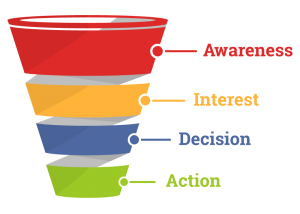
Be aware of the different stages of awareness a user will go through when they land on your website, and try to give them all the necessary information in digestible chunks. You need people to be able to quickly make decisions, so keep testing and refining your site from a commercial perspective in order to ensure people aren’t getting confused, or being turned off.
Free web analytics are a great way of measuring your site’s success with users and potential readers. Learn how to analyse key metrics like dwell time (time on page), bounce rate, and your overall conversion rates (look at both newsletter sign ups and book sales) to help you track SEO progress. These stats may seem daunting at first, but web analytics are easily learned and can help you take control of content upgrades and SEO campaigns.
Ecommerce SEO is different
Ecommerce SEO is more challenging than optimising a standard website, as you have to compete for online sales with many other businesses, and the technical demands placed on your site can be great. You need a website that’s fast, sophisticated, and works seamlessly across all devices — a bad mobile experience is bad for SEO.
When it comes to optimising your online bookstore for search queries, you need to toe the line between natural language and relevancy. Ideally, you want to optimise your book product pages and blog posts for one (or several) keywords, but all the while keeping the focus on fun and engaging content. Here are some strategic places you can place search terms:
The page title
Headers/subheaders
Paragraph copy
Product descriptions
Image file names
Image alt tags
Meta title and descriptions
URLs
The ease with which you will be able to alter and optimise these (and other) SEO elements depends on your content management system. For example, if your site runs on WordPress and you plan to use the WooCommerce plugin to transform your site into an ecommerce store, you can use the Yoast SEO plugin. This plugin lets you quickly alter the above components on any of your WordPress pages, and offers helpful SEO suggestions and tips. Alternatively, using a SaaS ecommerce solution can automatically offer you the same capabilities and the flexibility to change them at a moment’s notice, with less effort from you. You can even create an online store for free (with a two week trial) to see if it works for you before you commit — check out this third-party review site for an overview of the market-leading ecommerce providers and their pros and cons.
Focus on the user

credit: pexels
When writing online with the sole purpose of boosting your store’s SEO value, you can fall into the trap of writing your content in an unnatural and robotic way. In the same way, if you are just constantly pushing for book sales on social media, your online presence will fall flat on it’s face. The key thing to remember about modern SEO is that it’s supremely user-focused, with all decisions stemming from a desire to fulfil their needs.
To write great content for your users, you need to really think about who they are and what they’d like to read. Creating a set of buyer personas can be useful to this end – you can collect generalised information such as age brackets, reading habits, gender and education, and tailor your content to suit these people. This kind of information can be accessed in a number of ways: use the YouGov profiles in the UK, or scour question sites such as Quora to build up a more well-rounded image of your ideal reader/customer. Buyer personas aren’t just for writing content either — they can help you determine your web design decisions, and provide guidance on where else online to advertise.
Writing your books is one thing, but writing web content is a tricky balancing act! Ensure that the actions you take to improve your website’s SEO are in line with your overall commercial goals, and keep reviewing your progress and tweaking your strategy accordingly.
 Gareth Simpson – Technical SEO & Startup Founder
Gareth loves SEO and link building, and enjoys managing and briefing a team of online writers. As well as SEO, Gareth is a big fan of excellent content marketing and is always giving the creative team a run for their money…
The post What Authors Need to Know About Website SEO appeared first on The Writing Hall.
February 24, 2017
Self-publishing and traditional publishing…pros and cons
This post is a result of typical responses from my clients. I’ll ask, “How’s your book getting to market? Are you going to self-publish, or submit to agents and publishers?”
In reply, comes a blank look. Whilst a good number of my clients have some idea of the publishing industry and the options open to them, most of the people I help don’t have a clue. It’s not a surprise, really, given that I mainly work with new authors – writers looking to start their career, who haven’t had much experience of the industry. I’m their first port of call, and I spend a lot of my time, quite rightly, explaining things.
 I don’t believe self-publishing is better than traditional publishing, or vice versa; they’re simply different ways to get your book out there. But an author can only make an informed choice if they understand the pros and cons of each option.
What follows is not an exhaustive list. There are many other pros and cons associated with self-publishing (SP) and traditional publishing (TP). I’m just sticking to the main aspects, as too much information at once can prove overwhelming. I’m also talking solely about print books (I’ll cover ebooks another time).
Control
A good portion of authors who opt to self-publish do so because of the level of control they can exercise over their work, such as how it reads and looks, and concerning the way they want to promote it. When self-publishing, YOU are the publisher. This means you can realise your vision on the cover, or include a snippet of your next book with this one, for example – it’s your project and you have the freedom to do anything you want, without consulting anyone else.
In traditional publishing, once a manuscript has been accepted and a contract signed, essentially, you, as the author, gives up ‘control’ of all things relating to their book to the publishing company. That’s not to say the publishers won’t take into account your wishes or thoughts – they want to keep their authors on side and happy, after all. But the company will know the market and what a book has to be like; they’ll stick to certain aspects for a reason. They will have the last word on all content, on the book’s cover and layout, and where it will be on sale.
2. Time
Self-publishing, with all the tools now available, have made getting your work to market practically instantaneous. In comparison, a traditionally-published book can often take around a couple of years (sometimes longer) before it sees the light of day. It has to go through editing, revisions, design, and it needs to fit with the publisher’s schedule for release and marketing.
But, just because you CAN publish something immediately, doesn’t mean you should. To compete with TP titles, you should aim to make your SP book as attractive, compelling and as professional as possible, which means going through the same motions, i.e. submitting your draft to an editor, getting feedback from a professional/beta readers, taking time to study the market so that your cover design is appropriate and eye-catching, for example, and your placement/categorisation is accurate.
3. Budget
If you self-publish, and self-publish properly, it’s you footing the bill for the experienced editor, the talented cover designer, and the professional typesetter…the list goes on. Though you can skip some of these steps, I wouldn’t recommend it. Many SP books nowadays can’t be distinguished from TP books; this is how it should be. It then allows the story to take precedence, not readers’ possible prejudice as to how the book was produced.
Though, as a self-publisher, you have these upfront costs to meet, they’re one-offs. That means, once you’ve recouped them, you get a much better margin than a TP author. After printing costs, and after the initial one-off costs have been made back, SP authors get to keep the remaining revenue from the sale of each copy – which could represent up to 60% of the purchase price.
In comparison, once your manuscript has been accepted by a traditional publishing company, there are no costs to pay. The publisher pays for the editing, for the cover design, for everything. The flipside, however, is that you’re paid royalties for each copy sold; typically, this will be between 10% and 17.5% of the purchase price. This is unlikely to alter, unless you see such strong sales that you’re in a position to negotiate your royalty rate.
4. Gatekeeping
As with point one, if you decide to self-publish, there’s nothing stopping you. You don’t need anyone’s permission, you don’t need to have verification that it’s any good, and you certainly don’t need to ‘apply’. You write and create, then upload/arrange and print.
The credibility associated with TP is higher than SP, simply because you’re asking for a publisher’s backing. You’re applying to their company, asking if they’ll produce your book because they think it will sell, and because they know readers will like it. Less than 5% of the manuscripts coming into a publishing house become books to purchase, which shows how exclusive this ‘club’ is. It’s hard, very hard, to have an agent take a punt on you, let alone a publisher, but if they do, think of the prestige that comes with that decision. Someone thinks enough of your book that they’re willing to put their own money into producing it. Someone thinks they can sell it to an audience big enough to make it worth their while. They believe in it almost as much as you do. This is even before it’s tangible.
5. Reach
When you’re a well-known author, it’s probably not an issue that your books are SP or TP – your adoring audience will buy them regardless. But, when starting out, in the saturated book market we have today, visibility is a HUGE issue. There are more free books available to readers than they can read in their lifetime, so getting them to part with their money to buy a title is no mean feat. They’re already spoilt for choice. And marketing takes time, effort and money. As a self-publishing author, everything comes down to you, or those you choose to employ with your funds. You have to get it to your audience; for example, you have to get it in bookshops. And because bookshops are already saturated with TP titles, it’s even harder to get them to look at an SP book. Not impossible, but you have to show there’s demand.
A TP book will already have a place in the market – the one the publisher saw when they offered you the contract. Publishers, more so the bigger companies, will have distribution routes already open, reps that will know exactly where to sell your book, and outlets lined up to carry your title, all of which will see your book sell in volume. But their interest may lessen when their next release comes out; at least with your SP title, you can promote like a Duracell bunny.
As I said in the opening, SP is not better than TP, nor is TP better than SP. There are many examples of authors, using either method, gaining notoriety and lucrative sales – some using both routes with success.
Taking into account all these pros and cons, I help my clients down the appropriate path that’s right for them. The one that’s best suited to their expectations and desired outcome, to the time they have available, to their ability and willingness to promote themselves, and the one that fits their budget. It’s different for everybody.
If I’m being truly honest, writing the book is the easy bit.
Developmental editor and publishing consultant Diane Hall is the author of three books; she has also ghost-written books for others and created a plethora of content, on more subjects than you could care to imagine, for numerous clients since the beginning of her career. She is proud to have fundamentally shaped series of books and more than a hundred individual titles over the last decade with various authors, nationally and internationally. 
Among her editing qualifications, she holds a linguistics diploma, which involves the study of language and speech. Diane employs this knowledge in the forensic linguistic work she sometimes undertakes.
Diane has seen the introduction and subsequent rise of self-publishing, and passionately keeps abreast of its disruption of the publishing industry. She is a thought leader when it comes to the future of book marketing, fuelled by the poor results authors see when employing traditional techniques.
The post Self-publishing and traditional publishing…pros and cons appeared first on The Writing Hall.
November 21, 2016
Author interview: Rachel Dove
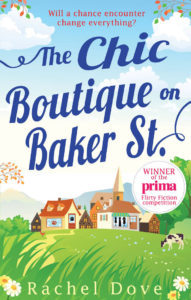 Rachel is the author of both self-published and traditionally published titles; read TWH’s review of her most recent HarperCollins’ novel, The Chic Boutique on Baker Street.
TWH: Hi, Rachel. Thank you for answering our questions. Now that the dust has settled a little, what was/is the best thing that’s happened since you won the Flirty Fiction competition, apart from actually holding the finished book in your hands?
The reception it’s received. I’ve had lots of lovely reviews, and readers getting in touch to tell me how much they loved the story. Always very humbling – and great to chat books with people, which I can do all day long.
TWH: What advice would you give to other authors entering similar writing competitions?
Read the competition thoroughly; don’t be caught out because you’ve pitched the wrong story. Take your time to double and triple check before you submit. The best idea in the world can be dismissed simply because of a wrong sized font or margin error.
TWH: You’ve self-published as well as being a published author from HarperCollins’ stable – what did you find to be the benefits of each method to market?
The benefits of traditional publishing are massive, in terms of finding your readership and cultivating it. They do all the editing and cover artwork in-house, so you get a highly professional finish, and your book could be in actual bookshops as well. You get a lot of support from a good editor, too, which is nice, as writing is very lonely at times.
Self publishing means that you have full control over your book, but everything does fall to you: covers, editing, marketing…and this can take away precious writing time. Self publishing means that you can work at your own pace, though, and publish quickly.
TWH: Because you’ve already achieved so much, how have your dreams changed? What do you reach for nowadays?
My dreams have changed as I have fulfilled them! I always wanted to be a teacher and author, and I have done this alongside raising my family. The things I strive for are the next step, the next rung in the ladder. My priorities now are to make my next book the best it can be, raise my family well and hopefully travel. I feel like the stress has been released, but I still work hard every day. It’s my nature, I think, to stay busy!
TWH: The publishing industry has changed so much in the last ten years…how do you predict the next ten years will develop?
I think it will continue to thrive and diversify. Ebooks were hailed as the end; I remember declaring I would never buy a kindle! I think that we owe it to future readers to continue to recognise diversity, with more characters from all races and abilities. There has been some good characters written with conditions like Asperger’s, and this is a brilliant step forward. Also, libraries have been affected by cuts. Parents, in particular, need to get their children to these places, use them, and introduce the next generation of readers to community reading. Otherwise, libraries simply won’t be there, and that would be devastating for everyone.
TWH: Lastly, what’s your best writing tip?
Read, read, and read some more. Read something you would never pick up normally – something you don’t fancy, something you think might be hard going. Take yourself out of your comfort zone and see what works. I read daily, and I will never ever stop devouring books.
 Rachel Dove lives in Wakefield, Yorkshire, and is a wife and mother. She previously worked in law, then in the area of early years and special educational needs before qualifying to teach adults these subjects. Having always wanted to be an author, Rachel has written horror shorts in the past, but romantic fiction remains her real love. She now writes full-time between writing, reading, and raising her children.
The post Author interview: Rachel Dove appeared first on The Writing Hall.
November 14, 2016
3 Ways To Escape The World And Boost Your Creativity

Sunset over Spitbank Fort Hotel in the Solent at Portsmouth
This guest post has been kindly supplied by Cruise Club UK
The digital world has become more pervasive and invasive than ever, with the average person now spending one hour and forty minutes a day on social media apps. With people paying to go on digital detoxes to get away from their technology, our phones and laptops have become more than just a tool we use in our everyday lives, To many, they’ve become an addiction which is literally at our fingertips 24/7.
Now think of all the things you could do with that extra hour and forty minutes every day. It’s more than the hour a day of exercise recommended to help improve your life expectancy, while Earl Nightingale said that one hour a day of study can send you to the top of your field within three years. If you read for an hour a day, that’s a book a week, which is around fifty books a year.
What about that book you’ve been writing? An hour and forty minutes a day may not seem much, but you can easily aim to put down around 1000 words in that time, which is 7000 a week, 30,000 a month, and you can have the first draft of your novel finished within half a year.
But how do you create the habits that will help you stay motivated when the primal urges of procrastination call? Take a look at our top three ways to escape the world, coming back with your creative juices flowing and your motivation motor revving.
Escape to the Hills
We’ve all read those articles by writers where they casually mention “and then I just went away to my remote cabin in the mountains and wrote my 150,000 word manuscript in a weekend, with nothing but the squirrels and the goats to keep me company and no distractions.” Well, it might take more than a weekend, but shutting yourself away from society and taking away all of your excuses and get-out clauses not to write is a tried-and-tested method. It really does work.
If you fancy giving up the trappings of your modern life in exchange for the ascetic and the austere, then make sure you’re realistic about yourself and what you really need. Try to avoid the internet completely, so if you’re writing something that needs research, make sure you have materials downloaded prior to going off-grid. While we’re not trying to recreate the atmosphere of a silent meditation and totally spill your internal turmoil, we are trying to rid ourselves of all distractions. You will, however, need plug sockets for your laptop, and probably a kettle, unless you’re one of the few capable of writing without copious cups of tea and coffee.
Cruise to Creativity
Although you can get cruise trips specially tailored for writers, you definitely don’t need one to stir the winds of inspiration into your sails. A cruise is the perfect combination of intense sensory stimulation, followed closely by long stretches of nothing much, in which to jot everything down while it’s still fresh. On a luxury cruise, you can cruise from the UK to almost anywhere you can imagine. NCL Cruises and Celebrity Cruises, amongst others, are larger ships, allowing you to hide in the anonymity. On a long distance cruise, the days at sea will give you ample time to fall into a routine of writing, then taking advantage of the facilities a cruise has to offer such as seminars, climbing walls, tennis courts and anything else that will help you unwind.
If you want to immerse yourself in culture, pick a luxury cruise from the UK which allows you overnight stays on land, like Azamara Cruises. Perfect if you want to avoid the larger ships and get a real feel of the sights, sounds and tastes of a location, Azamara Cruises are smaller, luxury ships that can sail where their big brothers can’t go. You can arrive back to the UK having taken in numerous countries and cultures; your own ‘eat, pray, love’ experience packed into only a few weeks.
The benefit of a luxury cruise over a remote cabin is that you’ll also arrive back pampered and preened and possibly with some new friendships. Just be careful to keep your writing discipline from day one, or that ‘work hard, play hard’ balance could easily slip away from you. Invest in a single berth cabin, (NCL Cruises are a good option to avoid the single supplement) and it’s worth splashing a little more cash to make sure you enjoy spending time there.
Turn off on a Tropical Island
You don’t just have to head into the hills before your internet connection cuts out and you’re forced to focus. If you want all the benefits of a life without WiFi, but don’t want to completely isolate yourself, look no further than tropical islands such as the ones off South East Asia, or more remote parts of the African islands like Zanzibar.
 Steer clear of the hotels, as they come connected, and opt for cabins near the beach. Not only will this save you money, but it will channel the best elements of the ascetic qualities you’re aiming for with a cabin on a hillside, while still giving you some of that holiday feeling. Especially if you’re someone who feels at one with the ocean, you’ll find peace and clarity come into your mind with the lapping of the waves. While digital nomads all around lament the lack of WiFi, you can gloat over your rapidly expanding word count and celebrate in the evening with mojitos all round.
Whichever you choose, remember to pick the method which is realistic for you — or even try all three and see which works best for future record. If you start going loopy without a little social contact, opt for the cruise or an island getaway over the cabin in the hills, If you know you need constant stimulation to maintain inspiration, the cruise is for you. Now, go and switch off from the world so you can enjoy, relax and create.
Paul Edge, director of Cruise Club UK , has spent over 25 years working to improve the travel industry. When not in the office, he’s in an exotic location user-testing one of his luxury cruises .
The post 3 Ways To Escape The World And Boost Your Creativity appeared first on The Writing Hall.
November 3, 2016
Review: The Chic Boutique on Baker Street, by Rachel Dove
by Diane Hall
Disclaimer: Though I, as a writing coach and consultant, deliver literary feedback and critiques as a service, this review is written from the viewpoint of any other reader (something that I happen to be, outside working hours!) It is not a critique.
The Chic Boutique on Baker Street
At first glance, TCBOBS looks like any other chick-lit novel. What you may not notice is that it’s released under the HarperCollins’ Mills and Boon imprint. After submitting this manuscript to a ‘Flirty Fiction’ competition in Prima magazine, Rachel Dove won first prize, and the book was born.
I was once a Mills and Boon subscriber, and one of my favourite, ‘go-to’ reads is from the series. I must have read that particular title over a hundred times, and on every occasion, the ‘swoon factor’ does its job. Unfairly, in my opinion, Mills and Boon can conjure connotations of cheesy, tacky, predictable story-lines. Having not read any of their titles for a good few years, on the basis of TCBOBS, this must surely be a charge that’s laid to rest.
TCBOBS is formulaic, admittedly, but so is practically every other chick-lit novel. It’s precisely the reason many women choose these books; the froth and bubble, the hope and romance, the happy ending and handsome characters….all provide a welcome distraction from the housework and kids shouting ‘what’s for tea?’
We’re introduced to a homely, caring, craft-loving girl – Amanda – who has found herself working as a cut-throat lawyer in the City. I say ‘found’ – she was bulldozed into this profession by her ruthless, shallow parents. Amanda finally finds the guts to leave the firm, the city, and her old life, after her equally-shallow lawyer boyfriend does the dirty on her, both professionally and personally. Rather than exorcising these demons, Amanda makes what most would consider a rash decision: ploughing her savings into a commercial property, with flat above, within the ‘sleepy’ village of Westfield, Yorkshire. Telling no one, she does a quick flit.
Hoping to sell her crafty wares, and for a simpler pace of life, Amanda immediately finds herself at odds with the local vet, Ben, over her business plan. As well as his practice, Ben owns the dog-groomers next door to Amanda’s ‘New Lease of Life’ shop, and he insults her, insisting she’s another fly-by-night city-dweller who plans to shove her unwanted creations on Westfield’s inhabitants before the draw of Mulberry bags and Louboutin shoes eventually calls her back to London. Single-but-bruised (of course), and the catch of the village (of course), Ben can’t help but feel the instant chemistry between them, despite his professional objections.
Cue endless misunderstandings that fuel the ‘will they, won’t they’ formula, even though readers can guess from page 5 that the pair will end up together eventually. TCBOBS brings largely credible reasons for the confusion that ensues, though it does threaten to stray into comical farce in a couple of places; however, this didn’t feel out of character nor did it jar, so it’s easy enough to go with it. I did want to knock both their heads together by the fourth quarter, though, but I took that as a good sign – had I not cared for the characters, the book would have been tossed aside ages before. Instead, I sped through it in a couple of days (it would have been quicker but I’m very busy!), picking it back up at every opportunity, to see how their love story further unfolded.
Supporting characters involved another love story, which brought a Downton Abbey feel. The ‘high priestess’ of the village, Agatha, who’s privileged but endearing and harmless, manages to step aside both class and tradition (both of which matter only to her), to marry her butler/handyman/chauffeur/childhood friend, Taylor (sorry, Sebastian). A gaggle of OAPS, young at their solid-gold hearts, meddle just enough to get the results they’re after without offending anyone in the process.
Yorkshire folk may have stronger opinion about TCBOBS, as ‘Yorkshireness’ (I know that’s not a word) is an intrinsic element, and stereotypes do feature here and there; Westfield, I would venture, is based on a North Yorkshire village. Come south of the county, for example, after reading TCBOBS, and you’d find fewer similarities; I like to think the author painted the picture of Yorkshire we aspire to – where community is strong, and generations remain in the same five-mile radius as time marches by; the James Herriot Yorkshire. It does exist, and it’s why we call Yorkshire ‘God’s own county’.
The book has a lovely flow to it, akin to a gentle drift down a lazy river in a canal boat. It’s bright and sunny – no real heartbreaks or adrenaline rushes to spoil the smile that will undoubtedly creep across your face as Ben and Amanda finally say ‘I do’. Everything is so neatly packaged up by the end that I’m interested to see what may come next in the series.
If you’re looking for unadulterated escapism, a reminder that there are people who genuinely ‘do good’, and a warm glow in an otherwise humdrum/never-a-second daily routine, you won’t be disappointed. If, however, you’re looking for sex scenes that you could curl your toes to – which feature in many other Mills and Boon titles – you won’t find any here.
TCBOBS in one word: wholesome.
The post Review: The Chic Boutique on Baker Street, by Rachel Dove appeared first on The Writing Hall.
October 11, 2016
Life as a self-published author…
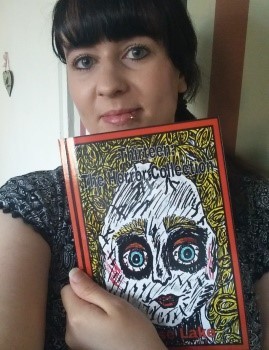 The following post is by Louise Lake, author of ‘Arabella’ – amongst other titles, and freelance writer, ghost-writer and marketer. Her work has featured in ‘Take a Break’s Fate and Fortune’, the ‘Wakefield Express’ and various poetry anthologies.
Do you have a book you’re looking to publish?
When I first began my journey as a self-published author, I had no contacts that could help me with the information I required in order to self-publish my first book. Instead, I learned the hard way through month upon month of research, trial and error. Now, five books later, I find myself helping other writers with advice on where and how to self-publish their books, as well as offering services in ghost-writing, proofreading and editing.
I have studied many different courses in order to progress my written work, and next year I will begin the most important of them all – a degree in English Literature and Creative Writing.
Below, you will find some of the most useful resources I have acquired along the way. I really hope this information will give you the helping hand that I never had, as you start your journey towards becoming a self-published author.
Publishing Platforms
Amazon KDP is probably the most popular of all of the e-book publishing platforms out there. You can earn 35% or 70% of your book sales, depending on your preference. And if you remain exclusive to them you can also be part of the ‘kindle unlimited program’.
Smashwords is an e-book publisher and distributor. With Smashwords you can opt into the distribution services and be listed with various online retailers and libraries, such as: Barnes and Noble, Apple Bookstore, Overdrive and Gardners. Smashwords also offer a coupon code generator for special offers on your books.
LuLu Publishing is an e-book and printed book publisher. They also offer a distribution service that lists your books on other online retail sites such as: Amazon, Barnes and Noble and iBooks.
Createspace is owned by Amazon. On the Createspace platform you can self-publish print books. They also offer a distribution service, as well as conversion and publication in electronic format without the need of Amazon KDP.
There are various online stores that I have come across where you can sell your printed and electronic books through your own website. Even though I have not used any of them yet, I thought they might still be of value to others.
Audiobook Publisher
Whilst doing research into audiobooks, as they are becoming more and more popular, I found ACX.
Audiobook Creation Exchange – ACX brings publishers into contact with a variety of producers who can turn your book into an audio book. Narrators audition for the job and you can either choose to pay upfront or choose the royalty share option, where you split your royalties with your book’s narrator. You can also receive a higher royalty if you remain exclusive to ACX’s retailers: Audible, Amazon and iTunes.
Purchase ISBNs
All of the publishing platforms mentioned above assign a free ISBN; however, if you would like to purchase your own you can do so here: www.nielsenisbnstore.com. Nielsen charge £149 for ten ISBNs.
Listed to Sell in Bookshops
If you choose to self-publish your book, but you would like to try and get your books into brick and mortar bookshops, you usually have to be listed on the following:
Premade Book Covers
A great website I came across whilst looking for professional book covers was ‘self-pub-book-covers’. Their website is full of various pre-made book covers created by different professional designers. Once a book cover has been sold, no one else is allowed to purchase the same cover, giving you a one-off design each time. Their service is very easy to use and you can also edit the text to your liking. Sometimes, the designer will help by giving their opinions on writing styles and sizes that will be most effective. Most covers start from as little as $69, which is for a maximum of 250,000 copies of your book being sold. When you reach the 250,000 mark you must then return and purchase an extended licence, which will then allow you to use the cover forever.
Giveaways and Reviews
Two useful sites for giveaways prior to publication and reviews are Instafreebie and Goodreads. You can also set up an author profile on Goodreads and list your books once they are published.
Online and Home-Based Courses
I have completed courses with all of the following providers. I completed courses in Creative Writing and Proofreading and Copy Editing with The Writers Bureau. I studied Fantasy Writing with New Skills Academy. I have studied a short, two-week screenwriting course on Future Learn, and a few different courses on Allison, including Grammar.
Social Media / Online Presence
It is very important these days to have a presence online as well as offline. The listed platforms below are the main social platforms that I use.
Facebook – www.facebook.com
Twitter – www.twitter.com
Instagram – www.instagram.com
YouTube – www.youtube.com
LinkedIn – www.linkedin.com
Blog/Website – www.wordpress.com
Author Central Amazon page – https://authorcentral.amazon.co.uk/ https://authorcentral.amazon.com/
Your Book’s Demographics
Before you consider self-publishing, take time to think about the demographics for your book. This way, through research and by answering the following questions, you will have a better understanding of your target market, which will help when it comes to marketing your book.
What age category is your book aimed at?
What genre category does your book fit into?
What sex is your book aimed at, or is it aimed at both sexes?
What is your reader’s occupation?
What is your reader’s education level?
What are your reader’s hobbies and interests?
What is your unique selling point? What makes your book different?
What is the reader’s reason for reading your book?
Where are your readers located in the world?
What social networks do your readers use?
Which author’s books are similar to yours?
What are the bestsellers in your genre?
If you get stuck with any of these questions, then have a look online and do your research and you should soon find the answers you are looking for.
Hire Professionals
On the following sites you can find freelance work for yourself, or find professional freelancers to hire.
Free Stock Photos
Pixabay holds over 750,000 free stock photos that you can use on your blog, website and social media posts, with no credits required.
www.pixabay.com
You can find out more about Louise and the work she does at www.louiselakefreelancewritingandmark... and www.louiselake.com.
The post Life as a self-published author… appeared first on The Writing Hall.
June 14, 2016
I thought I was ‘there’, yet in reality, I’d only just set off…
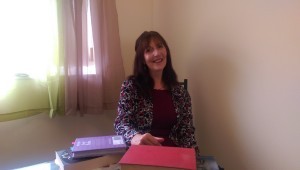 ‘A Fistful of Feathers’ author, Linda Jones, shares her thoughts with TWH on how far she’s come on her writing ‘journey’. There’s no wonder a lot’s made of having confidence in your writing; so many new authors fear sharing their work – of putting themselves ‘out there’. Linda found much-needed support when she joined a local writing group…find out just how much effect it had on her:
“I cringe whenever I cast my mind back nine years to my early attempts at writing. Far too much detail, crazy grammar (did I never listen in school?!) and exorbitant word counts… But I don’t regret a thing. Hidden somewhere in the cluttered memory of my computer is the beginning of my writing ‘apprenticeship’. Hours of work and hundreds of pages, all of which I poured heart and mind into. I tapped away, escaping the daily grind and pain, and without even noticing, I slowly learned the art of storytelling.
And I read. I consumed novels until my eyes ached. I tried every genre, many different authors, desperately searching for the ‘right way’ to write. I read ‘how to’ books, of course, but gave up before I reached halfway – that’s just not the way I learn.
Why didn’t I seek out a group or help sooner? Feeling ill had a lot to do with it, as did finding a group that a) didn’t cost much (I’d had to leave my job because of my ill-health), and b) was easy to get to.
 I couldn’t get rid of the little voice chipping away at my confidence, telling me how rubbish I was. As for sending my work off to be critiqued, that was way beyond my means.
In 2012, I heard of a small writing group that was starting up in Doncaster, led by the wonderful Ray Hearne. It was free to attend, met just once a month, and it was on an evening, which was perfect because I’d have the car. No trips on buses or trains where I was at risk of picking up yet more infections. I began to believe: I could survive this…
It’s hard to describe the impact those meetings had – and still have (just because my first novel has been picked up by a Yorkshire-based independent, it certainly doesn’t mean I can stop learning!). The group instilled in all of us the freedom to write. This may sound exactly what you’d expect from a writers’ group, but it’s not always the case, unfortunately. It was incredibly freeing to simply and effortlessly pour our thoughts onto paper, without having to shoehorn them into structured themes, or having to endure compulsory writing exercises, or having uninspiring homework enforced upon us – all in the name of ‘creative writing’. It happens.
Throughout the previous two years I’d been stuck in a room, tapping away, trying to write my novel, with no real idea of whether it was good, bad, or indifferent. There I was, with a bunch of poets, song and prose writers, even another children’s author, who were all buzzing with creativity. No one judged – everyone was just focused on improving.
I left my prose for a while and dived in, head first. I vividly recall reading my very first piece to the group. I felt positively sick. But, eighteen months later, I’d turned that rough poem into a fifteen-minute play and subsequent performance.
How could I not improve, surrounded by so many talented people? And the poetry… I may never be the greatest poet but I have come to appreciate the sheer beauty of words. And, surprisingly, poetry has changed the way I write prose. It’s become sharper, edgier, and (thankfully, says my publisher) definitely shorter.
On that note, I’ll leave you. But not before I reiterate how much better my writing became after I surrounded myself with fellow creatives and inspirational lovers of language. Because no man – or author – is an island.
The post I thought I was ‘there’, yet in reality, I’d only just set off… appeared first on The Writing Hall.