
Herman Bouwer's Blog
November 1, 2026
The God Who Does Not Change
Malachi 3:6 BSB
(6) Because I, the LORD, do not change, you descendants of Jacob have not been destroyed.
A DRAW FROM THE WELLWhen life changes around us, the character of God remains steady. His faithfulness is our comfort and His invitation to return.
DRAWING FROM THE WELLEvery one of us knows what it is to live through change. Circumstances shift, relationships enter new seasons, plans are interrupted, and questions arise that we did not expect to face. In such times, the heart longs for something firm beneath its feet. Malachi 3:6 directs us to the unchanging character of God.
This is more than a comforting thought. It is a declaration about the God who remains faithful to His covenant, true to His word, and holy in all His ways. Because He does not change, His people can return to Him, receive His mercy, and continue walking in obedience even when life around them is unsettled.
1. THE LORD REMAINS CONSTANT WHEN LIFE CHANGESMalachi speaks of the Lord’s own character. The people and their circumstances could change, but God did not become less holy, less truthful, or less faithful. His commitments were not governed by the latest pressure or by the shifting conduct of those around Him.
God’s unchanging nature does not mean that He is distant or inactive. Scripture shows Him acting, speaking, guiding, correcting, and responding to people. What remains constant is who He is: His character does not become unreliable, and His purposes are not swept away by human uncertainty.
The Bible carries this truth into the life of Christ:
Hebrews 13:8 BSB
(8) Jesus Christ is the same yesterday and today and forever.
Our confidence rests in the Lord Himself. We may not know how every circumstance will unfold, but we can trust that Christ is not changed by the season we are facing. His truth remains dependable, and His presence remains a sure place of refuge.
2. HIS CONSTANCY IS THE GROUND OF MERCYMalachi’s words were addressed to the descendants of Jacob, a people with a long history of turning aside from God’s commands. The verse does not say that their choices did not matter. It says that they had not been utterly consumed. The Lord’s covenant faithfulness had preserved a people who needed to return to Him.
The next verse makes that invitation plain: “Return to Me, and I will return to you,” says the LORD of Hosts (Malachi 3:7 BSB). God’s constancy is therefore both comfort and invitation. He remains faithful, and He calls His people back into faithful relationship.
We should not use mercy as permission to remain unchanged. The God who receives the repentant is also the God who exposes what harms us and calls us to walk in His ways. His correction does not contradict His love; it flows from His faithful desire for His people to live in covenant with Him.
When we have wandered, we can come to Him honestly. We do not have to hide our failure or pretend that we have no need of correction. The unchanging God is not unreliable or capricious; His mercy gives us hope to repent, and His holiness gives direction to the life we are called to live.
3. GOD’S FAITHFULNESS IS NOT A PROMISE OF AN UNCHANGING LIFEMalachi 3:6 does not promise that every situation will stay the same or that believers will never face grief, opposition, illness, loss, or uncertainty. It points us to the Lord who remains God through every season. Our confidence is not that the ground around us will never move, but that the character of God is not altered by the movement.
James describes God as the Father of the heavenly lights, “with whom there is no change or shifting shadow” (James 1:17 BSB). His goodness is not seasonal. We can bring Him our honest questions without imagining that He has become unfaithful, and we can receive His guidance without demanding that every answer arrive at once.
Because God is constant, we can face reality without pretending that everything is easy. We can grieve what has changed, seek help where it is needed, and still trust the Lord whose presence and truth remain dependable. Faith does not require us to deny pain. It invites us to bring pain into the presence of the One who remains faithful.
4. THE UNCHANGING GOD GIVES US A STEADY WAY FORWARDWhen change unsettles us, we can return to Scripture and ask what faithfulness looks like in the season we are actually living. Sometimes the next step is to repent. Sometimes it is to forgive, ask for counsel, keep a promise, wait patiently, or make a necessary change with wisdom. Trust is not passivity; it is choosing to respond to God rather than being ruled by fear.
The wellside image invites us to pause long enough to draw from what is true. The water may ripple when the surface is disturbed, but a passing disturbance does not redefine the source. In the same way, the changes around us do not redefine the Lord. We can bring Him our fears, our failures, and our questions, and allow His Word to steady our hearts.
God’s faithfulness also shapes the way we treat one another. Because He is faithful, we can be people of integrity: truthful in our words, dependable in our commitments, humble enough to receive correction, and willing to extend mercy. We cannot control every change, but we can choose a faithful response in the middle of it.
PRACTICAL APPLICATIONWhen you face change or uncertainty, take a quiet moment to name what has changed and what you are feeling. Then read Malachi 3:6 slowly. Ask the Lord to show you one response that reflects trust in His character. If you need to return to Him, do so honestly. If you need wisdom, seek it through Scripture, prayer, and mature counsel. Then take the next obedient step without demanding that you first see the whole road.
QUESTIONS FOR REFLECTIONWhat change or uncertainty is weighing most heavily on my heart today?How does Malachi 3:6 help me distinguish God’s unchanging character from my changing circumstances?Is there an area where the Lord is calling me to return, repent, forgive, or obey?What faithful step can I take today while trusting God with what I cannot control?PRAYERLord, You do not change. When life feels unsettled, steady my heart in Your faithful character. Thank You that Your mercy has not failed and that You call me to return when I have wandered. Search me, correct me, and lead me in Your truth. Help me face change honestly without giving myself over to fear. Teach me to walk in integrity, extend mercy to others, and take the next step of obedience. I place what I cannot control in Your hands and choose to trust You. In Jesus’ name, amen.
A FINAL DRAW FROM THE WELLA DRAW FROM THE WELLThe ground beneath us may shift, but the character of God does not. His mercy is steady, His truth is sure, and His call to return remains open. Draw from that truth, and take your next faithful step.
Continue exploring Meditations from the Well and browse recent articles from the Desk of Herman.
— Herman Bouwer
The 777th Precinct Wellside Dialogue
The post The God Who Does Not Change first appeared on THE 777th PRECINCT.


October 29, 2026
WHAT ARE THE CHARACTERISTICS OF TRUTH? (A BIBLICAL STUDY) PART 3
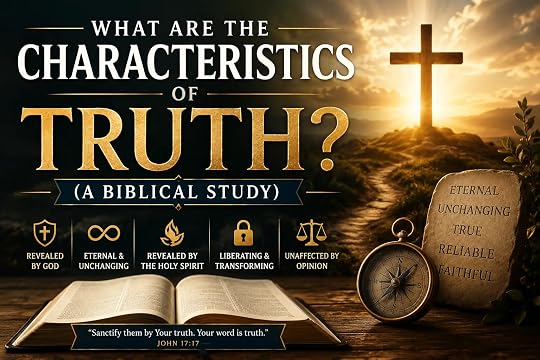
Another powerful characteristic of truth is that truth is therapeutic and liberating. Truth does not merely inform the mind—it restores, heals, delivers, and transforms the inner man.
Many people fear truth because truth confronts hidden things, exposes sin, and challenges deception. Yet according to Scripture, truth is not given to destroy humanity but to bring humanity into freedom and restoration.
John 8:32 NKJV
(32) And you shall know the truth, and the truth shall make you free.”
This statement reveals that freedom is directly connected to revelation. Bondage survives where deception remains, but when truth enters the heart, chains begin to break.
Truth is therefore both:
corrective in nature,and restorative in effect.Truth Exposes Bondage
Before truth can heal, it must first expose what is hidden.
Truth reveals:
false beliefs,sinful patterns,spiritual deception,wounded identities,and destructive strongholds.This is why truth often makes people uncomfortable before it makes them free.
John 3:19 NKJV
(19) And this is the condemnation, that the light has come into the world, and men loved darkness rather than light, because their deeds were evil.
Truth functions like light entering a dark room. Hidden things become visible.
The purpose of this exposure is not condemnation for its own sake, but liberation. God exposes bondage because He desires healing and restoration.
Many people attempt to find freedom while avoiding truth, but biblical freedom can never exist apart from truth.
Truth Breaks the Power of Lies
Satan’s kingdom operates through deception.
John 8:44 NKJV
(44) You are of your father the devil, and the desires of your father you want to do. He was a murderer from the beginning, and does not stand in the truth, because there is no truth in him. When he speaks a lie, he speaks from his own resources, for he is a liar and the father of it.
Many forms of bondage are sustained by lies:
lies about God,lies about identity,lies about worth,lies about sin,lies about fear,and lies about hopelessness.The enemy seeks to imprison people through falsehood and distorted thinking. But when truth is revealed, lies lose their power.
A believer who truly receives God’s truth begins to recognize:
 FINDING YOUR TRUE IDENTITY AS A SON OF GOD
who God really is,what Christ accomplished,and who they are in Christ.
The moment truth enters, deception begins to collapse.
Romans 12:2 NKJV
(2) And do not be conformed to this world, but be transformed by the renewing of your mind, that you may prove what is that good and acceptable and perfect will of God.
Transformation begins when the mind is renewed by truth.
Truth Restores Identity
One of the greatest areas where truth brings healing is in the restoration of identity.
Sin distorts identity.Wounds distort identity.
Rejection distorts identity.
The world distorts identity.
But truth restores people to the reality of who God created them to be.
Jesus not only forgives sinners—He restores them.
The believer learns through truth:
they are loved by God,redeemed by Christ,accepted in the Beloved,and called according to divine purpose.2 Corinthians 5:17 NKJV
(17) Therefore, if anyone is in Christ, he is a new creation; old things have passed away; behold, all things have become new.
Truth destroys false identities rooted in:
shame,condemnation,fear,rejection,and failure.When people encounter the truth of Christ, they begin to see themselves through God’s perspective instead of through the lens of pain or sin.
Truth Heals the Inner Man
Truth is deeply therapeutic because it ministers healing to the heart, mind, and soul.
Psalms 23:3 NKJV
(3) He restores my soul; He leads me in the paths of righteousness For His name’s sake.
God restores the inner life through truth.
Many emotional and spiritual struggles are connected to distorted thinking, hidden wounds, unresolved deception, and false conclusions formed through painful experiences.
The Word of God penetrates these areas.
Hebrews 4:12 NKJV
(12) For the word of God is living and powerful, and sharper than any two-edged sword, piercing even to the division of soul and spirit, and of joints and marrow, and is a discerner of the thoughts and intents of the heart.
Truth reaches places human wisdom cannot reach. It discerns:
motives,thoughts,intentions,fears,and hidden conditions of the heart.Where truth is embraced, healing begins.
Truth Clarifies Purpose
Another liberating effect of truth is that it brings clarity to life’s purpose.
Without truth, people wander through life:
confused,spiritually disconnected,and driven by worldly definitions of success and identity.Truth reorients the believer toward God’s eternal purpose.
John 10:10 NKJV
(10) The thief does not come except to steal, and to kill, and to destroy. I have come that they may have life, and that they may have it more abundantly.
Truth reveals:
why we exist,who we belong to,and how we are called to live.Many people live in bondage simply because they do not understand their God-given purpose.
Truth removes confusion and aligns life with the will of God.
Truth Produces Genuine Freedom
Biblical freedom is not the freedom to live independently from God—it is the freedom to live as God intended.
Modern culture often defines freedom as:
self-rule,unrestricted desire,or independence from moral boundaries.But Scripture reveals that true freedom is found in surrender to truth.
Sin promises freedom but produces bondage.
Truth may confront the flesh initially, but it ultimately produces liberty.
John 8:36 NKJV
(36) Therefore if the Son makes you free, you shall be free indeed.
Real freedom is found in Christ because Christ is Truth incarnate.
Truth Sanctifies and Transforms
Truth does not merely free believers once—it continually sanctifies and transforms them.
John 17:17 NKJV
(17) Sanctify them by Your truth. Your word is truth.
The ongoing work of truth in the believer includes:
cleansing,renewing,maturing,correcting,and conforming believers into Christ’s image.Where truth is continually received:
spiritual growth occurs,maturity develops,discernment increases,and holiness deepens.Where Truth Is Received
Where truth is genuinely embraced:
Lies lose powerBondage is brokenIdentity is restoredPurpose is clarifiedHealing beginsDiscernment increasesFreedom becomes realityTruth does not merely change information—it changes lives.
Truth is therapeutic and liberating because it reveals reality as God sees it. It exposes deception, heals the inner man, restores identity, renews the mind, and leads believers into genuine freedom.
The truth of God is not harsh oppression—it is divine liberation.
Where truth enters:
darkness loses ground,deception is exposed,healing begins,and freedom becomes possible.Ultimately, Jesus Christ Himself is the highest expression of this liberating truth, for all true freedom is found in Him.
TRUTH REQUIRES HONESTY AND HUMILITY Living your Life from a Culture of Brokenness
A defining characteristic of truth is that it requires honesty and humility in the one who receives it. Truth is not merely external information to be processed; it is a spiritual reality that demands an internal posture of openness before God. Where pride exists, truth is resisted. Where self-deception is embraced, truth is rejected.
Truth cannot coexist with a heart that is committed to maintaining illusion, justification, or denial.
John 1:8 NKJV
(8) He was not that Light, but was sent to bear witness of that Light.
This verse reveals a sobering spiritual principle: self-deception is evidence that truth has not yet taken root within the heart. A person may claim to know truth intellectually, but if truth has not produced honesty within, it remains unfruitful in experience.
Truth Breaks Self-Deception
One of the first works of truth is exposure. Truth reveals what is real—not what we prefer to believe.
Self-deception often operates through:
denial of sin,justification of wrong behavior,spiritual pride,comparison with others,and selective obedience to God’s Word.But truth confronts all of these distortions.
When God’s truth enters the heart, it brings clarity:
about who God is,about who we are,and about what must change.Truth removes the illusion that we are spiritually healthy when we are not, or that we are righteous by our own effort when we are dependent on grace.
Truth Demands Humility Before God
Humility is the posture that allows truth to be received. Pride, on the other hand, resists correction and rejects divine instruction.
James 4:6 NKJV
(6) But He gives more grace. Therefore He says: “GOD RESISTS THE PROUD, BUT GIVES GRACE TO THE HUMBLE.”
To receive truth is to accept God’s assessment over our own perception. This requires surrendering:
personal opinions,emotional defenses,and self-justification.Humility says:
“Lord, Your Word is right even when I am wrong.”
Without humility, truth is not rejected because it is unclear, but because it is confronting.
Truth Reorders Self-Perception
Truth is not only something we believe—it is something that transforms how we see ourselves.
When truth enters the heart, it redefines identity in two ways:
It Removes False Identity
Truth dismantles identities built on:
sin,failure,trauma,pride,or human achievement.It Establishes God-Given Identity
Truth reveals who we are in Christ:
forgiven,redeemed,loved,called,and transformed.Romans 12:3 NKJV
(3) For I say, through the grace given to me, to everyone who is among you, not to think of himself more highly than he ought to think, but to think soberly, as God has dealt to each one a measure of faith.
Truth brings balance to self-perception. It humbles the proud and heals the broken.
Truth Leads to Repentance and Alignment
When truth is received with honesty and humility, it produces repentance—a turning away from deception and a turning toward God.
John 17:17 NKJV
(17) Sanctify them by Your truth. Your word is truth.
Sanctification requires alignment. Truth does not merely inform the mind; it reshapes the life.
Where truth is embraced:
sin is confronted,repentance becomes natural,obedience becomes possible,and spiritual growth begins.Truth does not leave a person unchanged. It compels alignment with divine reality.
Truth Requires Transparency Before God
True spirituality is built on openness before God. Nothing hidden can remain healthy in the presence of truth.
David models this when he prays:
Psalms 139:23 NKJV
(23) Search me, O God, and know my heart; Try me, and know my anxieties;
This is the language of someone who invites truth into every hidden area.
Truth flourishes where there is:
willingness to be examined,readiness to be corrected,and desire to be transformed.But truth is resisted where there is secrecy, pride, or fear of exposure.
Truth Produces Spiritual Integrity
Integrity means wholeness—where belief and behavior align. Truth restores integrity by removing internal contradiction.
John 8:31-32 NKJV
(31) Then Jesus said to those Jews who believed Him, “If you abide in My word, you are My disciples indeed.
(32) And you shall know the truth, and the truth shall make you free.”
Abiding in truth produces consistency between:
what we believe,what we say,and how we live.Without honesty and humility, truth becomes distorted into religion or ideology. But with honesty and humility, truth becomes transformation.
CONCLUSIONTruth is not a philosophy, idea, or cultural standard. Truth is Jesus Christ Himself—revealed by the Holy Spirit, established in eternity, and active in every generation.
Truth is:
unchanging in time,unlimited by space,untouched by human opinion,and powerful enough to heal and set captives free.But truth also requires a response. It demands honesty before God and humility within the heart. Without these, truth is resisted; with these, truth transforms.
To walk in truth is to walk in Christ. To reject truth is to walk in deception.
CALL TO ACTIONToday, the invitation is clear: do not merely study truth—submit to it.
 Doctrine of Obedience
John 18:37 NKJV
(37) Pilate therefore said to Him, “Are You a king then?” Jesus answered, “You say rightly that I am a king. For this cause I was born, and for this cause I have come into the world, that I should bear witness to the truth. Everyone who is of the truth hears My voice.”
The question is not only “What is truth?” but “Am I aligned with it?”
Choose today to:
Yield to Jesus, the TruthAllow the Holy Spirit to guide youEmbrace Scripture as your foundationWalk in honesty and repentanceLive in the freedom truth bringsFor truth does not merely inform the mind—it transforms the life.
OTHER PUBLICATIONS BY THIS AUTHOR CAN BE FOUND AT:
 HERMAN BOUWER
The post WHAT ARE THE CHARACTERISTICS OF TRUTH? (A BIBLICAL STUDY) PART 3 first appeared on THE 777th PRECINCT.
October 28, 2026
Hope for Our Nations
From the Desk of Herman
Heaven’s pattern for a measured, united and restored Church—and a nation shaped by righteousness.
By Herman Bouwer
Introduction
There is hope for our nations because God has not abandoned His purpose for the Church or for the peoples of the earth. Scripture gives us a vision of a city measured according to God’s design, a people in whom He dwells, and a Kingdom whose influence reaches the nations. Revelation 21:15–16 (BSB) describes the angel measuring the holy city and its gates and walls; the city is foursquare, its width corresponding to its length. The picture points us beyond human ambition to a community ordered around God’s presence and purpose.
Administration, in the biblical sense, is not merely managing programmes or keeping an organisation functioning. It is the faithful ordering of people, gifts, resources and responsibilities under the authority of Jesus Christ. When the Church is measured by His Word, restored to unity, reformed by truth and equipped for mature service, it can bear credible witness to the nations.
This teaching develops seven connected convictions from our weekly prayer focus: God establishes His standard, brings His people into their proper measure, restores His order, heals nations, calls for righteous government, awakens people by His Word and completes His purpose through a mature Church.
1. Divine Measurement: Establishing Heaven’s StandardKey Scriptures: Zechariah 2:1–5; Amos 7:7–8; 2 Corinthians 3:18; 1 Corinthians 11:28; Ephesians 4:13; 1 Timothy 4:12; 1 Peter 1:15–16 (BSB).
In Zechariah’s vision, a man goes out with a measuring line to measure Jerusalem. God then declares that Jerusalem will expand beyond walls because of the multitude who will live there, while the Lord Himself will be its protection and glory (Zechariah 2:1–5, BSB). The vision holds together two truths: God has a design for His people, and His presence—not human control—is their true security.
For the Church, Christ is the measure. We do not measure faithfulness by popularity, numbers, influence or personal preference. The Word of God tests our doctrine, our character, our use of authority and the way we treat one another. The Spirit transforms us as we behold the glory of the Lord (2 Corinthians 3:18, BSB). God’s standard does not crush us; it calls us to repentance and forms us into the likeness of Jesus.
Leaders therefore carry a serious stewardship. Fathers and mothers in the faith are to model Christ, teach the truth and help the next generation grow into responsibility. In a healthy father–son relationship, spiritual fathers impart vision and calling without taking the place of Christ; sons mature through service, testing and obedience until they can carry responsibility themselves. Authority is expressed through humble service, truth and accountability.
Kingdom application: Let homes and churches welcome honest self-examination. Test teachings and practices by Scripture. Where the Spirit reveals a gap between our conduct and Christ’s character, respond with repentance, repair and changed practice. Leaders should make holiness visible through integrity, fairness and care for those entrusted to them.
2. Divine Equalisation: Bringing Every Member into Proper MeasureKey Scriptures: Isaiah 40:4–5; Galatians 3:28; Ephesians 2:14–16; Acts 4:32–35; 1 Corinthians 12:24–25; Revelation 21:16 (BSB).
Isaiah’s picture of valleys lifted and mountains lowered announces that God prepares a way for His glory to be revealed (Isaiah 40:4–5, BSB). In the life of the Church, this challenges the pride that elevates some people and the neglect that leaves others unseen. The cross breaks down hostility and brings people near to God in one body (Ephesians 2:14–16, BSB).
Unity does not mean that every member has the same gift or assignment. Paul teaches that the body has many members, and that the parts which seem weaker are indispensable. God arranges the body so that its members care for one another (1 Corinthians 12:22–25, BSB). Equal dignity before God must therefore lead to practical honour, opportunity and mutual care.
This has consequences for how churches recognise and release ministry. Every practice should be examined by Scripture so that God-given gifts are faithfully developed and no believer is dismissed through prejudice or an untested tradition. Shared life in Acts included generosity: needs were noticed, resources were offered freely, and the community took responsibility so that people were not abandoned to lack (Acts 4:32–35, BSB).
Kingdom application: Build a culture where people are listened to, gifts are discerned and ministry is evaluated by biblical character and service. Notice who has been overlooked. Share resources with wisdom and transparency. Pursue unity without demanding sameness, and correct unequal treatment wherever it contradicts the dignity and mutual responsibility taught in Scripture.
3. Divine Reformation: Restoring the Order of Heaven in the ChurchKey Scriptures: Job 14:7–9; Ephesians 5:26; Acts 19:20; Acts 6:1–7; Isaiah 2:2–3; Acts 3:19–21 (BSB).
Job speaks of a tree that can sprout again: even a stump that appears dead may respond when it encounters water (Job 14:7–9, BSB). This image gives us language for hope when churches have experienced decline, confusion or compromise. It does not promise that every institution will simply return to its former shape. It assures us that God can bring new life where His Word is received and obeyed.
Reformation begins with God’s Word correcting us. In Acts 19, the word of the Lord grew mightily and prevailed (Acts 19:20, BSB). In Acts 6, the apostles addressed a real distribution failure, appointed trusted servants and protected the community’s commitment to prayer and the ministry of the Word. The result was growth, including the obedience of many priests to the faith (Acts 6:1–7, BSB). Spiritual renewal and practical administration belong together.
Sound doctrine must form sound relationships and trustworthy structures. Spiritual fathers help sons and daughters grow by nourishing them in truth, demonstrating obedience and gradually entrusting them with responsibility. Reformation is not a slogan or a search for novelty; it is a return to Christ’s authority that produces repentance, just practice, faithful discipleship and a church able to serve its neighbours.
Kingdom application: Ask where Scripture is being neglected, distorted or prevented from bearing fruit. Teach the whole counsel of God. Correct failures openly and fairly. Put trustworthy people into responsibility, and measure renewal by faithfulness to Christ, care for people and the lasting fruit of obedience.
4. National Restoration: Healing and Equalising South AfricaKey Scriptures: Isaiah 58:12; Isaiah 40:4–5; 2 Chronicles 7:14; Micah 6:8; Acts 17:26; Job 14:7–9 (BSB).
Isaiah calls God’s people to rebuild ancient ruins, raise foundations for generations and become repairers of broken places (Isaiah 58:12, BSB). This restoration is connected in the chapter to justice, compassion and practical care. National healing cannot be reduced to stirring words: it requires truth about what is broken and sustained work to repair it.
South Africa’s wounds include division, poverty, unequal opportunity and failures of public trust. The Church cannot solve every problem by itself, but it can embody a different way: communities where people are reconciled in Christ, resources are shared responsibly, the vulnerable are protected, and leaders are held to truth. Micah 6:8 (BSB) directs God’s people to practise justice, love mercy and walk humbly with Him.
Restoration is also generational. To raise foundations for many generations means preparing children and young people to inherit more than unresolved conflict. They need truth, education, moral courage, capable leaders and examples of service. Churches can contribute by strengthening families, equipping young disciples, serving local needs and building partnerships across divisions without surrendering the gospel.
Kingdom application: Pray for South Africa, then identify one breach in your community where faithful service can help: a family under strain, a young person needing mentorship, a neighbour in need or a local institution that deserves honest support. Pursue justice with humility, compassion and persistence. Reconciliation must include truthful listening and responsible action.
5. Governmental Administration: Establishing Righteous LeadershipKey Scriptures: 1 Timothy 2:1–2; Romans 13:1–4; Proverbs 14:34; Proverbs 18:10; Isaiah 43:2 (BSB).
Paul instructs the Church to offer prayers, petitions and thanksgiving for all people, including kings and those in authority, so that people may live peaceful and godly lives (1 Timothy 2:1–2, BSB). Intercession is part of the Church’s public responsibility. We pray for leaders because their decisions affect the lives and safety of neighbours, families and future generations.
Prayer for authority is not a blank endorsement of every decision. Scripture also calls leaders to serve justice and restrain wrongdoing (Romans 13:1–4, BSB), and it teaches that righteousness exalts a nation (Proverbs 14:34, BSB). Christians can pray, speak truth respectfully, act lawfully, insist on accountability and serve the common good. Peace and stability are strengthened when public responsibility is exercised with integrity.
Kingdom application: Pray by name for national and local leaders, including the President, government officials and councillors. Ask God to give wisdom, courage, honesty and compassion. Pray for transparent processes and peaceful elections. Encourage responsible civic participation and reject corruption, intimidation and careless speech. In church life, model the accountability and service we hope to see in public leadership.
6. Global Spiritual Awakening: Let the Fire Begin in the SouthKey Scriptures: Ezekiel 20:45–48; Acts 3:19–21; Isaiah 2:2–3; Acts 19:20 (BSB).
Ezekiel’s striking image of fire beginning in the forest of the South is a prophetic warning in its original setting, calling the hearers to take the word of the Lord seriously (Ezekiel 20:45–48, BSB). We should handle the passage with care: it is not a licence to claim that every detail is a direct prediction about modern South Africa. Yet it gives us a sobering picture of God’s word reaching outward from the south and affecting the whole land.
We can therefore pray for South Africa to become a source of gospel witness, biblical teaching and servant-hearted mission to other nations. Awakening is more than an intense meeting or a temporary surge of emotion. In Scripture, people turn to God, the Word prevails, disciples are formed and communities are changed. The Church must be renewed in truth and equipped to fulfil its assignment locally and globally.
Kingdom application: Ask God to awaken the Church first to repentance, love for Christ and obedience to His Word. Strengthen local discipleship, support faithful leaders and prepare the next generation to carry the gospel with courage and humility. Let spiritual fire be seen in holy living, reconciliation, compassion and witness.
7. Completion of God’s Purpose: Preparing a Mature ChurchKey Scriptures: Ephesians 4:11–16; Ephesians 1:22–23; Philippians 1:6; Revelation 21:16 (BSB).
Paul describes Christ giving ministry gifts to equip the saints for service, build up the body and bring believers toward unity and maturity (Ephesians 4:11–16, BSB). The aim is not to keep people dependent on a few leaders. It is for the whole body to grow, each part working properly and contributing to its health under Christ, the Head.
This maturity has a generational shape. Fathers invest in others; sons and daughters become faithful servants and, in due season, trustworthy leaders who equip others. The goal is not the preservation of a personality or institution, but the completion of Christ’s work in a people who reflect His character and advance His mission. God is faithful to finish what He begins (Philippians 1:6, BSB).
Revelation’s measured city reminds us that God’s final purpose is not disorder, rivalry or endless immaturity. He is preparing a people in whom His presence is central. Until that day, the Church administers its life under Christ’s authority, serving one another and bearing witness to the hope of His Kingdom.
Kingdom application: Equip rather than control. Give emerging leaders meaningful responsibility, sound teaching and loving accountability. Pursue unity in the faith without silencing biblical conviction. Ask whether the people you serve are becoming more Christlike, more capable of serving and more ready to pass the faith to the next generation.
Apostolic Culture: Faith Practised in the HouseholdActs 2:42–47 (BSB) describes believers devoted to the apostles’ teaching, fellowship, the breaking of bread and prayer. Their faith was shared in homes and expressed in generosity, gladness and praise. Families and house churches can recover this simple rhythm: gather regularly, read Scripture, pray together, share communion where appropriate, care for one another and speak of Christ’s goodness.
This is one way a nation is served from the ground up. When the Word forms our households, and households become communities of hospitality, prayer and practical care, the Kingdom becomes visible in ordinary life.
Reflection and EvaluationWhat standard is currently shaping the decisions and relationships in my home, church or ministry? Where must I realign with Christ and His Word?Who may be overlooked, under-resourced or prevented from using a God-given gift in our community?What practical change would bring more integrity, fairness or accountability to the way we administer ministry?Where can I help repair a breach in my neighbourhood or contribute to the wellbeing of South Africa?How am I equipping the next generation to carry responsibility with humility, sound doctrine and love for people?Conclusion: Hope Becomes a Way of LifeHope for our nations is anchored in the purposes of God and expressed through faithful obedience. The Church is called to be measured by Christ, brought into the unity of the Spirit, reformed by the Word, active in national healing, prayerful about government, alive to the mission of the gospel and committed to raising mature disciples.
We cannot command revival or complete God’s work by human strength. We can, however, repent where we have fallen short, build what God has entrusted to us, serve our neighbours, pray for those in authority and prepare the next generation. As the Word of the Lord grows and prevails, may the Church become a trustworthy witness of Christ’s hope to South Africa and the nations.
Prayer and DeclarationPrayer: Father, measure us by the life and teaching of Jesus. Search our hearts and lead us in repentance wherever we have fallen short. Unite Your Church in truth and love. Restore sound doctrine, raise up faithful servants and equip every member to serve. Heal the wounds of South Africa; give wisdom and integrity to those in authority; protect the vulnerable; and prepare the next generation to build on foundations of truth and justice. Awaken Your people to the mission of the gospel, and let Your Word grow and prevail among the nations. Complete Your work in us for the glory of Christ. Amen.
Declaration: We declare that Jesus Christ is the measure and Head of His Church. We will pursue holiness, unity, justice, faithful administration and service to our neighbours. We pray for the healing of South Africa, righteous leadership and a Church growing into the fullness of Christ. May the hope of the gospel be carried from our communities to the nations.
Scripture note: Scripture quotations and references in this teaching are from the Berean Standard Bible (BSB). Please read each passage in its surrounding context.
Herman Bouwer
From the Desk of Herman | 777th Precinct Ministries
HERMAN BOUWER
The post Hope for Our Nations first appeared on THE 777th PRECINCT.
October 26, 2026
KINGDOM RADIANCE: BECOMING THE VISIBLE EXPRESSION OF CHRIST
One of God’s greatest desires for His people is not merely that they believe in Christ, but that they become an accurate representation of Christ in the earth. The Kingdom of God advances through men and women who reflect the nature, character, wisdom, authority, and glory of Jesus Christ.
Radiance is not merely an outward glow or emotional excitement. Biblical radiance is the visible manifestation of Christ’s life within us. It is the evidence that His image is being formed in us and expressed through us.
The world is not looking for religious activity; it is searching for authentic demonstrations of Christ. The more accurately we represent Him, the more His light shines through us.
CHRIST: THE PERFECT REPRESENTATION OF GODThe writer of Hebrews reveals the true nature of Christ:
Hebrews 1:3 (NKJV)
“who being the brightness of His glory and the express image of His person, and upholding all things by the word of His power, when He had by Himself purged our sins, sat down at the right hand of the Majesty on high,”
Jesus is not merely a messenger from God; He is the exact representation of God.
Likewise, Paul declares:
Colossians 1:15 (NKJV)
“He is the image of the invisible God, the firstborn over all creation.”
The invisible God became visible through Christ. The astonishing truth of the Gospel is that Christ now desires to reveal Himself through His Body.
1 John 4:17 (NKJV)
“Love has been perfected among us in this: that we may have boldness in the day of judgment; because as He is, so are we in this world.”
Notice that Scripture does not say “as He was” but “as He is.” The Church is called to be His visible representation in the earth today. Radiance increases as representation becomes more accurate. The more we resemble Christ, the brighter His light shines through us.
INTELLIGENT LIKENESS – THINKING LIKE CHRISTThe first dimension of Christ’s image is Intelligent Likeness. This refers to the transformation of our thinking, perception, understanding, and wisdom until our minds begin to operate according to Kingdom realities rather than earthly limitations.
The Mind of Christ1 Corinthians 2:14-16 (NKJV)
“But the natural man does not receive the things of the Spirit of God, for they are foolishness to him; nor can he know them, because they are spiritually discerned.
But he who is spiritual judges all things, yet he himself is rightly judged by no one.
For ‘who has known the mind of the LORD that he may instruct Him?’ But we have the mind of Christ.”
The natural mind reasons according to human experience. The renewed mind reasons according to divine revelation. Many believers struggle because they continue to process life through natural reasoning while expecting supernatural results.
Christ thought differently:
He saw provision where others saw lack.He saw possibility where others saw impossibility.He saw sons where others saw sinners.He saw destiny where others saw failure. Renewing the MindThe transformation of the believer begins with renewed thinking.
Romans 12:2 (NKJV)
“And do not be conformed to this world, but be transformed by the renewing of your mind, that you may prove what is that good and acceptable and perfect will of God.”
When the mind is renewed:
Confusion gives way to clarity.Fear gives way to faith.Anxiety gives way to peace.Limitation gives way to Kingdom possibility.The radiance of Christ begins in the mind before it becomes visible in life.
MORAL LIKENESS – WALKING LIKE CHRISTTrue Christianity is not merely correct doctrine; it is transformed character. The second dimension of Christ’s image is Moral Likeness. This is the visible expression of Christ’s righteousness through our conduct, attitudes, relationships, and lifestyle.
Children of LightEphesians 5:8 (NKJV)
“For you were once darkness, but now you are light in the Lord. Walk as children of light.”
Notice that Paul does not merely say we have light.
He says we are light. The believer becomes a carrier of Christ’s nature and character.
Christ’s Moral Attributes: Moral likeness includes:
RighteousnessHolinessTruthFaithfulnessWisdomMercyLoveThe world measures success by achievement. God measures maturity by character.
Jesus demonstrated moral likeness perfectly:
He was truthful under pressure.He remained holy in temptation.He demonstrated compassion toward sinners.He showed faithfulness to the Father’s will. Becoming Like Him1 John 2:6 (NKJV)
“He who says he abides in Him ought himself also to walk just as He walked.”
The goal of discipleship is not merely learning about Christ but walking like Christ.
AUTHORITATIVE LIKENESS – RULING LIKE CHRISTThe Kingdom of God is not merely a belief system; it is a government. Christ not only saves us; He empowers us to represent His rule in the earth.
Christ the HeadEphesians 1:22-23 (NKJV)
“And He put all things under His feet, and gave Him to be head over all things to the church,
which is His body, the fullness of Him who fills all in all.”
Jesus is the Head. The Church is His Body. What the Head desires, the Body is meant to express.
Delegated Authority: Authoritative likeness is the ability to represent Heaven’s government on earth.
Jesus declared:
Luke 10:19 (NKJV)
“Behold, I give you the authority to trample on serpents and scorpions, and over all the power of the enemy, and nothing shall by any means hurt you.”
Believers are called to:
Enforce God’s will.Resist darkness.Release Kingdom solutions.Demonstrate spiritual authority.Establish righteousness wherever they serve.This authority is not domination over people but dominion over darkness.
GLORIOUS LIKENESS – REFLECTING THE GLORY OF CHRISTThe fourth dimension of Christ’s image is Glorious Likeness. This is the outward manifestation of inward transformation. The more Christ is formed within us, the more His glory becomes visible through us.
Transformation from Glory to Glory2 Corinthians 3:18 (NKJV)
“But we all, with unveiled face, beholding as in a mirror the glory of the Lord, are being transformed into the same image from glory to glory, just as by the Spirit of the Lord.”
Transformation is not instant. It is progressive.
The believer moves from:
Faith to faith.Grace to grace.Glory to glory.Every encounter with Christ increases our capacity to reveal Him.
Arise and ShineIsaiah 60:1-2 (NKJV)
“Arise, shine; For your light has come! And the glory of the LORD is risen upon you.
For behold, the darkness shall cover the earth, And deep darkness the people; But the LORD will arise over you, And His glory will be seen upon you.”
The darker the world becomes, the brighter the Church must shine. God’s answer to increasing darkness is increasing glory.
ETHEREAL LIKENESS – LIVING THROUGH CHRISTThe final dimension of radiance is Ethereal Likeness. This is the place where self-life decreases and Christ becomes the dominant expression of our lives. It is the ultimate goal of discipleship.
Crucified With ChristGalatians 2:20 (NKJV)
“I have been crucified with Christ; it is no longer I who live, but Christ lives in me; and the life which I now live in the flesh I live by faith in the Son of God, who loved me and gave Himself for me.”
This is more than surrender. It is identification. The believer no longer lives independently but becomes fully yielded to the life of Christ.
Hidden in GodColossians 3:3 (NKJV)
“For you died, and your life is hidden with Christ in God.”
As self decreases, Christ increases. As flesh weakens, spirit strengthens. As personal ambition diminishes, Kingdom purpose emerges. The result is a life that radiates Christ naturally.
CONCLUSION – THE PATHWAY TO KINGDOM RADIANCERadiance is not produced by talent, gifting, position, or religious activity. Radiance is the result of exact representation.
The more accurately we represent Christ:
The more we think like Him.The more we walk like Him.The more we rule like Him.The more we reflect His glory.The more we live through Him.The world is waiting for the manifestation of sons who accurately reveal the Father.
May we become a generation that carries the:
Intelligent Likeness of ChristMoral Likeness of ChristAuthoritative Likeness of ChristGlorious Likeness of ChristEthereal Likeness of ChristUntil His radiance shines through us so clearly that the world sees not merely Christians, but Christ Himself revealed in and through His people.
Romans 8:29 (NKJV)
“For whom He foreknew, He also predestined to be conformed to the image of His Son, that He might be the firstborn among many brethren.”
This is the Father’s eternal purpose: that His Son would be seen again in the earth through a people who radiate His image.
OTHER PUBLICATIONS BY THIS AUTHOR CAN BE FOUND AT:
HERMAN BOUWER
The post KINGDOM RADIANCE: BECOMING THE VISIBLE EXPRESSION OF CHRIST first appeared on THE 777th PRECINCT.
October 25, 2026
Co-Regency in the Father–Son Wineskin
Co-regency is the fruit of a father–son wineskin in which a spiritual father forms sons to carry responsibility in the ministry, vision, and calling entrusted to the house. A father does not wait until he is absent before preparing others to serve. He teaches, models, shares the work, and entrusts mature sons with genuine responsibility while he is still present to guide and encourage them. The sons, in turn, receive the vision, grow into its values, and serve alongside the father with faithfulness. Through this pattern, the work can continue and expand while Christ remains its true Head and Lord.
The Bible does not use “co-regency” as a formal title for this ministry pattern. Here it describes shared service and delegated responsibility within a spiritual family. It must never become a claim to superiority, personal ownership of people, or authority independent of Christ. The New Testament foundation is that all believers belong to Jesus and are called to serve; some are entrusted with particular leadership responsibilities for the good of the whole body.
Co-regency begins with our inheritance in ChristScripture gives every believer who is in Christ a shared inheritance. We are children of God and co-heirs with Christ. Our standing comes from God’s grace, not from appointment by a human leader or closeness to a ministry family. The promise of reigning with Christ gives hope for the future and shapes how we serve in the present.
“And if we are children, then we are heirs: heirs of God and co-heirs with Christ—if indeed we suffer with Him, so that we may also be glorified with Him.” — Romans 8:17 (BSB)
Jesus promised the overcomer a place with Him on His throne (Revelation 3:21). That promise centres on Christ’s victory and faithfulness. In this present age, God has raised believers with Christ and seated them with Him in the heavenly realms (Ephesians 2:4–6). This is a gift of grace and a spiritual position in Christ. It gives confidence for service, but it does not make any believer an independent ruler over others.
The ministry of a co-regent son is therefore stewardship. He or she serves under Christ’s authority, carries responsibility for the people and work entrusted to them, and seeks the good of the body. Co-regency connects the promise of shared reign with the practical work of building, serving, and preparing others in the Church today.
The father–son wineskin forms the co-regentA wineskin is a way of describing the relational and practical structure through which a ministry’s life is carried. In the father–son wineskin, the relationship is more than a title or a chain of command. It is a setting for spiritual formation: the son learns the father’s teaching, observes his manner of life, shares the burden of the work, and grows in the character and judgement needed to carry responsibility. The father’s aim is not to create a copy of himself, but to help the son become mature in Christ and faithful in the calling God has given him.
Paul’s relationship with Timothy gives a clear New Testament picture of this kind of formation. Paul called Timothy his beloved and faithful son in the Lord (1 Corinthians 4:17), and Timothy had closely observed Paul’s teaching and conduct (2 Timothy 3:10–11). Paul could then entrust him with work because Timothy had been formed through relationship, instruction, example, and proven service.
“But you know Timothy’s proven worth, that as a child with his father he has served with me to advance the gospel.” — Philippians 2:22 (BSB)
The words “served with me” capture the practical movement toward co-regency. Timothy was not merely given a name or a future promise; he shared the work of the gospel. He was trusted with assignments, sent to strengthen churches, and recognised as a co-worker. The father–son relationship prepared him to carry real responsibility without separating him from the gospel and the people he served.
A father imparts the vision and makes room for sons to growA spiritual father first serves the vision by embodying it. He teaches the Scriptures that shape the ministry, explains the calling and burden of the house, and demonstrates its values through his conduct. Sons need to understand not only what the ministry does, but why it exists, whom it serves, and how its work is to be carried out in a way that honours Christ. This shared spiritual DNA is formed through truth, time, example, correction, prayer, and common labour.
A father also gives sons room to grow into their own gifts. He does not require every son to carry the same assignment or express the calling in an identical way. The body has many members and many gifts (1 Corinthians 12:4–7, 12–27). One son may help govern a local congregation; another may be sent to establish a new work; others may serve through teaching, evangelism, the marketplace, administration, compassion, or practical ministry. Different functions do not mean different worth or different access to God’s love.
As sons mature, a father entrusts responsibility in measured ways. He gives them opportunities to teach, shepherd, make decisions, lead teams, and care for people. He remains available to coach and correct, while allowing the son to exercise the authority appropriate to the assignment. The father’s joy is not diminished when a son carries the work well. Like Jesus rejoicing when the disciples returned from the mission He had given them (Luke 10:17–21), a father can celebrate the fruit of a son’s faithful service.
This is how a father prepares co-regents: he teaches the vision, models its spirit, shares its burdens, recognises the son’s grace, and entrusts meaningful work. He does not keep the son permanently at the edge of the ministry while speaking only of a future inheritance. The son is formed and affirmed through faithful participation now.
A son receives the calling and becomes a faithful co-workerThe son’s response is more than admiration for the father or agreement with a ministry’s language. He must receive the teaching, understand the vision, share the burden, and demonstrate faithfulness in the work. Paul describes Timothy as a son who served with him in advancing the gospel. Timothy’s proven worth was visible in his care for the churches and his commitment to the interests of Jesus Christ (Philippians 2:19–22).
A mature son does not use delegated responsibility to compete with the father, build a private following, or claim the ministry as personal property. Nor does he remain passive and expect the father to carry every burden. He learns, serves, asks questions, receives correction, and takes responsibility for the assignment given to him. In time, he can carry the same core vision with maturity while also bringing the particular gifts and calling God has placed in his life.
Co-regency is therefore both privilege and accountability. Sons share in the ministry’s work and are accountable for how they handle people, teaching, resources, and authority. They are to be examples to the flock and faithful stewards of what has been entrusted to them (1 Peter 5:2–3; 1 Corinthians 4:1–2).
Shared responsibility should be established while the father is presentA father–son wineskin prepares the next generation before a transition becomes urgent. David’s establishment of Solomon while David was still alive offers an illustration of public preparation and orderly transfer of responsibility (1 Kings 1:28–40). That account concerns Israel’s monarchy and should not be treated as a formula that dictates every church appointment. Its useful principle is that responsibility can be shared and a successor prepared in the presence of the one who has carried the work.
In ministry, this preparation includes clear teaching about the calling, growing responsibility, open recognition of gifts, honest communication, and the congregation’s understanding of the role. A son should demonstrate sound character, humility, reliability, and sound doctrine over time (1 Timothy 3:1–7; Titus 1:5–9). A father should explain what has been entrusted and remain willing to guide the son as he grows into the work. This allows the ministry to gain continuity without confusing a title with maturity.
Some sons will continue to serve within the local congregation; others may be sent to plant or strengthen another work. A sending should be clear and honourable. The new work should carry the gospel and the ministry’s values without weakening another congregation through division or the careless transfer of its people. The father and son should pursue peace, truth, and the building up of Christ’s body (Romans 12:10, 18; Ephesians 4:1–3, 15–16).
Christlike authority protects the wineskinThe father–son wineskin can only serve God’s purpose when its authority reflects Jesus. Christ is the Head of the Church. Every father, son, pastor, and co-worker remains under His word and accountable to Him. Jesus rejected leadership that lords authority over people and taught that greatness in His kingdom is expressed through service.
“It shall not be this way among you. Instead, whoever wants to become great among you must be your servant, and whoever wants to be first among you must be your slave—just as the Son of Man did not come to be served, but to serve, and to give His life as a ransom for many.” — Matthew 20:26–28 (BSB)
Peter likewise instructs elders to shepherd willingly and eagerly, not to domineer over those entrusted to them, but to be examples to the flock (1 Peter 5:2–3). For this reason, spiritual fatherhood must not be used to demand unquestioning loyalty, silence sincere concerns, or treat a son as the father’s possession. A healthy wineskin makes room for truth, correction, mutual responsibility, and the discernment of the church. Trust grows where leadership is transparent, humble, and faithful to Scripture.
The father does not replace the Heavenly Father, and the son’s first allegiance is to Jesus. Spiritual fatherhood is a ministry of nurture and formation that points people toward Christ. Its fruit is mature believers who can serve faithfully, hear God, care for people, and build according to Scripture.
The legacy is the ministry and calling carried forwardThe goal of co-regency is not to preserve a personality or create a privileged class. It is to see the ministry and calling entrusted by God carried forward by faithful people. Paul instructed Timothy to entrust what he had learned to reliable people who would be qualified to teach others (2 Timothy 2:2). This is the pattern of spiritual legacy: truth is received, lived, entrusted, and passed on so that others may serve Christ.
A father who develops sons is not diminished when they mature. He sees the work multiplied and the calling strengthened. A son who becomes a co-regent does not cease to honour the father; he honours him by carrying the ministry faithfully, serving the people well, and remaining accountable to Christ. Together they steward a vision that is larger than either individual and belongs ultimately to God.
Every believer has a place in Christ’s body. Some are entrusted with a particular responsibility to lead, establish, or oversee a ministry, while others carry distinct callings that are equally needed. Co-regency is the mature partnership that grows when fathers prepare sons to share the ministry, vision, and calling of the house. The father forms, the son grows and serves, and both remain under the lordship of Jesus.
ConclusionCo-regency is not an idea detached from spiritual formation. It is the practical fruit of a father–son wineskin in which vision is imparted, character is formed, calling is recognised, and responsibility is shared. Fathers prepare sons while they are present; sons become faithful co-workers who carry the ministry and calling with integrity. This pattern supports continuity and growth, but its authority is always servant-hearted and accountable. Christ remains the Head, the work belongs to God, and the legacy is carried forward as more people are equipped to follow Jesus and serve His body.
Scripture referencesMatthew 20:25–28; Luke 10:17–21; Romans 8:17; Romans 12:10, 18; 1 Corinthians 4:1–2, 15–17; 1 Corinthians 12:4–7, 12–27; Ephesians 2:4–6; Ephesians 4:1–3, 15–16; Philippians 2:19–22; 1 Timothy 3:1–7; 2 Timothy 2:2; 2 Timothy 3:10–11; Titus 1:5–9; 1 Peter 5:2–3; Revelation 3:21; 1 Kings 1:28–40.
The post Co-Regency in the Father–Son Wineskin first appeared on THE 777th PRECINCT.
THE POWER OF WRITING
Preserving Truth and Passing It to Future Generations
IntroductionWriting gives a message a form that people can return to, examine and pass on. A spoken word can encourage those who hear it in the moment; a carefully prepared written record can also serve people who were not in the room and readers who come years later. In the dialogue behind this article, the speakers returned to a central conviction: teaching should be documented so that it can be studied, tested and made accessible to future generations.
This is the power of writing. It can preserve insight, clarify an argument and extend the reach of a message. But the written word also carries responsibility. Christian writing must be shaped by Scripture, humility and care for its readers. The aim is not simply to produce more pages. It is to serve people with truth that has been examined and communicated faithfully.I greatly encourage you to take the time to listen to a Dialogue presented on the Power of Writing at the ABC Africa Dialogue Platform.
1. Write to serve the messageA useful first question for any Christian writer is, “Who will this writing serve?” The transcript distinguishes between writing to promote oneself and writing from a burden to share teaching that may help others. That distinction is about the heart and purpose of the work. Scripture calls believers to use what they have received to serve one another, and to do so in a way that honours God.
1 Peter 4:10–11 BSB
Each believer is to use the gift received to serve others as a faithful steward of God’s grace, so that God may be glorified through Jesus Christ.
This does not mean that every Christian book must be given away or that earning income from writing is automatically wrong. It means that ministry writing should not be governed by self-promotion or profit alone. Writers can consider access, printing and editing costs while keeping the reader’s growth and the message’s integrity in view. A free digital copy, a printed book, a teaching manual or a carefully edited article can each serve the purpose when chosen wisely.
2. Writing preserves teaching for people who come after usWriting is a way to carry learning beyond one meeting and one generation. The Bible gives several examples of written instruction. God told Habakkuk to record the vision plainly. Israel’s king was to have a copy of the Law and read it throughout his life. Paul told Timothy to entrust the teaching he had received to reliable people who could teach others. These passages arise in different settings, yet together they show the value of recording and transmitting what must be remembered.
Habakkuk 2:2–3 BSB
The prophet is told to write the vision clearly; its fulfilment has an appointed time.
Deuteronomy 17:18–20 BSB
Israel’s king was to make a copy of the Law and read it throughout his life, learning reverence for the Lord and obedience to His commands.
2 Timothy 2:2 BSB
Paul instructs Timothy to entrust received teaching to faithful people who will be able to teach others.
A written archive can help a church remember what it has taught, see how its understanding has developed, and give future readers material they can examine for themselves. Preservation requires more than uploading files. Documents need clear titles, accurate references, reliable storage and a simple way for readers to find them. If good material is difficult to access, much of its benefit is lost.
3. Let Scripture shape the writingThe theological questions raised in the dialogue show why serious teaching needs more than a forceful voice or a memorable phrase. A writer must study the whole passage, consider its setting, compare related Scriptures and distinguish the biblical text from personal interpretation. A confident statement can still be mistaken; every writer, including experienced leaders, remains accountable to the Word of God.
Acts 17:11 BSB
The Bereans are commended for receiving the message eagerly while examining the Scriptures daily to see whether the teaching was true.
1 Thessalonians 5:21 BSB
Believers are told to test everything and hold fast to what is good.
Before publishing, check quotations and references against the chosen Bible translation. Read the verses before and after a passage. Explain when a point is an interpretation, and make room for responsible questions where Christians disagree. Peer review can reveal an unclear argument, a missing reference or a claim that needs correction. This kind of review is not a threat to faith; it is one way to handle teaching with care.
4. Write with wisdom, humility and loveChristian writing is not only about what is said; it is also about how it is said. Being a responsible writer includes the call to remain authentic and to speak truth for the season. Authenticity does not mean presenting every first impression as settled doctrine. It means being honest about what we know, careful about what we claim and willing to refine our words when study or wise counsel shows that correction is needed.
Ephesians 4:15 BSB
The church is called to speak the truth in love and to grow into Christ, who is the Head.
James 3:17 BSB
Wisdom from above is described as pure, peace-loving, considerate, submissive, full of mercy and good fruit, impartial and sincere.
These principles matter especially when writing about painful experiences, disputed doctrines or people with whom we disagree. Strong arguments should be supported with clear evidence and respectful language. Personal attacks, sweeping accusations and careless claims can distract readers from the truth a writer hopes to communicate. Writing should help people think, learn and respond to God; it should not humiliate them.
5. Develop the skill through practiceThe image of a “skillful writer” in Psalm 45:1 reminds us that writing involves preparation and craft. Not everyone will write a book, and not every believer has the same assignment. Yet many people can contribute to preserving what they have learned. A sermon, a class discussion, a testimony or a practical explanation can become the starting point for a useful written resource.
A simple process can help: record the teaching, create a transcript, correct transcription errors, arrange the ideas under clear headings, check each Scripture reference, ask a trusted reader to review the draft, and edit it for clarity. The first version does not need to be perfect. Skill grows through faithful practice, feedback and revision.
Proverbs 4:7 BSB
Wisdom is to be sought, and understanding pursued.
Digital tools can make this process more accessible. A phone can record a message; transcription software can provide a first draft; a website or e-book can make material searchable and easier to distribute. These tools assist the writer, but they do not remove the writer’s responsibility. Automated transcripts can mishear names and Bible references. AI tools can produce inaccurate explanations or invented details. Every quotation, claim and conclusion still needs human verification and sound judgment.
6. Make the truth accessibleA resource cannot help readers who cannot locate it, open it or understand how to use it.
Writers and ministries can make access easier by providing clear titles, short descriptions, readable layouts and reliable download links. Digital and printed formats can serve different readers. Translation can extend a message to people who would otherwise be excluded. The best format is the one that carries the material accurately to the people who need it.
7. Leave a faithful record for the next generationThe purpose of preserving teaching is not to make a name permanent. It is to help people remember God’s works and pass on faithful instruction. Scripture repeatedly calls one generation to tell the next about the Lord and His works. A written record can support that work when it points readers beyond the author to the truth of God.
Psalm 78:4–7 BSB
God’s people are to tell the coming generation about His works and commands, so that they may set their hope in Him and keep His instruction.
2 Timothy 3:16–17 BSB
All Scripture is God-breathed and equips the servant of God for every good work.
We should therefore write with both conviction and accountability. Preserve what has been taught, but keep it open to careful reading and correction. Organise resources so that future readers can find them. Most of all, keep Scripture as the measure of our message and the glory of Christ as its purpose.
A practical starting pointIf you carry a teaching burden, begin with what is already in your hands. Record one message. Edit one transcript. Write a clear outline. Check the Scriptures. Ask a trusted person to review it. Then place it in a format your intended readers can use. Small, faithful steps can build a valuable body of teaching over time.
PrayerFather, give us wisdom to write truthfully, clearly and with love. Help us preserve what is faithful to Your Word, correct what needs correction, and make useful teaching accessible to those who need it. Keep our motives pure and our words accountable. May our writing serve others and bring glory to Jesus Christ. Amen.
Reflection questions• What message or lesson do you believe would benefit others if it were recorded clearly?
• What Scripture study or peer review would help you communicate it faithfully?
• What format would make the material easiest for your intended readers to access?
Featured image created for this article.
The post THE POWER OF WRITING first appeared on THE 777th PRECINCT.
October 21, 2026
WHAT ARE THE CHARACTERISTICS OF TRUTH? (A BIBLICAL STUDY) PART 2
Another powerful characteristic of truth is that truth functions as a divine refuge and spiritual protection for the believer. Truth is not merely theological information or doctrinal understanding—it is a spiritual defence established by God to preserve, guard, stabilize, and protect His people in the midst of deception, fear, confusion, and spiritual warfare.
Psalms 91:4 NKJV
(4) He shall cover you with His feathers, And under His wings you shall take refuge; His truth shall be your shield and buckler.
This imagery reveals truth as a defensive weapon and protective covering. A shield and buckler were instruments of warfare used for defense against incoming attacks.
In the same way, God’s truth protects believers against:
lies,deception,false doctrine,fear,temptation,spiritual confusion,and the attacks of the enemy.Truth becomes a spiritual safeguard for the soul.
Truth Protects Against Deception
One of Satan’s primary weapons is deception.
 Doctrine of Devils
John 8:44 NKJV
(44) You are of your father the devil, and the desires of your father you want to do. He was a murderer from the beginning, and does not stand in the truth, because there is no truth in him. When he speaks a lie, he speaks from his own resources, for he is a liar and the father of it.
Satan’s kingdom operates through distortion, counterfeit truth, and deception. From the Garden of Eden until now, the enemy continually attacks God’s Word in order to mislead humanity.
His strategy remains the same:
distort truth,question God’s Word,and corrupt spiritual understanding.But truth exposes and neutralizes deception.
When believers are grounded in the truth of Scripture, they become spiritually discerning and less vulnerable to error.
Ephesians 4:14 NKJV
(14) that we should no longer be children, tossed to and fro and carried about with every wind of doctrine, by the trickery of men, in the cunning craftiness of deceitful plotting,
Truth stabilizes believers and prevents spiritual instability.
Truth Becomes a Refuge in Times of Fear and Uncertainty
The world is filled with instability:
moral confusion,social unrest,spiritual darkness,anxiety,and uncertainty about the future.In such times, truth becomes an anchor for the believer’s soul.
God’s truth reminds us:
God remains sovereign,His promises remain sure,His Word cannot fail,and His purposes remain eternal.This is why truth brings peace in the midst of chaos.
Matthew 24:35 NKJV
(35) Heaven and earth will pass away, but My words will by no means pass away.
Everything in creation may shift, but truth remains immovable.
The believer who stands upon truth possesses stability even during seasons of shaking.
Truth Preserves the Believer
Psalms 40:11 NKJV
(11) Do not withhold Your tender mercies from me, O LORD; Let Your lovingkindness and Your truth continually preserve me.
The word “preserve” carries the idea of being guarded, sustained, protected, and kept secure.
Truth preserves believers:
emotionally,spiritually,mentally,morally,and doctrinally.Without truth, people become vulnerable to:
emotional instability,compromise,spiritual deception,and destructive patterns of thinking.Truth keeps the heart aligned with God’s reality.
Truth Guards the Mind and Heart
Many battles believers face begin in the mind. Fear, confusion, discouragement, temptation, and deception often enter through false
 OVERCOMING CARNALITY
thoughts and distorted perceptions.
But truth renews and guards the mind.
Romans 12:2 NKJV
(2) And do not be conformed to this world, but be transformed by the renewing of your mind, that you may prove what is that good and acceptable and perfect will of God.
As the mind is renewed by truth:
discernment increases,fear loses its grip,lies are exposed,and spiritual clarity develops.Truth brings inner stability because it aligns the believer with God’s perspective instead of human perception.
Truth is Part of the Armor of God
Truth is foundational to spiritual warfare.
Ephesians 6:14 NKJV
(14) Stand therefore, having girded your waist with truth, having put on the breastplate of righteousness,
The belt of truth was central to a Roman soldier’s armor because it held everything else together. Spiritually, truth holds the believer’s life together.
Without truth:
faith becomes weak,discernment becomes clouded,convictions become unstable,and spiritual compromise increases.Truth strengthens the believer to stand against the schemes of the enemy.
A believer established in truth becomes spiritually difficult to deceive and spiritually difficult to move.
Truth Produces Security in Relationship With God
Truth also provides assurance in our relationship with God.
1 John 3:19 NKJV
(19) And by this we know that we are of the truth, and shall assure our hearts before Him.
Truth settles the heart because it reveals:
who God is,what Christ accomplished,and what God has promised.The believer no longer lives governed by uncertainty, confusion, or emotional instability, but by the certainty of God’s Word.
Truth creates confidence because truth rests upon the unchanging character of God.
Truth Exposes False Refuges
Humanity often seeks refuge in:
wealth,intellect,religion,human systems,relationships,or personal strength.But every refuge outside of God ultimately fails. Only truth provides eternal security.
Isaiah 28:18 NKJV
(18) Your covenant with death will be annulled, And your agreement with Sheol will not stand; When the overflowing scourge passes through, Then you will be trampled down by it.
Immediately afterward, God speaks of laying a sure foundation stone in Zion—a prophetic picture of Christ. Jesus Himself is the believer’s ultimate refuge because He is Truth incarnate.
Truth is far more than information—it is divine protection. God’s truth shields, preserves, stabilizes, and guards the believer against deception, fear, confusion, and spiritual destruction.
In a world filled with instability and lies, truth becomes:
a refuge for the soul,a shield against deception,an anchor in difficult seasons,and a foundation that cannot be shaken.Those who abide in truth remain spiritually preserved because they are hidden in Christ, who is Himself the fullness of truth.
TRUTH IS UNAFFECTED BY SPACE AND TIMEOne of the most powerful characteristics of divine truth is that it is completely unaffected by space and time. Human philosophies, ideologies, cultural values, and societal norms constantly shift from one generation to another, but the truth of God remains eternally fixed, unchanging, and absolute.
Truth does not evolve with civilization, adapt to cultural pressure, or weaken with age. Because truth originates from the eternal nature of God, it possesses the same unchanging and everlasting character.
Truth Is Not Limited by Space
Psalms 108:4 NKJV
(4) For Your mercy is great above the heavens, And Your truth reaches to the clouds.
This verse reveals the limitless scope of God’s truth. Truth is not confined to:
geographical boundaries,nations,political systems,languages,cultures,or human institutions.God’s truth transcends earthly limitations because it governs all creation.
Whether acknowledged or rejected by humanity, truth remains universally established by God Himself.
The heavens, the earth, natural laws, moral laws, and spiritual realities all operate under divine truth because truth originates from the Creator of all things.
Psalms 119:142 NKJV
(142) Your righteousness is an everlasting righteousness, And Your law is truth.
This means truth is not merely a local or cultural construct—it is universal reality as defined by God.
Truth Governs All Creation
Creation itself operates according to divine order and truth.
The universe functions with precision because God established creation through His Word.
Psalms 33:9 NKJV
(9) For He spoke, and it was done; He commanded, and it stood fast.
God’s truth sustains:
physical laws,spiritual laws,moral order,and eternal realities.Humanity may rebel against truth, deny truth, or distort truth, but no one can overthrow it.
Truth remains established whether men believe it or not.
Romans 3:4 NKJV
(4) Certainly not! Indeed, let God be true but every man a liar. As it is written: “THAT YOU MAY BE JUSTIFIED IN YOUR WORDS, AND MAY OVERCOME WHEN YOU ARE JUDGED.”
This means divine truth is not validated by human agreement. Truth stands independently because its source is God Himself.
Truth Is Not Limited by Time
Another defining characteristic of truth is its eternal nature.
Human opinions change with generations, but truth remains constant throughout history.
Hebrews 13:8 NKJV
(8) Jesus Christ is the same yesterday, today, and forever.
Because Jesus is Truth (John 14:6), truth itself remains eternally consistent.
John 14:6 NKJV
(6) Jesus said to him, “I am the way, the truth, and the life. No one comes to the Father except through Me.
The same Christ:
who spoke to Abraham,who delivered Israel,who walked in Galilee,who died and rose again,and who reigns today,remains unchanged forever.
This means:
truth does not become outdated,righteousness does not expire,holiness does not weaken,and God’s standards do not evolve with culture.God’s Truth Endures Through Every Generation
The psalmist repeatedly emphasizes the enduring nature of God’s truth.
Psalms 100:5 NKJV
(5) For the LORD is good; His mercy is everlasting, And His truth endures to all generations.
And again:
Psalms 117:2 NKJV
(2) For His merciful kindness is great toward us, And the truth of the LORD endures forever. Praise the LORD!
This means every generation is accountable to the same eternal truth.
Although societies change:
truth remains the same,sin remains sin,righteousness remains righteousness,and God’s Word remains authoritative.Modern culture often attempts to redefine morality, identity, and spiritual reality, but no generation possesses authority to alter divine truth.
Truth existed before humanity and will remain after human systems collapse.
Truth Does Not Evolve or Expire
One of the defining marks of human philosophy is constant revision. Human knowledge continually changes because human understanding is limited and imperfect.
But God’s truth never requires correction, adjustment, or improvement.
Isaiah 40:8 NKJV
(8) The grass withers, the flower fades, But the word of our God stands forever.”
The opinions of men fade like grass, but truth remains eternally established.
This is critically important because believers live in a world where:
moral standards shift,cultural values fluctuate,ideologies rise and fall,and truth is often treated as subjective.Yet Scripture teaches that truth is absolute because God Himself is absolute.
Truth is not created by society—it is revealed by God.
Truth Provides Stability in an Unstable World
Because truth is eternal and unchanging, it becomes an anchor for the believer. In uncertain times, believers can stand confidently upon the permanence of God’s truth.
Matthew 24:35 NKJV
(35) Heaven and earth will pass away, but My words will by no means pass away.
Everything earthly is temporary:
governments,economies,civilizations,philosophies,and human achievements.But truth remains.
This gives the believer:
spiritual stability,confidence,discernment,and enduring hope.When culture shifts, truth does not shift with it.
Truth Reveals the Eternal Nature of God
 THE FATHERHEART OF GOD
The permanence of truth ultimately reveals the eternal character of God Himself.
God does not change because:
His nature is perfect,His wisdom is complete,and His authority is absolute.Malachi 3:6 NKJV
(6) “For I am the LORD, I do not change; Therefore you are not consumed, O sons of Jacob.
Since truth flows from God’s nature, truth also remains unchanging.
This distinguishes divine truth from human reasoning. Human ideas evolve because humanity is limited, but God’s truth remains eternally perfect.
Truth is unaffected by space and time. It transcends nations, cultures, philosophies, and generations because it originates from the eternal God.
God’s truth:
governs all creation,remains unchanged through every age,endures forever,and stands independent of human opinion.Though societies shift and cultures redefine morality, truth remains eternally
established in Jesus Christ and in the Word of God. What God declared true thousands of years ago remains true today and will remain true forever.
TRUTH IS NOT CONTROLLED BY HUMAN OPINIONAnother defining characteristic of biblical truth is that truth exists independently of human opinion, approval, or acceptance. Truth does not become true because people agree with it, nor does it become false because people reject it.
Humanity does not create truth—God reveals truth.
2 Corinthians 13:8 NKJV
(8) For we can do nothing against the truth, but for the truth.
This powerful statement reveals the unstoppable and invincible nature of truth. Men may resist truth, suppress truth, distort truth, or oppose truth, but they cannot overthrow it. Ultimately, every attempt to fight against truth only serves to confirm and vindicate it.
Truth stands above:
public opinion,political systems,cultural trends,intellectual movements,and human emotions.Truth remains truth even when the majority rejects it.
Truth Is Established by God, Not Humanity
In modern society, truth is often treated as something subjective and personal—as though each individual can create their own version of reality. But Scripture presents truth as absolute because it originates from God Himself.
God alone defines:
righteousness,morality,justice,holiness,and spiritual reality.Psalms 119:89 NKJV
(89) Forever, O LORD, Your word is settled in heaven.
Notice that God’s truth is already settled in heaven before humanity debates it on earth.
This means:
truth is not revised by culture,truth is not updated by generations,and truth is not altered by popular consensus.Human opinion fluctuates constantly, but divine truth remains eternally established.
Majority Opinion Cannot Change Truth
Throughout Scripture, the majority was often wrong.
In Noah’s generation, nearly the entire world rejected God’s warning, yet the flood still came.
In Elijah’s day, the majority followed Baal, but truth remained with God’s prophet.
When Jesus walked the earth, crowds rejected Him, religious leaders opposed Him, and political authorities crucified Him—yet He remained the Truth.
This demonstrates an important spiritual principle:
truth is not determined by numbers,popularity does not validate doctrine,and public acceptance does not define righteousness.Matthew 7:13 NKJV
(13) “Enter by the narrow gate; for wide is the gate and broad is the way that leads to destruction, and there are many who go in by it.
Truth has never depended upon majority agreement.
Human Opinion Is Limited and Fallen
One reason human opinion cannot govern truth is because humanity itself is fallen and limited.
Proverbs 14:12 NKJV
(12) There is a way that seems right to a man, But its end is the way of death.
Human reasoning apart from God is:
incomplete,corrupted by sin,influenced by pride,and often blinded spiritually.What people “feel” to be true is not necessarily truth.
Emotions change. Culture changes. Human perspectives change. But God’s truth remains constant.
This is why believers are commanded to submit their thinking to God’s Word rather than shaping God’s Word around personal preference.
Truth Judges Humanity
Modern culture often attempts to place humanity in the position of judging truth, but Scripture teaches the opposite: truth judges humanity.
John 12:48 NKJV
(48) He who rejects Me, and does not receive My words, has that which judges him—the word that I have spoken will judge him in the last day.
The Word of God becomes the eternal standard by which:
beliefs,motives,actions,and lives are measured.Human beings do not sit in authority over truth; truth sits in authority over humanity.
This is why truth often confronts pride. Fallen man prefers a truth he can control, redefine, or manipulate. But divine truth confronts human rebellion and demands repentance.
Truth Cannot Be Destroyed
Paul’s statement in 2 Corinthians 13:8 reveals another profound principle:
2 Corinthians 13:8 NKJV
(8) For we can do nothing against the truth, but for the truth.
History repeatedly proves this reality.
Empires have attempted to suppress truth.
Governments have persecuted truth.
False religions have opposed truth.
Critics have mocked truth.
Yet truth continues to stand.
The more truth is attacked, the more it ultimately becomes vindicated.
Why?
Because truth is sustained by God Himself.
Isaiah 54:17 NKJV
(17) No weapon formed against you shall prosper, And every tongue which rises against you in judgment You shall condemn. This is the heritage of the servants of the LORD, And their righteousness is from Me,” Says the LORD.
This principle applies not only to believers, but also to the truth they stand upon.
Truth is indestructible because its source is eternal.
Truth Exposes the Frailty of Human Wisdom
Human wisdom often exalts itself against divine truth.
Romans 1:22 NKJV
(22) Professing to be wise, they became fools,
When human opinion rejects God’s truth, society inevitably descends into:
confusion,moral corruption,spiritual blindness,and deception.This is evident throughout biblical history and human civilization.
Whenever humanity abandons divine truth, disorder follows. Truth is therefore not restrictive—it is protective. God’s truth establishes order, righteousness, and life.
Truth Ultimately Prevails
One of the great assurances of Scripture is that truth will ultimately triumph.
Jesus declared:
John 8:32 NKJV
(32) And you shall know the truth, and the truth shall make you free.”
No matter how much deception spreads in the world, truth remains victorious because God Himself is truth.
At the return of Christ:
every lie will be exposed,every hidden thing revealed,every false system judged,and truth fully vindicated before all creation.Philippians 2:9 NKJV
(9) Therefore God also has highly exalted Him and given Him the name which is above every name,
One day every knee will bow before Jesus Christ, who is the fullness of truth incarnate.
Truth is not controlled by human opinion. It exists independently of human acceptance because its source is God Himself.
Humanity may:
resist truth,deny truth,distort truth,or oppose truth,but no one can overthrow it.
Truth stands eternal, absolute, and victorious over every human ideology and every cultural trend. Ultimately, truth judges humanity—not humanity judging truth.
WE WILL PRESENT PART 3 AND THE LAST INSTALLMENT OF THIS SERIES IN THE NEXT BLOG.OTHER PUBLICATIONS BY THIS AUTHOR CAN BE FOUND AT:
HERMAN BOUWER
The post WHAT ARE THE CHARACTERISTICS OF TRUTH? (A BIBLICAL STUDY) PART 2 first appeared on THE 777th PRECINCT.
October 19, 2026
THE ETHICAL INTEGRITY STRUGGLE WITHIN MAN
Every person carries an inner struggle. We wrestle with what we think, what we feel, what we do, what society expects from us, what family and tradition have taught us, and what our memories and past experiences have shaped within us. Yet, in the middle of all these inward battles, we are still expected to function normally in society.
The challenge is that what is “normal” for one person may not be normal for another. This often leads to differences of opinion, misunderstandings, conflict, and even broken relationships.
Scripture reminds us that the battle inside man is real:
Romans 7:19 NKJV
(19) For the good that I will to do, I do not do; but the evil I will not to do, that I practice.
THE EXPECTATION OF INTEGRITYWe often expect educated, qualified, and respected people to be pillars of society. We assume that a person with degrees, status, registration,
 PRACTICAL RIGHTEOUSNESS
or influence will naturally make ethical decisions. However, education does not automatically produce integrity.
Every person is still human. Every person has a personal story, private wounds, past experiences, and inner battles that have shaped their path. Many strive to outshine others and reach the highest levels of success, but the question remains:
Can our integrity sustain us throughout the journey?
Integrity means adhering to moral and ethical principles. It is honesty, soundness of character, and consistency in doing what is right—even when no one is watching.
Proverbs 11:3 NKJV
(3) The integrity of the upright will guide them, But the perversity of the unfaithful will destroy them.
Honesty is not only about being truthful with others. It also means being truthful with yourself.
THE BROKEN IMAGE OF FATHERHOOD
THE FATHERHEART OF GOD
Many ethical struggles are rooted deeper than behaviour. They come from broken identity. Man often stems from a broken image of fatherhood, which produces what can be called an orphan mentality.
An orphan can be defined as a person existing in the absence of one or both parents. This absence may be physical, emotional, spiritual, or relational. Time spent with both parents is important for creating bonds, security, emotional strength, and healthy relationships in adulthood.
When this foundation is absent or damaged, an orphan mentality can develop. This mentality can shape a person’s value system, emotional outlook, relationships, and even their integrity.
John 14:18 NKJV
(18) I will not leave you orphans; I will come to you.
God’s desire is not for people to live as orphans, but as sons and daughters who know they are loved, accepted, corrected, and secure in Him.
SIGNS OF AN ORPHAN MENTALITYAn orphan mentality often causes a person to live in survival mode. Such a person may constantly feel the need to provide for themselves, protect themselves, hoard resources, fight for recognition, and seek position.
This mindset often produces excessive independence and self-reliance. The person struggles to trust others, submit to healthy authority, or do what is right when it appears to threaten their security.
An orphan mentality may show itself in the following ways:
Living for praise, approval, and acceptance from people.Striving to impress others.Comparing oneself with others and feeling not good enough.Seeking counterfeit affections to hide insecurity.Competing with others because of jealousy.Exposing or accusing others to look better.Distrusting authority.Resisting correction.Becoming easily offended.Fighting for personal advantage.Allowing the past to control the present and future.Such people often “live yesterday tomorrow.” Their past continues to guide, cloud, and control how they see themselves and how they respond to others.
Isaiah 43:18-19 NKJV
(18) “Do not remember the former things, Nor consider the things of old.
(19) Behold, I will do a new thing, Now it shall spring forth; Shall you not know it? I will even make a road in the wilderness And rivers in the desert.
FROM ORPHANHOOD TO WHOLENESSFINDING YOUR TRUE IDENTITY AS A SON OF GODOnce an orphan mentality is recognized, it can be confronted and healed. A person must take stock of what they think, what they feel, what they do, what they believe, what they fear, and how past experiences have shaped their decisions.
Healing begins when we stop living yesterday tomorrow.
Romans 12:2 NKJV
(2) And do not be conformed to this world, but be transformed by the renewing of your mind, that you may prove what is that good and acceptable and perfect will of God.
The renewing of the mind is essential. A person cannot live ethically if their inner world remains unhealed, unexamined, and uncontrolled.
DEVELOPING EMOTIONAL INTELLIGENCEOne of the keys to ethical growth is emotional intelligence. This is the ability to be aware of your emotions, control them, express them properly, and understand the emotions of others.
A person with emotional intelligence becomes self-aware. They recognize their strengths, weaknesses, values, and moral compass. They understand how their emotions affect the people around them.
Proverbs 16:32 NKJV
(32) He who is slow to anger is better than the mighty, And he who rules his spirit than he who takes a city.
Emotional intelligence includes empathy—the ability to put yourself in another person’s shoes and see from their perspective.
Matthew 7:12 NKJV
(12) Therefore, whatever you want men to do to you, do also to them, for this is the Law and the Prophets.
Empathy helps us treat others with respect, resolve conflict wisely, and give praise where it is due.
BECOMING A LEADER OF INTEGRITYBecoming a leader with integrity is possible when a person chooses wholeness, honesty, and ethical consistency.
A leader of integrity keeps their word. They are timeous in their actions. They make fair decisions. They take time to analyse options before speaking. They listen with empathy and avoid becoming judgmental.
A leader of integrity gives credit where it is due, regardless of who the person is. They communicate honestly and ensure that their dealings are transparent and above suspicion.
Proverbs 11:1 NKJV
(1) Dishonest scales are an abomination to the LORD, But a just weight is His delight.
Integrity must be practised unrelentingly. It is not a public image, but a private conviction. It is not only what we do when people are watching, but who we are when no one sees.
CONCLUSIONThe ethical struggle within man is real. It is shaped by thoughts, emotions, upbringing, community expectations, family traditions, memories, wounds, and personal experiences. Yet none of these things need to define our future.
Through self-awareness, renewed thinking, emotional maturity, healing from orphanhood, and submission to God’s truth, a person can grow into integrity.
The goal is not merely to appear ethical, but to become whole.
Matthew 5:16 NKJV
(16) Let your light so shine before men, that they may see your good works and glorify your Father in heaven.
Integrity is the fruit of a life being restored from the inside out.
OTHER PUBLICATIONS BY THIS AUTHOR CAN BE FOUND AT:
HERMAN BOUWER
The post THE ETHICAL INTEGRITY STRUGGLE WITHIN MAN first appeared on THE 777th PRECINCT.
What Stops Up the Wells? – Part Two
This meditation continues What Stops Up the Wells? – Part One, where we considered pride, fear, competition, and tradition without life as blockages that restrict the flow of spiritual life and Kingdom collaboration.
Proverbs 20:5 BSB
(5) The intentions of a man’s heart are deep waters, but a man of understanding draws them out.
WHEN THE WELL IS NOT ONLY BLOCKED, BUT CONTAMINATEDIn Part One we considered blockages that can restrict access to the water. In this continuation, the focus moves deeper. A well can be blocked from the outside, but it can also become contaminated from within.
The question is no longer only, “What prevents the water from flowing?” We must also ask, “What is affecting the condition of what flows through us?”
The next six blockages are especially important because they affect our hearts, our relationships, our leadership, our sense of belonging, and the connection between generations.
Offence – when the heart becomes contaminated.Independence – when we no longer believe we need one another.Selfish ambition – when the well becomes a platform.Control – when we own the well instead of stewarding it.Dishonour – when we stop recognising the grace in one another.Generational disconnection – when old and new wells are separated.How can these be removed so that living water flows freely again?
5. OFFENCE – WHEN THE HEART BECOMES CONTAMINATEDOffence is particularly dangerous because it changes the way we interpret people. Once offence enters the heart, we may begin interpreting everything through the wound.
A neutral statement sounds hostile.
Correction feels like rejection.
Another person’s success feels threatening.
Silence feels deliberate.
Difference becomes betrayal.
Hebrews 12:15 BSB
(15) See to it that no one falls short of the grace of God, and that no root of bitterness springs up to cause trouble and defile many.
Bitterness rarely remains private. It eventually affects relationships around us.
Offence can stop the well through:
unresolved conflict;disappointment with leadership;betrayal;broken expectations;misunderstanding;jealousy;perceived rejection;past church wounds;unspoken resentment.A person carrying offence may still possess revelation, gifting, and experience. But bitterness can contaminate what flows from them.
Removing the blockage of offence begins with forgiveness.
Colossians 3:13 BSB
(13) Bear with one another and forgive any complaint you may have against someone else. Forgive as the Lord forgave you.
Forgiveness does not always mean immediate restoration of trust. It does mean refusing to allow another person’s actions to determine the condition of our heart.
At the well, we must continually ask: Am I drawing clean water, or is what I am releasing being filtered through unresolved offence?
6. INDEPENDENCE – WHEN WE NO LONGER BELIEVE WE NEED ONE ANOTHEROne of the strongest cultural forces affecting the contemporary Church is independence. Independence sounds powerful, but spiritually independence can become isolation.
The New Testament does not present believers as isolated individuals pursuing private destinies. It presents us as a Body, a household, a family, and a temple built together.
Ephesians 2:21-22 BSB
(21) In Him the whole building is fitted together and grows into a holy temple in the Lord.
(22) And in Him you too are being built together into a dwelling place for God in His Spirit.
Notice the words: “built together.”
We cannot become what God intends while remaining disconnected from everyone else.
Independence says:
I do not need accountability.I do not need correction.I do not need spiritual family.I can fulfil my assignment alone.Nobody understands what God has shown me.I answer only to God.Certainly, Christ is our ultimate Head. But Christ Himself has placed us into a Body. Biblical submission to Christ should increase our ability to walk in healthy relationships, not remove us from them.
Proverbs 18:1 BSB
(1) He who isolates himself pursues selfish desires; he rebels against all sound judgment.
There are seasons when God draws individuals into solitude. But solitude with God and independence from the Body are not the same thing.
7. SELFISH AMBITION – WHEN THE WELL BECOMES A PLATFORMClosely connected to pride and competition is selfish ambition. There is a difference between Kingdom aspiration and selfish ambition.
We should desire to fulfil everything God has called us to accomplish. But the moment our assignment becomes a means of establishing our own importance, something begins contaminating the well.
James 3:16 BSB
(16) For where jealousy and selfish ambition exist, there will be disorder and every evil practice.
Selfish ambition eventually produces disorder because people stop serving the purpose of God and begin protecting personal influence.
A ministry can carry the language of the Kingdom while functioning according to the principles of empire.
The critical question is: Am I building what Christ desires, or am I using Christ’s name to build something around myself?
8. CONTROL – WHEN WE OWN THE WELL INSTEAD OF STEWARDING ITControl emerges when leaders become afraid of what might happen if others are allowed to function.
Healthy leadership provides order. Control restricts life.
Healthy leadership equips. Control dominates.
Healthy leadership releases. Control possesses.
Paul describes the purpose of ministry leadership:
Ephesians 4:11-12 BSB
(11) And it was He who gave some to be apostles, some to be prophets, some to be evangelists, and some to be pastors and teachers,
(12) to equip the saints for works of ministry and to build up the body of Christ,
The purpose of leadership is not to become the well.
Leadership helps people gain access to the water.
True apostolic leadership does not create dependence upon the leader. It equips the saints to function under the Headship of Christ.
9. DISHONOUR – WHEN WE STOP RECOGNISING THE GRACE IN ONE ANOTHERKingdom dialogue requires honour.
Honour does not mean agreeing with everything another person says. Honour means recognising the dignity and grace God has placed within another member of Christ’s Body.
Romans 12:10 BSB
(10) Be devoted to one another in brotherly love. Outdo yourselves in honouring one another.
Dishonour shuts people down.
Honour draws people out.
This connects directly with our foundational Scripture.
Proverbs 20:5 BSB
(5) The intentions of a man’s heart are deep waters, but a man of understanding draws them out.
There may be deep wisdom sitting across the table from us. But wisdom must sometimes be drawn out. One thoughtful question can draw out thirty years of experience. One atmosphere of honour can allow someone who normally remains silent to contribute something that changes the entire conversation.
This is one of the purposes of the Wellside Dialogue. We are learning to draw water from one another without attempting to possess one another.
10. GENERATIONAL DISCONNECTION – WHEN OLD AND NEW WELLS ARE SEPARATEDAnother blockage is the separation of generations.
Older believers may dismiss younger voices because they lack experience.
Younger believers may dismiss older voices because they believe their methods are outdated.
Both attitudes produce loss.
The young carry strength, energy, creativity, and emerging revelation. Older generations carry history, wisdom, scars, tested convictions, and spiritual inheritance.
Kingdom maturity brings these together.
Psalm 145:4 BSB
(4) One generation will commend Your works to the next, and will proclaim Your mighty acts.
The purpose of fathers and mothers is not to make younger generations copies of themselves. It is to transfer what God has deposited within them while allowing the next generation to express Christ within its own assignment.
There must be room at the well for both inheritance and innovation.
WHEN THE DEBRIS IS REMOVEDThe well is not restored merely by identifying what has gone wrong. The debris must be removed.
Offence is answered by forgiveness and a guarded heart kept free from bitterness.Independence is challenged by being built together in healthy Kingdom relationships.Selfish ambition is exposed when the purpose of Christ becomes greater than personal importance.Control gives way when leadership equips and releases rather than possesses.Dishonour is displaced when we recognise and draw out the grace God has placed in one another.Generational disconnection is healed when inheritance and innovation are allowed to meet at the same well.The aim is not simply cleaner structures. The aim is that living water may flow freely again through people, relationships, congregations, ministries, and generations.
WELLSIDE REFLECTIONIs there an unresolved offence through which I am now interpreting people and circumstances?Have I confused spiritual maturity with independence from accountability and spiritual family?Is my assignment serving Christ’s purpose, or has it become a platform for personal importance?Does my leadership equip and release others, or does it make them dependent on me?Do I create an atmosphere of honour in which the grace in others can be drawn out?Am I helping older and younger generations meet at the same well?AT THE WELLSIDEA healthy well is not merely open. Its water must remain clean, accessible, shared, and capable of serving the generations that gather around it.
We therefore return to the question that began this conversation: What have we allowed into the well that is restricting the flow of the life of Christ among us?
May we have the courage not only to identify the debris, but to remove it – so that what God has deposited in His people can flow freely again.
There is room at the well for one another.
To revisit the first four blockages, read What Stops Up the Wells? – Part One.
The post What Stops Up the Wells? – Part Two first appeared on THE 777th PRECINCT.
Kingdom Administration: Light to the Nations
How the character and conduct of God’s people make His Kingdom visible
The Kingdom of God is made visible as the people of God live under the rule of Christ and bear witness to His character. Jesus calls His disciples “the light of the world” and compares them to a city set on a hill (Matthew 5:14–16). This light is not a display of human importance. It is the life of Christ expressed through a people whose love, integrity, service, humility and submission to the Word point beyond themselves to the Father.
Revelation presents the New Jerusalem descending from God, radiant with His glory, and says that the nations walk by its light (Revelation 21:10–11, 23–24). In this teaching, the city points to the heavenly order of Christ expressed through His people, the bride of the Lamb. It is not a programme to rebuild fallen political systems or seize control of natural cities. Jesus taught that the Kingdom of God was in their midst (Luke 17:20–21), and the apostles describe its expression as righteousness, peace and joy in the Holy Spirit (Romans 14:17). The Kingdom advances as Christ transforms people, households and communities, and its fullness will be revealed when His reign is complete.
1. The Church Is Called to Reflect the Light of ChristIn the Sermon on the Mount, Jesus addresses His disciples as salt and light. The image of a city on a hill describes a visible community; the lamp gives light for the benefit of everyone in the house. Jesus explains the purpose of that visibility: people see the disciples’ good deeds and give glory to the Father. The witness is public, but its centre is God.
Matthew 5:14–16 BSB
“You are the light of the world. A city on a hill cannot be hidden. … let your light shine before men, that they may see your good deeds and glorify your Father in heaven.”
The Church does not produce divine light independently. Christ is the source; His people bear witness to Him. Paul describes the gospel as the light of the knowledge of God’s glory in the face of Jesus Christ (2 Corinthians 4:5–6). The Church’s calling is not to draw attention to its own power, but to make the truth and goodness of Christ recognisable through its life and service.
Isaiah’s promise that the Servant would be a light to the nations is taken up in the apostolic mission (Isaiah 49:6; Acts 13:47). The saving mission belongs to God and is accomplished in Christ; the Church bears witness to that salvation by proclaiming the gospel and living as a people shaped by it. We are ambassadors of Christ wherever He places us—in households, workplaces, communities and public life. Our presence matters when we bring the character and rule of Christ into those places through faithful service, not when we seek status or political control.
Isaiah 60:1 calls God’s people to arise and shine because their light has come. In the dialogue, this was applied as a simultaneous response: to arise is to turn from patterns of dysfunction and respond to God’s work; to shine is to make His character visible in the new life He gives. Jesus also warns that the eye is the lamp of the body (Matthew 6:22–23). What we look toward and how we perceive must be brought under the light of God’s Word, so that our witness is not shaped by darkness within us.
2. Love Shows the Father’s CharacterThe first mark of Kingdom light is love patterned after Christ. Ephesians 5 calls believers to imitate God as beloved children and to walk in love, because Christ gave Himself for us. This love is more than affection or kind speech. It is a self-giving commitment to seek another person’s good in ways that remain faithful to God’s truth.
Ephesians 5:1–2, 8 BSB
“Be imitators of God, therefore, as beloved children, and walk in love, just as Christ loved us … For you were once darkness, but now you are light in the Lord. Walk as children of light.”
The same passage warns against sexual immorality, impurity, greed and corrupt speech. These are not small inconsistencies to be excused while a person claims to represent the Kingdom. Love honours people and refuses to use them. It seeks reconciliation where possible, rejects hatred and division, and speaks truth without cruelty. Jesus said that love among His disciples would identify them as His followers (John 13:34–35).
Biblical love is more than a feeling; it is a way of walking in obedience to God and seeking the good of our neighbour. The commandments flow from love for God and love for others. We do not obey in order to earn salvation; obedience is the fruit of belonging to Christ and loving Him.
A community’s witness is strengthened when forgiveness, care, hospitality and truthfulness are practised in ordinary relationships. The next generation also learns the love of God not only from what is taught, but from what it sees modelled at home and in the wider body of Christ.
3. Integrity Makes the Witness CredibleIntegrity means that our conduct agrees with the truth we confess. Paul urges believers to live as children of light, whose fruit is goodness, righteousness and truth, and to test what pleases the Lord (Ephesians 5:8–10). He also calls Christians to shine in a crooked and perverse generation as blameless and pure children of God (Philippians 2:15). The point is not a claim to sinless perfection; it is a life that welcomes God’s correction and turns away from what contradicts His ways.
Philippians 2:15 BSB
“So that you may be blameless and pure, children of God without fault in a crooked and perverse generation, in which you shine as lights in the world.”
Integrity must reach both public and private life. It shapes the way we handle money, speak about others, keep commitments, exercise authority and respond when we are corrected. As the dialogue made practical, integrity means keeping our word: if we promise to attend, we make every effort to be there; if we borrow something, we return it; if we say we will do a task, we follow through. Such faithfulness makes our witness credible at home, in the Church and in the workplace. Integrity also means refusing to participate in works of darkness. Scripture calls believers to walk in the light and let truth reveal what is false, without resorting to gossip, humiliation or self-righteousness.
A church’s administration is trustworthy when its decisions and practices are transparent, just and accountable to Scripture. The credibility of our message is affected by whether our conduct reflects the character of the King we proclaim.
4. Good Works Serve Others and Glorify GodJesus connects shining light with good works. Kingdom service uses the time, gifts, skills, resources and opportunities entrusted to us for the good of others. These works do not purchase salvation or earn a place in God’s family. They are the fruit of a life that belongs to Christ, and their purpose is that the Father may be glorified.
Matthew 5:16 BSB
“In the same way, let your light shine before men, that they may see your good deeds and glorify your Father in heaven.”
Good works may be quiet and close to home: caring for a family member, encouraging a neighbour, acting fairly at work, supporting someone in need, or serving faithfully in a local church. Isaiah 58 makes this witness concrete: share bread with the hungry, welcome the poor and clothe the naked. The passage also calls God’s people not to hide themselves from their own flesh. Compassion is more than distributing food; it includes extending our hearts to those who are afflicted and treating people with dignity. Scripture calls us to persevere in doing good (Galatians 6:9–10; Isaiah 58:7–10).
The measure is not visibility or applause. We serve because Christ is Lord, and we want people to encounter the goodness of God through practical acts of compassion, justice and generosity.
5. Humility Keeps Christ at the CentreThe light we carry is a treasure entrusted to fragile human vessels. Paul says that the power belongs to God, not to us (2 Corinthians 4:5–7). This guards Kingdom service from becoming a platform for personal status. We do not preach ourselves; we proclaim Jesus Christ as Lord and serve others for His sake.
2 Corinthians 4:5–7 BSB
“For we do not preach ourselves, but Christ Jesus as Lord, and ourselves as your servants for Jesus’ sake. … we have this treasure in jars of clay to show that this all-surpassing power is from God and not from us.”
Humility does not deny the gifts God has given. It acknowledges their source and uses them to serve. It enables leaders to listen, receive correction, honour others and share responsibility. The dialogue connected humility with repentance and brokenness: when we surrender self-reliance and turn from sin, the treasure of Christ is seen through our weakness. Gideon’s broken jars revealed the lamps within (Judges 7:16–20), and Paul described carrying the death of Jesus so that His life may also be revealed in us (2 Corinthians 4:10). This is not a call to seek suffering or to assume that every hardship is a direct act of God; it is a call to depend on Him and let Christ be seen in every season.
When a community serves with humility, its administration reflects the order of Christ: authority is exercised for the good of those entrusted to its care, and honour is given to God rather than accumulated by human leaders.
6. The Testimony of the Word Directs Our PathLight must be distinguished from appearance. The Word of God tests our beliefs, ambitions and practices. Isaiah’s call, “To the law and to the testimony!” reminds God’s people to measure claims by His revealed truth (Isaiah 8:20). Scripture is not an ornament added to a decision after it has been made; it is the standard that forms our thinking and directs our steps.
Isaiah 8:20 BSB
“To the law and to the testimony! If they do not speak according to this word, they have no light of dawn.”
The Word exposes deception, corrects our course and teaches us what pleases the Lord. We therefore read it in context, receive it with humility and put it into practice. A church that carries light to the nations must remain governed by the Word of God, rather than reshaping the gospel to match each changing opinion or using isolated verses to support its own interests.
As the Word dwells richly among believers, it shapes homes, congregations and public witness. It gives the next generation a foundation for discerning truth and serving wisely (Psalm 119:105; Colossians 3:16; Deuteronomy 6:6–7).
The dialogue also emphasised that the Word should shape ordinary speech and counsel. We can bring biblical wisdom into conversations with children, spouses, colleagues and neighbours without turning every encounter into a sermon or using Scripture to dominate others. As the Word governs our choices and our manner of speaking, its light becomes visible in daily life.
Practical Kingdom ApplicationThe LIGHT framework gives households, churches and ministries a practical way to examine their witness:
The dialogue described light as multifaceted, using the spectrum as an illustration: the Word is proclaimed and heard; love brings warmth and compassion; good works make light visible; holiness exposes what is hidden; discernment helps us see clearly; and resurrection life points to the power of Christ. These images are teaching illustrations rather than technical definitions of light. Together they remind us that a full Christian witness involves our speech, character, service, holiness, discernment and hope.
Love: Are our relationships marked by Christlike care, truth, forgiveness and respect?Integrity: Do our private conduct, public speech and ministry practices agree with Scripture?Good Works: Are we using what God entrusted to us to serve people and meet real needs?Humility: Does our leadership direct attention to Christ and make room for accountability and service?Testimony of the Word: Are our convictions and decisions being tested and governed by Scripture?These questions are not a scorecard for judging others. They are an invitation to repentance, renewed obedience and faithful stewardship. Kingdom administration begins with submitting ourselves to the rule of Christ. As believers serve in their different callings, the light of the gospel becomes visible in homes, workplaces, churches and communities.
Light Begins at HomeIsaiah 58:7, says not to hide from our own flesh. Believers are not called to cut off biological family members simply because they do not yet share the faith. We can be a witness through patient love, integrity, practical care and a life that reflects Christ, without pressuring relatives with constant preaching. From the cross, Jesus made provision for His mother (John 19:26–27), showing that spiritual purpose does not cancel loving responsibility. Our light should be seen both in the household of faith and among the family members God has placed in our care.
Questions for ReflectionWhere has God placed me to make the character of Christ visible this week?Which part of the LIGHT framework most needs attention in my life or ministry?Do my words and actions lead people toward the Father or toward admiration of me?What practical act of service can I offer without seeking recognition?How can I help the next generation learn to love, serve and walk according to God’s Word?ConclusionGod calls His people to be a visible witness to His Kingdom among the nations. This witness is not carried by words alone. It is seen when the love of Christ shapes our relationships, integrity strengthens our testimony, good works serve our neighbours, humility keeps Jesus at the centre, and the Word of God directs our life together. The Church shines as it reflects the light it has received from Christ.
May our households, congregations and ministries faithfully administer what God has entrusted to us. May our lives help others see the goodness and truth of the Father, and may all the glory belong to Him.
Related ReadingKingdom Administration: Building DynastiesKingdom Administration: Building Cities of RefugeUnderstanding Church as God’s Kingdom Administration: The Zion PositionThe post Kingdom Administration: Light to the Nations first appeared on THE 777th PRECINCT.

