Maura Jortner's Blog
April 24, 2018
YA book review
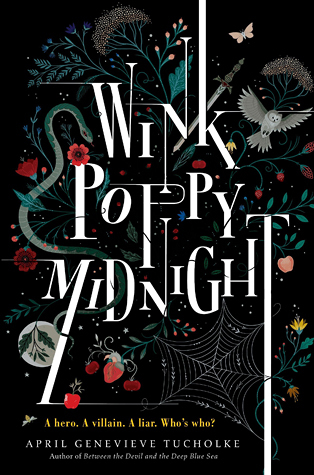
April Genevieve Tucholke has a wonderful sense of voice, place, and character. I was drawn in right away. Three characters narrate the story, and each has a distinctive way of speaking. Each character, too, is interesting. Tucholke shows us much about them right off–from Poppy cutting off a rival girl’s hair, to Midnight crying after having sex, to Wink believing in Tarot cards. Her choice of place is also interesting–a rural town complete with barns and strawberry patches and old, possibly haunted houses. I enjoyed this book from start to finish.


September 12, 2017
Creating a Memorable World
Hi writers!
We all want to create that one-of-a kind world for our SF/F books. But how do we do it? The class I’m teaching currently, “Writing the YA Novel,” has helped me think about this subject. Here’s a worksheet I came up with to help *you* create a memorable world. Answer these questions, and then off you go!
Happy writing.
Creating a Memorable World
The natural world: What does it look like? How is it like ours? How is it different?
The life forms: Is there more than one type of life form? Tell me about each that exist. Go into detail. Perhaps draw a picture.
The political world: What is it like? What are the different factions and/or political parties? Tell me about something they have fought over in the past.
The social world: Is there a particular custom that these life forms engage in that the readers should know about? Are there any rituals?
Family structure: Is the typical family structure different from our own? If so, how? Describe it.
The calendar: What holidays are celebrated? Select one and tell me about it in detail. What does an average citizen do on this day(s). How does one celebrate? What are the customs? What would it mean if one didn’t celebrate? On a different note, what are the names of the months? What year is it, currently?
Past wars: Tell me about any relevant past wars. Who was involved? What was the conflict over? What methods of combat were used? What happened as a result of this war/wars?
Leaders: Tell me about the current leader. How did she/he rise to power? Is this person good or bad? How do you know? What do they do—that is, how do they lead? What would a typical announcement from this person sound like?
The rules: Are there specific rules established for this world? (Such as a caste system, a division of the country, some kind of systematic discrimination or law that has to be followed). What are they? Who needs to abide by these rules? How do they impact the people?
An average day: What is life like for the average citizen on an average day?
What is life like for someone who is not an average citizen on an average day?
Transportation: How do people get around?
Communication: How do people communicate?
Entertainment: What do people do for fun?
Clothing: What do people wear?
Food and Drink: What do people typically consume?
Sports: What types of sports are played? Pick one and outline the rules of the game here.
School and/or Education: Tell me about schooling in this world. Who goes? How are they chosen to attend? What do they learn? What is a typical class they might take? What is a typical textbook they might read?
Problems: What types of problems does an ordinary person face in this world? What type of problem would be extraordinary?
Magic: Does magic exist? If so, what are the rules guiding it? (Be specific.) What does this magic look like? How does a reader, for instance, know magic is occurring? Are there any tools needed for this magic (think a wand) or is there a specific motion that must be made?
What do you think? Let me know. Send me a tweet @maura_jortner.
September 7, 2017
Writing Memorable Characters
Hey #writers.
We all want to create wonderfully, voicy interesting characters that will jump off the page. But how do we accomplish it? Here’s the worksheet I came up with to help.
Creating a Memorable Character
Character’s name:
Birthday and age:
Best Friend:
Tell a story about how they met or became friends:
Worst Enemy:
Tell a story about how they met or became worst enemies:
Boyfriend/Girlfriend/Current crush:
Tell a story about how they first got together or when the mc first noticed this person:
Places they have been:
Things they have done:
Things they like to do:
Favorite music:
Do they read? What do they read?
Things they are afraid of (list at least two):
Tell a story about how they developed one of these fears or when they had to face one of these fears:
Things they want to accomplish:
Do they play sports? What sports?
What is their hidden talent?
Favorite food?
What is their currency; What motivates them?
Most treasured possession?
Deepest secret?
Siblings (Names, ages, information on relationships):
Information about their relationship with their mom:
Tell a story involving them and their mom:
Information about their relationship with their dad:
Tell a story involving them and their dad.
**Tell me what you think! I’d love to hear your thoughts.
March 29, 2017
The Value of Accountability
My friend Tracy and I formed a writing accountability group about three weeks ago. We agreed that each day we would write 1,000 words on our new manuscripts and send them to each other at the end of the night. We are not reading each other’s words, merely sending them off via e-mail with a word count listed somewhere.
I was the first one to fail.
It was a Monday night, and after teaching all day, getting the girls home early for dinner/homework/bath time to then after whisking them off to gymnastics and then home again for a quick snack and bed—it just didn’t happen. The girls were wound up and stayed up later than normal. They were wired, and I was exhausted. Despite all appearances, this isn’t an excuse that I’m offering, nor was it one when I explained to Tracy that I couldn’t complete my goal that night. I sent her a $5 Amazon gift card. And thus, an extremely nice form of either punishment or motivation (however you look at it) was born. Now, not only do I have to stay accountable to Tracy, but there is a consequence to my lack of discipline, should I choose not to meet my goal.
This experiment has been a success. A tiring success, but a success nonetheless. My new manuscript is hovering around 20,000 words, and hers has climbed 30K. Likewise, I feel like I now actually *have* a new project. Sometimes the beginning of a new book is the hardest for me. I don’t know the characters yet; I’m trying to find the right pace, and I struggle with the first scenes. It can be daunting, and it can make anyone want to quit—especially me.
Thanks to Tracy, I’m not quitting, and I’m not putting it off any more.
All of this is to say: One of the most helpful things I’ve found for writing is accountability. Your group, should you establish one, can be small. It can be informal. You don’t need a fancy meeting time or place or excess gear. All you need is one other person (whom you trust) and an agreement that you can both uphold.
Happy writing!
February 24, 2017
Editing: Seeing What’s Not There
When I ask my students to edit their work, they often give me fearful looks in return. “So you want me to add a sentence somewhere?” they might ask.
“No,” I reply, smiling.
“A comma?” they guess.
“No again.”
“What do you want then?”
“I want you to edit the paper—find where it needs work and make it stronger.”
Surely I’ve exaggerated how such meetings with students go—they aren’t nearly this naïve and I hope I’m more helpful than I’ve portrayed in this small vignette. But my point remains. Many of us are fearful of true editing. Like those students, we want to alter a scene or fix a sentence and call it done, but that’s something else entirely—line editing.
Editing requires vision. A vision to see what’s missing. A vision to see what doesn’t exist yet. A vision to see the possibilities.
When I am editing a paragraph, I’m trying to find the missing links or perhaps missing sentences—the place where I have skipped steps and left the reader wanting more. When I’m editing an academic paper, I’m searching for weak points in the argument, a place where a theorist might help bolster my point of view or perhaps a section that needs more evidence. When I’m editing a book, I’m searching for which whole parts, entire aspects, are missing or lacking. Perhaps the work needs a feeling of triumph at the end. Maybe the hero needs to be more heroic. The character arc might not be quite right. I might have a plot hole or a loose end to tie up.
I’m looking for big things. Things that either are not yet there, or perhaps are so small and undeveloped that they almost seem not to exist. I’m looking for things that might be there, somewhere down the line. And that takes a special type of vision—one that goes beyond the words on the page and into the realm of possibility.
My challenge to myself and all you fellow writers out there is this—we need to see with new eyes, ones that are not just focused on the reality, but on the ideal. We want eyes that can find potential and then the discipline to turn it into actuality.
January 24, 2017
January: The Journey to Publication
I’m conflicted by how to tell this story–how to explain my personal journey to publication.
On the one hand, it’s been a hard road.. so perhaps it should be a tale of trial and woe.
On the other, it has a happy ending… so then maybe a tale of trial and woe that concludes triumphantly.
Ugh, I don’t know.
I’ll simply try to tell the truth as best I can.
I’ve been writing since my eldest daughter was small–maybe four years old. I began when she asked me to tell her bedtime stories. I came up with plenty of ideas and loads of interesting characters; the problem was that the stories kept getting out of hand. They were so long, I couldn’t keep up. She needed and wanted complex plots, but I couldn’t remember what had happened last night and what had to happen tonight. In short, out of necessity, I had to start writing them down. My first novel was for her, my daughter. I wrote her into the story itself, letting her be the amazing, magical, totally awesome main character. Only, it was bad. Really bad. Okay, she loved it. Her character rocked. But the novel itself broke all the rules–it shifted POV, it was way too long, and it included far too many really weak verbs (I knew enough about literature even then to sense my mistakes). Plus, there was that plot hole the size of Texas. So… I knew I had a lot to learn.
THE LIFE GROUP was my fourth novel, though it is the first to get published (and I hope not the last)! I bumped into my editor, the lovely Kate Foster, through a contest on Twitter. She was one of the judges, and she loved the premise of THE LIFE GROUP. I went out on a limb and asked her to read the whole thing, and she agreed to. She swore it was great and would get an agent.
It didn’t get an agent.
But I kept putting it out there, and working on the manuscript, and Kate kept asking me about it online, when we’d “see” each other. After a year or so, when I was about to give up all hope on THE LIFE GROUP, I noticed Kate had started a publishing company. The books looked good. They garnished good review. Sure, there were no YA titles, but I again went out on a limb and sent in THE LIFE GROUP. ….And she still loved it!
…And she wanted it.
…And she sent me a contract.
It was, in short, a happy, happy day. So, the road to publication was a rough one. It was filled with people saying ‘no,’ but it ended in the best way possible–with publication.
I couldn’t be happier.
November 27, 2016
December: A time of light
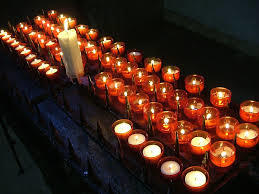
Many religions holidays celebrated at this time of the year include lights:
-Catholics light advent candles, counting down the weeks for Christ’s birth.
-Jews put lit menorahs in their windows, honoring the miracle of the oil ages ago.
-Observers of Kwanzaa, a celebration of family, community, and culture, light a seven-pronged candelabra.
-The image of Our Lady of Guadalupe is surrounded by light.
-On St. Lucy’s Day, Christians often process with candles, honoring the story of a young girl who brought light into the midst of darkness.
Why is this? My guess is because we are smack in the middle of dark days. Physically dark. The winter solstice marks the longest, darkest day of the year. Thus, it makes sense that so many religions have holidays around it that call on the healing properties of light. We need light at this time of the year–both physical and metaphorical.
Here in Texas it’s dark in the mornings when I rise. (Okay, I get up really early… but still.) And it’s dark in the evenings when I’m sitting at the table with my family for dinner. A few months ago when I drove my girls home from gymnastics at the end of the night, it was still light out. Now, even as we climb in the car to head there, it’s dark.And this darkness can be a bit hard to take! So many of us suffer during winter. So many of us go through depression. The holidays don’t stack up as wonderfully as we’d like them to. People let us down. We get back grades at the end of the semester (or at least not all the As we hoped for!) We are bummed out by the constant icy conditions on the road; tired of the heavy coats, scarves, and gloves; sick of knowing we didn’t get the perfect present for our loved ones… again. It seems like there is so much to be down about in December.
What I would like to propose is that we all try to combat this darkness. Let’s try to be the light that others need. Won’t you join me?
Please share the light. Spread the message. Together, we can make December a time of light. Share this post!
November 11, 2016
Use what’s available

I’ve never lived in a place as religious as Waco, Texas.
Supposedly, it has more churches per ca pita than anywhere else in the country.
As I looked at my surroundings, I found myself drawn more and more to write
a religious thriller.
And finally, there it was. The Life Group.